2018-2020 Mohave County Department of Public Health and Kingman Regional Medical Center
←
→
Page content transcription
If your browser does not render page correctly, please read the page content below

Mohave County Department of Public Health and
Kingman Regional Medical Center
Kingman Region
Community Health Improvement Plan

2018-2020

ACKNOWLEDGEMENTS
The Mohave County Department of Public Health and the Kingman Regional Medical Center (KRMC)
would like to thank the Advisory Committee who helped to guide and support the Community Health
Improvement Plan (CHIP) process for the Kingman region:

•     Marianne Salem, Assistant to Mohave County Board of Supervisor Jean Bishop
•     Stuart Yocum, Kingman City Council Member
•     John Dougherty, City Manager City of Kingman
•     Rusty Cooper, Kingman Police Department
•     Bob DeVries, Kingman Police Department
•     Annette Seyssens, North Country HealthCare
•     Rock Todd, North Country HealthCare
•     Eugene Kramer, Board of Health
•     Becky Fawson, Mohave County Legal Defender
•     Dave Wolf, Mohave County Community Services
•     Justin Hembree, Western Arizona Council of Governments
•     Dr. Michael Kearns, Mohave Community College
•     Roger Jacks, Kingman Unified School District
•     Steven Korona, Mohave Mental Health Clinic, Inc.
•     Betty Munyon, MHRT
•     Larry Richards, All City Kokopelli Transport
•     Tracie Padilla, Praise Chapel Kingman
•     Terri Brown, RMI
•     Terri Williams, Kingman Regional Medical Center
•     Adam Bernard, Kingman Regional Medical Center
•     Julya Walters, Kingman Regional Medical Center
•     Brian Turney, Kingman Regional Medical Center
•     Krystal Burge, Kingman Regional Medical Center Foundation
•     Steve Pebley, Kingman Regional Medical Center
•     Robert Matheny, MD, Kingman Hospital, Inc., Board of Directors
•     Cathy Ott, Kingman Hospital, Inc., Board of Directors
•     Jeannie Bowen, Mohave County Department of Public Health
•     Patty Mead, Mohave County Department of Public Health
•     Melissa Palmer, Mohave County Department of Public Health
•     Lynne Valentine, Mohave County Department of Public Health
•     William Flynn, Mohave County Department of Public Health
•     Michelle Valandingham, Mohave County Department of Public Health
•     Diane Schreiber, Mohave County Department of Public Health

The Mohave County/KRMC CHIP process and report was facilitated and prepared by Pinnacle Prevention.

                                                                                                      1
MCDPH/KRMC Community Health Improvement Plan
Kingman Region | 2018 - 2020
Our Journey to Our Desired CHIP Result

                                       September
                                       2017
Spring 2016
                                       Review CHA and Begin
Gathering Data                         CHIP by Establishing
                 Summer                                             October
                                       Criterion for Prioritizing
                 2016                  Health Issues                2017
                 Analyzing and                                      Selecting and
                 Synthesizing Data                                  Prioritizing Key Health
                                                                    Issues, Goals and
                                                                    Strategies
                                                                                   November
                                                                                   2017
                                                                                   Finalize Strategies and
                                                                                   Actions and Adopt a
                                                                                   Plan for Action to
                                                                                   Improve Health

                                                                                                  2
    MCDPH/KRMC Community Health Improvement Plan
    Kingman Region | 2018 - 2020
INTRODUCTION
  In alignment with the Live Well Arizona initiative it is               Assessment (CHA) and Community Health
  recognized that “a healthy community is one where                      Improvement Plan (CHIP) are the most important first
  people have the opportunity to make healthy choices,                   steps in transforming health and wellness. In the spring
  in environments that are safe, free from violence, and                 of 2016, stakeholders across Mohave County and the
  designed to promote health. Factors that influence                     Kingman Regional Medical Center (KRMC) engaged in a
  health range from early childhood education to                         community-driven process to identify the most
  quality housing and jobs, and include many other                       pressing health issues facing residents. Lead by the
  areas of community development such as financial                       Mohave County Department of Public Health (MCDPH)
  inclusion, access to health clinics and healthy food,                  and KRMC, community members and organizations
  sustainable energy, and transportation¹.” Where we                     came together to provide valuable insights on
  live, work, play, pray and learn determines our health                 experiences of health and sickness, as well as realistic
  and wellbeing as outlined in Figure 1: Elements of a                   ways to affect change. In order to meet the unique
  Healthy Community. This shifts the public focus from                   needs of communities within Mohave County, separate
  treating disease and sickness towards prevention and                   CHIP processes were carried out in the Kingman
  collaboration in order to improve the quality of life for              region, Lake Havasu City region, and Bullhead City
  all citizens. Social, economic, political, environmental               region. This document outlines that process and the
  and individual factors all have a role to play in our                  plan of action to improve health for all residents across
  health problems, and most importantly, in the                          the Kingman region.
  solutions. Conducting a Community Health Needs

                                                    Figure 1. Elements of a Healthy Community

¹ Live Well Arizona. Vitalyst Health Foundation. www.livewellaz.org
                                                                                                                          3
   MCDPH/KRMC Community Health Improvement Plan
   Kingman Region | 2018 - 2020
WHAT IS A COMMUNITY HEALTH IMPROVEMENT PLAN (CHIP)?
    The CHIP is a guide that public health, nonprofit hospitals², and cross-sector community partners use to
    collaborate and respond to key factors that may be limiting the ability of community members to lead full,
    happy, and healthy lives. The Community Health Assessment (CHA), which is an assessment of the health
    status of residents across Mohave County, informs the CHIP. The CHA and the CHIP are a continuous process
    that are an important component of public health accreditation³ and the 10 Essential Public Health Services as
    outlined in Figure 2: The 10 Essential Public Health Services.

                                                             Figure 2: The 10 Essential Public Health Services

                                                                                                         ASSESSMENT

                                                                                        Monitor                           Diagnose
                                                                                        Health                           & Investigate

                                                                                                             m Managem
                                                                   Evaluate                               ste         en
                                                                                                        Sy              t                    Mobilize
                                                                                                                                            Community
                                                                   Assure                                                                   Partnerships
                                                                                                          RESEARCH
                                                                 Competent
                                                                 Workforce

                                                                                                                                                    POLI
                                                                                                                                             Inform,
                                                                  E
                                                                NC

                                                                               Link                                                         Educate,

                                                                                                                                                        CY
                                                                                                                                            Empower
                                                              RA

                                                                                to

                                                                                                                                                           DE
                                                                             /Provide
                                                             U

                                                                                                                                                             VE
                                                            S
                                                          AS

                                                                               Care
                                                                                                                                                               LO
                                                                                                 Enforce                    Develop
                                                                                                                                                                 PM

                                                                                                                            Policies
                                                                                                                                              EN
                                                                                                  Laws                                          T

                                                                 THE PLANNING PROCESS
   The effort to address the unique health needs of                                                                     to “incorporate the plan into organizational
   Mohave County in the Kingman region was a                                                                            policies and procedures” and make the
   joint endeavor that the MCDPH and the KRMC                                                                           strategies from the CHIP “priorities for local
   led in cooperation with multiple community                                                                           funding efforts.” The committee met once a
   organizations that made up the CHIP Advisory                                                                         month for three months and utilized the
   Committee. Members of the Kingman CHIP                                                                               Mobilizing Action for Planning and Partnerships⁴
   Advisory Committee expressed their                                                                                   framework to review the results from the CHA;
   commitment to “tap into existing resources,”                                                                         pinpoint the key criteria used to prioritize
   “communicate available resources to the                                                                              community health needs; and develop detailed
   community,” and “help the community come                                                                             goals, objectives, and strategies to guide them
   together for social, physical, and spiritual                                                                         in taking action to create change over the next
   well-being.” They also agreed that they wanted                                                                       three years.
   IRS. Requirements of 501(c)(3) Hospitals Under the Affordable Care Act. https://www.irs.gov/charities-non-profits/charitable-organiza-
² tions/new-requirements-for-501c3-hospitals-under-the-affordable-care-act.
³ Public  Health Accreditation Board. http://www.phaboard.org/.
⁴ http://archived.naccho.org/topics/infrastructure/MAPP/index.cfm
                                                                                                                                                                      4
  MCDPH/KRMCCommunity Health Improvement Plan
  Kingman Region | 2018 - 2020
A VISION FOR COMMUNITY HEALTH IMPROVEMENT
The CHIP Advisory Committee agreed to align the community health improvement plan
vision with the collective vision of the Mohave County Health Department as follows:
             “ Healthy people in healthy communities for all Mohave County residents.”

IDENTIFYING HEALTH PRIORITIES
    Before the committee selected which health needs from the CHA they wanted to work on, the committee
    brainstormed and agreed upon a set of criteria to ensure that key factors were taken into consideration
    when reviewing the CHA. The criteria included the following:

  Size: There are a large number of people affected by this health issue and/or the issue cuts across multiple
  groups and cultures.
  Seriousness: This health issue causes severe impacts to people’s quality of life, such as resulting in a high
  number of deaths, hospitalizations, and/or disabilities, and costs to the health-care system.
  Trends: The trend for this health issue is getting worse or increasing or decreasing at a significant rate.
  Resources: This health issue build upon existing work or resources within the community that is affected.
  Values: The community and community leaders recognize this issue as a problem and priority to address.

    Using these criteria and a structured process designed to ensure input from all participants, the CHIP
    Advisory Committee identified five health issues from the CHA to be considered for prioritization. After
    thoughtful dialogue around these five health issues, the committee came to consensus on the following
    three health priorities to focus on for the next CHIP for the Kingman region:

   1     Mental
         health                            2      Substance
                                                  abuse                             3 Obesity

DEFINING GOALS, OBJECTIVES, AND STRATEGIES FOR ACTION

                                The Kingman CHIP Advisory Committee started by identifying goals, or broad
                                statements of desired changes, that they could achieve over the three-year CHIP
                                period for each health priority area. Using information from the CHA, the
                                committee then identified outcomes or indicators that were related to each health
                                priority area to create objectives that were specific, measurable, achievable,
                                realistic, and time specific. Next, the committee brainstormed strategies and
                                approaches for achieving each desired objective. With the help of facilitators and
                                subject matter experts, the committee highlighted key evidence-based strategies
                                within the list of ideas. Finally, committee members listed actions, tactics, or
                                specific steps that could be taken to mobilize a strategy and identified groups or
                                organizations within the community that could implement or operationalize a
                                given strategy.

                                                                                                              5
    MCDPH/KRMC Community Health Improvement Plan
    Kingman Region | 2018 - 2020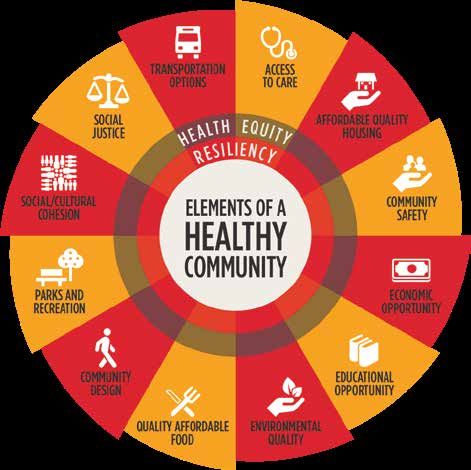
PRIORITY 1: MENTAL HEATH

                           PRIORITY 1: MENTAL HEATH
PRIORITY 1: MENTAL HEATH
The decision to include mental health as a key                                                              Additionally, almost 16 percent of Mohave County
health priority was largely made due to emerging                                                            residents who participated in the survey stated that
CHA indicators, including suicide deaths and                                                                they did not have access to mental health
access to mental health providers. The suicide                                                              professionals in their community. Another 7
rate in Mohave County is 29.5 deaths per 100,000                                                            percent stated that they did not feel comfortable
residents, which is worse than the rate for the                                                             using mental health services available in their
state of Arizona. Although the percentage of                                                                communities, and almost 10 percent believed the
adults in Mohave County experiencing                                                                        quality of mental health services in their
depression is moderate when compared to peer                                                                communities was not sufficient.
counties⁵, the ratio of mental health care                                                                  The CHIP Advisory Committee discussed the need
providers to residents in Mohave County is 1,420                                                            for reducing the stigma associated with mental
to 1, which is worse than the Arizona state ratio.                                                          health as well as the need for improving access to
During key informant interviews, informants                                                                 resources within the community. Currently there
identified drug use and mental health as the most                                                           are two committees working on substance abuse
pressing health concerns in the community,                                                                  and mental health from previous CHIP efforts, and
emphasizing a need for more treatment facilities                                                            the CHIP Advisory Committee decided to
and services. Mental health was also listed as a                                                            coordinate objectives and strategies that align with
one of the top three health challenges perceived                                                            the existing efforts within the community. The
by respondents participating in the CHA                                                                     goals and strategies selected aim to build upon the
community survey.                                                                                           existing strategies and resources that are being
                                                                                                            offered in the region.

  Mental Health Evidence-based Resources:

  Healthy People 2020:
  https://www.healthypeople.gov/2020/topics-objectives/topic/mental-health-and-mental-disorders
  US Preventive Services Task Force: https://www.uspreventiveservicestaskforce.org/
  Substance Abuse and Mental Health Services Administration:
  https://store.samhsa.gov/product/PEP14-LEADCHANGE2
  Surgeon General National Strategy for Suicide Prevention:
  https://www.surgeongeneral.gov/library/reports/national-strategy-suicide-prevention/full_report-rev.pdf
  County Health Rankings. What Works? Strategies to Improve Rural Health:
  http://www.countyhealthrankings.org/what-works-strategies-improve-rural-health
  Substance Abuse and Mental Health Services Administration. Screening tools:
  https://www.integration.samhsa.gov/clinical-practice/screening-tools
  Mohave Mental Health Clinic: https://www.mmhc-inc.org
  Southwest Behavioral Health Clinic: http://www.sbhservices.org/

⁵ County Health Rankings & Roadmaps and CDC’s Community Health Status Indicators (CHSI). Peer Counties Tool. http://www.countyhealthrankings.org/peer-counties-tool
                                                                                                                                                                      6
   MCDPH/KRMC Community Health Improvement Plan
   Kingman Region | 2018 - 2020
Priority Area 1: Mental Health

           Improve mental health support through prevention and access to meet the mental health needs of the
Goal:      Kingman region.

                      By 2020, reduce mental health stigma among community residents by 10 percent.
Objective 1:          Data Source: Behavioral Risk Factor Surveillance System (BRFSS) and Community Survey

   Strategy 1
   Develop a training toolkit for delivering mental health stigma reduction presentations based on setting and age group.
   Actions
   Develop the stigma reduction presentation for each age group                   Deliver train the trainer sessions for all presenters
   Develop training evaluation                                                    Collect and analyze training evaluations
   Recruit volunteers/presenters to provide presentations                         Revise training as needed as informed by evaluations

   Strategy 2
    Partner with Mohave Community College (MCC) IT classes for developing mental health stigma reduction
    web-based resources and social media communications.
    Actions
    Establish memorandum of understanding with MCC for IT support.                Develop social media communications plan and
    Develop online learning modules                                               messaging for mental health stigma reduction
    Develop web sharing platform that is publicly accessible for all              Complete analytics to measure reach, click-through
    community members                                                             rates, and online utilization of resources

 Lead Organization(s): Mohave County Department of Public Health and Kingman Regional Medical Center
 Collaborating Organizations: Mohave Mental Health Clinic, Southwest Behavioral Health Clinic, faith-based groups, MCC, private practice
 counselors, schools (including charter and private), physicians, and senior programs

                      By 2020, decrease the number of suicide-related deaths in Mohave County from 29.5 per 100,000
Objective 2:          residents to 25 per 100,000 residents. Data Source: CDC CHSI and Vital Records

    Strategy 1
   Increase the use of evidence-based mental health screening tools in all primary care settings.
   Actions
    Determine the number of providers in the Kingman region                       Work with CHIP partners to identify and agree upon
    currently screening for mental health or suicide risk-factors                 common screening tools
    Assess which screening tools are currently being used by providers            Share screening tools with primary care provider network
    Research evidence-based mental health screening tools                         across the Kingman region
                                                                                  Develop evaluation process of utilization of screening tools

  Lead Organization(s): Mohave County Department of Public Health and Kingman Regional Medical Center
  Collaborating Organizations: MCDPH, Mohave Mental Health Clinic, Southwest Behavioral Health Clinic, primary care providers

                                                                                                                                           7
  MCDPH/KRMC Community Health Improvement Plan
  Kingman Region | 2018 - 2020
PRIORITY 2: SUBSTANCE ABUSE

                              PRIORITY 2: SUBSTANCE ABUSE
PRIORITY 2: SUBSTANCE ABUSE
Including substance abuse as a health priority is smoked, teens who currently smoke tobacco, teens
supported through the CHA indicators, the who have used methamphetamines, teens who use
community survey, and key informant interviews. alcohol) than peer counties or the state of Arizona.
Drug addiction was highlighted in the community
survey as one of the top three perceived health The Kingman CHIP Advisory Committee discussed
challenges in Mohave County. Key informants the need to not only provide treatment services and
identified drug use and mental health as the most facilities throughout the region but also focus on
pressing health concerns in the community. A efforts that prevent substance abuse. Currently,
lack of access to meaningful activities and jobs there are two core groups working on substance
for young people was identified among focus abuse and mental health from previous CHIP
group participants as what is perceived to be a efforts, and the Advisory Committee decided to
major cause for the increase in substance use coordinate objectives and strategies that align with
and abuse in recent years. Participants also the existing efforts within the community. The goals
identified that a lack of comprehensive mental and strategies selected aim to build upon these
health and substance abuse services made it existing strategies and resources that are being
difficult for those seeking treatment to get the offered in the region. The goals and strategies also
care they need. The CHA also found that in all the align with the Arizona State Health Improvement
substance abuse indicators (with the exception of Plan and the Arizona Drug Misuse and Abuse
teens who use marijuana), Mohave County was Initiative⁶.
either moderate (adult binge drinking) or worse
(adults smoking tobacco, teens who have
Substance Abuse Evidence-based Resources:
Healthy People 2020 – Substance Abuse:
http://www.healthypeople.gov/2020/topics-objectives/topic/substance-abuse/objectives
Arizona Drug Misuse and Abuse Initiative: http://substanceabuse.az.gov/substance-abuse/training
National Institute on Drug Abuse:
https://www.drugabuse.gov/publications/principles-drug-addiction-treatment-research-based-guide-thi
rd-edition/acknowledgments
Substance Abuse and Mental Health Services Administration (SAMHSA) National Registry of
Evidence-Based Programs and Practices (NREPP): https://nrepp.samhsa.gov/landing.aspx
County Health Rankings. What Works? Strategies to Improve Rural Health:
http://www.countyhealthrankings.org/what-works-strategies-improve-rural-health
Arizona Rx Drug Misuse and Abuse Initiative Toolkit:
http://substanceabuse.az.gov/substance-abuse/training
Office of the Arizona Governor. Arizona Drug Misuse and Abuse Initiative. http://substanceabuse.az.gov/
⁶
8
MCDPH/KRMC Community Health Improvement Plan
Kingman Region | 2018 - 2020Priority Area 2: Substance Abuse
Goal: Reduce substance abuse to improve quality of life in the Kingman region.
By 2020, decrease reported substance abuse among youth by 15 percent.
Objective 1: Data Source: Arizona Youth Survey
Strategy 1
Decrease use of expulsion as a disciplinary action for youth substance abuse in school settings.
Actions
Determine current use and impact of expulsion as a Work with school administrators to revise current
disciplinary action for substance abuse in the substance abuse expulsion policies and procedures
Kingman region schools Conduct trainings with school teachers and staff on
Research best practices for alternative behavior alternative behavior models for substance abuse
change models disciplinary actions used in school settings
Monitor practices and outcomes
Strategy 2
Increase ‘Caring Adult’ training to teachers, educators and parents on youth substance abuse prevention.
Actions
Research evidence-based ‘caring adult’ prevention Develop training plan
programs Develop evaluation tool
Select evidence-based program for implementation Monitor use and intervention outcomes
Lead Organization(s): MCDPH; KRMC
Collaborating Organizations: Coalitions, Mohave Mental Health Clinic, Southwest Behavioral Health Clinic, Local schools, Parenting groups
By 2020, reduce opioid-related overdose deaths by 15 percent.
Objective 2: Data Source: Governor’s Office Drug Misuse and Abuse Initiative and ADHS
Strategy 1
Decrease access to expired and non-prescription access to opioids.
Actions
Develop and implement campaign for prescription Coordinate take-back events
take-back sites Monitor local integration with Prescription Drug
Develop and implement campaign to increase Monitoring Program data systems
awareness of the proper and safe disposal of
medication
Strategy 2
Increase access to community treatment options.
Actions
Identify possible funding sources to increase availability of Assess current treatment and recovery access points
Naloxone to local police and emergency provider teams in the region and identify gaps in service
Assess options to initiate buprenorphine treatment in Identify possible funding sources to increase
emergency departments to improve treatment treatment access points
engagement and reduce illicit opioid use
Lead Organization(s): Mohave County Department of Public Health and Kingman Regional Medical Center
Collaborating Organizations: MCDPH, Mohave Mental Health Clinic, Southwest Behavioral Health Clinic, police departments, fire departments,
pharmacies Kingman Unified School District, youth probation
9
MCDPH/KRMC Community Health Improvement Plan
Kingman Region | 2018 - 2020PRIORITY 3: OBESITY
PRIORITY 3: OBESITYPRIORITY 3: OBESITY
The decision to include obesity as a health priority concern in the CHA community survey. It was
was based on numerous findings in the CHA, identified as one of the top three perceived personal
including an adult obesity rate of 34.0 percent that is health challenges faced by respondents
considered worse than that of peer counties. The participating in the CHA community survey, and it
number of adults who report no leisure-time was also one of the top three perceived health
physical activity in Mohave County is 27.3 percent, challenges for the community as a whole.
which is worse compared to peer counties and is During the planning process, the Kingman CHIP
also a risk factor for obesity. Various chronic disease Advisory Committee discussed many existing assets
indicators are also worse in Mohave County when that help to address obesity. The strategies selected
compared to those in peer counties or the state of address root causes of obesity and target increasing
Arizona, including death due to coronary heart physical activity among residents in the Kingman
disease, diabetes, and cancer. The CHA also found region and improving access to healthy food and
that Mohave County has a higher percentage of nutrition assistance programs. These goals align
adults and children who are food insecure with the Arizona State Health Improvement Plan.
compared to other US counties, and a higher Strategies to achieve these goals are comprehensive
percentage of individuals who are low-income with in that they include evidence-based policy, system,
limited access to healthy food compared to peer environmental, and behavior change interventions.
counties. The percentages of low-income
individuals and children who do not live close to a
grocery store are worse when compared to other
US counties. Obesity was also highlighted as a major
Obesity Evidence-based Resources:
Healthy People 2020:
https://www.healthypeople.gov/2020/topics-objectives/topic/nutrition-and-weight-status
2015-2020 Dietary Guidelines for Americans: http://health.gov/dietaryguidelines/2015/default.asp
National Prevention Strategy – Healthy Eating:
http://www.surgeongeneral.gov/priorities/prevention/strategy/healthy-eating.pdf
U.S. Preventive Services Task Force – Obesity Management:
http://www.uspreventiveservicestaskforce.org/
U.S. Department of Health and Human Services. Step It Up! The Surgeon General’s Call to Action to
Promote Walking and Walkable Communities:
https://www.surgeongeneral.gov/library/calls/walking-and-walkable-communities/call-to-action-walkin
g-and-walkable-communites.pdf
SNAP and Farmers Markets: https://www.fns.usda.gov/ebt/snap-and-farmers-markets
10
MCDPH/KRMC Community Health Improvement Plan
Kingman Region | 2018 - 2020Priority Area 3: Obesity
Goal: Promote health and reduce the risk of chronic disease by reducing the obesity rate in the Kingman region.
By 2020, reduce the rate of adult obesity in the Kingman region by 3 percent.
Objective 1: Data Source: Behavioral Risk Factor Surveillance System, CDC
Strategy 1
Implement a nutrition education campaign.
Actions
Create a baseline survey to assess knowledge, Share and disseminate common messaging and
attitudes, and beliefs materials with all organizations in the Kingman CHIP
Identify target populations network.
Develop targeted communication messaging for
each target population subgroup
Strategy 2
Increase participation in free and low-cost physical activities in the Kingman region.
Actions
Assess and map the existing free activities in the Work with the City of Kingman Parks and Recreation
Kingman region to promote area parks, trails, and pools
Share and disseminate the City of Kingman activities
brochure
Strategy 3
Enhance access to places for walking and biking.
Actions
Collaborate with the City of Kingman to increase Develop outreach campaign that shares walking and
utilization of trails among older adults biking opportunities for all ages and skill levels
Assess opportunities to implement walking groups or Collaborate with the City of Kingman planning
buddy systems to support social connection and department to identify opportunities to increase
physical activity walkability.
Lead Organization(s): MCDPH
Collaborating Organizations: City of Kingman Parks and Recreation and Planning, Kingman Farmers Market, University of Arizona Cooperative
Extension
11
MCDPH/KRMC Community Health Improvement Plan
Kingman Region | 2018 - 2020STRATEGIES FOR IMPLEMENTING AND TRACKING PROGRESS
OF THIS PLAN
The MCDPH, in collaboration with the KRMC, will be While participating in the development of the CHIP,
responsible for maintaining ongoing community partners demonstrated enthusiasm for ensuring that
engagement in implementing the Kingman region the CHIP Committee utilizes the plan to improve the
CHIP. Mohave County will convene quarterly CHIP health of Mohave County and the KRMC service
meetings for the Kingman region to evaluate progress region. This enthusiasm relates not only to the
made in implementing strategies and propose important priorities outlined in the CHIP but also to
changes when greater impact can be achieved by the spirit of partnership that is required to work
modifying approaches. When needed, and as together across organizations to improve the health
recommended by the CHIP Committee, Mohave of residents in the Kingman region. Health
County will establish workgroups focusing on improvement cannot be achieved alone, and the
particular objectives to ensure successful collective impact of all partners and organizations
implementation. participating in the CHIP is what will help the region
achieve the desired goals outlined in this plan.
CHIP Structure
Kingman CHIP Kingman Health
Committee Priority
(Quarterly Meetings Implementation
to Monitor Progress) Workgroups
(Meet as Needed)
Bullhead CHIP Bullhead Health
MCDPH+KRMC Committee Priority
(Backbone Organization (Quarterly Meetings to Implementation
Workgroups
and Convener) Monitor Progress)
(Meet as Needed)
Lake Havasu
Lake Havasu CHIP Health Priority
Committee Implementation
(Quarterly Meetings to Workgroups
Monitor Progress) (Meet as
Needed)
Community Health Assessment and Community Health Improvement Plan Process
Determine Identify
desired health
Assess Analyze result priorities
Monitor Develop
process health
Engage and improvement
outcomes strategies
12
MCDPH/KRMC Community Health Improvement Plan
Kingman Region | 2018 - 2020KINGMAN REGION COMMUNITY HEALTH IMPROVEMENT PLAN
2018-2020 SUMMARY
Mental Health
1
Objective 1: By 2020, reduce mental health stigma among community residents by 10 percent.
Objective 2: By 2020, decrease the number of suicide-related deaths in Mohave County from
29.5 per 100,000 residents to 25 per 100,000 residents.
Substance Abuse
2
Objective 1: By 2020, decrease reported substance abuse among youth by 15 percent.
Objective 2: By 2020, reduce opioid-related overdose deaths by 15 percent.
Obesity
3
Objective 1: By 2020, reduce the rate of adult obesity in the Kingman region by 3 percent.
13
MCDPH/KRMC Community Health Improvement Plan
Kingman Region | 2018 - 2020To review the Community Health Assessment and Community Health
Improvement Plan and stay updated on the CHIP implementation activities visit:
https://www.mohavecounty.us or http://www.azkrmc.com
14
MCDPH/KRMC Community Health Improvement Plan
Kingman Region | 2018 - 2020You can also read


