Mozambique: Vigil Insight Situation Report
←
→
Page content transcription
If your browser does not render page correctly, please read the page content below
Mozambique: Vigil Insight Situation Report
19 August 2021

The retaking of Mocimboa da Praia will stall the spread of the Islamist militant
insurgency for now, though the civilian death toll from the conflict is likely to
increase along with human rights abuses.
This document provides an analysis of the current situation and the implications for aid agencies.

   AID OPERATIONS IN MOZAMBIQUE
   ●   The recent increase in armed conflict events between state and non-state actors will
       LIKELY continue to impact aid operations in the Cabo Delgado province, particularly in
       the northeastern coastal area.
   ●   Sustained attacks on civilians by non-state actors means beneficiaries will continue to
       need targeted aid.
   ●   Although there are no reports of aid workers being arrested, kidnapped or killed in
       Mozambique in recent months, aid workers have experienced violence on at least one
       recent occasion in Cabo Delgado.
   ●   Aid operations in Cabo Delgado have also been affected by a deteriorating security
       context and difficulties in distributing humanitarian supplies.
   ●   With the loss of Mocímboa da Praia, Islamic State (IS) will move further towards an
       insurgency rather than peer to peer conflict.
   ●   The war is far from over as insurgencies take time to control and deconflict.

MITIGATION
The risk from increased security activity from both state and non-state actors (particularly Islamic
militants) will remain high. Although aid organisations will need to continue their own assessments on
how to adjust their security strategies, there are options available:
● Apply an acceptance strategy that discusses intervention with local actors.
● Where possible work with local elders or community leaders to ensure longer term risk mitigation
     against ongoing conflict, especially where UN or INGO security groups' influence is stretched.
● Be aware of the potentially difficult personal situation of local or national staff.
● Be aware of the risk to beneficiaries from attacks on civilians.
● Be aware of the deteriorating security context and risk of indirect fire (IF) to staff and other civilians
     following the recent increase in armed conflict events.

When travelling:
● Vary routes where possible - especially main roads such as the N380/N381 or R763 (northern
  Cabo Delgado area), as IS is prevalent in this area. If at all possible - avoid eastern Cabo Delgado
  or spend limited time in the east.
● Ensure compliance at all times with guards manning checkpoints.
● In high risk areas, advise all staff to wear PPE, this should be reinforced for drivers. First aid and
  breakdown kits should be kept in the vehicle at all times and be easy to access. An alternative
  communication means (satellite or GSM mobile) should also be kept.
● Ensure where possible that a member of staff has been trained in “trauma management/basic
  trauma life support”.
● Travel in convoy and advise coordination with UN or INGO security groups where possible.
● Restrict travel plans to only those required to travel - ensure strict discipline of social media.

                                                                                                               1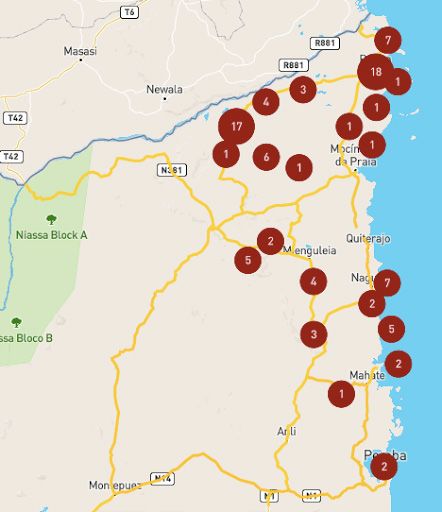
Mozambique: Vigil Insight Situation Report 19 August 2021

CONTEXT
Mozambique and Rwandan forces (Rwandan Defence Forces - RDF) reported retaking the
port of Mocímboa da Praia on 8 August, the last stronghold in the Cabo Delgado province of
insurgents linked to IS. Fighting had increased since the spread of the militants over two years
ago (see June 14 report), with attacks against civilians seeing a rise in March to June (see graph
below). 1000 Rwandan troops deployed last month alongside Mozambique forces as part of the
16 member South African Development Community (SADC) efforts to aid Mozambique’s fight
to control and reduce the influence of IS and associated groups in the Cabo Delgado province.
The army also took control of Awasse - a strategic settlement near to Mocímboa da Praia. Other
members of the SADC have provided troops in the past few weeks including Botswana, Angola,
Zimbabwe and around 1,500 troops from the South African Defence Force who deployed on 05
August including a contingent of armoured vehicles. The SADC Mission in Mozambique (SAMIM)
will last from 15 July to 15 October, and comes alongside both an EU training mission which
formally started on 12 July, as well as a US contingent who launched a second Joint Combined
Exchange Program with Mozambique Special Forces over a week ago. Parallel to the arrival of
foreign state actor troops, the number of armed conflict events has also significantly increased in
the Cabo Delgado province.

 Armed conflict events and attacks on civilians in all of Mozambique, from January to July 20211

 Attacks on civilians: 123
 Armed conflict events: 104        Armed
                                  attack on                                      Arrival of
                                   Palma                                       first foreign
                                 (25 March)                                    state actors
                                                                                  in Cabo          20
                                                                                 Delgado
                                                                                                               99% of armed
                                                                                                                 conflict
                                                                                                                events and
                                      24
                                                                                                                  89% of
      16              12                                            17                                          attacks on
                                                      18                           16
                                                                                                   29
                                                                                                                 civilians
                                                                                                                occurred in
      13              15              14                            12
                                                                                                               Cabo Delgado
                                                      10                            11

  JAN-21           FEB-21          MAR-21          APR-21        MAY-21         JUN-21          JUL-21
  insecurityinsight.org
  1
   This map is based on the Armed Conflict and Location Event Dataset (ACLED). Data ranges from 01 January 2021 to 31 July 2021. Data
  accessed on 09 August 2021.

  info Attacks on civilians are defined as any incident where unarmed civilians are harmed by armed state / foreign state actors or non-state
  actors, either in a target or indiscriminate way. In this report, it comprises incidents in the ACLED category ‘violence against civilians’
  and in the ACLED sub-category ‘looting and property destruction’2. Examples include: the abduction of civilians, raids on villages, sexual
  violence against civilians, and the killing of individual or groups of civilians.
  Armed conflict events are defined as any violent interactions between two armed groups. These can include both direct attacks or
  clashes and indirect fire where one group shells another. In this present report, it includes incidents in the ACLED categories ‘Battles’
  and ‘Explosions/Remote violence’. Examples include: armed clashes on the ground, airstrikes, and shelling/rocket/mortar attacks. This
  category excludes one-sided interactions.
  2
      See ACLED Codebook for the respective ACLED definitions.
                                                                                                                                                2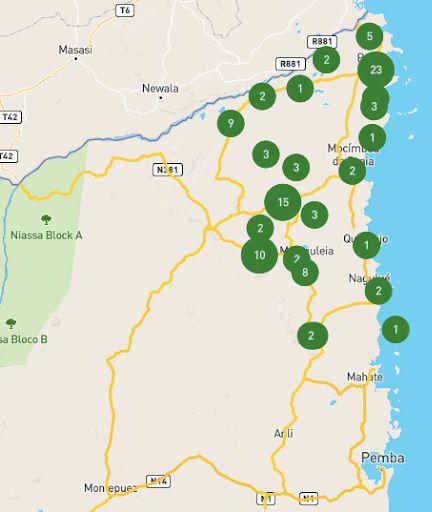
Mozambique: Vigil Insight Situation Report 19 August 2021

ANALYSIS
The SAMIM and Rwandan troops (along with the EU and US) came at the request of Mozambique
President Filipe Nyusi, following his previous reluctance to accept foreign intervention to tackle
an IS   insurgency that had seen Palma City attacked in March. The decision came against a
background of dramatically rising numbers of IDPs. Numbers of internally displaced increased
from 172,000 in April 2020 to over 732,000 in April 2021. Following the attack on Palma city,
another 68,000 people have been displaced, pressurising President Nyusi to seek military support
from the SADC.

Although aid organisations have not been directly targeted (bar one incident - see Map 1),
civilians have been subjected to high levels of violence particularly between March to July (see
Graph). Indeed, OCHA notes that at least 900,000 people are food insecure - with both rural and
urban communities affected. The conflict, however, has meant that aid organisations have been
affected by the deteriorating security context and have experienced difficulties in the distribution
of aid supplies, especially in Cabo Delgado.

Attacks against civilians - either by Mozambique and foreign state forces and non-state actors
(NSAs) - remain underreported. This was highlighted during the Palma city attack, where the
final casualties are still unknown. A significant minority of attacks are not officially reported.
Some remain mentioned on social media without being picked up and no further information is
forthcoming. The available information highlights that the threat to aid comes from both state
actors and IS, who affected the work of aid agencies and at times have targeted people working
with INGOs and their beneficiaries (see Map 1). Violence and threats against aid agencies and
beneficiaries are HIGHLY LIKELY to continue.

Map 1: Incidents affecting aid operations in the Cabo Delgado province

  Since January 2021, at least five events directly affected aid operations in Cabo Delgado province3

                                                                                                                       Palma
                                                                                                                      (2 events)
             Unspecified locations                                                                          April: Evacuation flights from
             INGO supplies reportedly                                                               Palma    the Palma area temporarily
           being sold in markets in Cabo                                                                     suspended following armed
                Delgado province.                                                                                  conflict events.
                                                                                                               March: Security forces
                                                                                                                opened fire on a food
                                                                                                                     distribution.

                                                                                                                        Pemba
                                                                                                                       (2 events)
                                                                                                               April: Vehicle carrying UN
                                                                                               Pemba        staff shot at by security forces.
                                                                                                                June: NGO temporarily
                                                                                                               halts beneficiary lists due
                                                                                                              to lack of transparency and
                                                                                                             concerns about diversion of
 3
   This map is based on data from Insecurity Insight. Data ranges from 01 January 2021 to 27 July
                                                                                                                      aid supplies.
 2021.

                                                         JOIN MAILING LIST
                                                                                                                                                3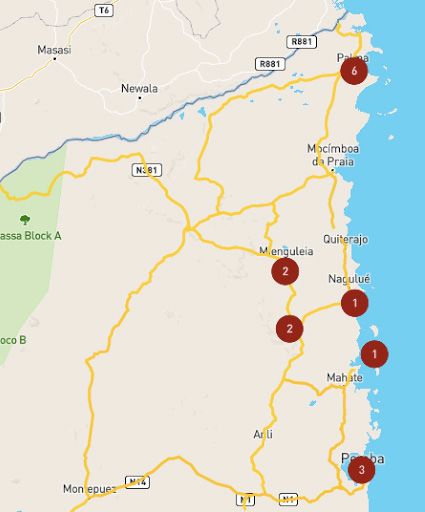
Mozambique: Vigil Insight Situation Report 19 August 2021

                                                                                  While violence has been reported
    Armed conflict events involving RDF since July 20214                          from various locations within
                                                                                  Mozambique, the majority of
                                                                                  armed conflict events and attacks
                                                                                  on civilians since January 2021
                                                                                  occurred in Cabo Delgado. Armed
                                                                                  conflict events and attacks on
                                                                                  civilians generally run from the north
                                                                                  to the south of the Cabo Delgado
                                                                                  region - with few in the western part
                               R763
                                                                                  of Cabo Delgado (see Maps 3 and
                                                                                  4).
                                                                                  Until July 2021, more attacks on
                                                                                  civilians were reported than armed
                                                                                  conflict events. However, July figures
                                                                                  reverse this trend - with 29 armed
                                                                                  conflict events reported -   although
                                                                                  attacks on civilians remain high. The
                                                                                  increase in armed conflict events
                                    N380                                          is LIKELY (at least partly) due to
                                                                                  the deployment of Rwandan forces
                                                                                  who two weeks ago reported they
                                                                                  had killed 14 insurgents in over four
                                                                                  days, and who have been involved
      N381                                                                        in at least 10 armed conflict events
                                                                                  in the northeastern area of Cabo
                                     N381                                         Delgado province since 20 July
                                                                                  2021 (see Map 2). The presence of
Map 2                                                                             the RDF has also created tensions
4
 This map is based on data from the Armed Conflict Location and Event
Data Project (ACLED). Dots show the location and number of incidents that         between the current ruling party in
occurred in Cabo Delgado province between 01 January 2021 to 30 July              Mozambique and opposition parties,
2021. ACLED data accessed on 09 August 2021.                                      of which the Mozambican National
                                                                                  Resistance (Renamo) is the most
                                                                                  vocal.

    info State actor: The perpetrator is a member of the state security forces, whether military or law enforcement. This includes
    incidents where state security forces were supported by private military companies or foreign state actors.
    Non-state actor (NSA): The perpetrator is part of a named or unnamed armed or unarmed group which is not formally part
    of the state’s law enforcement, military, or security apparatus. In the case of Mozambique this includes all groups opposed
    to the Mozambican Government, such as Islamist militia, communal militia, and the Mozambican National Resistance
    (Renamo); and other unidentified armed groups.

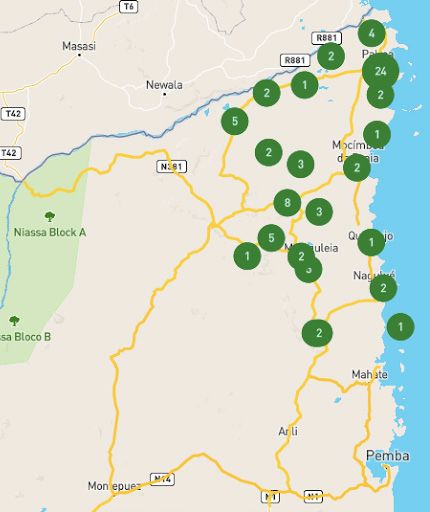
State (Mozambique forces) and foreign state actors have been more frequently involved
in armed conflict events than attacks against civilians (see Map 3 and Map 4). The majority
of armed conflict events involving Mozambique and foreign state actors targeted the Islamist
insurgents. Map 3, showing conflict activity by state and foreign state actors, suggests significant
levels of counter-insurgency in eastern and northern Cabo Delgado - especially along routes
N380/N381, and R763 running along the eastern and northern side of the area. State and
NSA conflict events are also seen along the coastline. Civilians and aid staff are therefore at
risk from indirect fire (IDF) during counter-insurgency.. Between January to April, around a
dozen incidents involved the Dyck Advisory Group (DAG) including the attack in Palma back in
March (see Vigil Insight Report 15 March and Alert 25 March) but no further events have been
attributed to the DAG since April.
                                                                                                                                     4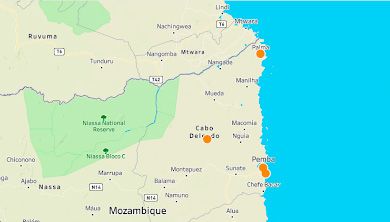
Mozambique: Vigil Insight Situation Report 19 August 2021

     The current successes of the combined Mozambique and Rwandan troops have often been met
     with concern by local civilians, some of whom have remained skeptical over the advances, with
     some alleging that the Mozambique police have caused acts of violence against local villages
     during their fight against IS militants in the area. Concerns have also been raised over potential
     war crimes and Human Rights abuses by both the Mozambique and Rwandan Army and also
     IS. Aid organisations working within communities are advised to liaise with tribal elders
     or community leaders where possible (see Mitigation Measures).
     At least 23 attacks on civilians have been attributed to the Mozambique military and police forces
     across Mozambique over the past months, of which 15 occurred in Cabo Delgado province
     (see Map 4). Attacks by Mozambique security forces are heterogeneous, ranging from bank
     robberies and sexual violence to civilian killings. There is also evidence that civilians have been
     beaten whilst in custody, another fallout from the current counter insurgency exercise. In addition,
     security forces have also fired at aid workers or beneficiaries on two occasions since January
     2021 (see Map 1).
     The majority of the attacks against civilians in Cabo Delgado perpetrated by Mozambique security
     forces occurred along the coast rather than inland, with four incidents reported inland in the
     period from January to July 2021 (see Map 4). These four incidents were concentrated around
     the main road towards Mienguleia - N380 - where civilians, including women, were assaulted or
     killed by Mozambique security forces, although their involvement in some of these incidents has
     not been confirmed. Civilian arrests and the use of excessive force by state actors are LIKELY
     to increase as IS moves throughout Cabo Delgado while trying to avoid contact with troops and
     to attempting to raise funds through kidnap for ransom.
     Aid organisations will therefore find it harder to plan operational activities as IS moves
     will be erratic and UNLIKELY to follow known strategic tactics. Use of mitigation measures
     (see those suggested above) are advised.
     State actors were more involved in armed conflict events (green) than in attacks on civilians (red)
     in Cabo Delgado province4

                                                                 23 Attacks against
                                                                 civilians since
      81 armed conflict                                          January 2021
      events since January                                       •   15 attacks occurred
      2021                                                           in Cabo Delgado.
      •   80 events occurred                                     •   19% of all reported
          in Cabo Delgado.                                           attacks on civilians
      •   78% of all reported                                        countrywide.
          armed conflict                                         •   Perpetrators are
          events countrywide.                                        both military forces
      •   Mostly conflicts with                                      and law enforcement
          Islamist militias.                                         personnel.
      •   RDF involved in                                        •   Victims include
          10 armed conflict                                          labourers, women
          events since 20 July.                                      and children,
                                                                     refugees and IDPs,
                                                                     and journalists.

    Map 3: Armed conflict events involving Mozambique          Map 4: Attacks on civilians by Mozambique state
    and foreign state actors.                                  actors.
4
 These maps are based on data from ACLED. Dots show the location and number of incidents that occurred in Cabo Delgado
province between 01 January 2021 to 30 July 2021. ACLED data accessed on 09 August 2021.

                                                                                                                         5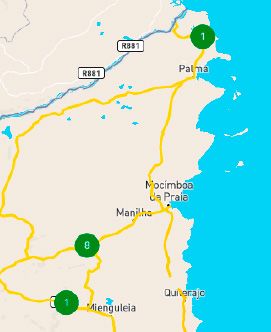
Mozambique: Vigil Insight Situation Report 19 August 2021

NSAs were involved in armed conflict events and attacks on civilians to a similar extent (see Map
5 & Map 6). Again, the northeastern and eastern side of Cabo Delgado was at particular risk from
incidents involving NSAs, with incidents involving NSAs being especially intense along the N380/
N381, R763, and also along the coast. Beyond Palma city, the area surrounding Mienguleia is a
key area of activity for NSAs - with roughly 33 combined conflicts and attacks on civilians in the
area.
Armed conflict events involving NSAs (see Map 5) are geographically spread similarly to those
involving Mozambique and foreign state actors as they largely constitute the same events. Armed
conflict events involving NSAs were especially prevalent in Palma city and along some of the
main roads in the northern area of Cabo Delgado (N380/381, R763).  Data also suggests that
although IS militia do fight against communal militia units, incidents between state actors and
IS are more common, with only 18 out of 104 incidents comprising conflicts between Islamist
militants and communal militia. Use of mitigation measures (see above) is advised in order to
decrease risk to aid operations.
Around 80 percent of all reported attacks on civilians were attributed to NSAs (see Map 6). Within
Cabo Delgado, almost all attacks on civilians by NSAs are perpetrated by Islamist insurgents.
Elsewhere in Mozambique, other NSAs, notably Renamo also perpetrated violence against
civilians. As with the armed conflict events, attacks on civilians in Cabo Delgado run from north
to south, both inland and along the coast but also affect islands. Notably Palma city, and its
surrounding areas including along the R763 have witnessed frequent attacks on civilians. At
particular risk are fishermen and other labour groups (e.g., railway workers, truck drivers), refugees
and IDPs, former security forces, and women and children, in addition to other ordinary civilians
who are seemingly indiscriminately targeted during attacks on villages. Aid beneficiaries will
therefore LIKELY continue to see threats both direct and indirect in the next three to six
months by NSAs, particularly by IS insurgents (see mitigation measures above).

    NSAs were involved in armed conflict events (green) and attacks on civilians (red) in Cabo
    Delgado province to a similar extent5:

    103 armed conflict                                     100 Attacks against
    events since January                                   civilians since
    2021                                                   January 2021
    •   102 events occurred                                •    94 attacks occurred
        in Cabo Delgado.                                        in Cabo Delgado
    •   84% of all reported                                •    81% of all reported
        armed conflict                                          attacks on civilians
        events countrywide.                                     countrywide.
    •   Majority of events                                 •    Perpetrators are
        (85) occurred                                           mostly Islamist
        between Islamist                                        militias.
        militias and state /                               •    Victims include
        foreign state actors.                                   fishermen, women,
                                                                children, refugees,
    •   18 events occurred                                      IDPs, journalists,
        between Islamist                                        and former security
        and communal                                            forces.
        groups.

Map 5: Armed conflict events involving NSAs               Map 6: Attacks on civilians by NSAs
5
 These maps are based on data from ACLED. Dots show the location and number of incidents that occurred in Cabo Delgado
province between 01 January 2021 to 30 July 2021. ACLED data accessed on 09 August 2021.
                                                                                                                         6
Mozambique: Vigil Insight Situation Report 19 August 2021
PREDICTIONS
● With the loss of Mocímboa da Praia, IS will move further towards an insurgency rather than
peer to peer conflict (ie, a nation state against another). Indeed Rwanda’s Brigadier General
Pascal Muhizi noted that the port was taken without much of a fight with the militants now
having regrouped and spread in small pockets of resistance throughout the Cabo Delgado.
Further attacks against civilians, especially in rural villages are LIKELY as are attacks against
military patrols and checkpoints - meaning that the civilian death toll may rise, with local
INGO staff also at risk. The risk will increase as air strikes and “boots on the ground” will
be necessary - leading to an increased use of checkpoints and checks on civilian/vehicle
movement, leading to delays in aid supplies.
● The war is far from over as insurgencies take time to control and deconflict. Indeed on 06
August the US declared two leaders of the IS group in Mozambique as state sanctioned
terrorists. The fact that the Mozambique government had ignored the Cabo Delgado area,
and indeed cleared the Palma area so that Total could extract gas, increased resentment
against the government.
● The early deployment of the Rwandans, who are not part of the SADC, has led to some
tension with the SAMIM troops. This - and President Paul Kagame’s reputation of an overly
aggressive nature towards internal and external rivals, and his link to the Pegasus Spyware
debacle especially with regards to South African President Cyril Ramaphosa - may also
pressure the current African alliance.
● Rwandan troops are well trained and seen as one of the better trained special forces in Africa
with the capability to pressure IS where needed. However, though trained by both the US and
French, in more recent times training has been carried out by the Chinese. A lack of human
rights training has been emphasised by EU/UK/US forces.
● Although the SAMIM will also provide additional ability to dominate the ground, using special
forces will be the Main Effort towards the insurgency, and the current numbers of Special
Forces may be stretched to deal with small pockets of IS units.
● The government has appealed to the local population to work with the Mozambique and
foreign state forces - however the previous resentment against the government’s lack of focus
on Cabo Delgado, including clearing areas around Palma (see above), and the support for the
opposition (who overall oppose the deployment of foreign troops) in the affected areas could
see tensions rise between local communities and the foreign state actors, leading to further
conflict between civilians and foreign state actors.
This document is published by Insecurity Insight
You may be interested in and is part of Vigil Insight.
The report is made possible by the generous support
Country page
of the American people through the United States
Data: Available on HDX Agency for International Development (USAID).
The contents are the responsibility of Insecurity
Threats and violence against education in Insight and do not necessarily reflect the views of
Mozambique in 2020 USAID or the U.S. government.
Threats and violence against health care in Insecurity Insight. 2021. ‘Mozambique: Vigil
Mozambique in 2020. Insight Situation Report 19 August 2021.’
Switzerland: Insecurity Insight. https://bit.ly/
MozSitRep19Aug2021
7You can also read


