National Education Growth Plan 2030 Waikato & Hawke's Bay / Tairāwhiti - May 2019 - Education.govt.nz
←
→
Page content transcription
If your browser does not render page correctly, please read the page content below

National Education
Growth Plan 2030
Waikato &
Hawke’s Bay /
Tairāwhiti
May 2019
The National Education Growth Plan is a new way of
thinking about and co-ordinating the Ministry of Education’s
response to school-aged population growth across New
                                                                 National Education
Zealand.

As communities change, so too do the schooling needs of their
                                                                 Growth Plan to 2030
tamariki and rangatahi. We have developed a National
Education Growth Plan which identifies what we know about
the anticipated location and patterns of growth in school-aged
children between now and 2030, and identified what the           Signalling a longer term view provides direction to the wider
Government may need to consider to meet this growth.             community, including other government agencies, local
                                                                 government, and infrastructure and service providers. This helps
Population growth is placing pressure on our school network in   to support their long-term planning and investment and provides
specific areas of the country. These high growth areas are all   increased confidence to the sector that we are anticipating and
unique and are experiencing growth in different ways. In some    planning for the challenges of a growing population.
areas, we are seeing redevelopment and intensification of
                                                                 We will monitor the plans annually and review as required to
existing urban areas, while in other areas entire new
                                                                 ensure that we are continuing to provide accurate, reliable and
communities are being established.
                                                                 up-to date information and data to inform the right investment
                                                                 decisions into the future.
Each growth area, or “catchment”, requires a specific and
targeted response. This Plan compiles these responses            Investment in our infrastructure has long-term effects and will
across the decade to 2030 and provides the basis for decision-   shape how well infrastructure functions for future generations,
making on investment spend in high growth areas.                 including delivering educational outcomes desired by the
                                                                 community.
We expect to see better value for the investment spend over      This National Education Growth Plan shows how sufficient
the longer term as we articulate a clearer picture of demand     capacity in the school network will be delivered in the right place
and response. With a longer term view, we can assess             at the right time.
whether there are potential investment gaps or affordability
issues beyond the 10-year horizon.
National Education Growth Plan
                    New Zealand Education Growth Plan to 2030

Contents
   o NEGP Framework
   o NEGP Summary
   o Waikato
   o Hawke’s Bay – Tairāwhiti
   o Disclaimers
   o Key to Icons
National Education Growth Plan
                                                                                         New Zealand Education Growth Plan to 2030
The National Education Growth Plan (NEGP) is a new way of thinking about and co-ordinating the Ministry of
Education’s response to population growth across New Zealand. The National Education Growth Plan will
ensure that sufficient capacity in the school network is delivered as the right type, in the right place, at the                       A new approach is needed to
right time.                                                                                                                            ensure that the educational
                                                                                                                                       needs are met for every
A Framework For Planning: Three Broad Profiles of Growth                                                                               child in New Zealand.
» There are different types of population growth in different areas of New Zealand. Growth in an area can be a result of net
  migration (people moving into the region) or natural growth from births.                                                              By 2030, students will
» Characteristics of the area influence the response to growth and, in some cases, there is the ability for expansion and new           exceed the number of
  development. In other areas, increasing capacity may require redevelopment or strategic solutions across a school or groups           student places by 100,000
  of schools.                                                                                                                           in high growth areas.
» We have identified 20 growth catchment areas within Auckland and 19 across the rest of New Zealand. For each catchment we
  have categorised them into one of three different profiles of growth: Blueprint for Growth, Complex Growth, Steady Growing.
  These are the three profile definitions:
                                                                                                                                       We have an opportunity to
                                                                                                                                       modernise and expand our network
                                                                                                                                       to support education now and for
                                                                                                                                       decades to come.

                                                                                                                                       Between 2017 and 2030 we have forecast that an additional
  This is where local government planning                                                                                              60,000 student places will be needed in Auckland. 12,000 of
  includes intensive housing development                                                                                               these have been funded through to Budget 18.                                                    Map Key:        HIGH
  and expansion into outer urban areas in
  response to, or causing, a large influx of                                                                                                                                                                                            Predicted
  people to move into a particular area.
                                                                                                                                                                                                                                                      MEDIUM
                                                                                                                                       Historically, we have funded places through the annual                                            growth in
  These are opportunities to master plan
                                                                                                                                       Budget process. Seeking funding annually reduces the ability                                    school age
  education infrastructure collaboratively                                                                                                                                                                                                            STABLE
  across agencies to integrate in new                                                                                                  to plan ahead and make strategic or innovative changes to                                       children by
  communities.                                                                                                                         the network. Flexibility will enable us to be responsive to                                      Territorial
                                                                                                                                                                                                                                         Authority    DECLINE
                                                                                                                                       growth.

Common solution framework across the full network                                                                                   Additional factors influencing solution decisions
Different types of growth require different responses in terms of school network solutions. We have identified a set of responses   There are a range of factors influencing the network solution. For example, in some cases additional classrooms can not be
and pre-determined triggers for when responses will be implemented.                                                                 added to existing schools because there is no physical space available. The likelihood of these factors being present vary across
                                                                                                                                    the different growth profiles. We have illustrated the prevalence of some common factors.
                 » Redirect students to under-utilised                              » Merger, relocation, or school type change
                   schools through zoning solution: e.g. new                          e.g. primary to composite, from single sex
                   zone or shrink zone, managing out-of-                              to co-ed, English medium to bilingual.
                   zone enrolments.                                                 » Considered if changing the network will
 Enrolment       » Zoning solution always first step                   Network        redirect students to other schools with
   zones           considered when schools are at risk of             restructure     student places.                                                          Additional          Parental choice      Demand to        Availability and    Constraints on
                   exceeding student places.                                                                                                                 learners in the         influencing          expand          acquisition of      existing site
                                                                                                                                                               catchment              utilisation      provision type appropriate land sites   capacity

                 » Build new classrooms in existing                                 » Acquire land and build new school -
                   schools to meet capacity, temporary or                             from start to finish takes six to ten          Blueprint for growth
                   permanent.                                                         years.
                 » Considered after zoning options                               » Considered if the network is                      Complex Growth
Roll growth        exhausted and schools still projected to           Establish    projected to exceed capacity within
 funding           be over-utilised.                                 new schools   six years.                                        Steady Growing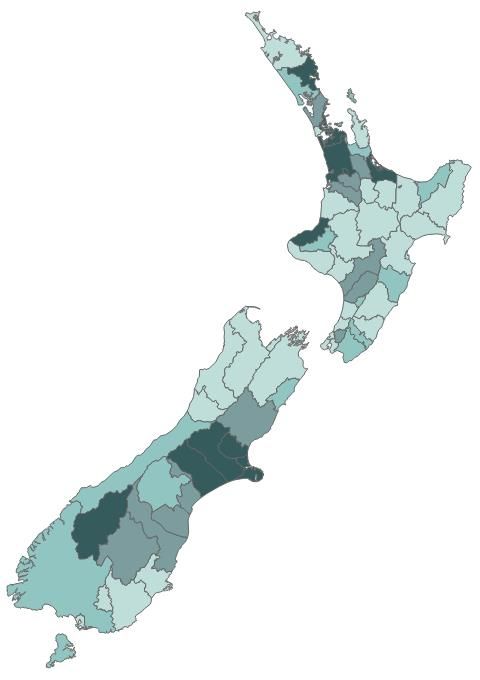
National Education Growth Plan
                                                                                          Summary of the growth catchments

      This is where local government planning
      includes intensive housing development
      and expansion into outer urban areas in
      response to, or causing, a large influx of
      people to move into a particular area.
      These are opportunities to master plan
      education infrastructure collaboratively
      across agencies to integrate in new
      communities.

                                                    National Growth Plans (excluding Auckland)
                                                                                                 Potential New
                                                                                School
                                Student places                New Schools                         Enrolment    Redevelopments
                                                                              Expansions
                                                                                                   Schemes
                         Low           High        Expected      Total            Total                Total                 Total

      To 2030          30,590 48,040                40,000        31                10                  38                     7

                                                                                                                                                                       We have identified
                                                              Auckland Growth Plans                                                                           39 high growth catchments
                                                                                                 Potential New                                                       across New Zealand
                                                                                Schools
                                 Student places               New Schools                         Enrolment           Redevelopments                             Across the catchments of schools,
                                                                              Expansions                                                                       we have identified the type of growth
                                                                                                   Schemes
                                                                                                                                                                          that is the primary driver.
                         Low           High        Expected      Total            Total                Total                 Total                 Blueprints for Growth = 18 catchments with the
                                                                                                                                                               most schools and the highest growth

      To 2030          17,255 63,866                60,000        30                21                  103                     2                     Complex Growth = 11 catchments within the
                                                                                                                                                   next biggest areas of growth with redevelopment
                                                                                                                                                               of existing schools to support growth

Note: The above numbers and forecast schooling infrastructure are correct as of November 2018 ; however are likely to fluctuate or     Steady Growing = 10 areas with change over longer periods
change as growth patterns emerge and develop over time.                                                                                       that will require targeted interventions and responses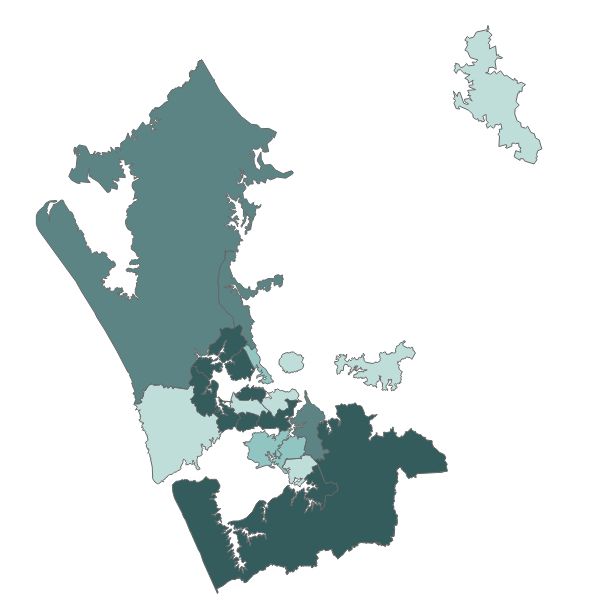
WAIKATO

Hamilton West: Blueprint for Growth
New Zealand Education Growth Plan to 2030
Director’s message: What have we done so far? • Beyond 2030, we expect that there will be a need for additional
provision at the secondary level in the Rotokauri area. Not only that,
E rau rangatira mā tēnā koutou katoa Exploring enrolment schemes with schools in the catchment and recently
significant investment will also be required at existing schools to
We are in the midst of dynamic change in Hamilton. The approved a scheme for the intermediate. We are monitoring the need for
accommodate an additional 300 primary students from the SHA.
city is experiencing very high growth and this looks set to schemes at all other schools as the number of students in these schools
continue. We are excited about this next chapter of growth continues to grow. Beyond 2030
and are planning now to ensure we have enough space in • Since 2013, $2.8 million has been spent providing additional capacity at a
Growth is expected to continue beyond 2030, albeit at a slightly slower
our existing schools, as well as new accommodation where number of rural schools. In Budget 18, two additional teaching spaces were
pace. A third primary school is likely to be needed in both Rotokauri and
it is needed. announced for Nawton Primary.
Peacocke. The need for additional secondary provision in the north of the
We know that our Hamilton West community values a • Most of the primary school sites are reasonably well optimised. However catchment will need to be reassessed. If a new secondary school is not
strong community spirit, a healthy environment, and schools that are accessible and there may be opportunities where site redevelopment can provide more established, additional provision will be needed at existing secondary
provide opportunities for walking and cycling. opportunity, and we are looking into these options. level to meet demand.
I am very pleased to present the following plan for growth for Hamilton West out to Planning for short-term growth (3 years)
2030. This growth plan complements the other growth plans for the Waikato region,
including Hamilton East, Cambridge and Te Kauwhata. The plan, like our other • If growth projections materialise as expected, by the early 2020s we expect
Ministry growth plans, is holistic and incorporates community aspirations and demand to exceed supply in local primary schools by about 700 student Māori medium
wellbeing needs, balanced with delivering equitable and excellent outcomes for all places.
In the Hamilton West catchment, there are seven kōhanga reo and one
New Zealanders. • At the primary level, this means additional provision is necessary in the short puna reo providing for preschool Māori medium learning. There are
Noho ora mai term to accommodate this growth until a new school is opened in 2024 (at three English medium primary schools and one intermediate school
the earliest). We are already searching for suitable land. providing Māori medium education through rumaki units. These schools
Paula Rawiri have a combined immersion roll of 312 tauira enrolled across all year
• We expect there to be sufficient capacity at the local secondary schools to
levels. Hamilton West has one Y1-8 kura with a current roll of 163
Hamilton West’s growth story 2021.
tauira. There is one Y9-13 wharekura in the catchment which draws
Hamilton West includes two of the City’s largest growth areas, Rotokauri in the • We know that our rural schools will also need additional teaching space in students from across the city and beyond, with a current roll of 264
north and Peacocke in the south, as well as the city centre and existing suburbs the next few years, although to a lesser degree, as they continue to tauira.
including the rural hinterland. Hamilton is identified as a High Growth Urban Area1, experience growth locally.
From 2019, a designated Y7-13 special character school will offer
and Hamilton City Council has been successful in securing $290 million in MBIE’s • We will continue to monitor school rolls and the uptake of development to differentiated te reo Māori pathways for all its students including
Housing Infrastructure Fund loans. This funding will accelerate new transport and ensure a proactive response to growth is provided. immersion, bilingual and learning te reo as a subject. The total roll for
wastewater infrastructure in the south and bring forward 3,750 new dwellings in
Planning for medium-term growth (3-10 years) this school will be 212 students and include 68 immersion tauira at
Peacocke by 2028 and up to 8,400 dwellings by 2048.
Level 2.
Infrastructure is already in place for the northern and southern ends of the • Acquisition is underway for two primary sites in the Rotokauri growth area.
Across wider Hamilton, we have begun work on a plan that will help
Rotokauri growth area. There are two Special Housing Areas proposed near The first is anticipated to open in 2024/2025. The second Rotokauri primary
ensure children and young people with their families can access
Rotokauri which, if approved, will fast-track more than 2,600 dwellings in the north. will open when our growth monitoring indicates it is necessary. Together
suitable Māori language pathways. Hui will commence in 2019.
Growth is also continuing through infill development, meaning the student these two new schools will provide sufficient capacity to meet expected
population is growing in existing suburbs, putting pressure on existing schools. population growth to at least 2030.
Learning Support
Stats NZ figures do not yet show the accelerated growth in Hamilton West. Council • Acquisition is currently underway for two primary sites in the Peacocke area.
The provision for children who receive ORS funding in the Hamilton
data2 indicates Hamilton City is expected to grow from 160,000 in 2018 to 187,000 The first new primary school is expected to open in 2024/2025. Timing of the
West catchment is covered by Patricia Avenue School, which supports
in 2030, and 210,000 by 2043. Our own projections modelled out to 2030 show an second primary will depend on the uptake of growth.
children from the south-west, and Hamilton North School, which
additional 1,800 to 3,350 primary-aged students accessing local schools, even • At intermediate and secondary level, growth in the Peacocke area will be met supports children from the north west. Due to population pressure, both
without the fast-tracked development in both growth areas. through investment and redevelopment of the existing schools in the area to of these schools are currently at capacity and are supported by satellite
Recently, growth in the primary school population has been at or above the highest provide an additional 1,800-2,400 student places. units at Melville Primary, Melville High School, Crawshaw School and
growth projections. The primary school network has been experiencing growth • We are planning to engage with the community to determine what future Hamilton Junior High School.
pressure. The secondary network has some capacity currently available but primary and secondary provision might look like across the Hamilton West There are also school managed learning support spaces at several
pressure will mount as primary students move into secondary schools. catchment. schools. All new schools will be considered for provision for learning
support space.
1 National Policy Statement on Urban Development Capacity, an instrument issued under Section 52(2) of the Resource Management Act 1991
2 2016 Update of Population Projections for the Waikato Region (2013-2063), University of Waikato (NIDEA)Hamilton West: Blueprint for Growth
New Zealand Education Growth Plan to 2030
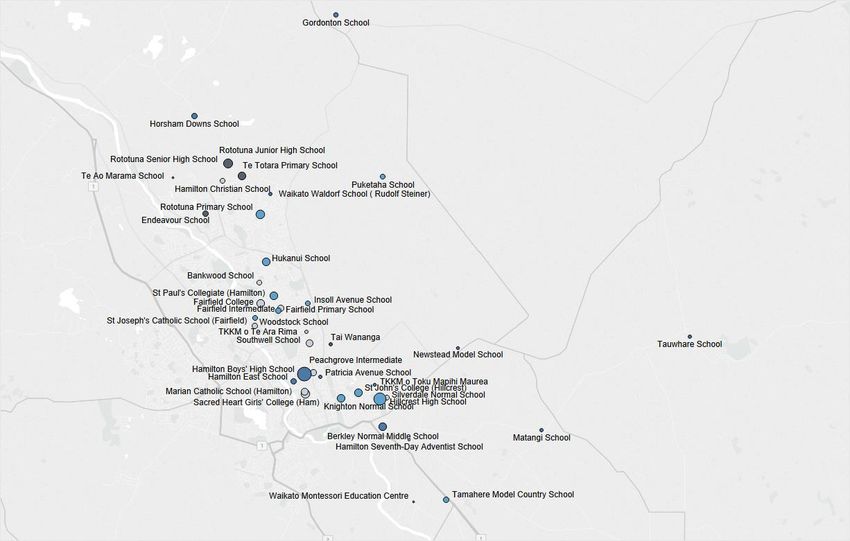
This growth plan covers the Hamilton West area in the Waikato education region. In the Hamilton West catchment there are 34 schools: 29 state, 5
state integrated; 15 full primary, 9 contributing primary schools, 2 intermediates, a restricted composite, 5 secondary schools, a teen parent unit
and a special school. As at July 2018, this catchment had a combined school roll of 13,258 students, including 761 Māori Medium students and
207 ORS students.
What’s influencing the Growth Plan
Large scale residential developments
Here’s what's already underway that’s giving us a
Hamilton City Council has been successful in securing $290 head start to meet growth in the region
million in Housing Infrastructure Fund loans, bringing forward
3,750 new dwellings in Peacocke by 2028. Three Special Housing
Areas proposed near Rotokauri could fast-track more than 2,600 » Most schools in the catchment have
dwellings. enrolment schemes in place.
More population grow than projected
Growth in the primary school population has been at or above » Acquisition is currently underway for two
the highest growth projections. Our projections show an primary sites in the Rotokauri growth area
additional 1,800 to 3,350 primary-aged students accessing local and two primary sites in the Peacocke
schools by 2030, even without the fast-tracked development.
growth area.
Current network under pressure
» $2.8 million funded for increased capacity
The primary school network is experiencing pressure from
at rural schools, and two teaching spaces
significant growth. The secondary network has some capacity
for Nawton Primary School.
currently available but pressure will mount as primary students
move into secondary schools.
Growth Plan to 2030
2019 2022 2030
Site Potential site
acquisition Potential new acquisition for
for four primary schools in future secondary
primary Rotokauri and Potential new primary schools in in Rotokauri
sites Peacocke Rotokauri and Peacocke – timing TBC
Additional 700 student places at primary by 2023
» Explore enrolment schemes with some schools in the catchment. We will » We will continue to monitor development uptake across
continue to monitor the schools as the number of students in these schools the growth areas, as well as school rolls to determine » We are planning to engage with the community to
Enrolment continues to grow. timing for investment. determine what future primary and secondary provision
Network
Schemes might look like across the Hamilton West catchment.
solutions
» From 2019, a designated Y7-13 special character school
» We are aiming to open one primary school in the will offer Māori medium education with a roll of 68
» An additional 700 student places are required in the primary network prior to a Rotokauri growth area and one primary school in the immersion tauira at Level 2.
new school opening in 2024. Expanding
Peacocke area by 2024/2025. » Across wider Hamilton, we have begun work on a Māori
» At intermediate and secondary level, growth will be met through investment Provision
» There is likely to be need for a second additional primary Type
medium strategy and will hui with the community in 2019.
and redevelopment of the existing schools in the area to provide an additional
Establish school in Rotokauri, and a second additional primary » All new schools will be considered for provision for
Roll 1,800-2,400 student places.
New Schools school in Peacocke, however the opening dates will learning support space.
growth » The rural schools will also need additional teaching space in the next few
funding depend on the uptake of growth.
years as they continue to experience growth locally.
» The timing for additional secondary provision will depend
on the pace of development in the catchment.Hamilton East: Blueprint for Growth
New Zealand Education Growth Plan to 2030
Director’s message:
What have we done so far?
E ray rangatira mā tēnā koutou katoa • We will continue to monitor school rolls and work with Councils to
• Most schools have enrolment schemes in place, and where they do not we
In the same way we’re seeing Hamilton West understand the uptake of future residential growth.
are either discussing implementing one, or there is no benefit to
expand, the eastern part of the city has also spread implementing one, such as in some broad rural catchments.
northwards over the last decade. We have delivered
• Seven new schools have been established in this catchment in the last Beyond 2030
new schools to accommodate the growth as it has
fifteen years; four of these since 2015 including two primary, one junior
developed. We know that this growth is going to go Growth beyond 2030 is expected to continue. It is anticipated that additional
high school and one senior high school. The most recent school is Te Ao
on and we will plan to meet these challenges. secondary provision in the north of the catchment will be in place by 2030
Mārama primary which opened for Term 1, 2019.
In Hamilton East, we will support our local communities to cater for this however the timing of this is uncertain. As the future development areas are
• Between 2013 and 2017, we have invested $2.7 million on nine additional incorporated within the City boundary, this will enable significant growth in
growth through our existing local schools where we can.
teaching spaces across the catchment. Four additional teaching spaces these areas. Additional schooling provision is likely to be required in these
As a region, we are planning now so that we have enough space in our were announced in Budget 18 for Fairfield Primary. locations.
existing schools as well as new accommodation where it is needed. This
• We are currently negotiating the purchase of more land adjacent to
growth plan looks at Hamilton East and complements the other growth
plans for the Waikato region, including Hamilton West, Cambridge and Te
Horsham Downs Primary to accommodate projected roll growth. Māori medium
Kauwhata. In the Hamilton East catchment, there are six kōhanga reo and two puna
I am very pleased to present the following plan for growth for Hamilton East reo providing for preschool Māori medium learning. There is one primary
Planning for short-term growth (3 years)
out to 2030. This plan, like our other Ministry growth plans, will help to and one intermediate school providing education in Māori medium through
We’re planning now to accommodate growth in the short-term through a a rumaki, both at Level 2. These schools have a combined immersion roll of
deliver an education system that enables every New Zealander to achieve
variety of responses, including enrolment schemes and new capacity. If 117 tauira across all year levels. There is also one secondary school
and be the best they can be.
growth projections materialise as expected, by the early 2020s, we expect: offering Māori medium at Level 2. There are two full primary kura with a
Noho ora mai combined immersion roll of 300 tauira.
• At the primary level, we will need to provide an additional 280-630 student
Paula Rawiri places in this catchment. This will mostly be at existing urban schools In the Hamilton East catchment, there is no secondary full immersion Māori
where infill development has seen the schools roll increase significantly. medium pathway for tauira, and many of these tauira travel to the
Hamilton East’s growth story wharekura situated in Hamilton West.
• To initiate the acquisition process for up to three primary school sites in the
Stats NZ projects that Hamilton City’s population will grow from 168,000 in catchment in the next 12 to 24 months. Across wider Hamilton, we have begun work on a plan that will help ensure
2018 to 198,000 in 2030, and 225,000 by 2043. Hamilton East covers a children and young people with their families can access suitable Māori
large urban area east of the Waikato River and extends into parts of the • Stage 3 of the Rototuna Junior/Senior High to result in an additional 500
student places. language pathways. Hui will commence in 2019.
surrounding Waikato and Waipa Districts. The northern part of the
catchment comprises Rototuna where more than half of Hamilton’s
population growth in the last fifteen years has occurred.
Planning for medium-term growth (3-10 years) Learning Support
There are smaller pockets of new development planned for the eastern
We already have plans underway to manage growth through to 2030. Here’s Specialist learning support facilities are available at Patricia Avenue
fringe at Greenhill (up to 1,500 dwellings) and Ruakura (800-900 dwellings).
how: School, for children from the south-east, and Hamilton North School for
There are also future growth areas to the north and north-east that will be
children from the north-east.
transferred into the City as more land is required. This is anticipated to • We know re-development of existing school sites will be required in the
happen in the early part of the next decade – about 10 years ahead of medium term to accommodate the growth we know is coming. Master In Hamilton East, they are supported by satellite units at four primary
schedule. planning is already underway at Rototuna and Fairfield Primary schools. schools (including one state integrated primary), Fairfield Intermediate, and
Rototuna High School. Te Ao Mārama School, which opened in 2019, also
The remainder of growth in this catchment is anticipated to be in more • We will work with all schools to agree a master planning capacity to which has a learning support satellite unit.
established suburbs through infill. Council is encouraging this as the each school can be re-developed.
infrastructure already exists. For us, this means we will need to There are school managed learning support spaces at several schools. All
• We expect that there will be a need for additional provision at the new schools will be considered for provision for learning support space.
accommodate a growing student population within existing suburbs.
secondary level in the Rototuna area sooner than anticipated due to roll
Growth in the primary school population has been at or above the highest growth pressure on existing schools. Timing of this provision is now
growth projections. Hamilton East primary schools are experiencing anticipated to be required prior to 2030, however this will depend on how
significant pressure. The secondary network has some capacity but we fast development unfolds.
need to plan as pressure will mount as primary students move into
secondary schools.Hamilton East: Blueprint for Growth
New Zealand Education Growth Plan to 2030
This growth plan covers the Hamilton East area in the Waikato education region. In the Hamilton East catchment there are 41 schools; 31 state, 6
state integrated, and 4 private schools; 10 full primary, 16 contributing primary schools, 2 intermediates, a restricted composite, 2 composite, 9
secondary schools, and a special school. As at July 2018, this catchment had a combined school roll of 20,779 students, including 457 Māori
Medium students and 313 ORS students.
What’s influencing the Growth Plan
Population growth
» Significant population growth has occurred in the Here’s what's already underway that’s giving us a head start to meet
Here’s what's already underway that’s giving us a
last few years in previously undeveloped land in growth in the region
the north, and infill growth in the existing older
head start to meet growth in the region
suburbs. This is expected to continue putting » Most schools have enrolment schemes in
pressure on network. place where they need one. Exploring
Current network at capacity enrolment schemes with some schools in the
catchment
» The primary schools in Hamilton East are
experiencing pressure from significant growth. » Opened four new schools since 2015, the
The secondary network is expected to exceed most recent being Te Ao Mārama primary
capacity in the next three years. school which opened in Term 1, 2019.
Council re-zoning ahead of schedule
» Changes to the city’s boundaries are planned to » Funded 13 teaching spaces since 2013. We
occur sooner than anticipated bringing forward are looking for more land adjacent to
development in the east. We expect further land Horsham Downs Primary school to
acquisition might be necessary to accommodate accommodate roll growth.
this.
Growth Plan to 2030
2019 2022 2030
Rototuna Potential site Stage 2 Te Āo Potential new primary
Te Ao
Jnr/Snr High acquisition for Marama (Rototuna #2)
Mārama
expansion up to three 300 student places 500 student places
opens
500 student primary and Opening of further new
places one secondary Potential new primary schools – timing
site secondary provision TBC
280-630 additional primary student places (Rototuna)
» Site acquisition process to be initiated in the next 1-2
» Explore enrolment schemes and changes with some years for up to three new primary school sites, with
schools in this catchment. these schools opening as monitoring determines. » In the Hamilton East catchment, there is no secondary full
» Further secondary school provision will be needed in immersion Māori medium pathway for tauira, and many of these
Enrolment » Enrolment schemes will be amended as new schools
Site Rototuna sooner than anticipated, with site acquisition tauira travel to the wharekura situated in Hamilton West.
Zones are established.
Acquisition required in the short-term. » For the wider Hamilton area, we have begun work on a
Hamilton-wide Māori medium strategy and will hui with the
community in 2019.
Expanding
» Specialist learning support facilities are available at Patricia
» Between 280-630 additional student places in the Provision
Avenue School, for children from the south-east, and Hamilton
primary network are needed in the next three years to Type
» New primary school (Te Ao Mārama) opened in 2019. North School for children from the north-east. Due to population
accommodate roll growth in existing schools as a growth, both of these schools are currently at capacity.
result of infill development. » New primary and secondary provision likely to be
required sooner than expected due to roll growth » All new schools will be considered for provision for learning
Roll » Expansion at Rototuna Junior/Senior High will add Establish
pressure on existing schools. support space.
growth 500 student places at secondary level. New
funding SchoolsCambridge: Blueprint for Growth
New Zealand Education Growth Plan to 2030
Director’s message: While the wider area is serviced by both rural schools and urban schools, it is • We will engage with the Kāhui Ako and wider community in relation to
E rau rangatira mā tēnā koutou katoa. The entire the urban schools that are facing considerable pressure. Recently, growth in community preferences and governance for any new schools.
Waikato region has been experiencing significant the Y1-6 population has been at or above the highest growth projections. The
• Significant investment will be required at secondary level between now
growth over the last decade. Cambridge, while urban primary schools have had to managing growth in primary and
and 2030. Early discussions are underway with both schools on a range
traditionally a rural town, is now subject to the same secondary has been challenging over the past five years.
of options. We are also looking to partner with Council for shared use of
pressures from urban growth that we have seen in adjacent reserve land.
Hamilton for some time. There is no sign of this What have we done so far?
growth slowing down either. While growth is exciting, it • We will continue to monitor rolls and collaborate with Waipa District
• We have been working with the school leadership in Cambridge for the last
also comes with its challenges. Council to understand the uptake of future residential growth to ensure
two years, both as a collective and as individual schools, on the strategies
a proactive response to growth is provided;
We are planning now to tackle the growth we expect to see and to ensure we that can help manage the growth. All of the primary schools in Cambridge
have enough space in our schools for our students. This growth plan looks at have enrolment schemes in place, as does the High School. We are
Beyond 2030
Cambridge, southeast of Hamilton, and seeks to complement the other growth exploring an enrolment scheme with another school.
plans for the Waikato region, including Hamilton West and Te Kauwhata. Beyond 2030, the student population in the Cambridge catchment is
• The primary school sites in town are reasonably well optimised, with limited
anticipated to grow at a slightly slower rate. Long-term Council projections
We know what is important for our Cambridge community. They have told us options to add significant new capacity.
indicate that the same amount of growth is expected between 2027 and
they value the natural environment and green space, the history and character • Two additional teaching spaces for Cambridge East Primary ($1 million) 2050 as is likely between 2018 and 2027.
of the town, and schools that are accessible and provide opportunities for are currently under construction. Additional teaching space provision ($9
walking and cycling. Site acquisition undertaken to 2021 is anticipated to provide adequate
million) for Cambridge High School is due to be constructed this year. The
schooling provision to 2043, however further capital expenditure for
I am very pleased to present the following plan for growth for Cambridge out to redevelopment will add 150 student places to the secondary network.
acquisition could be required post-2030 if the quantum of growth is higher
2030. The plan, like our other Ministry growth plans, is holistic and than anticipated.
incorporates community aspirations, wellbeing considerations and needs Planning for short-term growth (3 years)
balanced with delivering equitable and excellent outcomes for all New • By 2021, we anticipate that capacity will need to be increased to
Zealanders. Māori medium
accommodate an additional 140 student places in the primary network, a
Noho ora mai further 70 places at intermediate level, and about 270 student places in the In the Cambridge catchment, there are two kōhanga reo and one Y1-8
secondary network. kura. There are 93 tauira enrolled at the kura. There is no provision for
Paula Rawiri Māori medium beyond Y8 in the Cambridge catchment.
• We know that the Middle School has already reached capacity and
additional provision is required to meet the primary cohort coming through. There is currently no network strategy in this area to support seamless
Cambridge’s growth story
At the primary level, both temporary and permanent accommodation is provision of total immersion schooling from kōhanga reo to wharekura.
Cambridge has been earmarked as a priority growth area for the Waikato expected to be required in the next two Budget rounds to accommodate We are beginning to look at a plan for Hamilton City that might provide
region through the FutureProof Strategy1. Since 2009, growth in Cambridge growth until a new school is opened in 2023 (at the earliest). direction for the Cambridge area.
has surpassed expectations, and has now prompted a review of the District’s
growth strategy. • But it’s not just the schools in town that will grow. We expect that some of Learning Support
the rural schools close to where the planned growth is will also need new
Greenfields development on the northwest periphery of the town is underway. The provision for children who receive ORS funding in the Cambridge
capital to increase capacity in the catchment.
Council already has the infrastructure in the ground, and is currently re-zoning catchment is limited. Currently those children enrolled with Patricia
additional residential land. Planning for medium-term growth (3-10 years) Avenue School in Hamilton require transport out of Cambridge for their
primary schooling years. Cambridge Middle School is the only school in
Statistics NZ projections show some growth in the Cambridge catchment.
By 2031, we expect an additional 400-600 primary and 500-1,000 secondary the catchment that hosts a satellite unit of Patricia Avenue School, and
Layering the Stats NZ data with our local knowledge and insights, including
students within the catchment. Here’s how we’re planning for this growth: they support children from Y7-10. There are school managed learning
Council data indicates an additional 7,100 people in Cambridge by 2027, and
• Acquisition for a new primary school site on the western side of Cambridge support spaces at several other schools including Cambridge High
a doubling in size by 2050 to a population of 30,0002. This means an
is currently underway. This may be a new primary school, or a relocation School.
additional 400-600 primary students and 500-1,000 secondary students will
need to be accommodated in the urban network by 20313. and expansion of the existing Hautapu School. All new schools will be considered for provision for learning support
• We are planning to engage with the community later this year to determine space.
what future primary and secondary provision might look like.
1A combined growth strategy for Hamilton City, and Waikato and Waipa Districts.
2 ‘Waipa2050 Growth Strategy’, (October 2017)
3 ‘Cambridge Area Report’, (September 2017)Cambridge: Blueprint for Growth
New Zealand Education Growth Plan to 2030
This growth plan covers the Cambridge area in the Waikato education region. In the Cambridge catchment there are 15 schools: 13 state, a state
integrated, and a private school; 6 contributing primary schools, 6 full primary, a restricted composite, and 2 secondary schools. As at July 2018,
this catchment had a combined school roll of 5,592 students, including 77 students in Māori Medium education and 41 ORS students.
What’s influencing the Growth Plan
Population growth
» Local schools in established areas have been Here’s what's already underway that’s giving us a head start to meet
under increasing pressure from growth in the growth in the region
primary-aged population has been at or above
highest growth projections. » Enrolment schemes are in place at most of
the schools in this catchment. We are
Current network will reach full capacity
exploring enrolment schemes with schools, as
» The primary schools in Cambridge have well as monitoring the rolls of other schools.
experienced pressure on their capacity since at
least 2014. Pressure on the secondary network
will continue to mount as primary students move » We are looking for a site for additional primary
into secondary. school provision in the west of the catchment.
Existing site constraints
» Primary school sites are well optimised with
limited opportunities for expansion. This » Funded two teaching spaces at Cambridge
challenge underpins our strategic plan for this East primary, and $9 million for Cambridge
catchment. High School redevelopment and capacity
increase.
Growth Plan to 2030
2019 2022 2030
Acquire Discussion on Potential new
new secondary primary
primary site schooling options school
140 additional student places at primary by 2021
70 additional student places at intermediate by 2021
270 additional student places at secondary by 2021
» In Cambridge, there is no provision for Māori medium
» We will explore implementing and amending enrolment » Develop and consider options with the Cambridge education beyond Y8.
schemes as necessary as part of establishing the new community for how secondary schooling could be structured » We are beginning work on a Hamilton City strategy for
primary school, and once the future provision of secondary
Network in the future, Māori medium that will provide direction for the
schooling is determined. Cambridge area.
solutions
» Specialist learning support facilities for primary-aged
children are only available at Patricia Avenue School,
Expanding meaning these learners must transport out of Cambridge
Provision for this education.
» Permanent and temporary accommodation is required at the Type » Cambridge Middle School hosts a satellite of Patricia
primary and intermediate level to accommodate roll growth » Acquire new site for primary and assess whether this
Avenue School for Y7-10 students.
in the immediate term to accommodate growth until a new becomes a new primary school in west Cambridge, or a
school is opened in 2023 (at the earliest). relocation of the existing Hautapu School. » All new schools will be considered for provision for
Roll growth Establish New learning support space.
» An additional 270 student places in the secondary network
funding Schools
also need to be accommodated prior to 2021.Te Kauwhata: Blueprint for Growth
New Zealand Education Growth Plan to 2030
Director’s message: What have we done so far?
• We expect that one to two additional primary schools will need to be
E rau rangatira mā tēnā koutou katoa. The • Four additional teaching spaces have been funded through Budget 18, with
established in the second half of the decade.
northern Waikato region has been experiencing two temporary classrooms required to fill a gap while these classrooms are
significant growth over the last decade. The built. • Continue to collaborate with the Kāhui Ako and wider community in
majority of this growth has been in the main relation to community preferences and governance for new schools.
• An enrolment scheme is already in place at the primary school. The site is
centres, mostly in Hamilton. However, growth has well optimised, with limited options to add new capacity. The addition of four
also started to expand out of the main centres, into Beyond 2030
teaching spaces will see it reach its optimum site potential.
traditionally small rural towns such as Cambridge Beyond 2030, growth is expected to continue at a slightly slower rate.
and Te Kauwhata. This growth looks set to Long-term Council projections for the Te Kauwhata township in 2045
continue in the decade ahead. indicate around 1,100 Y1-6 students and about 1,100 Y7-13 students.
We are planning now to meet the school age population growth in the area Planning for short-term growth (3 years) However, this is an underestimate of projected rolls as both the primary
to ensure we have enough space in our local schools for our local and secondary schools cover an area larger than the town itself. The site
By 2021, we forecast an additional 150-250 students in the primary network.
students. This growth plan looks at Te Kauwhata, a town north of Hamilton acquisition currently underway is anticipated to provide adequate
and seeks to complement the other growth plans for the Waikato region • We will work with schools to implement enrolment schemes to manage schooling provision to 2043.
including Hamilton East, Hamilton West and Cambridge. population growth and enrolments in the short term.
I am very pleased to present the following plan for growth for Te Kauwhata • We expect that additional teaching space for the primary school will be
out to 2030. The plan, like our other Ministry growth plans, takes a holistic needed to temporarily accommodate an extra 200-300 students prior to a
look at growth and our existing schooling catchments, while also taking new school opening. We are looking for opportunities to partner with local Māori medium
account of community aspirations and need. We are also acutely aware of councils, including use of a reserve as playing fields in the short-term while
Within the Te Kauwhata catchment, there is one kōhanga reo. Beyond
the need to maintain our role as stewards of the education system for all temporary classrooms are placed on the school site.
kōhanga, there is no pathway for Māori medium education in Te
New Zealanders and that we use our taxpayer funding wisely. • Site acquisition for two new primary schools in Te Kauwhata is underway. A Kauwhata. The nearest Māori medium options are Rangiriri for Y1-8, and
Noho ora mai new primary school could be built there within six to 10 years; by 2023 at Huntly for Y9-13 tauira.
the earliest. We are planning to engage with the community later this year
Paula Rawiri There is no Māori medium network strategy in the Waikato to support
to determine how these two new primary schools will look.
seamless provision of total immersion schooling from kōhanga reo to
Te Kauwhata’s growth story • We will also need to expand Te Kauwhata College as the primary-aged wharekura. We are beginning to look at a strategy for Hamilton City that
cohort moves through into secondary schooling. We plan to do this by re- might provide direction for the Te Kauwhata area. Our intention is to
Historically, growth in Te Kauwhata has been steady, with sufficient
developing the school to increase the capacity to 1,200 student places and consult and develop an appropriate strategy for Te Kauwhata in order to
capacity within the local school catchment able to accommodate
early master planning discussions are already underway with the school. provide a response to the demand in the area.
demand. However, we know that this is about to change.
• It’s not just the schools in town that will grow either. We expect that some
Te Kauwhata is earmarked as a priority growth area for the north
of the rural schools close to where the planned growth is will need
Waikato / south Auckland area through the region’s FutureProof
additional teaching space in the next few years too.
Strategy. Re-zoning of 132 hectares of rural land for residential Learning Support
development has recently been approved. Also, the Waikato District
There is currently no specialist Learning Support space in the Te
Council has been successful in securing $38 million in MBIE’s Housing
Planning for medium-term growth (3-10 years) Kauwhata catchment area for ORS-funded children. Learning support
Infrastructure Fund loans to fund new infrastructure associated with this
needs for students are managed by the schools at primary school level.
development. Network analysis suggests that additional demand will be in the order of 800- Secondary students travel to Parkside School in Pukekohe for their
The current funded capacity of the town’s primary school network is 370 900 primary student places and 820-950 secondary student places by 2035. schooling. Tō Tātou Tere Haerenga – Our Journey Kāhui Ako are actively
student places. The current capacity of the town’s secondary school We are planning now to accommodate this growth: seeking to implement the new Learning Support model in order to continue
network is 524 student places. • We will continue to monitor school rolls and the uptake of future residential to deliver positive learning outcomes for children who have additional
Stats NZ figures are yet to capture projected growth in Te Kauwhata. growth to ensure a proactive response to growth is provided. learning needs.
The local council data indicates a six-fold increase in the population of All new schools will be considered for provision for learning support space.
Te Kauwhata to around 11,000 by 2045. Our own projections modelled
out to 2035 expect us to see an additional 1,600-1,850 students
accessing local schools.Te Kauwhata: Blueprint for Growth
New Zealand Education Growth Plan to 2030
This growth plan covers the Te Kauwhata area in the Waikato education region. In the Te Kauwhata catchment there are 5 state schools including:
3 contributing primary, a full primary, and a secondary school. As at July 2018, this catchment had a combined school roll of 863 students,
including 17 students enrolled in Māori Medium education and 3 ORS students.
What’s influencing the Growth Plan
Large scale residential developments
Growth is expected in Te Kauwhata as part of the Auckland to Here’s what's already underway that’s giving us a head start
Hamilton Corridor Strategy. Waipa District Council (WDC) has to meet growth in the region
recently re-zoned 132 hectares of rural land for residential
development. WDC has secured $38 million in HIF loans to fund
» Enrolment schemes in place at Te
infrastructure associated with this development.
Kauwhata Primary School, and
More population grow than projected Waerenga School.
Council projections anticipate a six-fold increase in the town’s
population to around 11,000 by 2045. By 2035, we forecast
this could mean an additional 1,600-1,850 students accessing » Acquisition is currently underway for
local schools. two primary sites in Te Kauwhata.
Current network will reach full capacity
The primary school has reached its current capacity, » Four additional teaching spaces funded
Additional teaching spaces will see the site reach its optimum for the primary school, with two
potential. The secondary network has some capacity currently temporary spaces in place while these
available. are built.
Growth Plan to 2030
2019 2022 2030
Re-development
Hui with Potential Potential new primary
of college
community new primary school – timing TBC
school
Acquisition
of two
sites 150-250 additional student places required by 2021
» We will work with schools to implement enrolment schemes » We plan to re-develop and expand Te Kauwhata College to » There is no pathway for Māori medium
where they are necessary to manage growth and out-of-zone increase the capacity to 1,200 student places. Early master education in Te Kauwhata beyond kōhanga reo.
Enrolment enrolments. planning discussions are already underway with the school.
Network » There is no specialist Learning Support
zones solutions provision in Te Kauwhata. Learning support
needs for primary students are managed by the
primary schools. Secondary students travel to
Expanding Parkside School in Pukekohe for their
Provision schooling.
Type
» Provision for an additional 150-250 student places is required » All new schools will be considered for provision
» We know that we need more space in the primary network.
in the primary network by 2021. for Learning Support space.
We expect at least one new school will need to be established.
Roll growth Establish New
funding SchoolsHAWKE'S BAY / TAIRĀWHITI
Havelock North: Steady Growing
New Zealand Education Growth Plan to 2030
Director’s message: Not only have we seen growth within the Havelock North catchment Planning for medium-term growth (3-10 years)
over the past five years, but the proportion of out-of-zone students for
In recent years, there has been population growth Beyond 2023, the primary-aged population is anticipated to remain static or
some of the schools has also increased. This has created additional
within Havelock North and surrounding areas with decline, and the secondary-aged population is anticipated to peak in the late 2020s
pressure on schools due to growth within the home zone.
further urban development planned. We know we and then plateau2. Population projections to the late 2020s show growth of
need a longer-term view to assess what the likely What have we done so far? approximately 125-150 secondary students and a decline of 30-70 primary
effects of future growth may be. students.
• Five of the eight state schools within the Havelock North catchment
Accordingly, a review of educational pathways for all have enrolment schemes in place. We are working with one school to Beyond 2030
learners in the Havelock North catchment is develop an enrolment scheme to assist the school with managing the
Growth beyond 2030 looks likely to be at a slower pace. We will continue to
underway and we eagerly await the outcomes of this current overcrowding issue.
monitor school rolls and the update of development in the area. We anticipate that
review. In developing this strategy, we have undertaken numerous
• We have approved a change of class for Te Kura Kaupapa Māori o strengthening the surrounding schooling networks will provide greater choice for
engagement sessions with both the community and individual schools. This
Te Wānanga Whare Tapere o Takitimu and allocated funding to students and ensure they have access to a reasonably convenient school.
has given our community the chance to learn more about local education
relocate the wharekura to a larger site, which will allow for future
offering, as well as an opportunity to share their ideas on what the future of
schooling could look like.
growth. The Y1-13 wharekura is expected to be open on their new Māori medium
site in 2021.
I am enthusiastic about the options being explored for the Havelock North Māori students living within the Havelock North area represent 20% of the student
• Approximately $5 million has been allocated for nine additional population3. Only 3% of students from this catchment access Māori medium
catchment. We want to ensure that all students are able to attend a
teaching spaces across the catchment. education (MME) Levels 1 or 2. Education in the Māori medium is accessible
reasonably convenient school and all schools in the area are used
effectively to support the wellbeing of children and local communities. This • We have initiated a review looking at the long-term plan for schooling through two composite kura and two full primary schools in the surrounding
plan shows how we aim to achieve these goals. in Havelock North and surrounding areas. The review considers the Hastings area. These schools have 511 tauira enrolled in te reo immersion4.
medium and long-term population growth and whether our existing There are four kōhanga reo within the wider Havelock North catchment. Beyond
Ngā mihi,
schools can accommodate this growth. The outcome of this review this, the pathways for MME are limited and we have a growing Māori population.
Roy Sye will be a Havelock North Area Strategy, expected to be completed in Both of the existing composite kura are at or near capacity so further property
2019. provision may be required in the future. Pathway options for Māori students are
Havelock North’s growth story currently being explored through the development of the Havelock North Area
Planning for short-term growth (3 years)
The 2017 Heretaunga Plains Urban Development Strategy (HPUDS) Strategy, which may include the delivery of te reo Māori through the existing
forecasts an additional 1,065 greenfields dwellings will be required by 2045 • Our approach for managing both short and long-term growth within schooling network.
in the Havelock North catchment area. There are two other areas identified the Havelock North catchment will be developed through the Area
Strategy process, which is currently underway. Learning Support
as “reserve”1 areas in the strategy, which could yield a further 570 new
dwellings. • In addition to the development of an Area Strategy, we will ensure Historical data shows an increasing trend in the demand for learning support
that those schools with enrolment schemes in place are managing services, with a 29% increase between 2013 - 2017 in ORS students in Hastings
The majority of this growth is anticipated to be in the western and the north-
them effectively and actively working to reduce their out-of-zone rolls. District.
eastern areas of Havelock North. The schools most likely to be affected by
these growth areas are Te Mata School, Lucknow School, Havelock North This may include formal support for boards that experience difficulty Within the Havelock North catchment, students have access to Kowhai Special
Intermediate and Havelock North High School. Further growth is predicted in achieving this. School located in nearby Hastings, or they can choose to attend one of the local
within the current urban limits through intensification and infill housing, which • We will assist schools to implement enrolment schemes where mainstream schools. Havelock North High School also operates its own
is expected to account for 40% of the additional households in the HPUDS necessary to help manage overcrowding issues. independent learning support space on site.
study area. In the nearby Flaxmere catchment, funding has been allocated to the construction
• We will review enrolment scheme boundaries for Havelock North
In a bid to address population and household growth in Havelock North and primary schools and re-align these where necessary to help of a new junior double satellite unit for Kowhai Special School, as well as a double
to recognise the acute shortage of residential sites, Council re-zoned the land effectively manage the current schooling network. satellite unit for the senior students. Work is also proposed to improve the learning
for the Iona urban growth area (approximately 390–400 new dwellings) using support unit at Havelock North High School so it is fit for purpose.
• There may be a need for additional property provision within the
the streamlined planning direction, which was approved by the Environment Most of the primary schools within the catchment are largely accessible for learning
intermediate and secondary network, however this is dependent on
Minister in September 2018. Council has also initiated the structure planning support staff and students. Minor property modifications may be required at the
the effectiveness of the enrolment schemes in managing growth.
process for the Brookvale Road/Romanes Drive in the north-east to allow for intermediate and high school in future to make them more accessible for students.
further urban development in the medium-term. This could yield an additional
675 dwellings.
1A ‘reserve’ growth area will act as replacement if any greenfield area becomes unavailable, or if rapid and significant growth occurs.. 3 March 2017 roll data.
2 ‘Hastings/Havelock North Area-Long Term School-Age Population Growth Projections 2018-2038’, Economic Solutions Ltd (February 2018) 4 July 2017 roll data.You can also read


