NC Zoo Society Magazine of the - Spring 2019 :: North Carolina Zoological Society
←
→
Page content transcription
If your browser does not render page correctly, please read the page content below
Magazine of the
NC Zoo Society
www.nczoo.com

                  Spring 2019 :: 1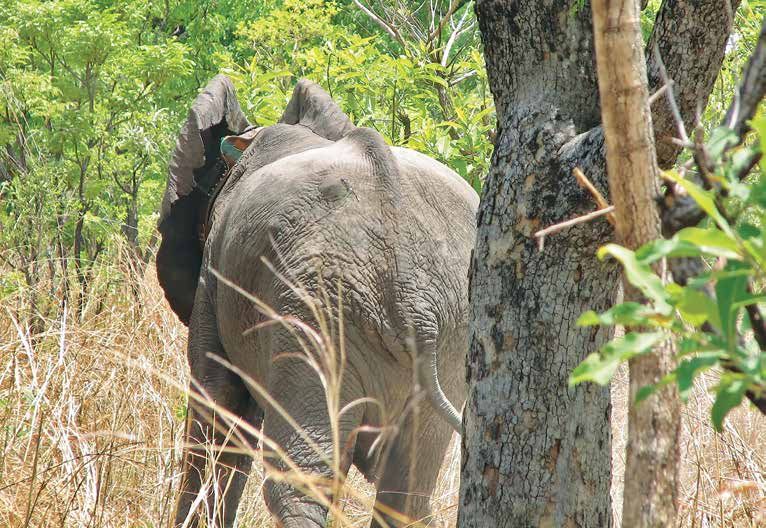
In This ISSUE
Spring 2019 Issue No. 96
S OCIETY BOARD
3 Conservation Connection:
Two Decades of Zoo Wild Elephant Conservation
MICHAEL J. FISHER
Chair 7 Travel with the Zoo Society
Greensboro
MARJORIE M. RANKIN 8 North Carolina Zoo Joins Elephant Conservation
Secretary
Asheboro Efforts in the Republique du Côte d’Ivoire
JOHN RUFFIN 11 Protecting What We Cherish
Treasurer
Winston-Salem 12 Zoo To Do 2019: Asian Wilds!
RICHARD W. CARROLL
Cary 12 Thank Yous
NICOLE CRAWFORD
Durham 13 Upcoming ZOO events
BILL CURRENS, JR.
Charlotte 13 Extraordinary Experiences Waiting at the Zoo in 2019
SUMNER FINCH 14 The Kaleidoscope Butterfly Garden
High Point
SCOTT JONES BC Looking for Butterflies
Clemmons
SCOTT E. REED and Blooms this Spring
Winston-Salem
DAVID K. ROBB
Charlotte
BARRY C. SAFRIT
Greensboro
MARGERY SPRINGER
Raleigh
KENT A. VARNER
Charlotte On the Cover....
DON F. WELLINGTON
Asheboro
CHARLES M. WINSTON, JR. Tiger Swallowtail
Raleigh
CHERYL TURNER Big Stock
Executive Director
Assistant Secretary
EDITORIAL BOARD
Jayne Owen Parker, Ph.D.,
Managing Editor
De Potter, Design & Layout
John D. Groves Please go to nczoo.com to purchase any items listed in the Alive magazine
Corinne Kendall, Ph.D. or to make a donation to the Zoo Society. If you have questions, or need help,
Mark MacAllister please give us a call at 336-879-7273.
Tonya Miller
Jb Minter, DVM
Pat Simmons he North Carolina Zoo is open every day, weather permitting,
T
Dustin Smith except on Christmas Day and Thanksgiving Day. Winter admis-
FPO/FSC
Roger Sweeney sion hours begin November 1 and extend from 9 a.m. through 3
p.m. Summer admission hours begin April 1 and extend from 9
Cheryl Turner
a.m. until 4 p.m.
Diane Villa Financial information about the NC Zoo Society and
Alive is published quarterly by the North Carolina Zoo Society, the private,
Angie Kahn, Proofreader 501(c)3 non-profit that raises funds and engenders public support for the a copy of its license are available from the Charitable
North Carolina Zoo. Issue No. 96, Spring 2019. Copyright © by the North Solicitation Licensing Section at 888-830-4989.
Printed by Hickory Printing Solutions Carolina Zoo Society. All rights reserved. The license is not an endorsement by the State.
2 :: NCZoo.com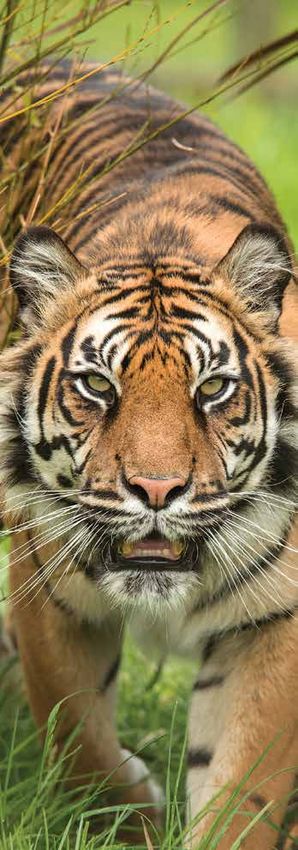
Conservation Connection

Two Decades—
and Counting—
of Zoo Elephant
Conservation
Johnny Wilson, Ph.D., Guest Contributor

A
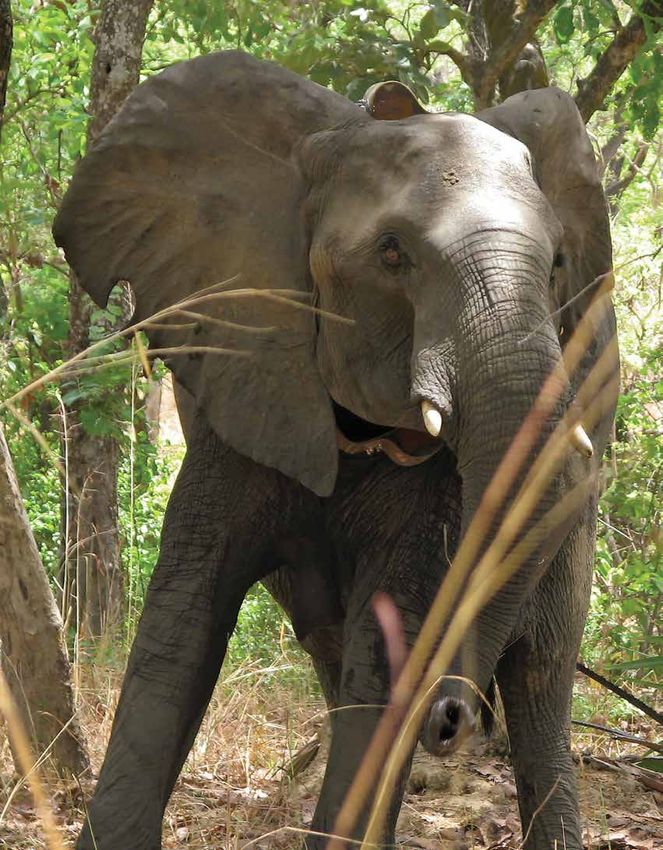
         frica’s elephants have always occupied a
            central role in the North Carolina Zoo’s
             field conservation programs. The Zoo’s
              oldest field project—initiated in 1998
and still ongoing—set its sights on protecting
a small herd of about 200 Savanna Elephants
living in and around Cameroon’s Waza National
Park. The Zoo initially chose this herd because
it offered an ideal opportunity for staff to take its
first tentative steps into field conservation. For
one thing, the herd was valuable—it held the last
remnant group of elephants living in the northern
reaches of Cameroon. Further, the primary threat
to this herd—the annual loss of 10 or so elephants
to retaliatory killings by local people—seemed
amenable to a rather straightforward fix: set up
a program that keeps elephants and people from
coming into direct conflict.

                                                        Spring 2019 :: 3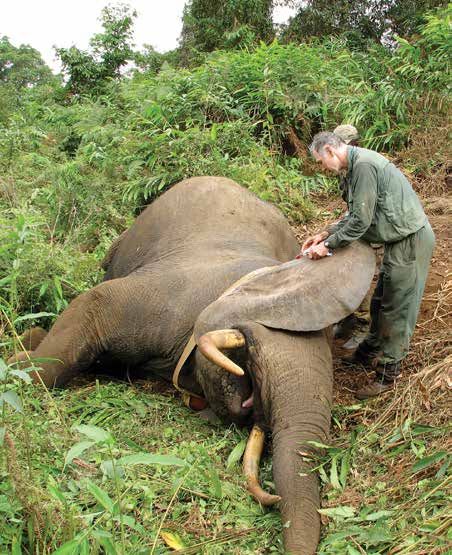
Understanding the Conflicts                                           the core areas elephants were using during their stays inside
 Most of these retaliatory killings occurred during the rainy          Mount Cameroon National Park.
 season (November-May) when the herd habitually broke away               Following these successes, the Zoo expanded this program
 from the safety of the park and headed south to feast on fresh        into two additional countries, and over the years has man-
 young grasses sprouting under the spring rains. During this           aged to collar 42 elephants living in and around 12 protected
 trek—especially on the return leg—migrating elephants took            areas. In total, these satellite-tracking collars have sent more
 further advantage of the growing season by moving into farms,         than 22,500 location data transmissions during 11,000 days
 raiding crops, crushing entire harvests, and, in the process,         of operation! Besides protecting people and elephants, the
 robbing farming families and communities of their food and            study’s detailed land-use information has provided essential
 livelihoods. Not surprisingly, these raids inflamed the local         data for Cameroon to use in writing its National Elephant Plan
 people, who felt justified in killing any marauders and seethed       and to inform conservation strategies outlined in the Elephant
 with resentment when rangers or other conservationists tried          Status Report prepared by the International Union for the
 to protect the animals. Often, these melees saw people, as            Conservation of Nature.
 well as elephants, injured or killed.                                   Currently, the Zoo’s elephant tracking program continues
    While this situation was tragic for all concerned, the straight-   to protect elephants in Cameroon and Nigeria and, recently,
 forward cause-and-effect relationship between the raids and           the program expanded into yet another country. In August
 the retaliatory killings presented an opening for intervention.       2018, the North Carolina Zoo’s Chief Veterinarian Emeritus, Dr.
 If the raids could be prevented, the dangers, the rage and the        Loomis, and his successor, Dr. Jb Minter, the Zoo’s Director of
 retaliation would likely also cease.                                  Animal Health, traveled together to Côte d’Ivoire to establish
    With that goal in mind, the North Carolina Zoo partnered           elephant collaring and tracking programs at four sites inside
 with the World Wildlife Fund and the Cameroon government              that country.
 to conduct a research study that would track the movements
 of several members of the Waza elephant herd. By following            Veterinary Advances From Field
 high-ranking elephants from different family units in the herd,       Conservation Trials
 in near real time, researchers could alert Waza’s rangers when        Placing satellite-tracking collars on wild elephants is a tricky
 these families left the park and could also look for clues to         business. First, a veterinarian has to fire a dart gun to inject
 explain the environmental triggers motivating the elephants to        an anesthetic into the elephant—a risky procedure even in a
 leave the park.                                                       controlled veterinary setting. Then, if the dart hits its target, a
    To accomplish these goals, Dr. Mike Loomis (the Zoo’s              group of fit and fleet biologists has to keep the animal in sight,
 Chief Veterinarian at that time) and a group of Cameroonian           or at least in ear-shot, until the drug takes effect and brings
 biologists collaborated to fit several study elephants with           the animal down. Once it falls, these trackers radio its location
 special satellite-tracking collars. The collars communicated          to the rest of the team, who converge around the sleeping
 with NOAA weather satellites to store latitude and longitude          elephant.
 information and to transmit these data to processing centers             Once assembled, the team springs into action with the
 in France and the US. The processing centers, in turn, emailed        speed and skill of a NASCAR pit crew. They swarm around
 these location coordinates to a password-protected site on            and over the elephant to ensure that it is positioned safely and
 the Internet. By charting the location data onto detailed, mul-       can breathe easily. Someone begins monitoring its vital signs.
 tilayer computer maps, Zoo staff could track the elephants’           Someone else stretches a protective covering over its eyes.
 movements and delineate the specific locations where the                 Meanwhile, two or more sets of hands work the heavy collar
 elephants spent most of their time. Whenever the data showed          under and around the elephant’s neck and position the satellite
 that elephants were moving toward a farming community, the            transmitter so that it will point skyward when the elephant
 Zoo, through our WWF partners, alerted Waza’s park rangers,           stands up.
 and they used the data to intercept and divert the elephants             Once the collar is set and locked, everyone but the veteri-
 before they could do any damage.                                      narian scatters to safety. He, or she, stays behind to find a vein
    This intervention produced an immediate drop in human-el-          in the elephant’s ear and inject it with an antidote to reverse
 ephant conflicts. The Zoo and its partners replicated the             the anesthetic. Once that is done, the veterinarian bolts for
 monitoring program in eight additional Cameroonian national           cover, too, making sure that the waking, and probably grouchy,
 parks. Each site had specific conservation goals. By 2000, Zoo        elephant has a clear path available for its escape.
 researchers were able to implement the program in a densely              While the elephant is down, someone constantly monitors
 forested park in southeast Cameroon. In addition to reducing          its vital signs—especially its blood oxygen levels. This close
 human-elephant conflicts in that area, the tracking system also       monitoring is essential because elephants are more prone
 revealed a previously unknown and highly significant migration        than most mammals to suffer hypoxemia, or low blood oxygen
 route that the local Forest Elephants were following outside of       levels, under anesthesia. Since hypoxemia can be life-threat-
 the protected areas. Later, in southwest Cameroon, the Zoo’s          ening, the veterinary team keeps a constant check on a downed
 elephant tracking data pinpointed the specific location of            elephant’s blood oxygen levels and provides mechanical sup-
 ::
4 NCZoo.com
port to the elephant’s respiratory system by using a ventila-
tor to supply oxygen directly to the elephant’s lungs.
   In hospital settings, compressed oxygen tanks power
these ventilators, and early on, the Zoo’s veterinarians
relied on these tanks in the field, as well. But elephant-sized
oxygen tanks are big, bulky, and hard to lug through remote
wilderness areas. So, early on, Dr Loomis hit on the idea
of replacing these tanks with a much lighter-weight, bat-
tery-operated leaf blower to send fresh air flowing through
the ventilator. By using solar panels to recharge the bat-
teries, this new system advanced conservation medical
practices for elephants worldwide. The leaf blowers make
it easy for research teams to properly ventilate elephants
even in extremely challenging and remote field conditions.

Getting SMART About Anti-poaching
In the years since the Zoo began its elephant conserva-
tion efforts, poaching has far surpassed habitat loss and
human-elephant conflicts as the most significant threat to
the survival of the African Elephant species. Ivory poachers
kill some 30,000 African elephants every year—a total that
equates to losing one elephant about every 15 minutes!
                                                                   Dr. Loomis injects
And, unfortunately, elephants are not the only species
                                                                   a reversal agent
threatened by these poachers. Rhinos, pangolins, lions,
leopards, and countless other species also face extinction
                                                                   into a recently
from the relentless, unlawful slaughter perpetrated by these
                                                                   collared elephant.
criminals.
   While many of these smaller and less familiar threatened
species receive less conservation attention than elephants
do, these same creatures gain side benefits from elephant          activities. Finally, the equipment must be easy to operate—so
conservation programs. Mobile, social, and massive; African        easy that even staff members with limited technical savvy can
Elephants require immense tracts of land to satisfy their most     input data to inform ongoing anti-poaching strategies.
basic biological needs. When conservationists move in to              Since 2011, the North Carolina Zoo has helped develop
protect these lands and drive out poachers, every species          equipment that provides all of these services to conservation-
benefits from the protection.                                      ists working around the world. That equipment is a product of
   Ridding an area of poachers requires an all-out, sustained      a SMART (Spatial Monitoring and Reporting Tool) partnership
infusion of human resources that, often, has to patrol and         that brought several international conservation organizations
protect reserves or parks that encompass many thousands,           together to improve their management of protected areas
or hundreds-of-thousands, of acres. To secure such large           across the world.
spaces, park managers need access to current, accurate                This SMART partnership, of which the Zoo is a founding
information about any illegal activities taking place around and   member, makes a free, fully customizable software package
in these areas. The more data that managers have at their fin-     available to park managers so that they can easily query, map,
gertips, the more efficiently they can identify potential poach-   and summarize anti-poaching data collected by law enforce-
ing sites and position resources and patrols to capture and        ment officers and other ground staff. SMART software works
incarcerate poachers. Of course, amassing that level of data       seamlessly with an app called “CyberTracker,” to collect and
requires the use of sophisticated equipment that patrols can       store field data on GPS-enabled handheld devices. A signif-
use to rapidly gather, store, transmit, and analyze while they     icant strength of the SMART system is that most of its data
are working in the field. And, this equipment must also offer a    analysis and reports are automated so that users with limited
way to quickly summarize and display these data in an easy-        technical capacity can still easily access, analyze, and inter-
to-read format that depicts the scale of existing poaching         pret stored information.
problems and suggests locations where anti-poaching patrols
are most likely to yield significant results.                      Using SMART to Save Elephants
   Also, the equipment needs to facilitate communication           The Zoo first partnered with the Wildlife Conservation Society
among different law enforcement entities so that they can          in 2009 to put SMART technology to use protecting elephants
share pertinent information and coordinate their anti-poaching     in Nigeria’s Yankari Game Reserve. Initially, this project used
                                                                                                                        Spring 2019 :: 5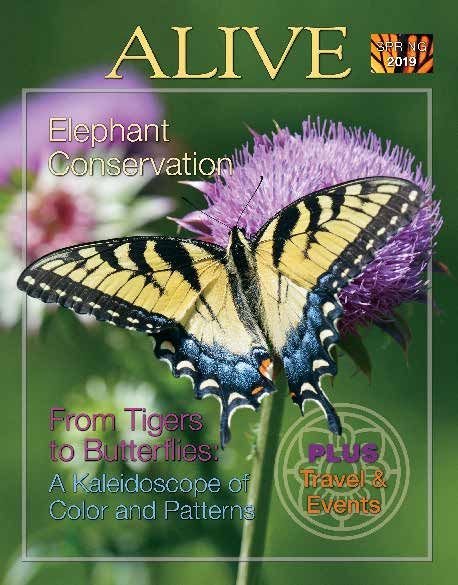
CyberTracker to map out patrol coverage, evaluate ranger             managers, teaching them to use SMART data to plan future
 performance, and calculate the scale of different threats to         ranger patrols. Also, the Zoo provided patrol units with
 Yankari’s elephants and other wildlife. As part of this process,     essential field equipment including ranger uniforms, and the
 Zoo staff also fitted satellite-tracking collars on several of the   Wildlife Conservation Society provided ranger staff with field
 reserve’s elephants, and helped coordinate and fund a com-           rations, camp allowances, and arrest bonuses.
 prehensive aerial survey to count the number of elephants               These initiatives paid off rapidly— no poached elephant
 living inside the sanctuary.                                         carcasses have appeared in Yankari Game Reserve since
    This aerial survey, conducted in early 2011, drove home           May 2015. Meanwhile, illegal activity, in general has declined,
 the level of devastation that poachers and domestic livestock        and staff morale is higher than ever before. All these factors
 were having on the reserve’s elephants and other wildlife.           not only benefit the conservation of elephants and other wild-
 But, even more importantly, the survey revealed that the             life on Yankari but also leave tourists more satisfied, which
 Yankari elephant population—Nigeria’s last viable group of           brings significant financial benefits to the region.
 savanna elephants—had been reduced to a single herd.
 These findings, combined with Nigeria’s emergence as a hub           Saving Species Around the World
 for the illegal ivory trade, prompted the Zoo and our partners       The North Carolina Zoo has introduced SMART technology
 to make Yankari Game Reserve a priority spot for elephant            to many other sites including protected areas in Cameroon,
 conservation efforts.                                                Namibia, Nigeria, Uganda, Zambia, and Zimbabwe with the
    First and foremost, the Zoo and our partners stepped up           hope of ensuring a future for one of Africa’s flagship species,
 anti-poaching efforts inside the reserve. Initially, this meant      the elephant.
 equipping the park’s anti-poaching patrols with SMART tech-             When you visit the Zoo or support the Zoo Society, your
 nology. To facilitate this transition, the Zoo held a series of      purchases and donations help support the Zoo’s efforts to
 workshops to familiarize the rangers with the SMART system.          save endangered species, like the elephant, in their natural
 To date, more than 100 Yankari rangers have completed this           habitats. The Zoo’s commitment to protecting animals in the
 training.                                                            wild is a critical part of the North Carolina Zoo’s mission and
    Zoo staff also conducted individualized sessions for park         will become even more critical as time goes on.

                                                                                                    A newly-collared elephant
                                                                                                    moves off to rejoin her herd.

6 :: NCZoo.com
TRAVEL SAFARI

2019 DESTINATIONS
     NEW TRIP OFFERING — 2019
                                          The Heart of the
                                          Brazilian Amazon
                                          June 11- June 22 		               $4,372
                                          Does not include airfare: estimated to
                                          run about $1,400
                                          Join EcoQuest Travel on an outstand-
                                          ing wildlife viewing adventure. This
                                          trip forges into the Mamiraua, a
                                          massive swath of pristine Brazilian        mammals—including Jaguar and Red-faced Ukari monkeys—
                                          rainforest. At the end of the annual       draw on well-honed adaptations to swim, rest, and flourish
                                          rains, parts of this spectacular forest    in their seasonally marine and arboreal habitat. During
                                          flood when the Amazon swells over its      this special time Pink River Dolphins porpoise among the
                                          banks and rises to heights that swal-      branches, and savvy travelers and photographers mingle in
                                          low the tree trunks and lap against        this magical ecosystem by canoeing safely close to the wild-
                                          the forest canopy.                         life. For one full day, our travelers will accompany a team of
                                             During the weeks that follow, wild-     biologists tracking wild, radio-collared jaguars among the
                                          life finds refuge in the treetops. Birds   trees. Travelers will stay in an award-winning community
                                          gather in spectacular numbers, and         lodge.

                                                                     2020 DESTINATION

South Africa, Victoria Falls and Botswana
October 26 - November 8                         $7,899/per person*         ««Exploring Australia!»»
		                      if booked before March 31, 2019 (Includes
		                       round-trip air from Charlotte)              Including the Barossa Valley Wine Region
An extraordinary adventure into the some of Africa’s most            April 24 - May 11         $8,349 per person, double occupancy, if booked
iconic wildlife destinations. The highlights of this trip include    		                before October 25, 2019 (Includes international airfare &
seven wildlife safaris, a cable car ride to the top of Table         		                  shuttle from Asheboro to Charlotte International)
Mountain, a visit to the iconic Victoria Falls, a foray into the     What a way to see the Land Down Under! Highlights of the trip include
heart of South Africa's famous winelands, time in Entabeni           Melbourne, Uluru, Alice Springs, the Great Barrier Reef and so much more.
Conservancy and Chobe National Park, and so much more!               The Society has coordinated this tour with Collette Travel Service. Costs
  Optional three-night pre-tour extension to Dubai available         cover international and ground travel inside Australia, 23 meals, experi-
for $649 (International airfare not included).                       enced tour guides and more! Post-extension trip to Fiji is available!

     More details and full itineraries are available for download at nczoo.COM under “Extraordinary Experiences.”

                                                                                                                                     Spring 2019 :: 7
VICTORIA FALLS, ULURU: INGIMAGES
North Carolina Zoo Joins Elephant Conservation Efforts
 in the Republique du Côte d’Ivoire                                                         country’s southern border. Smaller
                                                                                            than the better-known African Savanna
 Jb Minter, MS, DVM, Dipl. ACZM, N.C. Zoo Director of Animal Health                         Elephant (Loxodonta africana), Forest
 In 2018, officials from Côte d’Ivoire        d’Ivoire’s seaports once bustled with         Elephants weigh less than their larger
 began communicating with Drs. Mike           cargo ships being loaded with ivory.          cousins and look different as well. Their
 Loomis, the North Carolina Zoo’s Chief         Today, however, the country’s ele-          tusks tend to be trimmer and grow
 Veterinarian Emeritus, and Jb Minter, its    phant population teeters on the edge          downward before curving slightly for-
 current Director of Animal Health, about     of extinction in most areas. Centuries        ward. Savanna Elephants carry their
 the Zoo’s on-going elephant conser-          of over-hunting compounded by two             tusks higher—they flare forward and then
 vation and research efforts in the West      relatively recent civil wars, explosions in   out to the side. Côte d’Ivoire’s Savanna
 African countries of Cameroon and            ivory poaching and habitat destruction,       Elephants live inland, in the northern
 Nigeria. Specifically, officials from the    and escalating human-elephant conflicts       regions of the country, where the climate
 Ministry of Water and Forests hoped to       have all contributed to a tragic, unsus-      is hotter and drier, and open savannas
 replicate these programs in several of       tainable loss of elephants inside the         dominate the undulating countryside.
 Côte d’Ivoire’s national parks and invited   country. The Côte d’Ivoire’s government       Savanna Elephants’ numbers are low,
 Drs. Loomis and Minter to provide the        hopes to reverse some of these losses         as well, probably no more than a few
 veterinary expertise required to place       by gearing up its fight against poach-        hundred.
 satellite-tracking collars on elephants      ers and reducing the fatal conflicts that
 living in these areas. After a short round   break out between elephants and local         Advancing into Côte d’Ivoire
 of talks, the two veterinarians accepted     people.                                       Drs. Loomis and Minter traveled to Côte
 the invitation and, in late August 2018,                                                   d’Ivoire in August 2018 to help initiate
 flew to Côte d’Ivoire to assist with this    Crunching the Numbers                         an elephant tracking and conservation
 initiative.                                  No reliable figures exist to estimate the     program in four of that country’s national
                                              number of elephants that still survive        parks. The following paragraphs, com-
 The Elephant Crisis in Côte d’Ivoire         inside Côte d’Ivoire. The best guesses        piled from notes recorded in Dr. Minter’s
 Historically, elephants flourished in the    suggest that a small population of Forest     field diary, describe some of the suc-
 country now known officially as the          Elephants (Loxodonta cyclotis)—perhaps        cesses, hardships, and disappointments
 “Republique du Côte d’Ivoire” or, in         a few hundred—scramble through what           that the two veterinarians encountered
 English as the “Republic of the Ivory        remains of the evergreen forests that         during their nearly month-long visit to
 Coast.” As its name suggests, Côte           once blanketed the full extent of the         this country. This duo worked side by
                                                                                            side with a team of local biologists, rang-
    Dr. Mike Loomis (left), Dr. Jb Minter (center) and WWF field biologist Desire           ers, and professional trackers who used
    Dontego pose with an anesthetized elephant.                                             their expertise to locate and track wild
                                                                                            elephants and to assist with the care and
                                                                                            collaring of animals included in the study.
                                                                                               The program this team put in place
                                                                                            replicates the protocols that the Zoo
                                                                                            follows with its elephant conservation
                                                                                            programs in Cameroon and Nigeria:
                                                                                            the research team works together to fit
                                                                                            satellite-tracking collars on high-ranking
                                                                                            elephants living in or around the study
                                                                                            areas. The collars interact with Iridium
                                                                                            telephone satellites every two hours to
                                                                                            record latitude and longitude coordi-
                                                                                            nates and then transmit these data to a
                                                                                            password protected website. Rangers
                                                                                            and other park managers use the data
                                                                                            to improve the efficiency of the patrols
                                                                                            that protect the elephants from poachers
                                                                                            and to divert elephant herds if they begin
                                                                                            approaching agricultural areas.
8 :: NCZoo.com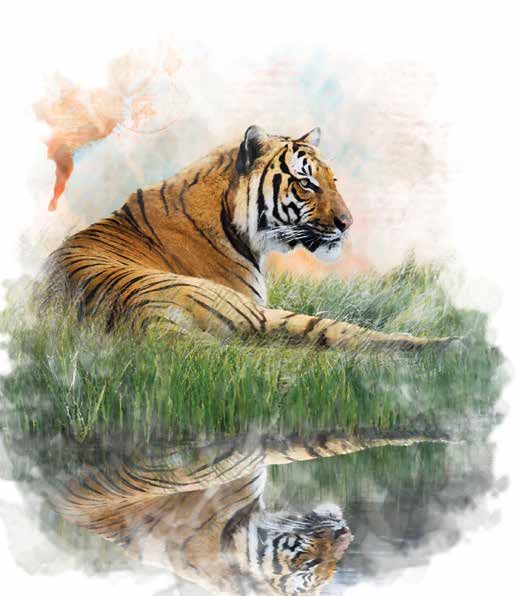
Summaries of Excerpts from Dr. Minter’s Field Diary
Field Data Notes begin on August 22,           Without much ado, we load
2018. We arrive in Côte d’Ivoire late at     our dart gun, approach the
night, landing at Port Bouet Airport in      quartet and dart the largest
the coastal city of Abidjan. Abidjan is      female. She and her mates
one of two political capital cities in Côte  bolt at the sound of the shot,
d’Ivoire. Only two of our four equipment     but we track them easily for
crates land with us. The missing con-        the 10 minutes or so that it
tainers hold all but one of our elephant     takes for the anesthesia to bring
tracking collars and all of our camping      down our research subject.
equipment.                                     When we catch up with her, she is
                                             stretched out on her left side, lying on
August 23 We start our day early in the      top of a small stand of crushed brush.
morning by meeting the team of local         The brush is too thick to let us push a
biologists and rangers who will be our       collar under her neck, so our team has
research colleagues during our stay.         to gather together and coordinate our
Mike and I begin a series of workshops       efforts to roll all four tons of her off the
that will familiarize our team with the pro- brush and onto her right side. Once she
tocols we will follow when we encounter
and anesthetize wild elephants. The
safety of our entire crew and the health
of our study elephants will depend on
how well our team works together to
follow these procedures.
  After several days of training, our new
team is well prepared to take on the
difficult tasks ahead. Good news! A truck
delivers one of our missing equipment
crates to our hotel.

August 25 We pile into our vehicles and,                                                              The research team wades
after a long day’s drive, roll into Fresco,                                                           through a road to make
a small coastal town that sits a few                                                                  sure they can drive safely
                                                                                                      through it.
miles from our first study site. We spend
the evening exploring the town, eating
some fresh fish at a local restaurant, and
checking our gear for our first trip into    is settled, several of the trackers hack       next field site is the Reserve de Faune
the field tomorrow.                          through enough vegetation to let us slide      d’Abokouamekro, a protected area about
                                             a collar easily under her neck.                30 miles southwest of the city. Unlike
August 26 We are up early to meet with          We set the collar and, most of the          Fresco, Yamoussoukro sits far from the
local officials. We formally thank them for research team moves away as I inject            coast. Here, the landscape is more open,
their hospitality and talk about our mission a drug to reverse the anesthetic into          and the elephants we expect to meet
and plans in order to solidify their support her thigh. Within a few minutes, I see         should be of the savanna variety.
for this conservation initiative. When we    her ears twitch. Her feet begin to stir.         We arrived a the reserve early in the
finish, the local chief gives us his bless-  Then she rolls up and wanders off, still       morning and quickly catch sight of
ing before sending us on our way.            unfazed, in search of her herd mates.          an elephant herd wandering off in the
   Minutes later, several villagers run up   On our way back to Fresco, we see              distance. We try to catch up with them,
to our vehicles, excitedly telling us about her again, strolling with her herd mates        but the herd quickens its pace to stay
four elephants ambling down a road a         through a rubber tree plantation.              far ahead of us. We pull out a drone and
few miles away. Within minutes we see                                                       send it skyward, hoping to get a better
the group—all cows—meandering along, On the next day, we head northward                     sense of the size of the group. But, the
utterly unfazed by all the people watch-     and inland to Yamoussoukro—the                 drone spooks the elephants even more,
ing them.                                    second capital city of Côte D’Ivoire. Our      and they step up their pace. We persist
                                                                                                                        Spring 2019 :: 9
in following the group for another few         get close enough to an elephant to try        agree that this forest is too dense and
  miles or so, but finally, give up and head     darting it, it turns and charges in our       this herd is too aggressive for us to try
  back to set up camp.                           direction, flaring it ears, trumpeting, and   to collar another elephant. So, we pack
     Because there are no public accom-          then retreating. These false charges          up our gear and head home.
  modations nearby, we camp just outside         keep us on edge.                                The two tracking collars we deployed
  the reserve, near a small village. Early          We track this herd for four days, over     during our trip continue to function well
  in the morning, some villagers make            nearly forty miles, and only twice do         and have been configured to collect
  their way into our camp with information       we get close enough to try to dart an         GPS locations every two hours. We will
  about two elephants traveling nearby.          elephant. The first dart hits a vine and      head back to Côte d’Ivoire in January
  We set out to find them and, within            bounces out, unspent. The second one          2019 to deploy the remaining two col-
  minutes, our trackers spot a trail of fresh    collides with an elephant, but it, too,       lars. We hope that scheduling the trip
  elephant footprints. We follow the tracks      ricochets back in our direction. We don’t     during one of the country’s two annual
  and, in no time, see two elephants walk-       think that it injected any anesthesia, but    dry seasons will make it easier and safer
  ing casually side by side.                     we are not sure.                              to finish the first phase of this program.
     Once we get close enough, we dart              Just in case the dart did discharge,         But we will return. We know that
  the larger of the two animals, a bull, and     we have to race through the forest after      Africa’s wild elephants face certain
  follow it for the 10 minutes or so it takes    the elephant. We need to be certain that      extinction unless the North Carolina Zoo
  for the anesthesia to take hold.               we can tend to it if the drug takes effect.   and other conservation organizations
     When the anesthesia takes over, the         So when it bolts, we bolt behind it. After    continue to work with local governments
  bull stretches out, chest down on the          crashing through dense vegetation for         and agencies to solve the challenges
  ground. Because this posture makes it          about five minutes, this elephant stops,      facing these animals. While the primary
  difficult for an anesthetized elephant to      turns, and charges directly at our group.     purpose of the work in Côte D’Ivoire is
  breathe, our team has to line up again,        Everyone scatters, jumping behind the         to mitigate conflict between humans
  this time to roll five tons of elephant onto   thickest trees they can find. We freeze       and elephants, it could also be useful in
  its side. When we get him situated, we         in place until one of the rangers fires his   securing areas critical to the elephant
  attached his collar without incident, and      rifle into the air. The sound sends the       survival. We hope that this project
  watch as he rises and walks away 10            elephant running again, with us following     confirms that, with proper coordination
  minutes after I administer the reversal        (carefully) behind. After another 30 min-     and commitment, it is possible to put
  medication.                                    utes or so, we agree that the elephant is     programs in place that let people and
     Flush from these two successes,             drug-free, break off our chase and head       elephants share the land and live peace-
  we head north to Odienne to look for           back to camp. At the end of the day, we       fully together.
  elephants, but heavy rains flood the
  rivers, and the rising waters wash away
  any elephant sign and make travel nearly
  impossible. So, after several frustrating,
  wet days, we head back down to the
  Reserve de Faune d’Abokouamekro to
  try to collar a female elephant.
     This time we find no trace of ele-
  phants. We hike for three days. We
  cover some 26 miles. We encounter
  no tracks, no scat—nothing to suggest
  the recent presence of any elephants.
  Discouraged, we set off to visit our last
  field site, in an area near a town called
  “Tiassale.”

  Now, we find ourselves in dense forest.
  We move slowly because it is hard to
  see through the dense vegetation. Even
  when we catch a glimpse of an ele-
  phant, the surrounding tangle of foliage,
  tree trunks, vines, and leaves makes it
  hard to get a clear shot. Whenever we
10 :: NCZoo.com
Protecting What We Cherish
Dear Friend of the Zoo:
Thank you for taking time out of this past year to visit the Zoo’s
animals and to read about ways that the Zoo and the Zoo Society
work together to keep these creatures healthy and safe. We hope
that you cherish the memories that you built with us last year as
much as we cherish the contributions that your interests and
membership have made to the well-being of the Zoo. Because Please go to NCZOO.COM
and click on Protecting
of you, the Society remains a critical ally for Zoo programs that What We Cherish to make
sustain excellent care for the animals living inside the Park and that your donation.
offer protection for rare and endangered species living in the wild.
We want you to know that the Zoo would not be the same without you. Whenever
you send a child to a Society camp or attend a VIP tour or buy an adoption package or,
especially, donate to our annual fund, you help protect the Zoo’s future. Your generosity
ensures that the Zoo will have the resources it needs to keep its animals healthy and its
visitors engaged in learning about nature and wildlife.
As we progress through 2019, your donation has become more critical than ever before.
The stakes are exceptionally high now because the Zoo is in the midst of its most ambitious
expansion plan. Architects and engineers have begun tracing out schematics and preparing
planning documents for the Zoo’s next big thing—the addition of the Asian continental region.
Adding Asia will bring Tigers, Komodo Dragons, Red Pandas, and other species into spacious new habitats, and will
open up opportunities for Zoo staff to engage in programs that protect these species in the wild. Every step of the
way, the Zoo’s curators, educators, rangers, guest service
personnel will be looking for ways to make your future
visits more exciting, more fun, and more educational
than ever before.
We know that a world of hard work lies ahead of us
as we strive to achieve our goals. But, we also know
that we can rely on you and our other Zoo friends to
help us move forward. With your help, the Zoo will
continue to develop the programs that you, your
family, and your friends have come to cherish.
Please help us continue this vital journey
by donating to our annual fund. Your gift
will help the Zoo Society keep its promise
to raise $10 million so that we can work
together to build and open Asia soon.
Sincerely,
Cheryl Turner
INGIMAGES
Spring 2019 :: 11n
A THANK YOUS B
A s i a Thank yous go out to the very generous donors who provided gifts
of $1,000 or more to the Society, 10/1/18 through 12/31/18.
W i l d s !
99.9 The Zoo & 94.9 Fort Worth Zoological Foundation
WKXR Classic Park Network For Good
Country William H. and Muriel Nova Eye Care
Acme-McCrary & J. Fox Endowment Mr. & Mrs. Perry E.
Sapona Foundation Fund Nystrom
Mrs. Margaret L. Acuff Genie Frick Kevin & Elizabeth
Akron Zoological Park Mr. John Gale & Ms. Overcash
Oliver W. Alphin Anne Hardcastle Estate of Edith H.
Arch MI Jody Gilmore Overly
Ms. Donna E. Aspelin Glen Raven, Inc. J Pearsall
Association of Zoos & Estate of Mary & Francis & Abbie Pepper
Aquariums Russell Graves Alan & Nancy Proia
AXA Foundation Ms. Theresa Hawkins Ms. Ann Pullium
George & Mandy Azar Jennifer & Shane Randolph
John Becton & Nancy Hemphill Communications
Tannenbaum Bill & Rosemary Hinkle Joan Reid & John
Mr. & Mrs. E. S. J. Henry Hogan Monty Montgomery
Bessette Ms. Lois Holt William & Margaret
Ms. Holly Bodas & Ms. Mr. W. Jack Holt Reid
Virginia Pollock Houston Zoo RJM Foundation
Ed Bost Mrs. Frances L. Dalton D. Ruffin, Sr.
Broyhill Family Huffman John & Ginger Sall
Foundation, Inc. Sarah & Joe Janusz SAS Institute, Inc.
Estate of Dorothy D. Larry & Frieda Jessup Schwab Charitable
Burns Mrs. Martha Johnson & Fund
Burt’s Bees Ms. Elizabeth Dozier Ms. Ingeborg Shannon
Ron & Cathy Butler JustUs Productions Fred & Alice Stanback
Carson Family Mr. Thomas S. Kenan StarPet, Inc.
Foundation III State Employees
Chatham Charter Ms. Marcia Kennedy & Combined Campaign
School Mr. Wes Hawkins Mr. Wiliam A. Stuck
Cleveland Metroparks Richard & Elizabeth Superion
Zoo Kent Barbara Thode
CLH design, p.a. Andrew & Dyane Krupp Timothy A. Tolson, M.D.
The Donald & Ms. Suede Lassiter Triad Corrugated
Elizabeth Cooke Christopher Leazer & Metal, Inc.
Foundation Heath Ramsey Trophy Shop Gifts &
Ms. Melinda Covington Paul & Caroline Engraving
Dallas Zoo Lindsay Joe & Julie Tucker
Dart Container Jane I. Lisk Uwharrie Bank
Corporation Mary & Brian Lockamy Stephen A. & Charlotte
Joyce H. & James P. Barbara & Peter Louis Wainwright
Dickerson Makasiar Trust Rolf & Teri Wallin
Mr. Richard A. Martin Marietta Weaver Foundation
Dickerson Aggregates
Zoo To Do
Lee & Rebekah
Ms. Hilda Cameron Dill MAS Acme USA Westover
Diversified Trust Robin & Joe McDowell William C. Ethridge
Company Emily Millis-Hiatt Foundation
2019 Dr. David Dorman
Dr. Janice Dye
E.B.R. Foundation
Foundation Fund
Mary & Danny Moore
Tom & Sally Moore
Charles & Jenny
Winston
Paul & Sally Wright
Saturday Benny & Carolyn
Eanes
Elastic Therapy, Inc.
Myra Neal Morrison
National Geographic
Society Education
Ronnie & Molly Millis
Young
September 21, 2019
12 :: NCZoo.com
ingimagesZoo EVENTS { 8U
APRIL
EXTRAORDINARY EXPERIENCES
13 Earth Day :: Join us in celebrating Waiting at the Zoo in 2019
Mother Earth and the blue planet.
Explore ways you can help your
VETERINARY CAMPS
Campers work with the Zoo’s veterinary staff to learn what it is like
planet through water conservation,
protecting green spaces and living a to practice medicine inside a major zoo. Campers interact with live
green life. This party for the planet (domestic) animals to practice some medical procedures— giving phys-
features live music, crafts and more! ical exams or applying bandages and such— and take part in realistic
simulations to practice administering CPR, drawing blood, shooting
20 & 21 Eggstravaganza :: E is for a dart gun, using an endoscope, and more. Camp counselors are all
Egg, Easter and Enrichment! Cele-
enrolled in the NC State College of Veterinary Medicine.
brate Spring with our Zoo animals
as they hunt for tasty treats inside • The Society’s one-day Junior Veterinary Camps accept male and
colorful paper eggs made especially female rising 7th through 9th-grade students. Camp dates are May 11
for them. and August 17.
• The Society’s three-day Senior Veterinary Camps accept rising
10th graders through first-year college students. The June 14 through 16
Senior Camp is for girls only. The July 19 through 21 camp accepts both
male and female students. Campers work into the night and sleep in a
Zoo Society cabin next to the veterinary hospital.
• Our one-day, coeducational October 19 middle-school camp, So
You Think You Want To Work With Animals! will take place on
September 7. This camp introduces students to jobs that benefit animals
and introduces them to aspects of veterinary medicine, zookeeping,
wildlife biology, and animal training.
MAY WILD ANIMAL SCIENCE CAMP
5 Wake Up with the Animals :: These co-educational camps explore the ways that researchers study
For members and their guests. 8 animals in the wild and in zoos. The Zoo’s research staff teaches camp
a.m. in North America Plaza. Call sessions, which give campers hands-on experience related to the use
336-7262 or email kpowell@nczoo. of camera traps, observing animal behaviors, exploring forests, and
com for reservations or to buy guest reading animal signs, such as scat and footprints. Campers set up tents
tickets.
inside the Zoo and sleep inside the park. Junior camps, for rising 8th
11 Birds, Blooms, Bees and through 9th graders, are scheduled for June 8-9 and September 14-15.
Butterflies :: Learn more about A senior camp, for rising 10th through college freshmen, is set for June
flowers and fliers; check out our 29-30.
plant sale, and take advantage
of a discount on Mom’s SHADOW A VETERINARIAN
ticket on Mother’s Day. Offered once a month from March through October. This program puts
two people in the company of a Zoo veterinarian to make morning
JUNE rounds behind-the-scenes at the Zoo. Suitable for adults. (Children
1 AAZK Run Wild* Join us on 15-19 years old may attend with an adult.) The program includes an
a good run for a good cause: after-tour pizza lunch with a Zoo veterinarian and the option of taking a
animal care at the Zoo. private golf cart tour of the Zoo after lunch.
* Not included with general admission,
additional fee required. GET UP CLOSE AND PERSONAL WITH YOUR FAVORITE
15 Saving Species across North ZOO ANIMAL
America :: The North Carolina Zoo The Zoo Society operates public and private VIP Tours for people who
is actively involved in conserva- want to go behind-the-scenes to get close to an animal, talk with its
tion programs positively im- caretakers, and, often, feed the animal too. All tours last about an hour
pacting many species in North or an hour-and-a-half and are accompanied by a professional Society
and Central America. guide. Public and Private tours are identical, but private tour goers
Come discover what we select the date of their tours and choose up to six people to attend.
do in the wild and what
you can do to help in Visit nczoo.com under “Extraordinary Experiences” for detailed
your own backyard. information on pricing, tour limitations, dates, and other details.
Spring 2019 :: 13Blooms and Butterflies
waves collide with flying insects.
Moths have developed several adap-
tations to help them creep under this
radar. A common avoidance tactic is
to listen for telltale squeaks and imple-
Jayne Owen Parker, Ph.D., Director Communications & Education ment avoidance maneuvers when they
I
are detected.
n April, a temporary habitat will open its doors in the Zoo’s Junction Plaza. The When the squeaks sound like they are
Kaleidoscope Butterfly House will beckon guests to explore a peaceful garden coming from some distance, an alerted
where Lepidoptera species—moths and butterflies—dance among the flowers. moth will simply change altitude or
While the Lepidopterans that flutter through this garden will vary slightly turn to fly out of the radar’s range. But,
from week to week, the overall appearance of the interior will change very little. if the clicks sound close, the moth will
Guests will always encounter a living, pulsating kaleidoscope of summer sprites respond more dramatically—wildly zig-
milling among the flowers. And, as visually delightful as this experience will be, it zagging, looping, diving, or dropping to
will also hold out possibilities for guests to get close enough to notice features that foil the advancing predator.
these creatures usually hide and to think about how they make their way in their Even when they are resting, though,
Lilliputian world. moths and butterflies can be distin-
guished by their postures. Most moths
Things to Think About Inside the Dome: settle down by spreading their wings,
Are You Watching a Butterfly or a Moth?
As strange as it may seem, moth species
outnumber butterfly species by almost
about like insects woozy from sipping
fermented nectar. Their wacky jitterbug
moth feathery
10 to one. Science recognizes some flight is likely an inborn, pervasive, eva-
160,000 moth species, but only about sive maneuver that protects them from
17,500 butterfly types. This ratio clashes their ubiquitous primary predators—
with our human-centric view of nature insect-eating birds.
because people typically encounter— Moths, which have few avian preda-
and can identify—so many more butter- tors, follow more steady and level flight
flies than moths. But, these contacts are
a function of timing, not abundance or
plans. These insects rely on their hear-
ing, not preemptive jerking, to avoid butterfly knobs
diversity. their most common predator—insectiv-
We see more butterflies because they orous bats. though a few species do the opposite.
and we are usually out in the daytime. Hunting in darkness, these bats use They draw in their wings and wrap
Moths, on the other hand, trend toward a home-grown radar system to find them snugly around their bodies. But-
nighttime living. So, most of the Lepi- their prey. The bats emit pulses of high terflies, on the other hand, perk up to
doptera that capture our attention are pitched squeaks and clicks and listen for settle down. A resting butterfly holds
species that revel in sunlight and, conse- echoes to bounce back when the sound its wings in a vertical orientation and
quently, are almost always a member of presses them together over its back.
one of the butterfly families. On close examination, a Lepidop-
Resting inside, we scarcely notice the tera’s antennae will also provide clues to
multitudes of Lepidoptera flying around its place on the family tree. A butterfly’s
at night, and almost all of them belong antenna usually looks somewhat like
to moth family groups. But, be aware. a club—formed by a slender filament
You may encounter a few diurnal moths with a single knob perched on its tip.
inside our butterfly garden. To pick Moth antennae lack this knob and,
them out from the butterflies, you will depending on the species, grow either
need to look at more than your watch. as single stalks or as elaborate comb-
Flight patterns offer an obvious clue
to the lineage of many unfamiliar Lep-
idoptera species. Butterfly family mem-
Luna or feather-like structures. The males of
some moth species rely on these com-
plex projections to sniff out receptive
bers usually flitter and flutter from place
to place. They jerk up and down. They
{resting pose}
Moth females and can often catch the scent of
a potential mate that is flying more than
jostle from side to side. They lurch a mile away.
By David notMD - Own work, CC BY-SA 4.0, https://commons.wikimedia.org/
14 :: NCZoo.compredators. Moths hear the high-pitched
Monarch Butterfly sounds emitted by bats; butterflies hear
the lower frequencies created by birds in
flight.
Tasting and Smelling
Butterflies and moths use taste and smell
to find mates and food and to choose
the places where they will lay their eggs.
Their bodies are densely studded with
sensory receptors that pick up scents
{resting pose}
and respond to other airborne chemi-
Can You Tell the Boys from the Girls ? cal signals. These receptors form on the
Sorting out male and female Lepidoptera upright with the undersides facing out. insects’ antennae, around their mouths,
can be tricky and may require a magni- Flight patterns can also sometimes down their legs, and even on their feet.
fying glass and an extremely close view allude to the sex of an individual butter-
of a subject’s nether regions. Under such fly. Male butterflies spend a significant
close examination, a female will show a amount of their flight time looking for Tiger
circular opening at the tip of her abdo- females. If you watch a butterfly for a
men. This structure, known as an “ovi- while and it keeps flying back and forth Swallowtail
positor,” provides the opening through over the same patch of flowers, it is likely
which she lays her eggs. a male patrolling the area looking for a
Some species also have telltale mark- mate.
ings that set males apart from females. Females don’t bother to look for
Male Eastern Tiger Swallowtails, for mates. Males do all the pursuing. But,
example, are usually yellow, while the once a female has made her match, she
females may be black or yellow. But, all will spend a good deal of time looking
females, and only females carry a splash for suitable places to lay her eggs. She
of iridescent blue along the bottom of will rely on the taste buds on her feet to
their back wings. help her select the proper nursery plants
Male Monarch Butterflies distinguish to feed her young. So, if you see a but-
themselves by wearing a single dot on the terfly flying up and down, over and over,
top side of each lower wing. These spots and regularly pushing the end of her
are nearly impossible to see when the abdomen down on leaves, you are likely
male is at rest and is holding his wings watching a female laying eggs.
Consider Some Lepidoptera Senses:
Sight
Most butterflies and moths have only ultraviolet wavelengths, too, which let
two eyes that are large, bulging spheres. them detect colors that are invisible to
These spheres contain as many as 17,000 us. For example, these butterflies can see
separate lenses. These lenses work ultraviolet markings on blossoms that
together to construct a mosaic, wide-an- advertise the flowers’ nectar stores and
gle picture of the world. The resulting ultraviolet patterns on butterfly wings
pixelated images are poorly focused, but that distinguish males from females.
extremely good at detecting movement Hearing
and at gauging distances—attributes Many butterflies and moths have simple
T
that make it difficult to sneak up on a ears that respond to a narrow range of
butterfly. sound frequencies. These hearing organs he Zoo’s temporary Butterfly
Most butterfly species have excellent occur on the wings of some species, and habitat will be open through the
color vision. Like us, they can detect red, on the legs, mouths, or bodies of others. summer season. We invite every-
blue, and green wavelengths. But, most In general, these ears are sensitive one to take time to explore its garden
species have receptors that respond to to frequencies that signal approaching and to get to know some of its residents.
OTHER PHOTOS: INGIMAGES Spring 2019 :: 15NON-PROFIT ORG
U.S. POSTAGE
PA ID
HICKORY, NC
PERMIT #104
4403 Zoo Parkway CHANGE SERVICE REQUESTED
Asheboro, NC 27205
www.nczoo.com
Coming to the Zoo in April!
A kaleidoscope* of butterflies
will descend on a special habitat
brimming with blossoms.
Step inside and immerse yourself
in the splendor of living colors.
* A group of butterflies is usually called a “kaleidoscope,” although sometimes,
the group may be called a “swarm” or a “rainbow” of butterflies.You can also read


