Nest to Ocean Turtle Protection Program - 2014 to 2018 Improving turtle nest success through predator control - Improving ...
←
→
Page content transcription
If your browser does not render page correctly, please read the page content below
Nest to Ocean Turtle
 Protection Program
                     2014 to 2018
     Improving turtle nest success
         through predator control

                 Great state. Great opportunity.

 1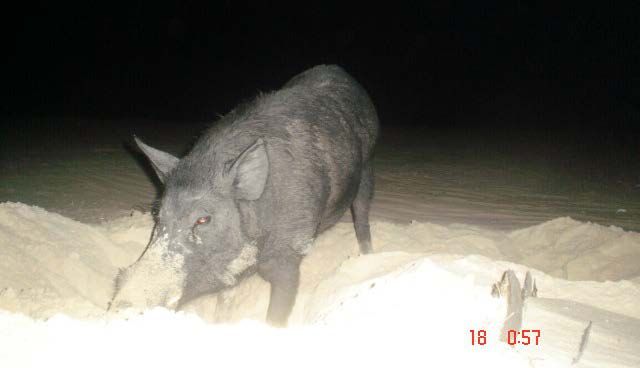
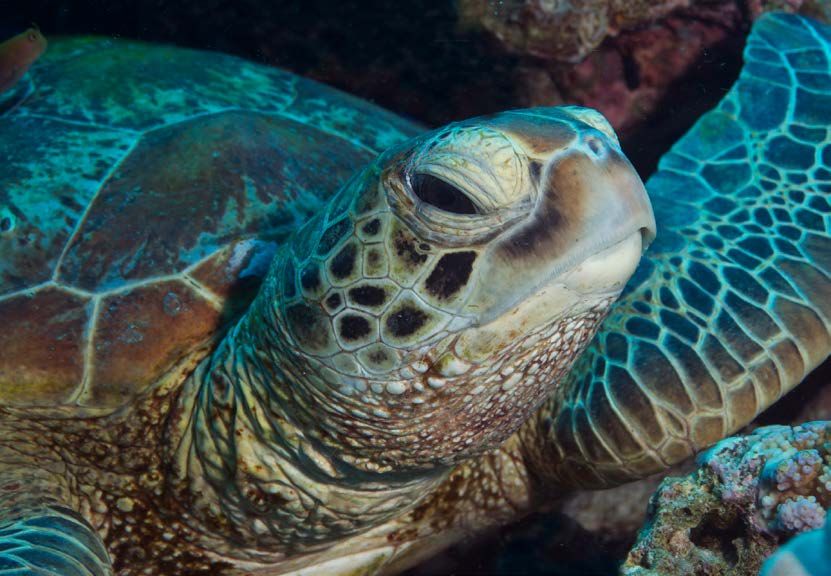
Cover image: ‘Turtle 3’ courtesy of Tourism and Events Queensland

Prepared by: Queensland Parks and Wildlife Service, Department of National Parks, Recreation, Sport and Racing
© State of Queensland, 2014.

The Queensland Government supports and encourages the dissemination and exchange of its information. The copyright in this
publication is licensed under a Creative Commons Attribution 3.0 Australia (CC BY) licence. Under this licence you are free, without
having to seek our permission, to use this publication in accordance with the licence terms.
You must keep intact the copyright notice and attribute the State of Queensland as the source of the publication.
For more information on this licence, visit http://creativecommons.org/licenses/by/3.0/au/deed.en
August 2014

#30621 - Design and AV Services, Corporate Communications, NPRSR | EHP

                                                                         2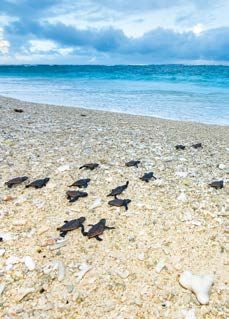
Contents
Background.............................................................................................................. 4
Issues....................................................................................................................... 4
Objectives................................................................................................................ 5
Scope....................................................................................................................... 5
What types of projects will be supported?................................................................. 6
Partners.................................................................................................................... 7
Timing ..................................................................................................................... 7
Funding available..................................................................................................... 8
References............................................................................................................... 9

                                                               3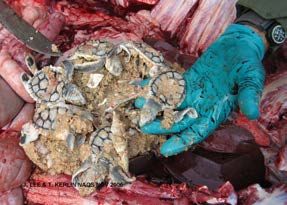
Background
                                                      The Queensland coast is home to some of the most important marine turtle nesting
                                                      and feeding sites in the world. Six species of threatened turtles nest along our idyllic
                                                      beaches. Even in settled areas, many beaches are regularly used by nesting turtles.
                                                      Despite the integrity of our nesting beaches there has been a severe global decline of
                                                      sea turtle populations, and of the seven species found in the world, three are classified
                                                      by the United Nations as Endangered, and three as Critically Endangered under both
                                                      Commonwealth and State threatened species listing.
                                                      The Nest to Ocean Turtle Protection Program will focus on the commitment made by
                                                      the Commonwealth and Queensland governments to protect marine turtle eggs and
                                                      hatchlings from predation by feral pigs and other predators. The Department of National
                                                      Parks, Recreation, Sport and Racing’s Queensland Parks and Wildlife Service (QPWS)
Feral pig stomach contents, including numerous
                                                      will lead delivery of this $7 million program over four years in close collaboration with
flatback turtles, Jardine River, CYP.
                                                      the Commonwealth Department of the Environment and other partner agencies.
Image courtesy of Tim Kerlin and J Lee, AQIS, 2006.
                                                      The Queensland Parks and Wildlife Service manages over 12.5 million hectares of land
                                                      and seven million hectares of marine park. Many areas support active nesting of turtles
                                                      and the Service carries out active predator control in a number of key turtle nesting
                                                      areas along the east coast. A range of other groups and organisations is also engaged
                                                      in turtle conservation works around the state and this program will supplement and
                                                      complement existing projects to deliver improved turtle conservation outcomes.
                                                      This program will also aim to develop collaborative partnerships across governments
                                                      and the community to enhance the incubation success of turtle eggs in Queensland
                                                      through active predator control and other nest protection measures.

Issues
Australia supports globally significant               A number of existing community group             In North Queensland, feral pig control
breeding populations of green, loggerhead,            and government entities fund on-ground           activities are targeting green, hawksbill,
hawksbill, flatback and olive ridley turtles.         pest management focussed on the                  oliver ridley and flatback turtle rookeries on
Unfortunately, many of these populations              conservation of ecosystems, including            Eastern and Western Cape York Peninsula
are in decline.                                       state agencies, such as the Queensland           and in the Gulf of Carpentaria. On the
                                                      Parks and Wildlife Service and the               southern coast, fox control activities are
From the time they are laid as eggs, turtles
                                                      Department of Environment and Heritage           helping marine turtle nesting success on
face many threats including:
                                                      Protection and community groups                  the mainland along the Burnett Coast from
• predation of eggs and hatchlings by                 such as natural resource management              north of Agnes Water to the Queensland
  feral and native animals                            organisations and Indigenous organisations.      border where loggerhead, green, flatback
• marine debris                                                                                        and leatherback turtles nest.
• environmental factors and
  nest disturbance
• fisheries by-catch                                                                        Egg predation
• harvesting for subsistence use                                                     pigs, dogs, foxes, goannas, food
  across their range
• hatchling disorientation through altered
  light horizons at nesting beaches
                                                                                        Hatchling predation
• deteriorating water quality                                                        pigs, dogs, foxes, goannas, birds,
• loss of habitat.                                                                 fish, sharks, beach crabs, crocodiles

Feral animal predation of turtle eggs and
hatchlings is one of the main threats
facing marine turtle populations in                                                  Immature and adult loss
Queensland and is the main focus of                                                marine debris/ghost nets, hunting,
the Nest to Ocean Turtle Protection                                                 international harvest, pollution
Program. Data on egg predation is limited.
However, two studies conducted on
western Cape York showed feral pigs were                                               Environmental impacts
                                                                                        hatchling disorientation,
responsible for the loss of up to 70% of
                                                                                           sea level changes
clutches of eggs on many beaches.

                                                      Figure 1: interrelated impacts on turtle populations.

                                                                          4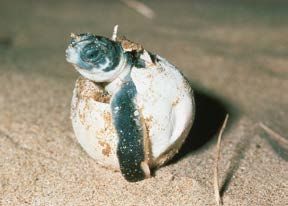
Objectives
This program is aimed at increasing the survivability of marine turtle clutches of eggs
and hatchlings by enhancing existing programs and exploring innovative ideas for feral
pig and other predator controls. The overall program objectives are to:
• Increase survivability of marine turtle clutches of eggs and hatchlings.
• Reduce feral predation impacts on marine turtle rookeries.
• Provide proactive nest protection and feral animal control actions at all identified
priority rookeries during nesting seasons.
• Enhance and augment existing Traditional Owner and local community engagement
and participation in turtle nest protection and predator control.
• Explore innovative ideas for predator control.
Turtle hatchlings heading to the sea. • Ensure strategic investments and enduring legacy outcomes are derived from
Image courtesy of Tourism and Events Queensland the investment.
Scope
Key marine turtle rookeries along the
coast and on offshore islands will be Coastal Zones
identified and prioritised for active nest Western Cape York and Gulf of Carpentaria
protection and predator control efforts. Eastern Cape York
Annual implementation plans and Bamaga
! Townsville to Rockhampton
monitoring programs will be developed for Rockhampton to Brisbane
the priority sites. Lockhart
Weipa
! River!
Some priority sites may include urban Aurukun
!
areas and some may be quite remote,
!
Eastern Cape York
some will be on existing national parks Edward
Western Cape York River HopeVale
and other protected areas and some will and Gulf of Carpentaria !
Mitchell
not. The location and type of threats in the Cooktown
!
River !
!
area will determine the kind of treatments
to be deployed. Identification of strategic Mareeba !Cairns
investments and lasting legacy outcomes
!
R YY
Innisfail
N
R N
Burketown Normanton !
are in the scope of the program.
O R
Doomadgee
!
!
H EE R
!
R II TT O
Ingham
The Recovery Plan for Marine Turtles in !
R TT H
Townsville
Australia (Commonwealth of Australia !
Ayr
R R
Charters !
2003), the draft Recovery Plan for Marine
!
O R
Towers Home !Bowen
TT EE R
!
Hill Townsville to Rockhampton
Mount
N O
Turtles in Australia (in prep.) and Feral Pig Isa Cloncurry Richmond Hughenden
N
! ! !
!
Mackay
Threat Abatement Plan (Commonwealth !
of Australia 2005), will inform the scope
of the program, including identification !
Winton
Clermont
of existing or easy-start programs that !
Rockhampton
Longreach Emerald
can be enhanced and augmented. Due to
!
!
! Barcaldine ! ! Blackwater
Gladstone
! Rockhampton
the geographic scale of this program, the !
Blackall to Brisbane
state will be divided into a series of four !
Bundaberg
zones or program areas to focus delivery QUEENSLAND Maryborough
!
Hervey Bay
!
Birdsville
of outcomes and methods according !
Charleville !
Gympie
Roma Kingaroy Nambour
to the factors and characteristics of the
!
! !
!
Dalby
individual zone. !
Toowoomba
!
Ipswich
! !
Brisbane
Cunnamulla St George
Within each zone or priority area it is SS O
O UU TT H
H
! !
Goondiwindi
Murwillumbah
!
!
Gold
Warwick !
expected that a number of discrete AA U
U SS TT R
R A
A LL II A
A
!
Stanthorpe ! Coast
Ballina ! ! !
Casino
projects may be implemented. N
N EE W
W SS OO U
U TT H
H
W
W AA LL EE SS
Figure 2: Turtle protection program implementation zones
5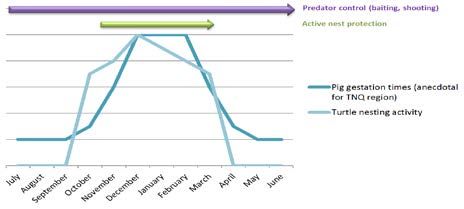
What types of projects will be supported?
The types of projects the program will consider include control options that use a combination of ground and aerial shooting, ground
and aerial baiting and installation of nest protection devices at strategic locations. The focus of all operations will be on critical egg-
laying and hatching times. Protection and control methods will usually be determined by the location and proximity to population
centres and will be integrated to achieve the most effective predator reduction:

Projects and activities that                     Projects that have flexibility to                Projects and activities that
enhance or augment existing                      amend actions depending on                       identify the entity with the
work undertaken or underway                      seasonal condition                               capacity to deliver
where appropriate                                In certain seasonal conditions certain           Projects that are developed on a zone
Projects will ideally be based on work           control techniques may have to be                basis with identified activities are
that has established information on              modified or deferred. Projects must              encouraged. One entity may oversee the
nature and extent of impact of predators         include a contingency plan for use in            project but delivery may be by a variety
on turtles and the stakeholders involved         the event of seasonal impacts.                   of entities. It is important that the project
in addressing the problem.                                                                        clearly identifies the on-ground delivery
                                                 Projects that reflect adaptive                   activities and funding allocations to
Ideally, projects must leave an enduring                                                          respective entities.
legacy in the impact area rather than replace    best-practice management
existing projects. Projects must identify how
they add value to existing or previous work
                                                 Projects will need to identify the               Projects that incorporate
                                                 combination of techniques, target
that has been undertaken to manage feral         specificity, areas of application, and time
                                                                                                  monitoring of results
pigs and other predators of turtles.             of year and build on available information       Priority areas will be identified using
                                                 for actions to achieve cost effective control.   existing knowledge and, where gaps are
Projects and activities that                                                                      identified, surveys can be conducted
do not undermine or replace                      Projects and activities that                     to evaluate priority areas. In all cases
                                                                                                  monitoring of activity and project results
existing activity                                reflect group management                         must be included.
Routine feral pig and other predator controls    rather than individual
are not supported. Projects should clearly       management are preferred
identify the types of existing activities
                                                 To maximise investment and to help
that are being undertaken, as well as
                                                 facilitate coordination and integration of
approaches that will prevent a reduction in
                                                 complementary feral animal management
existing activity to manage feral animals. In
                                                 programs, it is preferred that, where
other words the program aims to augment
                                                 possible, landscape-scale projects
and enhance existing projects and activities
                                                 will be undertaken.
in controlling feral pig predation on turtles.
                                                 Organisations such as regional natural
New projects and activities that                 resource management groups and local
                                                 Indigenous land and sea management
identify priority areas                          groups will develop projects through
While projects should build on existing          consultation with affected stakeholders.
work, if some priority areas are identified      This can include state and local government
that are currently not being actively            levels, regional natural resource management
managed, project proposals will be               groups, land and sea management groups
accepted. New projects must provide              and private sector project proponent or
clear detail on how they would meet the          proponents. It will be necessary that consent
program objectives.                              of land owners is obtained before any on-
                                                 ground works are undertaken.

                                                                       6
Partners Timing
A multi-agency Steering Committee There will be times of active nest protection through predator exclusion devices and
comprising representatives of key State on-ground baiting and shooting of feral animals. These times will be based on turtle
and Commonwealth departments has nesting and feral animal breeding cycles (where known) to ensure number of surviving
been formed to provide executive decision- nesting sites is maximised.
making and governance guidance to
the program. In conjunction with this
committee, turtle, pig and predator experts
will provide advice on a range of detailed
technical matters. Local working groups
may be formed to coordinate, plan and
provide operational implementation of
control actions.
The Queensland Parks and Wildlife Service
will establish a joint monitoring program
in collaboration with the Department of
Environment and Heritage Protection (EHP).
This will include measuring and reviewing
the effectiveness and outcomes of the
program and help identify significant turtle
rookeries likely to be impacted by feral
animals, to guide priorities and coordinate
the distribution of funding.
Effective communication and coordination Figure 3: Graph showing known turtle nesting season East Coast
between this program and existing (Limpus, 1985) and anecdotal evidence of seasonal feral pig
programs and initiatives in Indigenous land breeding times in Central and North Queensland.
and sea management will be important.
The engagement of contractors and
commercial providers can be accommodated
in project proposals for the program.
Figure 4: Graph showing impacts of culling feral predators leading
up to turtle nesting season that increases hatchling survivability
(Limpus, 1985).
A feral pig digging up a turtle nest.
Image courtesy of Jim Mitchell, DNRM, 2004.
7Funding available
The Commonwealth and Queensland governments have each committed matching
funds of up to $3.5 million over the next four years to help reduce the threat of feral
predation on marine turtle nests.
There will initially be two rounds of funding; the first round will target existing activities
and projects closing Monday 6 October 2014, and a second round will highlight scope for
innovation and development open from November 2014. The guidelines for applicants will
be available for the first round of applications for the 2014/15 turtle nesting season.
The first round will target existing programs and projects. Applications can be made
electronically to turtles.partnerships@nprsr.qld.gov.au .
New turtle hatchling
Image courtesy of Tourism and Events Queensland
8References
1. Limpus, C. J., Reed, P. C. and Miller, J. D. (1985). Temperature dependent sex determination in Queensland sea turtles: intraspecific
variation in Caretta caretta. In ‘Biology of Australasian Frogs and Reptiles.’ (Eds. G. Grigg, R. Shine and H. Ehmann) Pp. 343–351.
(Royal Zoological Society: New South Wales.)
2. Whytlaw, P, Edwards, W & Congdon, B. 2013. Marine turtle nest predation by feral pigs (Sus scrofa) on the western Cape York
Peninsula, Australia: Implications for management. Wildlife Research 40, 377-384.
3. Commonwealth of Australia, 2003. Recovery Plan for Marine Turtles in Australia.
4. Commonwealth of Australia, 2014 (in Prep) Recovery Plan for Marine Turtles in Australia
5. Commonwealth of Australia, 2005. Threat Abatement Plan Feral Pigs.
910
You can also read


