NEW! AUTO-RENEW YOUR FISHING LICENSE NDOWLICENSING.COM - eRegulations
←
→
Page content transcription
If your browser does not render page correctly, please read the page content below

2 0 19–2 0 2 0

N E VA DA

FISHING
GUIDE

                         AUTO-RENEW YOUR
                            FISHING LICENSE
                                     NDOWLICENSING.COM

                                                    NEW!
                 Stories from us; where we fish and why. Page 10
                          Fish stocking reports by region. Page 22
                   Photos of you! Look who got outside. Page 60
CALIFORNIA’S FINEST FOR
BLACKTAIL DEER AND WILD PIGS!
       Fully Guided Hunting Service on Private Land —
        Specializing in Blacktail Deer and Wild Pigs in
                California’s Mendocino County.

  CALL TODAY FOR SPECIAL RATES!!
                 707.888.2859
       FOR MORE INFORMATION EMAIL:
          ti m @ l o c k w o o d h u n ti n g s e r v i c e s . c o m

                     VISIT US ONLINE AT
  w w w.l oc k w ood h unt i ng se r v i c e s.c om

  Follow us on social media...
2 0 19–2 0 2 0
                                                                                                                     1st
N E VA DA

FISHING
GUIDE

CONTENTS
Licenses, Permits and Fees ���������������������������������������������������������������� 4
Bonneville Cutthroat Trout Restoration Success ������������������������� 8
Fishing the Reese River ��������������������������������������������������������������������� 10
Footballs are Back �������������������������������������������������������������������������������12
Good Winter Fishing Without the Ice ������������������������������������������� 14
Fishing Western Nevada’s Four Seasons �������������������������������������� 16
Fishing Hunter Creek ������������������������������������������������������������������������� 18
Selected Game Fish of Nevada �������������������������������������������������������20
Regional Fish Stocking Reports �������������������������������������������������������22
Fishable Waters Maps ����������������������������������������������������������������������� 24                                     ADAL AY PEREZ
    Species List by Region, ADA locations,
    and AIS Inspection Stations                                                                                2nd                             3rd
Statewide Regulations �����������������������������������������������������������������������36
    Reglas de Pesca ����������������������������������������������������������������������������38
    Accessible (ADA) Fishing in Nevada ��������������������������������������� 41
    Eastern �������������������������������������������������������������������������������������������� 42
    Southern �����������������������������������������������������������������������������������������46
    Western ������������������������������������������������������������������������������������������48
Wildlife Management Area Regulations ��������������������������������������� 52
Boating Regulations ���������������������������������������������������������������������������54
Nevada “Native Fish Slam” Entry Form ���������������������������������������� 57
                                                                                                                                    ERNISS   ANNA KAREN VALL ALOBOS
Trophy Fish Entry ��������������������������������������������������������������������������������58                  REBEKAH FU
Record Fish of Nevada ���������������������������������������������������������������������� 59
Look Who Got Online and Got Outside ���������������������������������������60
                                                                                                               C O N G R AT U L AT I O N S
                                                                                                               to the winners of the 2018 Nevada
S TAT E O F N E VA D A                                                                                          Free Fishing Day Poster Contest!
Steve Sisolak, Governor

S TAT E B O A R D O F W I L D L I F E
COMMISSIONERS
Brad Johnston, Chairman
Paul E. Valentine, Vice Chairman                                                                               FRE E FIS HING DAY
Jon Almberg, Thomas Barnes, Tiffany East, Kerstan Hubbs, David
McNinch, Tommy Caviglia, and Casey D. Kiel                                                                                    June 8, 2019
N E VA DA D E PA RTM E NT O F W I LD LI FE
Tony Wasley, Director
Jon Sjӧberg, Fisheries Division Chief
Chris Vasey, Conservation Education Division Chief
Tyler Turnipseed, Law Enforcement Division Chief
Elizabeth Kenna, Publications Coordinator

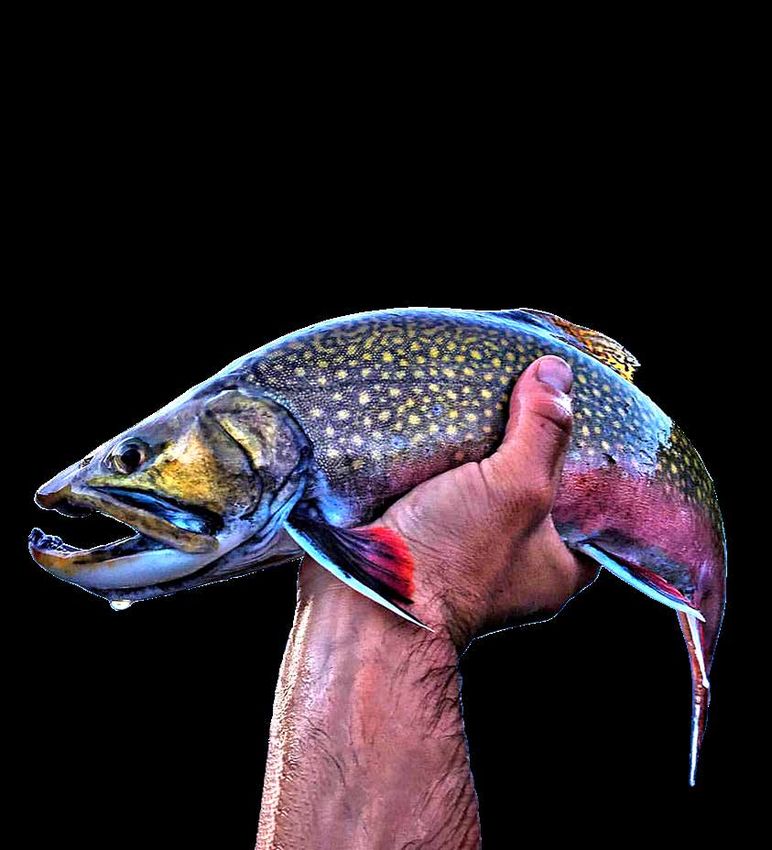
ON THE COVER:
Due to widespread stocking in the late 1800’s and early 1900’s;
Brook Trout are one of the most widely distributed trout species in
Nevada’s high mountain streams and lakes. The NDOW Fisheries
Division is currently focused on restoring native Cutthroat Trout to
many of the streams inhabited by brook trout.

NOTE:
Changes to regulations are marked in blue, bold italics.
2

                         D I R E C T O R ’S
                         MESSAGE
                         Dear Outdoor Enthusiasts,

    Last year when I was writing the Director’s Message for the 2018 Fishing Guide, I focused
    on the Department’s, at that time, recently completed license simplification effort and new             Williamstown, MA | Birmingham, AL
    licensing system. As I sit down to write the 2019 Fishing Guide Director’s Message, NDOW’s
    new license system is closing in on one year since implementation.
       The biggest license changes for Nevada anglers are probably the license valid period, the
    lack of required stamps, and mobile friendliness of the purchasing system. Still unbeknownst
    to many of our customers, both hunting and fishing licenses are now valid for 365 days from
    the date of purchase. When opportunities for late fall and winter fishing trips cause custom-
    ers to ponder the value of purchasing a license relative to duration of license validity, one can
                                                                                                        About This Guide
    relax in the knowledge that your licenses will be valid for 365 days from the date of purchase.
       Trout stamps, second rod stamps, or other previously state-required stamps are now all
                                                                                                        This high-quality guide is offered to you
    included in the purchase of licenses and no longer exist.
                                                                                                        by the Nevada Department of Wildlife
       Anywhere you can get a cell signal or a Wi-Fi signal you can use your cell phone, tablet or
                                                                                                        through its unique partnership with J.F.
    other mobile device to Get Online and Get Outside through Nevada’s new licensing system
    (www.ndowlicensing.com).                                                                            Griffin Publishing, LLC.
       Just as I do every year, as you read this year’s Fishing Guide I want to encourage you to        The revenue generated through ad sales
    explore all Nevada has to offer. Although Nevada is frequently referenced as the driest state       significantly lowers production costs and
    in the country, I want everyone to know that Nevada is home to over 200 lakes and reservoirs        generates savings. These savings trans-
    and more than 600 streams and rivers that combine to provide nearly 400,000 surface acres           late into additional funds for other impor-
    of sport fishing.
                                                                                                        tant agency programs.
       From the high alpine lakes in Elko’s Ruby Mountains to the desert lakes like Lake Mead near
    Las Vegas, Nevada offers a variety of opportunities. The majority of Nevada’s fishable still        If you have any feedback or are inter-
    waters consist of man-made reservoirs that vary in size from one acre to the 115-mile-long          ested in advertising, please contact us
    Lake Mead. A good portion of beautiful Lake Tahoe is also within Nevada. Most of Nevada’s           at 413.884.1001 or at www.JFGriffin.com
    reservoirs can be reached by road but many of the 600 streams that crisscross the state can
    only be reached hiking trails.                                                                                 Graphic Design:
       This publication is meant as a reference for any questions you might have regarding fishing         Jon Gulley, Dane Fay, John Corey,
    the Silver State. If you can’t find something in this magazine, check us out on our website at         Evelyn Haddad, Chris Sobolowski
    ndow.org or contact any of our offices. We are here to make sure you enjoy Nevada’s outdoors.

    Sincerely,

    Tony Wasley
    Director, Nevada Department of Wildlife

                                                                                                              This guide is also
                                                                                                              available online at

    NDOW Director Tony Wasley with a Brook Trout he caught near Galena Creek.

2 019-2 02 0 N E VA DA FI S H I N G G U I D E 
3

    D E PA R TM E N T O F W I L D L I F E
REGIONAL OFFICES
    WESTERN REGION OFFICE                                               Western Region                                          Eastern Region
1100 Valley Rd.
Reno, NV 89512
(775) 688-1506

    EASTERN REGION OFFICE
60 Youth Center Rd.
Elko, NV 89801
(775) 777-2300

    SOUTHERN REGION OFFICE
4747 Vegas Dr.
Las Vegas, NV 89108
(702) 486-5127

    E LY O F F I C E
1218 N. Alpha St.
Ely, NV 89301
Phone: (775) 289-1655 ext. 21
Office hours: 9 a.m. - 2 p.m.

    FA L L O N O F F I C E
    380 West B. St.
    Fallon, NV 89406
    (775) 423-3171
    (Hours subject to change, call ahead
    to confirm hours of operation.)

    WINNEMUCCA OFFICE
705 E. Fourth St.
Winnemucca, NV 89445
(775) 623-6565

     HOW TO USE THIS GUIDE
                                                                                                         So
     1.	The first part of the guide has stories about where to fish, and what NDOW has                        ut
                                                                                                                 h   er
        been doing to improve fishing in Nevada.                                                                          n
                                                                                                                              Re
     2.	The center of the Guide includes our Fishable Water Maps for each region.                                                gi
                                                                                                                                   on
     3.	The back of the Guide has our general regulations, as well as regulations by region.

     Thanks for reading! Still want more?
     Visit ndow.org or follow us on social media!

      This publication receives federal funding through the Sport Fish Restoration Program           This publication contains only a
      as educational material. Federal Laws prohibit discrimination on the basis of race, color,     synopsis of the fishing laws for the
      national origin, age, disability, and sex. If you believe you have been discriminated          state of Nevada. Complete text of the
      against in any NDOW program, activity, or facility, please write to the following:             laws and regulations may be obtained
      Director                         U.S. Fish and Wildlife Service                                by contacting the Nevada Department
      Nevada Department of Wildlife    Diversity Program Manager                                     of Wildlife or by checking our website
      6980 Sierra Center Parkway,      4401 North Fairfax Drive,                                     at www.ndow.org.
      Suite 120                        MS: 7072-43
      Reno, NV 89511                   Arlington, VA 22203

                                                                                           2 019-2 02 0 N E VA DA FI S H I N G G U I D E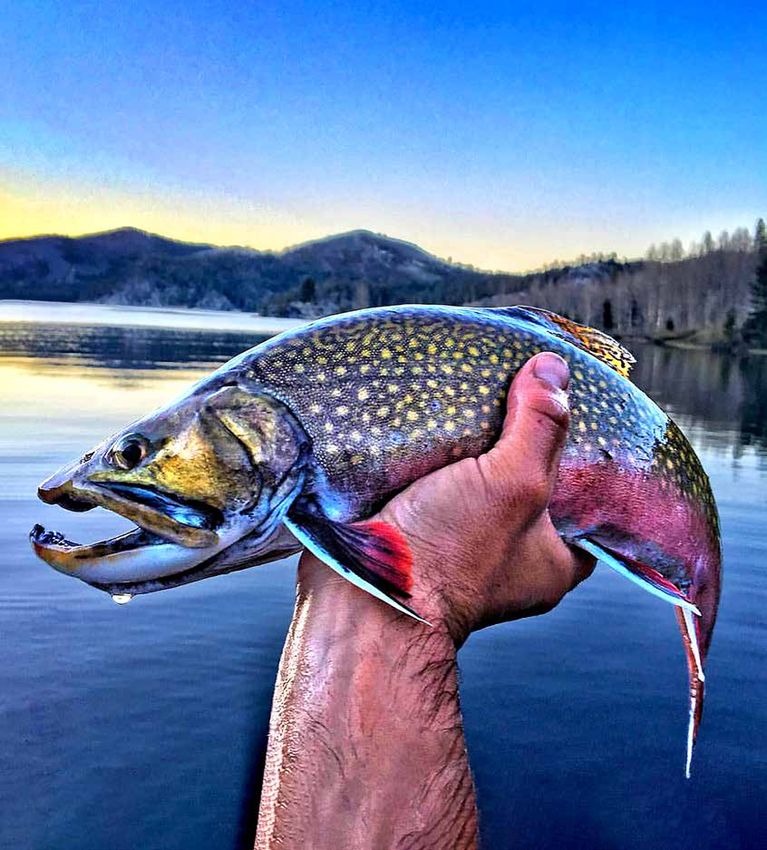
4

    N E VA DA F I S H I N G
    LI C E NSES , PE R MITS AN D FE ES
    Purchase your license at www.ndowlicensing.com.
    RESIDENT COMBINATION LICENSE FEES
    LICENSE                          DESCRIPTION                                                                                                          TOTAL VALUE
    Combination License              Valid for 1 year beginning the date of purchase. For persons 18 years of age and older at the time of purchase.      $75.00
    Serviceman's Specialty Com-      Valid for 1 year beginning the date of purchase. For Nevada Residents who are on active duty outside of Nevada.      $15.00
    bination License
    Severe Disability Specialty      Valid for 1 year beginning the date of purchase. Initial application through NDOW only.                              $15.00
    Combination License *
    Native American Specialty        Valid for 1 year beginning the date of purchase. Resident Native American as defined in NRS 502.280. Must            $10.00
    Combination License *            supply a letter of eligibility. Initial application through NDOW only.
    Disabled Veteran Specialty       Valid for 1 year beginning the date of purchase. Nevada Resident and veteran who has incurred a service-             $15.00
    Combination License *            connected disability of 50 percent or more. Initial application through NDOW only.
    Youth Combination License ** Valid for 1 year beginning the date of purchase. For persons at least 12 years of age but less than 18 years of          $15.00
    Youth Fishing License        age at time of purchase. Youth Fishing License is offered only as the Youth Combination License.
    Senior Specialty                 Valid for 1 year beginning the date of purchase. For persons 65 years of age or older with 5 years of continuous $15.00
    Combination License              Nevada residency at the time of purchase.

    * – Require first-time applicants to apply through NDOW offices only. Once their application is on file, these license holders will then be able to apply for future
         year’s licenses online at ndowlicensing.com.
    ** – Hunter privileges are not valid without completing a certified hunter education course, and proper documentation has been submitted to NDOW.

    RESIDENT FISHING LICENSE FEES
    LICENSE                          DESCRIPTION                                                                                                          TOTAL VALUE
    Fishing License                  Valid for 1 year beginning the date of purchase. For persons 18 years of age or older at the time of purchase.       $40.00
    1-Day Fishing Permit             Valid until midnight of the date specified.                                                                          $9.00
                                     Each Consecutive Day Added to a 1-Day Permit                                                                         $3.00

    Youth Fishing License is offered only as the Youth Combination License.

    NONRESIDENT COMBINATION LICENSE FEES
    LICENSE                          DESCRIPTION                                                                                                          TOTAL VALUE
    Combination License              Valid for 1 year beginning the date of purchase. For persons 18 years of age and older at the time of purchase.      $155.00
    Youth Combination License *      Valid for 1 year beginning the date of purchase. For persons at least 12 years of age but less than 18 years of      $15.00
    Youth Fishing License            age upon payment. Youth Fishing License is offered only as the Youth Combination License.
    1-Day Permit to Fish and hunt Valid until midnight of the date specified.                                                                             $23.00
    upland game birds and migra- Each Consecutive Day Added to 1-Day Permit to Fish and Hunt Upland and Migratory Game Birds.                             $8.00
    tory game birds

    * – Hunter privileges are not valid without completing a certified hunter education course, and proper documentation has been submitted to NDOW.

    NONRESIDENT FISHING LICENSE FEES
    LICENSE                          DESCRIPTION                                                                                                          TOTAL VALUE
    Fishing License                   Valid for 1 year beginning the date of purchase. For persons 18 years of age and older at the time of purchase.     $80.00
    Interstate Boundary              Valid for 1 year beginning the date of purchase.                                                                     $30.00
    Water License                    (To fish solely in the reciprocal waters of the Colorado River, Lake Mead, Lake Mohave, Lake Tahoe and Topaz Lake)
    1-Day Fishing Permit             Valid until midnight of the date specified.                                                                          $18.00
                                     Each Consecutive Day Added to a 1-Day Permit                                                                         $7.00

    NEVADA SPECIAL FISHING PERMIT
    LICENSE                          DESCRIPTION                                                                                                          TOTAL VALUE
    Nevada Special Fishing Permit Eligible non-profits include: clubs, foundations, programs, educational institutions or other social groups oper- $25.00
                                  ated for the benefit of children or that will use the permit for the benefit of adults with disabilities; for mental
                                  health facilities, facilities for juveniles, rehabilitation, older persons, and foster care facilities. Permits for entire
                                  non-profit organization when supervised by the non-profit officer or employee with a valid fishing license. New
                                  applicants submit descriptive letter of services provided by their institution or organization, and documented
                                  proof of non-profit status. Issued through NDOW Headquarters Office only.

2 019-2 02 0 N E VA DA FI S H I N G G U I D E 
6      LICENSES, PERMITS AND FEES

    QUALIFICATIONS
    FOR RESIDENT
    LICENSES, TAGS
    AND PERMITS
    A person is considered to be a resident of the State
    of Nevada if he is a citizen of, or is lawfully entitled
    to remain in, the United States, and during the
    six months next preceding his application to the
    Department for a license, tag or permit, he main-
    tained his principal and permanent residence in
    this State; was physically present in this State, ex-
    cept for temporary absences; and did not purchase
    or apply for any resident license, tag or permit to
    hunt, fish or trap in another state, country or prov-
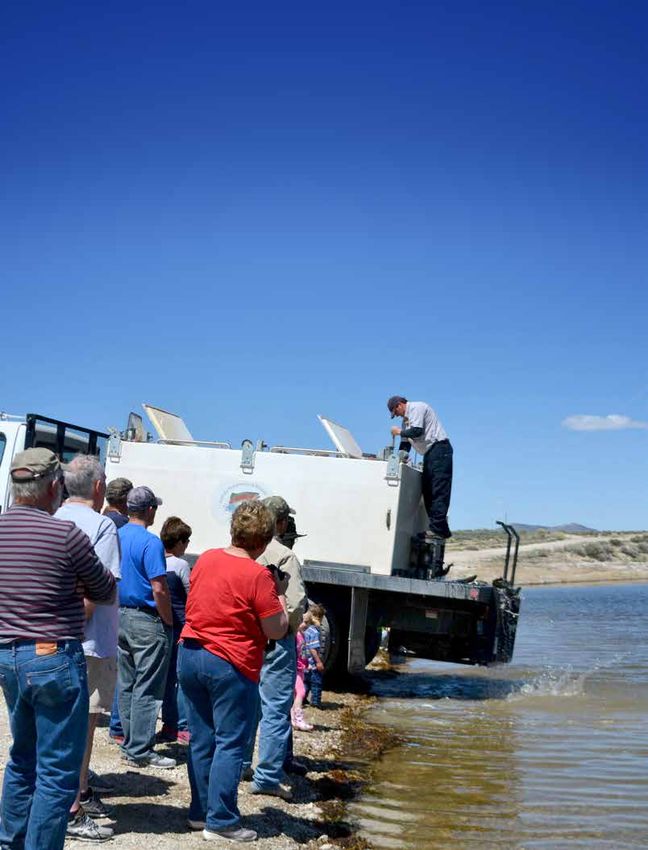
    ince. A person who does not maintain his principal         Bill Elliott sent in this photo to us with the caption, “We spent the week in the Sweetwater Mountains at
    and permanent residence in Nevada but who is               Desert Creek. Thanks NDOW for stocking that true gem of a Nevada fishery!”
    attending an institution of higher learning in this
    State as a full-time student is eligible for a resident
    license, tag or permit if, during the six months next      from another state, country or province. Principal     have a social security number must provide the
    preceding his application to the Department for a          and permanent residence means a place where a          number to obtain a business, occupational or
    license, tag or permit, he: was physically present         person is legally domiciled and maintains a per-       recreational license. Federal Law – Public Law
    in Nevada, except for temporary trips outside of           manent habitation in which he lives and to which       104 – 193; Nevada Statute – NRS 502.063,
    the State, and did not purchase or apply for any           he intends to return when he leaves the state in       503.5833, 504.390.
    resident license, tag or permit to hunt, fish or trap      which the permanent habitation is located. The
    in another state, country or province. A resident          term does not include merely owning a residence        AC T I V E M E M B E R S O F
    license, tag or permit issued by this State is void if     in the state. (Refer to NRS 502.015)                   THE ARME D FORC ES
    the person to whom it was issued establishes or                                                                   Active members, permanently assigned to the
    maintains his principal and permanent residence            SOCIAL SECURIT Y NUMBER                                state of Nevada and spouses and dependents,
    in and obtains any hunting, fishing or trapping            Laws regarding child support mandate that              may obtain a fishing license at the same cost
    privilege or entitlement conditional on residency          any person who is required by federal law to           as Nevada residents. (Refer to NRS 502.070)

2 019-2 02 0 N E VA DA FI S H I N G G U I D E 
8     EASTE RN REGION RESTOR ATION

    BONNEVILLE
    C UT TH ROAT TROUT
    RES TO R ATI O N
    SUCCESS
    By Joe Doucette, Eastern Region Conservation Educator

    Approximately 14,000 years ago, prehistoric Lake Bonneville covered           of intact populations of pure BCT when the states came together to work
    much of northern and western Utah, reaching into extreme eastern Ne-          towards native trout conservation.
    vada near Wendover and Ely. As the lake receded into what is now the             NDOW began developing a BCT recovery program in the late 1980’s
    Great Salt Lake and Utah Lake, streams left behind on the eastern slope       with the goal of re-establishing populations of native BCT into all 12
    of the Snake Mountain Range east of Ely became home to Bonneville             streams in the north and south Snake Range which made up the historic
    cutthroat trout (BCT), one of three cutthroat trout subspecies native to      range for the fish in Nevada.
    Nevada. By the middle of the 20th Century, BCT had disappeared from              The first step was to identify which streams held pure populations of
    most of its natural range in Nevada.                                          BCT. One of the factors in the disappearance of BCT was the introduc-
       “In the mid-50’s there were only two intact populations of BCT,            tion of nonnative trout species such as brook, brown, and rainbow trout.
    Pine Creek and Hendry’s Creek above a natural fish barrier,” says Chris       In many cases rainbow trout interbred with the native BCT, diluting the
    Crookshanks, NDOW Native Fish Staff Biologist.                                genetics of the species. Crews spent the short summer field seasons
       Around 1960, BCT were stocked in Goshute Creek, which is in Steptoe        surveying creeks to determine which held intact populations of BCT.
    Valley and not part of their historic range. Goshute Creek was devoid of         Genetically pure strains of BCT were found in four streams including
    fish and the intent at the time was to establish a conservation population    Pine Creek, upper Hendry’s Creek, Hampton Creek (which had been
    so if a catastrophic event occurred in the two creeks that still held fish,   stocked with Pine Creek fish) and the out of basin Goshute Creek.
    there would be a population available for restoration.                           The next step was to eradicate nonnative trout in the streams that
       “30 years ago,” explains Heath Korell, NDOW Fisheries Biologist,           didn’t hold BCT. This was done by chemically treating the streams with
    “Nevada Department of Wildlife began working progressively with Utah,         Rotenone, a naturally occurring compound found in the roots, seeds and
    Idaho and Wyoming to conserve native trout populations (cutthroat) in         stems of plants such as jicama and is widely used as both an insecticide
    the West.”                                                                    and piscicide for killing fish. Drip stations are set up along the waterway
        According to Korell, the historic range for BCT in Nevada was limited     and sprayers and sand “bombs” infused with powdered rotenone are
    to 12 streams in the north and south Snake Range and most were devoid         used to treat springs and backwaters.

    2 019-2 02 0 N E VA DA FI S H I N G G U I D E
9
Northeastern
Nevada’s Only
Full Service
Fly Shop.
THE PINE CREEK 310 Silver Street, Elko
BCT THEORY 775-934-4565
www.elkoflyshop.com
Pine Creek, on the west side of Wheeler Peak and outside
of the Bonneville Basin has a BCT population whose source
of fish is unknown. The accepted theory is that they got
there through the Osceola Ditch that was dug by miners to
bring water from the east side of the mountain to the mining
district on the west side which was dry. When the ditch was
abandoned and dried up, the fish were trapped on the west
side in Pine and Ridge Creeks. The population of BCT in Pine
Elko RV Park
Creek were then used to help stock several creeks in the
basin as well as Goshute Creek which is also outside of the
Bonneville Basin.
Once non-native species are eradicated, the streams are allowed to
rest for a minimum of a year and often for several to make sure all of the
non-desirable fish have been removed. The streams are again surveyed
with electroshockers during the summer to confirm the absence of
fish. BCT are then transferred from existing populations to the treated
streams. In the late 1990’s and early 2000’s Great Basin National Park Located off Interstate 80
joined the effort and streams within the Park boundaries were treated
and BCT were re-introduced there as well.
Directly south of Exit 314
Korell states, “Unfortunately, there have been some setbacks. Fires 100 pull-through spaces
have burned on Strawberry, Hampton and Goshute Creeks. The fire at
Hampton was catastrophic killing all of the BCT there. The Strawberry
Free 100 mbps wifi
Fire killed many of the fish in Strawberry Creek and the status of Goshute Tent camping • Hot showers
Creek is unknown at this time as the fire occurred late summer of 2018.”
Korell and Crookshanks say that as the riparian vegetation recovers Beer & Ice • Propane
along Strawberry Creek, remaining BCT should expand down the stream.
When the riparian vegetation along Hampton recovers BCT may be re- Pet-friendly • Dump station
introduced into that watershed as well. On-Site Laundry Facility
“Overall, the Bonneville cutthroat trout restoration program is a
huge success,” adds Crookshanks, “30 years ago we had just four intact Potable water available 10 cents a gallon
populations, two of them outside of their historic range. We were able
to establish intact populations of native BCT in all 12 streams within Bar open 3PM to 10PM
their historic range, and three streams outside of it.”
775-738-3448
elkorvatryndon@aol.com
elkorvparkatryndon.com
10     EASTERN REGION REESE RIVER

     FISHING THE
     REESE RIVER
     By Joe Doucette, Eastern Region Conservation Educator

     Are you looking to get away from the crowds for some quality fishing?          the LCT to recover to fishable populations. At that time, Nevada anglers
     Then the Reese River is for you. The fishable part of the Reese River,         will have the unique opportunity to catch native LCT in one of the more
     along with some of its tributaries, is in the Arc Dome Wilderness in central   pristine LCT streams in Nevada and take Nevada one step closer to
     Nevada between Austin and Tonopah. Because it is so far from a major           removing Lahontan cutthroat trout as a threatened species under the
     population center it is a very underutilized fishery.                          Endangered Species Act.
        Currently the river system holds a variety of species of trout including
     brown trout, brook trout, rainbow trout and Lahontan cutthroat trout           H OW T O G E T T H E R E :
     (LCT) that have been hybridized with rainbow trout. It is one of the largest   From Austin, travel west on US 50 to the SR 722 turnoff (approximately
     intact historic LCT stream habitat systems in the state of Nevada and          two miles). Head south on SR 722 approximately six miles to the Ione/
     has been identified as a key LCT recovery water by biologists working          Yomba Indian Reservation turnoff. Follow this road (mixture of pave-
     to conserve that species.                                                      ment and gravel) south approximately 53 miles, past the Yomba Indian
        To that end the Nevada Department of Wildlife (NDOW) in partnership         Reservation to the Cow Canyon Creek Trailhead road. Follow this road
     with the USFWS, the US Forest Service and the Yomba Indian Reserva-            another 5.5 miles to the trailhead. Once there, it is about a 1.5 mile hike
     tion, plans to remove non-native fish and restore native LCT that once         on a good trail to the Reese River. Anglers may also want to pick up a map
     occupied the stream.                                                           from any US Forest Service office that shows the Arc Dome Wilderness.
        Depending upon permitting and water conditions, the upper Reese
     and its tributaries could be treated in mid to late summer by NDOW. As         WHERE TO FISH:
     part of that plan, limits were recently lifted from the Reese River and its    The entire stream within the Arc Dome Wilderness has the potential to
     tributaries providing a unique opportunity for anglers to catch and keep as    hold quality trout, though the higher densities of trout are higher up in
     many fish as they want to help NDOW with the removal of non-native fish.       the system due to clean cold perennial water. The main stem of the Reese
        After the removal of non-native fish, NDOW will take LCT from exist-        contains mostly brown and rainbow trout, though anglers may also catch
     ing populations within the Reese River Basin and transplant them into          brook trout and rainbow/LCT hybrids. Big Sawmill Creek and Little Jett
     quality spawning waters within the upper Reese River basin. Depending          Creek, large tributaries of the Reese, contain mostly brook trout with
     upon water conditions and Mother Nature, it may take several years for         the occasional rainbow or LCT/rainbow hybrid.

     2 019-2 02 0 N E VA DA FI S H I N G G U I D E
2ND CHANCE 11
TAXIDERMY
“WHEN QUALITY COUNTS”
EXPERIENCE • DEPENDABILITY
QUICK TURNAROUND
SATISFACTION GUARANTEED
DOING REPLICAS & SKIN MOUNTS
RICK SMITH, TAXIDERMIST
SERVING THE GREATER LAS
VEGAS AREA FOR MORE
THAN 16 YEARS
(702) 400-6413
WWW.2NDCHANCETAXIDERMY.COM
In an effort to to assist NDOW withthe removal of non-native fish, limits were
recently lifted from the Reese River and its tributaries allowing anglers to
catch and keep as many fish as they want.
WHEN TO FISH:
The best fishing occurs from just after the spring runoff to right before it
starts to ice up in late fall. Mid to late summer may find low flows, but also
lots of grasshoppers and insect hatches that have trout actively feeding.
H OW T O F I S H :
Whether you are a bait, spin or fly fisherman, beaver ponds should be
high on your list when fishing the Reese. They hold a lot of fish and make
for fairly easy fishing. In the ponds bait anglers can use worms, PowerBait
or grasshoppers fished under a small bobber. In the stream, the same
baits can be used, just fish them on a light wire hook and dead drift or
high stick them through runs or tail waters.
Spin anglers will want to use small spinners, rooster tails or panther
Martins, or similar style presentations to fish the same areas. Fly rod-
ders can use a variety of dry flies as well as nymphs that can be dead
drifted or high sticked through riffles and runs. Flies to try include ants,
beetles, grasshoppers, elk hair caddis, yellow stimulators, gold ribbed
hares ears, pheasant tail nymphs, red or green copper Johns and caddis
nymph imitations.
12     EASTERN REGION FOOTBALLS ARE BACK

     THE FOOTBALLS
     ARE BACK!
     By Chris Crookshanks, Native Aquatic Species Specialist

     While unassuming to some, those who have fished Comins Lake in                populations in Comins Lake that many an angler had grown to love.
     the past know that it is home to some of the largest, fastest-growing             During the summer of 2015, an army of NDOW personnel descended
     trophy trout in the state. “The footballs” refers to the most common          upon both Comins Lake and Bassett Lake to again eradicate the toothy
     description for the fish that roam the waters of the reservoir.               predator. Bassett Lake, located 20 miles north of Ely was also home
        Seeming to appear as an oasis out of a sea of sagebrush just seven         to northern pike and likely represented the origin of the most recent
     miles south of Ely, Comins Lake has had an illustrious past. The reser-       illegal introduction. The spring of 2016 saw trout and bass stocked
     voir was first stocked with the highly predatory northern pike in 1970        into both waters for the first time in nearly a decade. In seemingly
     in an effort to control a nuisance population of non-game fish. By the        no time, the reputation of the fish Comins Lake produces has quickly
     mid 1980’s, the pike had decimated all fish in the reservoir and the          been restored. Trout in the 18-20 inch and 3-pound size class were
     pike population crashed. The pike were chemically eradicated using            common throughout the 2018 season. In 2019, anglers can expect to
     rotenone in 1989 and Comins Lake enjoyed itself as a trophy trout             see more quality and preferred size trout are being caught with some
     destination throughout the 1990’s until they were again discovered            trout measuring over 25 inches and tipping the scales at 5 pounds. The
     in the reservoir in 1999, this time a result of an illegal introduction. In   largemouth bass population will see a large portion of their population
     less than a decade, the pike had again devastated the trout and bass          move into the 10-inch range in 2019 meaning more spawning age bass.

                                                                                                              A load of Rainbow Trout arrive at Comins Lake.

     2 019-2 02 0 N E VA DA FI S H I N G G U I D E
EASTERN REGION FOOTBALLS ARE BACK 13
The key to the Comins Lake footballs is the productivity of the high
desert gem. From zooplankton to whole array of aquatic insects such
as midges, damselflies, and dragonflies, anything that a trout likes to eat
is present in the waters of Comins Lake in obscene amounts. A growth
study in the mid-1990’s showed that hatchery trout stocked at eight
inches and 1/3 pound each would more than double their length and
showed an eight-fold increase in weight in just a year. In the absence
of pike, Comins Lake has proven itself of trophy capabilities. In 2004,
it was the fourth most popular fishing destination in the entire state,
only to be bested by Lakes Mead and Mohave and the Truckee River.
As a two-tiered fishery (trout and bass), quality fishing can be pursued
year-round by anglers of all ages and experience. Springtime and fall
water temperatures make for fantastic trout fishing while bass fishing
can be enjoyed in the hotter summer months. An often-overlooked op-
portunity is catching giant trout through the ice in the winter months.
Comins Lake is an integral component of NDOW’s Steptoe Valley
Wildlife Management Area just 7 miles south of Ely, a full-service commu-
nity. The lake is fed by both Steptoe and Cave Creeks from the east and
Willow Creek from the south. At capacity, the lake covers 410 surface
acres with a maximum depth of 15 feet. Average depth is 6 to 8 feet.
Anything that a trout likes to
eat is present in the waters
of Comins Lake in obscene
amounts. The fish get big!
Come see Comins Lake for yourself, you won’t regret it!
FISHING FAC ILITIES
Bait fishermen should fish off the bottom with PowerBait, A primitive boat launch is available. However, plans are in
salmon eggs, or night crawlers with a minimal amount of the works for a modernized boat ramp and dock. There are
weight. Spinners and spoons are popular with the casters, restrooms on-site. Although, overnight camping and fires are
but a fly and a bubble produces excellent results as well. Fly not allowed, there are a multitude of camping and lodging
fishermen should use nymph and damsel patterns in the spring choices nearby. NDOW is currently working to obtain a grant
and dark wooly buggers, midges, and leeches the rest of the that would fund a new, modern ADA compliant boat launch
year. For those willing to brave the elements, weighted jigs facility for Comins Lake.
(green or yellow) seem to work best for ice fishing.
Health Advisory – Comins Lake: Due to elevated methylmercury levels, The Nevada State Health Division is recommending zero consumption of largemouth bass
from Comins Lake. For more information visit ndow.org.
2 019-2 02 0 N E VA DA FI S H I N G G U I D E14 SOUTHERN REGION WINTER FISHING
GOOD WINTER ICE FISHING
WITHOUT
THE ICE
Brandon Senger, Southern Region supervising
fisheries biologist, holds up a Lake Mead
striped bass found while conducting population
surveys. Large stripers come up from the depths
during the cool winter months, making them
more accessible to anglers. (NDOW)
By Doug Nielsen, Southern Region Conservation Education Supervisor
For much of the Silver State, winter fishing involves hard water, ice “Winter is a good time to target the bigger striped bass because they
augers and layers of clothing to ward off the cold. And though that come up out of the depths and are more accessible to anglers. So, if they
option is fun and exciting in its own right, there is a more comfortable want to get trophy stripers winter is a good time to do it, and they’ll have
alternative. All you have to do is load up your gear and pay a visit to a better to chance to find them at multiple spots throughout the lake,”
Clark County. said Brandon Senger, Southern Region supervising fisheries biologist
In Southern Nevada, you’ll find relatively mild winter temperatures, for the Nevada Department of Wildlife.
especially when compared to those commonly experienced in the state’s When it comes to largemouth and smallmouth bass, “Anglers typi-
more northern climes. More importantly, you also will find two of the cally have better luck finding the fish in deeper water during the cooler
country’s largest recreational waterways – Lake Mead and Lake Mohave. months. 45 to 60 feet is what I hear from anglers. That’s where they
In December and January, the average daytime temperature at Lake catch them. So if you are targeting black bass, I would look for cliffs and
Mead is about 58 degrees with overnight lows hovering near 37. For work around that 45- to 60-foot range,” said Senger.
Lake Mohave, you can add five degrees to those temperature readings. For smallies Senger recommends working your baits along rocky
Though Mead and Mohave have well-earned reputations for hosting shore areas as well as cliff faces and steep drop-offs. “Don’t go back into
summer boating crowds, during the winter months they are among the coves with a lot of vegetation. With largemouth bass you might have
most underutilized waterways in the West. That means there is plenty some luck, but they are probably going to be a little deeper, looking for
of open water to go around with some peace and quiet to go with it. that warmer water.”
Both reservoirs are home to three bass species – striped, largemouth When it comes to the bass species, anglers looking for numbers of fish
and smallmouth – along with green sunfish, bluegill and catfish. Lake may want to focus their efforts on Lake Mead, but those looking for big fish
Mead also has a growing population of crappies that flies somewhat may want to put their time in on Lake Mohave. Smallmouth bass topping
under the radar. the 4-pound mark are not uncommon and will give you a memorable fight.
2 019-2 02 0 N E VA DA FI S H I N G G U I D E SOUTHERN REGION WINTER FISHING 15
Willow Beach, located on the Arizona shoreline at the north end of Lake Mohave holds a good and
Lake Mohave is known for producing striped bass weighing 30-pounds growing population of scrappy
or more. While that is not a daily occurrence, it is not surprising when smallmouth bass. This smallie,
a lucky angler reels in something that large. If you are just looking to caught and released by Roger
catch something in the double-digit realm, this might well be the place. Williams, is typical of the fish found
Just be ready to put in some time. With its ultra-clear water, Willow in the reservoir.
Beach can be a tough place to catch wary stripers and will put one’s (Doug Nielsen)
angling skills to the test.
In addition to stripers, Willow Beach also is a good place to catch
rainbow trout. The National Fish Hatchery, located just upstream from
the marina, stocks trout every Friday. You can also find trout in the lower
Colorado River below Davis Dam at Laughlin.
While many anglers who visit Southern Nevada concentrate their
efforts on catching one or more of the bass species, there is growing
interest in Lake Mead’s surging crappie population. Generally, the fish
are found in the Overton Arm.
“Crappie fishing is typically good year round – cold water or hot
water – so if people are looking for something new to do, winter would
be a good time to try fishing for crappie,” Senger said.
“You can also find some bluegill action during the cold weather. They
tend to be easier to catch once they start spawning and nesting, but you
can still target them in the winter. At Lake Mohave you can find them
around habitat structures. At Lake Mead you can look for blue gill in At Lakes Mead and Mohave, there
the Overton Arm while you are fishing for crappies.” is no limit for striped bass less than
If you decide to make a southern swing part of your winter fishing 20 inches total length. For stripers
with a total length of 20 inches or
regimen, you and your friends can rent a fishing boat at multiple loca-
longer, the limit is 20 fish. These
tions on both reservoirs. While a boat is not an absolute necessity to generous limits help to make
fish Mead or Mohave, having one at your disposal does open the door stripers a popular game fish.
to more fishing opportunity.
Nevada’s Best Kept Secret!
EAGLE VALLEY RESORT
Year ‘round fun for the whole family!
Fishing Tournaments
Check out our May fishing derby! (call for date)
Tons of Wildlife!
Easy access trails for hiking or ATVing!
NEW! Game Locker
Full Hookup RV park
Cabins with all the amenities
Laundry facilities, showers
Bar, slot machines, pool table
Fast, friendly service!
STAY A DAY OR STAY A YEAR!
Our store has all of your fishing, hunting & camping needs!
Fishing and hunting licenses available
EVR’s resident
EagleValleyNV.com • 775-962-5293 buck16 WESTERN REGION FOUR SEASONS
F I S H I N G W E S T E R N N E VA DA’S
FOUR SEASONS
By Jan Nemec, Western Region Angler Education Coordinator
From our winter’s tormenting cold to the summer’s blistering heat, on snowpack and temperatures, runoff can extend into June following
there’s always remove a fishing to be found in Western Nevada. As big winters. When spring flows do spike, the East Walker often remains
diverse as the surrounding landscapes, the gamefish of Western Nevada fishable due to the highly regulated flows out of Bridgeport Reservoir.
help provide anglers with year-round fishing opportunities. Nevada’s The tail-water fishery offers exceptional spring streamer fly fishing and
eastern Sierra slope offers three individual watersheds within an hour is well known for its healthy brown trout population. The Walker River
of each other, all unique in their own way. The Truckee, East Walker, and State Park offers several new amenities including improved campsites
Carson Rivers begin high in the Sierras, draining east into the naturally at the famous “elbow” East Walker River access.
protected valleys below. Although, we may be the driest state in the Early spring is also an excellent time to fish many of Nevada’s high
nation, our fertile desert reservoirs are well known for their trophy Sierra lakes as they begin to thaw. Hungry trout in late spring can be
trout and warmwater gamefish. seen patrolling the shoreline of Spooner Lake at ice-out. These hold-
As brutal winter storms pound the Northern Sierras and California, over trout stocked the previous season are hungry and eager to eat
Nevada is protected by the Sierra’s crest and natural rain shadowing small baits, spinners, or flies above and below the surface. Spooner
that occurs. The rain shadow leaves our valleys much warmer and dry, Lake can remain productive until shoreline vegetation takes hold as
prime for winter fishing. Winter dry fly fishing on the Truckee River east summer approaches.
of Reno can provide anglers with some of the best surface activity the Whether you choose to embrace summer, or run from it, there’s
state has to offer. Swarms of hatching little olive mayflies and skwala always an option when the serious heat sets in. If you like bass by the
stoneflies bring even the largest trout up to feed on the surface. hundreds, or truly do love the desert heat, Lahontan Reservoir is the
When the spring snowmelt begins in the Sierras, the Truckee and place for you. In fact, the hotter the better. White and hybrid wiper bass
Carson Rivers are susceptible to dangerously high flows. Depending can provide warm-water spin and fly fisherman with plenty of action
2 019-2 02 0 N E VA DA FI S H I N G G U I D E See video in action at cleanwayfuelfill.com 17
KEEP FUEL IN THE TANK
AND OUT OF OUR WATERS
es
! no m ore splash
So easy ags
soaked r
or fuel-
• BURPED fUEl
ovERfill DRains
Back into tank
• aDaPtERs inclUDED
• PatEntED, hEavy-DUty
• sPill-fREE REfUElinG
10" - $3995 12" - $4495
772-460-6670 10% off with coupon code NEV19
order direct at cleanwayfuelfill.com
The New
Blade in
along the sandy beaches during the hottest times of the year. Bait
fisherman find bass, walleye, and carp all summer long. Bright spoons
Town!
and streamer flies are productive for white bass, wipers, walleye,
and the occasional large carp.
If the heat isn’t your thing, there’s an oasis just above Carson
City waiting for you. Hobart Reservoir rests at 7650 feet and
can be quite the walk without a suitable four wheel drive vehicle.
Surrounded by granite and tall pines, the special regulated water
is primarily utilized as a catch and release fishery. Anglers using
small spinners or flies along the shoreline are rarely unsuccessful.
As summer finally starts to lose its hold, it’s time to start thinking
about heading north.
Just south of the Oregon border you’ll find Onion Valley and
Knott Creek Reservoirs nestled high in the Pine Forest Range.
Onion Valley is far easier to access and better known for its
plentiful trout populations. Tough access and picturesque fly
WillowStrike™
fishing draw anglers to Knott Creek Reservoir. Whether you’re
the angler seeking an adventure in solitude, or the car camping
family, Nevada’s fishing is always on.
Greatest Fish Catcher of All Time
PantherMartin.com • 800-524-4742
Dept. NV049L 19 N Columbia St, Port Jefferson, NY 11777
18     WESTERN REGION HUNTER CREEK

                                                         FISHING
                                                         HUNTER
                                                         CREEK
                                                         By Travis Hawks, Western Region Fisheries Biologist

                                                         As the mid-morning sun crests over the timbered ridge to the east, sunlight
                                                         fills the canyon bottom. A small stream tumbles along a series of boulders
                                                         and eventually fans out into a pool that is narrow enough to jump across
                                                         but sheltered on both banks by willows. An angler gently creeps into
                                                         position on the upstream side of the pool and without disturbing what
                                                         is surely waiting in the depths, delicately casts his lure into the shadows.
                                                         Not more than a second goes by when the serenity of the moment is
                                                         broken by a violent splash and the tell-tale bend in the rod that comes
                                                         with success. A short but rewarding fight ensues and within a moment
                                                         the angler is looking down upon a wild brook trout in his net. The orange
                                                         spots glisten in the sun while the angler quickly works the hook free from
                                                         the corner of the trout’s mouth. A second is taken to admire this wild
                                                         creature and then the angler gently nudges the fish toward the current
                                                         and with a subtle slap of its tail it disappears back to where it came from.
                                                         The mountain canyon is again calm.
                                                             Sounds like something that might take place in a remote wilderness a
                                                         plane ride away and several miles off the beaten path, doesn’t it? Well
                                                         what if someone told you that scene is played out, over and over again,
                                                         on a number of streams that are within a 10 minute drive of Reno and

     2 019-2 02 0 N E VA DA FI S H I N G G U I D E
19
Sparks (or even closer for that matter)? You wouldn’t believe it would
you? Believe it.
A tightly kept secret in the greater Truckee Meadows area is the
phenomenal stream fishing that is accessible to all yet almost untouched.
Coming off of the eastern slope of the Carson Range are a total of 4
streams that are nothing short of a small water anglers dream. These Smart Storage Solutions, Delivered
streams, that are home to rainbow trout, brook trout, and the occasional
brown or Lahontan cutthroat trout, all have maintained public access
that allows for anglers to freely roam and explore these public lands. Serving all of Nevada, NorCal, SoCal, Idaho, Oregon,
Closest to the downtown Reno area is Hunter Creek. This stream has Northern Arizona, and Southern Utah
a main access point that is within 3 minutes of the Truckee River and
Mayberry Park and has a maintained hiking trail from the access point Retired shipping containers are one of the most cost
off of Woodchuck Circle to the top of the Carson Range some 4 miles effective solutions for a number of needs!
up the canyon. Wild rainbow trout can be found in good numbers and
size near the bottom of the creek while higher up brook trout can be Extensive modification services available
expected. The size of the fish in all of these streams is typically small but
the number and constant action will make for a great day, regardless.
Located off of the Mt. Rose highway on the southern end of the
Truckee Meadows is a trio of streams that individually offer enough
opportunity and action to keep even beginner anglers busy for the
better part of a day. Thomas Creek and Whites Creek can both be ac-
cessed off of N. Timberline Drive and have Forest Service trailheads
and parking areas on each. Wild brook trout as well as rainbow trout Immediate on site storage • Tiny house
that are stocked once a year can be found in these streams with some
of the best fishing holes being located near the bridges and trails not Grow room • Secure Storage • Bunker
more than 40 yards from the parking area. Galena Creek offers up Prepper storage • Living space • Swimming pools
wild rainbow, brook, and possibly brown trout fishing all within the
immediate vicinity of the Galena Creek Park (Washoe County). Access Fernley, NV Pahrump, NV
is allowed though the park and the stream itself is the very definition 775-468-6766 702-772-5630
of a high mountain stream, being characterized by cold water, large We are proud to be 100% Nevada owned and operated.
granite boulders, and hungry fish. We are not a broker, and own all of our equipment and inventory.
The only thing required to get out and enjoy these angling gems in
your backyard is a rod, your favorite lure/bait/fly, and your Nevada
fishing license! The most challenging part of fishing any of these streams
may be deciding which one to try first.
SOUTHERN
SPORTSMAN
Hunting Lodge, Inc.
• Father/Son Hunts
• Corporate Discounts
for 6 or more
• Great Prices!
(No Trophy Fees)
• Great Lodging
With Excellent
Meals
Book Your Lifetime Memory Now!
Dylan Cassinelli
with his catch from
Hunter Creek
www.southernhunting.com
William Lyon 334-467-1830
Dave Lyon 334-412-3368
— Alabama’s Black Belt —
20      S E L E C T E D GA M E F I S H O F N E VA DA

     Bluegill                                                   Brook Trout                                                  Brown Trout
     (Lepomis macrochirus)                                      (Salvelinus fontinalis)                                      (Salmo trutta)
     Very colorful. Light to dark blue on bright purple.        Color ranges from olive, blue-gray or black on the           Back is brown or olive with large black spots. Sides
     In breeding season, the breast of males is red. Gill       back to white on the belly. Belly and lower fins brilliant   light brown to yellowish, with numerous black and
     covers often blue with a black spot on the rear of         orange in spawning males. Upper body and dorsal              red-orange spots surrounded by light blue rings. Few
     the “ear flap”. Faint vertical bars on the sides. Dorsal   fin have mottled or worm-like markings. Red spots,           if any spots on tail. Tail square, not forked. Brown trout
     fin has 10 spines followed without interruption by         with or without bluish rings around them. The most           occur widely in central and eastern Nevada streams
     10 or 12 rays. The mouth is small and when closed,         distinguishing marks are the white and thin black stripe     and occur in about 73 streams statewide. Also found
     barely reaches the front of the eye. Body deep for its     along the fore edge of the lower fins. Tail square or        in some lakes and reservoirs. Spooky and difficult
     length and compressed from side to side. Found in          slightly forked. Occurs in about 278 mountain streams        to catch.
     ponds and reservoirs throughout northwestern and           in Nevada where it frequents cooler water. Found in
     southern Nevada.                                           Ruby Mountain alpine lakes and other coldwater lakes.

     Bull Trout                                                 Bullhead                                                     Channel Catfish
     (Salvelinus confluentus)                                   (Ameiurus melas)                                             (Ictalurus punctatus)
     The bull trout is normally olive-green to light green      No scales. Tail only slightly forked, with rounded lobes.    No scales, tail deeply forked with pointed lobes. Body
     along the back and sides and appears somewhat              Adults are blackish, dark olive or dark brown. Belly         pale bluish-olive above and bluish-white below. Spots
     washed out. Back with pale yellow spots and sides with     is yellow, greenish-white, or white. Chin barbels are        vary from a few to many over much of the body and
     orange or red spots; fins fringed with yellow orange;      entirely black. The pectoral fin spine is smooth. Found      may not occur on large fish. Barbels extend from the
     pectoral, pelvic, and anal fins with white margins.        in farm ponds and reservoirs throughout Nevada.              chin and upper jaw. Both dorsal and pectoral fins have
     This fish is native to only the Jarbidge River system                                                                   strong, sharp spines. Larger fish may be distinguished
     of northern EIko County and occurs in tributaries                                                                       from the white catfish by the longer black barbels and
     associated with the two forks of that stream system.                                                                    more streamlined body form. Tail more deeply forked
                                                                                                                             and head thinner and less rounded than white catfish.
                                                                                                                             White on belly only to forward edge of anal fin. Found
                                                                                                                             in warm water streams and reservoirs in northwestern
                                                                                                                             and southern Nevada.

     Cutthroat Trout                                            Crappie
     (Oncorhynchus clarkii)                                     (Pomoxis)
     Body color is highly variable with three subspecies in     Silver-olive with numerous black or dark green
     Nevada. Back may be steel gray to olive-green. Sides       splotches on the sides. Forehead is dished and the
     may be yellow-brown with red or pink along belly.          snout is turned up. Five or more anal spines and 7 or 8      Green Sunfish
     Slash marks on either side of the throat beneath the       dorsal spines. Base of the dorsal fin is about the same      (Lepomis cyanellus)
     lower jaw may be yellow, crimson-red or orange. Fins       length as the base of the anal fin. Body compressed          Each scale is flecked with yellow or emerald green.
     uniform color with no white tips. Scattered spots are      from side to side. Found in warmwater lakes and              Back and sides olive-green, and lower belly yellowish-
     usually round and black, more closely grouped towards      reservoirs throughout Nevada.                                copper or brassy. Body is short, stocky, and deeply
     the tail. Teeth on back of tongue. May hybridize                                                                        compressed from side to side. The gill cover has a
     with rainbow. Native to the Humboldt, Snake, and                                                                        broad, light margin, and it often has a black spot on
     Bonneville basins of Nevada. Currently occurs in 112                                                                    the rear flap. The gill cover bone is stiff all the way to
     streams and a small number of lakes where it’s well                                                                     the margin which is different from most other sunfish.
     known for its large size.

     Kokanee                                                    Lake Trout Or Mackinaw                                       Largemouth Bass
     (Oncorhynchus nerka)                                       (Salvelinus namaycush)                                       (Micropterus salmoides)
     Kokanee are silver in color until they are ready to        Not as highly colored as other trout. Dark gray or           Dark green on back and sides, silvery below. Belly is
     spawn in the fall, at which time they become bright        gray-green above, belly light gray or white. Light gray      greenish-white. A broad dark band on the sides which
     red. Kokanee are a form of landlocked sockeye salmon       irregular shaped spots or lines on back, sides, dorsal       consists of irregular patches touching together. Dorsal
     and generally do not grow larger than 16 inches. Within    fin and tail. No white edging appears on lower fins as       fin with 9 to 10 sharp spines nearly separated from
     the state, Kokanee can be found in Lake Tahoe and its      in brook trout. Tail deeply forked. Currently found in       the soft rays by a deep notch. Upper jaw when closed
     tributaries when spawning.                                 Lake Tahoe, Nevada-California, and Liberty and Echo          extends at least to the rear edge of the eye in adults,
                                                                Lakes in EIko County.                                        usually beyond. Abundant in lakes and reservoirs
                                                                                                                             throughout Nevada.

     2 019-2 02 0 N E VA DA FI S H I N G G U I D E                                                       For more information on fish in Nevada visit ndow.org
S E L E C T E D GA M E F I S H O F N E VA DA 21
Mountain Whitefish Pumpkinseed Rainbow Trout
(Prosopium williamsoni) (Lepomis gibbosus) (Oncorhynchus mykiss)
Back and fins are light brown and the sides and belly Considered a very colorful sunfish, the pumpkinseed Body usually olive to greenish-blue on the back; belly
are silver and white. There are no spots. Tail deeply is highlighted with mostly orange-brown spots on white to silver; sides usually show prominent red or
forked and body is deep and round. Mouth small with the main body and dorsal fin. Belly is orange-yellow. pink streak. Fish from lakes sometimes lose all color
no teeth. Large fleshy adipose fin. Scales large and Opercular lobe has a dark blue-black spot with a and appear silvery. Irregular spots on back, sides, head,
rough. The whitefish occurs in a number of larger bright red or orange edge. The cheek and operculum, dorsal fin and tail. No teeth on back of tongue. Native to
streams in western and northeastern Nevada. or gill plate, also have wavy blue lines much like a the Columbia River drainage of northeastern Nevada,
green sunfish. Pumpkinseed have been caught in but stocked extensively from hatcheries throughout
northwestern Nevada from the Truckee River, Peavine Nevada. Nevada’s most abundant game fish species
Ponds, Rancho San Rafael Pond, and Steamboat Creek. occurring in 295 streams statewide and in a large
number of lakes and reservoirs.
Redear Sunfish Sacramento Perch Smallmouth Bass
(Lepomis microlophus) (Archoplites interruptus) (Micropterus dolomieu)
Dark brown to green back with yellow to green sides. Color blackish above, with about seven vertical bars Dark olive to brown on back, sides bronze, belly white.
Belly is light yellow to nearly white. The mouth is small irregular in form and position. This is not a true perch, Five dark vertical bands on sides. Eyes reddish. Dorsal
and the opercular lobe or ear flap has a dark blue-back but a sunfish. fin with 9 or 10 sharp spines without a deep notch
spot with red to orange edge. Found in small ponds separating them from the soft rays. Upper jaw when
such as Floyd Lamb Park Pond in southern Nevada, and closed does not extend beyond the rear edge of the
Dufurrena Ponds, and ponds in Mason Valley WMA eye. Smallmouth bass are one of the most popular and
in northern Nevada. Also found in the Colorado River abundant game species in Lakes Mead and Mohave.
below Davis Dam. It is also found in the Humboldt River, Dry Creek
Reservoir, Wildhorse Reservoir, Rye Patch, Carson
River, Lahontan Reservoir and Wall Canyon Reservoir.
Spotted Bass Striped Bass Walleye
(Micropterus punctulatus) (Morone saxatilis) (Sander vitreus)
One of the several black basses found in a few Body olive-green above, shading through silvery on Prominent “canine” teeth distinguish this big perch
northern Nevada waters such as Lahontan and Rye sides to white on belly with brassy reflection. There from its smaller family member the yellow perch.
Patch reservoirs and Sparks Marina Pond. Green to are 7 to 8 longitudinal dark stripes following the scale Color is brassy-olive buff sometimes shading to
dark green on back and sides with a white belly. Rows rows. A spiny dorsal fin is barely separated from a soft yellowish sides and white beneath. No distinct bars
of spots along the lower sides below the dark lateral dorsal fin. The tail is forked and the body is cylindrical on the sides, but rather an overall mottling of black or
stripe. Dorsal fins are connected and not separated into in shape. Striped bass occur in only a few of the brown. Large dark blotches at rear base of dorsal fin,
two distinct fins. Upper jaw extends to the back of the larger lakes in Nevada including Lake Mead and Lake and the lower lobe of tail fin is white tipped. The tail
eye, but not beyond the eye as in the largemouth bass. Mohave. The fish can become very large with some is moderately forked. Found in a few western Nevada
specimens larger than 50 pounds. waters including Lahontan and Rye Patch Reservoirs,
the Humboldt River below Rye Patch Reservoir and
Chimney Reservoir.
White Bass Yellow Perch White Catfish
(Morone chrysops) (Perca flavescens) (Ameiurus catus)
Dark gray to black on the back, with bright silvery Rich yellow to brassy-green with 6 to 8 dark vertical Bluish to grayish above and white below. Tail deeply
sides and white belly. The sides have dark stripes or bars on the sides. Dark green back. No “canine” teeth. forked. No scales. No spots. Barbels extend from the
lines (about 5 are above the lateral line). There are The belly is whitish. The dorsal fin has two sections, chin and upper jaw. Both dorsal and pectoral fins have
13 or 14 rays in the dorsal fin, and 11 to 13 in the the front one contains 12 to 14 sharp spines and the strong, sharp spines. White catfish have shorter barbels
anal fin. Body strongly compressed from side to side, rear 12 to 13 soft rays. on the upper jaw than channel catfish, and barbels on
forehead is dished and snout is slightly turned up. lower jaw are whiter. Head is more rounded and white
Found in Lahontan Reservoir, Rye Patch Reservoir on belly extends to rear of anal fin. Found in Lahontan
and Washoe Lake. and Willow Creek Reservoirs and the Humboldt River
with channel catfish.
Credit: U.S. Fish and Wildlife Service, The International Game Fish Association, Duane Raver. 22
REGIONAL FISH STOCKING EASTERN REGION STOCKING REPORT
REPORTS BODY OF WATER
ELKO COUNTY
Angel Lake
SPECIES
rb
MONTH TO BE STOCKED
June, July, August, September
tt June, July
Species Abbreviations Carlin Pond rb April, May, October
bb�������������������������bullhead catfish gs�������������������������������green sunfish Cow Creek Reservoir rb May
bc��������rainbow/cutthroat hybrid lmb����������������������largemouth bass Dorsey Reservoir rb April, May, June
bg����������������������������bluegill sunfish rb������������������������������rainbow trout
Dry Creek Reservoir rb April, May, June
bk���������������������������������� brook trout rs������������������������������ redear sunfish
Jakes Creek Reservoir rb March, April, October
bn��������������������������������� brown trout smb�������������������� smallmouth bass
cc��������������������������� channel catfish sp��������������������� Sacramento perch Jiggs Reservoir rb March, April, October
cr������������������������������������������� crappie stb������������������������������� striped bass Lamoille Creek tt June, July
ct�����������������������������cutthroat trout tt��������������������������������������tiger trout Ruby High Lakes ct, tt August
Ruby Lake NWR rb March, October
- Collection Ditch tt October
Ruby Lake NWR - No. Dikes rb March, October
SOUTHERN REGION STOCKING REPORT Unit 10
Ruby Lake NWR - S. Lakes rb April, October
BODY OF WATER SPECIES MONTH TO BE STOCKED
Ruby Lake NWR - South rb April, October
CLARK COUNTY Springs tt April
Boulder City Pond rb January, February, March, Ruby Lake NWR - Unit 21 rb March, October
November, December
bn October
Cold Creek Pond rb March, November tt March
Floyd Lamb Park Ponds rb January, February, March, South Fork Reservoir cb October
November, December bn July, October
Lorenzi Park Pond rb January, February, March, rb April, October
November, December Tabor Creek tt May, June
Mesquite Park Pond rb January, February, March, Wildhorse Reservoir cb October
November, December
bn July, October
Sunset Park Pond rb January, February, March, rb May, October
November, December
tt May, June
Wilson Sink Reservoir rb May, June, September, October
ESMERALDA COUNTY
Silver Peak Pond rb April, May, June EUREKA COUNTY
Trail Canyon Reservoir rb April, May, June Roberts Creek rb May
Tonkin Springs Reservoir rb May
LINCOLN COUNTY
LANDER COUNTY
Beaver Dam Wash rb April, May
Big Creek rb May, June, July
Eagle Valley Reservoir rb February, March, May, October
Groves Lake rb May, June, July
Echo Canyon Reservor rb February, March, October Kingston Creek rb May, June, July
Pahranagat Lake, Upper rb January, February Willow Creek Pond rb May, June, August, September
NYE COUNTY WHITE PINE COUNTY
Bassett Lake rb April, October
Adams-McGill Reservoir rb March, November
Cave Lake rb April, May, June, July, August,
Barker Creek rb, bk June September, October
Barley Creek rb May, June, July Cleve Creek rb May, June
Beatty Urban Pond rb November, December, January, Cold Creek Reservoir cb April
February Comins Lake rb May, June, August, September,
Clear Creek rb, bk June October
Cold Springs Reservoir rb March, October Illipah Reservoir rb April, May, October
Sacramento Pass Pond rb April, May, June, September,
Dacey Reservoir rb October
October
Haymeadow Reservoir rb March, October Silver Creek Reservoir tt May, June
Jefferson Creek rb, bk June Steptoe Creek rb May, June
Rye Patch rb April, May, June, July White River rb May, June
2 019-2 02 0 N E VA DA FI S H I N G G U I D E You can also read


