New Plants for 2018 - American Horticultural ...
←
→
Page content transcription
If your browser does not render page correctly, please read the page content below
New Plants
                                           for 2018
                                                                 by charlotte germane

‘Bleeding Hearts’ ox-eye sunflower

                                     P
                                             lanting something             gives us hope, as does the beginning of a new
                                              year. Colorful plant and seed catalogs are stacking up on our coffee tables,
Sunburst™
        ™ Black Hills spruce                  encouraging that hopefulness, and sparking ideas for new designs to refresh
                                     our gardens and renew our enjoyment of the outdoors. Choosing what merits room
                                     in our gardens can be difficult.
                                         To help ease the decisionmaking process, here are some plants that won national
                                     awards, performed well in trials at large gardens, and excelled in the backyards of
                                     garden communicators around the country. [See the box on the opposite page for a
                                     list of the experts who helped us identify worthy selections.]
                                         Among the themes that emerged is that planting to support butterflies and other pol-
                                     linators remains popular. Regionally native plants are sometimes the only food source
                                     for some pollinators. Native plants and “nativars,” their newest cultivars that will still
                                                                                              w
                                     support pollinators, are identified with a special mark [ ].
                                         The color-standards company Pantone has forecast Ultra Violet as the color of
                                     2018, so if you need an excuse to use more purple in the garden, you’ll find that hue
                                     in blooms, foliage, and even cauliflower.
                                         Whether you are adding reliable color to your summer hanging baskets, looking
                                     for a new hot pepper, seeking a flavorful summer squash, scouting the latest heu-
                                     cheras, or replacing a tree, there is something for you here. Photos of all these plants
                                     are on our Pinterest board (New Plants for 2018, www.pinterest.com/amhortsociety).
                                     Visit our Facebook page and tell us which plants make you look forward to a new
                                     growing season (www.facebook.com/americanhorticulturalsociety).                       m

                                     Charlotte Germane is digital communications manager for the American Horticultural Society.

‘Depurple’ cauliflower

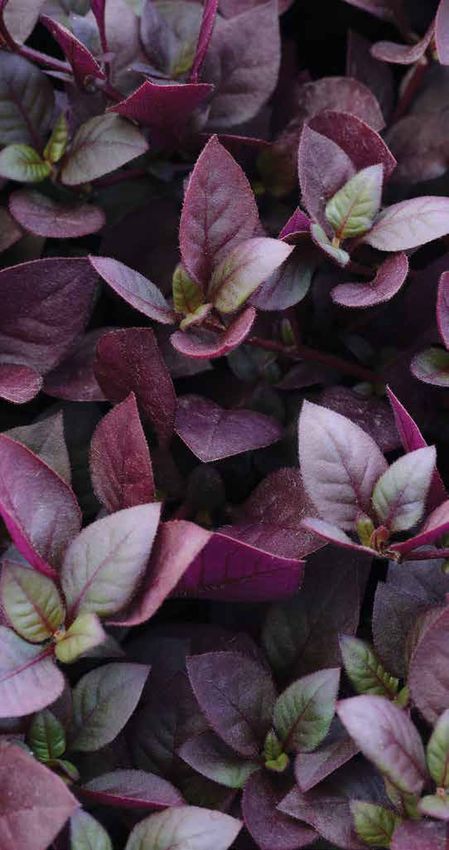
                                                                                           ‘Purple Prince’ Brazilian joyweed

      12   the American Gardener
The following professionals in the horticultural field shared their experience for this
                                                                              article: Niki Jabbour, garden book author and radio host in Halifax, Nova Scotia; Mark
                                                                              Dwyer, director of horticulture at Rotary Botanical Gardens in Janesville, Wisconsin;
                                                                              Denny Schrock, lecturer and Master Gardener Coordinator at Iowa State University in
                                                                              Des Moines; Susan Morrison, garden designer and author in the San Francisco Bay
                                                                              area; Kylee Baumle, garden author in northwest Ohio; Stephanie Cohen, garden writer
                                                                              and horticulture professor in Collegeville, Pennsylvania; Rebecca Sweet, garden
                                                                              designer and author in northern California; Denise Schreiber, greenhouse manager/
                                                                              horticulturist at Allegheny County Parks in Pittsburgh, Pennsylvania; Shawna Coro-
                                                                              nado, garden author in the Chicago, Illinois, area; Lorraine Ballato, garden writer and
                                                                              horticulturist in the Berkshires of Massachusetts; and Susan Martin, garden writer
                                                                              and speaker in Holland, Michigan.

                                                                             ANNUALS & TENDER
                                                                             PERENNIALS                                                                                        Salsa Verde coleus
                                                                             A compact variety of Brazilian joyweed
                                                                             (Alternanthera brasiliana), ‘Purple Prince’
                                                                             was a standout at trial gardens across the                                                       Superbells® Double Ruby
                                                                             country. Mark Dwyer calls it “an excellent                                                       calibrachoa
                                                                             edging plant or container element with
                                                                             dark maroon, glossy foliage.” It mounds
                                                                             to 16 inches tall and 20 inches wide.
                                                                             Grow it in full or part sun; drought
                                                                             tolerant. USDA Hardiness Zones 9–11,
                                                                             AHS Heat Zones 12–1. PanAmerican
                                                                             Seed.

                                                                             Supertunia® Lovie Dovie™ boasts heat-            Mega Bloom ‘Orchid Halo’
                                                                             loving, large white flowers with magenta         periwinkle
                                                                             stripes. This petunia hybrid earned
                                                                             four Best of Show wins at major trial
                                                                             gardens. Rebecca Sweet appreciated the           South Pacific™ Orange canna
                                                                             continuous blooms that were still going as
                                                                             the autumn leaves fell. Mark Dwyer says
                                                                             it had “impact from both near and far.”
                                                                             Trailing up to 30 inches, and growing to
                                                                             12 inches tall, it can be used as a filler                                                     ‘Gypsy White Improved’ is a bigger and
                                                                             or spiller in containers, or at the front of                                                   better baby’s breath (Gypsophila muralis)
                                                                             a bed, in part to full sun. Zones 10–11,                                                       that Denise Schreiber describes as “a
                                                                             12–1. Proven Winners.                                                                          winner from the get go” and “extremely
                                                                                                                                                                            floriferous.” Mounding up to 10 inches,
All photos are courtesy of the sources listed with the plant descriptions.

                                                                             Denny Schrock says Mega Bloom ‘Orchid                                                          this 2018 AAS national winner looks good
                                                                             Halo’ periwinkle (Catharanthus roseus)                                                         in containers or the landscape, and can be
                                                                             “lived up to its name, bearing extra-large                                                     used fresh or dried in arrangements. Zones
                                                                             lavender flowers with a contrasting white                                                      10–11, 12–1. Sakata Seed Corporation.
                                                                             center on glossy, deep green foliage.”         FloriGlory® Diana Mexican heather (Cuphea
                                                                             This mounding, 13-inch-tall plant thrives      hyssopifolia) won a 2018 AAS national           For a summer container of rosy red, try a
                                                                             in full-sun containers or landscape beds       award for its abundant and unusually large      mass of trailing Superbells® Double Ruby.
                                                                             and is a 2017 All-America Selections           magenta flowers and deep green foliage.         Lorraine Ballato says this Calibrachoa
                                                                             (AAS) national winner. Mark Dwyer notes        Denise Schreiber calls this sun-loving,         hybrid was “a stand-out with great color
                                                                             its “unbelievable heat tolerance and           drought-tolerant plant, which stays compact     and form.” In part to full sun, this foot-tall
                                                                             disease resistance.” Zones 10–11, 12–1.        at 10 to 12 inches tall, “ideal for landscape   plant can trail up to two feet. Zones 9–11,
                                                                             AmeriSeed, Jung Seed.                          use. ” Zones 8–11, 12–1. Westhoff.              12–1. Proven Winners.

                                                                                                                                                                                           January / February 2018     13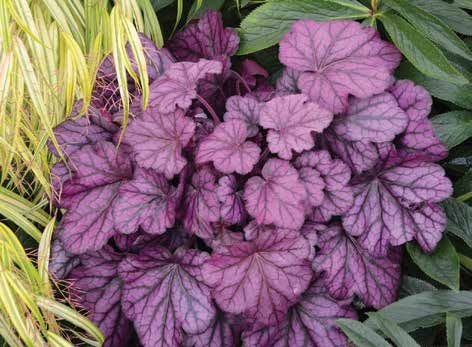
Chartreuse is a useful accent in many
plantings, and the narrow-leafed foliage
of Salsa Verde coleus (Solenostemon
scutellarioides) can be an interesting
addition. Never exceeding 18 inches tall
and wide, its color is most vivid in sun and
darkens to lime in light shade. Mark Dwyer
hails it as “an eye-catching variety that has
impact as a specimen, in a grouping, or
contributing in a container.” Zones 11–11,
12–1. Ball Seed.

South Pacific™ Orange canna (Canna
generalis) is a 2018 AAS national award
winner. The branching, three-to-five-foot
stems support numerous orange flowers that
bloom over a long period in summer. Denise
Schreiber describes this selection as “very
uniform in height, making it ideal for large
                                                                                            Heuchera Primo
                                                                                            Heuchera Primo™™ ‘WIld
                                                                                                              ‘WIld Rose’
                                                                                                                    Rose’
displays or just in containers.” Zones 8–11,
12–1. Takii & Co., Ltd.
                                                                                   Big Time Blue is a compact English lavender
                                                ‘Ritzy
                                                 ‘Ritzy Rose’
                                                        Rose’                      (Lavandula angustifolia) with large, early-
PERENNIALS                                      yarrow
                                                 yarrow                            blooming flowers. Denise Schreiber says
The trial gardeners sang a chorus of praise                                        the “extremely fragrant” heavy bloomer
for Rockin’™ Playin’ the Blues® salvia                                             did well even in a wet Pittsburgh summer.
developed from a cross between Salvia                                              Growing up to two feet tall and wide, this
longispicata and S. farinacea. Kylee                                               lavender needs full sun and good drainage;
Baumle grew it in full sun in a container                                          it may rebloom following a summer trim.
where “it stole the show” with its two- to                                         Zones 5–8, 8–1. Concept Plants.
four-foot-tall stalks of continuous flowers.
For Lorraine Ballato, it “delivered fantastic                                      Susan Morrison praises ‘Ritzy Rose’ yarrow
color with no maintenance, and drew bees                                           (Achillea millefolium) as “the hands-down
right into November.” Zones 7–10, 10–4.                                            winner” of her 2017 plant trials. Although
Proven Winners.                                                                    Morrison’s California garden is hotter than
                                                                                   recommended, she says the plant’s deep-
A 10-inch mound of vibrant red-violet                                              rose flowers with a lighter-colored eye
foliage makes Heuchera Primo™ ‘Wild Rose’                                          bloomed non-stop May through November.
a star for shade gardens. Pale pink flowers                     Big
                                                                Big Time
                                                                    Time Blue
                                                                          Blue     The 14-inch mounded habit makes it ideal
bloom on burgundy stems up to 20 inches                         English
                                                                English lavender
                                                                        lavender   for small spaces. This drought-tolerant,
above the foliage. “The color glowed from                                          deer-resistant yarrow grows best in full sun.
a distance and the plant nearly doubled                                            Zones 3–9, 9–1. Rozanne & Friends.
in size over the growing season,” says
Susan Martin. Mark Dwyer pronounces it a                                           The eye-catching clusters of dangling
“superb selection with a long future ahead                                         aqua-blue flowers no doubt helped
and few competitors for its vivid foliage.”                                        Corydalis flexuosa ‘Porcelain Blue’ win the
Zones 4–9, 9–4. Proven Winners.                                                    2017 Farwest Award of Merit. Although
                                                                                   most corydalis varieties tend to go
‘Bleeding Hearts’, a new ox-eye sunflower                                          dormant in the summer, this one blooms
(Heliopsis helianthoides var. scabra),                                             repeatedly from early spring through fall.
is the first selection without a hint of                                           Its deeply lobed, blue-green foliage is
yellow in the flowers. Throughout the late                                         also attractive. It forms 10-by-12 inch
summer and early fall, the flowers change                                          clumps in part shade. Zones 6–8, 8–6.
color from scarlet to orange-red and finally                                       PlantHaven International, Inc.
bronze. Grow in full sun as a cut flower
or to attract pollinators. Zones 3–9, 9–3.                                         Sneezeweed (Helenium spp.) is a lanky
Jelitto Perennial Seeds.                                                           colorful summer bloomer that usually

14   the American Gardener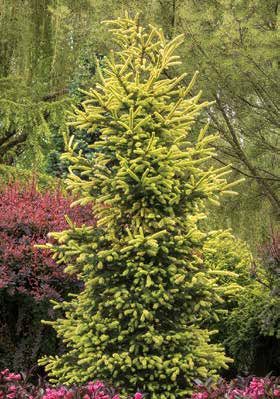
tall and eight feet in diameter. It blooms
  Corydalis
  Corydalis flexuosa
            flexuosa ‘Porcelain
                      ‘Porcelain Blue’
                                 Blue’           Mariachi™
                                                 Mariachi ™ ‘Bandera’
                                                             ‘Bandera’ sneezeweed
                                                                       sneezeweed            from early summer until frost in full sun.
                                                                                             Drought tolerant once established. Zones
                                                                                             7–9, 9–7. J. Berry Nursery.

                                                                                             The flower color of the new Coral Knock
                                                                                             Out® rose (Rosa ‘Radral’) intensifies in
                                                                                             hot and humid weather. Grow this four-
                                                                                             foot-by-four-foot shrub rose in full sun
                                                                                             on its own or as part of a hedge. Blooms
                                                                                             from spring to fall. Zones 5–10, 10–5.
                                                                                             Star Roses and Plants.

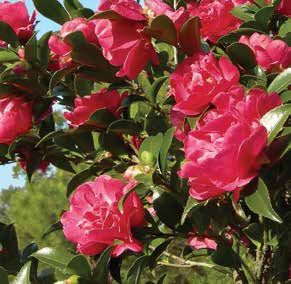
                                                                                             Enjoy early fall flowers from October
                                                                                             Magic ® Rose ™ camellia. With its
                                                                                             columnar habit, you can easily tuck this
                                                                                             shrub in a spare sunny or partly shaded

needs staking. Not so for Mariachi ™           flowers, with dark rose margins and white
‘Bandera’, a hybrid dwarf variety that         centers, are set off by burgundy foliage
reaches only 15 inches tall and wide. It       in spring and fall. Flowering begins in
produces prolific daisylike red flowers        June and continues into early fall. This
with a yellow halo. Grow it in full sun.       compact shrub grows to 40 inches tall
Zones 3–9, 9–1. Plants Nouveau.                and wide, making it a good choice for a
                                               container or a border in part shade to full
For short accents of brilliant blue in a       sun. Zones 5–9, 9–5. Concept Plants.
rock garden or trough, try ‘Bella Alpinella’
a selection of summer gentian (Gentiana        The crowd-pleasing combination of
septemfida var. lagodechiana) that             burgundy foliage and violet flowers on
forms a four-inch-high compact cushion         Black Diamond ® Purely Purple ™ crape
topped by upright blue flowers from mid        myrtle (Lagerstroemia indica) earned it         October Magic
                                                                                               October Magic®® Rose
                                                                                                               Rose™™ camellia
                                                                                                                      camellia
to late summer. Plant in part shade where      the People’s Choice Best in Show award
summers are hot. Zones 3–7, 7–1. Jelitto       at the 2017 Farwest Show. This small          spot. Topping out at six to eight feet
Perennial Seeds.                               tree or large shrub reaches 10 to 12 feet     tall, it will provide masses of salmon-
                                                                                             pink, double flowers. Zones 7–9, 9–7.
‘Plum Dazzled’ is the latest hardy sedum                                                     Southern Living Plant Collection, Sunset
in the SunSparkler® series. Topping out                                                      Western Garden Collection.
at eight inches tall, it offers season-long
interest with purple foliage followed
by dense clusters of raspberry-pink
                                                                                             w                 ®
                                                                                                Little Joker (‘Hoogi021’) is a
                                                                                             compact variety of ninebark (Physocarpus
flowers from mid- to late summer.                                                            opulifolius), a native shrub. It features
Plant this clump-former in full sun                                                          burgundy foliage and pale-pink,
as a groundcover, in containers, or to                                                       buttonlike flowers. Blooming from spring
edge a border. Zones 4–9, 9–4. Garden                                                        into early summer, it grows to four feet
Solutions, Concept Plants.                                                                   tall and wide in part shade to full sun.
                                                                                             Zones 3–7, 7–1. Monrovia.
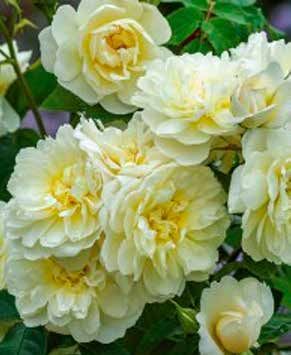
SHRUBS & TREES                                                                               Newly available in the United States is
Add an RHS Chelsea Flower Show Plant                                                         Imogen (‘Austritch’), a frilly, pale-yellow-
of the Year to your garden with Miss                                                         flowered shrub rose with mild fragrance
Saori mophead hydrangea (Hydrangea                                                           from English breeder David Austin. The
macrophylla). This 2014 prize winner is                                                      upright, floriferous rose grows to over four
only now becoming widely available in            Miss
                                                 Miss Saori
                                                      Saori mophead
                                                            mophead hydrangea
                                                                    hydrangea                feet tall and three feet wide in full sun.
the United States. The double bicolor                                                        Zones 5–9, 9–1. David Austin Roses.

                                                                                                           January / February 2018    15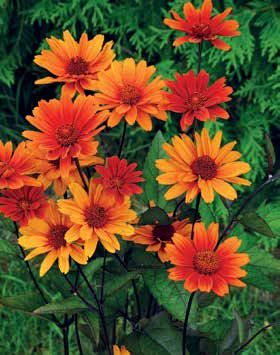
EDIBLES
                                                                                            Denny Schrock says the outstanding
                                                                                            flavor of ‘Midnight Snack’ has made it
                                                                                            his favorite cherry tomato (Solanum
                                                                                            lycopersicum). Niki Jabbour in Nova
                                                                                            Scotia appreciates the early harvest (65
                                                                                            to 70 days) and continuous production
                                                                                            of this indeterminate tomato, which is
                                                                                            a 2017 AAS national winner. Shawna
                                                                                            Coronado loves the bright red color with
                                                                                            purple-black overlay. Matures in 65 to
                                                                                            70 days after transplant. Zones 11–11,
                                                                                            12–1. PanAmerican Seed.

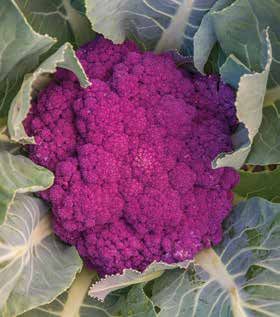
                                                                                            If you like unusually-colored vegetables,
                                                                                            ‘Depurple’ cauliflower (Brassica oleracea var.
                                                                                            botrytis) features cool purple florets. Denny
     ‘Mesa
      ‘Mesa de
            de Maya’
               Maya’                                                                        Schrock says this 18-inch-tall selection
     Southwest
      Southwest Heritage Oak™
                Heritage Oak ™
                                                                                            provides a splash of color on raw veggie

                                              Scarlet Fire
                                              Scarlet Fire®® kousa
                                                             kousa dogwood
                                                                   dogwood

Imogen
Imogen shrub
       shrub rose
             rose                           dogwood (Cornus kousa) that offers               ‘Midnight
                                                                                              ‘Midnight Snack’
                                                                                                        Snack’ cherry
                                                                                                               cherry tomato
                                                                                                                      tomato
                                            deep-pink color in its floral bracts in late
                                            spring. A slow grower, it can eventually
w   ‘Mesa de Maya’ Southwest Heritage
      ™
Oak (Quercus undulata) won the 2017
                  5
                                            reach a height of 25 feet and spread of
                                            20 feet. Grow in full sun to part shade;
                                                                                            platters. Sprinkle the florets with lemon juice
                                                                                            or vinegar to retain the attractive hue when
Farwest Best of Show award. Suited to dry   heat tolerant. Zones 5–8, 8–5. Rare Find        cooked. Matures in 80 to 100 days. Zones
conditions in the West and Southwest,       Nursery, Spring Hill Nurseries.                 0–0, 8–1. W. Atlee Burpee & Company.
this hybrid oak developed by Allan Taylor
will grow to 25 feet tall and 20 feet
wide on grafted rootstock. It features
                                            w      In the winter landscape, the golden-
                                                                         ™
                                            yellow branch tips of Sunburst (‘MonChet’),
                                                                                            Stephanie Cohen says ‘Chivette’, a new
                                                                                            chive (Allium sp.) selection bred to be
unusually-shaped blue-green leaves.         a selection of Black Hills spruce (Picea        less likely to self-sow, is equally at home
Zones 5–8, 8–5. Heritage Seedlings &        glauca var. densata) appear to glow. This       in a rock garden, herb garden, container,
Liners, Inc.                                pyramidal-shaped evergreen will grow slowly     or perennial border. Foot-tall clumps of
                                            to a mature size of 35 to 50 feet tall and 10   edible tubular leaves form first, followed
Rutgers University researchers have         to 25 feet in diameter. Full sun and moist      in early summer by terminal clusters of
made a breakthrough with Scarlet Fire®      but free-draining soil. Zones 2–7, 7–2.         (also edible) lavender flowers. Zones 4–9,
(‘Rutpink’), a selection of Asian kousa     Monrovia.                                       9–1. Intrinsic Perennial Gardens.

16     the American Gardener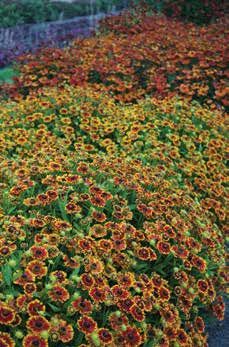
Wholesale Nurseries/
                                               Marketing Consortiums                              Star Roses & Plants,
                                               Visit these companies’ websites to                 www.starrosesandplants.com.
                                               locate retail sources for their plants.            Southern Living Plant Collection,
                                                                                                  www.southernlivingplants.com.
                                               AmeriSeed, www.ameriseed.net.                      Sunset Western Garden Collection,
                                               Ball Seed, www.ballseed.com.                       www.sunsetwesterngarden
                                               Concept Plants/Garden Solutions, LLC.,             collection.com.
                                               www.conceptplants.com.                             Takii Seed, www.takiiseed.com.
                                               Dave Wilson Nursery,                               Westhoff, www.westflowers.de.
                                               www.davewilson.com.
                                               Heritage Seedlings & Liners, Inc.,
                                               www.heritageseedlings.com.                         Retail Sources
                                               Intrinsic Perennial Gardens,                       David Austin Roses Limited, Tyler, TX.
 ‘Chivette’
  ‘Chivette’ chive
             chive
                                               www.intrinsicperennialgardens.com.                 www.davidaustinroses.com.
                                               J. Berry Nursery,                                  Jelitto Perennial Seeds, Louisville, KY.
                                               www.jberrynursery.com.                             www.jelitto.com.
                                               Monrovia, www.monrovia.com.                        Johnny’s Selected Seeds, Winslow,
                                               PanAmerican Seed,                                  ME. www.johnnyseeds.com.
                                               www.panamseed.com.                                 Jung Seed, Randolph. WI.
                                               PlantHaven International,                          www.jungseed.com.
                                               www.planthaven.com.                                RareFind Nursery, Jackson, NJ.
                                               Plants Nouveau,                                    www.rarefindnursery.com.
                                               www.plantsnouveau.com.                             Renee’s Garden, Felton, CA.
                                               Proven Winners,                                    www.reneesgarden.com.
                                               www.provenwinners.com.                             Spring Hill Nurseries, Harrison, OH.
                                               Rozanne & Friends,                                 www.springhillnursery.
                                               www.geraniumrozanne.com.                           W. Atlee Burpee & Company,
                                               Sakata Ornamentals,                                Warminster, PA. www.burpee.com.
                                               www.sakataornamentals.com.

 ‘Candy
  ‘Candy Cane
         Cane Red’
              Red’ sweet
                   sweet pepper
                         pepper

Niki Jabbour lauds ‘Candy Cane Red’
sweet pepper (Capsicum annuum) for the
“unusual green-and-white-striped fruits
and variegated foliage,” as well as the
early harvest beginning just 45 days after
transplanting. The crisp, thin-skinned,
four-inch peppers will turn red if left on
                                                 ‘Tempest’
                                                  ‘Tempest’ summer
                                                            summer squash
                                                                   squash
the two-foot tall plants to mature. Matures
in 45 to 65 days after transplant. Zones
0–0, 12–4. PanAmerican Seed.                  days from transplant. Zones 0–0, 12–1.              selections ‘Minnie Royal’ and ‘Royal Lee’.
                                              Renee’s Garden.                                     Zones 8–10, 8–1. Dave Wilson Nursery.
Renee’s Garden has an exclusive
introduction to the United States with        Gardeners in warm climates will appreciate          ‘Tempest’ is a hybrid crookneck summer
Tibetan Lhasa chili peppers (Capsicum         ‘Royal Crimson’, a self-fruitful cherry tree that   squash (Cucurbita pepo) that has a firmer
annuum), the most widely grown chili in       produces sweet, red, crisp-fleshed cherries.        texture and more flavor than standard
Tibet. The compact plants produce an          Developed by the Zaiger family of California,       varieties. Its ridged four- to seven-inch-
abundant harvest of aromatic and fiery-hot,   ‘Royal Crimson’ is suitable for climates            long fruits are butter-yellow. Matures in
four-inch-long peppers that mature from       with 200 to 300 chill hours. It also blooms         54 to 60 days. Zones 0–0, 8–1. Johnny’s
green to bright red. Matures in 70 to 75      with, and can pollenize, popular cherry tree        Selected Seeds.                         m

                                                                                                                January / February 2018   17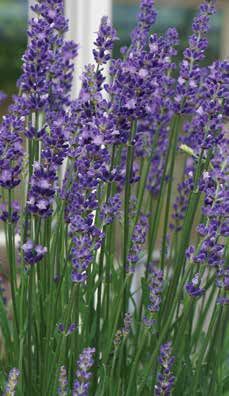
You can also read


