NEW WESTMINSTER SECONDARY - 2021- 2022 COURSE DESCRIPTION BOOKLET
←
→
Page content transcription
If your browser does not render page correctly, please read the page content below
NEW WESTMINSTER
            SECONDARY

            2021— 2022

COURSE DESCRIPTION BOOKLET
820 Sixth Street, New Westminster BC V3M 3S9
       604.517.6220     www.nwss.ca

                                        1|Page
Introduction

Welcome to the New Westminster Secondary School’s Course Planning
Guide! Course descriptions in this booklet are intended as a guide to assist
students and parents in selecting courses for programs. Some courses
must be taken to meet the requirements of the Ministry of Education while
others are chosen to meet individual interests and goals. Counsellors will
assist students in the selection of their courses, and their valued advice
and expertise will be the principles that guide NWSS students to success.
While every effort is made to give students their first choice of course
selection, due to circumstances beyond the school’s control, is not always
possible. Students should be prepared with alternative choices. Please
Note: Students and their guardians are responsible to ensure successful
completion of all courses required for graduation and post-secondary
admissions.

This Guide has been prepared with the utmost effort to be accurate at the
time of publishing. This Guide is subject to update/change without notice to
suit the dynamic needs of our students and school. Specific course and
course planning inquiries should be directed to subject teachers or the
student’s counsellor.

                                                                      2|Page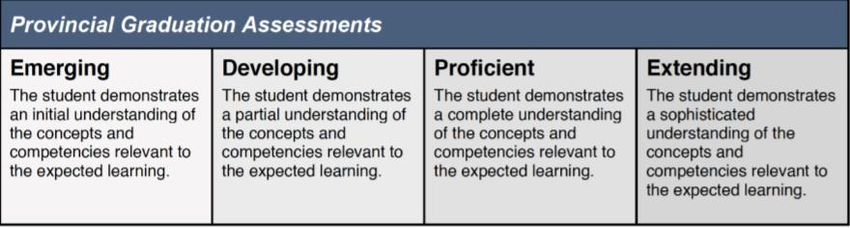
COURSE SELECTION PROCESS

Students will begin the process of selecting courses for their 2021- 22
school year in February 2021. Students will select a full program of studies
(8 courses per year) which will meet the following goals:

   1. Meet graduation requirements for British Columbia
   2. Support future plans, such as entrance to college or university.
   3. Provide a balanced and engaging educational experience

All students in Grades 9 through 11 will complete their course selections
before Spring Break. Students will select their courses by submitting a
paper copy of their Course Selection Form as well as enter their course
selections into MyEducation BC. It is imperative that parents/guardians
and students are comfortable with MyEducation BC and that all students
are aware of their passwords. Counsellors will guide students with the
selection of their courses.

                                                                     3|Page
B.C.’s Curriculum Structure

Core Competencies
The Core Competencies are the foundation of the B.C. curriculum. The
Core Competencies are sets of intellectual, personal and social-emotional
proficiencies that all students need to develop in order to engage in deep,
life-long learning. Students develop Core Competencies when they are
engaged in the “doing” – the Curricular Competencies – within a learning
area. As such, they are an integral part of the curriculum. While they
manifest themselves uniquely in each area of learning, the Core
Competencies are often interconnected and are foundational to all learning.
Through consultation with stakeholders across the province, three Core
Competencies were identified:
1. COMMUNICATION - with two sub-competencies - Communicating and
Collaborating
2. THINKING - with two sub-competencies - Creative Thinking and Critical
Thinking
3. PERSONAL & SOCIAL - with three sub-competencies - Personal
Awareness and Responsibility, Positive Personal and Cultural Identity, and
Social Awareness and Responsibility

Core Competencies will be integrated throughout the curriculum of all
classrooms. Students are expected to reflect upon the learning process
and self-assess their development of the Core Competencies. Students will
document their self-assessments using their myBlueprint account.

                                                                     4|Page
Concept-based, competency-driven curriculum
British Columbia’s curriculum brings together two features that most
educators agree are essential for 21st-century learning: a concept-based
approach to learning and a focus on the development of competencies, to
foster deeper, more transferable learning. These approaches complement
each other because of their common focus on active engagement of
students. Deeper learning is better achieved through “doing” than through
passive listening or reading. Similarly, both concept-based learning and
the development of competencies engage students in authentic tasks that
connects learning to the real world.

Flexible learning environments
Learning can take place anywhere, not just in classrooms. At NWSS, our
staff may create learning environments that explore the use of time and
space in creative ways. The integration of areas of learning and technology
also have opened the door for us to approach the use of time and space in
creative ways – ways that adapt to the students’ needs and interests.

Curriculum Model
Three elements, the Content (Know), Curricular Competencies (Do), and
Big Ideas (Understand) all work together to support deeper learning. British
Columbia’s curriculum design enables a personalized, flexible and
innovative approach at all levels of the education system. All areas of
learning have been redesigned using this model.

                                                                     5|Page
Content (Know)
The Content learning standards — the “Know” of the Know-Do-Understand
model of learning — detail the essential topics and knowledge at each
grade level.

Curricular Competencies (Do)
The Curricular Competencies are the skills, strategies, and processes that
students develop over time. They reflect the “Do” in the Know-Do
Understand model of learning. While Curricular Competencies are more
subject-specific, they are connected to the Core Competencies.

Big Ideas (Understand)
The Big Ideas consist of general principles and the key concepts important
in an area of learning. They reflect the “Understand” component of the
Know-Do-Understand model of learning. The big ideas represent what
students will understand at the completion of the curriculum for their grade.
They are intended to endure beyond a single grade and contribute to future
understanding.

                                                                     6|Page
GRADUATION REQUIREMENTS (as of July, 2019)

       B.C. Certificate of Graduation (Dogwood Diploma)
The B.C. Certificate of Graduation, or Dogwood Diploma, is awarded to
students who successfully complete the provincial graduation
requirements. To graduate, students require at least 80 credits total.
Of these 80 credits:
• 52 credits are required from the following:
• Physical and Health Education 10 (4 credits).
• Science 10 (4 credits), and a Science 11 or 12 (4 credits).
• Social Studies 10 (4 credits), and a Social Studies 11 or 12 (4 credits).
• A Math 10 (4 credits), and a Math 11 or 12 course (4 credits).
• A Language Arts 10, 11, and a required 12 course (4 credits required at
each grade, 12 credits total).
• An Arts Education 10, 11, or 12 and/or an Applied Design, Skills, and
Technologies 10, 11, or 12 (4 credits total).
• Career-Life Education 10 (4 credits), and Career-Life Connections 12 (4
credits).
• At least 28 credits must be elective course credits.
• At least 16 credits must be at the Grade 12 level, including a required
Language Arts 12 course and the CareerLife Connections course.
In addition, students must also complete three Provincial Graduation
Assessments:
• Grade 10 Graduation Literacy Assessment;
• Grade 10 Graduation Numeracy Assessment; and
• Grade 12 Graduation Literacy Assessment.

                                                                      7|Page
GRADUATION REQUIREMENTS (as of July, 2019)

         French Immersion/Francophone Dual Dogwood
French Immersion students can earn both a British Columbia Certificate of
Graduation (Dogwood Diploma) and a Diplôme de fin d’études secondaires
en Colombie-Britannique.
To graduate with both diplomas, French Immersion students must meet the
graduation requirements for the Dogwood Diploma and, of these 80 credits,
they must earn:
• At least 16 credits at the Grade 12 level (including a Français langue
seconde- immersion course at the Grade 12 level).
• Français langue seconde-immersion 10 (4 credits).
• A Français langue seconde-immersion course at the Grade 11 level (4
credits) or IB French A2 (SL) 11.
• Français langue seconde-immersion 12 (4 credits).
• At least 12 credits in Grade 10, 11, or 12 courses that are in French with
at least 4 of these credits at the Grade 11 or 12 level.
In addition, French Immersion students must also complete four Provincial
Graduation Assessments:
• Grade 10 Graduation Numeracy Assessment (English or French);
• Grade 10 Graduation Literacy Assessment;
• Grade 12 Graduation Literacy Assessment; and
• Évaluation de littératie – Français langue seconde-immersion 12.

Francophone students can earn both a British Columbia Certificate of
Graduation (Dogwood Diploma) and a Diplôme de fin d’études secondaires
en Colombie-Britannique.

                                                                        8|Page
Graduation Assessments
The Provincial Graduation Assessment requirements for all students are as
follows:
Assessments as a requirement for graduation.
Students are expected to write the Graduation Numeracy 10 and a
Graduation Literacy 10 Assessment.
Students are also expected to write a Graduation 12 Literacy
Assessment.
There will be an opportunity for students to re-write the Provincial
Graduation Assessments to improve their achievement level. Until
graduation, students may write a Provincial Graduation Assessment
up to three times: the original attempt and two re-writes.
The best outcome for each of the Provincial Graduation Assessments
will be recorded on the student’s transcripts.
The assessments will be reported on the following scale:
A student’s best proficiency level for the Provincial Graduation
Assessments will appear on the student’s transcript. However, for the
Grade 10 Literacy Assessment and the Evaluation de litteratie – Francais
langue premiere 10, the student’s transcript will only indicate “RM”
(“requirements met”), and not a proficiency level.
9|PageGrade Administrators 2021—2022
Administrator Grade
Mr. Murray McLeod NWSS Principal
mmcleod@sd40.bc.ca Grade 12 Administrator
Ms. Susana Quan NWSS Vice-Principal
squan@sd40.bc.ca Grade 11 Administrator
Mr. John Lekakis NWSS Vice-Principal
jlekakis@sd40.bc.ca Grade 10 Administrator
Mr. Greg Patton NWSS Vice-Principal
gpatton@sd40.bc.ca Grade 9 Administrator
Ms. Pamela Craven District Principal
pcraven@sd40.bc.ca SIGMA and Inclusive Education
Administrator
10 | P a g eNWSS Counsellors 2021—2022
Counsellor Colour Grouping
Ms. Marika Melvin Red
mjmelvin@sd40.bc.ca
Mr. Dave Mori Purple
dmori@sd40.bc.ca
Ms. Nancy Paterson Yellow
npaterson@sd40.bc.ca
Ms. Rosemarie Schiemann Green
rschiemann@sd40.bc.ca
Ms. Jennifer Towers Orange
jtowers@sd40.bc.ca
Ms. Cindy Vit (Dept. Head) Blue
cvit@sd40.bc.ca
11 | P a g eInstructional Delivery Methods available at NWSS
In-class Learning
Face to face classroom learning is instructional sessions that enable a
student to learn through varied instructional methods, under the direct
guidance of a teacher in a brick-and-mortar building (NWSS).
Blended Learning
Blended learning combines classroom instruction with online learning.
Portions of the learning occur face to face in the brick-and-mortar building
(NWSS), while other sections are available through technology and/or
online. Students can in part, control the time, pace, and place of
their learning for the technology/online portions.
Online Learning (see pg 77 – 78)
With online learning, students work online at home while the teacher
assigns work and checks in digitally. Students can, in part, control the time,
pace, and place of all their learning.
12 | P a g eTable of Contents
Apprentice & Career Programs 19
Youth Explore Trades Skills—Construction 10/11/12
On-site Youth Train in Trades Apprenticeship Programs
Carpentry Apprenticeship
Plumbing Apprenticeship
Professional Cook Chef Program
Skills Exploration- Construction
Youth Work in Trades
Off-site Youth Train in Trades Apprenticeship Programs
Youth Work in Trades
Business Education (ADST) 23
Accounting
Entrepreneurship & Marketing
Marketing & Promotion
Career & Leadership Education 24
Career Life Education 10
Career Life Connections 12
Leadership Education
Leadership
Leadership (Athletics)
Peer Tutoring
Work Experience
Culinary Arts & Home Economics (ADST) 26
Culinary Arts
Fashion Industry
Food Studies
Interpersonal & Family Relationships
Textiles
English Language Arts 31
Inclusive Education 35
Inclusive Education Options
English Language Learners
13 | P a g eInformation & Communications Technology 38
Computer Programming
Desktop Publishing
Yearbook
Modern Languages 41
Core French
Japanese
Korean
Punjabi
Spanish
Mathematics 45
Physical & Health Education 47
Science 50
Social Studies 53
Technology Education (ADST) 56
Grade 9 Power Technology Rotations
Drafting/Architecture & Industrial Design
Electronics, Engineering & Robotics
Metalwork
14 | P a g eVisual & Performing Arts 61
Dance
Drama
Music- Choir
Instrumental Music- Concert Band
Instrumental Music- Guitar
Instrumental Music- Jazz Band
Instrumental Music- Orchestra
Music Technology & Production
Visual Arts
Programs of Choice 71
Hockey Academy
French Immersion
Honours
International Baccalaureate
Other Offerings
Psychology
New Westminster Online Learning Courses 77
15 | P a g eThe Graduation Program Grades 10—12
The B.C. Certificate of Graduation or "Dogwood Diploma" is awarded to students
who successfully complete the provincial graduation requirements.
https://curriculum.gov.bc.ca/graduation
Students require a minimum of 80 credits to graduate. Of these 80 credits:
At least 16 credits must be at the Grade 12 level, including a required Language Arts 12
At least 28 credits must be elective course credits
52 credits are required from the following:
Career-Life Education 10 (4 credits)
Career-Life Connections 12 (4 credits)
Physical and Health Education 10 (4 credits)
Science 10 (4 credits)
Science 11 or 12 (4 credits)
Social Studies 10 (4 credits)
A Social Studies 11 or 12 (4 credits)
A Math 10 (4 credits)
A Math 11 or 12 (4 credits)
A Language Arts 10, 11 and a Language Arts 12 (12 credits total)
An Arts Education 10, 11, or 12 and/or an Applied Design, Skills, and Technologies 10, 11, or 12 (4
credits total)
There are three Provincial Assessments that students must write to meet graduation requirements:
Numeracy 10 Assessment (taken during the student’s Grade 10/11 year)
Literacy 10 Assessment (taken during the student’s Grade 10/11 year)
Literacy 12 Assessment (taken during the student’s Grade 12 year)
16 | P a g eREQUIRED COURSES
Grade 09 Grade 10 Grade 11 Grade 12
Course #1 English Language English Language English Language English Studies 12
Arts 9 Arts 10 Arts 11
or
or
English First Peoples 12
English 10 Honours
Course #2 Social Studies 9 Social Studies 10 Social Studies 11 or 12
or (can be taken during the student’s Grade 11 or
12 year)
Social Studies 10
Honours
Course #3 Mathematics 9 Foundations and Pre- Mathematics 11 or 12
Calculus 10
(can be taken during the student’s Grade 11 or
or 12 year)
Foundations and Pre-
Calculus 10 Honours
or
Workplace
Mathematics 10
Course #4 Science 9 Science 10 Science 11 or 12
or (can be taken during the student’s Grade 11 or
12 year)
Science 10 Honours
Course #5 Physical & Health Physical & Health Elective Elective
Education 9 Education 10
Course #6 Arts Education Career Life Education Elective Career Life Connections
10 12
Course #7 Applied Design, An Arts Education 10, 11 or 12
Skills and
and/or
Technology
(ADST) An Applied Design, Skills, and Technologies 10, 11 or 12
(can be taken during the student’s Grade 10, 11 or 12 year)
Course #8 Elective (This can Elective Elective Elective
be a Modern
Language,
additional Arts
Education, ADST,
other)
17 | P a g eFRENCH IMMERSION REQUIRED COURSES
Grade 09 Grade 10 Grade 11 Grade 12
Course #1 English Language English Language English Language Arts English Studies 12
Arts 9 Arts 10 11
or
or
English First Peoples
English 10 Honours 12
Course #2 Francais Langue Francais Langue Francais Langue Francais Langue
Seconde 9 Seconde 10 Seconde 11 Seconde 12
Course #3 Mathematics 9 Foundations and Mathematics 11 or 12
Pre-Calculus 10
(can be taken during the student’s Grade 11 or 12
or year)
Foundations and
Pre-Calculus 10
Honours
or
Workplace
Mathematics 10
Course #4 Science Naturelles 9 Science 10 Science 11 or 12
or (can be taken during the student’s Grade 11 or 12
year)
Science 10 Honours
Course #5 Sciences Humaines Sciences Humaines Explorations en Sciences Humaines et Sociales
9 10 11
or
Justice Sociale 12
(can be taken during the student’s Grade 11 or 12
year)
Course #6 Education Physique Education Physique Elective Elective
et Sante 9 et Sante 10
Course #7 Arts Education An Arts Education 10, 11 or 12
and/or
An Applied Design, Skills, and Technologies 10, 11 or 12
(can be taken during the student’s Grade 10, 11 or 12 year)
Course #8 Applied Design, Career Life Elective Career Life
Skills and Education 10 Connections 12
Technology (ADST)
18 | P a g eAPPRENTICESHIP AND CAREER PROGRAMS
Programs that start careers and grow experience!
YOUTH EXPLORE TRADES SKILLS - CONSTRUCTION 10/11/12 MSTX-0A, MSTX-1A or MSTX-2A
This program gives you 120 hours of hands-on experience in more than one trade. You’ll learn the
basics, explore your interests and get a sense of what trade you want to pursue. From there, you
can move onto one of the apprenticeship programs, such as the Youth Train in Trades Program or
the Youth Work in Trades Program.
Operate tools and build items in hands-on activities in such areas as electrical, piping, framing, finishing
carpentry, drywall and other trades.
Field trips and trade employer networking may be included in the course
Open to: Grade 10/11/12 students
Location: Regular NWSS Block Class
High school credits: 1 course (4 credits)
Watch: https://www.youtube.com/watch?v=lgACbGBpZms&feature=youtu.be
19 | P a g eON-SITE YOUTH TRAIN IN TRADES APPRENTICESHIP PROGRAMS
*Youth Train in Trades (TRAIN) programs require submission of an application package and an
interview.*
Email Mrs. McArthur, Career Coordinator tmcarthur@sd40.bc.ca to set up an appointment
CARPENTRY APPRENTICESHIP PROGRAM TRNA-2ACA, TRNA-2BCA, TRNA-2CCA, TRNA-2DCA
Build and repair a vast array of structures made of wood, wood substitutes and other materials
Assemble and erect forms for concrete, wood and metal frame construction
Use plans and instruments to prepare for excavating and shoring
Develop a diverse set of carpentry skills in understanding residential and commercial construction
Work side by side with Red Seal Carpenters at both NWSS and BCIT
Open to: Grade 11 & 12 students in semester 2
Location: New Westminster Secondary School with 6 weeks at BCIT
High school credits: Four Grade 12 courses = 16 credits
Post-secondary credits: Level 1 technical training recognized by the Industry Training Authority (ITA)
Minimum requirements: English 11 and any type of Math 11 (not Accounting 11), strong interest in the
construction industry
Cost paid by student: material fee, refundable toolbox deposit, and workbook cost
Registration: Contact the Career Coordinator for more information and to apply
Watch: https://www.youtube.com/watch?v=TLTI0iKGBz4
PLUMBING APPRENTICESHIP PROGRAM TRITA2APL, TRITA2BPL, TRITA2CPL, TRITA2DPL
Students learn how to plan, design, install and service various types of piping systems.
They work with residential water heating, supply and drainage systems.
Students learn how to read blueprints and develop basic drafting and sketching skills.
The students also learn how to correctly use industry specific tools and machinery.
Open to: Grade 11 & 12 students in semester 1
Location: New Westminster Secondary School with 4 weeks at the Piping Industry College (PIC)
High school credits: 4 grade 12 courses = 16 credits
Post-secondary credits: Level 1 technical training recognized by the Industry Training Authority (ITA)
Minimum requirements: English 10/11 and any type of Math 10/11 (not Accounting 11)
Cost paid by student: material fee and workbook cost
Registration: Contact the Career Coordinator for more information and to apply
Watch: https://www.youtube.com/watch?v=TLTI0iKGBz4
20 | P a g ePROFESSIONAL COOK 1 PROGRAM PZ-2APC, PZ-2BPC, PZ-2CPC, PZ-2DPC, PZ-2EPC
Performs all phases of kitchen activities including the preparation and presentation of vegetables,
soups, sauces, meat, fish and poultry, cold kitchen items
Desserts, baking, pastry
Basic menu planning/costing as well as knowledge of safety, sanitation and food storage
Work side by side with Red Seal Chefs at NWSS and VCC
Use industry equipment and processes
Open to: Grade 11 & 12 students in Semester 2
Location: New Westminster Secondary School plus 5 weeks in the summer at VCC’s Vancouver
campus
High school credits: 5 grade 12 courses = 20 credits
Post-secondary credits: Professional Cook 1 from the Industry Training Authority (ITA)
Minimum requirements: English 10/11 and any Math 10/11, plus Food Safe certificate, physically able;
must have completed a Culinary Arts 10, 11, or 12 course or be willing to complete such a course in
semester 1 before this program starts
Cost paid by student: material fee, refundable tool/textbook deposit
Registration: Contact the Career Coordinator for more information and to apply
Watch: https://www.youtube.com/watch?v=3dgWEJ8Ck74
OFF-SITE YOUTH TRAIN IN TRADES APPRENTICESHIP PROGRAMS
New Westminster School District is able to request availability of seats and fund tuition for trades training
in other apprenticeable trades. Post-secondary seats need to be requested by Career Coordinator early
in the student’s grade 11 year.
Visit: https://youth.itabc.ca/trades-a-z/
Open to: Grade 12 students
Location: At various post-secondary institutions depending on program
High school credits: Varies on length of program 4-10 courses
Post-secondary credits: Varies (Foundation program, Level 1 Certification)
Registration: Contact the Career Coordinator for more information and to apply
21 | P a g eYOUTH WORK IN TRADES
YOUTH WORK IN TRADES 11A & B, 12A & BMWRK-1A, MWRK-1B, MWRK-2A, MWRK-2B
Get ahead on the work-based training of a trade apprenticeship while you’re still in high school. Not only
will you take home a pay cheque, you’ll earn up to 16 credits towards your high school diploma, log 480
training hours toward your trade credential and maybe even earn a $1,000 award. Youth Train in Trades
and Youth Work in Trades programs can be taken in any order and there are no prerequisites.
High school credits: for every 120 hours of apprenticeship, 1 course may be earned, up to a total of 4
courses = 16 credits
Post-secondary credits: Work-based training hours toward Level 1 Apprenticeship
Minimum requirements: paid job in a trades area, 15 years of age or older, working under the supervision
of a certified journeyperson
Registration: Contact the Career Coordinator for more information and how to register.
22 | P a g eBUSINESS EDUCATION (ADST)
https://curriculum.gov.bc.ca/curriculum/adst
ACCOUNTING 11 MAC--11
In this course, students will learn how accounting helps support businesses in making financial decisions.
Students will learn the fundamentals of accounting which are valuable for students who are interested in
running their own business or in a career in accounting. Topics include debits and credits, industry best
practices, journal entries and preparing financial documents.
A fee may be charged for this course.
ACCOUNTING 12 MACC-12
This course includes a review of Accounting 11 and a thorough study of modern computer accounting
methods and software. Students will learn about how financial literacy promotes the financial well-being of
both individuals and businesses. They will explore many different types of businesses, with the majority of
the classwork being practical application and in-class assignments. Students completing this course will
have a highly employable skill and an in-depth understanding of how many different types of businesses
function.
RECOMMENDED: Accounting 11.
ENTREPRENEURSHIP and MARKETING 10 MADEM10
*open to grade 9 and 10 students
*meets the requirement for ADST 9
Marketing skills and strategies are applicable to every career. Entrepreneurship and Marketing 10 is a
course that looks at basic marketing and business principles including entrepreneurship, marketing
research, product planning, branding, packaging, pricing, sales promotion and advertising. Students will
gain valuable experience in school based projects. This is a must course for any student who is interested
in business or who is looking for a practical way to apply their creativity.
MARKETING & PROMOTION 11 MMAP11
In this course, students will learn about how marketing services and products can be designed through
consultation and collaboration and that personal design choices require the evaluation and refinement of
skills. The course will examine international business, advertising, business ethics and e-commerce.
Evaluation and assessment will be focussed on group activities and presentations in addition to individual
work.
ENTREPRENEURSHIP 12 MENT-12
Builds on concepts learned in Marketing & Promotion 11. Students will learn to analyze the business
environment and evaluate the various marketing strategies, corporate social responsibility efforts and
branding techniques of familiar companies in the world of business such as Patagonia, Apple, Bell and
Coca-Cola. Students will learn how to identify good opportunities for new businesses and will develop a
business plan of their own. This course is ideal for students interested in attending business school or
starting their own business.
RECOMMENDED: Marketing and Promotion 11
23 | P a g eCAREER & LEADERSHIP EDUCATION
https://curriculum.gov.bc.ca/curriculum/career-education
CAREER EDUCATION
CAREER LIFE EDUCATION 10 MCLE-10
Career-Life Education supports students in becoming successful, educated citizens by helping them learn
how to effectively manage their life journey toward preferred future possibilities. It focuses on gaining a
clear understanding of career-life development knowledge, skills, and strategies for life's journey into
adulthood. Career Life Education 10 will be delivered as a Blended Model. It includes:
the exploration of career-life possibilities for adult life - its roles, opportunities, and community resources
examination of ways to publicly represent ourselves both face-to-face and in digital environments
the practising of inclusive and respectful interactions for various community and work-related contexts
connecting and engaging with supportive community members
researching post-graduation options and planning resources, such as labour market trends, budgeting
tools, and workplace safety guidelines
CAREER LIFE CONNECTIONS 12 MCLC-12
Career-Life Connections will enable students to develop the skills they need to become self-directed
individuals who successfully set goals, make thoughtful decisions and take responsibility for pursuing
their goals throughout life. Building from CLE 10, students will explore post-secondary education options,
careers, health and finances. At the end of the course, students will be more aware of opportunities that
are available to them. Career-Life Connections focuses on applying personal career-life management
knowledge, skills, and strategies toward a personal life journey.
The Capstone is the final project for this course. It is a requirement for Career-Life Connections and for
graduation. The purpose of the capstone is for students to demonstrate the knowledge, competencies,
and passion(s) that they can offer the world, as they integrate personal interests and strengths with
preferred future possibilities. It is a representation of the student’s learning journey and provides an
opportunity to reflect and synthesize as well as showcase and celebrate. Career Life Connections 12
will be delivered as a Blended Model.
A critical part of Career Life Connections 12 is the student-mentor relationship. Mentors provide students
with practical, “real world” guidance as the students move toward career and/or post-secondary
decisions. With this in mind, please note the following:
• It is the student’s responsibility to identify a mentor and to document all interactions with the
mentor.
• A minimum of three interactions is required throughout the duration of the Career Life
Connections 12 course.
• A mentor will guide students to refine their career life development goals, cultivate community
connections, and reflect on their learning in and out of school.
24 | P a g eStudents are also required to complete 30 hours of career-life work exploration, which encompasses a
multitude of options. Students can find paid, or volunteer work. They can use work or volunteer
experience from the past, present employment, or seek out new experiences to complete this
requirement.
Below is a list of opportunities that may be considered for the fulfillment of the 30 hour career-life
exploration component:
• Prior or current paid or unpaid work experience
• Volunteerism or community service
• Work Experience 12A/B
• Youth Work in Trades 11/12
• Leadership or service learning
• Fieldwork, entrepreneurship, and projects focused on an area of deep interest
It is the student’s responsibility to provide documentation of the 30 hours of work exposure.
Students who cannot arrange for work/volunteer experience over the duration of the course, that they can
complete their 30 hour work exposure requirement by researching, and presenting a project about
possible future career options.
This course is delivered as a blended learning opportunity. CLC 12 is a Full Year course scheduled
outside the regular timetable (Z block). CLC 12 is predominately delivered on Microsoft Teams in which
students are required to attend at the teacher’s discretion. Meeting times and office hours will be
negotiated, to accommodate student and teacher schedules. Students may schedule face-to-face
sessions with their teachers for individual support as needed, and for special presentations.
Experience with online learning will support future post-secondary experiences and lifelong education.
LEADERSHIP EDUCATION
CONFLICT RESOLUTION 11 YIPS-1C
Are you thinking of going into careers involving helping others,
education, health care, business, entrepreneurship, law enforcement, or
other service industries? Then this is the course for you! This is an
introduction to collaborative conflict resolution skills. Topics include specific communication skills, the
dynamics of conflicts, anger management, understanding and handling emotions, and the negotiation
model as a process for handling disputes. This is an interactive course that includes team building,
discussion and role play activities in a safe and supportive learning environment. Students are able to
obtain dual credit for this course in the Justice Institute of BC’s Centre for Conflict Resolution certificate
program. The course credit assigned depends on the grade the student is in; for example, a grade 11
student would normally get credit for Conflict Resolution 11.
Open to Grades 9 – 12 students
25 | P a g eCONFLICT RESOLUTION LEADERSHIP YIPS-2B
This course is the more advanced course offered in the NWSS Conflict Resolution Program. Topics
discussed in the first level course are extended and further integrated in the students’ repertoire. Students
enhance their skills in how to have sticky conversations and tap into the potential creative energy that lies
in conflict to create longer-term solutions that preserve relationships. An added component to this course
is the study of selected topics in mediation; namely, dealing with intense emotions; shifting from positions
to interests; advanced skill development; and dealing with defensiveness. Students will also develop their
leadership and coaching skills. Dual credit for this course is available at the Justice Institute of BC.
Recommended: Conflict Resolution 11
LEADERSHIP 10, 11, 12 YCPA-0A-2FY, ICPA-1A-2FY, YCPA-2A-2FY
Leadership is an individualized program for students who are
interested in assuming leadership roles in the NWSS Student
Leadership Council. This course provides students the opportunity
to become active citizens in the school community. Students will
develop skills in the areas of organization, communication and team building. Students taking this course
must have the initiative to plan and implement activities for others in the school and work with other
agencies in the community. Due to the nature of this Z-block course, which meets regularly in the early
morning (7:30AM) throughout the year, students must be able to attend all regular meetings and commit to
an additional 60 service hours outside of meeting times (at lunch and after school). It recommended that
Grade 9’s take Athletics Leadership 9 in their first year of high school. NOTE: Grade 9 students may only
apply for this program if there is space in second semester by contacting the instructor.
Admission/Pre-requisite: Application, Interview, and Written Recommendation from a teacher is required.
In addition, a required information meeting for all levels is held in late May/June.
WORK EXPERIENCE
WORK EXPERIENCE 12A/B MWEX-2A, MWEX-2B
Work Experience 12 prepares you for the transition from secondary school to the world of work or further
education and training. 20% of work experience course hours is devoted to in-school learning for the
course. 80% of the time will consist of actual work placements in the community setting where you will be
able to:
Apply classroom learning in a context outside of school and bring back new perspectives
Network with employers for future jobs
Negotiate and manage your own schedule
An application process is required. Once students have applied to Work Experience, a Career Programs
teacher will schedule an interview with you in order to ensure there is an appropriate match for a work
placement and notify you of the results by the end of the current school year.
26 | P a g eCULINARY ARTS & HOME ECONOMICS (ADST)
https://curriculum.gov.bc.ca/curriculum/adst
CULINARY ARTS
With the kitchen as the classroom, students enrolled in Culinary Arts are
exposed to the commercial side of food production, learning through practical
application and service.
CULINARY ARTS 10 MCUL10
Learn safe food handling practices in a commercial kitchen setting
Utilize a wide variety of culinary equipment and ingredients to help develop a diverse menu
Work alongside culinary experts to create gourmet foods and bakery items
Students will earn a Food Safe Level One Certificate which can help them get hired in restaurants
Grade 9s are welcome to request this course, subject to availability
Course Fee: $25
CULINARY ARTS 11 MCUL-11
Explore the artistic elements of the culinary arts through plating and presentation
Use sustainable and local products to create gastronomical delights for daily lunch service in a
commercial kitchen
Utilize a variety of modern cooking methods and techniques
Students will earn a Food Safe Level One Certificate which can help them get hired in restaurants.
Course Fee: $25
CULINARY ARTS 12 MCUL-12
Refine your culinary skills while being a part of the kitchen environment
Explore menu design and learn to create well balanced dishes
Work collaboratively to support the school community by helping to create exciting daily specials
Students will earn a Food Safe Level One Certificate which can help them get hired in restaurants.
Course Fee: $25
HOME ECONOMICS
Integrates the knowledge, processes, and practical skills from multiple areas needed to navigate life.
FASHION INDUSTRY 12 NEW!!! MFIND12
*open to grade 11 and 12 students -no sewing experience required
Explore current fashion trends and the world of fashion designers
Apply the elements and principles of design
Examine the history of fashion, and historical influences on current styles
Study the properties of fibres and fabrics employed in clothing and accessory design and construction
Design for the life cycle, considering social and environmental impacts
Use specialized tools and technologies to produce prototypes
Consider ethical and environmental factors in the production and marketing of fashion
Evaluate marketing and merchandising strategies, including brand development & trendsetting
Research career opportunities in the fashion industry
27 | P a g eFOOD STUDIES 10 MFOOD 10
*open to grade 9
*meets the requirement for ADST 9
Utilizing design thinking,
Gain independence as you develop safe and sanitary work habits
Utilize common kitchen tools and technologies
Explore new recipes and ingredients in creating food
Design food in cooking challenges
Meet new people as you create and share meals
Foster sustainable food practices
Link eating practices with your wellness
FOOD STUDIES 11 MFOOD11
Utilizing design thinking,
Develop and modify your own recipes
Prepare food using specialized tools and technologies
Experience the diversity of global cuisines
Design food in cooking challenges
Consider issues involved with food security
Meet new people as you create and share meals
Foster sustainable food practices
Students may be able to earn a Food Safe Level One Certificate which can help them find employment
(for that, a fee will be charged)
FOOD STUDIES 12 MFOOD12
*Some previous food preparation experience is recommended.
Utilizing design thinking,
● Prepare complex recipes and multi-course meals
● Design food through consultation and collaboration
● Evaluate and refine your skills
● Use specialized tools and technologies
● Enjoy freedom to choose individual experience based on your passions and interests
● Develop your food philosophy
● Gain insight into food justice and food sovereignty
● Discern roles of government in forming food policy
● Explore career options in the food system
● Meet new people as you create and share meals
● Foster sustainable food practices
● Students may be able to earn a Food Safe Level One Certificate which can help them find employment.
For that, a fee will be charged.
28 | P a g eINTERPERSONAL AND FAMILY RELATIONSHIPS 11 MIAFR11
*This course is offered only every second year
Critical life skills, such as communication, will be learned and practiced
throughout the course. Interpersonal and Family Relationships 11
focuses on social, family, romantic, workplace and community
relationships. Local and global perspectives will be included. You will
learn about interpersonal relationships, including the nature of committed
relationships, factors involved in ending relationships, components of
healthy relationships, and indicators of unhealthy relationships. Excellent
course for those interested in pursuing careers in psychology, social
work, counseling, education, advocacy, business, and health.
CHILD DEVELOPMENT AND CAREGIVING 12 NEW!!! MCDAC12
This is a class that teaches students how to successfully manage “life”. Critical life skills, such as
communication and identifying personal values and goals, will be learned and practiced throughout the
course. Child Development and Caregiving 12 focuses on pregnancy, infancy, caregiving and child
development. The acclaimed ‘Baby Think it Over’ infant simulator program may be included. Service
design opportunities exist such as creating programs and activities for children and caregivers. Excellent
course for those interested in pursuing careers in psychology, social work, counseling, education,
advocacy, business, and health. A fee may be charged for this course.
TEXTILES 10 MTXT10
Are you interested in sewing? An exciting opportunity awaits you! Textile items, from
inspiration to final product, are taken through the design process. Raw materials, design
alterations and upcycling will be covered, taking into account principles of design, as well as
environmental and ethical issues. Several textile items will be created using a variety of
hand and machine sewing techniques. This course ranges from basic to semi-advanced
construction techniques. Projects will emphasize a variety of skills such as alterations, specific sewing
techniques (zippers, collars, buttonholes, etc.) and independent work. Recycling materials and making
effective use of resources is strongly encouraged. Fabric Arts such as Embroidery, Cross-stitch, Weaving,
Quilting and Appliqué may be included. Come and enjoy creating new things and maybe develop a lifelong
hobby. Basic materials necessary to meet the curricular competencies and content learning standards will
be provided. Individual projects, chosen to enrich the course, will be the student’s responsibility. A fee may
be charged for this course.
TEXTILES 11 MTXT-11
Are you interested in sewing? An exciting opportunity awaits you! Textile items, from
inspiration to final product, are taken through the design process. Raw materials,
design alterations and upcycling will be covered, taking into account principles of
design, as well as environmental and ethical issues. Several textile items will be
created using a variety of hand and machine sewing techniques. This course ranges from basic to semi-
advanced construction techniques. Projects will emphasize a variety of skills such as alterations, specific
sewing techniques (zippers, collars, buttonholes, etc.) and independent work. Recycling materials and
making effective use of resources is strongly encouraged. Fabric Arts such as Embroidery, Cross-stitch,
Weaving, Quilting and Appliqué may be included. Come and enjoy creating new things and maybe develop
a lifelong hobby. Basic materials necessary to meet the curricular competencies and content learning
standards will be provided. Individual projects, chosen to enrich the course, will be the student’s
responsibility. Must be self-motivated. While helpful, no prior sewing experience is required. A fee may be
charged for this course.
29 | P a g eTEXTILES 12 MTXT-12
Can you sew independently? Are you self-motivated and wanting to build your sewing
skills? An exciting opportunity awaits you! Review basic construction techniques and
learn more advanced skills. Textile items, from inspiration to final product, are taken through the design
process. Raw materials, design alterations and upcycling will be covered, taking into account principles of
design, as well as environmental, legal, and ethical issues. Several projects will be constructed, depending
on student’s interests, skill level, experience and project complexity. Projects will emphasize a variety of
skills such as alterations, specific sewing techniques (zippers, collars, buttonholes, etc.) and independent
work. Recycling materials and making effective use of resources is strongly encouraged. Fabric Arts such
as Embroidery, Cross-stitch, Weaving, Quilting and Appliqué may be included in garments or other textile
items. Come and enjoy creating new things and maybe develop a lifelong hobby. Basic materials
necessary to meet the curricular competencies and content learning standards will be provided. Individual
projects, chosen to enrich the course, will be the student’s responsibility. Previous Textiles courses strongly
recommended. Independent sewing and self-motivation are essential for success in ADST Textiles 12. A
fee may be charged for this course.
30 | P a g eENGLISH LANGUAGE ARTS
https://curriculum.gov.bc.ca/curriculum/english-language-arts
ENGLISH LANGUAGE ARTS 9
Students must take English Language Arts 9. This course is required by the Ministry and is worth
four credits. Like the senior courses, ELA 9 courses include the five Big Ideas and will incorporate
Indigenous content and principles of learning. Students are expected to meet the learning
standards and all students will be assessed on their skills in: reading, listening, viewing, writing,
speaking and representing.
English 9 MEN--09
Using oral, written, visual, and digital texts, students are expected individually and collaboratively to be able
to: comprehend and connect texts while creating and communicating to demonstrate their learning.
Students will explore a wide range of texts and media, while learning about language structures, devices
and conventions. Students will practice the following skills: reading, listening, viewing, writing, speaking and
representing. By the end of the course, students will need to demonstrate that they read, analyze and
synthesize texts, that they have strategies for reading, thinking, writing and speaking.
ENGLISH LANGUAGE ARTS 10
Every student will be enrolled in Literary Studies 10 along. In addition, every student will select one
of the four other options (Composition 10, Creative Writing 10, New Media 10 and Spoken Language
10) for a combination of two Ministry developed courses worth two credits totaling four credits.
Each option includes three or more common Big Ideas and will incorporate Indigenous content and
principles of learning. Students are expected to meet the same learning standards, and all students
will be assessed on their skills in: reading, listening, viewing, writing, speaking and representing.
Composition 10 and Literary Studies 10 (4 credits) MLTST10 & MCMPS10
This course was designed for students to explore literature while developing skills in written communication
in a variety of contexts. The course allows students to read, select, analyze and synthesize literature as
they explore literary works in a variety of media, from a range of geographic areas and from a range of
voices. This course is designed to support students in their development of written communication through
a critical process of questioning, exploring, and sampling. The course also provides students with
opportunities to think critically as they explore, extend, and refine their own writing. Within a supportive
community of writers, students will work individually and collaboratively to explore and create coherent,
purposeful compositions. They will develop their craft through processes of drafting, reflecting, and revising
to build a body of work that demonstrates breadth, depth, and evidence of writing for a range of real world
experiences.
31 | P a g eCreative Writing 10 and Literary Studies 10 (4 credits) MLTST10 & MCTWR10
This course was designed for students to explore literature while developing their own creative expression
through language. This course allows students to read, select, analyze and synthesize literature as they
explore literary works in a variety of media, from a range of geographic areas and from a range of voices.
The course provides students with in-depth opportunities to explore and practice the craft of writing by
examining personal and cultural identities, memories, and stories in a wide range of genres. Within a
supportive community of writers, students will collaborate and develop their skills through writing and design
processes. This course is intentionally grounded in the exploration and application of writing processes,
inviting students to express themselves creatively as they experiment with, reflect on, extend, and refine
their writing.
New Media 10 and Literary Studies 10 (4 credits) MLTST10 & MNMD-10
This course was designed for students to explore literature while examining the changing role of technology
in the past, present and future. The course allows students to read, select, analyze and synthesize literature
as they explore literary works in a variety of media, from a range of geographic areas and from a range of
voices. Students will explore literary traditions and past anxieties and speculations about technology from
past and current literary traditions while recognizing that digital literacy is an essential characteristic of the
educated citizen. Coursework is aimed at providing students with a set of skills vital for success in an
increasingly complex digital world by affording opportunities to demonstrate understanding and
communicate ideas through a variety of digital and print media.
Spoken Language 10 and Literary Studies 10 (4 credits) MLTST10 & MSPLG11
Spoken Language 11 is designed to support students as they refine, clarify, and adjust their spoken
communication through processes of questioning, exploring, and sampling. The course builds students’
spoken language competencies by introducing them to varied structures, forms and styles of oral
compositions and by providing opportunities for students to individually and collaboratively study, draft and
use language to create original pieces in a variety of modes. This area of choice will also provide students
with opportunities for performance, storytelling, and public speaking.
ENGLISH 10 HONOURS See page 74 MEN--10H
ENGLISH LANGUAGE ARTS 11
Students must complete one English Language Arts 11 course for
Graduation. These courses are a continuation of four credit courses
developed by the Ministry of education and will incorporate Indigenous
content and principles of learning. Students are expected to meet the
learning standards and all students will be assessed on their skills in:
reading, listening, viewing, writing, speaking and representing.
Composition 11 MCMPS11
This course is designed to support students as they refine, clarify, and adjust their written communication
through practice and revision. Students will read and study compositions by other writers and be exposed to
a variety of styles as models for the development of their writing. The course provides opportunities for
students to, with increasing independence, study, create, and write original and authentic pieces for a range
32 | P a g eof purposes and real-world audiences. They will expand their competencies through processes of drafting,
reflecting, and revising to build a body of work that demonstrates expanding breadth, depth, and evidence
of writing for a range of situations. They will develop confidence in their abilities as they consolidate their
writing craft.
Creative Writing 11 MCTWR11
This course is designed for students who are interested in developing confidence and refining their writing
skills through self-expression for various creative purposes. The course provides students with in-depth
opportunities to explore personal and cultural identities, memories, and stories in a wide range of genres.
Within a supportive community, students will collaborate and strengthen their skills through writing and
design processes. Creative Writing 11 is grounded in the exploration and application of writing processes,
inviting students to express themselves creatively as they reflect on, adjust, and extend their writing skills
using fiction, creative nonfiction, memoir and other forms.
Literary Studies 11 MLTST11
This course allows students to delve deeply into literature. Students can explore specific themes, periods,
authors, or areas of the world through literary works (fiction and nonfiction) in a variety of media. Students
will explore some common texts and also the choice of a range of literary topics allows them to follow their
passion and at the same time: increase their literacy skills through close reading of appropriately
challenging texts; enhance their development of the English Language Arts curricular competencies, both
expressive and receptive; expand their development as educated global citizens; develop balance and
broaden their understanding of themselves and the world; and develop higher-level thinking and learning
skills.
Spoken Language 11 MSPLG11
Spoken Language 11 is designed to support students as they refine,
clarify, and adjust their spoken communication through practice and
revision. The course provides opportunities for students to, with
increasing independence, study, create, write, and present original
and authentic pieces for a range of purposes and real-world
audiences. They will expand their competencies through processes
of drafting, reflecting, and revising to build a body of work that demonstrates expanding breadth, depth, and
evidence of spoken language genres for a range of situations. They will develop confidence in their abilities
as they consolidate their spoken language skills.
ENGLISH LANGUAGE ARTS 12
Students MUST take English Studies 12 or English First Peoples 12. Students may also choose other ELA
courses as electives. The Ministry requires that all students take a Literacy Assessment, but the
assessment is separate from ELA 12 courses. Each course is a four credit course developed by the Ministry
of education. While there are no perquisites, students should consider their planning based on their post-
secondary goals. Students are expected to meet the learning standards and all students will be assessed
on their skills in: reading, listening, viewing, writing, speaking and representing.
33 | P a g eEnglish Studies 12 MENST12
The required English Studies 12 course builds upon and extends students’ previous learning experiences
in English courses. It is designed for all students and provides them with opportunities to: refine their ability
to communicate effectively in a variety of contexts and to achieve their personal and career goals; think
critically and creatively about the uses of language; explore texts from a variety of sources, in multiple
modes, and reflective of diverse worldviews; deepen their understanding of themselves and others in a
changing world; gain insight into the diverse factors that shape identity; appreciate the importance of self-
representation through text; contribute to Reconciliation by building greater understanding of the knowledge
and perspectives of First Peoples; and expand their understandings of what it means to be educated
Canadian and global citizens.
English First Peoples 12 (4 credits) MENFP12
English First Peoples 12 offers students of all backgrounds the opportunity to explore First Peoples’
worldviews through literature. The First Peoples Principles of Learning guide students and teachers through
the rigorous curriculum. The course highlights Canadian and International First Peoples literature as the
point of discussion and analysis. Like English Studies 12, students in EFP 12 are expected to demonstrate
understanding of sophisticated texts of recognized literary merit and complete challenging assignments to
rigorous academic standards. Students may chose English First Peoples 12 to satisfy their ELA 12
requirement for Graduation.
Creative Writing 12 (4 credits) MCTWR12
Want to write and record a podcast? Or perform a slam poem? What about flipping the script on a classic
tale? Creative Writing 12 is an elective course designed to allow students to create a body of work reflective
of a sophisticated breadth and depth of skill. The course provides students with opportunities to specialize
and publish in real-world contexts. Students engage in the exploration of personal and cultural identities,
memories, and stories, in a wide range of genres. Within a supportive community, students will collaborate
and develop their skills through writing and design processes, celebrating successes.
34 | P a g eINCLUSIVE EDUCATION
INCLUSIVE EDUCATION OPTIONS
SUPPORT BLOCK XSPBKOA
Students may have designated support blocks within their schedules to receive targeted support in one or
more classes. Any student may come to the HUB for additional support.
IPP BLOCK – Individual Program Planning Block XLDCC10
The objective of this class has been for students to build their study and learning skills with support focused
on their Individual Education Plan goals. With support from the Learning Support Teacher each student
works through their assigned tasks from any of their courses, as well as, improving study and
organizational skills.
HOMEROOM XSIEPOA
For some students, homerooms are a starting place in Block A. The student may start their day in
homeroom to review their schedule, work on individual goals and programs and perform class or school
jobs.
LITERACY AND NUMERACY XLDCA10
In this course, a variety of numeracy and literacy topics will be explored using technology and hands-on
materials based on the students individual IEP literacy and numeracy goals.
SOCIAL SKILLS XLIFE10SS
Social Skills offers far more than the ability to communicate with other people. The skills learned are crucial
to making friends, succeeding in school and obtaining a job.
COMMUNITY ACCESS XLIFE10
Community access offers students to learn about self-advocacy, walking safely in the community, exploring
businesses and resources close to NWSS, while building a portfolio of learning for their transition to life
after high school.
INDEPENDENT LIVING XLIFE10S2
Independent living is a follow up course to Community Access and is offered in Semester 2. In this course,
students will learn about food and nutrition, grocery shopping skills, age appropriate chores, transit skills,
and work on individual goals to promote independence at home and in the community.
WORK EXPERIENCE XWE-12-0001/XWE-12-0002
The Work Experience course is intended to help special needs students with the transition from secondary
school to the world of employment, as well as, further education and training. Students gain knowledge
and experience about the workplace and students are provided with an opportunity to apply classroom
learning in a context outside of school (when possible) to bring back to the classroom new perspectives
about their learning.
35 | P a g eYou can also read


