Normal in the New Industry Guidance for Promoting the Health and Safety of All Travelers - US Travel Association
←
→
Page content transcription
If your browser does not render page correctly, please read the page content below

in the New                       Normal
Industry Guidance for Promoting the Health and Safety of All Travelers

Developed based on Centers for Disease Control and Prevention
(CDC) and in consultation with public health experts

Prepared by:

                                                                Updated November 18, 2020
he U.S. travel industry has been following rigorous, industry-wide health and safety guidance originally
       published in May 2020 in response to the COVID-19 pandemic. Developed in close collaboration
       between medical experts and travel leaders, our guidance has helped enable multiple segments of
       the travel industry to welcome guests safely. Since its publication, additional medical research has
confirmed our original guidance can effectively prevent the transmission of the virus.

In recent months, the science and data have become clearer and the known efficacy of certain practices has
progressed, making it appropriate to update our industry guidance to further enhance health and safety measures for
our customers and employees.

The clearest lesson from the past six months is that responding effectively to COVID-19 is a shared responsibility.
We must all work together. Travelers must do their part by adopting safe travel practices and following science-
based guidelines to help protect themselves, the health of their family and all those around them.

The following updated guidance underscores the essential role the travel industry plays in promoting the health and
safety of our customers and employees. It was developed in collaboration with all segments of the travel industry—
hotels, resorts, airports, airlines, attractions, restaurants, retail, rental cars, meeting venues, event producers, travel
advisors, cruise lines, vacation rentals etc.— who, with input from public health experts, reached agreement on a
core set of health and safety guidance for the industry to adapt to their businesses. This guidance builds upon and is
aligned with CDC evidence-based guidelines for travel during the COVID-19 pandemic.

The travel industry’s embrace and implementation of this guidance demonstrates how seriously we take COVID-19
and the threat it presents. While we have made tremendous progress in reopening travel businesses and welcoming
our customers, we still have a long way to go before travel fully recovers from this historic challenge. By recommitting
to these practices and continuing to work together, we can accelerate travel’s rebound and get more Americans safely
traveling again.

                                           During their journey, travelers will encounter
                                        many parts of the travel eco-system. This guidance
                                          aims to provide consistency in the approach to
                                        safety employed by travel brands and destinations
                                                 during the customer experience.

                                                          Industry Guidance for Promoting the Health and Safety of All Travelers   2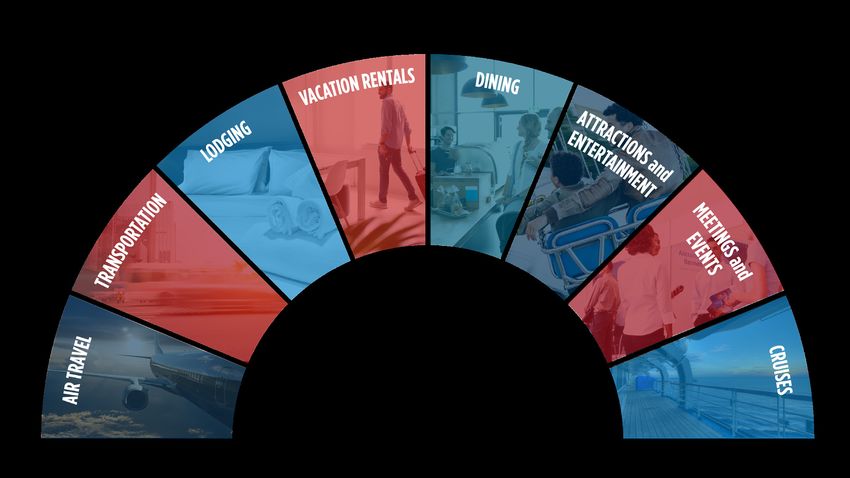
Collaborating with medical experts has been a critical component to the development of this travel industry
   guidance. Expertise in Infectious diseases, preventive and occupational medicine led to the various facets of the
   travel experience being viewed through a lens of how best to minimize the spread of COVID-19.

   Using a layered approach to health and safety, the guidance reinforces various combined measures, chiefly mask
   wearing, employee and traveler physical distancing, hand hygiene, personal protective equipment (PPE) and
   behaviors before and during the travel continuum.

   The travel industry continues to seek input from trusted medical and public health sources to reflect the latest
   developments within and guidance from the professional health community.

   This document has been developed based on CDC guidance and in consultation with these public health
   experts:

   Infectious Diseases Society of America representative to the Working Group
   MICHAEL D. PARKINSON, MD, MPH, FACPM
   Past President, American College of Preventive Medicine
   Principal, P3 Health (Prevention, Performance, Productivity)

   TRISH M. PERL, MD, MSC, FIDSA, FSHEA, FACP
   Jay P. Sanford Professor of Medicine
   Chief of Infectious Diseases and Geographic Medicine, UT Southwestern Medical Center
   Chief of Infectious Diseases, Parkland Hospital and Health System
   Infectious Diseases Society of America representative to the Working Group

For the most up-to-date COVID-19 resources and information for the industry, visit: ustravel.org/ReliefResources

                                                       Industry Guidance for Promoting the Health and Safety of All Travelers   3
CREATE TRANSMISSION BARRIERS:
MOST IMPORTANTLY, WEAR A MASK
1   Travel businesses should adapt operations, modify employee
    practices and/or redesign public spaces to help protect employees
    and customers.
    Travel businesses should follow strategies designed to reduce risks of COVID-19
    transmission. Strategies should include operational changes, new employee practices or               What Is New and What
    reimagining high-traffic public spaces. Strategies should also align with CDC guidance               Have We Learned?
    to build confidence with travelers and industry employees that their health and safety               The most common transmission
    is our top priority.                                                                                 of COVID-19 occurs through
                                                                                                         close contact with respiratory
                                                                                                         droplets from an infected
    These strategies should include practices such as:
                                                                                                         person, generally within about
         Wearing masks to protect both the mask wearer and others. The travel industry                   six feet. Though rarer, “airborne
                                                                                                         transmission” by smaller
         strongly urges all travel employees and customers to wear masks. A wealth of
                                                                                                         droplets and particles which
         information from medical experts makes clear that wearing a mask is a highly
                                                                                                         can travel further than six feet
         effective tool to prevent the spread of infection;                                              or remain briefly in the air has
                                                                                                         also been identified by CDC as a
         Reinforcing hand hygiene which can decrease the risk of transmission of respiratory
                                                                                                         mode of transmitting the virus.
         viruses by ~50%;
                                                                                                         Air ventilation, circulation and
         Encouraging physical distancing by ensuring by posting new signage to ensure
                                                                                                         filtration systems. Scientific
         proper separation in lines and common areas, discouraging congregating in
                                                                                                         research has found that
         crowded areas, reconfiguring public spaces, or limiting the number of employees                 effective air ventilation can
         and customers in various areas;                                                                 help prevent the spread of
                                                                                                         the virus. Travel and related
         Thinking creatively to limit staff physical contact with customers where                        businesses should review and,
         practical while still delivering superior service, for example, through online                  as appropriate, implement the
         ordering, curbside service delivery, automated entrances and other practices;                   latest published standards on air
                                                                                                         ventilation and COVID-19 from
         Utilizing personal protective equipment (PPE);                                                  CDC and the American Society
                                                                                                         of Heating, Refrigerating and
         Installing physical barriers, such as transparent screens to provide proper
                                                                                                         Air-Conditioning Engineers
         separation between customers and employees;                                                     (ASHRAE).
         Educating both employees and customers about their shared responsibility to
         help protect each other in a COVID-19 environment.

                                                          Industry Guidance for Promoting the Health and Safety of All Travelers         4
CREATE TRANSMISSION BARRIERS
2   Travel businesses should consider implementing touchless solutions,
    where practical, to limit the opportunity for virus transmission while
    also enabling a positive travel experience.
    This could mean implementing touchless or low-touch solutions, along with pursuing technological
    and innovative practices to further promote safe and enjoyable experiences. Such measures may include
    adopting contactless technologies or procedures for:

         Purchasing tickets;

         Limiting queues;

         Confirming identification;

         Checking in / checking out;

         Paying for goods and services;

         Automating ordering and pick-up for food and services; and

         A broader range of travel and hospitality amenities.

                                                      Industry Guidance for Promoting the Health and Safety of All Travelers   5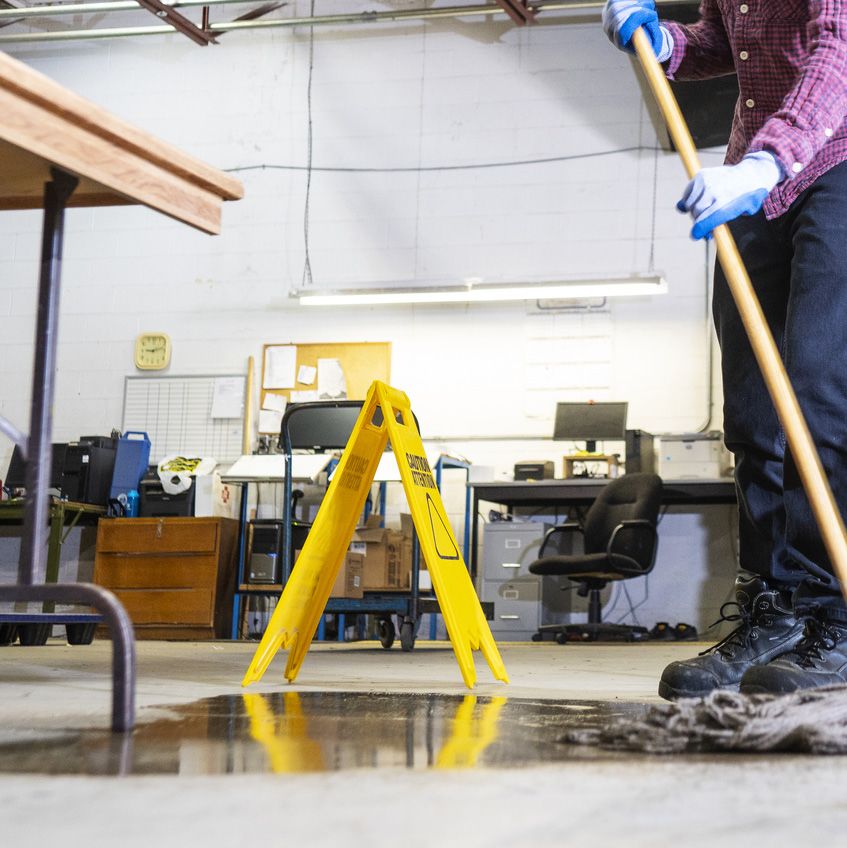
ENHANCE SANITATION
3   Travel businesses should adopt and implement enhanced sanitation
    procedures specifically designed to combat the transmission of
    COVID-19.
    Protecting against COVID-19 requires heightened sanitation practices. In an industry as diverse
    as travel, specific practices will vary from one segment to another. Each travel business will
    continue to tailor procedures to its own operating environment and the expectations of
    its customers. Some will also adopt practices verified by third-party certification services. But
    sanitation procedures will align with leading public health authority guidelines.

    To promote the health and safety of our customers and employees, every segment
    of the travel industry should deploy enhanced sanitation procedures that include:

         Establish a policy implementing more frequent hand washing by all
         employees and, in the absence of hand washing, make frequent use of an alcohol-based
         hand sanitizer (at least 60% alcohol);

         Sanitizing more frequently, using products and disinfectants that meet requirements
         for effectiveness against COVID-19; special attention to high-touch surfaces;

         Providing hand sanitizer in public areas throughout facilities;

         Modifying business hours when necessary to carry out thorough sanitation and
         disinfection procedures;

         Providing new training for employees on implementing these measures with oversight
         on execution;

         Researching technological innovations and testing new procedures, as appropriate, to
         enhance sanitation.

                                                          Industry Guidance for Promoting the Health and Safety of All Travelers   6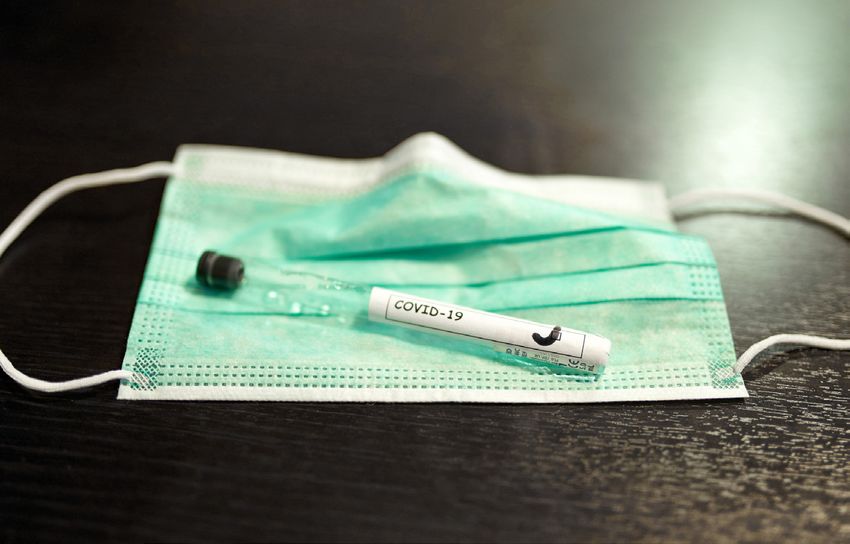
PROMOTE HEALTH SCREENING
4   Travel businesses should promote health screening measures
    for employees and isolate workers with possible COVID-19
    symptoms and provide health resources to customers.
    Travel businesses should adopt health screening procedures that require all employees:

          To monitor their health;

          To get an annual flu shot;

          To not report to work if they are ill and/or showing any symptoms; and

          To self-isolate if showing symptoms of COVID-19, if awaiting test results, or if diagnosed with
          COVID-19.

    Travel employers and operators should review their policies to more easily enable employees to
    stay home when sick or when possibly exposed to the coronavirus. This could also include, for some,
    updating sick leave policies and allowing employees to stay home to care for sick family members or to
    fulfill self-isolation requirements.

    Travelers also have a role to play in preventing the spread of COVID-19. To help them fulfill this
    responsibility, travel businesses should offer appropriate resources to customers to better enable them
    to monitor and screen their own health, including:

          Signage communicating COVID-19 symptoms;

          Guidance to local public health resources in case testing or treatment is needed;

          Materials describing good health practices to protect themselves and others;

          Communications encouraging travelers to stay home if they are sick
          and to postpone travel until they are well.

    Additional Consideration
    Contact Tracing. Travel businesses should encourage employees to participate in all contact tracing requests from public health officials.
    Travelers and travel industry employees should also consider downloading free applications that anonymously gather data and inform
    users if they have been exposed to someone with COVID-19.

    Telehealth. If health insurance plans cover telehealth services, employers should encourage employees to use them whenever possible.
    Telehealth enables patients to conveniently seek care from a medical professional from home, eliminating the need to visit a doctor’s
    office or go to a hospital. This lowers the risk of exposure to the virus, while also expanding health care access for patients with COVID-19
    symptoms. If travel employers are able, they should select plans that offer coverage for telehealth services.

                                                                     Industry Guidance for Promoting the Health and Safety of All Travelers         7
PROMOTE HEALTH SCREENING
5   Travel businesses should establish a set of procedures aligned
    with CDC guidance should an employee or customer test positive
    for COVID-19.
    If an employee or customer tests positive, travel businesses should follow an appropriate checklist of
    actions in response. Travel businesses should follow guidance from leading public health authorities to
    define necessary actions in these instances.

    Additional Consideration
    Testing. is an indispensable strategy for fighting COVID-19. The travel industry supports broadening the
    availability of efficient, effective, COVID-19 testing to identify positive cases and prevent people infected with
    the virus from spreading it. Wider availability of testing would help to keep employees safe and businesses
    open, while boosting confidence in safe and healthy travel.

                                                                      Industry Guidance for Promoting the Health and Safety of All Travelers   8
FOLLOW FOOD & BEVERAGE
SERVICE GUIDANCE
6   Travel businesses should follow best practices in food and
    beverage service to promote health of employees and
    customers.
    While COVID-19 is not a food borne illness, food and beverage service is an essential and ubiquitous
    part of the hospitality our industry provides to travelers. When serving food and beverages, travel
    businesses should follow FDA’s Best Practices for Retail Food Stores, Restaurants, and Food Pick-
         Up/Delivery Services During the COVID-19 Pandemic and the National Restaurant Association’s
              COVID-19 Re-Opening Guidance.

                    They should also review the National Restaurant Association’s longstanding ServSafe
                      guidelines or comparable state program.

                                                       Industry Guidance for Promoting the Health and Safety of All Travelers   9
TIPS FOR TRAVELERS
  These recommendations rely on guidance from the Centers for Disease Control and Prevention. By
  following CDC guidance and advice from state and local public health officials travelers can better
  protect themselves from COVID-19.

  Decide if you can travel safely. Do not travel if you are sick or if you have been around someone with
  COVID-19 in the past 14 days. If you are at higher risk, consider postponing travel. CDC guidance on
  increased risk is available here.

       Get an annual flu vaccine. A flu vaccine is an essential part of protecting your and your family’s
       health this flu season.

       Wear a mask. Wearing a mask with two or more layers can help stop the spread of COVID-19.
       Wear it over your nose and mouth and secure it under your chin. Make sure it fits snugly against
       the sides of your face. Avoid touching your mask, eyes, nose and mouth. Wear a mask at all times
       when in public, indoors and outdoors, except when eating, drinking and sleeping.

       Practice physical distancing, when possible. Stay six feet from those who do not live with you,
       both indoors and outdoors, as even those without symptoms can spread COVID-19.

       Wash your hands frequently. Wash hands with soap and water for at least 20 seconds, including
       after using the bathroom and being in a public place, or use hand sanitizer with at least 60%
       alcohol if soap and water are not available.

       Before travel, check information about your destination. Check health departments for local
       requirements and the most up-to-date travel information about your destination.

                                                       Industry Guidance for Promoting the Health and Safety of All Travelers   10
CONTRIBUTING ORGANIZATIONS
The following organizations show their support of this travel industry guidance, which will be shared with the
entire travel industry and expanded upon by each sector as necessary. These organizations and their members,
described below, represent the majority of the $2.6 trillion U.S. travel industry.
ACRA is the national representative for over 98% of
U.S. Travel Association is the national, non-profit our nation’s car rental industry. ACRA’s membership is
organization with more than 1,100 member comprised of over 200 companies that have almost
organizations representing all components of the travel 2.2 million registered vehicles in service in the
industry—including transportation, lodging, retail, United States, with fleets ranging in size
recreation and entertainment and foodservice—across from one million cars to ten cars.
all travel segments: meetings, leisure, business,
incentive and trade shows.
The Airports Council International-North America (ACI-
AAAE is the world’s largest professional organization NA) is the voice of North American airports, representing
for airport executives, representing thousands of airport local, regional and state governing bodies that own and
management personnel at public-use commercial and operate commercial airports in the United States and
general aviation airports. AAAE’s members represent Canada. ACI-NA is the largest of the five worldwide
nearly 875 airports and authorities, in addition to regions of the Airports Council International (ACI),
hundreds of companies and organizations representing more than 300 airports operating in the
that support airports. United States and Canada and nearly 400
aviation-related businesses.
AAHOA is the largest hotel owners association in the Airlines for America advocates on behalf of its members
nation representing more than 19,500 members who to shape crucial policies and measures that promote
own almost one in every two hotels in the United States. safety, security and a healthy U.S. airline industry. We
work collaboratively with airlines, labor, Congress, the
Administration and other groups to improve aviation
for the traveling and shipping public. A4A vigorously
advocates on behalf of the American airline industry as a
model of safety, customer service and environmental
responsibility and as the indispensable network that
drives our nation’s economy and global competitiveness.
Industry Guidance for Promoting the Health and Safety of All Travelers 11CONTRIBUTING ORGANIZATIONS
ASTA is the world’s largest association of travel
AGA membership includes commercial and tribal
professionals representing travel advisors and the
casino operators, U.S.-licensed gaming suppliers,
companies whose products they sell such as tours,
financial institutions, destination marketing
cruises, hotels, car rentals, etc.
organizations, food and beverage suppliers, and
other key stakeholders in the gaming industry.
Brand USA is the nation’s first public-private
AHLA is the singular voice representing 27,000 partnership responsible for promoting the
members in every segment of the hotel industry United States as a premier travel destination.
including major chains, independent hotels, Since its founding, Brand USA has worked in
management companies, REIT’s, bed and close partnership with more than 900 partner
breakfasts, industry partners and more. organizations to promote all 50 states and U.S.
territories to visitors from around the world.
ARDA is the trade association for the timeshare
Destinations International is the world’s largest
industry. ARDA’s membership comprises over 500
association of destination organizations
companies (both privately held firms and publicly
with approximately 600 member organizations
traded corporations), which house 5,000-plus
including almost 6,000 destination professionals
individual ARDA members.
from around the globe.
Industry Guidance for Promoting the Health and Safety of All Travelers 12CONTRIBUTING ORGANIZATIONS
The Events Industry Council’s 30+ member IFA is the world’s largest membership organization
organizations represent over 103,500 individuals for franchisors, franchisees and franchise suppliers,
and 19,500 firms and properties involved representing a community of over 1,400 brands.
in the events industry.
IITA is the national nonprofit trade association
representing the United States’ international
IAAPA is the premier trade association representing inbound travel industry. IITA members include
the attractions industry with over 6,000 member inbound tour operators and suppliers (lodging
companies from over 100 countries. companies, transportation, destinations,
attractions, restaurants, etc.) from
across the country.
IAEE is the leading association for the global
exhibition industry representing over 12,000
individuals in 50 countries who conduct and
The IMEX Group organizes two global trade shows
support exhibitions around the world. IAEE
in the meetings and events sector. Meeting industry
members are directly involved in the planning,
suppliers from across the world are present at
management, and production of exhibitions
IMEX trade shows. Exhibitors include national
and buyer-seller events or those who provide
and regional tourist offices, convention and
products and services to the industry.
visitor bureau, hotels, conference and exhibition
centers, cruise lines, airlines, spa resorts, event
management specialists and more.
IAVM represents public assembly venues from
around the globe, including managers and senior
executives from auditorium, arenas, convention Meeting Professionals International is the largest
centers, exhibit halls, stadiums, performing arts meeting planner and event planner industry
centers, university complexes, and amphitheaters. association worldwide. MPI has a global community
of 60,000 meeting and event professionals in
75 countries worldwide.
Industry Guidance for Promoting the Health and Safety of All Travelers 13CONTRIBUTING ORGANIZATIONS
National Coalition of Black Meeting Professionals
(NCBMP) is the preeminent organization for African PCMA is the world’s largest, most respected and most
American association executives, hospitality recognized network of business events strategists.
professionals and meeting planners in all aspects PCMA’s 7,000 members are industry leaders across
of the meeting planning profession. Its mission is North America, Europe, the Middle East and Asia.
to maximize a greater return on the meeting dollar
investment for member organizations, effect
positive change in the hospitality industry as it
relates to African Americans and our allies, and
empower members to become a voice in the
hospitality industry on issues that affect the
African American community. SISO members include companies, corporations
and other for-profit entities that own, produce
or provide full-service management of “face to
face” trade shows, consumer shows, expositions,
conferences and /or similar events as a substantial
part of their business. SISO’s more than 195 members
The National Limousine Association is a non-profit are a combination of large corporations and small
organization responsible for and dedicated to entrepreneurial enterprises that produce over
representing the interests of the private driver 3,500 events worldwide.
transportation industry at the global, national, state,
and local level. It is the unified voice of this industry
- linking transportation industry professionals from
owners and operators to suppliers, manufacturers,
regional and state limousine associations.
Founded in 1934, Skål International is the only
professional organization promoting global
Tourism and friendship, uniting all sectors of the
The National Restaurant Association is the Tourism industry with 45 clubs/1,800 members in
largest foodservice trade association in the the United States and 350/14,000 members
world representing more than 500,000 around the world.
restaurant businesses.
USTOA is a professional association representing the
NTA is the leading business association for tour operator industry. Its members are made up of
companies and organizations that serve customers companies who provide services worldwide but
traveling to, from and within North America. NTA who conduct business in the U.S.
represents 700 buyer members (tour operators
and travel planners) and seller members (500
destinations and 1,100 tour suppliers).
Industry Guidance for Promoting the Health and Safety of All Travelers 14CONTRIBUTING ORGANIZATIONS
U.S. Travel Association’s
CEO ROUNDTABLE
Powered by U.S. Travel Association
U.S. Travel’s CEO Roundtable is Meetings Mean Business is an industry-wide
compromised of 28 travel executives from coalition comprised of over 60 members who
America’s largest travel companies with showcase the undeniable value that business
revenues in excess of $1 billion. meetings, trade shows, incentive travel, exhibitions,
conferences and conventions bring to people,
businesses and communities.
The Destinations Council represents more than 350
destination marketing organization (DMO) and
convention and visitors bureau (CVB) members The council represents organizations as diverse as
of U.S. Travel Association. national parks, iconic landmarks, shopping centers,
entertainment venues, world-class attractions
and sightseeing tours, who are also members
U.S. Travel Association
of U.S. Travel Association.
A community of more than 12 of the largest
U.S. International gateway airports.
The National Council of State Tourism Directors
(NCSTD), a council within the U.S. Travel
Association, represents the leadership from all 50
states, the five U.S. territories and the
District of Columbia.
Industry Guidance for Promoting the Health and Safety of All Travelers 15You can also read


