Perceived quality of care and satisfaction for deaf people with regard to primary care in a Health Area in the region of Murcia - Revistas UM
←
→
Page content transcription
If your browser does not render page correctly, please read the page content below
ORIGINALES

     Perceived quality of care and satisfaction for deaf people with regard
     to primary care in a Health Area in the region of Murcia
     Calidad asistencial percibida y satisfacción de las personas sordas con la atención
     primaria de un Área de Salud de la Región de Murcia

     Pedro Simón Cayuela Fuentes 1
     María del Mar Pastor Bravo 1
     María de los Ángeles Conesa Guillén 2
     1
       PhD in Nursing. University College of Nursing of Cartagena. University of Murcia. Spain..
     marpastorbravo@um.es
     2
       Graduate in nursing.
     .
     http://dx.doi.org/10.6018/eglobal.18.2.344761
     Received: 5/10/2018
     Accepted: 14/12/2018

     ABSTRACT:
     Objective: To describe the quality of care and satisfaction with regard to the primary care services of
     the Health Area II Cartagena of the Murcia Health Service as perceived by deaf people of Cartagena
     and the region.
     Method: Observational, descriptive and cross-sectional study. The data were collected through the
     simultaneous translation of the Questionnaire on Evaluation and Improvement of the Quality of Care
     (EMCA) relative to the Perceived Quality in Primary Care. The variables analyzed were: age, sex, level
     of education, kind of deafness, first language and use, communication systems or supports, quality of
     perceived service, perception of professionalism and humane treatment by doctors, nurses and
     administrative personnel and overall satisfaction perceived regarding their Health Center.
     Results: Professionalism and humane treatment on behalf of doctors and administrative staff was
     perceived as deficient, yet this perception was good in the case of nurses. Overall satisfaction is lower
     than that in the general population. There are statistically significant differences between the type of
     deafness and the perceived professionalism, the humane treatment and the perceived professionalism
     and between the communication system or support and the perceived quality of care.
     Conclusions: The health care provided to this group with special needs must be adapted so that they
     perceive quality health care leading to increased access and monitoring of deaf people in the health
     system.

     Key words: quality of care; patient satisfaction; primary care; deafness; hearing impairment.

     RESUMEN:
     Objetivo: Describir la calidad asistencial percibida y la satisfacción frente a los servicios de Atención
     Primaria del Área de Salud II Cartagena del Servicio Murciano de Salud por parte de las personas
     sordas de Cartagena y comarca.
     Método: Estudio observacional, descriptivo y transversal. Los datos se recogieron mediante la
     traducción simultánea a la lengua de signos española del Cuestionario de Evaluación y Mejora de la

Enfermería Global                      Nº 54 Abril 2019                                                      Página 313
Calidad Asistencial de Calidad Percibida en Atención Primaria. Se analizaron las variables: edad, sexo,
     nivel de estudios, tipo de sordera, primera lengua y uso, sistemas o apoyos comunicativos, calidad de
     atención percibida, percepción de la profesionalidad y trato humano por parte del profesional de la
     medicina, enfermería y administración y la satisfacción global percibida con su Centro de Atención
     Primaria.
     Resultados: La profesionalidad y trato humano recibido por parte del personal médico y administrativo
     fue percibido como deficiente, considerándose bueno en caso de las enfermeras. La satisfacción global
     es menor a la de la población general. Existen diferencias estadísticamente significativas entre el tipo
     de sordera y la profesionalidad percibida, el trato humano y la profesionalidad percibida y entre el
     sistema o apoyo comunicativo y la calidad de la atención percibida.
     Conclusiones: Es necesario adaptar la atención en salud que se presta a este colectivo con
     necesidades especiales a fin de que perciban una atención sanitaria de calidad que derive en un mayor
     acceso y seguimiento de personas sordas en el sistema sanitario.

     Palabras clave: calidad asistencial; satisfacción usuarios; atención primaria; sordera; deficiencia
     auditiva.

                                           INTRODUCTION

     As established by the World Health Organization (WHO), hearing impairment or
     disability implies difficulty in perceiving the dimensions of sound and significantly
     affects the lives of people affected, making the use of special resources necessary(1).

     With regard to the health care received by people with hearing impairment, various
     international studies have reported that there is a higher prevalence of under treatment
     in this population, as well as poorer control of risk factors in cardiovascular diseases,
     joint diseases and self-perceived depression compared to individuals with visual and
     cognitive disabilities (2)and to the general population(3). Likewise, it has been found that
     the deaf community makes less use of Primary Care services and more use of hospital
     services(4), they resort to a greater extent to private health services or even forgo
     health care due to their complicated relationship with health professionals (5,6), which is
     due to the difficulties in the communication process, the sheer necessity of another
     person to mediate and the perception of bitterness and tension on the part of health
     personnel(5,7).

     This complicated relationship with health professionals makes it difficult for people with
     hearing impairment to access health care(8), prevention and treatment(9).

     Deaf people also report several intrinsic barriers in the health system and the
     unavailability of qualified personnel to respond to their needs (10), which makes them
     afraid of being misinterpreted, fear of medication errors and being deceived(5,7).

     The Council of Europe Action Plan 2006-2015 for the Promotion of Rights and Full
     Participation of People with Disabilities (PWD) in society insists that “people with
     disabilities, like other members of society, need health care and should be able to
     access, on an equal footing, quality health services that integrate environmentally
     friendly practices with the rights of customers” (11). This principle is supported by WHO,
     which establishes as a fundamental right of every human being the enjoyment of the
     highest attainable standard of health, including access to timely, acceptable and
     quality health care(12).

     Providing good quality care consists in carrying out the necessary actions in each
     process at the lowest possible cost and in such a way that those assisted are satisfied.
     The quality of care requires suitability of clinical practice, its excellence and the

                                                                                                            Página 314
Enfermería Global                       Nº 54 Abril 2019
satisfaction of those who receive it. Achieving these three attributes in healthcare
means achieving scientific-technical quality and relational quality, which is measured
by the system's ability to communicate with those who receive the services and is
based on observance, among other, of the principles of healthcare ethics and of the
values and preferences of those who receive care(13).
In this context, and specifically related to the Deaf community, the Edinburgh &
Lothian Deaf Health and Deaflink Newcastle projects in the United Kingdom are clear
examples of community strategies implemented in Europe aimed at advocating,
training and mediating in the right of deaf people to the highest attainable standard of
health without discrimination on the grounds of disability, recognizing the particular
characteristics and linguistic and cultural identity of the deaf population (11).
Spain, however, has not yet established an efficient and widespread development of
national strategies specifically targeting the deaf community, whereby this group is
exposed in terms of due fulfillment of their fundamental rights, despite the existence of
specific legislation in this regard (Article 10. b. of current Act 27/2007, of 23
October)(11,14). Although pilot video-interpretation projects in sign language have been
implemented in hospitals of some autonomous communities (Navarra, Madrid) (15),
there is a lack of studies and measures in other regions.
Hearing disability affects 402,615 people in Spain, 61.5% of whom have been officially
recognized this disability. Among these, 51.5% report difficulties in communicating and
33.9% difficulties in relating to others(16). Specifically, in the region of Murcia, the
regional Statistical Center reported an increase in the number of people with
recognized hearing disability from 2009 (3,000 people) to 2014 (4,200 people)(17). It is
estimated that there are 36,500 people with disabilities in Cartagena. Hearing disability
represents the first disability in 9.5%(18).
It is important to note that the Deaf community is a large and heterogeneous group,
which, in an inherent way, entails various adaptive implications that vary both
depending on the time of onset of deafness (namely, before language development or
pre-lingual, or post-lingual), and on the greater or lesser degree of residual hearing
(mild or profound hypoacusia), or its total absence (cophosis or total deafness) (11). This
heterogeneity can trigger different treatment needs and can determine the perception
of the quality of care received.
Taking into account the scarce number of studies on health satisfaction in this
community in Spain and in the Murcia Region, the diversity among the deaf community
and the need to measure the satisfaction of the disabled as a global indicator key to
measuring the effectiveness of the health and social care area, (19)we aim to describe
the perceived quality of care, the professionalism and the humane treatment on behalf
of doctors, nurses and administrative staff, and customer satisfaction relative to
Primary Care services of the Health Area II Cartagena in the Murcia Health Service, as
perceived by deaf people in Cartagena and the region.
METHODOLOGY
Observational, descriptive and cross-sectional study. The study population includes 24
deaf individuals over 18 years of age members and/or users of the Association of Deaf
People of Cartagena and region (Asociación de Personas Sordas de Cartagena -
ASORCAR) and the Association of Parents of Children with Hearing Impairments
Página 315
Enfermería Global Nº 54 Abril 2019(Asociación de Padres de Niños con Deficiencias Auditivas - APANDA), making up
20% of the study population.
For the recruitment of the population, we contacted the directors of APANDA and
ASORCAR, the Spanish sign Language Interpreters (ILSE) of reference of each of the
associations and the nurses of the Otolaryngologic Nursing Ward of the Hospital
General Universitario Santa Lucía, requesting a meeting to make a formal
presentation of the project and to seek the collaboration of those involved by enabling
contact with their members, non-user members and non-member users.
The measurement instrument used was the Questionnaire on Evaluation and
Improvement of the Quality of Care (EMCA) relative to the perceived quality in Primary
Care(20), specifically the items “overall assessment of care” (five questions) and
“sociodemographic data” (four questions). The questionnaire has been developed by
the Ministry of Health and Consumption of the region of Murcia; it is structured as
report-type questions, inquiring about the occurrence or not of the circumstances and
objective data that influence the levels of perceived quality and patient satisfaction.
The questionnaire has undergone a metric validation analysis, confirming that it is a
valid and reliable tool capable of discriminating and identifying the most relevant
dimensions of quality.
The study variables are: age, sex, level of education, type of deafness (pre-or post-
lingual), first language and use, communication systems or supports, perceived quality
of care, perceived professionalism of doctors, nurses and administrative staff, humane
treatment by doctors, nurses and administrative staff and overall satisfaction perceived
relative to their health center or office.
Prior to collecting information, each questionnaire was subject to a pilot trial in both
associations being read with the assistance of the Spanish sign Language Interpreters
(ILSE) and a heterogeneous group of six deaf people, invited by each association, in
order to resolve the potential doubts that might occur during the development of the
simultaneous interpretation whereby the information would be collected. Following the
completion of the pilot trial, three serial meetings were held with various professionals
familiar with the approach to the Deaf community (ILSE, Speech Therapist and Social
worker) in order to determine the relevant corrections to promote the understanding
and handling of the questionnaires.
The questionnaires were completed between June 30 and September 1 2016 through
the simultaneous interpretation system. The researchers remained outside the room
during the completion of the documents in order to create an environment of privacy
and confidentiality.
The SPSS 21.0 statistical package for Windows was used for data analysis.
This study ensured the confidentiality, anonymity and autonomy of the participating
subjects. The participants expressly authorized the interview by signing the informed
consent document. Likewise, the teams of professionals and/or the relevant directors
from ASORCAR and APANDA were asked to approve the project, to collaborate and
to explain the project to the participants using sign language. The anonymity of the
participants was ensured by coding each interview.
Página 316
Enfermería Global Nº 54 Abril 2019RESULTS
Profile of participants
The participants included 41.7% men and 58.3% women. The average age of
participants was 43 years old (+/-15).
With regard to the level of education, 58.3% had no education or only primary
education, 16.67% had completed vocational training and only 4.17 % had a university
degree.
A total of 83.3% of participants had pre-lingual deafness
70.8% of participants considered Spanish sign language as their first language, not
mastering oral language, while only 4.2% considered spoken language their first
language. In addition, 41.7% reported not to master fluent written Spanish, nor did
they consider lip-face reading as a useful ability to communicate in health services.
Quality of care and satisfaction in terms of the health care received
Quality of care, humane treatment, perceived professionalism and overall satisfaction
were assessed.
With regard to the quality of care received, 66.7% of respondents rated the quality of
care at their health center as “good”, while 29.1% defined it as "average" (Figure 1).
When analyzing statistical relationships between dependent and independent
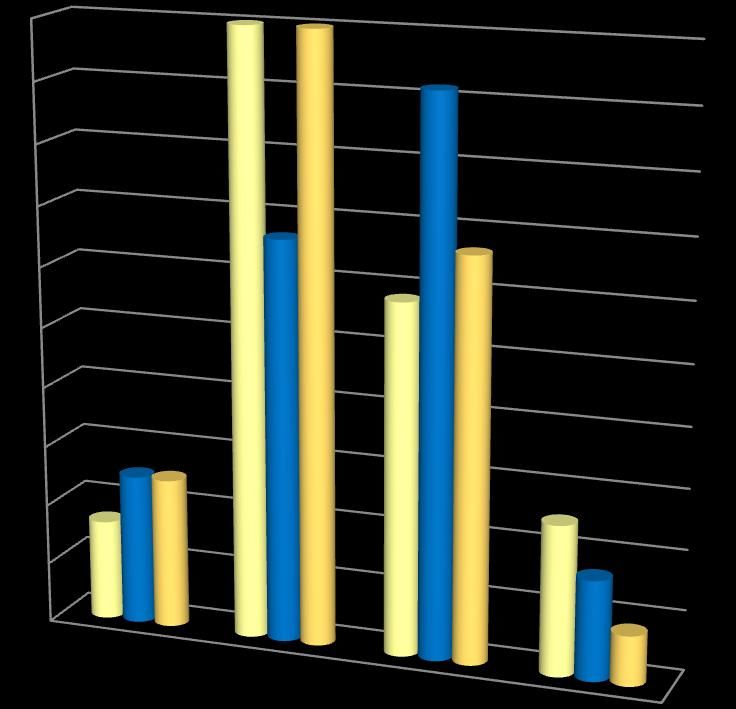
variables, statistically significant differences (pWhen distinguishing between professional categories, most participants rated the
professionalism of doctors as “average” (54.2%), with the same rating for the
administrative staff (52.2%), while most perceived the professionalism of the nursing
staff as good (48.5%) or very good (8.3%) (Figure 2).
There are statistically significant differences between the type of deafness and the
perceived professionalism of doctors (pFigure 3. Humane treatment perceived
50,0
45,0
40,0
35,0
30,0
25,0 Medicina
Enfermería
20,0
Administración
15,0
10,0
5,0
0,0
Malo
Regular
Bueno
Muy bueno
Global satisfaction with their health center or office includes care received, cleanliness,
accessibility and ease of appointment. In general, participants were satisfied, with a
score of 6.95 out of 10 points.
DISCUSSION
Comparing the results obtained with those of the study carried out by the Murcia
Health Service (2014) on the general population (21), the general population satisfaction
averaged 7.9 points out of 10, while our study average was one point lower.
Customer satisfaction with regard to the care received is closely linked to the
perceived professionalism and the humane treatment from professionals who at any
point are involved in the care process, both items have been rated in our study and in
that conducted by the Murcia Health Service on the general population (21). Doctors
were rated by 94% as “good” or “very good” in terms of professionalism, while in the
case of deaf people in our study this rating was given by 45.8% of the respondents.
On the other hand, professionalism and humane treatment on behalf of nurses were
rated as “Good” and “Very good” by 91.2% and 91.7% of the respondents for the
Murcia Health Service respectively, whereas in our study, only 54.1% of surveyed
individuals gave similar answers.
Various studies(22,23) have reported that the nursing staff attempts to bond with patients
who are deaf and with hearing impairment in order to address their needs and
understand them, which might explain the higher rating in terms of humane treatment
and professionalism for the Nursing staff as compared to other professionals. In fact,
Loredo Martinez and Matus Miranda(23), in their review paper, conclude that by
establishing direct face-to-face contact between the nurse and the person with a
Página 319
Enfermería Global Nº 54 Abril 2019hearing impairment, this creates bonds of trust, making understanding easier for the
person with hearing impairments.
Although the perceived humane treatment and professionalism with respect to nurses
is lower in the Deaf community than in the general population, this is due to the nurse's
difficulty in the communication process which affects the care they provide; nurses
reported in the study by Gomes et al. (22) that in their academic and professional life
they had not received specific training on how to care for and communicate with deaf
patients.
Deaf and hearing impaired people live in a society made up mostly normally hearing
people, so for their integration they must overcome existing communication barriers
that are apparently invisible to the eyes of people without hearing disabilities.
On the other hand, the fact that people with pre-lingual deafness have a poorer
perception of the quality, professionalism and treatment may be related to the fact that
they have to continually face the structural and communicative barriers and prejudices
of people and the system, which ultimately do not solve their problems
Various studies have highlighted the difficulty posed to deaf people when accessing
services(8,9), sometimes ignoring their need to be monitored by the nursing staff and
doctors in chronic processes, which negatively affects their health.
The results of our study should be interpreted considering the limitations inherent in
the study methodology and the small sample size.
CONCLUSIONS
The Deaf People of Cartagena studied have a lower perceived quality of care and a
lower overall satisfaction compared to the general population, in all the assessed
items.
Nurses are more highly rated than doctors and administrative staff in terms of
professionalism and humane treatment.
The health care provided to this group with special needs must be adapted so that
they perceive quality health care leading to increased access and monitoring of deaf
people in the health system.
Making visible the situation of the Deaf community with regard to the use, accessibility
and perceived satisfaction in Primary Care Services is necessary and is the basis for
generating specific responses to the potential needs and deficiencies of the Deaf
community, proposing effective communication tools, optimizing the use of available
health services, improving the control of chronic conditions and increasing prophylactic
interventions in this community.
REFERENCES
1. Delgado Sánchez P. Estudio sobre la Actitud de los Empleadores hacia la
Inclusión de Personas Sordas al Campo Laboral. Monterrey: Universidad Autónoma
de Nuevo León. Facultad de Psicología; 2012.
2. Horner-Johnson W, Dobbertin K, Chul Lee J AE. Disparities in chronic
conditions and health status by type of disability. DisabilHealth J. 2013;6(4):280–6.
Página 320
Enfermería Global Nº 54 Abril 2019Available from: http://www.ncbi.nlm.nih.gov/pubmed/24060250
3. Emond A, Ridd M, Sutherland H, Allsop L, Alexander A KJ. The current health
of the signing Deaf community in the UK compared with the general population: a
cross-selectional study. BMJ Open. 2015;5(1). Available from:
http://www.ncbi.nlm.nih.gov/pubmed/25619200
4. Buchrieser Freire D, Petrucci Gigante L, Umberto Beria J, Santos Palazzo L,
Leal Figueuredo AC WRB. Acesso de pessoas deficientes auditivas a serviços de
saúde em cidade do Sul do Brasil. Cad Saúde Pública. 2009;25(4). Available from:
http://www.scielo.br/scielo.php?script=sci_arttext&pid=S0102311X2009000400020
5. Da Silva Bentes IM, Figueirêdo Vidal EC RME. Deaf person’s perception on
health care in a midsize city: an descriptive-exploratory study. OBJN. 2011;10(1).
Available from:
http://www.objnursing.uff.br/index.php/nursing/article/view/j.16764285.2011.3210.2/j.1
676-4285.2011.3210.1
6. Emond A, Ridd M, Sutherland H, Allsop L, Alexander A KJ. Access to primary
care affects the health of Deaf people. Br J Gen Pr. 2015;65(31). Available from:
http://www.ncbi.nlm.nih.gov/pubmed/25624302
7. Polanco Teijo F G-RS. Necesidad sentida de las mujeres sordas durante el
parto y el puerperio inmediato en el ámbito hospitalario. Cult los Cuid. 2010;14(28).
Available from: http://culturacuidados.ua.es/enfermeria/article/view/369
8. Da Silva Aragão J, De Oliveira Magalhães IM, Silva Coura A, Rodrigues Silva
AF, Pereira Cruz GK X de FI. Access and communication of deaf adults: a voice
silenced in health services. J res fundam Care. 2014;6(1):1–7.
9. Kuenburg A, Fellinger P, Fellinger J. Health Care Access Among Deaf People.
2018:1–10.
10. Moreira da Costa LS, Nascimento de Almeida RC, Cristina Mayworn M,
Figueiredo Alves PT, Martins de Bulhões PA MP V. O atendimento em saúde através
do olhar da pessoa surda: avaliação e propostas. Rev Bras Clin Med. 2009;7:166–70.
11. Muñoz Baell IM, Ruiz Cantero MT, Álvarez Dardet C, Ferreiro Lago E AFE.
Comunidades sordas ¿pacientes o ciudadanas? Gac Sanit. 2011;25(1). Available
from:
http://scielo.isciii.es/scielo.php?script=sci_arttext&pid=S021391112011000100012
12. Salud OM de la. Constitución de la Organización Mundial de la Salud. 2006.
13. Rodríguez Pérez MP GAM. Calidad asistencial: Concepto, dimensiones y
desarrollo operativo. Escuela Nacional de Sanidad, editor. Madrid; 2014. Available
from: http://e-spacio.uned.es/fez/eserv/bibliuned:500957/n14-
1_Calidad_asistencial.pdf
14. Boletín Oficial del Estado número 255. Ley 27/2007, de 23 de octubre, por la
que se reconocen las lenguas de signos españolas y se regulan los medios de apoyo
a la comunicación oral de las personas sordas, con discapacidad auditiva y
sordociegas. 2017.
15. Commité Español de representantes de personas con discapacidad. Por un
espacio socio-sanitario inclusivo- informe CERMIN. Déficits, retos y propuestas de
mejora. Colección. Madrid; 2016.
16. Serna López EM. La Lengua de Signos Española en Internet: Análisis y
Diagnóstico de la Accesibilidad. Universidad de Murcia. Departamento de Lengua
Española y Lingüística General; 2015.
17. Murcia. Centro Regional de Estadística de Murcia. Evolución de las personas
con certificado de discapacidad según tipo de discapacidad [Internet]. Available from:
http://www.carm.es/econet/sicrem/pu2034/sec6.html
18. Bocos E. Estudio sobre la Discapacidad en Cartagena. Cartagena; C de SSA
de, editor. 2014.
Página 321
Enfermería Global Nº 54 Abril 201919. Comité Español de representantes de personas con Discapacidad. Espacio
sociosanitario inclusivo. Documento de posición del CERMI Estatal en materia
sociosanitaria. 2014. 1-86 p.
20. Servicio murciano de Salud. Información sobre la asistencia recibida en su
centro de salud o consultorio. :1–16.
21. Servicio Murciano de Salud C de S y PS. Calidad percibida por los usuarios de
los Centros de Atención Primaria del Servicio Murciano de Salud. [Internet]. 2014.
Available from:
https://sms.carm.es/somosmas/documents/63024/0/Calidad+Percibida+en+AP+2014.
pdf/1945ab5a-d28b-4df8-9cb3-4931c9883953
22. Gomes V, Correa Soares M, Marfrin Muniz R, De Sosa Silva J. Vivencia del
enfermero al cuidar sordos 7/o portadores de deficiencia auditiva. Enfermería Glob.
2009;(17):1–10.
23. Loredo Martínez, N. & Matus Miranda, R. Intervenciones de comunicación
exitosas para el cuidado a la salud en personas con deficiencia auditiva. Enferm Univ.
2012;9(4):57–68. Available from:
http://www.scielo.org.mx/scielo.php?script=sci_arttext&pid=S1665-
70632012000400006
ISSN 1695-6141
© COPYRIGHT Servicio de Publicaciones - Universidad de Murcia
Página 322
Enfermería Global Nº 54 Abril 2019You can also read


