School and Childcare Exclusion List - SCDHEC
←
→
Page content transcription
If your browser does not render page correctly, please read the page content below
School and Childcare Exclusion List
Official School and Child Care Exclusion List of Contagious or Communicable Diseases
Statutory authority: SC Code of Laws Sections 44-1-140, 44-29-200; 63-13-180
                     SC Code of Regulations Chapter 61-20 and Chapter 114, Article 5

Requirements

South Carolina law requires schools to take measures to prevent the spread of disease in the
school and childcare populations by limiting the attendance of students and staff with
contagious or infectious diseases at school and school activities. SC Regulation #61-20
requires DHEC to publish in January of each year an Official School and Childcare Exclusion
List of Contagious and Communicable Diseases, hereinafter referred to as the School and
Childcare Exclusion List.

SC Law indicates that schools “on account of the prevalence of any contagious or infectious
diseases or to prevent the spread of disease, may prohibit or limit the attendance of any
employee or student at any school or school-related activities under its control.” SC Regulation
states that schools, out-of-home childcare providers, and parents/guardians should not allow the
attendance of children with “any contagious or infectious disease or syndrome requiring
isolation” … “if the disease or syndrome of the child or minor is on the Official School and
Childcare Exclusion List of Contagious and Communicable Diseases.”

Students, employees and staff (including volunteers) are also excluded from school or childcare
attendance if they have been exposed to one or more of the conditions designated in these lists,
until the return to school or childcare criteria are met.
2018 Updates

The following updates were made to the School and Childcare Exclusion Lists:
   • A healthcare professional does not have clear students or staff with STEC in
        grades 1-12.
   • For Chicken pox and measles all unimmunized school age household contacts
        will also be excluded unless they receive the vaccination.
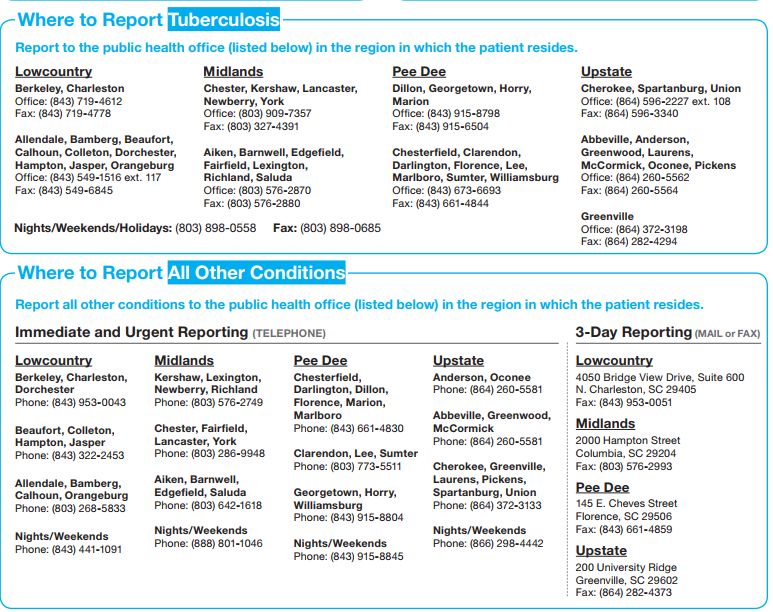
   • Section added on where to report Tuberculosis and all other reportable
        conditions.

        This update to the School and Childcare Exclusion List is effective
                                   January 31, 2018.
Guidance for Implementing the School and Childcare Exclusion List
1. The School and Childcare Exclusion List applies to the following groups of people in out-of-
home childcare, (as defined in S.C. Code Ann. Section 63-13-20), and in any public, private,
parochial, church or Sunday school (Reg 61-20).
o Children and staff in out-of-home childcare settings;
o Preschool/kindergarten students in grades 3K, 4K, and 5K;
o Students in grades 1-12; and
o School employees and staff (including volunteers) who have contact with students.
2. Parent Notification: Schools and childcare providers are encouraged to distribute the list of
conditions that require exclusion from school attendance to parents/guardians, and/or distribute
parent brochures developed by DHEC. The list is also available at
http://www.scdhec.gov/Health/ChildTeenHealth/SchoolExclusion.
3. Parent Reporting to School: Schools and childcare providers should inform parents/guardians
that they must notify the school within 24 hours after the child has developed a known or
suspected communicable illness addressed on the Exclusion List.
4. Return to School: Students, children and staff may return to the school as soon as their
symptoms are resolved, unless stated otherwise in the Exclusion List or by their health care
provider.
5. Special Circumstances: Immunocompromised or medically fragile children with an excludable
condition or exposure may need longer periods of exclusion, subject to recommendations by
their health care provider(s) or by DHEC. For the purposes of school exclusion, the term
“medically fragile“ refers to those students with special health care needs or developmental
delays who require close assistance with feeding or other personal hygiene activities by which
communicable illnesses may be easily spread. Nothing in these criteria precludes the exercise of
the professional judgment of local education agency medical and/or nursing staff to protect the
health of students.
6. Exclusion criteria that vary by age or grade level are indicated in the Exclusion List. “Young
children” or “younger children” as indicated in the List are generally those in childcare, preschool,
or kindergarten grades. When students are taught or routinely spend time in mixed age groups,
the standards for the youngest children in the group apply. Conditions that do not require
exclusion for school and/or childcare staff are indicated in the tables on the following pages.
7. Notes / Documentation for Return: A student may return to school as indicated in the tables
that follow. Physicians, nurse practitioners, or physician assistants may provide medical notes
for return to school following an excludable condition or DHEC may provide a release to return
based on a negative test result or other circumstance. Medical notes, which document
diagnosis, initiation of treatment, improvement in status, etc., and parent notes should be kept
on file at the school for at least one calendar year, or as otherwise required by local school
district policy. Medical notes may not shorten or abrogate the minimum period of exclusion
required by DHEC for any specific condition.
8. Period of Exclusion: If a student does not respond to treatment for an excludable condition,
the health care provider or health department may suggest longer periods of exclusion.
2Guidance for Implementing the School and Childcare Exclusion List
9. Outbreaks: During disease outbreaks or under special circumstances, DHEC may change the
length of the exclusion periods. During outbreaks, exclusion criteria may also apply to students,
children and staff who are not confirmed by laboratory testing but who display the same
symptoms of illness as lab-confirmed cases.
10. Disease/Outbreak reporting to the Health Department and the Family Education Rights
and Privacy Act (FERPA): DHEC has determined that conditions reportable immediately or
within 24 hours by phone, including all clusters or outbreaks of illnesses, fall under the FERPA
allowance and exception of reporting illnesses without parental consent. Conditions that are
reportable within 3 days may be reported to DHEC by name with parental consent or reported
de-identified without parental consent.
11. The requirement to report Immediately Reportable or Urgently Reportable (within 24
hours) conditions applies to physicians, laboratories, health facilities, and “any person or
entity that maintains a database containing health care data.” The List of Reportable
Conditions may be accessed here:
http://www.scdhec.gov/Health/FHPF/ReportDiseasesAdverseEvents/ReportableCondition
sInSC/
3Children, students and staff with the following conditions must be excluded from the school or out-of-home childcare until the
exclusion criteria has been met and documentation has been provided as noted below:
Disease/ Agent Mode of Contagious Report to Public Exclusion Documentation for
Transmission Period Health Return
Chicken Pox Airborne route 2 days Report cases • Exclude students, employees or staff with A parent note or staff
(Varicella) or respiratory before rash within 3 days rash until crusted over statement that lesions
(droplet) route begins until • In outbreaks, exclude unimmunized have dried/crusted
or by direct the rash is Outbreak students with no history of varicella
contact with crusted declared with vaccination from the start of the outbreak
drainage from over 3rd case (or day that it is first recognized) until day
blisters or nasal 21 after the onset of rash in the last person
secretions. diagnosed with Varicella in the affected
school.
• Breakthrough varicella, which occurs in
appropriately vaccinated persons, may Parent note or staff
appear just as a rash, without crusting. In statement that lesions
these cases, exclude until 24 hours are fading/resolving
following appearance of last lesions. and no new lesions
have appeared for 24
hours
Diarrhea1 Varies, often Varies Yes, above Younger Students Parent note
(Gastrointestinal associated with according to normal • Exclude children in 5th grade or younger,
Illness, cause not poor toileting the absentee rate with diarrhea until symptoms are resolved
identified or cause habits, food and causative for at least 24 hours, or medical evaluation
has not yet been drink, agent indicates that inclusion is acceptable.
determined) contaminated
fomites, Older Students and Staff
environmental • Exclusion for diarrhea in 6th through 12th N/A
exposures grade students or for school staff is not
including mandatory unless the person with
animals and diarrhea is determined to be contributing
recreational to the spread of illness in the school
1 Diarrhea is defined as 3 or more loose or watery stools in a 24 hour period that are not associated with changes in diet.
4Children, students and staff with the following conditions must be excluded from the school or out-of-home childcare until the
exclusions criteria have been met and documentation has been provided as noted below:
Disease/ Agent Mode of Contagious Report to Public Exclusion Documentation for
Transmission Period Health Return
water; may be setting.
bacterial,
parasitic or Special Circumstances for Diarrhea
viral. • Exclude students of any age and staff
with uncontrolled diarrhea or stools that
contain blood or mucus, unless symptoms
are associated with a non-infectious
condition (e.g., IBS or Crohn’s Disease).
Return is permitted when symptoms are
resolved or medical evaluation indicates
that inclusion is acceptable.
• For diapered children or students of any
age who require assistance with personal
hygiene, exclude for 2 or more diarrheal
episodes in a school or program day if the
frequency or nature of the diarrheal
episodes challenges the ability of the
caregiver(s) to maintain sanitary
techniques and/or conditions (diaper
spillage or accidents in toilet trained
children).
5Children, students and staff with the following conditions must be excluded from the school or out-of-home childcare until the
exclusions criteria have been met and documentation has been provided as noted below:
Disease/ Agent Mode of Contagious Report to Public Exclusion Documentation for
Transmission Period Health Return
Diarrhea Fecal-oral route Excretion is Report Exclude until diarrheal symptoms are resolved Parent note or staff
(Campylobacter) through direct shortened outbreaks for at least 24 hours. statement that
person-to- by IMMEDIATELY diarrhea has resolved
person contact treatment by phone for 24 hours
or
contaminated Without Report within 3
fomites, by treatment, days
ingestion of can be
contaminated infectious
food, water, or for 2-3
animal contact. weeks with
possible
relapse
Diarrhea Recreational Parasite can Report Exclude until diarrheal symptoms are resolved Parent note or staff
(Cryptosporidium) water contact, remain in outbreaks for at least 24 hours. Restrict recreational statement that
the fecal-oral stool for 2 IMMEDIATELY water activities (pools, splash pads, water diarrhea has resolved
route through weeks by phone tables, etc.) until 2 weeks after diarrheal for 24 hours
direct person- symptoms resolve.
to-person Report within 3
contact or days
contaminated
fomites, by
ingestion of
contaminated
food, water, or
animal contact.
6Children, students and staff with the following conditions must be excluded from the school or out-of-home childcare until the
exclusions criteria have been met and documentation has been provided as noted below:
Disease/ Agent Mode of Contagious Report to Public Exclusion Documentation for
Transmission Period Health Return
Diarrhea (E. coli Fecal-oral route 3 weeks or Report Children or staff in out-of-home childcare or Medical
0157:H7 and other through direct longer; outbreaks students in Kindergarten: documentation of 2
Shiga Toxin- person-to- Prolonged IMMEDIATELY • Exclude until diarrheal symptoms are negative test results.
Producing E. coli person contact carriage is by phone resolved for at least 24 hours and 2
(STEC)) or uncommon consecutive stool cultures or culture-
contaminated Report within independent diagnostic tests taken at
fomites, by 24 hours by least 24 hours apart are negative for
ingestion of phone STEC.
contaminated • If antibiotics were prescribed, stool
food, water, or cultures must be collected 48 or more
animal contact. hours after the antibiotics are
completed.
• A Healthcare professional must clear
students or Staff for readmission for
all cases of STEC.
Students in Grades 1-12:
• Exclude until diarrheal symptoms are Parent note for
resolved for at least 24 hours. Restrict students in grades 1-12
recreational water activities (pools, stating no diarrhea for
splash pads, water tables, etc.) until 2 24 hours.
weeks after diarrheal symptoms
resolve.
Diarrhea Fecal-oral route May be Report Exclude until diarrheal symptoms are resolved Parent note or staff
Enteropathogenic through direct prolonged outbreaks for at least 24 hours. statement that
E. coli (EPEC) person-to- IMMEDIATELY diarrhea has resolved
Enterotoxigenic person contact for 24 hours
by phone
E. coli (ETEC) or
7Children, students and staff with the following conditions must be excluded from the school or out-of-home childcare until the
exclusions criteria have been met and documentation has been provided as noted below:
Disease/ Agent Mode of Contagious Report to Public Exclusion Documentation for
Transmission Period Health Return
contaminated
fomites, by
ingestion of
contaminated
food or water,
or animal
contact.
Diarrhea (Giardia) Recreational Can be up Report Exclude until diarrheal symptoms are resolved Parent note or staff
water contact, to months, outbreaks for at least 24 hours. statement that
the fecal-oral most IMMEDIATELY diarrhea has resolved
route through contagious by phone for 24 hours
direct person- during
to-person diarrhea Report within 3
contact or phase days
contaminated
fomites, by
ingestion of
contaminated
food, water, or
animal contact.
Diarrhea By the fecal-oral Can be shed Report Exclude until asymptomatic (diarrhea and/or A parent note or staff
(Norovirus) route through before outbreaks only vomiting have ceased for at least 24 hours). statement that
direct person- symptoms diarrhea and/or
to-person start and 2 vomiting have resolved
contact or or more for 24 hours.
8Children, students and staff with the following conditions must be excluded from the school or out-of-home childcare until the
exclusions criteria have been met and documentation has been provided as noted below:
Disease/ Agent Mode of Contagious Report to Public Exclusion Documentation for
Transmission Period Health Return
contaminated weeks after
fomites, by symptoms
ingestion of end
contaminated
food or water.
Diarrhea Fecal-oral route Present Report Exclude until diarrheal symptoms are resolved A parent note or staff
(Rotavirus) through direct several days outbreaks only for at least 24 hours. statement that
person-to- before diarrhea has resolved
person contact symptoms for 24 hours
or and last for
contaminated weeks after
fomites, by
ingestion of
contaminated
food or water.
Diarrhea Fecal-oral route Can persist Report • Exclude until diarrheal symptoms are A healthcare provider
Salmonella Typhi through direct in stool up outbreaks resolved for at least 24 hours AND three must clear a child or
(Typhoid fever) person-to- to 12 IMMEDIATELY stool cultures collected at 24-hour staff member for
person contact weeks; by phone intervals are negative for SalmonellaTyphi. readmission for all
or chronic • If antibiotics were prescribed, stool cases of Salmonella
contaminated carriage Report typhoid cultures must be collected 48 or more Typhi along with the
fomites, by possible fever within 24 hours after the antibiotics are completed. negative stool culture
ingestion of hours results
contaminated
food or water.
Diarrhea Fecal-oral route Can persist Report Exclude until diarrheal symptoms are resolved Parent note or staff
(Nontyphoidal through direct in stool up outbreaks for at least 24 hours. statement that
Salmonella) person-to- to 12 weeks IMMEDIATELY diarrhea has resolved
person contact by phone for 24 hours
or
9Children, students and staff with the following conditions must be excluded from the school or out-of-home childcare until the
exclusions criteria have been met and documentation has been provided as noted below:
Disease/ Agent Mode of Contagious Report to Public Exclusion Documentation for
Transmission Period Health Return
contaminated
fomites, by Report
ingestion of nontyphoidal
contaminated Salmonella
food, water, or within 3 days
animal contact.
Diarrhea (Shigella) Fecal-oral route Untreated Report • Children or staff in out-of-home childcare Medical note
through direct Shigella is outbreaks or students in Kindergarten: documenting negative
person-to- found in the IMMEDIATELY • Exclude until diarrheal symptoms are test results
person contact stool up to by phone resolved for at least 24 hours, and at
or 4 weeks least 1 stool culture or culture-
contaminated Report within 3 independent diagnostic test is
fomites, by days negative for Shigella.
ingestion of • If antibiotics were prescribed, stool
contaminated cultures must be collected 48 or more
food or water. hours after the antibiotics are
completed.
• Students in Grades 1-12:
• Exclude until diarrhea has stopped for Parent note or staff
at least 24 hours, provided that the statement that
student has good hand hygiene and diarrhea has resolved
ability to self-toilet. for 24 hours
• A student with questionable or poor
hand hygiene may be required to have
at least 1 Shigella-negative stool
culture and to be diarrhea-free for at
least 24 hours prior to returning. If
antibiotics were prescribed, stool
10Children, students and staff with the following conditions must be excluded from the school or out-of-home childcare until the
exclusions criteria have been met and documentation has been provided as noted below:
Disease/ Agent Mode of Contagious Report to Public Exclusion Documentation for
Transmission Period Health Return
cultures must be collected 48 or more
hours after the antibiotics are
completed.
Fever N/A Dependent Report • Exclude for fever accompanied by School to specify based
upon the outbreaks only behavior changes or other signs and on situation
cause of the symptoms of contagious illness (such as
fever rash, vomiting, diarrhea, irritability, or
confusion).
• Exclude all staff for oral temperature 101
or higher.
• In the childcare setting for infants up to
4 months of age:
• Fever (100.4 F or above rectally) in a
child 60 days of age or younger
requires immediate medical
attention.
• In the childcare setting for infants and
children who are over 4 months:
• Exclude for Axillary temperature:
100.0 F or Oral temperature: 101.0 F
or greater
• For Schools for students of all ages
• Exclude Axillary temperature: 100.0 F
or for Oral temperature: 101.0 F or
greater
Haemophilus Respiratory May be as Report Within • Exclude until the student is cleared by a Medical note
influenza type B (droplet) route long as 24 hours health professional. documenting
(Hib) or by direct bacteria is • Exclude staff with proven Hib infection completion of
contact with in the until antibiotic therapy is initiated. antibiotic treatment,
contaminated mouth or • No exclusion is required for exposed and clearance to return
11Children, students and staff with the following conditions must be excluded from the school or out-of-home childcare until the
exclusions criteria have been met and documentation has been provided as noted below:
Disease/ Agent Mode of Contagious Report to Public Exclusion Documentation for
Transmission Period Health Return
objects. nose students or staff. to school
Hand, foot and Direct contact The virus Report Exclude while symptoms of fever or excessive Parent note
mouth Disease with infected: may be outbreaks only drooling are present, which is typically during
• nose shed for the first week of illness.
discharge weeks to
• throat months in
discharge the stool
• blisters after the
• feces infection
starts;
respiratory
shedding of
the virus is
usually 1-3
weeks
Head lice Direct contact As long as Not reportable Exclude for: Excluded persons may
(pediculosis)2 with infected live lice are • The presence of live, crawling lice return after one initial
person or present visualized on direct inspection of the scalp, treatment when
contaminated or screening identifies no
object. live, crawling lice on
• The presence of nits (eggs) that appear to
2 Ideally, head lice screening is performed by healthcare providers, including school health nurses, or by school health aides who have been trained by school nurses. [Students with
evidence of infestation (e.g., nits further than ¼ inch from the scalp may be excluded per local school policies]
12Children, students and staff with the following conditions must be excluded from the school or out-of-home childcare until the
exclusions criteria have been met and documentation has been provided as noted below:
Disease/ Agent Mode of Contagious Report to Public Exclusion Documentation for
Transmission Period Health Return
be ¼ inch or 6 mm from the scalp. the affected person’s
scalp 3
Students identified with head lice can remain The school or facility
in the classroom until the end of the school may identify
alternative acceptable
day, with limitations placed upon activities
products for the
that cause head-to-head contact or sharing of
effective treatment of
any headgear. Staff with head lice are
head lice
excluded at the end of the school or childcare
day if close head-to-head contact can be
avoided during routine activities.
Re-screening Recommendations for Head
Lice:
• Persons who were excluded for
pediculosis should be rescreened at 7-10
days after initial treatments.
• Rescreened persons who are found to
have live crawling lice should be re-treated
and excluded until screening identifies no
live, crawling lice on the scalp.
Hepatitis A virus Fecal-oral route Most Report within Exclude until 1 week after onset of illness or Medical note
infection through direct infectious in 24 hours by jaundice. Refer contacts to their health care documenting diagnosis
person-to- the 2 weeks phone providers for consideration of immunoglobulin and more than one
person contact before or vaccine in consultation with the health week since onset
or onset of department.
contaminated signs or
fomites, by symptoms,
3 Local education agencies opting for more stringent “No Nit Policies” for school re-admission should clearly explain these policies to families when distributing materials on School and
Childcare Exclusion.
13Children, students and staff with the following conditions must be excluded from the school or out-of-home childcare until the
exclusions criteria have been met and documentation has been provided as noted below:
Disease/ Agent Mode of Contagious Report to Public Exclusion Documentation for
Transmission Period Health Return
ingestion of the risk is
contaminated minimal
food or water. after the
onset of
jaundice
Impetigo By infection of Until Not Reportable Exclude until 24 hours after antibiotic Parent note or staff
(Streptococcal skin opening, or treatment treatment has been initiated or as long as statement indicating
Staphylococcal by contact with with lesion is draining AND cannot be covered with antibiotic therapy has
bacteria) skin sores of an antibiotics a watertight dressing. been initiated for 24
infected person. for 24 hours hours
or lesions
crusted
Influenza/ Airborne and One day Report Exclude until at least 24 hours after fever has Parent note or staff
Influenza-like respiratory before outbreaks resolved without the use of fever-reducing statement that fever
Illness (ILI) (droplet) routes, symptom IMMEDIATELY medicines. has resolved for at
(ILI is defined as an or by contact onset until by phone least 24 hours without
oral temperature of with infected at least 7 the use of fever
> 100° F with a individuals or days after reducing medications
cough and/or sore objects. onset
throat for which
there is no other
known cause)
Measles (Rubeola) Airborne and 1-2 days REPORT Exclude until 4 days after onset of rash and Medical note
respiratory before signs IMMEDIATELY cleared by health care provider. documenting at least 4
(droplet) routes. and by phone days since onset of
symptoms illness
appear until
4 days after
rash
14Children, students and staff with the following conditions must be excluded from the school or out-of-home childcare until the
exclusions criteria have been met and documentation has been provided as noted below:
Disease/ Agent Mode of Contagious Report to Public Exclusion Documentation for
Transmission Period Health Return
Meningitis Contact with Until after REPORT Exclude as soon as meningitis is suspected and Medical note
(Bacterial) respiratory 24 hours of IMMEDIATELY until cleared by a healthcare provider. Refer documenting that the
• Neisseria secretions or antibiotics by phone to medical attention promptly for any affected person is non-
Meningitides contact with combination of multiple symptoms of fever, contagious
(meningococcal) contaminated headache, stiff neck, irritability, or
• Haemophilus objects. photophobia Special attention should be
influenza (h. flu) made to a rash that is non-blanching and has
• Streptococcus small red or purple spots on the skin caused
pneumonia by bleeding under the skin. Re-admit when
(pneumococcal) cleared by a health care professional.
Meningitis (Viral) Environmental Shedding of REPORT Exclude as soon as meningitis is suspected and Medical note
exposure to virus in IMMEDIATELY until bacterial meningitis is ruled out. documenting that the
respiratory feces can by phone affected person is non-
secretions of an continue for contagious
infected several
individual or by weeks or
poor toileting the
habits. respiratory
tract for a
week or less
Mouth Sores (also Exposure to an Varies by Report Exclude young children for sores, including Parent note
see hand-foot and infectious the outbreaks only mouth ulcers and blisters, inside the mouth
mouth disease) agent. infectious associated with uncontrolled drooling, unless
(Herpes Simplex, agent the child’s health care provider states that the
Canker Sores, and child is noninfectious.
Thrush)
Exclusion of children with cold sores
15Children, students and staff with the following conditions must be excluded from the school or out-of-home childcare until the
exclusions criteria have been met and documentation has been provided as noted below:
Disease/ Agent Mode of Contagious Report to Public Exclusion Documentation for
Transmission Period Health Return
(recurrent herpes simplex virus (HSV)
infection) is not indicated.
Caregivers in the childcare setting with (HSV)
cold sores should not be excluded, but should
not touch their lesions, and carefully observe
hand hygiene practices
Mumps Respiratory 1-2 days Report within Exclude until 5 days after onset of parotid Medical note
(Rubulavirus) (droplet) route, before to 5 24 hours by gland swelling. documenting at least 5
or contact with days after phone days since onset of
infected the swelling parotid gland swelling
individuals or of glands
contaminated
objects.
Pinkeye Contact with Bacterial: Report Exclude symptomatic students and staff who Parent note or staff
(Conjunctivitis) discharge from while outbreaks only have fever, severe eye pain, purulent drainage statement that
Purulent or Non- eyes, nose or symptoms or are too sick to participate in routine condition has resolved
purulent mouth of an are present activities
infected or until
individual or treatment is
contaminated started
hands or shared
objects. Viral:
while signs
and
symptoms
are present
and for days
to weeks
after the
onset of
symptoms
16Children, students and staff with the following conditions must be excluded from the school or out-of-home childcare until the
exclusions criteria have been met and documentation has been provided as noted below:
Disease/ Agent Mode of Contagious Report to Public Exclusion Documentation for
Transmission Period Health Return
signs and
symptoms
Rash with fever Varies Varies Report • Exclude students/children until a health Medical note
and behavioral depending upon depending outbreaks only care provider has determined that the documenting
change associated the infectious upon the illness is not a communicable disease. evaluation, non-
with severe agent. infectious • Exclude faculty and staff for rash with communicability
diseases such as agent fever and/or joint pain, until a
Meningitis, Chicken communicable disease such as measles or
Pox, Measles and rubella has been ruled out.
other
communicable
diseases
RSV (Respiratory Respiratory Shed for 3-8 Report Exclude younger children with RSV if the child Parent note
Syncytial Virus) (droplet) route, days for outbreaks has a fever or if the child is too sick to
or contact with children and IMMEDIATELY participate in activities with other children and
infected adults by phone staff.
individuals or
contaminated Shed for 3-4
objects. weeks in
young
infants
Ringworm (Tinea) Contact with Infectious Not Reportable Exclude all students, employees and staff at Parent or staff note
infected as long as the end of the day. that treatment has
Ringworm of the individuals, fungus is in • Ringworm of the scalp requires oral been initiated
Scalp (Tinea animals or the skin antifungal treatment.
capitis) contact with lesion
contaminated Students, employees and staff must have
objects. Once appropriate treatment initiated to return.
17Children, students and staff with the following conditions must be excluded from the school or out-of-home childcare until the
exclusions criteria have been met and documentation has been provided as noted below:
Disease/ Agent Mode of Contagious Report to Public Exclusion Documentation for
Transmission Period Health Return
treatment
begins the
individual is
no longer
infectious
Ringworm of the Contact with Infectious Not Reportable Exclude all students, employees and staff at Parent or staff note
Body (Tinea infected as long as the end of the day. that treatment has
corporis). individuals, fungus is in • Ringworm of the body requires topical been initiated
animals or the skin treatment.
contact with lesion
contaminated Students, employees and staff must have
objects. Once appropriate treatment initiated to return.
treatment
begins the
individual is
no longer
infectious
Rubella (German Respiratory May be Report within Exclude until 7 days after onset of rash. Medical note
Measles) (droplet) route, spread 7 24 hours by documenting at least 7
or contact with days before phone Congenital Rubella: Exclude until 1 year of age days since onset of
infected to 14 days unless nasopharyngeal and urine cultures rash
individual or after the after 3 months of age are repeatedly negative
contaminated rash for rubella virus.
objects. appears
Scabies Close person to Until Report Exclude until after appropriate scabicidal Medical note
person contact, treatment outbreaks only treatment has been completed (usually documenting
or is overnight) evaluation and
contact with completed completion of therapy
18Children, students and staff with the following conditions must be excluded from the school or out-of-home childcare until the
exclusions criteria have been met and documentation has been provided as noted below:
Disease/ Agent Mode of Contagious Report to Public Exclusion Documentation for
Transmission Period Health Return
infected
objects.
Shingles (Varicella Contact with Until Exclude if lesions cannot be covered, until Parent note or staff
Herpes Zoster) fluid from blisters are lesions are crusted. statement indicating
vesicles scabbed any uncovered lesions
over have dried/crusted
Skin lesions Contact with Varies by Report Exclude only if skin lesions are draining and Not required
(including infected person infectious outbreaks only cannot be covered, or if the covering cannot
Staphylococcal and or agent and be maintained because drainage is soaking
Streptococcal skin contaminated treatment through the coverage.
and soft tissue objects.
infections, MRSA, Carrier Status: Having a MRSA infection or
Herpes harboring MRSA bacteria (being a carrier) is
Gladiatorum, etc.) not a reason for exclusion.
Strep Throat Respiratory Infectious Report Exclude until afebrile and at least 24 hours Medical note
(Streptococcal (droplet) route, until treated outbreaks only after treatment has been initiated. documenting initiation
pharyngitis) or contact with with of treatment, with
contaminated appropriate parent note of afebrile
objects. antibiotic status
TB (Tuberculosis) Airborne route. Varies with Report within Exclude for active (infectious) TB, until the The health department
(Suspect or progression 24 hours by local health department authority or treating or infectious disease
confirmed TB- and severity phone infectious disease physician states that the physician must clear
cough with bloody of illness student or staff member is noninfectious. the student or staff
19Children, students and staff with the following conditions must be excluded from the school or out-of-home childcare until the
exclusions criteria have been met and documentation has been provided as noted below:
Disease/ Agent Mode of Contagious Report to Public Exclusion Documentation for
Transmission Period Health Return
phlegm greater member for return to
than 3 weeks, school
unexplained
weight loss, fever
or night sweats
greater than 3
weeks)
Vomiting Varies with Varies with Report Exclude young children for Vomiting Readmit children when
cause. cause outbreaks only • 2 or more times during the previous parent note stating
24 hours, or vomiting has resolved,
• for vomiting and fever (101 or higher) and child is able to
Special Circumstances for Vomiting: remain hydrated and
• Exclude and refer for medical participate in activities
attention anyone with vomit that
appears green and bloody, vomiting
after recent head injury, vomiting and
no urine output for 8 hours, or who
appears very ill during vomiting
episodes for prompt medical
evaluation.
No exclusion is required for a brief, non-
repeating episode of vomiting with no other
signs of severe illness.
Whooping Cough Respiratory From the Report within • Exclude until completion of 5 days of Medical note
(Pertussis) (droplet) route. beginning of 24 hours by macrolide antimicrobial therapy, such as documenting
symptoms phone azithromycin or erythromycin. macrolide antibiotic
until 3 • No exclusion is required if the person is prescribed with
weeks after Report initially diagnosed with pertussis past parent note or
the cough outbreaks the infectious period (21 days or more employee/staff
20Children, students and staff with the following conditions must be excluded from the school or out-of-home childcare until the
exclusions criteria have been met and documentation has been provided as noted below:
Disease/ Agent Mode of Contagious Report to Public Exclusion Documentation for
Transmission Period Health Return
begins. IMMEDIATELY after cough onset, or 6 weeks after statement of
by phone cough onset for infants.) completion of 5 days of
Infants with antibiotics
no
vaccinations
can be
infectious
for over 6
weeks
Exclusion criteria for children, students and staff who are contacts of (exposed to) individuals with excludable conditions4
Exclusion Criteria for Contacts (Exposures) Documentation for Return
Neisseria meningitides (Meningococcal): Medical note documenting initiation of
Exclude close contacts to Neisseria meningococcal (meningococcal disease) cases until antimicrobial therapy
antimicrobial treatment has been initiated.
4 Exclusion may be indicated for contacts to other conditions when recommended by DHEC or the student’s or employee/staff member’s healthcare provider.
21Exclusion criteria for children, students and staff who are contacts of (exposed to) individuals with excludable conditions4
Exclusion Criteria for Contacts (Exposures) Documentation for Return
Whooping cough (Pertussis): Medical note indicating the symptomatic
contact is cleared to return to school or
Contacts do not need to be excluded. If close contacts to pertussis cases are identified who childcare or that student/employee has met
are coughing or have other symptoms of pertussis they are considered to be suspect cases:. one of the criteria at left.
Contacts with cough illness are excluded as suspect cases:
Parent report if returning to school 21or
more days after last contact.
a) until after 5 days of appropriate antimicrobial therapy, or
b) if no antibiotics are given, until 21 days after last contact with an infected person, or
c) until after a negative pertussis test result, or
d) until a health care provider clears the child or employee to return to school.
22Exclusion criteria for children, students and staff who are contacts of (exposed to) individuals with excludable conditions4
Exclusion Criteria for Contacts (Exposures) Documentation for Return
Unimmunized students without documentation of immunity or natural disease must be excluded if exposed to the following conditions as
indicated below5:
• Measles: Individuals without previous measles
Exclude exposed students and household school aged contacts that have not been immunization may be readmitted to school
immunized against measles for 21 days after onset of rash in last case of measles in immediately after receiving measles-
the affected school or community. containing vaccine (if received within 72
hours of exposure to case) or measles
Staff born in 1957 or later who cannot provide documentation of 2 doses of measles
immunoglobulin (if received within 6 days of
vaccine on or after their first birthday, or laboratory evidence of immunity should be
exposure).
excluded for 21 days after onset of rash in last case of measles in the affected school or
community. Contact DHEC regarding previously
unimmunized persons who receive vaccine
Pregnant students and staff should not receive MMR immunization.
or immunoglobulin after the above time
DHEC is available to provide consultation on vaccinating children 6-11 months of age who frames.
are exposed to measles.
• Mumps: Unimmunized persons receiving their first
dose of mumps-containing vaccine as part
During mumps outbreaks, exclude exposed students who have not been immunized
of outbreak control may be readmitted
against mumps until they receive at least one dose of mumps-containing vaccine. If they
immediately to the school or childcare
have an immunization exemption, continue to exclude them until the health department
facility.
determines that it is safe for them to return. This will typically be for 25 days after the
onset of parotitis in the last person with mumps in the affected school.
During mumps outbreaks, staff born in 1957 or later who cannot provide documentation of
2 doses of mumps vaccine on or after their first birthday, or laboratory evidence of
immunity should be excluded for 25 days after the onset of parotitis in the last person with
mumps in the affected school or facility.
Pregnant students and staff should not receive MMR immunization.
5 DHEC should be consulted immediately about pregnant, non-immunized, or immunocompromised students or staff who are exposed to measles,
mumps, rubella, or varicella.
23Exclusion criteria for children, students and staff who are contacts of (exposed to) individuals with excludable conditions4
Exclusion Criteria for Contacts (Exposures) Documentation for Return
• Rubella: Unimmunized persons receiving their first
Exclude exposed students who have not been immunized against rubella until they dose of rubella-containing vaccine as part of
receive at least one dose of rubella-containing vaccine. Exclude exposed students older outbreak control may be readmitted
than age 6 who have received only one dose of vaccine, until they have received one immediately to the school or childcare
additional dose of rubella or MMR vaccine. facility.
Staff born in 1957 or later who cannot provide documentation of 2 doses of rubella
vaccine on or after their first birthday, or laboratory evidence of immunity, should be
excluded for 21 days after the onset of rash in the last person with rubella in the affected
school or community.
If immunization exemption applies, continue to exclude exposed students until the health
department determines that it is safe for them to return, typically for 21 days after the
onset of rash in the last person with rubella in the affected school or community.
Pregnant students and staff should not receive MMR or rubella immunization.
• Varicella (chicken pox): Unimmunized students receiving their first
Asymptomatic daycare attending or school aged household contacts that are unimmunized dose of varicella vaccine as part of outbreak
should also be excluded. The exclusion period would be from the 8th day since first control may be readmitted immediately to
exposure to the rash through day 21 after exposure to the rash. the school or childcare facility.
In outbreaks6, exclude unimmunized students with no history of varicella vaccination from
the start of the outbreak (or day that it is first recognized) until day 21 after the onset of
rash in the last person diagnosed with Varicella in the affected school.7
Students and staff may return immediately following receipt of varicella vaccine.
Pregnant students and staff should not receive Varicella immunization.
246 An outbreak of Varicella is defined as 5 or more cases within 6 weeks in a common setting, such as school, childcare, community, or institutional setting.
7 Mild break-through cases of Varicella (occurring in immunized persons) are generally considered less infectious than cases in unimmunized persons. Consult with
DHEC as needed for exclusion guidance in ongoing outbreaks of Varicella or if/when exclusion may be extended past one incubation period (i.e., over 21 days).
25Children in childcare and students in school with the following conditions are not typically excluded , so long as they are healthy
enough to participate in routine activities:
• Canker Sores • Ear infection
• Chronic Hepatitis B or C infection • Fifth Disease (Parvovirus B19 infection), once the rash has
• Colds: Exclusion is not warranted even if illness is associated appeared and the child no longer has a fever
with green or yellow nasal discharge, as long as the student does • HIV infection
not have a fever or any of the other excludable symptoms • Mononucleosis (PE and sports exclusions may apply)
described in this document
• MRSA carrier or colonized individual, without uncovered draining
• Cold sores lesions
• Cough not associated with an infectious disease or a fever • Pinworms
• Croup • Rash, without fever or behavior change
• Cytomegalovirus (PE and sports exclusions may apply) • Roseola, once the fever is gone
• Diseases spread by mosquitos: Malaria, West Nile Virus • Thrush
• Diseases spread by ticks: Babesiosis, Ehrlichiosis, Lyme • Urinary Tract Infection
Disease, Rocky Mountain Spotted Fever, Tularemia
• Warts, including Molluscum contagiosum
• Yeast Diaper Rash
References:
American Academy of Pediatrics. Model Childcare Health Policies Rosemont, PA: Healthy Childcare Pennsylvania.
American Academy of Pediatrics.2015. Red Book: 2015 Report of the Committee on Infectious Diseases (30th ed.). (D. W. Kimberlin, M. T. Brady, M. A. Jackson, & S.
S. Long, Eds.) Elk Grove Village, IL: American Academy of Pediatrics.
American Academy of Pediatrics. (2013). Managing Infectious Diseases in Child Care and Schools: A Quick Reference Guide (3rd ed.). (S. S. Aronson, & T. R. Shope,
Eds.) Elk Grove Village, IL: American Academy of Pediatrics.
American Academy of Pediatrics, American Public Health Association, National Resource Center for Health and Safety in Child Care and Early Childhood Education.
(2011). Caring for Our Children: National Health and Safety Performance Standards: Guidelines for Out-of-Home Child Care Programs (3rd. ed.). Retrieved
from http://nrckids.org/CFOC3/CFOC3_color.pdf
Centers for Disease Control and Prevention. (2010, August 9). MRSA infections: Information and advice about MRSA for school officials. from cdc.gov:
http://www.cdc.gov/mrsa/community/schools/index.html
Lopez, A. S., & Marin, M. (2008). Strategies for the control and investigation of varicella outbreaks 2008. Retrieved May 28, 2013, from Centers for Diseae Control and
Prevention, National Center for Immunization and Respiratory Diseases: http://www.cdc.gov/chickenpox/outbreaks/downloads/manual.pdf
SC Department of Social Services, Division of Child Day Care Licensing and Regulatory Services. (2005, March 2). SC Code of Regulations 114-505: Health,
Sanitation, and Safety. Retrieved from http://www.scchildcare.org/media/540/06.pdf
2627
You can also read


