NICOLAS PHILIBERT A FILM BY - les films du losange
←
→
Page content transcription
If your browser does not render page correctly, please read the page content below
dp-normandie va - copie   10/05/07   10:10   Page 1

       BACK TO NDY
       NORMA
             A FILM BY PHILIBERT
               NICOLAS
dp-normandie va - copie          10/05/07   10:10     Page 2

                                                          Les Films d'Ici & Maïa Films present

                                              BACK TO
                                             NORMANDY
                                                    A film by      Nicolas Philibert
                                                                  Running time: 113 minutes

                                         2006 • Format: 35 mm / 1:85 • Sound: Dolby SRD • Visa n°112 199

                 Press kit and photos can be downloaded from the following site www.retourennormandie-lefilm.com

      International Sales                                                                                                          International Press
      Les Films du Losange                                                                                  Alibi Communications / Brigitta Portier
      Daniela Elstner • Agathe Valentin • Lise Zipci                                                                       Unifrance / Club Unifrance
      22, av. Pierre 1er de Serbie - 75016 Paris                                                                         Village international Pantiero
      Tel. +33 1 44 43 87 24 / 28 / 13 • Fax. +33 1 49 52 06 40                                                                Tel. : +33 4 93 99 86 18
      in Cannes :                                                                                                                           in Cannes :
      Riviera Booth L5                                                                             Portable: +33 6 29 60 75 41 or +33 6 79 12 07 93
      Tel. : +33 4 92 99 33 35                                                                   brigittaportier@hotmail.com or alibi-com@skynet.be
dp-normandie va - copie   10/05/07   10:10   Page 3

                                                          SYNOPSIS

                                                      «   This film's origins lie in another.
                                                          The one that the director René Allio shot in Normandy in
                                                          1975 based on a local crime: I, Pierre Rivière, Having
                                                          Slaughtered My Mother, My Sister and My Brother…

                                                          I was 24 at the time. René Allio had offered me a position
                                                          as first assistant director.
                                                          Shot a few miles from the scene of the triple murder 140
                                                          years earlier, this film owed most of its uniqueness to the
                                                          fact that nearly every part was given to local country people.
                                                          Today, I have decided to return to Normandy to seek out
                                                          the transient actors of the film.
                                                                                         «
                                                          Thirty years have passed…

      Joseph Leportier                                                                   3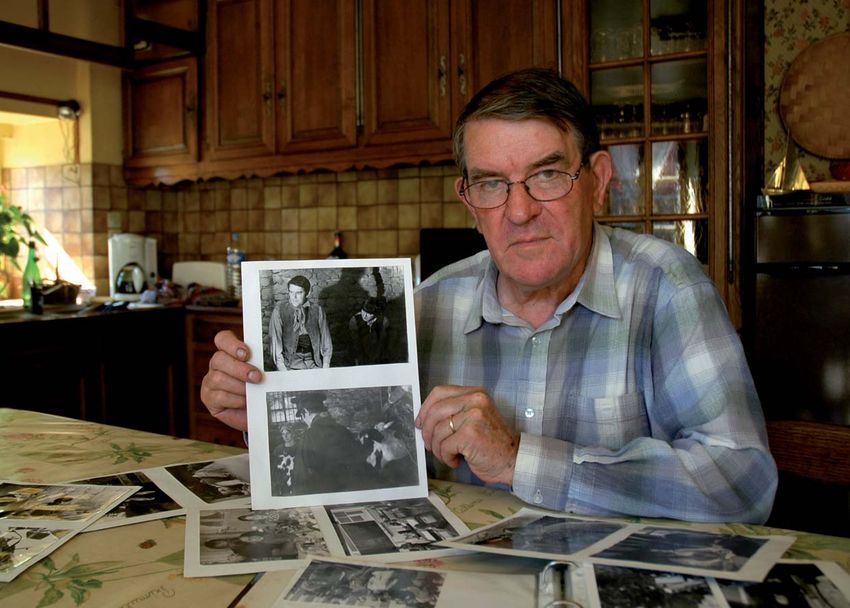
dp-normandie va - copie   10/05/07   10:10   Page 5

                                                      INTERVIEW WITH
                                                      NICOLAS PHILIBERT

                                                      / Before you were hired to work on Moi, Pierre Rivière… what
                                                      had your previous experience been?
                                                         My very first professional experience was as a trainee on Les
                                                      Camisards, also directed by René Allio, in the summer of 1970. I
                                                      was in my first year at university in Grenoble at the time. I was 19
                                                      and I dreamt of “being in movies” without really knowing in what               / Why was this film so important for you?
                                                      capacity. In early July, I heard that a film was going to be shot in the         Firstly, I didn't have much experience as an assistant and, all of
                                                      Cévennes. With a friend, I hitchhiked down to Florac. Two days                 a sudden, I found myself entrusted with a huge responsibility: the
                                                      later, when we turned up at the production office, we were told that           screenplay indicated that it would be a complex shoot with a large
                                                      they were only taking trainees from among local people to avoid                number of characters, children, animals, numerous sets, costu-
                                                      paying for hotel rooms. So we lied, said that we were locals and it            mes… and a very tight budget. And the decision to entrust the main
                                                      worked! Over three months, I was, in turn, a messenger for the set             roles, at least the roles of peasants - the murderer, his family, the
                                                      crew, an assistant grip, an assistant prop man and an extra. Then I            neighbours, the witnesses - to local farmers and their families
                                                      went back to Grenoble and returned to my studies but, two years                rather than to professional actors gave the whole undertaking a uni-
                                                      later, I decided to move to Paris. René Allio - again - was preparing          que human dimension. We had to travel the countryside looking for
                                                      a new film, Rude journée pour la Reine, for which I was hired as an            our characters, overcome the scepticism with which they greeted
                                                      assistant set designer, in charge of props. I didn't know much about           the project, make it credible in their eyes and so enrol them in an
                                                      the job but I got by somehow. The following year, I worked with                adventure that they were not at all prepared for. With Gérard
                                                      Alain Tanner, Claude Goretta, and then the experience of Moi,                  Mordillat - the other assistant director - I thus spent almost three
                                                      Pierre Rivière… came along.                                                    months, going from farm to farm, from country fairs to union meetings

                                                                                                                                 5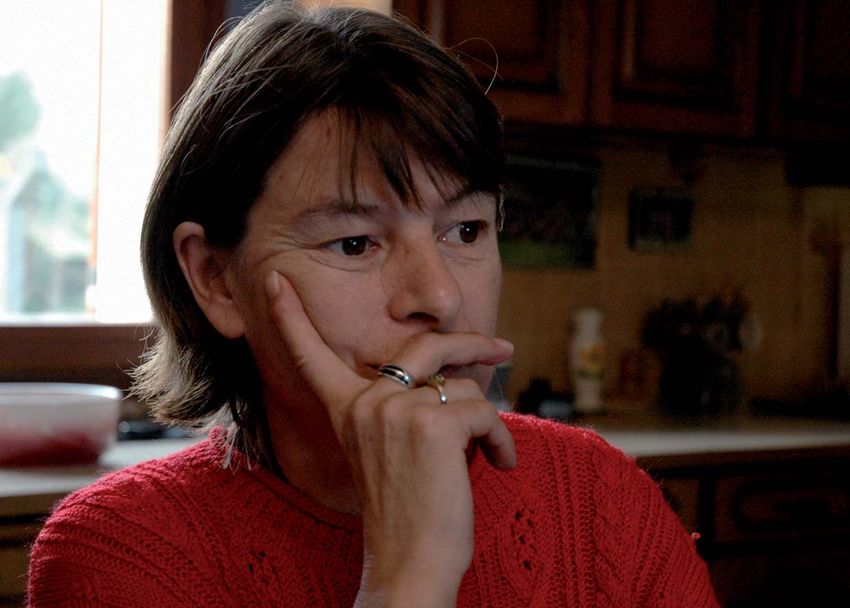
dp-normandie va - copie          10/05/07   10:10     Page 7

                                                                                     with the professional actors who rounded out the cast. As a result,
                                                                                     in the group that we formed, we never had the feeling of a division
                                                                                     between the film crew and the country people. We all had our own
                                                                                     part to play to bring the same project to fruition. Later, looking
                                                                                     back, I realized just how lucky I had been to take part in this excep-
                                                                                     tional experience, totally unique in French cinema. The film has
                                                                                     stayed with me over the years. It has perhaps even irrigated my
                                                                                     own work, like an underground “riviere” (river). Probably because
                                                                                     fiction and documentary were so closely interlinked in it.

                                                                                     / Over the years that followed, did you stay in touch with the
        Charles et Annie Lihou                                                       actors of Allio's film?
                                                                                        One year after shooting Moi, Pierre Rivière... some of us went
      to find the actors and to share our conviction with them. It was a             back to Normandy to present the film. But, after that, we lost touch
      fascinating experience but a difficult and uncomfortable one, espe-            and I didn't see them again, except for Claude Hébert, who played
      cially when you realize that three weeks away from the planned                 Pierre Rivière. He continued to work as an actor for a few years. He
      shooting date, we still didn't know if the film would be made or not           was living in Paris and I would often meet him at Allio's place. Then
      since money was so short. And then the shoot, after several delays,            in the middle of the 1980s, Claude left Paris for good and I never
      finally started and, in spite of the financial difficulties that weighed       saw him again either. Then, in the spring of 2000, before I started
      down on it until the end, this shared experience between film peo-             filming Etre et Avoir, I went back to Normandy where I saw Joseph
      ple, nearly all of them Parisians, and Normandy country folk was a             and Roger. It was a friendly reunion and, in the back of my mind, I
      very powerful one. The shooting conditions were tough, the wea-                started thinking about a film with them all.
      ther unreliable, the days long and trying, but I think that everyone
      who participated in this adventure had the feeling that they were              / When did you decide to start work on this project and how did
      experiencing something exceptional. The film set itself apart from             they react?
      the usual representation of the rural world in the cinema that is                 At the end of 2004, the Fémis (Cinema and Audiovisual professio-
      often mocking or scornful. We were also a long way from any                    nal school) invited me to present a film of my choice to its students.
      condescending approach. Allio was just as demanding with his                   I chose Rivière. None of them had seen it. Most of then hadn't even
      country actors and had as much faith in their abilities as he was              heard of Allio, less than ten years after his death. That made my blood

                                                                                 6                                                                             Roger Peschet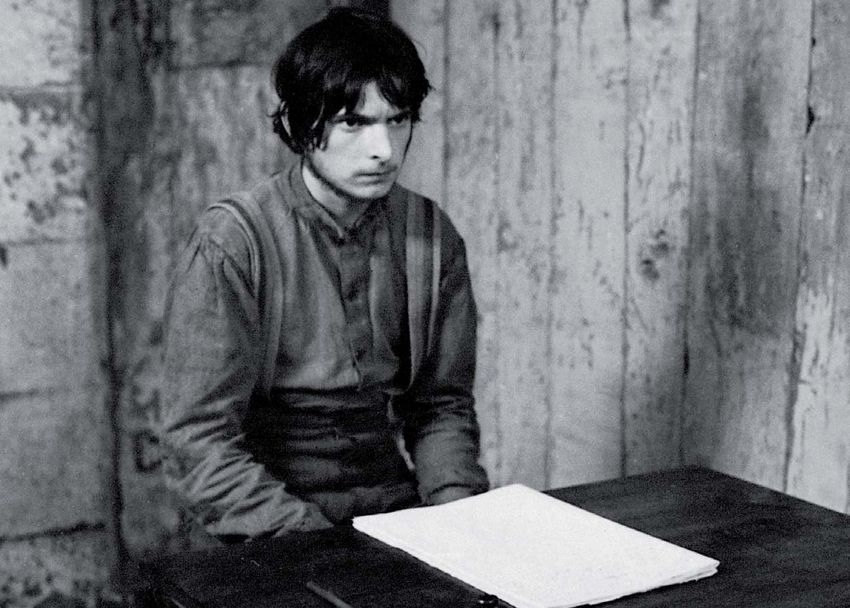
dp-normandie va - copie   10/05/07   10:10   Page 9

                                                      run cold. After the screening, instead of having the usual debate, I              on a single setting, I wanted a more fragmented and freer form this
                                                      read texts to them for an hour: notes made by Allio about his film,               time in which it would be possible to slip from one register to ano-
                                                      extracts from his “diaries”… They discovered a filmmaker, an unu-                 ther, at times from one period to another, with a as much fluidity as
                                                      sual and fascinating body of work and they were stunned. I went                   possible. I imagined that there would be a common core - Allio's
                                                      home and I decided to make this film. For the last thirty years, I have           film - giving rise to a multitude of characters, stories, settings, and
                                                      kept a few photos and documents from Rivière: the shoo-                                      sequences of varying nature: voice-over, interviews,
                                                      ting schedule, my copy of the screenplay… It all star-                                            documents, extracts, direct cinema sequences, land-
                                                      ted from there. In early January, I hopped on a train                                                scapes… But everything was fairly vague and it
                                                      to Caen, rented a car and started calling on eve-                                                      wasn't until shooting and then editing that this
                                                      ryone. It was very moving! The memories left by                                                          tree-like structure asserted itself.
                                                      the experience were incredibly vibrant. Each
                                                      participant had turned the page, undertaken all                                                            / You often talk about your penchant for a
                                                      kinds of things, had lived happy times and less                                                            portion of improvisation. How does that
                                                      happy ones, but they all spoke about this                                                                  work in this film?
                                                      experience with an intense feeling of gratitude.                                                              From that point of view, Back to Normandy
                                                      A few weeks later, when I first mentioned the                                                             follows my usual approach. The ideas came
                                                      idea of making a film with them, they had no                                                             along during filming and, apart from certain pla-
                                                      better idea than I did what it would be like but they                                                   ces like the prison, the courthouse or the
                                                      trusted me. They had followed my work, knew some                                                     Calvados archives were we could only film on spe-
                                                      of my films and had remained intensely loyal to Allio and                                        cific dates, the shoot was mostly improvised, according
                                                      his crew, recalling each member clearly.                                                    to encounters and conversations. In general, I don't like to
                                                                                                                                        prepare things too much. If everything is mapped out ahead of
                                                      / When the project started to come together, what were the                        time, you miss out on the essential. There has to be an element of
                                                      choices that guided your work?                                                    the unknown. The fact of having to invent the film day after day, to
                                                        From the very beginning, it was obvious that this would be a film               seek it out until the very end, procures a dual feeling of freedom and
                                                      narrated in the first person, with its roots in my own memories, and              fragility that stimulates me and drives me into a corner. During edi-
                                                      that I would intervene through a voice-over. At the same time, I                  ting, it's the same. I had 60 hours of rushes, in other words virtually
                                                      wanted to make a film set firmly in the present, not a filmed pilgri-             tens or hundreds of combinations. And yet, at the end of the day,
                                                      mage. And finally, in relation to my previous films that nearly all focused       there's only one film possible: the one you carry deep within you.

      Annick Bisson                                                                                                                 9
dp-normandie va - copie        10/05/07      10:10    Page 11

      However, I continually avoided the pitfall of making a film for film             itself. It had to echo other questions. About the cinema, about our
      buffs or an audience already aware of the original story. It has to              world, about our relationships with others, with our fathers…
      speak to everyone. If you haven't seen Allio's film or ever heard
      about the Rivière case, that doesn't matter. This story has an almost            / This fragmentation allows you to pass from one theme to ano-
      timeless dimension and could have taken place anywhere: a long                   ther as if the film were progressing through associations of
      time ago, somewhere in the country, a film was shot about a                         ideas…
      crime, with non-professional actors. Since then, life has                                     The film gradually leaves the straightjacket that a
      gone on, but not exactly the same as before…                                                    documentary is usually constrained in: its subject. It
                                                                                                        is marked out by encounters and sequences that
      / The film is constructed in such a way that                                                        lead us off in other directions… I'm thinking of
      we never know what the next shot will                                                                 Annie and Charles who talk about their daugh-
      show…                                                                                                  ter's illness; about Nicole, the former militant
         That's a result of its fragmentary nature, the                                                       who had the bakery in Athis, and about her
      diversity of registers and the materials used.                                                          struggle since her accident to recover the
      Since the film tells several stories in parallel,                                                       power of speech; about Joseph, who still
      they echo each other, mingle and mutually                                                              makes his own cider; about the workers at the
      enrich each other. The relationship between                                                           Éclair labs; about the prison in Caen, where
      them is explicit at times and less obvious at                                                        Pierre Rivière ended up hanging himself, etc.
      others. From this point of view, my use of extracts                                                With such a multitude of elements, it's hard to
      from Moi, Pierre Rivière… is significant. They burst in                                          hem in the film. Present and past, memory, mad-
      when we least expect them since I never summon them                                          ness, writing, speech, illness, lurking death, passing
      up to illustrate an interview. Each time we switch from my foo-                         time, the law, transmission… The film concerns all those
      tage to Allio's, the transition takes place on a sensory level: it occurs        things and many others that are not cleaved together. As in real life,
      according to a fictional, almost dream-like logic, as if Pierre Rivière's        where the intense and the insignificant frequent each other at all
      appearances were there to irradiate the rest. As we progress                     times. But this is first and foremost a film that talks about the
      through the film, we realize that it is like a layer cake made up of dif-        cinema, from the angle of desire, obstinacy and its capacity to build
      ferent superimposed strata, linked between each other. Deep                      bridges and forge bonds. Most of the interviews evoke this collec-
      down, I wanted to work on a sort of paradox: the evocation of Allio's            tive dimension since the film returns to a shared experience of
      shoot had to be central to my film but it could not be an end unto               cinema. We realize that, for them too, the shooting of Allio's film was

                                                                                                                                                                   Claude Hébert
                                                                                  10                                                                             as Pierre Rivière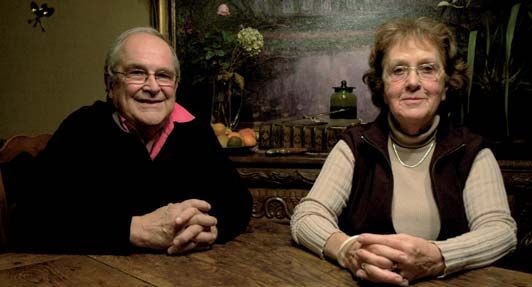
dp-normandie va - copie   10/05/07   10:10   Page 13

                                                       a decisive and even fundamental experience, just as it was for me.
                                                       Both because it brought together people who wouldn't have met
                                                       otherwise and also because it raised us up somehow.

                                                       / Your voice-over narration describes the preparations for
                                                       Allio's film at length but you say hardly anything about the
                                                       shoot itself…
                                                       I felt that it was more interesting to talk about the problems that we
                                                       had encountered and, beyond this example, of the obstinacy that
                                                       all filmmakers have to show to reach their goals, whenever their
                                                       projects display artistic ambition and stray from the beaten track.
                                                       The gap between rich and poor films, that has continued to grow
                                                                                                                                                                                              Gilbert Peschet
                                                       wider in recent years, already existed thirty years ago. I worked on
                                                       four occasions with René Allio and I always saw him deploy incre-
                                                       dible energy in order to make his films and pay off his debts. The                cinema comes from! Michel Philibert, René Allio… Since we're dea-
                                                       general public usually only sees the glamorous side of the cinema,                ling with the question of filiation here, I should add that the music
                                                       as if that's all there were to see! I wanted to lift a corner of the veil.        used in the film is partly by a young French jazzman, Jean-Philippe
                                                       The sequence shot at the Éclair labs also shows the other side of                 Viret, and partly by André Veil, an industrialist from Lorraine and an
                                                       the story: the chemical industry, the violence of the market, the                 amateur composer whom, as a child, I would listen to for hours in
                                                       pension funds and these people who work for set hours, with                       the evening as he composed at his piano. He was my maternal
                                                       breaks, like on a production line…                                                grandfather.

                                                       / The final sequence remains very discreet. We don't learn any-
                                                       thing about your father…
                                                       My father was a professor of philosophy and loved the cinema.
                                                       Alongside his university lectures, he would give a weekly “public
                                                       class in the cinematic art” in front of a crowded lecture hall in which
                                                       he would screen and analyze films by Bergman, Dreyer, Antonioni,
                                                       Bresson, etc. There's no need to tell you where my love of the

      La famille Borel                                                                                                              13
dp-normandie va - copie 10/05/07 10:10 Page 15
« Trois jours de trêve » and « Sablier » (Jean-Philippe Viret), by
CREW Jean-Philippe Viret, double bass, Edouard Ferlet, piano and
Antoine Banville, drums, album Étant donnés (P) Sketch (E)
Mélisse, album L'indicible (P) Atlante productions • « Le nucléaire
on n'en veut pas » (Achille Lorentz) and « Sors ton pied de cette
Direction Nicolas Philibert • Photography Katell Djian • Camera
m… » performed by the Stop Bure Brothers n'Sista • Additional
Nicolas Philibert, Katell Djian • Sound Yolande Decarsin • Editing
original music Jean-Philippe Viret (E) 2006 Mélisse, performed by
Nicolas Philibert assisted by Thaddée Bertrand • Mix Julien
Edouard Ferlet, piano, and Jean-Philippe Viret, double bass /
Cloquet • Camera assistants Justine Bourgade, Nicolas Duchêne,
recording and mix Sylvain Thévenard.
Benjamin Serero • With the occasional participations of François
Belzeaux, Bertrand Boudaud, Jordane Chouzenoux, Sofiane El With extracts from « Moi, Pierre Rivière ayant égorgé ma mère,
Fani, Jean-Gildas Guéran, Christophe Leraie, Christophe ma sœur et mon frère … » directed by René Allio, based on the
Lussignol, Magali Pacher, Cécile Philibert, Olivier Schwob, collective work edited by Michel Foucault • With the kind permis-
Andra Tevy, Dominique Vieillard • Production management David sion of Pascal Bonitzer, Jean Jourdheuil, Serge Toubiana, Paul
Berdah, Tatiana Bouchain, Katya Laraison • Post-production Allio, Pierre Allio, Roland Rappaport, Francine Fruchaud, Denis
coordination Sophie Vermersch • Executive producers Serge Lalou Foucault and the participation of the SFPC and the INA • Photo
et Gilles Sandoz • Co-producers Les Films d'Ici/Serge Lalou - credits Paul Allio, Corinne Atlas, Philippe Barrier, Gérard
Maïa Films/Gilles Sandoz - ARTE France Cinéma / Michel Mordillat, Jean-Denis Robert, Les Productions de la Guéville,
Reilhac, Thierry Garrel and Rémi Burah • With the backing of Sabine Strosser.
Canal +, TPS STAR, the Centre National de la Cinématographie
Film stock Kodak • Camera equipment Les Films d'Ici, Iris Caméra
and France Télévisions Distribution • In partnership with
and Les Poissons Volants • Sound equipment DC Audiovisuel •
Soficinéma • With the support of Région Basse-Normandie and
Editing facilities Les Films d'Ici and Pom'Zed • Mix Archipel
the collaboration of la Maison de l'Image Basse-Normandie
Productions and SIS • Optical transfer Ciné Stéréo • Titles
Distribution & International Sales Les Films du Losange.
Ercidan • Insurance Diot Bellan • Laboratoires Eclair Didier
Music « Elégie » (André Veil) performed by Gaëlle Pavie, piano / Dekeyzer, Thierry Gazaud, Daniel Langenfeld, Catherine Athon,
recording Jean-Marc Laisné, Amati • « Espoir » et « Volonté » (André Ronald Boullet, Philippe Tourret, Emmanuel Chex, Nicolas
Veil) performed by Alice Ader, piano and Alexandre Brussilovsky, Criqui, Régis Oyer, Christophe Boutigny, Laurence Vidot
violin / recording and mix Ludovic Palabaud, Acousti studios Timing Raymond Terrentin.
14dp-normandie va - copie 10/05/07 10:10 Page 17
Marie Archambault, Philippe Charrier, Olivier Corpet, Alain
WITH Desmeulles, Julie Le Mer, Sandrine Samson, Eliane Vernouillet -
Institut Mémoires de l'Edition Contemporaine • Isabelle Homer,
Jean-Marc Lebeurrier, Louis Le Roc'h Morgere - Archives
In order of appearance Joseph and Marie-Louise Leportier départementales du Calvados • Dominique Blondel, Céline Caroff,
Nicole Picard • Gilbert and Blandine Peschet • Annick and Michel Jean-Christophe Castaings, Olivier Lefèvre and the whole staff
Bisson • Jacqueline Millère • Anne, Catherine, Christophe, at the Faurecia factory in Flers • François Chevailler, Pascal
Olivier, Pierre and Yvonne Borel • Norbert Delozier • Charles and Moyon and Patrick Wardenski - Centre Pénitentiaire de Caen
Annie Lihou • Roger Peschet and Caroline Itasse • Janine Callu Hélène Michelot, Guy Frémy - Tribunal de Grande Instance de
Nicole Cornué • Bruno Gahéry • Claude Hébert. Caen.
And Alain Bazin, Pierre Ducreux, Gül Kütükcü, Aline Leprévost, Les Editions Gallimard • La Cinémathèque française • SETE - Éclai-
Jean Mican, Patrick Poulain, Fabienne Requeut, Stéphane rages Pierre Bideau • Isabelle Truffault - Festival Granit • Françoise
Rogue, Alain Carel, Anthony Delalande, Michèle Belfleur Plouviet, Frédéric Valay • Hôtel Le Galiond • Cinéma Les 4 Vikings
Legeai, Simone Soubien, Viviane Thébault, Mohamed Alain Jublan and Deen Touré - Football Club de Flers • Gilles
Hamidèche, Annie Lemée, Muriel Lemmel, Jocelyne Liebmann, Asselot and the staff of Les Andouilles Asselot • The restaurants
Gilles Martin, Cyril Roussin, Béatrice Roy, Liliane Gallon, Au bout de la rue, Berverl'Inn, Saint-Germain and Le Carneillais.
Valérie Poirier, David Boisgontier, Jean Peschet and Raymond
Linda De Zitter, Christine Laurent, Laura Briand, Céline Païni,
Pringault.
Frédéric Cheret, Catherine Roux, Christophe Besnard, Ophélie
Thanks to Christian Goret, François Callu, Julien, Romain and Lerouge, Monique Assouline, Michelange Quay, Nathalie
Rémi Bisson, Laurence, Daniel and Raymond Hébert, Christelle, Bloch-Lainé, Sandra Mirimanoff, Laurent Hassid, Valéry
Mathias et Emmanuel Peschet, Dominique Gonet, Franck Pillot, Gaillard, Roland Rappaport, Judith Schor, Marie Quinton, Denis
Aline Fromont, Loïc Gautier, Christine Hubert, Maxime Sannier, Fruchaud, Philippe Barrier, Corinne Atlas, Jacques Doillon,
Marguerite and Jacques Devalpinçon, Jean-Noël and Marie- Pascal Kané, René Féret, Gérard Mordillat, Régine Vial, Daniela
Odile Chapelle, David Nevoux et Sonia Pouchard, Colombe and Elstner, Sophie and Romain Goupil, Alain and Stéphanie Weill,
Guy Mongodin, Monique and Michel Feron, Madeleine and Jean-Paul Commin, Isabelle Le Guern, Thierry Garrel, Daniel
René Géhan, Thérèse and Albert Husnot, Gérard Jambin, Elie Defert, Janine Philibert, Cécile et Bastien, Annette Guillaumin,
Alizon. Stéphane Lemolleton.
Norbert Delozier 17dp-normandie va - copie 10/05/07 10:10 Page 19
NICOLAS PHILIBERT
FILMOGRAPHY
Nicolas Philibert first worked as a trainee on Les Camisards,
by René Allio (1970), as props man on Rude journée pour la Reine
(1973), as assistant director on Moi, Pierre Rivière… (1975) and as
line producer on L'Heure exquise (1981) all directed by René Allio.
He has also worked with Alain Tanner (Le Milieu du monde, 1974),
Claude Goretta (Pas si méchant que ça, 1974) and Joris Ivens
(Une Histoire de vent, 1986).
Retour en Normandie (Back to Normandy) - 2007 (113 mn)
L'Invisible - 2002 (45 mn) • Être et avoir (To Be and to Have) -
2002 (104 mn) • Qui sait ? (Who Knows ?) - 1999 (106 mn) • La Moin-
dre des choses (Every Little Thing) - 1997 (105 mn) • Un animal,
des animaux (Animals) - 1996 (59 mn) • Portraits de famille
(Family Portraits) 1995 (3 mn) • Le Pays des sourds (In the Land
of the Deaf) - 1993 (99 mn) • La Ville Louvre (Louvre city) - 1990
(84 mn) • Migraine 1989 (6 mn) • Le Come back de Baquet
(Baquet's Come Back) - 1988 (24 mn) • Vas-y Lapébie ! (Go For
It, Lapébie!) - 1988 (27 mn) • Trilogie pour un homme seul
(Trilogy for One man) - 1987 (53 mn) • Y’a pas d’malaise (No Pro-
blem) - 1986 (13 mn) • Christophe - 1985 (28 mn) • La Face nord
du camembert (The North Face of the Camembert) - 1985 (7 mn)
Patrons / Télévision (Bosses / Television) - 1979 (3 X 52 mn, co-
directed with Gérard Mordillat) • La Voix de son maître (His
Master's Voice) - 1978 (100 mn, co-directed with Gérard Mordillat).
19dp-normandie va - copie 10/05/07 10:10 Page 21
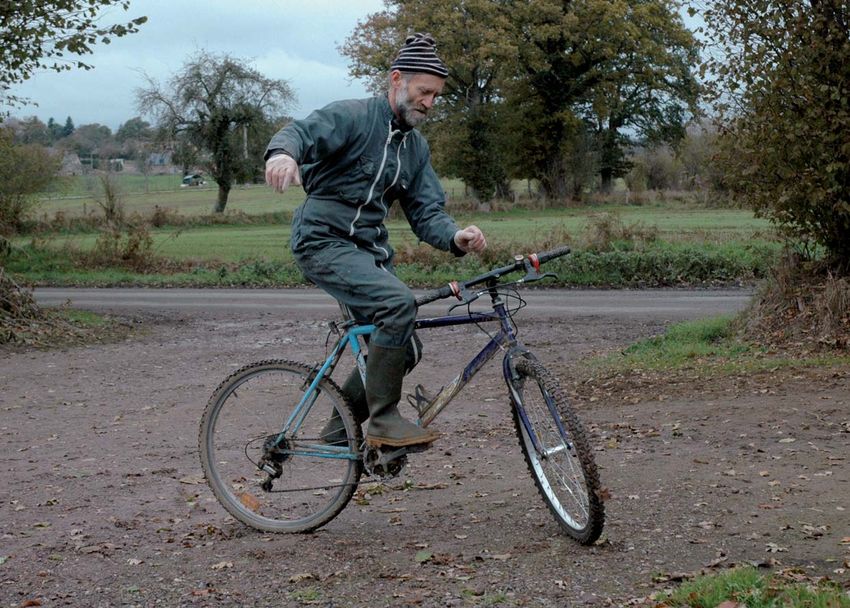
With Claude Hébert Pierre Rivière • Jacqueline Millière Mother
I, PIERRE RIVIÈRE, Joseph Leportier Father • Annick Géhan Aimée • Nicole Géhan
Victoire • Émilie Lihou Paternal grandmother • Antoine Bourseiller
HAVING SLAUGHTERED Judge Legrain • Michel Amphoux Clerk of the Court Lebouleux
MY MOTHER, MY SISTER Jacques Debary Doctor Bouchard • Chilpéric de Boiscuiller
Royal Prosecutor in Vire • Léon Jeangirard Doctor Vastel • Robert
AND MY BROTHER... Decaen Maternal grandfather • Marthe Groussard Maternal grand-
mother • Monsieur Bisson Paternal grandfather • Roger Harivel
Uncle • Jeanne Bouquerel Dame Hébert • Pierre Borel Drummer
Anne-Marie Davy Widow Quesnel • Gilbert Delacour Lami Binet
Norbert Delozier Nativel • Henri Gahéry Hébert • Albert Husnot
Farmer • Christian Jardin Victor Marie • Victor Lelièvre Fortin
Format 1,66 - 16 mm blown up to 35 mm - Running time 130 Olivier Perrier Handsome carpenter • Gilbert Peschet Quevillon
minutes - French theatrical release Octobre 27, 1976. Yvonne Peschet Cousin • Bernard Peschet Postel • François
Callu Young Pierre Rivière • Vincent Callu Prosper Rivière • Laurent
Directed by René Allio.
Callu Jean Rivière • Myriam Callu Victoire Rivière, 4 • Christophe
Co-produced by Les Films Arquebuse, Polsim Production,
Millière Jules Rivière • Pierre Allio Pierre Rivière, 4 • Christophe
Société Française de Production, Institut National de
Menou Prosper Rivière, 5 • Pierre Leomy Justice of the Peace • Guy
l’Audiovisuel.
Mongodin Clerk of the Court Langliney • René Féret Doctor Morin
Collaboration on the screenplay Pascal Bonitzer, Jean Jourdheuil,
Jean-Bernard Caux Health officer de santé • Charles Lihoux
Serge Toubiana, based on the collective work edited by Michel
Mayor of Aunay • Marc Eyraud Father Suriray • Paul Savatier Priest
Foucault.
at Courvaudon • Roland Amstutz Sergeant at Langannerie • Michel
Photography Nurith Aviv • Sound Pierre Gamet • Editing Sylvie Dubois Judge in Vire • Yves Graffey Judge Foucaud • Roland
Blanc • Assistant direction, shoot preparation and casting Gérard Rappaport General prosecutor • Gérard Guérin Presiding judge.
Mordillat, Nicolas Philibert • Script supervisor Marie-Hélène
Quinton • Costumes Christine Laurent • Sets Françoise Darne
Location manager Bernard Bouix • Production manager Michèle
Plaa • Line producer René Féret • Distribution PlanFilm.
20dp-normandie va - copie 10/05/07 10:10 Page 23
RENÉ ALLIO’S
NOTEBOOKS (extracts *)
“When I was a young man and dreamt of being an artist, I saw
myself as a painter. Those whose works I saw, whose biogra-
phies and letters I read were Cézanne, Van Gogh, Gauguin (…)
If I identified with those artists, they didn't prepare me for an
easy life where success and recognition for your work are what
drive you on but rather the struggle, stubbornness above all,
obstinate progress, more often than not alone.”
“Pierre Rivière. We must make a film to express as best as pos-
sible, in other words in artistic and poetic terms, what I write
here or say so often, namely my desire to save from oblivion and
death… those violent, dramatic moments, intense, beautiful
moments of all these lives, of those who cannot speak, who
leave no trace and yet who display skill, imagination, bravery,
invention and love in order to simply exist, to go on existing or
to change or simply to endure.”
“You need to be like couch grass and grow back whenever
you're cut down. Ineradicable. That's it. With my films, I want to
be like couch grass. Be like it for myself when I doubt or lose
heart. The only reaction: one more film, one more fight, one
more surge. Like couch grass, ineradicable.”
* Editions Lieu Commun (1991)
René Allio 23dp-normandie va - copie 10/05/07 10:10 Page 25
His work led him to take a close interest in the problems of modern
RENÉ ALLIO theatrical architecture and the transformation of the stage area. He
designed the Théâtre d'Aubervilliers, collaborated on the design of
FILMOGRAPHY the future Maison de la Culture in Tunisia, on the project to convert
Arnold Wesker's « Rond House » and on the transformation of the
former Théâtre Sarah Bernhardt in Paris, now called the « Théâtre
de la Ville ».
He made his cinema debut with an animated film that he designed
for a stage production of Gogol’s « Dead Souls » and continued with
ené Allio was born in Marseille in 1924. He started out
R as a painter after studying literature. He showed his
a short film that he shot in 1963. From that point on, until his death
in 1995, he never stopped working for the cinema.
Conception graphique de l’affiche Cécile et Bastien • FB • Imprimerie Gestion Graphic 01 39 95 41 26
works in Paris between 1957 and 1962.
During the same period, he worked for the stage. First in Paris for La Meule - 1963 (CM) • La Vieille dame indigne (The Shameless
avant-garde theatres, then in the provinces for various Dramatic Art old lady) - 1965 • L’Une et l’autre (The other one) - 1967 • Pierre
Centres. In this way, he designed sets and costumes for a number et Paul (Pierre and Paul) - 1968 • Les Camisards - 1970 • Rude
of plays in the French and foreign repertoire and worked on the first journée pour la Reine (Rough day for the Queen) - 1973 • Moi,
performances of plays by Adamov, Vauthier, Ionesco, Alberti. Pierre Rivière, ayant égorgé ma mère, ma soeur et mon frère -
1975 • Retour à Marseille - 1980 • L'Heure exquise - 1981 • Le
From 1957 on, he worked regularly with Roger Planchon, for several
Matelot 512 - 1984 • Jean Vilar, quarante ans après - 1987 • Un
years on the stage design for all the productions at the Théâtre de
médecin des Lumières - 1988 • Transit - 1990.
la Cité, with plays by Brecht, Shakespeare, Molière, Racine,
Marivaux, Marlowe, Gogol.
He also worked for the Comédie française, the Paris Opera, the
TNP and the most famous stages in Europe : Scala de Milan, the
Royal Shakespeare Company, the Cologne Opera...
24You can also read


