Olam Palm Gabon Policy 2021 - Olam International Limited
←
→
Page content transcription
If your browser does not render page correctly, please read the page content below
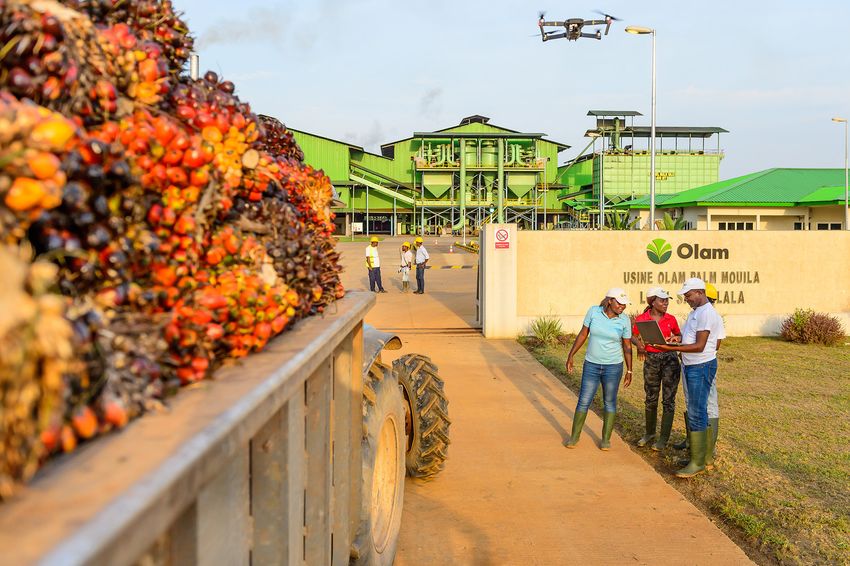
Olam Palm Gabon
Policy 2021
Olam International Limited
Olam Palm Gabon
                                                                                      Policy 2021

1   Introduction
    Olam Palm Gabon is committed to
                                                        2   Scope
                                                            Olam Palm Gabon (OPG) is the largest
    sustainable palm oil production and                     RSPO certified producer in Africa,
    sourcing, and fully supports the RSPO                   managing palm oil mills with integrated
    standard, protection of high conservation               kernel crushing plant (KCP) facilities and
    value forests and ecosystems, high carbon               five concessions which are 100%
    stock forests, peatland, and improving                  Roundtable on Sustainable Palm Oil
    the livelihood of rural communities.                    (RSPO) certified. These certified mills and
    We are committed to supporting the                      KCP source fresh fruit bunches from its
    principle of “No HCS, No HCV, No Peat                   own plantations and are fully traceable to
    and No Exploitation”.                                   farm origin.

    This Sustainable Palm Oil Policy is in line             OPG also supports a scheme-smallholders
    with, and supports, principles set out in               program, namely Sotrader Ndende. All
    other Olam policies1.                                   plantations fully comply with the RSPO
                                                            New Planting Procedures which include
                                                            FPIC and public stakeholders’ consultation
                                                            as well as HCV assessment (and HCS
                                                            assessment after 2015 if relevant).

                                                            Since January 2017, we have upheld a
                                                            moratorium on any further greenfield palm
                                                            development or expansion. OPG has no
                                                            plans for further expansion of palm
                                                            production at this time.

    1
        https://www.olamgroup.com/sustainability.html

                                                                                                     / 01
Olam Palm Gabon
Policy 2021
3 Policy Statement
3.1 3.2
Commitment to a net-positive Commitment to eliminate
impact through sustainable unacceptable practices
palm plantations (No HCV, No HCS and No Peat)2
• Make a net-positive contribution to local • No deforestation of primary forests and
livelihoods and communities, biodiversity protected areas.
conservation, and climate by adopting a
landscape approach to management in • No deforestation of high conservation
our own plantations. value (HCV) forests and ecosystems3.
• Effectively implement the RSPO • No deforestation of high carbon stock
Standard in OPG-owned operations and (HCS) forests4.
to all subsidiary companies, joint ventures
and areas in which we have management • No development on peatland regardless
control. of depth.
• Actively participate in the RSPO and • Zero burning including no use of fire
relevant national Interpretation to support during land preparation, planting or
its global objectives. replanting.
• Build local and national capacity to • Control illegal logging, hunting of
implement RSPO practices. protected species, and illegal
hunting in all our concession area.
• Support the jurisdictional certification
approach and development of a
responsible land use plan and
sustainability frameworks in origin.
2
Apply RSPO Remediation and Compensation Procedure where there has been land clearing without prior HCV assessment since
November 2005, or without prior HCV-HCSA assessment since November 2018. This include restoration of all non-compliant
deforestation/conversion as required by the RSPO.
3
We will follow the definitions and guidance of the global multi-stakeholder platform of expertise on HCVs, the HCV Network,
www.hcvnetwork.org as applicable, achieve quality HCV assessment by only engaging with the licensed High Conservation Value (HCV)
assessors accredited by the HCV Resource Network's Assessor Licensing Scheme (ALS).
4
We will follow the definitions and guidance of the global multi-stakeholder platform of expertise on HCS, the High Carbon Stock Approach
(HCSA), http://highcarbonstock.org or those of an RSPO-endorsed HCS methodology, as applicable.
/ 02Olam Palm Gabon
Policy 2021
3 Policy Statement
3.3
Commitment to positive environmental impacts
and healthy ecosystems
• Manage HCV, HCS areas and unplanted • Implement best management practices
land to maintain and enhance for soils with an integrated nutrient
biodiversity, including populations of rare recycling strategy and optimal use of
and threatened species. inorganic fertilizer.
• Manage OPG’s palm operation to achieve • Prohibit use of paraquat, and other
carbon neutrality and net drawdown of pesticides categorised as WHO class 1A
carbon, in order to supply customers with or 1B, or that are listed by the Stockholm
climate-positive palm oil products. or Rotterdam Conventions unless in
exceptional pest outbreak situation.
• Maintain a functioning ecological network
including healthy river and riparian, • Ensure mill effluent is treated in
wetland, forest, and savannah to ensure compliance with national regulation and
ecosystem services are maintained or monitor biochemical oxygen demand
enhanced within our palm estates. (BOD) and chemical oxygen demand
(COD) regularly.
• Partner with environmental and climate
scientists and conservation NGOs to • Achieve water intensity use per tonne of
deepen the understanding of species FFB as per the industry best standard.
conservation and ecosystem recovery
in our new generation plantations.
• Engage with local communities and
stakeholders to develop sustainable
alternatives to hunting, logging and
promote community-based natural
resource management.
/ 03Olam Palm Gabon
Policy 2021
3 Policy Statement
3.4
Commitment to respect rights of all workers5
and communities
• Respect and uphold the rights of all • Provide equal opportunities of
workers, including contract, temporary, employment without regard to the
and migrant workers, in accordance with employee’s race, colour, religion, sex,
the conventions of the International Labor age, national origin, sexual orientation,
Organization (ILO) and United Nations disability, citizenship status, marital
Global Compact’s (UNGC) guiding status, etc.
principles on human rights and labour.
• Enforce RSPO requirements for worker’s
• Promote responsible labour practices rights, including access to a transparent
according to the principles outlined in grievance procedure.
the RSPO and Free and Fair Labor
Guidance. • Engage transparently to ensure Free,
Prior and Informed Consent (FPIC) of
• Enforce strict rules to prevent and protect local communities and stakeholders.
against child labour and forced labour as
defined by ILO standards and national • Respect legal and customary land
laws. tenure rights with reference to the UN
Declaration on the Rights of Indigenous
• Provide a healthy and safe workplace for Peoples.
our employees, contractors and visitors.
• Implement mutually agreed dispute
• Respect the right to freedom of settlement resolution for any dispute
association and recognise the right to and ensure access to a transparent
collective bargaining of our workers in grievance procedure.
accordance with Conventions 87 and 98
of the International Labour Organisation. • Prohibit retaliation against human rights
defenders.
5
Refers to the Olam’s Fair Employment Policy
/ 04Olam Palm Gabon
Policy 2021
3 Policy Statement
3.5 3.6
Commitment to support a Commitment to ethical
thriving rural community business conduct and
transparency
• Support schemed smallholders to build • Zero-tolerance to bribery and corruption.7
capacity, improve yields and apply good
practices. • Submit annual RSPO progress report.
• Contribute to community development by • Transparent progress report through a
improving healthcare, water accessibility, quarterly dashboard update.
and education facilities.
• Maintain a transparent grievance
• Catalyse local enterprises and encourage procedure and progress update.
income generating activities at village
level. • Continuous engagement with national
and international stakeholders.
• Support cultural development in local
communities including contributing to
raised awareness and celebration of 3.7
natural and cultural heritage and local
history.6
Governance
Olam Corporate Responsibility and
• Promote equality of work and equal
Sustainability (CR&S) Function oversees
access to training and opportunities for
the progress against these commitments.
women in the workforce.
The Board CR&S Committee monitors
Olam’s performance. We set out our
• Enhance resilience of the local
principles in our Code of Corporate
community by supporting activities to
Governance and Code of Conduct8. If any
strengthen food security and prevent
employee discovers any unethical practice,
epidemic disease.
the Code of Conduct explains that they
must report it without fear of reprisals.
Please refer to our latest palm annual
progress update on roadmap and performance.
6
https://www.olamgroup.com/news/all-news/news-bites/conserving-gabon-cultural-heritage.html
7
https://www.olamgroup.com/content/dam/olamgroup/about-ol
am/ethics-and-compliance/ethics-and-compliance-pdfs/Olam-Anti-Bribery-and-Corruption-Policy-Aug2020.pdf
8
https://www.olamgroup.com/sustainability/policies-codes-standards.html
/ 05You can also read


