Open and Shut - Herbst Architects
←
→
Page content transcription
If your browser does not render page correctly, please read the page content below
RECORD HOUSES

     Open and Shut
     On Great Barrier Island, Herbst Architects reimagines the classic New Zealand beach shack with movable
     layers that can be deployed to let in the breeze or protect against harsh weather.
     BY JOHN WALSH
     PHOTOGRAPHY BY JACKIE MEIRING

84   ARCHITECTURAL RECORD   APRIL 2021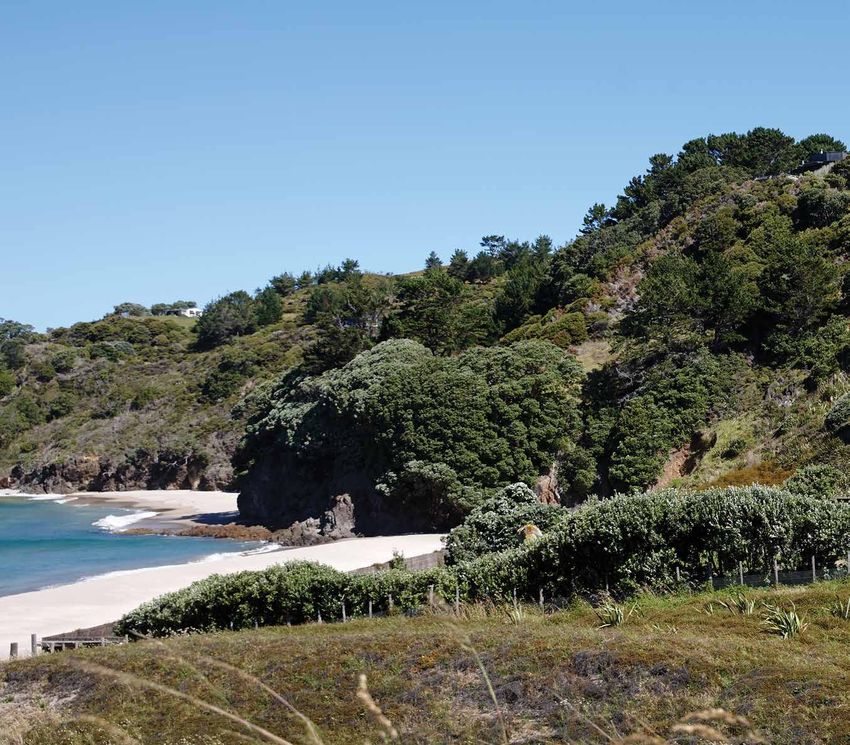
GREAT BARRIER—“the Barrier” or “the Rock,” as locals call it—is             TWO RECTANGULAR volumes, perpendicular to each other and
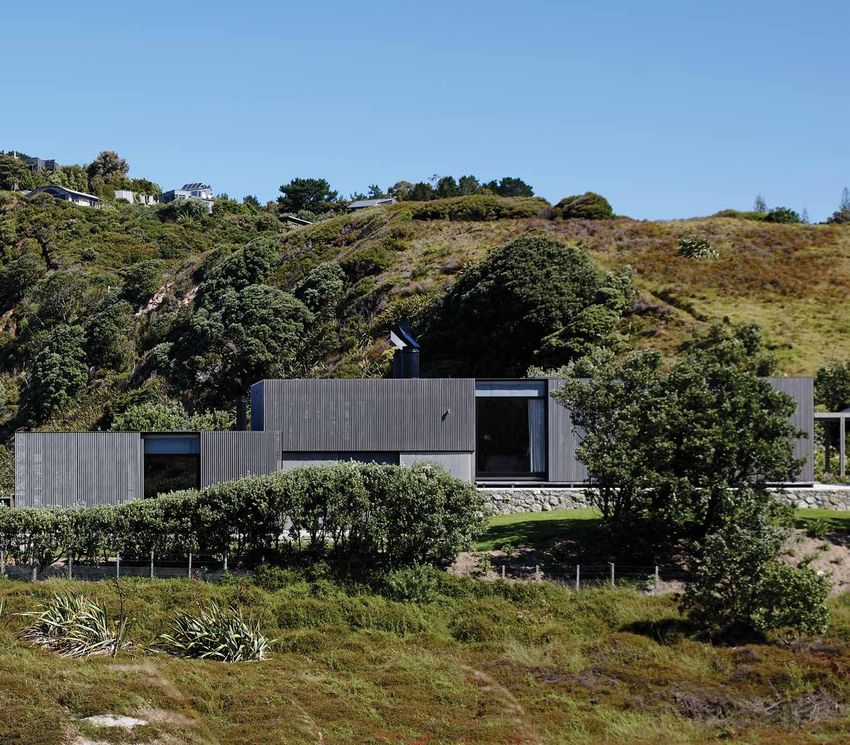
a 110-square-mile island of steep hills, surf beaches, and sheltered bays   interconnected, comprise the house and step down with the site’s slope.
60 miles north of Auckland, New Zealand, at the edge of the Hauraki
Gulf. To the indigenous Māori, who first occupied the island around         hurrying to higher ground. Even in the third decade of the 21st cen-
800 years ago, Great Barrier is Aotea, or White Cloud. It got its           tury, Great Barrier remains remote—half an hour from Auckland in a
English title from the explorer James Cook, who landed on the island        small plane, over four hours on a ferry—and that’s how its permanent
in 1769 and, in his stolid, Yorkshire sea-captain way, named it for its     residents, who number fewer than a thousand, prefer it. On the island,
function as a 27-mile-long barrier against the Pacific Ocean.               visiting the mainland is often described as going to New Zealand.
   Life on Great Barrier demands self-sufficiency. The island, two-            Distance, however, is no obstacle to the market for coastal real
thirds of which is a conservation park, is off the grid. Rainwater is       estate. In recent years, Great Barrier’s modest dwellings have been
collected in tanks, cell-phone reception is patchy, and groceries are       supplemented by holiday houses designed by leading architecture
shipped in every couple of weeks. In winter, storms cut Great Barrier       practices, most prominently Auckland-based Herbst Architects. Over
off for days at a time; this March, a tsunami warning sent islanders        the past two decades, the office has designed 10 beach houses on the

                                                                                                                                                      85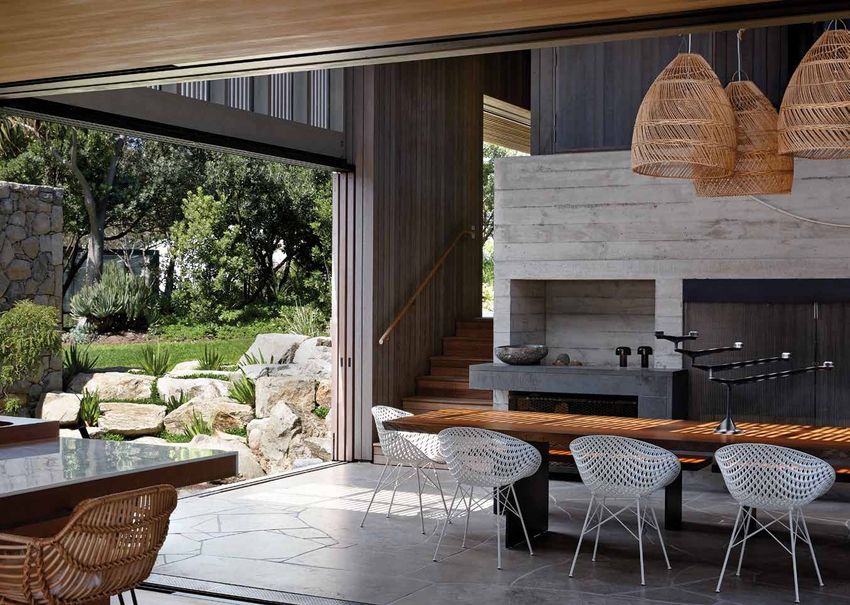
RECORD HOUSES

                     6     6       5 5           5
                                                 5

                                                                     2 2                  4       4       9       9

                                                                                                      0           15 FT.
               SECTION A - A                                                                                  0              15 FT.
      SECTION A - A                                                                                                   5 M.
                                                                                                                               5 M.

           A                             5               5                            A

                               6

                                     10              1

       A                             5               5                            A

                           6

                                    10           1

                                                                 0         15 FT.
      UPPER-FLOOR PLAN
                                                                             5 M.

                                                             0           15 FT.
     UPPER-FLOOR PLAN
                                                                           5 M.

           1    ENTRY

           2    LANAI

           3    KITCHEN
                                                                     8                    4
           4    LIVING

           5    BEDROOM

           6    BATHROOM
                                                                                          4
           7    BATHING COURT                                       2
           8    OPEN COURT

           9    COVERED DECK
                                                                                          3
           10 POWDER ROOM
           11	OPEN TO BELOW

                                                                              6               5

                                                                                              0               15 FT.
                                                     LOWER-FLOOR PLAN
                                                                                                                  5 M.

      island—including the one for the firm’s founders, Lance and Nicola
      Herbst—and in doing so has developed its own take on a building type
      with strong cultural resonance.
         Historically, architecture ceded the New Zealand beach to the
      “bach,” a type of vernacular cottage. Although fast disappearing, the
      bach is still idealized for the simple lifestyle it represents—in the local
      imagining, it’s Adam’s house in Paradise. For architects designing a
      Great Barrier beach house, the challenge is to evoke the bach’s relaxed
      spirit while meeting the expectations of affluent clients.
         The Awana Beach House is the latest in Herbst Architects’ series of

86    ARCHITECTURAL RECORD                   APRIL 2021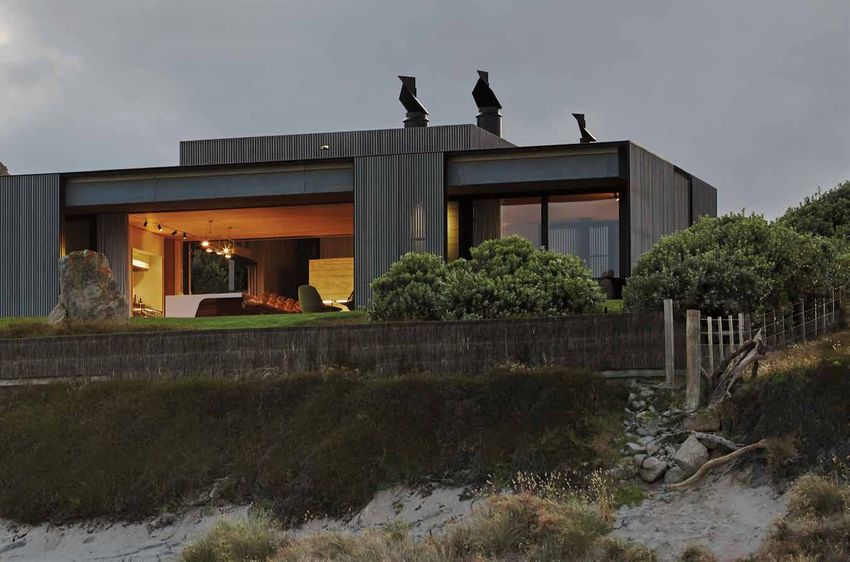
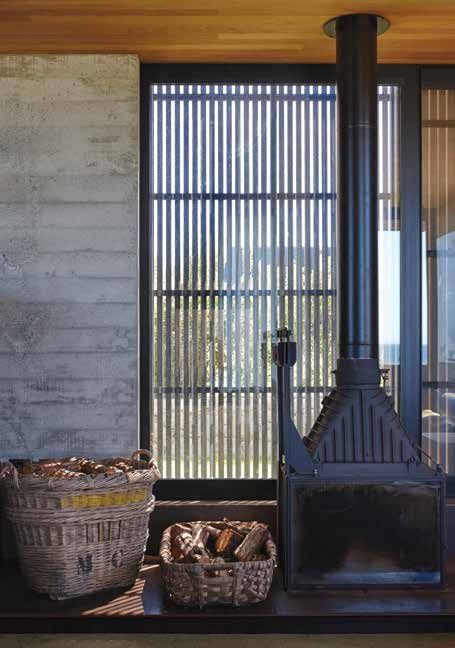
THE RESIDENCE,
which can be almost
entirely opened up
to its surroundings
through sliding
windows and
cedar screens and
battens (above), is
approached from a
covered boardwalk
(opposite). The
house’s two wings
are linked by the lanai
(left, center of
photo), a 1½-story
semi-outdoor space.

                          87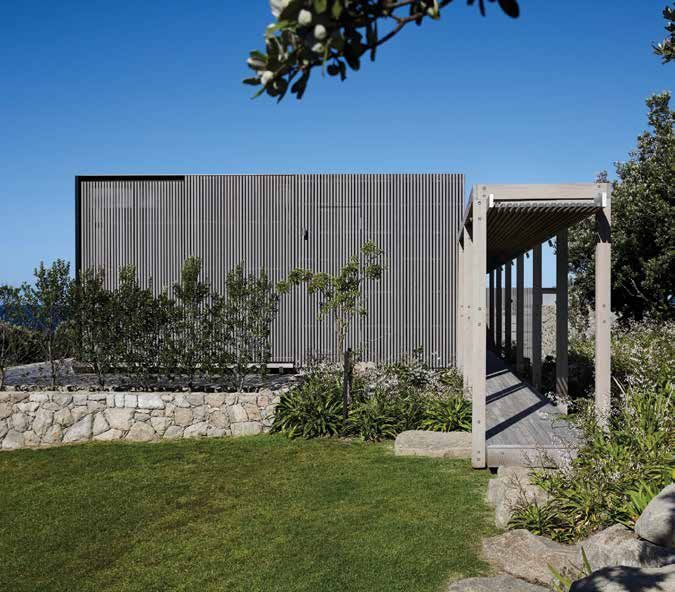
RECORD HOUSES
Great Barrier holiday homes. The house,
designed for an Auckland couple with two
young children, sits alone in the dunes above a
public beach. In the design, the architects
implemented their now-familiar beach-house
strategy of layered protection, an approach
that deploys screens and shutters to achieve a
balance between shelter and privacy, on the
one hand, and connection to the site and
wider context, on the other.
Including the covered front deck and entry
boardwalk, the steel-framed house is 3,440
square feet in area. A separate 640-square-
foot garage houses batteries for storing the
power produced by rooftop solar panels, as
well as a backup generator. (Last year, the
generator was needed for only 60 hours.) On a
concrete pad, two single-story rectangular
forms meet like the top and tail of a T. The
concrete living wing runs roughly north–
south, facing the beach; the timber-framed
bedroom wing is aligned east–west behind it
and, like the adjacent boardwalk, is elevated 6
feet to accommodate the slope of the terrain.
The house’s wings intersect in the “lanai,” a
1½-story volume central to the plan and the
program. This covered courtyard, with a
fireplace allowing year-round use, opens on its
north and south sides, bringing the outside in.
Herbst Architects’ beach houses have always
presented plenty of options for physical en-
gagement with the natural environment. At
times, these suggestions could be quite point-
ed: in early Herbst houses on the Barrier, a
trip to the loo might mean a dash through a
downpour. Nowadays, clients requiring great-
er amenity are unlikely to seek such an adven- THE PALETTE of
materials, including
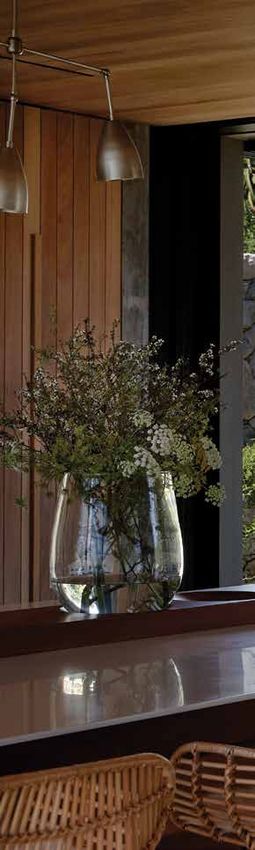
ture. The Awana Beach House offers sensory
board-formed
experience through material specification— concrete elements in
sections of board-formed concrete that give the kitchen (above)
texture to the kitchen, living space, and lanai; and the living space
the eucalyptus pilularis that lines the ceilings; (opposite), eucalyp
and the pale timber of the native tawa tree tus pilularus ceilings
used as flooring. throughout, and the
cedar battens and
What utterly separates this beach house
screens that protect
from any bach is its detailing, exemplified by a beach-facing deck
the tracking system, in aircraft-grade alumi- (left, both) and all
num, for the sliding doors, shutters, and of the apertures,
banks of cedar battens. These weathered gray provide rich textures.
screens, 10½ feet high, extend from the floor
to the building parapet, providing a first line
of weather defense and enabling the house to
blend in with its surroundings and defer to the
Barrier’s unflashy sensibility.
“We didn’t want heroic modernism,”
Lance Herbst says, “but a house that is low,
recessive, and designed to be viewed when
closed down—a house demanding in its
detailing, not its form.” The contractor, who
88 ARCHITECTURAL RECORD APRIL 2021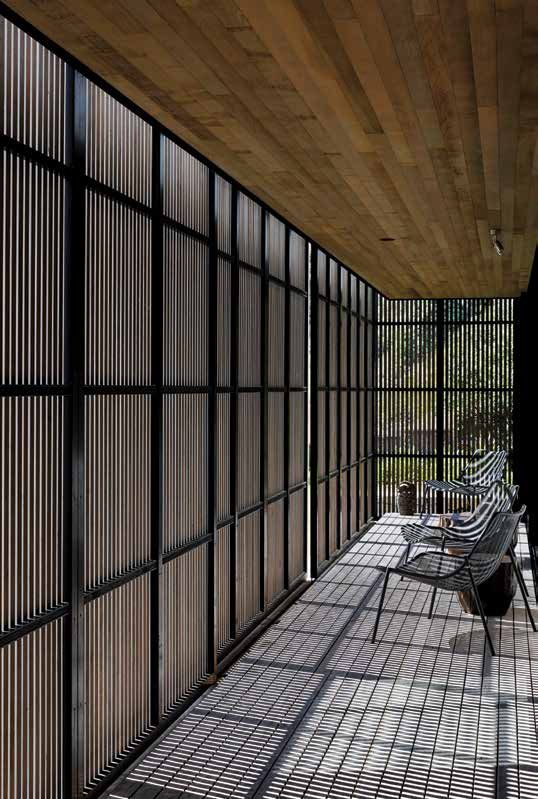
has worked on the island for more than 30 years, often with these
architects, knew what to expect. “The Herbsts are very particular,”
says Great Barrier Building Company’s Johnny Scott, with a builder’s
diplomacy. “But I do like working with them.” n

John Walsh is the author of four books on New Zealand residential architecture,
and is a former editor of Architecture New Zealand magazine.

  Credits                                 Sources
  ARCHITECT: Herbst Architects            SLIDING DOORS: APL Magnum
  — Lance Herbst, design architect;       MOISTURE BARRIER: Pro Clima
  Nicola Herbst, co-design architect;
  Jimmy Gray, assistant architect         ROOFING: ColorCote, Viking
  CONSULTANTS: Sullivan Hall              HARDWARE: Chant
  (structural); Simone Crowe              CUSTOM MILLWORK: Aveora
  (interiors); Second Nature
                                          PAINTS AND STAINS:
  (landscape)
                                          Dryden, WOCA
  GENERAL CONTRACTOR:
                                          CERAMIC TILE: Bisazza
  Great Barrier Building Company
  SIZE: 3,400 square feet
  COMPLETION DATE:
  February 2020

                                                                                  89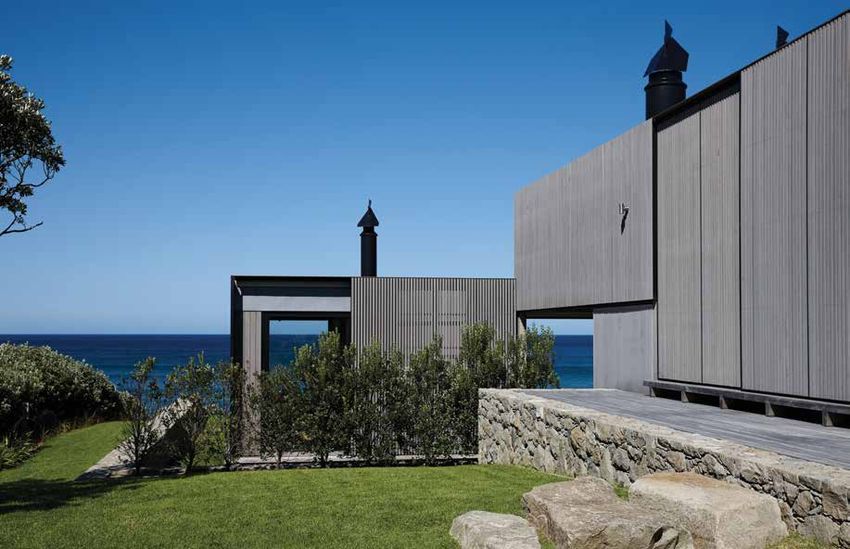
You can also read


