Our performance - ShareData Online
←
→
Page content transcription
If your browser does not render page correctly, please read the page content below

Our
       performance
Kumba delivered a record EBITDA of R45.8 billion while keeping our commitment
     on health and safety and supporting our communities as we navigated
  exceptional conditions. Our business resilience and balance sheet strength,
      together with the hard work of our dedicated workforce and suppliers,
 allowed us to meet Covid-19‘s challenges from a position of strength. We have
     emerged stronger and we are even more focused on building a better
                           business for the longer term.

                       Matters discussed in this section
                           Delivering on the strategy
                         Chief Financial Officer’s review
                           Operational performance
                       Ore reserves (and saleable product)
                              and mineral resources

                                                            Kumba Iron Ore Limited Integrated Report 2020   53
Our performance

                           Delivering on the strategy
Kumba’s pleasing performance in a challenging operating environment impacted by the global pandemic, reflects the
effective execution of our Tswelelopele strategy, aided by a more buoyant iron ore price and favourable exchange rate.
Our Tswelelopele strategy aims to unlock Kumba’s full potential and deliver value for all our stakeholders by: enhancing our
margins; extending the life of our assets beyond 2040; eliminating all fatal incidents; and becoming the employer of choice
in South Africa.
This year we continued our activities to embed our safety culture, remaining fatality-free for the fourth successive year and
achieving an 83% reduction in the number of high potential incidents. Our EBITDA margin improved five percentage points
to 57%, assisted by stronger ore prices, a weaker Rand and R1.3 billion in cost savings, offset by lower sales and a higher
royalty rate. Operationally, production volumes were lower than 2019 at both our mines as a result of Covid-19 lockdown
restrictions, various equipment challenges and weather delays. While progress on some of our mine life extension initiatives
was hampered by the pandemic, we made encouraging progress in working with Transnet to improve rail performance and
to identify options to extend the longevity of the rail and port logistics network. All of these activities have been
underpinned by our continuing focus on instilling the right leadership and culture across the Company.

 Strategic focus areas

 Sustainably operate            To strengthen our competitiveness in the context of continuing market volatility and heightened cost
 mines at a lower unit          competition, we are driving an ambitious programme to lower the unit cost at our mines. We have been
 cost to remain                 realising efficiencies across our operations by reducing our core cost base, implementing a lean support
 competitive through a          structure, and delivering a step-up in productivity. We continue to implement the Anglo Operating Model
 lean support and core          throughout our business (see separate strategic focus area below), and this is the foundation for shifting
 cost base and a                the benchmark efficiency closer to P101, a best-in-class industry benchmark, as part of driving
 step-up in productivity        operations to full potential.
                                This year, our focused efficiency drive contributed to overall cost savings of R1.3 billion, above our target
                                of R1.1 billion, bringing the total savings from our programme to R2.6 billion (excluding Covid-19-related
                                costs savings). We contained the break-even price at US$45/tonne for the year, with the gains of a
                                higher price premium, weaker currency and reduced spot freight rate offset by higher units costs,
                                increased on-mine SIB capex, lower lump premium and increased royalties. Unit production costs at both
                                Sishen and Kolomela increased compared to 2019, as a result of production losses and inflation linked
                                input cost pressures at both mines. At Sishen, the unit cost of production was R362/tonne for the year,
                                R17/tonne higher than 2019, and at Kolomela the unit cost was R304/tonne, R34/tonne above 2019.
                                The new target of R2 billion of savings by 2022, through initiatives focused on our fixed cost base and
                                further optimisation of outside services. This should mitigate the increase in maintenance costs and other
                                cost escalations.
 Compete through                Due to the geographical location of our operations and the geological nature of our ore body, Kumba is
 premium products and           not able to compete effectively with large global iron ore producers on a volume basis. We have thus
 differentiated                 chosen to compete by maximising the price premium through the provision of premium quality products
 customer relationships         and differentiated customer relationships.
                                We have the unique advantage of being primarily a lump producer with a product that has a recognised
                                exceptional chemical and metallurgical quality. The highest quality and most important iron ore for
                                steel-making are haematite (Fe2O3) and magnetite (Fe3O4). Haematite is the more sought-after ore and
                                the preferred raw material in efficient steel-making mills. It accounts for approximately 95% of South
                                Africa’s iron ore production. Our iron ore reserves are all of high-quality haematite allowing us to produce
                                both high-quality lump and high-grade sinter fines for the domestic and export markets. We build on this
                                advantage. By understanding and responding to the specific technical needs of different customers, we
                                are able to offer niche products.
                                     Further details on the quality of Kumba’s iron ore, and the resulting price premium, are provided
                                     on page 56 (strategic enabler relating to reinforcing product quality and consistency).

 Implement the Anglo            We maintained a strong focus this year on rolling out the Anglo Operating Model, a structured
 Operating Model to             management system that provides a sequenced and repeatable set of work-steps guiding employees
 ensure stable and              to achieve the intended purpose of their team’s work in the most efficient manner. By promoting stability,
 capable processes              reducing variation and providing clarity, the Anglo Operating Model is a critical element of our cost-
 leading to the delivery        cutting drive across the Company.
 of business
                                This year, production volumes were impacted by Covid-19-related restrictions, equipment challenges
 expectations
                                and weather delays. At Sishen, volumes were 3.8 Mt lower than the prior year and at Kolomela production
                                decreased by 1.5 Mt. Owner fleet efficiency decreased from 68% to 63%.
                                A number of interventions have been implemented to mitigate these impacts. We enhanced our high
                                rainfall readiness and associated recovery plans to manage through such weather impacts in the future.
                                Our focus on improving equipment uptime through the implementation of defect elimination and work
                                management programmes, as well as artisan and supervisor skills development programmes, is also
                                delivering results and improvements in equipment reliability across the fleet.

54       Kumba Iron Ore Limited Integrated Report 2020
Strategic focus areas
Extend life of current     A major milestone was achieved in 2020, with Kumba delivering on its ambition, set in 2018, of replenishing
mines through UHDMS        its ore reserves by 200 Mt on or before 2022, through efficiency improvements, resource utilisation and
technology and             exploration. In line with this strategy, we have successfully increased the ore reserve by a cumulative
business development       206.4 Mt (before depletion) through various initiatives including pit slope steepening and optimisation of
activities                 the pit layout at Sishen, improved resource to reserve conversion and the Sishen UHDMS project. We
                           completed a feasibility study this year to re-evaluate the value proposition of the UHDMS project, taking
                           into consideration rail logistical constraints exacerbated by the lower domestic off-take from
                           ArcelorMittal SA. The UHDMS project was approved by the Board in February 2021 and will maximise
                           product quality and extend Sishen LoM until 2039.

                           This year, Sishen’s published ore reserves increased materially by 52.6 Mt (+10%) year-on-year, as a result
                           of the pit optimisation conducted in 2020, which considered more favourable long-term economic
                           assumptions. The overall waste stripping ratio in the 2020 Sishen life-of-mine plan increased from 3.4 : 1
                           in 2019 to 3.8 : 1 in 2020. For Sishen mine, a 15-year reserve life at an average 29.2 Mtpa saleable product
                           output has been quoted in the 2020 life-of-mine plan. For Kolomela mine, a 12-year remaining reserve
                           life, at an average 12.6 Mtpa saleable product output has been quoted in 2020. Following the finalisation
                           of the 2020 Resource and Reserve statement, the Sishen UHDMS project was approved by the Kumba
                           Board in February 2021 and will extend life of the operation with a further three to four year, at between
                           10 and 15 Mtpa. The LoM stripping ratio will reduce from 3.8 to 3.1.
Focus on the Northern      We have retained our strategic commitment to leverage our endowment in the Northern Cape, targeting
Cape as the region         a 2040 life-of-mine ambition, achieved through enhanced efficiency and optimisation, our UHDMS
contains the most          project, and the Northern Cape exploration programme. Our commitment to capital discipline means
attractive ore bodies      that we will only invest in high return projects and at the right time of the cycle.
for both current
operations and             Kolomela will launch a study in 2021 to convert the 59.1 Mt Ploegfontein Measured and Indicated Mineral
targeted brown fields      Resources to Ore Reserves. As a result of Covid-19 restrictions, access to explore neighbouring properties
exploration                between Sishen and Kolomela was delayed.
Use technology to          We have been investigating and implementing various game-changing opportunities, using digitisation
extract maximum            and innovative technologies to achieve our zero-harm target, maximise current and future resource
value from ore,            utilisation, and drive down costs by improving productivity and efficiencies.
focusing on step-
                           Recent technology initiatives at Sishen and Kolomela include:
change opportunities
                           • rolling out autonomous braking solutions on our haul trucks
                           • upgrading 10 existing drills at Sishen to autonomous by the end of 2022
                           • completing implementation of real-time condition-based monitoring (RTCBM) at Kolomela and rolling
                             this out at Sishen
                           • completing plant automation and advanced process control of the Sishen DMS wash and screening
                             plant and commencing automation of the cyclone and drum plant
                           • using drone technology with scanners and cameras to create three-dimensional images to calculate
                             volume
                           • rolling out guided spotting on trucks and shovels at Kolomela
Unlock full                Due to the distance of our mining operations from the Saldanha port, Kumba faces higher rail costs and
infrastructure potential   increased associated logistical challenges than our competitors. We have been collaborating with
to support maximum in      Transnet to investigate and initiate various rail and port performance and operational improvement
export volumes over        projects that will unlock and extend the full potential of our third-party infrastructure. Collectively, our
the medium term            successful implementation of Covid-19 measures, combined with initiatives to increase workforce
                           capacity at Transnet, resulted in the iron ore export channel run rates returning to pre-Covid levels by the
                           third quarter, contributing to a significant improvement in throughput at Saldanha Port in the second
                           half.
                           This year the volume railed to Saldanha was 4.4 Mt lower than 2019 due to Covid-19 challenges and lower
                           domestic demand from ArcelorMittal SA, derailments, and various weather delays and infrastructure
                           failures. Over the year, there was an average of 21.2 trains per week at an 85.3% utilisation rate. Total
                           shipments were 0.7 Mt below the prior year as a result of Covid-19-related challenges. To assist with
                           improving port throughput, we are working with Transnet to simplify the product portfolio, revise the
                           stockyard layout at Saldanha, and blending ore into trains at the mines to reduce time lost for blending
                           at Saldanha.

                                                                                       Kumba Iron Ore Limited Integrated Report 2020      55
Our performance
                                                         Delivering on the strategy continued

 Strategic focus areas
 Identifying and                To enhance our potential for longer-term growth, we are identifying a range of various growth
 realising opportunities        opportunities that fit well with Kumba’s current strategic direction, and that provide for global
 beyond the existing            decarbonisation goals and operate within a circular economy. These “close-to core” opportunities will
 operations, based on           seek to leverage our core capabilities and resources, including both our agility as a smaller mid-tier
 our asset base and             player and our access to the broader Anglo American Group.
 competencies
                                These various opportunities are being actively pursued, form part of our longer-term time horizon, and
                                are expected to deliver value within the next five to seven years.

Strategic enablers

Underpinning our strategic ambition is a sustained focus on our key strategic enablers: aligning our marketing and operational
activities; reinforcing our reputation for product quality and consistency; engaging proactively with stakeholders; providing
leadership through responsible citizenship; and providing support to our employees.
Align marketing and            To consolidate our position in an increasingly competitive market, we place a strong focus on developing
operational activities to      a thorough understanding of our clients’ expectations; this enables us to deliver high-quality products
ensure that product            and strengthen relationships with clients. We consciously blend between the various products to maximise
produced efficiently           value and regularly undertake customer segmentation studies to identify which customers value particular
matches customer needs         physical and/or chemical properties in our products, and we use this information, together with mine
                               planning information, to tailor our product specifications to match customer demands.
                               This year our total export sales were 0.7 Mt below the prior year, with shipments affected due to Covid-19-
                               related production losses; domestic sales were 1.8 Mt below that of 2019, as a result of lower demand from
                               ArcelorMittal SA.
                               Our approach to producing ore for the export market at our Sishen and Kolomela operations is outlined in
                               the following diagram:

                                                                          Producing ore for the export market
                                                            Sishen                                                        Kolomela

                                    Process A                             Process B         Process C                                          Process D
                                    DMS plant uses a                    Jig plant uses      UHDMS uses specialised                          Dry crushing and
                                    sink-float process           pulsating technology       FeSi to separate ore from                screening employed to
                                    to separate ore                  to remove waste        low-grade discards or ore                     produce lump and
                                    from waste                   material from the ore      at both Sishen and Kolomela              fine direct shipping ore

                                    Ore from Sishen and Kolomela is railed to
                                    Saldanha Bay to be combined into Kumba’s
                                    high-grade export products that have a high
                                    iron content, superior physical properties, low
                                    moisture, and low undersize

                                    In addition we seek to create and supply
                                    a product of consistent and reliable quality
                                    (ISO 9001, 14001 and 17025 laboratory certification).

Reinforce product quality      As we cannot compete with the large iron ore producers in terms of volume and proximity to China, we
and consistency                recognise the need to reinforce our reputation for product quality as a critical source of competitive
                               differentiation. Since 2012 we have been driving a strong focus on consistently delivering a high-quality
                               product and on increasing the lump ratio; both of these features attract premia against the standard
                               product sold in the market.
                               Our high average Fe content of 64.3% Fe, and our lump:fine ratio of 69:31, enables us to sell our product in an
                               over-supplied iron ore market and to attract Fe and market premia relative to standard products. This year,
                               Kumba achieved a realised FOB price of US$114.57/tonne. This was US$15.75/t above the Platts 62 FOB index,
                               aided by a lump premium of US$6.5/dmt, an Fe premium of US$4.1/dmt and a US$0.8/dmt premium for
                               marketing effort. With the approval of the Sishen UHDMS project the average product grade from Sishen will
                               increase by 0.4% Fe from 2024. It is estimated that this will attract an additional marketing premium of
                               US$1/tonne on 50% of our total production.
                               We are further diversifying our customer portfolio, increasing sales in various regions utilising direct-charge
                               materials and growing the share of premium products to 30% of total sales. This year China represented
                               62% of our export sales portfolio (2019: 56%) with sales to Europe/MENA decreasing to 19% (2019: 25%) and
                               sales to Japan and South Korea down slightly to 17% (2019: 18%). Contractual sales comprised 77% (2019: 78%)
                               of export sales; 69% of sales (2019: 68% ) were on a CFR basis with the remainder sold free on board.

56       Kumba Iron Ore Limited Integrated Report 2020
Proactively engaging         Regular, proactive and meaningful engagements with our stakeholders is essential to developing trusted
with key stakeholders to     relationships, a critical foundation for delivering on our strategic focus areas. In keeping with this, Kumba
reinforce our partnership    hosts stakeholder days every two years, bringing Kumba and SIOC boards of directors and the executive
approach                     team together with national, provincial and local government, labour unions, business and development
                             partners, suppliers, host community groups and civil society, to discuss transformation and sustainability.
                             Unfortunately the stakeholder day scheduled for 2020 was suspended due to the national lockdown; a new
                             date shall be communicated once the situation has eased. The Covid-19 regulatory restrictions and social
                             distancing requirements disrupted many of our other stakeholder engagement practices. As a result we
                             have adapted our channels of engagement and expanded our use of digital communication channels.
                                Further details on our stakeholders and stakeholder engagement activities are provided on page 40

Provide leadership           Ensuring effective management of environmental, social and governance (ESG) issues, and providing
through responsible          leadership through responsible corporate citizenship, delivers material competitive benefits for Kumba: it
citizenship displaying       protects the safety, health and productivity of our employees; assists us in attracting and retaining talent;
care for safety, health      reduces potential legal liabilities; protects the natural resources we rely on; delivers valuable resource
and the environment          efficiencies; and is essential in maintaining our social licence to operate. As part of the Anglo American
                             Group, we are responding through our commitment to FutureSmart MiningTM and our sustainable mine plan,
                             which is linked both to the UN Sustainable Development Goals and our business strategy.
                             Following is a summary of our 2020 performance on some of our most material ESG impacts and activities:
                             • Remaining fatality-free for four consecutive years, reflecting our strong safety culture, underpinned by
                               critical control risk monitoring, risk reduction initiatives and elimination of fatalities programme
                             • Two safety-related high potential incidents (HPIs) (2019: 12)
                             • Total recordable case frequency rate (TRCFR) of 1.74 against a target of 2.01 (2019: 2.06)
                             • Sadly eight Covid-19-related fatalities; 1,399 positive cases and 1,350 recoveries reported
                             • Fifth consecutive year of no new cases of noise-induced hearing loss (NIHL)
                             • Met all our 90:90:90 health performance target (90% of our permanent employees should know their HIV
                               status, 90% of identified seropositives should be on antiretroviral therapy, and 90% of those should have
                               undetectable viral loads)
                             • Fifth consecutive year with no level 3 to 5 environmental incidents
                             • 287.0 ha rehabilitated in 2020; both Sishen and Kolomela exceeded reshaping targets
                             • R9.8 billion procurement on HDSA businesses (2019: R6.1 billion); R3.6 billion on host community suppliers
                               (2019: R2.4 billion)
                             • R263.6 million direct social investment (2019: R170.9 million)
                             • 27% women in management (2019: 25%); 24% women in total workforce (2019: 23%)
                             A detailed review of our sustainability strategy, sustainable mining plan and ESG performance is provided in
                             our comprehensive Sustainability Report:
                                https://www.angloamericankumba.com/investors/annual-reporting

Leadership and culture,      Our approach to leadership and culture is the most significant enabler for our Tswelelopele programme.
embedding a culture that     From January 2018 to January 2020, we focused on cutting-edge, high quality leadership and culture
fosters safety, diversity,   interventions, delivering robust employee engagement, team development, a leadership 360 degree
innovation and               capability assessment, bespoke leadership programmes, and diversity workshops, underpinned by our
organisational               Kumba Leadership Code. While these areas remain relevant, we have been less intervention-centric this
effectiveness                year, focusing more on leader-led actions and behaviours to sustain the foundations established through
                             our interventions, and adapting our interventions to provide for the shift to remote working resulting from
                             the Covid-19 pandemic.
                             • Employee engagement: We have continued to socialise our desired “way of being” through creative
                                branding and multichannel communications mechanisms, including a story-telling approach that illustrates
                                the desired behaviours and codes in a practical and understandable way for our teams. These have been
                                supported by quarterly focus groups and interviews to monitor progress.
                             • Leadership assessment: We conduct an annual 360-degree leadership survey to assess how Kumba leaders
                                are “showing up” in terms of the Leadership Code, against a baseline survey conducted in 2018; this informs
                                specific actions to address any identified concerns.
                             • Leadership and culture initiative: This year we rolled out the Kumba Expeditions Leadership Programme
                                virtually across our leadership and supervisory teams; this is an “immersive” learning experiences aimed at
                                developing leaders with the right capabilities to deliver on our Leadership Code.
                             • Team development: In April 2018 we introduced a revitalised team development process to build team
                                cohesiveness and effectiveness. Thirty-three teams across Kumba are currently engaged in team
                                development workshops, realising valuable shifts in team dynamics and interpersonal relationships across
                                the Company.
                             • Focus on diversity: In building leadership capability and fostering the right culture, Kumba is committed to
                                accelerating the recruitment, development and promotion of designated groups. We are encouraged that
                                women account for 32% of our talent pool, of which 54% is represented by black females; 69% of short-term
                                successors for Exco and Head of Department roles is represented by historically disadvantaged South
                                Africans (HDSAs).
                             In July 2018, we introduced a new broad-based employee share ownership scheme, Karolo, for permanent
                             employees below middle and senior management level. The scheme has maintained a 99.4% acceptance
                             rate In August 2020, we processed the third and final annual award.
                             Further information on our activities in supporting employees – including details on promoting diversity,
                             managing talent, engaging employees and investing in skills development – is provided in our SR:
                                https://www.angloamericankumba.com/investors/annual-reporting

                                                                                                          Kumba Iron Ore Limited Integrated Report 2020   57
Our performance
                                                            Chief Financial Officer’s review

                                                                              Since implementing our Tswelopele margin
                                                                             enhancement strategy in 2018, we have seen
                                                                              a consistent margin uplift from 45% to 57%.
                                                                             Capitalising on our quality product portfolio
                                                                             and strong iron ore prices, supported by our
                                                                              cost savings, we delivered a record EBITDA
                                                                                   growth of 37% to R45.8 billion and
                                                                              attributable free cash flow of R20.7 billion.

                                                                                                    Bothwell Mazarura
                                                                                                   Chief Financial Officer

 EBITDA (Rbn)                                                                 Headline earnings per share

 2018                                      20.6                               2018                                 30.47
 2019                                                     33.4                2019                                             50.88
 2020                                                               45.8      2020                                                         71.07

                                                           Enhancing shareholders' returns

  Record EBITDA growth           Delivered cost savings          Achieved a 19% higher         Strong headline             Final cash dividend of
  of 37% to R45.8 billion        of R1.3 billion against a         average realised        earnings of R22.8 billion,      R41.30 per share, with
                                   target of R1.1 billion         FOB export price of          translating into            total cash dividend of
                                                                     US$115/tonne              R71.07 per share               R60.90 per share

Enhancing shareholder returns and maximising value
Kumba’s Tswelelopele strategy delivered a record EBITDA and return on capital employed (ROCE) of 109%, up from 83%
in the previous year. Our margin enhancement strategy achieved an average realised price of US$115/tonne and cost
savings successfully contained our C1 unit cost at US$31/tonne. This translated into a net cash position of R22.2 billion
(2019: R12.3 billion) after generating operating cash flow of R40.3 billion, representing an increase of 16% from the prior
period. This, together with a resilient balance sheet, allows us to sustainably create value for our shareholders.

58        Kumba Iron Ore Limited Integrated Report 2020
Delivery against key focus areas:
Our three strategic levers continued to support Kumba’s strategy of unlocking its full asset potential and delivering
shareholder returns:
1. Focus on margin                                                                     2. S
                                                                                            trong financial     3. Delivering
    enhancement                                                                            discipline                sustainable returns

 Through our ongoing commitment to margin                                                We further               Kumba’s balance sheet remains robust, with
 enhancement, Kumba successfully delivered an EBITDA                                     strengthened our         continued strong cash generation providing
 margin of 57%, up five percentage points from 52% in the                                balance sheet and        flexibility in a volatile market environment.
 prior period. Our integrated sales and operations team                                  liquidity position       Through our capital allocation framework, cash
 contributed to a 19% increase in the average realised                                   through our cash         generated from operating activities services our
 FOB iron ore price of US$115/tonne (2019: US$97/tonne).                                 preservation             tax commitments, SIB capital and dividends to
 Further margin benefits came from a 14% weakening in                                    programme, which         shareholders in line with our dividend policy.
 the Rand/US$ exchange rate as well as cost savings                                      delivered cost           Excess discretionary cash flow is deployed in
 of R1.3 billion – above our R1.1 billion target for 2020,                               savings of               the best long-term interests of shareholders
 realised by improved operational efficiency, variable                                   R1.3 billion for the     with consideration of further investment in
 cost optimisation across the value chain and overhead
                                                                                         year and the             the business and incremental returns to
 cost reductions. These margin benefits were instrumental
                                                                                         deferral of              shareholders. Throughout the cycle, we aim to
 in containing the break-even price at US$45/tonne.
                                                                                         R1.0 billion of          retain a net cash balance to ensure that we
 The break-even price was impacted by production
                                                                                         non-critical capital     remain in a position of strength and maintain
 losses and higher stay-in-business (SIB) capex. This was
 over and above higher royalty charges, and ongoing                                      expenditure.             flexibility against potential headwinds.
 increases in mining inflation and lower lump premium.                                   SIB spend was
                                                                                                                  For 2020 Kumba delivered a ROCE of 109%
                                                                                         streamlined to the
 Our product portfolio ranges from standard and premium                                                           (2019: 83%) and robust attributable earnings
                                                                                         minimum necessary
 lump and fines to super-premium lump with an average                                                             of R22.8 billion (2019: R16.3 billion).
                                                                                         to sustain our
 quality of 64.3% Fe (2019: 64.2% Fe) and a lump:fine ratio                              business and             Our dividend policy targets a payout range of
 of 69:31 (2019: 68:32). We captured a US$4/tonne uplift                                 support our              between 50% and 75% of headline earnings to
 from the Fe and market premia and a US$2/tonne                                          production targets.      shareholders. Shareholder returns are prioritised
 decrease in the Platts freight rates together with a                                    Both deferred            while maintaining a strong flexible capital
 US$16/tonne increase in the Platts 62 index price, which                                stripping and            structure that protects the balance sheet
 was partially offset by a US$5/tonne decrease in the                                    expansion spend          from market volatility and ensures that an
 lump premium, resulting in a higher average realised
                                                                                         were maintained          appropriate level of capital is allocated to life
 price of US$115/tonne for 2020.
                                                                                         at similar levels.       extension projects and long-term growth
 With the benefit of our geographically diverse customer                                                          prospects.
 portfolio we quickly regained market share outside of
 China. By the end of 2020, Kumba’s sales to the rest of                                                          With Kumba’s substantial cash flow generation
 the world increased to 47% compared to only 34% for                                                              of R40.3 million, demonstrating the success of
 the first half of the year. For the full year, China’s strong                                                    our Tswelelopele strategy, the headline earnings
 economic recovery resulted in the market share of                                                                per share for the year were R71.07 (2019: R50.88).
 Europe/Middle East and North Africa/Americas and the                                                             The Board declared a final cash dividend of
 rest of the world, decreasing from 25% in 2019 to 19% in                                                         R41.30 per share (2019: R15.99), resulting in a total
 2020. This contributed to the share of premium products                                                          cash dividend for the year of R60.90 per share
 decreasing slightly to 18% of total sales.                                                                       (2019: R46.78). This equates to 86% of headline
                                                                                                                  earnings for 2020.

Enhanced product portfolio (US$/tonne)                                                             Cost savings (US$/tonne)

2018                                        3.4                           2.0            5.4       2018                                                   1.7
2019                                       3.2                      1.9                  5.1       2019                                             1.5

2020                                              4.1                      0.8           4.9       2020                                                            2.1

■ Fe premium total                ■ Price realisation

 Containing costs and leveraging higher iron ore prices (US$/tonne)

                                                                                 115
                                                  97
                  72                                                             70
                                                  55
                  36
                   32                              33                             31

                  2018                            2019                           2020
       ■ C1 unit cash costs   ■
                                  EBITDA   ■
                                               Achieved FOB price

                                                                                                                   Kumba Iron Ore Limited Integrated Report 2020         59
Our performance
                                                                  Chief Financial Officer’s review continued

2020 Financial performance                                                                       while the achieved lump premium decreased by US$5/tonne,
                                                                                                 partially offset by the US$4/tonne higher Fe and market premia.
The analysis of our performance drivers should be viewed
together with the strategy on pages 6 to 9 of this report.                                       Total sales decreased 6% to 39.7 Mt (2019: 42.2 Mt), driven by local
                                                                                                 sales decreasing 84% to 0.4 Mt (2019: 2.2 Mt), as a result of lower
Revenue – driven by stronger prices and currency gains                                           off-take by ArcelorMittal SA due to the decision to wind down its
Total revenue increased by 25% to R80.1 billion compared to                                      Saldanha Steel plant. For the year, 69% of sales were on a cost and
R64.3 billion for 2019, mainly as a result of a 19% increase in the                              freight (CFR) basis compared to 68% in the prior period. Contractual
average realised iron ore price of US$115/tonne (2019: US$97/tonne)                              sales amounted to 77% of total export sales volumes (2019: 78%).
and weakening of the average Rand/US$ exchange rate to                                           China represented 62% (2019: 56%) of Kumba’s total exports, and
R16.47/US$1 (2019: R14.45/US$1). This was offset by a 6% decrease                                the share of the European Union/MENA/Americas region decreased
in total sales volumes compared to 2019.                                                         to 19% (2019: 25%), and Japan and South Korea decreased slightly
Kumba’s higher average achieved FOB price was driven by stronger                                 to 17% (2019: 18%).
prices. On average, the Platts 62% index increased by US$16/tonne,

Revenue (Rm)

                                                                                     45                                                              9,066              80,104
                                                                                               10,318                      (35)                                         5,580
         64,285                          (3,158)                                                                                                                        74,524
                                                                    (372)
          5,615
         58,670

              2019                       Volume                     Market                    Shipping                 Market price                Currency             2020
                                                                   premium
                                               Controllables                                                       Non-controllables
         ■ Mining operations         ■ Shipping

Operating expenditure – impacted by stock movement                                               Mining operational cost increased by R285 million primarily due to
Operating expenses (excluding mineral royalties and impairment)                                  lower fixed cost recovery caused by lower production volumes.
increased by 8% to R35.8 billion, compared to R33.1 billion in the prior                         Sales from stock and WIP movements added R1.9 billion to cost
year, largely due to R2.7 billion higher mining-related costs and a                              while escalation, non-cash and forex adjustments increased
R72 million increase in logistics costs.                                                         operating expenses by R631 million. This was partially offset by
                                                                                                 R132 million lower capitalisation of deferred stripping costs.
The increase in operational costs were primarily attributable to
higher stock movement due to sales from stock and work-in-                                       Good cost stewardship across the value chain coupled with our
progress (WIP) movements. Selling and distribution costs increased                               cost savings initiatives, aimed at offsetting inflation-related costs
slightly to R6.6 billion (2019: R6.5 billion) due to increases in Transnet                       and reducing controllable cost, delivered savings of R1.3 billion,
tariffs, offset by lower logistics volumes. Freight costs of R5.6 billion                        ahead of our 2020 target of R1.1 billion.
were in line with the prior year as lower freight rates of US$11/tonne
(2019: US$14/tonne) and slightly lower CFR shipping volumes of
27.0 Mt (2019: 27.3 Mt) were offset by a weaker currency.

Operating expenditure (Rm)

                                                          1,877                     (132)                   631                     (7)                      79         35,7731
       33,0401                     285
                                                                                    45                                                                                  6,580
        6,501
                                                                                                                                             Logistics
                                                                                                                                               +72                      5,598
       5,605
                                                                                                                                                                        23,595
       20,934

        2019                     Mining                  Stock                    Deferred                Escalation              Shipping               Selling and    2020
                               operations              movement                   stripping             non-cash and                                     distribution
                                                                                                            forex
         ■ Mining operations1        ■ Shipping      ■ Selling and distribution
         1.
              Excluding mineral royalty and impairment, but including expected credit losses

60             Kumba Iron Ore Limited Integrated Report 2020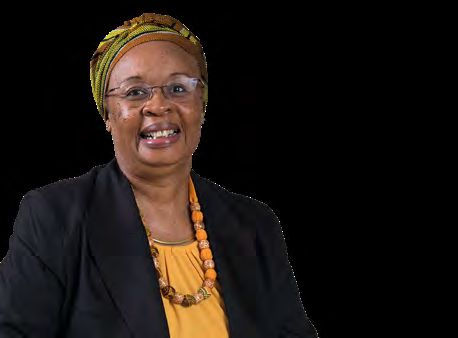
Sishen’s unit cash costs increased by 5% to R362/tonne (2019: R345/tonne). This was as a result of lower deferred stripping, offset by lower
mining and maintenance costs.

Sishen unit cash cost (R/tonne)

                                                                                                                                              16          (7)
                          11                 (4)                            (24)                                              47
                                                                                             (7)            (15)                                                         362
         345                                                352

                                   2%                                                                               3%

        20191          Inflation            Cost         Total after       Mining       Maintenance         WIP           Production       Deferred     Cost             20201
                                         escalation     controllables                                                       volume         stripping   savings
                         Non-controllables                                                                        Controllables
1
    Excluding impact of deferred stripping on unit cost: Sishen =2020: R60/tonne (2019: R68/tonne); Kolomela = 2020:R84/tonne (2019:R48/tonne)

Kolomela’s unit costs increased 13% to R304/tonne (2019: R270/tonne), due to higher mining and maintenance costs which related to the
catch-up in our mining fleet lifecycle maintenance activities.
Kolomela unit cash cost (R/tonne)

                                                                                                                              36             (25)
                                                                                             16             (3)                                           (15)
                                                                             17
                           9                 (1)
                                                                                                                                                                         304
         270                                                278

                                   3%                                                                                    9%

         20191         Inflation            Cost         Total after       Mining       Maintenance         WIP           Production       Deferred     Cost             20201
                                         escalation     controllables                                                       volume         stripping   savings
                         Non-controllables                                                                       Controllables
1
    Excluding impact of deferred stripping on unit cost: Sishen =2020: R60/tonne (2019: R68/tonne; Kolomela =2020: R84/tonne)

Break-even price – contained
Break-even price (US$/tonne)

                                                                                             5              (7)
                           1                 (4)                                                                              2               (2)          2
                                                             3
          45                                                                 45                                                                                           45

                                            $0                                                                                $0

         2019          C1 costs             Price            SIB         Total after    Lump premium     Currency        Inflation and     Freight     Royalties         2020
                                          premium                       controllables                                     escalation
                                        Controllables                                                                  Non-controllables

                                                                                                                         Kumba Iron Ore Limited Integrated Report 2020           61
Our performance
                                                           Chief Financial Officer’s review continued

Kumba’s break-even price remained constant at US$45/tonne.                                   export iron ore price to US$115/tonne (2019: US$97/tonne), resulting
Controllable costs included higher C1 unit costs of US$1/tonne and                           in a price impact of R10.3 billion. Cost savings of R1.3 billion and
higher SIB costs of US$3/tonne, which were offset by a stronger                              currency gains from a weaker Rand of R16.47/US$ (2019: R14.45/US$),
price premium of US$4/tonne. Non-controllable costs contained                                despite lower sales volumes. This is partially offset by an increase
lower lump premium of US$5/tonne and higher cost inflation and                               in operating expenses, royalties and the lower lump premium.
mineral royalties of US$4/tonne, offset by a weaker currency of                              Kumba’s EBITDA margin increased by five percentage points
US$7/tonne and lower freight rates of US$2/tonne.                                            to 57% (2019: 52%), the group’s mining operating margin improved
EBITDA reflects strong revenue growth and cost discipline                                    to 55% (2019: 49%), excluding the net freight profit incurred on
Kumba delivered an EBITDA of R45.8 billion, representing an increase                         shipping operations. Net profit increased by 40% to R29.8 billion
of 37% compared to R33.4 billion in the previous year. Growth was                            (2019: R21.3 billion).
primarily driven by the 19% increase in the average realised FOB

EBITDA (Rm)

                                                                                                       10,318        (795)            (1,082)              (16)
                                                                                                                                                                       45,808
                                                                                        8,918
                      (3,158)
                                       (545)         (1,205)
     33,373
                                                                          28,465

                                        (17%)                                                                            65%

     2019            Volume          Premium         Opex             Total after      Currency        Price       Inflation         Royalties           Shipping      2020
                                                                     controllables
                                  Controllables                                                                  Non-controllables

Strong cash flow supporting a resilient and efficient balance sheet
Capital allocation (Rbn)

                                       25.5                      (14.4)

                                                                                                                                                (17.8)
                                                                                           (1.2)                  22.2                           (4.5)

                                                                                                                                                (13.3)
              12.3

                                                                                                                                                                         4.4

          2019                   Cash flow after                 Base                  Discretionary             2020                         Final                   Pro forma
        Net cash                sustaining capital             dividends                  capital               Net cash                    dividend                cash retained

Kumba ended the year with a net cash position of R22.2 billion                               (2019: R5.6 billion), and distributing dividends to shareholders of
(2019: R12.3 billion), after cash flow from operations, tax paid, capex                      R15.0 billion (2019: R19.6 billion).
and dividends. Cash flow from operations increased by 16% to
                                                                                             Kumba’s debt facilities consist of an R8 billion revolving credit
R40.3 billion (2019: R34.7 billion), due to higher EBITDA. The increase
                                                                                             facility that matures in 2024 and uncommitted facilities of
in working capital is mainly due to an increase in trade receivables
                                                                                             R8.2 billion, all of which were undrawn at 31 December 2020.
due to higher prices and weaker Rand/US$ currency, this was
                                                                                             Financial guarantees issued in favour of the DMRE in respect of
partially offset by higher inventories as finished stock increased to
                                                                                             environmental closure liabilities were R3.4 billion. The annual
4.7 Mt (2019: 6.4 Mt).
                                                                                             revision of closure costs reflected a further shortfall of R691 million
We created stakeholder value by paying income tax of R10.1 billion                           in respect of the rehabilitation of Sishen and Kolomela. Guarantees
(2019: R7.8 billion) and mineral royalties of R3.0 billion                                   for the shortfall will be issued in due course.
(2019: R2.6 billion) to government, providing capex of R5.7 billion

62            Kumba Iron Ore Limited Integrated Report 2020
Capital expenditure to sustain and develop our business Stakeholder value created
Capital expenditure (Rbn) Kumba has built a strong track record of delivering sustainable
returns through the cycle. Our balance sheet remains stable,
driven by strong cash generation, supported by higher EBITDA.
In view of currency fluctuations, ongoing cost pressure and a
2019 2.4 0.5 2.6 5.6
logistics constrained environment, Kumba remains committed
2020 2.6 0.6 2.5 5.7 to maintaining a strong balance sheet.
2021e 3.8 – 4.0 4.8 - 4.9 2.2 – 2.4 10.8 – 11.3
Taking all these factors into account coupled with our dividend
policy of a 50% to 75% payout ratio of headline earnings, the
■ SIB ■ Approved expansions ■ Deferred stripping
Board declared a final cash dividend of R41.30 per share with a
total cash dividend for 2020 at R60.90 per share. This ensures that
Kumba’s capital expenditure for 2020 was R5.7 billion we remain in a position of strength and that we will be well placed
(2019: R5.6 billion). The total spend consisted of the following: to continue with appropriate, value-creating and disciplined
• R2.6 billion from SIB activities, mainly spent on capital spares, investment in our business.
infrastructure upgrade and our mining fleet replacement.
• R0.6 billion of expansion capex, including R112 million spent
on our Dingleton project, R131 million on the Kapstevel South
project, R68 million for the UHDMS feasibility study and capex
for the P101 efficiency programme of R306 million.
• R2.5 billion in deferred stripping relating to mining in areas with
a higher strip ratio relative to the LoM strip ratio.
Kumba closing share price (Rand)
700
600
500
400
300
200
100
0
Dec 06
Dec 07
Dec 08
Dec 09
Dec 10
Dec 11
Dec 12
Dec 13
Dec 14
Dec 15
Dec 16
Dec 17
Dec 18
Dec 19
Dec 20
Kumba Iron Ore Limited Integrated Report 2020 63Our performance
Chief Financial Officer’s review continued
Key financial risk factors affecting performance
The primary financial risks to which Kumba is exposed are market, counterparty credit and liquidity risk. These are
rigorously monitored by management according to the oversight and risk management framework, while the Board
oversees the process.
For further information, refer to the review of our risks and opportunities on page 43.
Risk management policy
Commodity price
Exposure to future price movements occur as the selling price is based on quoted market prices EBITDA impact of R615 million per
stipulated in the contract that is provisionally determined between 30 and 180 days after delivery US$1/tonne change in export iron
to the customer. Risk is managed through iron ore swaps and futures contracts that enable closer ore price
alignment between sales prices and reference prices set by the group. For more detailed information
on financial risk management refer to AFS pages 70 to 75.
Currency
For exposure to foreign currency movements, it is group policy to use only derivatives for hedging EBITDA impact of R440 million
purposes and not to engage in speculative transactions. Hedging is only considered in very limited per R0.10/US$ change in the
circumstances and in strict compliance with the Company’s treasury risk policy. exchange rate
Export sales volume
Export sales volumes are exposed to various operational risk factors which are mitigated on a EBITDA impact of R145 million per
case-by-case basis. For more detail refer to the review of risks and opportunities on page 43. 100 kt change in sales volumes
Counterparty credit
Counterparty credit risk exposure is diversified among high-quality financial institutions with acceptable daily settlement limits. Kumba
also relies on letters of credit to limit the risk of financial loss from our customers.
For more information refer to note 34 of the AFS
Interest rate
Kumba’s policy is to borrow at floating rates and minimise the after-tax cost of debt for the group. Board approval is required for fixed
rate debt.
For more information refer to note 34 of the AFS
Liquidity
Adequate cash and credit facilities are maintained to meet all short-term obligations and to ensure that the group can meet all known
forecast strategic commitments using the appropriate debt instruments.
For more information refer to note 34 of the AFS
Tax
Tax risk management forms part of Kumba’s overall risk management process and ensures that we comply with applicable tax
legislation. It also enables the Company to timeously identify and respond to legislative amendments and new taxes. We seek to
maintain a long-term, open, constructive relationship with tax authorities and government in relation to tax matters.
For more information refer to page 70 and 71 of the SR
Increased production cost pressure
Continued cost pressure from the rising geological inflation, higher input costs and rising mineral royalties from higher iron ore prices,
places pressure on margins and necessitates a concerted effort to further reduce costs. A review of operating expenses conducted
during the year identified additional cost savings from our fixed cost base and the optimisation of outside services.
For more information refer to page 60
Other specific items and events during the year The life-of-mine plan on which accounting estimates are based
Changes in estimates to environmental rehabilitation and only includes proved and probable ore reserves as disclosed in
decommissioning provision Kumba’s 2020 annual ore reserves and mineral resources
The measurement of the environmental rehabilitation and statement. The most significant changes in the provisions for 2020
decommissioning provisions is a key area where management’s resulted from the increase in waste and infrastructure footprints
judgement is required. The closure provisions are measured at and industry rates. The increase was partially offset by the impact
the present value of the expected future cash flows required to of a 0.3% increase in the discount rate from 4.0% to 4.3%, as well as
perform the rehabilitation and decommissioning. Estimates and an increase in Sishen’s life-of-mine.
assumptions are employed in determining the amount and timing
of the future cash flows and the discount rate.
64 Kumba Iron Ore Limited Integrated Report 2020The effect of the change in the estimate of the rehabilitation and Kumba remains focused on improving its performance in 2021.
decommissioning provision, is detailed below: While the Covid-19 pandemic has led to an increase in risk and
uncertainty, it also presents a catalyst for change and the
31 December
opportunity to build on for the longer term.
Rand million 2020
Increase in environmental rehabilitation provision 103 In view of this, we are progressing our margin strategy. From a
sales and marketing perspective, we are focusing on simplifying
Decrease in decommissioning provision (17) and right-sizing the product portfolio to better align with logistical
Decrease in profit attributable to the owners capacity while retaining the value-in-use required by our
of Kumba 57 customers, this enables a more targeted resource allocation and
Rand per share optimisation along our value chain.
Effect on earnings per share attributable to the Over the past few months a cross-functional team has worked to
owners of Kumba 0.18 identify the right combination of products for our new portfolio.
We have simplified our portfolio and are focusing on those
National Environmental Management Act (NEMA) products that can be scaled to drive value for the long term, while
The ministers of Environmental Affairs, Water and Sanitation and retaining our quality leadership and helping us to achieve our
Mineral Resources have determined that requirements for creating US$2/tonne marketing premium target.
financial provisions to manage, rehabilitate and remediate
Additionally, the next phase of Kumba’s cost savings programme
environmental impacts from mining operations will be regulated
is also underway. We initiated the first phase in 2018 as part of
under NEMA and no longer under the current Mineral and
our Tswelelopele margin strategy. Despite the unprecedented
Petroleum Resource Development Act (MPRDA). This agreement
challenges presented by the pandemic, we delivered R2.6 billion
has been formalised by amending the relevant environmental,
of savings in the past two years including R1.3 billion this year, of
water and mining legislation. The financial provisioning regulations which R613 million is Covid-19-related and unlikely to be sustained.
were re-published on 10 November 2017, and further proposed This has given us the confidence to set a new target of R2 billion
amendments were gazetted on Friday, 7 May 2019. The deadline to deliver by 2022. Our work has validated the opportunity to
for compliance has been extended to June 2021. Management is sustainably reduce our spend by driving efficiencies to P101,
in the process of assessing the full impact of these developments continuing to work on reducing our fixed overhead cost base,
on our rehabilitation and decommissioning financial provisions. optimising our contractor procurement and management
For more information refer to page 91 of the SR methodologies, eliminating duplication and pulling other
efficiency levers, while maintaining and improving operational
Taxation effectiveness.
Kumba contributes economic value to the government of South • Unit cash costs: guided for Sishen of between R395 and
Africa and to the host communities in the Northern Cape with R405/tonne and Kolomela between R300 and R310/tonne.
taxes paid through the life-cycle of our operations and across our Cost pressure from fuel, labour and maintenance are expected
value chain. Our tax contribution of R14.4 billion for 2020 reflects to continue.
corporate income tax of R10.1 billion, mineral royalties of R3.0 billion • Capital expenditure: is expected to be in the range of
and indirect taxes of R1.3 billion. R10.8 billion to R11.3 billion. The increase is driven by:
— Higher SIB capex through-the-cycle of R3.8 billion to
In terms of the Mineral and Petroleum Resources Royalty Act R4.0 billion, for plant and infrastructure spend to improve
No 28 of 2008 and the Mineral and Petroleum Resources Royalty equipment reliability, safety and environmental sustainability,
Administration Act No 29 of 2008, the specified condition for iron as well as capital spares;
ore used to calculate the mineral royalty payable will be deemed — Deferred stripping capex will reduce to between R2.2 billion
to have been extracted at 61.5% Fe. Kumba extracts iron ore and R2.4 billion, following a lower stripping ratio at certain
below 61.5% Fe and this requires management to make certain pushbacks at both of the mines;
judgements and estimates when determining the gross sales value — Expansion capex increases to between R4.8 billion and
of the ore extracted at the group’s mines. R4.9 billion, relating to the cost of developing the Kapstevel
The Company’s tax contribution represents a significant portion South pit at Kolomela, and to a lesser extent the UHDMS
of the economic value delivered to the government and our host project. We will also invest further in our P101 efficiency
communities. The following cash payments were made to the programme in 2021, as this is a critical investment to ensure
jurisdictions in which the group operates: that we achieve our targeted equipment efficiencies and
drive cost saving in our business.
Total tax contribution by category
Shareholders are advised that these forecasts have not been
Rand million 2020 2019
reviewed, approved or reported on by our auditors.
Corporate income tax 10,146 7,783
Acknowledgement
Mineral royalties 3,001 2,572
In closing, I would like to acknowledge our finance team for their
Payroll tax 1,226 1,495 commitment, smart work and integrity, especially during the
Skills levy 33 48 difficult Covid-19 pandemic, and for supporting the business to
Unemployment Insurance Fund 23 22 unlock further value. As a key business partner across the value
Total 14,429 11,920 chain, our team is adding value by ensuring cost and capital
discipline, while maintaining a high standard of governance,
Outlook for 2021 compliance and financial reporting.
Our financial guidance for 2021 is set out below.
The delivery of these key metrics is subject to the aforementioned key Bothwell Mazarura
risk factors affecting our performance as described on page 43. Chief Financial Officer
26 March 2021
Kumba Iron Ore Limited Integrated Report 2020 65Our performance
Summarised consolidated
statement of financial position as at
31 December 31 December 1. Natural resources
Rand million 2020 2019 These investments may only be utilised for the purposes of
settling decommissioning and rehabilitation obligations.
Assets
Property, plant and equipment 40,165 38,953 2. Financial capital
Kumba ended 2020 with net cash of R22.2 billion.
Right-of-use assets 465 482
Biological assets 24 17 Kumba holds deposits of R277 million which are subject to
Investments held by environmental statutory restrictions and therefore are not available for
trust 656 652 1 general use.
Long-term prepayments and other
receivables 144 206 Included in cash and cash equivalents is an amount of
R893 million that is restricted and required to cover initial
Deferred tax assets 1 1 margins under derivative contracts and are held at trading
Inventories 3,741 3,670 exchanges.
Non-current assets 45,196 43,981
Total debt facilities at year end amounted to R16.2 billion,
Inventories 5,858 5,995
all of which was undrawn at 31 December 2020.
Trade and other receivables 8,756 3,737 3
Kumba’s debt facilities consist of an R8.0 billion revolving
Current tax assets — 363
credit facility that matures in 2024, and uncommitted
Cash and cash equivalents 22,707 12,865 2 facilities of R8.2 billion at 31 December 2020.
Current assets 37,321 22,960
Total assets 82,517 66,941 Kumba was not in breach of any of its financial covenants
during the year.
Equity
Shareholders’ equity 47,446 36,230 3. Manufactured assets
The group’s working capital position remained healthy,
Non-controlling interest 14,744 11,294
ensuring sufficient reserve to cover short term positions. Net
Total equity 62,190 47,524 working capital increased by R4.8 billion from 31 December
Liabilities 2019 to R7.5 billion. This increase is mainly due to an increase
Lease liabilities 335 513 in trade receivables due to higher prices and weaker R/US$
currency. This was partially offset by lower inventories as
Provisions 2,607 2,486 4, 5 finished stock decreased to 4.7 Mt (2019: 6.4 Mt).
Deferred tax liabilities 9,586 9,313
Non-current liabilities 12,528 12,312 During the year, Kumba wrote off R762 million of WIP
inventory and also increased the provision for non-
Lease liabilities 179 29
recoverable WIP inventory and plant spares and stores
Provisions 117 94 4, 5 to R650 million (2019: R576 million) and R276 million (2019:
Trade and other payables 6,693 6,676 3 R210 million) respectively. The total inventory write-down of
Contract liabilities 194 306 R902 million was recognised in the statement of profit or loss.
Current tax liabilities 616 — 4. Natural resources
Current liabilities 7,799 7,105 The total rehabilitation and decommissioning provision of the
group was R2.7 billion at the end of 2020 (2019: R2.5 billion).
Total liabilities 20,327 19,417
The measurement of this provision is a key area where
Total equity and liabilities 82,517 66,941 management’s judgement is required. The closure provisions
are updated at each balance sheet date for change in
future cash flows and the discount rate. The LoM plan on
which accounting estimates are based only included proved
and probable ore reserves as disclosed in the ORMR.
5. Natural resources
The group has issued financial guarantees in favour of the
DMRE in respect of its environmental rehabilitation and
decommissioning obligations to the value of R3.4 billion
(2020: R3.0 billion).
As a result of the annual revision of closure costs, a shortfall
of R691 million arose. Guarantees in respect of the shortfall
will be issued in due course.
66 Kumba Iron Ore Limited Integrated Report 2020Summarised consolidated
statement of profit and loss for the year ended
31 December 31 December 6. Natural resources
Rand million 2020 2019 The group’s total revenue increased by 25%, mainly as a
result of the 19% increase in the average realised iron ore
Revenue 80,104 64,285 6 export price to US$115/tonne (2019: US$97/tonne), offset by
Operating expenses (39,105) (35,319) 7 6% lower sales.
Expected credit losses on
financial assets (161) (155) 7. Manufactured assets
Operating expenditure (excluding royalties and impairment)
Operating profit 40,838 28,811 8 of R35.8 billion increased with 8%, principally as a result
Finance income 624 792 9 of R2.7 billion higher operational costs and a R72 million
Finance costs (258) (351) increase in logistics costs. The rise in operational cost is
primarily attributable to the utilisation of stock and WIP stock
Profit before taxation 41,204 29,252
movements. Cost increases were partially offset by cost
Taxation (11,363) (7,936) 10 savings of R1.3 billion from operating efficiency improvements
Profit for the year 29,841 21,316 and overhead cost reductions.
Attributable to:
Sishen’s unit cash costs increased by 5% to R362/tonne
Owners of Kumba 22,779 16,259 (2019: R345/tonne). This was mainly as a result of mining cost
Non-controlling interests 7,062 5,057 escalation, that increased unit cost by 2% but below CPI of
29,841 21,316 3.3% due to lower fuel prices. Production losses increased
unit cost by R47/tonne and was partially offset by R31/tonne
Earnings per share attributable
from cost savings and lower mining volumes.
to the ordinary equity holders of
Kumba (Rand per share)
Kolomela’s unit costs increased 13% to R304/tonne
Basic 71.03 50.73 (2019: R270/tonne), owing to cost inflation of 3% and lower
Diluted 70.79 50.58 production volumes. Lower mining volumes and cost savings
provided only partial relief.
8. Manufactured assets and natural resources
Operating profit of R40.8 billion increased by 42%
(2019: R28.8 billion), mainly due to the 19% increase in the
average realised FOB export iron ore price to US$115/tonne,
resulting in contribution of R10.3 billion and currency gains
from a weaker Rand of R16.47/US$ (2019: R14.45/US$). Cost
savings of R1.3 billion mitigated higher mining and logistics
costs, as well as the 6% decline in sales volumes.
9. Financial capital
Finance income relates to interest earned on short-term
deposits, finance costs were paid on finance leases and
commitment fees.
10. Taxation
The group’s effective tax rate increased to 28% (2019: 27%)
Segmental analysis
Products1 Services
Shipping
Rand million Sishen Kolomela Logistics2 operations Other Total
For the year ended 31 December 2020
Revenue from external customers 51,971 22,553 — 5,580 — 80,104
EBITDA 37,652 16,549 (6,571) (17) (1,805) 45,808
Depreciation 3,416 1,376 9 — 169 4,970
Staff costs 3,083 1,147 32 — 744 5,006
For the year ended 31 December 2019
Revenue from external customers 40,698 17,972 — 5,615 — 64,285
EBITDA 28,695 12,513 (6,500) 1 (1,337) 33,372
Depreciation 3,174 1,241 10 — 113 4,538
Staff costs 2,942 1,011 40 — 960 4,953
Impairment reversal 23 — — — — 23
1
Derived from extraction, production and selling of iron ore.
2
No revenue is reported for this segment as its performance is viewed with reference to volumes railed and rail tariffs.
Kumba Iron Ore Limited Integrated Report 2020 67You can also read


