Outbreak Response Protocols: Pre K-12 - Guidance for COVID-19 outbreak response in Pre K-12 - Rhode Island Department of ...
←
→
Page content transcription
If your browser does not render page correctly, please read the page content below
Outbreak Response Protocols: Pre K-12
Guidance for COVID-19 outbreak response in Pre K-12
Version 2.0- Update January 6, 2021
Summary of Changes to the Playbook
• Version 1.1 (Sept 14, 2020)
   • Clarification that household contacts of a probable case must quarantine pending
     test results, but school contacts do not need to quarantine pending test results

• Version 1.2 (Oct 1, 2020)
   • Clarification that you need a negative PCR test to return to school,
     not just a negative rapid (antigen) test
   • Fever and chills were split into two symptoms instead of one in the definition of a
     probable case

                                                                 1/6/2021   2
Summary of Changes to the Playbook
• Version 1.3 (Oct 21, 2020)
   • Explanation of infectious period and close contacts
   • Overview of case investigation/contact tracing process
       • What schools should expect
       • What documents schools should have on hand

   • Frequently asked questions
       • Travelers
       • School portal
       • Testing
       • Quarantine
                                                              1/6/2021   3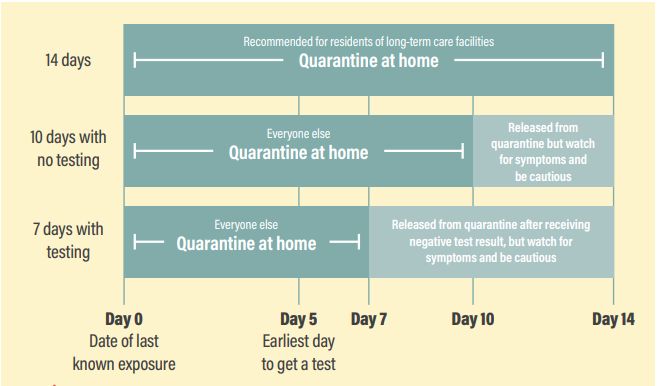
Summary of Changes to the Playbook
• Version 1.4 (Nov 19, 2020)
   • Clarifying isolation and quarantine
   • Frequently asked questions
       • Questions about close contacts in schools
       • Can I test out of quarantine?
       • Household member 24-day quarantine
       • End of quarantine testing
       • What is the EdOC?

                                                     1/6/2021   4
Summary of Changes to the Playbook
• Version 2.0 (Jan 6, 2021)
• Updated quarantine guidance
• Recommending testing for all close contacts
• Fever and chills- one symptom
• Clarification on travel guidance
• No more probable case reporting
1/6/2021 5Purpose of playbook and directions for use
What is the purpose of this playbook? How should I use this playbook?
• This playbook provides guidance on how to respond if a • Please keep this playbook in an area which is easily
child or staff member exhibits symptoms of COVID-19 accessible for reference.
or tests positive for COVID-19.
• This playbook is intended to share general best practices
• The playbook does not replace direct engagement with which can be used by all schools; it does not address
RIDOH, but rather gives an overview of what will occur unique situation-specific questions that you may have.
throughout that engagement process.
• In the event of a probable or confirmed case of COVID-19
• The information shared in this document assumes that in the school setting, in addition to this resource, RIDOH,
Pre K-12 and parents/guardians are complying with RIDE, and Edoc will support you throughout the process. T
current RIDOH guidelines and CDC guidance.
Please note that the material in this document may evolve as new guidance is released
1/6/2021 6Glossary
Term Definition
Being within 6 feet of an infected person (with or without a face mask) for a cumulative
Close contact 15 minutes, over a 24-hour period or having unprotected direct contact with secretions or
excretions of a person with confirmed COVID-19 during the infectious period
Community Occurs when individuals acquire COVID-19 through contact with someone in their local
transmission community, rather than through travel to an affected location.
Confirmed case A person who has tested positive for SARS-CoV-2 infection (the virus that causes COVID-19)
Contact tracing
Process of identifying individuals who have had close contact (see definition above) with
someone infected with COVID-19
A consistent group of students and staff who interacts with each other but not with members of
Consistent/Stable other groups on a regular basis. Groups should be as small as possible, with maximum
Group numbers outlined in the different reopening scenarios. When in a stable group, each group
must physically distance themselves from each other and from other consistent groups.
1/6/2021 7Glossary
Term Definition
COVID-19 Abbreviation for the disease caused by the novel coronavirus SARS CoV-2
Education Operation Center. The Education Operations Center (EdOC) is an interagency center
EdOC located at the R.I Department of Education that bring together expertise from a range of state
agencies to collaborate, coordinate, and communicate efficiently with schools
The time between exposure to an infection and the appearance of first symptoms. The virus
Incubation period
that causes COVID-19 has an incubation period of 2-14 days.
Infectious period
2 days prior to testing (the date of the swabbing was conducted) until CDC criteria to
(asymptomatic
discontinue isolation are met
cases)
Infectious period
(symptomatic 2 days before symptom onset until CDC criteria to discontinue isolation are met
cases)
1/6/2021 8Glossary
Term Definition
Process of separating individuals who are infected with COVID-19 from others. Isolation lasts a
minimum of:
Isolation • 10 days from symptom onset if symptomatic.
• 10 days from the date of specimen collection (test) is asymptomatic.
• 20 days for individuals with severely immunocompromising conditions.
Protocol Recommended actions to follow if a probable or confirmed case of COVID-19 occurs
Individual who has at least one of the following symptoms: cough, shortness of breath, or
difficulty breathing, new loss of smell or new loss of taste, OR at least two of the following
Probable case symptoms: fever (measured > 100.4 degrees Fahrenheit or subjective) or chills (rigors), body
aches (myalgia), headache, sore throat, nausea or vomiting, diarrhea, fatigue, or congestion or
runny nose
Process of separating and restricting the movement of individuals who were in close contact
with someone who tested positive or had symptoms of COVID-19. Persons in quarantine
Quarantine should self-monitor for 14 days for symptoms and seek medical advice as needed. RIDOH
recommends all close contacts of people with COVID-19 get tested on day 5 of quarantine or
later.
1/6/2021 9Glossary
Term Definition
RIDE Rhode Island Department of Education
RIDOH Rhode Island Department of Health
Assessing individuals for symptoms of COVID-19 verbally or via self/parent attestation.
Screening
Temperature checks may be performed by the school if desired.
Symptomatic A person who is experiencing one or more of the symptoms of COVID-19 as defined in CDC
individual guidelines
Two types of tests are available for COVID-19: viral tests and antibody tests. Viral tests indicate if
Testing you have a current infection while antibody tests indicate a previous infection. Throughout this
document, 'testing' refers to the viral test to diagnose a person with COVID-19.
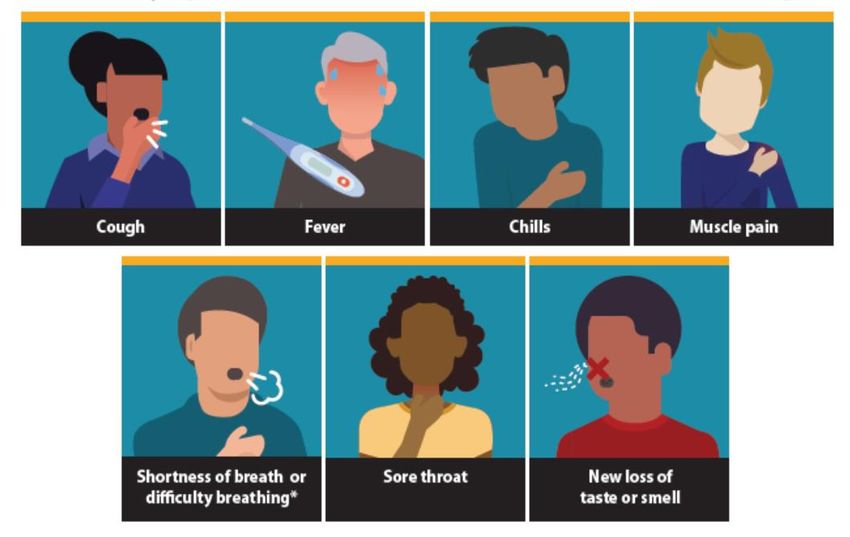
1/6/2021 10Symptoms of COVID-19
• Fever or Chills
• Cough (new)
• Shortness of breath or
difficulty breathing
• Fatigue
• Muscle or body aches
• Headache
• Sore throat
• New loss of taste or smell
• Congestion or runny nose (new)
• Nausea or vomiting
• Diarrhea
https://www.cdc.gov/coronavirus/2019-ncov/symptoms-testing/symptoms.html
1/6/2021 11Not all symptoms of COVID-19 make someone a probable case
•Cough (new)
Any ONE
•Shortness of breath or difficulty
symptom:
breathing
PROBABLE
•New loss of taste or smell
•Fever or Chills
•Muscle or body aches
•Headaches
Any TWO •Sore throat
symptoms:
PROBABLE •Fatigue
•Congestion or runny nose (new)
•Nausea or vomiting
•Diarrhea
1/6/2021 12Probable Case of COVID-19
CDC defines a probable case as an individual who meets the following criteria.
One of the following symptoms: Two of the following symptoms:
Cough (new) Fever
Shortness of breath
or Chills (rigors)
Difficulty breathing Muscle aches (myalgias)
New loss of taste or smell Headache
Sore throat
Nausea or Vomiting
Diarrhea
Fatigue
Congestion or runny nose (new)
Any student who meets the probable case definition should notify RIDOH by reporting through the RIDOH School Portal. The student
should be isolated and arrangements should be made for pickup. The parent/guardian should be given the K12 Call Center Number
and encouraged to schedule a test.
1/6/2021 13
Source: https://wwwn.cdc.gov/nndss/conditions/coronavirus-disease-2019-covid-19/case-definition/2020/When to call for emergency care
A person with the following symptoms needs emergency medical attention.
Call 911 and notify the operator that you are seeking care for someone who may
have COVID-19
Difficulty breathing
Persistent pain or pressure in chest
New confusion
Inability to wake or stay awake
Bluish lips or face
*This list does not reflect all possible symptoms requiring emergency care.
https://www.cdc.gov/coronavirus/2019-ncov/symptoms-testing/symptoms.html
1/6/2021 14What is the infectious period for COVID-19?
• Symptomatic Cases
• Two days prior to symptom onset until 10 days after symptom onset
• Asymptomatic Cases
• Two days prior to testing (the date of the swabbing was conducted) until 10 days
after the date of testing
1/6/2021 15Isolation vs Quarantine
• Isolation is for the ill or infected
• Separating individuals who are infected with COVID-19 from others
• Stay home and isolate from household members as much as possible
• Quarantine is for contacts
• Keeps someone who may have been exposed to the virus away from others
• Individuals who may have been exposed must stay home and monitor for symptoms
1/6/2021 16How long is isolation?
• Symptomatic:
• At least 10 days since symptoms first appeared (20 days if severely
immunocompromised) and
• At least 24 hours with no fever without fever-reducing medication and
• Other symptoms of COVID-19 are improving
• Loss of taste and smell may persist for weeks or months after recovery and
need not delay the end of isolation
• Asymptomatic: 10 days from the date of individual was tested (20 days if severely
immunocompromised)
More Information: https://www.cdc.gov/coronavirus/2019-ncov/if-you-are-sick/isolation.html
1/6/2021 17NEW!!! Quarantine Guidance (updated Dec 10, 2020)
• Close contacts must quarantine at home for 10 days from the last
time they were in contact with the infected individual.
• When they have completed their 10-day quarantine they should continue to
watch for symptoms for an additional 4 days
• Close contacts may shorten quarantine to seven days if they have a
negative result from a test (either PCR or rapid antigen test) taken at
least five days after they were in contact with the infected individual.
• When they have completed their 7-day quarantine they should continue to
watch for symptoms for an additional 7 days
1/6/2021 18NEW!!! Quarantine Guidance (updated Dec 10, 2020)
1/6/2021 19Calculating End of Quarantine Options
• Need help determining end of quarantine dates?
• RIDOH has created a COVID-19 Close Contact Quarantine Calculator
• Click link above, and scroll down to the middle of the page to download the
calculator
1/6/2021 20NEW!!! Testing of ALL Close Contacts (Dec 10, 2020)
• RIDOH recommends ALL close contacts of people with COVID-19 get
tested (with an antigen or PCR test) on day 5 of quarantine or later.
• This will assist in detecting asymptomatic infection and isolating quickly to
prevent further spread
1/6/2021 21NEW!! Quarantine for Household Members (as of Dec 10)
• How long do household contacts need to quarantine?
• Household contacts need to quarantine while the individual is infectious (until 10
days after symptom onset) and then start the 10-day quarantine or the 7-day with a
negative test quarantine (typical quarantine is 17-20 days)
• How long do household contacts need to quarantine if the individual with COVID-19
can avoid close contact with household members all the time?
(i.e. infected individual stays in a separate bedroom and bathroom; household
members drop food off at the door)
• Household members would only need to quarantine for 10 days or 7 days with a
negative test from the date of last exposure to the infected household member
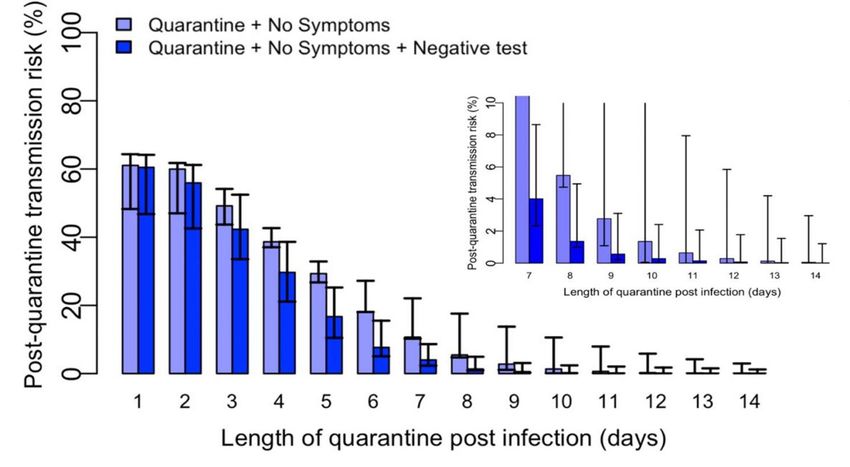
1/6/2021 22CDC Rationale for Change in Quarantine Guidance
• 10-Day Quarantine without testing
• The post-quarantine transmission risk is approximately 1% (upper limit of 10%)
• A negative test at day 10 reduces
the risk to approximately 0.3%.
• 7-Day Quarantine with negative
test on day 5
• The post-quarantine transmission
risk is approximately 5%,
(upper limit of about 12%)
https://www.cdc.gov/coronavirus/2019-ncov/more/scientific-brief-options-to-reduce-quarantine.html
1/6/2021 23Which Quarantine Option to Pick?
• Executive Order issued by the governor allows for three quarantine options for close
contacts of a person with COVID-19:
• 14-day quarantine- gold standard
• 10-day quarantine
• 7-day quarantine with negative test (antigen or PCR) on day 5 or later
• For each option of the three options, individuals must monitor for symptoms
for 14 days from last exposure
• RIDOH does not dictate which options schools/districts should choose to implement.
• RIDOH does recommend universal testing of all contacts
1/6/2021 24How is a close contact defined?
• Close contact
• Individual who has been within 6 feet of an infected person
(with or without a face mask) for a cumulative 15 minutes over a 24-hour period
during the infectious period
• i.e. two 10-minute interactions during the day
• Individual who has had unprotected direct contact with secretions or excretions
of a person with confirmed COVID-19 during the infectious period
• i.e. infected person coughed directly in someone’s face
1/6/2021 25Clearance protocols for children and staff members to return to class
Symptom Will be Tested?*
Cough (new) Yes
Shortness of breath or difficulty breathing Yes
New loss of taste or smell Yes
Fever (temperature higher than 100.4° or feels feverish to the touch) or Chills
Muscle or body aches Yes, if two or more of
Headache these symptoms
Sore throat
Fatigue No, if only one of these
Congestion or runny nose (new) symptoms
Nausea or vomiting
Diarrhea
*If the PCR test is negative, person can return when fever free for 24 hours and symptoms improved (back to usual health).
If the rapid or PCR test is positive, person must isolate and can return when CDC guidance for release from isolation is met.
1/6/2021 26Protocol- Symptomatic individual but not a probable case
Isolation and
Recommended testing
Situation quarantine Requirement to return
protocol
protocol
Staff or Symptomatic Advise symptomatic individual Attestation that confirms one of the following
student has individual is to seek medical advice and (parent/guardian attests if a minor):
a SINGLE isolated and sent test if recommended by • Not tested
symptom of home healthcare provider • Has been fever free for 24 hours without
COVID-19 use of fever-reducing medication and
but does not No quarantine Some patients with COVID-19 symptoms improved (back to usual health).
meet the recommended for have presented with only one
CDC close contacts. mild symptom or atypical • Tested negative (PCR)
definition of symptoms and patients or • Has been fever free for 24 hours without
probable providers may prefer to test use of fever-reducing medication and
case even when probable case symptoms improved (back to usual health).
definition is not met
• Tested positive (PCR or antigen)
• Has met RIDOH guidelines for ending
isolation.
1/6/2021 27Protocol- Probable case
Isolation and
Recommended testing
Situation quarantine Requirement to return
protocol
protocol
Staff or Probable Advise probable individual to Attestation that confirms one of the following
student is a individual is seek medical advice and (parent/guardian attests if a minor):
probable isolated and sent obtain a COVID-19 diagnostic
case home test. • Tested negative (PCR)
• Has been fever free for 24 hours without
Household RIDOH may recommend use of fever-reducing medication and
contacts must testing for others in certain symptoms improved (back to usual health).
quarantine situations.
pending the • Tested positive (PCR or antigen)
probable case • Has met RIDOH guidelines for ending
COVID-19 test isolation.
result; school
contacts do not
https://wwwn.cdc.gov/nndss/conditions/coronavirus-disease-2019-covid-19/case-definition/2020/
1/6/2021 28Protocol- Confirmed case (tested positive with PCR or antigen test)
Isolation and
Recommended testing
Situation quarantine Requirement to return
protocol
protocol
Staff or Person testing Close contacts in quarantine Individuals must meet the CDC/RIDOH
student positive is isolated should self-monitor for guidelines for ending isolation:
tests positive per CDC/RIDOH symptoms and seek medical RIDOH recommends the symptom-based
guidelines advice as needed. RIDOH strategy for ending isolation. Isolate until:
recommends all close Fever free for 24 hours without the use of
Close contacts are contacts get tested on day fever-reducing medication and
quarantined per 5 of quarantine or later. Symptoms have improved and
CDC/RIDOH 10 days since symptoms first appeared
guidelines Close contacts who have (20 days if severely immunocompromised)
tested positive in the past 90
days do not have to OR time-based approach if asymptomatic when
quarantine.
tested positive. Isolate until:
• 10 days since date of specimen collection
(20 days if severely immunocompromised)
https://www.cdc.gov/coronavirus/2019-ncov/hcp/disposition-in-home-patients.html
1/6/2021 29Protocol- Close contact of a case
Isolation and Recommended testing
Situation Requirement to return
quarantine protocol protocol
Staff or A close contact is Close contacts in A close contact must meet the CDC/RIDOH
student is a quarantined per quarantine should self- guidelines for ending quarantine before
close contact CDC/RIDOH guidelines monitor for symptoms for returning to school:
of a 14 days from last • Remain asymptomatic
confirmed If the close contact exposure and seek • Complete one of the quarantine options:
case remains in the medical advice as needed. • 14 days
household as the case, • 10 days
Close the contact must RIDOH recommends all • 7 days with a negative test (antigen or
contacts who quarantine during the close contacts get tested PCR) on day 5 or later
have tested case’s isolation period on day 5 of quarantine or
positive in (10 days) and then later. • If choosing a 10 day or 7-day quarantine,
the past 90 quarantine per continue to monitor for symptoms for 14
days do not CDC/RIDOH guidelines. days from last exposure
need to A household contact
quarantine usually quarantines for
17-20 days.
1/6/2021 30Protocols summary
Person Tests Person Tests
Symptomatic
Probable Case Positive with PCR or Negative with a PCR
(not probable case)
Antigen Test Test
Isolation and Isolate Isolate Isolate for 10 days from • Fever free 24
Quarantine Medical advice Medical advice symptom onset or 10 hours and
Guidance Test encouraged Test required (PCR or days from test if • Symptoms
If not tested/tests neg antigen) asymptomatic, and improved (back to
• Fever free for 24 • Fever free 24 usual health)
hours and, hours and
• Symptoms improved • Symptoms improved
(back to usual health) (back to usual health)
Return to Parent/guardian Parent/guardian Parent/guardian Parent/guardian
school attestation attestation attestation attestation
with test result
Close No action No action for school Follow RIDOH guidance No action
Contacts close contacts while for isolation
waiting for test result
1/6/2021 31Case Investigation and Contact Tracing
In the K-12 SettingOverview of Case Investigation Process
• RIDOH receives a positive COVID-19 lab result (PCR or antigen)
• Case investigator calls the case for an interview
• Asks about: symptoms, exposures, activities, etc.
• Close contacts
• Person who was within 6 feet for more than 15 minutes (cumulative within 24
hours) during the infectious period
• Infectious period is 2 days before symptom onset
(or if asymptomatic, 2 days before COVID-19 test)
• Case investigator informs the case to isolate
• Contact tracer calls close contacts to put them in quarantine and recommend testing
1/6/2021 33Case Investigation- Questions for Schools
• Case investigator email the superintendent and/or the principal and school nurse
• Verify the individual’s last day in school
• Is the child in a stable pod?
• Are there times when pods mix?
• List of children in pods
• Seating charts for each classroom
• Names and locations of all students and teachers
• Indication of the amount of space in between desks
1/6/2021 34Case Investigation- More Questions for Schools
• Has anyone else been in the classroom?
• Substitute teacher
• Teachers aide
• Student teacher
• Support service provider
• If a staff member, do teachers gather in a shared space**
• Workroom
• Breakroom
• Professional development sessions
Note: On Oct 14 Gov. Raimondo ordered workplace breakrooms to close for 90 days amid an uptick in coronavirus cases.
1/6/2021 35Case Investigation- More Questions for Schools
• Before school care and aftercare
• Sports teams and gym
• Bus or carpool groups
• Lunch
• Recess
• Bathroom groups
• Drop off and dismissal
• Transitions within school
1/6/2021 36Things to Keep Updated and Easily Accessible
• School Points of Contact
• RIDOH will notify the principal/COVID-19 contact and the superintendent
• Make sure RIDOH has updated contact information for all school points of contact
• Office numbers
• Cell phones for weekends/after hours
• Seating charts for classrooms and buses
• Phone numbers for teachers and coaches
1/6/2021 37Frequently Asked
Questions
TravelQuarantine- International Travelers
• What are the quarantine options for someone returning to RI after traveling
internationally?
• Anyone coming to RI from outside the United States is required to quarantine for
14 days after their arrival.
• There is no option to test out of quarantine.
1/6/2021 39Quarantine- Domestic Travelers
• What are the quarantine options for someone returning to RI after traveling to a US
state where > 5% of COVID tests are positive? (click for list of states)
• Quarantine for 14 days and self-monitor for symptoms
• As an exception, you may provide proof of a negative result from a COVID-19
test taken within 72 hours prior to your arrival
• Travelers who receive a COVID-19 test during their quarantine period in RI and get a
negative result (antigen or PCR) can stop quarantining
• However, they still need to self-monitor for symptoms for 14 days, wear a mask
while near people who they don’t live, and follow physical distancing guidelines
1/6/2021 40Preferred Quarantine Option for Students/Staff Who Travel
• The preferred method is to quarantine for 14 days after returning to RI from travel to a
US state where > 5% of COVID tests are positive
• COVID-19 can develop any time between 2-14 days after exposure
• A single negative test only indicates that you are negative at that point in time, but
you could become infectious any time through day 14
• Quarantining for 14 days before returning to school is the best way to reduce the
chance of exposing the school community to COVID-19
NOTE: These guidelines have NOT been updated.
The Executive Order regarding quarantine after returning from domestic and international travel
remains in place. Learn more at health.ri.gov/covid/travel.
1/6/2021 41Common Travel Questions
• A family went from their home in RI to their home in a high incidence state for the long
weekend. They did not go out anywhere or see anyone while in the high incidence
state. Do they have to quarantine?
• No, since they went from house to house and had no exposure to people or places
in the high incidence state, they do not need to follow quarantine guidance
• A family went from their home in RI to their home in a high incidence state for the long
weekend. They went skiing while in high incidence state. Do they have to quarantine?
• Yes, since they went skiing and had potential exposures while at the ski resort
they do need to follow the quarantine guidance
1/6/2021 42Common Travel Questions (con’t)
• A family went to a high incidence state for the weekend. When they went last week,
the state was NOT on the list of states with greater than 5% positivity. Today the list
was updated and now that state is on the list. Does this family need to quarantine?
• No, since the state was not on the list when they went to that state nor while they
were there, then they do no need to quarantine.
1/6/2021 43Frequently Asked Questions Quarantine
Quarantine Questions
• Do contacts of contacts need to quarantine?
   • No. Only direct contacts of the person who was infectious need to quarantine

• If I get tested during quarantine and I’m negative, does my quarantine end?
     • Yes. If you get tested on day 5 or later (with an antigen test or a PCR test), you can
       end quarantine on Day 7 and continue to monitor for symptoms until day 14
         • If you get tested earlier than day 5 you cannot end quarantine on day 7

• If I am not on quarantine and I want to go for asymptomatic testing, do I need to
  quarantine while I wait for results?
     • No. If you are asymptomatic and get tested, you do NOT need to quarantine while
       results are pending

                                                                   1/6/2021   45
Quarantine Questions
• If I get tested during quarantine and I’m positive, how long do I need to stay home?
• If an individual on quarantine tests positive for COVID-19, the quarantine stops and
that person switches to isolation
• The individual must isolate for 10 days from symptom onset or 10 days from the
date of the specimen collection if the person is asymptomatic
• When do close contacts of a probable case need to stay home?
• Only household contacts of a probable case should stay home while tests results
are pending because of the increased exposure they have in the home environment
1/6/2021 46Quarantine of Household Contacts
• If a household member has completed ten days of isolation but still has symptoms,
can I start my quarantine or do I need to wait until symptoms are completely gone?
• As long as the case has been fever-free without fever-reducing medication for
24-hours and there has been an improvement in symptoms, the household
members can begin their quarantine
• If symptoms have not yet improved, household members need to wait to begin their
quarantine
1/6/2021 47School-Specific Quarantine Questions
• Can I require my staff to quarantine for more than 7 days even if they get a negative
result from a test taken at least 5 days after the close contact?
• Yes. Employers may require employees to quarantine for longer than the shortest
quarantine option in the Executive Order
• Can I offer a shorter quarantine period for my staff but require student to wait for 10
days before returning to childcare?
• Yes, you can have different policies for students and staff
1/6/2021 48Frequently Asked
Questions
TestingK-12 COVID-19 Test Scheduling Service
• Phone Number: 844-857-1814
• NEW! Schedule online at: portal.ri.gov
• Hours of Operation: 7:30 a.m. - 9:30 p.m. seven days a week
• Who Can Be Scheduled for a Test Through This Service?
Anyone associated with K-12 (students, staff, coaches, etc.) who are:
• Symptomatic, or
• A close contact of a person who tested positive for COVID-19, or
• A classmate of a person who tested positive for COVID-19
1/6/2021 50Testing Questions
• Why do some people get one test and others get two?
• Asymptomatic people usually get one test (PCR test)
• Symptomatic people usually get two tests (antigen and PCR)
• The rapid antigen test is accurate when testing symptomatic people
(not asymptomatic people)
• If a symptomatic person is tested, can the person return to school if the rapid test
result is negative, but the PCR test result is still pending?
• No, an individual is symptomatic they should not return until they receive both a
negative rapid test result and a negative PCR result
1/6/2021 51How Can I Access Test Results?
• If you were recently tested for COVID-19 in the State of Rhode Island, you can access a
record of your test result at https://portal.ri.gov/results
• What you need to access your test results
• Name
• Date of Birth
• Date of Testing Appointment
• COVID-19 Test Result Portal User Guide is available if you need assistance
**Please note that the EdOC does not have access to individual test results**
1/6/2021 52Which Type of Test is Required in Each Scenario?
Scenario Type of Test Needed
Probable Case PCR (this has not changed)
Close Contact Shortening
Antigen Test or PCR
Quarantine
Traveler Shortening
Antigen Test or PCR
Quarantine
1/6/2021 53Frequently Asked Questions Close Contacts
How to Determine Close Contacts in Schools
• Settings where physical distancing can be maintained or determined
      • Classrooms with assigned seats
      • Buses with assigned seats and controlled entry/exit

• Settings where physical distancing cannot be maintained or determined :
      • Childcare and classrooms with stable groups without physical distancing
      • K-12 classrooms without physical distancing or assigned seats
      • Sports teams

                                                              1/6/2021   55
Questions About Close Contacts in School
• If we are notified of a positive case during the school day, do we need to send the
close contacts home immediately?
• It is always preferable to quarantine close contacts as soon as possible. However,
if it is not feasible to send the student home immediately, a close contact can
remain in school, follow the normal dismissal process, and begin their quarantine
when they get home
• The incubation period for COVID-19 is 2-14 days, which means that a person who
has been exposed to COVID-19 is unlikely to be infectious for the first few days after
exposure
1/6/2021 56Questions About Close Contacts in School
• What do we do if a close contact comes to school because he/she has not yet been
quarantined by RIDOH?
• Send the student home
• Schools can inform staff/students that they have been identified as a close contact
and should stay home in accordance with RIDOH guidance
1/6/2021 57Can Schools Determine Who is a Close Contact?
• Yes. In collaboration with RIDOH, schools can identify close contacts in two ways:
• Option 1
• Following protocol outlined by RIDOH on how to identify close contacts
• Call RIDOH for a consult
• Add the identified close contacts to the Excel spreadsheet and submit to RIDOH
• Option 2
• Send RIDOH seating charts, class rosters, bus charts, teacher phone numbers, etc.
• RIDOH will complete investigation to identify close contacts
• NOTE: If case counts are high, RIDOH may not have time to conduct an analysis of
close contact and may quarantine all students/staff on the rosters submitted.
1/6/2021 58Can Schools Quarantine Close Contacts?
• Yes. Under the governor’s executive order, schools can notify all close contacts and ask
them to quarantine according to the RIDOH guidance
• Close contacts may also be contacted by RIDOH
• School leaders also have the authority to:
• Ask students/staff to stay home while RIDOH completes the case investigation
• Shift a class or grade to distance learning
• Inform students/staff that RIDOH may reach out to close contacts to provide
quarantine guidance
1/6/2021 59Testing of Close Contacts
• Is testing on day 5 of quarantine or later required?
• No, testing on day 5 of quarantine or later is recommended but not required;
however, in some outbreak situations close contacts may be required to get tested
before returning to school
• Is there an alternative to testing if schools require testing to return to school?
• The alternative to testing on day 5 of quarantine or later is to remain in quarantine
for an additional 10 days to ensure that someone who may have become infected
on day 14 of quarantine is not infected when they are released from quarantine
1/6/2021 60Classroom Testing
• Why is RIDOH recommending testing for some students who were
never on quarantine?
• In an outbreak situation involving many cases and many close contacts within a
large group of students/staff (e.g classroom, grade, wing of a school, or sports
team), RIDOH may recommend testing for the entire group due to the possibility of
asymptomatic transmission
1/6/2021 61Education Operations Center
(EdOC)What is the Education Operations Center?
• The Education Operations Center (EdOC) is an interagency center located at the R.I
Department of Education that bring together expertise from a range of state agencies
to collaborate, coordinate, and communicate efficiently.
• Collaborating partners include:
• Governor Gina Raimondo’s Office
• Rhode Island Department of Education
• Rhode Island Department of Health
• Rhode Island Department of Children, Youth, and Families
• Rhode Island Emergency Management Agency
• Rhode Island National Guard
• Disaster Medical Assistance Teams
63What Supports can the EdOC Provide?
• Guidance on best practices among schools statewide
• Health, safety, social, and emotional trainings for all levels of school personnel.
PLUs available for participants
• Personalized, rapid responses via phone, email, or virtual meeting.
Phone lines are open 24-hours a day
• Focused and collaborative problem-solving for your school
• School based support with the CI/CT process, ventilation, and logistical
recommendations
• Scenario-based feedback through application of current guidance
• Questions about school-based testing
1/6/2021 64EdOC Contact Information
• Email: EDOC@ride.ri.gov
• Main line 7:30am-4:30pm: 401-277-1440
• After hours: 401-451-1907
• Available: 24/7
1/6/2021 65Template Letters for Schools
Letter and Direct Contact Templates
• Positive Case letter:
   • English
   • Portuguese
   • Spanish
• Positive Case-Past Quarantine Letter:
   • English
   • Portuguese
   • Spanish
• School Direct Contact Template (Excel)
                                           1/6/2021   67
Resources for Schools
Resources for Schools
• CDC Guidance
   • Interim Guidance for Case Investigation and Contact Tracing in K-12 Schools-
     updated Dec 30, 2020

• Sports-relate Guidance
   • Rhode Island Phase III youth, adult & school sports guidelines and indoor sports
     facilities
   • Rhode Island Interscholastic League Return to Education-based Athletic Practices
     and Competitions Season II (Winter Sports) 2020-2021

                                                                1/6/2021   69
Additional resources for
educating teachers,
parents/guardians and childrenResources for educating teachers, parents/guardians and children
Resource Source Overview of contents Link to access
Talking with children about Coronavirus Disease CDC Recommendations to help adults have https://www.cdc.gov/coronavirus/2019-
2019 conversations with children about COVID-19 ncov/daily-life-coping/talking-with-
children.html
Key Messages and Actions for UNICEF, WHO Guidance for operations of education https://www.who.int/docs/default-
COVID-19 Prevention and Control facilities including educational checklists for source/coronaviruse/key-messages-and-
in Schools, March 2020 school administrators, teachers/staff, actions-for-covid-19-prevention-and-control-
parents/guardians and students/children in-schools-march-
2020.pdf?sfvrsn=baf81d52_4
Toolkit for Parents and Teachers Department of Health Promotion Science, Teaching resources/information sheets for https://publichealth.arizona.edu/news/2020
University of Arizona parents, teachers, administrators and CDC /covid-19-communication-toolkit-parents-
Health Promotion Materials and-teachers
Communicating with Children Michigan Department of Health Guidelines and resources catered https://www.michigan.gov/documents/coron
During the COVID-19 Outbreak and Human Services to families to promote healthy and avirus/Talking_with_kids_about_COVID_FINA
comforting conversations between children L_685791_7.pdf
and parents/guardians
For Reference, RIDOH COVID -19 Unit can be reached at 401-222-8022
1/6/2021 71RIDOH and RIDE Resources
Resource Source Overview of contents Link to access
RIDOH COVID-19 Information Rhode Island General information on COVID-19 in RI https://health.ri.gov/covid/
Department of Health
RIDOH COVID-19 Data Rhode Island Numbers and trends of COVID-19 in RI https://ri-department-of-health-covid-19-
Department of Health data-rihealth.hub.arcgis.com/
COVID-19 testing in Rhode Island Rhode Island Who should get tested for COVID-19 and https://health.ri.gov/covid/testing/
Department of Health locations for testing throughout RI
DHS COVID-19 Information Rhode Island Professional Development: Re-Opening https://center-elp.org/center-pd/dhs-
Department of Human Services Child Care/ mandatory-trainings-to-re-open-child-care-
entrenamientos-mandatorios-de-dhs-
para-la-reapertura-de-cuidado-infantil/
Re-opening Rhode Island State of Rhode Island Guidance for re-opening RI https://www.reopeningri.com/
Back to School RI: Health and Safety Guidance to State of Rhode Island Guidance for re-opening schools https://www.ride.ri.gov/Portals/0/Upload
Reopen Rhode Island’s Elementary and s/Documents/COVID19/Back_to_School
Secondary Schools _RI_Guidance_6.19.20.pdf?ver=2020-
06-19-120036-393
1/6/2021 72You can also read


