Parliament House
Site Book
←
→
Page content transcription
If your browser does not render page correctly, please read the page content below
Parliament House Site Book
Department of Parliamentary Services
Parliament House, CANBERRA ACT 2600

First published:        November 1995

Version 6 March 2014
© Commonwealth of Australia 2003
This work is copyright. Apart from any use as permitted under the Copyright Act
1968, and subsequent amendments, no part of this publication may be
reproduced by any process without the written permission of the Department of
Parliamentary Services.
All enquiries should be addressed to:
       Assistant Secretary ADMB
       Parliament House
       CANBERRA ACT 2600

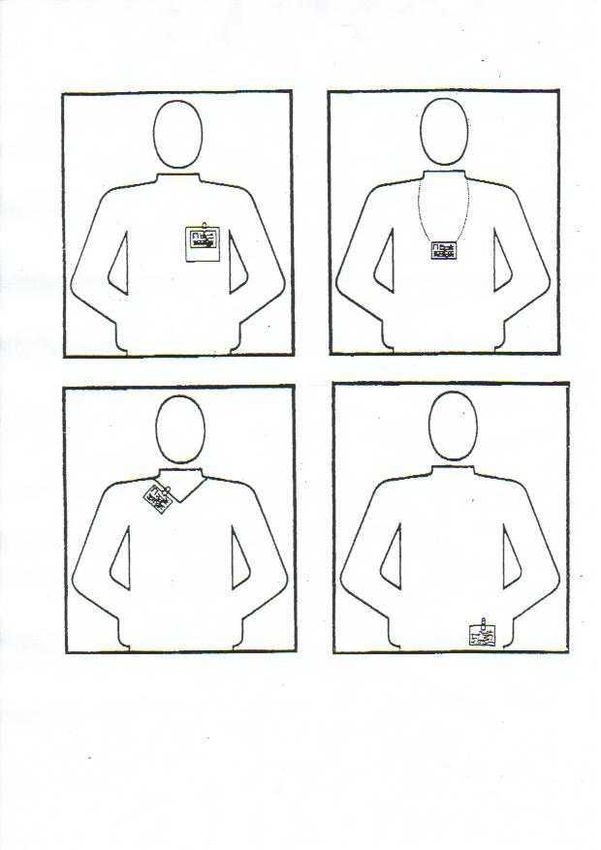
       Telephone: (02) 6277 5161

                                                                              2
Site_Book.DOCX TRIM 13/2333/3
Contents
Preamble ................................................................................................. 5
Working Safely in Parliament House ....................................................... 6
Access to Parliament House .................................................................... 6
Before Starting any Works ........................................................................ 6
Passes ................................................................................................... 6
Electronic Passes ..................................................................................... 7
Note: Electronic Passes are issued at the Pass Office by appointment only and
can be made by telephoning 6277 5989. The Pass Office is generally open
between the hours of 9:00 am and 4:45 pm, Monday to Friday, excluding
public holidays. ....................................................................................... 8
Security Controls ..................................................................................... 8
Parking .................................................................................................. 8
Keys ...................................................................................................... 8
Permit and Work Approval Procedures .................................................... 9
Authority to Work in Designated Area ........................................................ 9
Notice Periods ......................................................................................... 9
Isolation Permit ...................................................................................... 9
Isolation Permit associated with Fire Systems ........................................... 11
Hot Work Permit ................................................................................... 11
Authority to Dig or Core in Designated Area.............................................. 12
Alarm Isolation Permit ........................................................................... 12
Entry Permit for Confined Spaces ............................................................ 12
Working-at-Heights Permit ..................................................................... 13
Powered Tools and Equipment ................................................................ 13
Work Within the Building ...................................................................... 14
General ................................................................................................ 14
Code of Conduct.................................................................................... 14
Harassment .......................................................................................... 15
Care and Protection of the Building Fabric and Furniture ............................ 15
Care and Protection of Floor Finishes/Coverings ........................................ 15
Removal of Ceiling Tiles ......................................................................... 16
Hazardous Substances and Dangerous Goods ........................................... 16
High Voltage ......................................................................................... 17
Light and Power .................................................................................... 17
Tagging of Equipment ............................................................................ 18
Operation of Vehicles and Mobile Equipment ............................................. 18
Accidents and Incidents ......................................................................... 18
Environmental Incidents......................................................................... 19
Noise ................................................................................................... 19
Using Machinery .................................................................................... 19
Manual Handling ................................................................................... 19
Fraud Control........................................................................................ 20
Fire System Components........................................................................ 20
Fire Hose Reels ..................................................................................... 20
Fire Stopping ........................................................................................ 20
Delivery, Removal and Storage of Materials, Tools and Equipment etc .. 20
Access to the Loading Dock .................................................................... 20
Opening of the Loading Dock .................................................................. 20
Goods Handling Procedures .................................................................... 20
Pre-Delivery Advice ............................................................................... 21
3
Site_Book.DOCX TRIM 13/2333/3Receipt and Distribution of Goods ............................................................ 22
Rejection of Incorrectly Addressed Goods ................................................. 22
Cleaning Up and Removal of Debris ......................................................... 22
Use of Lifts for Transporting Tools and/or Materials ................................... 22
Plant Room Storage of Material and Equipment ......................................... 23
Work Within Landscaped Areas ............................................................. 23
General ................................................................................................ 23
Care and Protection of Turf Areas ............................................................ 24
Tree and Shrub Protection ...................................................................... 24
Irrigation .............................................................................................. 25
Access and Delivery of Equipment and Materials ....................................... 25
Photography Policy ............................................................................... 25
Emergency Evacuation Procedures ....................................................... 26
Background .......................................................................................... 26
Action in the Event of Emergency ............................................................ 26
Evacuation Procedure ............................................................................ 26
Attachment A Parliament House Art Collection information
Attachment B Display of Security Passes
Attachment C Form STO 20 - Request for movement of equipment through
Loading Dock
Attachment D Lift Locations
Attachment E Fraud Control
Attachment F Smoking Zones
Amendments
Amendments to this manual will be managed by reprinting the manual and
subsequently changing the Edition number, both in the electronic format and to
the controlled copy.
4
Site_Book.DOCX TRIM 13/2333/3Preamble
1 The purpose of this Site Book is to provide Staff, Contractors and
Consultants with information with respect to:
(a) access within Parliament House;
(b) permit and work procedures;
(c) code of conduct; and
(d) safety matters, including emergency evacuation procedures.
2 The abbreviation 'DPS' is defined as the Department of Parliamentary
Services. The term 'Contractor' shall include Consultants, Sub-Consultants, Sub-
Contractors, and Construction/Project Managers when they are appointed by
DPS. The term 'Staff' shall include all building occupants. The term 'Contract
Manager' refers to the DPS employee who is responsible for the management of
the project or contract.
3 In particular, this Site Book will assist Contractors and Consultants who
are engaged to work within Parliament House. The Site Book will form part of the
contract when it is prescribed as such in a formal instrument of agreement.
Otherwise, the instructions and procedures contained in this document are
supplementary to the terms and conditions of any contractual arrangement.
4 Noncompliance may leave the Contractor or Consultant subject to a stop-
work order, including liability for any costs incurred.
5 The Contractor or Consultant is responsible for ensuring that all
employees, Sub-Contractors or Sub-Consultants who are under their control
comply with these instructions and procedures.
6 All laws and legislation that are enforceable in the Australian Capital
Territory shall be observed. The Contractor or Consultant shall observe and
comply with the provisions of the ACT and Commonwealth Workplace Health and
Safety Act (WHS), paying particular attention to safe working practices.
7 A series of DPS WHS papers is available on the DPS Portal. Contractors are
to contact the DPS Contract Manager to discuss any relevant WHS policies that
may apply.
8 Any confidential information seen or heard while working in Parliament
House is to remain confidential and must not be disclosed to others.
9 The utmost care and protection of all finishes, installations, furniture and
fittings must be taken while on site. Under no circumstances shall an Art Work be
touched or removed. Contractors may be held liable for any loss or damage
incurred while having access to a particular area or space.
10 While working in Parliament House, it is expected that dress and general
appearance will be neat and tidy and appropriate for the task.
11 Contractors are reminded that smoking is not permitted inside Parliament
House or within the basement car parks or a number of internal courtyards.
Refer Attachment F, Smoking Zones in Parliament House.
5
Site_Book.DOCX TRIM 13/2333/312 Further information or clarification may be obtained from:
Assistant Secretary ADMB
Telephone: 6277 5161
Working Safely in Parliament House
13 All occupants of Parliament House are responsible for using safe working
methods and maintaining a safe working environment. No person should work
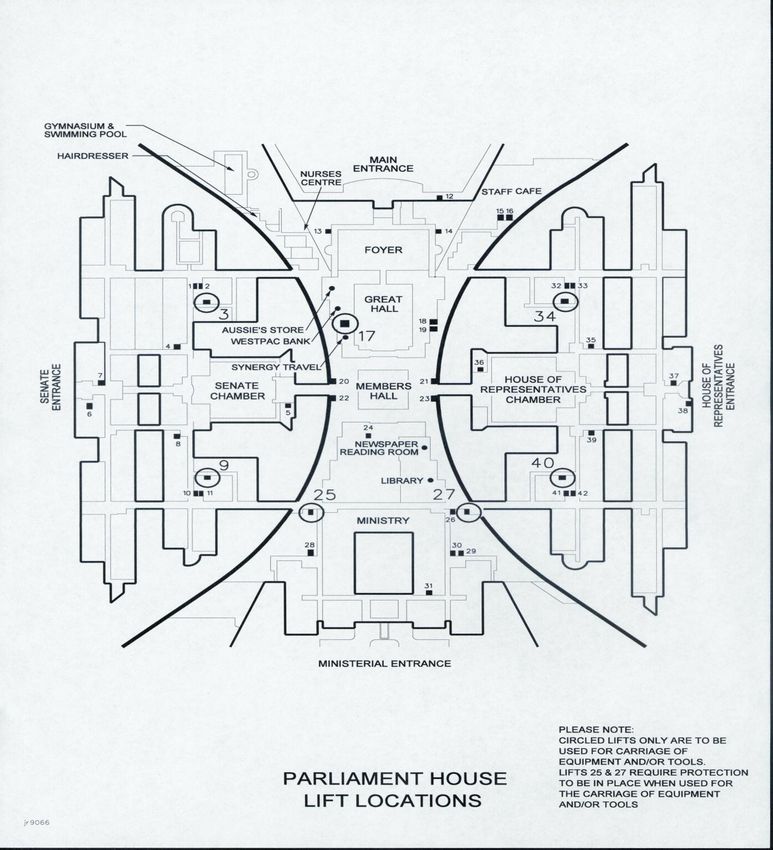
under conditions that are unsafe; any concerns should be raised with the Site
Supervisor/Contract Manager. All hazards, incidents or near misses must be
reported to the Site Supervisor.
14 Safe working methods to avoid hazards must be observed. The
consequences of being injury by not carrying out work safely far outweigh other
considerations.
15 Before starting work in a particular area contractors must always check
the location of telephones, fire extinguishers, Emergency exits and
confirm the number of supervisors and employees on site.
16 Emergency telephone extensions are as follows:
EMERGENCIES 7117
Nurses’ Centre 5314
Maintenance Services Help Desk 5045
Security 5999
Information Technology Help Desk 2020
Access to Parliament House
Before Starting any Works
17 Contractors must contact the DPS Contract Manager to arrange an
inspection of the work site at least 48 hours prior to works commencing.
18 All contractors are to have successfully completed the DPS WHS induction
program, which can be arranged through the DPS Contract/Project Manager.
Passes
19 Parliamentary Security and the Australian Federal Police Uniformed
Protection (AFP-UP) control access to Parliament House. To gain entry to
complete works within the building or the Parliamentary Precinct, contractors will
require a security pass. There are several categories of security passes issued to
contractors including:
(a) Photographic electronic passes are issued to contractors who have a
day-to-day requirement to conduct activities in Parliament House.
These passes provide unrestricted access to designated parts of the
building as appropriate to their activities. In special cases,
6
Site_Book.DOCX TRIM 13/2333/3Contractors may be authorised to sign in Sub-Contractors who will be
issued an 'Escorted' pass.
(b) Non-photographic electronic passes, are issued to Contractors who
have an ongoing but more occasional requirement for access to
Parliament House. These passes provide unrestricted access to
designated parts of the building as appropriate to Contractors
activities. These Contractors need to have suitable photo ID with
them at all times. These passes are only valid for the duration of the
contract.
(c) 'Unaccompanied' temporary passes, may be issued to Contractors on
a daily basis by an authorised passholder. The Contractor must be
known to the authorised passholder or produce a current security
pass from another government organisation or have satisfactorily
completed a police records check.
(d) 'Escorted' temporary passes, are issued on a daily basis to
Contractors for short-term activities in the building. The Contractor
must be signed in by an authorised passholder, including a Contractor
who has been granted special approval. Persons issued with these
passes must be physically escorted at all times by a person with an
electronic pass.
20 Passes must be worn so that they are visible at all times. Refer
Attachment B, Display of Passes.
21 To obtain a security pass, a National Police Checking Service application
form must be completed. Forms are available from the DPS Project/Contract
Manager and should be returned to when completed. The application includes
a 100 point proof of identity check for which either original documents
or certified true copies must be provided.
22 A Security Pass application form must also be submitted and both forms
should be completed in black ink. The average processing time is usually 10
days, however delays may be experienced is if the incorrect information or
documents are provided. Contractors who fail to receive a satisfactory police
check will not be issued with a security pass and will require special permission
from the Director of Security to be signed in on a temporary basis.
Electronic Passes
23 Electronic passes will be issued only to persons requiring access for
periods of more than one week. Persons requiring access for shorter periods will
need to be signed in each day by an authorised passholder.
24 Additional photographic identification such as a drivers licence, will be
required to verify ownership of a non-photographic electronic pass.
7
Site_Book.DOCX TRIM 13/2333/3Note: Electronic Passes are issued at the Pass Office by appointment only and
can be made by telephoning 6277 5989. The Pass Office is generally open
between the hours of 9:00 am and 4:45 pm, Monday to Friday, excluding public
holidays.
Security Controls
25 Security patrols are conducted regularly throughout Parliament House and
the surrounding precinct. Contractors must comply with any directions from
Security Staff and may be requested to provide documents authorising them
access to an area.
26 All items brought into the building will be subject to Security screening and
may be refused entry. All bulky items must be brought through the Loading Dock
as there are restrictions on the size of objects permitted through the other
Security entrances (refer paragraph 136 ).Carry bags and toolboxes may need to
be inspected to allow proper screening. Contractors may be required to establish
proof of ownership of any goods or materials in their possession prior to leaving
the building.
27 Entry to secure areas of the building can be arranged through the DPS
Project/Contract Manager. In some instances a security officer may have to
provide access to locked areas or escort personnel while works are completed.
28 A security clearance may be required to work in some areas of the
building. In these instances Contractors will need to provide personal details or
proof of an existing current clearance to the DPS Project/Contract Manager prior
to the commencement of works.
Parking
29 Parking restrictions are in force in the public underground car park and
parking is generally prohibited on the Parliamentary Drive. Electronic Passholders
may park in the House of Representatives and Senate private car parks. Limited
parking is also available in the external Ministerial car parks at the southern end
of the precinct.
30 Contractors are advised to discuss parking requirements with the DPS
Project/Contract Manager. After hours, Contractors may park in the public
underground car park and use the 24 hour entrance (Point 1) to enter and exit
the building. Point 1 is located adjacent to the public underground car park lift
(lift 12)Refer Attachment D, Lift Locations.
Keys
31 On occasions there will be a need to issue keys to Contractors for specific
projects. Usually these will be issued to the Senior Site Supervisor by the DPS
key custodian, either as a personal issue or via swipe access to an electronic key
cabinet. The responsibility for security of the key and the area it opens remains
the personal responsibility of that individual. Keys are not to be transferred to a
third party without written permission of the DPS Project Manager and reissue by
the DPS key custodian. Any lost keys will normally attract a re-keying fee, which,
depending on the lock and number of keys issued, could be in excess of $500.
8
Site_Book.DOCX TRIM 13/2333/3Permit and Work Approval Procedures
32 DPS has the following established policies and procedures that apply to
work being carried out by staff and contractors. Approval prior to
commencement of work is required for the following activities:
(a) Authority to Work in a Designated Area (ATW);
(b) Isolation Permit;
(c) Hot Work Permit;
(d) Authority to Dig or Core in a Designated Area;
(e) Alarm Isolation;
(f) Entry Permit for Confined Spaces; and
(g) Permit for Working at Heights.
33 The DPS Contract Manager will provide copies of the above permits to the
Contractor. The Contractor is to complete the required permits in conjunction
with the DPS Contract Manager in accordance with the following procedures.
Authority to Work in Designated Area
34 To carry out works within Parliament House and its environs an Authority
to Work in Designated Area is required. When approved, the original authority is
to be clearly displayed at the work site.
Notice Periods
35 Working hours for all Contractors are Monday to Friday between the hours
of 6:00 am and 6:00 pm.
36 If work outside of 6:00 am to 6:00 pm is required, the Authority to Work
in Designated Area must stipulate the hours that access is required. OHS-22
Working in Isolation may also be relevant.
37 All permit applications and authority-to-work requests are to be completed
and submitted to the DPS Contract Manager a minimum of three working days
before access is required or work starts.
Isolation Permit
38 It is the responsibility of all staff and contractors performing work within
Parliament House to ensure the safety of themselves as well as other occupants
of the building. To enable the safe conduct of maintenance and construction
work, all services, plant and equipment to be worked on are to be isolated to the
satisfaction of DPS. This procedure is to be read in conjunction with OHS 26
Isolation and Tagging of Plant.
39 The DPS Maintenance Services Group, through the Electrical and
Mechanical sections, undertake all plant and equipment isolations at no cost to
Contractors performing work in Parliament House, provided that the following
procedures are followed.
9
Site_Book.DOCX TRIM 13/2333/3(a) The Contractor is required to advise the DPS Contract Manager by
close of business each Tuesday of any upcoming isolations required
for the following week.
(b) The DPS Contract Manager, on receipt of this advice, will raise a SAP
Notification (M1) on the relevant DPS Maintenance Services business
unit. This is to be completed before mid-day each Wednesday.
(c) For isolations that are required after normal working hours, including
weekends, 10 working days’ notice is required, or the Contractor may
be liable for all costs associated with the isolation.
(d) On exception, more urgent isolations can be processed by DPS, but
the Contractor may be liable for all costs associated with the
isolation.
(e) For complex isolations, DPS Maintenance Services will assist in this
identification process. In such cases a meeting between the
contractor and DPS Maintenance Services must be arranged. Friday
10:00 am is the default time to discuss isolations with DPS
Maintenance Services and the Contract Manager. This meeting should
occur before the isolation notification is submitted.
40 Prior to isolation, the contractor must identify the plant (valves, circuits,
switchboards etc), building areas and services that are to be isolated, and any
areas and services that will be affected by the isolations. This includes obtaining
the relevant ‘as-constructed’ drawings from the DPS Building Information
Section.
41 The Isolation Permit form is to be completed as follows:
(a) Section 1 of the Isolation Permit form is to be completed by the
Contractor who requires the isolation of any service or item of
equipment.
(b) Section 2 is to be completed by the DPS Contract Manager, who is to
obtain agreement from the relevant client to conduct work in the
affected areas prior to the granting of the Isolation Permit.
(c) Section 3 is to be completed by the relevant DPS officer approving
the isolation, who will then contact the Contractor who requires the
isolation to arrange a place and time to perform the isolation.
(d) Section 4 is to be completed by the relevant DPS officer or nominated
Service Provider who is carrying out the isolation. This person will
carry out the isolation and ensure that tags are placed on the isolated
equipment. They will then explain to the Contractor any safety
requirements for carrying out the job and will hand the equipment
over.
(e) Section 5 is to be completed by the Contractor who signs for the
isolation, provided that the Contractor is satisfied that the isolation
allows them to carry out their work safely. For electrical isolations,
the Contractor shall be a licensed electrician.
(f) Section 6 is to be completed by the Contractor, who, on completion
of the work, signs off the isolation and contacts the DPS officer to put
10
Site_Book.DOCX TRIM 13/2333/3the equipment back in service. At this time the Contractor will
present any results of tests carried out that will allow the DPS officer
to put the equipment back into service. For electrical isolations, the
Contractor shall be a licensed electrician.
(g) Section 7 is to be completed after the DPS officer or nominated
service provider reconnects the equipment, provided that they are
satisfied that the work carried out has been done to an acceptable
standard and the necessary tests have been carried out.
(h) Section 8 is to be completed by the DPS Contract Manager, who is to
sign off the permit from the register.
42 By observing these requirements, the risk of injury to Staff and
Contractors as well as disruption to building occupants can be minimised.
Isolation Permit associated with Fire Systems
43 All isolations associated with smoke detectors, VESDA Units and sprinklers
will be conducted by the DPS Fire Maintenance Contractor through the DPS Fire
Maintenance Contract Manager and by the established Isolation Permit
procedures documented above.
44 It is the responsibility of the Contractor requesting the isolation to ensure
that Staff working in the area to be isolated have at their immediate disposal the
appropriate firefighting equipment that relates to the fire risk in the area and
that appropriate inspections and procedures are executed when leaving the work
site. The Isolation Permit submitted to the DPS Fire Maintenance Contract
Manager is to display a current purchase order at the appropriate section of the
Isolation Permit form.
45 Part of the fire isolation is a current risk assessment of the works
undertaken for the fire isolation. Additional information on fire systems is
contained in paragraph 130.
Hot Work Permit
46 Hot work is any action that incorporates the release of heat, hot particles
or flame to a level that may cause combustion. Hot work includes, but is not
limited to, the following work: electric arc welding, oxyacetylene cutting and
welding, low-pressure gas or natural gas soldering or heating of components,
grinding and friction cutting.
47 A Hot Work Permit is required for all hot work that is to be performed
external to a designated Hot Work Area.
48 Procedure:
(a) The Contractor is to obtain a Hot Work Permit form from the DPS
Contract Manager;
(b) The form is to be completed by the person performing the hot work
(Site Supervisor, Tradesman or Contractor);
(c) All relevant safety precautions and tests must be considered and
implemented and noted on the permit;
11
Site_Book.DOCX TRIM 13/2333/3(d) Each person who will be performing the hot work must be included in
the space provided;
(e) The permit is then to be returned to the DPS Contract Manager, who
will obtain approval from an Authorising Officer;
(f) No work shall be performed without approval;
(g) The Hot Work Permit must be displayed at the area where hot work is
being performed; and
(h) On completion of the work the form is to be returned to the DPS
Contract Manager for review and filing.
Authority to Dig or Core in Designated Area
49 To enable the safe conduct of maintenance and construction works that
require excavation or coring of the structure, an Authority to Dig or Core in
Designated Area is required.
50 Prior to completing the Authority to Dig or Core in Designated Area form,
the Contractor must identify any services and structural elements that are within
the vicinity of the works. This includes obtaining the relevant ‘as-constructed’
drawings from the DPS Building Information Section.
51 For structural works, the Authority to Dig or Core in Designated Area must
be accompanied by a structural engineer’s advice that the structural integrity of
the building will not be compromised by the dig or core.
Alarm Isolation Permit
52 All isolations associated with security systems and BMS will be conducted
by the DPS Security and Assistant Director Electrical Services through the DPS
Security and BMS Maintenance Contract Manager.
53 Prior to isolation, the Contractor must identify the points or services to be
isolated and any areas and services that will be affected by the isolations. This
includes obtaining the relevant ‘as-constructed’ drawings from the DPS Building
Information Section.
54 Both the Isolation Permit form and the Alarm Isolation Permit form are to
be obtained from the DPS Contract Manager and completed by the contractor
who requires the isolation.
Entry Permit for Confined Spaces
55 The Australian Standard AS/NZS 2865:2001 Safe Working in a Confined
Space defines a confined space as:
An enclosed or partially enclosed space that is at atmospheric pressure
during occupancy and is not intended or designed primarily as a place of
work, and–
(a) is liable at any time to:
(i) have an atmosphere which contains potentially
harmful levels of contaminant; or
(ii) have an oxygen deficiency or excess; or
12
Site_Book.DOCX TRIM 13/2333/3(iii) cause engulfment; and
(b) could have restricted means for entry and exit.
56 DPS has a list of currently identified confined spaces, which is available
from the DPS Contract Manager.
57 Note: this list does not necessarily cover all confined spaces as they may
arise from changes to the work area or be due to the work being performed. As a
result, it is critical that a risk assessment is conducted prior to entry of any space
that may fall within the definition of a confined space.
58 Access to a confined space is restricted to trained personnel only. A
confined space must not be entered without an entry permit.
59 Refer to OHS–21 Working in a Confined Space for permits and procedures.
Compliance with the policy is essential.
Working-at-Heights Permit
60 A number of areas within the Parliamentary Precinct have been designated
as requiring a permit for working at heights. These locations are available from
the DPS Contract Manager and are indicated in Attachment A of OHS-20 Working
at Heights.
61 Procedure:
(a) The requesting officer is to obtain a Working at Heights Permit form
from the DPS Contract Manager;
(b) The form is to be completed by the person performing the work;
(c) All relevant safety precautions and tests must be considered and
implemented and the permit form noted accordingly;
(d) Each person who will be performing the work must be listed in the
space provided;
(e) The form is then to be returned to the DPS Contract Manager, who
will obtain approval from an authorising officer;
(f) No work shall be performed without approval;
(g) The Working-at-Heights Permit must be displayed at the area where
work is being performed; and
(h) On completion of the work the permit must be returned to the DPS
Contract Manager for review and filing.
Powered Tools and Equipment
62 The use of internal combustion engines to drive powered tools and
equipment, unless operated with a catalytic converter, are not permitted within
Parliament House. The preference is for LPG or pneumatic powered tools and
equipment.
63 High-velocity power actuated tools shall not be used in Parliament
House under any circumstances.
13
Site_Book.DOCX TRIM 13/2333/364 Permission may be granted to use other tools that have the capacity to fire
a projectile. The contractor must apply for approval through the DPS Project
Manager.
Work Within the Building
General
65 Contractors are reminded of their obligations and responsibilities under the
National Code of Practice for the Construction Industry (1997) to comply with the
Occupational Health and Safety Act 1991, the Occupational Health and Safety
(Safety Standards) Regulations 2004 and all other relevant WHS codes and
statutory requirements.
66 Contractors shall allow entry to the work site by the DPS Staff with prior
notice through the DPS Contract Manager or other safety personnel as
authorised. All personnel who have authority to be on site must have a current
White Card and be available to produce the card when requested.
67 Contractors shall take all practicable precautions to minimise noise and
dust resulting from works.
68 Dust generation in particular needs to be managed. A work-method
statement is required prior to the commencement of dust-generating works and
is to be submitted to the appropriate DPS representative.
69 Periodic inspections and assessments of the work site will be conducted to
ensure that dust-minimisation activities are maintained.
70 The cutting and sanding of solid timber or MDF should be carried out only
with equipment that is fitted with a proper dust-extraction system and in a
designated cutting room. If large volumes are to be cut and sanded then this
activity needs to be undertaken in a workshop with a suitable extraction system.
71 Contractors shall on a daily basis dispose of solid, liquid and gaseous
contaminants in accordance with all statutory and contractual requirements.
72 Contractors are advised that all corridors within Parliament House form
part of the required exits from the building and therefore are not to be used as
storage or work areas. If work entails sealing off an area, the area must be
protected by safety barriers and have signage with contact names.
Code of Conduct
73 No work is to be undertaken under the influence of drugs or alcohol.
74 Behaviour that is liable to place persons or property at risk is forbidden.
75 Accident-prevention measures implemented at Parliament House must not
be interfered with or rendered less effective.
76 Documents within the area must not be touched, inspected or read.
77 Facilities in suites, such as toilets, photocopiers, tea-making facilities,
phones and radios, must not be used.
78 Photographs must not be taken without permission.
14
Site_Book.DOCX TRIM 13/2333/379 No office or suite should be left open or unattended. Any area left
unattended must be secured. If the office or suite that is left unattended has
doors to be left open, eg for repairs or to allow paint to dry, security staff are to
be notified before the Contractor leaves and the Authority to Work in Designated
Area is to be notated accordingly.
80 Under no circumstances shall any computer, electrical equipment, fax
machine etc be used, unplugged or switched off.
81 Lunch rooms or the staff cafeteria shall be used for meal breaks.
82 All areas shall be left in a neat, tidy and safe condition.
83 If difficulties occur with occupants of the area, Contractors should refer the
matter to the DPS Contract Manager.
Harassment
84 Contractors are expected to be treated with, and in turn must treat other
occupants of Parliament House with, respect and courtesy and without
harassment. Harassment is defined as offensive, belittling or threatening
behaviour that may be based on some real or perceived attribute, such as race,
disability, gender, sexual preference or age.
Care and Protection of the Building Fabric and Furniture
85 If the removal of furniture or equipment is part of the contract, care is to
be taken not to damage the furniture or the surrounding building fabric.
86 Any fixed furniture and equipment that cannot be removed is to be
protected with clean plastic sheeting for dust protection unless specified
otherwise.
87 When Contractors are working above furniture that cannot be removed,
the furniture items must be protected with clean plastic sheeting and furniture
blankets, with, if necessary, 12-mm-thick MDF sheeting on top. This furniture
protection should also be used when removing ceiling tiles from a run of tiles
that extend across to an item of furniture but may not be directly above the
furniture itself.
88 The cleanliness of hands and clothing must be considered before touching
any furniture or building fabric.
89 Do not stand on or place materials on furniture, chairs, settees etc.
90 Do not place any materials, ladders etc against walls.
Care and Protection of Floor Finishes/Coverings
91 If trolleys are used for the delivery of goods and materials, tools, and
equipment, they must have wide rubber wheels (pneumatic).
92 The floor finish/covering of all work and storage areas must be protected
with carpet or bush blankets, with, if necessary, 18-mm-thick plywood sheeting
on top or as directed by the DPS Contract Manager prior to commencing work.
15
Site_Book.DOCX TRIM 13/2333/393 When using an elevated work platform or scaffolding, Contractors should
refer to Standard Specification for Scaffolding BSCAF/01, which is available from
the DPS Contract Manager, for required wall and floor protection.
Removal of Ceiling Tiles
94 When removing or handling ceiling tiles, hands must be clean, or clean
white cotton gloves must be worn.
95 When access into a ceiling space is required, ceiling tiles must be
removed, not left in the ceiling space, and stored in a safe place that does not
obstruct general or fire access.
96 There are two types of metal ceiling tiles:
a) The original ceiling tile. It should be noted that every third tile within
the metal tile grid system has been secured and is not to be removed.
b) The new design that has no pop rivets but may have a round-donut
white sticker.
97 Ceiling tiles that have been removed are to be protected against damage
by placing them on bubble wrap or underlay. If they are stacked, a layer of
bubble wrap or underlay is to be placed between them.
98 Tiles that have items of equipment mounted on them, such as smoke
detectors, emergency lights and mobile phone aerials, are to be replaced in the
same location.
99 Ceiling tiles are to be cleaned and replaced at the completion of work each
day, with the acoustic backing correctly in position.
Art Works
100 Work within 3 metres of an Art Work is not permitted under any
circumstances. To arrange removal or protection of the Art Works, contact the
DPS Contract Manager, who will liaise with the Director, Art Services.
101 Further information and directions are in Attachment A.
102 Under no circumstances shall an Art Work be touched or removed by any
person other than a member of Art Services.
Hazardous Substances and Dangerous Goods
103 The policy for the management of Hazardous Substances and Dangerous
Goods, including chemicals and poisons, is specified in OHS-12 Hazardous
Substances and Dangerous Goods.
104 The Contractor is fully responsible for the management, storage, use and
environmentally safe disposal of all chemicals, poisons and other hazardous
substances that they or their Sub-Contractors are authorised to bring onto the
Parliament House site. In particular, the Contractor is to:
(a) Hold minimum quantities on site;
16
Site_Book.DOCX TRIM 13/2333/3(b) Use an environmentally friendly product if one is available on the
market;
(c) Use products that are the least hazardous to persons;
(d) Store all materials in approved containers segregated according to
their Dangerous Goods classification;
(e) Use only appropriately trained, experienced and licensed (if
applicable) staff;
(f) Use only industry established and accepted work practices;
(g) Maintain, on site, a register of all chemicals, poisons and other
hazardous substances that are to be used; as a minimum, the
register is to contain the following information:
(i) a Material Safety Data Sheet (MSDS) for each item;
(ii) quantities and location of each item;
(iii) a record of staff training;
(iv) a record of risk assessments performed; and
(h) Provide a hard copy of all MSDSs to the DPS Contract Manager, who
will provide copies to the Materials Master Records Officer (ext. 5630)
and the Nurses' Centre.
High Voltage
105 All High Voltage Substations are labelled. Entry to a High Voltage
Substation can be obtained only through DPS Maintenance Electrical Services. A
person qualified in High Voltage safety must be present during any period of
access.
Light and Power
106 Live electrical work is not permitted without the written permission of the
DPS Electrical Engineer or Manager, DPS Maintenance Electrical Services.
107 All electrical work, including the removal and installation of electrical
cabling, must be performed by qualified electricians.
108 Fibreglass ladders are to be used for all electrical work. The use of
aluminium ladders is prohibited.
109 All temporary installations shall comply with the requirement of AS/NZS
3012 – Electrical Installations – Construction & Demolition Sites and ACT
Department of Urban Services, Planning and Land Management Division (PALM),
Building and Services Branch, Building, Electrical and Plumbing Control (BEPCON).
110 A copy of the BEPCON approval (Notification of Works) is to be provided to
the DPS Contract Manager prior to commencing work.
111 A copy of all test reports shall be provided to the DPS Contract Manager.
This requirement does not negate the need for BEPCON reporting obligations.
17
Site_Book.DOCX TRIM 13/2333/3112 At no time is any powered tool to be connected directly to the building’s
electrical socket-outlets. Powered tools shall only be connected to the building’s
permanent wiring by one of the methods specified in AS/NZS 3012 - Control &
Protection – Supplementary Protection – Appliances connected to permanent
wiring eg an earth leakage device.
113 240V 10A single-phase switched socket-outlets are installed throughout the
building. These are available for Contractors' use. Any further electrical
requirements will be the responsibility of the Contractor. Double adaptors (ADD)
are not to be used in Parliament House. Power boards should be for temporary use
only and shall contain in-built overlaid protection.
114 Three-phase outlets are located in certain basement plant rooms. Use of
these is subject to approval by the DPS Contract Manager.
Tagging of Equipment
115 Contractors shall be responsible for their own electrical safety and shall
ensure that all leads, sockets, plugs and equipment are in good, safe working
condition and have the appropriate tool check tag attached in accordance with
AS/NZS 3012 - Inspection & Testing – Recording of Tests. DPS Maintenance
Electrical Services will not undertake inspection or tagging of Contractors'
equipment.
Operation of Vehicles and Mobile Equipment
116 The operation of any vehicles or mobile equipment within Parliament
House and its precinct are to be in accordance with OHS–25 Safe Operation of
Vehicles at Parliament House.
117 Contractors and their staff must be certified and need to have a licence on
them to operate elevated work platforms, eg scissor lifts.
118 Appropriate personal protective equipment must be worn at all times.
Accidents and Incidents
119 Wherever possible, registered nurses from the Nurses’ Centre administer
first aid. When the Nurses’ Centre is closed, Parliamentary Security Staff are
responsible for administering first aid. First Aid Boxes are located throughout
Parliament House; locations are available from the Nurses' Centre.
120 If an incident occurs whilst working within Parliament House or its
precinct, these steps are to be followed:
(a) Involved persons are to attend the Nurses' Centre—even if there is
no injury—to complete the employee sections of the Incident Report
form.
(b) Involved persons are to advise the DPS Contract Manager of the
incident as soon as possible after the event.
(c) If the Nurses’ Centre is closed, contact the Parliamentary Security
Operation Room on 5999 and a First Aid Officer will be dispatched to
assist you. The involved persons are to report to the Nurses' Centre
at the earliest opportunity and complete the employee sections of the
Incident Report form.
18
Site_Book.DOCX TRIM 13/2333/3(d) The incident must be reported to the Contractor’s supervisor in
accordance with the Contractor's company’s policies and procedures.
(e) The Nurses’ Centre will notify the DPS Contract Manager, who will be
advised that they are to attend the Nurses’ Centre as soon as
possible to complete the Supervisor/Contract Manager Report section
of the Incident Report form.
121 An incident is defined as any event that:
(a) results in injury or disease;
(b) endangers the health and/or safety of a person, including near
misses;
(c) results in death; or
(d) causes damage to plant or property.
122 Do not disturb the site of a serious accident or move any equipment unless
necessary to make the site safe or attend to injuries.
Environmental Incidents
123 An environmental incident is any event that resulted in or had the
potential to result in a significant adverse change to the environment.
124 Environmental incidents must be reported to the DPS Contract Manager or
the BMS Help Desk on ext. 5045 if it is an emergency.
125 The Contractor, in conjunction with the DPS Contract Manager, must
complete an Environmental Incident form as required by the DPS environmental
incident reporting procedures.
Noise
126 High-noise areas in the building are labelled. Contractors must always use
appropriate protection and limit exposure in these areas and when working with
or near equipment that creates noise.
Using Machinery
127 Machinery work should be performed in a workshop wherever possible.
128 Contractors must ensure that all persons are kept at a reasonably safe
distance from the point of operation of any tool while it is being used. Power-
driven belts, chain drives, fly wheels, gears etc must always be adequately
guarded for the Contractor's own protection. Any unguarded machinery must be
reported to the Site Supervisor, Foreman or Contract Manager.
Manual Handling
129 Manual-handling tasks that are likely to be a risk to health and safety
must be examined and assessed for risk in accordance with the National
Standards Regulations. Manual-handling tasks should be undertaken only by
persons who have been trained in safe manual-handling techniques.
19
Site_Book.DOCX TRIM 13/2333/3Fraud Control
130 The DPS policy on the control of fraud is included as Attachment E. All
Staff, Contractors and Consultants must conform with this policy.
Fire System Components
131 Components such as fire doors, smoke detectors and fire sprinklers form
part of the building’s fire detection and suppression system. Tampering with any
of these components is an offence under the Fire Brigade Ordinance. Under no
circumstances are fire doors to be chocked open or smoke detectors covered. All
requests for access to fire system components for isolations, maintenance,
repairs or modifications must be made via the DPS approved channels.
Fire Hose Reels
132 The fire hose reel and hydrant systems are an integral part of the life
support system of Parliament House. The use of fire hose reels for non-fire-
related requirements is not permitted. Following a fire-related use, all hoses are
to be rewound in even layers, the nozzle re-engaged correctly in the interlock,
the valve shut off and the hose depressurised by opening the discharge nozzle in
a vertical position. The nozzle shall then be closed.
133 Any damage is to be reported immediately to the DPS Contract Manager or
the DPS Maintenance Services Help Desk on ext. 5045 and the location and
damage detailed.
Fire Stopping
134 The firewalls within Parliament House are there to protect the occupants
and to prevent the transmission of fire from one isolated fire zone to another.
135 Any firewall that is penetrated by wires, ducts or pipes must be correctly
reinstated to the integrity of that firewall by approved fire stopping to both sides
of the penetration. Contractors should refer to the Building Code of Australia,
Section C3.15 and the ACT Appendix.
Delivery, Removal and Storage of Materials, Tools and Equipment etc
136 All goods, materials, tools, equipment and debris must be delivered and
removed through the Loading Dock. Refer to Attachment C.
Access to the Loading Dock
137 Access to the Loading Dock is via a service road that connects the Loading
Dock to the junction of Brisbane Avenue and State Circle.
Opening of the Loading Dock
138 The Loading Dock and distribution service is available from 7:30 am to
5:00 pm, Monday to Friday. Any requests for after-hours opening are to be
directed to the DPS Contract Manager.
Goods Handling Procedures
139 Loading Dock and distribution services are provided by DPS for all
occupants of Parliament House. Loading Dock staff are responsible for receiving
20
Site_Book.DOCX TRIM 13/2333/3and dispatching goods and for the movement of goods between the Loading
Dock and the designated delivery points in Parliament House.
Pre-Delivery Advice
140 All deliveries to the Parliament House Loading Dock must be scheduled.
Appointments must be made by 5:00 pm on the preceding working day; same-
day delivery appointments may not be accepted. Vehicles that arrive at the
Brisbane Avenue vehicle barrier without prior arrangements being made could be
denied access or delayed while the legitimacy of the delivery is verified.
141 Arrangements to schedule a delivery to the Parliament House Loading
Dock can be made by calling 6277 5500 during normal working hours and
providing the following information:
(a) the name of your company or organisation;
(b) the registration number of the vehicle that will be making the
delivery; and
(c) a purchase order number or consignee for the delivery.
142 Contractors must ensure that drivers of their delivery vehicles are aware
that:
(a) They will be required to:
(i) Stop at the stop sign and proceed only if the security check zone
is clear;
(ii) Stop in the security check zone and wait for their vehicle details
to be checked;
(iii) Wait for the barrier to open before proceeding and note that
they must give way to vehicles leaving the site;
(iv) If the barrier does not open in one minute, use the intercom
system to contact Parliament House security staff;
(b) Only one vehicle can pass through the barrier at a time and the gate
will be closed after each entering vehicle; and
(c) Tailgating is not permitted and will be treated as a security breach.
143 To assist in scheduling the bulk delivery of goods or large volume through
the Loading Dock, eg furniture, heavy machinery, palletised goods, timber or
sheet metal, five days' notice is required. The Loading Dock Supervisor will
ensure that priority is given to the receipt and distribution of goods when
advance notice has been given for bulk deliveries. Receipt and distribution of
goods without prior notice will be processed behind that of any priority deliveries
and will be attended to on a first in first out basis.
144 The Contractor shall advise the DPS Contract Manager of bulk deliveries
and the DPS Contract Manager will submit the Request for Movement of
Equipment to the Loading Dock Supervisor. Refer to Attachment C [STO 20].
21
Site_Book.DOCX TRIM 13/2333/3Receipt and Distribution of Goods
145 Loading Dock staff are to accept goods on assessment, ie the number of
packages and/or containers, compared with the delivery documentation. Loading
Dock staff will not open packages to check the quantity or condition of contents.
146 Any discrepancies or damage to goods or packaging is to be highlighted to
the delivery driver and details of the discrepancy or damage are to be annotated
on the driver’s copy of the delivery documentation.
Rejection of Incorrectly Addressed Goods
147 It is the responsibility of the Contractor to ensure that all goods are
correctly addressed. Loading Dock staff are empowered to reject any deliveries
when the intended recipient cannot be ascertained from the delivery
documentation, package markings or delivery advice.
Cleaning Up and Removal of Debris
148 The Contractor shall clean up and remove all rubbish and surplus materials
at the end of each working day. Rubbish shall be separated into builders refuse,
recyclable materials (paper, cans etc) and food scraps. Heavy penalties will be
imposed for contamination of waste receptacles. Waste must be placed in the
correct receptacles (as labelled). All recyclable material is to be recycled rather
than being sent to landfill.
149 For construction works, the Contractor shall provide suitable containers for
removal of rubbish and surplus materials and shall empty the containers off site,
with rubbish to be disposed of in an environmentally friendly manner. The
Contractor shall remove all containers promptly from the site at the completion
of the works. In some cases the contractor will need to provide their own forklift
and driver. The driver is to be inducted by the Loading Dock prior to any
movements.
150 The Contractor shall ensure that nothing left in the area will cause
disruption or inconvenience or pose any fire or safety risk to occupants of
Parliament House.
Use of Lifts for Transporting Tools and/or Materials
151 Attachment D shows the location of all goods and passenger lifts and the
floors serviced by these lifts.
152 Occupants and Contractors are to use, as far as possible, only the
designated goods lifts for transporting equipment, tools and materials. Passenger
lifts, which are easily recognised because they have timber-panelled interiors,
shall not be used unless specific prior permission from the DPS Contract Manager
is obtained, excepting lifts 25 and 27. Passenger lifts, including lifts 25 and 27,
may only be used to carry goods when protective covers are put in place.
153 Under these measures the following applies:
(a) Heavy Duty Goods Lift 17 shall be used whenever possible. Delivery
of materials via the Heavy Duty Goods Lift to the first floor between
the hours of 9:00 am and 5:30 pm requires 48 hours' notice.
22
Site_Book.DOCX TRIM 13/2333/3(b) Senate Wing: Goods and Passenger lifts 3 and 9 shall be used.
Covers are not required. Passenger lifts 1, 2, 10 and 11 should not be
used for transporting goods.
(c) House of Representatives Wing: Goods and Passenger lifts 34 and 40
shall be used. Covers are not required. Passenger lifts 32, 33, 41 and
42 should not be used for transporting goods.
(d) Ministerial Wing: Passenger lifts 25 and 27 may be used for goods
when covers are fitted. The covers shall be stored on the wall
adjacent to the lifts at Basement Level for lifts 25 and 27 only. The
covers shall be placed back in their storage location at the completion
of the movement task so as not to remain in place in the car for long
periods. Passenger lifts 26, 28, 29 and 31 should not be used for
transporting goods.
(e) Library: Lift 30 is not available for general goods. The Parliamentary
Library maintains exclusive use of lift 30 for stack security purposes.
(f) Kitchens: Lifts 15, 16, 18 and 19 are not available for general goods
as they are primarily for kitchen-related use.
Plant Room Storage of Material and Equipment
154 To assist in the management of plant rooms, Contractors are advised that
should they require an area for storage of materials or equipment:
(a) They are to request the DPS Contract Manager to seek approval of
the DPS Assistant Director Mechanical Maintenance Services to use a
plant room for temporary storage of material associated with a
project;
(b) If approval is granted, an agreed area will be identified and that area
is to be kept in a neat and tidy state with all rubbish and excess
material to be removed on a regular basis, ie at least weekly;
(c) A project sign is to be provided to identify the Contractor and DPS
Contract Manager who is responsible for the storage of the materials
and the approximate time the storage area is required;
(d) The area is to be kept clean and tidy; all access and egress is to be
clear and material stored safely;
(e) Agreed areas are to be used for storage only and plant rooms are not
to be used as a work site;
(f) Plant rooms must be locked when not occupied; and
(g) Failure to comply with the above requirements will result in a loss of
plant room use, and the material will be removed from site.
Work Within Landscaped Areas
General
155 The area of work and required tree protection is to be identified by the
Contractor and DPS Contract Manager before commencement of work. The area
23
Site_Book.DOCX TRIM 13/2333/3of work is to be fenced off by the Contractor with fencing pickets and plastic
webbing.
156 Any damage to the landscape that is caused by the Contractor will be
made good at the Contractor's expense by DPS’s Landscape Services.
157 Care shall be exercised when using water, especially when under high
pressure. Run-off water is to be directed away from lawns and gardens via
plastic sheeting to drains.
158 No waste products are to be disposed onto the lawns or garden beds or
into the sewer or stormwater drains, eg chemicals, solids, concrete, cement or
boiling waste.
159 Any damage to the landscape or general infrastructure is to be reported
immediately to the DPS Contract Manager.
160 Contractors are not to begin any excavation work in the landscape, either
by hand or by machine, without prior approval from the Landscape Manager and
an approved Authority to Dig or Core in Designated Area.
161 At the end of each working day all rubbish is to be removed from the
garden beds.
162 DPS Landscape Services will not provide any tools or equipment to
Contractors.
Care and Protection of Turf Areas
163 Any mobile equipment or machinery that is required to travel across a turf
area must be four-wheel drive. If motorised, the vehicle must have tyres suitable
for turf use and have low-pressure tyres with a low ground weight to reduce
compaction, and they must be non-lugged with a tread.
164 Any machinery that does not meet the above requirements and is required
to move across turf areas shall be driven over a layer of 18-mm-thick plywood
sheets (2400 mm x 1200 mm) laid on the turf.
165 All sheets must be removed from the turf each night and relayed when
required. Avoid taking the same path constantly.
166 Any damage to turf areas will be repaired by DPS Landscape Services at
the Contractor's expense.
Tree and Shrub Protection
167 No trees or shrubs are to be pruned, and all necessary care shall be taken
to avoid damage to trees.
168 The Contractor shall provide temporary protection to trees that are
nominated by the DPS Contract Manager. The protection shall consist of 75 x 25
timber battens placed around the tree and held in place by four strands of
fencing wire with a plastic 'safety webbing' fence placed 500 mm from the tree
trunk.
24
Site_Book.DOCX TRIM 13/2333/3You can also read


