EMERGENCY MANAGEMENT COMMITTEE MEETING - Monday, 23 August 2021, 1.00pm Council Chambers Hauraki House William Street PAEROA - Hauraki District ...
←
→
Page content transcription
If your browser does not render page correctly, please read the page content below

AGENDA

EMERGENCY MANAGEMENT COMMITTEE MEETING

      Monday, 23 August 2021, 1.00pm

                Council Chambers
                Hauraki House
                William Street
                PAEROA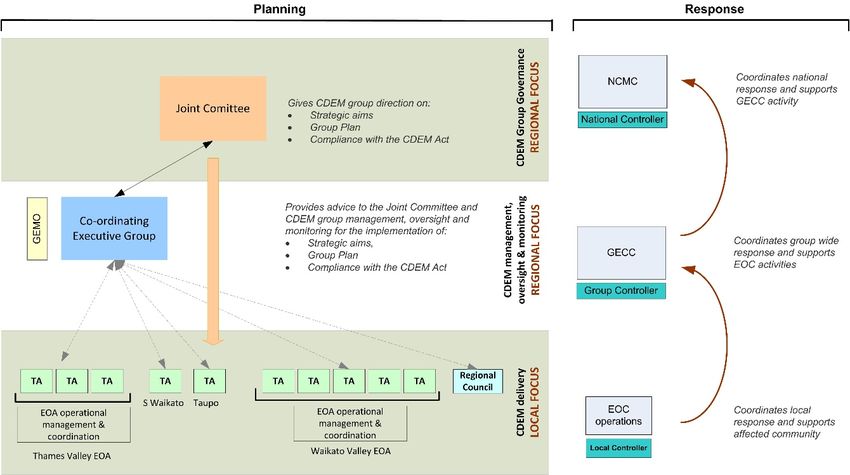
Membership

  Committee Members:

  Cr. Phillip Buckthought (Chair)
  Mayor Toby Adams (Deputy Chair)
  Cr. Paul Milner
  Cr. Rodney Garrett
  Cr. Duncan Smeaton

  External Advisors:

  NZ Police
  Fire & Emergency NZ
  St. John Ambulance Service
  Waikato Group Emergency Management Office
  Waikato DHB

  Hauraki District Council staff:

  Langley Cavers (Chair – CEG)
  Campbell Moore (Local Controller)
  Peter Thom (Local Recovery Manager)
  Brett Otto (Emergency Management Officer (Welfare))
  John McIver (Response Manager)
  Judy Nicholls (Intelligence Manager)
  Leigh Robcke (Planning Manager)
  Johan de Voss (Operations Manager)
  Paul Matthews (Logistics Manager)
  Annette Jenkinson (Welfare Manager)
  Paula Trubshaw (Public Information Manager)
  Peter Smith (Incident Control Point Coordinator)
  Katie McLaren (Secretary)

  L D Cavers
  Chief Executive

                    Hauraki District Council, P O Box 17, William Street Paeroa, New Zealand
                             P: 07 862 8609 or 0800 734 834 (within the District)
                              E: info@hauraki-dc.govt.nz www.hauraki-dc.govt.nz
Delegations to Emergency Management Committee 2019-22
Reporting To: Council
Phillip Buckthought (Chair)
Membership: Mayor Toby Adams (Deputy Chair)
Iwi representative
Paul Milner
Rodney Garrett
Duncan Smeaton
NZ Police
Fire and Emergency NZ
St John
External Advisors Waikato Group Emergency Management Office
to the Committee: Hauraki Local Controller
Hauraki Local Recovery Manager
Note: Staff representing these organisations and positions will
attend the meeting but will not have voting rights
Quarterly meetings (February, May, August and November) or
Meeting
more if required.
Frequency:
3rd to last Monday of the month at 1pm
The Emergency Management Committee provides governance
Purpose: and oversight of planning, community readiness, co-ordination
and delivery of the Civil Defence Emergency Management
activities within the Hauraki District.
The Council delegates to the Emergency Management
Committee the following powers, duties and responsibilities:
Responsibilities:
Prepare for Council adoption and monitor progress of a
Hauraki District local emergency management strategy and
resulting action plan
To set timeframes and monitor results of implementing
the recommendations that have arisen from the 2019
Hauraki District Council CDEM Capability Report
Developing, approving, implementing, monitoring and
reviewing relevant strategic plans
Promoting and raising public awareness and preparation of
emergency management within the Hauraki District
Approve the development and continual support of
Community Response and Recovery Plans and monitor the
success of such plans
To ensure that the district interests of iwi with regards to
emergency management and marae preparedness are
identified and acted upon
To review and recommend to Council on the emergency
management budgets and the priorities for expenditure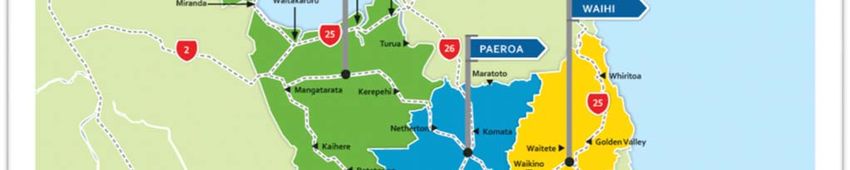
To set levels and monitor Council trained staff, to assist
with the response and recovery phases to an emergency
event
To ensure that Council has the relevant resources and
arrangements in place to manage a response to an
emergency event
To ensure that Council’s key activities have business
continuity plans in place to enable these activities continue
even if at a reduced level
Receive update reports from district emergency services
Receive update reports from Waikato Emergency
Management Group and the Joint Committee
Receive update reports from National Emergency
Management Agency
Delegation: Authority to approve expenditure up to $5,000 per project
within existing approved emergency management budgets
Management
Group Manager – Community Services and Development
Responsibility:
Summary | Whakarāpopototanga

The CDEM Act requires our Council to co-ordinate planning, programmes and activities
related to civil defence emergency management across the ‘’four R’s’’:

Reduction: Identifying and analysing long-term risks to human life                    Reduction           Readiness
and property from hazards; taking steps to eliminate these risks if                              Resilience
practicable, and, if not, reducing the magnitude of their impact and the
                                                                                      Response             Recovery
likelihood of their occurring.

The Interpretation of risk against hazards must be scientifically based and then
communicated to the affected parties. This can be messaged by having up to date
information on hazards available to the public and ensuring that our communities
understand their risks. The District Plan has a role in risk reduction: it manages the
impacts of natural hazards through land use and sub division controls.

Readiness: Developing operational systems and capabilities before a
civil defence emergency happens; including self-help and response                      Reduction              Readiness

programmes for the general public, and specific programmes for                                    Resilience

emergency services, lifeline utilities and other agencies.                             Response               Recovery

There are two distinct but related aspects of readiness:
1. Community readiness relates to individuals, families, businesses and communities to
    be prepared during and after an emergency, this can be achieved by public
    education, warning systems and community level response planning.
2. Organisational readiness is the ability for council to have trained staff and systems in
    place to have a functioning EOC during the response phase. In addition, to have well
    established relationships with partner agencies with all parties having clear
    understanding of their roles in an emergency and having plans for it.
Both community and organisational readiness are highly interdependent. Readiness
activities are the foundation to having the capability and capacity for the successful
response and recovery phases of the 4 R’s

Response: Actions taken immediately before, during or directly after                 Reduction          Readiness
a civil defence emergency to save lives and protect property, and to
                                                                                             Resilience
help communities recover.
                                                                                     Response           Recovery

These are the actions taken immediately prior to, during or
immediately after an emergency to save lives and property and to help communities
recover. The key role of the EOC is to coordinate the response by partner agencies by
utilising the principles and processes of the CIMS structure.

There is also the key deliverables by CDEM of the welfare function, and the public
information management, including the management of community volunteers both
CDEM trained and spontaneous.

Recovery: Recovery means the co-ordinated efforts and processes              Reduction         Readiness
used to bring about the immediate, medium-term, and long-term
                                                                                      Resilience
holistic regeneration and enhancement of a community following an
emergency. (CDEM Act). It includes actions taken immediately before,         Response           Recovery

during or directly after a civil defence emergency to save lives and
protect property, and to help communities recover. Reporting on our CDEM work area is
now structured in accordance with this overall format as outlined in the table below.

The role of the recovery function runs across all four R’s of emergency management as it
relates to the minimisation of the escalation of the emergency and then post event,
manage the recovery across all four environments - social, built, economic and natural
to allow the community to adjust to the “new normal”.
Reducing the future exposure to hazards or their associated risk should always be an
element of recovery, which will then feed back into reduction.

A fifth ‘R’ – Resilience is also taken into account when considering
                                                                                                                                        Reduction        Readiness
the community’s capacity to respond to or self-manage any situation.
                                                                                                                                                Resilience

                                                                                                                                        Response         Recovery

EXAMPLE STRUCTURE OF CDEM RESPONSE

                       TCDC   Hauraki   MPDC      Waikato DC    HCC              SWDC     Taupo    Waipa      Waitomo Otorohanga

                                               EOC operational management and coordination
EMERGENCY MANAGEMENT

                                                                Mayor                LC                    REC

                                                                      PA2LC

                         ILO             WM              IM              PM               LM                  OM            PIM    RM
  LOCAL GOVERNANCE

                                                 Emergency Management Committee
                                                  Councillors   Iwi Representation        External Advisors
Nga Karakia Timatanga (opening) (1) Kia tau te rangimarie Kia whakapapa pounamu te moana Hei huarahi ma tatou i te rangi nei Aroha atu, aroha mai Tatou i a tatou katoa Hui e! Taiki e! (2) Whakataka te hau ki te uru, Whakataka te hau ki te tonga. Kia mākinakina ki uta, Kia mātaratara ki tai. E hī ake ana te atākura he tio, he huka, he hauhunga. Haumi e! Hui e! Tāiki e! Whakamutunga (closing) Kia whakai-ria te tapu Kia wātea ai te ara Kia turuki whakataha ai Haumi e. Hui e. Tāiki e! May peace be widespread May the sea be like greenstone A pathway for us all this day Let us show respect for each other For one another Bind us all together! Get ready for the westerly and be prepared for the southerly. It will be icy cold inland, and icy cold on the shore. May the dawn rise red-tipped on ice, on snow, on frost. Join! Gather! Intertwine! Restrictions are moved aside So the pathways is clear To return to everyday activities Join Gather Intertwine!
EMERGENCY MANAGEMENT COMMITTEE AGENDA

Monday, 23 August 2021 – 1.00pm

Order of Business                                                                      Pages

Procedural

1.   Karakia timatanga (opening of meeting) – Cr Milner
2.   Apologies
3.   Declarations of Late Items
4.   Declarations of Interests

Confirmation of Minutes
5.   Emergency Management Committee Minutes -15-02-21 – 2901370                          9

Reporting

6.   Public Information Management Function Quarterly Update                            11
     15 February 2021 – 3015066

7.   Welfare Function Quarterly Update – 2998520                                        19
     Appendix A - Welfare Business Plan - 2998514                                       24
8.   Emergency Management Officer Quarterly Update - 2793147                            31
9.   Karakia whakamutunga (closing of meeting)

1
                                                     EMC Agenda – 23-08-21 - 2900069
EMC Agenda - 23-08-21 Page 9
HAURAKI DISTRICT COUNCIL
EMERGENCY MANAGEMENT COMMITTEE
MINUTES OF A MEETING OF THE HAURAKI DISTRICT COUNCIL HELD IN THE HAURAKI ROOM,
HAURAKI HOUSE, WILLIAM STREET, PAEROA ON MONDAY, 15 FEBRUARY 2021 COMMENCING
AT 1.00PM
PRESENT Cr P Buckthought (Chairperson), Cr P A Milner, Cr R Garrett and Cr D
Smeaton
IN ATTENDANCE Langley Cavers (Chair – CEG), Campbell Moore (Local Controller),
Brett Otto (Emergency Management Officer (Welfare), John McIver
(Response Manager), Peter van de Wetering (NZ Police), John
Armit and Rod Hudson (St. John) and Katie McLaren (Secretary)
Karakia timitanga
Cr Buckthought opened the meeting with a karakia.
APOLOGIES
RESOLVED
THAT the apology of His Worship the Mayor, D A Adams be received and sustained.
EMC21/01 Milner/Smeaton CARRIED
DECLARATION OF LATE ITEMS
There were no late items.
DECLARATION OF INTERESTS
There were no declarations of interests.
CONFIRMATION OF EMERGENCY MANAGEMENT COMMITTEE MINUTES: 16-11-20 - 2861311
RESOLVED
THAT the minutes of the meeting of the Emergency Management Committee held on Monday,
16 November 2020 are received and confirmed as a true and correct record.
EMC21/02 Milner/Smeaton CARRIED
MATTERS ARISING FROM THE MINUTES
There were no matters raised.
PUBLIC INFORMATION MANAGEMENT FUNCTION QUARTERLY UPDATE 15 FEBRUARY 2021 –
2884680
The Local Controllor presented a report that provided the Committee with a quarterly update
on the PIM function.
1
EMC Minutes – 15-02-21 - 2901370EMC Agenda - 23-08-21 Page 10
RESOLVED
THAT the report be received.
EMC21/03 Garrett/Milner CARRIED
WELFARE FUNCTION QUARTERLY UPDATE – 2793074
The Emergency Management Officer/Welfare Manager presented a report that provided the
Committee with a quarterly update on the Welfare function.
RESOLVED
THAT the report be received.
EMC21/04 Garrett/ Milner CARRIED
EMERGENCY MANAGEMENT OFFICER QUARTERLY UPDATE - 2793147
The Emergency Management Officer/Welfare Manager presented a report that provided the
Committee with a quarterly update on the Emergency Management activities.
RESOLVED
THAT the report be received.
EMC21/05 Smeaton/Garrett CARRIED
EXTERNAL ADVISORS UPDATE
The external advisors to the committee provided a verbal update on activities to date.
Police – Peter van de Wetering
St. John – John Armit and Rod Hudson
Representatives from FENZ, NEMA and the Waikato Group CDEM were not in attendance.
Karakia whakamutunga
Cr Buckthought closed the meeting with a karakia at 1:45pm.
CONFIRMED
P Buckthought
Chairperson
23 August 2021
2
EMC Minutes – 15-02-21 - 2901370EMC Agenda - 23-08-21 Page 11
FOR INFORMATION |
NGĀ MŌHIOTANGA
TO Emergency Management Committee
AUTHOR Terri Casey
Public Information Manager
FILE REFERENCE Document: 3013112
Appendix A: Draft PIM work programme 2021
PORTFOLIO HOLDER/S Mayor Toby Adams and Councillor Buckthought – Emergency
Management
MEETING DATE 23 August 2021
SUBJECT Public Information Management Function Quarterly Update
RECOMMENDATION | TE WHAIKUPU
THAT the report be received.
1 PURPOSE | TE ARONGA
The purpose of this report is to provide the Emergency Management Committee with an update
on the activities of the public information management (PIM) function within Hauraki’s CDEM.
2 BACKGROUND | TE KŌRERO Ā MUA
Public Information Management (PIM) primarily involves the provision of timely, accurate,
relevant and clear messaging to the public in times of emergency (and occasionally, in peace
time). PIM is responsible for informing the public about the incident, the response (including
actions they need to take) and recovery, media liaison and monitoring, stakeholder liaison,
giving and receiving information via social media channels, internal communication etc. At the
discretion of the Controller, PIM may also issues warnings and advisories if required.
3 PIM at HDC
The management of the PIM team was handed over to Terri Casey earlier in 2021. The manager
is still considered to be ‘in training’. Rebecca Jenks has been assigned the role of PIM 2IC.
The current members of the team are:
Rebecca Jenks – Community Development Advisor
Rochelle Law – Property Customer Information Officer
Paula Trubshaw – Senior Communications Officer / soon to be vacant
Kristene Ingle – Communications Designer
Margaret Maclaurin – Communications Officer
Jill Read – Web Administrator
Whaarangi 1 | 2 M 3013112EMC Agenda - 23-08-21 Page 12
The team generally meets once per month, following the function manager’s monthly meeting.
Since the last Emergency Management Committee meeting a number of the team have
completed Foundation, Intermediate and PIM training.
Additionally since the last meeting PIM, and the other functions, have participated in an in-house
tsunami exercise. For PIM the focus of this was improving our systems for situations that do not
trigger an official EOC set up.
We are working our way through our 2021 work programme, with most items on track. Some
matters however have not received the attention they require due to competing priorities such
as the completion of the 2021-31 long term plan.
The 2021 work programme (working document) is attached as appendix A.
In summary over the next six months our focus will be:
Preparation for the regional exercise – 4 November.
Monthly meetings and team building
Familiarisation (or development) of manuals and procedures
Allocation and discussion of roles
Readiness campaigns, if and when appropriate (including Shake Out, mentioned in the
Emergency Management Officer’s report)
4 NEXT STEPS | TE ARA KI MUA
Timeframe Action Comments
Aug-Dec 2021 Progress intended work programme of
the PIM team
4 Nov 2021 Regional exercise Waikato-wide full day exercise.
Approval
Prepared by Terri Casey
PIM Manager
Approved by Peter Thom
Group Manager – Community Development
Whaarangi 2 | 2 M 3013112EMC Agenda - 23-08-21 Page 13
Appendix A
2021 DRAFT
PIM WORK PROGRAMME
This document sets out our work programme
and priorities for the 2021 year.
2904723 1EMC Agenda - 23-08-21 Page 14
1 PIM priorities
1 Identifying the need for information, advice, or
assistance required
Gathering information and disseminating to the
2 public timely, accurate and clear messaging
The target audiences for information are all who are,
3 or may be, directly or indirectly affected by an
emergency
4 Information management between agencies, groups,
services, media and the public
5 Media relations
6 Public education
7 Familiarisation of protocols and procedures
8 Build / maintain relationships with key partners
9 Ability to treat sensitive information appropriately
10 Public assurance and confidence in the response
.
2904723 2EMC Agenda - 23-08-21 Page 15
2
January
Draft Plan month by month
Meet and greet.
Scoping our team and programme
= done
P = in progress
/ = not started yet
Team building
Develop and discuss draft work programme
February Emergency Management Committee meeting – 15 Feb 2021
Emergency mgmt. comms conference
March Training for Terri and Margaret (foundation)
Exploring our current skill set (skills matrix)
P
Identifying skill set gaps (and training required)
Controller review of draft work programme
April Exploring the current resources at hand (guides, templates P
etc)
Intermediate training – Terri and Margaret
May Emergency Management Committee meeting – 17 May
2021
Tsunami exercise (Peter Thom)
Mapping coverage areas (dead zones) within the district
PIM training – Terri, Margaret, Rochelle, Rebecca
June Training exercise if possible – mid year -
Identification of our audiences, and how we may reach them /
in an emergency – brainstorm session (by this I mean,
culturally and linguistically diverse communities, and people
with disabilities for example)
Information management (possibly some training with P
July John?) – managing records during a response. /
Development of further manuals and procedures if required.
Emergency Management Committee meeting – 23 August
August 2021 P
Identifying roles within the group / update of work
programme
Comms training / hand over from Paula prior to departure
Tsunami awareness campaign
September Prepare for Shake Out preparedness campaign
Preparedness campaign – national Shake Out (15 October
October 9.30am)
Household emergency preparedness reminder campaign
Emergency Management Committee meeting – 22 Nov
November 2021
Regional exercise – 4 Nov 2021
Discuss Christmas break and PIM responsibilities
December
2904723 3EMC Agenda - 23-08-21 Page 16
3 Our People
Our people:
Rebecca Jenks – Community Development Advisor
Rochelle Law – Property Customer Information Officer
Paula Trubshaw – Senior Comms Officer / soon to be vacant
Kristene Ingle – Communications Designer
Margaret Maclaurin – Comms Officer
Jill Read – Web Administrator
Key roles within our PIM team:
Role Primary Secondary Back ups
PIM 2IC
Media liaison
Online media
management
Web editor
Community
engagement
Stakeholder and partner
liaison
Information and
warnings
Internal
communications
Design
2904723 4EMC Agenda - 23-08-21 Page 17
CAPABILITY 2017 Public Information Manager
Relationship Management Relationships with key individuals, partner organisations and communities are established
Established relationships are actively managed and sustained
Information Management Information needs are identified and understood
Information systems and processes are developed.
Systems and processes are applied to collect and maintain information.
Information is produced and disseminated
Information systems and processes are evaluated.
Risk Management Hazards and risks are recognised, understood, and communicated
Risk management is understood and applied.
Risk management processes and outcomes are monitored, evaluated, and reviewed
Planning Purposes and objectives of plans are agreed and understood
Plans are developed, written and maintained in accordance with the agreed purpose and
objectives
Plans are coordinated and integrated across all levels and partners.
Plans are evaluated, and updated
Implementation Assigned EOC roles are performed in accordance with existing plans and standard operating
procedures
Emergencies are managed in accordance with the scale of activity, existing plans and standard
operating procedures
Human resources are managed in order to achieve maximum effectiveness.
Physical resources (facilities, vehicles, equipment etc.) are sourced, operated and maintained in
order to achieve maximum effectiveness
Financial management processes are implemented, and funds allocated
Communication Effective communication with partners and communities is achieved at all levels and across all
functions of CDEM
2904723 5EMC Agenda - 23-08-21 Page 18
CDEM public education/risk communication programmes are developed to support community
readiness and risk reduction
Public information messages are developed and disseminated during response and recovery.
Media are engaged in public information management and public education.
Capability Development Capability development opportunities are actively sought and undertaken
Training and education programmes are developed and delivered.
CDEM exercises are developed and carried out.
Capability development opportunities are provided to build a workforce of competent personnel
Organisational capability is monitored and evaluated
Leadership A CDEM vision is developed and articulated.
An environment is created that empowers others to act and succeed.
Leadership is demonstrated through strategic decision making that influences others and drives
change
Leadership is demonstrated through professional conduct and effective self management
2904723 6EMC Agenda - 23-08-21 Page 19
FOR INFORMATION
NGĀ MŌHIOTANGA
TO Emergency Management Committee
AUTHOR Brett Otto – Emergency Management Officer/Welfare
Manager
Annette Jenkinson – 2IC Welfare Manager
FILE REFERENCE Document:2998520
Appendix A: Welfare Business Plan 2021–2022
PORTFOLIO HOLDER/S Councillor Buckthought – Emergency Management
MEETING DATE Monday 23rd August 2021
SUBJECT Welfare Function Quarterly Update
RECOMMENDATION | TE WHAIKUPU
THAT this report be received.
PURPOSE | TE ARONGA
The purpose of this report is to provide the Emergency Management Committee with an
update on welfare related activities that have occurred over the last quarter and present
information on plans going forward.
BACKGROUND | TE KŌRERO Ā MUA
The Welfare function is responsible for:
• ensuring the welfare needs of affected people and animals are identified and met
through response and into recovery, as appropriate;
• coordinating with other organisations on the provision of welfare services to ensure
delivery is integrated, timely and aligned to the needs of people and animals;
• planning, coordinating and integrating welfare activities with other CIMS functions
and activities, including Logistics for the establishment of facilities to support
affected communities (e.g. Civil Defence Centres and animal welfare shelters);
• providing timely and accurate welfare services information, through Public
Information Management (PIM), to affected individuals, families/whānau and
communities;
• identifying welfare priorities and providing strategic and operational advice to the
Controller;
• contributing to the planning process, including the development of the Action Plan;
andEMC Agenda - 23-08-21 Page 20
• attending Incident Management Team (IMT) meetings and keeping the Controller
and wider IMT informed of the Welfare aspects of the response
To assist with the response to an incident the welfare function team have established
relationships with community groups and agencies to form a local welfare committee.
Any agency represented on the local welfare committee needs to have:
• A good knowledge of the community, and
• A role in meeting the needs of the community in an emergency.
Community-based, volunteer, and other local organisations may be represented on a
local welfare committee.
As resourcing allows, the local welfare committee may include representation from:
• Local authority CDEM
• Police
• Ministry of Social Development
• Oranga Tamariki
• Work and Income
• Ministry of Health/DHB/Primary Health Organisation
• Ministry of Business, Innovation and Employment, and
• Ministry for Primary Industries
All representatives of member agencies must be able to actively represent and make
decisions on behalf of their agency, provide information and expertise, and participate
fully in local welfare committee meetings and activities. Where possible, representatives
should be from the senior management level of the agency.
WELFARE FUNCTION PLANS | MAHI A ORANGA
The last Eastern Waikato Welfare Committee (EWWC) was held on 25 June 2021 in Paeroa
and hosted by Hauraki District Council (HDC).
The Group Welfare Manager gave an update on NEMA leading Legislation Reform and
review of their National Plan. He also mentioned that there is a bigger focus to include
Iwi/Maori in Civil Defence Emergency Management and that the Group Management Office
has recently gone through a restructure and re–alignment process. One of the focus areas
was around aligning resilience, community, welfare, infrastructure and recovery, to enable
better recovery. The new structure will be in place from 1 July 2021.
A National Welfare Coordination Group meeting was held on 09 April 2021. Discussions
were around Leadership of Welfare and what will Welfare Delivery look like, things like the
need to identify what works and what doesn’t work (experience from COVID-19). There
was also a discussion around Cluster Groups as a Sub-function, and the importance of
cluster group coordination at local level.
The main strategies of the Waikato Coordination Group Five Year Strategy (2021-2026)
that would be a focus are:
• Maintaining a level of trained staff.
• Tools to enable assessment of needs, social services etc.,
• Mapping to manage CDC centres, aligning community engagement, recovery and
resilience with local and regional communities represented and suitability of
potential Civil Defence Centre Facilities. Where the learnings and recommendations
from COVID-19 and other recent events provided valuable direction.
Whaarangi 2 | 5 M-2793074EMC Agenda - 23-08-21 Page 21
The Group Community Resilience speaker Drew Mehrtens spoke about messaging and
public awareness and resilience the Te Ara O Tane (Joint Hawke’s Bay, Bay of Plenty and
Waikato) project led by Hawke’s Bay.
This project helps communities tell us what matters most to them in an emergency (rather
than being the recipient of someone else’s plan), not just hazard understanding but also
includes the understanding of connection to welfare services. This program includes
cultural resilience indicators and provides a framework for measuring the resilience of our
communities; measuring the difference, our work makes.
The program identified that CDEM professionals will work with Community Response
Groups with a regionally consistent approach, but individually tailored experiences for
those communities. Further training and help with this project in individual Councils will
be part of what Drew will help each Council develop moving forward.
Updates from the Members of The Local Welfare Committee
Representatives of the Local Welfare Committee gave their verbal reports. In summary,
one of the clear reoccurring themes from MSD and from NGO’s was the lack of housing
and increase in homeless across the three territorial local authorities that is proving to be
a challenge. Another re occurring theme was preparations for vaccination rollout are
ramping up.
Updates from Welfare Managers
Thames-Coromandel District Council’s (TCDC) Welfare Manager Helen Flynn:
• Two weather events recently, which caused some shoreline damage from coastal
erosion
• The tsunami signage role out in their district
• Involvement with a FENZ event at Whangamata, which was reassuring and their
staff were on-board
• Marae preparedness plans were under way with Manaia and Heretaunga (Kennedy
Bay).
• Kelly Hosking is now TCDC’s Alternate Welfare Manager (in training)
• Preparing for Shakeout 28 October
• Draft Welfare Business Plan underway
• On-going training of the Emergency Operations Centre Team.
Matamata-Piako District Council’s (MPDC) Welfare Manager Vicky Cowley:
• Alignment with BAU and Emergency management roles
• Working on Super EOC staffing requirements.
• Local Welfare Business Plan is in draft format
• Working with the Civil Defence Centre Project with the Group Office
• Increase local contacts within MPDC
• Unearthed the old CDEM rescue trailer, which now has a current WOF and is in
storage at Te Aroha.
OTHER MATTERS | ERA ATU MEA
Welfare Business Plan 2021-2022
The Draft Welfare Business Plan for 2021-2022 completed by the Welfare Manager is
attached (Appendix A) for the Emergency Management Committee’s information. This
plan aligns with the Group Welfare Managers Welfare Plan for the same period and details
what the activities will be for the Welfare Function going forward.
Welfare Function Staff Training
Whaarangi 3 | 5 M-2793074EMC Agenda - 23-08-21 Page 22
Raewyn Green has stepped into a more proactive role with Welfare. She is progressing her
knowledge of the Welfare Function within Emergency Management and helping Welfare
with the preparation for the 4th of November Waikato Wide Exercise.
The Welfare Function in the EOC could still do with a couple more staff to assist with
running the function whilst the Manager is in IMT Meetings and consulting with other
Function Managers. We have two other staff members in mind for these positions but
further discussions need to occur before this can happen.
Hauraki Welfare Response Team
Identifying members for a Local Welfare Response Team to operate a Civil Defence Centre
and training that group is still a high priority for our area.
In the past, a well-trained and dedicated team would meet at the MSD building on a regular
basis. This team has disbanded due to several factors and attempts to reinvigorate it have
proved difficult. A team like this to help setup a Civil Defence Centre and take care of the
needs of people effected during an event is important because Council will struggle to staff
such a Centre without trained volunteers. Unfortunately, relationships like these take time
to build.
The Emergency Management Officer and the two Alternate Welfare Managers have
struggled to find time to set this team back up. The Emergency Management Officer has
decided to set aside one day during the working week (which will probably be Welfare
Wednesday) to focus on Welfare matters alone and attempt to build this team back up.
Welfare Needs Assessment
Needs Assessment is part of what the Welfare Function does during an event. A Needs
Assessment Tool to assist with gathering this information was developed by the Group
Welfare Manager to help Councils with this important task. Training in this tool for
identified staff from within Council is essential in gathering this information so it can be
determined if there are needs that can be met. Hauraki Emergency Management are still
determining what area of Council might be the best to train in this tool.
Depending on the event, information from people requiring help can be gathered in several
different ways; even gathered remotely as is what happened during the COVID response.
Sometimes information will be taken at a Civil Defence Centre or even by door knocking
at effected homes like what occurred in Kaiaua Flood Inundation Event. Whatever way this
is done the gatherers of this information need to be discrete and trained accordingly.
Emergency Management and Welfare Response Vehicle
Hauraki Emergency Management has a purpose vehicle organised for Emergency
Management and Welfare Response. The Manager Technical Services vehicle has been
outfitted with the radio, siren and lights that were removed from the previous Controllers
vehicle. This allows use for Emergency Response as the need arises.
ENGAGING WITH OUR COMMUNITIES | KIA UIA TE HAPORI
WHĀNAU
Civil defence was well represented at the 2021 Highland Games and Tattoo Event in
Paeroa. Hamilton Red Cross sent a contingent of volunteers across with their truck and
trailer both setup to meet the needs of people during a crisis. Hauraki Emergency
Management was alongside next to this and although there was not a lot of interest from
the public in Emergency Management it was a good exercise to gauge where public interest
would lie.
Whaarangi 4 | 5 M-2793074EMC Agenda - 23-08-21 Page 23
Community Response Plans and committees continue to be challenging to stay motivated
and interested, this is an ongoing challenge of time and resources. The EMO has
attempted to make contact in Kaihere with a community champion but he is not in a
position to assist with Community Response Planning at this stage so another contact for
this area needs to be found.
Shopping Plan for Resurgence
A shopping plan devised by the Paeroa Community Support Trust (Paeroa
Neighbours/foodbank) to provide grocery shopping in case a resurgence occurs. Online
shopping as well as normal shopping for groceries was an issue for our elderly during
lockdown. A process to streamline this with the Manager Countdown Paeroa and Paeroa
Community Support Trust is now in place.
NEXT STEPS | TE ARA KI MUA
The HDC Welfare function team needs to get together and prioritise some key activities
that need some attention; the team has recently started some regular meetings to start
progressing some of these activities. Due to the Welfare Manager also being the
Emergency Management Officer often-other things take priority over these activities.
The biggest part of welfare is taking time to build and grow relationships with groups,
individuals and agencies. Taking time having chats with people and strengthening
relationships isn’t often seen as a priority especially when there are other tasks that do
have time restrictions.
Better time management is part of the solution to this however, as is a different mind-
set around the importance of building relationships. A higher importance on building
relationships cannot be underestimated, but this is often the case because it is hard to
measure the benefits of relationship building. The Emergency Management Officer (who
is also the Welfare Manager) has decided to set aside one day during the week to
dedicate to Welfare related priorities (Welfare Wednesdays).
If Hauraki truly wants to create better partnerships and engagement for the Welfare of
its people, more time, not less time in building relationships is key. By setting Welfare
Wednesdays as a focus hopefully some gains can be made in this area.
APPROVAL | TAUTOKO
Prepared by Brett Otto / Annette Jenkinson
Emergency Management Officer / Welfare Manager
Approved by Peter Thom
Group Manager | Planning & Environmental Services
Whaarangi 5 | 5 M-2793074EMC Agenda - 23-08-21 Page 24
Appendix A
Welfare Business Plan
July 2021 - June 2022
‘
Nau te rourou naku te rourou ka ora ai te iwi’
‘With your contribution and our contribution, the people will prosper’EMC Agenda - 23-08-21 Page 25
Prepared by: Local Welfare Manager Brett Otto- Brett.Otto@hauraki-dc.govt.nz
He aha te mea nui o te ao
What is the most important thing in the world?
He tangata, he tangata, he tangata
It is the people, it is the people, it is the people
M-2998514 Whaarangi 2EMC Agenda - 23-08-21 Page 26
Introduction
Welfare services response is a coordinated action undertaken by government and non-government
agencies and organisations some of which are voluntary. This ensures individuals/whānau and
communities affected by an emergency are supported to be able to cope with the event in the best
possible way under adverse circumstances.
Our lives are structured around people and their communities and it is vital that we plan for and address
the welfare of people before, during and after an emergency. This is achieved by adopting the 4 R’s
approach of emergency management: Reduction, Readiness, Response and Recovery.
Local Welfare Manager/s (LWM) – Hauraki District Council Local Welfare Manager is Brett Otto as
appointed through a Service Level Agreement with Waikato Regional Council. The alternate Local Welfare
Managers are Annette Jenkinson, Hauraki District Council and Margaret Harrison Ministry of Social
Development Paeroa. Raewyn Green from Hauraki District Council is also being trained up as another
alternate Welfare Manager.
Local Welfare Committee (LWC) – Eastern Waikato Local Welfare Committee is a committee of Hauraki,
Matamata-Piako, Thames-Coromandel District Councils and welfare agencies, a Terms of Reference
(adopted 20 March 2020) sets out the role of the LWC. The purpose of the LWC is to ensure coordinated
response to and management of the adverse effects of emergencies by providing welfare support.
Hauraki District Council Welfare sub-functions (local cluster individuals/groups) – This will involve
various Hauraki community groups that through various methods (meetings, converse one-to-one, etc.)
give support/input to welfare within the Hauraki District.
Purpose of the Business Plan
This document has been created with the purpose outlining the planning and coordination of activities
over the next financial year. This Welfare Business Plan is specific to Hauraki District Council, this plan will
set our local priorities for July 2021 to June 2022. The Plan will be reviewed every year to reconfirm the
Hauraki District Council activities and priorities are in line with the priorities of the Waikato Welfare
Coordination Group and the Waikato CDEM Group and the Hauraki District Council's Annual and Long-
Term Plans.
M-2998514 Whaarangi 3EMC Agenda - 23-08-21 Page 27
Priorities
All planned actions within this Welfare Business Plan 2021-2022 will align with the Waikato Welfare
Coordination Group Plan 2021-2026 five-year goals which are:
1. To identify staff and support the development and delivery of training and exercises across the
region, in order to maintain a level of trained staff as per Welfare Roles and Responsibilities
Policy.
2. Identification, development and maintenance of tools that can be used across the Waikato
Region to enable the assessment of needs, social services mapping, and to manage Civil Defence
Centres.
3. To align the welfare services function better with community engagement, recovery and lifeline
utilities to enhance the resilience of our communities.
4. Promote the alignment of local and regionally welfare arrangements to ensure communities are
represented through ongoing engagement with welfare services agencies/NGO’s/Iwi at local
and regional level and the establishment of local and regional welfare services clusters to
ensure better coordination in the delivery of welfare services.
5. Ongoing support to local councils to identify the locations and suitability of potential CDC
facilities.
6. Incorporate regional and local learnings and recommendations from COVID-19 and other recent
events in welfare planning, arrangements, and procedures.
M-2998514 Whaarangi 4EMC Agenda - 23-08-21 Page 28
Hauraki District Council Welfare Work Programme 2021-2022
Welfare work plan Considerations Notes
Support the Eastern Waikato Welfare Committee • Annually review terms of reference Ongoing action
(EWLWC)
• Administrative assistance when held at HDC
• External agencies structures/requirements
• NEMA, Welfare Services in an Emergency Director’s guideline
• Privacy of LWC members contact information
• Keep EWLWC updated with WWCG
Partnerships and engagement with Iwi/Maori • Iwi rohe and agency/TA boundaries non alignment Consultation required, assistance from
HDC Iwi Liaison to identify Marae
• What matters most in an emergency understanding
• Marae plans in place
• CDC understanding
• Advise iwi of training available
Build/maintain and engage with local HDC contacts • Host a Local Hauraki individuals/groups who are not members Ongoing action at early consultation
stage to rebuild this group to build
• Spectrum of welfare sub-functions
active participation.
• Understand boundaries of different agencies
• Privacy Act 2020
Eastern Waikato LWC membership • Identify gaps in welfare services locally Ongoing action
• Boundaries
• Welfare sub-functions
Facilitate understanding of CDEM welfare roles • HDC staff induction programme give overview of welfare Ongoing action
within HDC
• Advise of training and annual exercise/s
Facilitate consideration of welfare services within • Identify triggers/consequences Ongoing early stage
local HDC plans
M-2998514 Whaarangi 5EMC Agenda - 23-08-21 Page 29
Welfare work plan Considerations Notes
• HDC business continuity plans
• Understanding welfare obligations and legislative requirements from a
bottom up approach and integrate
Reporting required • Timelines/meeting dates Ongoing action
• HDC updates to Eastern Waikato LWC
• Coordination Executive Group (CEG)
• Waikato Welfare Coordination Group (WWCG) summarised to EW LWC
through Group Welfare/Recovery Manager
• HDC Emergency Management Committee
Needs Assessment capability • Regionalised software developed, to test locally at HDC Ongoing early stages training required
• Paper copies to be included in CDC kits
• Staff training/exercising
• Privacy Act 2020 and other legislation
Civil Defence Centre capability • Guidelines from Waikato CDEM Group CDC project Ongoing
• Locations of CDC in each town on HDC website
• Identify an alternative venue/s for main towns
• HDC staff training
• Building specifications/limitations clarified
• Raise issues and report to CEG representative
M-2998514 Whaarangi 6EMC Agenda - 23-08-21 Page 30
Welfare work plan Considerations Notes
Alternate Welfare Manager/s professional • Business as usual (BAU) role commitments Succession plan in place ongoing
development
• Training availability
• Coordinating CEG requirements
Maintain trained welfare staff • Work with HDC People, Safety & Wellness team and managers of staff Ongoing action
identified for training
• Expand local training structure
• Welfare staff across EOC, CDC and outreach
• HDC executive direction
• Waikato Welfare Coordination Group direction
Exercise planning and implementation • Commitment to long term plan performance measure for annual exercise Ongoing action
• Work on a CDC setup training/exercise
Develop an Animal Welfare Plan • Work on a draft Animal Welfare Plan with HDC Animal Control Staff Ongoing early stage
M-2998514 Whaarangi 7EMC Agenda - 23-08-21 Page 31
FOR INFORMATION
NGĀ MŌHIOTANGA
TO Emergency Management Committee
AUTHOR Brett Otto - Emergency Management Officer
FILE REFERENCE Document: 2793147
PORTFOLIO HOLDER/S Councillor Buckthought – Emergency Management
MEETING DATE Monday 23rd August 2021
SUBJECT Emergency Management Officer Quarterly Update
RECOMMENDATION | TE WHAIKUPU
That the report be received.
PURPOSE | TE ARONGA
This report is to inform the Emergency Management Committee on Civil Defence activities carried
out by the Emergency Management Officer (EMO) that could affect or is relevant to the way
Hauraki District Council delivers Emergency Management to our community.
1.0 ACTIVITIES | NGOHE
The EMO has been involved in the following activities:
1. Tsunami response to Kermadec Trench activity
2. Coastal inundation weather event
Engaging with our communities
3. Highland Games Tattoo Emergency Management Public Education Display
4. Whiritoa Community Response Plans Restart and update
5. Kaiaua Community Response Plan Restart
6. Civil Defence Centre Assessments Survey 123
7. Wharekawa 2120 Panel
EVENT(S) | HUIHUINGA
Tsunami Response - March 2021
Hauraki’s response to the recent tsunami threat after the earthquakes at the Kermadec Trench
was a combination of working out how to manage a very fast moving event with staff working
remotely and COVID still around. In the end apart from the issue of slow communications due
to GNS science delay in predicting whether a potential tsunami may occur we managed ok.
Whaarangi 1 | 11 M 2793147EMC Agenda - 23-08-21 Page 32
A Hauraki debrief after this event was beneficial and in hindsight, a Hauraki Public Information
Management Officer included in with the response would have helped to negate the lack
messaging coming forth. After this, a short tabletop exercise run by the Group and Recovery
Manager to polish our response happened. This short exercise was beneficial and highlighted
the need for some processes that needed streamlining in the Public Information Management
Function.
On that same topic just recently the Eastern Waikato Emergency Services Group very recently
had a Meeting from Jose Borrero a tsunami expert scientist working with Waikato Regional
Council spoke. His presentation on this Tsunami Event was very informative and reinforced the
two most important metrics to consider when another earthquake occurs at the Kermadec
Trench. Those two metrics are latitude between 34 to 37 degrees and Magnitude higher than
8.0.
These two metrics alone meet the threshold to consider evacuations of the Eastern Waikato
Beaches. Jose and WRC Risk Advisor will be working on a playbook to inform Emergency
Management with these two most important metrics in the near future.
Coastal Inundation Weather Event - May 2021
A weather system with some king high tides, caused some issues at Whiritoa recently. The
community kept informed of the weather system and the likely hood the high tides could cause
some issues. The lagoon at the north end flooded as a wastewater pump at that end stopped
because of a transformer failure. This was because it was in the area that flooded. The power
outage affected most of Whiritoa however this community is resilient and coped with cooking on
BBQ’s for the time being until power was restored.
Another effect of this storm was a large amount of sand from the seashore washed out to sea.
It has left a very steep bank leading down to the beach and in front of the Surf Life Saving Club
Rooms. Some replacement of sand in front of the clubrooms has been completed just recently.
COVID-19 Boundary Planning Workshop
COVID-19 resurgence is still being closely monitored and Emergency Management will be able
to react with urgency should any instructions come from the Group Controller to tell us to do so.
Emergency Management will not be the lead agency in this resurgence response - that direction
will come from Ministry Of Health. Our role will be in support as required. The resurgence
response will be coordinated at the Group Level in the Group Emergency Co-ordination Centre
(GECC) not in individual Councils. Hauraki Council will be asked to supply staff into the GECC to
assist with coordination.
Central Government is responsible for COVID Alert Level boundary planning and boundary
setting. The Department of Prime Minister and Cabinet (DPMC) recently provided a briefing to
the Waikato Regional Leadership Group (RLG), regarding DPMC’s current focus on developing
sub-regional and inter-regional boundaries to address the risks/vulnerabilities posed by Managed
Isolation and Quarantine Facilities. This is a change from a previous planning assumption, that
COVID alert level boundaries were set at a regional level or above only.
The RLG were provided with copies of the new draft sub-regional and inter-regional boundary
scenarios that have been developed by the DPMC using national level data, such as information
from Waka Kotahi (NZTA), the Ministry of Health and MBIE. The RLG Co-Chairs have requested
that a workshop be undertaken in regards to these new draft boundary scenarios. The objectives
of the workshop were:
To better understand the potential impacts sub-regional and interregional boundaries will
have on our communities.
Whaarangi 2 | 11 M 2793147EMC Agenda - 23-08-21 Page 33
To enable agencies to consider our respective agency plans, against the draft scenario
boundaries; and make any amendments to those agency plans, to ensure the needs of
communities are met, and boundary impacts are mitigated.
To enable the RLG to provide comments/observations back to DPMC relating to the
potential impacts identified from the new draft boundaries. Also, DPMC are interested
to identify the key people/agencies who are responsible for managing and mitigating the
impacts identified, and;
if necessary; to enable RLG to provide feedback to DPMC and request amendments to
their new draft boundaries.
The workshop in Hamilton on the 5th July which was attended by HDC Mayor, the Response
Manager and the Emergency Management Officer. It was made very clear to the workshop that
the information gathered around boundaries between regions would be taken into consideration.
However any decisions on where those boundaries would be would be led by Central Government
and The Ministry of Health.
This boundary information becomes very important when you note the recent incident which
occurred in our neighbouring district the Bay of Plenty. Evidence of crew members being tested
positive to the Delta Variant where found on a vessel in the Tauranga Port. As a result, there
have been a large number of port workers who could have potentially been exposed to this
variant due to them being on board this vessel.
State Highway 2 is a transport route between Auckland and Tauranga to which a substantial
amount of trucks transporting freight. Because this freight passes through our district and those
truck drivers stop to use our amenities and frequent our businesses this poses a risk to the
community of which we need to be prepared for.
ENGAGING WITH OUR COMMUNITIES | KIA UIA TE HAPORI WHĀNUI
The engagement opportunity to display at the Paeroa Highland Games was an experiment in
engagement taken up by the EMO to engage with the community around Civil Defence Education.
Unfortunately, this experiment was not that successful possibly due to the situation of the site
and lack of a hook to get people to engage with thinking in around emergency preparedness.
There are other ways to engage with the community; the EMO has some ideas but these ideas
will need to stay on hold for the time being as other matters take priority.
Shake Out 2021
New Zealand Shake Out, our national earthquake drill and tsunami hīkoi, is taking place
Thursday 28 October at 9:30am. Shake Out is held across the world to remind people of the
right action to take during an earthquake — Drop, Cover and Hold — and to practise a tsunami
hīkoi (evacuation) if in a coastal area.
New Zealand ShakeOut is a self-run earthquake drill.
DROP down on your hands and knees. This protects you from falling but lets you move if
you need to.
COVER your head and neck (or your entire body if possible) under a sturdy table or desk
(if it is within a few steps of you).
HOLD on to your shelter (or your position to protect your head and neck) until the shaking
stops. If the shaking shifts your shelter around, move with it.
While you are doing the drill, imagine that it is real and what might be happening around you.
Think about what you might need to do before a real earthquake happens to help protect
Whaarangi 3 | 11 M 2793147EMC Agenda - 23-08-21 Page 34
yourself. The Emergency Management Officer has registered Hauraki District Council on the Get
Ready website as an organisation taking part in the drill on the 28 th of October.
PLANS | MAHERE
Community Response Plans (CRP’S):
Progress on CRP’s:
Community Plan owners Plan update by
Kaiaua – Tessa Watts
East Coast Road on the Firth
of Thames, north of Miranda
Including Kaiaua School, and
Activities to progress include:
Whakatiwai~Waharau;
Extending from the foot of the This committee has more or less started afresh with a new
Hunua Ranges to the coast CRP with one of the Wharekawa 2120 Panel Members Stephen
and inland towards Cooper taking the lead in re writing the draft plan with
Mangatangi; involvement from Tess. Stephen comes from a military
Including Kaiaua Road and background and has extensive experience with risk analysis.
Miranda Road to the coast. HDC have yet to see the new CRP but we have been kept up
to date with further meetings planned.
Turua – Susan Taipari Turua Hall Committee
Between stopbanks of the Brian Wigmore
Waihou and Piako Rivers; Activities to progress include:
from junction of SH2 and
At the last meeting with the hall committee the option to train
Hauraki Road;
the group to do the Online Foundation Course was offered,
To junction of SH25 and
there has not been any further communication as yet.
Hauraki Road
Kerepehi – Laura Robinson Laura Robinson
Between Waihou and Piako
stop banks;
From Puhunga Island Rd
Bridge in the North to
intersection of SH2 and Activities to progress include:
Hauraki Road in the South No updates with this plan yet, have reached out again to try
NOTE Ngatea Group to start engage with this group waiting for reply.
NORTH of Puhunga Road
Bridge, Turua Group runs
along Hauraki Road (between
stop banks) and Netherton
Group to commence
intersection of SH2 and
Hauraki Road, running
SOUTH
Whiritoa – Errol Smith (Chief Fireman)
Village Chris Hannah
Darren Hannah
Activities to progress include:
No further activities planned with this group as yet they have
sent out new pamphlets into the community. During recent
coastal inundation event had flooding in the lagoon, which
tripped a transformer causing some power failures.
Community are resilient and coped with BBQ’s for the time
being until power was restored.
Whaarangi 4 | 11 M 2793147EMC Agenda - 23-08-21 Page 35
Work has also started on the following communities CRP’s:
Community Plan owner Plan update by
Waitakaruru – Peggy Bariball
Mike Davis
Andrew Williams
Activities to progress include:
Going to next hall committee meeting to meet them and
discuss emergency management.
Ngatea – Nicky Irving
Activities to progress include:
It seems that there needs to be another person approached
to take on the lead for this CRP. Further work to do here to
find a suitable candidate.
Pipiroa/Kopuarahi – TBA TBA
Activities to progress include:
No updates with this plan as yet
Kaihere/Patetonga – Jason Davis TBA
Activities to progress include:
Contacted Jason by email again to see if we can progress this
further. He has replied he is too busy so we will need to look
for another contact in that area.
2.0 TRAINING | WHAKANGUNGU
Emergency Operations Centre (EOC) Team:
This next table is a list of all EOC staff along with some of the sub-functions that have been
filled; the respective managers (i.e. the Incident Management Team) are in bold.
Local Controller (LC) Campbell Moore
PA to Local Controller Sophie Green (PA to Controller Workshop training)
Julie Sweeney (if required and available)
Sue Greenville (if required and available)
Response Manager John McIver
Judy Nicholls
Katie McLaren (to be trained to manager level all functions)
Planning Manager Charan Mischewski (newly appointed further training required)
Leigh Robcke
Intelligence Manager Judy Nicholls
Karen Muir (to be trained to manager level)
Lilly Brunton (to be trained)
GIS Ethan Hohneck
Message Management (staff need to be identified)
Whaarangi 5 | 11 M 2793147EMC Agenda - 23-08-21 Page 36
Logistics Manager Paul Matthews
Finance Steve Baker (to be trained)
Kris Sakamuri (to be trained)
Personnel Sue Greenville
Julie Sweeney
Supply Desire Bezuidenhout (to be trained to manager level)
Facilities Adam Chwesik (needs training)
Operations Manager Johan De Vos (to be trained to manager level)
Adrian de Larbode (stand in if required)
Liam Tansey (to be trained to manager Level)
Liam Haigh (further training required)
Janet Stuart (to be trained in utilities coordination sub-function)
Incident Coordinator Peter Smith
PIM Terri Casey (newly appointed further training required)
Rebecca Jenks (to be trained to manager level)
Paula Trubshaw
Rochelle Law
Margaret MacLaurin (to be trained)
Welfare Brett Otto (training manager level all functions)
Welfare Support Nina Murphy (training to manager level to be confirmed)
Elizabeth Lye (Waihi service centre)
Janet Tee
Civil Defence Centre Annette Jenkinson
Christine Laurenson (further training required)
Needs assessment Raewyn Green (to be trained to manager level)
Animal welfare @ CDC Michelle Lankow
Recovery Manager Peter Thom
Incident Management Team Managers (IMT)
The Incident Management Team Managers (IMT) have had some changes with Charan
Mischewski taking the Planning Manager role in place of Leigh Robcke who will step back to
second in charge. Charan will identify further staff to assist her in this function.
The Operations Function Manager position led by Johan de Vos is now vacant. Johan has stepped
into the Utilities Manager position temporarily and it’s likely this BAU position will be required
during an event. Another manager is sought for this position but may be solved by a reshuffle
in function managers should an event occur. In the interim, Liam Tansey has taken more
responsibility leading into our exercise on the 4 th of November. However, he will require
assistance during the exercise unless a replacement with suitable training is identified
beforehand.
Whaarangi 6 | 11 M 2793147You can also read


