Partnership Ready Namibia: Cosmetics - Background - GIZ
←
→
Page content transcription
If your browser does not render page correctly, please read the page content below
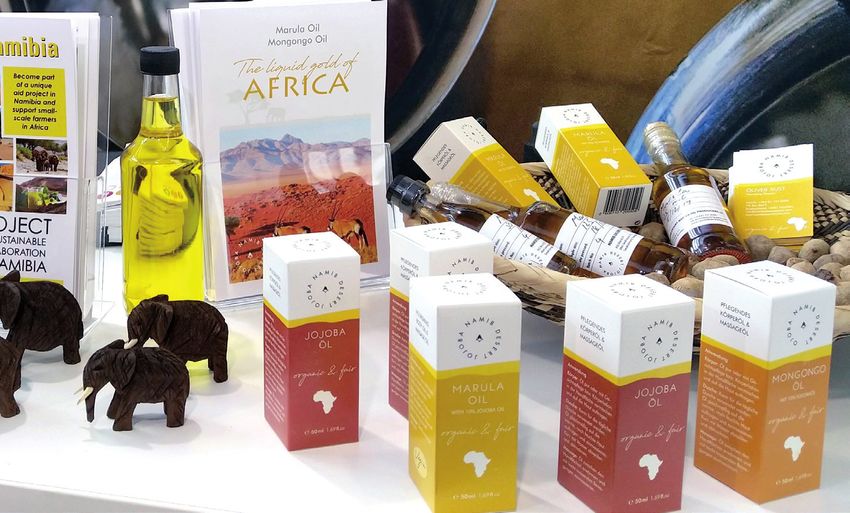
Partnership Ready Namibia: Cosmetics

Background

With the “Growth at Home” strategy, the Namibian government
wants to develop and manage Namibia's economic regulatory
framework, promote economic growth and development through
the formulation and implementation of appropriate policies with
the view to attract investment, increase trade as well as develop
and expand the industrial base in the country. The Industry Growth
Programme of the Namibian state contributes to this. Within the
framework of this programme, industry growth strategies have
been defined, including for the cosmetics industry.

   German Development Cooperation is also involved in the
   cosmetics sector together with the Namibian Ministry of
   Industrialisation and Trade (MIT).                                   In the same period, the total value of exported cosmetic products,
                                                                        i.e. beauty and health care products was estimated at NAD100
   Through the project "Promotion of Business Advisory and
   Economic Transformation Services (ProBATS)", Namibian                million. The latter included the export of raw materials, ingredients
   companies from various sectors are supported in opening up           and end products.
   new markets with innovative products, increasing sales of
   their products and exploiting their growth potential. In 2019,
                                                                        → R
                                                                           AW MATERIALS, INGREDIENTS AND
   exports of cosmetic products increased by 38% year-on-year
                                                                          COSMETICS APPLICATIONS
   and companies from the sector participated in international
   trade fairs, sales exhibitions and conferences.
                                                                        Namibia has a biodiverse natural resources base from which
   www.giz.de/en/worldwide/81369.html                                   cosmetics, i.e. health and beauty products, can be made from.
                                                                        Some of the resources are already of economic value and attract
                                                                        foreign interest. Economic value in this context means volumes
                                                                        of production are large enough to warrant exports, either to the

Sourcing Base and Value Chains                                          European Union (EU) markets and/or e.g. South Africa. The INCI
                                                                        (International Nomenclature of Cosmetic Ingredients) names
                                                                        indicate that these resources have already found their way into
                                                                        the cosmetics industry.
The total value of cosmetic products, from ingredients to end prod-
ucts, enter the formal trade channels, imported into Namibia was
                                                                        → END PRODUCTS
Namibia Dollar (NAD) 340 million in 2018. The imports are based
on all categories of personal, animal and household/ industrial
                                                                        In Namibia, a number of cosmetic end products are being
care products. Household and industrial care includes ambiance
                                                                        manufactured from the resources available in the country. Equally,
enhancers and cleaning materials of all sorts. Personal care includes
                                                                        several inputs have to be sourced from elsewhere. Mostly, such
products of the categories body care and hygiene products, toilet-
                                                                        inputs are sourced from South Africa. However, it may be that
ries and make-up.
                                                                        South African suppliers source them from the EU due to economies
                                                                        of scale. Typical inputs sourced from elsewhere are: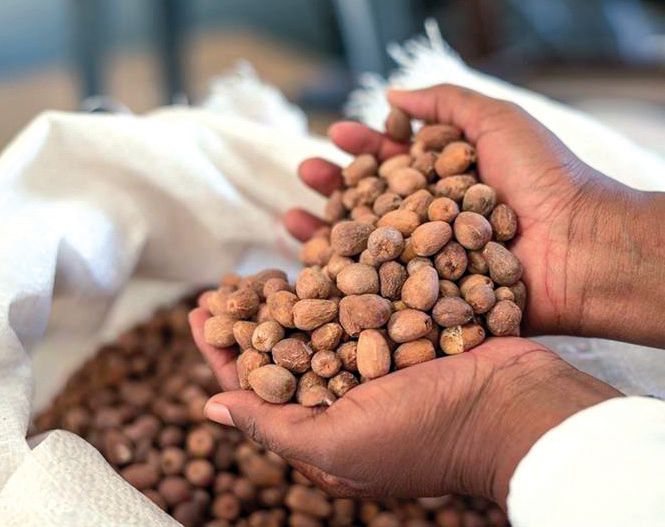
PARTNERSHIP READY NAMIBIA: COSMETICS
Shea Butter Resources and Associated Traditional Knowledge Act, Act 2 of
2017" (ABS Act). The implementing regulations necessary for the
Bees Wax
application and operationalisation of the ABS Act are currently
Lipid oils not available in Namibia in sufficient quantities, being developed and their publication in the Namibian Official
such as olive oil, castor oil, grape seed oil, and others Gazette is planned for early 2021.
Essentials oils, such as Lavender, Rose Geranium, Bergamot,
Under the ABS Act, any person trading or wishing to study genetic
Citrus-type fragrances and many others; and
resources (flora & fauna) from Namibia requires an explicit prior
Stabilisers, Emulsifiers and Preservatives. consent (PIC = Prior and Informed Consent) from the respective
local community to which the resource is to be assigned. For the
The registered Namibian health and beauty products manufac- commercial export of genetic and biological resources, Mutually
turers have a wide selection of products to choose from. The Agreed Terms (MAT) are required before the license for the export
focus of the Namibian production is mainly on soap and hair care of the resource is applied for, regardless of the level of value added.
products such as shampoos, conditioners and treatments. Other Bioprospecting also includes research and development. Therefore,
end products from the sector include skin care products (creams, any organization wishing to do so requires an additional research
lotions), treatment oils, toiletries, perfumes, ambience enhancers license issued by the National Commission on Research, Science
and decorative cosmetics or make-up. and Technology (NCRST).
Under the health end products segment, Namibia produces tea, As the ABS Act is not yet fully regulated and implemented, applica-
powders and capsules. All these are over the counter supplements- tions are currently being processed by the Interim Bioprospecting
without pharmaceutical registration restrictions. Committee (IBPC). In case of a positive decision by the IBPC,
the Ministry of Environment, Forestry and Tourism (MEFT) will
Not all end products manufactured in Namibia to date are cur- issue a compliance letter. The IBPC also includes the MIT, which
rently shelf and/or export ready. Nevertheless, several health and represents the interests of companies. As part of the publication
beauty products can be found in well-known local retail outlets. of the ABS implementing regulations, which is planned for the
While regulations to sell health and beauty consumables are near future, it is planned to replace the IBPC with the ABS Office
arguably not as strict in Namibia as in the EU, especially small and provided for by law and to anchor corresponding capacities in the
medium-size enterprises (SMEs) struggle to comply with them. The MEFT for implementation, especially in order to further improve
general trade rules remain: A product must provably not be toxic. ABS-relevant processes and thereby ensure legal certainty for both
users and providers of genetic and biological resources.
Regulatory Guidelines in → EXPORTS FROM NAMIBIA
the Cosmetics Sector To date, most of the resources, i.e. cosmetics, leave Namibia
with a limited amount of value addition. The greatest part of the
resources are exported from Namibia in a semi-processed stage as
→ C
ONSERVATION OF BIODIVERSITY AND raw and/or crude lipid oils. By value and quantity, the latter makes
PROTECTION OF TRADITIONAL/INDIGENOUS the greatest part of the cosmetics industry at an estimated value
KNOWLEDGE of more than NAD100 million per annum. The main health and
beauty raw material exports from Namibia into the EU, mentioned
The conditions for access and equitable use of genetic and bio- in order of importance, are:
logical resources and related traditional knowledge (Access and
Benefit Sharing, ABS) apply to Namibian cosmetic raw materials Devil’s Claw root, sliced and dried
and ingredients intended for use in an end product in Namibia Marula Lipid Oils, crude or filtered or refined
or for processing abroad. In this respect, processing also includes Moringa Leaves, dried
the non-consuming use of the resource, such as taste and scent Black Carrot, sliced and dried
assessment by steam space analysis. To implement the interna- Ximenia Lipid Oils, crude or filtered
tional agreements of the Nagoya Protocol on Access to Genetic Kalahari Melon Seed Oil, filtered or refined
Resources and Fair and Equitable Sharing of Benefits, Namibia Mongongo Lipid Oil, filtered or refined
adopted an ABS Act in 2017, the "Access to Biological and Genetic
2PARTNERSHIP READY NAMIBIA: COSMETICS
For example, Devil’s Claw root is almost exclusively exported to authorisation. As mentioned before, this is perceived by exporters
the EU, with the main recipient country being France. to be tedious and has in the past led to EU orders being cancelled.
Since December 2019, the Namibian government announced an
Export Levy on any raw materials leaving the country, irrespective → IMPORTS INTO THE EUROPEAN UNION
of their destination market, as per Export Levy Act, Act 2 of 2016
as amended on 20 December 2019 (Government Gazette No.7080, The SADC EU EPA allows for duty free, quota free imports.
2019). The Export Levy Act was published in view of the Southern However, as cosmetics in their most basic physical analyses are
African Development Community (SADC) EU Economic Partner- chemicals, other legislative provisions need to be satisfied to allow
ship Agreement (EPA) being ratified. This is a concession the EU for their imports into the EU territory. For all chemicals, or their
granted five of the SADC EPA member states to ensure that deeper raw materials below an annual import amount of one tonne per
value chain development can take place in countries like Namibia. annum, these are exempted from some of the provisions of the
Registration, Evaluation and Authorisation of Chemicals (REACH)
All exports destined for the EU market must be accompanied by Legislation (Regulation (EC) No. 1907/2006 (https://eur-lex.europa.
a Rules of Origin (RoO) Certificate, issued by Customs and Excise eu/legal-content/EN/TXT/PDF/?uri=CELEX:32006R1907R(03)&qi
(Ministry of Finance), and any other permits linked to the export of d=1605530509325&from=EN). Natural raw materials, like lipid
a natural resource, especially when protected. For instance, Hoodia oils, are exempted from this arrangement; however, essential oils
is protected under Convention on International Trade in Endan- are not exempted.
gered Species of Fauna and Flora (CITES) and thus exports of its
ingredients and end products must be accompanied by a CITES EU Cosmetics Regulation (EC) No. 1223/2009 (https://eur-lex.
compliant permit issued by MEFT. The process to obtain certifi- europa.eu/legal-content/EN/TXT/PDF/?uri=CELEX:32009R122
cates of RoO and customs or export related documentation 3&qid=1605530658817&from=EN) bans over 1,300 chemicals in
are rather straightforward. To obtain documentation related to health and beauty products, irrespective of quantity or whether they
ABS compliance is a condition precedent to obtaining export are raw materials, ingredients or end products for product safety
and ingredient assessments reasons. The reasons are based on:
3PARTNERSHIP READY NAMIBIA: COSMETICS
Prohibited substances because of toxicity South African owned retailers often also wish to have proof
Restricted substances that can only be used under specified that cosmetic products have been manufactured under the
circumstances internationally accepted Good Manufacturing Practice (GMP)
Substances approved for use in cosmetics like colourants, standards, for which there is no inspection body in Namibia.
preservatives and UV filters The cost to produce at such a facility is high and not feasible
for many Namibian cosmetics producers at the moment.
Some cosmetic products are given special attention from regula-
tors due to their scientific complexity or higher potential risk to As retailers wish to offer products on an equal basis throughout
consumer health. the country for the same retail chain, product quantities and
logistics channels pose a challenge to many Namibian cosmet-
Categorically, ingredients and/or products that are tested on ics manufacturers.
animals are banned due to the prohibition on animal testing in
the EU itself. Many manufacturers report that some supermarkets are
interested in stocking Namibian products, but the process of
being listed as a vendor on their system is difficult. Therefore,
→ IMPORTS INTO NAMIBIA manufacturers are recommended to get a distribution company
that is already listed as a vendor. However, Namibian cosmetics
There are no explicit import restrictions applied to products manufacturers have difficulty in finding a distribution company
categorised as cosmetics in Namibia according to the Namibian that will take on their products in the first instance already due
Government Notice 123 of 1994. Traders must comply with the to lack of economies of scale.
Namibian labelling and metrology regulations. This means that
any product not displaying the directions for use and content of
the product in English must additionally add such to any product → Q
UALITY ASSURANCE AND CERTIFICATIONS,
to be sold in the Namibian territory. STANDARDS, LABELLING
In trade terms, cosmetic products are defined within the harmo- Very strict EU market access requirements for health and beauty
nised system on customs and excise codes (HS Codes). The HS products exist. The prime objective of these requirements is that
code commencing with “33” is designated for cosmetic products products must be safe to use. No substance prohibited in the
related to “Oils and Resinoids, Perfumery, Cosmetic or Toilet EU may be included; products should be free of allergens and any
Preparations”. This includes both intermediate and end-use prod- potential allergens must be listed on the packaging. Colourants
ucts, such as “essential oils” (3301), “perfumes and toilet waters” and preservatives must equally be mentioned. For the EU market,
(3303), “beauty, make-up & skin-care prep, manicure” (3304), any cosmetic product must be listed on the EU Cosmetic Products
“preparations for use on the hair” (3305), and “personal toilet” Notification Portal (CPNP – https://ec.europa.eu/growth/sectors/
(3307). South African cosmetic products make up approximately cosmetics_en), which means that the materials safety testing and
90% of the market share in Namibia, both for natural/organic and clearance on the same by an EU accredited, independent cosmetics
conventional cosmetic products. Namibian cosmetics producers in safety assessor was obtained. Only when the Materials Safety Data
general struggle to put their products on Namibian retail shelves Sheet (MSDS) is issued by an EU accredited product safety assessor
due to the following reasons: may a product be listed on the EU CPNP. The EU market access
requirements for cosmetics result from the legislation as well as
Fast-Moving Consumer Goods’ retailers are themselves in
market-related by the buyers and include aspects in the areas of
majority South African owned or franchises from South Africa.
health and safety, quality, environment and a social dimension.
They prefer to source products from South Africa as the suppli-
Specific purchasers can additionally have special requirements that
ers are already known to them.
a supplier must meet.
Retailers require cosmetic products that are produced at a
facility that is inspected by the Government authorities, like the Furthermore, an ingredient’s efficacy, based on its sourcing area
Namibia Medical Registration Council (NMRC) or pass a fitness and value addition process, must have been established and
certificate issued by municipalities. published in a dossier. Should a raw material supplier change the
filtration process, for example, they would necessarily have to
provide a new dossier on the product. The same holds true for an
4PARTNERSHIP READY NAMIBIA: COSMETICS
end-product manufacturer – should they change the cosmetic’s Standard is probably the highest cosmetics standard to comply
formulation by varying, for example, the level of inclusion of with internationally and is therefore aspired by a broad spectrum
an ingredient or substitute an ingredient, a new MSDS must be of Namibian health and beauty products suppliers.
provided.
The labelling of end products entering the EU market is equally
Quality assurance can be provided for to a limited extent in guided by the EU Cosmetics Standard. Additionally, for products
Namibia. For instance, it is sufficient for a producer to routinely from third countries outside the EU, the responsible person (RP) in
test for pH and product stability and accompany the batch with the EU must be mentioned on the packaging. The RP is the contact
such test results. However, any further quality assurance, like person having to deal with any product enquiries. For products also
mould testing, allergens testing, etc. must be carried out in a repu- complying to natural/organic labels, this may be displayed on the
table, EU accredited laboratory. Some five laboratories in Namibia front of the container, or at the back. The validity of the certifica-
provide routine quality tests; for EU market quality assurance tests, tion must be provided as well.
such tests must be conducted elsewhere. The Namibia Standards
Institute (NSI) does not offer testing and quality assurance services
for cosmetics in Namibia. Most of the time, Namibian health and
beauty products’ suppliers have their material tested in South Value Chain Potential and
Africa. Alternative laboratories from France, Italy and Germany are
often used.
Challenges
No certifications on cosmetic products compliant to EU Cosmet-
ics Standard can be offered in Namibia. South African and/or EU The potential and challenges in the Namibian cosmetics industry
based service providers are being used for such. The EU Cosmetics can best be exemplified by a SWOT analysis:
Biodiverse resource base Lack of know-how and technology
Recognised production systems Limited upscaling
Existing international markets Lack of access to affordable funding
Diverse value chain and options Small Namibian market
for processing Lack of access to affordable,
reliable testing labs
Lack of access to affordable,
STRENGTHS WEAKNESSES EU compliant packaging
OPPORTUNITIES THREATS
Niche market for Namibian, Competition due to cheap,
sought-after resources yet very good quality products
ABS holds prospects for further IP/Traditional knowledge capture
value addition in Namibia due to funding limitiations
Expansion of production in Namibia, Limited progress with ABS regulations
and export publicaton in Namibia
5PARTNERSHIP READY NAMIBIA: COSMETICS
Stakeholders in the It is estimated that over 6,000 people, mainly women, are linked
to the primary production processes in Namibia. This includes
Cosmetics Sector cultivation, collection, raw materials quality assurance and first
stage processing of the input materials. The first-stage processing
factories are spread over Namibia, from north to south, and east to
west. Such factories are mostly located close to the raw materials
→ NAMIBIAN STAKEHOLDERS
base.
The Namibian stakeholders can be categorised into private sector,
Second-stage processing such as improved filtration of lipid oils
public sector, incl. regulatory bodies and non-state actors like
or extraction are either done at the coast and in Windhoek, or
community-based organisations and NGOs. These stakeholders are
even outsourced to South Africa and selective partners in Europe,
either directly involved in the cosmetics production system or ren-
for example. In Namibia, about 100 people are estimated to be
der services to the direct stakeholders. Since the publication of the
employed in second-stage processing.
Industry Growth Strategy, the stakeholder map has remained stable.
End product manufacturing by volume and value is often out-
In total, it is estimated that more than 150 companies exist in the
sourced to contract manufacturers located in South Africa,
Namibian cosmetics, i.e. health and beauty sector. Already some
especially for the health products. Beauty end products manu-
40 spas/wellness, hair and beauty salons are registered to operate
facturing is accomplished by external contract manufacturing in
from Windhoek. Even more also operate from other Namibian
Namibia and South Africa, local manufacturing at industrial scale,
towns. The sector also accounts for at least two large scale manu-
and artisanal production processes. There is considerable scope
facturers and wholesalers of toiletries and cleaning materials.
for diversified manufacturing and processing of cosmetics.
One large scale cosmetics contract manufacturer operates from
Otjiwarongo. There are also representations of international brands
in Namibia. They sell products on a wholesale and agent basis in → EUROPEAN STAKEHOLDERS
the market.
The European stakeholders in the cosmetics industry follow the
According to the Business and Intellectual Property Authority market channels available for certain raw materials (incl. e.g. crude
(BIPA) database, more than 100 companies fall into the above lipid oils), ingredients and end products, and level of distribution
category and are spread across the country with a concentration in Europe. For Namibian health and beauty products, France,
in Windhoek and at the coastal towns of Swakopmund and Walvis Germany and Italy are the main markets for raw materials and
Bay. Pharmacies also often offer the before mentioned services and ingredients. German speaking Europe (incl. Switzerland) and the
accessories and were not counted as part of the companies listed UK serve as the main markets for Namibian cosmetic end products,
on the BIPA database. where importers/responsible persons are available. An RP can
operate across the EU, including the United Kingdom until further
To further the interests of the cosmetics industry in Namibia at notice.
large, the Network of the Namibian Cosmetics industry – NANCi –
was formed in 2017. NANCi by the end of 2020 counted some Cosmetic end products “Made in Namibia” are primarily sold via
40 members, with growing membership numbers. NANCi mainly online channels in Europe. Namibian ingredients find their way
has members concerned with the harvesting or collection of raw into cosmetic products in Europe and are sold in well-known retail
materials, raw materials processors or ingredients manufacturers outlets or used in organic brands.
as well as micro, small and medium enterprises end products
manufacturers. Nevertheless, the cosmetics industry in Namibia is Unless one is part of the inner circles of the cosmetics industry,
much larger and also concerns service providers in the cosmetics access and distribution channels are not readily published due to
industry, like the high costs involved from identifying a potential ingredient,
establishing its safety and efficacy up to end product development
wellness centres, spas and hair/nail/beauty salons
and distribution. European cosmetics manufacturers prefer to use
cosmetics accessories (e.g., false hair, nails, eyebrows, etc.)
ingredients agents and brokers. Well-known agents or brokers for
large scale producers of hygiene products and ambience
ingredients or semi-processed input materials are e.g., Aldivia and
enhancers; and
Michel Mane. This saves considerable costs for sourcing innova-
tools and equipment providers (scissors, depilation
tive and sustainable ingredients and tends to ease the way for ABS
equipment, etc.)
compliance.
6PARTNERSHIP READY NAMIBIA: COSMETICS
Business Opportunities for
European Enterprises i Sources and useful links:
• I ndigenous Plant Task Team (IPTT)
www.nbri.org.na/sections/economic-botany/INP/IPTT
From a Namibian perspective, the main opportunities for European • M
inistry of Environment, Forestry and Tourism
enterprises lie in providing and enabling affordable services to the www.met.gov.na
Namibian cosmetics industry in Namibia, like materials testing,
• M
inistry of Finance
product certification and organic labelling. Against the background
www.mof.gov.na
of increased consumer demand for sustainably sourced health and
beauty products, the development of Namibian Good Manufactur- • M
inistry of Industrialisation and Trade
ing Practice (GMP) and Good Agriculture and Collection Practice www.mti.gov.na
(GACP) are essential. GACP is a prerequisite for any organic/natural • N
amibia Network of the Cosmetics Industry (NANCi)
resource to be used for its pharmaceutical efficacy. www.nanci.biz
EU compliant packaging material is difficult to source in Namibia, • N
ational Botanical Research Institute (NBRI)
www.nbri.org.na
especially because of very small numbers required at a time. Ways
and means thus need to be exchanged on how to serve Namibian
manufacturers in this regard. The latter business opportunity can
be expanded to other SADC states where similar bottlenecks exist.
South African suppliers do offer such packaging, but often the
question remains: Is it possibly cheaper to package in South Africa,
or directly in Europe?
The provision of dossiers on ingredients and end products remains
a challenge especially for community-based organisations holding
a promising resource and first stage processors in Namibia. Part-
nerships with European enterprises to this has worked rather well
in the past, under the provison that the dossier and its intellectual
property should remain with Namibian stakeholders or at least be
ABS compliant.
From a European perspective, Namibia’s biodiverse resource base
and large quantities of selective ingredients attract high interest.
These pertain to e.g., Devil’s Claw and Black Carrot root and Mor-
inga leaves as well as to Marula, Mongongo and Kalahari Melon
Seed lipid oils. To sustain the resource base, European enterprises
are encouraged to partner with the Namibian suppliers to expand
the production as source, both related to cultivation and harvest-
ing/collection. At the same time, the value chain can be deepened
by investment into final ingredient production, like extracts,
flavours, concentrates and the like.
7PARTNERSHIP READY NAMIBIA: COSMETICS
YOUR PARTNER FOR NEW MARKETS – NEW OPPORTUNITIES:
DEVELOPMENT COOPERATION NAMIBIA
Economic growth creates jobs, improves people’s incomes, In order to support the sustainable engagement of
and promotes innovation. That is why the United Nations German companies in emerging and developing countries,
2030 Agenda provides for the active involvement of the Germany Trade & Invest (GTAI), Deutsche Gesellschaft
private sector in the implementation of the Sustainable für Internationale Zusammenarbeit (GIZ) GmbH and the
Development Goals (SDGs). The Global Business Network German Chambers of Commerce Abroad (AHKs) as well as
(GBN) Programme encourages local and German companies other partners combined their expertise in the publication
to get involved in sustainable economic development series “New Markets – New Opportunities”.
in selected countries in Africa and Asia. Via Business &
The booklet shows companies the economic potential of
Cooperation Desks the GBN-Coordinators provide infor-
future markets as well as the funding and consulting
mation, advice and guidance for businesses on existing
opportunities offered by the German development coop-
support, financing and cooperation instruments of German
eration. “New Markets – New Opportunities: A Guide for
development cooperation. The GBN-Coordinators work
German Companies” is supported by the Federal Ministry
closely with the German Chamber of Commerce Abroad
for Economic Cooperation and Development (BMZ). All
(AHK) regional offices. The GBN is funded by the German
issues are published on the websites of GTAI and GIZ. You
Federal Ministry for Economic Cooperation and Develop-
can find selected issues, for example on Namibia also at
ment (BMZ) and implemented by the Deutsche Gesellschaft
für Internationale Zusammenarbeit (GIZ) GmbH. www.bmz.de/ez-scouts
www.bmz.de/gbn
Published by: In cooperation with:
Published by Deutsche Gesellschaft für URL-links Responsibility for the content of external websites
Internationale Zusammenarbeit (GIZ) GmbH linked in this publication always lies with their
respective publishers. GIZ expressly dissociates itself
Registered offices from such content.
Bonn and Eschborn, Germany
GIZ is responsible for the content of this publication.
Dag-Hammarskjöld-Weg 1 – 5
65760 Eschborn, Germany
T +49 6196 79-0 On behalf of German Federal Ministry for Economic
F +49 6196 79-1115 Cooperation and Development (BMZ)
info@giz.de
www.giz.de Division Division 110
Cooperation with the private sector, sustainable
Project Global Business Network (GBN) Programme economic policy
Berlin
Responsible Linda Schraml
linda.schraml@giz.de
Layout www.w4gestaltung.de
Photo credits © GIZ/Fa CreativeLAB (p.1) , Christina Pfandl (p.3)
As at Eschborn, December 2020You can also read


