Pecorino Sardo P.D.O - Programme funded by the autonomous region of sardinia with l.r. n. 5/2015 art. 15
←
→
Page content transcription
If your browser does not render page correctly, please read the page content below
Pecorino
Sardo P.D.O

     Programme funded by the autonomous region of sardinia with l.r. n. 5/2015 art. 15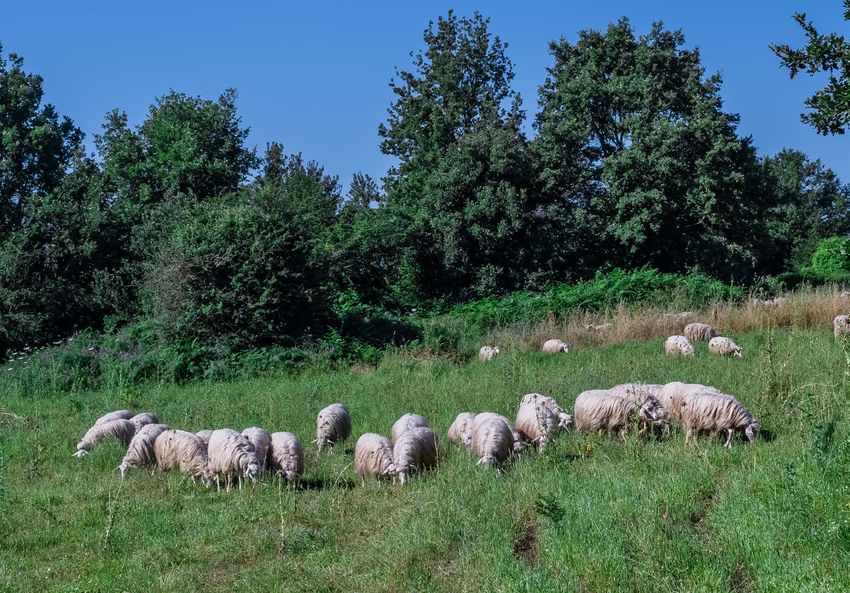
THE AREA OF ORIGIN SARDINIA IS THE ONLY
                   REGION OF ORIGIN OF
It is the second largest and the           Vast expanses of the land are covered in
second most densely populated              brush vegetation, including mastic tree,
island in the Mediterranean Sea. It
is also a veritable mini-continent in
virtue of the remarkable variety of
natural and human environments.
                                           rockrose, strawberry tree, and many other
                                           wildflower species, typical to the island.
                                                                                           PECORINO SARDO PDO.
Above all, the uniqueness of this          Since the Nuragic age sheep rearing has
island is characterized by:                been an important, if not the only source
                                           of income for a large part of the island’s
• in its particular environmental and
                                           population; the agro-pastoral sector,
  climatic conditions
                                           along with ewe’s milk dairy production
• in its ancient agro-pastoral vocation,   are still one of the island’s key industries,
  which continues to be strongly           both in terms of workers and turnover of
                                                                                            SARDINIA
  rooted in the land.                      businesses.

Many natural features that have            Today more 12,000 animal farms
since disappeared in other areas of        operate in Sardinia, producing almost
Italy have been salvaged in Sardinia:      300 thousand liters of milk in total.
solitary coastlines, mountains, forests,
rare animals and local plant species.

The typically Mediterranean climate
is characterized by mild winters
and hot summers and it particularly
influenced by the sea and strong
winds that regularly blow over the
land in all seasons.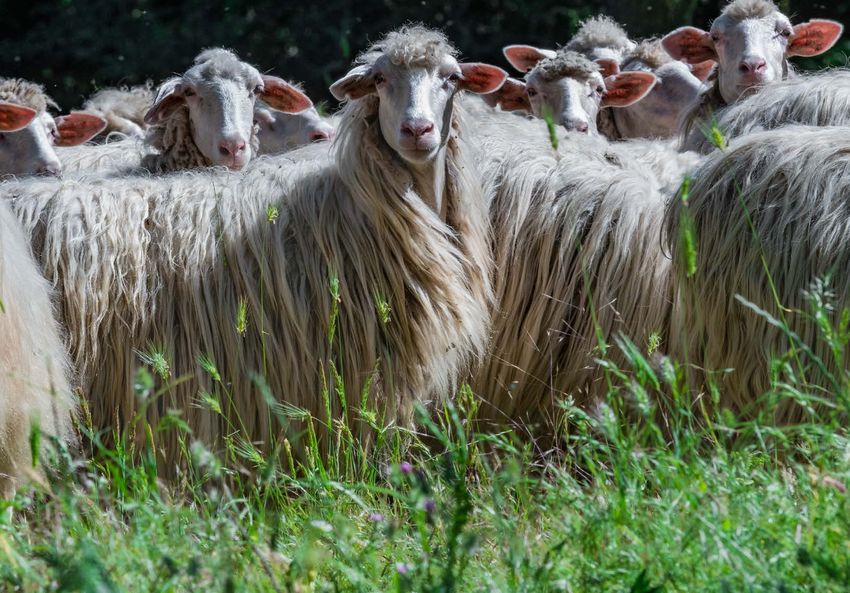
HISTORICAL
HIGHLIGHTS                                                               Pecorino Sardo P.D.O.:
                                                                         an ancient history

Pecorino Sardo is one of Sardinia’s most ancient cheeses whose        and more innovative processes. The turn of the twentieth century
origins go way back in time to the Nuragic age, a population which    also saw the spread of new production methods such as the use of
dedicated itself to sheep rearing rather than farming.                thermometers and titrated liquid rennet, as well as the filtering of
                                                                      milk. Thanks to modern machinery and technological innovations, the
In Ancient Carthage and then in Ancient Roman times Sardinia became hygiene conditions of processing improved; heat treatments, the length
one of the most important wheat producers in the Mediterranean. of time and methods for the semi-cooking of curd as well as the use of
Forests were not only replaced with grain fields, but pastures too, a lactic bacteria natural enzymes and rennet have all been rationalized.
practice that spread rapidly thanks to the island’s special, highly
favorable environmental and climatic conditions. Natural meadows, All this in virtue of new and more extensive markets which were
teaming with varied and rich brushy vegetation, were a crucial food opening up on the horizon, requiring compliance with stringent health
source for sheep reared on the island back then and still are today.  and hygiene standards, well-defined organoleptic properties, ease and
                                                                      convenience of use.
The first precise historic notions on the ancient origins of Pecorino
Sardo PDO can be traced back to the late eighteenth century. At the From the 60s in particular, the characteristic production technology of
time, cheeses were referred to as Whites, Fine Reds, Smoked, Fresa Pecorino Sardo has been continuously honed until today, without ever
and Spiatatu. Fine Red and Smoked cheeses can be considered the forgetting the origins and teachings passed down from tradition.
precursors of Pecorino Sardo. Both cheeses were made from raw milk
or milk heated by dipping hot stones in it.
                                                                      Fine Red and Smoked cheeses are still alive today.
Processing techniques were refined with the passing of centuries;
traditional practices were passed down and combined with new They are also protected by the P.D.O. label.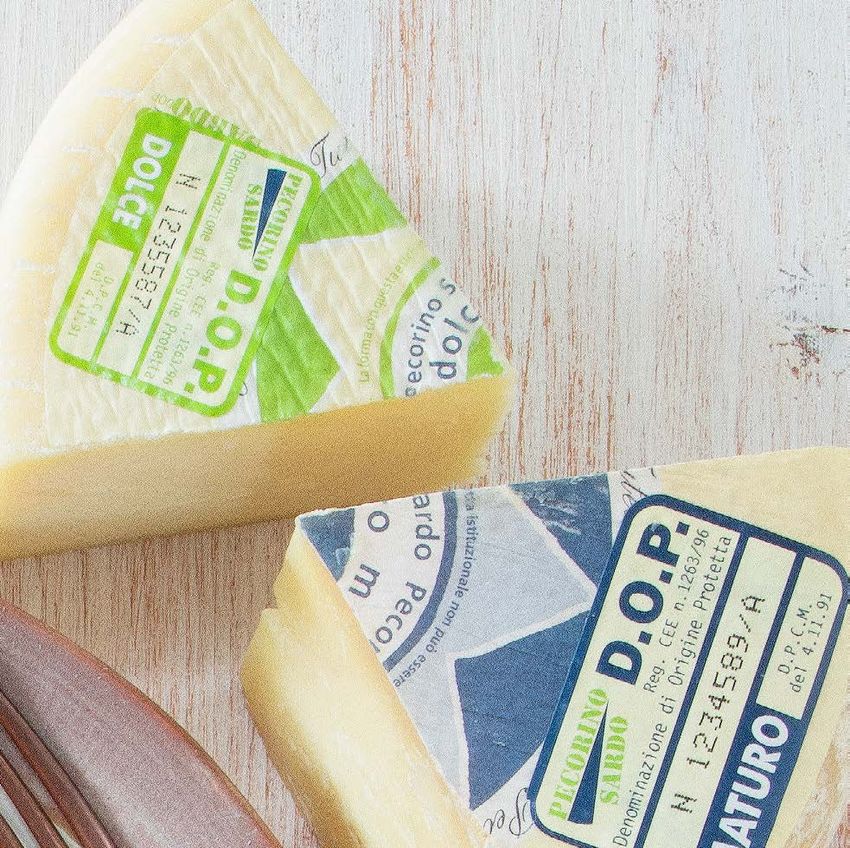
SARDA SHEEP
EWE’S MILK
*Animal farms in the area of origin are characterized by the prevalence of the Sarda breed of sheep for the production of milk destined for the PDO.
THE SARDA SHEEP BREED                      Animals are mostly left to
                                           graze on natural pastures,
                                           which is why their milk

                         DESCRIPTION
                                           is considered the very
                                           best quality. Currently
                                           on the island there are
                                           approximately 12,000
                                           agro-pastoral farms,
                                           where more than three
                                           million sheep are reared
                                           for milk production.

                                           Evolution:
                      Breed:                Throughout its evolution, the Sarda
                                             sheep has perfectly adapted to
         An indigenous breed of
                                              these rugged lands, characterized
        sheep, of ancient origin.
                                               by hilly and mountainous
                                                landscapes.

                 Origin:                         Natural habitat:
   A descendant of the wild                      The island’s typical
 mouflon species, which still                    Mediterranean macchia, a
 abounds in the remote and                       shrubland with vast pastures,
     central part of Sardinia.                   characterized by bushes and
                                                 wild herbs.

          Production:                          Tradition:
        Since the early twentieth              The Sarda sheep’s rustic nature
        century, these sheep have            is an important characteristic,
       been mostly farmed for milk          as it thrives on natural pastures,
                          production.     resulting in excellent milk, both in
                                        terms of quality and quantity.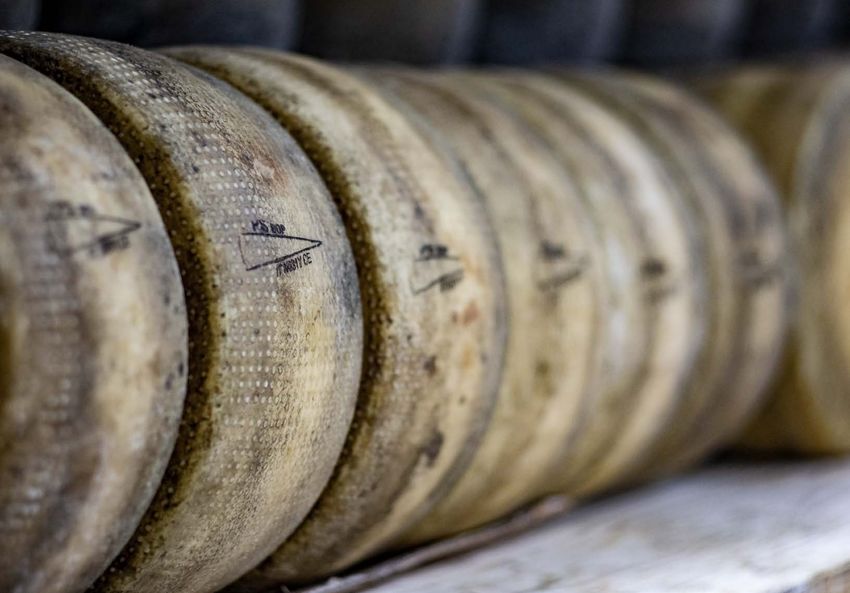
QUALITY EWE’S MILK
      Pecorino Sardo P.D.O. is made exclusively with full-fat ewe’s milk.
           This milk comes from animals that graze on pastures and therefore contains vitamin A, which gives
               it a white porcelain color and greater viscosity due to a higher dry substance content.

                         Radical transformations in the dairy production industry introduced over the past few
                           decades, along with innovative techniques developed to improve the health and
                            hygiene characteristics of farms, have significantly increased the quality of life of
                              raisers and their livestock. This has drastically reduced the somatic cell content
                                and bacterial load of the milk produced, thus enabling an increase in the
                                 presence of essential, polyunsaturated fatty acids the milk is particularly rich in.

                                     Over the years genetic improvements to
                                     the Sarda breed and constant monitoring               Sardinia is
                                     of milk production has resulted in
                                     animals that offer excellent production               effectively
                                     quality and quantity.
                                                                                           Italy’s top sheep

                                                                                                 68
                                                                                           rearing region:
                                                                                           68%
                                   Cheeses made with Sarda ewe’s milk
                                  are rich in proteins and have nutrients.
                                 Sarda ewe’s milk is mainly used in the
                                                                                           of ewe’s milk           %
                               dairy industry to produce fine cheeses that                 comes from
                              are in high demand among consumers.
                                                                                           the island.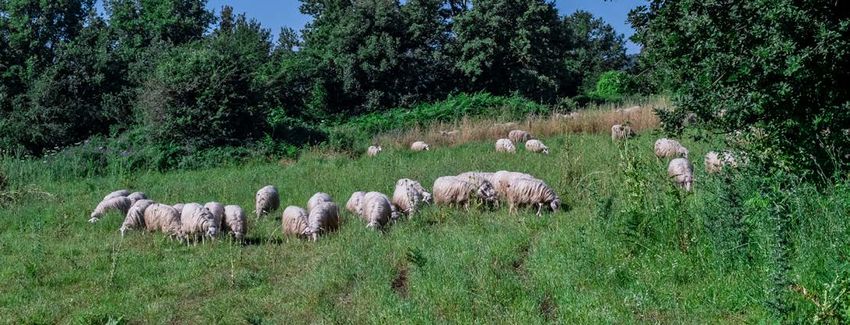
PRODUCTION
STEPS OF PRODUCTION
  1
 PREPARATION
            2       3                CURDLING
                                     Milk enzymes are added to the
                                                                           BREAKING UP
                                                                           The paste is then broken up
 OF MILK
 Full-fat ewe’s milk produced        milk, sourced from indigenous         into granules of various sizes,
 entirely in Sardinia can be         cultures, along with veal’s rennet;   depending on the type of
 processed raw or is heat treated.   coagulation takes around 35-40        cheese being made.
                                     minutes.                              For Dolce (mild) Pecorino Sardo,
                                                                           granules must be the size of a
                                                                           hazelnut.
                                                                           For Maturo (mature) Pecorino
                                                                           Sardo, they are smaller, the size
                                                                           of a corn kernel.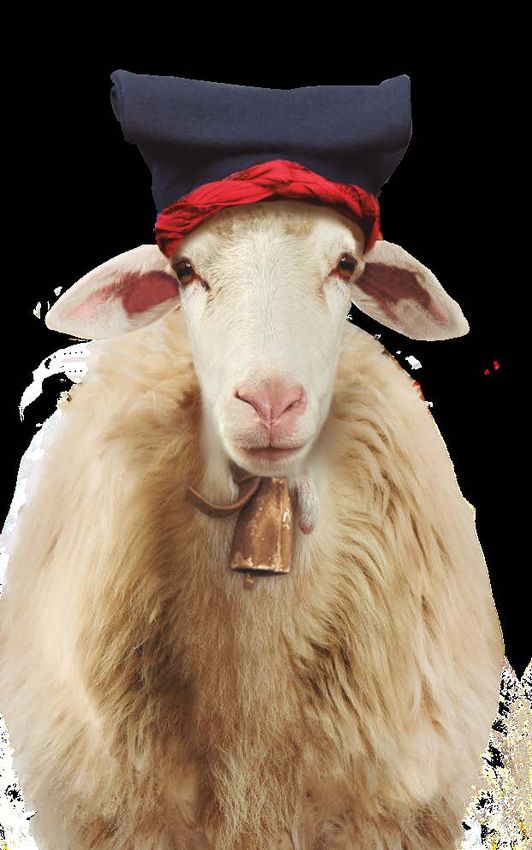
4
COOKING AND
                                 5
                                 SALTING
                                                                   6
                                                                   MATURATION
                                                                                                   7
                                                                                                   MARKING
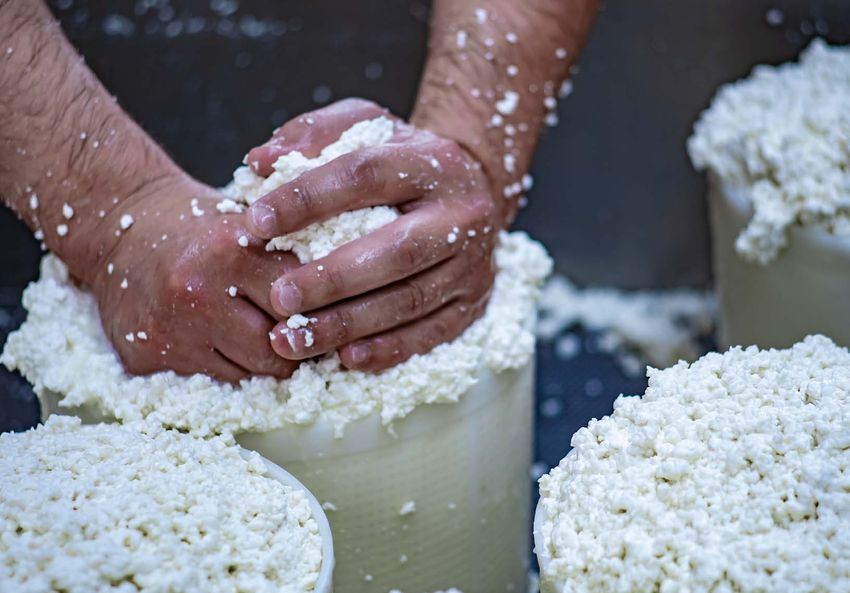
PRESSING                         Lastly, the cheeses are wet       This is followed by             Before release, every
The curd is then semi-cooked     or dry salted so that for every   maturation/ aging which is      single batch must be
at a temperature that never      100 grams of Pecorino Sardo       different for both varieties:   rigorously inspected and if
exceeds 43°C (190 °F), before    there are no more than 2          20/60 days for Dolce and        compliant with all Production
being poured into special        grams of salt.                    at least 2 months for Maturo    Specifications, the cheeses
molds which are different for                                      cheese.                         are marked.
the Dolce or Maturo varieties.                                                                     The INDELIBLE FOOD
The cheese is then pressed                                                                         INK STAMP contains the
and excess whey is                                                                                 INITIALS of the PDO and the
discharged.                                                                                        IDENTIFICATION CODE OF
                                                                                                   THE CHEESE MAKER; it may
                                                                                                   be affixed onto the flat face
                                                                                                   or side rind of the cheese
                                                                                                   one or more times.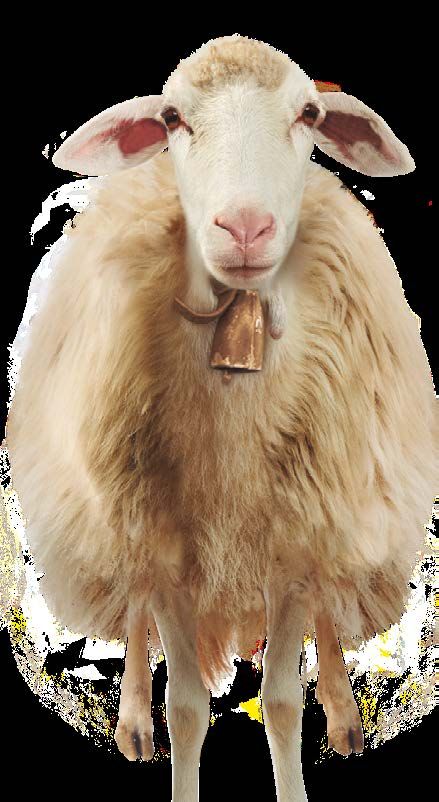
HOW TO RECOGNIZE IT                                                                              THE IDENTIKIT OF
                                                                                                 PECORINO SARDO PDO
    Made exclusively with ewe’s milk from Sardinia, there are 2 different kinds of Pecorino Sardo, in terms of preparation, maturation,
              sensory properties: Dolce (mild) (20/60 days maturation) and Maturo (mature) (aged for almost 2 months)

PECORINO SARDO DOLCE (MILD)                                                                 PECORINO SARDO MATURO
Made with                                                                                                                      Made with
100% ewe’s milk                                                                                                           100% ewe’s milk

                                                                                                                        Cylindrical shape,
Cylindrical shape,                                                                                                          with a weight
with an average                                                                                                                of 3 to 4 kg
weight of 2 kg (4.5 lbs)                                                                                                      (6.5 to 9 lbs)

                                                                                                                 A consistent crust, straw
Thin crust, straw                                                                                                yellow or brown in color
yellow in color

                                                                                                                          Elastic, slightly
                                                                                                                   granular texture, white
Aromatic and subtly                                                                                                tending towards straw
acidic flavor                                                                                                              yellow in color

Compact, soft and elastic                                                                                              A strong and subtly
paste, white in color                                                                                                        piquant flavor
HOW TO RECOGNIZE IT? THE LABEL
QUALITY STEPS
1 After stringent controls, an
indelible food ink stamp
containing the initials of the PDO
and the identification code, or
2 Before being released for
consumption, a label is affixed
onto cheeses that pass a further
quality verification, containing the
Visual identification is based
on 3 ELEMENTS
the CE mark of the cheese maker PDO designation, the EU symbol
is affixed onto each cheese. The and a progressive ALPHANUMERIC The cheese maker’s
stamp is clearly visible on the CODE that univocally identifies label on which the
side rind or on the flat face of the every single cheese Pecorino Sardo PDO
cheese. designation is radially
arranged
This numbered
adhesive mark,
issued by the
Protection
Consortium,
univocally identifies
every single cheese.
The green mark
stands for Pecorino
Sardo Dolce and the
blue mark stands for
Pecorino Sardo Maturo.
The EU symbol that
distinguishes PDO
productsTHE VALUE OF P.D.O.
CHOOSING A P.D.O. CHEESE MEANS:
• The guarantee of purchasing a typical, authentic, and quality European food
heritage product
• recognizing the added value associated with certified quality
• supporting the fight against imitations, counterfeiting and unlawful competition
• promoting the work of producers and guaranteeing long-lasting economic and
social development
RECOGNITION OF
PDO IN 1996 WITH
EC REGULATION NO.
1263/96
SARDINIA
AREA OF PRODUCTIONPRODUCTION CHAIN
THE PECORINO SARDO P.D.O.                                        PRODUCTION CHAIN IN
                 DAIRY PRODUCTION/ AGING FACILITIES
                                                                           NUMBERS
                                                                  REFERENCE MARKETS:
                                                        25

                   EXTERNAL PACKAGERS
                   AUTHORIZED TO USE THE MARK
                                                                   89%     Italy
                                                                                                              2%   Extra UE
                                                         10

                                                                                                                  9%
                         SUPPLIER SHEEP FARMS

                                                        6,000                                                         Europe

                           LABELED CHEESES                                         SALES CHANNELS:

                                                                                   90%                      5%              5%
                           IN 2019
                                                    692,588
                                                                           Retail               Hospitality       Others
                             PROCESSED LITERS OF MILK                                             Industry
                                                  12,000,000
                                                                            63%         Pecorino

                                                                                                           12%
                                 FINISHED PRODUCT                                       Sardo Maturo
                                                              20,000    OF WHICH                       +
                                                                                                                 compared
                                                                                                                 to 2018
                                                                 Tons
                                                                            37%         Pecorino
                                                                                        Sardo Dolce

*updated on 31.12.2019
THE CONSORTIUM OF THE CONSORTIUM’S MISSION
PROTECTION
As of July 2nd 1996, the quality of Pecorino
Sardo P.D.O. is guaranteed by the Consortium
of Protection which today unites private and
cooperative dairies operating throughout the
entire region. On December 11th 2002 the Holder of the collective The promotion of all initiatives which aim
Consortium obtained its first official recognition as identifying mark of to protect the typicality and particular
the only body representing Pecorino Sardo P.D.O. Pecorino Sardo PDO and
and was officially tasked by the Italian Ministry of
characteristics of the protected product and
tasked with the granting raise awareness of the PDO on all markets
Agriculture to protect, promote and enhance the
P.D.O. status, as well as to safeguard the product of its use to eligible by means of initiatives to raise consumer
from infringements, fraud and counterfeiting. This entities awareness
delegation has since been consistently renewed
at the end of each three-year term. Protection of the PDO
The Consortium of Protection also holds the
collective identification mark of the PDO, grants by means of monitoring Serving the general interests of the PDO, also
the right for its use and requires its placement bodies by means of:
onto all products which conform to Production
Specifications. It is supported by a Certification
• consultancy with Public Administration
Body that is also authorized by the Italian Ministry
Monitoring of the use • amendment proposals for production
of the Pecorino Sardo specifications
of Agriculture, in the pursuit of this delicate task.
The entire Pecorino Sardo PDO production denomination on the • qualitative and structural improvement programs
chain, from animal farmers to final packagers, national, European and
• cooperation with the European Union, the Italian
State, Regions and other public and private bodies
is subject to the control of an independent third international market to to enhance product promotion and protection
party body which verifies every single step of the
process and issues products with certifications of prevent improper use, • advertising and promotional initiatives to increase
conformity with Production Specification quality fraud, counterfeiting and the notoriety and consumption of Pecorino Sardo PDO
requirements. unlawful competition
Consorzio per la Tutela
del Formaggio Pecorino Sardo D.O.P.ì Consortiums of Protection, recognized by (EU) Regulation no. 1151/2012 art. 3 (groups) are
Via S. Alenixedda n. 2 tasked with the protection, promotion, enhancement, consumer information and general
09128 Cagliari (Italia) care of the denomination by MiPAAF (Italian Ministry of Agricultural, Food and Forestry
Tel/Fax: +39 0781 252853 Policies), with Decree pursuant to art. 14 of Law no.526, December 21st 1999.
info@pecorinosardo.it
www.pecorinosardo.itKITCHEN
IN THE KITCHEN
                                                                          DID YOU KNOW
                                                                          THAT...
                                                                          The use of milk enzymes
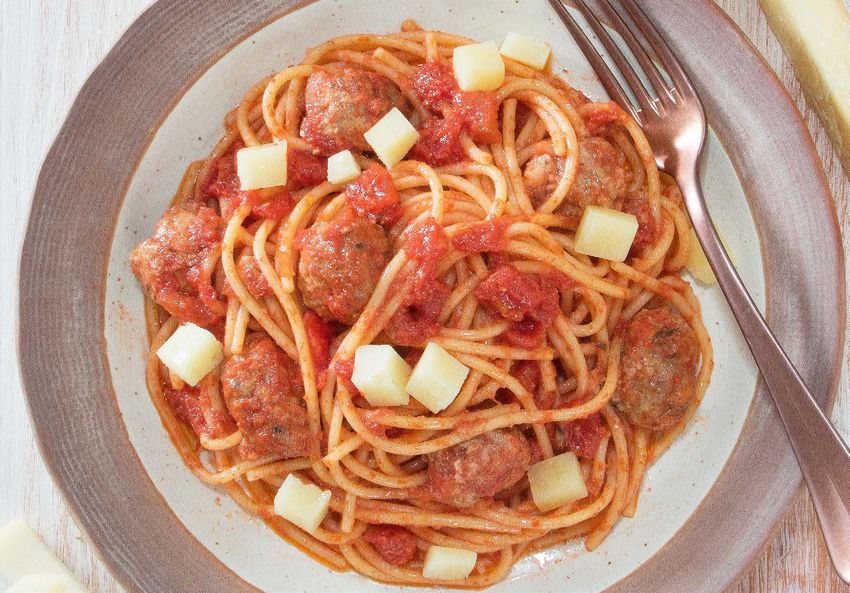
                                The Dolce cheese is highly suited for     sourced from selected
                                the preparation of savory pies and        indigenous cultures naturally
                                                                          present in Sardinian ewe’s milk
                                strudels, quiches, flans and finger
                                                                          accelerates the removal of
                                foods; it is an excellent pizza topping
                                                                          undesirable microorganisms
                                and is delicious served with grilled
                                                                          and is crucial in determining
 Pecorino Sardo P.D.O. Dolce    vegetables or seasonal fruit.
                                                                          the typical sensory properties
and Maturo varieties are both                                             of Pecorino Sardo P.D.O., and
     excellent table cheeses                                              therefore its unmistakable
                                                                          flavor. Pecorino Sardo “Dolce”
                                                                          is aromatic and delicate,
                                                                          whereas the “Maturo” variety is
                                                                          strong and subtly piquant.

    The Maturo cheese,
           aged for over 4
           months, is also
         delicious served                                                     The Dolce cheese is
         grated and used                                                      best served with a
         to enrich dishes,                                                    soft and full-bodied
especially first courses.                                                     white dry wine like
    It is used to prepare                                                     Vermentino, whereas
   numerous traditional                                                       the Maturo cheese,
   Sardinian and Italian                                                      with its intense and
      dishes and is a key                                                     decisive flavor, is
 ingredient that always                                                       excellent paired with
distinguishes itself and                                                      a soft, fervent and
     characterizes every                                                      medium-bodied red
    dish that contains it.                                                    wine like Cannonau or
                                                                              Brunello di Montalcino.
IN THE KITCHEN SAFFRON RISOTTO WITH
PECORINO SARDO PDO CHEESE,
MILD AND MATURE
INGREDIENTS
/6 DIRECTIONS
/30 min
• 500 g / 1 lb. carnaroli rice Prepare a vegetable broth. Finely chop the
onion. Cut the Pecorino Sardo mild cheese
• 1 liter or more (5 cups) of into little cubes, and grate the Pecorino
vegetable broth Sardo mature cheese.
• 100 gr / ¼ lb.
of Pecorino Sardo Dolce P.D.O. In a heavy-based saucepan, cook the
• 100 gr / ¼ lb. chopped onion in 2 tablespoons of extra
of Pecorino Sardo Maturo P.D.O. virgin oil, until slightly dry. Slightly cook the
rice with the onion, stirring constantly with
• 1 medium onion, very finely a wooden spoon. Add the white wine and
chopped continue stirring until absorbed. Add in 2
• Extra virgin olive oil cups of broth until absorbed.
• 1.5 gr of saffron Add in another 2 cups of broth, along with
salt and saffron. Let the mixture boil for
• 1 glass of dry white wine about 15 minutes, while continuing to stir
• Salt to taste and adding more broth little by little.
When the rice is ready, stir in the Pecorino
Sardo Dolce cubes Continue to cook until
creamy. Serve warm, with a dusting of the
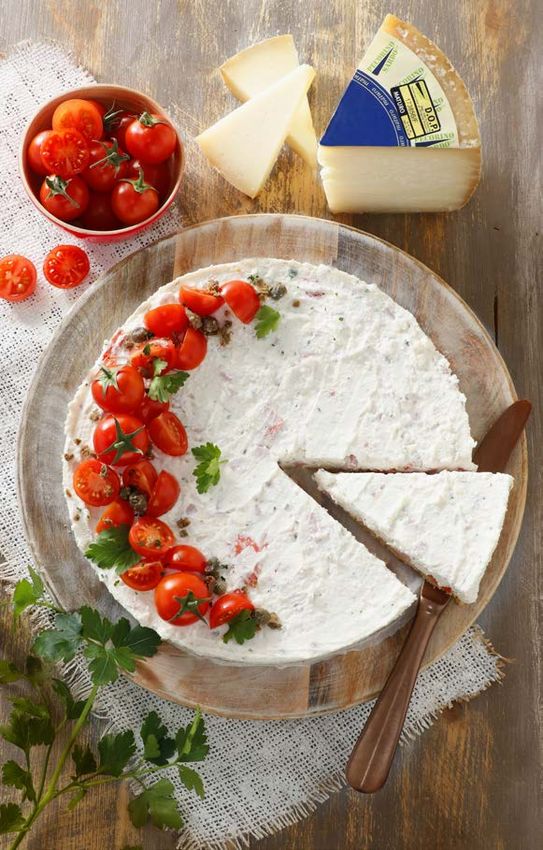
grated Pecorino Sardo Maturo.IN THE KITCHEN CHEESECAKE WITH MATURE
PECORINO SARDO PDO CHEESE
INGREDIENTS /4 DIRECTIONS
/40 min
• 120 g / 4 oz Chop the biscuits and mix them with melted
biscuits butter and grated Mature Pecorino Sardo
PDO cheese. Cover the bottom of a 9.5 inch
• 100 g / 3.5 oz cake pan with parchment paper. Put the
butter mixture into the cake pan and press down
• 40 g / 1.4 oz well, then put the cake mould into a 375°F
grated Mature Pecorino Sardo PDO preheated oven for 8-10 minutes. Remove
cheese the cake pan from the oven and let cool.
Filling: Peel 100 g / 3.5 oz of cherry tomatoes, slice
• 250 g / 9 oz them and remove the seeds. Then brown
cherry tomatoes the cherry tomatoes in oil over high heat for
3-4 minutes and drain. Add grated Mature
• 660 g / 23 oz Pecorino Sardo PDO cheese, chopped
drained sheep ricotta cheese capers, parsley, cooked ham and cherry
• 100 g / 3.5 oz tomatoes to the ricotta. Add salt and pepper
Mature Pecorino Sardo PDO to taste.
cheese
• 100 g / 3.5 oz Put the mix on the baked cake, level it and
cooked ham in dices put the cake pan into the fridge for 4 hours.
Before serving, remove the cake pan and
• capers and parsley for garnish decorate the cheesecake with the remaining
• extra virgin olive oil cherry tomatoes, capers and parsley.
• salt, pepper3 pe corini.com
You can also read


