People - HealthManagement.org
←
→
Page content transcription
If your browser does not render page correctly, please read the page content below

Leadership • Cross-Collaboration • Winning Practices

                                                                                                                                 VOLUME 17 • ISSUE 3 • 2017 • € 22                                                 ISSN = 1377-7629

                                                                                                                                                                      People
©For personal and private use only. Reproduction must be permitted by the copyright holder. Email to copyright@mindbyte.eu.

                                                                                                                                                                      • Leading the Way: Cutting Edge Human Resources
                                                                                                                                                                      • WORKFORCE PLANNING, A. LOVEGROVE
                                                                                                                                                                      • GREAT LEADERS EMBRACE CONFLICT, S. JOHNSTON
                                                                                                                                                                      • EARLY HUMAN RESOURCES INVOLVEMENT IN M&A ESSENTIAL
                                                                                                                                                                         FOR SUCCESS, F. ROEBROEK
                                                                                                                                                                      • PATIENTS MENTORING EXECUTIVES, D. CRYER & C. DAVIS
                                                                                                                                                                      • CHALLENGING PARADIGMs, A. SPIRO
                                                                                                                                                                      • LEARNING WITHOUT LIMITS, M. LESTER
                                                                                                                                                                      • TEACHING ULTRASOUND IMAGING ONLINE, J. VAN ZANDWIJK
                                                                                                                                                                      • USA Radiology Workforce, E. I. Bluth
                                                                                                                                                                      • PURSUING A CULTURE OF SAFETY, W. O. COOPER
                                                                                                                                                                      • APPRAISALS IN HEALTHCARE, A. LAYLAND & N. LEENA

                                                                                                                              Gender Matters in                       MANAGEMENT INITIATIVES IN      IN BRAZIL, E. G. RIZZATTI &
                                                                                                                              Cardiology, A. Maas                     EUROPE, D. QUAGGIA             J. M. TSUTSUI
                                                                                                                              COPING WITH COMPLEXITY,                 THE RECERTIFICATION PROCESS    MAKERSPACES, O. BREUER
                                                                                                                              M. MELLET                               OF A CHEST PAIN UNIT,
                                                                                                                                                                      T. RASSAF & M. TOTZECK         THE NEED FOR CLINICAL AUDIT,
                                                                                                                              How to Make Sense of Digital                                           J. SCHILLEBEECKX
                                                                                                                              Chaos, J. l. GIRSCHICK                  ECARDIOLOGY, H. SANER
                                                                                                                                                                                                     NATIONAL TELERADIOLOGY
                                                                                                                              AWARD-WINNING DIABETES                  Harmonisation of Lab           SYSTEM OF TURKEY, Ş. BIRINCI
                                                                                                                              CLINIC WITH VBHC APPROACH,              Medicine Across Europe, D.     & M. ÜLGÜ
                                                                                                                              H. VEEZE                                Hilmi
                                                                                                                                                                                                     TRUMP ON DRUGS: PART 2,
                                                                                                                              GROUNDBREAKING PAIN                     CLINICAL LABORATORIES          J. SALMON
A91MSC-9525-A1-7600 | © Siemens Healthcare GmbH, 2017
©For personal and private use only. Reproduction must be permitted by the copyright holder. Email to copyright@mindbyte.eu.

                                                                                                                                                                                                 Looking to succeed
                                                                                                                                                                                                        in a challenging
                                                                                                                                                                                          healthcare environment?
                                                                                                                                                                                      It’s a challenging time in healthcare – but it’s surprisingly   Today’s environment calls for pioneering solutions and
                                                                                                                                                                                      packed with opportunities for executives charged with           strategic alliances with trusted partners. In that spirit,
                                                                                                                                                                                      delivering high-quality care in a value-based environment.      through our Healthcare Executive Alliance initiative, we
                                                                                                                                                                                                                                                      would like to support you and your teams in finding
                                                                                                                                                                                      Looking for ways to expand your clinical capabilities?
                                                                                                                                                                                                                                                      insights, best practices, and solutions for success in today’s
                                                                                                                                                                                      Improve process efficiency? Lower your overhead burden?
                                                                                                                                                                                                                                                      healthcare environment.
                                                                                                                                                                                      Siemens Healthineers can help.
                                                                                                                                                                                                                                                      For more, visit siemens.com/executive-alliance

                                                                                                                                                                                      siemens.com/executive-alliance
©For personal and private use only. Reproduction must be permitted by the copyright holder. Email to copyright@mindbyte.eu.

                                                                                                                              ARE YOUR FINANCIAL AND PERFORMANCE CHALLENGES
                                                                                                                              PREVENTING YOU FROM BEING A CENTRE OF EXCELLENCE?

                                                                                                                              With today’s challenges in the healthcare environment, decisions about the        GET THE LATEST NEWS!
                                                                                                                              laboratory are expanding beyond basic needs, and are moving up to higher          Follow the QR code below
                                                                                                                              institutional levels where the focus is on financial sustainability, return on     to discover innovation and
                                                                                                                              investment, value based models and patient outcomes. Decision makers are          insights in WIRED e-news.
                                                                                                                              looking for problem-solving partners to help them pioneer broader enterprise
                                                                                                                              possibilities and transform their lab into a centre of excellence.

                                                                                                                              DISCOVER GREATER OPERATIONAL
                                                                                                                              EFFICIENCY WITH EXISTING RESOURCES.
                                                                                                                              This is why Abbott created AlinIQ – a first of its kind holistic professional      CONTACT US:
                                                                                                                              services and informatics portfolio, developed and managed by a dedicated team     Ask your local Abbott
                                                                                                                              of healthcare experts, Abbott’s Professional Service Executives (PSEs). Explore   Ambassador or send an
                                                                                                                                                                                                                email to wired@abbott.com
                                                                                                                              how our PSEs can support you in overcoming your challenges and elevating the
                                                                                                                              value and impact of your organisation.                                            www.corelab.abbott

                                                                                                                                                                                                    CHOOSE TRANSFORMATION
                                                                                                                              ADD-00061634_EN © 2017 Abbott Laboratories
GUEST EDITORIAL
People
D
espite that in general health spending is growing slowly, according to a
recent OECD report European countries lag behind. Balancing the service
demands against available resources is a key function of management.
With increasing demand and reduction in resources it is meanwhile a real chal-
lenge for most of our European health colleagues to fill vacancies in order to
maintain quality of care and patient safety with all these resource constraints.
Today we are more than ever thriving to deliver a patient centred – quality
focused care, which respect the dignity of the patient at the core of everything
we do.
With our commitment to preserving and improving the quality of health for
the patients we serve in our communities, we support treating patients at home,
in the community or in appropriate hospitals. Gerry o’Dwyer
President
The important point here is that people make up healthcare but often the European Association of Hospital Managers,
personnel and patient position is overlooked, increasingly, at the ultimate expense Brussels, Belgium
to the sector.
©For personal and private use only. Reproduction must be permitted by the copyright holder. Email to copyright@mindbyte.eu.
Group CEO
With all these issues in mind we have to ask ourselves, how can the patients' South / South West Hospital Group
Erinville, Cork, Republic of Ireland
voice be heard? How can healthcare organisations manage employees' well-
being and prevent burnout and what approach is needed when restructuring?
With human resources making up more than half of healthcare's costs, how
best can we attract, recruit and retain staff and is working to the top of the
license one answer to shortages?
In the ‘People’ Issue of HealthManagement.org we examine these questions
while also putting new training methods, innovative mentoring and peer-to-
peer appraisal in focus. This is fully in line with the main understanding of staff
importance promoted by the European Association of Hospital Managers. You
will find invitations to a few interesting workshops in this issue.
Andrew Lovegrove of Skills for Health comments on workforce planning with
the need for sustainability and affordable, deliverable quality outcomes in focus.
Mark Lester at FutureLearn offers insights on what Massive Open Online
Courses mean for healthcare professionals and organisations while the Univer-
sity of Twente shares its experience of implementing ultrasound education via
this online platform.
Frank Roebroek of the HR Trend Institute weighs in with views on how to
manage an M&A, an issue that is of increasing concern in healthcare as more
organisations merge.
Navami Leena and Adam Layland form the Faculty of Health and Life Sciences
at Coventry University examines whether traditional appraisal methods are suit-
able for healthcare personnel and HealthManagement.org rounds up some of the
most innovative HR practices across all sectors that could inspire healthcare.
As well as ‘People’ matters, there’s much more in this issue to inspire and give
food for thought. Henk Veeze co-director of the 2017 Value Based Health Care
Award-Winning Diabeter Clinic shares insights into how to build an ‘Olympic Team’
and succeed with the VBHC model and the issue of Lab Medicine harmonisa-
tion is covered as the European Union promotes a Common Training Framework.
Finally, Jack Salmon lays it on the line with his comments on price control in
pharma under the new U.S. administration.
As always, we hope you enjoy this issue of HealthManagement.org.
Volume 17 • Issue 3 • 2017 177
177
HealthManagement Editorial Board
Promoting Management and Leadership in Healthcare
IMAGING HEALTHCARE IT CARDIOLOGY
EDITOR-IN-CHIEF EDITOR-IN-CHIEF EDITOR-IN-CHIEF
Prof. Lluís Donoso Bach Prof. Christian Lovis Prof. Tienush Rassaf
Hospital Clinic – University of Barcelona, Spain University Hospitals of Geneva Westgerman Heart- and Vascular Center, University of
ldb@healthmanagement.org christian.lovis@healthmanagement.org Essen, Germany
tienush.rassaf@healthmanagement.org
HONORARY EDITOR-IN-CHIEF EDITORIAL BOARD MEMBERS
EDITORIAL BOARD MEMBERS
Prof. Iain McCall Miguel Cabrer
UK (Retired) University Hospital Son Espases, University of the Prof. Gunter Breithardt
Balearic Islands, Palma, Spain University of Munster, Germany
EDITORIAL BOARD MEMBERS Richard Corbridge Prof. Hugo Ector
Prof. Stephen Baker Health Service Executive, Ireland University Hospital Leuven, Belgium
Rutgers New Jersey Medical School, U.S. Dr. Marc Cuggia Prof. Michael Glikson
Prof. Hans Blickman Pontchaillou Hospital, France Leviev Heart Center, Israel
University of Rochester Medical Center, U.S. Prof. Georges de Moor Priv.-Doz. Philipp Kahlert
Prof. Edward I. Bluth State University of Ghent, Belgium Universitätsklinikum Essen, Germany
Ochsner Healthcare, U.S. Prof. Jacob Hofdijk Prof. Peter Kearney
Prof. Georg Bongartz European Federation for Medical Informatics, Cork University Hospital, Ireland
University of Basel, Switzerland The Netherlands Prof. Alexandras Laucevicius
Prof. Davide Caramella Dr. Peter Gocke Vilnius University Hospital, Lithuania
University of Pisa, Italy Amedes Medizinische Dienstleistungen, Germany Prof. Fausto J. Pinto
Dr. Ai-Lee Chang Prof. Werner Leodolter Lisbon University, Portugal
City Hospitals Sunderland NHS Trust, UK University of Graz, Austria Prof. Piotr Ponikowski
©For personal and private use only. Reproduction must be permitted by the copyright holder. Email to copyright@mindbyte.eu.
Prof. Michel Claudon Prof. Eric Lepage Clinical Military Hospital, Poland
University Hospital of Nancy, France Hôpitaux de Paris, France Prof. Silvia G. Priori
Prof. Alberto Cuocolo Prof. Miroslav Madjaric University of Pavia, Italy
University of Naples Federico II, Italy University Hospital Centre Zagreb, Croatia Prof. Amiran Revishvili
Prof. Nevra Elmas Prof. Josep M. Picas Scientific Center for Cardiovascular Surgery, Russia
Ege University, Turkey Adaptive HS, Spain Prof. Massimo Santini
Prof. Johan de Mey Prof. Eric Poiseau San Filippo Neri Hospital, Italy
Free University of Brussels, Belgium IHE Europe, France Prof. Ernst R. Schwarz
Dr. Mansoor Fatehi Prof. Karl Stroetmann Cedars Sinai Medical Center, USA
Medical Imaging Informatics Research Center, Iran Empirica Communication & Technology Research, Prof. Dan Tzivoni
Germany Israel Heart Society, Israel
Prof. Guy Frija
Georges-Pompidou European Hospital, France Prof. Rudi van de Velde Prof. Alex Vahanian
University Hospital Brussels, Belgium Bichat Hospital, France
Assoc. Prof. Frederik L. Giesel
University Hospital Heidelberg, Germany Ms. Diane Whitehouse
The Castlegate Consultancy, UK
Prof. Wolfram Knapp
Hannover Medical School, Germany Ing. Martin Zeman
CESNET, Czech Republic Industry Advisers
Prof. David Koff
Hamilton Health Sciences; McMaster University, Canada Prof. Jana Zvárová Marc De Fré, Belgium
EuroMise Center, Czech Republic
Prof. Elmar Kotter Prof. Mathias Goyen, UK
University Hospital Freiburg, Germany Dr. Rowland Illing, UK
Prof. Heinz U. Lemke Jurgen Jacobs, Belgium
IFCARS - International Foundation for Computer Assisted Ljubisav Matejevic, Germany
Radiology and Surgery; University of Leipzig, Germany Gregory Roumeliotis, Greece
Prof. Lars Lönn Dr. Eric Silfen, USA
National Hospital, Denmark
Prof. Elisabeth Schouman-Claeys
APHP Medical Organisation Directorate; University of
Paris 7, France
Prof. Valentin Sinitsyn
Federal Center of Medicine and Rehabilitation, Russia What Do You Think?
Dr. Nicola H. Strickland
Imperial College Healthcare NHS Trust, UK What are the people issues on your mind? How does cross-collaboration work
Prof. Henrik S. Thomsen in practice in your hospital? With future issues on Risk and Sustainability, do
Copenhagen University Hospital; University of
get in touch to share your ideas. As a leading digital and print publication on
Copenhagen, Denmark
Prof. Vlastimil Valek healthcare management and leadership, there are many ... Contact us on
Masaryk University, Czech Republic edito@healthmanagement.org
Prof. Berthold Wein
Group Practice, Aachen, Germany
GUEST AUTHORS
EXEC Dr Christophe Aveline
Frank Roebroek,
The TUBE Approach Angela Maas, the
EDITORIAL BOARD MEMBERS the Netherlands
toPerioperative Netherlands Early Human Resources
Point-of-Care ultra- Gender Matters in Involvement In M&A
Philippe Blua sound, p. 234 Cardiology, p. 184 Essential For Success, p. 201
Hospital Center of Troyes, France
Juraj Gemes
F.D. Roosevelt University Hospital, Slovakia Şuayip Birinci, Mahir
Ülgü, Turkey
Prof. Sir Muir Gray National Teleradiology Rowland Illing
System of Turkey: Porsches snd Motorbikes: Edgar Gil Rizzatti, Jeane
Better Value Healthcare, Oxford, UK Revamping Medical
Motivation, Technology, Mike Tsutsui, Brazil
Sjaak Haakman Realisation, and Leadership Training
at Affidea, p. 216
Clinical Laboratories
Beyond, p. 248 in Brazil, p. 238
Reinaert Kliniek, The Netherlands
Marc Hastert
Federation of Luxembourg Hospitals
Freddy Iemants
IRIS Ziekenhuizen, Belgium
Edward I. Bluth, USA Scott Johnston, Scotland Jack Salmon, USA
Prof. Karl Kob Radiology Workforce Great Leaders Embrace Trump on Drugs:
General Hospital Bolzano, Italy Outlook for 2017, p. 211 Conflict, p. 198 part 2, p. 252
Heinz Kölking
Lilienthal Clinic, Germany
Dr. Manu Malbrain
ZNA Stuivenberg, ZNA St-Erasmus Antwerp, Belgium
Olaf Breuer, Portugal Marcel van Kasteel Hugo Saner, Switzerland
Nikolaus Koller Makerspaces: An New Philips Technology eCardiology: Bringing
President EAHM Editorial Board, Austria Opportunity for the to Empower Emergency Industry and Clinical
Future, p. 240 Departments, p.232 Practice Together, p. 230
Louise McMahon
©For personal and private use only. Reproduction must be permitted by the copyright holder. Email to copyright@mindbyte.eu.
Health and Social Care Board, Northern Ireland
Dr. Taner Özcan
MLPCare, Turkey Adam Layland,
Navami Leena, UK
Prof. Denitsa Sacheva William O. Cooper, USA Appraisals in Healthcare: Jan Schillebeeckx,
Council of Ministers, Bulgaria Pursuing a Culture of Are Traditional Performance Belgium
Safety: The Importance of Appraisals Suitable for The Need for Clinical
Jean-Pierre Thierry Self-Regulation, p. 212 Healthcare Workers?, p. 218 Audit, p. 244
Synsana, France
Hans-Peter Wyss
Spital Davos, Switzerland
Donna Cryer, Chip
Davis, USA Mark Lester, UK Alan Spiro, USA
Patients Mentoring Learning Without Limits: Challenging Paradigms:
Executives: Mutual Massive Open Online Practising at the Top of
Benefits, p. 202 Courses, p. 208 Your Licence, p. 206
Henk Veeze, the
Correspondents Andrew Lovegrove, UK Netherlands
Workforce Planning – Award-Winning Diabetes
Prof. Frank Boudghene Gerry O’Dwyer, Ireland Can we Face the Future Clinic with VBHC
Tenon Hospital, France The People, p.177 Without it?, p. 194 Approach, p. 222
Joan Marques Faner
Son Dureta University Hospital, Spain
Dr. Thomas Kaier
King’s College London, UK Jordy van Zandwijk,
the Netherlands
Dr. Sergej Nazarenko Judith Girschick, Austria Teaching Ultrasound
Estonian Nuclear Medicine Society, Estonia What it Takes to Mark Mellet, Ireland Imaging Online:
be a Leader in the Coping with The Educator's
András Vargha Digital Age, p. 188 Complexity, p. 186 Viewpoint, p. 210
Clinical audit implementation in Radiology, Hungary
Anton Vladzymyrskyy
Virtual Hospital m-Health, Russian Federation
Ieva Vitola Mr. Andre Heinz
What Are the Keys to Daniela Quaggia, Italy
P.Stradina Clinical University Hospital, Latvia Attracting and Retaining Groundbreaking Pain
Qualified Staff in Management Initiatives
Healthcare? p. 197 in Europe, p. 224
Dalia Hilmi Matthias Totzeck,
Harmonisation Of Tienush Rassaf, Germany
Lab Medicine Across The Recertification Process
Europe, p. 236 of a Chest Pain Unit, p. 226
table of contents
HealthManagement • Volume 17 • Issue 3 • 2017
MANAGEMENT MATTERS
GUEST EDITORIAL management matters
177 The People 186 Coping with Complexity
Gerry O' Dwyer, President, European Association of Vice Admiral Chief of Staff, Irish Defence Forces, Ireland
Hospital Managers, Ireland The Irish military on embracing leadership that promotes diversity, inclusion
and reflection.
188 How to Make Sense of Digital Chaos
SPOTLIGHT Judith L. Girschik, Professor and Dr, Leadership Coach, Austria
What it Takes to be a Leader in the Digital Age
184 Gender Matters in Cardiology
Angela Maas, Radboud University Medical Center, the Netherlands
Meet pioneering gynaecardiologist Angela Maas, who explains why there's
still a lot to do when it comes to cardiovascular disease in women. COVER STORY:
COVER STORY: People People
192 Leading the Way: Cutting
POINT OF VIEW Edge Human Resources
A Human Resources (HR) department that continuously looks at ways to foster
197 What Are the Keys to Attracting satisfaction for personnel reaps the rewards of innovation and productivity.
and Retaining Qualified Staff in Healthcare? HealthManagement.org puts some top HR approaches in the spotlight.
Mr. Andre Heinz
194 Workforce Planning
©For personal and private use only. Reproduction must be permitted by the copyright holder. Email to copyright@mindbyte.eu.
216 Education and Training in Affidea– Andrew Lovegrove, Skills for Health, UK
Developing a New Generation of Leaders Workforce planning aims to create a sustainable workforce that is centred
Dr Rowland Illing around patient need, provides quality outcomes and is both deliverable and
affordable.
232 New Philips Technology to
Empower Emergency Departments 198 Great Leaders Embrace Conflict
Marcel van Kasteel Scott Johnston, Johnston Consulting, Scotland
Are you seeing the potential benefits of conflict at work, or simply the pitfalls?
234 The TUBE approach to perioperative
point-of-care ultrasound 201 Early Human Resources Involvement
Dr Christophe Aveline in M&A Essential for Success
Anaesthetists working in perioperative medicine have increasingly Frank Roebroek, HR Trend Institute, the Netherlands
taken a whole body approach to patient evaluation known as TUBE With M&A activity at a high in healthcare how can HR contribute to deals that
work?
202 Patients Mentoring Executives
Donna Cryer, Global Liver Institute, USA, Richard
“Chip” Davis, Sibley Memorial Hospital, USA
Patient-centric healthcare has come strongly into focus in recent years.
LEADERSHIP • CROSS-COLLABORATION • WINNING PRACTICES Efforts by healthcare organisations to be more patient-centred include a
VOLUME 17 • ISSUE 3 • 2017 • € 22 LE ADERSH
IP • CR
OSS-CO
ISSN = 1377-7629
LL ABOR
range of measures, such as patient councils and feedback sessions.
VOLUME ATION
17 • IS • WINNI
SUE 3 NG PR
• 2017 ACTICES
• € 22
ISSN =
1377-7
206 Challenging Paradigms
629
Alan Spiro, Blue Health Intelligence, USA
PeoplePe Is a division of labour approach in which health professionals limit their
ople
practices to the top of their licence and training best for high-quality,
•
LEADING THE WAY: CUTTING EDGE HUMAN RESOURCES
•
WORKFORCE PLANNING, A. LOVEGROVE
patient-centred care?
•
GREAT LEADERS EMBRACE CONFLICT, S. JOHNSTON
•
RADIOLOGY WORKFORCE OUTLOOK FOR 2017, E. I. BLUTH
• LE ADING
•
CHALLENGING PARADIGMS, A. SPIRO • WORK THE WA
Y:
•
LEARNING WITHOUT LIMITS, M. LESTER • GREA FORCE PLAN CUTTING ED
208 Learning Without Limits
T LEAD NING, GE
•
TEACHING ULTRASOUND IMAGING • RAONLINE,
DIO J. ER
VAN ZANDWIJK
S EM A. LOVE HUMAN RE
• CHAL LOGY BRACE GR SOUR
•
EARLY HUMAN RESOURCES INVOLVEMENT
LE
INWO
M&ARKFOESSENTIAL CONFLICOVE CES
FOR SUCCESS, F. ROEBROEK • LEARNINNGING PARA RCE OUTLOO T, S. JOHN
• TEACD. CRYER DIGMS
G WI & C. DAVIS K FO STON
• PATIENTS MENTORING EXECUTIVES, HING UL TH OUT LIM , A. SPIRO R 2017, E.
• PURSUING A CULTURE OF SAFETY,
• APPRAISALS IN HEALTHCARE, A.
• EARLW. Y HU
R SUCC &NN.
FOLAYLAND
• PATIE
TRASOU
O. COOPER
MA RELEENA
ESS,
SOUR
ITS
ND IM
CES
, M. LE
AGING
STER
ONLIN
I. BLUT
H
Mark Lester, FutureLearn, UK
NTS ME F. ROEBRO INVOLVEME E, J. VAN ZA
• PURS EK NT IN ND
• APPR
UING A NTORING EX
EC
AISAL CULTURE OF UTIVES, D.
S IN HE
ALTHCA SAFETY, W.
CRYER
M&A ES WIJK
SENTIAL HealthManagement interviewed FutureLearn’s Director of Partnerships about
O. & C. DA
RE, A. VIS
LAYLAN COOPER
GENDER MATTERS IN GENDERECARDIOLOGY, H. SANER THE NEED FOR CLINICAL AUDIT,
D & N.
LEENA what Massive Open Online Courses mean for healthcare professionals and
CARDIOLOGY, A. MAAS CARDIOL MATTERS J. SCHILLEBEECKX
OGY, A. IN
COPING WITH COMPLEXITY, COPING WI
M. MELLET M. ME
LLET
THE RECERTIFICATION
TH CO
MAAS
OF A CHEST PAIN UNIT,
MPLE&XIT
T. RASSAF M. TOTZECK
PROCESS
ECARDIO MAKERSPACES, O. BREUER
LOGY,
H. SANE
organisations.
Y, THE RE R
CERTHARMONISATION OF LAB MEDICINE
HOW TO
HOW TO MAKE SENSE OF DIGITAL MAGROUNDBREAKING
KE SENS
PAIN OF A CHESTACROSS IFICAT
IONEUROPE,
PR D. HIMLITHE NEED FO
CH
CHAOS, JUDITH L. GIRSCHIK AOS, JUDIT MANAGEMENT INITIATIVEST.INRASSAF &PAIN UNIT, OCESS
E OF DIG J. SCHIL R CL
LEBEEC INICAL AU
H L. GIR
EUROPE, D.SC
QUAGGIAITAL M. TOTZ LABORATORIES
CLINICAL KX DIT,
WHAT HIK GROUND ECK MA
WHAT IT TAKES TO BE A LEADER IT
IN THE TAKES TO MANAGE BREAIN KINBRAZIL, E. G. RIZZATTI &KERSPACES,
DIG NATIONAL
IN THE DIGITAL AGE, J. GIRSCHICK ITAL AG BE TELERADIOLOGY
A LEAD ME G PA IN O. BREU
EUROPE NTJ.INI
M. TSUTSUI HARMON ER
AWAR SYSTEME, J.OF ER Ş. BIRINCI
GIRTURKEY, , D. QU TIATIVES AC ISA
SC AG IN ROSS TIO
AWARD-WINNING DIABETES CLINICD-WINN& INGM. ÜLGÜ HICK NA
TIONA
GIA
TRUMP ON DRUGS: PART 2, EUROPEN OF LAB ME
H. VEEZ
CLINIC WITH VBHC APPROACH, WI TH DIA BE TE L TE , D. HIM DICINE
VBHC SYSTEM LEJ.RASALMON CLINICA LI
E APPROAS DIO
H. VEEZE CH, & M. ÜL OF TURKEY LOGY L
IN BRAZ LABORATO
GÜ , Ş. BIR IL, RIE
INCI J. M. TS E. G. RIZZA S
UTSUI TTI &
TRUMP
J. SALMON DRUGS:
ON PART 2,
180 HealthManagement.org
CIRSE 2017 | 16-20 September                                                               Copenhagen, Denmark
©For personal and private use only. Reproduction must be permitted by the copyright holder. Email to copyright@mindbyte.eu.

                                                                                                                                                                                 Monday, September 18, Lunch Symposium

                                                                                                                                                Infinix-i 4D CT: The Future of Today
                                                                                                                                                    in Interventional Radiology
                                                                                                                                                                                      13:00-14:00 hrs, Room: Auditorium 15

                                                                                                                                                                        Chairman: Prof. Y. Arai, National Cancer Center Hospital, Tokyo, Japan

                                                                                                                                        "Interventional oncology                                     "Is 3D information enough                                  "Infinix-i 4D CT - new milestone
                                                                                                                                       beyond liver interventions"                                      for sophisticated IRs?"                                in liver interventional oncology"
                                                                                                                                        Prof. E. de Kerviler, Saint-Louis                             Prof. Y. Arai, National Cancer                             Prof. B. Guiu, University Hospital
                                                                                                                                            Hospital, Paris, France                                   Center Hospital, Tokyo, Japan                                     Montpellier, France

                                                                                                                              One Room. One System. One Procedure.
                                                                                                                              Toshiba Medical’s ground-breaking new Infinix-i 4D CT supports you in bridging the
                                                                                                                              gap between the interventional lab and CT with one seamlessly integrated solution.
                                                                                                                              The system eliminates the need to transfer patients back and forth between different
                                                                                                                              rooms, while minimizing dose and maintaining patient safety. Helping to save
                                                                                                                              valuable time and gain efficiencies with the ability to plan, treat, and verify in the       270 degrees of freedom
                                                                                                                                                                                                                                                                  Convenient C-arm       Infinix-i 4D CT: the most
                                                                                                                                                                                                                                                                   parking position     powerful Angio CT system
                                                                                                                              same room, on a single system.                                   160914_Infinix-i 4D CT_Bk                  2016.09.14
                                                                                                                                                                                                                                             (GMD) [SLM]

                                                                                                                              www.toshiba-medical.eu                                                  SEE. DIAGNOSE. TREAT.
table of contents
HealthManagement • Volume 17 • Issue 3 • 2017
210 Teaching Ultrasound Imaging Online 236 Harmonisation of Lab Medicine Across Europe
Jordy van Zandwijk, University of Twente, the Netherlands Dalia Hilmi, HealthManagement.org, UK
University of Twente ultrasound educator Jordy van Zandwijk shares their Under EU Directive 2013/55/EU, harmonisation of lab medicine across Europe
experiences of offering ultrasound education via FutureLearn. could lead to an exchange and spread of skills and expertise and better patient
outcomes.
211 USA Radiology Workforce
Edward I. Bluth, Ochsner Clinic Foundation, USA 238 Clinical Laboratories in Brazil
The outlook for radiologists seeking jobs is better than in previous years, but Edgar Gil Rizzatti, Federal University of
which subspecialities will be in most demand in the United States? São Paulo, Fleury Group, Brazil
Jeane Mike Tsutsui, University of São Paulo Medical School, Fleury Group,
212 Pursuing a Culture of Safety Brazil.
William O. Cooper, Vanderbilt Center for Brazil has been operating fully-integrated labs for years with a model that has
Patient, Vanderbilt University, USA potential for cross-border implementation.
Professional self-regulation is effective when dealing with staff with high
numbers of patient complaints and coworker observations. 240 Makerspaces
Olaf Breuer, 3D Printing Studio Director & Pro AV Expert, Portugal
218 Appraisals in Healthcare 3D makerspaces could help hospitals to enter the world of 3D technology
Adam Layland, Coventry University, UK without needing a big budget and employing expensive specialists.
Further work is required in healthcare settings to create productive systems
for ongoing reviews that accumulate in an annual review that focuses on the 244 The Need for Clinical Audits in Diagnostic
individual’s growth or continuing professional development. Radiology
Jan Schillebeeckx, Qaelum NV, Belgium
221 People Infographic
©For personal and private use only. Reproduction must be permitted by the copyright holder. Email to copyright@mindbyte.eu.
Clinical audits will be mandatory for radiology departments in the EU from
What are the challenges ahead for healthcare HR, training and leadership? February 2018, but they do not need to be boring, complex or cumbersome.
248 National Teleradiology System of Turkey
Şuayip Birinci, Ministry of Health, Turkey,
WINNING
WINNING PRACTICEPRACTICEs Mahir Ülgü Ministry of Health, Turkey
Outlines the development of the national teleradiology system of the Ministry
222 Award-Winning Diabetes of Health of Turkey, and details the motivation behind the solution, technology
Clinic with VBH C Approach used, challenges faced, achievements, and future work that will be done.
Henk Veeze, Diabeter, the Netherlands
Diabeter explains how a focus on best outcomes leads to cost reductions and
an ‘Olympic’ team
COMPASS
224 Groundbreaking Pain
Management Initiatives in Europe 252 Trump on Drugs: Part 2
Daniela Quaggia, Cittadinanzattiva – Jack Salmon, USA
Active Citizenship Network, Italy Trump gives in to pharma, No price controls!
The Active Citizenship Network has launched a prize for good practices in pain
management with the aim of showcasing successful initiatives across Europe.
226 The Recertification Process I-I-I BLOG
I-I-I Blog
of a Chest Pain Unit (CPU)
Matthias Totzeck, Tienush Rassaf, University Hospital 256 Angela Maas, Radboud University Medical Center
Essen,West German Heart and Vascular Center, Department Henrik Kehlet, Rigshospitalet
of Cardiology and Vascular Diseases, Germany André Heinz, Siemens Healthineers
With chest pain a leading reason for an emergency room visit, what is new in Edewede Oriwoh, Independent Cyberphysical Security Researcher
training and recertification processes for chest pain units?
230 eCardiology
Hugo Saner, University Clinics of Cardiology, ART ORG
Center for Biomedical, University of Bern, Switzerland
What to expect from the 4th Congress on eCardiology and ehealth in Berlin.
November 2017.
182 HealthManagement.org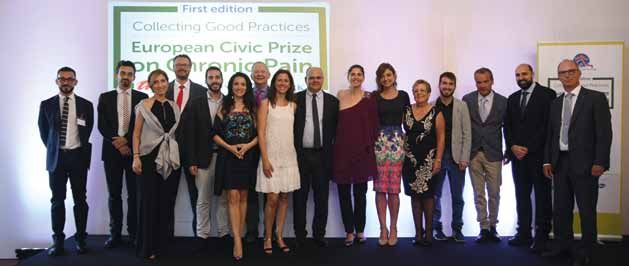
©For personal and private use only. Reproduction must be permitted by the copyright holder. Email to copyright@mindbyte.eu.

                                                                                                                              SpiroScout SP
                                                                                                                              Easily add spirometry to your ECG device:
                                                                                                                              Spirometry with an ultrasound technology that needs no
                                                                                                                              calibration, no warm-up time and has no moving parts.

                                                                                                                                                               Ultrasonic Spirometry is a quick measurement method for direct
                                                                                                                                                               and precise flow determination. This ultrasound transit-time
                                                                                                                                                               flow measurement method works with a high resolution of 1,000
                                                                                                                                                               measurement points per second, so that no substitute parameters
                                                                                                                                                               for flow (e.g. differential pressure, temperature or turbine) are
                                                                                                                                                               necessary.

                                                                                                                              Headquarters: SCHILLER AG, Altgasse 68, CH-6341 Baar
                                                                                                                              Phone +41 41 766 42 42, Fax +41 41 761 08 80
                                                                                                                              sales@schiller.ch, www.schiller.ch
SPOTLIGHT
Gender Matters in Cardiology
Meet pioneering gynaecardiologist Angela Maas, who explains why there's still a lot to do when
it comes to cardiovascular disease in women.
C
ardiovascular disease in women is an enduring For women diagnosed with breast cancer, how can
passion for cardiologist Angela Maas, who has oncologists and cardiologists work together to
been a pioneer in Europe in this field. Prof. Maas protect the heart?
started an outpatient cardiology clinic for women in At the moment it is quite difficult. I have talked about
2003 and founded the Heart for Women Research Fund this with national and international colleagues, and
in 2014. She is co-founder of the gender working group one important factor is the difference in culture of
of the Dutch society of cardiology. She has written the different specialisms. We are not used to working
and researched widely on cardiovascular disease in together in this way. Oncologists are very focused on
women, and is co-editor of the Manual of Gynecardi- curing cancer and avoiding recurrence, and cardiologists
ology: female-specific cardiology, published by Springer are looking at other issues. Oncologists are also a bit
Angela Maas
in 2017. afraid that cardiologists may disturb their treatments.
©For personal and private use only. Reproduction must be permitted by the copyright holder. Email to copyright@mindbyte.eu.
Professor of Women’s
Cardiac Health We have to identify earlier which women are at higher
Department of Cardiology
Radboud University What are the most important female-specific risk risk of getting damage from breast cancer therapy.
Medical Center factors for cardiovascular disease? These are elderly women who perhaps have a history
Nijmegen, the Netherlands
Specific risk factors only present in women relate to of cardiovascular disease and the women who get very
Angela.Maas@rad- hormonal status and pregnancy: pre-eclampsia and severe oncology treatment. We should fine-tune our
boudumc.nl
hypertensive pregnancy disorders. Pre-eclampsia has efforts for individual patients, and see to what extent
@MaasAngela been incorporated in the European Society of Cardi- it is necessary to work together more for each indi-
ology cardiovascular prevention guidelines (Piepoli et vidual patient, and provide more specific and tailored
al. 2016), but still many cardiologists and primary care therapy for the individual woman.
physicians never ask about it and they neglect this
important risk factor, which leads to hypertension at What are the best imaging tools to evaluate the
a young age. heart in breast cancer patients?
In cardiology we have developed more advanced
You have written that the heart may be consid- imaging techniques over the past few years. In echo
ered ‘the victim of success’ of modern breast we now have strain techniques, which are more time-
cancer therapy (Maas et al. 2016). Please explain. consuming but better able to identify early damage of
Due to good oncology therapy, the breast cancer the heart. Magnetic resonance imaging (MRI) also takes
mortality rate has declined enormously over the past more time, but if you can differentiate and send high-
20-25 years. Around 4% of women who get breast risk women for an MRI, you may see the first signs of
cancer will die of it. However, due to modern chem- cardiovascular damage and start treatment earlier than
otherapy such as trastuzumab the damage done to we do nowadays. With better echo and MRI techniques
the myocardium and the vessels is increasing. There we can see early signs of damage. We need to use
are many women who after ten years of breast cancer these techniques for the women who are at highest risk.
therapy get severe heart failure and may even die of
it. We successfully treat the breast cancer, but we Are women perhaps more aware of risk factors for
get more cardiovascular disease —heart failure and breast cancer than they are about cardiovascular
hypertension. disease risk factors?
Doctors focus on breast cancer recurrence risk They are. Most women will say breast cancer is their
and forget about the rise in cardiovascular risk that greatest risk, but it’s cardiovascular disease. It is so
occurs with ageing and the potential damage from important, and it’s sometimes difficult to get women
cancer therapies. After breast cancer therapy many motivated to take pills for high blood pressure for
women complain of tiredness and fatigue, which may example, because they say to themselves that it’s
be caused by hypertension for instance, but doctors stress, they were too busy, it will pass. It is difficult to
think it is due to previous breast cancer. convince women that they need to be treated.
184 HealthManagement.orgSPOTLIGHT
You recommend a multidisciplinary and life- don’t use it. To address this knowledge gap, just
course approach to cardiovascular disease risk published is Manual of Gynecardiology, which I co-edited
assessment in women (Maas and Leiner 2016). with U.S. cardiologist, C. Noel Bairey Merz (Maas and
What is the ideal? Bairey Merz 2017). It includes contributions from the
In healthcare, we are used to looking in a sort of vertical editors and from outstanding colleagues from Europe.
way; every specialist looks inside their discipline. But It is a handbook with patient cases aimed at tackling
the life course of a person may have consequences for the issues of gender difference in clinical practice. For
the future. For instance, if women have suffered from example, if you have a woman with symptoms of angina
migraines at a young age they will be at high risk of for instance, they have the diagnostic workups along the
having hypertensive pregnancy disorder, then subse- male standard, which doesn’t fit. It didn’t fit 35 years
quently at higher risk to have microvascular coronary ago when I started, but we still behave like that. This is
disease or premature hypertension when they are in a waste of money, and I see so many women for second
their fifties. Health events that happen in the past need opinions, who have been treated badly because there
to be taken into account when we consider an indi- is lack of knowledge in current cardiology.
vidual patient and we forget that. To optimise patient Not all women are the same, not all men are the
care we should look more at the whole picture of the same, so we should stop comparing apples and pears,
individual. but have a look at who is the high-risk patient—the man,
the woman or the age group. This century is more for
TO OPTIMISE PATIENT CARE personalised medicine, but we don’t use it very well.
©For personal and private use only. Reproduction must be permitted by the copyright holder. Email to copyright@mindbyte.eu.
WE SHOULD LOOK MORE AT THE WHOLE You started an outpatient cardiology practice for
PICTURE OF THE INDIVIDUAL women in 2003. Why did you start this? What were
the challenges?
Is there enough research into gender differences I was motivated to do it when I attended the first world
in cardiovascular medicine? conference on heart disease in women in Victoria,
I think gender differences are important. It is some- Canada in 2000. It was fascinating to meet so many
thing we need to look at more, because we have to people from Canada and the United States, who were
differentiate in our guidelines. For example, for atrial already involved in female heart centres, and I wanted
fibrillation, we have different advice for men and to start this in the Netherlands. At the time I worked in
women, and women have anticoagulant therapy at a large cardiology practice, where I was the only woman
an earlier stage. There are still many guidelines that with 15 male colleagues. I decided to start an outpa-
do not apply the gender differences we have already tient clinic for women to get a better look at high- and
identified. For instance, there are very different types low-risk women and to learn more. The cardiologists
of acute coronary syndromes in women compared to and primary care physicians said it was a crazy idea
men, but women are still considered by diagnostic and and would stop in a year’s time and be a disaster. I
treatment standards for males. For example, one type received hate letters and phone calls. There were a lot
of acute coronary syndrome we see very often in young of forces against doing this, but I have quite a strong
women is coronary artery dissection, especially when character and after a few years it went very well. As a
women are in their 40s and 50s; we see it more and result I was appointed Professor of Women’s Cardiac
more related to stress. Men and women act differently Health in 2012. It was very unpleasant in the begin-
on stress factors, so there are so many aspects of ning—this is the fate of people who are a pioneer in any
risk and manifestations of underlying disease that we specialism. But in the end you are rewarded and in April
need to fine tune in our guidelines and clinical practice. I was awarded Officer in the Order of Orange Nassau in
There is so much knowledge already but we just the Dutch royal honours.
References
Maas AHEM, Bairey Merz NC, eds. (2017) Manual of gynecardi- Maas A, Ottevanger N, Atsma F et al. (2016) Cardiovascular and Other Societies on Cardiovascular Disease Prevention in
ology: female-specific cardiology. New York: Springer. springer. surveillance in breast cancer treatment: A more individualized Clinical Practice (constituted by representatives of 10 societies
com/gp/book/9783319549590 approach is needed. Maturitas, 89: 58-62. and by invited experts): Developed with the special contribu-
tion of the European Association for Cardiovascular Prevention &
Maas A, Leiner T (2016) Gender and age-specific focus needed Piepoli MF, Hoes AW, Agewall S et al. 2016 European Guidelines
Rehabilitation (EACPR). Eur Heart J, 37(29): 2315-81.
for cardiovascular outcome measures to improve life-time pre- on cardiovascular disease prevention in clinical practice: The
vention in high risk women. Maturitas, 86: 74-6. Sixth Joint Task Force of the European Society of Cardiology
Volume 17 • Issue 3 • 2017 185MANAGEMENT MATTERS
Coping with Complexity
The Irish military on embracing leadership that promotes diversity, inclusion and reflection.
W
e live in a time of extraordinary change and undermines the institutions of civil society, often resulting
complexity. This impacts on individuals, as well in populism, unilateralism, short-termism and selfishness.
as the communities, organisations and insti- Shared values are the glue that bind states, organisa-
tutions to which they belong. In examining the interlink- tions, institutions, and individuals together. In a world of
ages between values, complexity, innovation and diversity, increasing complexity this is why striving for multilater-
this reflection looks at the implications for leaders. These alism with shared goals is so important.
perspectives, while somewhat shaped by my military and At an organisational level achieving congruence in the
academic experiences, have a broader relevance. interplay between knowledge, understanding, values and
In democracies, militaries are key components of the wisdom requires innovation. Innovation is not just about
Mark Mellett security architecture. They are part of the bedrock which creativity; it is a systematic change in individual mindset and
Vice Admiral
Chief of Staff underpins sovereignty, contributing to a framework for civil culture that permeates entire organisations with internal
Irish Defence Forces
Ireland
society. Civil society institutions, built on shared values, and external dimensions. The world of complexity requires
are a human right, where people are free, the institutions shifting from operating solely inside closed organisational
mark.mellett@
of state function and where the vulnerable are protected. boundaries, to open innovative structures, where creativity
©For personal and private use only. Reproduction must be permitted by the copyright holder. Email to copyright@mindbyte.eu.
defenceforces.ie
@DF_COS
All over the world we see challenges to the shared values and knowledge-sharing is encouraged and nurtured. Open
of civil society. Many have the characteristics of ‘wicked innovation is innovating with others through networks that
military.ie
problems’, with extraordinary complexity, they may have facilitate the exchange of data, information, knowledge and
multiple causes, crosscutting political, economic, societal/ understanding, where sensing and exploring new technol-
cultural and other perspectives (Rittel, Webber, 1973). They ogies and ways of doing things is facilitated and actively
include, interstate and intrastate, hybrid and proxy wars, encouraged.
state competition, cyber warfare, terrorism and criminality. The more diversity stimulated in networks, the more
Other vectors like population increase and climate change potentially disruptive the innovation will be. Moving towards
feed this complexity. This challenges governance at inter- an innovation ecosystem, incorporating for example, state
national and national levels, as well as the nested arrange- bodies, enterprise, academia and civil society actors, can
ments for corporations, organisations and institutions, right lead to disruptive innovation. Networks leading to codified
down to individual interactions. partnerships allow researchers to get a real world problem,
Positives which potentially mitigate the effects of the state body to get a new capability or technology and
complexity include the growth in technology, automation, enterprise to generate jobs, while civil society benefits from
robotics and perhaps the most exciting of all, the explosion an improved public good.
in data. Data when codified becomes information with the The collaborative arrangements between the Irish
potential to drive the creation of knowledge, which ultimately Defence Forces and Higher Education Institutes and other
leads to greater understanding. The potential is such that partners have delivered significant impacts. These inno-
Kurzweil, predicts a “singularity” around 2040 when artificial vation networks and partnerships are helping transform
intelligence will exceed human intelligence (Kurzweil 2005). our force, enhancing personnel and capability develop-
Two things are clear. Firstly, if available data is properly ment, driving enterprise, job creation, infrastructural devel-
leveraged, risk is mitigated and the prospect of an advan- opment and new technologies. These collaborations are
tage is enhanced relative to competitors or enemies. shifting partnership perspectives from being just cost
Secondly, this growing pool of data, feeding knowledge, centres towards investment centres with the potential for
is driving new technologies and new ways of doing things elements to be profit centres. The crucial driver and enabler
worldwide. Consequently, while answers to complex prob- to this process is leadership, while key prerequisites for
lems exist, they may often lie outside organisational or such outcomes are shared values and principles. One of
indeed state boundaries. Creating the appropriate govern- the fundamental principles for collaboration is trustwor-
ance arrangements, conditions and structures to deal with thiness. Trustworthiness is more than trust, where part-
this complexity requires wisdom. ners are worthy of the trust bestowed upon them. It is inex-
Knowledge is a prerequisite for understanding and it tricably linked with the principle of reciprocity. Achieving
is the application of understanding within the framework congruence with multiple diverse partners and preventing
of shared values that leads to wisdom. In this world of free riding requires strong leadership.
complexity the absence of values and therefore wisdom Driving innovation necessitates that the status quo
186 HealthManagement.orgMANAGEMENT MATTERS
is challenged, that cultures are open and inclusive, that stereotypical ‘feminine’ roles such as caregivers and not
there is no room for egos and, importantly, that there is an to opt for careers such as in STEM and indeed, the military.
acceptance that mistakes will happen. Driving innovation Conversely, the socialisation of our young males, predis-
requires silos to be broken down and cross-cutting struc- poses them to more ‘masculine’ pursuits.
tures embraced. Silo mentalities undermine trust, efficiency Developing a diversity and inclusion strategy in all organi-
and effectiveness and prevent the exchange of knowledge. sations, one which promotes equality, values, difference, and
Violations, which are unacceptable breaches of the rules, embraces LGBTA and other communities is vital. Embracing
must be distinguished from errors or mistakes that will diversity across perspectives such as culture, ethnicity,
inevitably occur in complex dynamics. creed and generation is critical. Diversity and inclusion in
In terms of organisational dynamics, driving diversity and all networks improves resilience and becomes an antidote
inclusion is important. Spanning external and internal diver- for complexity.
sity requires an appreciation of the importance of science, In summary, dealing with complexity is a leadership
technology, engineering, arts and mathematics. This has issue. Leadership in government, market and civil society
implications for organisational and people development. institutions, driving innovative multilateral arrangements
Investing in work-based learning and raising the scholarly can mitigate the effects of climate change and other chal-
standing facilitates diversity and inclusion. Training prepares lenges by progressing, for example, the UN 17 Sustainable
for the predictable, while education prepares for the unpre- Development Goals (United Nations 2016). Thirty years on
dictable scenarios, when a greater understanding of other from the Brundtland Commission Report (United Nations
perspectives is required. 1987), these goals and targets present a strategic roadmap
Facilitating ‘cross-cutting’ structures requires highly- towards normalising sustainability. Empowering innovation
©For personal and private use only. Reproduction must be permitted by the copyright holder. Email to copyright@mindbyte.eu.
developed, receptive interpersonal skills which nurture and dealing with the ‘Push Back’, is a leadership issue. Insti-
and build collaborative networks and partnerships. Arts, tutionalising a ‘Gender Perspective’ and embracing diversity
encompassing the social and political sciences, enhance and inclusion are all leadership issues. Leadership is about
the knowledge that builds and connects institutions, organ- values - values such as the moral courage to do the right
isations and people. thing and the physical courage to persevere despite danger
The future is about how collaboration and knowledge and adversity. It is also about a respect that treats others
sharing is achieved, where ego is the enemy and empathy as they should be treated while giving sufficient autonomy
is the kingmaker. Einstein is credited with saying ego=1/ to people to reach their full potential. Values encompass
knowledge (Quotes 2017) the greater the knowledge, the an integrity characterised by honesty, sincerity and relia-
lesser the ego. Bringing together diverse disciplines requires bility. Fostering and creating an environment of loyalty which
that an atmosphere of tolerance, which understands encourages selflessness while putting service before indi-
different perspectives, is nurtured, where the humanities vidualism is important. Values, importantly, are also about
mix with the sciences. The philosopher Theodore Zeldin accountability (Personal Communication July 2017).
has asked ‘When will we make the same breakthroughs A diverse, inclusive, reflective organisation characterised
in the way we treat each other as we have made in tech- by strategic humility, will ensure the benefits of innovation
nology’ (Gurteen 2017). Quite often diversity requires insti- are fully realised. It will attract the best of talent, facilitate
tutionalising a Gender Perspective. That is organisations, employee voice and autonomy, driving improved perfor-
have the ability to detect if and when an individual is being mance and outcomes.
treated differently, based solely on their gender. An institu- Leadership, like innovation, is also about accepting risk-
tionalised gender perspective analyses a persons perceived taking and mistakes. Von Clausewitz said in war ‘every-
value in a given context, their access to power, influence thing is simple, but even the simplest thing is difficult’
and resources and mitigates against societal inequalities (Von Clausewitz 1873). In a world of complexity inevitably
and unconscious bias. Improvement in gender balance at mistakes will happen, but mistakes drive learning. There-
all levels facilitates better decision-making and creative fore be comforted by the words of George Bernard Shaw
processes. Achieving greater gender balance is a societal who said ‘a life spent making mistakes is not only more
issue. Studies show how women, for example, in many honourable but more useful than a life spent doing nothing’
countries are socialised from a young age to fulfill certain (Shaw 1906).
References
Rittel, H., Webber, M. (1973). Dilmenas in a General Theory of Planning Gurteen (2017). On breakthroughs in the way we treat each other by Theodore United Nations (1987) Our Common Future - Brundtland Report. Oxford:
[Accessed 8 Aug 2017] Available from https://www.cc.gatech.edu/~ellendo/ Zeldin [Accessed August 1, 2017] Available from http://www.gurteen.com/ Oxford University Press.
rittel/rittel-dilemma.pdf gurteen/gurteen.nsf/id/on-breakthroughs-in-the-way-we-treat-each-other
Von Clausewitz, C (1832). On War. Translated by Michael Howard and Peter
Quotes (2017). Ego = 1/ Knowledge: More the knowledge lesser the ego, United Nations (2015). Sustainable Development Goals [Accessed July Paret. Princeton: Princeton University Press.
lesser the knowledge more the ego [Accessed July 31, 2017] Available from 31, 2017] Available from http://www.un.org/sustainabledevelopment/
Shaw, G.B. (1906). The Doctor’s Dilemna, Gutenberg. [Accessed July 31,
http://www.quotes.net/quote/52742 sustainable-development-goals/
2017] Available from http://www.gutenberg.org/files/5070/5070-h/5070-h.htm
Volume 17 • Issue 3 • 2017 187MANAGEMENT MATTERS
How to Make Sense
of Digital Chaos
What it Takes to be a Leader in the Digital Age
I
n a world of fierce competition, digital projects have changes within healthcare organisations. Against this
become an omnipresent challenge. While 75% of all background, healthcare executives at all levels must come
businesses will be digital businesses or preparing to to terms with one fact: the disruption caused by an ever-
become one by 2020, software will disrupt virtually all shifting technology landscape will not stop at their indus-
traditional industries. In the face of a global economy that tries´ doorsteps. The term “digital” is therefore no longer
is in a state of flux, instability has become the new norm. only an IT buzzword for healthcare professionals.
The change that comes along with this is not only non- Today, more processes than ever are defined by tech-
linear, it has become exponential (Pemberton Levy 2016; nology. To drive and develop digital initiatives in patient
Lopez 2014; Brynjolfsson and McAfee 2014). care, diagnostics and communication, appropriate IT
Judith L. The need to cope with these challenges has made systems are put into place. Based on the vast amount
Girschik managing organisations more complex than ever before. of resulting records, big data and data analytics help to
©For personal and private use only. Reproduction must be permitted by the copyright holder. Email to copyright@mindbyte.eu.
Professor and Dr,
Leadership Coach Companies can no longer rely on traditional ways of doing enhance patient service and patient experience.
Vienna, Austria
business. In order to stay competitive, they must use
girschik@leader- digital technology to improve not only the reach, but also Many professionals are
ship-institute.at
the performance of organisations.
leadership-institute.at haunted by the sensation
Digitisation in Healthcare of being a puppy dog on
Digital disruption does not stop at the doors of the health- leashes belonging to many
care sector. The abundance of medical and health-related different owners
information on the internet has already led to a rise in
patient engagement. Mobile digital applications allow to The overall advantages of the internet and its tech-
look for biomarkers indicating patients´ state of health nical opportunities are undisputed: through search
and the monitoring of vital statistics. Other apps will be engines we have all gained easy and rapid access to
in place to remind patients to take their medication regu- healthcare information. Email, text messaging and voice-
larly. These developments pave the way for healthcare over IP has made communication faster and more afford-
companies to shift away from just curing illnesses to able than ever before. And most healthcare professionals
keeping people healthy. will find clear advantages in being able to communicate
In parallel, artificial intelligence applications are on the with patients and take part in consultations without the
rise. These new software programmes will make it easier need to travel and be present in person.
for healthcare providers to effectively analyse patient But while healthcare organisations quantitatively
data. They will be able to predict the necessity of surgery, profit from new processes and efficiency, they often
monitor and guide surgery and ultimately apply insights turn a blind eye to the human aspect of moving faster
from big data to individual patients. and with ever more automation. New digital practices
Another trend that can be spotted is that the contact trigger new priorities and sentiments in the world of
between doctor and patient will be increasingly filtered by work. More generally, they inflict profound changes in
digital communication and relevant software solutions. the human experience.
Parallel to that it will be necessary to keep up with the
growing amount of data that is produced by storing ever The Human Experience
more information on individual patients´ developments. An Healthcare professionals spend much of their days
ageing population and the growth of chronic diseases will administering and filling in electronic forms for the
further spur the development of this field of telemedicine. sake of measuring, evaluating and comparing the effi-
ciency of their work hours. The rest of the time they feel
Digital: No Longer an IT Buzzword bombarded with emails and text messages by bosses,
All these developments not only reflect a changing rela- colleagues and reports, even on weekends. In having
tionship with patients, they also result in substantial to adapt to ever new and rigid IT-driven processes,
188 HealthManagement.orgMANAGEMENT MATTERS
countless employees as well as executives are left feeling flexibly, learn fast and take risks. They must share new
estranged. Many professionals are haunted by the sensa- ideas before they are perfectly formulated, then discuss,
tion of being a puppy dog on leashes belonging to many reflect and execute swiftly.
different owners. They feel torn between the responsi-
bilities they have towards patients and the excessive Prioritise: Define where change is needed most
demands of digital administration. Automation takes a In order to be a successful health leader in the digital
toll on them, leaving them with a feeling of being over- landscape, being technology savvy is not enough. Often
stretched and overwhelmed. the problem of digital initiatives is that they are uncoor-
Functioning in a good way in digitally defined dinated and ad hoc. A good initiative may fail because
surroundings has become a challenge. In order to stay it does not get the necessary attention and funding.
on top of these developments, both healthcare leaders In order to add steam to such projects, it is necessary
and professionals not only have to become technology for the leader to decide where change is needed most.
savvy, but also need to be creative and resilient enough She/he must set priorities, link the different projects and
to cope with the new complexities at hand. give them direction. This needs to be communicated
For healthcare organisations to thrive in the new and put into practice throughout the entire organisa-
digital landscape, it is therefore important to further tion (Baculard 2017).
optimise technological processes. To fortify their ships
for stormy seas, they need to bring out the best in their Empower
people; in other words, they need to bring back the Against the background of rigid automation, leaders need
human dimension into their organisations. to keep employees engaged. In order to do so, they have
©For personal and private use only. Reproduction must be permitted by the copyright holder. Email to copyright@mindbyte.eu.
to be able to create meaning. At the same time, they
Structural Adjustments have to inspire and empower their people to accept and
To be able to lead, innovate effectively and improve make the most of new developments. It should be under-
organisational performance, leaders must remain confi- stood that technology does not function purely because
dent and resilient amid chaos. In order to do so, they of the work that people put in to make that happen, but
should take into account the following aspects: rather as a solid tool to make lives easier. With this in
mind, a proper understanding of digital must be distrib-
Recognise the risk of disruption and the opportu- uted across the organisation.
nity of digital In parallel, management has to accept that tradi-
Leaders must recognise the necessity of entering tional hierarchical distribution of information will often
uncharted territories. Reinventing structures and prove unsustainable. Successful transformative projects
processes may be key to survival. Planned disruption breed better in connected organisations. They are the
may mean disrupting the organisation from within before result of perfect orchestration of all members of the
the market will do so. Rethinking and possibly reinventing project. Successful change profits from contributions by
long-established processes, may be done by exploring everyone involved. In order to give each team member
new revenue streams and processes. The goal of this the opportunity to contribute, they need access to the
will always be to create value for all stakeholders involved right data. If this access is granted effectively, digitali-
and to boost competitiveness. This awareness must be sation will gain the support of more members from the
shared by boards and executives alike. At the same time, organisation. It will facilitate a greater level of coopera-
they need to acknowledge that taking advantage of the tion across the whole organisation and drive sustained
opportunities that digital creates, takes not only vision, teamwork as an integral part of organisational culture.
but also the stamina to do so.
Retain Self-Efficacy
Embrace and cope with complexity In order to function successfully, leaders as well as
While the use of digital may be great for enhancing employees need to retain the belief that they are capable
productivity, customer service and revenue, a holistic of organising and executing the processes needed to
view of the possibilities of digital transformation will attain the required levels of performance (Bandura 1997).
offer perspective from a wider lens. In order to effec- It is therefore essential that digital technologies are used
tively face complexity, it is important to challenge long and perceived as the right help to master a challenge
held assumptions and ideas about risk and uncertainty. rather than a threat to be avoided. If new technologies
While leaders should respect and stay aware of their core fail to guarantee this, their use will result in individuals´
principles, they must realise that processes that have lowered self-efficacy. They will likely abandon goals if
worked in the past may not do so in the future. In other they prove too difficult to achieve. Correspondingly, they
words, leaders need to stay agile. They need to think will be reluctant to take responsibility for difficult tasks
Volume 17 • Issue 3 • 2017 189You can also read


