PERSPECTIVES_2012 PRODUCTION IN GERMANY THE FUTURE OF CHEMICAL AND PHARMACEUTICAL - Infraserv Höchst
←
→
Page content transcription
If your browser does not render page correctly, please read the page content below
>> PERSPECTIVES_2012
THE FUTURE OF CHEMICAL AND PHARMACEUTICAL
PRODUCTION IN GERMANY
CMF JUNE 19, 2012 – FACILITATED BY DR. MICHAEL REUBOLD, CHEMANAGER

>> A RESEARCH
PERSPECTIVE.
STUDY RESULTS: FUTURE OF CHEMICAL AND PHARMACEUTICAL INDUSTRY IN GERMANY

Prof. Dr. Hannes Utikal
Provadis School of International Management and Technology
ACHEMA PERSPECTIVES 2012
The
    Future of the
    Chemical and Pharmaceutical Industry in Germany:
    Megatrends and the need for transformation

    Preliminary
    Findings from a case study research
    initiated by Infraserv Höchst and
    rhein-main-cluster chemie & pharma

    Prof. Dr. Hannes Utikal
    Dipl.- Wirtsch.-Ing. Raphael Kunz                          June, 2012

© Provadis School of International Management and Technology
Prof. Dr. Hannes Utikal
Content

       1. Provadis School of International Management and Technology

       2. Transformations in the chemical & pharmaceutical industry in
          Germany

       3. Implications

© Provadis School of International Management and Technology
Prof. Dr. Hannes Utikal
                                                                         4
History matters …
 Work and Science in the 21 st century

 The way we work and learn is continuously changing. Provadis offers as successor
 organization of former Hoechst corporation tailor-made education solutions.

                                                               Past                                                 Today

                                                                • Hierarchy                                          • Globalization
                                                                                                                     • Networks and clusters
                                                                                                                     • heterogenous staff
Business
                                                                                                                       structure; demographic
                                                                                                                       change

                                                                • monopoly of state                                  • Bologna-Reform
                                                                  owned universities                                 • specialized private
                                                                • in Germany: first                                    universities
Science,                                                          inititiates for part time                          • university studies
                                                                  studies in the 1970s                                 encompassing theories,
education
                                                                                                                       methods, tools and
                                                                                              Provadis-University      social skills

© Provadis School of International Management and Technology
Prof. Dr. Hannes Utikal
                                                                                                                                                5
Provadis – close links with
   the chemical and pharmaceutical industry

                                                               Provadis

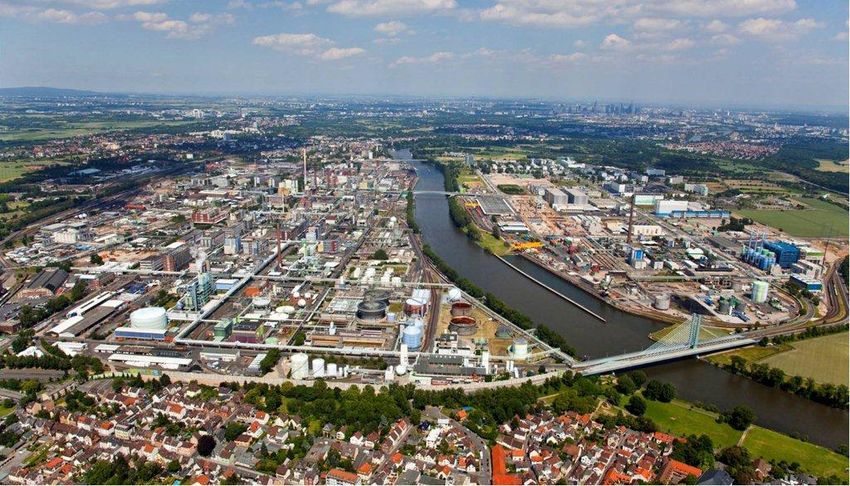
                                                 Industriepark Höchst: 90 companies, 22.000 employees
© Provadis School of International Management and Technology
Prof. Dr. Hannes Utikal
                                                                                                        6
Provadis Frankfurt
Quality and Growth

                       Top
                     position
                       CHE-                                    Number of students
                      Ranking

  Business Administration
  (dual) (2008 / 2011):
  - Rhein-Main-Region (No.: 1)
  - Germany (Top 3)

  Chemical Engineering
  (2010):
  - Rhein-Main-Region (No.: 1)
  - Germany (Top 5)
  Business Information
  Management (2011):
  - Rhein-Main-Region (Top 2)
  - Germany (Top 5)

© Provadis School of International Management and Technology
Prof. Dr. Hannes Utikal                                                             7
Provadis Frankfurt
Focus on transformation processes
Different studies highlight: 75% of all companies do not get older than 25 years.
A company‘s ability to transform itself is therefore a core competency for ongoing success.

                                       11-25 years,
                                           37%                                    26-50 years,
                                                                                      12%
                                                                                       51-100 years,
                                                                                            3%

                                                                                         >100 years,
                                                                                            2%

                                      3-10 years,                                 to 2 years;
                                         38%                                          9%

      Source: Creditreform 2009 (citation Sattelberger, 2011) and Kiehling 2012

                   How can we successfully transform companies?

© Provadis School of International Management and Technology
Prof. Dr. Hannes Utikal
                                                                                                       8
Upcoming transformations
Selected examples
1. Automobile industry:
§ Customers increasingly demand mobility services – and
less a physical car. How will future business models for car
manufacturers look like?
§ What will be the future concept for individual mobility?
2. ICT industry
§ How will the „internet of things“ change business and
society?
3. Aviation industry
§ How will the future of aviation industry look like in
Germany?
§ When are we going to have eco-friendly airplanes
(CO2 and noise)
Green transformation of business and society? When? Where? How?
© Provadis School of International Management and Technology
Prof. Dr. Hannes Utikal
9
Content

       1. Provadis School of International Management and Technology

       2. Transformations in the chemical & pharmaceutical industry in
          Germany

       3. Implications

© Provadis School of International Management and Technology
Prof. Dr. Hannes Utikal
                                                                         10
History matters …
Lessons from the past – by Alfred Chandler (Harvard)
To explain the success and failure of market players in industrial settings, Alfred
Chandler focuses on a company‘s capability to transform basic research into
commercial products.
General lessons from history 1880-2003 Technological highlights
Strategy: § Two periods of growth:
§ Build your strategy around the concept of learning
1880-1920s; 1940s-1950s
Chemical
Infrastructure in high-tech industries: § Since the 1950s, chemical science and
§ Takes 50 years to complete
industry engineering have ceased to generate
§ High barrier to entry major new product opportunities.
Learning and growth: § limits to learning in the 1960s and
§ Missing breakthrough innovation: 1970s: but biology and related
=> industry leaders focus on product and
disciplines – microbiology,
process development Pharma
enzymology, beginnings of molecular
industry biology – provided new opportunities
§ today biotechnology revolution
Source: Chandler, 2003.
Chandler: Chemical industry à no longer a high-tech industry
Pharmaceutical industry àstill dynamic high-tech industry
© Provadis School of International Management and Technology
Prof. Dr. Hannes Utikal
11Chemical and pharmaceutical industry
Profound restructurings
Companies in the chemical and pharmaceutical industry have redefined their core
competencies. Today, more external partners have to be managed.
in 1980s today
Oil and gas § More
interfaces
Petro- BASF
to be
chemicals BASF Ticona, Sabic managed
Celanese DOW
Bulk- Hoechst Lanxess
Dupont Invista
chemicals § Growing
Specialty DOW ICI
importance
Clariant ICI
chemicals of clusters
Bayer Dupont
Agro Bayer
Crop Syngenta
§ New qualifi-
Sanofi Bayer Astra cations
Pharma Health Zeneca
Source: Wildemann, 2012.
Chemical industry: Track record of transformations
© Provadis School of International Management and Technology
Prof. Dr. Hannes Utikal
12Chemical and Pharmaceutical Industry
in Europe 2003-2012
The European chemical and pharmaceutical industry‘s production is below the
pre-crisis years.
Source: Chemdata, Eurostat; ; presentation. Dr. Meincke, The European Chemical Industry 2012 – another year of stagnation, Milano, May 2012
© Provadis School of International Management and Technology
Prof. Dr. Hannes Utikal
13Chemical & pharmaceutical industry
Outlook 2015
On a global scale, the chemical and pharmaceutical industry is characterized by significant
growth (growth driver Asia). Studies predict for the German and European chemical industry
moderate growth rates.
Market Value in Bn USD
(and CAGR)
6000
5000
4000 8%
Global
3000 Asia-Pacific
2000
Europe
10,5%
Germany
1000 3,8%
0 2,6%
2010 2015
Source: Datamonitor 2011; * „Market value is taken at producer selling price“.
© Provadis School of International Management and Technology
Prof. Dr. Hannes Utikal
14Chemical and Pharmaceutical Future
Provadis Case Studies 2012
To analyze the relevance of megatrends for the chemical and pharmaceutical
industry, a case study approach is used.
Base Polymeres Agro Fine/ Pharma
Chemicals Specialtiy
Company Success in Chemical
Best in class Topics
and Pharmaceutical Industry
Megatrends and:
Premium 1. their segment-specific
relevance
2. Business outlook
3. Value chain organization
Standard 4. Impact on sites
5. Need for transformation
2010 2020 2030
Explorative approach – preliminary results to be presented
© Provadis School of International Management and Technology
Prof. Dr. Hannes Utikal
15Chemical and pharmaceutical industry
Topics and Megatrends
Seven broad topics and a total of 21 megatrends were investigated.
A Aging and „shrinking“ population in Western countries
1. Demographic change B Population growth in developing countries
C Shortage of skilled employees in Western countries
A Shift to Asia (demand, innovation, production)
B Global strategies with local and regional adaptation
2. Globalization & urbanization C Globalized flow of capital
D Urbanization in developing and emerging countries
A Cross-industry cooperations
3. Innovation & technology B Open innovation processes
C NBIC-convergence (nano-, bio-, information-, cognition science/ technology)
4. Change in energy &
A Use of alternative energy and renewable resources
ressource B Shortage of strategic ressources (e.g. energy, raw materials)
supply
A Increasing wealth in develoing countries
5. New consumption patterns B BRIC countries catching up in luxury consumption
Please evaluate the
relevance of the
C „Sustainable“ consumption in Western countries
following megatrends
for your company A Ongoing automation of industrial processes
activities in the years 6. Work in Europe B Flexible work models
2012, 2020 and 2030! C Improved integration of women in business life
A Personalized medicine
7. Dynamic health care market B Enhanced / functional food
Source: on the basis of
BDI and Z-Punkt 2011. C Convergence food, pharma, cosmetics
© Provadis School of International Management and Technology
Prof. Dr. Hannes Utikal
16Chemical and pharmaceutical industry
Megatrends: Relevance in the years 2012-2030
Companies in the chemical and pharmaceutical industry have a differentiated view
on the relevance of megatrends.
Scale: 7 = high relevance All
1 = low relevance
segments
Topics Megatrends 1 2 3 4 5 6 7
1C Shortage of skilled employees in Western countries
1. Demographic change 1B Population growth in developing countries
1A Aging and „shrinking“ population in Western countries
2B Global strategies with local and regional adaptation
2. Globalization & 2A Shift to Asia
Urbanization 2D Urbanization in developing and emerging countries
2C Globalized flow of capital Differences by
3. Innovation & Technology
3B Open innovation processes
3A Cross-industry cooperations
industry segments
3C NBIC-convergence (Nano, Bio, IT, cognitive sciences)
Work in and company size
4. Change in energy and 4A Use of alternative energy and renewable resources
resource supply 4B Shortage of strategic resources (energy, raw material) progress
5B BRIC countries catching up in luxury consumption
5. New consumption patterns 5C“Sustainable“ consumption in Western countries
5A Increasing wealth in developing countries
6B Flexible work models
6. Work in Europe 6A Ongoing automation of industrial processes
6C Improved integration of women in business life
7B Enhanced/functional food
7. Dynamic health care 7C Convergence food, pharma, cosmetics
market 7A Personalized medicine
© Provadis School of International Management and Technology
Prof. Dr. Hannes Utikal 17Chemical and pharmaceutical industry Preliminary findings
Megatrends: Relevance in 2012 and 2020
Globalization, innovation and options for improving productivity are the most
important megatrends for the chemical and pharmaceutical industry.
Top Megatrends
(above average relevance in 2012 and 2020)
1.Globalization: global strategies with local adaptation;
shift to Asia (demand, innovation, production)
2.Innovation: open innovation processes,
cross-industry cooperations
3.Improved productivity: ongoing automation of industrial processes,
dynamic work models;
integration of women in business
… not „shortage of strategic ressources“ (only in 2012 above average
relevance)
© Provadis School of International Management and Technology
Prof. Dr. Hannes Utikal
18Chemical and pharmaceutical industry Preliminary findings
Value chain organization
Asia‘s relative importance will grow accross all business functions. Companies do
not expect an exodus of the C&P industry. EU
Change in %-
2012 2020 2030 points
R&D 70% 15% 15% 59% 23% 18% 54% 30% 16% -16
0% 0% 0%
Production 65% 15% 18% 55% 27% 16% 44% 35% 18% -21
3% 2% 3%
Marketing 71% 13% 15% 59% 23% 16% 47% 31% 19% -24
1% 2% 3%
Sales 64% 16% 19% 57% 24% 17% 46% 30% 21%
-18
2% 2% 3%
64% 16% 19% 48% 30% 21% 33% 42% 26%
Purchasing -31
1% 1% 0%
0% 25% 50% 75% 100% 0% 25% 50% 75% 100% 0% 25% 50% 75% 100%
Europe Asia USA Africa Europe Asia USA Africa Europe Asia USA Africa
Question: In your company, where is the center of gravity for the following business functions today, in 2020 and 2030?Please distribute 100% per business function on the different regions.
© Provadis School of International Management and Technology
Prof. Dr. Hannes Utikal
19Chemical and pharmaceutical industry Preliminary findings
How can we explain Europe‘s competitive position?
Companies see Europe‘s product and process innovation capabilities combined
with its high quality production capability as competitive advantages until the year
2030.
Capability
EU vs. „We are more
best regional competitor
Siemens than Apple.“
2030
1. Process innovation 2020
2012
2030
„We are more
2. High quality production 2020
2012
Switzerland than
Silicon valley! “
2030
3. Product innovation 2020
2012
„In Germany we have
4. Cooperation with other 2030
all customers and
2020
industries 2012
necessary
cooperation partners
5. Low cost production 2030
2020
2012 in physical proximity.“
Scale: 7 = Europe is superior to 1 = competitor is superior 2 3 4 5 6
Declining competitive advantages?
© Provadis School of International Management and Technology
Prof. Dr. Hannes Utikal
20Chemical and pharmceutical industry Preliminary findings
Evolutionary or revolutionary transformation?
Most companies characterize the needed transformation as „evolutionary“ (except
pharma and cost oriented specialty chemicals).
Evolutionary or revolutionary change? Fields of transformation
strategy &
business model
7
5
80% 20% corporate culture 3 structure
1
employee skills process
revolutionary evolutionary transformation need degree of preparation
Questions:
Do you characterize the transformation need as „profound/revolutionary“ or more „gradual/evolutionary“
After our talk about megatrends: How do you characterize the need for transforming your company activities in the following fields? How is your company prepared for the necessary transformation?
Scale 1 = very low ; 7 = very high (n = 15)
Transformation: largest gap in employee skills and processes
© Provadis School of International Management and Technology
Prof. Dr. Hannes Utikal
21Content
1. Provadis School of International Management and Technology
2. Transformations in the chemical & pharmaceutical industry in
Germany
3. Implications
© Provadis School of International Management and Technology
Prof. Dr. Hannes Utikal
22Success factors for business transformation
1. Think in scenarios – and outside in
2. In-depth knowledge and expertise – still crucial
3. the story of learning: again, and again
4. Cooperate – even with politics and NGOs
5. accept uncertainty, and motivate for continuous
change
www.transitionsinpractice.nl
Functional expertise plus transformation capability
© Provadis School of International Management and Technology
Prof. Dr. Hannes Utikal
23Implications
Transform innovation processes
Chemical companies focus their R&D activities on the development of new
solutions and not on „new-to-the world“ innovations. All companies think about
optimizing their innovation processes.
„We see ourselves not as a chemical company, but as a
knowledge company, applying insights from chemistry,
biology and physics to create new materials and solutions
for our customers.“
Inhouse Open
innovation, innovation,
one multiple
discipline disciplines
Business Lead cooperations with
Opportunties customer complementary
Manager companies,
e.g. IT, biology
Challenge: Interdisciplinary innovation and cooperation
© Provadis School of International Management and Technology
Prof. Dr. Hannes Utikal
24Implications
Transform students‘ preferences!
Chemical and pharmaceutical companies need specialized employees. A recent study
on „MINT“-students and employees hightlights a structural deficit in Germany in
qualifying sufficient MINT talents.
MINT-students Employer Branding
and MINT-employees missing*
Germany (2012): Chemical companies
§ MINT-Employees: 2,280 Mio. § not among top employers
§ MINT-Employees missing: 210 T
Ranking 2012:
Germany (2020): § No. 1: Google
300 T MINT employees missing § No. 2: BMW
(structural gap) § …
§ No. 17 BASF
Source:
* Institut der deutschen Wirtschaft, MINT Frühjahrsreport 2012, 23. Mai 2012.
** Trendence Graduate Barometer, 2012 (Young Professionals, Engineering and Business Administration Graduates)
Challenge: talent pipeline
© Provadis School of International Management and Technology
Prof. Dr. Hannes Utikal
25Implications
Transform talent management
The „Bologna reform“ created options for modular, multi-optional study programs.
Companies can more easily create tailor-made programs and attract talents.
Past: Today: modular,
one study phase multi-optional study programs
Work
Work Master-
Work
Study
Work
Further
Work
education
University phase
(Dual) Bachelor-Study Program
College College
Source: Based on Telekom 2011
Challenge: Make use of recent Bologna reform
© Provadis School of International Management and Technology
Prof. Dr. Hannes Utikal
26Implications
Communicate „outside-in“ with society
Support for their activities from society and politics is critical for chemical and
pharmaceutical companies.
Employee structure Dialogue with society
Germany % in 2011 Example
primary sector
secondary
sector
tertiary sector
Source: Destatis 2012.
Challenge: How can the chemical and pharmaceutical industry strengthen its
bond with society?
© Provadis School of International Management and Technology
Prof. Dr. Hannes Utikal
27Summary
1. Transformation capability is necessary for the chemical and pharmaceutical
industry.
2. Due to insecurities (e.g. insecure China market development, impact of EU
crisis, technological breakthroughs) thinking in scenarios is needed.
3. Cooperating with customers and companies from other industries requires in
addition to excellence in the established knowledge base interdisciplinary and
cooperative capabilities.
4. The biggest transformation challenge is seen in the fields of employee
qualification and process optimization.
5. To attract more talents, the chemical and pharmaceutical industry has to
intensify its communication efforts with society and should go beyond the
established „inside-out“ approach.
© Provadis School of International Management and Technology
Prof. Dr. Hannes Utikal
28Contact
Prof. Dr. Hannes Utikal
Provadis School of International Management and Technology
Industriepark Höchst, B 845
65926 Frankfurt am Main
++49 69 305 41880
hannes.utikal@provadis-hochschule.de
Dipl.-Wirtsch.-Ing Raphael Kunz
rhein-main-cluster chemie & pharma
an der Provadis School of International Management and Technology
Industriepark Höchst, B 845
65926 Frankfurt am Main
++49 69 305 45721
raphael.kunz@provadis-hochschule.de
© Provadis School of International Management and Technology
Prof. Dr. Hannes Utikal
29You can also read


