Phillips School of Nursing - Catalog | 2021 -2022 - Mount Sinai
←
→
Page content transcription
If your browser does not render page correctly, please read the page content below
Phillips
School of
Nursing

Catalog | 2021 -2022
Contents

  I    Mission and Vision

 II    Philosophy

 1     The School and Its Resources

 6     RN-BSN
       Bachelor of Science, Nursing

19     ABSN Program
       Accelerated Bachelor of Science, Nursing

31     Special Programs

32     Tuition and Fees

34     Financial Aid

42     Health Requirements

43     Academic Policies

53     Student Activities and Services

56     School Policies

60     Administration and Faculty

62     Accreditation and Affiliation

All information contained in this catalog is current only as of the date of publication. The School reserves the right to change, without prior notice,

any statements concerning tuition, fees, charges, academic regulations and requirements, course cancellations, curricula or credits. Such

modifications may apply to enrolled and prospective students alike. Updated information is available through the Office of Student Services. Failure

to read this catalog does not excuse students from the requirements and regulations described herein.

The safety of our community is our highest priority; some images herein were taken prior to February 2020.
Message from   Dear Friends and Students,

the Dean       Now, more than ever before, I am so honored to be a nurse working alongside other health

               care professionals—from those taking care of patients at the bedside to those taking

               part in vital COVID-19 scientific discovery and innovation. The Mount Sinai Health System

               (MSHS) is leading the way in diagnostic testing, vaccine development, and epidemiologic

               insights. As the sole nursing school in the MSHS system, we are so fortunate to be a part

               of this amazing institution.

               During these turbulent times, we are striving for innovation and flexibility along with our

               continued commitment to excellence. Our first goal is to keep everyone safe. Along with

               MSHS, we are strictly following all of the current guidelines established by the New York

               State Department of Health and U.S. Centers for Disease Control (CDC). We are also

               working closely with our accrediting bodies to ensure that your nursing education remains

               consistent with all current guidelines and best practices.

               As we had to rapidly transition our course delivery and clinical experiences to a virtual

               environment, it is no surprise why our school has twice been designated a National

               League for Nursing Center of Excellence in the category of Creating Environments that

               Enhance Student Learning and Professional Development (2014-18 and 2019-2023).

               I am also very proud to share that our ABSN program was recently ranked #8 out of 93

               programs nationwide and #5 in New York City by Best Nursing Programs, USA.

               I welcome you to learn more about the Phillips School of Nursing by exploring our 2020-21

               catalog. I certainly hope you will consider taking the next step forward and joining us as a

               student—as always, it is my goal to ensure that all paths from PSON lead to the best and

               brightest futures!

               Dr. Todd F. Ambrosia, DNP, MSN, APRN, FNP-BC, FNAP

               Dean

               Distinguished Fellow, National Academies of Practice

               Bravewell Fellow in Integrative Medicine
Mission Statement                              Vision Statement
    The mission of the Phillips School of          The vision of Phillips School

    Nursing at Mount Sinai Beth Israel is to       of Nursing is:

    provide an exceptional nursing education
I                                                  • To actively respond to society’s need
    to a diverse student body in an inclusive,
                                                    for caring, knowledgeable, and skilled
    equitable environment that will advance the
                                                    nursing professionals.
    delivery of outstanding health care to local

    and global communities.                        • To use and develop evidence-

                                                    based research as the foundation for

                                                    contemporary education and clinical

                                                    practice.

                                                   • To be a leader in nursing education.
Philosophy   The philosophy of Phillips School of Nursing reflects the beliefs of the faculty
             regarding individuals, society, nursing, education and the role of the nurse within the
             health illness continuum.

             The faculty’s belief is embodied in the recognition that human beings possess physical,
             social, psychological, spiritual and cultural qualities. Inherent in this belief is that human
             beings are endowed with self-worth and dignity and have a right to have their basic needs
             met. The human experience is dynamic throughout the life cycle and an individual’s behavior
             reflects continuous interaction with the total environment.

             Society is comprised of individuals, diverse in their cultures, customs and behaviors, whose
             interactions occur through membership in family and community groups. The School of
             Nursing, as part of the community, prepares graduates to make vital contributions to society.
             This is achieved through provision of care to individuals and groups of individuals in varied
             health care settings and by participation in health-related community activities.

             Health is a dynamic state with levels of wellness existing along a continuum. Optimal
             health is a state of physical, mental and social well-being and not merely the absence
             of illness. Illness is manifested by compromised functioning and diminished capacity
             to meet one’s needs.

             Nursing is a dynamic, interactive process between the nurse, patient, family and significant
             others whereby goals are mutually established in order to meet compromised patient
             needs. Nursing practice is caring and humanistic, aimed at assisting patients to achieve their    II
             highest level of functioning.

             Adult education is an interdependent process between teacher and learner. The educator
             functions as a facilitator, resource person and role model who encourages students to
             develop the knowledge and critical thinking skills necessary to deal with challenges. The
             learner is a motivated individual who internalizes and applies new principles, concepts and
             skills as evidenced by modification of attitude, ideas and behavior. Inherent in this process
             is the development of the learner’s self-awareness, independent decision-making and
             accountability. Optimal learning occurs in an interactive environment where mutual respect
             and freedom of inquiry are fostered.

             Nursing education provides the graduate with the competencies necessary to implement
             nursing care based upon current knowledge and concepts of the biological, social and
             behavioral sciences, nursing concepts, current technology and health care trends. The
             ultimate goal is to graduate nurses who deliver competent and compassionate health care,
             both locally and globally, and who participate in professional activities and demonstrate a
             commitment to lifelong learning.

             Graduates are prepared to function in a collaborative role with other health care
             practitioners when providing and managing preventative, restorative and supportive care to
             individuals. They practice in a variety of health care settings utilizing established protocols
             within an ethical and legal framework.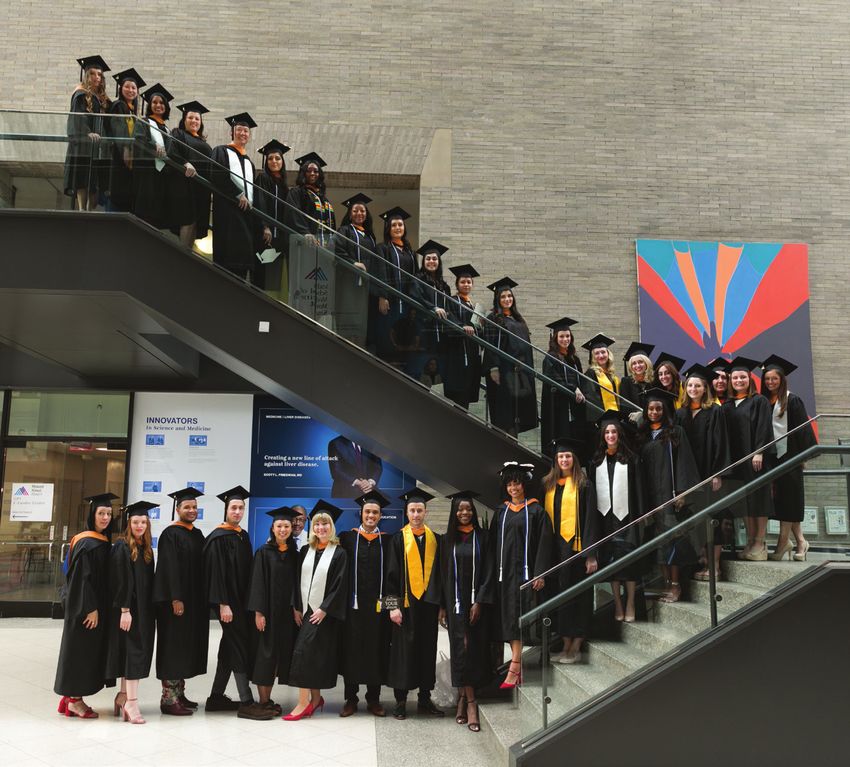
The School and                               Street NW, Suite 750, Washington, DC          Students can:
                                                 20001, 202-887-6791.                            • Receive transfer credit for
    Its Resources                                PSON has been continuously                         comparable courses.
                                                 designated a Center of Excellence               • Receive financial aid including
    A Tradition of Excellence
                                                 in Nursing Education by the National               scholarships, if eligible.
    For more than a century, Phillips
                                                 League for Nursing for the years
    School of Nursing at Mount Sinai
                                                 2014-2023. The School received the
    Beth Israel (PSON) has been one of
                                                 designation in the “Student Learning and      PSON students receive outstanding
    the leading schools of professional
                                                 Professional Development” category.           clinical learning experiences throughout
    nursing education. Its history is closely
                                                 The curriculum prepares graduates             the Mount Sinai Health System, as well
    intertwined with Mount Sinai Beth Israel
                                                 to respond to the new, major role that        as in various community organizations.
    (formerly Beth Israel Medical Center). In
                                                 nurses play in today’s complex health         Graduates are exceptionally well
    1889, Beth Israel Hospital (now Mount
                                                 care system. Major health problems are        prepared for a wide variety of career
    Sinai Beth Israel) began as a small clinic
                                                 taught using a humanistic framework           opportunities in nursing.
    and emergency room, established to
                                                 based on meeting patient needs in the
    meet the medical needs of the Lower
                                                 hospital, in the home and in a variety        Study at a Major Medical Health
    East Side community. In 1891, a hospital
                                                 of community-based settings. Each             Care System
    was conceived to serve all of the people
                                                 year, health care continues to move           The Mount Sinai Health System is an
    in the area. From the beginning, the
                                                 more into the ambulatory and home             integrated health care system providing
    hospital has played an important role in
                                                 care environments. The liberal arts and       exceptional medical care to our local and
    providing health care to New Yorkers.
                                                 science curriculum is designed to enrich      global communities.
    Shortly thereafter, the nursing School
1                                                and expand the student’s perspective on
    was created, and in 1904, the nursing                                                      Encompassing the Icahn School of
                                                 nursing and society.
    School was officially registered with the                                                  Medicine at Mount Sinai and eight
    Board of Regents of the State of New                                                       hospital campuses in the New York
                                                 PSON currently offers two nursing
    York as an educational institution.                                                        metropolitan area, as well as a large,
                                                 programs:
                                                                                               regional ambulatory footprint, Mount
                                                   (1) An Accelerated Bachelor of
    A Program Designed to Keep Pace                                                            Sinai is internationally acclaimed for its
                                                      Science in Nursing (ABSN). A
    With the Times                                                                             excellence in research, patient care, and
                                                      15-month, blended program leading
    Since its inception as a diploma                                                           education across a range of specialties.
                                                      to eligibility for licensure as a
    program in 1904, the School has                                                            The Health System is designed to
                                                      Registered Professional Nurse.
    undergone significant transformations                                                      increase efficiencies and economies of
                                                   (2)A Bachelor of Science in Nursing
    in response to an ever-changing                                                            scale, improve quality and outcomes,
                                                      Continuation Program (RN-BSN).
    health care landscape. In 1978, PSON                                                       and expand access to advanced primary,
                                                      Open to registered nurses who
    received approval to grant the degree of                                                   specialty, and ambulatory care services
                                                      wish to further their education at the
    Associate in Applied Science in Nursing.                                                   throughout a wide clinical network.
                                                      baccalaureate level.
    In 2014, PSON received approval to
                                                                                               The Health System includes more
    offer the degree of Bachelor of Science
                                                 Note: The goal of hybrid coursework           than 7,200 primary and specialty
    in Nursing. The baccalaureate degree
                                                 in an accelerated framework is to             care physicians and 13 freestanding
    program in nursing at Phillips School
                                                 take advantage of the best features of        joint venture centers. Mount Sinai
    of Nursing at Mount Sinai Beth Israel
                                                 both face-to-face and online learning         also features a robust and continually
    is accredited by the Commission on
                                                 experiences.                                  expanding network of multispecialty
    Collegiate Nursing Education, 655 K
                                                                                               services, including more than 410
ambulatory practices throughout the five           reference requests. The Mount Sinai           student nurses. It is the forerunner of the
boroughs of New York City, Westchester,            Health System Libraries provide PSON          ANA and has the structure and functions
and Long Island. With an extraordinary             with remote electronic access to an           of a professional organization.
array of resources for the provision of            array of digital resources consisting
compassionate, state- of-the-art care,             of a diverse collection of medical and
the Mount Sinai Health System is poised            nursing journals, databases, e-books,         Alumni Association
to identify and respond to the health-             mobile applications, and other clinical       The Alumni Association takes a very
related needs of the diverse populations           sources.                                      active interest in the welfare of the
it serves.                                                                                       students. All graduates are eligible for
                                                  A Diverse Student Body                         membership in the Phillips Beth Israel
Extensive Academic Resources                      We are proud of the diversity to be found      School of Nursing Alumni Association.
In 2020, the school moved to                      at PSON. Women and men, from the               This organization meets regularly,
148 East 126th Street between                     greater metropolitan area, are enrolled        publishes a newsletter and offers health
Lexington and Third Avenues.                      in the School and range in age from            care benefits to its members.
The neighborhood, known as “East                  their 20’s to 50’s. Our students reflect
                                                                                                 There is an annual membership fee
Harlem” has enjoyed a resurgence in               the multiplicity of race, religion, sexual
                                                                                                 which is waived for the first year after
popularity caused by its easy access              orientation, and ethnic origin, cultural and
                                                                                                 graduation. The Alumni Association
to transportation and the opening of              economic backgrounds that one finds in
                                                                                                 provides an excellent opportunity for
new luxury developments, excellent                a large city.
                                                                                                 social and professional networking.
restaurants, and national-brand stores.
                                                                                                 Alumni also provide funding for
                                                  Professional Development
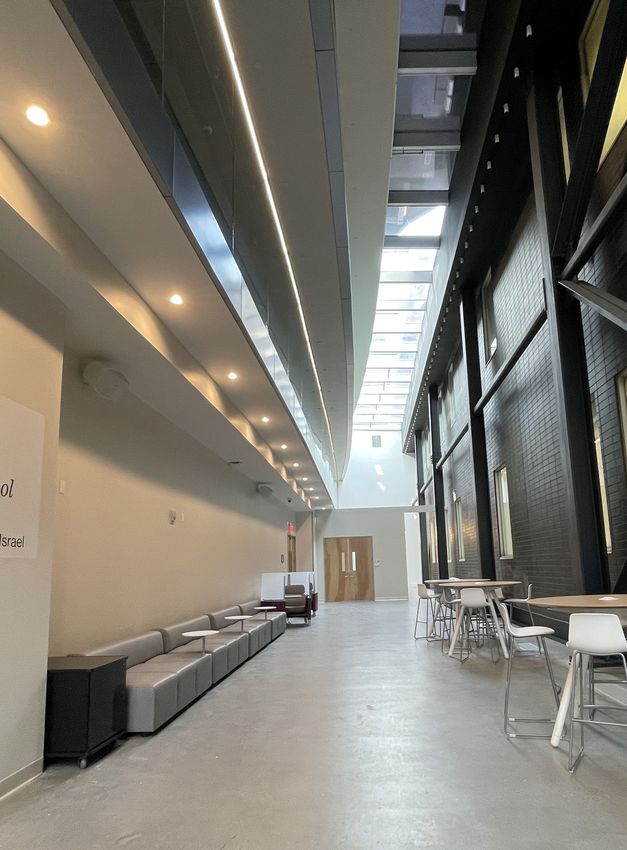
This new, modern facility encompasses                                                            designated students to attend
                                                  Every student is a member of the                                                             2
two floors of bright and airy space                                                              professional conferences.
                                                  Student Government Organization
designed to respond to today’s
                                                  (SGO) which coordinates School
technology-driven nursing curricula. The                                                         Services for Individuals with
                                                  activities. Students are encouraged to
facilities include:                                                                              Disabilities
                                                  serve on selected faculty committees
• A state-of-the-art simulation center                                                           Phillips School of Nursing is dedicated
                                                  which offer many opportunities for
 featuring hospital inpatient, primary                                                           to providing equal educational
                                                  personal and professional growth.
 care, homecare, and operating room                                                              opportunities for students with physical,
 settings utilizing the latest in high fidelity   Additionally, the School has an active         learning, psychological, sensory and
 manikins and other hospital equipment;           chapter of the National Student Nurses'        chronic health disabilities. No qualified
• A multi-purpose auditorium;                     Association (NSNA). Membership in              student with a disability will be excluded,
• A student lounge (equipped with                 this organization provides the student         denied participation or subjected to
 vending machines, refrigerator,                  with a professional connection prior to        discrimination from any program or
 microwave, and hot/cold water                    graduation. NSNA sponsors a yearly             activity. Any individual with an inquiry or
 machines) located in the Atrium;                 national convention which encourages           complaint related to Section 504 of the
• A study center;                                 students to network with other nursing         Rehabilitation Act of 1973 or the ADA
• Several classrooms, conference rooms,           students nationwide. Our local chapter         should contact Ashni Patel, Director of
 and administrative and faculty offices;          sponsors special programs at the               Student Services, 504/ADA and Title IX
• An Information Commons Area staffed             school for student members of NSNA.            Compliance Coordinator and Disabilities
 by a Reference and Instruction Librarian         All pre-licensure students hold active         Officer by telephone 917-583-8290 or
 who is available for information and             membership in the NSNA, a pre-                 email at ashni.patel@mountsinai.org.
 literacy-related consultations and other         professional national organization for         More detailed information can be found
in the Student Handbook.

    TITLE IX Background Information
    Under The Violence Against Women Act
    (“VAWA”), colleges and universities are
    required to: (1) report dating violence,
    domestic violence, sexual assault, and
    stalking, beyond crime categories the
    Clery Act already mandates; (2) adopt
    certain student discipline procedures,
    such as for notifying purported victims
    of their rights; and (3) adopt certain
    institutional policies to address and
    prevent campus sexual violence, such
    as to train in particular respects pertinent
    college personnel. The Violence
    Against Women Reauthorization Act,
    which President Obama signed into
    law on March 7, 2013, imposes new
    obligations on colleges and universities
    under its Campus Sexual Violence Act

3   (“saVE Act”) provision, Section 304.
    This provision imposes new reporting
    requirements, new student discipline
    requirements, and new requirements
    to educate and train students and
    employees on sexual violence.

    What is Clery?
    The Clery Act requires colleges and
    universities that participate in federal       believe that they have been the victim      initiatives and campaigns related to
    financial aid programs to report annual        of Sexual Misconduct; or (2) become         the prevention of Sexual Misconduct in
    statistics on crime, including sexual          aware of incidents of Sexual Misconduct     the School Community. In addition, as
    assault and rape, on or near the campus,       involving other members of the School       described below, the Title IX Coordinator
    and to develop and disseminate policies.       Community, to report the conduct.           is responsible for assessing and
                                                   Members of the School Community can         investigating certain reports of Sexual
    Title IX Coordinator                           report Sexual Misconduct to the Title       Misconduct committed by members of
    Reporting Sexual Misconduct can be             IX Coordinator, or to numerous other        the School Community, and for providing
    difficult, and victims or witnesses to         individuals described below.                Reporting Individuals and/or victims
    such behavior may have mixed feelings                                                      with important information following
                                                   The School’s Title IX Coordinator is
    about whether or not to report it. The                                                     disclosure of alleged incidents of Sexual
                                                   responsible for coordinating the School’s
    School encourages all members of                                                           Misconduct.
                                                   anti-Sexual Misconduct efforts, including
    the School Community who either: (1)
                                                   training, education, and awareness          Questions and inquiries regarding Title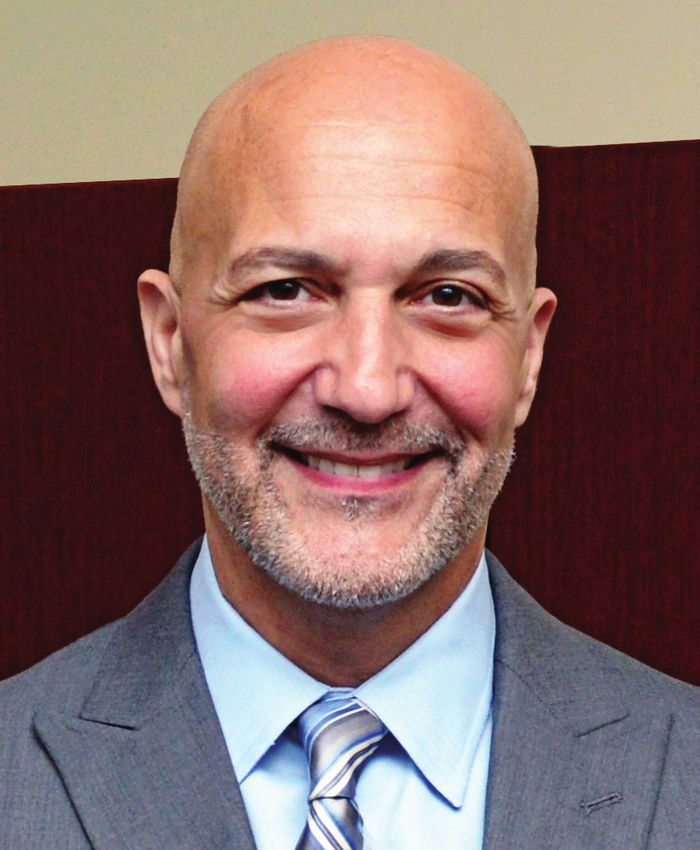
A comprehensive program of financial          offering many shows at half-price the
                                         assistance, including federal and state       day of the performance. Movie theaters
                                         aid, is available to all eligible students.   are plentiful in the city and show first-run
                                         Scholarships and loans are also available     films, indie movies, and revival houses
                                         to complement a student’s full financial      featuring film classics.
                                         aid package. See section on Financial
                                                                                       In Harlem, see a show at the Apollo
                                         Aid for full information.
                                                                                       Theatre, explore Northern Central Park,
                                                                                       or tour the Cathedral Church of St. John
                                         Drugs, Alcohol and Tobacco
                                                                                       the Divine. Harlem’s rich immigrant
                                         The personal use of alcohol on the
                                                                                       history is reflected in nearby cultural
                                         School of Nursing premises is prohibited.
                                                                                       institutions such as el Museo del Barrio,
                                         Students are reminded that possession
                                                                                       The Hispanic Society, The Museum City
                                         and/or use of alcoholic beverages or
                                                                                       of New York, and Julio de Burgos Center.
                                         controlled drugs is forbidden in the
                                         School of Nursing and in all hospital
                                                                                       Campus Crime Statistics
                                         owned properties. Such use can result in
                                                                                       Upon written request, all campus crime
                                         immediate dismissal and legal sanctions.
                                                                                       statistics as reported to the United
                                         Since the School is committed to a
                                                                                       States Department of Education, are
                                         smoke-free environment, smoking is not
                                                                                       available through The Office of Student
                                         permitted on the premises and in front of
                                                                                       Services. In order to ensure that our
                                         the building.
                                                                                       faculty and students are provided with a
                                                                                                                                      4
                                                                                       safe and healthy learning environment,
                                         A Vibrant Neighborhood,
                                                                                       the School complies with all federal and
                                         Easy to Reach
                                                                                       state laws and regulations for campus
                                         Long known as “The City That Never
                                                                                       safety including: the Clery Act, the
                                         Sleeps,” Manhattan offers a wide variety
                                                                                       Violence Against Women Act, Title IX,
                                         of cultural activities to enjoy, including
                                                                                       and most recently, legislation on Campus
                                         theater, movies, opera and numerous
                                                                                       Sexual Assault.
                                         community functions. Visit the deck
                                         of the Empire State Building, ride the
                                                                                       International Initiatives
IX, including reports of incidents or    Staten Island Ferry, or visit the Statue
                                                                                       The School’s global footprint is growing
questions about Sexual Misconduct,       of Liberty and Ellis Island Museum.
                                                                                       rapidly and is enthusiastically embraced
may be referred to the Title IX          The museums in the city are world
                                                                                       by faculty and students alike. Currently,
Coordinator, whose contact information   renowned: the Metropolitan Museum
                                                                                       PSON has official Memorandums of
is as follows:                           of Art, the Guggenheim, the American
                                                                                       Understanding (MOUs) with the Taiwan
Ashni Patel                              Museum of Natural History, the Whitney
                                                                                       Nurse Practitioners Association, The
Title IX Coordinator                     Museum of American Art, and many
                                                                                       Dayeh University, Taiwan; Colombia
Mobile phone: 917-583-8290               more. Music is everywhere, from inside
                                                                                       Adventist University, Medellin, Colombia,
Email: ashni.patel@mountsinai.org        Carnegie Hall or Lincoln Center, to the
                                                                                       Centre de Formation Pour Les
More information is available on the     free outdoor performances in plazas,
                                                                                       Secteurs Infirmier, Brussels, Belgium,
School’s website and in the Student      parks, and even train stations. Theater
                                                                                       Bharathi Vidyapeeth University, Pune,
Handbook.                                and dance abound, both on and off
                                                                                       India, and University of Malaya, Kuala
Financial Assistance                     Broadway with special ticket booths
Lumpur, Malaysia. These international learning management platform) for the For Further Information
experiences, which provide students most up-to-date information. The remainder of this publication is
with an awareness of global nursing divided into three sections by program
Security services are available from
issues, are offered in the winter, spring ( RN-BSN, and ABSN) and provides
7am to 10pm Monday through Friday
and summer sessions. The learning detailed information on the curriculum,
and 8am to 1pm on Saturdays. There is
model focuses on four major learning faculty, and admissions process. For
no access to the school at other times
themes: educational, cultural, clinical questions about nursing or about the
without the explicit permission of school
and collaborative. Nursing students and School, please do not hesitate to attend
administration. Students are required
faculty who participate in these learning one of the School’s Information Sessions
to show their ID cards to Security each
opportunities enjoy greater personal held annually (see our website at
time they enter the building and must be
and professional growth. www.pson.edu. for more information).
worn at all times while on the premises
The Information Sessions are designed
of PSON.
Hours of Operation to answer your individual questions.
In the event of a serious security
The School is open for classes/clinicals
emergency on the premises, Security
weekdays from 8:00am to 10:00pm and
must be notified immediately. The
Saturdays from 8:00am to 1:00pm., or
situation will then be referred to MSHS
later, depending on the course.
Security or 911.
Office hours are Monday through
For safety purposes, all students must
Thursday from 8:00am to 4:30pm
exit the school premises prior to the
and Friday from 8:00am to 2:30pm.
last faculty at 9:45pm weekdays and
Appointments with administration can
5 12:45pm on Saturdays. Security will
be made during regular business hours.
complete a final walkthrough to ensure
Hours are subject to change. Please
that no one is on the premises.
check Moodle (the school’s online6
The Bachelor
    of Science in
    Nursing
    Completion
    Program

    RN-BSN Program
    for Registered
    Nurses

7
Program The RN-BSN program is designed to meet the ever-changing needs of today’s nurses.
The RN-BSN program is a fast-track, blended program with entry in the Fall, Spring and
Overview Summer semesters. The program is perfect for RNs committed to earning their BSN
in just three to five semesters (based on the number of transfer credits approved upon
admission and schedule of classes). This smooth and flexible model addresses the
Length of Program: 3 to 5
needs of working RNs and the health care systems they serve. The curriculum includes
semesters (dependent upon transfer
a blend of clinical, online, and classroom education with classes held onsite primarily
credits upon admission)
on Wednesdays. Hands-on care (with preceptors) is an integral part of the curriculum;
students’ clinical experiences enable them to learn how to provide unmatched patient
Application Open: Applications
care in a complex health care environment.
Accepted Year-Round
Student Learning Outcomes
Classes Begin: Fall, Spring and
Upon completion of the program, the graduate will be able to:
Summer Semesters
1. Develop nursing knowledge and clinical skills in a specialty practice setting in
order to improve patient outcomes.
2. Apply evidence-based research.
3. Utilize technology and information literacy skills in the systematic process of inquiry,
research and analysis to support evidence-based practice.
4. Communicate across disciplines to provide and maintain delivery of
culturally-sensitive health care.
8
5. Demonstrate leadership and management skills that utilize critical and creative thinking,
ethical decision-making and the ability to manage ambiguity in a rapidly changing health
care environment.
6. Promote and maintain a culture of mutual respect, upholding the rights, beliefs, and
values of all individuals in local or global communities in the delivery of accessible,
cost-effective, safe and quality patient care.
7. Analyze the issues of an aging community and the impact on the provision of health care.
8. Analyze the provision of care across the health-illness continuum with attention to
public policy and advocacy.
9. Demonstrate accountability for nursing practice and commitment to ongoing
professional, educational and clinical development.
Program Goals/Outcomes
1. 75% of students will complete the RN-BSN program within three years of enrollment.
2. 95% of graduates will state that the program provided them with the knowledge for
evidence-based, clinically competent professional practice in the care of individuals,
groups and families in a specialty practice setting.3. 95% of graduates will evaluate the leadership and management opportunities Admissions Philosophy and Policy
as positive learning experiences. Applicants are selected following a
holistic review of their application,
4. 95% of graduates will rate the opportunities for inter-professional activities positively.
which includes but is not limited
RN-BSN Actual Program Outcomes to their previous academic
Program Outcome 1: 75% of students will complete the RN-BSN program within four achievement and potential aptitude
years of enrollment. and recommendations. Students are
% Graduated
admitted without regard to age, race,
Year of Entry
within 3 Years color, sex, religion, ethnic origin, marital
status, sexual orientation, gender
2017 100%
identity, gender expression, veteran
2016 100% status, qualified disability, or any other
characteristic protected by law.
2015 93%
Admission Requirements
1. Completed portfolio: Apply by mail to:
Program Outcome 2: 95% of graduates will state that the program provided them with
Chairperson
the knowledge for evidence-based, clinically competent professional practice in the care
Phillips School of Nursing
of individuals, groups and families in a specialty practice setting.
148 East 126th Street
Year % Satisfied
New York, NY 10035
2018 100%
2017 95% or by email to: pson@mountsinai.org
9
2016 100%
2. Unrestricted and unencumbered
current license and current
Program Outcome 3: 95% of graduates will evaluate the leadership and management
registration to practice as a registered
opportunities as positive learning experiences.
% Satisfied nurse in New York State. International
Year
100% applicants must validate credentials
2018
100% with the Commission on Graduates
2017
100% of Foreign Nursing Schools (CGFNS)
2016
before applying for RN licensure.
Program Outcome 4: 95% of graduates will rate the opportunities for inter-professional New associate degree graduates will
activities positively. be admitted conditionally and must
Year % Satisfied submit documentation of RN licensure
2018 100% on or before the completion of the first
2017 100% semester of attendance in order to
2016 100% remain in the program.
3. Official transcript from each
institution attended must be mailed
from the issuing institution's registrar’s
office directly to the Office of
Student Services.• Associate in Science, Nursing, courses. However, all prerequisites a) World Education Services (WES):
Associate in Applied Science, must be completed prior to the start http://www.wes.org/students/
Nursing, or diploma in nursing. of the program.
b) Educational Credential Evaluators, Inc.
• Applicants are required to list – Science prerequisite courses must (ECE): https://www.ece.org/
all institutions attended on their be taken with the last 5 years. Notes: It is the applicant’s responsibility
application even if a degree was not
6. Official high school transcript or copy to verify the status of his or her application
awarded.
of GED scores. with the Office of Student Services to
• Applicants must input college-level ensure that their portfolio is complete
course work, including courses 7. Two letters of recommendations - and verified.
currently in progress, from every One from an academic source and
institution previously attended. All materials in student applications are
one from a professional source.
the property of the School and will not be
• Applicants with international 8. Statement of purpose (250 – 650 returned. Applications are retained for a
transcripts should refer to the words): discuss your reasons for period of two years.
“Additional Requirements for applying to the RN-BSN program
International Transcripts” and how it fits into your personal, Co-requisite Courses (can be
section below. educational and professional goals.
transferred into the program)
4. Minimum cumulative GPA of 2.75; 9. Current resume: Include work • Upper Division English (3 credits)
C+ or higher in all nursing courses. and volunteer experience, awards, • Geopolitics of Health Care (3 credits)
professional organizations and • Information Literacy & Technology
5. Minimum Prerequisite GPA 3.0 for
academic history. (3 credits)
science and math courses;
• Upper Division Language (3 credits)
minimum GPA OF 2.50 for all other 10. Current Basic Life Support (BLS) for 10
Heath Care Providers Certification: • Pathophysiology (3 credits) –
prerequisites:
Only BLS certification from the taken in last 5 years
• English Composition
American Heart Association is • Group Dynamics (3 credits)
• Ethics
accepted and must be obtained prior • Abnormal Psychology (3 credits)
• General Psychology to starting the RN/BSN program. • Speech (3 credits)
• Human Anatomy and Physiology I
• Statistics (3 credits)
and II with lab (taken within 5 years). 11. Documentation of current
professional liability (malpractice)
• Human Growth and Development Transfer Credit Policy
insurance.
• Microbiology with lab • 30 semester hours of nursing credit
(taken within last 5 years). 12. Additional Requirements for Non-US granted for prior learning validated
• Nutrition (taken within last 5 years) citizens and Non-US Residents. by the successful completion of the
• Pharmacology • Submit copy of passport or NCLEX-RN exam and RN licensure.
• Sociology permanent resident card (USCIS
Form I – 551). • Minimum residency requirement –
– All prerequisite courses must be 27-32 nursing credits.
completed prior to admission with a 13. Additional Requirements for
International Transcripts: • Maximum number of credits
grade of C or higher.
All applicants who have attended transferable – 90 credits.
– Only one prerequisite course failure a college or university outside of • Comparable liberal arts and science
may be repeated (grade of C- or the United States must submit courses accepted for transfer credit on
below). International transcripts or diplomas a case-by-case basis.
(if applicable) to one of the following
– Applicants may be offered conditional • National Certification in a Specialty
approved evaluation services:
admission while in the process of may be accepted in lieu of “Nursing in
completing remaining prerequisite
Continueda Clinical Specialty,” (Elective Course/ Acceptance Admission Deferment
NSG 404/5 credits). A list of eligible 1. Applicants are selected following a Students unable to register for classes
certifications follows later in this comprehensive assessment of their in the semester for which they are
section. Note that certification must previous academic achievement accepted may opt to postpone their
be documented on admission and prior and personal and professional admission into the program. Admission
to enrollment; otherwise the Nursing in experiences. deferment requests should be submitted
a Clinical Specialty course (NSG 404) in writing to the Chairperson of the
2. Based upon an evaluation of the
must be taken. Admissions Committee. Candidates
candidate’s academic credentials
who have been accepted for admission
Official transcripts from all schools and past achievement, all candidates
and deferred their entry into the program
attended must be submitted with the will receive a decision from the
must reactivate their portfolios and
application, or sent directly to the Admissions Committee in writing.
submit a re-entry request in writing at
Office of Student Services for review. All accepted candidates must:
least three months prior to the start of the
A Transfer Credit Assessment Form will
• submit a $500.00 non-refundable semester for which they seek admission.
be generated for each student accepted
enrollment deposit by the deadline
into the program. Prior to enrollment,
stated in the decision letter; otherwise,
students must review the Transfer Credit International Students
acceptance will be canceled;
Assessment Form, indicate any courses The school does not enroll non-
in progress, and sign off on the form, • enroll for a minimum of six credits per immigrant international students in its
acknowledging that the form includes semester—and, once enrolled, RN-BSN program.
all of the transfer credits awarded to complete all required courses for the
the student by PSON. The Transfer degree at the School;
11
Credit Assessment Form will be revised
• possess a laptop computer to be used
accordingly when official, updated
during the program;
transcripts are received by PSON. Once
a student is enrolled, it is expected that • successfully complete a required
all courses required for the degree will health clearance from the Department
be completed at the School. Students of Employee Health at MSBI; and
should be aware of the financial aid
• successfully complete a background
implications of taking a challenge exam
investigation and drug screening
for course exemption.
(separate fee).The RN-BSN The curriculum is designed to be completed in three to five semesters. The curriculum
is continuously updated to reflect changes in nursing education, practice and research.
Program It is the student’s responsibility to complete all courses necessary for the Bachelor of
(Bachelor of Science in Nursing (RN-BSN) Degree. In addition, the School may offer elective and/or
Science for independent study courses on a semester-by-semester basis. Students will be notified
Registered of the availability of such courses prior to registration deadlines. The School reserves the
right to cancel a class due to insufficient enrollment.
Nurses)ses) Academic Calendar
Curriculum The academic calendar is distributed under separate cover.
RN-BSN Master Curriculum Plan
Semester 1 Credits
NSG301 Nursing Research & Evidence-Based Practice 3
Curriculum Notes
NSG302 Pathophysiology* 3
Minimum Credits for Graduation:
NSG303 Health Assessment 3
122 Credits
NSG406 Interprofessional Communication 3
• Courses may be completed on a INL302 Information Literary & Technology* 3
full- or part-time basis. SPE201 Public Speaking* 3
• 15 hrs. Theory = 1 credit Total = 9 - 18
• 30 hrs. Lab/Clinical = 1 credit Semester 2 Credits
NSG401 Nursing Issues in Caring for At-Risk Communities 5 12
• Students are required to take a
NSG205 Pharmacology* 3
minimum of six credits per semester.
NSG405 Applied Ethics in Nursing 3
• Residency Requirement: MAT301 Statistics* 3
27-32 nursing credits in nursing
Total = 8 - 14
Semester 3 Credits
NSG307 Geopolitics and Health Care Policy 3
ENG301 Professional Writing* 3
NSG404 Nursing in a Clinical Specialty** 5
Total = 3 - 11
Semester 4 Credits
PSY200 Group Dynamics* 3
NSG402 Nursing Leadership and Management 4
PSY300 Abnormal Psychology* 3
SPA100 Spanish for Health care* 3
Total = 4 - 13
*Eligible for Transfer Credit
Semester 5 Credits
NSG409 Nursing Capstone 3
**National Certification in a Specialty
Area may be eligible for transfer credit Minimum Credits for Graduation: 122 creditsNursing Elective Courses An Independent Study Project (of 1 to
3 credits) may be available to those
Course # Course Name Credits
students who: (1) have completed
NSG404 Nursing in a Clinical Specialty 5
NSG301 (Nursing Research & Evidence-
NSG407 International Nursing 3 Based Practice) and INL302
NSG501 Genetic Issues in Patient Care 3 (Information Literacy & Technology);
NSG502 Using the Arts to Enhance Clinical Care 3 and (2) have achieved a GPA of 3.00
NSG503 Nursing Informatics in Clinical Practice 3 or better. Independent study proposals
NSG504 Nursing Education: Approaches to Classroom 3 should be discussed with the BSN
& Clinical Teaching Program Director and the student’s
NSG505 Leadership and Professional Development 3 academic adviser. Proposals must be
Strategies For Nursing approved by the Assistant Dean for BSN
Programs in the semester before the
student expects to enroll in the course.
Students may earn a maximum of 6
credits for independent study during
their period of enrollment.
Credit for Experience
The School will award baccalaureate
nursing degree credits for the following
13 nursing certifications, up to a maximum
of five credits. Credits earned by
certification are accepted for NSG404
Specialty Nursing Course. Evidence of
successful national certification must
be submitted to the Office of Student
Services as part of the enrollment
application.Phillips Beth Israel School of Nursing | Evaluating Professional Nursing Experience for Credit
Credits
Group Certification Received Awarded
Academy of Medical-Surgical Nurses
Comprehensive standardized exam and a minimum of two calendar years as a registered
Certified Medical-Surgical Nurse 5
nurse (RN) in a medical-surgical setting and have accrued a minimum of 2,000 hours within
the past three years of practice in a medical-surgical setting.
Certification for Adult Critical Care 5
Nurses (CCRN Adult)
AACN Certification Corporation Certification for Neonatal Critical 5
Comprehensive 3 hour exam and requires 1,750 hours in direct bedside care of acutely and/ Care Nurse (CCRN Neonatal)
or critically ill patients during the previous two years, with 875 of those hours accrued in the Certification for Pediatric Critical 5
Care Nurses (CCRN Pediatric)
most recent year preceding application.
Certification for Progressive Care 5
Nurses (PCCN)
American Association of Diabetes Educators
Comprehensive standardized examination and minimum of 15 clock hours of continuing
education activities applicable to diabetes within the two (2) years prior to applying for Certified Diabetes Educator 5
certification and a minimum of 1000 hours of DSME experience with a minimum of 40% of
those hours (400 hours) accrued in the most recent year preceding application.
Association of Perioperative Nursing 14
Comprehensive standardized exam and working full-time or part-time in perioperative
Certified Perioperative
nursing in the area of nursing education, administration, research or clinical practice and
Registered Nurse
5
completion of a minimum of 2 years and 2,400 hours of experience in perioperative nursing,
with a minimum of 50% (1,200 hours) in the intraoperative setting.
American Board of Neuroscience Nursing
Certified Neuroscience Registered
Comprehensive standardized exam and 2 years of full-time (or 4,160 hours) experience in
Nurse Certification (CCRN)
5
either direct or indirect neuroscience nursing practice during the past 5 years.
American Board for Occupational Health Nurses, Inc.
Occupational Health Nursing 5
Comprehensive standardized exam and 3,000 hours in occupational health in the past
Case Management Specialty
five years; OR Extension of the COHN Certification
5
a completion of a certificate program in occupational health nursing for academic credit.
American Board of Perianesthesia Nursing Certification, Inc. ABPANC Certified Post Anesthesia Nurse 5
Comprehensive standardized exam and a minimum of 1,800 hours of direct perianesthesia (CPAN)
clinical experience during the two (2) years prior to application. Certified Ambulatory Perianesthesia 5
Nurse (CAPA)
ContinuedCredits
Group Certification Received Awarded
American Nurses Credentialing Center Certified Gerontological (ADN) Nurse 5
Comprehensive standardized exam and a minimum of 2,000 hours of clinical practice
Psychiatric and Mental Health Nurse
in the specialty area of nursing within the last 3 years and two years full-time as a
Generalist and other certifications 5
registered nurse and have completed 30 hours of continuing education in the nursing that meet similar ANCC requirements
specialty within the last 3 years.
Association of Rehabilitation Nurses
Comprehensive standardized exam and at least one of the following at the time of
application: within the five years preceding the examination, completion of two years of
practice as a registered professional nurse in rehabilitation nursing; OR Certified Rehabilitation
Registered Nurse (CRRN)
5
within the five years preceding the examination, completion of one year of practice as a
registered professional nurse in rehabilitation nursing and one year of advanced study
(beyond baccalaureate) in nursing.
National Board for Certification of Hospice and Palliative Nurses
Certified Hospice and
Comprehensive standardized exam and at least 2 years of experience (recommended)
Palliative Nurse (CHPN)
5
in hospice and palliative nursing practice.
Board of Certification for Emergency Nursing, Emergency Nurses Association
Comprehensive standardized exam and two years of experience in emergency Certified Emergency Nurse (CEN) 5
nursing (recommended).
15
Inpatient Obstetrics Nursing (RNC-OB) 5
National Certification Corporation Maternal Newborn Nursing (RNC-MNN) 5
Comprehensive standardized exam and two years (24 months) of experience comprised Low Risk Neonatal Nursing (RNC-LRN) 5
of at least 2000 hours of practice time in one of the specialties offered. Neonatal Intensive Care Nursing 5
(RNC-NIC)
Oncology Nursing Certification Corporation
Comprehensive standardized exam and a minimum of one year (12 months) of experience
as an RN within the three years (36 months) prior to application, and a minimum of 1,000 Oncology Certified Nurse (OCN) 5
hours of adult oncology nursing practice within the two-and-one-half years (30 months)
Certified Oncology Nurse (CPON) 5
prior to application, and completed a minimum of 10 contact hours of continuing nursing
education or an academic elective in oncology nursing within the three years (36 months)
prior to application.
Pediatric Nursing Certification Board
Certification in Pediatric Nursing
Comprehensive standardized exam and 1800 hours of pediatric clinical practice within the
(CPN)
5
past 24 month period in a pediatric nursing specialty.The RN-BSN the body’s attempt to compensate for challenges as enhancing health
these changes. promotion, disease prevention, illness
Program care, restoration, rehabilitation, health
(Bachelor of NSG303 Health Assessment - counseling, education, spiritual care
Science for 3 credits (Class-45 hours) and client advocacy. The student will
Students will build on their basic physical
Registered Nurses) assessment skills of adults to learn to
assess a community and select an area
identified as lacking in resources.
conduct a thorough history and physical Pre/co-requisites: NSG301, NSG302,
Course exam, including recognizing normal NSG303, NSG 205
Descriptions variations, common abnormalities
and potential problems. Class will be NSG 402 Nursing Leadership
and Management - 4 credits
conducted in the nursing skills lab and
NSG205 Pharmacology - 3 credits (Class 60 hours)
include lectures, skills demonstration
(Class-45 hours) Students will explore theories, models
by faculty, and peer skills practice.
General principles of pharmacology, and principles of nursing leadership and
Readings and audiovisual materials will
mechanisms of drug actions, management in a variety of settings. The
be assigned to supplement class time.
biotransformation, drug characteristics course utilizes Benner’s framework of
Pre/co-requisite: NSG302
and interactions are discussed. Major knowledge in comparing and contrasting
classifications of drugs are presented in the functions, responsibilities and
NSG307 Health Policy and
relation to therapeutic use. expectations of the roles of leader and
Geopolitics and Health Care Policy
- 3 credits (Class-45 hours) manager. Emphasis will be placed on
NSG301 Nursing Research This course examines the social, professional practice issues, the current
and evidence-based Practice - 16
political, historical and economic events health care environment, the use of
3 credits (Class-45 hours)
that have shaped health care from research and evaluation, and legal/
The steps of the research process are
the late 1800’s to the present in this regulatory issues. The clinical practicum
presented to provide students with the
country and internationally. It addresses experience will provide students with
basis for evaluating research, designing
the connections between a society’s an opportunity to observe, reflect
research projects and the application of
wellness (its physical, emotional, upon, assess and identify specific
research in clinical practice. Legal, ethical
mental, spiritual, interpersonal and management/leadership issues in their
and political issues will be discussed
environmental state of being) and its assigned placement. Students will be
as well as an overview of the role of
ability to function and coexist amicably required to develop an evidence-based
institutional review boards and their
with other global citizens. project in collaboration with their clinical
role in protecting human participants.
preceptor that relates to the course
Special emphasis will be placed on
NSG401 Nursing Issues in Caring objectives. Pre/co-requisites: NSG301,
quality initiatives, patient satisfaction and for At-Risk Communities - 3 credits
NSG302, NSG303
issues of diversity. Co-requisites: INL302, (Class-45 hours)
MAT301 NSG401a Nursing Community
NSG404 Nursing in A Clinical
Practicum – 2 credits
Specialty – 5 credits (Class 45
(Clinical 60 hours)
NSG302 Pathophysiology - hours; Clinical 60 hours) - Elective
3 credits (Class-45 hours) The course will provide an overview of
This course builds upon the nursing
This course focuses on the physiologic the aged and other vulnerable residents
theory and practice learned in basic
changes that participate in disease in the community setting. Emphasis
nursing education. The course provides
production. These alterations are will be placed on identifying challenges
an opportunity for students to advance
examined at the cellular, organic and within selected at-risk communities
their knowledge and clinical skills in
systemic levels. Emphasis is placed on to seek methods to overcome such
Continuedthe focused area of a clinical specialty. The student will gain an overview of these for disease prevention, screening,
Specialty options may include: Critical global health in preparation to practice diagnosis, selection of treatment, and
Care/ED, Peri-operative Nursing; and in a variety of settings. An overview monitoring of treatment effectiveness.
Community/Home. Students provide of strategies that promote the health The student will research anticipated
direct patient care under the supervision of nations will be examined including future findings and their expected impact
of nurse preceptors who guide their infectious diseases, chronic diseases, and on patient care. Pre/co-requisite: NSG301
development. Pre-requisites: NSG205, the complex factors that affect the health
NSG301, NSG302, NSG303 of countries such as health care delivery NSG502 Using the Arts to Enhance
systems, war, religion, politics, culture, and Clinical Care – 3 credits
(Class 45 hours) Elective
NSG405 Applied Ethics in Nursing the environment.
- 3 credits (Class 45 hours) This course integrates concepts of
Pre/co-requisite: NSG301
Students will expand their knowledge of nursing clinical care with interdisciplinary
theories, models and principles of ethical learning activities in the humanities,
NSG409 Nursing Capstone -
decision making in nursing situations 3 credits (Class 45 hours) developed from the disciplines of history,
across the lifespan, in a variety of settings. The Capstone course requires literature, religion, philosophy, and
The course utilizes an epistemological the student to demonstrate the the fine arts including music, painting,
framework based competencies consistent with the sculpture, drama and film. The course
on the work of Bayliss Webber that program outcomes. The student will utilizes teaching/learning strategies and
incorporates nursing knowledge, have the opportunity to display his/her evaluation methods to hone reflective/
meaning, values, skills, and experience knowledge and expertise in selected observational abilities of the student. It
(KMVSE). Selected ethical issues and areas of nursing, including but not limited also allows student translation of their
dilemmas encountered in health care to specialty clinical nursing practice, reflective and critical thinking abilities
17
delivery systems and nursing practice will nursing leadership, nursing education, into sensitivity to patient concerns and
be explored. Pre/co-requisite: NSG301 and community health nursing. Course enhanced clinical skills.
requirements will include an evidence- Pre/co-requisite: NSG204, NSG405,
NSG406 Inter-professional based project that is selected by the NSG307, MAT301, NSG300, NSG301
Communication - 3 credits student. The completed project will
(Class 45 hours) NSG503 Nursing Informatics in
be displayed as a poster presentation
The course builds on inter-professional Clinical Practice – 3 credits
followed by a paper describing how the (Class 45 hours) Elective
teamwork providing an overview
outcomes were attained. Pre-requisites: This course develops an understanding
of the history of inter-professional
All other nursing courses in the curriculum of the role of nursing information systems
communication and practice from the
establishment of the nursing profession and technology within a health care
NSG501 Genetic Issues in Patient
to current times. The principles of Care – 3 credits organization. It examines the business
collaboration, communication, and care (Class 45 hours) Elective and technical issues associated with
coordination are explored in depth. This course introduces the student to the selection, deployment, and use of
Pre/co-requisite: NSG301 advances in the field of genetics and health informatics in the clinical and
genomics and the application and impact back office areas. For this course,
NSG407 International Nursing – of these advances to patient care. Since Nursing Informatics is defined as the
Elective - 3 credits (Class 45 hours) many options for patient care now include convergence of information technology,
The course provides advanced theories genetics (the study of individual genes) information management, and health
and principles related to the delivery of and genomics (the study of all the genes care, at various levels, ranging from
nursing care in selected global settings in the human genome) information, the simple data gathering to the design and
and/or with selected patient populations. course will focus on the application of implementation of new nursing careinformation systems. Pre/co-requisite: principles of fundamental research, psychophysiological, schizophrenic
NSG301 evidence-based nursing practice and sexual disorders. Based on a review
and proper usage of appropriate of contemporary research findings,
NSG504 Nursing Education: citation style, as skills to be utilized by discussion will focus on relevant theories
Approaches to Classroom and
nurses. Information literacy skills will and approaches for understanding,
Clinical Teaching – 3 credits
(Class 45 hours) Elective be integrated with strategic searching, diagnosing and treating psychological
The focus of this course is the evaluative research and communication disorders.
exploration of principles and the practice endeavors. Co-requisite: NSG301
of teaching and learning integral to clinical SPA100 Spanish for Health care
nursing education. Identification of the MAT301 Statistics - 3 credits Professionals - 3 credits
(Class 45 hours) (Class 45 hours) Elective
role of the Nurse Educator with diverse
This foundation course aims to equip This course empowers nursing students
learning styles and needs within a variety
students with the basic knowledge of with Spanish literacy skills so that
of clinical settings is incorporated. Pre/
the principles of statistical analysis. The they may communicate with Spanish-
co-requisite: NSG301
concepts of data analysis including speaking patients, their families, and
probability, hypothesis testing and other health care providers. Organized
NSG505 Leadership and
Professional Development regression intervals will be explored. by medical systems addressing
Strategies for Nursing - Students will utilize these concepts patients’ chief complaints, the course
3 credits (Class 45 hours) Elective content will integrate Spanish grammar
to master statistical problems related
This course will expose students to and vocabulary knowledge into
to health care policy, genetics,
the principles of organizational culture, communicatively-focused activities.
bioinformatics and other related topics.
dynamics, mission, vision, values, and The stress, intonation, rhythm, and
Co-requisite: NSG301
goals as it impacts nursing. Additionally, 18
articulation patterns of Spanish will also
students will learn current theories of be highlighted.
PSY200 Group Dynamics – 3 credits
change management and resource (Class 45 hours)
management for nursing practice. They This course provides an overview of the SPE201 Public Speaking – 3 credits
also will explore change agent roles in (Class 45 hours)
group dynamics inherent in small group
project management and processes. Pre/ This course focuses on the development
interactions. Didactic and experiential
co-requisite: NSG301 of public speaking skills in general
techniques are used to explore the
with an emphasis on conducting
stages of group development, decision-
ENG301 Professional Writing – 3 presentations in the health care setting.
making techniques, group problems and
credits (Class 45 hours) Students will strengthen their abilities
problem-solving, resolution skills, group
This foundation course will fine-tune the in speaking in front of a group and learn
norms, structures, leadership authority,
nurses’ basic writing skills and prepare how to tailor their oral message for
cultural sensitivity and the intra- and
them for the types of writing necessary different audiences. Issues related to
interpersonal dynamics that occur within
for registered nurses. Writing as both a the delivery of speech, such as pitch,
small groups.
conceptual activity and a mechanical act articulation, pauses, and volume will be
will be jointly addressed. PSY300 Abnormal Psychology - highlighted. Non-verbal communication,
3 credits (Class 45 hours) clarity, repetition, and simplicity of
INL302 Information Literacy and This course provides an overview of expression will also be incorporated.
Technology - 3 credits
various forms of psychopathology,
(Class- 45 hours)
including addictive, anxiety,
This course provides an overview of
childhood, dissociative, impulse
information literacy and explores the
control, mood, organic, personality,The Accelerated
Bachelor of
Science in
Nursing (ABSN)
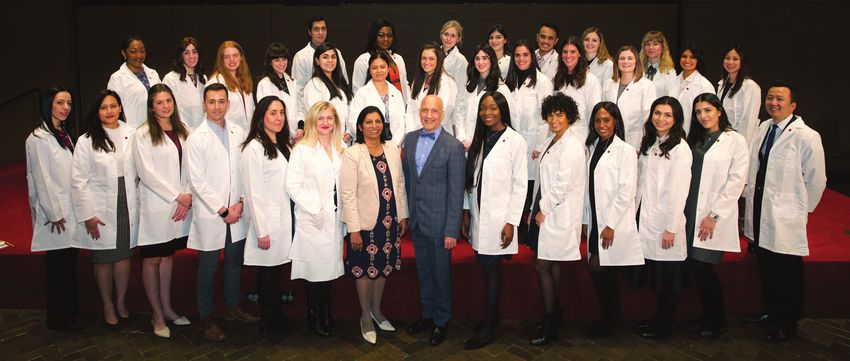
ABSN Class Spring 2019
19Program The Accelerated Bachelor of Science in Nursing (ABSN) is designed to meet the ever-
changing needs of today’s nurses. The ABSN is a fast track, blended program with start
Overview dates in the Summer and Fall semesters. The program is perfect for students committed
to earning their BSN in 15 months of full-time study. The curriculum includes a blend of
clinical and classroom education to ensure that our ABSN students are well-prepared
Length of Program: 4 semesters
for the licensing examination (NCLEX-RN) and for clinical practice. Hands-on clinical
practice is an integral part of the curriculum.
Application Open:
September 1
Student Learning Outcomes
Upon completion of the program, the graduate will be able to:
Application Close:
February 1 (Summer)
1. Achieve a liberal education by applying principles from the sciences, arts and
April 1 (Fall)
humanities to patient-centered nursing practice.
2. Apply knowledge and skills in basic organizational and systems leadership, quality
improvement and patient safety, to provide high quality health care.
3. Demonstrate scholarship for evidence-based practice by integrating best current
evidence with clinical expertise in delivering safe, quality care to diverse individuals,
families and communities.
4. Implement health care information technologies in the management of 20
quality patient care.
5. Define the current health care policy, finance and regulatory environments and
how these entities influence the nature and functioning of health care systems and
consideration for practice.
6. Demonstrate effective interpersonal communication and collaboration with
inter-professional teams to improve patient health outcomes.
7. Demonstrate health promotion and disease prevention interventions at the individual
and population levels in order to improve patient health outcomes.
8. Demonstrate professionalism and professional values that include altruism,
autonomy, human dignity, integrity, social justice and lifelong learning.
9. Practice as a baccalaureate nurse generalist with patients across the lifespan and
across the continuum while respecting the variations, complexity and resources
needed for care of patients.You can also read


