Phosphates 2021 Virtual Conference The year ahead Advances in phosphate flotation Potash market report - www.fertilizerinternational.com ...
←
→
Page content transcription
If your browser does not render page correctly, please read the page content below
Number 500 January | February 2021
www.fertilizerinternational.com
Fertilizer International
Number 500
www.fertilizerinternational.com
Phosphates 2021 Virtual Conference
The year ahead
January | February 2021
Advances in phosphate flotation
Potash market report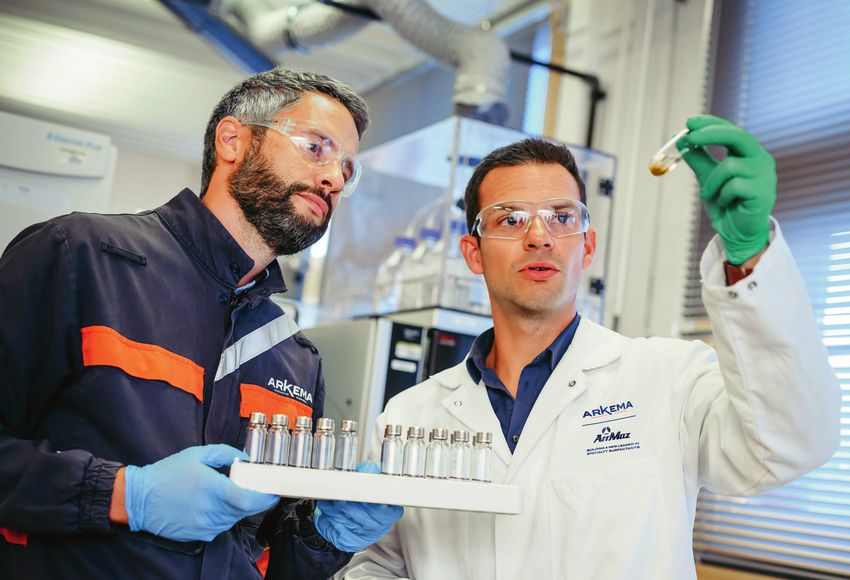
FERTILIZER COATINGS

  Laboratory testing is vital
  when it comes to measuring
  the sustainability of fertilizer
  coatings.

                                                                                                                                           PHOTO: ARKEMA-ARRMAZ
Is your fertilizer
coating sustainable?
Fertilizer coatings play an integral role in minimising the degradation of fertilizers during
transport, handling and storage. Increasingly, customers also want to know if the coatings they
buy are sustainable too. But what exactly is a sustainable fertilizer coating – and how can its
sustainability be properly defined and measured? Lucas Moore, director of coatings technology
at Arkema-ArrMaz, weighs up these thorny questions and provides some clear-cut answers.

W
            ith the world’s growing popula-      “the degree to which a process or enterprise     l   Developed to minimise waste generation.
            tion raising demand for food,        is able to be maintained or continued while
            the fertilizer industry is finding   avoiding the long-term depletion of natural      So, how can these criteria be evaluated
new ways to utilise our limited natural          resources”.                                      effectively for a fertilizer coating?
resources responsibly and sustainably. To            For products, the definition of sustain-
meet industry needs, many fertilizer coat-       ability is inextricably linked to the concept    Measuring fertilizer coating
ings manufacturers have developed new            of stewardship. This requires producers to
and innovative products that are marketed        take responsibility for their products from
                                                                                                  sustainability
as sustainable. But how can you be sure          ‘cradle-to-grave’. Stewardship encom-            At Arkema-ArrMaz, we recommend that sus-
that a fertilizer coating is truly sustainable   passes where and how a product was cre-          tainability be measured by asking critical
and isn’t just green-washed?                     ated, where and when it will end up, and         questions that check for three key criteria:
                                                 its end-of-life condition.                           Biorenewability: Are the raw materials
Defining sustainability                              Therefore, taking all of the above con-      used to formulate the coating produced
                                                 siderations into account, to be truly sustain-   or extracted from natural and renewable
According to the Oxford English Dictionary       able, fertilizer coatings ideally need to be:    feedstocks? A resource is classed as
(OED), being sustainable simply means            l Produced from biorenewable resources           ‘biorenewable’ if it can be replenished
“to be capable of enduring”. The OED also        l Designed not to bioaccumulate, i.e.            within a single human lifetime. Biorenew-
defines “environmental sustainability” as            should biodegrade                            ability can be evaluated using a standard

22         www.fertilizerinternational.com                                           Fertilizer International 500 | January - February 2021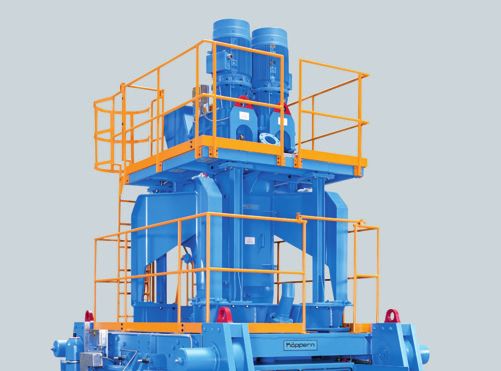
FERTILIZER COATINGS

ASTM D6866 method1. This radiocarbon test detects if the nat-
urally-occurring isotope carbon-14 (14C) is present by comparing
samples with a reference standard. Because fossil-fuel carbon
does not contain any 14C, its absence verifies that the resource
is not truly biorenewable.
    Biodegradability: How much does the coating biodegrade in
the environment? Biodegradability can be evaluated using the
OECD 301 method2. This determines biodegradation by meas-
uring the loss of carbon dioxide (CO2 respiration). Using this
method, a product is considered biodegradable if it achieves
greater than 60 percent biodegradation within a 28-day interval,
counting onwards from the day that 10 percent degradation is
first achieved.
    Waste Prevention: Does the coating help prevent or mini-
mise waste? While ensuring product coatings are biorenewable
and biodegradable are important considerations, the prevention
of product losses in the supply chain is another way in which
the fertilizer industry has become more environmentally sus-
tainable. Innovations in coatings technology have supported
industry sustainability by protecting fertilizer products, thereby
preventing or minimising the generation of waste. To be effective,
coatings need to reduce the amount of waste generated during
fertilizer handling – otherwise granules can lose their integrity
and strength and generate fugitive dust. Unless they are properly
coated, fertilizers can also agglomerate and cake in response to
changes in ambient temperature and moisture.
    Dust generation and caking both lead to significant and costly
fertilizer product losses and the unwanted generation of waste.
Also, to be considered effective and sustainable, the dust con-
trol coatings used at a fertilizer processing plant – in addition to
minimising waste – must contribute to a cleaner work environ-
ment, improve equipment efficiency, ensure worker safety, and
                                                                       Dry granulation
support the development of better quality fertilizer products for
farmers.                                                               of fertilizers
True sustainability
Once it has been established that a fertilizer coating is truly        Our technology has been recognized around the world
sustainable, based on an evaluation of the above criteria, it is       for dry granulation of MOP / SOP and NPKs. Our services
essential to determine whether the coatings also perform well –        cover pilot plant tests, basic engineering, equipment
delivering the necessary reductions in dust, caking and moisture
                                                                       supply, start-up supervision, and commissioning. Typical
absorption required. Coating technologies, such as those avail-
able in Arkema-ArrMaz’s DUSTROL® and Fluidiram® product lines,         flake capacities are in the range of 10 –130 t / h or more.
deliver on both sustainability and on performance.
   So, in your next conversation with a coatings producer, be          We have received orders for more than 90 fertilizer
sure to request dust, caking and moisture absorption data to
                                                                       compactors of latest Köppern technology since the
assess coating performance. But also remember to discuss the
above mentioned sustainability criteria, and request appropri-         year 2000. The total installed flake capacity of these plants
ate data, so you can accurately evaluate if the fertilizer coating     is exceeding 77,000,000 tpa.
offered is truly sustainable as well.                          n      Köppern – Quality made in Germany.

                                                                       • State of the art technology

References                                                             • Process technology know-how
1. ASTM D6866-20. Standard Test Methods for Determining the Bio-       • High plant availability
   based Content of Solid, Liquid, and Gaseous Samples Using Radio-    • Quick roller replacement
   carbon Analysis. ASTM International, West Conshohocken, PA, 2020,
   www.astm.org.
2. OECD Method 301. OECD Guideline For Testing Of Chemicals: Ready
                                                                                                                 www.koeppern.de
   Biodegradability. OECD, 17th July 1992.

Fertilizer International 500 | January - February 2021                                      www.fertilizerinternational.com           22
You can also read


