Pilgrims to Mecca - Y.Van Laethem Travel Clinic - CHU St Pierre
←
→
Page content transcription
If your browser does not render page correctly, please read the page content below

Pilgrims to Mecca

       Y.Van Laethem
Travel Clinic - CHU St Pierre
          Brussels

Mecca
• The Holy Place with the larger number of pilgrims
  at the same time:
  -between 2 – 3. 106 people during the Hajj :
    60% from Asia, 25% from Arabic Countries
    10 % from Africa, and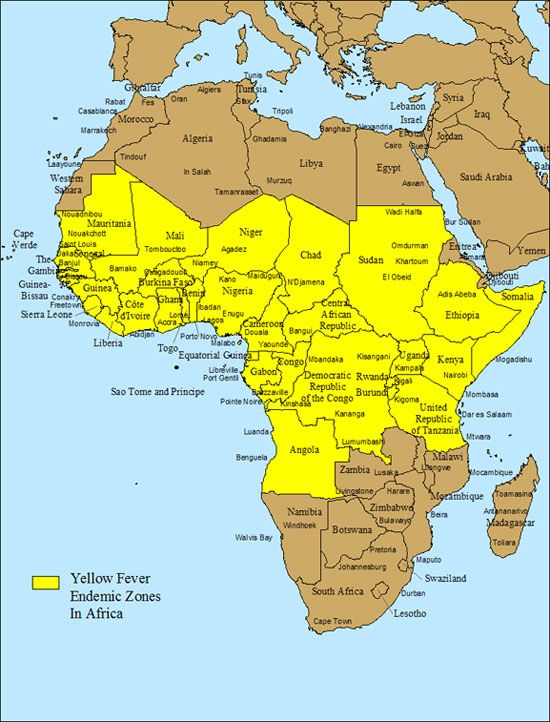
Pilgrims to Mecca
• From more than 140 countries…and:
      - Netherlands: +/- 6.000/year
      - Belgium:      +/- 3.000/year
• At Travel Clinic CHU St Pierre,
      meningo vaccination for:
         +/- 1.500 pilgrims in 2007
             1.100 pilgrims in 2008 and 2009
      ≈ 20 to 130/day, mostly during 1 month
                   after the end of ramadan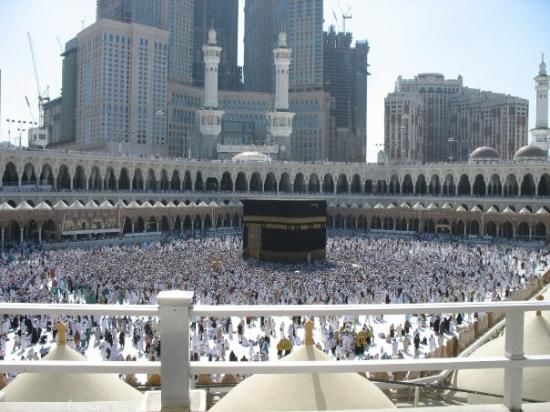
Hajj
• One of the five pillar of Islam
  -Once a year, for a period of 5 days
     during the 12 th month of
            the lunar islamic calendar
     →ever-changing seasonal dates
            (10-11 days « earlier » each year)
     →≠ environmental/epidemiological conditions
NB: Umrah : shorter pilgrimage,
             may be done at every time
Hajj
• 7 hospitals…
• 74 health-care centers…
• >10.000 specialized health care personnel
     for healthcare free of charge
For pilgrims staying in:
   - hotels and appartement( from? to 5 stars !)
   - tents (by nationality) for a few nights

Meningococcal infection
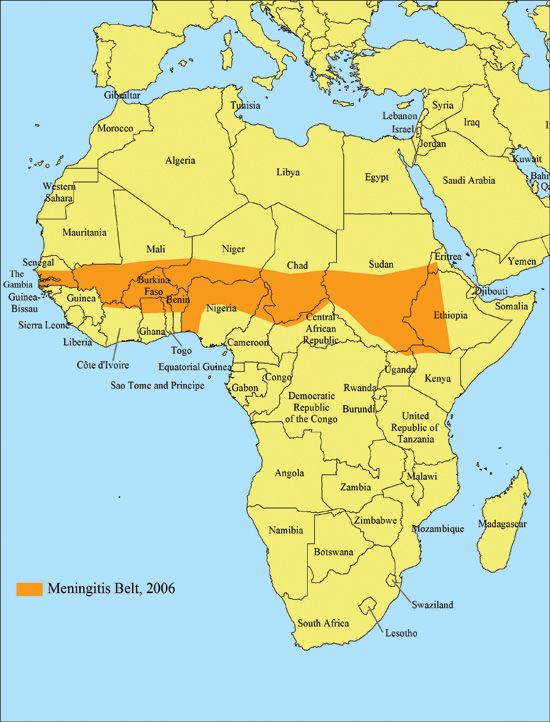
• Vaccination for pilgrims from the
  meningitis belt required since a long time.

  Several outbreaks of serogroup A disease
  following the 1987 Hajj:
  -19 cases/10.000 UK pilgrims
  - 15 secondary cases in UK
   with carriage +/- 10 %(US pilgrims)
Areas with frequent epidemics of meningococcal meningitis.
Meningococcal infection
• Vaccination for pilgrims from the
  meningitis belt required since a long time.

  Several outbreaks of serogroup A disease
  following the 1987 Hajj:
  -19 cases/10.000 UK pilgrims
  - 15 secondary cases in UK
   with carriage +/- 10 %(US pilgrims)
Meningococcal infection
• Vaccine(A and C) required since 1988
• Quadrivalent vaccine since 2001(W135 cases)
   -if older than 2 years
   -issued >10 days and < 3 years
NB: if arriving from countries of the meningitis belt,
      administration at the port of entry:
             -adults: 500 mg cipro
             -children: rifampicin tablets
             -pregnant women: cefriaxone IM
Poliomyelitis vaccination (WHO 2006)
"For those who have received ≥3 doses of OPV, it is
advisable to offer another dose of polio vaccine as a
ONCE-ONLY dose to those traveling to endemic
areas"
Certified free
of polio
Free of polio since
2000 or earlier
Poliomyelitis not
yet eradicated
(incl. imports)Wild Poliovirus Weekly Update
Poliomyelitis
• Imported from Nigeria into Saudi Arabia in 2004
• Since 2005: requirement for documented proof
       of up to date oral vaccination
          6 weeks before application for a visa
                      in < 15 y old from countries
                               where polio still occur
  + 1 dose administred to all those < 15 y at the border
• IF arriving from India, Pakistan, Afghanistan or Nigeria:
       ALL pilgrims (regardless of age,..)should receive
               -1 dose 6 weeks prior to departure
               -1 dose at the border
Influenza (pandemic)
• Vaccination mandatory IF the vaccine
is available in the country of origin
FOR those pelgrims (risk groups,…)
• IF not available:
- visa issued;responsability of the health
authorities of each country…
also responsible for educating / advising !Influenza (seasonal)
• Mandatory
-at least 2 weeks before arriving
in Saudi Arabia
IF available in the country of originYellow fever
• Required for all pilgrims
arriving from or transiting through
any country infected with yellow fever
• →For Belgium: important only if
the pilgrim is first going to
a/his subsaharian country of origin
• Valid if > 10 days and < 10 yearsYellow fever-endemic zones in Africa, 2007.
Hepatitis A
• S Arabia:High/moderate endemicity country
  …but most pilgrims coming from
           high endemicity countries !
• (Most) older pilgrims naturally protected
   →vaccination for youngers born
                 in european countries!
Geographic Distribution of Hepatitis
A Virus Infection
Anti-HAV Prevalence
High
High/Intermediate
Intermediate
Low
Very Low
Available at: http://www.cdc.gov/ncidod/diseases/hepatitis/slideset/hep_a/hep_a2.pdf.Hepatitis A
• S Arabia:High/moderate endemicity country
…but most pilgrims coming from
high endemicity countries !
• (Most) older pilgrims naturally protected
→vaccination for youngers born
in european countries!Prevalence of chronic infection with hepatitis B virus, by country, 2006
Hepatitis B
• Low risk
     (no sexual relation allowed for pilgrims)

• Mostly linked to ritual shaving
                    by non official barbers
     →either vaccinate and /or advice to :
       -be shaved by official barbers
       -use your own razor blades..!
              …Hepatitis C….
Typhoid fever
• Few data available….
• Local risk seems low for most
→ -vaccine not obviously usefull
for most pilgrims
-consider for long stays
in « poor » conditionsTyphoid fever – estimated incidence rates
High:
>0.2 pro 1000
South
Asia
West/
Central
AfricaDengue fever
• Low endemicity around Medine/Mecca
• Few available data/transparency…
→ Non official reports:
150 hospitalized in Mecca/3 months
+/- 100 cases/month in Jedda
beginning 2009Sand fly fever
• Small risk of this endemic viral disease,
especially between april and october
in periurban areas
• Same protection as for dengue:
DEET 20-30% during the dayMalaria • NO risk around Mecca-Medine-Jedda
Diarrhea
• Water from distribution systems is safe in
     major urban areas, as the Holy Places
• Remaining risk linked to local food
     but few epidemiological data …
• Risk of deshydratation, especially
                during the summer months!
  NB:importation of food is not allowed
      no cholera anymore since 1989
Diarrhea
• Water from distribution systems is safe in
major urban areas, as the Holy Places
• Remaining risk linked to local food
but few epidemiological data …
• Risk of deshydratation, especially
during the summer months!
NB:importation of food is not allowed
no cholera anymore since 1989Infections of the U/LRT
• Most frequent complain and
reason for local hospital admission…
…but nothing to do specifically…
…outside flu vaccine!Trauma
• Mostly focused on the Jamaraat sites:
occasional unfortunate crowd stampedes
(380 death in 2006…)
But may happen everywhere…Cardiovascular diseases
• Most frequent cause of death…
As in other travellers worlwide !MABROUK HADJ
You can also read


