POETS AND SCHOLARS SUMMER WRITING RETREAT - Institute for the ...
←
→
Page content transcription
If your browser does not render page correctly, please read the page content below
POETS AND SCHOLARS
        SUMMER WRITING RETREAT
                           July 13-23, 2021 (online)

                                                    We are not
                                                 asking for seats
                                                 at the table. We
                                                   are building
                                                      tables.

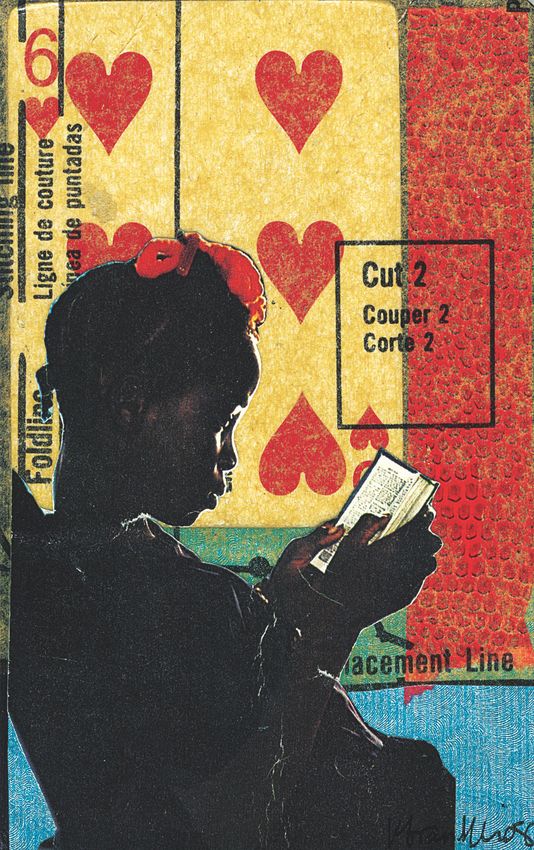
Image by Krista Franklin

             The Institute for the Study of Global Racial Justice (ISGRJ) at Rutgers
             University (Rutgers–Camden Center), with generous support from the
             Andrew W. Mellon Foundation, is pleased to announce its inaugural Poets
             and Scholars Summer Writing Retreat.
The Institute for the Study of Global Racial Justice is committed to the
creation of spaces for scholars and creative writers to be in
conversation as both an aspect of their work and for the mutual
exchange of knowledge within and throughout the university and its
surrounding communities.

Join us for ten days of presentations, talk-backs, and a radical
experiment in reimagining the traditional writing workshop as an open
forum of mutual accountability.

This inaugural writing retreat invites applications from writers of all
disciplines, genres, and backgrounds who are committed to antiracist
writing practices.

To apply as an auditor only, click here for details and to register.

We are no longer accepting applications for contributing participants.

Felicia Rose Chavez
                                    KEYNOTE SPEAKER
Felicia Rose Chavez is an award-winning educator with an MFA in Creative Nonfiction
from the University of Iowa. She is the author of The Anti-Racist Writing Workshop: How
to Decolonize the Creative Classroom and co-editor of The BreakBeat Poets Volume 4:
LatiNEXT with Willie Perdomo and Jose Olivarez. Felicia’s teaching career began in
Chicago, where she served as Program Director to Young Chicago Authors and founded
GirlSpeak, a feminist webzine for high school students. She went on to teach writing at
the University of New Mexico, where she was distinguished as the Most Innovative
Instructor of the Year, the University of Iowa, where she was distinguished as the
Outstanding Instructor of the Year, and Colorado College, where she received the
Theodore Roosevelt Collins Outstanding Faculty Award. Her creative scholarship earned
her a Ronald E. McNair Fellowship, a University of Iowa Graduate Dean’s Fellowship, a
Riley Scholar Fellowship, and a Hadley Creatives Fellowship. Originally from Albuquerque,
New Mexico, she currently serves as Creativity and Innovation Scholar-in-Residence at
Colorado College. For more information about The Anti-Racist Writing Workshop, and to
access (and add to!) a multi-genre compilation of contemporary writers of color, please
visit www.antiracistworkshop.com.
Retreat faculty

Airea D. Matthews’ first collection of
poems is the critically acclaimed
Simulacra, which received the
prestigious 2016 Yale Series of Younger
Poets Award. Matthews received a 2020
Pew Fellowship, a 2016 Rona Jaffe
Foundation Writers’ Award, and was
awarded the Louis Untermeyer
Scholarship in Poetry from the 2016
Bread Loaf Writers’ Conference.
Matthews earned her MFA from the
Helen Zell Writers’ Program at the
University of Michigan. She is an
assistant professor at Bryn Mawr
College where she directs the poetry
program. Airea is currently training to
                                           Airea Dee Matthews
be a yoga teacher.

                                          Gregory Pardlo's collection Digest (Four
                                          Way Books) won the 2015 Pulitzer Prize
                                          for Poetry. Other honors include
                                          fellowships from the New York Public
                                          Library’s Cullman Center, the
                                          Guggenheim Foundation, the New York
                                          Foundation for the Arts, and the
                                          National Endowment for the Arts for
                                          translation. His first poetry collection
                                          Totem won the APR/Honickman Prize in
                                          2007. He is Poetry Editor of Virginia
                                          Quarterly Review and Director of the
                                          MFA program at Rutgers University-
                                          Camden. His most recent book is Air
                                          Traffic, a memoir in essays. He lives in
    gregory pardlo                        Brooklyn where he cooks for his wife,
                                          daughters, puppy, and rabbit.
Presenters

         Mark doty                          damaris b. hill                jonah mixon-webster
Mark Doty ten books of poetry       DaMaris B. Hill is the author of    Jonah Mixon-Webster is a poet.
include FIRE TO FIRE: New and       A Bound Woman Is a Dangerous        His debut collection,
Selected Poems, which won           Thing: The Incarceration of         Stereo(TYPE), received the PEN
the National Book Award for         African American Women from         America/Joyce Osterweil
Poetry in 2008. He has also         Harriet Tubman to Sandra            Award and was a finalist for
published five books of             Bland, The Fluid Boundaries of      the Lambda Literary Award for
nonfiction prose, most recently     Suffrage and Jim Crow: Staking      Gay Poetry. He is the recipient
WHAT IS THE GRASS: Walt             Claims in the American              of a Windham Campbell Prize
Whitman in My Life (W.W.            Heartland, \Vi-zə-bəl\ \Teks-       for Poetry and fellowships from
Norton, 2020). A Distinguished      chərs\(Visible Textures). Hill is   Vermont Studio Center, Center
professor at Rutgers, he lives      an Associate Professor of           for African American Poetry
in New York City.                   Creative Writing at the             and Poetics, and the PEN
                                    University of Kentucky.             Writing for Justice Program.

        Photo by Michael Angelo              Photo by Mark Rosall

       laura raicovich                       Patrick rosal                        rachel zolf
 Laura Raicovich is a writer and     Patrick Rosal is an                  Rachel Zolf has published five
 curator who published Culture       interdisciplinary artist, poet,      books of poetry, with a
 Strike: Art and Museums in an       and awardee of the John Simon        selected poetry, Social Poesis,
 Age of Protest in June 2021. She    Guggenheim Foundation, the           released in 2019. Zolf’s No
 recently served as Interim          NEA, and the Fulbright               One’s Witness: A Monstrous
 Director of the Leslie Lohman       Research Program. He has             Poetics appears from Duke
 Museum of Art, and previously       performed and read his work          University Press in Fall 2021.
 was Director of the Queens          widely across four continents        They live in Philadelphia and
 Museum, and a Rockefeller           and at hundreds of venues            are an Artist in Residence at
 Foundation Fellow at the            throughout the United States.        the Center for Programs in
 Bellagio Center.                    The Last Thing: New and              Contemporary Writing at the
                                     Selected Poems is forthcoming        University of Pennsylvania.
                                     in 2021.
Steering Comittee

                                                   Photo by Lola Flash

Mark doty
                     Adam Fitzgerald             Naomi jackson

   Akil Kumarasamy                     Airea Dee Matthews

  Gregory Pardlo                         david ramirez
What is an anti-racist workshop? How does it differ from a traditional writing workshop?
We borrow the model of the anti-racist workshop that strengthens writers of color through
“innovative reading, writing, workshop, critique, and assessment strategies,” from Felicia
Rose Chavez’s book, The Anti-Racist Writing Workshop: How to Decolonize the Creative
Classroom (Haymarket Books, 2021). The anti-racist workshop asks writers to interrogate
the positions from which they are speaking (both as writers and as critics in response to
peers’ writings), and not to presume objectivity. In contrast to traditional writing
workshops whose critiques respond to only what is “on the page,” the anti-racist workshop
takes into account multiple ways of knowing and acknowledges the the social and cultural
context that shapes the act of creating and sharing literature. This workshop also explores
ways of making legible the contexts of which the writer may have been unaware in the
process of creation. The anti-racist workshop centers marginalized identities and
acknowledges that “craft” is itself a cultural construct. We envision this workshop as an
open learning community.

Can only poets apply or attend?
No. Program participants are drawn from all disciplinary backgrounds throughout the
humanities and beyond, including but not limited to writers of poetry, fiction, and
nonfiction, and literary scholars.

This program is named Poets & Scholars Summer Writing Retreat. How do scholars fit in?
This program seeks to resist the boundaries between creative and critical practice. The
retreat will encourage mutual exchange and transdisciplinarity among poets and scholars.
The name of the program acknowledges the truth that everyone who is engaged in crafting
language is concerned with the language of craft. “Theory” as bell hooks tells us, “is
liberatory practice.”
What is the format of the writing retreat?
The Poets & Scholars Summer Writing Retreat will meet virtually for ten days from July 13-
23, 2021. The workshops will be augmented by lectures that offer innovative and
interdisciplinary frameworks to inspire new conversations around writing and racial
justice. Each lecture will be followed by a moderated talk-back with featured respondents
and Q&A.

I missed the application deadline. May I still participate?
Yes. In addition to presenters and our participant cohort, groups of writers, individual
writers, artists, thinkers, and makers are invited to join us as registered auditors. Auditors
may attend all workshops and lectures, and may offer questions and comment, movie
theater-style, through the moderated chat function.

Do I have to pay to register or join the events?
No. All of the programs are free.

How do I register for the events?
Click here to register to the events as an auditor

Where can I find the Zoom link?
Registered participants and auditors will be given the link in advance of the retreat.

Who is sponsoring this program? Where can I find out more information about the Institute
for the Study of Global Racial Justice?
The Poets & Scholars Summer Writing Retreat is a collaborative effort of the creative
writing programs throughout the Rutgers University community, including Rutgers-
Camden, Rutgers-Newark, and Rutgers-New Brunswick. The program is underwritten by a
grant from the Andrew W. Mellon Foundation. For more information about the Institute for
the Study of Global Racial Justice, please click here.
You can also read


