Portsmouth's Clean Air Zone 2021
←
→
Page content transcription
If your browser does not render page correctly, please read the page content below
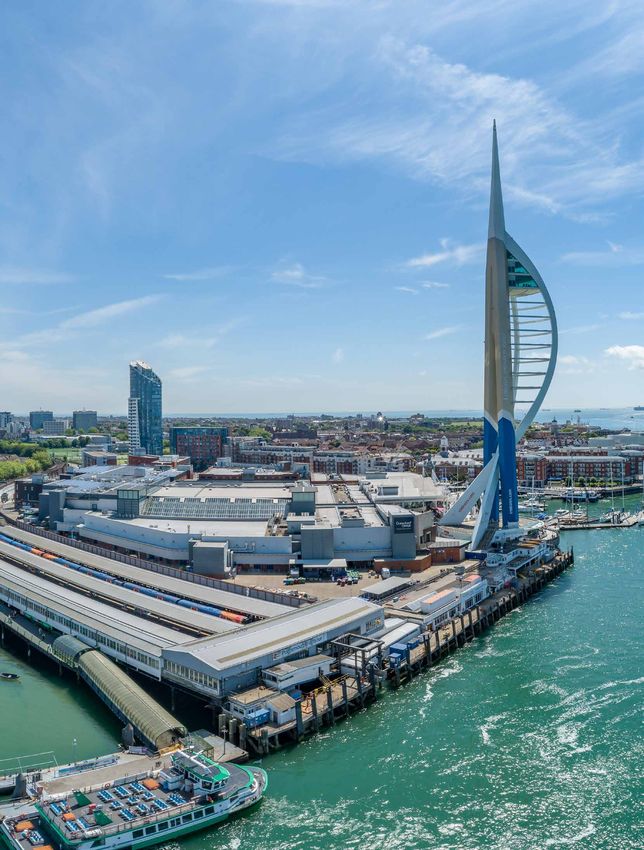
Portsmouth’s
Clean Air Zone
2021

Clean Air Zone 2021   1
Government has issued
ministerial directions,
requiring over 60 cities,
to tackle air pollution in
the shortest possible time.

     Air pollution             We must take action
      in the UK                Air pollution is a global public health risk; more harmful than
                               passive smoking.
                               Long-term exposure is linked to reduced life expectancy, increased
                               cardiovascular disease, poor lung function and mental health issues.
                               Reducing exposure to air pollution is now a major focus for cities
                               across the world.
      4th greatest threat
                               In the UK, Leeds and Birmingham are set to be the first cities to
        to public health
                               introduce a Clean Air Zone (CAZ). Others will follow as government has
                               issued ministerial directions to over 60 cities requiring the development
                               of plans to tackle air pollution in the shortest time possible.
             RIP
                               Who does air pollution affect the most?
    28,000 people die each
      year across the UK

                               Pregnant women                  Elderly                    Children

      The impacts are felt
    throughout your lifetime
                                          People with heart               Residents living
                                          and lung problems               near main roads

2                                                                                   Clean Air Zone 2021
Air quality and coronavirus
pandemic
Emerging evidence from around the world has reported links
between air pollution and increased likelihood of catching the
virus and increased severity of the resulting infection.
The Committee on the Medical Effects of Air Pollutants (COMEAP)
has noted that, although this evidence is currently inconclusive,
knowledge of the impacts of air pollution on health suggests that this is
likely. Those who have had a serious coronavirus infection can develop
scarring on the lungs which can cause permanent damage to lung
function, making breathing polluted air even more dangerous. Much of
the evidence on the effects of air pollution on people who have or have
had coronavirus is still being developed.1

Impact of lockdown on air
quality
During government guidance to stay at home in response to the
coronavirus outbreak, there was a reduction in the number of
vehicles on Portsmouth roads and a significant increase in the
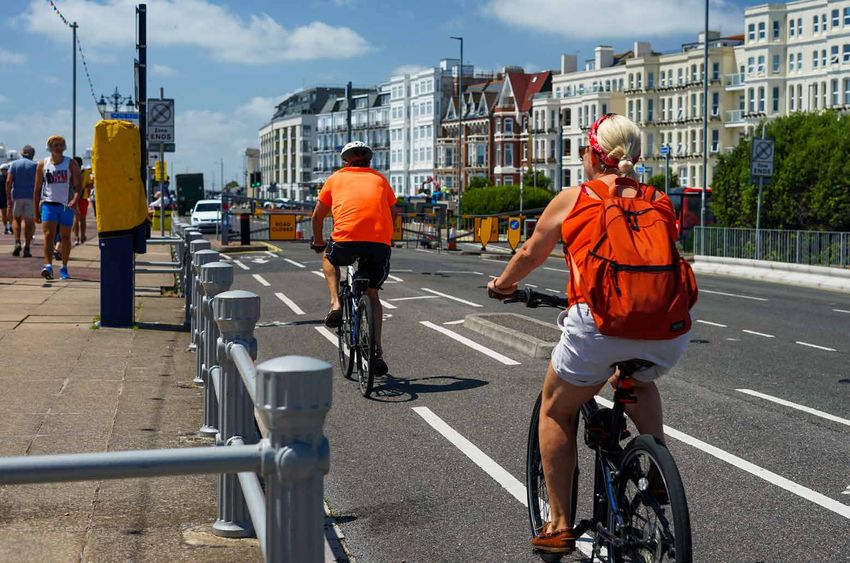
number of people walking and cycling.
During this time, we witnessed a reduction in Nitrogen Dioxide
alongside this change in travel behaviour. This shows the direct impact
vehicles have on the air quality in our city. If we drive less and walk and
cycle more we will have cleaner air.
But, it is not yet clear whether these changes in travel behaviour will
continue as lockdown restrictions continue to be eased. It is also
unclear what the impact of the lockdown will have on economic activity,
including whether people are able to afford to replace their old polluting
vehicles with newer ones.
With such uncertainty about the longer term impacts the lockdown will
have on travel behaviour and the economy, we must continue with the
plans to introduce a charging Clean Air Zone in Portsmouth to ensure
that we achieve legal limits for nitrogen dioxide by the end of 2022.

                                                                                   For everyone’s
                                                                                  health, we must
                                                                               achieve legal limits
                                                                              for nitrogen dioxide
                                                                                  by end of 2022.
1. Source: Committee on the Medical Effects of Air Pollution (COMEAP).

Clean Air Zone 2021                                                                               3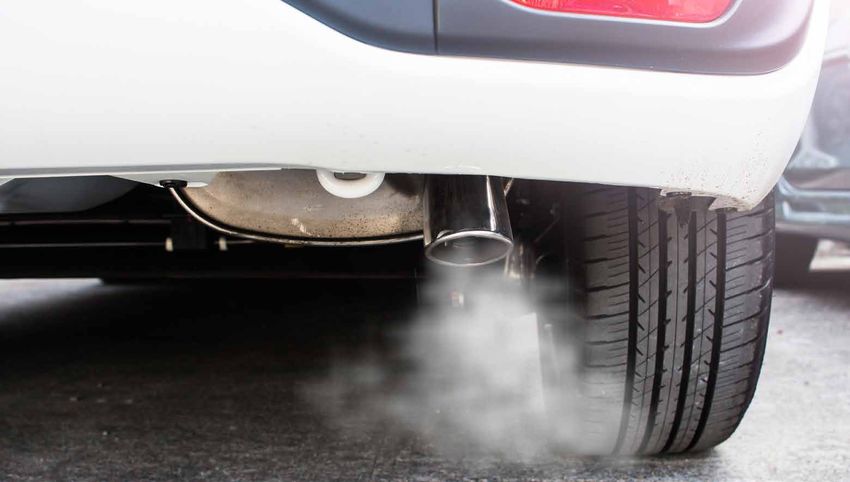
Tackling air pollution
in Portsmouth

                     Portsmouth City Council is addressing the challenge of climate
                     change head on. That’s why a climate emergency was declared in
                     March 2019, and why investments are being made into schemes
                     and projects, large and small, that can make a difference to our
                     city and our planet.
                     In support of addressing the specific challenge of air pollution in
                     Portsmouth, the draft Local Transport Plan focuses on changes we
                     can make within the city to create cleaner, greener safer travel in
                     Portsmouth. This is supported by the draft Local Cycling and Walking
                     Infrastructure Plan that aims to create continuous cycling and walking
                     routes that more people want to use for travelling around the city.
We have secured      We are committed to actively seeking funding to support a wide range
funding from         of other activities that will improve air quality by enabling people to
                     travel more sustainably. These activities include improving cycling and
government to
                     walking routes, rapid transit that increases Portsmouth’s connectivity
support those most   with the rest of Hampshire via public transport, and encouraging young
impacted by the      people to cycle, scoot and walk to school.
CAZ charges          A wide variety of activities will contribute to cleaner air in Portsmouth and
                     one of these will be the Clean Air Zone. This is government’s preferred
                     approach to addressing air pollution in the shortest possible time.
                     Portsmouth City Council was issued with a ministerial direction from the
                     government on 4 October 2018. We were told to develop a plan to
                     achieve compliance with legal limits for nitrogen dioxide concentrations
                     in the shortest possible time. A total of 61 local authorities have been
                     issued with ministerial directions from government, including Birmingham,
                     Leeds, Sheffield, Bristol, Bath and Manchester who, like Portsmouth, have
                     also been instructed by government to implement charging Clean Air Zones.
                     In Portsmouth the technical work undertaken shows that a package
                     of non-charging measures, even with the natural reduction in
                     polluting vehicles over time, will still not be enough to achieve the
                     level of improvement in air quality and therefore government requires
                     us to implement a Clean Air Zone. We have secured funding from
                     government to support those most impacted by the CAZ charges and
                     for the implementation of the zone.

4                                                                            Clean Air Zone 2021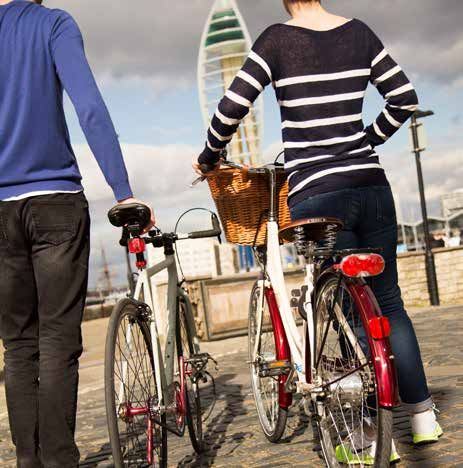
Air pollution in Portsmouth                                                 Where do NO2
Over recent years air pollution has been monitored in many                  and particulate
locations across the city to build a picture of what is actually            matter come
happening.                                                                  from?
Many air pollutants are invisible and are only revealed by scientific       The majority of NO2 gets
study. The data, for nitrogen dioxide (NO2) and particulate matter          into the air when engines
(PM2.5 and PM10), is annually assessed to see whether the local air         burn fuel, especially
quality monitoring requirements set by government are met.                  older polluting vehicles.
                                                                            Newer vehicle engines
Travel in the city is a major contributor to air pollution and the type
                                                                            have been designed
of transport we choose for our journeys can help to improve our air
                                                                            to produce less NO2.
quality. The council is making transport improvements to the city
                                                                            Particulate matter comes
including safer cycling routes and facilities to make it easier to choose
                                                                            from many sources such
this way of travelling, improving public transport connectivity with
                                                                            as brake and tyre wear,
the wider region, and providing electric charging points for residents
                                                                            construction sites, sea
choosing greener vehicles. We are improving the options for travel in
                                                                            salt and even sand blown
Portsmouth and together we can choose a greener, cleaner way of
                                                                            in from the Sahara.
travelling for cleaner air in Portsmouth.
Despite the work that has been completed to reduce air pollution,
data collected from previous years and modelling of future years has
identified two locations in Portsmouth where levels of nitrogen dioxide
are likely to continue to be above legal limits unless strong action is
taken quickly.

Clean Air Zone 2021                                                                                     5
The journey to cleaner air
Oct 2019
Outline plan was                                                     Summer 2020
submitted to government                                              Temporary walking and
                              Summer 2020                            cycling measures in
                              Bus retrofits completed                response to the pandemic

                                            15 July to
            Mar 2020                      28 Aug 2020
            Government approval
                                          Clean Air Zone
            of the outline plan
                                      public consultation

                              Many of us have experienced the cleaner air during lockdown.
                              This has been achieved by most vehicles not being on the road,
                              however we realise that keeping the low level of vehicle use is not
                              realistic.
                              Change takes time, and due to our reliance on vehicles, creating cleaner
                              air is no exception. However, if everyone makes even the smallest
                              change we can get there sooner. The route map to cleaner air shows
                              some of the things we are doing including key milestones for the Clean
                              Air Zone. The exact timings are all dependent on Government guidance
                              during the pandemic and funding being available for future plans.

                              Designing the Clean Air Zone
                              Consultants Atkins, Aecom, and Systra have carried out detailed
                              modelling to refine the most appropriate approach for Portsmouth
                              which was proposed to the government in 2019 and was approved in
                              March 2020. Since then, activities to develop our plans for the Clean
                              Air Zone have continued where possible, but some activities have been
At present there are          paused in line with government restrictions due to the coronavirus
                              pandemic. However, the council still has a legal duty to comply with
no plans to charge            the requirements of the Ministerial Directions which have been issued
private cars or vans          to the council under Section 85(5) of the Environment Act 1995.
from entering the             Therefore we must make improvements to air pollution in the city in the
CAZ. However,                 shortest possible time or face legal action and possible multi-million
                              pound fines.
government has
suggested vans                The types of vehicles to be charged are categorised by government
                              into classes (see page 11 for more information) and when identifying
could be added.
6                                                                                 Clean Air Zone 2021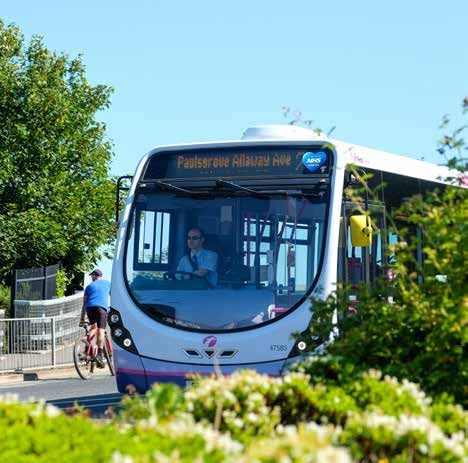
Summer 2021
                                  Zone cameras and signage installed
                                  and Clean Air Fund distributed

                                                                                   Autumn 2022
                                                                                   Target date for
     Spring 2021                                                                   compliance of
       Government
                                                   Autumn 2021                     pollution hotspots
                                              Zone charging starts
    approval for full
 clean air zone plan

    Autumn
    2020                                                                                    2023
    Potential                     Winter 2020                                               Continued
    E-scooter                     Full Clean Air Zone                                       engagement
    hire trial                    plan submitted to                                         and support
                                  government                                                for ongoing
                                                                                            improvement

the appropriate class to implement, they require the class to achieve
compliance with legal limits for nitrogen dioxide in the shortest
possible time. A secondary consideration is delivering value for
money and ensuring that particular groups of stakeholders will not be            Class B Charging
disproportionately affected. Modelling demonstrated that Classes B to
D are all likely to achieve compliance with required air pollution levels in
                                                                               Clean Air Zone was
2022. Therefore a Class B charging Clean Air Zone was recommended                recommended to
to government as it also impacts fewer groups of vehicle owners                  government as it
compared to a Class C or D. Government approved this approach in               also impacts fewer
their latest ministerial direction issued to PCC in March 2020.
                                                                                 groups of vehicle
As well as the class of zone the council had to recommend the size
of the zone, again working to achieve compliance as directed by
                                                                                          owners.
government. This has been a complicated challenge to investigate as
Portsmouth is unique, being an island city with busy shipping ports,
only three routes into and out of the city, and one of only three ferry
ports to the Isle of Wight. The detailed modelling resulted in the zone
being refined from the whole of the city to the south west as this
is likely to deliver the required improvements to air pollution whilst
reducing the impact on some local businesses.
At present there are no plans to charge private cars or vans (light goods
vehicles) from entering the CAZ. However, due to the uncertainties
that the coronavirus pandemic has brought we want to be sure that we
have sought views from all drivers. We have therefore asked light goods
vehicle owners some additional questions in the consultation so that
we can understand how to help these drivers if government change
their decision about the class of charging CAZ needed in Portsmouth.

Clean Air Zone 2021                                                                                     7
Portsmouth’s Clean Air Zone
                                                                                                                 The charging Clean Air Zone will result in a daily charge being
                                                                                                                 issued to the most polluting vehicles for driving in the zone –
                                                                                                                 these vehicles are referred to as ‘non-compliant’ vehicles.

                                                                                                                                                                                              © Crown Copyright and database right 2013. Ordnance Survey licence number 100019671.
                                                                                                                                                 M275
                                                                      M275

                                                                          A3

                                                                                                                                                     A3
                                                                               Kingston Road

                                                             Commercial Road

               Historic
              Dockyard
                                                       Cascades
                                                                               Fratton Road

                                               Alfred Road
                                                             Portsmouth
                                                             & Southsea

                          Portsmouth Harbour
                                                                                          Fratton
                     Gunwharf
                      Quays                         University of
                                                    Portsmouth
      Wightlink
    Ferry terminal

                                                                                                                                                                  Kingston Road

                                                                                                                                        Commercial Road

                                                                                   Historic
                                                                                  Dockyard
                                                                                                                                   Cascades
                                                                                                                                                                   Fratton Road

                                                                                                                          Alfred Road
                                                                                                                                        Portsmouth
                                                                                                                                        & Southsea

                                                                                                     Portsmouth Harbour
                                                                                                                                                                               Fratton
                                                                                                    Gunwharf
                                                                                                     Quays                      University of
                                                                                                                                Portsmouth
      Wightlink
    Ferry terminal

               Air pollution
               hot spots
               Proposed Clean
               Air Zone area

                                                                                                                 Once the zone is up and running, people will be able to go online, or call
                                                                                                                 to pay for their non-compliant vehicle to travel within the area. Cameras
                                                                                                                 will be located on roads to enforce the charge. The camera’s only role
                                                                                                                 is to check vehicles. Signage will also go up warning you the zone is
                                                                                                                 ahead and when you have entered it. This will be similar to that used in
                                                                                                                 London for the Low Emissions Zones.

8                                                                                                                                                                      Clean Air Zone 2021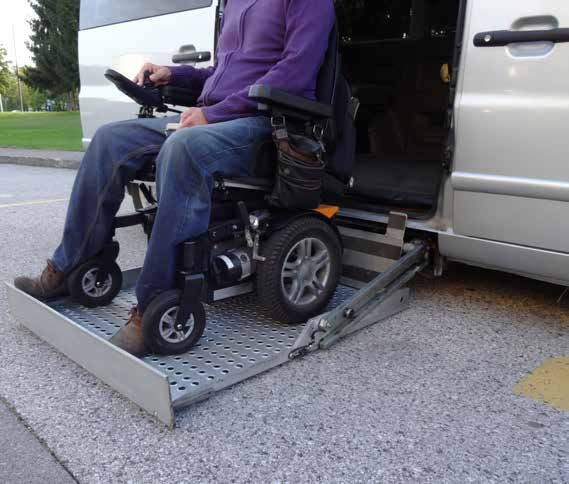
For the Portsmouth charging CAZ, non-compliant vehicles are HGVs,
buses and coaches, taxis and private hire vehicles that:
• Do not meet Euro 6 emissions standards (so are Euro 5 or older) if
  they are diesel
• Do not meet Euro 4 emissions standards (so are Euro 3 are older) if
  they are petrol
If you’re not sure what Euro standard your vehicle is please check your
vehicle log book or contact your vehicle manufacturer directly.

Charged vehicle details
Vehicle type               Euro Category / Type Approval                                       Euro standard
                            • M3 (GVW over 5000 kg and more than 8 seats in addition            Euro 6
             Bus
                              to the driver)

             Coach

                            • N2 (GVW over 3500 kg)                                             Euro 6
                   HGV
                            • N3 (GVW over 5000kg)

                            • Taxi / PHV vehicle                                                Euro 6 (diesel)
                            • Minibus - M2 (GVW not exceeding 5000 kg, and more than            Euro 4 (petrol)
 Taxi and private hire
                              8 seats in addition to the driver)
                            • Passenger vehicle with up to 8 seats in addition to the driver

 *If you drive a motor caravan please look to your vehicle logbook to find your Euro Category (elsewhere
 referred to as ‘type approval’), alternatively this information may be requested from the manufacturer of
 your vehicle. Please then use this information to identify under which vehicle type you will be charged in
 the table above, if appropriate. e.g. if Euro Category / Type Approval is identified as ‘N2’ a £50 charge will
 be applied.
 *In some instances your vehicle may not have a Euro Category / Type Approval assigned by the
 manufacturer and in such cases your vehicle will be charged if it has similar characteristics to those
 which are due to be charge.

Clean Air Zone 2021                                                                                               9
The charge
     The charge needs to be a deterrent to those entering the zone with
     non-compliant vehicles. However, there is a balance to be struck which
     ensures businesses can continue to provide services to the area and
     travel through the zone to the Isle of Wight.
     The charges for travelling within the zone will be issued automatically
     and you will only be charged once per day no matter how many trips
     into the zone you make.

                               on-compliant HGVs,
                              N                                     £50
                              buses and coaches                     per day

                               on-compliant taxis and
                              N                                     £10
                              private hire vehicles                 per day

     Vehicle exemptions
     There are some specialist vehicles that are very expensive to replace
     due to their specialist nature and therefore it may not be appropriate to
     charge them to travel in the zone. Some groups of specialist vehicles
     are already exempt as set out by government. These include (but are
     not limited to) disabled passenger vehicles registered with a disabled
     tax class, military vehicles and vehicles retrofitted to Euro 6 standard.
     The table on page 11 illustrates the charged vehicle categories.

     Cleaner greener travel
     We want to make it easier for more people to leave their car at home
     more often, and take the bus, catch the train, cycle and walk. All of
     these options are much healthier for us too.
     Research has shown that those travelling in cars can breathe in more
     air pollution than when travelling in other ways.

10                                                        Clean Air Zone 2021
Take action For the latest news on
cleaner air
We all have a part to play in improving the air quality in the city. Sign up for our email updates
The coronavirus lockdown has shown us that it is possible to by visiting portsmouth.gov.uk/
reduce air pollution in Portsmouth by reducing the number of cleanerair
vehicles on our roads. @cleanerairportsmouth
Here are some suggestions for changes that you could make to your
daily habits to keep the air cleaner:
Think about whether you
need to make the journey
in a car
Lockdown has helped many of us to find the great
walking and cycling routes that are available around
the city to get you from A to B.
Avoid excessive idling of
your car
Switch your engine off when you’re stationary for a
minute or so. The easiest place to do this is at traffic
lights. Don’t leave your vehicle idling outside your
home or schools.
When you need to change
your vehicle, think about a Change takes
hybrid or electric car time, and due to
You could start by taking one for a test drive. our reliance on
Check the EV charge point locations at
www.portsmouth.gov.uk/evcharging
vehicles, creating
cleaner air is no
exception. However,
if everyone makes
even the smallest
change we can get
there sooner.
Clean Air Zone 2021 11Together we make a difference
The charging CAZ is only one Since the Air Quality Strategy was created, the council
small part of the work we are has taken action to address the air quality issue in the
undertaking to tackle air pollution city, seeking funding from a variety of sources to help
and climate change in the city. you make cleaner green travel choices.
Over 70 electric vehicle 105 of the most polluting Net zero carbon emission
charge points in residential buses retrofitted to reduce target for the city by 2030
streets by the end of 2021 their emissions by end of 2020
Over 1,200 school
Target to become one of the children have taken part Awarded the TRANStech
first zero emission ports in in our ‘Stomp for Stamps’ award for e-mobility
the UK by 2050 sustainable travel challenge progress
Contact us
General cleaner air enquiries Clean Air Zone enquiries Media enquiries
cleanerair@portsmouthcc.gov.uk cazhelpdesk@portsmouthcc.gov.uk medicacom@portsmouthcc.gov.uk
You can get this information in large
print, Braille, audio or in another
äà
å ã language by calling 023 9261 6708
Produced by: marketing@portsmouthcc.gov.uk • Published: February 2021 • Ref: 190.14
12 Clean Air Zone 2021
www.portsmouth.gov.ukYou can also read


