Positive Change in Challenging Times: How Spice Time Credits are creating system change - Tempo
←
→
Page content transcription
If your browser does not render page correctly, please read the page content below

Positive Change in Challenging Times: How Spice Time Credits are creating system change
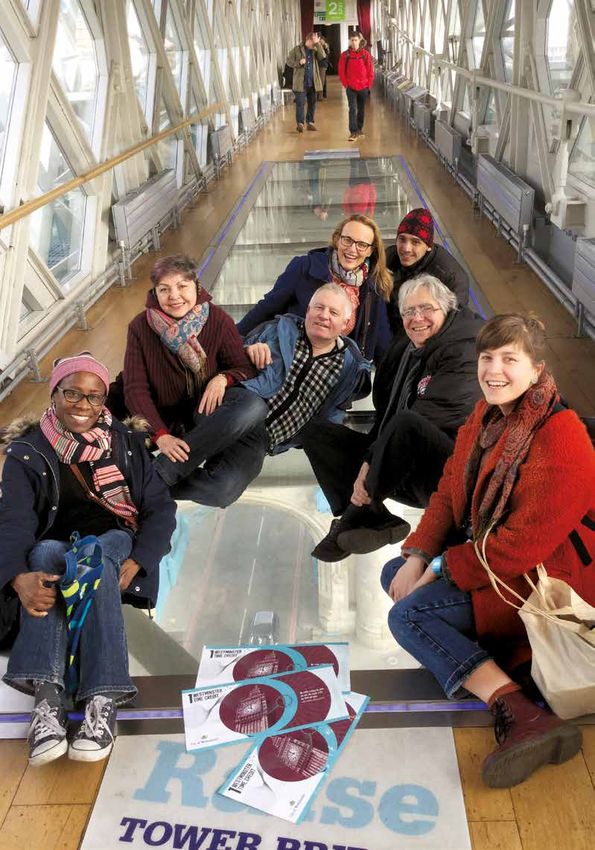
Acknowledgments

We would like to thank our staff and everyone who
has contributed to this report, especially our partners,
and members across England and Wales, who are
using Time Credits in their work to widen engagement
and collaborate. We are also grateful for the time
and support of Alice Evans from Lankelly Chase,
Geoff Mulgan from Nesta, David Boyle, our evaluation
team at Apteligen, and our Trustees.

Contents

Foreword                                   2
Introduction                               4
What we mean by system change              6
Creating system change with Time Credits   7
Enabling change with Time Credits          8
Making it real: Case studies of change     10
Conclusions                                16
About Spice                                17

                                                1
Foreword
Geoff Mulgan,
Chief Executive, Nesta
Spice Time Credits are a window into a possible future.
The model is practical, not theoretical. It’s shown its
usefulness in many places. And it has now reached a
point where it deserves to be much more widely known.
Community currencies have been with us for decades,
even centuries. They are reminders that there is no
god-given law which states that only governments
or central banks can create monies (even though they
do reserve themselves unique powers over what counts
as a money). Throughout history different kinds of
money have been created, sometimes by communities,
sometimes by companies and sometimes by local
governments. Their aim has been to connect different
kinds of supply – of time, work or things – to otherwise
unmet demands or needs.
There are now thousands of examples globally.        Spice is a unique, and
Many have thrived when the mainstream
economy contracted, as happened in Argentina
                                                     particularly important,
in the early 2000s or Greece in this decade.         addition to the picture
But there are also many examples in countries        of fertile experiment
like Germany where they have become an
expression of community spirit.
                                                     across the world.
Some of these currencies are, like Spice,          Spice is a unique, and particularly important,
explicitly about time. They allow us to exchange   addition to the picture of fertile experiment
hours of our time with others. At their best       across the world. Like many other
they work by formally valuing things that the      complementary currencies it is grounded
mainstream economy finds hard to understand.       in local communities and institutions.
That might be the time and skill to care for       But the model has an unusual potential to
someone; to cook; or to fix things.                spread and scale – and has already proven
                                                   that through the tens of thousands of people
                                                   already reached, and the well over a thousand
                                                   organisations that are partners. From quiet
                                                   beginnings in the Welsh valleys Spice has
                                                   also shown that the model can be effective
                                                   in addressing many different types of need,
                                                   from eldercare and schools to drugs and
                                                   alcohol misuse.

2
Models like Spice matter because they                 The potential now is to take these models to a      Geoff took over as
address head on what is perhaps the worst             greater scale – to make them part of everyday       CEO of Nesta in 2011.
                                                                                                          He is a former director
feature of the mainstream economy: that it            life, an obvious common sense, and perhaps          of the Government’s
treats as valueless people who obviously              in time a household name.                           Strategy Unit and head
have use and value. At a macro scale that                                                                 of policy in the Prime
failure translates into millions left unemployed                                                          Minister’s office. He was
or underemployed. At a micro scale it means             We sometimes think of                             the first Chief Executive
                                                                                                          of the Young Foundation
that many communities simultaneously have               citizenship as being about                        and the first director and
unmet needs and underused capacities. Many                                                                co-founder of the think-
of our social ills have their roots in this kind of
                                                        votes and rights. But it’s also                   tank Demos. He is a visiting
unnecessary uselessness, because people                 about what we give, and about                     professor at LSE, UCL and
                                                                                                          Melbourne University and
come to internalise the idea that the system’s          being recognised for what we                      advisor to governments
implicit message is that they have nothing                                                                around the world.
valuable to offer.
                                                        can contribute not just what we
                                                        take. Spice helps to remind us
We sometimes think of citizenship as being
about votes and rights. But it’s also about             of the reciprocity that always
what we give, and about being recognised                holds communities together.
for what we can contribute not just what we
take. Spice helps to remind us of the reciprocity     Making that happen will depend on many new
that always holds communities together.               partners in civil society and in local government
I have had some involvement in complementary          and the health service. But I hope that national
currencies over many years, including with            government and policy can play their part
earlier generations of Local Exchange Trading         too in achieving the kinds of system change
systems and Timebanks. But I was excited              described in this document. The really big
when I first heard about Spice in south Wales         prize will be to replicate some of what happens
because it was immediately clear that the             with money – so that, for example, we could
model they were developing had the potential          pay some of our local taxes in Time Credits
to solve some of the weaknesses of others –           and get partly paid in Time Credits too. If that
in particular their tendency to work only on          were to happen we could start to see a very
a very small scale.                                   different kind of economy, more human and
                                                      more relational.
                                                      That vision may be some way off. But Spice
                                                      can help us make progress towards it and
                                                      achieve a huge amount along the way.

                                                                                                                                    3
Introduction

Spice Time Credits are an unique innovation, proven to
create a wide range of tangible outcomes for individuals
and systems. To date, over 25,000 citizens have earned
Time Credits and approximately 450,000 Time Credits
have been issued across England and Wales. Spice is
working in partnership with 1200 organisations and
services across the private, public and voluntary sectors
to create tangible system change in many settings.

This report explains the impact of Time Credits      System change is a process and not an end in
on systems and how they can support the              itself. There are many approaches and definitions
sustainability of public services and communities.   that can often be too complex and academic
Taking a system-level view is enabling us to         for practical use. For us it is about trying to
create a shared framework to tackle complex          understand the overall changes in systems of
social issues at their root causes and across        many sizes, when individuals and organisations
organisational silos.                                commit to working with each other in new ways
                                                     across traditional boundaries. We believe there are
We are living in particularly challenging times,
                                                     five fundamentals that underpin how we work with
where old certainties on funding and how we
                                                     partners and communities, and which have enabled
respond to need no longer seem so dependable.
                                                     us to support and generate system change:
Inequality, poverty, reduced public sector
funding in a time of rising demand and civic         • Working within the existing system
disengagement are but a few issues that
                                                     • Valuing people and their time equally
require us to collaborate institutionally and
with citizens, unlocking hidden assets and           • Facilitating partnership working
new collective solutions.                              across boundaries
                                                     • Engaging the many
    Fundamentally, for us system                     • Changing attitudes and building new skills
    change is driven by genuine
                                                     Furthermore, working with Apteligen, our
    collaboration between citizens                   independent evaluators, we have learned much
    and organisations working                        about the change process specifically linked
                                                     to Time Credits as a tool. This interconnected
    towards common goals
                                                     process is the practical heart of our work
                                                     and can be summarised as follows:
Independent evaluation over several years
has proven the significant impact of the Spice       Enabling organisational improvement
model on these and other areas. This report          and capacity
captures how this is achieved and what we’ve         Working with individuals to
learned in the process. We will explain how          realise their assets
Time Credits are supporting complex change
and use case studies and our latest evaluation       Enabling community and sharing power
data to show how this change is manifested           Fundamentally for us, system change is driven
in a diversity of settings creating a range          by genuine collaboration between citizens and
of outcomes and supporting savings and               organisations working towards common goals.
sustainability of services.                          This leads to positive knock-on effects on
                                                     the wider community, further driving the
                                                     change process.
4
Spice evaluates the impact of its programmes across
England and Wales annually in partnership with
independent evaluators Apteligen.
In 2016, more than 1000 individuals and organisations
reported on their experience of Time Credits and
the impact they had seen. They represent a range
of sectors including health, care, housing and
community development.
77 %
said Time Credits have
had a positive impact
66 %
know more about the
services and support
on their quality of life available to them
60 30 %
%
‘feel healthier’ since
earning and spending report having less need
Time Credits to go to the doctor
43 %
of organisations report
Time Credits have
helped them become
42 %
have learned
40 %
say they can
more sustainable new skills afford to do more
58 %
said their level of social
contact has increased as
12 %
of respondents have
started a community
group since being
46 %
had not regularly given
a result of Time Credits involved in Time Credits their time before
5What we mean by system change
When we talk about system change we are talking
about the changes that we see when people are involved
in designing and delivering services and community
activities in ways which share power and facilitate
collaboration. This can have a transformative effect
not only on those services and activities, but also
on the individuals involved. Over time this can have
a cumulative effect with truly systemic consequences.
2 4
This type of approach is needed now Valuing people and Engaging the many:
more than ever as budgets reduce their time equally:
and the need for collaboration and
cross-boundary working grows. Our model fundamentally challenges Time Credits enable new and different
Also, at a fundamental level people existing concepts of value through the people to come forward and engage
and communities do not fit into neat issuance of an alternative currency within the existing system. They also
boxes that match our professional based on time and reciprocal enable the setup of new activities
silos. The best way to solve complex exchange. Time Credits value and groups, which often address
problems is to rethink how we work, everyone’s time equally, whether given needs that the current system does
use resources and collaborate. formally or informally, and lead to not meet. Almost half of all people
The five fundamentals of Spice Time changes in aspiration and confidence. who have earned Time Credits are
Credits as a system change agent are: This enables people to engage with giving time for the first time, while
systems in different ways (and often our organisational partners report
for the first time), providing a tool for increased user engagement and
1
Working within the professionals to tap into the assets service quality.
existing system: of communities. Time Credits enable
5
concepts such as asset-based
Changing attitudes
We have deliberately chosen to community development to become
and building new skills:
work through existing systems a tangible part and parcel of normal
and organisations, and always in service delivery.
partnership. We work from the inside Time Credits have been shown to
shift both practical delivery and the
3
out and the outside in, supporting
Facilitating partnership culture and attitudes that sit behind
change in many forms and scales.
working across boundaries: this. As a core aspect of our delivery
We also work across boundaries,
for example by embedding staff in we train staff to use asset-based
local host organisations such as a Time Credits work across the private, approaches and co-production,
council, integrating Time Credits public and voluntary sectors, creating and support them to change their
and coproduction through day-to-day new networks of collaboration and practice through action learning.
delivery. By doing so we catalyse innovation, and breaking down The practical act of giving out
changes at multiple different levels traditional silos. This ranges from our and taking in Time Credits as an
of that system and over time influence unique national network of spend organisation has a powerful effect
how they work with wider stakeholders partners, who accept Time Credits, on practitioners’ attitudes and
and the community. to public services and the voluntary behaviours, as well as creating
sector. Time Credit networks provide a different expectations from
shared platform and language allowing communities, driving further
organisations to innovate in practical engagement and change.
ways across sectors on a local,
regional and national basis.
6The three shifts to creating system
change with Time Credits:
Time Credits, as a specific approach, support system change
through three distinct but highly interconnected series of
changes that take place within the lives of the individuals
involved, the organisations using the Time Credits system
and the wider community. These in turn support the development
of a range of outcomes for organisations, individuals and
communities that sustain those changes and indicate further
shifts that will happen over time.
1 2 3
Enabling Working with Enabling
organisational individuals to community
improvement realise their and sharing
and capacity assets power
For us the entry point for any change In parallel, a number of changes take As the above processes take place
within the larger system is through place for individuals. As new people we begin to see changes in the wider
organisations, such as public services, give time to their community, they community. As more people give
providers and community groups, become more connected to both the their time and services become
who Spice support to introduce service and other members in that more co-produced, we start to see
Time Credits into their existing work. community. This connection leads new initiatives being developed by
Two initial processes take place: to deeper involvement, which in turn individuals, and power and impetus
new and more diverse people give leads to a higher level of confidence, shifting away from professionals
their time, and existing volunteers the development of new skills and towards communities. This may
feel more valued for the time that building wider and stronger networks. be an additional service within an
they have given. Also, organisations organisation that meets needs as
Over time this change leads to
are encouraged to provide stated by the community or a new
involvement becoming the norm
opportunities for service beneficiaries community group that forms around
for both the individual and their
to become actively involved in the self-identified needs or interests.
wider network of family and friends.
delivery and design of those services.
This enables individuals to better As more groups form, the system
This shifts the role of professionals
engage within the system, as well begins to support joint initiatives and
from sole deliverers to facilitators.
as fundamentally affecting their exchanges between organisations.
As organisations begin to make outcomes and influencing the This new energy in the community
use of the skills and assets of their system that exists around them. leads to stronger networks between
members, and the services become The overarching outcome is individuals, between organisations and
more responsive and reflective, they increased and improved health, between organisations and individuals.
are able to make better use of existing resilience, well-being and quality This leads to a more connected and
resources. This leads to a number of life for individuals and communities. resilient community with higher quality
of overall changes, including higher services. Time Credits support and
quality services, increased capacity sustain this shift over time through
and financial sustainability. This change growing numbers of transactions,
leads to a positive feedback loop, organisations participating and
which helps to sustain these changes influencing local plans and strategies.
over time.
7Enabling change with
Time Credits
Time Credits help create change at a system
level through a range of interconnected changes
at an individual, organisational and community
level, and which result in cumulative change over
time. This is a typical journey our partners take
on their change path using Time Credits.
LEISURE CENTRE
COMMUNITY CENTRE
Mary Mary’s neighbour tells her about Time She signs up and starts to earn by
Mary is a retired teacher and lives Credits and that the local community helping young people with their
alone. She misses her colleagues and centre is looking for new volunteers. reading. She spends her first Time
has been feeling increasingly lonely She thinks Mary would be suitable due Credits going for a swim for the first
over the past few years. to her experience. time in years.
Newtown Community Centre They sign up to the local Time Credits They start giving Time Credits to
Newtown Community Centre is programme to recruit new volunteers existing volunteers, to help recruit
concerned about its future, is and increase levels of activity. They are new volunteers and ask people who
underused and is struggling to one of 55 groups in the local network access their services to contribute
engage local people. using Time Credits. and earn too.
8The overall impact:
Improved quality of Higher quality
life and wellbeing of services
Greater sense Services provide
of community better value for money
CINEMA
CAKE SALE
She enjoys socialising with the other Mary and some of the other volunteers A year on Mary volunteers several
volunteers and starts to make new organise a fundraising event to help times a week and feels part of the
friends. She feels better and more expand the reading project. The Community Centre, and more
active, and is getting out of the house young people being supported and connected to her new friends and the
much more to earn and spend. their parents help on the day. Its a wider community. She is more positive
real team effort and everyone earns about the future and what she can
Time Credits. contribute.
The volunteer pool is growing fast. People New capacity and increased A year on the centre has a better
feel excited to be helping to shape how community-led activities means that reputation and is now able to attract
the centre works. Also, new people are more people are being supported and funding and improve its sustainability
starting to spend Time Credits at the the centre is open more and busier through working more closely with
centre to access activities. Staff are than ever. Staff feel that relationships local people and local organisations.
excited and more confident. with the community are better.
9Making it real:
Case studies of change
The following case studies and data from across our
work demonstrate how we are delivering a diverse
range of change projects working with individuals,
organisations and wider communities.
Each of the case studies looks at system change within
a different context, at different scales and with different
start points. They demonstrate the complexity of
approaches to creating positive change, but also
that it is possible with a flexible methodology, which
can be tailored to local circumstance.
Each case study is accompanied by 2016 evaluation data
from that locality. Comprehensive evaluation data and
reports are available on our website. Spice evaluates the
impact of its programmes for individuals and organisations
on an annual basis. In 2016, more than 1000 individuals and
organisations reported on their experience of Time Credits
and the impact they had seen.
1
Enabling
organisational
improvement
and capacity
2
Working with
individuals to
realise their assets
3
Enabling
community
and sharing power
10Promoting healthy lifestyles and preventing need
Enabling
Haringey Recovery organisational
improvement
and capacity
Service and St Mungo’s Working with
individuals to
realise their
assets
The System:
Three years ago Haringey Council embarked on a major
reconfiguration of their drug and alcohol treatment and
recovery services. They wanted to focus on increasing
peer support, social capital and self-management in
order to enable more sustainable recovery and reduce
longer term need. The service incorporates several
specialist delivery partners, clients, their families and
the wider community. This network of support is seen
as essential to support successful long term recovery.
The approach:
1 Co-design with staff and users: We used an asset
mapping process to surface the skills, opportunities
and underutilised resources. We then used this to design
how Time Credits could fill gaps and add to existing
opportunities.
2 Staff development: We provided training to 74 staff
and day-to-day practical support to the wider team
and clients on asset-based approaches and how to use
Time Credits to make them a reality.
3 Service plans and support planning: We worked with
service managers to build Time Credits into key working
and support plans. We also worked with commissioners
to ensure Time Credits were built into the specification
and performance management of the service.
In Haringey:
4 Community engagement: Services, through the
spend network, are connected with a range of leisure
58%
& cultural activities across the area that match people’s
interests. This is key to engaging people in healthy activity
and enabling individuals who earn to spend with family
and friends, overcoming financial barriers.
of staff report increased The change we’ve seen:
sustainability of the service To date 230 people accessing drug and alcohol treatment
and recovery programmes have participated, giving over
84%
7000 hours of time to the service and each other. 47% of
these people had never given time before and 61% give
time every week. The service is increasingly co-produced,
for example much of the training is co-delivered at the
Recovery Academy. Individuals are also creating new
of users report increased activities in services and earning Time Credits in the process.
quality of life Staff view Time Credits as a positive tool to support and
enable wider types of support within the service, developing
recovery capital faster and more sustainably.
66%
Feel healthier
Implications for wider system change:
This programme has shown how Time Credits can play
a significant role in specialist services, enabling individuals
to self-care and progress through the ‘cycle of change’
faster and more sustainably. The added value of spending
29%
Time Credits is also key to creating positive outcomes and
long-term lifestyle and behaviour change. This model of
working is a direct challenge to traditional, deficit-based
and medical service models in the NHS and social care.
The programme has recently been expanded to include
have less need to go mental health and wellbeing across the borough.
to the doctor
11Mental wellbeing and peer support
Working with
Chorley Peer Support individuals to
realise their
assets
Recovery Group (CPSRG) Enabling
community
and Chorley Council and sharing
power
The System:
CPSRG is a user led peer support group for people
who have experienced mental health problems and are
becoming independent from formal services. Gillian is a
mum of three and the group’s facilitator. She has struggled
with mental illness for many years and had previously
had unsuccessful interactions with support groups.
Spice is working with CPSRG as part of a wider partnership
with Chorley Council, which works with over 70 voluntary
sector organisations to support wellbeing. This incorporates
work with the Council and Lancashire Care Foundation
Trust to introduce co-production, peer support and asset
based approaches across a range of key public services
and neighbourhoods to enable increased self-management
and prevention.
The approach:
CPSRG members earn Time Credits for the time they give
to support their peers. Gillian had found it a struggle to even
get out of bed in the morning, having panic attacks through
the day and struggling to want to go on. She first attended
CPSRG with the help of her support worker and liked that
it was run by peers. She started earning alongside other
members and the group began to explore opportunities
for them to spend their Time Credits together. The original
group has expanded to two groups and they now regularly In Chorley:
spend Time Credits as part of their peer sessions and
29%
independently to support their mental wellbeing.
The change we’ve seen:
Gillian earns around 4 Time Credits a week, using them to
go to the gym, which has lifted her spirits and gives her an
report seeing the
option to get our rather than ‘sitting at home watching the
doctor less
TV and talking to the dog’. Her doctor has also reported
that it is supporting her to do well in terms of losing weight.
78%
It has also opened doors for her in terms of talking to her
neighbours, with whom she shares her Time Credits. Gillian
progressed to become the group leader and has seen it
grow both in terms of members and sessions available.
Gillian says “I feel I need to be there, because if I am not,
Have made more friends
I’m letting someone down, someone that might need me”.
She has become a community leader in her own right
51%
and regularly shares her learning and experience with
professionals and, most recently, Public Health England as
part of a tackling inequalities campaign.
feel that they are more
Implications for wider system change:
likely to get their needs
Gillian’s experience demonstrates the way in which met in the community
Time Credits can support the wellbeing of individuals
across a number of the social determinants of health.
72%
Across the Chorley programme as a whole, 58% of
participants report feeling healthier and 29% report visiting
the doctor less. If approaches like this are implemented
at scale, the implications for NHS and the way in which
services are delivered in the future could be considerable.
Feel less isolated
12Social action and community building
Working with
Carmarthenshire Housing individuals to
realise their
assets
Services and Communities Enabling
community
First: Street Buddies and sharing
power
The System:
Street Buddies were developed in Carmarthenshire as
a way of tackling anti-social behaviour issues and social
isolation on semi-rural housing estates. The project was
developed by Spice with local partners and involved tenants
at all stages. Spice has been working across housing and
community services in Carmarthenshire since 2013 and
the Street Buddies form part of a wider network of 75
organisations using Time Credits locally.
The approach:
The project launched by inviting community members
to an event to look at local issues and potential solutions.
From this the idea and role of Street Buddies was
developed. They were supported throughout and
attended three days of community engagement training.
The aim of the role is to take a peer-led approach to
In Carmarthenshire: addressing and identifying community needs, engaging
more people and putting on more events and activities
70%
at an estate/street level in order to build more connected
and supportive communities.
The change we’ve seen:
Of the 12 people who went through the original training
report an increase in 10 have achieved their Level 1 qualification in community
social contact development, 3 people have developed new businesses
and 4 community groups have been created. One estate
47%
with high levels of antisocial behaviour has seen this
reduce dramatically through the work of two Street
Buddies. The Buddies have worked with the community
to put on whole community fun days, regular safe play
sessions, clean up events and are now working together
to develop a safe community play space.
Report knowing members
of their local communities “I’ve become the founder of a community group that is
better helping to provide much-needed support services for
families experiencing mental health issues. My confidence
47%
has grown and I am valued for making a difference
in my community”
Jane Gwynn, Street Buddy
Have gained new skills Implications for wider system change:
Reducing isolation and enabling people to be more
active are key to sustaining individual health and resilient
38%
neighbourhoods. Time Credits have shown particular
success in supporting the formation of new groups to
tackle local need. They also help build better relationships
with local organisations and in Carmarthenshire this has
resulted in 43% of people reporting that they have taken
Can now discuss issues part in new activities in their neighbourhoods.
with their community
13Sustaining organisations and services
Enabling
Cambridgeshire organisational
improvement
and capacity
County Council Enabling
community
and sharing
power
The System:
For the Council, finding new and innovative ways
to support the voluntary sector is key to its Community
Resilience Strategy. They piloted and then scaled up
Time Credits as a method to increase capacity and improve
financial sustainability. Cambridgeshire Time Credits have
been running since 2014 and the network is composed
of 53 community groups or services and 42 businesses
offering spend opportunities.
The approach:
Time Credits have been introduced and grown through
an intense process of training, support and capacity
building. This has enabled asset-based working to In Cambridgeshire:
become embedded across participating voluntary
33%
sector organisations and public services as well as
new forms of collaboration.
“We recognise the inherent strengths within communities,
and we are aiming to provide the right environment for
local community groups to thrive. These small, locally-
driven groups are often better at meeting the needs of organisations have
of their own communities, and are able to lever other reported saving money
sources of support and funding to add value to their offer.” since using Time Credits
Wendy Lansdown, Cambridgeshire County Council
The change we’ve seen:
To date over 10,000 hours have been given through the
programme. 75% of participating organisations report
being able to recruit more volunteers, 42% report being
able to reach more people in need and 33% have reported
saving money since using Time Credits.
75%
of organisations recruited
more volunteers
“Engaging new volunteers has helped us to sustain core
42%
activities during a time of many difficult changes as a
staff team. We’re part of the Cambridgeshire Network
of Time Credits partners, which gives us a practical way
to work with other services and improve outcomes.”
Caroline Fisher, Luminus Ferry Project
report being able to reach
more people in need
Implications for wider system change:
64%
As demand increases and funding is increasingly squeezed
the need to enable the voluntary sector to sustain services
and grow capacity is vital. This programme proves how the
Time Credit network is doing just that and working with the
private sector to open up new opportunities for individuals
and organisations. have taken part in more
community activities
14Volunteering and involvement
Enabling
Westminster City Council organisational
improvement
and capacity
Working with
individuals to
realise their
assets
The System:
Westminster City Council launched City for All in 2015
with the ambition to grow volunteering, support social
connections and community development. Spice were
commissioned to develop Westminster Time Credits to
stimulate social action and volunteering alongside a range
of other activities already supporting volunteering, such as
volunteering brokerage, sports events, residents’ groups
and voluntary sector partners, as well as large tourist
destinations and leisure provision in the borough.
The approach:
Westminster Time Credits was launched in mid-2015 with
an engagement campaign, working with local communities
to design the Time Credit note and run asset mapping In Westminster:
events. Since then Spice have worked with local groups
38%
to train them in co-production and develop action plans.
These action plans are designed to embed Time Credits
in order to incentivise more people to come forward and
volunteer, and to thank existing volunteers in order to
support retention. Time Credits are also being used to
encourage participation within Council services, including of organisations report
Sports Development, Parks, Libraries, Housing and being able to recruit
Older People’s services. more volunteers
63%
The change we’ve seen:
In the first year 692 people have given nearly 5000 hours
to their community. 38% of organisations report being
able to recruit more volunteers and 63% are more able to
retain volunteers. 50% of are reporting more of their service
users giving time and 50% agree that Time Credits has are more able to retain
improved the overall sustainability of their organisation. volunteers
“[Time Credits] gives me that extra motivation to get
50%
involved... Being out of work is not very nice. Time Credits
has given me that boost to say I am going to do this today;
that little extra encouragement to get out and meet new
people and try new things.”
Julie, Team Westminster Ambassador volunteer
are reporting more of their
service users giving time
Implications for wider system change:
50%
Time Credits combat some of the key barriers to growing
volunteering and involvement in communities and services.
Our evidence clearly shows that this approach is
supporting a range of key health and wellbeing outcomes
for individuals, as well as enabling organisations to reach
new people and increase their financial sustainability.
report improved
organisational sustainability
15Conclusions
This report has shown how Spice Time Credits are
creating system change across a range of services
and communities enabling collaboration and improving
outcomes. Our model explicitly binds the public, private
and voluntary sectors together and opens new doors
to people who want to contribute and make a difference
to their own and other people’s lives.
We are excited about the potential to make this
happen at an even greater scale and to work with
government and civil society to create the conditions
for approaches like ours to flourish and become the
norm in public services and beyond. The benefits for
our health, care, education and housing sectors are
enormous. In addition, the benefits to our communities,
neighbourhoods and social networks are fundamentally
important to shaping the society we want to live in.
There are many current opportunities to Our five fundamentals of how we work with
scale up these approaches, through the new partners and three shifts linked to Time Credits
devolution powers which aim to support local encompass both the cultural change and
place-based decision-making and the focus practical work needed to create this deep
on building social movements and volunteering impact across a system and its silos. Over the
in the NHS, to name but two. This is about past seven years we have shown that Time
creating services, institutions and communities Credits play a key role in kick starting and
that value people over services and which sustaining the change process and enabling
accept that everyone has something of individuals, organisations and communities to
value to offer. achieve common goals. The challenge going
forward is to continue to scale this up creating
But we should not just prioritise institutions
a more equal playing field and positive future.
and organisations to kick start change.
Tackling complex problems can start in a
range of places, sometimes within formal This is about creating services,
services, sometimes very organically in the
community and sometimes driven by one institutions and communities
person or many. We’ve shown this diversity that value people over services
here, to emphasise that there is no single and which accept that everyone
answer, but that if we use a common
framework the answers will emerge. has something of value
to offer.
16About Spice
Founded in South Wales, Spice is a social enterprise
that has developed a unique time-based currency
called Time Credits. Spice works across health and
social care, housing, community development and
education, supporting organisations and services
to use Time Credits to achieve their outcomes.
25,000
The Time Credit model has been independently Spending Time Credits: Public, community
proven to increase community cohesion, and private organisations identify ways in
raise levels of volunteering and improve health. which people can spend Time Credits with
So far over 25,000 people have earned their services or at events, and at existing or
Time Credits, and approximately 450,000 new activities. This can be ‘spare capacity’ People have earned
Time Credits
Time Credits have been issued across at theatres or swimming pools for example,
England and Wales. Spice works with a or for community services as a way of
1200+
network of over 1200 organisations and recognising and thanking people for the
services across the private, public and contributions they have made. Spice
voluntary sectors in England and Wales. spending brochures include a wide range
of community organisations as well as higher
How Time Credits work Over 1200 organisations
profile opportunities such as Blackpool Tower,
Earning Time Credits: Services and local involved
Tower of London and the Millennium Centre.
community groups identify existing and new
opportunities for people to give their time.
New opportunities are based on the interests,
skills and availability of local people.
hour
to help your commu
nity
450,000
Time Credits issued
e 1
Giv
Earn time credits Spend time credits
Litter picking in the park At the place where you
earned them
Driving the bus for the Spice in England:
local day centre On other local activities
Earn Spend and opportunities Spice Innovations Ltd.
Helping out at your local 15 Old Ford Road
youth club Give them to someone
London
as a thank you
Attending or setting up E2 9PJ
a peer support group Somewhere across T: 020 8980 2691
our UK network.
Get
one 1h our Spice in Wales:
ti m e c r e dit w orth Spice Innovations Ltd.
Unit 2, First Floor
Cowbridge Court
58–62 Cowbridge Rd West
Ely
Cardiff
CF5 5BS
T: 02920 566 132
Online:
www.justaddspice.org
Email us:
admin@justaddspice.org
Follow us on Twitter:
@justaddspice
17With thanks to our partners
and funders.
Supported by the City of London
Corporation’s Charity, City Bridge Trust
Design: adam-mitchinson.co.ukYou can also read


