POSSUM MAGIC 2019 TEACHER RESOURCE - A BRAND NEW AUSTRALIAN PRODUCTION BASED ON THE BOOK BY MEM FOX AND JULIE VIVAS ADAPTED FOR THE STAGE BY EVA ...
←
→
Page content transcription
If your browser does not render page correctly, please read the page content below
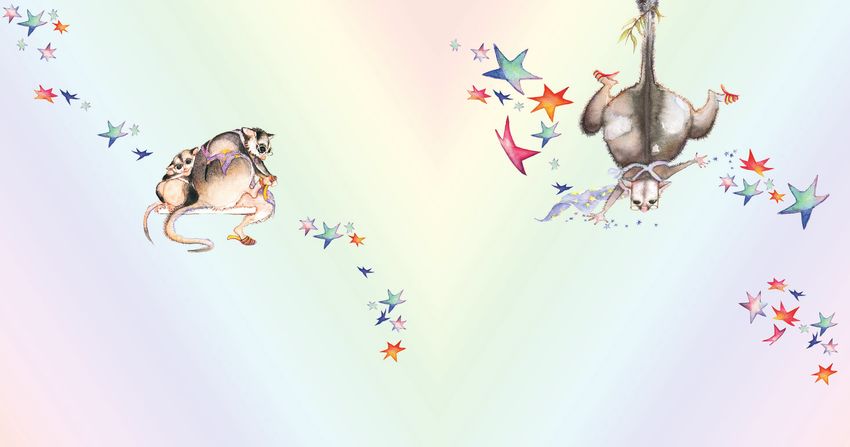
POSSUM MAGIC
A BRAND NEW AUSTRALIAN PRODUCTION
BASED ON THE BOOK BY MEM FOX AND JULIE VIVAS
ADAPTED FOR THE STAGE BY EVA DI CESARE & SANDRA ELDRIDGE

2019
TEACHER
RESOURCE

                                                           1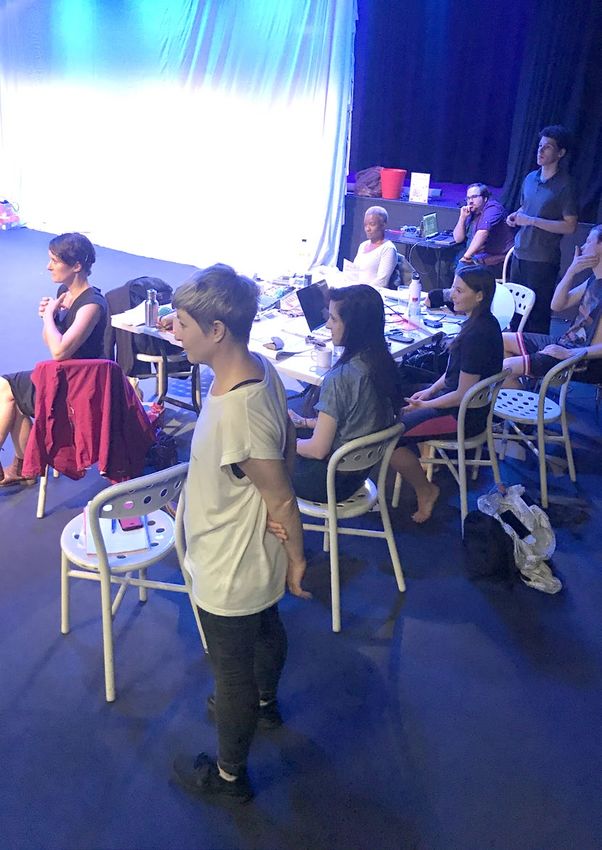
ABOUT
    THIS
    RESOURCE

    This resource has been designed for use with students
    in Early Childhood-Year 4, and covers the subjects of
    Drama, English, Visual Art, Science and Geography.

    Because the show is touring nationally, links to
    the Australian Curriculum for each subject and year
    level have been included at the back of the resource,
    as well as links to The Early Years Learning Framework
    and Framework for School Aged Care in Australia.

    On the pages of each of the activities, you will find icons that connect
    to the relevant General Capabilities and Cross Curriculum Priorities of the Australian Curriculum,
    as shown below.

    GENERAL CAPABILTIES AND CROSS CURRICULUM PRIORITIES:

                               LITERACY

                               CREATIVE AND CRITICAL THINKING

                               PERSONAL AND SOCIAL CAPABILITY

                               NUMERACY

                               ETHICAL UNDERSTANDING

                               INTERCULTURAL UNDERSTANDING

                               ABORIGINAL AND TORRES STRAIT ISLANDER
                               HISTORIES AND CULTURES

    Monkey Baa Theatre Company acknowledges the traditional owners of Country throughout Australia,
    and recognises their continuing connection to land, waters and community.
    We pay our respects to them and their cultures, and to elders both past and present.

2
TEACHER
RESOURCE
CONTENTS

     MONKEY BAA THEATRE COMPANY	                 4
     THE STORY OF POSSUM MAGIC	                  5
     STUDENT ACTIVITIES
         MAGICAL OBJECTS AND STATUES             7
         SHAPE SHIFTING                          8
         PLAYFUL POSSUMS                         9
         MIMING AND MAGIC                       10
         POSSUM RESEARCH AND LETTER WRITING     11
         MAGICAL NARRATIVES                     12
         THE RAINBOW SNAKE DREAMTIME STORY      13
         PAPER POSSUM STORYTELLING              14
         PRODUCTION SILENT CARD SHUFFLE         16
         LAMINGTON RECIPE                       17
     PRODUCTION DETAILS & CURRICULM LINKS
         COSTUME AND SET DESIGN                 19
         MEET THE CAST                          20
         MEET THE CREATIVES                     22
         CREATIVE DEVELOPMENT	                  24
         AUSTRALIAN CURRICULUM LINKS            26
         EARLY YEARS LEARNING FRAMEWORK LINKS   29
     FURTHER RESOURCES & ACKNOWLEDGEMENTS       30

                                                      3
OUR MISSION...

    MONKEY BAA                                                  is to exhilarate young minds,
                                                                hearts and imaginations

    THEATRE                                                     by creating and sharing
                                                                exceptional Australian theatre

    COMPANY                                                     nationally and internationally.

    Monkey Baa is a multi award-winning theatre
    company that creates, presents and curates
    quality theatre experiences for young audiences.

    It is Australia’s widest-reaching touring company,
    having conducted over 25 national tours
    to 135 regional and remote communities
    across every state and territory of Australia;
    including 4 international tours and over
    2,500 performances, as well as engaging
    with 1.2 million young people.

    Established in 1997, by Eva Di Cesare,
    Sandra Eldridge and Tim McGarry, the company
    has been creating inspiring, award-winning theatre
    for young audiences for twenty one years, and has
    adapted over 15 classic Australian stories for the stage.

    Monkey Baa Theatre Company’s aim is to make theatre an intrinsic part of young people’s lives.

    As resident company at the custom-designed, fully accessible ARA Darling Quarter Theatre, we also curate
    an annual season of theatre for young people in school holidays and term time, presenting Monkey Baa plays
    and work from other Australian and international companies.

                                          MONKEY BAA EXECUTIVE TEAM
                                          EVA DI CESARE, JEREMY MILLER & SANDRA ELDRIDGE

4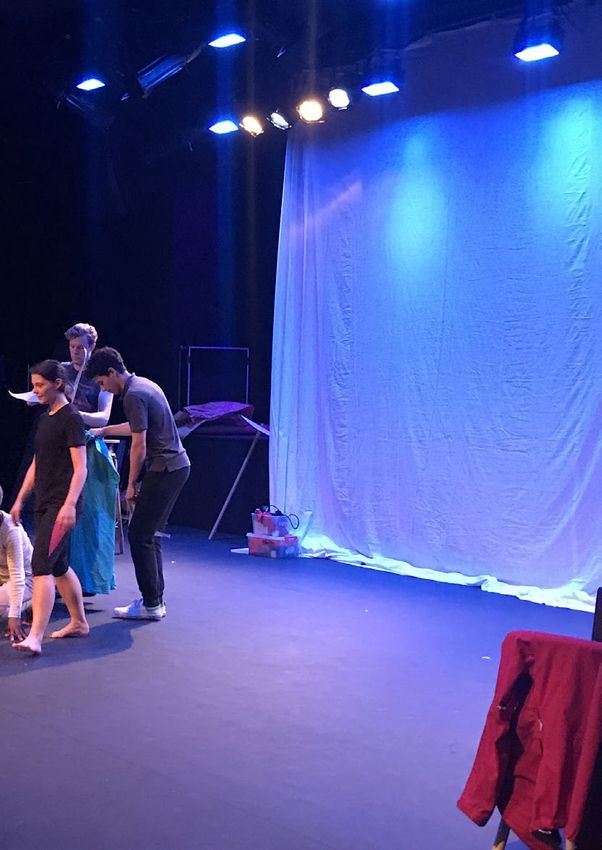
THE
STORY OF
POSSUM MAGIC
HISTORY
For more than 30 years, Mem Fox’s Possum Magic has captivated and enchanted young people
all over Australia. Joined by an extraordinary creative team, Monkey Baa is thrilled to present
a brand new stage adaptation of this magical Australian classic. Grandma Poss loves making magic.
She makes wombats blue and kookaburras pink. She makes dingoes smile and emus shrink.
But one day, when danger arrives in the form of a snake, Grandma uses her most magical spell to make
Hush invisible. Hush has many wonderful adventures. But being invisible isn’t all it’s cracked up to be,
and Hush longs to see herself again.

One problem. Grandma Poss can’t find the spell to make Hush visible again.
And then she remembers... this particular magic requires something more, something special,
something to do with food… people food.

ABOUT THE AUTHOR
Mem Fox was born in Melbourne, grew up in Africa, went to drama school in England, and came back to
Australia in 1970, aged 24. In 1983 Mem became Australia’s best-selling writer. Possum Magic, her first
book, is still available in hardback after 35 years and has become a beacon of children’s literature for millions
of Australian families. She has written over 40 children’s books and several non-fiction books for adults. Her
books have been translated into twenty-one languages, many of which have been international best sellers.

Mem is a retired Associate Professor of Literacy Studies from Flinders University, South Australia, where she
taught teachers for 24 years. She has received many civic honours and awards, and three honorary doctorates.

For more info about the author, please visit Mem Fox’s website: https://memfox.com/

                                                                                                                    5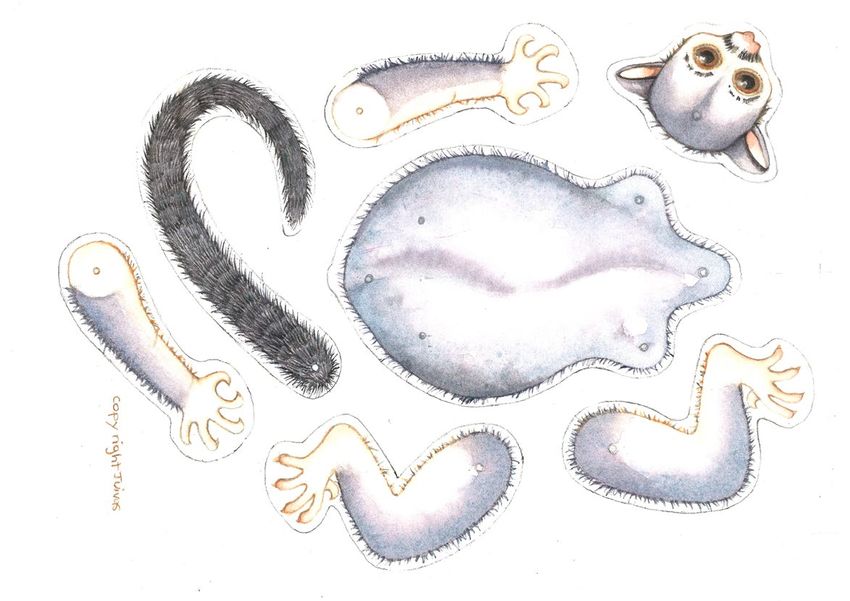
STUDENT
    ACTIVITIES
    THE ACTIVITIES CONTAINED IN THIS RESOURCE ARE DESIGNED
    TO BE USED IN THE CLASSROOM AS PRE- OR POST-SHOW LEARNING
    OPPORTUNITIES TO ENGAGE AND IMMERSE STUDENTS
    IN THE MAGICAL WORLD OF POSSUM MAGIC!

    THEY HAVE BEEN INFORMED BY OBSERVATIONS OF THE CREATIVE
    DEVELOPMENT PROCESS WITH SCHOOL STUDENTS, THE CAST
    AND THE CREATIVE TEAM.

    WE HOPE THAT THESE LEARNING ACTIVITIES HELP TO EXTEND
    THE IMAGINATIONS OF YOUR STUDENTS AND HELP TO BUILD THEIR
    CONFIDENCE AS THEY WORK COLLABORATIVELY AND CREATIVELY.

6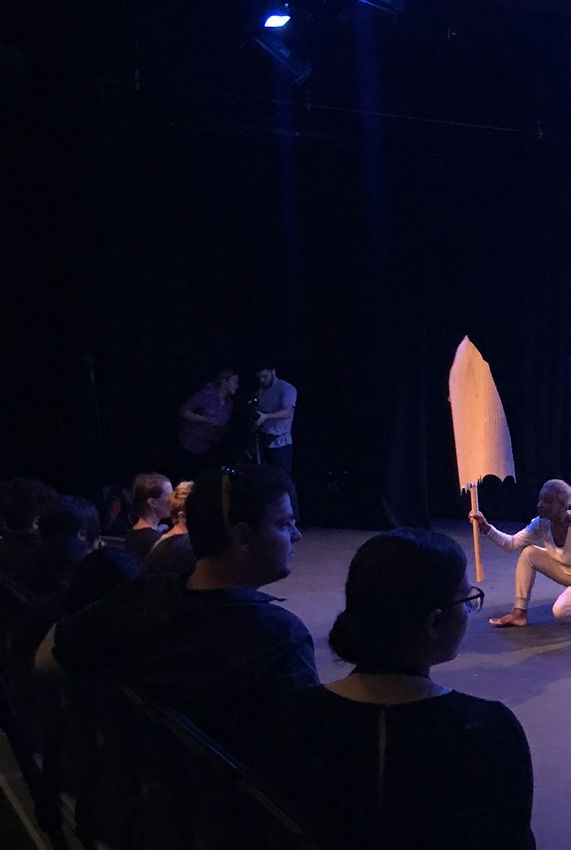
MAGICAL OBJECTS
AND STATUES
MAGICAL OBJECTS
• Ask the students to stand in a circle and put an everyday object in the middle (e.g. a hat, ruler or bucket).
  Go around the circle and ask each student to step into the circle and pretend to use the object as
  something that it is not. For example, they may pick up the hat and pretend they are eating a bowl
  of cereal, or they may pretend that it is the steering wheel of a car.
• It is a good idea to demonstrate a few examples before you begin, and you might like to give the students
  30 seconds to have a think about their idea before you start. It is really important to create a supportive
  environment for this activity, so you might like to applaud each student for their idea.
• You can also add another element to this activity by asking the students to put their hand up and guess
  what each person is pretending the object is. Once the students become more familiar with the activity
  then their confidence will begin to grow.

POSSUM STATUES
• Ask the students to spread out around the space and to pretend they are a frozen statue of Hush.
• Nominate one student to be Grandma Poss who will go around and pretend that they’re dusting
  the statues.
• When Grandma Poss turns their back, the statues can move and change their frozen position.
• If Grandma Poss catches anyone moving then you can decide whether you want them to be out or
  whether you want them to be the new Grandma Poss.
• To raise the stakes you can add in more than one Grandma Poss!!

SNEAKY POSSUMS
• Choose one student to be Grandma Poss- this student will sit at the front of the classroom on a chair
  with their back turned to the rest of the students. Underneath Grandma Poss’ chair will be a magic
  ingredient that needs to be protected (this can be any object of your choice).
• The rest of the students stand across the back of the classroom, and their job will be to act as Hush
  who is trying to steal the magic ingredient from Grandma Poss. They will do this by sneaking as quickly
  and quietly as they can towards Grandma Poss when she isn’t looking.
• If Grandma Poss turns around and catches any possums moving, then they will need to go back to the start.
• If Grandma Poss catches someone stealing the magic ingredient then that person gets to be
  Grandma Poss in the next round.
• If someone steals the magic ingredient without Grandma Poss noticing, then the game can continue,
  but this time Grandma Poss will be trying to guess who has the object when she turns around.

                                                                                                                  7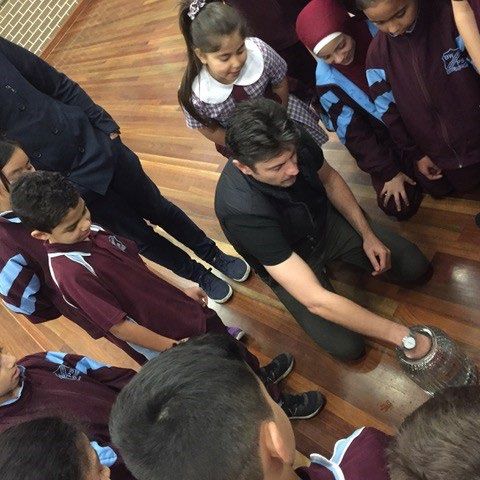
SHAPE
    SHIFTING
    TRANSFORMATIONS
    • Ask the students to spread out around the space and ask them to transform their bodies by
      following these instructions:
    		 • Make yourself small and then tall              • Have two legs and then four
    		 • Explode into a million pieces                  • Be your own shelter
    		 • Be in two places at once                       • Be invisible
    		 • Hide behind yourself                           • Levitate
    		 • Be upright on one leg                          • Be upside down with one foot still on the ground
    • To add complexity to this activity, you might like to ask the students to make a sound to signal their
      transformation, or ask them to transform in slow motion and then fast motion.

    MAKING SHAPES
    • Ask the students to spread out around the space. Then call out different objects and animals for them
      to transform their bodies into. You can alternate between asking them to create these shapes on their
      own and then in groups of different sizes.
    		 • A possum                                      • A tree
    		 • An emu                                        • A cake
    		 • A vegemite sandwich                           • An umbrella
    		 • A deck chair                                  • A bicycle
    		 • A bridge                                      • A toothbrush

    THE MAGIC POWER
    • Ask the students to find a partner, and then ask them to work out who is going to be Grandma Poss,
      and who is going to be Hush.
    • Ask them to stand about a metre away from their partner. The students playing Grandma Poss
      need to point their index finger at their partner Hush to control their movement.
    • The students playing Hush need to follow their partner’s finger and move accordingly.
      Remind the students playing Grandma Poss not to move their finger too fast and to be cautious
      of others around them.
    • After a few minutes, ask the partners to swap so that the other person gets a turn.

    RECYCLED OBJECT PROPS
    • Put the students into groups and ask them to create a bike or an umbrella out of recycled objects like
      cardboard cut outs, milk cartons, paper towel rolls and aluminium foil. Then they can create their own
      short scene using the prop that they’ve created.

8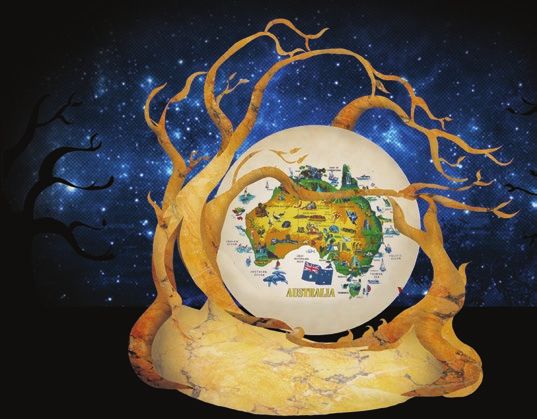
PLAYFUL
POSSUMS
POSSUM PLAY
• Ask the students to lie down and pretend that they are a possum curled up in the hollow of a tree.
  Play some ambient music and then ask the students to slowly wake up as if they’re a little possum
  and then ask them to gradually move around the space.
• Ask the students to take on these physical instructions as you call them out (remind them that they
  must try and move like a possum):
		 • Stand with your hands behind your back
		 • Try and move whilst pretending that you have a tail
		 • Pretend you are climbing up a tree with your arms and legs
		 • Pretend that you are trying to see through your night-vision goggles
		 • Try and balance on one leg
		 • Eat as a possum
• Once you have finished all of these actions, ask the students to find their way back to their little hollow
  in the tree and to curl up ready to go back to sleep again.

CREATIVE CREATURES
• You will need a big, clear space to run this activity so that the students can move around safely.
  A school hall or auditorium would be perfect.
• Choose 5 students and ask them to stand in a line across the back of the room. These students will be
  the group leaders. Then split the rest of the class into those 5 groups and ask them to stand in a line
  behind their group leader.
• Play some instrumental, suspenseful or playful music and ask the group leaders to move across the
  room and back as quickly as they can as a possum. Ask them to really focus on how a possum would
  move. Once they are back to their group, the next person in each group then does the same thing by
  moving across the space and back as quickly as they can as a possum. This continues until every
  member of each group has had a turn.
• Then repeat the exercise asking the studens to try the following actions:
		 • a possum who is trying to avoid danger
		 • a possum with only one hand and one foot on the ground
		 • an possum who is invisible
		 • a possum who is upside down (make sure they are very careful doing this one)

AUSTRALIAN ANIMALS
• Ask the students to each sit on a chair in a drama circle.
• Allocate each student an animal (possum, koala, kangaroo or kookaburra).
• Take away one chair from a student. This student becomes the leader.
• Ask the leader to call out one of the animals, and all of the students that were allocated
  that animal have to stand up and find another seat (including the leader).
• The one person that doesn’t get a seat becomes the new leader.
• If you call ‘Australian Animals’ then everyone has to get up and find a new seat.

                                                                                                                9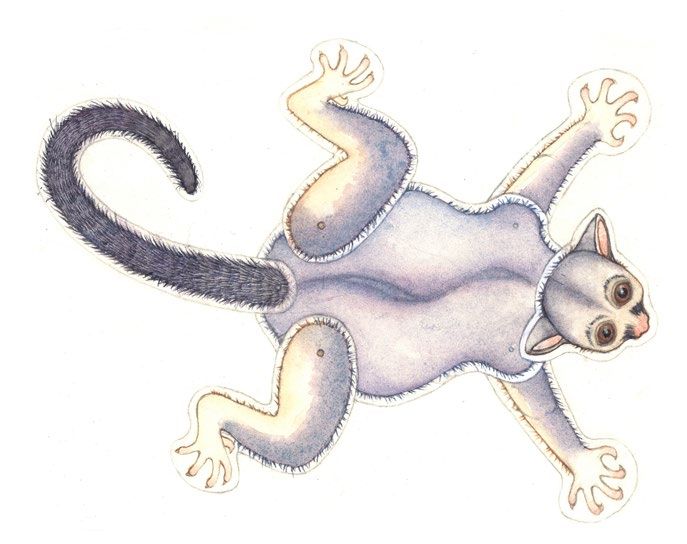
MIMING
     AND MAGIC
     CHARADES
     • Using cardboard cut outs, ask the students to create a flash card of one of the objects in the book.
       Their card will contain a drawing of the object on the front and the word on the back.
       Below are some examples:
     		 • Star                              • Sandwich                      • Ladder
     		 • Bench                             • Apron                         • Biscuit
     		 • Umbrella                          • Toothbrush                    • Bicycle
     		 • Book                              • Sock                          • Tree
     • Ask the students to stand in 2 straight lines and nominate a team leader for each team.
     • The team leaders will collect all of the flashcards created by their group.
     • When you call ‘Go!’ the team leaders will have to show the first person in the line one
       of the flash cards (the side with the picture on it).
     • The student has to say and mime what they think it is and if they get it right then they move
       to the back of the line and another card is shown to the next student. If they guess incorrectly
       then they can try again or be given a different card to guess.
     • The team that gets all of their team members through first wins!

     MIMING IMAGINARY OBJECTS
     • Ask the students to stand in a circle, and ask them to pass around an imaginary parcel.
     • Each student will get to imagine how big their parcel is and how much it weighs.
       They will need to make this very clear through their physical actions.
     • The person receiving the parcel, needs to respond to the size and weight of the parcel. They can then
       change it when they pass it on to the next person. This is a nice way to introduce the students to improvisation.

     QUESTIONS ABOUT MAGIC
     • Split the class into small groups of 4-5 and ask the students to take turns answering the following questions:
     		 • What sound does magic make?
     		 • What does magic look like?
     		 • What magic superpower do you wish you had and why?
     		 • Have you ever experienced magic?
     		 • What’s the most magical thing that happened to you this week?
     • Once the students have had enough time to discuss their answers, ask each group to share the most
       interesting responses with the rest of the class.

     DESIGN YOUR OWN MAGIC SPELL
     • Put the students into pairs and give them two minutes to invent their own magic spell with words, sounds
       and actions. They also need to decide on exactly what the spell does. Then ask each pair to partner up
       with another pair and ask them to take turns physically demonstrating how their spell works in action.
       The other pair should respond physically to the power of the spell.

10
POSSUM RESEARCH
AND LETTER WRITING
POSSUM RESEARCH
• Set your students an assignment to research the different characteristics of a possum.
They can choose to present their findings as a PowerPoint presentation or a poster.
Here are some key inquiry questions for their research:
• What do possums eat?
• What do possums do during the night?
• Where do possums live?
• How many different types of possums are there?
• What are the physical characteristics of a possum?
• How do possums use their tails?
• What is the scientific name of a possum?
• Do possums have much contact with humans?
A LETTER TO GRANDMA POSS
• Ask the students to write a letter from Hush’s perspective,
asking Grandma Poss if she can try and make her visible again.
• Ask the students to make sure that they use descriptive language to describe
what it feels like being invisible and why they want to be visible again.
• Remind the students to set out their letter in the correct format with the letter addressed to
Grandma Poss from Hush. You could even give the students envelopes that they can put their letters in.
• Once the students have finished writing their letters, ask them to partner up with another student
and get them to read each other’s letters.
• We would love to read any of your student’s letters, so please feel free to post them to Monkey Baa!
CREATING A POSSUM MAGIC MAP
• Using a map of Australia, ask the students to identify the places that Grandma Poss and Hush visited.
• What iconic sites did they visit in each place? Ask the students if they have been to any of the
same places!
11MAGICAL
NARRATIVES
• Ask the students to choose their favourite Australia animal, and to write a short story where
that animal is on a quest to save the day with their magical powers!
CHARACTER What animal have you chosen to be the main
character of your story and what is their name
BACKGROUND
going to be?
ORIENTATION Where is your story going to be set?
BEGINNING: This is where you will What is your character’s magical power
PLAN YOUR STORY
need to introduce the readers to your going to be?
main character and what their magical
power is.
COMPLICATION What problem will they face?
MIDDLE: This is where you will need
to introduce the readers to the problem
that they will need to solve.
RESOLUTION How are they able to save the day by using their
magical powers?
ENDING: This is where you will need
to let the readers know how the main
character was able to use their magic
to save the day.
GROUP DEVISING CHALLENGE
• After the students have finished writing their short stories, split the class into small groups of 4-5, and
ask them to read their stories to each other.
• Then ask each group to choose one of the stories from the group to bring to life in a short performance.
• Give the students a lesson (depending on how they are going) to rehearse their scene and then ask each
group to perform their devised scenes to the rest of the class.
• After each group has performed, ask the audience for positive feedback.
12THE RAINBOW SNAKE
DREAMTIME STORY
Ask the students to lie on the floor with their eyes closed and read them this beautiful
dreamtime story. Allow them to visualise the story as it comes to life in their mind.
Long long ago in the Dreamtime, a group of aboriginals were out hunting for kangaroos. It had been raining
and the ground was soft making it difficult for the hunters to catch their prey. The hunters came to a clump
of trees near the edge of a small plain and decided to rest in the shade. The hunters sat around resting, tell-
ing stories and warming their hands by the fire when on the horizon they saw a beautiful multi-coloured arch
- a rainbow. It was the rainbow snake moving from his old waterhole to another. They were a little fearful as
they did not want this huge brightly coloured serpent in a waterhole near their camp.
When the hunting party returned to their camp, the children ran out to greet them. Even though they caught
only 2 kangaroos - not really enough to feed everyone - there would be singing and dancing - a big corro-
boree that night. During the corroboree, a young hunter went over to where the old men were sitting and
asked them to tell him about the Rainbow Snake - if everyone was so fearful of him why could he not spear
him then no one would fear this serpent any more?
The old men were horrified and explained that the Rainbow Snake was one of the Dreamtime creatures who
had shaped the earth. In the beginning the earth was flat, a vast barren plain. As the Rainbow Snake wound
his way across the land, the movement of his body heaped up the mountains and dug troughs for the riv-
ers. With each new thrust of his huge multi-coloured body, a landform was created. He was the biggest of
the Dreamtime Beings. At last, tired with the effort of shaping the earth, he crawled into a waterhole to be
cooled and soothed and then sank out of sight. Each time the animals visited the waterhole they were care-
ful not to disturb the Rainbow Snake, for although they could not see him, they knew he was there.
Then one day after a huge rainstorm his huge coloured body was arched up from the waterhole, over the
tree-tops, up through the clouds and across the plain to another waterhole. To this day, aboriginals are care-
ful not to disturb the Rainbow Snake as they see him going across the sky from one waterhole to another.
Michael J Connolly (Munda-gutta Kulliwari), Dreamtime Kullilla-Art
www.kullillaart.com.au
• Once you’ve finished reading the story, ask the students to share their favourite part of the story.
• Next, ask the students to draw their own interpretation of the rainbow snake to display around
the classroom!
13PAPER POSSUM
STORYTELLING
INSTRUCTIONS
• Cut out the paper possum on the next page and put it together using paper fasteners to attach
the body parts.
• Then ask the students to work in pairs to narrate their own adventure for their possums.
What creative world will they imagine? How will they bring their possums to life?
The possibilties are endless! To challenge the students you might like to ask them to extend the narrative
of Possum Magic or create a new imaginative world for their possums to live.
• Once the students have had enough time to develop their narratives and explore the movement of their
paper possums, ask each pair to present them to the class. You might like to project a landscape onto the
board that they can use as the backdrop to their narrative.
WITH THANKS...
This Possum Puppet was
hand drawn especially for
this resource by the wonderful
illustrator of Possum Magic,
Julie Vivas.
EXAMPLE OF FINISHED PRODUCT
1415
PRODUCTION SILENT
     CARD SHUFFLE
     INSTRUCTIONS
     • Split the class into groups of 4-5, and ask them to either sit on the floor or at table groups.
     • Provide each group with an envelope that will contain cut outs of all of the roles and their
       descriptions from the table below.
     • When you say “Go!” each group needs to empty the contents of their envelope onto the floor/desk
       and then match the roles with the correct description.
     • Students must not speak during the activity, as the idea is that they have to work collaboratively
       as a team to match the cards as quickly as they can.
     • Once a group is confident that they have matched all of the roles with the correct description,
       then everyone in the group needs to put their hands on their head.
     • Once the first group has finished, check to see if they have matched all of the cards correctly.
     • The challenge continues until all groups have correctly matched their cards.

                           ACTOR                                       Performs the show on stage

                                                                         Writes the original music
                       COMPOSER                                                for the show

                                                                     Makes the final decisions about
                        DIRECTOR                                        what you see on stage

                                                                      Creates the dance movements
                  CHOREOGRAPHER                                                for the show

                                                                    Conceives the ideas for all the set,
          SET AND COSTUME DESIGNER                                  costumes and props for the show

                                                              Selects sound effects and manages all sound
                   SOUND DESIGNER                                    volumes that you hear on stage

                                                                 Decides what colours and types of lights
                 LIGHTING DESIGNER                                         are used on stage

                                                                   Manages all the technical elements
                   STAGE MANAGER                                       on stage and backstage

16
LAMINGTON
RECIPE
INGREDIENTS
SPONGE INGREDIENTS CHOCOLATE ICING INGREDIENTS
250 gms of butter 500 gms of icing sugar
250 gms caster sugar 200 gms of dark cooking chocolate
4 free range eggs 15 gms of unsalted butter
350 gms self- raising flour 1/2 cup of milk
1 teaspoon vanilla extract 325 gms of dessicated coconut
3/4 cup of milk
FILLING
Raspberry jam
METHOD
SPONGE METHOD
1. Preheat oven to 180 degrees.
2. Make sure ingredients are room temperature
3. Grease an 20x20 cm square cake tin and line bottom
with grease proof paper
4. Place all sponge ingredients into a processor and process
until pale yellow colour (a hand mixer can be used).
5. Place into cake tin and bake for approximately 30 minutes.
6. Let the sponge cool slightly and turn out onto a cake rack.
7. Using a serrated knife cut the sponge in half horizontally.
8. Spread raspberry jam on sponge and place back together.
9. Cut sponge into 12 or 16 pieces.
CHOCOLATE COATING METHOD DID YOU KNOW...
1. Melt butter and chocolate in a bowl over steaming water This world-famous, iconic
making sure that the water doesn’t touch the bottom of the bowl. Australian chocolate-dipped,
2. Add icing sugar, then milk. coconut covered cake
3. Place coconut in a separate bowl is over a 100 years old!
4. Dip sponge squares one at a time into chocolate syrup
then into coconut and then place onto cake rack.
5. Chocolate syrup will be set in 20 – 30 minutes.
Recipe by Paolo Di Cesare
17PRODUCTION
DETAILS
AND
CURRICULUM LINKS
18COSTUME AND
SET DESIGN
Insights from Costume and Set Designer
Emma Vine:
“In Possum Magic we are seeing the world
through the eyes of our Possums –
Hush and Grandma Poss.
We start in the Australian bush –
sculpted trees, a big moon and
a projected starscape for our
nocturnal heroes.
Our human world is set in 1983
when the book was published
and it is mighty strange to the
possums - the humans have
big square shoulders and oddly
manicured hair. What strange
tall animals these humans are!”
SET DESIGN: EARLY CONCEPT VISUALS
BY DESIGNER EMMA VINE
“The possum costumes play a big role in
turning Hush invisible. We need to show
a change so that the audience knows
when she is invisible, but can still connect
with the performer.
Grandma Poss will wear her famous apron,
Volleys and stripey socks!”
COSTUME DESIGN:
GRANDMA POSS & HUSH ORIGINAL COSTUME SKETCHES
19MEET THE
CAST
MEMBERS
CLAUDETTE CLARK PLAYS GRANDMA POSS
Claudette Clarke is an Actor of African-Caribbean heritage. Growing up in London,
she had come to largely identify as a ‘Black British’ Actor of the United Kingdom
and is currently Sydney-based.
Claudette’s work includes multi-ethnic ensemble development pieces, dealing with
prejudice and community struggles including My Name is Sud for The African
Theatre Project. Additionally Claudette has performed in universally-loved classic
adaptations including To Kill a Mockingbird, Doubt, The Crucible and The Clink.
As Puppeteer in KXT Kings Cross Theatre production of Jatinga her ability to move and
adapt physically to a role was the perfect experience for the role of Grandma Poss!
SARAH GREENWOOD PLAYS HUSH
Since graduating from Western Australian Academy of the Performing Arts, Sarah
made her theatre debut in Kindertransport with the Darlinghurst Theatre Company
in 2017. Sarah has recently worked on three independent productions including;
Delirum with Underground Cinema, White Wash with Jodie Wolf at the Blood Moon
Theatre and most recently The Director with Active Theatre.
Upon hearing the news of being cast as Hush, Sarah said: “I’m so excited to be
joining Grandma Poss on her adventure around Australia! The cast and crew are
such a dream team, it really is going to be magical”.
20ALEX PACKARD PLAYS WOMBAT, SHOP ASSISTANT,
JOYCE, KID 1, CINEMA PATRON 1 & ICE-CREAM VENDOR
Alex holds a BA (Acting for Screen and Stage) from Charles Sturt University.
Recent acting credits include: Alice in Wonderland with Sydney Festival and
Michael Sieders Presents, The Van De Maar Papers with An Assorted Few,
Blackrock with Seymour Centre and White Box, All Good Things with ATYP, Drift
with ATYP and Two Peas, The Complete Works of William Shakespeare Abridged
with Bindle Brothers and a national tour with Brainstorm Productions. Alex played
the lead role in Metroscreen and Azure Productions’ award winning short film
Oasis, airing on ABC, and can be seen in the SBS short film Cherry Season.
MICHAEL YORE PLAYS EMU, SNAKE, SHOP ASSISTANT,
CINEMA PATRON 2, NOREEN, KID 2 & CHEF
Michael has been performing to a young audience for several years, touring
Australia with companies such as Echelon and Brainstorm productions. He has
also performed for several years in Australian Shakespeare Company’s production
of Wind in the Willows, and performs and produces podcasts for The Beanies
which won the Australian Podcast Award for Best Kids and Family.
Michael is also a musician and director.
21MEET THE
CREATIVE
TEAM
DIRECTOR:
SANDRA ELDRIDGE
Sandra is a WAAPA acting graduate and has a Master of Arts (Practice) for directing
CSU. She is one of the founders and Creative Director’s for Monkey Baa where
she directs, writes, acts and facilitates workshops around Australia and overseas.
Her credits as a director include: Goodbye Jamie Boyd, The Prospector’s, I am Jack,
Hitler’s Daughter (2007 Helpmann Award for Best Children’s Presentation, 2006
Drover Award, 2012 Glug Award) and Thursday’s Child (2009 Helpmann Award for
Best Children’s Presentation); Monkey Baa. The Grapes of Wrath and Mill on the
Floss; WAAPA. Kindertransport and Maggie Stone; Darlinghurst Theatre Company.
She co-wrote and directed Voyage to the Deep for ANMM, Monkey Tales for
The Chinese Gardens and co-adapted Snuggle Pot and Cuddle Pie for CDP.
In 2015 she wrote and acted in The Unknown Soldier, (2015 Glug Award).
As an actor she has numerous credits in Theatre, Film, TV and Radio and has
been a proud member of MEAA since 1983. In 2017 The Sydney Theatre Critics
awarded her a special award for excellence and Extraordinary Service to the
young people of Australia.
22PUPPETRY DIRECTOR: LIGHTING DESIGNER: SET & COSTUME
ALICE OSBORNE MATT COX DESIGNER: EMMA VINE
Alice is a theatre maker who Matt’s career in theatre has Emma designs for theatre,
works collaboratively as a spanned 15 years designing opera, dance, musical theatre,
puppeteer, director, performer lighting in both Australia television and film. She received
and movement artist. She was and the UK. He has designed Sydney Theatre Award nominations
the Resident Puppetry and numerous theatre productions for best costume design in 2017
Movement Director for the for premier local and and 2018 and was nominated
Australian production of international companies as Best Emerging Designer at
WAR HORSE. and also tutors at NIDA. the 2017 APDG Awards.
SOUND DESIGNER: MOVEMENT DIRECTOR: MAGICAL DIRECTOR:
NATE EDMONDSON SAMANTHA CHESTER ADAM MADA
Nate is a classically trained Samantha is a theatre and dance Adam is a leading magician and
musician and graduate of NIDA. maker, movement director and magic/illusion consultant with
He is an international, multi- educator. She is currently the 20 years of experience creating,
award winning composer and Head of Movement (Acting) and teaching and performing original
sound designer for stage and Performance Making Lecturer at magic and illusions including
screen having written music the Western Australian Academy the current stage production of
for productions in Australia, of Performing Arts (WAAPA). Harry Potter and The Cursed Child.
UK and the US.
Bruce Glen, Sydney’s Gentleman
Magician, is collaborating with
Adam to develop Possum Magic
magic!
23CREATIVE DEVELOPMENT
OF THE PRODUCTION
COLLABORATING WITH YOUNG PEOPLE.
A PART OF OUR CREATIVE PROCESS.
Throughout 2018, the Monkey Baa Creative Directors Eva Di Cesare and Sandra Eldridge facilitated creative
workshops with Year 3-4 Bankstown West Public School students. These collaborative engagements with
young people have become an integral part of Monkey Baa’s adaptation process.
Each year sees a different project that presents different challenges and offers greater expansion to the
artistry and storytelling techniques, as the directors explore with young people how to make a great piece
of theatre for them. The students respond to the book and the script, and they offer their ideas about how
they think the story should be told. Using drama workshop techniques and activities, the students guide
the directors with their responses by showing what they think is important, what works and doesn’t work,
and most importantly what they feel emotionally.
WORKSHOP 3: THEATRE EXCURSION
FOR CREATIVE SHOWING
WORKSHOP 1: INCURSION WITH
ADAM MADA FOCUSED ON MAGIC
24POSSUM MAGIC CREATIVE TEAM
COLLABORATING AND OBSERVING
STUDENT RESPONSES DURING
THE CREATIVE DEVELOPMENT
WORKSHOP
25DRAMA
AUSTRALIAN CURRICULUM LINKS
AND VISUAL ART
DRAMA
FOUNDATION-YEAR 2
• Explore role and dramatic action in dramatic play, improvisation and process drama
(ACADRM027)
• Use voice, facial expression, movement and space to imagine and establish role and situation
(ACADRM028)
• Present drama that communicates ideas, including stories from their community, to an audience
(ACADRM029)
• Respond to drama and consider where and why people make drama, starting with Australian drama
including drama of Aboriginal and Torres Strait Islander Peoples (ACADRR030)
YEAR 3-4
• Explore ideas and narrative structures through roles and situations and use empathy in their own
improvisations and devised drama
(ACADRM031)
• Use voice, body, movement and language to sustain role and relationships and create
dramatic action with a sense of time and place
(ACADRM032)
• Shape and perform dramatic action using narrative structures and tension in devised and scripted
drama, including exploration of Aboriginal and Torres Strait Islander drama
(ACADRM033)
• Identify intended purposes and meaning of drama, starting with Australian drama, including drama
of Aboriginal and Torres Strait Islander Peoples, using the elements of drama to make comparisons
(ACADRR034)
VISUAL ARTS
FOUNDATION-YEAR 2
• Use and experiment with different materials, techniques, technologies and processes
to make artworks (ACAVAM107)
YEAR 3-4
• Use materials, techniques and processes to explore visual conventions when making artworks
(ACAVAM111)
26SCIENCE
AUSTRALIAN CURRICULUM LINKS
AND GEOGRAPHY
SCIENCE
FOUNDATION
• Living things have basic needs, including food and water (ACSSU002)
YEAR 1
• Living things have a variety of external features (ACSSU017)
• Living things live in different places where their needs are met (ACSSU211)
YEAR 2
• Living things grow, change and have offspring similar to themselves (ACSSU030)
YEAR 3
• Living things can be grouped on the basis of observable features and can be distinguished
from non-living things (ACSSU044)
YEAR 4
• Living things depend on each other and the environment to survive (ACSSU073)
GEOGRAPHY
FOUNDATION
• The representation of the location of places and their features on simple maps and models
(ACHASSK014)
YEAR 1
• The natural, managed and constructed features of places, their location, how they change
and how they can be cared for (ACHASSK031)
YEAR 2
• The way the world is represented in geographic divisions and the location of Australia in relation
to these divisions (ACHASSK047)
YEAR 3
• Record, sort and represent data and the location of places and their characteristics in different formats,
including simple graphs, tables and maps, using discipline-appropriate conventions (ACHASSI054)
YEAR 4
• Record, sort and represent data and the location of places and their characteristics in different formats,
including simple graphs, tables and maps, using discipline-appropriate conventions (ACHASSI075)
27ENGLISH
AUSTRALIAN CURRICULUM LINKS
FOUNDATION
• Recognise that texts are created by authors who tell stories and share experiences that may be
similar or different to students’ own experiences (ACELT1575)
• Retell familiar literary texts through performance, use of illustrations and images (ACELT1580)
• Listen to and respond orally to texts and to the communication of others in informal and structured
classroom situations (ACELY1646)
• Use interaction skills including listening while others speak, using appropriate voice levels, articulation
and body language, gestures and eye contact (ACELY1784)
YEAR 1
• Discuss features of plot, character and setting in different types of literature and explore some
features of characters in different texts (ACELT1584)
• Recreate texts imaginatively using drawing, writing, performance and digital forms of communication
(ACELT1586)
• Use interaction skills including turn-taking, recognising the contributions of others, speaking clearly
and using appropriate volume and pace (ACELY1788)
• Create short imaginative and informative texts that show emerging use of appropriate text structure,
sentence-level grammar, word choice, spelling, punctuation and appropriate multimodal elements,
for example illustrations and diagrams (ACELY1661)
YEAR 2
• Innovate on familiar texts by experimenting with character, setting or plot (ACELT1833)
• Rehearse and deliver short presentations on familiar and new topics (ACELY1667)-
• Create short imaginative, informative and persuasive texts using growing knowledge of text structures
and language features for familiar and some less familiar audiences, selecting print and multimodal
elements appropriate to the audience and purpose (ACELY1671)
YEAR 3
• Create imaginative texts based on characters, settings and events from students’ own and other
cultures using visual features, for example perspective, distance and angle (ACELT1601)
• Listen to and contribute to conversations and discussions to share information and ideas and negotiate
in collaborative situations (ACELY1676)
• Plan, draft and publish imaginative, informative and persuasive texts demonstrating increasing control
over text structures and language features and selecting print, and multimodal elements appropriate
to the audience and purpose (ACELY1682)
YEAR 4
• Create literary texts by developing storylines, characters and settings (ACELT1794)
• Plan, rehearse and deliver presentations incorporating learned content and taking into account
the particular purposes and audiences (ACELY1689)
• Plan, draft and publish imaginative, informative and persuasive texts containing key information
and supporting details for a widening range of audiences, demonstrating increasing control over
text structures and language features (ACELY1694)
28EARLY YEARS LEARNING FRAMEWORK & FRAMEWORK FOR SCHOOL AGED CARE IN AUSTRALIA LINKS
OUTCOME 1: CHILDREN HAVE A STRONG SENSE OF IDENTITY
• Children develop knowledgeable and confident self-identities.
• Children learn to interact in relation to others with care, empathy and respect.
OUTCOME 2: CHILDREN ARE CONNECTED WITH AND CONTRIBUTE
TO THEIR WORLD
• Children develop a sense of belonging to groups and communities and an understanding
of the reciprocal rights and responsibilities necessary for active community participation.
• Children respond to diversity with respect.
OUTCOME 3: CHILDREN HAVE A STRONG SENSE OF WELLBEING
• Children become strong in their social and emotional wellbeing.
OUTCOME 4: CHILDREN ARE CONFIDENT AND INVOLVED LEARNERS
• Children develop dispositions for learning such as curiosity, cooperation, confidence, creativity,
commitment, enthusiasm, persistence, imagination and reflexivity.
• Children develop a range of skills and processes such as problem solving, enquiry, experimentation,
hypothesising, researching and investigating.
• Children transfer and adapt what they have learned from one context to another.
• Children resource their own learning through connecting with people, place, technologies
and natural and processed materials.
OUTCOME 5: CHILDREN ARE EFFECTIVE COMMUNICATORS
• Children interact verbally and non-verbally with others for a range of purposes.
• Children engage with a range of texts and gain meaning from these texts.
29FURTHER RESOURCES
AND ACKNOWLEDGEMENTS
WEBSITES
Australian Curriculum, Assessment and Reporting Authority.(2009-present). ACARA.
Retrieved from www.acara.edu.au
Department of Education and Training. (2017). Early Learning. Retrieved from https://www.education.gov.au/
Fox, M. (2018). Possum Magic. Retrieved from https://memfox.com/
Monkey Baa Theatre Company. (2018). Retrieved from www.monkeybaa.com.au
Adam Mada. (2018) Retrieved from https://www.adammada.com/
Lost In Books. (2018). Retrieved from www.lostinbooks.com.au/schools
Dreamtime Kullilla-Art. (2018). Retrieved from www.kullillaart.com.au
BOOKS
Fox, M & Vivas, J. (1983). Possum Magic. Omnibus Books.
Goode, J. N. (2000). Structuring Drama Work. Cambridge University Press.
Haseman, B & O’Toole, J. Drama Wise. (2017). Currency Press.
Innovative Students Companion. (2013). ITC Publications.
McNamara, M & Tourelle, L. (1998). A Practical Approach to Drama Performance. Pearson.
Zachest, K. (2015). Drama for Early Childhood. Currency Press.
THANKYOU
To Lost in Books who provided advice on how to best support EALD students:
Lost in Books is a multilingual kids’ bookshop and all-ages creative hub based in Fairfield,
NSW and offers educators a range of high quality and engaging multilingual literature
for children and young people, and resources curated from around the world.
Their approach is to support educators to promote multilingual literacies, and to use
creativity as a core pedagogical strategy and they can support you, your school or service,
and the communities you serve with multilingual literature; professional development; excursions;
and creative programming for schools and students.
For further info, please contact schools@lostinbooks.com.au or visit www.lostinbooks.com.au/schools
ACKNOWLEDGEMENTS
Monkey Baa Theatre Company extends our thanks to the cast, creative, technical and administration teams,
Mem Fox and Julie Vivas, MEAP, Rachel Perry, Lost in Books, Dreamtime Kullilla Art, Paulo Di Cesare,
Bankstown West Public School, Jenny Nicholls, Danielle Micich, Arts on Tour (our national presenting partners
for the tour) and the thousands of teachers and students who engage with Monkey Baa Theatre Company
every single year.
30Provided all original credits are maintained, this resource can be freely used for educational and non-commercial purposes.
This resource was created by Monkey Baa Theatre Company’s Education Manager, Melanie Griffith, for the 2019 tour
of Possum Magic. For further information about our Education Program, please email education@monkeybaa.com.au.
Please consider the environment before printing this resource.
© Australian Curriculum, Assessment and Reporting Authority (ACARA) 2009 to present, unless otherwise indicated.
This material was downloaded from the ACARA website (www.acara.edu.au) (accessed 10/01/19) and was not modified.
The material is licensed under CC BY 4.0 (https://creativecommons.org/licenses/by/4.0/). ACARA does not endorse any product
that uses ACARA material or make any representations as to the quality of such products. Any product that uses material
published on this website should not be taken to be affiliated with ACARA or have the sponsorship or approval of ACARA.
It is up to each person to make their own assessment of the product, taking into account matters including, but not limited to,
the version number and the degree to which the materials align with the content descriptions (where relevant).
Where there is a claim of alignment, it is important to check that the materials align with the content descriptions
(endorsed by all education Ministers), not the elaborations (examples provided by ACARA).
POSSUM MAGIC PRODUCTION SPONSORS
MONKEY BAA THEATRE COMPANY SPONSORS
PRINCIPAL SPONSOR GOVERNMENT SPONSORS
PARTNERS
31You can also read


