Practical Use Cases for Ethernet Redundancy - IEEE 802
←
→
Page content transcription
If your browser does not render page correctly, please read the page content below

Practical Use Cases for
Ethernet Redundancy

Don Pannell, Fellow
Automotive Ethernet Networking, NXP Semiconductor

IEEE 802.1 TSN Interim – September 2020

PUBLIC
NXP, THE NXP LOGO AND NXP SECURE CONNECTIONS FOR A SMARTER W ORLD ARE TRADEMARKS OF NXP B.V.
ALL OTHER PRODUCT OR SERVICE NAMES ARE THE PROPERTY OF THEIR RES PECTIVE OW NERS. © 2020 NXP B.V.

Preamble
•   This presentations was originally presented at the Sep 2020 IEEE Ethernet & IP Tech
    Day conference

•   The Soft Error Rate Modeling portion of this presentation & the bit error simulations
    described therein were done by:
          Nicolas Navet, Professor
          University of Luxembourg / Cognifyer.ai
•   Nicolas presented that portion of this presentation at the conference

•   This simulation data really helped in understanding the impact of the effectiveness of
    IEEE 802.1CB as it relates to where 802.1CB is used in a network

                                                                               PUBLIC   1
OVERVIEW

•   Examined Redundant Network Configurations

•   Soft Error Rate Modeling

•   Hard Error & Cost Factor Considerations

•   Summary

                                     PUBLIC   2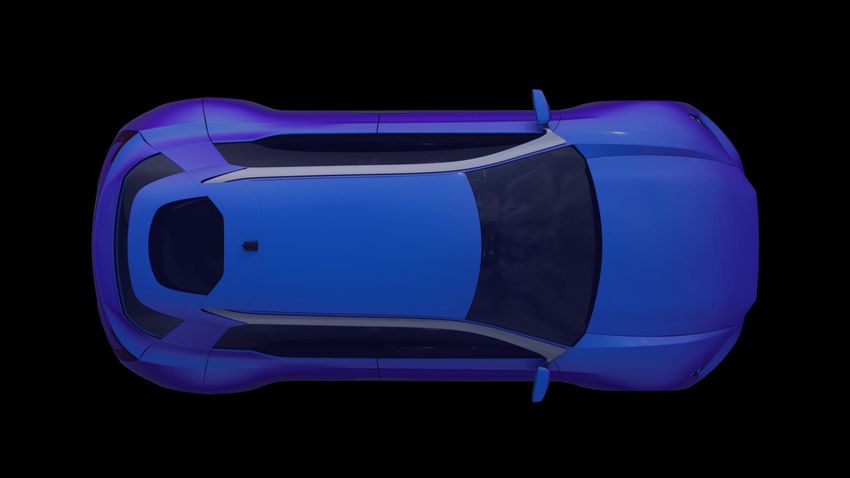
THE NEED                                                                    Zonal
                                                                  C                            C

➢Zonalnetworks, as shown in the figure, easily support        2               2
                                                                                           C       2

 redundancy, especially on the highlighted Ethernet
 backbone                                                             C C     2 C C c C
                                                                      C C    2 C c C 2 C
                                                                        3

➢IEEE 802.1CB is the TSN standard for Seamless                C                                    C

 Redundancy, supporting zero recovery time from lost
 frames                                                       C
                                                                              2 3 5 5
                                                                                C   C

➢This presentation models CB in various topologies with
 the CB function at various locations in the network so
 these differences can be quantified                          C                                    C
                                                                              C C C C C

➢This  is NOT a Safety presentation, but the data presented
 will help Network & Safety teams develop cost effective
 redundancy solutions                                                         5 2 C 2

                                                                             C C 3 C 2

                                                                                  PUBLIC       3
Examined Redundant
Network Configurations
Single changes to a baseline are compared so their effect can be
extrapolated

PUBLIC
NXP, THE NXP LOGO AND NXP SECURE CONNECTIONS FOR A SMARTER W ORLD ARE TRADEMARKS OF NXP B.V.
ALL OTHER PRODUCT OR SERVICE NAMES ARE THE PROPERTY OF THEIR RES PECTIVE OW NERS. © 2020 NXP B.V.   4   PUBLIC   4

T-1
                             4 CB Sw itches, Non -CB Talker & Listener
                             •   Pros:
                                 − Existingend-nodes can be used
  S-A                S-B
                                 − Hard or Soft errors on the backbone wires are protected
                                   ▪ A Hard error is a long duration error like a broken wire
                                   ▪ A Soft error is an intermittent error like a CRC errored frame
                                   ▪ The Brown & Blue wires are redundant paths for the packets
                                 − Failure   of S-B or S-Y is protected
                             •   Cons:
                                 − Backbone     bandwidth is double+ for the redundant flows
                                   ▪   The ‘+’ is due to the added 6-byte R-Tag & possible 4-byte S-Tag
  S-Y                S-Z
                                 − Links   from the Talker & to the Listener are not protected
                                   ▪   The Black wires
                                 − Failure   of S-A, T-1, S-Z or L-1 is not protected
             L-1

= CB Seq # & Split    = CB Merge                                                      PUBLIC    5
T-1
                             6 CB Sw itches, Non -CB Talker & Listener

                             • Very similar Pros & Cons as the previous slide
  S-A                S-B     • Only change is the addition of S-C & S-D in the backbone
                             • Modeled to see the impact of Soft errors on the increased
                               number of links in the protected backbone

  S-C                S-D

  S-Y                S-Z

             L-1

= CB Seq # & Split    = CB Merge                                         PUBLIC   6
Non-CB Sw itches, CB Dual -Homed Talker &
             T-1
                             Listener

                             •   Pros:
  S-A                S-B         − Existingswitches can be used
                                 − Hard & Soft errors on the entire path are protected
                                   ▪   The Brown & Blue wires (dotted wires are not used for these flows)
                                 − Failure of any single switch is protected
                                 − Failure of anything in the Blue path (wire or switch) is protected
                                 − Failure of anything in the Brown path is protected
                                 − Backbone bandwidth is half of Network #1 for the redundant
                                   flows as dotted wires are not used & are available
  S-Y                S-Z
                             •   Cons:
                                 − Requires  dual-homed end nodes (with dual Ethernet ports)
                                 − End nodes replicate frames & eliminate the duplicates
             L-1
                                 − Failure of T-1 or L-1 is not protected

= CB Seq # & Split    = CB Merge                                                       PUBLIC   7
Non-CB Sw itches, CB Single -Homed Talker &
             T-1
                             Listener

                             •   Pros:
  S-A                S-B         − Existingswitches & end nodes w/new software can be used
                                 − Hard or Soft errors on the backbone wires are protected
                                   ▪   The Brown & Blue wires between the switches
                                 − Soft errors on the links from the Talker & to the Listener are
                                   protected
                                   ▪   Temporally due to the doubled transmission
                                 − Failure   of S-B or S-Y is protected
                             •   Cons:
  S-Y                S-Z
                                 − End-to-end     bandwidth is double+ for the redundant flows
                                   ▪   The ‘+’ is due to the added 6-byte R-Tag & possible 4-byte S-Tag
                                 − End  nodes replicate frames & eliminate the duplicates
             L-1                 − Failure of S-A, T-1, S-Z or L-1 is not protected

= CB Seq # & Split    = CB Merge                                                      PUBLIC   8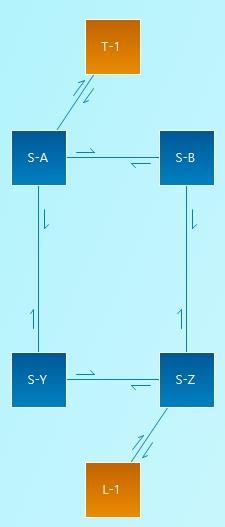
T-1
                             Mixed Sw itches, Mixed Talker & Listener

                             • Very similar Pros & Cons as previous slide
  S-A                S-B     • Only change is S-Z does the duplicate frame removal
                                 − This means the S-Z to L-1 link is no longer protected
                                 − But existing ECU’s without any software changes can be used
                                   ▪   With increased redundancy support achieved via firmware updates
                                   ▪   i.e., Network #1 → Network #5 → Network #4
                                   ▪   CB enabled switches are needed in this case
                             •   Modeled to see the impact of Soft errors on the
                                 unprotected link to the Listener
  S-Y                S-Z
                             •   This mixture is supported as long as T-1 creates the
                                 Brown & Blue frames in accordance to 802.1CB

             L-1

= CB Seq # & Split    = CB Merge                                                     PUBLIC   9
Soft Error Rate Modeling End-to-end protection is key for high-integrity communication PUBLIC NXP, THE NXP LOGO AND NXP SECURE CONNECTIONS FOR A SMARTER W ORLD ARE TRADEMARKS OF NXP B.V. ALL OTHER PRODUCT OR SERVICE NAMES ARE THE PROPERTY OF THEIR RES PECTIVE OW NERS. © 2020 NXP B.V. 10 PUBLIC 10
Error model used for soft errors
•   Soft errors are limited to frames dropped due to CRC errors
•   Bit Error Rate (BER) is assumed identical on all links & constant over time
•   CRC errors are independent of each other, i.e., no “bursts” of errors
•   100BASE-T1 specifies BER ≤ 10-10, PHYs are much better in practice, thus
    a BER of 10-12 is used in the experiments

                                            With 100BASE-T1 BER = 10-12, the average
                                              time between 2 CRC errors on a link is
                                            ≈18h13m at 20% load and ≈3h38m at 100%
                                                   load with minimum frame size

                                                                                  PUBLIC   11
Replication solutions : requirements & Single Points of Failure
CB-aware CB-aware CB-aware talker
2 CB-aware 2 CB-aware talker & listener talker & listener + 1 temporal redundancy
switches switches w/more hops + dual-homing + temporal redundancy + 1 CB-aware switch
+
T-1 T-1
[RTaW-Pegase screenshots]
S-B S-B S-A S-B S-A S-B S-A S-B
S-C S-D
S-Y S-Y S-Y S-Z S-Y S-Z S-Y
L-1 L-1 L-1
1 2 3 4 5
= CB Seq # & Split = CB Merge
= unprotected transmissions on that link → Single Point of Failure for Soft Errors PUBLIC 12Replication in action - packet loss rate
• Packets are lost when none of the copies are received by the listener(s)
• The data assumes a homogeneous Bit Error Rate = 10-12 regardless of link speed
• 2.44E-8 means 2.44 × 10⁻⁸
Loss Rate for Loss Rate for Improvement factor
Network Takeaways
1522B Packet 64B Packet vs. No Redundancy
1 The two unprotected transmissions
2.44E-8 1.02E-9 2
are by far the dominant risk factor
# of hops is a low order factor
2 2.44E-8 1.02E-9 2.5
as long as transmissions are protected
3 1.33E-15 2.36E-18 8.7E8 Very robust to soft errors!
4 2.37E-15 4.19E-18 4.9E8 Same order of magnitude as #3
Twice as robust compared to #1 due to
5 1.22E-8 5.12E-10 4
the single unprotected transmission link
33 (dual-homing) and 44 (end-to-end temporal redundancy) stands out
3 additionally protects against any one hard error unlike 4
PUBLIC 13Replication in action – average time between 2 packet losses
• Assuming a transmission period of 1ms with min. size frames (e.g., actuator messages)
• The data assumes a homogeneous Bit Error Rate regardless of link speed
• Stated times are for one flow only with the low link utilization as stated above
Network BER = 10-11 BER = 10-12 BER = 10-13 BER = 10-14
Baseline: no
13hours 33min 5days 15hours 56days 12hours ≈ 1year 6months
redundancy
1 1day 3hours 11days 7hours 113days ≈ 3years 1month
2 1day 3hours 11days 7hours 113days ≈ 3years 1month
3 1.3E5 years 1.3E7 years 1.3E9 years 1.3E11 years
4 7.5E4 years 7.5E6 years 7.5E8 years 7.5E10 years
5 2days 6hours 22days 14hours 226days ≈ 6years 2months
PUBLIC 14Hard Error & Cost Factor Considerations Nothing is free, and not all solutions cost the same! PUBLIC NXP, THE NXP LOGO AND NXP SECURE CONNECTIONS FOR A SMARTER W ORLD ARE TRADEMARKS OF NXP B.V. ALL OTHER PRODUCT OR SERVICE NAMES ARE THE PROPERTY OF THEIR RES PECTIVE OW NERS. © 2020 NXP B.V. 15 PUBLIC 15
Cost Factor – Components                                                        S-A        S-B

•   Creating a Redundant backbone:
    − 1st:   Create a Ring network from a daisy-chain one                       S-Y        S-Z

     ▪   Cost = 1 extra link only in the network
    − 2nd:   Add seamless redundancy: 802.1CB support in bridges in the critical data’s path
     ▪ Doubles the backbone’s bandwidth for the critical flows
     ▪ Cost = varies depending on the CB requirements needed, like the bandwidth & the number of critical flows

•   Redundancy in the first & last links:                    T-1
                                                                                                 T-1

    − Option   A: Use dual-homed end nodes
     ▪   May keep the backbone’s bandwidth close to the same loading as before
     ▪   Cost = 1 extra link per critical end node & more CPU cycles to run 802.1CB for the critical flows only
    − Option   B: Use temporal redundancy single-home end nodes saving the cost of the extra links
     ▪ But the backbone’s bandwidth is still doubled and it also adds…
     ▪ Cost = More CPU cycles to run 802.1CB & duplicate frame transmission for the critical flows only

                                                                                                  PUBLIC   16
Cost Factor – For Sensors & Their Flows
• Sensors can be very high bandwidth devices like 8+ gig/sec cameras
• Many sensors are needed too, 8 cameras is becoming a low number in a car
• Can this data even fit on a backbone today (even with reduced requirements)?
− With 6 camera @ 4 gig/sec requires 24 gig/sec! With redundancy that grows to 48 gig/sec.
− What year will these Ethernet PHYs & Switches be cost effectively available for Automotive?
• This bandwidth does not take into account the added data for Lidar, Radar, etc.
• And why double the bandwidth requirements of a sensor when the sensor itself is a single
point of failure?
−A camera “failure” is more likely due to dirt on the lens vs. a silicon or a wire failure!
− Why not add more cameras such that they overlap instead? Then CB is not needed for these flows
• Sensor Fusion merges data from many cameras & other sensor types to form a “picture”
− Thisprocess repeats continuously such that a Soft error is likely not critical and even many Hard
errors (like dirt) may allow for continued operation at reduced speeds (i.e., limp home)
PUBLIC 17Cost Factor – For Actuators & Their Flows
• After Sensor Fusion, a decision is made on what to do
− Steer away from a problem or slow down, etc.
• Turning, braking, accelerating, etc. are Actuators
• Actuators:
− Are very low bandwidth devices
▪ Historically Actuators have been connected using CAN and LIN
▪ Thus doubling the bandwidth of these flows on the Ethernet backbone is totally feasible
▪ Even doubling the bandwidth, temporally, on a single link to the backbone is feasible
− Re-transmission (temporal redundancy) is quite often used today to overcome Soft errors
− Seamless redundancy greatly increases the likely hood that the 1st transmission is received
▪ Thus keeping the latency time for these Decision to Action messages low
PUBLIC 18Summary & Conclusions
PUBLIC 19Summary & Conclusion
• Hard, persistent errors are easier to see & plan around as noted in the examples
− The likely hood & impact of these errors (wire vs. software vs. silicon) is application dependent
• Soft, intermittent errors are harder to evaluate, but the impact of BER has been shown
− 1000BASE-T1 supports FEC making BER analysis much harder (possible future work?)
− The numbers presented for 100BASE-T1 are felt to be a good rule-of-thumb for 1000BASE-T1
• Redundancy is not free & the biggest cost today could be the extra backbone bandwidth
− Therefore, apply redundancy only to those flows that absolutely require it!
− It appears to be more practical to apply redundancy on Actuator as compared to Sensor flows
• End-to-end protection from talker to listener results in the highest integrity communication
• Dual-homing & temporal redundancy both offer very high robustness against soft errors
where multi-homing additionally protects against a single hard error to/from the ECU
• Using IEEE 802.1CB as shown allows development migration from “no redundancy” to
“best redundancy” with progressive steps (firmware updates) in between
− This allows re-use of existing ECUs without needing to rewrite/redesign everything in one go
PUBLIC 20NXP, THE NXP LOGO AND NXP SECURE CONNECTIONS FOR A SMARTER WORLD ARE TRADEMARKS OF NXP B.V. ALL OTHER PRODUCT OR SERVICE NAMES ARE THE PROPERTY OF THEIR RESPECTIVE OWNERS. © 2020 NXP B.V.
You can also read


