Pre A1 Starters Three Practice Tests Teacher's Guide - Cambridge English Qualifi cations - Collins
←
→
Page content transcription
If your browser does not render page correctly, please read the page content below

Cambridge English Qualifications

                               Pre A1
                               Starters
                                Three Practice Tests

                                Teacher’s Guide

74863_Starters_TG_P001-047.indd 1                                 13/12/17 11:06 am
William Collins’ dream of knowledge for all began with the publication of his first book in 1819.
                                A self-educated mill worker, he not only enriched millions of lives, but also founded a flourishing
                                publishing house. Today, staying true to this spirit, Collins books are packed with inspiration,
                                innovation and practical expertise. They place you at the centre of a world of possibility and give
                                you exactly what you need to explore it.

                                Collins. Freedom to teach.

                                Published by Collins
                                An imprint of HarperCollinsPublishers
                                The News Building
                                1 London Bridge Street
                                London
                                SE1 9GF

                                    Browse the complete Collins catalogue at
                                    www.collins.co.uk

                                © HarperCollinsPublishers Limited 2018

                                www.collinselt.com

                                10 9 8 7 6 5 4 3 2 1

                                All rights reserved. No part of this publication may be reproduced, stored in a retrieval system,
                                or transmitted in any form by any means, electronic, mechanical, photocopying, recording or
                                otherwise, without the prior written permission of the Publisher or a licence permitting restricted
                                copying in the United Kingdom issued by the Copyright Licensing Agency Ltd., Barnards Inn,
                                86 Fetter Ln, London EC4A 1EN.

                                British Library Cataloguing in Publication Data
                                A catalogue record for this publication is available from the British Library.

                                Authors: Barbara Mackay and Anna Osborn
                                Publisher: Celia Wigley
                                Commissioning editor: Karen Jamieson
                                In-house editor: Helena Becci
                                Proof reader: Tracy Thomas
                                Typesetter and Illustrator: QBS Learning

74863_Starters_TG_P001-047.indd 2                                                                                                     13/12/17 11:06 am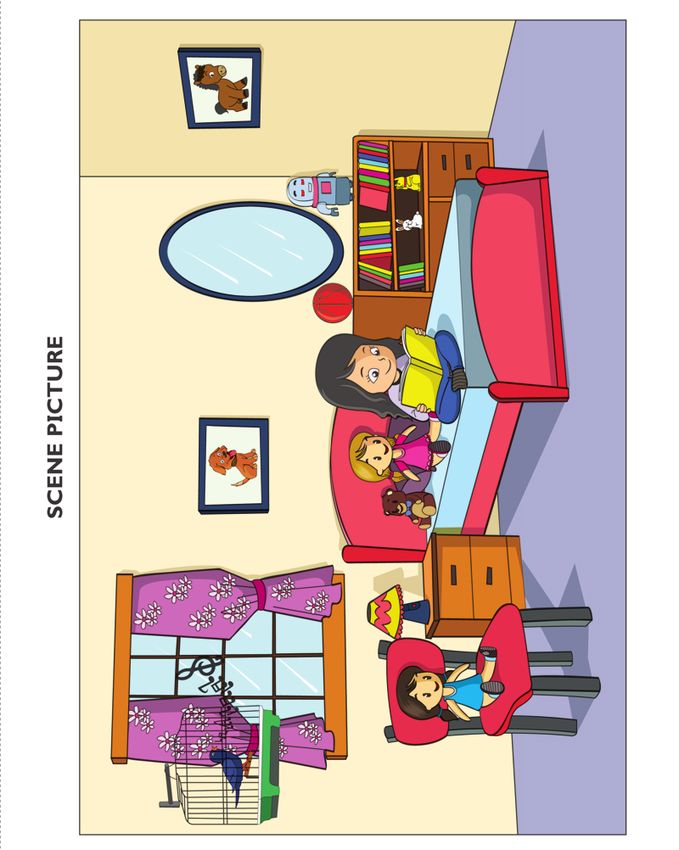
Contents

              Introduction                                                                                        4

              Guide to Cambridge English Qualifications Pre A1 Starters
                       Listening                                                                                  6
                       Reading & Writing                                                                         11
                       Speaking                                                                                  17

              Tips for students on test day                                                                      23

              Vocabulary practice                                                                                24

              Key to tests
                       Test 1
                       Audio scripts for Listening                                                               26
                       Answer key                                                                                29
                       Scripts for Speaking                                                                      30

                       Test 2
                       Audio scripts for Listening                                                               32
                       Answer key                                                                                35
                       Scripts for Speaking                                                                      36

                       Test 3
                       Audio scripts for Listening                                                               38
                       Answer key                                                                                41
                       Scripts for Speaking                                                                      42

              Vocabulary list                                                                                    44

              Cambridge English Qualifications Pre A1 Starters Teacher’s Guide © HarperCollins Publishers 2018.

74863_Starters_TG_P001-047.indd 3                                                                                     13/12/17 11:06 am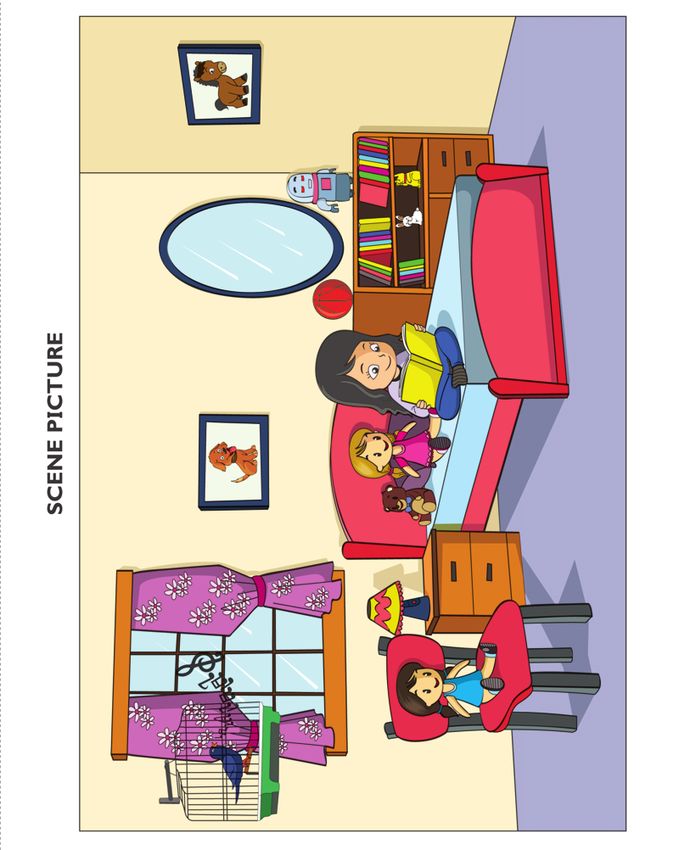
Introduction
              Welcome to the Teacher’s Guide to the Collins practice tests book for Cambridge English
              Qualifications Pre A1 Starters.
              This guide contains a comprehensive overview of each section of Cambridge English
              Qualifications Pre A1 Starters to help teachers and students to understand how the test works.
              It is also full of tips and ideas to help students to prepare for the test and contains the answer
              keys to the tests in this guide, scripts for the Speaking papers and audio scripts of the online
              recordings.
              We hope you and your students enjoy preparing for Cambridge English Qualifications Pre A1
              Starters. Good luck!

              Cambridge English Qualifications Young Learners tests
              The Cambridge English Qualifications Young Learners tests are for learners of English between
              the ages of 7 and 12.
              The tests are comprised of three levels: Pre A1 Starters, A1 Movers and A2 Flyers. These tests are
              designed to take learners from beginner level up to CEFR level A2.
              There’s no pass or fail in these tests – instead, every student gets a certificate with between
              one and five shields in each paper to show their level of achievement.

              What’s in the Pre A1 Starters test?
              Pre A1 Starters is the first level of the series and is aimed at students aged 7+. Instructions are
              simple and the content of the test consists only of the words and structures outlined in the Pre
              A1 Starters syllabus. The official vocabulary list for Pre A1 Starters is included at the back of this
              guide, and the full syllabus can be found in the Cambridge English Qualifications Young Learner’s
              Handbook for Teachers.
              The test has three papers:

                Paper                        Length                        Number of parts               Number of items
                Listening                    approx. 20 minutes            4                             20
                Reading & Writing            20 minutes                    5                             25
                Speaking                     3–5 minutes                   5                             –
              On pages 6–22, you will find further detailed information for each part of each paper, together
              with teaching tips and ideas to help you to prepare your students.

              Cambridge English Qualifications Pre A1 Starters Teacher’s Guide © HarperCollins Publishers 2018.             4

74863_Starters_TG_P001-047.indd 4                                                                                          13/12/17 11:06 am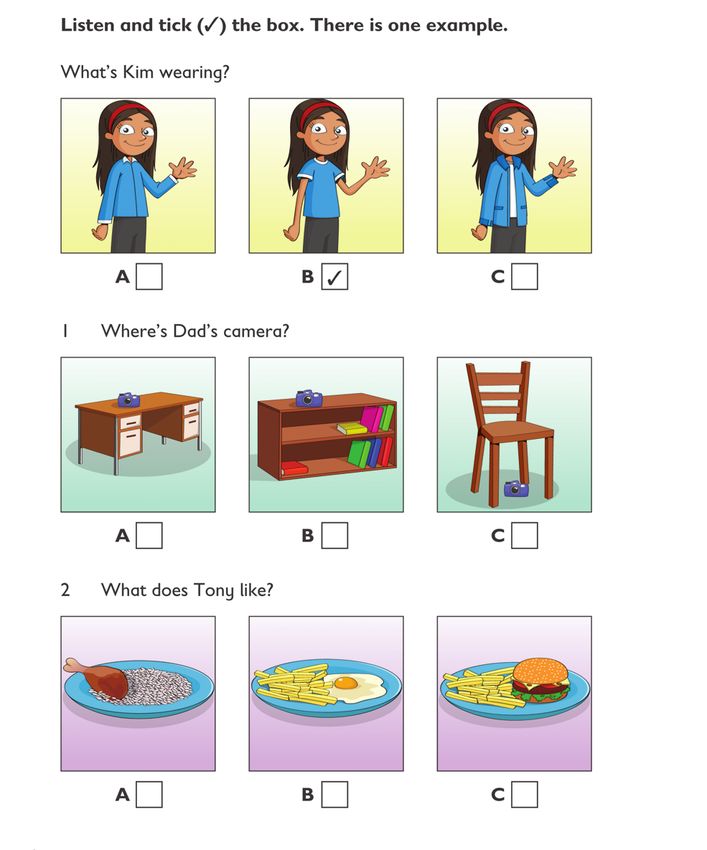
How to use this guide and the practice tests
               This guide has been designed to give you a thorough introduction to the Cambridge English
               Qualifications Pre A1 Starters test. The guide accompanies the Collins practice tests book for
               Cambridge English Qualifications Pre A1 Starters and includes for each of the three practice tests:
               ●   audio scripts for Listening
               ●   answer keys
               ●   scripts for Speaking (also online, first without and then with student’s responses).
               The practice tests replicate the Cambridge English Qualifications Pre A1 Starters test in terms of
               layout and content.
               This guide also includes tips for students on test day (see page 23) and vocabulary practice
               for you to do with your students (see page 24), so that they feel fully prepared and confident on
               test day.
               Here are some suggestions as to how you can use the practice tests in your classroom:
           ●   Examine the structure of the papers
               Help students to become familiar with the structure of each paper, so that they don’t leave out
               a part by mistake.
           ●   Study the rubrics in each part
               The rubrics used in the practice tests are identical to those used in the test papers – if students
               become familiar with the rubrics, then they won’t misinterpret instructions on test day and
               lose marks.
           ●   Create the exam experience
               You can get your students to do these practice tests under timed exam conditions so that they
               get used to this feeling and are not nervous on test day.
           ●   Revise grammar and vocabulary
               The practice tests use a wide variety of grammatical structures and vocabulary from the Pre A1
               Starters syllabus. While the course book that you’re using is likely to deal with these language
               and topics separately, in these practice tests the students will find the language all mixed
               together as it will be in the test. The practice tests give you the opportunity to recycle and
               revise topic work that you have done in class in an authentic way.

               Cambridge English Qualifications Pre A1 Starters Teacher’s Guide © HarperCollins Publishers 2018.      5

74863_Starters_TG_P001-047.indd 5                                                                                    13/12/17 11:06 am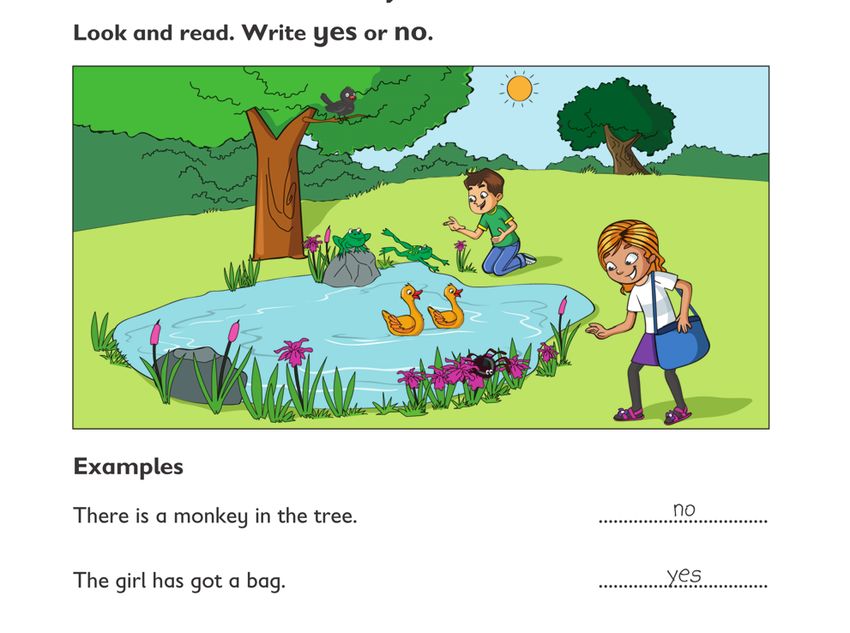
Guide to Cambridge English Qualifications Pre A1 Starters

                  Listening

              Summary
              Time: 20 minutes
              Number of questions: 20

                Part         Material                      Skills                            Desired outcome             Number of
                                                                                                                         questions
                1            Picture, names and            Listening for names and           Draw lines to match names   5
                             dialogue                      descriptions                      to people in a picture
                2            Illustrated                   Listening for numbers             Write numbers and names     5
                             comprehension                 and spelling
                             questions and dialogue
                3            Three-option                  Listening for specific             Tick boxes below            5
                             multiple-choice               information                       correct pictures
                             pictures and dialogues
                4            Picture and dialogue          Listening for words,     Follow instructions, then            5
                                                           colours and prepositions find and colour objects

              General tips for students
              ●     Listen carefully to the instructions.
              ●     Remember that you will hear an example (or sometimes two examples) once at the start of
                    each part.
              ●     Stay calm – if you miss the answer to a question the first time you listen, you will get
                    another chance to get it when you listen again.
              ●     You don’t have to spell the words perfectly if they are not spelt out for you in the recording.
              ●     Make sure you know the vocabulary, grammar and structures in the Pre A1 Starters syllabus,
                    including the expressions you will hear in the recordings, such as Pardon? Sorry? Right.

              Cambridge English Qualifications Pre A1 Starters Teacher’s Guide © HarperCollins Publishers 2018.                       6

74863_Starters_TG_P001-047.indd 6                                                                                                    13/12/17 11:06 am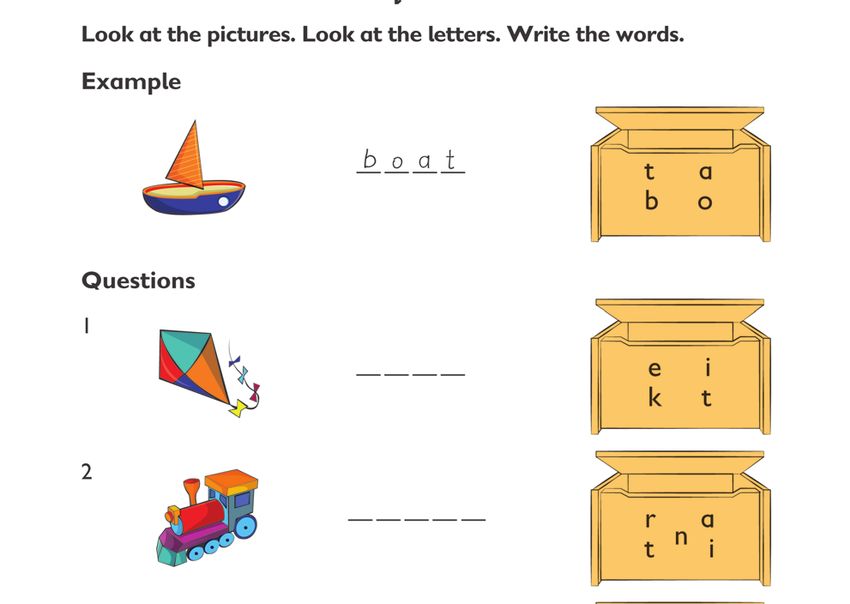
Listening Part 1
              Students look at a big picture showing people doing different things. There are seven names
              above and below the picture. Students listen to a dialogue between an adult and a child talking
              about the people in the picture. Students draw lines between the names and the correct
              people in the picture. There is one example.

              This is what Part 1 looks like. In the test,                                              This is what you hear …
              there are five more extracts from the
              dialogue about the people in the picture.
                             Listen and draw lines. There is one example.
                                                                                                        Look at Part 1. Look at the picture.
                                             Alice    Eva           Matt      Nick
                                                                                                        Listen and look. There is one example.
                                                                                                        Girl:      Here’s a photo of my birthday party,
                                                                                                                   Mr Black.
                                                                                                        Man:       Oh yes! That’s fantastic! Who’s that?
                                                                                                                   The girl with the camera?
                                                                                                        Girl:      That’s my friend, Eva. She loves taking
                                                                                                                   photos.
                                                                                                        Man:       So do I!
                                                                                                        Can you see the line? This is an
                                                                                                        example. Now you listen and
                                                                                                        draw lines.

                                               Hugo         Grace           Mark

              Tips for students
               35965_Test1_P007-024.indd 7                                           28/09/17 3:20 PM

              ●         Look carefully at the picture before you listen to the dialogue. You will need to focus on the differences
                        between similar people so try to think about what sort of language might be used to describe them
                        before you listen.
              ●         Be aware that the language of this part of the task will include descriptions of people’s clothes and
                        physical appearance, as well as what they are doing.
              ●         Draw neat, straight lines so that your answers are clear.

              Tips for teachers
              ●         Make sure that students are familiar with the names listed in the Pre A1 Starters vocabulary list at the
                        back of this guide.
              ●         Revise the present continuous tense, which students will hear in this part of the test.
              ●         Provide lots of practice in describing pictures of people.
                        ●         Ask students to work in pairs. Give a picture of a person to each student and ask them to take turns in
                                  describing what the person in their picture looks like and what they are doing. Then their partner should
                                  draw a picture of the person based on what they have heard. Compare the drawings to the original pictures.
                        ●         Project one picture from the practice tests book up onto the whiteboard. Students then make up
                                  questions about the people, focusing on what they look like, what they’re wearing and what they’re
                                  doing. Write up the question stems below and get students to complete them.
              ●         Highlight and check the understanding of the common expressions from this part:
                         ● Can you see ...?                                 ● Is he/she wearing a ...?
                         ● Who’s that boy/girl/man/woman?                   ● Yes, that’s him/her.
                         ● Is he the boy/girl/man/woman in the ...?         ● That’s ...

              ●         Get students to practise drawing lines accurately and neatly. For example, ask students to come to the board
                        in turn and draw a straight, neat line connecting two objects you have drawn. Vote for the neatest line!
              Cambridge English Qualifications Pre A1 Starters Teacher’s Guide © HarperCollins Publishers 2018.                                               7

74863_Starters_TG_P001-047.indd 7                                                                                                                            13/12/17 11:06 am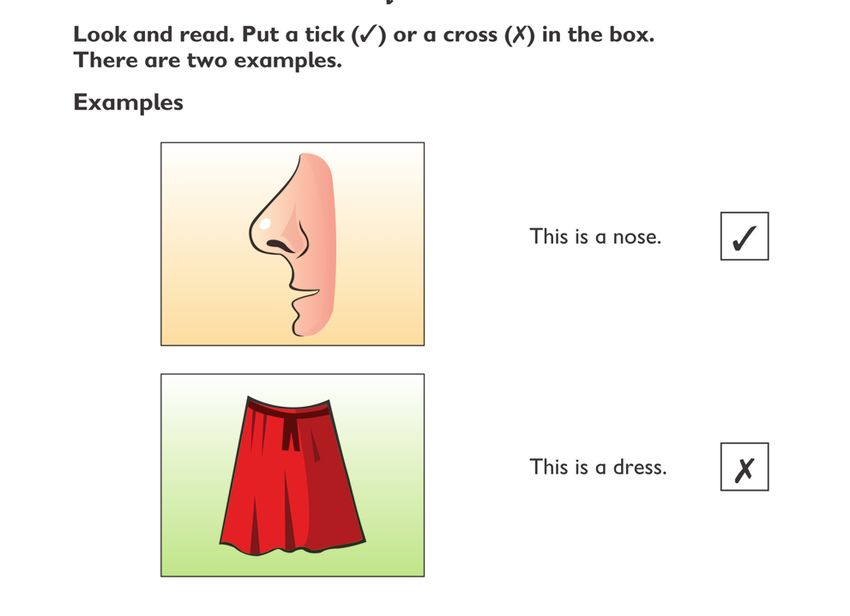
Listening Part 2
               Students see a picture and listen to a dialogue between an adult and a child. There are five
               questions on the question paper. Students have to write a number or a name for each answer.
               If the answer is a name, it is spelt in the dialogue. If the answer is a number, students can write
               it as a figure or a word. There are two examples.

               This is what Part 2 looks like. In the test there                    This is what you hear …
               are five more questions.

                                                                                    Part 2. Look at the picture. Listen and
                                                                                    write a name or a number. There are
                                                                                    two examples.
                                                                                    Man:          Hello, Lucy. Do you live here?
                                                                                    Girl:         Yes, I do.
                                                                                    Man:          Which is your house?
                                                                                    Girl:         Number 18.
                                                                                    Man:          The house with the blue door?
                                                                                    Girl:         Yes, that’s right.

                                                                                    Man:          Do you know that boy?
                                                                                    Girl:         Yes, that’s Tom. He likes football a lot.
                                                                                    Man:          How do you spell Tom?
                                                                                    Girl:         T-O-M, Tom.
                                                                                    Man:          OK.
                                                                                    Can you see the answers? Now you
                                                                                    listen and write a name or a number.

               Tips for students
               ●   Make sure you know all the names on the Pre A1 Starters syllabus and how to spell them
                   (Alex, Ann, Anna, Ben, Bill, Jill, Mr White, Miss Green, etc.).
               ●   Remember that you only have to write names or numbers for the answers. The names you
                   need to write will be spelt, and numbers can be written as a figure or a word.

               Tips for teachers
               ●   Make sure students know numbers 1–20 by playing Bingo! (see page 25) counting games,
                   guessing games and whispering games. For example, in small groups, whisper a number to
                   the first student, who whispers it to the next, and so on. The last student in the group comes
                   to the board, says the number aloud and writes the numeral on the board.
               ●   Play spelling games and guessing games with words in the Pre A1 Starters vocabulary list at
                   the back of this guide. For example, hold up flashcards and ask students to spell the word
                   for the class as a class activity. Focus on the double letter form where possible, for example,
                   G-I-R-A-double F-E.

              Cambridge English Qualifications Pre A1 Starters Teacher’s Guide © HarperCollins Publishers 2018.                                8

74863_Starters_TG_P001-047.indd 8                                                                                                             13/12/17 11:06 am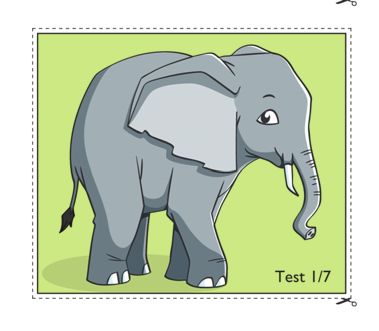
Listening Part 3
              Students listen to five short dialogues between different pairs of people. For each dialogue
              there is one question and a row of three pictures A, B and C. Students have to tick (✓) the
              picture which gives the answer to the questions. There is one example.

              This is what Part 3 looks like. In the test there                     This is what you hear …
              are three more questions.

                                                                                    Part 3. Look at the pictures. Now listen
                                                                                    and look. There is one example.

                                                                                    What’s Kim wearing?
                                                                                    Girl:         Do you like my new T-shirt?
                                                                                    Woman:        Yes, it’s very nice.
                                                                                    Girl:         I like blue. It’s my favourite colour.
                                                                                    Woman:        Me too.
                                                                                    Can you see the tick? Now you listen
                                                                                    and tick the box.

              Tips for students
              ●   Look carefully at each set of three pictures. You should describe them to yourselves silently
                  first, and then decide what the differences are between them before you choose your answer.
              ●   Listen to the whole dialogue first. Remember that you will hear each dialogue twice so you
                  have plenty of time to think about your answer.

              Tips for teachers
              ●   Make sure students know the words in the Pre A1 Starters vocabulary list at the back of this
                  guide. Play vocabulary games to practise and revise the words, e.g. Snap! Bingo! Memory
                  chain (see page 25).
              ●   Practise describing pictures. Stick pictures on the board for students to describe as a class
                  activity. Progress to pair work. Find three similar pictures and stick them on the board. Student
                  A describes one of the pictures, while Student B has to say which picture is being described.

              Cambridge English Qualifications Pre A1 Starters Teacher’s Guide © HarperCollins Publishers 2018.                             9

74863_Starters_TG_P001-047.indd 9                                                                                                          13/12/17 11:06 am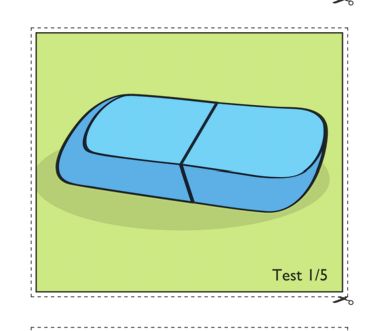
Listening Part 4
              Students see a big picture. Hidden in the picture are seven identical objects, e.g. seven books,
              or seven dolls. Students listen to a dialogue between an adult and a child about the picture.
              The adult tells the child to find six of the objects and to colour them. Students listen to the
              dialogue and colour five objects according to the instructions they hear. There is one example.

              This is what Part 4 looks like. In the test there                     This is what you hear …
              are five more objects to colour.

                                                                                    Part 4. Look at the picture. Listen and
                                                                                    look. There is one example.
                                                                                    Man:          Can you see the people in the living
                                                                                                  room? Let’s colour the picture.
                                                                                    Girl:         OK.
                                                                                    Man:          Can you see the robot next to the
                                                                                                  sofa?
                                                                                    Girl:         Yes, it’s on the floor.
                                                                                    Man:          That’s right. Can you colour it
                                                                                                  orange?
                                                                                    Girl:         Yes, OK.
                                                                                    Can you see the orange robot next to
                                                                                    the sofa? This is an example. Now you
                                                                                    listen and colour.

              Tips for students
              ●   Bring the full range of coloured crayons or pencils you will need for the test (black, blue,
                  brown, green, grey, orange, pink, purple, red, yellow).
              ●   Listen carefully for the preposition which will tell you where the object is and which colour
                  to use. Remember that using the correct colour is more important than how neatly you
                  colour the picture.

              Tips for teachers
              ●   Make sure students know the colours in the Pre A1 Starters vocabulary list at the back of
                  this guide. Play guessing games and spelling games. For example, spell a colour with dashes
                  only _ _ _ _ _ _ (yellow). The class may suggest ten letters only to find out the colour.
              ●   Practise listening for instructions by playing Colour dictation (see page 25). Choose colours
                  which aren’t obvious for the objects in the picture, e.g. Colour the man next to the girl
                  green, etc.

              Cambridge English Qualifications Pre A1 Starters Teacher’s Guide © HarperCollins Publishers 2018.                           10

74863_Starters_TG_P001-047.indd 10                                                                                                        13/12/17 11:06 am
Reading & Writing
Summary
Time: 20 minutes
Number of questions: 25
Part Material Skills Desired outcome Number of
questions
1 Words, pictures Reading short sentences Add tick or cross to show if 5
and sentences and recognising words sentences are true or false
2 Picture and sentences Reading sentences about Write yes or no 5
a picture and writing
one-word answers
3 Pictures and sets of Spelling single words Write words 5
jumbled letters
4 Gapped text, words Reading a text and Choose and copy 5
and pictures copying words missing words
5 Story presented through Reading questions about Write one-word answers 5
three pictures and five a picture story and to questions
questions writing one-word
answers
General tips for students
● Write neatly and spell words correctly. Don’t use joined-up writing as you could lose marks
if your answers are unclear.
● Read the instructions carefully and write the correct amount of words for each question.
● Make sure you know the vocabulary, grammar and structures in the Pre A1 Starters syllabus.
Cambridge English Qualifications Pre A1 Starters Teacher’s Guide © HarperCollins Publishers 2018. 11
74863_Starters_TG_P001-047.indd 11 13/12/17 11:06 amReading & Writing Part 1
Students see five pictures of different objects and read a sentence about each one. The
sentences begin This is a … or These are … They add a tick (✓) if the sentence is true or a cross
(✗) if it is false. There are two examples.
This is what Part 1 looks like. In the test there are five more pictures and sentences.
Tips for students
● Look at the pictures carefully before you decide your answer.
● Draw the ticks and crosses accurately and carefully so that they are clear for the examiner.
Tips for teachers
● Use flashcards to practise the structures This is a … and These are … Put students in groups.
Give them a selection of flashcards face down in the middle of the group. Students take
turns to pick up a card and describe it to the group saying This is a … or These are … . Vary
the activity by introducing a true/false element to the game.
● Practise writing ticks and crosses accurately and neatly. Play ticks and crosses (a variation of
noughts and crosses) as a board activity.
Cambridge English Qualifications Pre A1 Starters Teacher’s Guide © HarperCollins Publishers 2018. 12
74863_Starters_TG_P001-047.indd 12 13/12/17 11:06 amReading & Writing Part 2
Students look at a big picture and read five sentences about it. Some of the sentences are true
and some of them are false. Students have to write yes if the sentence is true or no if it is false.
There are two examples.
This is what Part 2 looks like. In the test there are five more sentences.
Tips for students
● You only need to write yes or no in your answer. Remember that if any part of the sentence
is false the answer should be no.
● Focus on the components of the sentence (adjectives, nouns, verbs, prepositions, numbers,
etc.) in order to decide if it’s true or not.
Tips for teachers
● Practise describing pictures. Find a suitable picture and stick it on the board. Describe it using
a mixture of true and false statements, e.g. A man is standing next to a car. (true); There is a
hippo in the water. ( false). Students decide if your statements are true or not and say yes
or no. Repeat with different pictures. Students can also play this in pairs with photocopied
pictures.
● Practise focusing on the components of a sentence, e.g. nouns, adjectives, verbs, numbers,
etc. Write a sentence on the board, e.g. The old man is sitting on a big sofa. Rub out a word
and ask the class to think of a substitute word, e.g. The young man is sitting on a big sofa.
Continue with one word at a time, making sure the sentence is always grammatically
correct, until the sentence is completely different.
Cambridge English Qualifications Pre A1 Starters Teacher’s Guide © HarperCollins Publishers 2018. 13
74863_Starters_TG_P001-047.indd 13 13/12/17 11:06 amReading & Writing Part 3
Students see five pictures and read a word anagram for each picture. There is a line of dashes
next to the anagram which shows how many letters are in the word. Students have to rearrange
the letters and write a letter on each dash in order to spell the word. There is one example.
This is what Part 3 looks like. In the test there are three more pictures and jumbled letters.
Tips for students
● Count the letters in the anagram first. Then identify the first letter, before trying to spell
the word.
● Cross out each letter in the anagram as you write it.
Tips for teachers
● Practise and revise the vocabulary in the Pre A1 Starters vocabulary list at the back of this
guide. For example, play Bingo! or other vocabulary games (see pages 24–25) to revise words
in specific lexical groups.
● Play spelling games. For example, use flashcards to elicit a word. Then write the word
anagram on the board, and below it the correct number of dashes for each letter. Ask
students to come to the board in turn to write one letter at a time to complete it. Practise
words with difficult spelling and double letters, e.g. photo, giraffe.
Cambridge English Qualifications Pre A1 Starters Teacher’s Guide © HarperCollins Publishers 2018. 14
74863_Starters_TG_P001-047.indd 14 13/12/17 11:06 amReading & Writing Part 4
Students see a picture and read a short text about it. There are five gaps in the text. Below
the text students see eight small labelled pictures. Students must choose five words from the
eight, and write them in the five gaps within the text. There is one example.
This is what Part 4 looks like.
Read this. Choose a word from the box. Write the correct word
next to numbers 1–5. There is one example.
Lizards
Lizards have got four legs , a long (1) and two
(2) . Their babies come from (3) .
Lizards like sitting in the (4) on hot days. They can
run and they can (5) but they cannot fly.
Example
legs tree eyes swim
apples eggs sun tail
Tips for students
35965_Test1_P007-024.indd 18 8/16/17 7:40 PM
● Read the text first and try and guess the missing words based on the general meaning of the
text. After that, you should look for the word in the pictures below.
● Look for clues in the gapped text, e.g. a, an, these, one, two which will help you to decide if
the word you need is singular, plural or begins with a vowel or a consonant.
● Remember that only one word is needed for each answer.
Tips for teachers
● Play matching games with flashcards to practise matching words to pictures.
● Play a guessing game. For example, choose four or five nouns from one lexical group in the
Pre A1 Starters vocabulary list at the back of this guide and write them on the board, e.g. cat,
bird, hippo, crocodile, horse. Choose one and say a statement which describes it. Students
identify the word or words that are excluded by the statement, e.g. It’s got four legs. (bird).
Cross the word(s) off the list. Continue saying statements until students have guessed the
word you have chosen, e.g. It’s got a long tail. (hippo); it lives in water. (horse, cat). The answer
is crocodile. Ask students to give you more statements that describe the crocodile, e.g. It’s
got lots of teeth. It’s got two eyes. It can swim. It can run.
Cambridge English Qualifications Pre A1 Starters Teacher’s Guide © HarperCollins Publishers 2018. 15
74863_Starters_TG_P001-047.indd 15 13/12/17 11:06 amReading & Writing Part 5
Students look at a picture story. Each picture has one or two questions below it. There are
three pictures and five questions in total. Students write one word for each answer. In some
cases, one or two words are provided in the answer, but in all cases students only have to write
one word. The word may be a noun, a verb or a number. There are two examples.
This is what Part 5 looks like. In the test there are five more questions.
Tips for students
● Take the time to focus on the Wh- question word so that you don’t make a mistake when
answering the question.
● Think carefully about your answer. Remember it is only one word and it could be a noun, a
verb or a number.
Tips for teachers
● Revise the difference in meaning between Wh- question words, e.g. Who (about a person);
Where (about a place); What (about information); How many (about numbers). Put a picture
on the board. Write a jumbled Wh- question next to it for the class to work out, e.g. elephant/
the/Where/is ? Continue with more examples (Who, What, Where, How many). Put another
picture on the board for students to ask and answer questions in pairs.
● Play a clapping game to practise numbers 1–20. Hold up a number flashcard or say a number (8).
Clap with the students the correct number of times (eight times), counting as you do so.
Add variety by clapping faster or slower for different numbers.
● Play Colour dictation (see page 25) to practise colours.
Cambridge English Qualifications Pre A1 Starters Teacher’s Guide © HarperCollins Publishers 2018. 16
74863_Starters_TG_P001-047.indd 16 13/12/17 11:06 amSpeaking
Summary
Time: approximately 4 minutes
Part Material Skills Desired outcome
1 Scene picture and Understanding and following Point to correct parts of the picture,
eight small object some spoken instructions following examiner’s instructions
cards
Put object cards on the scene picture,
following examiner’s instructions
2 Scene picture Understanding and Answer questions with short answers
answering spoken questions including a response to one Tell me
about … question
3 Three object cards Understanding and Answer questions with short answers
answering spoken questions
4 None Understanding and Answer questions with short answers
responding to personal
questions
General tips for students
● Say Hello at the beginning, say your name when asked, and say Thank you and Goodbye at
the end.
● Listen carefully and pay attention to what the examiner asks you to do or say.
● Take plenty of time and to ask the examiner to repeat an instruction if you don’t understand.
● Make sure you know the vocabulary, grammar and structures in the Pre A1 Starters syllabus.
General tips for teachers
● Use the scripts for Speaking to help students to practise for this part of the test. The website
provides recordings for each of the practice tests, first without student’s responses so that
students can practise giving their own responses, then with student’s responses – sometimes,
you might need to pause the track for longer, to give students time to respond. Then the
recording is repeated with student’s responses which can be used as a model.
Cambridge English Qualifications Pre A1 Starters Teacher’s Guide © HarperCollins Publishers 2018. 17
74863_Starters_TG_P001-047.indd 17 13/12/17 11:06 amSpeaking Part 1
The examiner greets the student and asks their name. The student says Hello and says their
name. The student looks at a big scene picture. The examiner points to some things in the
picture and asks the student to do the same. The student finds the objects in the picture and
points to them, to show that they have understood. The student doesn’t have to say anything.
The examiner shows the student some object cards. The examiner names an object and asks
the student to point to it. The examiner then gives the student instructions and asks them to
place three of the object cards in certain positions in the big scene picture. Students shouldn’t
worry if the instruction seems silly.
This is what Part 1 looks like.
Test 1/3 Test 1/2
Test 1/6
The examiner might say:
Look at this picture. This is a girl’s bedroom. ... Now look at these. Which is the chicken? ...
The girl is reading a book. Here’s the girl. ... I’m putting the chicken under the bed. ...
Where’s the mirror? ... Now you put the chicken between the ball and the
35965_Test1_P007-024.indd 23 27/09/17 3:58 PM
Where are the books? ... 35965_Test1_P007-024.indd 23
robot. ... 27/09/17 3:58 PM
Which is the lemon? ... Put the lemon next to the
lamp. ...
Which is the shoe? ... Put the shoe behind the chair. ...
35965_Test1_P007-024.indd 23 27/09/17 3:58 PM
Tips for students
● Say Hello to the examiner at the beginning and Thank you and Goodbye at the end.
● Look closely at the picture and identify people, animals and objects and where they are.
● Pay attention to what the examiner says. He/She will show you what you have to do by
pointing to an object in the picture. Follow the instructions and point to the objects. At this
stage you don’t have to say anything.
● When the examiner gives you an instruction, listen carefully for the prepositions so that you
know where to place the object cards in the picture, e.g. Put the shoe behind the chair.
Tips for teachers
● Provide plenty of practice on how to say Sorry, or I don’t understand. For example, play
Secret whispers to practise this structure (see page 24).
● Play games with flashcards to practise identifying people, animals and things in pictures.
For example, hold up some flashcards and then put them in different places around the
classroom. Ask a question, e.g. Where are the flowers? Students point to the correct flashcard
and answer the question, e.g. They’re under the table.
Cambridge English Qualifications Pre A1 Starters Teacher’s Guide © HarperCollins Publishers 2018. 18
74863_Starters_TG_P001-047.indd 18 13/12/17 11:06 am● Provide lots of practice of prepositions (in, on, between, behind, next to, under, in front of)
and nouns. Bring a selection of objects to the lesson and put them in different places around
the classroom. Ask Where’s the (orange)? Encourage students to call out the answer using
complete sentences and the correct preposition, e.g. It’s under the chair.
● Play drawing dictation games using prepositions and vocabulary from the Pre A1 Starters
vocabulary list at the back of this guide. This will provide practice of listening to instructions.
Cambridge English Qualifications Pre A1 Starters Teacher’s Guide © HarperCollins Publishers 2018. 19
74863_Starters_TG_P001-047.indd 19 13/12/17 11:06 amSpeaking Part 2
The examiner asks the student some questions about the big scene picture again, including one
Tell me about… question. The student gives one-word answers apart from the Tell me about…
question where they are expected to say a sentence.
The examiner might say:
Now … what’s this? ...
What colour is it? ...
How many dolls are there? ...
What’s the bird doing? ...
Tell me about the girl.
Tips for students
● Listen carefully to the Wh- question word so that you know how to answer the question
correctly, e.g. What, Where, How many ...
● Remember that you only have to give one-word answers except for the Tell me about…
question.
Tips for teachers
● Make sure students know the difference in meaning between the different Wh- question
words. Play vocabulary games to practise and revise the words in the Pre A1 Starters
vocabulary list at the back of this guide.
● Revise asking and answering Wh- questions. For example, use flashcards to play guessing
games. Hold up a flashcard but only show a part of it. Ask questions using a variety of forms,
e.g. What’s this? What colour is the shirt? and also the present continuous tense, e.g. What’s
the girl doing? Where are the children playing?
Cambridge English Qualifications Pre A1 Starters Teacher’s Guide © HarperCollins Publishers 2018. 20
74863_Starters_TG_P001-047.indd 20 13/12/17 11:06 amSpeaking Part 3
The examiner chooses three object cards and asks the student questions about each one.
The first question is about the object and the next two questions are personal questions.
The examiner might say:
[points to the rubber card] What’s this? ...
Have you got a rubber? ...
What colour is it? ...
[points to the elephant card] What is this? ...
Do you like elephants? ...
What’s your favourite animal? ...
[points to the football card] What’s this? ...
Do you play football? ...
What sport do you play at school? ...
Tips for students
● Listen carefully to the examiner. The examiner will choose an object card and ask you a
question about it, e.g. What sport is this? (tennis). Then the examiner will then ask two
personal questions related to this first question, e.g. Can you play tennis? (Yes, I can.); Do you
like tennis? (no).
● Listen carefully to the question words in the questions so that you know how to answer, e.g.
How many brothers and sisters have you got? How old are you? Do you like animals?, etc.
Tips for teachers
● Give the students plenty of practice in identifying and describing the nouns in the Pre A1
Starters vocabulary list at the back of this guide. Use flashcards to play What is it? and other
vocabulary games to revise and practise vocabulary (see pages 24–25).
● Practise asking and answering questions. For example, write some questions on the board,
e.g. What’s your favourite food? How old is your friend? Can you play tennis? Do you like ice
cream? Ask a student to stand up and choose a question. They choose another student to
ask the question to, who in turn stands up and answers it. Continue around the class.
● Do pair work. Write some suitable questions on separate pieces of paper and hand them out.
Students shuffle them and place them face down on the table. They take turns to choose a
piece of paper and ask and answer questions in pairs.
Cambridge English Qualifications Pre A1 Starters Teacher’s Guide © HarperCollins Publishers 2018. 21
74863_Starters_TG_P001-047.indd 21 13/12/17 11:06 amSpeaking Part 4
The examiner asks the student some questions about themselves, e.g. their age, family, school.
The examiner might say:
Now … how old are you? ...
How many brothers and sisters have you got? ...
Is your house big or small? ...
OK. Thank you … Goodbye.
Tips for students
● Remember to say Thank you and Goodbye at the end.
● Be prepared to answer questions about yourself.
Tips for teachers
● Remind students to say Goodbye and Thank you at the end. Students can practise this in
pairs, small groups or as a class activity.
● Help students to prepare a list of personal information about themselves that they can
prepare and revise. Help them to write the questions and answers that go with them.
Students can practise asking and answering the questions in pairs.
Name: Helena What’s your name? I’m Helena.
Age: 8 How old are you? I’m eight.
Favourite animal: elephant What’s your favourite animal? An elephant.
Friend: Anna What’s your friend’s name? Anna.
Can: ride a bike. Can you …? Yes, I can / No, I can’t.
Like: mangoes, cats, football Do you like …? Yes, I do. / No, I don’t.
Don’t like: swimming, spiders Do you like …? Yes, I do. / No, I don’t.
● Explain to the students that if they don’t know the exact word they need in order to
answer a question truthfully, they can invent the answer. Explain that, in the test, it’s more
important that they give a correct answer with a word they know, than make a mistake
because they’re trying to give a true answer.
Cambridge English Qualifications Pre A1 Starters Teacher’s Guide © HarperCollins Publishers 2018. 22
74863_Starters_TG_P001-047.indd 22 13/12/17 11:06 amTips for students on test day
Before the test
● Bring pencils, a rubber and a pencil sharpener with you. Write answers in pencil so that you
can easily correct any mistakes.
● Bring coloured crayons or pencils in the full range of colours you will need for the colouring
exercise (black, blue, brown, green, orange, purple, red, pink, grey, yellow).
● Arrive in plenty of time for the test.
During the test
● Don’t be nervous. This test is designed to help you to show what you do know and not what
you don’t.
● Read all the instructions carefully, so that you know exactly what to do.
● Look at the pictures and the details in them carefully.
● Remember that in the Listening paper you will hear the dialogue twice. This will give you
time to think about your answer.
● Think about each word carefully before you write it so that you spell it correctly.
● Check your answers carefully when you’ve finished.
Cambridge English Qualifications Pre A1 Starters Teacher’s Guide © HarperCollins Publishers 2018. 23
74863_Starters_TG_P001-047.indd 23 13/12/17 11:06 amVocabulary practice
At the back of this guide, you will find a list of all the vocabulary in the Pre A1 Starters syllabus.
Use the topic-by-topic list with the games below to focus on particular areas of vocabulary
that your students need practice in. Some topics regularly appear in specific parts of each
paper (see pages 6–22 for advice on this), so you can use the games below to provide extra
practice in these areas.
Some American equivalent words are included in the vocabulary list. Although the British
variant will be used in texts, students may need to understand the American words in some of
the other parts of the test.
The vocabulary list also includes the names that students will need to recognise at this level.
Include them in activities throughout the course.
Make sure that students understand the words used in instructions that they will hear/see
during the test by practising them in class. These are the words used most frequently:
Verbs Nouns
choose listen see answer line story
colour look tick box name tick
draw read write cross number word
example picture
letter question
Make a set of flashcards for use in some of the vocabulary games below. Draw pictures, or stick
pictures from magazines on same-size pieces of card, to represent nouns or actions. Make sets
of cards for the different lexical sets that are in the Pre A1 Starters vocabulary list, e.g. animals,
the body, clothes, family, food (see Pre A1 Starters vocabulary list at the back of this guide). Use
the flashcards for vocabulary practice as follows:
a) Hold up a flashcard for students to call out the word, e.g. basketball.
b) Hold up a flashcard for students to build a sentence with, e.g. I can’t play basketball. I like
basketball.
c) Use flashcards to prompt your students to answer questions, e.g. What is it? (a basketball);
Where is it? (under the chair;) How many (basketballs) are there? (two); Is it a (basketball)?
(no); Are these (basketballs)? (yes); Is that a basketball? (no).
Vocabulary games
Mystery word Secret whispers
● Choose a group of words that you want ● Write a group of words on a piece of paper
to practise. or display a group of flashcards on the table.
Ask one student to silently choose a word and
● Choose a flashcard. Then next to it, write the
whisper it to the student next to him or her.
correct number of dashes for each letter of
the word, e.g. _ _ _ _ _ (apple). ● Students continue whispering the word
around the group. The last student stands up
● Students take turns to come to the board
and says the word to the group to see if it’s
and write a letter. First they say the letter. If
the same as the original word chosen by the
it’s correct, they write it on one of the letter
first student.
dashes. If it is incorrect, they write it in a circle
next to the word and cross it out, so that
no-one chooses that letter a second time.
● Continue until students have spelt the
word correctly.
Cambridge English Qualifications Pre A1 Starters Teacher’s Guide © HarperCollins Publishers 2018. 24
74863_Starters_TG_P001-047.indd 24 13/12/17 11:06 amAnagram words Yes or no?
● Choose a flashcard. Write the jumbled letters ● Hold up a flashcard and say a sentence using
of the word on the board. Then next to it, or not using the word.
write the correct number of dashes for each
● For example, hold up the apple card and say
letter.
I’m eating an apple. Students call out yes. Hold
● Point to the flashcard and elicit the word up the football card and say I’m playing tennis.
from the class. Students call out no.
● Students take turns to come to the board
and write one letter at a time. Each time they Colour dictation
choose a letter they must cross it out from
the anagram. ● Photocopy a black and white line drawing of
a scene which is suitable for the level, e.g. a
● Continue until they have completed park scene, or playground scene. Give a copy
the word. to each student in the class and keep a copy
for yourself.
Snap! ● Give colouring instructions, e.g. Colour the
duck blue. Colour the man next to the tree red.
● Choose a set of flashcards. Put the flashcards
Colour your own picture as you do so, making
in a pile on the table. Choose a word from the
sure the students can’t see what you’re doing.
group and write it on the board.
● When you’ve finished, pin your coloured
● Take a card from the pile, keeping it turned
picture to the board. Students compare their
towards you and hidden from the class.
pictures with yours.
Quickly turn it around so that they can see
it. If the word represented by the flashcard
matches the word written on the board they Memory chain
must shout Snap! and then say the word
correctly. ● Say a sentence that ends with a word from a
vocabulary group you want to practise,
e.g.Idon’t like pineapples …
Bingo!
● Choose a student to repeat the sentence
● Choose a group of words you want to and add a word, e.g. I don’t like pineapples
practise. Write the words on the board. and oranges … The next student repeats the
sentence and adds another word, and so on.
● Ask the students to draw a 3 x 3 grid on
a piece of paper. In each of the squares, ● Continue until someone forgets a word
they write a different word from the list in the chain or until you have practised all
on the board. the words.
● Call out words from the list on the board in
turn. Keep a secret note of the words as you What is it?
say them, so that you don’t repeat them.
● Choose a selection of flashcards from
● Students cross out the words on their grid as different word groups and shuffle them.
they hear them. The first student to cross off
a line of three shouts Bingo! ● Take one, look at it and put it face down on
the desk. Start describing it for the students
to guess what it is, e.g. It’s a fruit. It’s long.
Mime it! It’s yellow. Students call out the answer. It’s a
banana!
● Write a group of action words on the board or
display a group of flashcards on the table. ● Hand the cards out to the class. Students take
turns to describe their flashcards for the class
● Students take turns to come to the front
to guess.
of the class and mime one of the words on
the board.
● When students call out the word correctly,
cross out the word or turn over the flashcard.
This can be played as a class activity or
in teams.
Cambridge English Qualifications Pre A1 Starters Teacher’s Guide © HarperCollins Publishers 2018. 25
74863_Starters_TG_P001-047.indd 25 13/12/17 11:06 amKey to tests
Test 1: Audio scripts for Listening
Listening Part 1 5
Track 01 Girl: And there’s my friend, Mark. He’s got a yellow
Practice tests for Cambridge English Qualifications T-shirt and a blue hat.
Pre A1 Starters. Copyright HarperCollins Publishers 2018. Man: The one with a burger in his hand?
Hello. This is the Collins practice tests for Cambridge Girl: Yes, that’s him. He loves burgers!
English Qualifications Pre A1 Starters Listening Test, Man: Me too!
Test 1.
Look at Part 1. Look at the picture. Listen and Now listen to Part 1 again.
look. There is one example. [The recording is repeated.]
Girl: Here’s a photo of my birthday party, Mr Black. That is the end of Part 1.
Man: Oh yes! That’s fantastic! Who’s that? The girl
with the camera?
Girl: That’s my friend, Eva. She loves taking photos.
Listening Part 2
Man: So do I! Track 02
Part 2. Look at the picture. Listen and write a
Can you see the line? This is an example. Now name or a number. There are two examples.
you listen and draw lines.
Man: Hello, Lucy. Do you live here?
Girl: Yes, I do.
1 Man: Which is your house?
Girl: Can you see my mum? Girl: Number 18.
Man: Is she holding the cake? Man: The house with the blue door?
Girl: Yes, she is. Girl: Yes, that’s right.
Man: What’s her name?
Girl: Her name’s Alice. Man: Do you know that boy?
Man: Oh, OK. Girl: Yes, that’s Tom. He likes football a lot.
Man: How do you spell Tom?
2 Girl: T-O-M, Tom.
Man: Who’s that boy with the yellow hat? Man: OK.
Girl: The boy with the orange juice? Can you see the answers? Now you listen and
write a name or a number.
Man: Yes, who’s he?
Girl: That’s my friend Nick.
1
3 Man: Where does Tom live?
Man: And what’s that boy’s name? The boy on his Girl: He lives at number 16.
phone.
Man: Has he got any brothers and sisters?
Girl: That’s Matt. He’s my brother.
Girl: Yes, he’s got one baby sister.
Man: Oh! He’s got a nice phone.
Girl: I know! It’s new. He loves it!
2
Man: And who’s that girl?
4
Girl: She’s my sister.
Man: One person is sleeping.
Man: What’s her name?
Girl: Yes! That’s my dad!
Girl: Her name’s Pat.
Man: What’s his name?
Man: Pat? How do you spell Pat?
Girl: His name is Hugo.
Girl: P-A-T.
Cambridge English Qualifications Pre A1 Starters Teacher’s Guide © HarperCollins Publishers 2018. 26
74863_Starters_TG_P001-047.indd 26 13/12/17 11:06 am3 3
Man: Is that your cat, Lucy? What’s Jill drawing?
Girl: Yes, it is. He’s an old cat. Man: Hi, Jill. Are you drawing a picture?
Man: How old is he? Girl: Yes, I’m drawing a picture of my cat.
Girl: He’s 12. That’s old for a cat. Man: Oh, it’s very nice. What colour is your cat?
Man: Yes, it is. Girl: He’s brown and orange. I’m colouring it now.
Man: Has he got a long tail?
4 Girl: Yes, look!
Man: What a beautiful cat!
Man: What’s his name?
Girl: His name’s Sam.
Man: I like that name. Is that S-A-M?
4
Girl: Yes, that’s right. What sport does Bill play at school?
Woman: Do you play hockey at school Bill?
5 Boy: No. I can’t play hockey.
Girl: We’ve got lots of cats. Woman: What sports do you play?
Man: Oh? How many cats have you got? Boy: We play basketball … but my favourite sport is
Girl: Three. But Sam’s my favourite cat. football. We play a lot of football too.
Man: Yes, he’s a very nice cat.
5
Now listen to Part 2 again.
[The recording is repeated.] Which is Sue’s bike?
That is the end of Part 2. Man: Hi, Sue. Is that your bike?
Girl: The red bike in front of the house?
Man: Yes, that’s right.
Listening Part 3 Girl: No, that’s Jill’s bike. My bike’s pink.
Track 03 Man: Where is it?
Part 3. Look at the pictures. Now listen and Girl: It’s in the garden.
look. There is one example.
Now listen to Part 3 again.
[The recording is repeated.]
What’s Kim wearing?
That is the end of Part 3.
Girl: Do you like my new T-shirt?
Woman: Yes, it’s very nice.
Girl: Blue is my favourite colour. Listening Part 4
Woman: Me too. Track 04
Part 4. Look at the picture. Listen and look.
Can you see the tick? Now you listen and tick There is one example.
the box.
Man: Can you see the people in the living room? Let’s
colour the picture.
1 Girl: OK.
Where’s Dad’s camera? Man: Can you see the robot next to the sofa?
Girl: Yes, it’s on the floor.
Man: I can’t find my camera.
Man: That’s right. Can you colour it orange?
Woman: Is it on your desk?
Girl: Yes, OK.
Man: No, I can’t see it.
Woman: I know. Is it on the bookcase? Can you see the orange robot next to the sofa? This is an
Man: No. Oh here it is. It’s under the chair. example. Now you listen and colour.
2 1
What does Tom like? Man: OK. Now can you see the girl?
Woman: Do you like chicken and rice Tom? Girl: Yes, she’s drawing a picture.
Boy: Hmm. I like chicken but I don’t like rice. Man: That’s right. There’s a robot under the table.
Woman: Oh, I see. Do you like burger and chips? Girl: Um … Oh, yes. There it is.
Boy: Well, I like chips. But my favourite food for Man: Good. Well, colour it red please.
dinner is egg and chips. Girl: OK. I’m colouring it red now.
Cambridge English Qualifications Pre A1 Starters Teacher’s Guide © HarperCollins Publishers 2018. 27
74863_Starters_TG_P001-047.indd 27 13/12/17 11:06 am2 4
Man: There’s a robot in the bookcase. Man: Right. Now find the robot behind the sofa.
Girl: Where? Girl: Behind the sofa?
Man: It’s under the lamp. Man: Yes.
Girl: Yes, I can see it now. Girl: Umm … Here it is.
Man: Can you colour it yellow? Man: Do you want to colour it pink?
Girl: OK. Girl: OK. Now it’s pink.
3 5
Man: Can you see the boy and the dog? Man: OK. Now there’s a robot on the table. Can you
Girl: Yes, they’re playing on the floor. see it?
Man: And can you see the robot? Girl: Yes, there it is.
Girl: Yes, it’s between the boy and the dog. Man: That’s right. Colour it grey please.
Man: That’s right. Girl: Grey. OK.
Girl: Can I colour it brown? Man: That’s very good.
Man: Yes, OK. Colour it brown. Now listen to Part 4 again.
[The recording is repeated.]
That is the end of the Pre A1 Starters Listening Test,
Test 1.
Cambridge English Qualifications Pre A1 Starters Teacher’s Guide © HarperCollins Publishers 2018. 28
74863_Starters_TG_P001-047.indd 28 13/12/17 11:06 amTest 1: Answer key
Listening Part 1 (5 marks) Reading & Writing Part 1 (5 marks)
Listen and draw lines. There is one example. 1✓ 2✗
Alice Eva Matt Nick 3✓ 4✓
5✗
Reading & Writing Part 2 (5 marks)
1 yes 2 no
3 yes 4 no
5 yes
Reading & Writing Part 3 (5 marks)
1 kite 2 train
3 robot 4 lorry
5 helicopter
Hugo Grace Mark
Reading & Writing Part 4 (5 marks)
1 tail 2 eyes
3 eggs 4 sun
5 swim
Listening Part 2 (5 marks)
35965_Test1_P007-024.indd 7 28/09/17 3:20 PM
Reading & Writing Part 5 (5 marks)
11 2 Pat 1 red 2 monkey
3 12 4 Sam 3 tree 4 coconut
53 5 man
Listening Part 3 (5 marks)
1C 2B
3A 4B
5C
Listening Part 4 (5 marks)
1 robot under the table = red
2 robot under the lamp = yellow
3 robot between the boy and the dog = brown
4 robot behind the sofa = pink
5 robot on the table = grey
Cambridge English Qualifications Pre A1 Starters Teacher’s Guide © HarperCollins Publishers 2018. 29
74863_Starters_TG_P001-047.indd 29 13/12/17 11:06 amTest 1: Scripts for Speaking
Speaking Parts 1–5
Track 05
[This is the recording without student’s responses. This recording includes pauses so that
students can practise taking part in the Speaking Test. Sometimes, you might need to pause
the track for longer, to give students time to respond.]
Track 06
[This is the recording with student’s responses.]
Part To do To say Student’s response Back-up questions
(variations possible)
1 [The usher brings [The usher to the examiner:
the student in.] Hello. This is (student’s name).]
Point to the Hello (student’s name). My Hello.
scene picture. name’s (examiner’s name).
Point to the girl Look at this picture. This is a girl’s
in the scene bedroom. The girl is reading a
picture. book.
Here’s the girl. Points to the items in
the scene picture.
Where’s the mirror? Is this a mirror?
Where are the books? Are these books?
Point to the Now look at these. Points to the Is this a chicken?
object cards. Which is the chicken? chicken card.
I’m putting the chicken under
the bed.
Now you put the chicken Puts the chicken card Where’s the chicken?
between the ball and the robot. in place. It’s between the ball
and the robot.
Which is the lemon? Points to the Is this a lemon?
lemon card.
Put the lemon next to the lamp. Puts the lemon card Where’s the lemon?
in place. It’s next to the lamp.
Which is the shoe? Points to the Is this a shoe?
shoe card.
Put the shoe behind the chair. Puts the shoe card Where’s the shoe? It’s
in place. behind the chair.
Cambridge English Qualifications Pre A1 Starters Teacher’s Guide © HarperCollins Publishers 2018. 30
74863_Starters_TG_P001-047.indd 30 13/12/17 11:06 amPart To do To say Student’s response Back-up questions
(variations possible)
2 Remove the Now … what’s this? A doll. Is it a doll?
object cards and
point to the doll
on the bookcase What colour is it? Pink. Is it pink or blue?
in the scene
picture.
How many dolls are there? Two. Are there two or
three?
Point to the bird. What’s the bird doing? Singing. Is it singing?
Point to the girl. Tell me about the girl. She’s reading a book. What’s she doing?
3 Put the scene
picture away and
pick out three
object cards.
Show the What’s this? A rubber. Is it a rubber?
rubber card. Have you got a rubber? Yes./No. Is it blue or red?
What colour is it? Blue./Red. etc. Have you got a
rubber?
Show the What is this? An elephant. Is it an elephant?
elephant card.
Do you like elephants? Yes./No.
What’s your favourite animal? A tiger./A horse. etc.
Show the What’s this? A football. Is it a television?
football card.
Do you play football? Yes./No.
What sport do you play Basketball. etc.
at school?
4 Put away all the Now … how old are you? Eight. Are you eight, nine?
object cards.
How many brothers and sisters Two sisters and one Have you got a sister
have you got? brother. etc. / a brother?
Is your house big or small? Small./Big. Is your house big?
OK. Thank you. Goodbye. Goodbye.
Cambridge English Qualifications Pre A1 Starters Teacher’s Guide © HarperCollins Publishers 2018. 31
74863_Starters_TG_P001-047.indd 31 13/12/17 11:06 amTest 2: Audio scripts for Listening
Listening Part 1 Listening Part 2
Track 07 Track 08
Hello. This is the Collins practice tests for Cambridge English Part 2. Look the picture. Listen and write a name or a
Qualifications Pre A1 Starters Listening Test, Test 2. number. There are two examples.
Look at Part 1. Look at the picture. Listen and Woman: Hello, Alex. Do you know that girl?
look. There is one example. Boy: Yes, her name’s Jill.
Woman: How do you spell that?
Boy: Do you like this photo of my classroom,
Boy: J-I-double L. Jill.
Grandma?
Woman: Oh.
Woman: Oh yes, I do. It’s great! Who’s that girl? She’s
walking into the classroom. She’s got red hair.
Woman: How old is Jill?
Boy: Oh, That’s my friend Kim.
Boy: Um. She’s eight.
Woman: She’s got a lot of books!
Woman: Eight?
Boy: Yes, she has.
Boy: Yes, that’s right.
Can you see the line? This is an example. Now
you listen and draw lines. Can you see the answers? Now you listen and
write a name or a number.
1
1
Boy: And there’s my friend Anna.
Woman: And how old are you, Alex? Are you eight?
Woman: Where is she?
Boy: No, I’m seven.
Boy: She’s writing some numbers on the board.
Woman: Sorry?
Woman: Oh yes, I can see her.
Boy: I’m seven.
2
Woman: What’s your teacher’s name? 2
Boy: Mrs Lucy. She’s very nice. I love her lessons! Woman: Do you know that woman? She’s walking with
They’re fun! her dog.
Woman: Oh good! She’s smiling in the photo. Boy: That’s my cousin. Her name’s Grace.
Boy: Yes, she’s very happy! Woman: How do you spell that?
Boy: G-R-A-C-E. Grace
Woman: She looks nice.
3
Boy: Yes, she is.
Woman: And who’s that boy? He’s got brown hair
and glasses.
Boy: That’s Tom. 3
Woman: He knows the answer to the question! Woman: Do you like school?
Boy: Yes, he does. Boy: Yes. And I like my friends.
Woman: How many friends have you got?
4 Boy: Um … six. I’ve got six friends.
Woman: One girl isn’t looking at the teacher. She’s Woman: That’s good.
looking in her bag.
Boy: That’s Sue. 4
Woman: I like her red bag. Woman: Are those boys your friends?
Boy: Me too! It’s cool! Boy: Yes, they’re in my class.
Woman: The boy with black hair. What’s his name?
5 Boy: His name’s Ben. B-E-N. He’s nice.
Boy: Can you see Bill? Woman: I like that name.
Woman: No, who’s he?
Boy: He’s sitting next to Sue. 5
Woman: Oh yes, I can see him. He’s writing in his book. Woman: How many children are in your class?
Boy: Yes, that’s right. Boy: Nineteen.
Now listen to Part 1 again. Woman: That’s a small class.
[The recording is repeated.] Boy: Yes, it is.
That is the end of Part 1. Now listen to Part 2 again.
[The recording is repeated.]
That is the end of Part 2.
Cambridge English Qualifications Pre A1 Starters Teacher’s Guide © HarperCollins Publishers 2018. 32
74863_Starters_TG_P001-047.indd 32 13/12/17 11:06 amListening Part 3 5
Track 09 What colour is Grandma’s jacket?
Part 3. Look at the pictures. Now listen and look.
Boy: Thanks for this cake, Grandma. Are you going
There is one example.
now?
Grandma: Yes, now where’s my jacket?
Where’s May?
Boy: Is it green or brown?
Woman: Where’s May? It’s time for dinner. Is she in the Grandma: It’s blue.
dining room? Boy: Oh, here it is.
Man: No. I can’t see her. Grandma: Thanks, Tom. Bye bye.
Woman: Is she in the living room? Now listen to Part 3 again.
Man: No. Oh, I know. She’s in her bedroom. She’s [The recording is repeated.]
painting a picture.
That is the end of Part 3.
Can you see the tick? Now you listen and tick the box.
Listening Part 4
1 Track 10
What’s Nick doing? Part 4. Look at the picture. Listen and look.
There is one example.
Woman: Where’s Nick. Is he in the park?
Boy: Yes, he’s with his cousin Bill. Man: Can you see the playground? Would you like to
Woman: Are they riding their bikes? colour the picture?
Boy: No, his bike is in the garden. Girl: Yes, please.
Woman: Is he playing table tennis? Man: Can you see the lorry next to the tree?
Boy: I know! He’s playing baseball with Alex. Girl: Yes.
Man: Can you colour it red?
2 Girl: Yes, OK.
Which animal does Sue like? Can you see the red lorry next to the tree? This
is an example. Now you listen and colour.
Man: What animals do you like, Sue? Do you like
horses?
Girl: No, I don’t. 1
Man: Oh! Do you like giraffes? Man: OK. Now can you see the boy and the girl?
Girl: No, they’re too big. I like tigers. They’re beautiful. Girl: Yes, the boy has got a helicopter.
Man: That’s right. There’s a lorry between the boy and
3 the girl.
What’s Matt wearing? Girl: Yes, there it is.
Man: Can you colour it blue?
Woman: It’s hot today. Is Matt wearing jeans?
Girl: OK.
Man: Yes, he’s wearing jeans and a T-shirt.
Woman: His white T-shirt?
Man: Yes. 2
Woman: OK. Man: There’s a lorry behind the boy.
Girl: Which boy?
4 Man: He’s catching a ball.
What’s Pat having for dinner? Girl: Oh, yes. I can see him.
Man: Can you colour it orange?
Man: Would you like a burger for dinner, Pat? Girl: Yes, OK.
Girl: No, thanks. Can I have fish, please?
Man: OK.
Girl: … and chips?
3
Man: No, not chips. You can have potatoes and green Girl: What now?
beans. Man: Can you see the two girls?
Girl: OK. Thanks, Dad. Girl: Yes, they’re jumping.
Man: And can you see the lorry?
Girl: Yes, it’s in front of that girl. Can I colour
it purple?
Man: Yes, OK. Colour it purple.
Cambridge English Qualifications Pre A1 Starters Teacher’s Guide © HarperCollins Publishers 2018. 33
74863_Starters_TG_P001-047.indd 33 13/12/17 11:06 amYou can also read


