PRIMARY SCHOOL EDUCATION PACK 2017/2018 - www.guidedogs.ie - Irish Guide Dogs
←
→
Page content transcription
If your browser does not render page correctly, please read the page content below
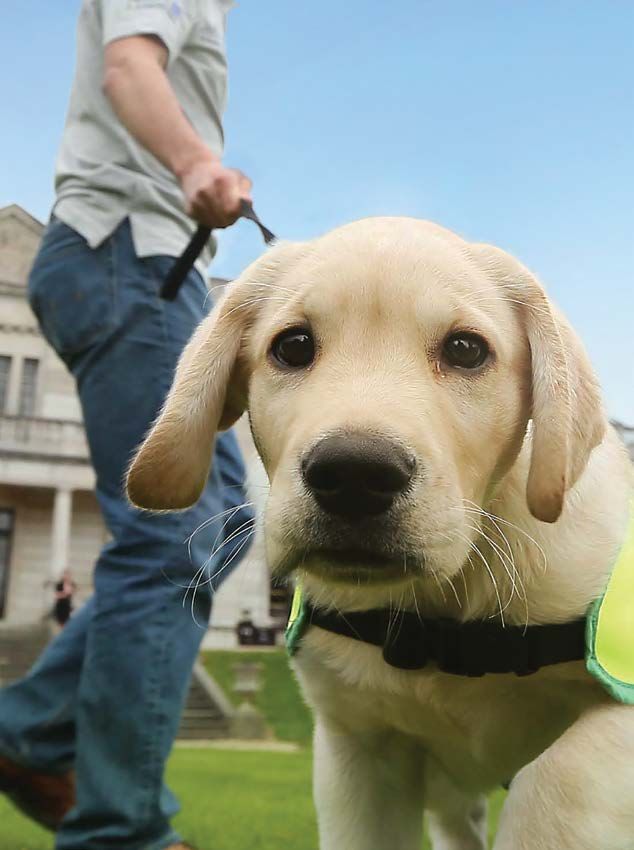
PRIMARY SCHOOL EDUCATION PACK
          2017/2018

           www.guidedogs.ie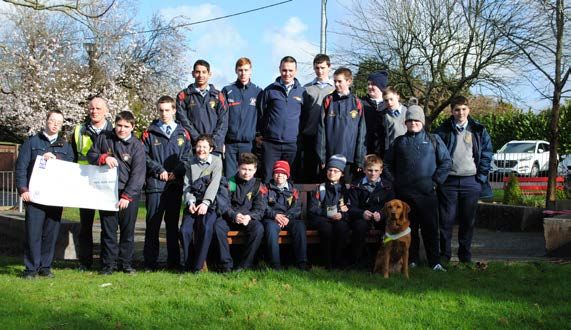
HISTORY OF
                                                            IRISH GUIDE DOGS
                                                            FOR THE BLIND
    INTRODUCTION
    & CONTENT
                                                           Irish Guide Dogs for the Blind is a non-profit organisation
                                                           that provides life-changing services to people who are
                                                           vision impaired and to families of children with autism.
                                                           Here at Irish Guide Dogs we have come a long way since
                                                           we were co-founded by the late Mrs. Mary Dunlop and
    History of Irish Guide Dogs			            1            Mr. Jim Dennehy in 1976.
                                                           We achieved our first Guide Dog partnership in 1980 and
    Fundraising Ideas				2
                                                           have not looked back since.
    Information on School Visits 		           3
                                                           For over 40 years we have provided life-changing
    Become a Friend of Irish Guide Dogs       4            services and support to people across Ireland with sight
                                                           loss. In 2005, we were the first organisation in Europe
    Meet Assistance Dog Charlie		             5            to provide Assistance Dogs for families of children with
                                                           autism.
    Support and services available 		         6
                                                           Throughout that time we have consistently focused on
    Smart Street Heroes			                    7            innovation, to ensure that we maximise the number of
                                                           people who can benefit from our services. Since starting
    Activity: Simulation Glasses		            8            our journey in 1976, we have greatly advanced our
                                                           knowledge and understanding of dog training.
    World Sight Day 				                      9
                                                           We have invested in state-of-the-art training facilities
    Types of Vision Loss				10                             and developed programmes that deliver the best dog, at
                                                           the right time, with the most suitable temperament to
    Annual Fundraiser: HEROES		               11           match our clients’ needs.
                                                           All our programmes are offered free of charge, with
                                                           intensive support and aftercare available to all our clients.

                                SIGNIFICANT MILESTONES
     1976:      Organisation is founded
                                                           2005: Introduction of our Assistance Dog
                                                                 Programme for families of children with
     1980:      Moved to our current site in Model Farm
                Road, Ballincollig, Cork and trained our
                                                                        autism

                first Guide Dog partnership
                                                           2010:        Taoiseach Enda Kenny officially opens
                                                                        €5m redevelopment of National
     1988: Introduction   of the Orientation &
           Mobility Programme (Long Cane Training)
                                                                        Headquarters and Training Centre.

     1999: Introduction
           Programme
                          of the Child Mobility     2016:               President Michael D. Higgins visits the
                                                                        National Headquarters and Training
                                                                        Centre to celebrate the 40th Anniversary

     2004: Launch  of The Independent Living Skills
           training facility and programme
                                                                        of Irish Guide Dogs and to recognise the
                                                                        significant contribution of its voluntary
                                                                        community.
1
FUNDRAISING
Help us to provide life-changing services to people who
are vision impaired and families of children with autism.
We raise more than 85% of our income from voluntary
donations and events. We need YOU to make sure we
can continue to meet the demands for our services.

Get involved today by organising an event
in your school. Here’s a few ideas to get you
started:
•   Create your own in house events; sports days,
    quizzes, sponsored silences etc.
•   Get involved in our annual fundraiser in the spring.
    (See back cover)
•   Virtual pet show: pay €2 to enter a photo of your pet,
    have a local vet judge the winner, display the
    photos on your school wall
•   Christmas: sell Irish Guide Dogs Christmas cards
    and calendars in your school
•   Hold a jumble sale for unwanted Christmas gifts
•   Halloween: sale of spare sweets
•   Organise a crazy hair day
•   Sale of our gifts, see list on back cover
•   Arrange a table quiz
•   Donate to colour a square competition – we can
    supply the posters
•   Arrange a green day to celebrate the Irish Guide Dog
    colours
•   Rock paper scissors championships: pay €2 to
    participate at your school
Contact us at education@guidedogs.ie to discuss how we
can bring your ideas to life and support you in any way
we can.
                                                             2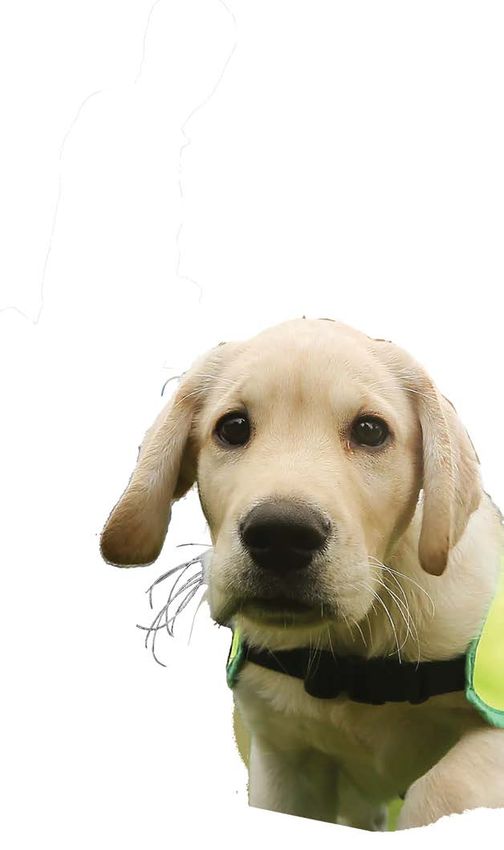
SCHOOL VISITS
 AND TOURS                                                                       Below are some pictures of schools that
                                                                               have completed a fundraising event in aid of
                                                                                  Irish Guide Dogs and have received a
                                                                                 school visit or tour of our Headquarters
                                                                                       and Training Centre in Cork.

                        Cree National School                                 Clonmel School - Coláiste Chluain Meala
                             School Visit                                                   HQ Tour

                                               Loreto Secondary School, Balbriggan
                                                           School Visit

    Nagle Rice Secondary School                                                                        Scoil Dean Cussen
              HQ Tour                                                                                     School Visit

                                                                                                                       Patrician
                                                                                                                       Academy,
                                                                                                                        Mallow
                                                                                                                        HQ Tour

3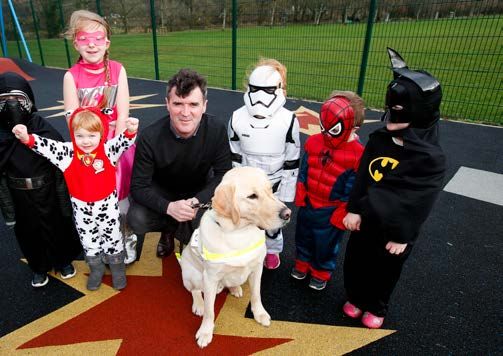
Become a Friend of Irish
Guide Dogs for the Blind
Sign up for our online Student Newsletter
by visiting www.guidedogs.ie/education and
completing the sign up form to join the mailing
list and receive a quarterly newsletter containing
a roundup of stories from schools around the
country.

Why not send in a photo of your school group
participating in an Irish Guide Dogs activity and
see your own school featured.

School Visits
If your school is learning about vision impairment
or autism why not have one of our Volunteers visit
your school with one of our Ambassador Dogs, or
if your school has completed an Irish Guide Dogs
project why not reward yourselves with a visit and
tour of our Headquarters and Training Centre in Cork.
                                                                           Scoil Dean Cussen
Please contact the Regional                                                   School Visit
Co-Ordinator in your area to book
your visit:

                       Cork, Kerry, Kilkenny,            Clare, Limerick
                       Tipperary, Waterford
                                                         Katie Kiely
                       Anne Burns
                                                         t: 021 487 8246/085 887 6580
                       t: 021 487 8259/087 195 4827
                                                         e: katie@guidedogs.ie
                       e: anne@guidedogs.ie

                       Carlow, Dublin, Kildare, Louth,   Cavan, Donegal, Galway, Laois,
                       Meath, Wexford, Wicklow           Leitrim, Longford, Mayo,
                                                         Monaghan, Offaly, Roscommon,
                       Julie Ann Ramsell                 Sligo, Westmeath
                       t: 021 487 8292/087 264 7172
                                                         Lynda Foley
                       e: julieann@guidedogs.ie
                                                         t: 021 487 8238/085 859 5072
                                                         e: lyndafoley@guidedogs.ie

                                                                                               4
CASE STUDY
     A s s i s t a n c e Do g
Meet
             Charlie
    Meet Charlie, he’s a puppy on his way to becoming a
    Future SuperHero Dog. He has soft fluffy ears, eyes
    the colour of the most chocolate-y chocolate and a
    tiny tail that can’t stop wagging.

    But you shouldn’t be fooled by his looks. He is a very
    serious puppy, with very serious intentions. When he
    grows up, he wants to be a hero. How can a puppy be        What Yolo does every day really inspires Charlie
    a Hero you might ask. Well its simple-Irish Guide Dogs     to become an Irish Guide Dogs Hero. He’s always
    actually offer a puppy like Charlie a very clear path to   by Skye’s side, helping her keep calm-even when
    follow. They help him become a child with autism’s         she’s somewhere new and feeling completely
    best friend, constant companion and protector. And         overwhelmed by all the sights, sounds and smells.
    when we say “best friend”, what that often means is
    “one and only friend in the world” because it can be       For a child with autism to get the most out of an
    hard for children with autism to make friends.             Assistance Dog, they need to have one by the age
                                                               of seven, and it takes two years to train. Everyone
    Charlie will gain the skills to keep a child with autism   at Irish Guide Dogs is working very hard to reach
    safe, help them to socialise and bring a whole family      all the children who need an
    back from the brink. That’s why Charlie wants to           Assistance Dog like Yolo.
    become an Assistance Dog.
                                                               We hope you’ve enjoyed
    Charlie has a friend called Yolo, a full grown dog who     Charlie’s story and any support
    has finished all his training. He has gone to live with    your school might give to Irish
    a little girl called Skye. Yolo says “First you have to    Guide Dogs will help Charlie,
    understand what your new friend and their family           and other dogs like him help
    have been through before you arrive. They’ve often         more children with autism.
    had a difficult time”.

    His friend Skye, for example, was diagnosed with           Answer the following
    autism when she was two years old. She didn’t talk.        questions:
    She didn’t walk. She barely slept and, as she grew
    older, she didn’t know what danger was. Her mammy
                                                               1. What type of dog is Charlie training to become?
    and daddy had to watch her all the time and they
    were always worried they couldn’t keep her safe.           2. What age would a child with autism need to have an
    Yolo’s already been a Hero. Skye was on the beach
                                                                 Assistance Dog by to get the most out of them.
    one day and she kept walking out into the sea. Her
    daddy was calling her back, but she wasn’t listening.      3. How many years does it take to train an Assistance Dog?
    Then, all of a sudden, Yolo shoots into the water, runs
    around her and gently nudges her back to safety.           4. What skills will Charlie learn in training?
    It was all sorted out in an instant without anyone
    getting upset or stressed.                                 5. Who is Skye’s “Best Friend”?

5                                                              Answers to Case Study questions can be found on page 9.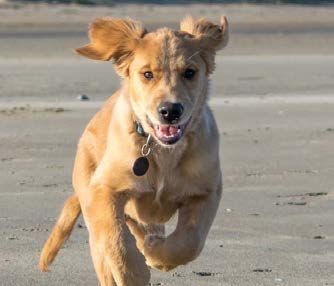
Maths Quiz                             What Support Is Available?
It costs €38,000 to raise a            As well as providing Guide Dogs to people who
Guide Dog from Breeding to             are vision impaired and Assistance Dogs to
                                       families of children with autism, we also deliver
Retirement. Dogs work for
                                       confidence-building rehabilitation services to
approximately 10 years. It             adults, young people and children including long
takes about 2 years to fully           cane mobility training, communication and daily
train a dog.                           living skills.

Number of clients                      Our services are designed with the needs of the
                                       individual at heart and we go to great lengths to
in Ireland:
                                       match each client with the right dog to suit them
•   162 Guide Dog Owners               and their lifestyle.
•   273 Assistance Dog Owners
•   738 Other vision impaired
                                       Services include:
    clients                              • Guide Dog Programme
                                         • Assistance Dog Programme
This year’s plan:                        • Independent Living Skills Training
•   Create 30 new Guide Dog              • Child Mobility Programme
    partnerships                         • Next Step Programme for young adults
•   Create up to 36 new                     moving out of home
    Assistance Dog                       • Long Cane Training
    partnerships                         • Gardening Programme
•   Train 15 clients in Long Cane      All of our programmes are offered free of charge
    Skills                             with intensive support, and after care available to
•   Train 12 clients in Independent    all our clients.
    Living Skills

Every year we:
•   Conduct 600 aftercare visits
    to client homes

                                                OUR ES
                                                SERVIC
Maths Questions:
1. How many clients do we have
   in total?
                                                                     D
2. How many NEW clients will                                    GUIDE OGS
   benefit this year?
                                            MOBILI N &

                                                                            PR

3. How many TOTAL clients will
                                                                              YOU AMMES
                                          ORIENTATI0
                                                  TY

                                                                              OG

   we work with this year?
                                                                                R
                                                                                 TH

4. In “Dog Years” how long does
   it take to train a Guide Dog?
5. How many new partnerships
   will we have in total
   according to this year’s plan?
                                                         GO
                                                  ON

                                                                            S NCE

                                                  PP          IN G             TA
                                               SU

                                                                         S I S
                                                       OR             AS
                                                                              DOG
Answers to Maths Quiz are on page 9.
                                                            T

                                                                                             6
SmartStre

                                                                                                   et H
                                                                      I am a

                                                                                                       ero
    SM A R T S T R E E T
    Last year we launched a Smart Street campaign     1. Become one of our SmartStreet Heroes
    as part of World Sight Day to create better       Explain to your family members how they can help
    awareness of how the public can help people       people with vision loss in the community by:
    with vision loss in their community by keeping      • NOT parking on pavements
    pedestrian pavements free of obstacles, i.e.        • NOT blocking pavements with household
    parked cars, over-hanging branches, household         wheelie-bins
    wheelie bins and street furniture such as           • Trimming garden hedges and
    signage. These obstacles put the safety of            overhanging branches.
    people with vision loss at risk by causing an
    injury or by forcing them on to the road where    2. Take the SmartStreet Pledge:
    they are unable to see on-coming traffic.         Show your support for our SmartStreet Campaign in
                                                      October, by pledging your commitment to keep our
    This is an ongoing campaign and we would          pavements free of obstacles. Keeping pavements
    like you to support it by speaking to your        free of obstacles, also, helps children with autism who
    students about the importance of keeping          own an assistance dog and other pedestrians, such as
    pavements clear of obstacles so they can          parents with buggies.
    relay this important message to their parents/
    guardians. The following activities may get the   3. Show and share :
    conversation started in your classroom.           Show and share the SmartStreet video featuring
                                                      Joe Bollard and his Guide Dog showing how blocked
                                                      pavements make their daily walks difficult. This can be
                                                      found by visiting: www.guidedogs.ie/smartstreet

    The glasses on the next page                      Why not put old transparent sheets used on
                                                      projector screens that may be lying around to
    represent the main differences in                 good use. Download the picture on page 6 from our
    vision loss and enable people                     website and photocopy it using the sheets. Get your
                                                      students to cut out the glasses, or better still cut out
    to understand the varying visual                  some cardboard as well to fit around the rims. Try them
    problems of registered blind and                  on and have a chat about how they feel without being
                                                      able to see as well as they normally would.
    partially sighted people. It also gives
    people a sense of the difficulties                For a full list of exercises that can be carried out using
                                                      the glasses please see our Simulation Spectacles
    experienced due to reduced vision.                Exercise Pack on the below page:
                                                      www.guidedogs.ie/education
7
8
ACTIVITY
These glasses simulate retinitis pigmentosaWor l d S i g h t
Day
World Sight Day is an annual day of awareness held
in October to focus global attention on blindness and Fundraising for WSD
vision impairment.
World Sight Day reminds us to pay attention to Encourage students to become
eye care issues that impact lives everywhere, both a SmartStreet Hero by getting
developed and developing economies. There are simple sponsored for €5 (or more) by
things you can do like going for an eye test, wearing making 3 or more SmartStreet
your glasses when you’re supposed to and giving interventions such as:
yourself regular breaks from staring at mobile phone,
iPad and computer screens!
• Getting family members to park their
cars or vans on the street not on the
The main causes of vision loss in Ireland are:
pavements
• Age-related Macular Degeneration (which people • Cut back overhanging branches from
acquire over the age of 50) your garden
• Cataracts, Diabetic Retinopathy, Glaucoma and • Ensure wheelie bins and refuse
Retinitis Pigmentosa containers are not left on the
pavement
• There are 54,810 people in Ireland who are blind or
vision impaired. • Report broken street lights, potholes
or badly cracked paving slabs
A study conducted by Trinity College Dublin highlighted
the importance of mobility services, like ours, for
people registered blind. The study found over a third of
older people registered are unable to get out in to their
local community independently.
Over half of people who are vision impaired have
difficulty visiting places they are unfamiliar with. Over Take a look at the photos across
a third of older people registered blind are unable to the page to gain an insight in to
get out in their local community independently. Our
how our Guide Dogs might look
services enhance the mobility and emotional wellbeing
of people who are vision impaired. to their vision impaired owner.
1) 1149, 2) 96, 3) 696, 4) 14, 5) 69 safe & help them to socialise, 5. Yolo
Answers to Maths Questions: 1. Assistance Dog, 2. Seven, 3. Two, 4. To keep a child with autism
Answers to Maths Quiz from Page 6: Answers to Case Study from Page 5:
9TYPES OF
VISIO N L O S S
NORMAL VISION CATARACTS
AGE-RELATED MACULAR DEGENERATION RETINITIS PIGMENTOSA
DIABETIC RETINOPATHY GLAUCOMA
10We would be delighted if you would get
involved in our annual fundraiser. Here are
some ways in which your school can participate:
• Hold a Guide Dogs fundraising event in
your school. See page 2 for some ideas.
• Order some fundraising items from our
Headquarters. We can send you:
Stickers Collection Buckets Posters
• Order some items to sell to raise money.
If you would like
to take part,
please contact
CHRISTMAS PENCIL
CARDS CASES the Regional Co-
(Recommended (Recommended Ordinator in your
donation donation area. Contact
€6 each) €4.50 each)
PENCILS details can be
(Recommended donation €1 each)
found on page 4
Order some items to sell
CALENDARS
(Recommended
to raise money PENS
(Recommended
donation donation €2 each)
€8 each)
FRISBEES TOY DOGS
(Recommended donation €5 each) (Recommended donation €12 each)
11You can also read


