Pro-Practicum School English Home Language Year 1 Term 2 - Name: Class: Teacher
←
→
Page content transcription
If your browser does not render page correctly, please read the page content below
Pro-Practicum School
       English
    Home Language
       Year 1
       Term 2

Name:
Class:
Teacher:

           0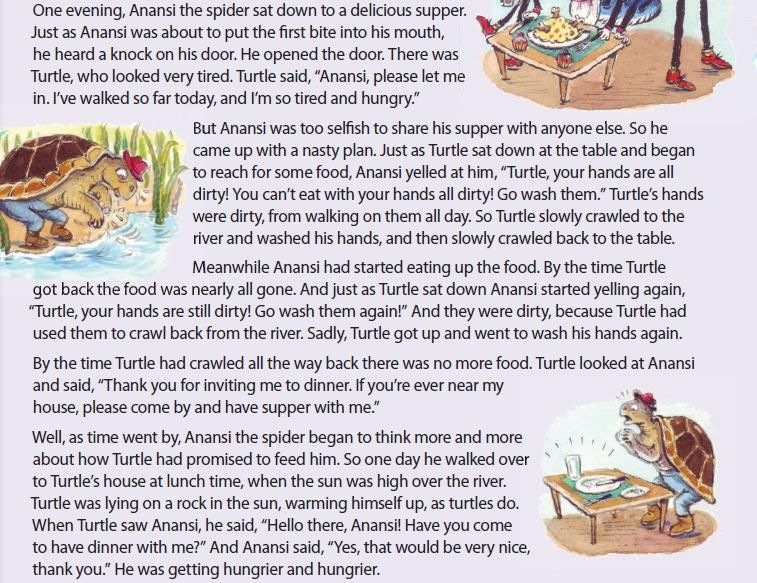
Unit 1
Weather
Listening & Speaking
Activity 1
Weather forecast describe what the weather will be like. They use the
future tense.
Weather report describes the weather as it is now.
When we talk about weather, we talk about the temperature, cloud cover,
the wind and weather such as rain, snow or hail.
Practise saying these words with your teacher and write down the
meaning of them in your book:
Cloudy
Strong winds
North, East, South, West
Minimum
Maximum
Temperature
Degrees Celsius
Partly cloudy
Gusts
Conditions
Follow with your teacher as she reads a weather forecast or listen to a
weather forecast.
Today, Tuesday, will be clear, with clouds over the mountains and a strong
wind from the south. No rain is expected. The expected minimum
temperature is 14 degrees Celsius and the expected maximum is 22
degrees Celsius.
1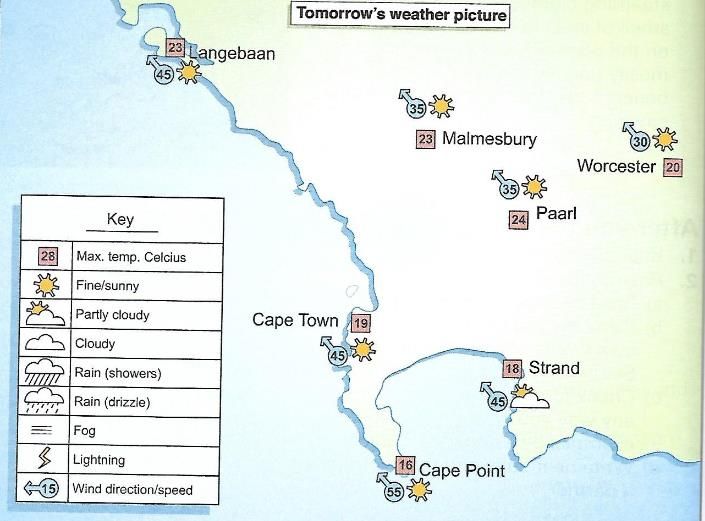
Tomorrow, Wednesday, will be partly cloudy. There will mainly be clouds
over the mountains. The wind direction will change and start blowing from
the south east from this afternoon and remain throughout the day until
tomorrow in Randfontein and further into Krugersdorp. There will be
strong gusts of wind of over 45 km/hour.
Temperatures will be low in the morning. They will start warming up from
tomorrow and we expect sunny conditions from Thursday.
At this stage, the weekend is looking fine with temperatures possibly
reaching a high of 30 degrees by Saturday afternoon.

Answer these questions as a class.
   1. For what day or days is the weather forecast? (1)
   2. How will the weather change over those few days? (3)
      Complete the sentences:
      a. The wind will change from ______ to ______ direction.
      b. The temperature will become hotter / cooler.
      c. The cloud cover will change from ______ to ______.
   3. Listen to the forecast again to find phrases that describe the
      weather in the photographs. (2)

   4. Discuss how the weather has changed in your area from yesterday
      to today. Remember to use the past tense. (2)
   5. Discuss what you think the weather will be like tomorrow. Give
      reasons for what you predict. Remember to use future tense. (2)
                                                                   Total: 10
                                     2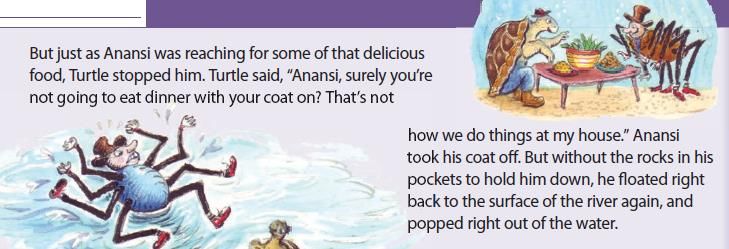
Reading & Viewing
Activity 2

A weather report describes the weather as it is now (the present) or as it
has recently been (the past).

Discuss these questions as a class.
   1. What information do you expect to read in a weather report?
   2. What kind of language do you think is used in a weather report?

Read a weather report:
The following weather report describes the weather in different cities of
the world on 4 October 2018 over a 24 –hour period.
     City                Description           Min (˚C)    Max (˚C)
     Amsterdam           Clear                 14          22
     Athens              Rain                  19          26
     Berlin              Partly cloudy         11          24
     Cairo               Clear                 21          30
     Dubai               Partly cloudy         28          38
     Frankfurt           Clear                 12          26
     Harare              Rain                  17          28
     Lisbon              Partly cloudy         19          32
     Madrid              Clear                 11          29
     Paris               Clear                 14          28
     Rome                Clear                 16          27

Answer the following questions in your book.
  1. What is meant by partly cloudy? (1)
  2. What do the abbreviations min. and max. stand for? (2)
  3. Which city is the hottest? (1)
  4. Which city is the coldest? (1)
  5. What is the difference between the hottest (max.) and the coldest
     (min.) temperatures for Rome? (2)
  6. Which city has high temperatures throughout the day and night? (1)
  7. Explain what the weather is like in Amsterdam and Athens. (2)
                                                                  Total: 10

                                      3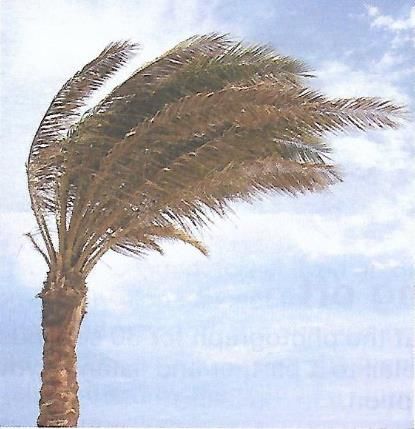
Writing & Presenting
Activity 3
Weather maps and charts use numbers and symbols. To be able to read
a map you need to understand certain information. For example:
The numbers show temperature in degrees Celsius.
The symbols show what the weather is like. The key shows what
each symbol means.
The letters show the direction from which the wind is blowing. So,
SE means the wind is blowing from the south-east, and NW means
the wind is blowing from the north-west.
Look at the map and answer the questions in your book.
1. What is the map’s heading? (1)
2. Choose the correct answer: (1)
a. The map is from the whole of South Africa.
b. The map is from the area around Cape Town.
4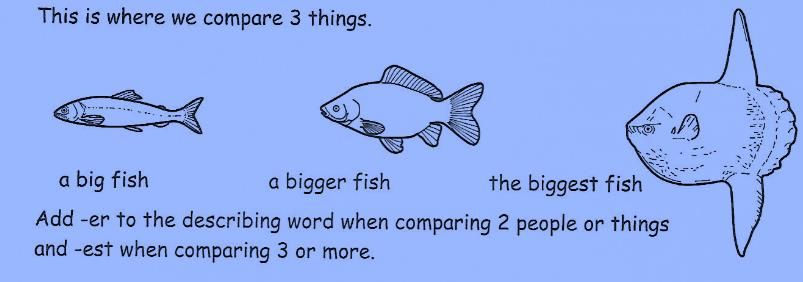
3. The map appeared in the newspaper on 5 March. For which day
     does the map forecast the weather? (1)
  4. Which town will be partly cloudy? (1)
  5. Which town will be the hottest? (1)
  6. Which place has the strongest wind? What is the predicted wind
     speed in this place? (2)
  7. Is rain expected anywhere? (1)
  8. Describe the weather forecast for Paarl. Use the mind map. (4)

   Wind                                               Wind
   Direction                                          Speed

                             Paarl

 Temperature                                          Cloud cover
 s

                                                              Total: 12

Homework
Practice reading the words on page 1.

                                   5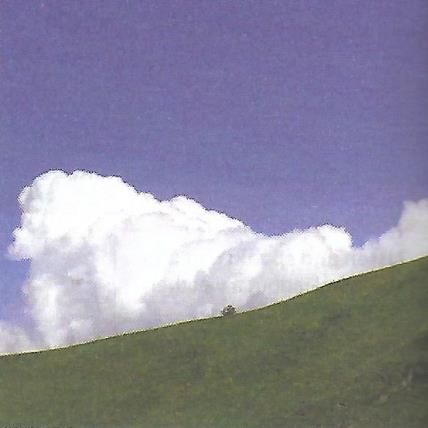
Language

                              Adjectives

An adjective is a word that tell you more about a noun (things you can
see, touch, taste, feel, and hear – naming words).
Adjectives describe nouns and pronouns. It tells you:
    Colour             size          how it feels    what type
                                  how many
         How it acts          how it looks          how it sounds
Examples: A beautiful dress. A blue pen. A rugby ball. The loud bell.

Activity 4
Read the weather report from Activity 1on page 1 - 2 again and write
down all the words that describe the weather. (7)

                                       6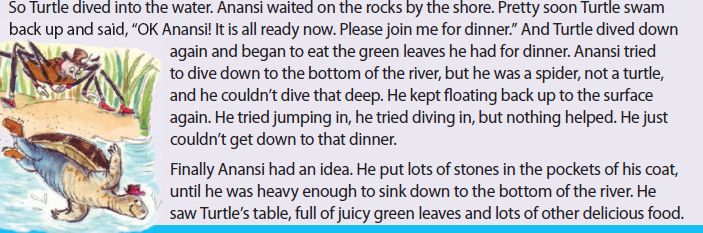
Verbs
Verbs are doing words. If you can do it with your mind or your body, it is
a verb.
Example: I am kicking the ball.
She sings every day.
The wind is blowing.
They eat the food.
Subject - verb agreement: Subject: the thing or person the sentence is
about. Verb: the thing that person or thing is doing.
Subject singular (1) the verb gets a ‘s’. She kicks a ball.
The dog barks at night.
plural (2+) the verb gets no ‘s’. They kick a ball.
The dogs bark at night.
Activity 5
1. Read the weather report from activity 1 (page 1 – 2) again and
write down all the adjectives.
2. Name three verbs / actions which might be done by each of the
following. Example: bird – fly, sing, bath (12)
a. Chef _____________ _____________ ____________
b. Farmer _____________ _____________ ____________
c. Hairdresser _____________ _____________ ____________
d. Mother _____________ _____________ ____________
3. Copy the sentence in your book and choose the correct verb in
brackets to fill in the blanks. (4)
a. Thandi __________ in the long grass. (play / plays)
b. The dog _________ the sausage from the baby. (take / takes)
c. The rhinos __________ at the tourists sitting in the jeep. (look / looks)
d. Everyone ________, there comes an elephant. (look / looks)
7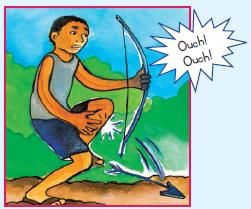
4. How many verbs can you find in the picture? Make a list in your
      book. (9)

                                                                   Total: 25

FORMAL ASSESSMENT 1: Language

Choose five (5) words from your list in Activity 5, question 3, and a write
sentences about each word.
                                                                    Total: 5

Homework
Practice the spelling of the words on page 1.

                                     8
Unit 2
Homework
Practise reading the weather report in Activity 1.
FORMAL ASSESSMENT 2: Comprehension
Look at the weather report in activity 1 and answer the following
questions.
1. What do these words mean when we talk about the weather: (10)
a. Temperature
b. Cloudy
c. Partly cloudy
d. Minimum
e. Maximum
2. What does it mean when they say “No rain expected.” (1)
3. If temperatures are low, does it mean it is cooler or warmer? (1)
4. If temperatures are high, does it mean it is cooler or warmer? (1)
5. If you look at the temperatures in the weather report, is it cooler or
warmer Saturday? (1)
6. Will the weekend be hot or cold? (1)
9Look at the map again and answer these questions.
7. Choose the correct word in brackets. (4)
a. The wind direction for most of the area is (north / north-west).
b. The temperatures are (mostly / all) above 15 ˚C.
c. The Strand is predicted to be (cooler / warmer) than Cape
Town.
d. Langebaan will be (cooler / warmer) than Cape Town.
8. How hot is Cape Point on the map? (1)
9. Is it sunny or partly cloudy in Strand? (1)
10. Use weather symbols to show the prediction for the two towns
below. Use a key that explains the symbols. (4)
Smithburg Durban
Rain Sunny
Wind direction: north-west Wind direction: south
Wind Speed: 30km/h Wind Speed: 10 km/h
Temperature: 16˚C Temperature: 27˚C
Total: 25
10FORMAL ASSESSMENT 3: Reading
Read the weather report from Activity 1.
READING RUBRIC
2 1 0 Mark
Pronunciation Pronounces Pronounces Pronounces words
words well words adequately poor
Fluency Pays attention Pays attention to Does not pay
to punctuation most, but not all attention to
and reads punctuation and punctuation, and
smoothly reads reasonably does not read
smoothly smoothly
Clarity Reads loudly Reads Reads softly, it is
and clearly reasonably loud difficult to hear all
and clear the words
Expression Uses good Uses adequate Uses no expression
expression expression
Confidence Learner is Learner is Learner is not
confident/ moderately confident/
comfortable confident/ comfortable
comfortable
Over all 3-5: Good to 1-2: Poor to Did not read
reading skill very Good moderate. Needs
practice
Total: 15
11Activity 6
Make your own weather chart by using a table. Like Activity 2.
Use the following information to complete the table:
Durban: showers, 14 ˚C / 25 ˚C
Nelspruit: drizzle, 12 ˚C / 28 ˚C
Bloemfontein: clear 5 ˚C / 25 ˚C
Johannesburg: thunderstorm, 18 ˚C / 29 ˚C
Kimberley: clear, 4 ˚C / 23 ˚C
Polokwane: p/cloudy, 12 ˚C / 25 ˚C
Pretoria: p/cloudy, 12 ˚C / 23 ˚C
Upington: clear 7 ˚C / 27 ˚C
Mafikeng: clear, 12 ˚C / 32 ˚C
Cape Town: cloudy, 10 ˚C / 17 ˚C
Follow the writing process.
Step 1: Plan – use a mind map to plan your weather chart.
Rearrange the cities into alphabetical order. Decide how many columns
you need and what the headings will be.
Step 2: Draw the columns and give them each a heading. Place all the
information under the correct heading
Step 3: Edit – Check your spelling.
Make sure the names of the cities and weather conditions are written
correctly.
Step 4: Final draft – redraw the columns neatly and rewrite the
information over without any mistakes.
12Language
Synonyms
Synonyms are words that has the same or similar meaning to another
word.
Example: The race will start at the gate.
The race will begin at the gate.
REMEMBER: Synonym = Same
Activity 7
1. In your book write down the bold printed word. Next to it write
down the word that means the same. (8)
start cry rich collect
Run Listen Wealthy Look
begin Creep Money Gather
help Sniff Spend Drop
look weep Bank Seek
help Huge Simple plump
Look Great Big Slender
Write Dainty Difficult Sad
Carry Enormous Easy Heavy
assist Long hard fat
Homework
Practice the spelling of the words in Activity 7.
Write them alphabetically.
132. Write down the pairs of words that almost means the same. (8)
Beautiful Enormous
Intelligent Dirty
Pleasant Strong
Evil Nice
Filthy Little
Huge Clever
Powerful Pretty
Small Wicked
Total: 16
14Opposites
Look at these words:
Heavy – light big – small short – tall
We call these words opposites.
Activity 8
1. Match the opposites with each other. Write the word next to each
other in your book. (8)
Nice Ugly
Right Rude
New Nasty
Kind Old
Smooth Unkind
Pretty Rough
Polite Unhappy
Happy Wrong
2. Write an opposite for each of the following words. (6)
a. Noisy
b. Bitter
c. Found
d. Short
e. Buy
f. Cold
3. Write each sentence with the opposite meaning of the word in
brackets. (8)
a. Pam was (kind) to her (brother).
b. Eating (unripe) fruit is a (unhealthy) habit.
c. Rafik was (fair) when sharing the (small) cake.
d. I am (willing) to do the job because I am feeling (strong).
Total: 22
15Verbs
Verbs are doing words. If you can do it with your mind or your body, it is
a verb.
Example: I am kicking the ball.
She sings every day.
The wind is blowing.
They eat the food.
Subject - verb agreement: Subject: the thing or person the sentence is
about. Verb: the thing that person or thing is doing.
Subject singular (1) the verb gets a ‘s’. She kicks a ball.
The dog barks at night.
plural (2+) the verb gets no ‘s’. They kick a ball.
The dogs bark at night.
Activity 9
1. Your teacher will give you an instruction. Act it out to show your
understanding of verbs.
Example: Kick a ball. Act how you will kick a ball.
2. Write sentences using these words.
a. swim
b. kick
c. feed
d. eat
e. hand over
3. Rewrite the sentences in you book and fill in the blank with
appropriate verbs.
a. I like to _________ cake.
b. We ________ to school every day.
c. I _______ in my book.
d. They _________ in the choir.
16Unit 3
Listening & Speaking, Reading & Viewing
Activity 10
Fables
What is a fable?
A fable is a story about magical creatures, animals, plants and places. It tells a
story with a moral message. (You can learn something from it) most fables
are very old and many are retold in a modern setting, but with the same
message. You will find animals that can speak, and natural settings with forest
and rivers, in most fables.
Word bank Setting: The area where it is happening.
Characters: The people or animals in a story.
Moral: What can we learn from the story?
1. Look at the following pictures. What is this fable about?
2. Does it include animals that can talk?
3. What is the setting?
17Read the story and answer the question in your book.
One hot day, an ant was sitting next to a river. “How lovely it will be to
swim,” she thought. She put one leg into the river, then another and
another. Suddenly, she fell in. The water was flowing so strongly she could
not get out.
“Help!” she shouted, “I am drowning!” But no one heard her shout. When
the ant felt sure she would drown, a dove flew past. She saw the ant was in
danger and dropped a leaf into the water. It was like a little boat and the
ant climbed on.
“Thank you dove. One day I will help you.”
The dove laughed. “You are too small to help me. Little ant.” And she
flew away.
Many months went by. Then, one day, the ant saw the dove sitting in a
tree. Before she could say “hallo” a man came with a bow and arrow. He
was going to shoot the dove. Quickly, the ant climbed onto the man’s leg
and bit him. “Ouch!” shouted the man and dropped his arrow.
“Thank you,” the dove called as she flew away. “You are small, but you
saved my life.”
1. Why did the ant want to swim? (1)
2. What happened to her? (1)
3. How did the dove save her? (1)
4. How did the ant save the dove? (1)
5. Do you think this fable is about something that really happened?
Say why. (2)
6. In which season of the year do you think this fable took place? (1)
7. Why do you say so? (1)
8. The story is a fable. What is a fable? Chose one of the answers
below. (1)
a. A story with animals that teaches a lesson.
b. A story of gods and heroes.
c. A short letter.
9. What do you think this fable teaches us? (1)
Total: 10
18Writing & Presenting
Activity 11
Write a few sentences about what the story is about.
Follow the writing process.
Step 1: Plan – Use a mind map to plan your paragraph
Step 2: Write – Write your planning in full sentences.
Use the following writing frame to complete your
paragraph. (Fill in the blanks)
Title of fable: ___________1___________(write your story name)
There were ____2______ character in the story, a ___3_____ and an
___3___. The ant climbed into a ___4____ but the water was to ____5___.
Dove threw down a _____6_____ for ant to climb on. Ant was very grateful
and promised to help Dove. Dove thinks she is too ____7____ to help
anyone. Many months went by, a ___8___ came and wanted to ___8____
dove with a ________8_______, ant decided to bite the man and then he
dropped his _____9______, dove flew away. The message in this fable is
that doesn’t matter what your __________10________________. I really
(liked / hated) the story because_____________11_________________.
****** Only do Step 1 & 2. Step 3 & 4 we will do later.*****
19This is how your teacher will assess (give you marks).
RUBRIC FOR PARAGRAPH WRITING
4/5 3 2 1 0
Understanding Thorough Some Limited Incorrect No
of the topic understanding understanding understanding understanding understanding
Editing Very well Some editing Very little No editing
editing editing
How many 4/5 3 Sentences 2 Sentences 1 Sentence 0 Sentences
sentences? Sentences
Sentences 4 – Very good good Acceptable A few A lot of
structure structure structure structure mistakes mistakes in
structure
Punctuation No mistakes A few A lot of No
mistakes mistakes punctuation
Planning: Correct Mostly correct Mind map or Very little No planning
mind map and planning first draft only planning
first draft
Total: /25
Language
Present & Past Tense
Sentences are written in tenses. Past, Present and Future Tense. You
always find the verb in a sentence and then change that word to make it
present, past or future.
Past Tense: I kicked a ball. I swam in the pool.
Present Tense: I kick a ball. I swim in the pool.
Future Tense: I will kick a ball. I will swim in the pool.
REMEMBER: Subject - verb agreement: Subject: the thing or person the
sentence is about. Verb: the thing that person or thing is doing.
Subject singular (1) the verb gets a ‘s’. She kicks a ball.
The dog barks at night.
plural (2+) the verb gets no ‘s’. They kick a ball.
The dogs bark at night.
20Activity 12 (Past Tense)
1. Rewrite these sentences into the past tense. (5)
a. Tshepo buys sweets at the tuck shop.
b. Thando kicks a ball and scores a goal.
c. Chimane learns for his exam test.
d. They eat cake at birthday parties.
e. We go swimming every weekend.
2. Use the following words and write past tense sentences. (3)
a. Walk
b. Move
c. See
Homework
Rewrite these sentences and choose the correct word between the
brackets. (9)
Ted (walk/walked) down the dusty road until he (saw/is seeing) an old,
broken down house. This must be the ghost house Thandi (told/tells)
me about! He (is creeping/ crept) closer and closer to the back of the
house. Nothing (moved/ moves). Suddenly, the door (open/opened)
and (shuts/shut) with a loud bang. (help/helps) me! He
(screamed/screams), “it’s the ghost!”
Total: 18
21Activity 13 (Present Tense)
1. Copy the Present Tense sentences in your book. (6)
a. I begin work every day with a smile.
b. I forgot that it gets warm during the day.
c. I held my pen in my right hand when I work.
d. They ring the doorbell when they come and visit.
e. I run in the Cross Country team every year.
f. We stood in a line before we enter the class.
g. The teacher teach us English.
h. She thought we are very clever.
2. Write down the present tense word for the following words. (8)
a. Walked
b. Saw
c. Sang
d. Wrote
e. Brought
f. Drew
g. Threw
h. Rained
Total:14
22FORMAL ASSESSMENT 4: Past & Present Tense
1. Decide if the following sentences is Present Tense or Past Tense. (5)
a. I play hockey.
b. He write a letter.
c. I help my friend
d. She digs a hole.
e. They flew to Cape Town.
2. Now change them to the tense that they are not. (5)
3. Help Jabu complete his Diary entry by using the past tense of the
words in brackets. Diaries are always written in past tense. (10)
I am back at school. We ____________ (start) school last Tuesday. We
______________ (play) our first soccer match last weekend. We
_________ (win) the game 2 – 0.
Afterwards we ____________ (eat) at KFC. Our coach _____________
(pay) for our supper. Then we _____________ (drive) home.
Yesterday afternoon I _____________ (swim) in the school gala. I
_________ (know) that we would win our races. When we ____________
(take) our trophies to the school assembly everyone ___________ (cheer).
It is great to be back at school.
Total: 20 / 2=10
23FORMAL ASSESSMENT 5: Writing a paragraph
In Activity 10 you planned a paragraph about the fable we read in class. You
did step 1 & 2.
Now it is time to do Step 3 & 4.
Follow the writing process.
Step 3: Edit – Fix your mistakes. Check for spelling, capital letters, full
stops.
Step 4: Final writing: Write your step 2 paragraph without the mistakes.
RUBRIC FOR PARAGRAPH WRITING
4/5 3 2 1 0
Understanding Thorough Some under- Limited Incorrect No under-
of the topic under- standing under- under- standing
standing standing standing
Editing Very well Some editing Very little No editing
editing editing
How many 4/5 3 Sentences 2 Sentences 1 Sentence 0
sentences? Sentences Sentences
Sentences 4 – Very good Acceptable A few A lot of
structure good structure structure mistakes mistakes in
structure structure
Punctuation No mistakes A few A lot of No
mistakes mistakes punctuation
Planning: Correct Mostly Mind map or Very little No
mind map and planning correct first draft only planning planning
first draft
Total: /25
24Unit 4
Listening & Speaking
Reading & Viewing
Activity 14
What do you remember about fables? Let’s go look at Activity 10
(page 15) to remind ourselves.
Read the following story with your teacher.
25Answer these questions in your book.
1. Who is the story about? (2)
2. Where does the story take place? (1)
3. What is the story about? (2)
4. What is the moral of the story? Choose the best one. (1)
a. All’s well that end well.
b. When you try to outsmart someone, you may find that you’re
the one outsmarted.
c. Don’t bite the hand that feeds you.
Total: 6
26FORMAL ASSESSMENT 6: Unprepared Reading
Read the story to your teacher.
READING RUBRIC
2 1 0 Mark
Pronunciation Pronounces Pronounces Pronounces words
words well words adequately poor
Fluency Pays attention Pays attention to Does not pay
to punctuation most, but not all attention to
and reads punctuation and punctuation, and
smoothly reads reasonably does not read
smoothly smoothly
Clarity Reads loudly Reads Reads softly, it is
and clearly reasonably loud difficult to hear all
and clear the words
Expression Uses good Uses adequate Uses no expression
expression expression
Confidence Learner is Learner is Learner is not
confident/ moderately confident/
comfortable confident/ comfortable
comfortable
Over all 3-5: Good to 1-2: Poor to Did not read
reading skill very Good moderate. Needs
practice
Total: 15
FORMAL ASSESSMENT 7: Unprepared speaking
Retell the story to your teacher.
UNPREPARED SPEAKING
2 1 0
Good Acceptable Not up to standard / Did
not speak
Content is topic based. Correct
Clarity
Expression
Confidence
Vocabulary
Total: 10
27Language
Degrees of Comparison
Activity 15
1. Complete the following. (10)
a. A tall man ________________ ________________
b. ___________ a happier face ________________
c. ___________ ________________ the longest ladder
d. A ripe Banana ________________ ________________
e. ____________ ________________ the shortest day
2. Complete the following. (6)
a. A good friend _________________ ________________
b. Many sweets _________________ ________________
c. ___________ ________________ the worst game
3. Complete the following. (4)
a. He caught a big fish. She caught a _____________ fish. I
caught the ____________ fish.
b. Tom is strong. Daniel is ___________. Sean is the ________.
Total: 20
28Punctuation
Capital letters Commas Full Stops
Capital letters are used: A comma is used:
at the beginning of a to help make the A full stop is used at the
sentences meaning clear end of a sentence
for the names of to separate words,
people, places and phrases and names
things
for the word ‘I’
Activity 16
1. Rewrite these sentences using capital letters, commas and full stops.
a. i play cricket on monday thursday and saturday
b. my friend ben went to australia in may
c. mr and mrs chinappa drove down oak street
d. february is the warmest month in south africa
e. mark james and i swam across the vaal river
f. sheila bought a radio from oxland furnishers
g. mr vusi mthembu has a birthday in march
h. mary clive nosipho an ahmed are going to play tennis on Tuesday
i. lindiwe threw a huge snowball at her father
j. have you remembered to close the door to the back room
Total:10
Homework
Practise the spelling of the words you wrote in the blanks in Activity 15.
29Reading & Viewing
Activity 17
Next season
Mom has started waking me up earlier to prepare me for what is to
come. No more staying up late, no more pool parties, and no more
fun in the sun. the days are becoming shorter. It looks like summer (40)
is coming to an end.
I don’t believe that summer has to have an end. “Why can’t we play
outside, swim, go to the beach, drink fruit punch, and have no homework (72)
forever?”
Mom says, “Summer is a season and seasons come and go”. She also
said, “we should be excited about the next season and excited about (98)
what the next season brings for us”. I am still not quite sure what she
means when she says that. I guess I will have to figure it out as the (129)
season changes.
So far all I know is that mom says, “it’s time to look sharp”! she’s buying
me some new clothes, some new shoes, and a new backpack. She (159)
keeps reminding me that it is important to listen, be safe, be respectful,
and be responsible. All the children in my neighbourhood tell me that
their parents are saying the same thing to them as my mom is saying (198)
to me.
I think I am starting to understand what season is coming up. Maybe
the new season won’t be so bad? The weather is already starting to
cool down and the leaves are changing to become pretty colours on (238)
the trees. Mom is being really nice buying me new things. All the
other children are preparing for what’s next, just like me! I’ll see every
one of my friends there. (269)
Yes! I am ready! Next season will be great and I cannot wait! I am
ready for Fall! I am ready for the season that takes me back to school! (299)
301. Why did his mother start to wake him up earlier?
2. What can’t this boy do anymore? Name three things.
3. Which season has come to an end?
4. What does mom say we should be excited about?
5. What did mom buy for him?
6. Mom reminds him of important things. Name those things.
7. How was the weather changing?
8. Is this boy ready for what’s coming next?
Read the story to your teacher. You will have 2 minutes to read as
much as you can.
Trial 3:
Date: _________________
Time: 2 minutes
Word count completed: __________
Total errors: _________
Total comprehension questions correct: ______________
31Tense List
past tense present tense future tense
acted act will act
ate eat will eat
began begin will begin
bought buy will buy
brought bring will bring
chose choose will choose
did do will do
cleaned clean will clean
crept creep will creep
drank drink will drink
drew draw will draw
dug dig will dig
felt feel will feel
flew fly will fly
forgot forget will forget
had have will have
heard hear will hear
held hold will hold
helped help will help
kicked kick will kick
kissed kiss will kiss
knew know will know
learnt learn will learn
looked look will look
lost lose will lose
lived live will live
likes like will like
made make will make
moved move will move
opened open will open
played play will play
prepared prepare will prepare
rained rain will rain
32ran run will run
rang ring will ring
read read will read
remembered remember will remember
saw see will sea
sang sing will sing
sat sit will sit
screwed screw will screw
screamed scream will scream
sold sell will sell
sent send will send
started start will start
stared stare will stare
stood stand will stand
stole steal will steal
stung sting will sting
swam swim will swim
taught teach will teach
threw throw will throw
tells tell will tell
turned turn will turn
walked walk will walk
was / were is / are
went go will go
won win will win
wrote write will write
yesterday today tomorrow
33You can also read


