PROACTIVE HEALTHCARE PROACT IS A 42-MONTH PROJECT AIMING TO DEVELOP AND EVALUATE - ASP CITTÀ DI BOLOGNA
←
→
Page content transcription
If your browser does not render page correctly, please read the page content below
Co-ordinator Dr John Dinsmore, of Trinity College Dublin’s Centre for Practice
      and Healthcare Innovation, discusses the Horizon 2020-funded project ProACT
               (Integrated Technology Systems for ProACTive Patient Centred Care)

ProACTive healthcare
P
       roACT is a 42-month project aiming to develop and evaluate                                                      The answer, he believes, is ProACT, which was
       an ecosystem to integrate a wide variety of new and existing                                                    inspired by two key trends:
       technologies to improve and advance home-based,                                                                 1) The EU population is ageing. The proportion
integrated care for older adults with multimorbidity (specifically                                                        of the population aged over 65 is rapidly
chronic heart failure (CHF), diabetes and chronic obstructive                                                             expanding, and roughly two thirds of people

                                                                                                      © Mark Monahan
pulmonary disease (COPD), as well as mild cognitive impairment                                                            over 65 are living with two or more chronic
and early-stage dementia). Funded by Horizon 2020, the project is                                                         conditions. How can they be better
led by Trinity College Dublin’s Centre for Practice and Healthcare                                                        supported?; and
Innovation (CPHI) and comprises a further 11 partners, among them                  Dr John Dinsmore
                                                                                                                       2) Digital technology use is on the up. What
IBM Research, Philips and the European Association of Service                                                             role can the internet of things (IoT), Big Data
providers for Persons with Disabilities (EASPD).                                                                          etc. play in this changing demographic?
Background                                                                                                                How can the right technologies be provided
                                                                                                                          to the right people at home to help them
The origins of the project began four years ago with the establishment
                                                                                                                          manage their conditions, and what
of the CPHI within the School of Nursing and Midwifery at Trinity College
                                                                                                                          platforms are needed to provide the
Dublin. The centre’s main focus is practice-driven healthcare innovation
                                                                                                                          necessary support?
in both hospitals and primary care, but health innovation lead and
deputy director Dr John Dinsmore’s own area of interest lies in the                                                    Tied into these trends is the rise in the
development of technologies to support people with chronic conditions                                                  consumerisation of healthcare. “People are
who want to remain living in the community as they get older. “How                                                     dissatisfied with some of the standards of care
do we develop technologies to monitor those conditions and feed back                                                   that they’re receiving,” explains Dinsmore, “and
that data to all the relevant stakeholders involved in the patient’s                                                   so they’re looking to buy applications and learn
support and care? How can we take information collected at home and           Empowering patient                       online about how to manage their conditions.
provide that to GPs, formal and informal caregivers, pharmacists etc.         self-management can
                                                                              relieve pressure on                      “We’re at a point now in history where Big Data,
in a way that actually allows the patient to better self-manage their         already overstretched                    cloud and cognitive learning capabilities are
condition outside care settings?”                                             health systems
                                                                                                                       becoming very well advanced. The question is:
                                                                                                                       how can we take these technology approaches
                                                                                                                       and make them patient-centric?”

                                                                                                                       ProACT’s answer is to develop an open cloud
                                                                                                                       infrastructure, InterACT, which will analyse
                                                                                                                       patient-collected health data and allow SMEs
                                                                                                                       to build into that data in order to develop new,
                                                                                                                       agile applications – both clinical and social
                                                                                                                       care-based – to treat things as and when they
                                                                                                                       are discovered.

                                                                                                                       Technology challenges
                                                                                                                       An important part of the project will be its proof
                                                                                                                       of concept trials in Ireland and Belgium, which
                                                                                                                       will make use of ‘living lab’ facilities to ensure
                                                                                                                       the co-design of ProACT technologies and will
                                                                                                                       see national health services, 120 older adults
                                                                                                                       with multimorbidity, and formal and informal
                                                                                                                       support networks equipped with clinical status
                                                                                                                       information, therapies and activity tools. A

www.horizon2020projects.com                                                 H O R I Z O N 2 0 2 0 P R O J E C T S : P O R TA L ★ I S S U E 1 1 ★                            1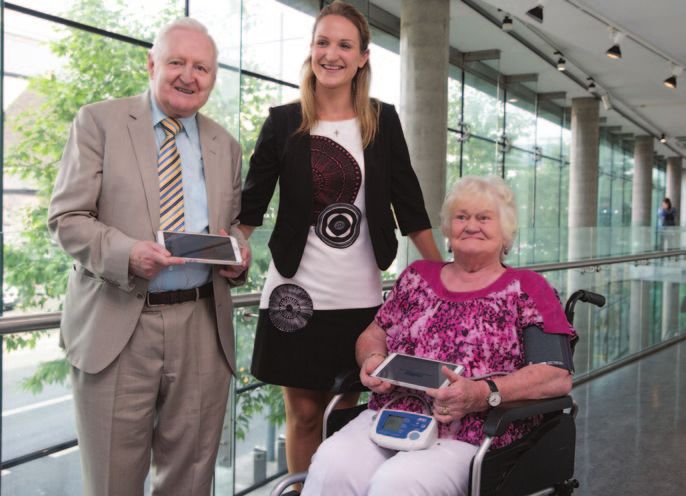
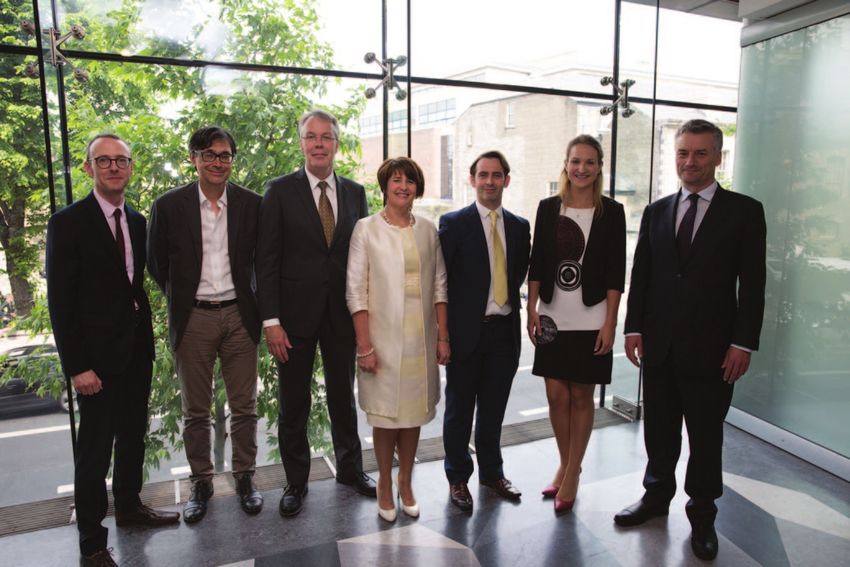
European feasibility study will be carried out               Speakers at the     “Being prepared to adapt the technology will be key, as will making sure
                                                          ProACT launch event
    alongside them in Italy to assess the                                            that we get the timing right in terms of when we provide the data and
                                                            (left to right): IBM’s
    technologies’ commercial potential and barriers          Barry O’Brien, ASP      how long we ask people to spend interacting with the system to ensure
    to their rollout across the member states.             Città di Bologna’s Dr     they get the most benefit.”
                                                                Gianluca Borghi,
    Dinsmore is confident that the targeted age                Philips Research      Empowering patient self-management
                                                             UK’s Sybo Dijkstra,
    group will have no trouble using the                        TCD’s Professor      After all, the main aim of ProACT is to help Europe’s 50 million
    technology; what’s more of a concern is                     Mary McCarron,       multimorbid patients proactively self-manage their conditions. Central to
    whether they continue to engage with it: “In the         Dinsmore, Minister      this are three strands: increasing activity and social connectedness;
                                                             of State for Mental
    next five or ten years, the over-65 generation             Health and Older
                                                                                     improving symptom management; and enhancing quality of life and
    coming through will be well-versed users of          People Helen McEntee,       wellbeing, both physical and psychological.
    smartphones and tablets. So the challenge                 T.D., and TCD’s Dr
    isn’t so much using the technology – it’s
                                                           Patrick Prendergast       “Take medication management as an example,” says Dinsmore. “It’s very
    sustaining that use and actually inspiring                                       important that people are taking the right medicine at the right time and
    behaviour change.                                                                aren’t over or misusing them. It’s quite common for over 65-year-olds
                                                                                     managing a lot of conditions to be taking a lot of different medication,
    “ProACT’s main trial is 12 months. One of our                                    which comes at a huge cost to the health services providing it. By
    fears is that, three months in, people will stop                                 developing a new medicine adherence or management application we
    using the technology because the novelty’s                                       can not only help to improve patient quality of life, but can also reduce
    worn off, or they’re just not interacting with the                               the negative effects of this polypharmacy.”
    data, or we’re giving them too much
    information to track or digest properly and                                      In turn, ProACT will help to offset the EU’s annual €700bn cost of chronic
    asking too much of their time.                                                   disease management and relieve some of the pressures on its
                                                                                     increasingly unsustainable health services. “We’re moving towards the
    “How, then, can we make sure that older adults                                   more social integration of care and also a greater understanding of the
    digest the data we provide and actually act on                                   needs of people who want to live at home and to use technology to
    it? How can we take behaviour change and                                         support that – and, really, we have no other choice,” Dinsmore argues.
    make it effective – make people adapt the way                                    “As people continue to live longer with more conditions, the demands
    they behave over a long enough period of time                                    on health systems and services will continue to increase, and the current
    so it becomes habit?                                                             healthcare model isn’t equipped to deal with that.”

2   ★ I S S U E 1 1 ★ H O R I Z O N 2 0 2 0 P R O J E C T S : P O R TA L                                              www.horizon2020projects.com
This is because EU health systems are focused on single disease
frameworks of treatment and care, he explains (i.e. they care for one
disease at a time), and only respond to a negative health event or episode
as and when it happens. “What the EU is weak on is understanding
multimorbidity care pathways, particularly for over 65-year-olds. There
aren’t really any clear-cut pathways for how somebody with multiple
conditions navigates a health system or to help them understand where
best to go for care.” Illustrating that is the fact that the UK’s National
Institute for Health and Care Excellence (NICE) will be working on
guidelines on multimorbidity in September – for the first time.

From reactive to proactive
It’s this reactive, single disease-focused system of care that Dinsmore
hopes ProACT will help to move away from. “We’d like to see healthcare
develop from a system that’s traditionally driven by physicians’ expertise
to one that’s collaborative and consultative – personalised rather than
‘one size fits all’ treatment; decentralised, community-based care rather
than centralised, hospital-based care; patient-centred services rather
than provider-centric services.                                                           A medication      the result is that we are losing out. ProACT has
                                                                                          adherence or
“We’d also like to see healthcare become more analytics-driven, which                     management        a very consolidated approach that might be
will mean empowering patients and trusting them to use data                     application could help      adopted to challenge that fragmentation.”
                                                                                to reduce the negative
appropriately to help manage their condition and make informed decisions                     effects of
about who they want to support them. If there are minor exacerbations          polypharmacy in terms
                                                                                                            Next steps
that they can manage at home, then let’s give them the knowledge base             of both quality of life   Looking to the future, Dinsmore says a key
                                                                                  and healthcare costs
to do that rather than contacting their GP or going to A&E.                                                 challenge will be “working out how models of
                                                                                                            reimbursement and payment structures for the
“To do that, we aim to use devices, the Cloud and Big Data to provide
bidirectional data between the person at home and the hospital and make                                     delivery of services at home will be shaped by
it more organised. At the moment, the flow of data in healthcare is very                                    this new system of care”. Another area to
unidirectional and unstructured.                                                                            explore, once the systems are in place, is
                                                                                                            expanding the scope of the project to include
“We’d also like to see digital technology, and the use of it, become less
fragmented. Hospital systems and organisations have different records,                                      older adults with conditions other than CHF,
                                                                               Home Instead clients
data storage, treatment outcomes, reimbursement models etc., and the           and ProACT Research          COPD and diabetes, as well as younger patients
                                                                               Panel members
health apps that are out there use different cloud services, different                                      with these and other diseases.
                                                                               Brendan Gallagher
structures, and different methods of collecting, storing and transferring      and Canice Hayes
data as well. None of these systems are really talking to each other, and      with McEntee                 ProACT only kicked off in January but Dinsmore
                                                                                                            is already hopeful that it could one day make a
                                                                                                            real difference to healthcare delivery, healthcare
                                                                                                            costs and, most importantly, the millions of
                                                                                                            people in Europe living with multiple chronic
                                                                                                            conditions – moving the EU one step closer to
                                                                                                            its aim of truly (pro)active and healthy ageing.
                                                                                                                            HORIZON 2020

                                                                                                            Dr John Dinsmore
                                                                                                            Health Innovation Lead and
                                                                                                            Deputy Director
                                                                                                            TCD – Centre for Practice and
                                                                                                            Healthcare Innovation
                                                                                                            Project Co-ordinator
                                                                                                            ProACT

                                                                                                            www.tcd.ie/cphi
                                                                                                            http://proact2020.eu

www.horizon2020projects.com                                                  H O R I Z O N 2 0 2 0 P R O J E C T S : P O R TA L ★ I S S U E 1 1 ★                3
You can also read


