Professional Success Managing work responsibilities during COVID-19 - Rutgers GSAPP
←
→
Page content transcription
If your browser does not render page correctly, please read the page content below

Professional Success Managing work responsibilities during COVID-19

Establish your own workspace
• Establish a separate workspace
  • It doesn’t have to be permanent
• Establish start and cut-off times for
  work
• Spend time outside of your workspace
  when on break
• Take breaks as often as you can
                                          https://cpe.kennesaw.edu/blog/2020/03/24/how-to-quickly-set-up-a-home-office/

                                                                                                                 2
Having trouble staying focused at home?

• Designate worktimes if permitted
• Try setting up a work computer
  profile or web restrictions
  • Try phone apps that also restrict
    your use during work sessions
• Designate sufficient break times
                                        https://www.allbusiness.com/13-ways-stay-focused-working-home-111819-
                                        1.html

                                                                                               3
Get organized
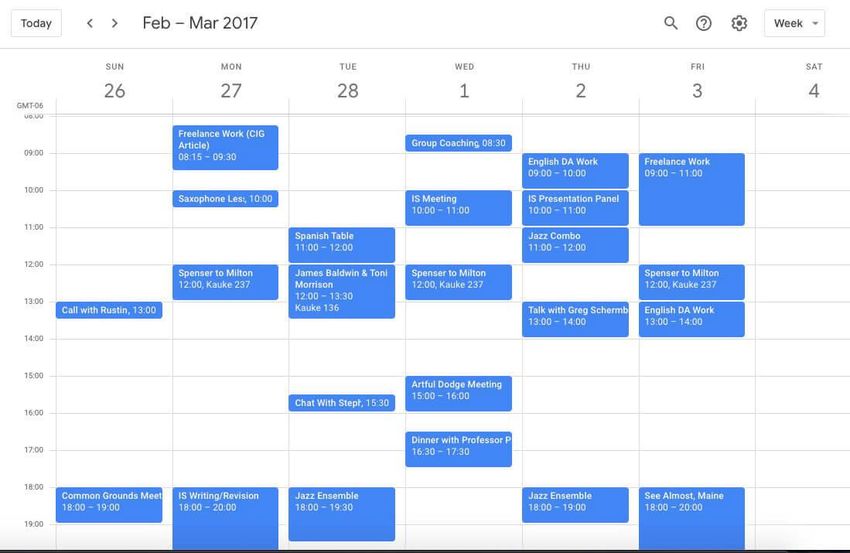
Getting organized
• Keep a calendar and update it
  regularly
• Organize both your physical and
  virtual systems
  • Create a folder in your computer
     for every obligation
• Have a to-do list and set realistic
  goals                                 https://collegeinfogeek.com/how-to-stay-organized-in-college/

                                                                                                  5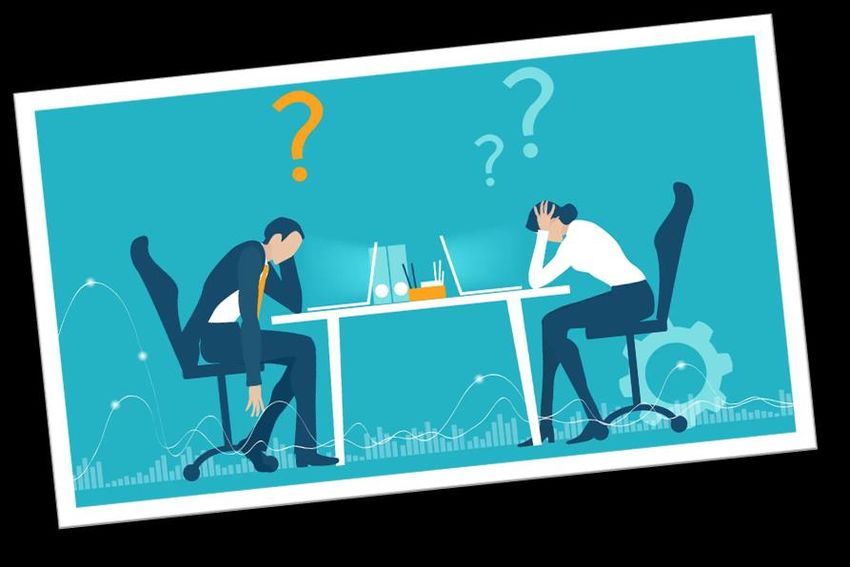
Understanding
Stress

                https://www.earth.com/news/cortisol-indicate-stressed/
Understanding stress
• Stress: “the physiological or psychological response to internal or external
  stressors. Stress involves changes affecting nearly every system of the body,
  influencing how people feel and behave.” (APA, 2020)
• Stress is a driving force to get our work done
  • However, it can easily fall out of balance
• The most successful people are not the ones who experience the most
  academic stress
  • The most successful people are able to cope with stress and prevent it
      from negatively impacting their performance

                                                                            7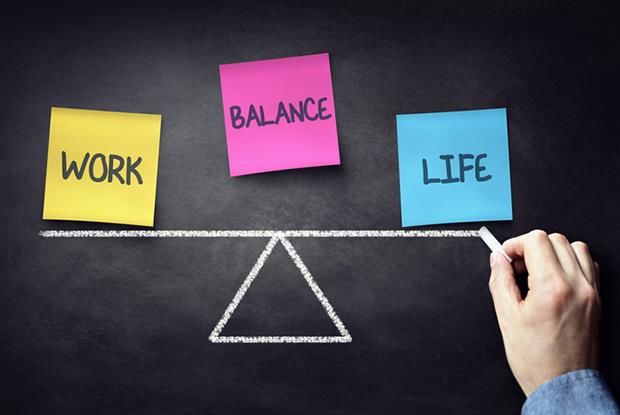
Understanding stress
• In times of stress, our bodies release cortisol to enhance our performance.
  If left unchecked, prolonged stress can have serious negative health
  consequences, such as:
      •   Anxiety
      •   Depression
      •   Digestive issues
      •   Cardiovascular problems
      •   Insomnia
      •   Weight problems
      •   Memory and cognition impairment

                                                                           8
Develop hobbies and side interests
• Try to develop hobbies and interests
  outside of work
  • Can provide you with a sense of
    accomplishment and help you
    transition from work to personal life
• Can also be a good way to connect with
  others during the pandemic                https://vetnutrition.tufts.edu/2016/02/pet-nutrition-primer/

                                                                                                9
Self-care
• Important that you take care of your body and mind at all times
• Can play an important role in managing stress and keeping it at a
  healthy level
• Not every self-care habit will work for everyone, will take some
  trial and error
• Experts say you should engage in at least 30 minutes of self-care
  each day

                                                                  10
Burnout
https://www.cv-magazine.com/global-cities-with-the-lowest-and-
highest-levels-of-workplace-burnout-revealed/Causes of Burnout
• Feeling a lack of control in your
workload
• Being given unclear expectations
• Not maintaining a proper work-
personal life balance
• This might be due to an:
• Overbearing workload
• Being thrust into new roles due to https://thriveglobal.com/stories/recognizing-burnout-in-the-finance-sector/
the pandemic
12Symptoms of Burnout
• Depersonalization
• Exhaustion
• Reduced performance
• You can find relief from these by taking breaks
13Strategies to avoid Burnout
• Recognize and respect your own limits
• Take breaks often
• Set boundaries
• Have realistic goals for yourself
• Delegate what you can
• Engage in self-care and hobbies that
provide you a sense of fulfillment https://www.gponline.com/practical-tips-
help-gps-deal-burnout/article/1453848
14What to do if you’re already
experiencing burnout
• Follow the same steps to preventing burnout
• Re-evaluate your own limits and current schedule
• Set boundaries and inform your friends and family
• Re-evaluate your priorities and consider dropping an
obligation
15Thank You!
References:
American Psychological Association. (n.d.-a). APA Dictionary of Psychology. Retrieved March 2, 2021, from https://dictionary.apa.org/
American Psychological Association. (n.d.-b). Self-care has never been more important. Https://Www.Apa.Org. Retrieved March 2, 2021, from https://www.apa.org/monitor/2020/07/self-care
American Psychological Association. (2012). Building your resilience. Https://Www.Apa.Org. https://www.apa.org/topics/resilience
American Psychological Association. (2020). Stress – APA Dictionary of Psychology. https://dictionary.apa.org/stress
BBC News. (2016, April 24). Why feeling like a fraud can be a good thing. BBC News. https://www.bbc.com/news/magazine-36082469
Cleveland Clinic. (2020, April 29). Practical Steps to Ease Stress and Anxiety During COVID-19 | Susan Albers, PsyD. https://www.youtube.com/watch?v=bHf4oOPudg4&ab_channel=ClevelandClinic
Esther Stanhope – The Impact Guru. (2020, October 26). Esther Stanhope—How to Avoid Burnout 1 – Top Tips from Burnout Expert Cara De Lange. https://www.youtube.com/watch?v=zNt9MK8aYCI&list=PLSF0I7PrxvrG-
Qm1g54H_EEs0CPwn4fvJ&ab_channel=EstherStanhope%E2%80%93TheImpactGuru
Information, N. C. for B., Pike, U. S. N. L. of M. 8600 R., MD, B., & Usa, 20894. (2020). Depression: What is burnout? In InformedHealth.org [Internet]. Institute for Quality and Efficiency in Health Care (IQWiG).
https://www.ncbi.nlm.nih.gov/books/NBK279286/
Kati Morton. (2019a, March 18). The History of BURNOUT! | Kati Morton. https://www.youtube.com/watch?v=usWGg6xKHW0&list=PL_loxoCVsWqxj0ocM5GjaDsEdfLfWCdHW&ab_channel=KatiMorton
Kati Morton. (2019b, March 25). The Science of BURNOUT! | Kati Morton. https://www.youtube.com/watch?v=MZGxYBsUXgU&list=PL_loxoCVsWqxj0ocM5GjaDsEdfLfWCdHW&index=2&ab_channel=KatiMorton
Mayo Clinic. (n.d.). How stress affects your body and behavior. Mayo Clinic. Retrieved February 23, 2021, from https://www.mayoclinic.org/healthy-lifestyle/stress-management/in-depth/stress-symptoms/art-20050987
Merriam Webster. (2021). Definition of BURNOUT. Merriam Webster. https://www.merriam-webster.com/dictionary/burnout
NeuroNation. (2016, February 24). The Imposter Syndrome | NeuroNation. https://blog.neuronation.com/en/the-imposter-syndrome/
NIMH. (n.d.). NIMH » 5 Things You Should Know About Stress. Retrieved February 23, 2021, from https://www.nimh.nih.gov/health/publications/stress/index.shtml
Psych Central. (2015, October 4). What It Really Means to Practice Radical Acceptance. Psych Central. https://psychcentral.com/blog/what-it-really-means-to-practice-radical-acceptance
Staff, G. P. (2017, February 7). What is Radical Acceptance and how can it help? Georgetown Psychology. https://georgetownpsychology.com/2017/02/radical-acceptance-can-help/
TED. (2017a, January 17). How students of color confront impostor syndrome | Dena Simmons. https://www.youtube.com/watch?v=8sQ2p89P0Us&ab_channel=TED
TED. (2017b, February 28). The Secret to Student Success | Arel Moodie | TEDxYouth@ClintonSquare. https://www.youtube.com/watch?v=yY86_7G2qZQ&ab_channel=TEDxTalks
TED. (2019, December 21). How you can use impostor syndrome to your benefit | Mike Cannon-Brookes. https://www.youtube.com/watch?v=ZkwqZfvbdFw&ab_channel=TEDxTalks
TED-Ed. (2015, November 9). How stress affects your brain—Madhumita Murgia. https://www.youtube.com/watch?v=WuyPuH9ojCE&ab_channel=TED-Ed
TED-Ed. (2018, August 28). What is imposter syndrome and how can you combat it? - Elizabeth Cox. https://www.youtube.com/watch?v=ZQUxL4Jm1Lo&ab_channel=TED-Ed
TEDx Talks. (2015, March 26). What do top students do differently? | Douglas Barton | TEDxYouth@Tallinn. https://www.youtube.com/watch?v=Na8m4GPqA30&ab_channel=TEDxTalks
Thomas Frank. (2015, June 11). How to Deal with Student Burnout—College Info Geek. https://www.youtube.com/watch?v=qd_mRapoPtg&ab_channel=ThomasFrank
Thomas Frank. (2017, August 3). 8 Habits of Highly Successful Students. https://www.youtube.com/watch?v=JuYwsNO5XyY&ab_channel=ThomasFrank
Thomas Frank. (2020a, April 27). Working From Home: How to Stay Focused. https://www.youtube.com/watch?v=AgIggrkBFcU&ab_channel=ThomasFrank
Thomas Frank. (2020b, August 25). Online Classes: A Survival Guide. https://www.youtube.com/watch?v=HsWYxfVzX_U&ab_channel=ThomasFrank
UCLA. (2020, May 19). UCLA Connections—Why does Zoom feel exhausting? https://www.youtube.com/watch?v=khhiAEbjHjE&ab_channel=UCLA
WebMD. (n.d.). What are the consequences of long-term stress? WebMD. Retrieved February 23, 2021, from https://www.webmd.com/balance/stress-management/qa/what-are-the-consequences-of-longterm-stress
Wu, J., & David, S. (n.d.). Why “Positive Vibes Only” Won’t Make You Emotionally Strong (No. 294). Retrieved February 19, 2021, from https://podcasts.apple.com/us/podcast/294-why-positive-vibes-only-wont-make-you-
emotionally/id803978236?i=1000474686931

                                                                                                                                                                                                        17
You can also read


