Program Guide - Creating Collaborative Connections in & through Undergraduate Research - Council on ...
←
→
Page content transcription
If your browser does not render page correctly, please read the page content below
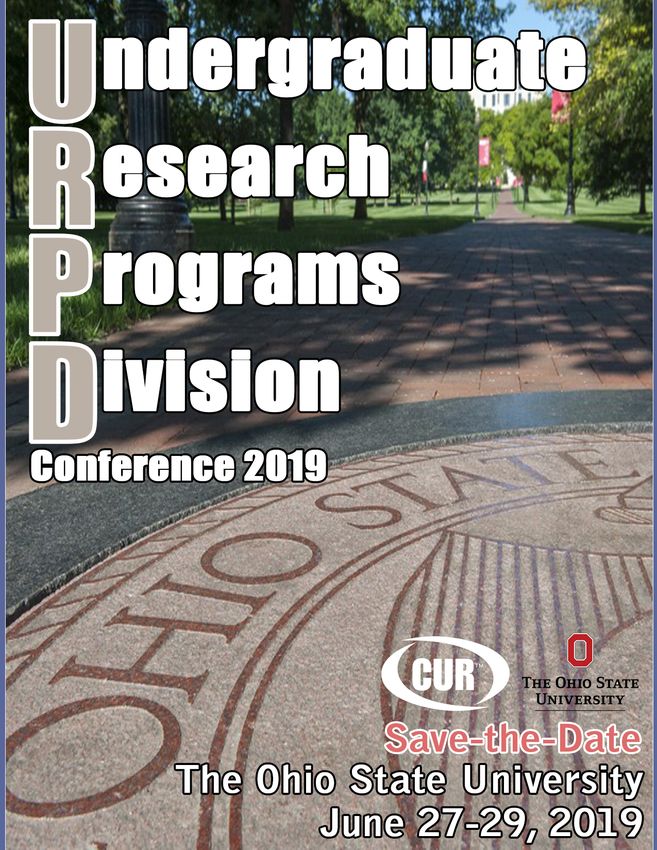
Creating
Collaborative
Connections
in & through
Undergraduate Research
     CUR Biennial Conference 2018

             Hyatt Regency Crystal City
                         Arlington, VA
                             July 1–3, 2018

 Program Guide
CUR would like to thank our Biennial 2018 Sponsors
                 Gold Sponsor

                Silver Sponsors

                 Friends of CUR
2018 Council on Undergraduate Research Conference

   Creating Collaborative Connections in &
      through Undergraduate Research
                                       Hyatt Regency Crystal City
                                              Arlington, VA
                                             July 1-3, 2018

                              CUR Conference Planning Committee
 Larry Wimmers, Co-Chair                         Lynnette Young Overby, Co-Chair
 Professor, Department of Biology                Professor of Theatre and Deputy Director for
 Towson State University                         the Community Engagement Initiative
		                                               University of Delaware

                                    Scott Bates (Utah State University)
                                     Cynthia DeVries (Juniata College)
                                       Sibdas Ghosh (Iona College)
                                   Bridget Gourley (DePauw University)
                             Jennifer Lanter (Moraine Park Technical College)
                               Ruth J. Palmer (The College of New Jersey)
                                 Elizabeth Ambos, Executive Officer, CUR
                      Tavia Cummings, Manager, Institutes and Meeting Services, CUR
Table of Contents
Page
Welcome.....................................................................................................................................3
Program at a Glance.................................................................................................................6
General Information...................................................................................................................7
Registration & Check-in ................................................................................................7
Wireless Internet Login.................................................................................................. 7
Session Formats..............................................................................................................8
Poster Session Information.............................................................................................9
Meeting Program......................................................................................................................11
Saturday, June 30........................................................................................................11
Sunday, July 1...............................................................................................................11
Monday, July 2.............................................................................................................43
Tuesday, July 3..............................................................................................................72
Poster Presentation Session I....................................................................................................34
Poster Presentation Session II...................................................................................................63
Plenary Speaker Biographies...................................................................................................83
CUR Fellows Award Recipients ...............................................................................................85
CUR-Goldwater Scholars Faculty Mentor Award Recipient................................................86
Hotel Map..................................................................................................................................87
CUR Events and Institutes.........................................................................................................89
Index...........................................................................................................................................91CUR Conference 2018
Welcome from the CUR President and Immediate Past President
It is our pleasure to welcome you to the 2018 Council on Undergraduate Research (CUR) Biennial Conference. The conference
focus this year, “Creating Collaborative Connections in and through Undergraduate Research,” features a program that embodies
CUR’s commitment to its strategic pillars:
•• Integrating and building undergraduate research into the curriculum
•• Assessing the impact of undergraduate research
•• Fostering diversity and inclusion in undergraduate research
•• Promoting innovation and collaboration in undergraduate research
•• Advancing internationalization of undergraduate research
Of course, such a large event requires long and careful planning. We would like to recognize the CUR Conference Planning
Committee, co-chaired by Lynette Overby and Larry Wimmers, Executive Officer Elizabeth Ambos, Manager for Institutes and
Meeting Services Tavia Cummings, and the entire National Office staff. Please join us in thanking them for all their hard work.
CUR is the leading voice of undergraduate research, and this meeting showcases the expertise of our 13,000+ individual and
more than 700 institutional members. Over the next three days, you will discover a diverse menu of short presentations, panel
discussions, workshops, performance displays, and poster sessions to enrich your understanding of the practice of undergraduate
research and stimulate discussion and the exchange of ideas. It’s a wonderful opportunity to share, network, collaborate, and
discover the rich and collegial community that has grown up around undergraduate research. In addition to the various sessions, we
hope you will also enjoy thought-provoking and inspirational presentations by our plenary lecturers, José Antonio Bowen, Freeman
A. Hrabowski III, David Lopatto, and Robin Wright.
Iain Crawford
Faculty Director, Undergraduate Research Program, University of Delaware
President, Council on Undergraduate Research
Anne A. Boettcher
Director, Undergraduate Research Institute and Honors Program, Embry-Riddle Aeronautical University, Prescott
Immediate Past-President, Council on Undergraduate Research
3Creating Collaborative Connections in & through Undergraduate Research
Welcome from the Program Planning Committee
We are delighted to welcome you to the 20th Biennial Conference of the Council on Undergraduate Research. We are
fortunate to once again be in Crystal City, Va.—a city located near historic Washington, DC.
The CUR 2018 Biennial Conference Planning Committee has met regularly since last summer to organize this exciting
program for you.
We are eager to share nearly two years of planning and preparation on behalf of you, the advocates everywhere for the
practice of faculty-student collaborative scholarly and creative activity. In that spirit, we have chosen the theme: “Creating
Collaborative Connections in & through Undergraduate Research.”
We hope this theme captures our vision for this conference – to provide a space for sharing and initiating scholarship that
positively impacts our undergraduate students and contributes to knowledge making in our disciplines. We are also interested
in ways our disciplines provide opportunities for connections and innovations that prepare our students for a world that does
not yet exist – but will certainly look different than it does today. We encourage you to use the formal and informal networking
opportunities that are available to you; in this way, you continue the collaborative tradition that is one of the hallmarks of the
CUR biennial conferences.
In preparing for this conference, we have worked with an excellent team of colleagues who were instrumental in developing
the program alongside the continuing support of the entire CUR National Office Staff.
We sincerely thank them for their service:
Scott Bates (Utah State University)
Cynthia DeVries (Juniata College)
Sibdas Ghosh (Iona College)
Bridget Gourley (DePauw University)
Jennifer Lanter (Moraine Park Technical College)
Ruth J. Palmer (The College of New Jersey)
Elizabeth Ambos, Executive Officer, CUR
Tavia Cummings, Manager, Institutes and Meeting Services, CUR
We are grateful to them.
Welcome to CUR 2018! Your participation and engagement will shape the expected outcomes of this event: new knowledge,
valued and constructive networking, an expanded vision of our global agency, and renewed inspiration to instill positive change
at your own institutions.
Co-Chairs
Larry E. Wimmers Lynnette Young Overby
Professor, Department of Biology Professor of Theatre and Deputy Director for
Towson State University the Community Engagement Initiative
University of Delaware
4CUR Conference 2018
Welcome to the 2018 Biennial CUR Conference!
Welcome to the 2018 Biennial CUR Conference! On behalf of the CUR National Office staff, I want to express deep appreciation
for the dynamic and hard-working conference organizing committee, led by Lynnette Overby of the University of Delaware and
Larry Wimmers of Towson University, and for the effective and supportive leadership of Anne Boettcher, president of the 2017-
18 CUR Executive Board, and the entire Executive Board and General Council in building a strong community of undergraduate
researchers and scholars. Special thanks goes to my National Office staff colleagues, particularly Tavia Cummings, CUR’s manager
for institutes and meeting services, who has coordinated much of the planning and logistics for this meeting.
CUR’s mission is to build and enhance high-quality undergraduate student-faculty collaborative research, scholarship,
and creative inquiry. Our organization is still growing and diversifying rapidly, and over 730 institutions and more than 13,000
individuals now belong to CUR, including a growing number of non-U.S. members. Since the 2016 Biennial Conference, CUR
has launched a new flagship, peer-reviewed journal, Scholarship and Practice of Undergraduate Research; moved to new office
space with better capacity to serve our members; and grown and diversified membership engagement through social media outlets
and our CUR Community discussion forum. We received our largest grant through the National Science Foundation, continue to
expand resources for undergraduate research assessment and integration of research in the curriculum, and reap the many benefits
of outstanding National Conferences on Undergraduate Research. Last but not least, we are currently undertaking an ambitious
and comprehensive transition in our association management infrastructure, including a complete website redesign.
I encourage all CUR Conference attendees to stop by the conference registration desk to meet the CUR National Office staff,
and to talk with Executive Board and General Council members about how you can become more engaged with CUR. If you are
not yet a member of CUR, why not join us? We would like to hear from you as to how we can improve what we do to support
undergraduate research in its manifold aspects and to broaden our contributions to your success.
Elizabeth L. Ambos, Executive Officer
CUR National Office Staff
Elizabeth Ambos, Executive Officer
eambos@cur.org / 202-783-4810x201
Robin Howard, Senior Director
Membership Services and Business Operations
robin@cur.org / 202-783-4810x203
Tavia Cummings, Manager, Institutes and Meeting Services
tcummings@cur.org / 202-783-4810x204
Elizabeth Foxwell, Manager, Editorial Projects and Communications
emfoxwell@cur.org/ 202-783-4810x207
Liz Fray Hains, Manager, Student Programs
liz@cur.org / 202-783-4810x206
Pamela Dodge, Manager, Organizational Administration
pdodge@cur.org / 202-783-4810x205
Janae Douglas, Coordinator, Membership
jdouglas@cur.org / 202-783-4810x210
Jeffrey Johnson, Coordinator, National Office
jeffrey@cur.org / 202-783-4810x202
5CUR BIENNIAL CONFERENCE-AT-A-GLANCE*
Creating Collaborative Connections in and through Undergraduate Research
Hyatt Regency Crystal City, Arlington, VA - July 1-3, 2018
Saturday, June 30 Sunday, July 1 Monday, July 2 Tuesday, July 3
Registration 7:00 am-7:30 pm 7:00 am-7:00 pm 7:00 am-7:00 pm 7:30 am-12:30 pm
7:00-8:30 Breakfast and 7:00-8:30 Breakfast and Meet 7:30-9:00 Breakfast
Breakfast E-Board Meeting Poster Session I and Greet with CUR
am am am
Setup Book Authors
Opening Keynote
- Freeman Concurrent Sessions
8:30-9:45 8:30-9:30 Morning 9:00-
Hrabowski
am am Keynote - Robin 11:00 am
followed by Book
Morning ABM Ends at Noon Wright - NSF
Signing
Closing Keynote
9:45 am- Concurrent Sessions 9:45 am- Concurrent Sessions 11:00 am-
- José Antonio
12:00 pm 12:00 pm 12:00 pm
6
Bowen
12:00- 12:00- Lunch Keynote - 12:00- José Antonio Bowen
Lunch Lunch is on your own Lunch
1:30 pm 1:45 pm David Lopatto 12:30 pm Book Signing
Math-CS Division
1:30-3:45 Concurrent Sessions 2:00-4:15 Concurrent Sessions
Workshop (separate
pm pm
registration required)
Afternoon
4:00-5:00 CUR Fellows Address 4:00-5:00 CUR Goldwater
Dialogical Session(s)
pm pm Scholars Reception
2016 BIENNIAL COUNCIL ON UNDERGRADUATE RESEARCH CONFERENCE
Dinner (5:00-
Welcome and 5:00-6:00 Dinner 5:00-6:00 Dinner
6:00 pm Dinner/Divisional pm pm
nightly) Meet and Mingle
6:00-7:30 Poster Session I (w/ 6:00-7:30 Poster Session II (w/
pm barservice) pm bar service)
Evening
(Poster Session II (All Posters taken-
https://bit.ly/2018CURBiennial
Set-up) down)
Updated 6/21/2018 *This schedule is subject to change.CUR Conference 2018
CUR Biennial Conference 2018 – GENERAL INFORMATION
Address (Meeting Location):
HYATT REGENCY CRYSTAL CITY AT REAGAN NATIONAL AIRPORT
2799 Jefferson Davis Highway, Arlington, VA 22202 T +1 703 418 1234 / F +1 703 418 1289
https://crystalcity.regency.hyatt.com/en/hotel/our-hotel.html
Check-in Time: 3 pm / Check-out Time: 12 noon
Attire:
Business casual dress is appropriate for all events. Due to fluctuations in room temperature, CUR encourages you
to bring a sweater or suit coat for your comfort.
Badges and Conference Registration (Ballroom Level):
All conference registrants will receive a personalized badge with their registration packet. This badge must be
worn at all times and will be checked at all sessions, meal functions and events. If you misplace your badge, please
come to the CUR registration desk for a replacement.
The Registration Desk will be located on the ballroom level near the escalators and elevators. Staff will be available
to check in participants and guests, distribute conference materials and answer any questions that you may have. The
hours of operation for the Registration Desk are as follows:
Saturday, June 30:............. 7:00 a.m. – 7:30 p.m. Monday, July 2:...................... 7:00 a.m. – 7:00 p.m.
Sunday, July 1:.................. 7:00 a.m.–- 7:00 p.m. Tuesday, July 3:.................... 7:30 a.m. – 12:30 p.m.
Luggage storage will not be available at the CUR registration desk. Please utilize the hotel luggage storage for your
travel needs.
Birds of a Feather at Lunch (Sunday, July 1):
Birds of a Feather (BOF) sessions are an excellent opportunity to connect and interact with other attendees that you
may not know with whom you share a mutual interest. The CUR Conference 2018 will feature BOF sessions about
many CUR-related topics such as the CUR Transformations Project. If you are interested in leading a table discussion,
please send an email to Tavia S. Cummings at tcummings@cur.org with your topic and full contact information.
Book Sales:
At the conference, CUR will sell a limited number of books from a selection of the speakers, as well as a selection
of books related to the conference content. Leave some extra room in your suitcase and take your publications with
you to save on shipping!
Cell Phones and Other Electronic Devices:
Please be courteous to presenters and fellow attendees by muting your cell phone or other electronic devices while
attending educational sessions and meetings.
Guest Wi-Fi Access:
Instructions for logging on to Wi-Fi:
1. Please select Wi-Fi Internet Access: @Hyatt_Meeting
2. Once @Hyatt_Meeting is selected it will route you to the HYATT splash Page and will request your Access Code
3. Please Enter: CC2018 (Your Personal Access Code: this will allow you access to Wi-Fi throughout all Meeting Space **Case
Sensitive**)
7Creating Collaborative Connections in
In && Through
through Undergraduate
Undergraduate Research
Research
4. Then press enter
5. Afterwards you will notice the HYATT Crystal City Home Page, which indicates that you have gained access to the Wi-Fi.
Lost and Found:
Attendees are also reminded not to leave items of value, including laptops, purses and tablets, unattended at any
time. Neither the hotel nor CUR is responsible for lost or stolen items. The hotel Security Department can be reached
by dialing 24 from anywhere in the hotel. The security team shift consists of a console officer, roving officer, and
patrol officer all equipped with two- way radios, and are on duty 24 hours a day.
Director of Security Marcellus Riley can be reached at extension 6770 or (703) 413-6770. The Security Office is
located on the Lobby level pass the ATM machine next to the elevators and front desk.
Meals Included*:
The following meals are included in the full conference registration fee: Saturday, June 30 – Dinner Buffet – 5 p.m.
(Location: Independence Center )
Sunday, July 1 – Breakfast Buffet – 7 a.m.; Lunch Buffet – 12 noon; Dinner Buffet – 5 pm Monday, July 2 – Breakfast
Buffet – 7 a.m.; Lunch Buffet – 12 noon; Dinner Buffet – 5 pm Tuesday, July 3 – Breakfast Buffet – 7:30 a.m.
*Drink tickets will be provided for the bar serviced events. All meals will be served in the Regency Ballroom Foyer
unless otherwise noted.)
Medical Emergencies:
If you are outside the convention center or the Hyatt Regency Crystal City, dial 911. In the event of a medical
emergency within the Hyatt Regency Crystal City, do not dial 911. Instead, contact the Convention Center Security
Department by dialing extension 55 from any house phone. If the emergency is within the Hyatt, dial 55 from the
nearest house phone and provide:
•• Name and location
•• Nature of emergency
•• Please allow operator to hang up first.
Local EMS, Fire Department, Police and area hospitals are all within 5-8 miles. Average response time is 6-8
minutes.
Parking and UBER/LYFT Discounts:
There is a parking lot very near the hotel that offers discounted parking. Their early-bird parking rate is $10 (in by
9am and out by closing). Visit the link below for details:
https://www.pmi-parking.com/r/parking/view.aspx?record_id=101
Valet parking is available at the hotel; there is no discount pricing for this option. UBER, Lyft (robin53645 for $5
off first ride)
Photography Disclaimer:
By attending the CUR Biennial Conference 2018, you acknowledge that photographs and/or videos of you may
be taken by our conference staff and/or official photographers at any time. Furthermore, you grant the conference
permission to use photographs and/or video of your likeness in any type of media, including websites and print
publications, without compensation or reward.
Session Formats:
Single-presenter presentations will typically summarize research in progress and/or study results, models, or
other innovative programs and techniques. These presentations are relatively short with 20 minutes for presentation
and limited discussion combined. It is recommended that presenters provide handouts and contact information for
attendees who may be interested in continuing the discussion at a later time.
8CUR Conference 2018
Dual-presenter presentations involve two people presenting jointly on a topic of common focus and allows more
time (30 minutes) for presentation and discussion combined.
Panel presentations typically take the form of a series of related presentations on a shared topic by three to four (or
more) presenters, including a moderator who should coordinate the session (60 minutes). Panel presenters have been
encouraged to structure the time so the presenters interact with one another and the audience as they focus remarks
around a series of questions. Presenters should represent a variety of perspectives on the panel topic.
Posters are intended to afford a more informal atmosphere in which participants can share their ideas with
conference participants across a wide variety of disciplines and institutions. Posters share work done to develop or
strengthen undergraduate research institutionally or share examples of student projects, highlighting the various
disciplinary models of undergraduate research. Posters will be on display for an extended time during the conference.
Presenters should be present during their designated poster session time (1.5 hours) to be available to discuss their
work with attendees. Poster boards measuring 40” (width) by 30” (height) will be provided by CUR. Each board will
be identified by a number corresponding to the number of the poster listed in the Program Book.
Location and Hours
All posters will be shown in the Independence Center on the Independence Level – Sunday, July 1 and Monday,
July 2 - 6-7:30 p.m. (See program for more specific details.)
Setup
•• If you are presenting a poster during poster session 1 on Sunday, July 1, we ask that you mount your poster between 7:30am
and 2:45pm. If you are in poster session 2, Monday, July 2, we ask that you mount your poster between 7:30am and 3:00pm.
The setup process should take about 15 minutes.
•• If you need assistance with finding your poster location and/or mounting your poster, please come by the registration desk
where staff will be able to assist you.
•• Posters will be mounted on foam poster boards that will be on easels. Pins and binder clips will be provided to affix your
poster to the foam boards.
•• Posters should NOT be mounted on very heavy stock, as that may prove difficult to mount on the poster boards.
•• Each presenter will have a poster board measuring 40”x30” or 30”x40”. The poster number of the paper will be affixed to
the board and correspond with the number in the program book.
Removal
Please do not remove your poster before 7:30 pm on either Sunday or Monday. Posters left remaining at the session
end time will be discarded.
Workshops (2 hours) are experiential participatory events on a topic or theme related to undergraduate research.
After completing the workshop, participants should know or be able to do something new.
As a participant, check the CUR website for updates to the Conference Presentation Schedule for updates by
visiting: https://bit.ly/2018CURBiennial.
Restaurants:
Visit the Hyatt’s website for a list of in-house eateries at https://crystalcity.regency.hyatt.com/en/hotel/dining.
html or visit the conference registration desk for a list of local restaurants in the area.
Hotel Shuttle - Airport and Metro (Complimentary):
The hotel offers a complimentary shuttle to and from the Reagan National Airport leaving the lobby entrance
every 20 minutes between 4:40am - 12:00am and picks up at the Airport out front of Terminal A, on the lower level
at door 5 at Terminal B, and on the lower level at door 9 at Terminal C.
9Creating Collaborative Connections in
In && Through
through Undergraduate
Undergraduate Research
Research
The hotel also offers a complimentary shuttle to and from the Crystal City Metro station leaving the lobby entrance
every 15 minutes on the hour from 6:00am - 10:00pm Monday thru Friday, and 7:00am - 10:00pm Saturday and Sunday.
For more details, please visit https://crystalcity.regency.hyatt.com/en/hotel/our-hotel/map-and-directions.html.
Social Media at the CUR Biennial Conference:
CUR encourages the use of social media and the CUR Community (https://community.cur.org) before, during,
and after the conference as great way to share, review and discuss the conference, keynote addresses, parallel sessions
and networking events. We include (where possible) this material within our archived conference reports – should
you wish your blog post or similar to appear here, please let us know. We encourage all those participating in the
conference to follow us on Twitter, like us on Facebook, and join our LinkedIn Group. The official meeting hashtag is
#CURCONF2018. Be sure to add it to all of your social media posts.
The CUR Biennial Conference Committee would ask that attendees observe the following guidelines:
•• Be polite and avoid personal attacks on speakers or fellow delegates. Keep criticism constructive.
•• Refrain from using recording devices during sessions without the permission of the speaker.
•• Where appropriate ensure you reference/attribute material to the speaker.
•• Observe copyright regulations.
•• Persons attending are requested to refrain from using perfume, cologne, and other fragrances for the comfort
of other participants.
Special Needs:
Attendees with special dietary or accessibility needs should notify Tavia Cummings at (202) 783-4810, ext. 204,
or email tcummings@cur.org immediately, if you have not previously stated. Attendees will be contacted directly if
there are any questions related to your request.
Welcome to the CUR Biennial Conference 2018!
10CUR Conference 2018
Meeting Program
Saturday, June 30
1:00 p.m.-4:00 p.m.
180-min workshop
Room Assignment: Tidewater II
Math-Computer Science Division Workshop
Facilitator : Kathryn Leonard
Professor and Director of the Center for Undergraduate Research in Mathematics, Occidental College
A Research Lab Model for Student Research in Mathematics. This workshop will demonstrate a model in which multiple students work
together on projects over multiple years, allowing for senior students to mentor students just embarking on research. Techniques will be
discussed for reformulating single-student research projects as collaborative ones, developing healthy collaborative relationships among
students, promoting meaningful contributions by each student, and organizing the logistics of a larger group.
5:00 p.m.–6:30 p.m.—Welcome Dinner and Divisional Mix and Mingle to follow—Room Assignment: Independence Ballroom
See separate handout for division room as signments.
Sunday, July 1
7:00 a.m.–8:30 a.m.—Breakfast—Room Assignment: Regency Ballroom
8:30 a.m.-9:45 a.m.—Open Plenary—Room Assignment: Regency
Speaker: Freeman A. Hrabowski, III
President, University of Maryland, Baltimore County
“Undergraduate Research: A Right, Not a Privilege”
Introduction by: Lynnette Overby, University of Delaware
Keynote will be followed by a book signing.
Concurrent Session 1
9:45 a.m.–10:05 a.m.
20-min single-presenter presentations
Integrating and Building Undergraduate Research into Curriculum and Coursework
Room Assignment: Potomac Room VI
MoBi4all – Live from the Lab and Back
Dorothea Kaufmann
Ruprecht-Karls-University Heidelberg
With “MoBi4all,” students get the chance to learn about research in molecular biotechnology from the very beginning of their studies.
Starting with seminars and a mentoring program, they develop personal and scientific skills to start their own research project in their
fifth semester of studies. Furthermore, they get the chance to discuss the results of their work with fellow students, academic staff, and
alumni.
Saturday, June 30, 2018—1:00 p.m.–4:00 p.m. 11Creating Collaborative Connections in
In && Through
through Undergraduate
Undergraduate Research
Research
Innovation and Collaboration in Undergraduate Research
Room Assignment: Potomac Room II
Research-Based Learning in Project Laboratories Supported by Digital Tools as Motivating and Effective Teaching Method
Franz-Josef Schmitt | Zuleya Yenice Campbell | Christian Schröder | Thomas Friedrich
TU Berlin | TU Berlin | TU Berlin | TU Berlin
Research-based learning (RBL) and project-based learning motivate students to identify with different subjects. The broad range of
laboratories offered in the one-year orientation study program MINTgrün (“STEM” green) at Technische Universität Berlin follows the
concepts of RBL with a transdisciplinary approach and allows for a free choice of a project drafted by the students themselves. We observed
high motivation and a strong tendency to get involved in sustainability research under students participating in our lab, the online project
laboratory in chemistry.
Assessment of Impact of Undergraduate Research
Room Assignment: Potomac Room IV
Quantitative Analysis of an Urban Community College S-STEM Program
Amanda Chapman
Phoenix College
The NSF-funded UC S-STEM program was designed to comprehensively support academically talented, low-income students from diverse
backgrounds. A retrospective, quasi-experimental comparison study of program data collected over a three-year period was performed.
Analysis revealed statistically significantly higher rates in student success, progress, and cumulative GPA in the group of students who
participated in the program and a matched comparison group of students, who did not receive the intervention; a within-subjects t-test
comparison on progress-rate evidenced statistically significantly higher rates in students after the intervention than before.
Diversity and Inclusion in Undergraduate Research
Room Assignment: Conference Theater
Five Practices for Addressing Equity Gaps in UR, as Stated by Students from Underrepresented Groups
Jenny Olin Shanahan
Bridgewater State University
Undergraduate research opportunities continue to be disproportionally available to students from socioeconomically advantaged
backgrounds. To address equity gaps, a focus on recruitment and mentoring practices is needed. This research has identified five themes
from interviews and surveys of 200+ students in 15 different programs at Bridgewater State University (Massachusetts), where two-thirds
of students are from underrepresented groups, and students at other institutions as reported in the literature. Students described particular
recruitment efforts and forms of social-emotional support of mentors they saw as critical to diverse, equitable, and inclusive UR programs.
12 Sunday, July 1, 2018—9:45 a.m.–10:05 a.m.CUR Conference 2018
9:45 a.m.–10:15 a.m.
30-min dual-presenter presentations
Diversity and Inclusion in Undergraduate Research
Room Assignment: Washington Room A
Undergraduate Research in Creative Works Fields: Developing an Inclusive Model on a STEM Campus
Sarah M. Misemer
Texas A & M University
We will discuss our year-long process to develop a definition of and template for undergraduate research in the creative works fields on
a campus with a strong tradition of STEM research.Through this initiative, we seized the opportunity to educate students, faculty, staff,
and administrators on different research models, open new research venues for underserved students, and engage students and faculty in
transformational learning through undergraduate research in creative works. This information will be used to stimulate discussion about
what creative works research looks like on different types of campuses.
Integrating and Building Undergraduate Research into Curriculum and Coursework
Room Assignment: Washington Room B
An Interdisciplinary Model for Incorporating Research into Undergraduate Coursework
Amy Adkins | Marcie Walsh
Virginia Commonwealth University | Virginia Commonwealth University
This presentation details three successful efforts to incorporate research into interdisciplinary undergraduate coursework: a curricular
research class centered around the “Spit for Science” project, a 3-credit course teaching the science behind well-being and related evidence-
based practices, and a short course focused on applying research knowledge to evaluate aspects of pop culture. Attendees will learn details
behind these efforts (including lessons learned), get feedback (if interested in creating a similar model), and engage in a broader discussion
of how to design coursework to promote scientific thinking as a lifelong skill.
Diversity and Inclusion in Undergraduate Research
Room Assignment: Potomac Room I
Multiple Access Points for Research Engagement Encourages Student Success
Lance Barton | Jessica Healy
Austin College | Austin College
In order to provide early and equitable access to undergraduate research opportunities, Austin College has created a number of programs
that are developmental in nature. The ENSURE, ACCESS, and summer program in the sciences encourages early engagement with
research, a developmental focus for student outcomes, and community support for all students.
Internationalization and Undergraduate Research
Room Assignment: Potomac Room III
SPONSOR
Using Partnerships to Easily Build an International Research Opportunities Program
Marisa Moazen | M.T. te Booij
University of Tennessee at Knoxville | Leiden University
For small UR offices, the thought of providing international research experiences for students can be overwhelming. This session will
describe how the University of Tennessee created an International Research Opportunities Program (IROP) using partnerships both
internal and external to the institution. One of those partners, EuroScholars, will provide information on how other universities can
participate in this unique partnership to increase international opportunities for undergraduate research.
Sunday, July 1, 2018—9:45 a.m.–10:15 a.m. 13Creating Collaborative Connections in
In && Through
through Undergraduate
Undergraduate Research
Research
:45 a.m.–10:45 a.m.
9
60-min panel presentations
Integrating and Building Undergraduate Research into Curriculum and Coursework
Room Assignment: Jefferson Room
Sharing and Reflecting on the Institutional Models That Support UR
Patrick X. Rault | Michael Dorff | Patricia A. Morreale | Michael Jackson | John F. Barthell
University of Arizona | Brigham Young University | Kean University | Millersville University | University of Central Oklahoma
Many institutional models for supporting undergraduate research (UR) were created with lab sciences in mind. The panelists will use
their own experiences as practitioners and administrators to describe the similarities and differences between UR in theoretical and
experimental disciplines. Participants will see examples of best practices (and pitfalls) for engaging students and administrators in UR.
Presented models will identify different entry points, from first steps for just-starting UR researchers/administrators to enhancements for
established programs seeking to include additional UR areas and topics.
Innovation and Collaboration in Undergraduate Research
Room Assignment: Lincoln Room
Connecting Research across the Disciplines: Creating an Undergraduate Research Club for All
Alison Rios Millett McCartney | Bethany Pace | Rhiannon Napoli | Lauren Oebker Cahalan
Towson University | Towson University | Towson University | Towson University
We brought together faculty, administrators, staff, and students to create an undergraduate research club to answer questions about and
promote undergraduate research within and across the disciplines and connect student researchers across disciplines. The club is also a
vehicle for disseminating information on expected outcomes of research, such as conference applications and attendance, and planning for
it in students’ undergraduate careers and beyond. Finally, this club serves as a means for faculty mentoring of students and peer-to-peer
mentoring. Panelists include faculty, an administrator, a staff member, and the student club president.
Diversity and Inclusion in Undergraduate Research
Room Assignment: Roosevelt Room
LEARNing to Lead: Peer Mentors of First-Year Research Communities
Colleen M. Smith | Jodiene Johnson | Kloo C. Hansen | Michael Aldarondo-Jeffries
University of Central Florida | Florida Atlantic University | Western Carolina University | University of Central Florida
The L.E.A.R.N. Consortium comprises three institutions that study models that support and retain STEM students through developing
undergraduate research communities. A core element of this program is to incorporate peer mentors who coach participants throughout
the year. Effectively training upperclassmen peer mentors in STEM disciplines can be challenging. Participation in trainings on digital
leadership, growth mind-set principles, student development theories, and assessment of student work help to develop peer mentors
professionally. In this session, we will review practices in developing these trainings.
14 Sunday, July 1, 2018—9:45 a.m.–10:45 a.m.CUR Conference 2018
Assessment of Impact of Undergraduate Research
Room Assignment: Kennedy Room
Progress in Scaling Up an Innovative Evaluation Method: Perspectives from Pilot Implementation Sites and Next Steps
Jill Singer | Karen G. Havholm | Jennifer Harris
State University of New York- Buffalo State | University of Wisconsin - Eau Claire | University of Washington
Development and pilot testing of an evaluation method for summer research programs is discussed. The method involves multiple
assessments of student knowledge and skills for 11 outcome categories each defined by multiple components. Mentors assess students,
students self-assess, and mentor-student pairs experience repeated structured interactions to help students reflect and identify content
knowledge and skills they desire to improve. A “dashboard” facilitates tracking. Panelists represent institutions that pilot tested the
method. Discussion includes refinement of the method, the next round of pilot testing, and plans for eventual broader distribution.
:45 a.m.–11:45 a.m.
9
120-min workshops
Diversity and Inclusion in Undergraduate Research
Room Assignment: Arlington Room
More Buzzwords in Higher Education? Diversity and Inclusion in Undergraduate Research
Vanessa McRae | Jacob A. English
Lincoln University | Georgia State University
In this session, we will attempt to define diversity and inclusion, discuss their benefit to undergraduate research, and present models for
diversifying undergraduate research programs in an effort to reenergize the terms and lead a discussion about its place in higher education.
Diversity and inclusion cannot become buzzwords as the future of our disciplines depend on the depth and variety of perspectives of
emerging scholars.
Innovation and Collaboration in Undergraduate Research
Room Assignment: Tidewater II
Starting an Undergraduate Research Lab Outside the Laboratory Sciences
Megan L. Becker
University of Southern California
Looking to increase the impact of your involvement with undergraduate research, but concerned about balancing the needs of your
students with your other professional obligations? Why not start a research lab? Learn how to use the laboratory model to organize
collaborative undergraduate research experiences, even if you are in a field that doesn’t traditionally have labs. We will cover the why,
what, and how of starting your own research lab.
Sunday, July 1, 2018—9:45 a.m.–11:45 a.m. 15Creating Collaborative Connections in
In && Through
through Undergraduate
Undergraduate Research
Research
Other
Room Assignment: Prince William Room
High Stakes, High Impact: Models of Support for High-Stakes Writing in Undergraduate Research
Natasha D. Oehlman | Heather Haeger
California State University - Monterey Bay | California State University - Monterey Bay
In this hands-on workshop, participants will learn about STEM undergraduate researchers’ experiences writing for competitive fellowships
and scholarships and the context of the feedback support mechanisms that make the application process a transformative experience
regardless of whether the student receives the award. Students stressed that the process of writing; reflection; and peer, professional,
and mentor feedback is what provided the impetus for transformation. Presenters will share strategies for effective feedback approaches
grounded in constructivist methodologies when working with undergraduate researchers writing high-stakes products. Session attendees
will participate in activities (i.e., norming to calibrate a group of writers using a standard rubric, Socratic dialogue, and constructivist
approaches) that facilitate transformative reflection and writing when working with undergraduate researchers.
Integrating and Building Undergraduate Research into Curriculum and Coursework
Room Assignment: Fairfax Room
Modules for Testing the Effects of Temperature on Respiratory Rate and Metabolism in Goldfish
Susan E. Safford
Lincoln University
This workshop provides the participant with exposure to a living vertebrate physiology model – goldfish – that can be used to create
authentic research experiences in respiratory and metabolic physiology at multiple levels of difficulty. Basic chemical and physical
principles that affect solubility of gases in water can also be added. Thus, the participant gets hands-on experience with this goldfish
model and the opportunity to create or modify modules for use in their own classes.
0:10 a.m.–10:30 a.m.
1
20-min single-presenter presentations
Integrating and Building Undergraduate Research into Curriculum and Coursework
Room Assignment: Potomac Room VI
Using Yeast to Reduce Intractable Research: A Model for Course-Based Undergraduate Research
Brett J. Schofield
Doane University
The presenter will discuss a novel, course-based research program for upper-division undergraduate students taking molecular biology.
The program utilizes yeast genetics to screen mammalian proteins for insulator activity. The presenter also will describe the design
considerations that shaped the project and how similar programs could be developed for other biology courses.
Assessment of Impact of Undergraduate Research
Room Assignment: Potomac Room IV
Assessment of Undergraduate Research Learning Outcomes: Poster Presentations as Artifacts
Rachel Hayes-Harb
University of Utah
At the University of Utah, we have recently launched a discipline-general undergraduate research assessment project. We have elaborated
a set of undergraduate research learning outcomes; developed a poster presentation evaluation rubric that aligns with these outcomes; and
deployed graduate student, postdoctoral, and faculty attendees of our campus-wide Undergraduate Research Symposium as ad hoc raters.
In this talk we will present initial results from this direct assessment project and discuss its challenges, especially as they may relate to
the implementation of similar efforts at other institutions.
16 Sunday, July 1, 2018—9:45 a.m.–11:45 a.m.CUR Conference 2018
Innovation and Collaboration in Undergraduate Research
Room Assignment: Potomac Room II
Designing Interdisciplinary Undergraduate Research Experiences to Increase Diversity in STEM
Solomon Bililign
North Carolina A&T State University
The recruitment of undergraduate students, especially minorities, into STEM career paths continues to be a challenge. One approach
for addressing this issue provides an interdisciplinary research opportunity that has societal relevance and involves year-round research
combined with summer or short visits to major university, national lab, or private research facilities. Other program components include
(1) cohort-building activities and effective mentoring; (2) short-course professional development modules focused on research ethics,
literature survey, writing, and data management; and (3) student engagement in the creation of personalized professional development
plans.
0:20 a.m.–10:50 a.m.
1
20-min dual-presenter presentations
Diversity and Inclusion in Undergraduate Research
Room Assignment: Washington Room A
The Advantages and Pitfalls: Running an Undergraduate Research Program at an Urban University
Salina Blea | Sheryl Zajdowicz
Metropolitan State University of Denver | Metropolitan State University of Denver
Based at an urban, nonresidential university that has a diverse and nontraditional student population of approximately 20,000 students,
MSU Denver’s undergraduate research program faces a unique set of pitfalls and advantages for its program. This presentation will touch
on the numerous setbacks and the innovative steps that we take to keep this program running strong.
Other
Room Assignment: Potomac Room III
Funding Opportunities for Undergraduate Research and Education in STEM
Eileen M. Spain | Sunghee Lee
Occidental College | Iona College
Securing funding to launch, establish, and sustain productive and impactful undergraduate research and educational programs in STEM
fields at primarily undergraduate institutions is a clear challenge. This interactive panel discussion will explore how junior, mid-career,
and senior faculty can navigate various funding sources at the federal, state, and local levels as well as at private foundations. The panel
will share various strategies and experiences to help participants better position themselves for success in their grant-writing endeavors.
Integrating and Building Undergraduate Research into Curriculum and Coursework
Room Assignment: Washington Room B
Using Undergraduate Research as a Tool to Help Recruitment and Retention at Siena College
Daniel F. Moriarty | Jodi O’Donnell
Siena College | Siena College
Undergraduate research has been incorporated into multiple classes in the School of Science at Siena College, including opportunities
with nonprofit community partners. This has been designed to engage students at multiple points, helping to increase recruitment and
retention.
Sunday, July 1, 2018—10:20 a.m.–10:50 a.m. 17Creating Collaborative Connections in
In && Through
through Undergraduate
Undergraduate Research
Research
Diversity and Inclusion in Undergraduate Research
Room Assignment: Potomac Room I
Voices on the Verge—Mentoring through Transitions
Mary L. Crowe | Bessie M. Guerrant
Florida Southern College | University of Kentucky
This session will highlight the authentic voices of individuals creating inclusive environments. Attendees will hear individual narratives
about mentoring and climate. After each set of narratives, attendees will reflect on what was heard and how to use that information to
inform their own programs.
0:35 a.m.–10:55 a.m.
1
20-min single-presenter presentations
Integrating and Building Undergraduate Research into Curriculum and Coursework
Room Assignment: Potomac Room VI
Teaching Skills in Scientific Literacy and Data Analysis at the Introductory and Advanced Levels: Building Research Skills Beyond the
Bench
Karen K. Resendes
Westminster College
Undergraduate research in biology is built upon many skills that extend beyond benchwork or fieldwork. This presentation will describe
the undertaking and assessment of recent changes made in an introductory course and an advanced special topics course at Westminster
College performed in order to develop research support skills at a level appropriate to student development across their undergraduate
career.
Assessment of Impact of Undergraduate Research
Room Assignment: Potomac Room IV
Ten Years of Ideas for Marketing Undergraduate Research Engagement to Potential Employers
Jeanetta D. Sims
University of Central Oklahoma
Undergraduate research students and faculty mentors are challenged constantly with translating the impact of students’ university
research experiences into evidence of workforce readiness. Drawing from 10 years of student examples from Diverse Student Scholars,
an interdisciplinary undergraduate research program, this presentation offers ideas, examples, and strategies for students to market their
undergraduate research engagement in resumes, websites, and portfolios. Attendees will leave the session better able to craft relevant,
action-oriented evidence statements that showcase the transferability of student research engagement in future employment opportunities.
Innovation and Collaboration in Undergraduate Research
Room Assignment: Potomac Room II
Projects Organized by Students at Technische Universität Berlin Motivate Engagement in Sustainability Research
Franz-Josef Schmitt | Christian Schröder | Anna Haas | Nikolaj Koch | Saba Nojoumi
TU Berlin | TU Berlin | TU Berlin | TU Berlin | TU Berlin
Self-organized projects motivate students’ engagement in sustainability research. Technische Universität Berlin (TU Berlin) supports
students willing to participate in self-managed projects (tu projects) with student tutor positions. The tu projects are developed by the
students themselves and often focus on ecological problems and sustainability. We followed the team MultiBrane of the TU project
“iGEM-Synthetic Biology” developing a functional biological membrane for water treatment. MultiBrane won third prize in the BIOMOD
competition 2017 in San Francisco.
18 Sunday, July 1, 2018—10:20 a.m.–10:50 a.m.CUR Conference 2018
Diversity and Inclusion in Undergraduate Research
Room Assignment: Conference Theater
Disseminating a Pioneering Handbook on Mentoring Students in Undergraduate Research
Aida L. Egues
New York City College of Technology
A multidisciplinary committee of trained faculty mentors from fields across schools of arts and sciences, professional studies, and
technology and design at a unique college within an urban university system developed a pioneering peer-reviewed handbook on
mentoring students in undergraduate research, with a focus on faculty and student diversity and inclusion in undergraduate research
developmental relationships.
0:50 a.m.–11:50 a.m.
1
60-min panel presentations
Integrating and Building Undergraduate Research into Curriculum and Coursework
Room Assignment: Jefferson Room
Building Research Success across Disciplines Using a Multi-Semester Course Sequence
Melissa I. Gebbia | Jodi F. Evans | Hia Datta
Molloy College | Molloy College | Molloy College
Three different disciplines at Molloy College have developed multi-semester research course sequences independently of each other.
The biology, psychology, and speech-language pathology undergraduate programs work with students in a two- or three-semester course
progression aimed at developing, conducting, and disseminating original research. Students need to make the connection between the
successful accomplishment of the series and the achievement of their career goals. The departments will share how they develop an
understanding of the student’s research identity early on as well as how they assess student success later in the sequence.
Assessment of Impact of Undergraduate Research
Room Assignment: Kennedy Room
Assessment of REU Impacts: Current Resources and Planning for Expansion
Anne A. Boettcher | John F. Barthell | John M. Hranitz | Sally E. O’Connor
Embry - Riddle Aeronautical University | University of Central Oklahoma | Bloomsburg University | National Science Foundation
Broadly-available surveys (e.g., SURE, CURE, AAC&U Value Rubrics…), program-mandated surveys (e.g., CIMER and URSSA-SALG), and
individualized surveys are used in assessment of National Science Foundation Research Experiences for Undergraduates (NSF REU) sites.
In this highly interactive session, participants will have the opportunity to review the assessment tools most commonly used by REU
programs and will also discuss pressing questions with regard to expanding and enhancing assessment, particularly longitudinal impacts
of REU participation on student success. The panel includes NSF program directors, as well as present and past NSF-REU principal
investigators.
Diversity and Inclusion in Undergraduate Research
Room Assignment: Roosevelt Room
Enhancing the Postdoctoral Experience through Liberal Arts Colleges
Mark E. Lee | Monica S. Stephens Cooley | Emily Weigel | Caitlin Conn
Spelman College | Spelman College | Georgia Institute of Technology | Emory University
Spelman College piloted a NSF-funded postdoctoral program to accomplish several goals: increase access to undergraduate research (UR)
for students, train early-career postdoctoral scientists in research, provide a setting to develop their mentoring skills, expand the number
of course-based research experiences (CUREs) offered, and evaluate the value of postdoctoral fellows in undergraduate STEM departments.
Sunday, July 1, 2018—10:50 a.m.–11:50 a.m. 19Creating Collaborative Connections in
In && Through
through Undergraduate
Undergraduate Research
Research
Innovation and Collaboration in Undergraduate Research
Room Assignment: Lincoln Room
Creating Successful Undergraduate Research Connections between Two-Year and Four-Year Colleges and Universities
Jennifer A. Lanter | Diana Spencer | Michelle Hayford | Prajukti Bhattacharyya | Jane Lehr
Moraine Park Technical College | Tulsa Community College | University of Dayton | University of Wisconsin - Whitewater | California
Polytechnic State University- San Luis
This session will bring together individuals active in undergraduate research, scholarship, and creative activities at two-year colleges
with those at four-year colleges and universities to discuss opportunities and pathways that allow student researchers to transition
seamlessly from two-year to four-year institutions. The goal of this session is to share best practices, as well as the benefits and challenges,
of connecting two-year and four-year undergraduate research experiences for students and related professional development for faculty.
0:55 a.m.–11:25 a.m.
1
30-min dual-presenter presentations
Diversity and Inclusion in Undergraduate Research
Room Assignment: Washington Room A
L.E.A.R.N. Consortium: Research Communities for First-Year and Transfer STEM Students
Kimberly R. Schneider | Donna Chamely-Wiik | William R. Kwochka
University of Central Florida | Florida Atlantic University | Western Carolina University
Building upon a successful STEM first-year student model, three institutions have adapted and implemented a research learning
community program for two unique audiences: transfer students and first-year students. These two types of programs share strategies of
early engagement in undergraduate research, mentoring, and a supportive community but are implemented differently to meet the diverse
needs of each population. This presentation will share the various models and assessments implemented at each institution to date and
provide preliminary data, including retention, focus-group reports, surveys, and embedded measures.
Integrating and Building Undergraduate Research into Curriculum and Coursework
Room Assignment: Washington Room B
Co-developing Scalable and Adaptable Undergraduate Research Courses in the Humanities with Interdisciplinary Teams
Valerie Imbruce | Ashley A. Serbonich
State University of New York-Binghamton | State University of New York-Binghamton
It is difficult to enable groups to “think together” and co-develop interdepartmental initiatives. We will discuss two efforts at Binghamton
University to develop interdisciplinary, interdepartmental research courses that forefront the humanities as a team effort.
Diversity and Inclusion in Undergraduate Research
Room Assignment: Potomac Room I
Cultivating Resilience: Supporting Minoritized Student Scholarly Voices through UREs
Susan Mendoza | Sultan Hubbard
Grand Valley State University | Virginia Commonwealth University
Are effective mentoring and programmatic supports enough to overcome historic inequities and the hostile climate that minoritized
students face in higher education? In this presentation, the presenters reflect on their work designing, executing, and evaluating UREs
that serve minoritized students. The presenters will discuss elements of programmatic design that promote a reflective scholarly journey
for students and space to hone their voices. By infusing these elements into an URE program’s framework and culture, programs can
support students to engage in graduate education from a place of integration and resiliency.
20 Sunday, July 1, 2018—10:50 a.m.–11:50 a.m.You can also read


