Promoting excellence in the management of roads - CEDR
←
→
Page content transcription
If your browser does not render page correctly, please read the page content below
Overview 2020-2021

Promoting excellence
in the management of roads
2                                                                                                                                                                                                                3

                                                                                                                        Mission                                  Strategic
                                                                                                                        Statement                                Goals
                                                                                                                                                            Help NRAs to keep ahead of the curve,
                                                                                                                                                            anticipate future trends and prepare them to
                                                                                                                     CEDR is                                face new challenges
                                                                                                                an organisation of
    Strategy & Mission                                                                                                                                      Reinforce NRAs role as key providers of
                                                                                                              European national road                        efficient and seamless mobility from an end
                                                                                                                                                            user perspective within the transport system
                                                                                                               administrations that
                                                                                                                                                            Facilitate and optimise the efficient use of
                          For over twenty years, CEDR has developed and promoted excellence in the            promotes excellence in                        resources, making the best use of existing
                          management of roads. This has significantly helped National Road Authorities                                                      infrastructures
                          (NRAs) to keep ahead of the curve, anticipate future trends and face new               the management
                          challenges.                                                                                of roads.                              Improve the safety and sustainability of roads,
                                                                                                                                                            and reduce their environmental impact and
                          Nowadays, the challenges of NRAs are more multidimensional and complex                                                            carbon footprint
                          than ever before. This requires harmonised efforts and a holistic network able
                          to deliver innovative, efficient and long-term solutions for all actors involved.
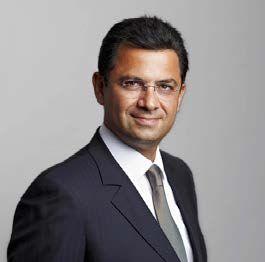
    Jürg Röthlisberger    CEDR’s aim is to provide this vital network which will ensure a safer and more                Vision                                   Strategic
    CEDR President 2020   sustainable environment for all Europe’s roads.
    Federal Roads
                                                                                                                        Statement                                Focus
    Office FEDRO (CH)     CEDR’s engagement and best practice sharing has recently broadened to
                                                                                                              CEDR consolidates its position as        In addressing the Strategic Goals and Governing
                          address several priority issues such as digitalisation, environment, safety,
                                                                                                              the platform for Road Directors and      Board’s interests, the focus areas of CEDR’s activities
                          mobility, performance, asset management and regulations, among others.
                                                                                                              National Road Administrations that       are organised around the following themes:
                          As a result, CEDR is currently organised around Working Groups (WGs) and
                                                                                                              facilitates, reliably and effectively:
                          Programme Executive Boards (PEBs) that draw upon experts from a range                                                         1     Digitalisation and Innovation
                          of different fields relevant for NRAs. The WGs and PEBs produce policy and
                                                                                                                  Benchmarking and sharing of
                          research papers that drive the creation of effective strategic and technical
                                                                                                                  knowledge and best practices          2     Environment and Resilience
                          recommendations.
                                                                                                                  Collaborations and sharing of         3     Safety, Operations, Mobility and Performance
                          In order to be able to shape the future developments of European roads,
    Mike Wilson                                                                                                   resources in joint projects
                          CEDR needs to be constantly reliant on efficient cooperation with its members
    CEDR President 2021                                                                                                                                 4     Resources and Asset Management
                          (NRAs) and external stakeholders. Through CEDR, NRAs reinforce their role as
    Highways                                                                                                      Professional networking and
    England (UK)          key providers of efficient mobility and optimise the use of their resources and
                                                                                                                  competence building                   5     Regulations and Harmonisation
                          existing infrastructures. The cooperation can take the form of joint projects,
                          professional networking events and competence building, among others.

                          The priorities for the upcoming years are based on CEDR’s rolling three-year
                          programme document, which currently includes the strategic goals of best
                          use of infrastructure and financing (2020) as well as sustainability and safety
                          (2021). CEDR will keep refining its working guidelines and processes in order
                          to ensure the best possible services to NRAs in delivering and maintaining a
                          safe and sustainable transport system across Europe.

                          More than this, CEDR remains the only platform offering a regular exchange
                          among European road directors on a formal level and, very importantly, on a
                          personal level as well.

    Overview 2020–2021
4                                                                                                                                                                                                                                5

                                                                                                                   B        Working Groups

                                                                                                                  Aimed at the analysis of relevant and specific topics of interest from an NRA perspective. As with all
                                                                                                                  CEDR activities, working groups have a clear scope, objectives, deliverables and timescale.

                                                                                                                  As the creation of a working group is only warranted in the cases where this approach is the most efficient
                                                                                                                  organisation, less resource intensive solutions should always be considered beforehand. Working Groups
                                                                                                                  (either temporary or permanent) shall only be considered if there is a minimum of eight countries willing
    Activities & Products                                                                                         to commit resources and participate regularly.

                                                                                                                  Temporary groups have a specific and limited time span linked to their scope, objectives and deliverables.
                                                                                                                  The activation and de-activation of working groups is done in accordance with the Action Plan, within the
                                                                                                                  required flexibility to facilitate the responsiveness of the organisation to changing conditions.
      A       General principles
                                                                                                                  Permanent working groups can be created for on-going activities or issues that require a regular and
                                                                                                                  stable oversight. Reflecting the commitment of CEDR to the biennial TRA events and to facilitate the
    Scope and principles: CEDR organises its activities   Definition of objectives and articulation with
                                                                                                                  effective organisation of the permanent groups, they will typically operate over a renewable four-year
    under a three-year rolling Action Plan for the        CEDR Strategy: In order to be approved as a
                                                                                                                  cycle.
    purposes of planning, scheduling and allocation       CEDR sponsored activity, any proposal needs
    of resources. The Action Plan is a live document      to identify specific objectives articulated with
    subject to regular updates, aimed at defining the     the organisation Strategy (Mission, Vision and
    activities to be undertaken by the organisation in    Strategic Goals). As such, all CEDR activities           C        Regular benchmarking and factsheets
    the future and plan the resources accordingly.        must have a significant dimension and impact on
                                                          road network management.
                                                                                                                  CEDR may organise and support the publication of relevant road management and operational indicators
    Activities and objectives: The activities that can
                                                                                                                  of NRAs. This can either aim at the benchmarking of road management activities across Europe for the
    be included in the Action Plan are any of those       Efficiency: All CEDR activities are organised
                                                                                                                  benefit of NRAs, or the publication and distribution of road management information for other stakeholders
    described below. In order to simplify Action Plan     following the principle of efficiency and
                                                                                                                  in the road industry and wider audiences beyond NRAs.
    management, activities will be organised in Focus     optimisation of resources. For this purpose, all
    Areas. All activities considered in the Action Plan   activities must include an evaluation of resources
    shall specify the following:                          (CEDR & NRAs, budgetary and non-budgetary)
                                                          plus relevant KPIs for assessment.                        D       Collaboration in joint projects
          Specific objectives articulated with CEDR
          Strategy (Mission, Vision and Strategic         Extent of support required: CEDR activities must        NRAs may join together in joint projects with funding and/or in-kind contributions and sharing of resources,
          Goals)                                          focus on topics of wide and general relevance           to achieve specific goals consistent with CEDR Strategy.
                                                          for NRAs members. If an activity does not reach
          Description of the activity and scope           the required commitment among NRAs to make
                                                          it viable, the countries willing to proceed are still             Seminars and workshops
          Deliverables and timescale                      encouraged to do so out of CEDR Action Plan               E
                                                          Structure.
          Required resources (from CEDR, from                                                                     CEDR may arrange seminars and workshops about relevant road management issues. These events
          NRAs, or from third parties)                    Organisation: Firstly, CEDR decides on a                could have different scopes:
                                                          particular activity and set of objectives, and only
    Scope of activities: CEDR products are organised      after that organisational aspects are discussed.              NRAs experts and personnel for sharing of knowledge, best practices and competence building
    around activities with specific objectives            As long as the objectives and deliverables of an
    and deliverables, rather than organisational          activity are met, working procedures, organisation            To increase general knowledge and awareness about road management issues among other
    arrangements. As such, CEDR catalogue of              of resources and nomination of project leader can             stakeholders, wider audiences or society at large
    activities encompasses working groups, studies        be adjusted with flexibility.
    and collaboration projects, networking and
    technical events such as seminars or workshops,                                                                         Guidance on regulatory initiatives from international bodies
    benchmarking and / or technical publications.
                                                                                                                    F

                                                                                                                  CEDR may establish oversight frameworks to advise NRAs on regulatory issues (such as EU related) and
                                                                                                                  / or associated standardisation activities.
    Overview 2020–2021
6 7
The Action Plan drafting, approval, delivery, assessment and Performance and annual objectives: At the end Dissemination: Whereas NRAs remain responsible
G of each year the Rotating Presidency submits for the communication of results among their staff,
dissemination from international bodies an Annual Report analysing the performance CEDR may undertake initiatives to promote the
and objectives met during their term, including dissemination of Action Plan results among other
relevant Key Performance Indicators. This road stakeholders and/or wider audiences within
Role and responsibility of the Governing Board: Role and responsibility of the Action Plan
assessment focuses on tangible deliverables the scope of the organisation Strategy.
The GB is responsible to: Committee: The APC is responsible to provide
and objectives effectively achieved. Any failure to
the EB with support in the process of drafting,
meet the expected objectives or quality must be
Provide the strategic guidelines and any updating and monitoring the Action Plan. This
analysed in detail, including recommendations for
potential tactical inputs required to organise support may concern the scope, objectives,
the future (lessons learnt). The Annual Report of
CEDR Action Plan deliverables and schedule of each activity to be
the previous year is discussed by the EB at its first
included in the Action Plan.
meeting of the year.
Approve the Draft Action Plan and commit
the resources required for its delivery Action Plan cyclical review and update: Every
year the Action Plan is reviewed and updated, Strategic Map (ACTION PLAN 2020-2022)
GB members are ultimately responsible specifying the activities to be delivered over
for the commitment of resources from their the following three years, with the flexibility to
NRAs but may delegate some tasks to the allow the responsiveness of the organisation to To help NRAs: To reinforce NRAs role as: To facilitate and optimise: To improve: the safety
EB members changing circumstances. The activities included - to keep ahead of the curve key providers of efficient - the efficient use of and sustainability of roads
- to anticipate future trends and seamless mobility resources And reduce: their
in the three-year period of the Action Plan shall be - to face new challenges from an end user perspective - the best use of existing environmental impact
Role and responsibility of the Management described in increasing detail as time passes and within the transport system infrastructures and carbon footprint
Committee: The MC is responsible to secure the their execution year approaches.
convergence between the resources required in
the Action Plan and the budget. Action Plan execution: Every year, all previously
planned activities are executed, and those 1.11 Call 1.9 Call 1.2 Connected 1.8 Infravation
FA 1 2018 2017 and automated 1.4 Datex II
Role and responsibility of the Executive Board: delivered the previous year are assessed. 1.10 Call 2017
DIGITALISATION BIM Automation driving New materials, techniques
The EB is responsible for the drafting, approval & INNOVATION and methods
1.3 Amsterdam
and delivery of the Action Plan, taking into Action Plan approval process: The yearly approval Group
1.7 Innovation
consideration: of the Action Plan shall be defined in CEDR
Internal Rules, and organised taking into account 2.8 Call 2019 2.5 Call 2016
CEDR strategy: Mission, Vision & Strategic the annual calendar of meetings of the different Renewable energy Water quality
Goals organisation bodies and their responsibilities in in road infrastructure
FA 2 2.6 Call
the Action Plan (as described above). 2.7 Call 2018 2016
environment
Inputs & mandates from the GB & RESILIENCE
Noise and nuisance 2.9 Call Biodiversity
2019 and invasive
Deliverables and quality: Whereas the EB is Soils species
Resources made available and committed the ultimate responsible for the Action Plan,
2.4 Environment
by the GB/MC its supervision and quality is delegated to the
Action Plan Committee, who is responsible for
FA 3 3.10 Call 2019
Relevant inputs from CEDR bodies and recommending the approval of final deliverables Safe smart highways 3.1 Road safety
3.8 Call 2015 Freight
NRAs (as a reference) ensuring quality and objectives. Whenever SAFETY,
and logistics In a
OPERATIONS, 3.5 Performance of road network
convenient, Action Plan deliverables could be MOBILITY &
multimodal context 3.2 Call 2016
In the delivery of its responsibilities on the Action used as a base for open discussions and/or PERFORMANCE 3.3 Traffic and network management Road safety
Plan planning and delivery, the EB may delegate workshops at EB or GB meetings.
any tasks on the Action Plan Committee. 4.6 Human capital 4.1 Procurement
FA 4 development and finance
RESOURCES
4.7 Call 2017 Collaborative 4.8 Network
& ASSET
planning of infrastructure networks governance
MANAGEMENT
and spatial development
FA 5 5.1 Harmonisation and standards
REGULATIONS &
5.2 EU Legislation
HARMONISATION
Colour code of activities: = working groups = workshops = liaison = PEB
Overview 2020–2021
Avenue d’Auderghem, 22-28
 1040 Brussels (Belgium)

    www.cedr.eu
You can also read


