QUT Earth and Atmospheric Sciences - Potential student research projects - potential student ...
←
→
Page content transcription
If your browser does not render page correctly, please read the page content below
QUT Earth and Atmospheric
Sciences
Potential student research projects
Research in Earth and Atmospheric Sciences at QUT

Our school specialises in understanding fundamental chemical and physical
processes that operate across the physical spheres of Earth. We're motivated by
the need to solve current global challenges, such as the state of the atmosphere,
greenhouse gases, energy and resource sustainability, and future planetary
habitability.

Why do a research degree in Earth & Atmospheric Sciences?

Our core research focus is on the physical spheres of Earth: the lithosphere,
atmosphere and hydrosphere. We investigate how these physical spheres have
evolved over Earth's history and, through geospatial science, we observe and
understand these spheres today and their interactions with all life.

We have a particular research focus on:
•   natural resources
•   Earth observation
•   atmospheric composition and change
•   air quality and pollution
•   natural hazards
•   climate
•   environmental science challenges (including reef restoration and energy).

Earth is our main laboratory and learning-ground for extra-terrestrial ventures. We
conduct our research with access to QUT’s state-of-the art instruments and
facilities, including those based within the Central Analytical Research Facility
(CARF)
Research in Earth and Atmospheric Sciences at QUT

   Testimonials

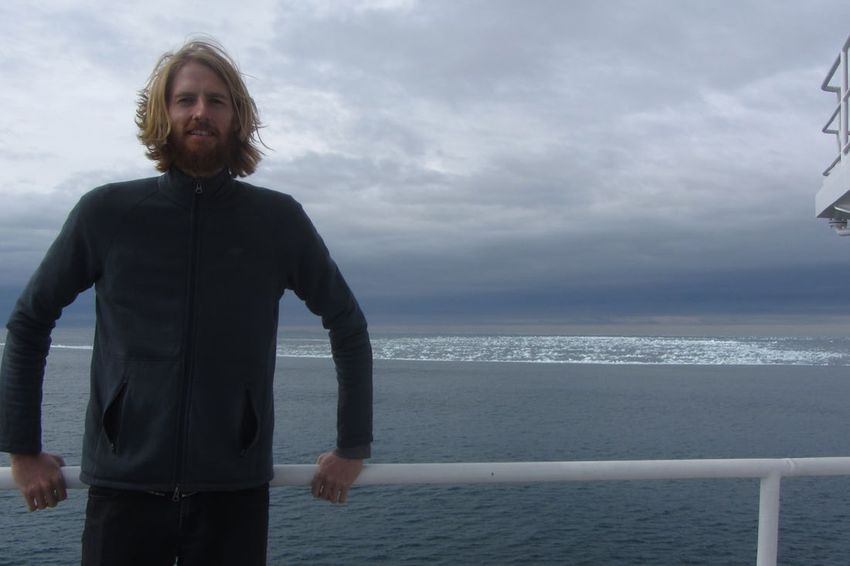
Make a difference, explore the world
‘My research focuses on aerosol particles in the
atmosphere and how they affect clouds and
the climate.

QUT has given me many opportunities for
exciting field work that will contribute to
improving climate modelling. This photo was
taken on board the Research Vessel (RV)
Investigator at about 65 degrees south at the
start of the Antarctic sea ice’.

Luke Cravigan, QUT Postdoctoral Research
Fellow (Atmospheric science)

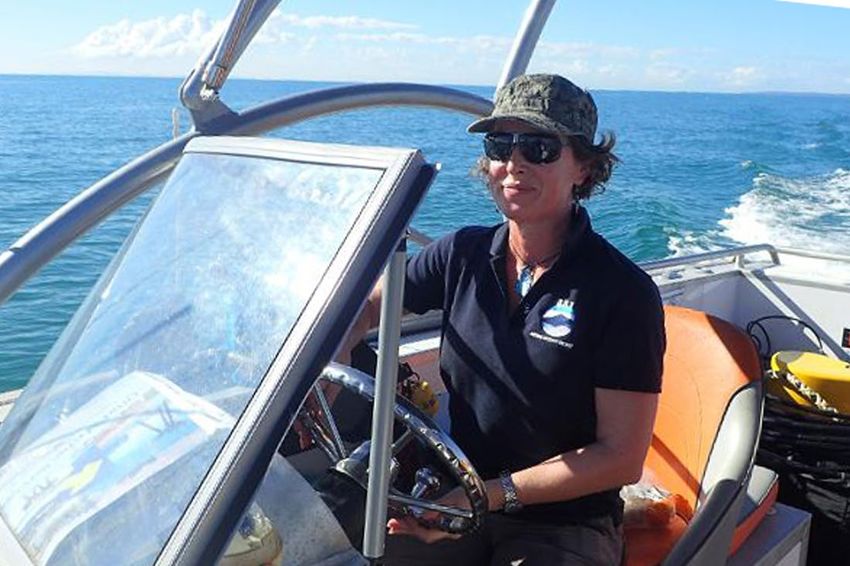
                                                   Help ecosystems thrive
                                                   'I study the limestone sediments from algae
                                                   skeletons to investigate processes in reef
                                                   ecosystems. The results could help us to better
                                                   predict how marine ecosystems might respond
                                                   to environmental change.

                                                   QUT has connected me with a wide network of
                                                   global collaborators and real-world experiences.
                                                   This photo was taken during fieldwork on
                                                   Moreton Bay where we trialled a method for
                                                   imaging sediments below the seafloor’.

                                                   Mardi McNeil, QUT PhD researcher (Earth
                                                   science)
Research in Earth and Atmospheric Sciences at QUT

How to apply for a research degree

Read our guide to applying for a research degree at QUT,
including scholarship information and faculty-specific steps you’ll need to
take as part of your application:

How to apply for a research degree

Have questions about applying?

Our Higher Degree Research support team can answer your questions about
applying for a research degree at QUT:

•   Call: 3138 7200

•   Email: hdr@qut.edu.au

Support for our research students

Our Graduate Research Education and Development (GRE+D) program is
here to support your learning and skills development at all stages
of your research degree.

Find out more about GRE+D
POSITION
                                Director of QUT’s Central Analytical Facility in the Institute for
                                Future Environment, and
                                Research Fellow in School of Earth and Atmospheric Sciences

                                RESEARCH
                                Earth and Atmospheric sciences prosper by combinations of good
     Paste image                field work, sample collection and advancement in analytical
      150x150px                 techniques. My interests are generally mineral to outcrop scale.
                                What rock information can we squeeze from mineral data?

                                Research student projects available 2021:
                                • Equilibrium among trace minerals in common igneous rocks:
                                  apatite+zircon+titanite. How can we determine what sets of
                                  minerals crystallized together? This relies on dating and trace
                                  element composition (PhD, Masters)
CHARLOTTE                       • Separating the inseparable: Zr and Hf. Hf was element X in
                                  the periodic table for a long time because separating it from Zr
ALLEN                             is difficult in the laboratory. Nature, on the other hand can do it,
                                  how? The main driver in siliceous systems, zircon, is relatively
                                  well understood but what controls these elements in more mafic
CONTACT                           systems? (PhD, Masters)
PHONE: +61 7 3138 0177
EMAIL: cm.allen@qut.edu.au      QUT STAFF PROFILE:
OFFICE: GP, P Block, Rm. 739
                                https://staff.qut.edu.au/staff/cm.allen

                                POSITION
                                Associate Professor
                                School of Earth & Atmospheric Sciences

                                RESEARCH
                                I study volcanoes and the different ways volcanism has impacted
                                our planet – its evolution, its atmosphere and our environment.
    Paste image
                                Volcanoes are one of the most powerful agents of change on our
     150x150px
                                planet, from creating the continents we live on to changing the
                                climate and extinguishing life.

                                Research student projects available 2021:
                                • Petrological evolution during back-arc basin formation: the East
                                  Manus Basin, PNG (PhD)
                                • Volcanology and Petrology of pumice raft-producing eruptions

SCOTT
                                  from Tonga (MSc/PhD)
                                • Temporal-compositional trends in long-lava flows: the 600,000

BRYAN
                                  year old Coalstoun Lakes eruption, Southeast Queensland
                                  (MSc).

                                QUT STAFF PROFILE:
CONTACT
PHONE: +61 7 3138 4827
                                https://staff.qut.edu.au/staff/scott.bryan
EMAIL: scott.bryan@qut.edu.au
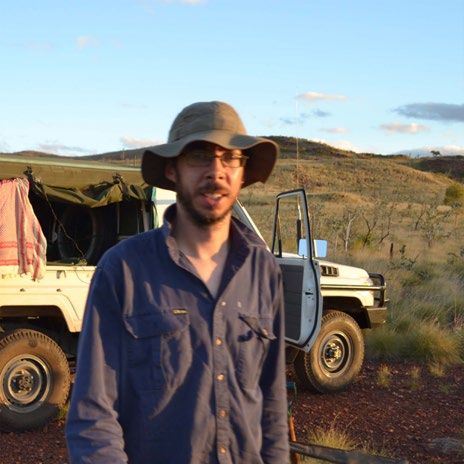
OFFICE: GP, R Block, Rm 204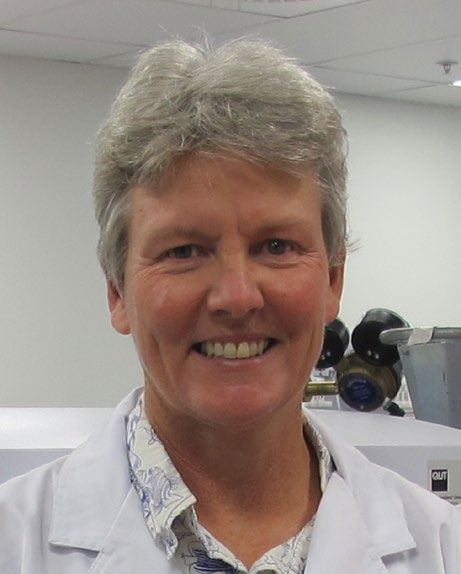
POSITION
                                   Postdoctoral Research Fellow

                                   RESEARCH
                                   My research focus is aerosol particles in the atmosphere and how
                                   these particles influence clouds and climate. Aerosols are
                                   important for cloud formation because every cloud droplet requires
    Paste image                    an aerosol seed on which to condense. Cloud and aerosol
     150x150px                     processes are the major contributor to uncertainty in global climate
                                   projections and are important for predictions of sea surface
                                   temperature and coral bleaching. My work involves examining
                                   aerosol properties from research voyages over the Southern
                                   Ocean and the Great Barrier Reef. The ultimate aims are to
                                   improve climate models and to assess the potential for aerosols to
                                   ameliorate coral bleaching events.

LUKE                               Research student projects available 2021:
                                   • Measuring the water uptake of artificially generated sea spray

CRAVIGAN                             particles (BSc Hons).
                                   • Modelling open ocean sea spray aerosol emissions (BSc
                                     Hons).
CONTACT
EMAIL: luke.cravigan@qut.edu.au
OFFICE: GP, E Block, 209 Rm.

                                   POSITION
                                   Adjunct Professor/Research Fellow

                                   RESEARCH
                                   I study Earth’s oldest environments in order to learn about the
                                   origin, early evolution and geobiology of microbial ecosystems.
                                   These environments are preserved in rocks that are billions of
                                   years old in Western Australia, South Africa, North America and
    Paste image
                                   elsewhere. I’m particularly interested in major changes that have
     150x150px
                                   occurred to habitable environments throughout deep time, both on
                                   Earth and elsewhere in our solar system.
                                   This work has led to international collaborations involving robotic
                                   exploration of the Moon and Mars, including upcoming NASA
                                   rover missions.

                                   Research student projects available 2021:
                                   • Paleobiology of Earth’s oldest lake and river systems (field
DAVID                                geology background essential). Results will assist with
                                     interpretation of data returned by the Perseverance Rover
FLANNERY                             (PhD) (Masters).
                                   • Identifying minerals on Mars using novel x-ray diffraction (BSc
                                     Hons) (Masters).
CONTACT                            • Dating Pleistocene rock art using secondary ion mass
PHONE: +61 7 3138 1615               spectrometry (Bsc Hons) (Masters).
EMAIL: david.Flannery@qut.edu.au
OFFICE: GP, Block, Rm. 307
                                   QUT STAFF PROFILE:
                                   https://staff.qut.edu.au/staff/david.flannery
POSITION
                                   Lecturer, School of Earth & Atmospheric Sciences

                                   RESEARCH
                                   I have always gained strong motivation from applied research that
                                   has an impact beyond the world of academia. I develop
                                   geophysical methods and create knowledge that helps us utilize
     Paste image                   new resources in an environmentally safe and economic fashion.
      150x150px                    My work has relevance for the groundwater, geothermal energy,
                                   gas and CO2 sequestration industries. I am an expert in the Finite
                                   Element Method and constitutive modelling and specialise in
                                   anisotropic media, damage mechanics and coupled processes.
                                   Current research includes petrophysical characterisation of Great
                                   Artesian Basin aquifers, coupled processes in rock mechanics as
                                   well as numerical geomechanics.

OLIVER                             Research student projects available 2021:

GAEDE                              • Uncertainty Quantification of Petrophysical Models (PhD)
                                   • Nanoscale Characterisation of Rocks with SAXS (PhD)
                                   • Geomechanics in Compressive Stress Regimes (MSc)

                                   QUT STAFF PROFILE:
                                   https://staff.qut.edu.au/staff/oliver.gaede
CONTACT
PHONE: +61 7 3138 2535
EMAIL: oliver.gaede@qut.edu.au
OFFICE: GP, Block R, Rm. 325

                                   POSITION
                                   Lecturer, School of Earth & Atmospheric Sciences

                                   RESEARCH
                                   Volcanoes play a critical role in ore formation, acting as a
                                   transport agent (diamond), heat engine/metal source (copper,
                                   lead, zinc, gold), or preferred host rock (e.g., gold). My research
                                   focusses on volcanic systems and their complex relationship to
                                   ore deposits. With active projects in West Australia, NSW and
    Paste image                    West Africa, my current research focusses on two main themes:
     150x150px                     • Ancient (>2.1 billion year old) volcanic provinces that formed
                                      during periods of extreme mineral enrichment, to inform on both
                                      early earth tectonics and mineral exploration
                                   • Individual volcanoes to inform on local controls on
                                      mineralisation.

                                   Research student projects available 2021:

PATRICK                            • Differentiated mafic sills and the controls on fertility for orogenic
                                     gold (BSc Hons, MSc, PhD)

HAYMAN                             • Mapping the >2.72 Ga basement in the Kalgoorlie and Kurnalpi
                                     Terrane, Western Australia (PhD)
                                   • Archean stratigraphy and basin architecture of the Eastern
                                     Goldfields Superterrane, WA (BSc Hons, MSc, PhD)
CONTACT
PHONE: +61 7 3138 5259
EMAIL: patrick.hayman@qut.edu.au   QUT STAFF PROFILE:
OFFICE: GP, R-321                  https://staff.qut.edu.au/staff/patrick.hayman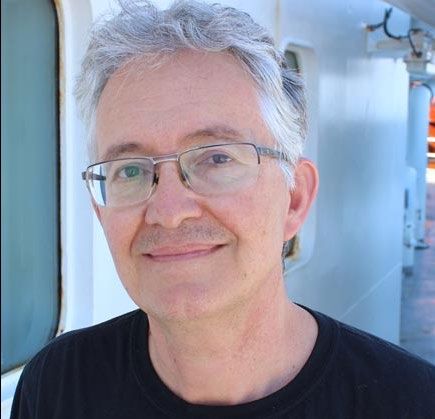
POSITION
                                 Senior Lecturer – School of Earth and Atmospheric Sciences

                                 RESEARCH
                                 I study the production and behaviour of atmospheric aerosols from
                                 systems such as the human respiratory tract and the marine
                                 environment. I am particularly interested in the interactions that
                                 occur within and between particles and the atmosphere. My work
                                 is especially concerned with how such interactions can alter the
                                 survival and transport of bacteria, viruses and pollutants. I am
                                 constantly developing new instrumentation and techniques to
                                 facilitate this work and particular enjoy pursuing new initiatives of
                                 this kind.

                                 Research student projects available 2021:
                                 • Electrodynamic Paul Trap Development - Micro-droplet
 GRAHAM                            charging and entrapment for bioaerosol research
                                 • Viral infection transmission - airborne versus droplets & fomites

 JOHNSON                         • Optimising the efficiency of layered masks and respirators
                                 • Microplastic pollutants - airborne dispersal from the oceans
                                 • Ultrasonic mesh nebuliser optimisation for bioaerosol research
 CONTACT                         • Deliquescence/efflorescence – time dependence
 PHONE: +61 7 3138 4371          • Moisture exchange in human respiratory aerosols
 EMAIL: g.johnson@qut.edu.au
 OFFICE: GP, E Block, Rm 209C.
                                 QUT STAFF PROFILE:
                                 https://staff.qut.edu.au/staff/g.johnson

                                 POSITION
                                 Professor (Petrology)

                                 RESEARCH
                                 My main interest is in how our planet has changed and continues
                                 to change with time. Over its long history, Earth has seen key
                                 episodes of dramatic change, which have left their imprint in the
     Paste image                 rock record. These include the emergence of land, the build of free
      150x150px                  oxygen in the atmosphere, global glaciations, etc. My group
                                 specialises in developing new chemical tools to better read this
                                 fragmental record to inform models of planetary evolution and to
                                 decisions about shaping the future of the Earth in the face of the
                                 changing atmospheric greenhouse.

                                 Research student projects available 2021:
BALZ                             • To quantify the area of emerged land through time and model
                                   the effect of rock weathering on ocean chemistry.

KAMBER                           • To experimentally and empirically study very deep (>150 km)
                                   and very hot (>1,750°C) melting of the early mantle.
                                 • To use the eastern Australian dust export into the equatorial
                                   Pacific as an analogue for the pre-greened Earth’s sedimentary
CONTACT
                                   cycle.
PHONE: +61 7 3138 1410
EMAIL: balz.kamber@qut.edu.au
OFFICE: GP, R Block, Rm. 322     QUT STAFF PROFILE:
                                 https://staff.qut.edu.au/staff/balz.kamber
POSITION
                                 Senior Lecturer, School of Earth and Atmospheric Sciences

                                 RESEARCH
                                 I am a chemist by training and my research focus is atmospheric
                                 aerosols - tiny particles suspended in the air. These aerosols
                                 impact human health and climate, so understanding their sources,
                                 properties and evolution in the atmosphere is critical for the
     Paste image
                                 development of strategies and policies for improving air quality and
      150x150px
                                 public health, as well as for improvement of climate models. I use
                                 real time mass spectrometry to investigate chemical composition of
                                 aerosols in different environments and coming from different
                                 sources. My research involves a lot of fieldwork and has taken me
                                 to many interesting places, with the most exciting being Antarctica.

                                 Research student projects available 2021:

BRANKA
                                 • Aerosol precursors in the Southern Ocean and Antarctic sea-ice
                                   region during 2018/19 CAMPCANN campaign (Hon/MSc/PhD)
                                 • Atmospheric ageing of bushfire smoke (PhD)
MILJEVIC                         • Sources of ultrafine particles in Australian cities (PhD)
                                 • Chemical Ionisation Mass Spectrometer with an X-ray ionizer –
                                   investigation of performance (Hons)
CONTACT
PHONE: +61 7 3138 3827           • Online aerosol chemical characterisation by coupling Particle
EMAIL: b.miljevic@qut.edu.au       Into Liquid Sampler (PILS) and mass spectrometry (Hons/MSc)
OFFICE: GP, Block E, Rm. E209B
                                 QUT STAFF PROFILE:
                                 https://staff.qut.edu.au/staff/b.miljevic

                                 POSITION
                                 Professor, School of Earth and Atmospheric Sciences
                                 Director, International Laboratory for Air Quality and Health
                                 Co-Director, Australia-China Centre for Air Quality Science and
                                 Management

                                 RESEARCH
                                 Conducts fundamental and applied research in the interdisciplinary
                                 field of air quality and its impact on human health and the
     Paste image                 environment, with a specific focus on science of airborne particulate
      150x150px                  matter. She has been involved at the executive level with a number
                                 of relevant national and international professional bodies and has
                                 been acting as an advisor to the World Health Organization.

                                 Research student projects available 2021:
                                 • The dynamics of ambient particle nucleation and growth in urban
                                   environments
                                 • Ultrafine particles in urban air: concentrations and exposure
LIDIA                              trends
                                 • Application of novel sensing technologies towards fine scale
MORAWSKA                           spatial characterisation of particle and gaseous atmospheric
                                   pollutants
                                 • The dynamics of indoor-outdoor pollution interactions during
CONTACT                            bushfire events
PHONE: +61 7 3138 2616
EMAIL: l.Morawska@qut.edu.au
                                 • Analysis of the flow dynamics towards minimisation of indoor
OFFICE: GP, Block, E, Rm. E512     concentration of droplets from human expiration

                                 QUT STAFF PROFILE:
                                 https://staff.qut.edu.au/staff/l.morawska
POSITION
                                 Lecturer in Earth Science
                                 School of Earth and Atmospheric Sciences

                                 RESEARCH
                                 I am fascinated by how the dynamic planet upon which we live
                                 works, how the Earth began, how it subsequently evolved and
     Paste image                 how it reached its current configuration. I work on integrating field
      150x150px                  data and geochemical data to address significant research
                                 questions in a variety of different settings. These include the
                                 formation of Earth’s early crust, the isotopic and chemical
                                 evolution of the mantle as recorded in mantle derived melts,
                                 chemostratigraphy and zircon provenance analysis, and non-
                                 geological fields working with biosecurity on pest provenance.

                                 Research student projects available 2021:
DAVID                            • Petrogenesis of Paleoarchean granitoids in the East Pilbara
                                   Terrane, the continental crust (PhD, Masters)

MURPHY                           • Investigating mid-crustal xenoliths from north Queensland:
                                   possible preserved Archean crust (PhD, Masters)
                                 • The interaction of magmas and xenoliths in southeast
CONTACT                            Queensland Tertiary volcanic (Masters)
PHONE: +61 7 3138 2329           • The use of Pb and Sr isotopes and trace elements in tracing the
EMAIL: david.murphy@qut.edu.au     provenance of insect pests (PhD, Masters)
OFFICE: GP, R Block, Rm. 319

                                 QUT STAFF PROFILE:
                                 https://staff.qut.edu.au/staff/david.murphy

                                 POSITION
                                 Professor and Head of School (acting)
                                 School of Earth and Atmospheric Sciences

                                 RESEARCH
                                 A physicist by training my general interest is in atmospheric
                                 sciences with a focus on atmospheric aerosol particles. I study
     Paste image                 how these particles influence our climate but also how they
      150x150px                  influence our health. As part of my research I develop new
                                 methodologies and instrumentation that would improve our
                                 understanding or airborne nanoparticles, what are their origins,
                                 fate and how they influence the world around us. Most of the
                                 research projects are done though field work either on land or
                                 onboard research ships.

                                 Research student projects available 2021:
ZORAN                            • Monitoring atmospheric composition over the Great Barrier
                                   Reef (Hons, Masters, PhD)

RISTOVSKI                        • Aerosol and Cloud Condensation Nuclei in tropical waters of
                                   northwest Australia (Hons,Masters).

CONTACT                          QUT STAFF PROFILE:
PHONE: +61 7 3138 1129           https://staff.qut.edu.au/staff/z.ristovski
EMAIL: z.ristovski@qut.edu.au
OFFICE: GP, R Block, Rm. 211
Senior Lecturer (Structural Geology and Rock Mechanics)
RESEARCH
The physical behaviour of the Earth is controlled by processes
covering a vast range of length scales, from the crystal lattice to that
of tectonic plates. Chris is passionate about figuring out how these
processes interact. He works on the multi-scale coupling of
Paste image deformation with heat, chemical, and fluid fluxes, combining field
150x150px studies with micro-analysis, mathematical forward modelling, and
laboratory experiments. When Chris doesn’t hunt rocks in the wild,
he likes to squeeze digital rocks in supercomputers or real samples
at the Synchrotron, examining coupled chemical and structural
transformations at the nano- and micro-scale with transmission
scattering and fluorescence microscopy.
Research student projects available 2021:
• Unravelling the coupling between chemical reactions, fluid flow
CHRISTOPH and plastic deformation in shear zones – insights from
Synchrotron XFM and SAXS/WAXS
• Hi-res XFM trace-elements patterns in calcite veins – what they
SCHRANK teach us about fluid flow and deformation in the shallow crust?
• In-situ gypsum dehydration observed with SAXS/WAXS – from
sub-nanometre to centimetre scale
CONTACT • Numerical and physical forward models of strongly strain-
PHONE: +61 7 3138 1583
softening materials – new numerical approaches and insight into
EMAIL: christoph.schrank@qut.edu.au
OFFICE: GP-R315 strain localization
• Instabilities due to cross-diffusion waves – a novel view on strain
localisation
QUT STAFF PROFILE:
http://staff.qut.edu.au/staff/schrank/
POSITION
Senior Lecturer - School of Earth and Atmospheric Science
RESEARCH
I am a geologist who specializes in mitigating the effects of natural
hazards. Expertise in volcanic eruptions, large-volume slope
collapse and tsunamis has resulted in leading international
research programs across six continents and two oceans, wherein I
utilises the geological record to forecast and plan for future
hazardous events. My current work integrates geological, ecological
and engineering technologies to stabilize landslides in southeast
Queensland water catchments, securing healthy waterways. This
research includes developing a real-time early warning system for
rainfall induced slope failure, to be applied to both naturally
unstable and engineered slopes, globally.
JESS Research student projects available 2021:
• Reconstructing ancient volcanic and sedimentary successions
TROFIMOVS (BSc Hons) (Masters)
• Developing best practice for stabilising rainfall induced
landslides. (Masters)
CONTACT
PHONE: +61 7 3138 2766 • Petrology and geochemistry of a newly discovered basalt
EMAIL: jessica.Trofimovs@qut.edu.au complex in Borneo (BSc Honours) (Masters)
OFFICE: GP, R Block, Rm. 324
QUT STAFF PROFILE:
https://staff.qut.edu.au/staff/jessica.trofimovsPOSITION
Associate Professor
School of Earth & Atmospheric Sciences
RESEARCH
I am passionate about fundamental and applied knowledge on
natural minerals, particularly clay minerals’ structure and
Paste image properties, development of their functionality and applications for
150x150px the real world. These materials hold huge promise for significant
applications such as environmental contaminants remediation,
energy storage, alleviation of drought, novel building materials etc.
Advancement in this research filed will provide practical, cost
effective and environmentally friendly solutions to these global
issues, I am an experienced scientist in this field with a H-index at
40 and my work has been cited globally for more than 6900 times.
YUNFEI Research student projects available 2021:
• Super Metal Organic Framework-mineral composite material for
XI energy storage
• Environmental contaminant remediation
• Utilisation of Australian natural minerals for novel building
CONTACT products
PHONE: +61 7 3138 1995
EMAIL: y.xi@qut.edu.au QUT STAFF PROFILE:
OFFICE: GP, P Block, Rm 818
https://staff.qut.edu.au/staff/y.xiYou can also read


