Rangitoto School Charter, 2019 - 'HONOUR BEFORE GAIN' 'He honore tomua he whakawhiwhi tomuri'
←
→
Page content transcription
If your browser does not render page correctly, please read the page content below
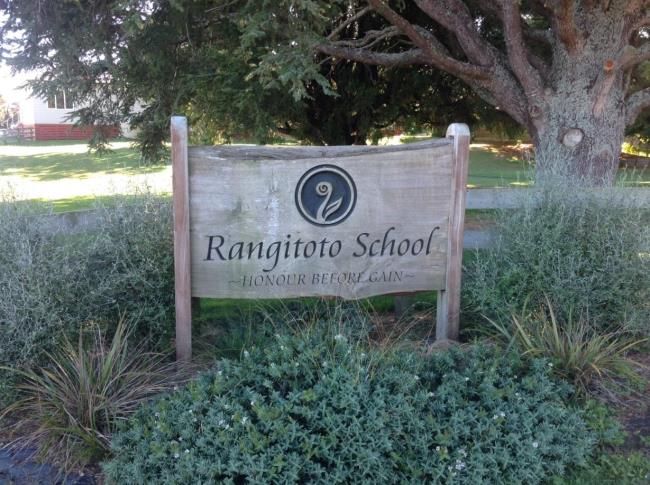
Rangitoto School Charter, 2019

       ‘HONOUR BEFORE GAIN’
   ‘He honore tomua he whakawhiwhi tomuri’
Rangitoto School Rangitoto School is located 10 minutes east of Te Kuiti in a rural setting nestled amongst sheep, beef and dairy country. We have a mix of 26% Maori, 13% Asian and 60% European. We start 2019 with 23 students enrolled. We gather most of our students from the rural families living locally, however, students come from out of zone, mostly Te Kuiti. They travel mainly via the school bus. Students at Rangitoto School are friendly, confident and courteous. We operate a high trust model, which students thoroughly enjoy, having freedom to play a range of games in the playground at break times. We have a high level of physical activity supported by excellent resources such as a heated swimming pool, AstroTurf and adventure playground. We enjoy strong academic success of excellent proportion and students experience quality teaching and learning. Staff set high expectations, which the students readily and happily meet. We have quality learning resources and a range of I.C.T devices that support our students as innovative and creative 21st Century learners. Māori achievement goals are in place helping us provide support for Māori learners and cultivate our identity as Ngati Rereahu. We also have Special Needs and Gifted & Talented achievement plans in place for supporting students. We identify target students to work with to help them build on their knowledge. We have an inclusive non-judgemental environment where all students are valued. Teacher aide support is also available for those of our students who need it; these operate in conjunction with classroom teachers and their programmes. Agencies such as the Resource Teacher of Learning and Behaviour (RTLB) are also part of our support network; they will provide support for students, families and staff. Our staff consists of experienced teachers, and we have a friendly Board of Trustees, supportive parents and coaches and a wide community involvement all of which contribute to make our school unique.
Cultural Diversity, Inclusiveness and Māori Dimension
Our school reflects:
New Zealand’s Cultural Diversity                                          The Unique Position of the Māori Culture

    • We recognise that all children, regardless of culture, deserve         •   We foster close relationship with the local Ngati Rereahu iwi,
       the best education possible.                                              hapu and marae through community consultation,
                                                                                 involvement in marae visits, kapa haka, and other activities
                                                                                 where possible.
    • We will reflect our special rural background through a variety of
       activities and in a range of classroom curriculum choices.            •   We seek to further develop relationships and understanding
       These will reflect the school context, and the interests and              with whānau and iwi through hui, marae visits and community
       learning needs of our students.                                           focused interactions at local events.

                                                                             •   For all full-time students whose parents request it, we will
    • When appropriate, we will seek ways to interact with other                 take all reasonable steps to provide instruction in Te Reo
       neighbouring schools for social, academic, sporting and                   Māori and Tikanga Māori.
       cultural purposes.
                                                                             •   We intend, as part of the Ka Hikitia initiative, to include
    • We seek opportunities to develop skills in relating to others              policies and practices that reflect New Zealand’s cultural
       across cultures.                                                          diversity and the unique position of the Māori Culture.
Inclusive School
Rangitoto School…
• is a fully inclusive, safe learning environment that is welcoming, flexible and accessible to all students in our community, giving them opportunities to
attend, participate and achieve regardless of their special learning needs. All learners are expected to learn and achieve success in their learning.
• fosters the identity, language and culture of all learners. Knowledge that parents have regarding their child’s learning needs and development is
respected, valued and used.
• has staff who work collaboratively to create seamless programmes that support learners.
• sets goals for all learners that are set in line with high expectations of achievement. Specific targets and actions are established for priority learners.
A special needs record is used to track priority learners’ progress.
• has a board that is aware of, utilizes, co-ordinates and manages, where appropriate, outside services (including community resources) to best cater
for student needs. The Board is willing to adapt the physical environment should the need arise.
• is developing strong, respectful and supportive relationships with whānau and students that are centred on shared learning goals, collaborative use
of resources and effective communication.
• is developing a system of self-review of teaching and learning programmes and the impact they have on students with special learning needs is
included in regular self-review. Systems are in place to monitor achievement.
• is developing a system of ‘Teacher Inquiry’ within staff appraisal and staff professional learning and development (also referred to as ‘Strengthening
Teaching and Learning’). Achievement data is used to evaluate, inform and improve teaching and learning programmes. Teachers are skilled at using
The New Zealand Curriculum to meet learner needs.
• is strongly values-driven and fosters these values in learners and adults, sharing this caring, safe and respectful culture with the whole community.
• is innovative and flexible when dealing with learner needs. The school is willing to adapt the physical environment, as well as systems and processes
to meet the needs of learners with special education needs.
• has processes for identifying and supporting the needs, strengths and aspirations of Māori learners with special education needs.
• has leaders who communicate and model inclusive values, desirable behaviours and clear expectations.
• has good systems and processes in place for enrolling and welcoming learners with special needs.
• has effective self-review processes in place to ensure ongoing improvement of policies and practices.
• has learning programmes, inside and outside the classroom, that provide each child with learning experiences that relate to their interests, needs and
goals.RANGITOTO SCHOOL STRATEGIC PLAN 2018-2020
Strategic Goals 2018 - 2020
• Use valid and reliable school wide assessment data to support goal setting and next step learning for students and parents.
Numeracy and Literacy • Involve students in the decision-making process related to their learning that supports them in raising their achievement.
All students are successfully able to • Develop digital learning environments, programmes and capabilities that are appropriate to 21st Century learners who are able to take a leadership role in their own learning
access the NZ Curriculum as • Promoting experiential learning for all students, through the development of the Rangitoto School Curriculum.
evidenced by achievement in • Develop students’ understanding of the links between the people and the land
relation to the NZC achievement • Develop core Māori values (e.g. spirituality, identity, manaakitanga, whanaungatanga)
objectives • Foster relationships with local whānau and iwi
• Māori Community consultation
Maori Student Achievement • Cultivate our identity as Ngati Rereahu
Continue to focus on the principles
• Marae visit
of Ka Hikitia in providing
• Implement Māori achievement plan
opportunities for engagement and
• Redevelop the kapa haka group
success of all Māori students.
(NAG 1) • Health and PE community consultation (2019)
Self-Review • Complete reviews as per Self-Review Plan
Maintain an on-going programme • Effectiveness of intervention strategies measured throughout the year as part of the teaching as inquiry cycle.
of self-review • Hautū Self-Review
• Assessment data informs whole school planning and reporting
• Learner progress monitored and information used to inform next steps in teaching and learning.
• Parent / Student Satisfaction Survey.
Reporting • Curriculum Review as per Self-Review Plan
Report to students and their • Report to parents twice yearly in writing and as needed
parents on the achievement of • Meet with parents to set individual student goals in line with school targets and ways they can assist at home– target 100% of families
individual students, and to the
• Newsletters used to connect with community
school community on the
• Facebook and school website used to connect with community digitally
achievement of students as a whole
(including Māori).
(NAG 2)
Staff Performance • External appraisal of Principal
Promote high levels of staff • BOT professional development
performance, use educational • Professional Development continues in areas related raising student achievement
resources effectively and recognise • ‘Strengthening teaching and learning’ practices developed – fostering a culture of learning, inquiry and professional growth
the needs of students
(NAG 3)
• Effectively use the 5yr property grant to upgrade the learning environment
Property • Monitor assets and upgrade as necessary
Provide a safe, healthy working and • Upgrade and add to ICT hardware
learning environment for staff and • Improve drainage around double garage and on school driveway
students • Replace old roofing iron and guttering
Finance • Budget reflects strategic plan
Allocate and manage funds to • Mid-year budget review
reflect the school’s priorities • Review Water Safety Plan (2019)
(NAG 4)
Health and Safety • Continue to develop a health and safety conscious culture within the school (as per the Health and Safety at Work Act 2015)
Provide a safe physical and • Health and Safety review
emotional environment for staff • Review emergency procedures
and students
(NAG 5)ANNUAL PLAN FOR RANGITOTO SCHOOL 2019
Student Achievement Property Human Resources
• Use of the components of AFL (Assessment for • Complete Bore project including an installation of a • External appraisal of Principal
Learning) i.e. formative assessment (diagnostic, water tank in an unobtrusive location • BOT professional development
planned and unplanned) individual student goals, • Complete scheduled painting of Block A Exterior repaint • Internal Professional Development continues in
shared learning intentions, success criteria, feedback as part of cyclical maintenance project areas related to raising student achievement in
(teacher and peer) and self-assessment • Complete the remaining two 5YA projects (Block A English and mathematics
• Regular use of CPA (concrete, pictorial, abstract) Replace Part Roofing and Verandah Clearlite and • Establishment and application of transparent
approach in mathematics Upgrade Astroturf Drainage) criteria for teacher appraisals
• Use of the bar model when problem solving in • Strengthening teaching and learning’ practices
mathematics based around schoolwide targets i.e. individual
• In writing, use of GRoR (Gradual Release of teachers using teaching as inquiry cycle to support
Responsibility) instructional model in writing meeting targets
• In reading, explicit instruction in both comprehension Cultural Diversity
and blended approach to decoding strategies • Te Tiriti o te Waitangi – Treaty of Waitangi: classroom
(phonetic and whole language approach) treaty on rules, values, consequences.
• Use of ipsative referenced interpretation to inform Priority Areas • PD ‘Values of Cultural Diversity’: cultural identities,
student progress and teacher appraisals backgrounds & values implementing as curriculum
• Use of broad range of assessment tools (standardised -Raise achievement for Māori, low socio-economic and special contexts for concepts, classroom environment, field
and non-standardised) to measure student needs students trips and conversation.
achievement and inform teaching (student gaps, • Develop core Māori values (e.g. manaakitanga
progress and next steps) (caring), whanaungatanga (relationships),
• Judicious use of iPads that support learning intentions wairuatanga (spirituality), whakapapa (identity),
• Where relevant, use experiential learning to apply tuakana – teina (older / younger) activities that focus
knowledge and/or skills as aligned with Achievement on increasing reading skills and whanaungatanga.
Objectives • Foster relationships with local whānau and iwi &
integrating with our local Marae visit
Health and Safety Reporting Finance
Report to parents twice yearly
• Continue to develop a health and safety • Student-led conferences in Terms 1 and 3 to discuss students’ • Budget reflects strategic plan
conscious culture within the school (as per the individual e-asTTle consoles and learning goals in reading, • Mid-year budget review
Health and Safety at Work Act 2015) writing, mathematics (number) and key competencies • Monitor assets and upgrade as necessary
• Health and Safety review • Foster whanau engagement through support of parents for • Review ICT hardware / software budgets
• Review emergency procedures students to achieve their goals
• Newsletters used to connect with community
• Facebook and school website used to connect with
community digitally
Glossary:
Ipsative referenced interpretation: Refers to comparison of an individual student’s performance to their previous performance or ‘typical’ performance
CPA (Concrete, Pictorial, Abstract) Approach: An instructional approach in mathematics that involves using concrete materials or experiences, pictorial representations of concrete materials and
abstract mathematical symbols usually in that order but can be taught together for example using counters and plates (concrete) to equal share objects (divide) and record the number sentence at
the same time
GRoR (Gradual Release of Responsibility) Instructional Approach: An instructional approach that progresses from teacher modelling (I do)- to teacher student performing the task together (we
do)-to students performing the task independently (you do).Rangitoto School Māori Student Achievement Plan 2019 Strategic Goal #1
Māori Student Achievement: Māori students are engaged in their learning and are achieving educational success, with pride in their unique identity,
language and culture as Māori.
Manaakitanga Whānaungatanga Wananga / Ako Reflections:
Valuing Cultural Relationships Communication and Learning
Connectedness • Foster close relationship • For all full-time students whose parents request
• Include policies and with the local Ngati it, we will take all reasonable steps to provide
practices that reflect Rereahu iwi, hapu and Te instruction in Te Reo Māori and Tikanga Māori.
New Zealand’s cultural Ahoroa marae through • Meet with parents to set individual student
diversity and the panui, community goals in line with school targets and ways they
unique position of the consultation, can assist at home.
Māori Culture. involvement in marae • Māori students’ achievement data collected and
• Develop core Māori visits and local activities measured against expectations.
values (e.g. where possible, and in • Effectiveness of intervention strategies
spirituality, identity, environmental issues as measured throughout the year as part of the
manaakitanga, they affect local Māori. teaching as inquiry cycle.
whanaungatanga) • Strengthen home-school • Rangitoto School Te Reo / Tikanga Māori
• Include Tataiako communication regarding expectations developed in conjunction with
principles in the links between English Medium Te Reo Curriculum.
‘Strengthening learning, behaviour and • Develop the use of music,
Teaching and Learning achievement. dance/drama/kapahaka/tikanga in engaging
Plans’ for teachers. Māori students.
• Māori language week Whakapapa (Identity) • Develop student ownership and co-construction
resources – use Manaakitanga ( Caring) with teachers of learning tasks
formulaic expressions Whanaungatanga
each week.
( Relationships)
• Develop karakia and
Wairuatanga (Spirituality)
waiata for regular use
Reference Material: Ka Hikitia, , English Medium Te Reo Curriculum
Student Composition:Rangitoto School Special Needs and Special Abilities Student Achievement Plan 2019 Strategic Goal #1
Identification Relationships Programmes Reflections:
• Special abilities and • Parents and caregivers are included in • Individualised programmes are designed
Special needs are student’s Individual Education Planning for student with special needs with the
identified across the (IEP) meetings. help of outside agencies as required.
curriculum • Teachers communicate closely with • IEPs are carried out for ‘at risk’, ‘critical’
• A range of reliable parents, providing them with ways in and ‘special abilities’ students.
assessments are used to which they can support their child’s • Professional development for teachers
identify students who learning at home. is sought to support their programme
are ‘critical’, ‘at risk’ or • Learning support programmes are delivery.
‘gifted and talented’ developed with the students achievement • Extension opportunities are given to
• A special needs and goals and aims established, noting the special ability students within the school
special abilities register student’s role, the parent’s role and the or sourced outside of the school, i.e
is to be kept to record teacher’s role. local High School, local Principal Cluster
students and the actions • Students have the opportunity to create group or itinerant teachers.
that are planned for their own goals for achievement with • Investigation and dual enrolment in The
them during the current help as required. Correspondence School is made if
year. • Student individuality is acknowledged and necessary
• Parents and previous celebrated. • Teacher aide time is used constructively
school knowledge is • Establish relationships with the local High to enhance student learning
used to help with the School to seek support for accelerated • Personalised programmes are
identification of any learning programmes. developed
special needs or special • Strategies developed that will help a child • Younger, capable students complete
abilities. to learn and manage their own learning learning tasks that exceed their year
(personalised learning). level expectation.
• Teachers and teacher aide modify their • Provide appropriate support
teaching style as the students become programmes for ESOL and Pasifika
more independent. students.
• Relationships are established and • Attendance at wider inter-school
transitional programmes are designed for sporting events is encouraged for
those students heading to high schools. students who display outstanding
strengths in these areas.
• Students with leadership gifts are able
to access leadership activities offered to
students of this age.Rangitoto School Targets 2019
Strategic Goal School Strengths and Identified Areas for Basis for Identifying Planned actions for Lifting Achievement Indicators of
Improvement Areas for Improvement Progress
Annual Goal (reflection
throughout 2018)
Numeracy and Literacy School Strengths • e-AsTTLe writing • Use Baseline data collected in the first two weeks of 2019 to
All students are successfully able to Mathematics-90.5% of students are achieving • Individual ascertain target students (below, well below) in each core
access the NZ Curriculum as evidenced ‘At’ or ‘Above’ (Maori 87.5% At or Above) conferencing curriculum area (reading, writing and mathematics)
by achievement in relation to the NZC the expected curriculum level • Writing samples • Use of the Gradual Release of Responsibility (GRoR)
achievement objectives • Teacher observation instructional model, which progresses from ‘I do it’ (teacher),
of student writing ‘We do it together’ (teacher with class), ‘You do it together’ in
• PAT reading writing
• PROBE reading • Establish a shared metalanguage in the first term in writing
Target – by Dec 2019: assessment
To accelerate the learning of students that are • Progress from deconstruction to joint construction to
Achievement Data
identified as achieving ‘below’ and ‘well Collected in November
independent construction
below’ the expected curriculum level in 2018 • Focus on grammar and vocabulary (semantics) during spelling
reading, writing and mathematics programme and to establish metalanguage
• Provide various examples of a given text type to remain on walls
Writing 47.6% ‘At’ or to be referred to throughout writing units
‘Above’ expected • Use of graphic organisers, writing/text frames and success
curriculum level (Maori criteria checklists to support students when writing
36.4% ‘At’ or ‘Above’) • Design a three-year plan (long term plan) to ensure coverage of
all required text types
Reading 76.2% ‘At’ or
• Focus on comprehension strategies in reading
‘Above’ expected
curriculum level • Set individual learning goals with students in reading, writing
(Maori 75% At or Above) and mathematics at the start of the year and evaluate progress at
the end of each term
• In house and paid professional development to focus on reading
Mathematics-90.5% of and writing
students are achieving ‘At’
School Strengths: No significant statistical or ‘Above’ (Maori 87.5%
Maori Student Achievement At or Above) the expected
Continue to focus on the principles of difference between Maori and non-Maori
curriculum level See Maori Student Achievement Plan
Ka Hikitia in providing opportunities for students’ achievement in mathematics and
engagement and success of all Māori reading
students.
Disparity between Maori and non-Maori in
writing by 11.2%
Target – by Dec 2019
To promote a school culture that values Maori
students’ identities, language and culture
To include Te Reo and tikanga in teaching and
learning in ways that support tamariki to
engage and achieve successFocusing Questions for internal review: How will this impact on our learners? What impact did this have on our learners? How do we know?
Annual Self Review & Action Plan 2019
Jan Feb Mar Apr May June
Target / Charter Ratification
Policy Review – Relationship
Charter to MOE by Mar 1
between Board and principal
Policy Review – Policy Review - Policy Review –
BOT Trustees Code of Behaviour -Signed
Baseline Student Achievement
by trustees
Data
External appraisal processes in
place for Principal
Job Description Reviews
Staff Induction: Behaviour Staff Meeting – School Curriculum Staff Meeting: Curriculum
management, student Review- integrated curriculum, Review -Literacy / English Staff Meeting - Curriculum
Staff meeting:
Principal and / or achievement data, staff Professional goals for Review School behaviour Review: Mathematics, Staff Meeting:
Curriculum Review – ICT / E-
staff requirements (planning, ‘strengthening teaching and management plan and T2 professional learning goals
Learning
implementation, assessment, learning’, planning to meet learner procedures
evaluation,and reporting) needs based on their individual
goals and cognitive levels.
Goal Setting interviews
Community
July Aug Sep Oct Nov Dec
2019 Charter Drafted
Policy Review -
Budget 2019 Draft Budget 2019 Ratified
6 Month Budget Review Mid-Year Report - student
Policy Review – BOT Evaluation of Meeting, End-of-Year Report - student
BOT Asset Register Update achievement data
Policy Review – achievement data
Plan Principal Appraisal 2019 Principal’s Appraisal completed
Asset Register Update
‘Strengthening Teaching and
Staff Meeting - Draft Charter documents Learning’ Complete
Report to BOT -
Curriculum Review: developed Report on Targets
Student Achievement
review achievement data Staff Meeting: Review OTJ End of Year
Principal and / or Staff Meeting:
(effectiveness of intervention Staff Meeting: Programme for Priority Student Reports
staff Staff Meeting – T4 professional learning goals,
programmes), professional Learners and Māori Student
goals Achievement plan Employee Morale Survey
T3 professional learning goals
Staff Meeting:
Community Reports to Parents Interviews – Goal Setting Parent Satisfaction Survey Reports to ParentsYou can also read


