Ready To Learn Initiative - It All Adds Up!
←
→
Page content transcription
If your browser does not render page correctly, please read the page content below
2010–2015
 The
Ready To Learn
        Initiative

                                It All Adds Up!
       Public media, quality educational content and community engagement
        add up to improving early learning outcomes across the United States
The Mission
    Since its inception more than 20 years ago, the Corporation for Public Broadcasting (CPB)
    and PBS Ready To Learn (RTL) Initiative has produced and disseminated a collection of
    evidence-based educational media and resources proven to advance the school readiness
    skills of young children, particularly those in low-income communities.

    Over the course of the most recent five-year project, CPB and PBS worked with
    hundreds of local stations and their partners to distribute an innovative and effective
    set of multi-platform learning tools to children, parents and educators.

    Research showed that these materials:
    • Increased children’s math and literacy scores
    • Improved their school readiness
    • Fostered an interest in learning beyond the classroom
    • Encouraged teacher and parent support of children’s learning

    CPB and PBS’ work combined the impact
    of quality content with local community
    engagement, family involvement and
    technological innovation – all backed
    by rigorous research – which added up
    to better early learning outcomes for
    America’s children.

2
How it All Began
In 1991, Ernest Boyer, then president of The Carnegie Foundation for the
Advancement of Teaching, drew attention to a decline in children’s school
readiness in his report, Ready To Learn: A Mandate for the Nation.
Boyer’s call for “ready to learn” television sparked the Ready To Learn Television Act.
Through the support of Congress and the U.S. Department of Education, the legislation
supported television programming and corresponding educational materials for
preschool and elementary school children as a way to improve school readiness.

Ernest Boyer’s vision continues to inspire RTL, which has touched
the lives of millions of children in low-income communities by
helping to narrow the learning gap as they enter school.
Each five-year grant cycle has supported innovations in using
media to reinforce learning and RTL’s program offerings have
adapted to support the developing needs of children, parents
and educators. On July 11, 1994, PBS launched its first block
of RTL programming with 62 stations as model sites.

RTL Focus Areas
                                                                        2015
                                          2010
                   2005
                                                                            Access, Equity &
    Grant Focus      Accountability &           Transmedia                   Collaboration
                         Literacy

      Media &                                 Proliferation of
                       Linear Format          Media Platforms           Proliferation of Content
     Technology
                            TV+                                              Content Curation
    Environment                               Multiple Platforms

    Public Media    Partnerships Expand      Connected Media            Adaptive, Personalized
     Innovation            Reach               Experiences                     Content
                        Literacy 360      Learning Analytics Platform   Playful Learning Experiences

                                                                                                       3
RTL Timeline
    RTL has addressed the nation’s most pressing educational needs in a constantly evolving
    media landscape. During the 2005-2010 grant, public media and its partners tackled
    early learning and literacy through television series such as Super WHY!, Martha Speaks,
    The Electric Company and WordWorld, along with the development and deployment of
    related educator and family resources. From 2010-2015, RTL focused on early literacy
    and math with new media properties including the Emmy Award-winning series Peg + Cat
    and Odd Squad. RTL’s 2015-2020 grant is funding the development of science and literacy
    content with a focus on personalized and adaptive learning tools.

      1995-2000                                        2000-2005

      Dragon Tales and                                 Maya & Miguel and
      Between the Lions                                Postcards from Buster
      n   Companion parent programs,                   n   Performance indicators on the
          online activities and outreach plans             effectiveness of training parents
                                                           and teachers in diverse populations
                                                       n   Emphasis on teaching young
                                                           English-language learners
                                                       n   Continued funding for Sesame Street,
                                                           Reading Rainbow, Clifford the
                                                           Big Red Dog, Dragon Tales,
                                                           Between the Lions and Arthur
                                                       n   Launch of the first PBS website for
                                                           parents and the “From The Start”
                                                           website for teachers

4
Martha Speaks, Super WHY!,
WordWorld and
The Electric Company                            Peg + Cat and Odd Squad
                                                Focused on helping kids ages 2-8 build
2005-2010                                       2010-2015
                                                early math and literacy skills

n   Extension of content beyond television      n   Independent research demonstrated
    screens to websites, computer games,            that RTL content helps children from
    books, magazines and outreach programs          low-income families improve critical
                                                    early math knowledge and enhances
n   New outreach methods targeting                  family engagement
    low-income communities, such as
    summer camps and online courses for
    caregivers, were developed through the
    PBS KIDS Raising Readers campaign
                                                         80 episodes
                                                        with a math-based
n   Independent researchers demonstrated                    curriculum
    that RTL content helps children from
    low-income families improve critical
    early literacy skills and helps close the         135+                 100+
    achievement gap with their peers             educational            educational
                                                online games             activities

                                                        New, innovative
                                                     parent & teacher tools

                                                                                           5
RTL: 2010-2015
       Moving the Needle
       on Math and Literacy
    The CPB-PBS RTL Initiative was designed to connect high-quality television content
    with apps, games, real-world activities and supporting materials for parents
    and educators in communities across the country. RTL content aligned to math
    and literacy learning frameworks developed using Common Core State Standards
    and input from top educational advisors. CPB and PBS set out to ensure that
    these connected media experiences enhanced learning outcomes for children and
    increased family and educator engagement.

    Independent evaluations affirmed the efficacy of the RTL strategy of creating
    connected content for children and their parents and educators that’s accessible
    anywhere, anytime, especially for children from underserved communities.
    Rigorous independent evaluations showed significant improvement in children’s
    math scores on standardized assessment after engaging with RTL content.
    Parents and educators also reported greater involvement with their children’s
    learning after using these resources.

                                                       th and
           The 2010-2015 grant affirmed that RTL ma
                                                      ible across
           literacy media experiences – freely access
                                                   rative and
           multiple platforms and connected by nar
           curricular focus – advanced learning
           among children ages 2-8, especially
            in underserved communities.

6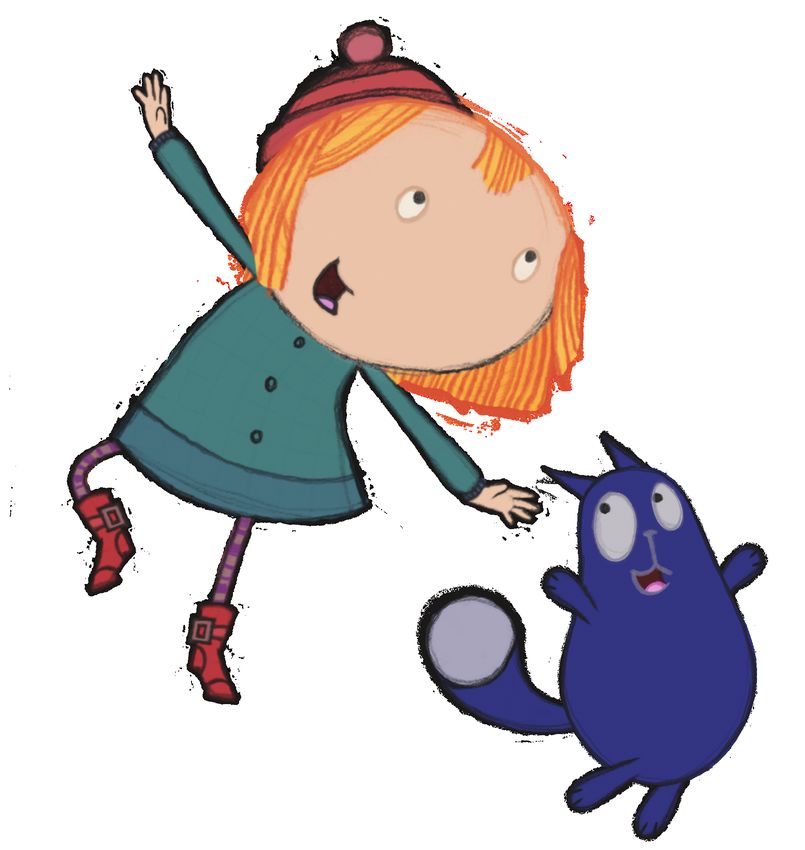
7
Peg + Cat = Learning Gains
    An EDC-SRI study of Peg + Cat found that children who used Peg + Cat media showed
    strong improvement in critical math areas involving ordinal numbers, spatial
    relationships and 3-D shapes.1 Before using the Peg + Cat materials, none of the
    children were able to name the shape “cylinder.” After watching Peg + Cat episodes
    and playing Peg + Cat games, twenty-nine percent of children were able to name
    the shape at post-test, a significant increase.2 Parents and caregivers reported
    increased confidence in helping their children learn math.1

                                                                                                                          Peg + Cat reached
                                                                                                                        11 million kids
                                                                                                                           on television and
                                                                                                                       12 million users
                                                                                                                            digitally in 2015 3

     1. Source: Supporting Parent-Child Experiences with Peg + Cat early Math Concepts (EDC & SRI International, 2015)
8    2. Source: Peg + Cat Small Content Study: A report to the CPB-PBS Ready To Learn Initiative (EDC-SRI International: 2014)
     3. Source: Nielsen NPOWER, L+7, 10/27/2014 - 10/25/2015, includes series & specials, P2+, K2-11, 6+min., 50% unif. Google Analytics, Jan - Dec 2015.
Odd Squad: On the Case
for Math Learning
A WestEd study found that children who engaged with Odd Squad content showed
significant increases in their overall knowledge of mathematics. On measures of
knowledge of numbers and operations and algebraic thinking, children’s average
scores on post-tests were 14 percent higher than their average scores on pre-tests.
Parents who were exposed to Odd Squad materials found learning through play to
be an effective way to gain an understanding of new math concepts. Teachers also
reported that RTL’s connected learning approach made useful connections in helping
reinforce math concepts.1

                      Odd Squad reached
                      10 million kids
                         on television2 and
                    20 million users
                          digitally in 20152

      Children exposed to Odd Squad
        content had significantly
      higher scores in post-tests
             than in pre-tests.

          25%
      in skip counting                                12%
                                                   in addition and
                                                     subtraction
                7%
              in pattern
             recognition

1. Source: Odd Squad: Learning Math with PBS KIDS Transmedia Content at School and at Home (WestEd, 2015)
2. Source: Nielsen NPOWER, L+7, 10/27/2014 - 10/25/2015, includes series & specials, P2+, K2-11, 6+min., 50% unif.
                                                                                                                     9
   Google Analytics, Jan – Dec 2015.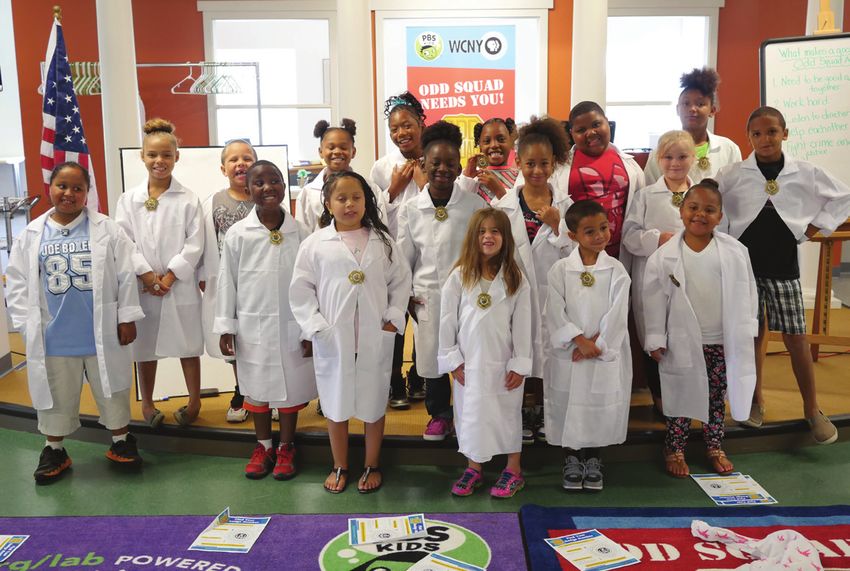
RTL Content Boosts Kids’
     Learning & Parent Engagement
     Over the course of an eight-week WestEd study that aggregated content from
     Curious George, The Cat in the Hat Knows a Lot About That! and Sid the Science Kid,
     mathematics knowledge increased significantly for children in the RTL treatment
     group from both low-income and higher-income families.
                                                              1

                                                                                      Post-test scores of children from low-income
                                                                                      families rose to the level of pre-test scores
                                                                                                of children from higher-income families

                                                                                             Mean pre-test scores                  Mean post-test scores
                Children’s                                                            35
                math test
                  scores                                                              30
                                                                                                                       29.33
                increased                                                             25

                 6
                                                                                                            23.11                                22.54
                          points                                                      20

                                                                                       15                                               16.00

                                                                                       10

                                                                                        5

                                                                                        0
                                                                                                Children in Higher-Income Homes   Children in Low-Income Homes

                                                                                                                        Parents’ awareness and
                                                                                                                     involvement in their children’s
                                                                                                                       mathematics development
                                                                                                                      increased significantly

10   Source: Learning with PBS KIDS: A Study of Family Engagement and Early Mathematics Achievement (WestEd, 2015)
11
The Mission
     Connecting RTL Resources
     with Underserved Communities
     In many underserved communities, the lack of high-quality digital
     educational resources and technology contributes to the achievement gap
     between children from low-income families and their more affluent peers.
     Over the course of the 2010-2015 grant, PBS stations connected children and
     families from low-income communities with cutting-edge content and resources.
     Local stations provided mobile tablets and other technology to preschool and
     community partners, trained educators and families in the use of digital media
     and collaborated with local partners to develop innovative models for educational
     media engagement.

12
PBS KIDS Lab
PBS KIDS Lab offered parents, educators and caregivers
learning resources in both English and Spanish. The site
provided educational games and activities, and shared
the latest research on the impact of RTL content and
engagement resources. PBS KIDS Lab had consistently
high traffic, averaging more than 57,000 unique
visitors to the site every month from 2010-2015.
PBS Parents Play & Learn App
The free bilingual PBS Parents Play & Learn App provided
a mobile option for families with children under the
age of four to engage in math and literacy learning
activities anytime, anywhere. The app encouraged
parent-child engagement that built early math and reading skills by offering digital
games and tips for activities to perform in everyday settings, while also empowering
parents to support their children’s learning with easy, effective resources.
To date, the Play & Learn app has been downloaded more than two million times.
PBS KIDS Mobile Learning Program
The PBS KIDS Mobile Learning Program, a collaboration
between the CPB-PBS RTL Initiative, PBS member
stations and their community partners, offered RTL
mobile apps to parents and educators in low-income
communities by providing free download codes and related offline activities in
English and Spanish. In the last year of the grant alone, more than 250,000 free
download codes and activity sheets were distributed nationwide.
13Impactful Local Station
Community Engagement
Local public media stations provide vital services to their communities, supporting early
learning through on-the-ground initiatives that reach kids, parents and educators. With
funding from RTL, stations worked with a wide range of partners such as schools, Head
Start centers, housing authorities and medical clinics to provide children opportunities
to engage with high-quality educational content anytime, anywhere. In turn, community
partners helped extend the reach of RTL content and resources to parents and educators.
Collaborating with partners allowed local PBS stations to identify gaps in services and
work to address specific needs, such as camps during the summer to provide enrichment
activities during school breaks. By targeting underserved populations and responding to
authentic community needs, stations and their partners made a difference in the lives of
families and positively impacted learning outcomes for children.
14PBS Stations’ Initiatives Fostered
Meaningful Connections with Families
Across the United States, local public media stations bring PBS KIDS’ content to a
diverse range of community partners to address the education needs of underserved
children. In this innovative and collaborative model, public media stations serve
as educational media experts and contribute early learning content to their
partner organizations. In the 2010-2015 round of RTL, CPB and PBS worked with 30
Demonstration Stations to further the reach and impact of the Initiative.
KBTC in Washington partnered with the Tacoma Housing WQED and WITF in Pennsylvania
Authority and Tacoma Public Schools to serve children and worked with schools and community
parents from the low-income Hilltop and Salishan neighborhoods. partners to provide educators and
families with tablets and training on
how to use RTL educational resources.
WVIZ/PBS ideastream in Ohio
provided PBS KIDS content for
the Cleveland MetroHealth Clinic,
Boys and Girls Clubs, schools and
community centers to support
children in one of Cleveland’s
poorest neighborhoods.
WCTE in Tennessee partnered with the Putnam
County School District, integrating PBS KIDS
math and literacy content into school programs
to support high-need children in rural areas.
15STATION PROFILE: KBTC, Tacoma, WA
How RTL Ignited a
Child’s Love of Learning
A key local initiative for KBTC was the creation of
PBS KIDS Spring Break and Summer Camps to serve
kids during times when they would otherwise have
no opportunities for academic enrichment. Students
who attended the camp, hosted by local station KBTC,
enjoyed educational learning experiences with PBS KIDS
games and activities, along with two meals daily. One Tyler, KBTC in Tacoma, WA
student was Tyler, then seven years old,
whose parents had struggled with homelessness since he was born.
Learning had always been difficult for Tyler. He was kicked out of kindergarten for
disruptive behavior, and his parents became accustomed to receiving calls from the
school every day with reports of their son’s behavioral problems. When Tyler enrolled in
KBTC’s PBS KIDS Spring Break Camp, everyone worried that he would be distracting to the
teachers and other students, and doubted that he would make any gains. However, Tyler
took to the games and activities. “The writing activities kept him engaged,” said Tyler’s
mother, Dawn. Tyler became interested in learning and found a way to connect
this content to the lessons taught by his classroom teachers.
Monthly parent engagement meetings held before and after the Spring Break Camp
provided additional opportunities for engagement with Tyler and his family. KBTC offered
educational activities for children during these meetings, providing a diversion for kids
while their parents participated in mandated training. Dawn agreed, “Having KBTC there
kept the kids involved in the program and kept parents involved with each other.”
Dawn recognized that many factors helped the family on their path to stability and
success. The family’s new attitude and approach to learning continued when regular
classes resumed after the camp. Soon after, Tyler received his first SOAR (Safe, On Task,
Awesome Attitude, Respectful) Award from the school. By the end of the year, Tyler was
named “Most Improved Student” at McCarver Elementary.
16STATION PROFILE: MPB, Jackson, MS
How RTL Empowered a Parent to Support
Her Children’s Learning at Home
Mississippi Public Broadcasting (MPB) created the Parent
Academy to show families how they can utilize technology and
educational resources to support their children’s learning at home.
One parent who participated in the program was Keshia. Keshia is a
dedicated and loving parent; she was named “Mother of the Year”
at her children’s elementary school. Keshia signed up for the MPB
Parent Academy, hoping to utilize technology to support her Keshia and her children,
MPB in Jackson, MS
kids’ learning at home. Keshia joined other parents in classes that
focused on using technology in the home as an academic tool and
practiced working with her children through interactive computer
activities on the PBS KIDS Lab website.
Once Keshia gained new skills through MPB’s trainings and workshops, her son, Aren,
was able to benefit from her renewed ability to help her children learn at home.
At the beginning of the year, Aren tested below grade level in reading and was at risk
of being left behind in the third grade in Jackson public schools. Through the school’s
support and the new tools Keshia learned through the MPB’s community outreach
efforts, Keshia was able to help her son with vocabulary and reading comprehension.
Keshia proudly shared Aren’s recent success on the state’s STAR assessment, on which
he scored at a 5th grade reading level.
17Odd Squad “Be the Agent”
Summer Camps
The Odd Squad Be the Agent Summer Camp was an
impactful community engagement initiative led by
local stations across the country. In the summer of
2015, 20 stations each hosted a week-long summer
program. The goal of the camp was to use hands-on
activities, digital games, television episodes and
crafts to immerse children in a fun environment where
they could take on the role of Odd Squad agents and
use their math skills to solve problems. Odd Squad
camps also supported parents by sending home
letters with math activities and hosting a parent
participation day on the final day of camp.
Children who participated in the Odd Squad camp
showed gains in math learning, particularly in areas
of shapes, patterns and symmetry. Post-camp surveys
also demonstrated increases in children’s comfort and
attitudes towards math. The hands-on nature of camp
Campers from WJCT in Jacksonville, FL
activities improved other skills such as creativity,
writing, reading and teamwork. The experience made
an impact on the 665 campers who participated,
and many facilitators wrote that the children would
take home with them new math skills and a positive
attitude towards math that will remain for a long
time. With the successful launch of the Odd Squad
summer camps in 2015, the framework and resources
developed will be made available to the larger
network of PBS stations to make the camps WHUT camper with DC City Council member
available to more communities in 2016. David Grosso in Washington, DC
18“ The way the math was presented was fun! This allowed
the kids to see learning in a new way. The curriculum
helped the kids find connections to math in their
daily lives, which made the learning meaningful.
– Camp Facilitator, Herrin, IL ”
Odd Squad Campers from WCNY in Syracuse, NY
“ The campers were genuinely enthused by the materials
they were learning. Skills like counting and differentiating
objects were adopted, and the youth didn’t miss a beat.
Odd Squad really made education cool and fun, and
encouraged the children to have positive role models.
– Camp Facilitator, Los Angeles, CA ”
19Technology Innovations to
Empower Parents and Teachers
Innovation is a key component of RTL’s success.
As the media landscape evolved, RTL developed
analytics-driven tools and supported the creation of
multi-platform and immersive content for children,
families and educators. Major priorities included
open-source educational tools and resources,
learning analytics and connected media experiences
for use in diverse learning environments.
RTL developed a prototype learning analytics platform
that uses data from children’s gameplay and embedded
assessments to help parents better engage with their children’s learning. PBS KIDS used
these robust analytics to provide insightful information to parents on their children’s
progress, as well as recommendations on how to support their children’s learning needs.
The 2010-2015 Ready To Learn grant funded PBS KIDS Measure Up!, an app designed
to build the measurement skills of children ages 3-5 through videos and games from
public media’s popular children’s shows. The app was developed with integrated learning
analytics, enabling parents to receive detailed progress reports and recommendations
via the free PBS KIDS Super Vision app. The PBS KIDS Super Vision app also provides
caregivers with activities and tips to further support the learning needs of each child.
20Connecting learning across platforms is effective in helping kids who learn in different
ways and helps guide them to what’s next. A 2013 study by EDC-SRI International
found that children who used RTL multimedia math content had a nine percent
increase on math assessment compared to the children in the control group.
Teachers also reported increased confidence in their math knowledge and noted
that technology improves learning experiences for preschoolers.
Over the past five years, CPB and PBS partnered with Boston University’s School of
Education (BU-SED) to develop resources that help teachers integrate sound educational
media into their regular literacy and mathematics classroom instruction. A collection
of teaching tips provides detailed lesson plans featuring PBS KIDS RTL content,
including Peg + Cat and Odd Squad. A series of video clips was created to show teachers
implementing these teaching tips in urban elementary classrooms. BU-SED also developed
a teacher education course to support the skillful use of educational media in teaching
literacy. This course, Teaching Literacy With and Through Technology (TLWT),
is taught both as an on-campus required course in a Teacher Education program and also
as a free, five-week online course available to pre-service and in-service teachers.
21It All Adds Up!
CPB, PBS and local stations used the power
of a variety of media platforms, combined
with new technologies, research analytics and
multi-sector collaboration, to offer engaging,
high-quality learning experiences to children,
families and educators, especially those in
low-income communities.
Over the past five years, RTL-funded work has successfully increased performance in
both math and literacy of children ages 2-8. In addition to raising test scores in these
areas, RTL resources were shown to foster increased family engagement and empower
both parents and educators to support their children’s learning.
In the new 2015-2020 RTL grant, CPB and PBS are building on the initiative’s legacy by
continuing the development of content and personalized learning experiences for children
that help them learn best, and by offering tools to families and teachers that help
them engage and support children most effectively. By leveraging the strengths of
each media platform and the power of local community collaboration and engagement,
CPB and PBS will continue to help
narrow the achievement gap for
young children, while igniting
a lifelong passion for learning.
22The contents of this booklet were developed under a grant from the Department of Education. However, those contents do not necessarily represent the policy of the Department of Education, and you should not assume endorsement by the Federal Government.
The project is funded by a Ready To Learn grant (PR/AWARD No. U295A100025, CFDA No. 84.295A) provided by the Department of Education to the Corporation for Public Broadcasting.
PBS KIDS and the PBS KIDS Logo are registered trademarks of Public Broadcasting Service. Used with permission.; Between the Lions © 2016 WGBH/Sirius Thinking. BTL TMs WGBH.; Curious George is a production of Imagine, WGBH and Universal. Curious George and related characters, created by Margret
and H.A. Rey, are copyrighted and trademarked by Houghton Mifflin Harcourt and used under license. Licensed by Universal Studios Licensing LLC. Television Series: © 2016. Universal Studios. All Rights Reserved. FOR PROMOTIONAL USE ONLY.; Dinosaur Train: © 2016 The Jim Henson Company.
JIM HENSON’S mark & logo, Dinosaur Train mark & logo, characters and elements are trademarks of The Jim Henson Company. All Rights Reserved.; Dragon Tales TM and all related characters, logos and design elements are owned and licensed by Sesame Workshop. © 2016 Sesame Workshop. All Rights Reserved.;
Martha Speaks® and underlying artwork is a trademark & copyright of Susan Meddaugh and used under license, Television Series © 2016 WGBH Educational Foundation.; Maya & Miguel ® & © 2016 Scholastic Entertainment Inc. All rights reserved.; Peg + Cat © 2016 Feline Features LLC. All rights reserved.;
Postcards from Buster is produced by WGBH Boston in association with Marc Brown Studios.; Odd Squad © 2016 The Fred Rogers Company. All rights reserved.; Sid the Science Kid TM & © 2016 The Jim Henson Company. All Rights Reserved.; Super WHY! © 2016 Out of the Blue Enterprises LLC. All Rights Reserved.;
The Cat In The Hat Knows A Lot About That! TM & © 2016 Dr. Seuss Enterprises, L.P. All rights reserved.; The Electric Company® and all related characters, logos and design elements are owned and licensed by Sesame Workshop. © 2016 Sesame Workshop. All Rights Reserved.;
Wild Kratts® © 2016 Kratt Brothers Company Ltd/ 9 Story Media Group Inc. Wild Kratts® and Creature Power® are owned by Kratt Brothers Company Ltd.; WordWorld © 2016 General Word LP.
24You can also read


