Capacity Building K-12 - Ministry of Education
←
→
Page content transcription
If your browser does not render page correctly, please read the page content below
Capacity Building K–12

Special Edition # 48
January 2018
                                     Yes, I can!
                                     Paying Attention to Well-Being
   The development of the
   whole person is central           in the Mathematics Classroom

                                    “
   to every student’s school
   experience, inside and outside
                                     One of the most damaging mathematics myths propagated in classrooms
   the classroom, including the

                                                            ”
   time they spend online.           and homes is that math is a gift, that some people are naturally good at
                                     math and some are not.
   This monograph suggests
   ways that educators can                                                                      (Boaler 2013a, 2013b)
   enhance students’ well-being
   and foster both their sense of    There is No Such Thing                     a learning environment in the
   self-worth and efficacy while     as a Math Gene                             mathematics classroom that
   helping them learn in the
                                     You’ve probably heard it before –          encourages students to learn from
   mathematics classroom.
                                     “I’m not good at math” or “I don’t         mistakes, to persevere in overcoming
       If you are reading this       have the math gene.” Teachers say it,      challenges and to recognize and
       monograph in print            parents say it, and not surprisingly,      enjoy success.
       and want to access            students say it. You might have even
       the hyperlinks, go to
       www.edu.gov.on.ca/
                                     said it yourself.                          The Link between
       eng/literacynumeracy/                                                    Attitudes and
       inspire/research/math_        This perception becomes a problem          Achievement
       classroom.html                when students attribute their              Researchers have established a clear
                                     success – or poor performance – in         connection between the attitudes
                                     mathematics to ability and not to effort   that students have towards mathe-
                                     (Sutton & Kruger, 2002). Indeed, the       matics and how well they perform
                                     notion makes it pretty easy to dismiss     mathematically. For example, Pajares
                                     poor results as something beyond           and Kranzler (1995) found that
                                     one’s control, whether one is a student    the belief that one is capable of
                                     or teacher. And yet, we know from          doing mathematics (self-efficacy)
                                     science that there is no such thing        is a better predictor of senior
                                     as a math gene (Depenbrock, 2017).         mathematics achievement than is
                                                                                prior math achievement. Similarly,
                                     Attitudes to mathematics in fact are       Bruce and Ross (2010) established
                                     learned – not inherited – and they         that Ontario students’ belief in their
   Capacity Building Series          can be learned and unlearned, too.         mathematical abilities is an important
   studentachievement@ontario.ca     This monograph suggests some ways          determinant of their achievement.
                                     to do precisely that – by creating
Interestingly, most students like mathematics when            instilling in students an understanding of the value
they first start school. Many Kindergartners delight          of learning from mistakes, trying and persevering,
in impressing their educators by how high they can            and recognizing success as it is experienced.
count, for example. Yet over time, positive attitudes
about mathematics decline.                                    We Can All Be “Math People”
                                                              So what makes a person identify as a math
What is it about school mathematics that results in           person? In a study of more than 9,000 college
this shift in attitude? What leads students to believe        calculus students, researchers found that belief in
that they can’t do math and aren’t good at it?                one’s competence and performance was a factor.
                                                              But it was secondary to interest in the subject
Researchers have concluded that what often gets               and recognition from others – teachers, parents,
valued in mathematics classrooms is precisely                 relatives or friends – that they had capacity and
what turns many students away from mathematics.               potential to do well in mathematics (Tejedor, 2015).
When students begin to believe that mathematics
is only about procedures, memorization, and being             In her study of four high-performing Grade 9 Applied
“quick” to be good, their confidence is shaken –              Mathematics classrooms, Macaulay (2015) found that
especially if these things do not come readily                many students began the course with a fractured
to them (Boaler, 2009).                                       relationship with mathematics and mathematics

“
                                                              learning and a poor sense of themselves as math
  I was always deeply uncertain about my                      learners. Their teachers made it a priority to build
  own intellectual capacity; I thought I was                  student confidence and saw their first order of
  unintelligent. And it is true that I was, and still         business as helping students see themselves as
  am, rather slow. I need time to seize things                capable and competent people and as capable and
  because I always need to understand them fully.             competent math learners. Once students began to
  Towards the end of the eleventh grade, I secretly           think of themselves in this way, they began to thrive
  thought of myself as stupid. I worried about this           in the classroom.

                 ”
  for a long time.
                  Laurent Schwartz, Mathematician             This illustrates the critical importance of getting
                             (Fields Medalist, 1950)          to know the strengths and needs of students first,
                                                              and of believing in the capacity of all students to
An emotionally charged relationship with                      learn as the starting point for planning instruction.
mathematics is likely to impact academic and life

                                                          “
choices. Researchers have found that students who
enjoy mathematics tend to perform well in their                  As we continue to strive for excellence in our
mathematics courses and are more likely to enroll                education system, we know it is essential to
in more advanced mathematics courses down the                    help all of our students develop a sense of
road. This choice has significant implications for               well-being – the sense of self, identity, and
career possibilities, workplace mobility and even                belonging in the world that will give each of

                                                                                                                      ”
day-to-day decision-making. Conversely, students                 them their best chance to learn, grow and thrive.
who dislike mathematics tend not to do well in their                         (Ontario Ministry of Education, 2016)
math courses and are more likely to opt out of more
advanced courses in secondary school (Sutton &
Kruger, 2002). All of this reinforces the importance of

                                                          2
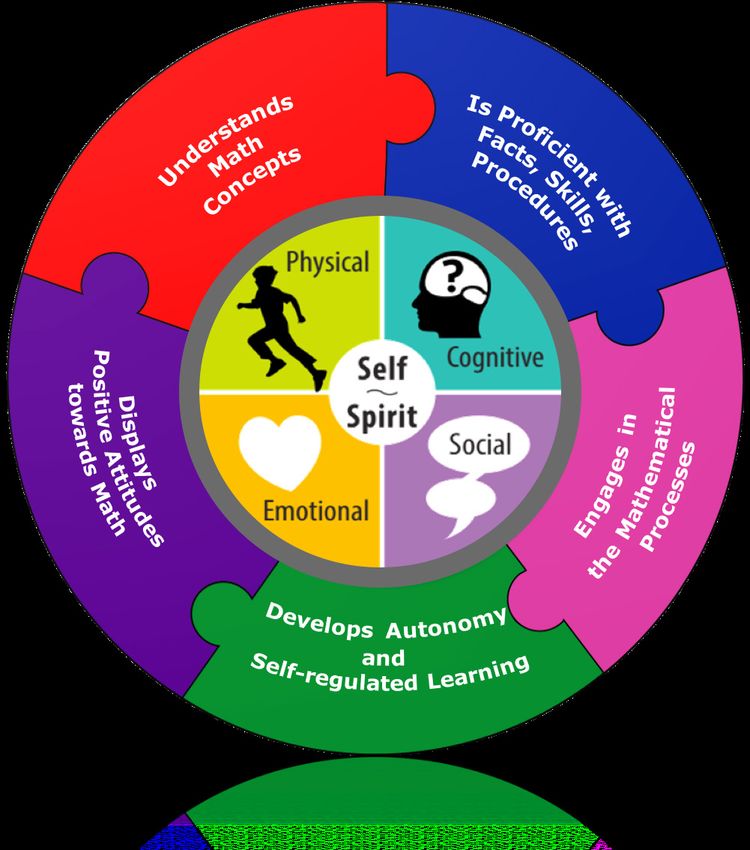
Ontario’s Vision for the Mathematics Learner
In Ontario, we recognize that the study of mathematics equips students with knowledge, skills, and habits
of mind that are essential for successful and rewarding participation in society. The ministry’s vision for
the mathematics learner recognizes that students need classroom experiences that help them to:
     • develop math understanding
     • learn important facts, skills and procedures
     • develop the ability to apply the processes of mathematics
     • acquire a positive attitude towards mathematics
     • build autonomy as a math learner

Each piece of the puzzle is important in supporting the development of mathematical thinkers and doers,
and the belief that one is mathematical. At the heart of this vision is the well-being of the student.

In a broad-based provincial engagement with students, parents, educators, staff and stakeholders,
it was affirmed that student well-being is shaped by a child’s whole experience at school and that
students want to be supported to develop and experience:

            Sense of Self and Spirit                               Meaningful Learning

            Physical and Emotional Safety                          Supportive Relationships

            Sense of Belonging                                     Healthy Minds & Bodies

For more information about well-being in Ontario schools click here.

                                                     3
Nurturing Well-Being and                                     wrong, and more emphasis on process and learning,
Mathematics in the Classroom                                 anxiety about math can be kept in balance. Limiting
How can we construct an environment that will                anxiety and pressure about getting the right answer
help students feel safe and enjoy learning? In the           tends to alleviate some of the worry and allows
ministry’s province-wide engagement on student               students greater freedom in exploring their thinking
well-being, feedback from students, educators,               processes and their problem-solving abilities. This can
parents and others in the community was con-                 inherently build confidence by highlighting all they
clusive – they identified the importance of caring           do know (i.e., their strategies for thinking through
relationships, a sense of self/identity, a feeling of        the problem) in addition to the final answer.
connectedness and belonging, and the importance
of meaningful learning as well as attention to healthy       Yet research also shows that when students make
bodies and minds and physical and emotional safety.          mistakes, synapses fire and brains grow (Boaler, 2014).
They urged that all of this needs to be nurtured in          Some frustration is healthy and helps with brain
students’ day-to-day experiences in school, including        development. Educators can help students in
in mathematics class.                                        recognizing and accepting some level of frustration
                                                             as part of the learning process and recognizing the
Being mindful of the kind of experiences students            need for strategies or help-seeking for levels of
are having in math classrooms and putting the                frustration that are not productive.
emphasis on learning – not performing – can make
an impact on changing attitudes and helping                  Educators can help students strive to find the level of
students become ready to learn. When students                optimal challenge for themselves. This is sometimes
have heightened performance anxiety, their brains            referred to as “flow.” Flow is “deep absorption in an
are not open to new learning, which in turn affects          activity that is intrinsically interesting. Individuals
processing skills and working memory (Young, Wu &            in a state of flow see the activity as worthwhile even
2012). Hence, it is important to establish a classroom       if no further goal is reached. Flow is believed to
climate that reduces anxiety and promotes the belief         occur at the point of balance between the challenge
that all students can be capable and confident when          inherent in the task at hand and the skills required
it comes to math. With less emphasis on right or             to accomplish it” (Csikszentmihalyi, 1997).

        Tips to Reduce Math Anxiety for Students
  • Students learn best in an environment where they are encouraged to try and when they are in a calm
    emotional state. So, eliminate surprise or timed tests and calling on students who don’t raise their hands
    to respond.
  • Teach and encourage the use of everyday strategies like relaxation or deep breathing to reduce stress.
    Even something as simple as mindful breathing and positive intentions can help settle nerves before
    approaching a task that is perceived as challenging.
  • Provide reassurance for students to ask questions or ask for help if needed.
  • Help students understand that challenges are an expected part of problem-solving and learning, and that
    sometimes our most creative thinking comes from persevering through frustrations and difficult situations.
  • Focus on the development of a growth mindset and emphasize process over right or wrong answers;
    a “wrong answer” isn’t “bad,” but simply an opportunity to learn.
  • Establish a shared understanding that we all make mistakes and highlight that we can learn from
    examining mistakes.

                                                         4
Inspiring Stories: Making the Mathematics
Well-Being Connection
Many schools and school boards across the province have been exploring the important
connection between learning and well-being and in particular how a focus on well-being in
the mathematics classroom can help students overcome negative attitudes and experience
success. Here we share the highlights of three recent provincial inquiries together with key
reflections from educators who have been engaged in this work.
Nurturing Student Mental Health summed up as “purposeful planning for learning
in the Mathematics Classroom opportunities.” This means:
Excerpted from T. Lindstrom, Key learnings from • We know our students (relationships).
Nurturing Student Mental Health and Well-Being in • We understand (through assessment) where
the Mathematics Classroom at Keewatin-Patricia our students are beginning, i.e., their learning
District School Board (2017) strengths and gaps.
In 2011, as part of the Ontario Mental Health and • We plan with our students in mind, knowing
Addictions Strategy, the Ministry of Education where our curriculum is taking us.
funded the creation of School Mental Health ASSIST • We create the conditions for learning that
(SMH-ASSIST), an implementation support team. support achievement, equity and well-being
Stemming from the work of Dr. Kathy Short, director of for all students.
SMH-ASSIST and her team, a group of administrators This is no small task and many of our educators are
and mental health leads from across the province working very hard to decrease the prevalence of
came together to support principals everywhere in students experiencing anxiety and to increase the
Leading Mentally Healthy Schools (LMHS, 2013). ability of students to persevere with mathematical
As we focused in on the Grade 7-10 math classroom, problems.
we linked to the LMHS work and our learning can be
Helping Students Persevere with Mathematical Problems
While our work is in the early stages, some of the strategies we have employed include:
• planning effective questions and designing tasks that show understanding of the concept as well as process
• slowing down in order to increase confidence, competence and allow students to feel dignity in their
learning journey
• predicting student responses so that we can anticipate questions and prompts that will promote student
learning and affirm what they know and can do
• helping students to understand that there may be more than one way to solve a problem, but also that
some ways are more efficient than others
• providing the tools (manipulatives), strategies (pictorial problem solving, observations, algorithms),
and opportunities (conferencing, discourse, discussion) that promote a deeper understanding of the
concept or number sense
• opening conversation and professional learning around what good math instruction looks like
5The Well-Being/Mathematics We chose to concentrate on the components of
Inquiry well-being that a school might have the greatest
impact on – feelings of respect, acceptance,
Excerpted from J. Vieira and P. Williams, Key learnings
a sense of safety to take risks, personal value,
from Well-being and Math System Inquiry at
sense of voice and contribution, and sense of
Dufferin-Peel Catholic District School Board (2017)
belonging to a community.
As part of our board’s strategy to make setting Catholic
Critical to the inquiry was the application of the
conditions for learning and leading more explicit in
work in schools (including summer school) using
our schools, the Program Department supported
a case study approach. We discovered a parallel
a system inquiry focused on learner well-being
impact of our focus on well-being on educators
and mathematics. A cross-discipline team was estab-
and students, as highlighted in the chart below:
“
lished to support the inquiry and included staff from
the departments of Mathematics, Staff Development,
What I enjoyed the most about co-learning
Religious Education & Faith Formation, Research,
was my learning from the teachers and
Special Education & Support Services, Equity & Diversity,
their learning from me or our class …
as well as administrator and teacher representation
what I enjoyed the most was doing or working
from a cross-section of participating schools.
on problems with partners … we learned how
”
We wondered: “If we explicitly focus on the well-being to work together.
of all learners in the context of mathematics, what Student, Dufferin Peel
might the impact be on student learning and the Catholic District School Board
development of mathematical understanding?”
Key Learnings of the Inquiry Over a Five-Year Period
System and School Application with Educators Classroom Application with Students
1. A community of co-learners is built over time by 1. Time is needed to build a community of
fostering relationships where educators “feel safe mathematicians, and to foster relationships,
to be vulnerable” and take risks as they learn. so that students feel safe to take risks and
make mistakes as they learn.
2. A co-learning stance is an essential component
for developing a professional learning community 2. Students and teachers need to be given the
in mathematics. opportunity to collaborate in order to see
themselves as co-learners.
3. Educators need to see themselves as co-learners
and be willing to: 3. The co-construction of learning by students
• exchange learning and insights within and and teachers is essential to a positive learning
between roles environment, class discourse in math, etc.
• engage in focused conversations about 4. When students and teachers co-construct what
learning well-being in mathematics looks like, sounds
• ask thoughtful questions and reflect on like and feels like, well-being becomes visible in
current practice classrooms (e.g., self-directed students, happy
faces, laughter, respectful disagreements,
• come to common understandings about
students feel like they matter).
instructional and collaborative practices
5. Student voice and self-reflection are key compo-
4. Well-being is essential to moving mathematics
nents to understanding oneself as a learner.
learning forward; educator well-being matters.
6. Student self-assessment is linked to student
well-being.
6Teaching Grade 9 Applied Much of their focus over the two years concerned the
Mathematics implementation of practices that would better engage
their students. These practices included fostering
Excerpted from C. Suurtamm, Research report.
growth mindset; using vertical non-permanent
Teaching Grade 9 Applied Mathematics.
surfaces (VNPS) and visibly random groupings;
A Collaborative Inquiry (2017)
assigning rich tasks; increasing the use of technology;
The Ministry of Education provided funding to the and reorganizing the curriculum sequence to help
Ontario Association for Mathematics Education students achieve early success. Perhaps most
(OAME) to follow educator teams in nine schools that importantly, attention to the emotional needs of
were focused on enhancing the learning and teaching students was identified by some educator teams.
“
of Grade 9 Applied Mathematics. These teams were
followed by researchers from the University of Ottawa The students were starting to see themselves as
over a two-year period. successful mathematics students, particularly
Most of the teams started on their journey with the when they had problems that they were allowed
goal of increasing student engagement. Participants to approach in many different ways. The teachers
discussed the negative ways students often suggested that the development of tasks with
approach learning in mathematics, typically after multiple entry points (i.e., multiple approaches
years of being unsuccessful and/or having negative that are accessible for different ability levels)
experiences in the subject. Most professional learning made mathematics accessible to a wider range of
communities realized that in order for students to be students. The Grade 10 Applied Teacher said she
successful it would be important to create a positive received a phone call from a parent who thanked
her for what she was doing, as her son now
”
environment where students felt comfortable to take
risks and make mistakes. seemed so excited about mathematics.
(Suurtamm, 2017, p. 38)
Making the Well-Being Connection
The researchers identified other recommendations which are linked to student well-being
(cognitive, social, emotional, physical domains):
• Focus on the student together with the curriculum. The “verbs” of the curriculum together with the
strengths, needs and interests of the students should drive what students do in the classroom –
e.g., students will explain, solve, determine etc.
• Provide an engaging and safe space to take risks. Work with students to describe and design
what that safe space looks like and sounds like.
• Engage students in rich tasks and problem solving. Have students work collaboratively to solve
problems and then explain their mathematical thinking.
• Use a variety of assessment strategies. Provide multiple opportunities and means for students
to demonstrate what they know and can do.
• Have high expectations for all students. Let all students know that you believe in their potential,
including their mathematical potential.
7Some Final Considerations for Fostering
a Supportive Math Learning Environment
• Create a community of mathematics learners that includes the educator.
• Insist that we are all “math people” and seek examples to show practical examples that illustrate this.
• Value the thinking that all students bring to the classroom.
• Help students to appreciate that errors and failed attempts are opportunities for learning and have value.
• Focus on understanding so that students recognize that mathematics must always make sense to them.
• See the student as a whole person, paying attention to all developmental domains when planning
instruction, assessment and learning (e.g., provide opportunities to move while learning, plan for
supportive social interactions, consider emotional impact of instruction).
• Make learning the goal by supporting every student in playing an active role in his/her learning.
• Be careful about offering unsolicited help, and especially only targeting low achievers for assistance.
Listen to each student about his/her goals and needs.
• Provide cognitively challenging tasks and take the students’ strengths, needs, interests and views into
account when planning learning opportunities.
• Provide timely and descriptive feedback that will help students to improve.
• Inspire students to see math in the world around them.
Above all, have fun! Enjoy the beauty and wonder of mathematics!
References
Boaler, J. (2009). What’s math got to do Csikszentmihalyi, M. (1997). Finding flow: Schwartz, L. (2001). A Mathematician
with it? How parents and teachers can help The psychology of engagement in everyday grappling with his century. Basel,
children learn to love their least favourite life. New York, NY: Harper Perennial Switzerland: Birkhäuser.
subject. New York, NY: Penguin. Modern Classics. Suurtamm, C. (2017). Teaching Grade 9
Boaler, J. (2013a). Ability and mathematics: Depenbrock, J. (2017, August 1). We’re all Applied Mathematics: A collaborative
The mindset revolution that is reshaping born with mathematical abilities. (And why inquiry. Research Report. Submitted
education. FORUM, 55(1), 143-152. that’s important). NPREd. to the Ministry of Education. Toronto.
Boaler, J. (2013b, November 12). The Macaulay, A. (2015). Effective practices Sutton, J., & Kruger, A. (Eds.). (2002).
stereotypes that distort how Americans in Grade 9 Applied Mathematics ED Thoughts: What We Know About
teach and learn math. The Atlantic. (Doctoral dissertation). Mathematics Teaching and Learning.
Boaler, J. (2014). The Mathematics of Hope: Ontario Ministry of Education [OME]. Aurora, CO: Mid-continent Research
Moving from Performance to Learning in (2016). Engagement paper: Well-being in our for Education and Learning.
Mathematics Classrooms. schools; strength in our society. ON: Queen’s Tejedor, C. (2015, June 23). What makes a
Boaler, J. (2017). Setting up positive norms Printer for Ontario. math person? Interest, recognition are key
in math class. Ontario Ministry of Education [OME]. factors, researchers say.
Bruce, C. & Ross, J. (2010). Report for (2017). What we heard: Well-being in our Young, C.B., Wu, S.S., & Menon, V. (2012).
external review of the Collaborative Inquiry schools; strength in our society. ON: Queen’s The neurodevelopmental basis of math
and Learning-Mathematics Project: Year 2. Printer for Ontario. anxiety. Psychological Science, 23(5), 492-501.
Submitted to the Literacy and Numeracy Pajares, F., & Kranzler, J. (1995).
Secretariat. Toronto. Self-efficacy beliefs and general mental
ability in mathematics problem solving.
Contemporary Educational Psychology,
20(4), 426–443.
ISSN: 1913 8482 (Print)
© Queen’s printer for Ontario, January 2018 8 ISSN: 1913 8490 (Online)You can also read


