Reconstruction and Scientific Explanation of Akar Kuning (Arcangelisia flava Merr.) From West Sumatra as Ethnomedicine and Source of Science ...
←
→
Page content transcription
If your browser does not render page correctly, please read the page content below
Pharmacogn J. 2021; 13(1): 206-211
A Multifaceted Journal in the field of Natural Products and Pharmacognosy
                                                                                                                                               Research Article
www.phcogj.com

Reconstruction and Scientific Explanation of Akar Kuning
(Arcangelisia flava Merr.) From West Sumatra as Ethnomedicine
and Source of Science Learning
Skunda Diliarosta1,*, Sudarmin2, Annisa Efendi3, Dwisari Dillasamola1, Biomechy Oktomalioputri4, Rehani
Ramadhani4

                                                         ABSTRACT
                                                         Indonesia is one of the countries that has the largest tropical forest land in the world, this
                                                         makes Indonesia rich in diversity of flora and fauna. This diversity produces a variety of cultures,
                                                         traditions and local wisdom. One of the local wisdoms of the people of West Sumatra is the
Skunda Diliarosta1,*, Sudarmin2,                         use and utilization of the biodiversity around it as a medicine for various diseases. The type of
Annisa Efendi3, Dwisari                                  medicinal plant that is the focus of this research is the type of Akar Kuning plant (Arcangelisia
Dillasamola1, Biomechy                                   flava Merr.). This research is an educational research conducted using an ethnoscience
Oktomalioputri4, Rehani                                  approach, meaning that it is based on the indigenous knowledge of the local community.
Ramadhani4                                               This study aims to reconstruct knowledge from a cultural / community perspective in the
                                                         health sector. which later will become a knowledge with scientific explanation. The data were
1
 Department of Science Education,                        obtained through direct observation to the research location regarding indigenous knowledge
Universitas Negeri Padang, INDONESIA.                    about the Akar Kuning plant and also based on laboratory test data on antibacterial activity
2
 Chemistry Department, Faculty of
Mathematics and Natural Science, Semarang
                                                         carried out in the biology laboratory of Semarang State University. All data obtained will be
State University, INDONESIA.                             analyzed and also strengthened by various sources. The analysis concluded that the Akar
3
 Pharmacology department, Faculty of                     Kuning (Arcangelisia flava Merr.) Plant contains bioactive compounds that act as antibacterials,
Pharmacy, Andalas University, INDONESIA.                 thus inhibiting bacterial growth. This is evidenced by the inhibition zone diameter data produced
4
 Histology Department, Faculty of Medicine,
Andalas University, INDONESIA.
                                                         during laboratory tests showing the results that the Yellow Root plant extract (Arcangelisia
                                                         flava Merr.)
Correspondence                                           Key words: Reconstruction, Akar Kuning (Arcangelisia flava Merr.), Scientific explanation,
Skunda Diliarosta                                        Ethnoscience.
Department of Science Education,
Universitas Negeri Padang, INDONESIA.
E-mail: skunda@fmipa.unp.ac.id                         INTRODUCTION                                             flava Merr.) Which mostly grows in the Rimbo
                                                                                                                Panti Nature Reserve Forest. Actually this Akar
                                                       Indonesia is one of the countries that has the largest   Kuning plant is an endemic plant from Kalimantan,
History
                                                       tropical forest land in the world.1 With the existence   especially known to have a lot of pharmacological
 • Submission Date: 29-08-2020;
                                                       of tropical forests, Indonesia has high biodiversity     potential, including as an antiviral.4
 • Review completed: 12-10-2020;
                                                       and is included in the eight mega biodiversity
 • Accepted Date: 05-10-2020.                          countries in the world, both flora and fauna.2 The       The use of the Akar Kuning plant (Arcangelisia
DOI : 10.5530/pj.2021.13.29                            distribution of flora and fauna that are owned by        flava Merr.) For the community is as a jaundice
                                                       Indonesia reaches a very wide area and there are         medicine, anti-malaria, and cancer medicine. In its
Article Available online
                                                       also several types that are endemic, meaning that        use, ordinary people consume it once a day until the
http://www.phcogj.com/v13/i1
                                                       these species can only grow or be found in one           illness is healed, if the illness is quite severe, they can
Copyright
                                                       place.                                                   drink it 2 times a day. This rule applies to all diseases.
© 2021 Phcogj.Com. This is an open-
access article distributed under the terms             The ethnic diversity in Indonesia has resulted in        It is known that the Akar Kuning plant contains
of the Creative Commons Attribution 4.0
                                                       various cultures, traditions and local wisdom. One       various bioactive compounds, one of the most
International license.
                                                       of the local wisdoms is the use of the diversity         famous being berberine. Akar Kuning are lianas,
                                                       around it as a medicine for various diseases.3 So far,   up to 20 m long, living in lowlands up to 800 m
                                                       the efficacy of various plants has been known and        above sea level (asl). The leaves are thick and strong
                                                       has been used from generation to generation by the       like skin, oval shaped, blunt not sharp, leaf width 7
                                                       community as medicinal plants that have the ability      cm to 20 cm, glossy top surface and long stalk. The
                                                       to cure various diseases, it's just that people do not   flowers are housed in two small sizes arranged in a
                                                       yet know what substances are contained in these          series of glabrous 20 cm to 50 cm, greenish-white
                                                       plants. and the use of medicinal plants in Indonesia     or yellowish-white with buds.5 The wood is yellow,
                                                       is not just knowledge about their properties but         its purpose is to boil the stems to treat jaundice,
                                                       further, by proving the content of the compounds,        digestion, intestinal worms, fever, and canker sores.
                                                       the use of these medicinal plants can be developed       The fruit, which is yellow in color, can be used to
                                                       in the pharmaceutical industry.                          anesthetize fish.1
                                                       One type of medicinal plant that is the focus of this    This study uses an ethnomedicine approach.
                                                       research is a type of Akar Kuning plant (Arcangelisia    Ethnomedicine is the perception and conception

                                                         Cite this article: Diliarosta S, Sudarmin, Efendi A, Dillasamola D, Oktomalioputri B, Ramadhani

       Phcogj.com
                                                         R. Reconstruction and Scientific Explanation of Akar Kuning (Arcangelisia flava Merr.) From
                                                         West Sumatra as Ethnomedicine and Source of Science Learning. Pharmacog J. 2021;13(1):
                                                         206-11.
206                                                                                                             Pharmacognosy Journal, Vol 13, Issue 1, Jan-Feb, 2021
Diliarosta, et al.: Reconstruction and Scientific Explanation of Akar Kuning (Arcangelisia flava Merr.) From West Sumatra as Ethnomedicine and Source of
Science Learning
of local people in understanding health or research that addresses white or orange-red precipitate is formed after Dragendoft reagent is
traditional medical systems.6 The purpose of conducting this added, it means that Akar Kuning extract (Arcangelisia flava Merr.)
ethnomedicine research is to see from a cultural / community point Contains Alkaloids. Second, identification of steroids and terpenoids
of view in the health sector, which will later be reconstructed into using Liberman Buchard. If red or purplish-red fog forms, then Akar
knowledge with scientific explanations. The need to reconstruct Kuning isolate (Arcangelisia flava Merr.) Contains terpenoids, and if
indigenous peoples' knowledge is known as scientific knowledge green or bluish-green mist forms, Akar Kuning isolate (Arcangelisia
reconstruction.7 flava Merr.) Is holding steroids. Third, flavonoid test by inserting a few
drops of the water fraction of Akar Kuning isolate (Arcangelisia flava
Ethnomedicin study is one way to document and collect information
Merr.) into a test tube, then adding Mg metal powder and a few drops
about the use of plants as medicinal substances by people in West
of concentrated HCl. If it turns pink to red (except for isoflavones), then
Sumatra. This article will reveal what ethnomedicin studies in Indonesia
the isolates carry flavonoids. Fourth, phenolic identification by adding a
are and their research methods. It is hoped that this paper will be used
few drops of the water fraction of the Akar Kuning isolate (Arcangelisia
as a reference in developing ethnomedicine research in Indonesia.
flava Merr.) Into a test tube, then adding a few drops of FeCl3. If it turns
Documenting the use of medicinal plants is a race against time, blue or purplish-blue, the isolate is declared phenolic-positive. Finally,
this is due to the excessive harvesting of biological resources (over identification of saponins by inserting 1 mL of water fraction of Akar
exploitation) and of course this has an impact on the loss of biodiversity Kuning isolate (Arcangelisia flava Merr.) Into a test tube then shaken for
in Indonesia. Kartawinata (2010) stated that the rate of species loss is 1-2 minutes. If temporal foam (which lasts about 5 minutes) forms, the
in line with the rate of loss of local knowledge.8 Besides ethnomedicine, isolate is saponin-positive.
this research also touches on ethnopharmacology, which is the study
of the use of plants that have pharmacological effects that are related to Data analysis
treatment and health care by certain communities.9,10 The research data obtained through interviews with sources were
analyzed. The data was then reconstructed based on Hempel.12 To
RESEARCH METHODS strengthen the reconstruction, data from the extract bioactivity test
Types of research results against Bacillus subtilis and Escherichia coli are needed. Then
conclusions are made based on the experimental results.
This research is a qualitative research followed by an experiment, the
qualitative method is descriptive analysis. This qualitative research uses Jisana mentions that everyone involved in the consumption process is a
an ethnoscience approach,7 which is used to reconstruct and explain consumer.12 In Law Number 8 of 1999 article 1 paragraph 2 concerning
scientific knowledge based on people's beliefs about the Akar Kuning consumer protection, that consumers are users of goods or services
plant (Arcangelisia flava Merr.) As a medicine for various diseases. available in society, both for the interests of themselves, their families,
Ethnoscience means more or less knowledge possessed by a nation or other people, and other creatures and not for sale. Consumer behavior
more precisely a certain ethnic group or social group, and then elevated is the study of processes involved when individuals or groups choose,
to a proven scientific knowledge. The experiment carried out was the buy, use, or manage products, services, ideas or experiences to satisfy
phytochemical test of the Akar Kuning plant extract (Arcangelisia flava consumer needs and wants.13
Merr.).
RESULTS AND DISCUSSION
Ethnomedicine data collection Reconstruction of scientific knowledge based on public
In this study, data were obtained by interview. Interviews were conducted trust
with 3 (three) men aged 48 to 67 years. They are the natives of Palupuh
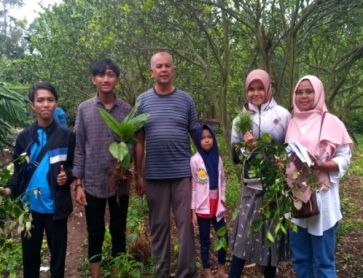
who live in the vicinity of the Nature Reserve where the yellow root After the research team conducted interviews with several respondents
in locations where the Akar Kuning was found found in Palupuah, Kab.
plant can be found. The people around this forest are accustomed to
Agam. The observation image is arranged in Figure 1. The observation
using this Akar Kuning as a medicine for various diseases. Salman is one
pictures are arranged in Figure 1.
of the local residents who believe / believe in and have used this plant as
an upset stomach and tumor medicine and feel the effects or benefits of The resource person answered questions based on his knowledge,
the Akar Kuning plant (Arcangelisia flava Merr.). The benefits that have namely the local name of Akar Kuning (Arcangelisia flava Merr.),
been felt by Mr. Salman after consuming this Akar Kuning plant are the Plant characteristics, the use of the Akar Kuning plant for the local
complaints of gastric pain he suffered slowly reduced and healed. This community, how to make extracts from Akar Kuning and additives for
was also felt by other respondents, where their tumors disappeared making extracts. The results of interviews with resource persons are
presented in Table 1.
This research is an ethnomedic research, which is research whose data
is obtained through face-to-face interviews.11 The focus of this research The results of the interviews as presented in Table 1 explain that the
includes: (1) the local name Akar Kuning (Arcangelisia flava Merr.); community consumes Akar Kuning by brewing or boiling the stem and
(2) plant characteristics; (3) the use of Akar Kuning plants for local drinking it as tea. The tea extracted from the Akar Kuning plant has
communities; (4) how to make extract from Akar Kuning; (5) additives a yellow color. In a scientific context, this process is referred to as a
for extract making. In addition, the investigation is also based on data maceration process. To treat stomach pain, the dose of Akar Kuning
from the results of the antibacterial activity test against Bacillus subtilis boiled water is drunk every day until it heals. Akar Kuning is shown
and Escherichia coli. in Figure 2.
In previous studies, it was found that the Akar Kuning (Arcangelisia
Phytochemical test flava Merr) contains chemical compounds, including saponins,
The steps of this research are phytochemical test and bioactivity flavonoids and tannins, besides that the roots also contain glycosides
test of Escherichia coli root extract (gram negative bacteria). The and alkaloids, especially the isokuinolin group, namely berberine,
phytochemical test procedure includes several steps. First, identification jatrorizin, and palmatin. There are also some minor alkaloids such
of alkaloids using Mayer and Dragendorf reagents. The extract, as columbamine dehidrokoridalmin, homoaromolin and talifendin,
as a result of isolation using methanol as a solvent, was shaken. If a and fibraleucin terpenes, and fibraurin has several activities such as
Pharmacognosy Journal, Vol 13, Issue 1, Jan-Feb, 2021 207Diliarosta, et al.: Reconstruction and Scientific Explanation of Akar Kuning (Arcangelisia flava Merr.) From West Sumatra as Ethnomedicine and Source of
Science Learning
antifungal, antiasma, antibacterial, anti-tumor, anti-malarial and anti-
inflammatory.13
In Indonesia, this plant has various names, including Tali Uning, Oyod
Sirawan, and Katola.14 Generally, people of Southeast Asia use this plant
as traditional medicine, including to treat digestive disorders and as an
anti-diarrhea and anti-bacterial which is significant for bacteria.15
In the Southeast Sulawesi area, this decoction of A. flava stems is used
as an anti-diarrheal with very visible properties. This is caused by the
chemical compounds contained in A. flava, namely glycosides and
alkaloids, especially the isokuinolin group, namely berberine, jatrorizin,
and palmatin.13 Furthermore, researchers from Taiwan reported that
berberine, jatrorizin, and palmitin contained in the ethanol extract of
Mahonia oiwakensis Hayata, were shown to inhibit inflammation in
Figure 1: The research team and resource. test animals induced by acetic acid, formalin, and carrageenan.16
Phytochemical test results
The steps of this research were phytochemical test and bioactivity test
of Akar Kuning extract against Bacillus subtilis (gram positive bacteria)
and Escherichia coli (gram negative bacteria). The results of this study
are then compared with previous studies to produce a reconstruction of
established scientific knowledge.
The phytochemical test procedure includes several steps. First,
identification of alkaloids using Mayer and Dragendorf reagents. The
extract, as a result of isolation using methanol as a solvent, was shaken.
If a white or orange-red precipitate is formed after Dragendoft reagent
is added, it means that Akar Kuning extract (Arcangelisia flava Merr.)
Contains Alkaloids. Second, identification of steroids and terpenoids
using Liberman Buchard. If red or purplish-red fog forms, then Akar
Kuning isolate (Arcangelisia flava Merr.) Contains terpenoids, and if
Figure 2: Akar Kuning. green or bluish-green mist forms, Akar Kuning isolate (Arcangelisia
Table 1: Interview results.
No. Focus Question Informant's Answer Result of reconstruction of scientific knowledge
1. The local name of Akar kuning Akar Kuning (Arcangelisia Flava Merr)
Leaf: oval with five leaf bones at the base
Leaf Color: green
Characteristics of Akar Kuning plants
2. Flower: appears on the axillary leaves and on the trunk
Flower Color: yellow.
Root: roots creeping up and wrapped around the stem.
As a jaundice, anti-malaria, cancer drugs.
The use of Akar Kuning plants for the People usually use it once a day until the disease is cured, if the
3.
community illness is severe, you can drink it 2 times a day. This rule applies to Akar Kuning (Arcangelisia Flava Merr) contains
all diseases. chemical compounds, including saponins,
The part where the Akar Kuning plant flavonoids and tannins, besides that the roots also
4. Root contain glycosides and alkaloids, especially the
is a traditional medicine
In making extracts, the ingredients used are the roots, for the isokuinolin group, namely berberine, jatrorizin,
process as follows: and palmatin. There are also several minor
1. Cut the Akar Kuning as big as the index finger alkaloids such as columbamine dehydrocoridalmin,
2. Then dry the Akar Kuning in the sun homoaromolin and talifendin, as well as fibraleucin
How to make herbal extracts or terpenes, and fibraurin which have several activities
5. 3. After the Akar Kuning are completely dry.
products from Akar Kuning
4. Next, make the extract by boiling water until it boils until the such as antifungal, antiasma, antibacterial, anti-
water turns yellow tumor, anti-malarial and anti-inflammatory (Singh,
5. If you boil 2 cups of water, the boiled water will later become A., S. Duggal, N. Kaur & J. Singh. 2010)
1 cup.
The way to use it is as follows:
1. Boil 1 liter of water
2. Put 10 grams of Akar Kuning without any mixture
How to use herbal extract from the
6. 3. Wait for the water to turn yellow
Akar Kuning [mixed with anything]
Note: consumed in the morning and evening after meals, the use
of Akar Kuning as medicine depends on the type of illness you are
suffering from.
208 Pharmacognosy Journal, Vol 13, Issue 1, Jan-Feb, 2021Diliarosta, et al.: Reconstruction and Scientific Explanation of Akar Kuning (Arcangelisia flava Merr.) From West Sumatra as Ethnomedicine and Source of
Science Learning
Currently, public knowledge is not sufficient in terms of protection.
According to informants who know the exact area of this Akar
Kuning plant in Palupuah and Rimbo Panti, the existence of this
Community behavior patterns tree is quite a lot in the surrounding forest along with Bajakah.
in conserving or protecting Akar However, what is very worrying at this time is that there have
7.
Kuning crops / forests been exploitation actions against this medicinal plant. This can be
(Care and love the environment) seen from the large number of orders for Akar Kuning plant Akar
Kuning by India and the local community simply removing these
Akar Kuning without thinking about the long-term impact that will
arise if these Akar Kuning plants continue to be sent abroad.
For nurseries that have never been done in the area around the
How to propagate Akar Kuning plants
8 research location, this is because the community still thinks that
[nursery]
the Akar Kuning will always be available and will not run out.
Based on the experience of the informant after consuming the
extract from the Akar Kuning plant, it was known that the stomach
Experience using the Akar Kuning disease suffered was slowly decreasing and within 2 months it was
9.
plant as medicine declared cured. Not only curing stomach pain, but the benefits were
also felt for tumors, based on the informant's explanation within 3
months of the lumps on his body. already lost.
Address : Palupuah, Kab. Religion
Age : 48 -67 years
flava Merr.) Is holding steroids. Third, the flavonoid test by inserting a Table 2: Antibacterial activity test results.
few drops of the water fraction of the Akar Kuning isolate (Arcangelisia Inhibition zone diameter
flava Merr.) Into the test tube. then add Mg metal powder and a few drops Sample Deuteronomy
Bacillus subtilis Eschirichia coli
of concentrated HCl. If it turns pink to red (except for isoflavones), then
Water + Akar 1 9 mm 9.75 mm
the isolates carry flavonoids. Fourth, phenolic identification by adding a
Kuning 2 11 mm 7.75 mm
few drops of the water fraction of the Akar Kuning isolate (Arcangelisia
Akar Kuning 1 14.5 mm 9.5 mm
flava Merr.) Into a test tube, then adding a few drops of FeCl3. If it turns
Water Methanol
blue or purplish-blue, the isolate is declared phenolic-positive. Finally, 70% 2 10.25 mm 8.5 mm
identification of saponins by inserting 1 mL of water fraction of Akar
Benzene + Akar 1 12.75 mm 10.5 mm
Kuning isolate (Arcangelisia flava Merr.) Into a test tube then shaken for Kuning 2 10.75 mm 11 mm
1-2 minutes. If temporal foam (which lasts about 5 minutes) forms, the
isolate is saponin-positive. Fourth, phenolic identification by adding a
few drops of the water fraction of the Akar Kuning isolate (Arcangelisia Table 3: Inhibition zone diameter category.
flava Merr.) Into a test tube, then adding a few drops of FeCl3. If it turns Diameter Power of Inhibition
blue or purplish-blue, the isolate is declared phenolic-positive. Finally, ≤ 5 mm Weak
identification of saponins by inserting 1 mL of water fraction of Akar 6 - 10 mm Moderate
Kuning isolate (Arcangelisia flava Merr.) Into a test tube then shaken for 11 - 20 mm Strong
1-2 minutes. If temporal foam (which lasts about 5 minutes) forms, the ≥ 21 mm Very strong
isolate is saponin-positive. Fourth, phenolic identification by adding a
few drops of the water fraction of the Akar Kuning isolate (Arcangelisia
Antibacterial activity test was carried out twice against Bacillus subtilis
flava Merr.) Into a test tube, then adding a few drops of FeCl3. If it turns
and Escherichia coli. Observations were made on three mixtures of
blue or purplish-blue, the isolate is declared phenolic-positive. Finally,
Akar Kuning, namely water Akar Kuning, 70% methanol Akar Kuning,
identification of saponins by inserting 1 mL of water fraction of Akar
and benzene Akar Kuning. In the water Akar Kuning sample, the
Kuning isolate (Arcangelisia flava Merr.) Into a test tube then shaken
inhibition diameter against Bacillus subtilis was 9 mm and 11 mm and
for 1-2 minutes. If temporal foam (which lasts about 5 minutes) forms,
the isolate is saponin-positive. Saponin identification by inserting 1 mL the Escherichia coli bacteria were 9.75 mm and 7.75 mm. Furthermore,
of water fraction of Akar Kuning isolate (Arcangelisia flava Merr.) into in the Akar Kuning sample of 70% methanol, it was found that the
a test tube then shaking it for 1-2 minutes. If temporal foam (which inhibition diameter against Bacillus subtilis was 14.5 mm 10.5 mm
lasts about 5 minutes) forms, the isolate is saponin-positive. Saponin while the inhibition diameter against Escherichia coli was 9.5 mm and
identification by inserting 1 mL of water fraction of Akar Kuning 8.5 mm. And finally in the yellow benzene root sample, the inhibition
isolate (Arcangelisia flava Merr.) into a test tube then shaking it for 1-2 diameter against Bacillus subtilis was 12.75 mm 10.75 mm, while the
minutes. If temporal foam (which lasts about 5 minutes) forms, the inhibition diameter against Escherichia coli was 10.5 mm and 11 mm.
isolate is saponin-positive. The value of inhibition generated in each sample has its own meaning.
The width of the diameter of the inhibition zone formed can be used
A series of laboratory work was carried out to provide scientific as a parameter to determine the strength of the bioactive compounds
explanations for indigenous people's beliefs about Akar Kuning as a contained in the Akar Kuning extract.
cure for various diseases.
Judging from Table 2, for samples of water Akar Kuning s have strong
Scientific explanation of indigenous people's beliefs antibacterial activity against Bacillus subtilis and have moderate
about Akar Kuning (Arcangelisia flava Merr.) antibacterial activity against Escherichia coli bacteria. Furthermore,
Indigenous people's beliefs about Akar Kuning (Arcangelisia flava for the Akar Kuning sample, 70% methanol had strong antibacterial
Merr.) As a medicine for various diseases can be explained scientifically activity against Bacillus subtilis and had moderate antibacterial activity
based on the data that has been obtained. against Escherichia coli bacteria. And finally, for the yellow benzene
Pharmacognosy Journal, Vol 13, Issue 1, Jan-Feb, 2021 209Diliarosta, et al.: Reconstruction and Scientific Explanation of Akar Kuning (Arcangelisia flava Merr.) From West Sumatra as Ethnomedicine and Source of
Science Learning
root sample, it has strong antibacterial activity, both against Bacillus 3. Amir, H., Murcitro, B. A., & Kassim, M. (2017). The Potential Use of Phaleria
Macrocarpa Leaves Extract As An Alternative Drug For Breast Cancer Among
subtilis and against Escherichia coli. Women Living In Poverty. Asian Journal For Poverty Studies 3(2) , 138 - 145.
Based on the inhibition zone diameter category table, it can be said that 4. Sudarsono, Setyowati EP. Pengaruh ekstrak batang larut air kayu kuning
(Arcangelisia flava L. Merr) terhadap penghambatan pertumbuhan Candida
the wider the formed inhibition zone indicates the greater the strength albicans ATCC 10231 dan Trichophyton mentagrophytes in vitro. Biologi
of bioactive compounds in inhibiting bacterial growth.17 According to Kedokteran & Kimia Produk Alami 2014; 3 (1): 15-9.
Setiabudy, a certain antibacterial agent can increase its activity if its 5. Widyatmoko, D. and F. Zick. 1998. The flora of Bukit Tiga Puluh National Park,
antibacterial level is increased beyond the minimum inhibitory level.18 Kerumutan Sanctuary and Mahato Protective Reserve, Riau, Indonesia.
Indonesia Botanis Gardens in collaboration with Yayasan Sosial Chevron dan
It is known that the stems of this Akar Kuning plant contain Texmaco Indonesia.Bhasin, V., Ethno.Med., (2017), 1 (1), 1-20.
protoberberine alkaloid compounds consisting of berberine and 6. Sudarmin, Zaenuri, Sumarni, W. (2019). Pengembangan Model Pembelajaran
Sains Berbasis Kearifan Lokal. Laporan Penelitian. Universitas Negeri Semarang.
palmatin. The alkaloid protoberberin was stated to be active as an
7. Kartawinata, K. (2010). Dua Abad Mengungkap Kekayaan Flora dan Ekosistem
antibiotic against Gram-positive and Gram-negative bacteria, where
Indonesia. Dalam: Sarwono Prawirohardjo Memorial Lecture X. LIPI. 23
in the study that acted as gram-positive was Bacillus subtilis and the Agustus 2010. Jakarta.
one acting as gram-negative was Escherichia coli.19 Alkaloid compounds 8. Walujo, E., (2013). Etnofarmakologi: Saintifikasi Pengetahuan untuk
(berberine and columbine) can interfere with the formation of cross Pengembangan Industri Kimia dan Farmasi di Indonesia.
bridges of peptidoglycan components in bacterial cells, so that the cell 9. Manar, PA, (2018). Pengetahuan Etnofarmakologi Tumbuhan Alang-Alang
wall layer is not formed completely and causes death in these cells.20 (Imperatacylindrica L.) oleh Beberapa Masyarakat Etnik di Indonesia, TM
Conference Series 01 (2018): 114–116, online:https: // talenta confseries .usu.
That is a scientific explanation departing from the public's belief that ac.id.
the Akar Kuning plant functions as a medicine for various diseases. 10. Akbulut, S., & Bayramoglu, M. (2013). The Trade and Use of Some Medical and
Aromatic Herbs in Turkey. Ethno Med, 7(2} , 67-77
CONCLUSIONS 11. Hempel, C. (2014). Scientific Explanation, Stanford Encyclopedia Philosophy.
Based on the data obtained, it can be concluded that the Akar Kuning 12. Singh, A., S. Duggal, N. Kaur & J. Singh. 2010. Berberin: alkaloid with wide
spectrum of pharmacological activities. Journal of Natural Product 3: 64-75.
plant extract (Arcangelisia flava Merr.) Has bioactive compounds that
13. Artyani T. 2014. Efek antidepresan ekstrak larut air akar kuning Arcangelisia
act as antibacterials and can inhibit bacterial growth. flava (L.) Merr pada mencit Balb-C ditinjau dari immobility time dengan metode
forced swim test. Skripsi. Fakultas Farmasi Universitas Gadjah Mada.
SUGGESTION 14. Larisu, M. A. 2011. Kajian ilmiah air rebusan batang katola (Arcangelisia flava (L)
Merr) obat tradisional diare berdarah masyarakat Kabupaten Muna Sulawesi
Based on the results of this study, it can be useful for documenting Tenggara. Tesis. Program Pascasarjana Fakultas
medicinal plants that have the ability to cure various diseases. For 15. Chao, J, J.W. Liao, W.H. Peng, M.S. Lee, L.H. Pao & H.Y. Cheng. 2013.
further research, we can look for other plants that have similar Antioxidant, analgesic, antiInflammatory, and hepatoprotective ffects of the
properties to the Akar Kuning plant. ethanol extract of Mahonia oiwakensis stem. Int. J. Mol. Sci. 14: 2928-2945
16. Lay, Bibiana W, Hastowo, Sugyo. Mikrobiologi. Jakarta: Rajawali Press, 1992;
REFERENCES p. 32.
1. Matsjeh, S. (2009). Pemanfaatan Bahan Alam Nabati Yang Berpotensi Sebagai 17. Setiabudy R. Antimikroba. In: Tanu I, editor. Farmakologi dan Terapi (5th ed).
Bahan Baku Senyawa Obat. Makalah pembicara tamu Seminar Nasional di Jakarta: EGC, 2008; p. 585.
Fakultas Farmasi Universitas Tanjungpura, 16 Februari 2009. 18. Yuliasri J, Praptiwi, Fathoni A, Agusta A. Bioproduksi Floroglusinol Oleh Jamur
2. Subiandono E, Heriyanto NM. Kajian Tumbuhan Obat Akar Kuning (Arcangelisia Endofit Coelpmyecetes Afas-F3 yang Diisolasi dari Tumbuhan Archangelesia
flava Merr.) di Kelompok Hutan Gelawan, Kabupaten Kampar, Riau. Buletin flava L. Merr. Berk Penel Hayati. 2011;16:169-72.
Plasma Nuftah. 2009;15:43-4. 19. Robinson T. Kandungan Organik Tumbuhan Tinggi. Bandung: ITB; 1995; p. 281-5.
210 Pharmacognosy Journal, Vol 13, Issue 1, Jan-Feb, 2021Diliarosta, et al.: Reconstruction and Scientific Explanation of Akar Kuning (Arcangelisia flava Merr.) From West Sumatra as Ethnomedicine and Source of
Science Learning
GRAPHICAL ABSTRACT
Bacillus subtilis
Use
Identification with The antibacterial and Escherichia
Ethnoscience test coli
Approach
Akar Kuning
Padang Panjang,
(Arcangelisia
Padang City
flava Merr.)
Akar Kuning
Result
contains an�-
bacterial
compounds
ABOUT AUTHORS
• Dr. Skunda Diliarosta, M.Pd; Currently as lecturer at Mathematics and Science Faculty, Padang State University. Doctoral program
graduated from Padang State University. The research and expertise are in environmental and science education. One of the new
research is about the effect of agricultural extension for improvement environmental behavior by vegetable farmer.
• Sudarmin; Currently as lecturer at Chemistry Department, Mathematics and Natural Sciences Faculty, Semarang State University
• Annisa Efendi; Students of Natural Science Education Padang State University 2017, Graduated from ES 09 Air Tawar Barat, JHS 13
Padang and SHS 7 Padang. The research have been followed about Ethnomedicine study on medicinal plants used by communities
in West Sumatra, Indonesia
• Dwisari Dillasamola; Currently as lecturer at Pharmacology department, Faculty of Pharmacy, Andalas University.
• Biomechy Oktomalioputri; Currently as lecturer at Histology Department, Faculty of Medicine, Andalas University
• Rehani Ramadhani; Students of Natural Science Education Padang State University 2017, Graduated from ES 24 Ujung Gurun, JHS
13 Padang and SHS Ekasakti Padang. The research have been followed about Integration of Food safety and health consciousness
in Padang and actives to be part of girlscout UNP.
Cite this article: Diliarosta S, Sudarmin, Efendi A, Dillasamola D, Oktomalioputri B, Ramadhani R. Reconstruction and Scientific
Explanation of Akar Kuning (Arcangelisia flava Merr.) From West Sumatra as Ethnomedicine and Source of Science Learning.
Pharmacog J. 2021;13(1): 206-11.
Pharmacognosy Journal, Vol 13, Issue 1, Jan-Feb, 2021 211You can also read


