Refugees and Asylum-Seekers - refugees and asylum-seekers update
←
→
Page content transcription
If your browser does not render page correctly, please read the page content below
UKRAINE
                                                                        Thematic Update | March 2021

 Refugees and Asylum-Seekers

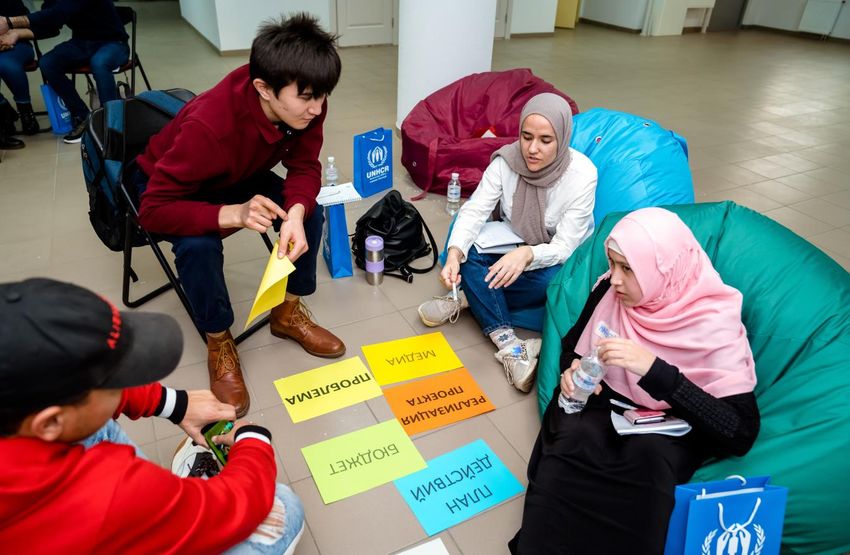
  In January 2020, young refugees from different cities across Ukraine met in Kyiv for a two-day workshop on project
  management and leadership skills. Earlier in 2020, this group initiated a project on social inclusion and tolerance building,
  funded by UNHCR’s Regional Bureau for Europe. Photo credit: UNHCR.

  Overview
  Refugees and asylum-seekers in Ukraine come from over 60 different countries, including some of the biggest
  refugee-producing countries such as Afghanistan, Syria, and Somalia, as well as the Russian Federation. The
  population includes single mothers and vulnerable women, unaccompanied minors, persons with disabilities and
  others who have gone through a traumatic experience. Ukraine offers two forms of protection to those who have
  fled persecution and war in their own country and are seeking asylum in Ukraine: refugee status and
  complementary protection. Although Ukraine has asylum legislation and institutions in place, weaknesses remain
  in the procedure, and material reception conditions do not provide an adequate standard of living. Asylum-seekers
  do not have access to free urgent medical care. The state does not provide them with social assistance or
  language courses. Refugees and asylum-seekers complain of discrimination in access to health services,
  education, and employment. The situation has become even more complicated with the COVID-19 outbreak,
  since quarantine measures have had a negative impact on small businesses, employment and education
  opportunities.
  Still, some have managed to learn Ukrainian, find a job, start a business and integrate, while many other refugees
  and asylum-seekers who cannot return to their country of origin and are in search of a new home express their
  interest in learning Ukrainian, finding opportunities to sustain themselves and integrating in Ukraine, the place
  they would like to call home.

www.unhcr.org                                                                                                                 1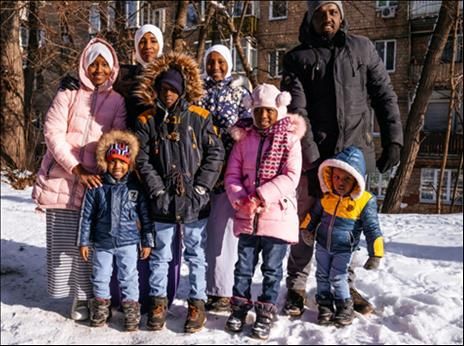
REFUGEES AND ASYLUM-SEEKERS UPDATE > Ukraine / MARCH 2021

                  Statistics
  Refugees in Ukraine (as of 1 January 2021)1

                 2,255                                                    24%                                                            17%
       Refugees and persons with                         Of refugees and persons with                                      Of refugees and persons with
       complementary protection in                    complementary protection are women                                   complementary protection are
               Ukraine                                             and girls                                                         children

                         Host regions                                                            Countries of Origins

                                                                           Afghanistan                                                                                822
                                         Kyiv
                                                                                  Syria                                                     491
                   20%                   Odesa                      Other CIS countries                             220
                           37%
           6%                            Kharkiv                    Russian Federation                           165
           7%                            Zakarpattya                           Somalia                     81
                     30%                                                           Iraq                    79
                                         Other
                                                                                   Iran                    72
                                                                                Belarus               26
                                                                                 Other                                      299

                                                   CIS: Armenia, Azerbaijan, Belarus, Kazakhstan, Kyrgyzstan, Tajikistan, Uzbekistan (excluding Russian Federation)

                Trends
  Until the start of the conflict in 2014, an average of 1,500 persons per year applied for asylum in Ukraine. Most
  entered the country irregularly through the eastern border with
  the Russian Federation. The number dropped sharply after the
                                                                             Arrivals from 2015 to 2020
  conflict started. In 2019, the number of new asylum applicants
  increased by 11 per cent but remained low at 1,036 persons.
  New applications decreased to 597 persons in 2020, due to             1443
  COVID-19-related border closures and disruptions in the work                                931   1036
  of offices of the asylum authorities.                                         656   774
                                                                                                           597
  Only around 100 asylum-seekers per year are granted one of
  the two protection statuses in Ukraine. The quality of the
  Refugee Determination Procedure (RSD) has improved, albeit            2015 2016 2017 2018 2019 2020
  slowly, over the last few years. Nevertheless, the government
  recognition rate remains low, especially for asylum-seekers from Syria.
  A majority of asylum-seekers remain in the procedure for a long time and receive rejections at the end of the
  procedure. According to the data from the UNHCR registration database, around a quarter of the asylum-seeking
  population has been present on the territory of Ukraine for five years or more.

  1
      Government Statistics – provided by the State Migration Service of Ukraine

www.unhcr.org                                                                                                                                                               2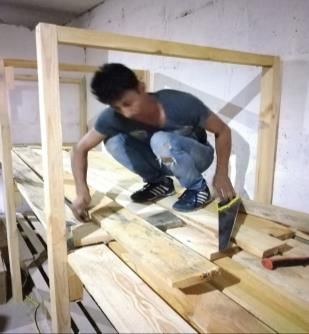
REFUGEES AND ASYLUM-SEEKERS UPDATE > Ukraine / MARCH 2021

         Impact of COVID-19 on the Refugee
        Population
  The closure of the border crossing points has made it more difficult for asylum-seekers to access the territory and
  to request asylum. For refugees and asylum-seekers living in Ukraine, the COVID-19 pandemic puts them at
  heightened risk. Measures adopted in relation to COVID-19 to prolong legal stay of foreigners did not apply to
  asylum-seekers. This puts them at risk of being undocumented or with no valid document, increasing their
  vulnerability, and creating additional challenges to access services, especially health care.

        COVID-19 related Protection Risks for Refugees and Asylum-Seekers in Ukraine

            Information                         Health care                          Livelihoods                     Higher risk of infection
  Lack     of    access    to          Lack of access to free-of-    Lost livelihood sources in the informal    Around 300 asylum-seeker can be
  information           about          charge health care for        sector due to lockdown of markets.        accommodated in state Temporary
  prevention/response      in          asylum-seekers; UNHCR         This had severe negative impact both      Accommodation Centers (TACs) at a
  languages they understand.           is currently paying for       on families and single persons.           time if they cannot afford rent.
                                       them.
           Response                                                              Response                                  Response
                                             Response
 ▪    UNHCR and its NGO                                             ▪ UNHCR provided additional financial ▪     UNHCR provided hygienic items to
      partners        supported    ▪    UNHCR        re-allocated     assistance to vulnerable asylum-          support persons residing in the state
      refugee communities to            funds to support medical      seekers to help them cope with the        Temporary Accommodation Centres
      translate      information        expenses of refugees          impact of COVID-19.                       and facilitated donations of hygienic
      about           COVID-19          and asylum-seekers.         ▪ UNHCR’s    NGO partners moved all
                                                                                                                items from the private sector
                                                                                                                representatives to the TACs directly,
      prevention and response
      in languages refugees can
                                   ▪    UNHCR reinforced its          the Ukrainian language classes
                                                                                                                to support their contingency planning.
                                        advocacy      with   the      online to ensure an uninterrupted
      understand.                                                     learning process. UNHCR covers
                                        Government      for  the
                                        inclusion of asylum-          Internet access to those asylum-
                                        seekers into the medical      seekers and refugees who attend
                                        system of Ukraine.            classes regularly.

  UNHCR’s Work
  UNHCR’s work is guided by its Multi-Year, Multi-Partner Protection and Solutions Strategy which sets forth
  its plans for engagement in Ukraine for a period of five years, during 2018-2022. The strategy reflects the results
  of broad consultations with stakeholders.

  Response to the COVID-19 Pandemic
  Between May and December 2020, in addition to its regular programs of support, UNHCR Ukraine provided
  financial assistance to support vulnerable asylum-seekers and refugees to cover urgent needs:
  ▪ April: one-time minimal cash-for-hygiene assistance to the most                             DID YOU KNOW
       vulnerable asylum-seekers, covering 209 families.                                        UNHCR and its partners recorded a two-
  ▪    May: cash assistance was provided to 532 households.                                     fold increase in calls/emails from
  ▪    June: financial support was provided to 25 persons who received                          refugees      and        asylum-seekers
       grants to start small businesses in 2018-2019, in order to keep                          complaining that they lost their job due to
       their business afloat during the quarantine and to cover                                 the quarantine measures. People said
       operational loses.                                                                       they could not pay the rent and had no
  ▪    May-July: increased provision of in-kind hygiene assistance to                           money to support their families. Some
       clean public areas of temporary accommodation centres (TACs)                             refugee communities, e.g. Somalis, have
       where currently 260 asylum-seekers and refugees reside.                                  reported their high reliance on
       Provision of personal protection equipment (PPE) for individuals                         remittances from abroad. Communities
       and families residing in the TACs for asylum-seekers, as well as                         became unable to cover even the most
       for the TAC administration staff members.                                                basic needs.

www.unhcr.org                                                                                                                                      3
REFUGEES AND ASYLUM-SEEKERS UPDATE > Ukraine / MARCH 2021
▪ September: school cash assistance was provided to 80 households to support access to information and
communication technology (ICT) for children studying on-line.
▪ December: winterization support in the amount of three months of subsistence allowance was provided to 540
families.
Before I came to Ukraine, I saw snow only on TV. When I first
saw it, I thought it was very beautiful. And at the same time,
very dangerous. When low temperatures hit, our flat gets
cold, because the windows are not properly insulated. Also,
the floor gets cold, and it is really bad for our children who
sleep on mattresses on the floor” (a refugee from Somalia).
This family with six children fled from Somalia and applied for
refugee status in Ukraine. The COVID-19 pandemic made it
difficult for them to meet ends as the family’s income relied
on the informal labour market. To support the household,
UNHCR provided them with financial assistance to cover
needs which increased during winter. Read the full story
here. Photo credit by UNHCR.
Protection of Refugees and Asylum-Seekers
Refugee Legislation
Ukraine’s current refugee law still requires improvements and UNHCR has been advocating for amendments
to the national legislation on asylum to bring it in line with international and European Union (EU) standards.
Throughout 2019, UNHCR and its NGO partners closely cooperated with the State Migration Service (SMS) in
revising the current law. In January 2020, UNHCR officially published its comments on the draft of the new law2
shared by the SMS, highlighting remaining protection concerns but also welcoming important improvements.
Subsequently, a significantly revised version of the draft law was registered in Parliament in April 2020,
requiring UNHCR to prepare a second public commentary3, expressing more concerns, in particular regarding
the risk of detention of asylum-seekers which would increase if the law were adopted in the registered version.
UNHCR has been in contact with the SMS, Parliamentarians and civil society organizations, notably in the
framework of the Civil Council on Migration Issues of the Ombudsman of Ukraine, which also has developed
comments on the draft text. Ukraine had a National Plan for Integration of Refugees and Persons in Need of
Complementary Protection into Ukrainian Society until 2020, but it was not implemented due to lack of funding.
▪ Access to Health: Currently, asylum-seekers do not have access to free-of-charge medical care. They are
expected to pay for medical services at the same rates as other foreigners. Most asylum-seekers cannot afford
these prices. Together with WHO, UNHCR advocates with the Government of Ukraine to grant asylum-seekers
access to free urgent medical care. UNHCR also advocates for refugees and asylum-seekers to be accorded the
same considerations as nationals; for example, if nationals with chronic diseases or above 65 years of age are
being offered vaccination, then refugees should also benefit.
2
UN High Commissioner for Refugees (UNHCR), UNHCR Comments on the Draft Law of Ukraine on Granting Protection to Foreigners and Stateless Persons,
January 2020, available at: https://www.refworld.org/docid/5e60ec1c4.html
3
UN High Commissioner for Refugees (UNHCR), UNHCR Observations on the New Version of the Draft Law on Granting Protection to Foreigners and Stateless
Persons (Ukraine), May 2020, available at: https://www.refworld.org/docid/5ec688ee4.html
www.unhcr.org 4REFUGEES AND ASYLUM-SEEKERS UPDATE > Ukraine / MARCH 2021
My child needs urgent medical help. If not provided, Our family has been waiting for a decision on our
my little girl will die. With my asylum-seeker asylum application for some time. Because we cannot
certificate, I cannot afford to pay for her treatment in access healthcare, our children do not have
Ukraine. Even the UN cannot pay for her treatment, vaccinations. The younger child cannot go to
because the hospital does not provide invoices and kindergarten without vaccinations. I cannot be sure that
the prices for us, asylum-seekers, are like for foreign I will be able to enrol my older children in school”
businessmen. We needed to engage lawyers to help (Asylum-seeker from Tajikistan.)
us. Our documents are reviewed for years, and
meanwhile we have no rights for anything in this
country” (Asylum-seeker from Afghanistan.)
▪ Livelihoods Support and Self-Reliance Grants: In November 2017, UNHCR
Ukraine launched a program to provide financial assistance to refugees and
asylum-seekers who want to start their own business or attend vocational training
to achieve greater self-reliance. As of 2020, 130 persons have benefitted from the
program. Many have initiated small farming businesses, food processing and
production of crafts. Others have started small-scale businesses involving
tailoring, furniture production, graphic designing, beauty parlours and barber
shops. Photo on the right: Baz, a refugee from Afghanistan, received a vocational
training grant to cover the tuition for a course on furniture design, as well as
procurement of equipment. Upon completion of the studies, Baz significantly
improved the quality of his services and increased the number of clients.
▪ Community-Based Protection (CBP) is a process whereby UNHCR supports communities to use their own
knowledge and capacity to identify their concerns and design a response themselves. In Ukraine, refugee
communities participate in trainings organized by UNHCR on a variety of topics, such as community
mobilization and empowerment, NGO management, sexual and gender-based violence (SGBV) response,
access to migration procedure, psychological first aid, etc. UNHCR has trained refugees on asylum and
migration issues, forming a network of paralegals from within the communities. Since the start of its Community
Support Initiatives program in 2018, UNHCR has assisted 26 refugee community initiatives and funded 18
projects to promote peaceful coexistence between refugees and their host communities. In 2020, UNHCR
established a CBP working group engaging NGO partners and government counterparts at the central and
regional levels.
▪ Language Training: UNHCR provides basic
language training for refugees and asylum-seekers Key obstacles to local integration in Ukraine
and advocates with the Government to initiate certified
state language courses. In 2018, the Ministry of
Education cooperated with partners on improvement
No social
of the manual used for refugees’ language studies. In benefits for
No Ukrainian
language Discrimination
2020, over 130 refugees and asylum-seekers received asylum-
seekers courses
life-skills trainings, which also included language
training. Responding to the request from the refugee Formal Naturalization
employment not possible for
community, UNHCR supports intensive language No social
not available persons with
housing complementary
for asylum-
training for highly motivated refugees and asylum- seekers protection
seekers.
▪ Access to Employment: UNHCR and its partners
provide counselling to refugees and asylum-seekers
on employment and labour market opportunities.
Through partnerships, UNHCR provides support with
access to apprenticeships or work-placement schemes; and advises on diploma recognition procedures to
enable employment that matches refugees’ and asylum-seekers’ qualifications. UNHCR also assists with
obtaining work permits and advocates with the State Employment Centre for inclusion of refugees and asylum-
seekers in their retraining programs.
▪ Legal Assistance: UNHCR provides free legal assistance through its NGO partners to asylum-seekers during
their asylum procedures to assist them accessing their rights, obtaining documentation, and gaining access to
medical services and employment. Annually, UNHCR and its partners provide legal assistance to around 2,500
refugees and asylum-seekers.
www.unhcr.org 5REFUGEES AND ASYLUM-SEEKERS UPDATE > Ukraine / MARCH 2021 Working in partnership UNHCR has been working in Ukraine since 1994 and established a country office the following year. Since then, UNHCR worked with Government entities, national and local authorities, for an improved national asylum system aligned with international standards, as well as strengthening the capacity of national NGOs to advocate for, protect and assist refugees. Free Legal Aid Centres (FLAC): As of 1 July 2015, government-run FLACs became operational and available to asylum-seekers in the asylum process. However, only a minority of the lawyers from the FLACs possesses the required specialized skills necessary to assist asylum-seekers and refugees. Supporting FLACs with the aim of progressively developing their capacity in the area of asylum is one of UNHCR Ukraine’s strategic priorities. The State Migration Services of Ukraine (SMS): The Department on Foreigners and Stateless Persons of the State Migration Service is the main counterpart of UNHCR in Ukraine. The SMS was established in 2010 as a government institution coordinated by the Minister of Interior. Through the SMS, the Minister implements the state migration policy on combating illegal migration, on citizenship, registration of refugees and other categories of migrants. The SMS is responsible for implementation of the Refugee Law. The SMS’s Headquarters in Kyiv coordinates the work of 12 regional branches. The decision to grant protection is taken at the central level. UNHCR also works in coordination with the State Border Guard Service; the judiciary (the Supreme Court and the National School of Judges); the Ombudsperson of the Ukrainian Parliament (Verkhovna Rada); and the Ministry of Social Policy. For more read UNHCR Ukraine’s Thematic Update Partnership with Ukrainian Authorities. Four NGO partners implement UNHCR programmes in Ukraine aimed at protecting and assisting refugees and asylum-seekers through the provision of legal aid, social assistance, psychosocial support, and advocacy and capacity building activities. These partners are: The Right to Protection (R2P), Rokada (in Kyiv and Kyiv oblast); R2P (in Lviv, Lutsk, Chernihiv and Kharkiv); Desyate Kvitnya (in Odesa and Mykolaiv); and The International Fund for Health Well Being and Environment Conservation (NEEKA) in the Zakarpatska oblast. CONTACTS E-mail: ukrki@unhcr.org, Tel: +38 044 288-9710 LINKS UNHCR Ukraine: www.unhcr.org/ua - Twitter: www.twitter.com/UNHCRUkraine Facebook:www.facebook.com/UNHCRKyiv - Flickr:www.flickr.com/photos/unhcr_ukraine www.unhcr.org 6
You can also read


