REGULATING MEXICO'S PRIVATE SECURITY SECTOR - APRIL 2018
←
→
Page content transcription
If your browser does not render page correctly, please read the page content below

REGULATING MEXICO’S
PRIVATE SECURITY SECTOR
APRIL 2018
ABOUT THE ROBERT STRAUSS CENTER
The Robert Strauss Center for International Security and Law integrates expertise from across
the University of Texas at Austin, as well as from the private and public sectors, in pursuit of
practical solutions to emerging international challenges.

The Robert Strauss Center’s Mexico Security Initiative (MSI) research program at the Strauss
Center launched in 2016. MSI is an effort to spur sophisticated inquiry into the causes,
dimensions, and consequences of transnational crime and violence as well as the adequacy of
past, present, and potential U.S. and Mexican policy responses.

ABOUT THE UNIT OF PLANNING, FORECASTING, AND PRIVATE
SECURITY, MEXICO’S NATIONAL SECURITY COMMISSION
The Unit of Planning, Forecasting, and Private Security is part of Mexico’s National Security
Commission and is in charge of public security strategy and planning. The Unit is also in charge
of coordinating the implementation of the security strategy along with the National Security
Commission’s other administrative units and decentralized agencies.

REPORT AUTHORS
Robert Strauss Center for International Security and Law, University of Texas at Austin
      Stephanie Leutert, Director, Mexico Security Initiative
      Allison Swatek, Fellow, Brumley Next Generation Fellows Program
      Caitlyn Yates, Research Associate, Mexico Security Initiative

Unit of Planning, Forecasting, and Private Security, National Security Commission
      Daniel Hernández Aldaco, Deputy Director of Public Safety
      Guillermo Guevara, Deputy Director of Analysis
      Dennis Lazarus, Director of Public Security Liaison
      Inés Rullán, Deputy Director of Legal Strategies

Special thanks to Luis Esteban Islas, Chief of the Unit of Planning, Forecasting, and Private
Security; Alejandro Celis, Deputy General Director, Chief of Staff, Unit of Planning, Forecasting,
and Private Security; and Teodoro Medina, Deputy General Director, General Directorate for
Private Security.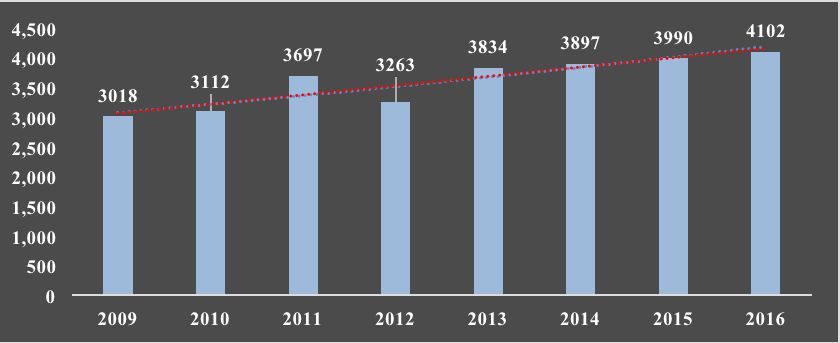
TABLE OF CONTENTS

Introduction ................................ 1

Federal Private Security Sector
Regulation ................................... 1

State-Level Private Security
Sector Regulation ........................ 3

Registered Private Security
Firms ........................................... 6

The Current State of Mexico’s
Private Security Sector ................ 8

The Challenge of Informality ..... 13

Federally Registered Private
Security Employees’
Demographics............................ 14

Private Security Sector
Recommendations ..................... 16

ROBERT STRAUSS CENTER - MEXICO SECURITY INITIATIVE

                                                                Implementing Legislation on Detectives and Private
INTRODUCTION                                                    Police (el Reglamento para los Investigadores, Detectives
                                                                y Policías Privados o Pertenecientes a Organismos de
Throughout the past decade, Mexico’s increasing violence        Servicio Público Descentralizado o Concesionado).
and insecurity levels have transformed the security force       Prior to the guiding legislation’s passage, numerous law
landscape. The country’s public security forces have            firms and detectives’ unions were conducting criminal
expanded and professionalized, while a growing private          investigations in potential violation of the Mexican
security sector has stepped in to fill the remaining gaps.      Constitution, which at that time charged the Public
Today there are more than 4,000 registered private              Ministry and judicial police with all public security
security companies and hundreds of thousands of private         investigations.4 To ensure compliance with the new 1948
security personnel operating across the country.1 These         legislation, it required that private security companies
companies’ services aim to deter crime, but they also           register with their state Attorney General’s Office
simultaneously create a series of regulatory challenges.        (Procuraduría General de Justicia) and receive official
                                                                permission to carry out their activities.
The growth in Mexico’s private security sector takes place
amid a larger regional trend. Across Latin America, private     For the next 40 years, the 1948 implementing legislation
security companies employ nearly 4 million people,              remained the country’s sole legal framework for
corner a total market value of US$30 billion, and are           regulating private security. In 1985, during a decade
expanding at a 9 percent annual rate.2 In fact, in Mexico       of economic stagnation and increasing insecurity in
and throughout Latin America there are estimated to be          Mexico, President Enrique de la Madrid repealed the
more private security employees than police officers.3 This     1948 legislation, arguing that the law allowed private
public-private divide raises questions for federal and state    security operators to perform public security functions.5
governments’ monopoly on the use of force and shines a          Yet, Mexico’s Congress at the time did not pass other
light on the types of regulations and auditing necessary        legislation to regulate the sector, nor did it ban the private
to effectively monitor companies that contribute to public      security companies that were already in operation.
safety.                                                         The result was a shift of regulatory responsibility from
                                                                the federal government to Mexico’s 32 states, which
The following report is a joint research effort by the Robert   soon thereafter established their own private security
Strauss Center for International Security and Law at the        guidelines as insecurity increased throughout the
University of Texas at Austin and the Unit of Planning,         country.
Forecasting, and Private Security (Unidad de Planeación,
Prospectiva y Seguridad Privada) within Mexico’s                In 1995, the federal government once again set out to
National Security Commission (Comisión Nacional de              explicitly regulate private security. The General Law
Seguridad, CNS) to map out Mexico’s private security            that Establishes the Coordination Bases of the National
sector and federal and state regulatory frameworks. The         Public Security System (Ley General que Establece
report uses legislative and data analysis to highlight where    las Bases de Coordinación del Sistema Nacional de
private security companies operate, the federal and state       Seguridad Pública) included language that set the
regulatory structures, and the challenge of informality.        foundation for the current regulatory framework. 6
It concludes by highlighting areas where policy changes         Article 52 established that private security companies
may improve upon existing regulations.                          operating in two or more states must register with the
                                                                Secretary of Public Security (Secretaría de Seguridad
                                                                Pública, SSP), the federal body in charge of public
FEDERAL PRIVATE SECURITY SECTOR                                 security at the time.7 Additionally, Articles 53 and 54
REGULATION                                                      specified that private security companies are required to
                                                                support public security operators, to not engage in public
Mexico first attempted to regulate private security             security functions, and to follow all other requirements
more than 70 years ago, with the 1948 passage of the            laid out for public security personnel and institutions.8

1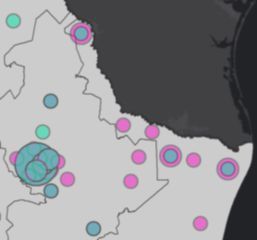
REGULATING MEXICO’S PRIVATE SECURITY SECTOR

This framework led to Mexico’s 2006 Federal Private              later in the report, private security companies must
Security Law (Ley de Seguridad Privada), which was the           always register in the state(s) where they are operating as
country’s first piece of federal legislation to specifically     well as with the federal government when operating in
regulate the private security sector. The law outlined           multiple states. For those registering federally, there are
the regulatory roles for relevant government bodies, the         at least 20 specific administrative steps that companies
guidelines for the National Registry of Private Security         must complete, such as submitting photographs of the
Companies, Personnel, and Equipment (Registro                    company offices, providing employee training manuals,
Nacional de Empresas, Personal y Equipo de Seguridad             and bringing in sample uniforms that fit within the law’s
Privada), and individual companies’ obligations. It also         parameters. Moreover, if the companies will be using
charged the General Directorate of Private Security              weapons, canines, or engaging in specific activities (such
(Dirección General de Seguridad Privada, DGSP)—                  as the transfer of valuables), they must fulfill additional
which is now located within Mexico’s National Security           requirements. The DGSP’s federal operating permits are
Commission—to be the regulatory body responsible for             valid for one year and must be renewed upon expiration
collecting information for the federal private security          for as long as the company is in operation.
company registry.9 The law carved out specific guidelines
on how private security firms should distinguish                 In August 2011, Mexico’s Congress further expanded
themselves from public security forces, banning the              the federal government’s regulatory scope through a
adoption of names, uniforms, logos, stationary, vehicles,        series of reforms to the Federal Private Security Law.
and color schemes similar to those of public security            The original 2006 law had categorized private security
institutions.10 Additionally, it also forbid private security    services into six groups: 1) protections for persons, 2)
companies from hiring individuals who were previously            protections for goods, and 3) protections for the transfer
dismissed from Mexico’s public security forces for               of valuables, 4) information security, 5) prevention and
reasons related to a lack of personal honesty or for             responsibility systems, and 6) activities linked with
divulging government information.11                              private security services. The 2011 reforms added a
                                                                 seventh category—alarms and electronic monitoring
The 2006 Federal Private Security Law also outlined the          systems—and clarified the definitions for three of the
requirements for private security companies registering          original categories. The seven categories for private
with the DGSP. As will be discussed in greater detail            security firms are outlined in Table 1.

Table 1: Mexico’s Private Security Categories
                      Category                                                      Definition12
                                                          Protection, custody, safeguard, and defense of human life and
  1                       Persons
                                                                                  bodily integrity
  2                       Goods                                     Care and protection of goods and property
                                                        Custody, surveillance, care, and protection of goods and valuables
  3          Transfer of Goods and Valuables
                                                                             during their physical transfer
                                                          Installation of alarm systems in vehicles, houses, offices, and/or
  4     Alarm and Electronic Monitoring Services
                                                                                      companies
                                                              Preservation of information’s integrity through security
  5                Information Security                    administration systems; databases; local, corporate, or global
                                                                         networks; or electronic transactions
                                                           Reports regarding previous incidents, financial soundness, or
  6       Prevention and Responsibility Systems
                                                                            people’s locations or activities
          Activities Linked with Private Security       Installation or sale of armor for vehicles or of specialized technical
  7
                         Services                                        equipment, systems, or procedures
                                                                                                              Author elaboration

                                                                                                                                 2
ROBERT STRAUSS CENTER - MEXICO SECURITY INITIATIVE

There are additional laws that reinforce the 2006          section, Mexico’s federal government does not carry
Federal Private Security Law’s guidelines. These           out verification visits for companies operating in only
include the 2009 General Law of the National Public        one state, as that is each state’s legal obligation.
Security System (Ley General del Sistema Nacional
de Seguridad Pública), which reaffirms that private
security operators must play a supporting role in
federal, state, and local public security efforts. The     STATE-LEVEL PRIVATE SECURITY
2009 law also requires that private security employees     SECTOR REGULATION
follow similar guidelines as public security forces
and submit to evaluation and training measures.13          While Mexico’s federal government provides the
Similarly, private security operators must also follow     overarching legal structure for regulating the country’s
the 1972 Federal Law of Firearms and Explosives            private security sector, each state is required to regulate
(Ley Federal de Armas de Fuego y Explosivos) if they       the companies operating within its territory. As such,
plan to carry or use firearms.14 Furthermore, this law     each private security company is required to comply
requires private security employees who would like to      with the state requirements where their operations are
use a weapon to register with the Federal Registry of      based, regardless of whether they are operating in more
Weapons and Explosives (Registro Federal de Armas          than one state (in which case they would also need
de Fuego y Control de Explosivos) and obtain a             to register with the federal government). Yet, private
license from the Secretary of Defense (Secretaría de       security legislation varies significantly across Mexico’s
la Defensa, SEDENA) that must be renewed every two         32 states, particularly for registration requirements, the
years. In order to register and receive a license, each    classification of private security services, and auditing
armed officer must “meet the legal qualifications to       practices.
perform private security functions, demonstrate the
need to carry a weapon, and have an honest or moral        As of February 2018, only 18 states had passed
character.”15                                              specific legislation aimed at regulating private
                                                           security companies. Another 13 states had passed
To ensure that firms are complying with federal            implementing legislation for private security companies
regulations, the 2006 Federal Private Security Law         (Reglamentos) to their state public security laws. The
charges the DGSP with auditing federally registered        remaining state, Veracruz, continues to address private
private security companies. Each year, the DGSP            security under its state public security law, with no
creates a plan to audit 8 to 10 percent of all federally   implementing legislation.16
registered private security firms over the following 12
months. To select which companies to audit, the DGSP       In addition to various state legislative frameworks
classifies each registered company as “ordinary” or        for private security companies, there is even greater
“extraordinary” and splits verification visits between     variation within states’ laws. For example, there is no
the two groups. “Ordinary” companies have federal          standard definition across every state legislation for
permission to operate and these verification visits        what constitutes a “private security” company. Every
prioritize companies that have not been previously         Mexican state law, with the exception of Campeche,
audited, that provide private security services            includes the three first definitions: 1) the protection of
for protecting individuals, or that are considered         persons, 2) the protection of goods, and 3) the transfer
strategically important (such as those providing           of goods and valuables. However, the additional four
services in airports or along borders), among other        categories—4) alarms and monitoring services, 5)
criteria. “Extraordinary” companies are those that are     information security, 6) prevention and responsibility
identified to be operating in two or more states but       systems, and 7) activities linked with private security
that never registered with the DGSP. These visits aim      services—are not included as consistently in state
to bring companies in line with federal regulatory         laws. (A full list of private security categories by state
requirements. As will be discussed in the following        is published in Appendix 1.)

3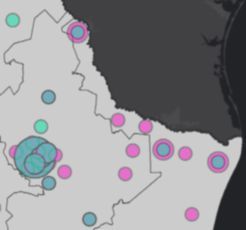
REGULATING MEXICO’S PRIVATE SECURITY SECTOR

Table 2: States with Specific Laws to Regulate Private Security
        Aguascalientes (2003)                Ciudad de México (2014)                     San Luis Potosí (2012)
      Baja California Sur (2002)             Estado de México (2010)                         Sonora (2017)
          Campeche (1998)                           Hidalgo (2013)                           Sinaloa (2016)
           Chiapas (2013)                       Michoacán (2011)                           Tamaulipas (2007)
          Chihuahua (2012)                     Nuevo León (2007)                             Tlaxcala (2004)
           Durango (2009)                           Puebla (2014)                            Yucatán (2004)
                                                                                                           Author elaboration

Table 3: States with Implementing Legislation to Public Security Laws 17
        Baja California (2010)                       Jalisco (2004)                       Quintana Roo (2005)
           Coahuila (1999)                          Morelos (2011)                           Tabasco (2008)
          Colima (2010)                             Nayarit (2003)                          Zacatecas (2013)
         Guanajuato (2010)                          Oaxaca (2001)
          Guerrero (2011)                       Querétaro (2005)
                                                                                                           Author elaboration

Table 4: Private Security Categories in State Laws
                    Private Security Categories                            # of Mexican State Laws that Include Category
  1                                Persons                                                       31
  2                                Goods                                                         31
  3                  Transfer of Goods and Valuables                                             31
  4                 Alarms and Electronic Monitoring                                             21
  5                          Information Security                                                13
  6               Prevention and Responsibility Systems.                                         20
  7                  Other Private Security Activities                                           25
                                                                                                           Author elaboration

State legislation varies broadly regarding the                    are outlined in Mexico’s state legislation for registering
requirements for registering or renewing the registration         private security companies.18 A 2012 study by Mexico’s
for a private security company. Almost all states require         Chamber of Deputies also identified 114 differences
standard documents such as proof of the company’s                 between federal and state authorization requirements
address or the company’s personnel registry. Yet some             for private security companies.19
states require more specific items, such as tax returns,
photos of the personnel, evidence that the company’s              To better understand the scope of Mexico’s state-level
employees are registered for social security benefits,            private security regulation, this report ranked each
or approval from the municipal government where                   state’s authorization requirements—as outlined in the
the company will be operating. This report identified             state legislation—with a self-designed methodology
approximately 80 different general requirements that              (published in Appendix 2). The methodology was

                                                                                                                           4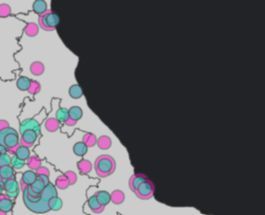
ROBERT STRAUSS CENTER - MEXICO SECURITY INITIATIVE

developed through consultations with private security             Pública, SSP). Through state-level transparency requests,
company owners in Mexico City and applies a weight                this report collected information on states’ verification
from one to ten for each requirement, with higher                 visits, including the total violations encountered
numbers reflecting greater compliance difficulties.               during the visits and the number of sanctions imposed
The results (published in Appendix 5) do not include              upon non-compliant firms. The numbers of reported
more specific authorization requirements, such as the             verification visits over the previous five years ranged
documents needed to register canines or weapons.                  from 35 (Jalisco) to 286 (Aguascalientes), and the
                                                                  percent of reported companies found to be in violation
This ranking system’s results demonstrate significant             of state laws spanned from 0 percent (Jalisco and
differences among state requirements, with the numbers            Nayarit) to 34 percent (Sonora). Sanctions for non-
of total requirements ranging from 9 steps (Querétaro)            compliant companies also ranged from 17 percent of
to 26 steps (Guerrero) and the overall regulatory                 identified companies (Aguascalientes) to 100 percent
burden spanning from a difficulty of 32 (Querétaro                (Campeche, San Luis Potosí, Sonora, and Zacatecas).
and Yucatán) to 99 (Baja California). However, while
navigating state regulatory requirements is time                  These transparency requests also solicited each state’s
consuming for companies, there does not appear to                 methodology for selecting which companies to audit
be a significant link between the difficulty of a state’s         every year. Some states reported that they only provide
regulatory requirements and the percent of private                verification visits to each newly registered firm and
security companies that are formally registered within            others reported that they only visit companies identified
that state. This suggests that regulatory requirements            through citizen complaints. However, the differences in
alone may not deter a company from registering. Other             these methodologies raise questions regarding consistent
factors, such as state regulatory enforcement or auditing         oversight. For example, Jalisco noted that it conducts
practices, may also impact a company’s decision to                verification visits to all new companies operating
register.                                                         within the state and reported 35 verification visits from
                                                                  December 2012 through October 2017. However, Jalisco
Each state is also in charge of auditing the private security     listed 285 active private security companies in its state
firms operating within its borders. Audits are generally          registry in September 2017, meaning that it only audits
conducted by a specialized department within the state’s          approximately 3 percent of registered private security
Secretary of Public Security (Secretaría de Seguridad             companies each year.

Table 5: Verification Visits by State Regulators
         State             Years Received         Total Visits          Violations             Sanctions           Violation (%)
    Aguascalientes           2012 - 2018              286                     6                     1                    2%
      Campeche               2012 - 2018              234                     2                     2                    1%
        Jalisco              2012 - 2017               35                     0                     0                    0%
      Michoacán              2014 - 2018              208                     4                    ---                   2%
       Morelos               2016 - 2017               84                    ---                   ---                    ---
        Nayarit              2012 - 2017              140                     0                     0                    0%
    Quintana Roo                2017                  267                    68                    ---                   25%
    San Luis Potosí          2012 - 2017               87                    28                    28                    32%
        Sonora               2015 - 2017              237                    81                    81                    34%
      Zacatecas              2012 - 2015               15                     1                     1                    7%
                                                        Author elaboration. “---” indicates that states did not provide the information

5
REGULATING MEXICO’S PRIVATE SECURITY SECTOR

                             Case Study 1: Public-Private Security Cooperation

        In 1941, Mexico City created the Bank and Industrial Police (Policía Bancaria e Industrial, PBI) to
        support the state’s Preventive Police in protecting banks and specific industries. Currently, the PBI
    specializes in protecting goods, people, and the transfer of goods. Any company can contract the PBI and
     the force also supports Mexico City’s police during emergencies. This hybrid framework could serve as a
                              potential model for public-private security partnerships.

      There are other examples of hybrid public-private security cooperation across Mexico. For example,
      Guanajuato’s state police and Chihuahua City’s municipal police have sought to incorporate private
       business’ security cameras into their surveillance rounds to improve their crime response times.

REGISTERED PRIVATE SECURITY                                     then publishes an aggregated list of all the registries on
FIRMS                                                           its website.20 As of October 2017, the DGSP listed 4,587
                                                                private security companies registered at the state level
There are significant limitations to any rigorous               across the country.21 Of this total, approximately 40
analysis of Mexico’s private security sector. Structural        percent were based in four states: Mexico City (814),
issues—such as a lack of standardized state registries,         Nuevo Leon (464), State of Mexico (294), and Jalisco
a significant informal market for private security              (285). These numbers, however, overstate the number
services, and high turnover rates for companies and             of individual private security companies operating in
personnel—all complicate this report’s ability to rely          the country, since various branches of a single private
too heavily on any single database. In an attempt to            security company are counted as separate companies.
mitigate these issues, this report draws from various           When removing branches, the number of individual
databases and outlines the limitations of each source.          companies listed in the dataset is closer to 3,000.

This report most frequently uses Mexico’s state                 While the aggregate state registries published by DGSP
registries for private security companies, as collected         should provide the most accurate count of private
by the DGSP. Each month, every state is required to             security firms operating in Mexico, states’ inconsistent
submit to the DGSP a list of all active private security        reporting and the lack of historical data complicates any
companies operating within its territory. The DGSP              robust analysis. From November 2016 to October 2017,

Table 6: Comparisons of Private Security Sector Size by Data Source
                               Data                                             Year                   Total firms

          State private security company registries, DGSP                  October 2017                   4,587

      National Statistical Directory of Economic Units, INEGI             November 2017                   5,193

         National Census on Government, Public Security,
                                                                          December 2016                   4,102
              and State Penitentiary Systems, INEGI

                                                                                                         Author elaboration

                                                                                                                         6
ROBERT STRAUSS CENTER - MEXICO SECURITY INITIATIVE
three quarters of states failed to submit their registries could reflect regulatory confusion among companies
to the DGSP at least once, with several states submitting regarding registration procedures or a federal auditing
their registries only once or twice throughout the entire process that does not prioritize companies listed in the
year. Overall, the average compliance rate for state federal registry that are not registered in any state. This
private security registry submissions was 64 percent. report only uses the federal registry for the section on
This lack of consistency means that there is no single private security personnel demographics, given that it
database available to access up-to-date information for is the only standardized and consistent data source for
every registered private security firm across Mexico. employee demographics.
The DGSP also publishes the National Registry of Private This report also reviews data from Mexico’s National
Security Companies, Personnel, and Equipment, which Institute of Statistics and Geography (Instituto
consists only of registered firms that are operating in two Nacional de Estadística y Geografía, INEGI), which
or more states. This report does not rely on the federal publishes the National Statistical Directory of
registry—which accounts for 1,327 companies—since, Economic Units (Directorio Estadístico Nacional de
by design, it does not include firms operating in only Unidades Económicas, DENUE).22 This directory
one state. Moreover, even though this federal registry collects its information from open source data and
is supposed to include companies operating in two or citizen collaboration to input every business operating
more states, around 40 percent of the companies on the in Mexico, regardless of formality.23 As of November
list do not appear in any state registry. This inconsistency 2017, DENUE counted 5,193 private security companies
Figure 1: Comparison of DENUE Data and State Private Security Registries
Legend
State Registries DENUE Firms
TOTALS
PS
1 - 18
1 - 18
19 - 50
19 - 50
51 - 86
51 - 86
87 - 183
87 - 183
184 - 305
184 - 305
.
0 90 180 360 Miles
Author elaboration
7REGULATING MEXICO’S PRIVATE SECURITY SECTOR
across Mexico. However, this count differs from state To further counter the lack of consistency in private
registry data, signaling the difficulties of relying too security company data, this report supplemented the
heavily on any one data source. (See Figure 1 for a database analysis with transparency requests directed
comparison of DENUE and state-level registry data). to each state’s Secretary of Public Security or the
This paper will compare the DENUE data to states’ equivalent agency. This data was also not comprehensive,
private security company registries to obtain a rough with some states withholding information, providing
estimate of informality. information only for specific time periods, or failing to
properly upload their documents.
Lastly, this report uses data from INEGI’s National
Census on Government, Public Security, and State
Penitentiary Systems (Censo Nacional de Gobierno, THE CURRENT STATE OF MEXICO’S
Seguridad Pública y Sistema Penitenciario Estatales).24 PRIVATE SECURITY SECTOR
This data was collected by INEGI through a broad-
based questionnaire directed at state government Using the available data, it is possible to provide general
officials. This data provides historical data from information regarding the current state of Mexico’s
2009 through 2016 using a consistent methodology. private security sector. Registered private security
However, given that it only contains state-level data, firms operate in every Mexican state, with the highest
this report only relied on this census for an analysis of concentration of companies (per 100,000 residents)
private security sector changes over time. located in the northern and central areas of the country
Figure 2: Registered Private Security Firms Per 100,000 Residents
Legend
Firms per 100,000 population
ps_firms_cap
0-2
3-4
5-6
7 - 10
11 - 16
.
0 90 180 360 Miles
Author elaboration
8ROBERT STRAUSS CENTER - MEXICO SECURITY INITIATIVE
and within the Yucatán peninsula. The states with the with high-levels of economic activity. According to the
highest rates of registered private security companies DGSP state-level data, 50 percent of private security
relative to the population are Colima, Quintana Roo, companies are concentrated in just ten cities, with the
and Baja California Sur, while Tamaulipas and Veracruz majority in the northern or central parts of the country.
report the lowest rates. (Figure 2 shows the rate of These cities are listed in Table 7. The cities with the
private security firms per 100,000 residents by state and highest rates of private security companies per 100,000
a full list of private security rates by state is published residents are also included in Table 8 and reflect a larger
in Appendix 3.) When using absolute numbers, the geographic distribution.
majority of private security companies are located in
Mexico City, Nuevo León, and the State of Mexico. Registered private security companies offer an extensive
list of services, including providing personal bodyguards,
Within Mexico’s states, private security companies also protecting valuables and goods, patrolling commercial
tend to be concentrated in large metropolitan centers and residential properties, installing alarms, enhancing
Case Study 2: Veracruz and Tamaulipas
The low rates of registered private security companies in Veracruz and Tamaulipas likely reflect high levels
of informality rather than the actual number of operating companies. A comparison of the number of
companies listed in Veracruz and Tamaulipas’ state private security company registries and those found in
the DENUE registry offers a glimpse into this discrepancy.
In their state registries, Veracruz and Tamaulipas report 25 and 38 active private security companies,
respectively. This is significantly lower than the 193 and 185 companies that were identified for the two
states in the DENUE database. Overall, this creates an estimated informality rate of 87 percent in Veracruz
and 79 percent in Tamaulipas. These percentages are likely even higher, given that not all the companies
listed in the state registries were identified in the DENUE database. Figure 3 geo-locates the companies from
the state registries and the DENUE database to demonstrate private sector informality in the two states.
Coahuila
Coahuila
Coahuiladede
de Zaragoza
Zaragoza
Zaragoza San
San
San
Tamaulipas
Tamaulipas
Tamaulipas Luis
Luis
Luis Veracruz
Veracruz
Veracruz Legend
Legend
PotosÌ
PotosÌ
PotosÌ Legend
State
StateRegistries
StateRegistries DENUE
Registries DENUE
DENUE Firms Firms
Firms
PS
PSPS TOTALS
TOTALS
TOTALS
1 1- 18
-118
- 18 1 1- 18
- 118- 18
Hidalgo
Hidalgo
Hidalgo 1919-1950
- 50
- 50 1919 - 50
- 50- 50
19
Nuevo LeÛ
Nuevo
Nuevo n n
LeÛ
LeÛn Tlaxcala
Tlaxcala
Tlaxcala Veracruz 5151-51
86
- 86
- 86 5151- 51
86
- 86- 86
Veracruz de
Coahuila dede
Coahuila
Coahuila de MÈxico
Mexico
MÈxico Veracruzdede
Ignacio
Ignaciode
Zaragoza
Zaragoza
Zaragoza Ignaciodede
Puebla
Puebla
Puebla
la la
Llave
laLlave
Llave 8787-87
183
- 183
- 183 8787- 87
183
- 183
- 183
Morelos
Morelos Tabasco
Tabasco
Morelos Tabasco
Zacatecas
Zacatecas Tamaulipas
Tamaulipas
Zacatecas Tamaulipas
San 184
184- 305
- 305 184
184-184
305
- 305
San
San
Luis
Luis
Oaxaca
Oaxaca
Oaxaca 184 - 305 - 305
Luis
PotosÌ
PotosÌ
PotosÌ Guerrero
Guerrero Chiapas
Chiapas
Nuevo LeÛ
Nuevo n n
LeÛ Guerrero
Nuevo LeÛn Chiapas
Author elaboration
9REGULATING MEXICO’S PRIVATE SECURITY SECTOR
Table 7: Total Private Security Companies by City Table 8: Private Security Companies by City (Per 100,000)
Rank State # Rank State # Per 100,000
1 Ciudad de México 814 1 Guadalupe, Chihuahua 836
2 Monterrey, Nuevo Leon 294 2 Cuauhtémoc, Colima 675
3 Guadalajara, Jalisco 250 3 Santa Catarina, Guanajuato 293
4 Querétaro, Querétaro 127 4 Cuautla, Jalisco 276
5 León, Guanajuato 125 5 Metepec, Hidalgo 175
6 Tijuana, Baja California 120 6 Juárez, Coahuila 125
7 Puebla, Puebla 102 7 Venustiano Carranza, Chiapas 62
8 Hermosillo, Sonora 86 8 Banamichi, Sonora 61
9 Mérida, Yucatán 86 9 Colima, Colima 31
10 Mexicali, Baja California 83 10 Monterrey, Nuevo Leon 27
Author elaboration
computer security, and offering technological support National Business Victimization Survey (Encuesta
(such as satellite surveillance and security cameras), Nacional de Victimización de Empresas, ENVE), 14
among others. However, as of October 2017, most percent of Mexican businesses reported installing
companies (76 percent) in the DGSP state registries alarms or cameras as a response to insecurity, compared
reported that they provide protections for goods. to just 6 percent that reported hiring security guards.26
By comparison, only 16 percent of registered private Yet, this higher demand for alarm installation does not
security companies reported providing protections for match DGSP state registry data, which reports seven
people, and 11 percent or fewer companies reported times more companies offering security guard services
providing any of the five remaining private security than alarm installation. There are several potential
services. explanations for this variation, including a larger market
share concentration among a few alarm installation
There are reasons to suspect that the DGSP’s state- firms, widespread informality in the alarm installation
level data for private security categories is not fully sector, or confusion regarding whether such services
representative of the overall sector. In INEGI’s 2016 fall under the definition of private security.27 However,
Table 9: Categories of Private Security Services, October 201725
Category Companies Providing Service (%)
1 Goods 76%
2 Persons 16%
3 Transfer of Goods and Valuables 11%
4 Alarms and Electronic Monitoring 10%
5 Other Private Security Activities 8%
6 Information Security 4%
7 Prevention and Responsibility Systems 4%
Author elaboration
10ROBERT STRAUSS CENTER - MEXICO SECURITY INITIATIVE
the inconsistent data raises concerns about the extent to and Coahuila representing the largest decreases.30 It
which DGSP state registries match the actual breakdown is difficult to evaluate the extent to which these state-
of private security services in the sector. level changes are related to overall market changes or
to shifts in informality levels.
Despite these discrepancies, it appears that the overall
private security sector is growing. According to INEGI’s An increase in the number of private security companies
National Census on Government, Public Security, roughly correlates with Mexico’s persistently high
and State Penitentiary Systems, from December 2009 levels of violence and insecurity and low institutional
through December 2016, Mexico’s total number of confidence in the country’s police forces. In surveys
private security companies increased by approximately from both 2011 and 2015, approximately 35 percent of
36 percent.28 The growth rate has varied by year—with Mexico’s businesses reported being a victim of a crime,
the highest rates reported from 2010 to 2011 and again while robbery of businesses increased by 8 percent
from 2012 to 2013. Since 2013, the growth rate has during this timeframe.31 At the same time, Mexico’s
stabilized to roughly 2 percent per year. businesses reported little trust in public security
institutions to address this insecurity. In 2016, some
This increase in the number of registered private 65 percent of businesses across the country reported
security companies has not been evenly spread across low or no confidence in their municipal police and
Mexico’s 32 states. Nine states saw more than 100 reported only slightly higher confidence levels for
percent increases in the number of active private state and federal police.32 However, despite anecdotal
security companies per 100,000 residents, and four evidence linking the private security sector’s expansion
of these states (Durango, Michoacán, Tabasco, and to ongoing insecurity and low confidence in public
Zacatecas) experienced increases of 500 percent or security institutions, this report could not identify
more between 2009 and 2016.29 Alternatively, ten states any significant statistical relationships.33 This may be
reported reduced numbers of private security firms due to the inconsistencies in available private security
during this same period, with Jalisco, Tamaulipas, company data.
Figure 4: Total Number of Private Security Companies (2009 - 2016)
Author elaboration
11REGULATING MEXICO’S PRIVATE SECURITY SECTOR
Figure 5: Private Security Firms per 100,000 Residents (2009 and 2016)
2009
Legend
Firms per 100,000
Population
Field3
0.16 - 1.50
1.51 - 3.25
3.26 - 5.50
5.51 - 8.50
8.51 - 13.60
2016
Legend
Firms per 100,000
Population
Field3
0.16 - 1.50
1.51 - 3.25
3.26 - 5.50
5.51 - 8.50
8.51 - 13.60
Author elaboration
12ROBERT STRAUSS CENTER - MEXICO SECURITY INITIATIVE
THE CHALLENGE OF INFORMALITY As highlighted in Case Study 2, informality does not
appear to be consistent across Mexico’s 32 states. By
Up to this point, this report has relied exclusively comparing the DENUE database to each state’s private
on data from registered private security companies. security registry, it is possible to get rough informality
However, non-registered private security companies estimates.37 Using this measure, 13 states report
are estimated to make up a significant portion of having more companies in their registries than in the
the sector, with informality estimates ranging from DENUE. For the remaining 19 states, the percentages
40 to 75 percent of all providers. There are various of registered companies range from 13 percent in
reasons for these high levels of informality, including Veracruz to 95 percent in San Luis Potosí. (The full
inadequate auditing and sanctions and confusion over list of informality estimates by state is published in
regulatory requirements. Table 10 provides informality Appendix 4.) Informal companies are unlikely to follow
estimates from private security company associations as stringent hiring and training practices as formal
and Mexico’s Universidad Iberoamericana. Up to this companies that are subject to regulatory oversight.
point, this report has relied exclusively on data from
registered private security companies. However, non- Informality also makes it challenging to estimate
registered private security companies are estimated the total number of private security employees.
to make up a significant portion of the sector, with INEGI’s National Occupation and Employment
informality estimates ranging from 40 to 75 percent Survey reports that there are 468,850 private
of all providers. There are various reasons for these security employees operating in Mexico.38 Yet, other
high levels of informality, including inadequate estimates put the range for private security personnel
auditing and sanctions and confusion over regulatory at between 500,000 to 600,000 individuals. 39 By
requirements. Table 10 provides informality estimates comparison, these estimates of private security
from private security company associations and employees surpass the estimated number of public
Mexico’s Universidad Iberoamericana. security forces within Mexico.
Table 10: Estimates of Informality Among Private Security Companies
Data Year Estimate of total companies
Mexican Association for Private Security Companies34 2014 8,000 -10,000
Universidad Iberoamericana35 2015 8,000
National Confederation of Private Security Companies36 2017 6,500
Author elaboration
Table 11: Estimates of Private Security Personnel
Data Year Personal (Total)
National Union of Private Security Companies and
2017 500,000 total personnel
Adherents40
480,000 unregistered
National Confederation of Private Security Companies41 2017
personnel
National Occupation and Employment Survey, INEGI42 2017 468,850 total personnel
Author elaboration
13REGULATING MEXICO’S PRIVATE SECURITY SECTOR
Companies are required to register each employee with are limitations to this data, as it only includes the
their state’s Secretary of Public Security. Yet given the employees from firms operating in two or more states
required paperwork and high employee turnover rates, and only those employees that these firms chose to
companies may choose to register only the company register. These limitations create concerns of bias in
owners and managers instead of their entire workforce. the data, and at the very least makes this dataset non-
This illegal maneuvering creates disadvantages for representative of the overall industry. However, this
non-registered employees, who may not have access to data provides the only available snapshot of private
the benefits that are available in formal employment, security personnel in Mexico and provides insights
such as health insurance or unemployment benefits. into the demographic profiles of employees working
Additionally, these employees are also unlikely to have in large, registered private security companies.
any access to legal recourse in the event that they are
injured on the job or are fired without a valid reason. In the DGSP registry, 84 percent of the private security
workforce identified as male and 16 percent as female.
This sector is skewed more heavily male than the
overall Mexican workforce but is in line with the
FEDERALLY REGISTERED gender breakdown in the country’s law enforcement
PRIVATE SECURITY EMPLOYEES’ and armed forces. As of 2017, INEGI data reported
DEMOGRAPHICS that Mexico’s police and traffic agents were 82 percent
male.43
The only available data on private security employees’
demographic profiles is in the DGSP’s registry for In the DGSP registry, the average age for private
federally registered private security firms. This security personnel was 41 years for women and 42
data contains information on more than 85,000 years for men. This is slightly older than Mexico’s
active private security personnel from 2017. There average worker, which in 2015 was 38 years for women
Table 12: Private Security Sector Demographics by Gender
Law Enforcement & Overall Mexican
Gender Private Security Workforce
Police in Mexico Workforce44
Male 84 percent 82 percent 62 percent
Female 16 percent 18 percent 37.8 percent
Author elaboration
Table 13: Private Security Sector Demographics by Education
Education Breakdown by Last Completed Private Security Workforce Law Enforcement & Police 45
Primary and Secondary School 63 percent 37 percent
High School or Technical School 28 percent 54 percent
Bachelors, Specialization, Masters, or Post-Grad 7.7 percent 8.8 percent
Author elaboration
14ROBERT STRAUSS CENTER - MEXICO SECURITY INITIATIVE
and 39 years for men. Private security personnel also conditions, such as refusing to hire individuals who
reported less educational attainment on average than previously worked as police officers.
law enforcement personnel, self-reporting an average
of 9.9 years of educational attainment. Men reported On average, private security personnel earn salaries
9.7 years of education and females reported 10.6 years. that are lower than their public security counterparts,
although this varies by position.47 Private security
Private security personnel often enter the sector personnel that protect goods earn an average monthly
after working in public security agencies, including salary of US$273, compared to US$807 for protecting
local, state, and federal police and the armed forces. people, US$345 for the transfer of valuables, and
Interviews with government officials and members US$363 for installing alarms. As of 2015, INEGI
of the private security industry suggested that the survey data reported that public security officials
total percent of private security employees with across Mexico earn an average monthly salary of
public security backgrounds was at least 50 percent US$577. However, both private and public security
of the sector’s workforce. Yet within the DGSP’s officials’ salaries vary by state, with public security
federal registry—which only captures those formally forces’ average monthly salaries ranging from US$365
registered employees working in large companies— in Tamaulipas to US$1,001 in Aguascalientes, and
only 25.4 percent of the active staff had previously also varying across the urban-rural divide within
held a public security position.46 This discrepancy may states. Private security sector salaries did not vary
be explained by larger firms only registering their as significantly by state or municipality. (The full
managerial and not operational staff (as discussed table of private security personnel salaries by state is
earlier in the report) or due to companies’ hiring published in Appendix 6.)
Case Study 3: Incidents from Private Security Companies
The DGSP tracks data on crimes and safety incidents that involve private security personnel from
federally registered private security companies. Between 2013 and 2017, the DGSP recorded 627 incidents
from 129 companies, which equals 10 percent of the total number of companies registered in the DGSP
database as of October 2017. Approximately 65 percent of these incidents occurred in the past two years.
Car accidents and robberies were the two most common incidents, but the DGSP data also includes
crimes such as excessive use of force, drug trafficking, and even homicide (both the murder of a private
security employee and when a private security employee committed a murder). Incidents were reported
in all 32 states, although 25 percent were reported in Mexico City and the State of Mexico.
While the DGSP incident data demonstrates both private security companies’ personnel misconduct
and the dangers associated with the profession, it only includes incidents from federally registered
firms. Apart from the DGSP database, private security personnel have been implicated in other criminal
activities, such as working as cartel lookouts, bodyguards, hitmen, and even laundering money. However,
the full extent of criminal activities and accidents in the private security sector is unknown.
15REGULATING MEXICO’S PRIVATE SECURITY SECTOR
PRIVATE SECURITY SECTOR Streamline Regulation
RECOMMENDATIONS There are broad variations across states’ private security
legislation, particularly for registering a private security
Standardize Data firm. This report identified approximately 80 different
registration requirements across state-level private
The lack of reliable data for private security companies
security legislation. This variation adds an unnecessary
and personnel remains among the most significant
burden for private security companies, especially when
challenges for regulating or conducting research on
operating across multiples states.
the private security sector in Mexico. High levels of
informality mean that large portions of the sector do
• Streamline Registration Requirements. The 2006
not show up in any official database. Additionally, states’
Federal Security Law should be adjusted to require
non-standardized data collection and inconsistent
that all states cannot request company registration
monthly registry submissions complicate the DGSP’s
requirements in excess of those outlined in the
regulatory efforts.
“Authorization, Reauthorization, and Modification”
section of the federal law.
• Company Identifiers. Within state and federal
private security company registries, a company’s
• Extend Registration Period. The DGSP should
name (razón social) is its only unique identifier.
extend private security company operating permits
However, spelling errors and the selective inclusion
from being valid for one year to three to five years.
of a company’s incorporation information within
This would reduce the regulatory burden for
the official name complicate the process of
companies and allow regulators to allocate more
combining or comparing registries. Instead, states
time and resources to auditing and other oversight
should use each company’s federal registration
activities.
number as its unique identifier. This would allow
for more streamlined data comparisons and allow
Reduce Private Security Sector Informality
DGSP regulators to more easily identify companies
that fall under their regulatory purview. To address the private security sector’s high informality
levels, federal and state regulators should increase their
• Data Submission. States are required to submit efforts to identify companies and personnel that are
their private security company registries to the operating outside of the law.
DGSP every month. While these submissions are
supposed to include specific information about • State Level Prioritization. Each state’s private
active private security companies, they do not follow security regulators have their own auditing
a standardized template. The DGSP should design methodology, and these methodologies do not
a submission template and request that states use consistently include identifying and prioritizing
it to improve data collection. This template should companies that fail to formalize their operations
also request information regarding whether each through state registration. State regulators should
private security company is headquartered in the follow federal auditing guidelines to identify
state. “extraordinary” companies that are operating in
their territory without state-level registration and
• Retain Historical Data. There is a lack of historical prioritize these companies for audits.
data in both federal and state private security
company registries. The DGSP should prioritize • Federal Level Prioritization. Forty percent of
retaining and publishing historical federal and state the companies in the National Registry of Private
private security company data. This would allow Security Companies, Personnel, and Equipment
regulators and researchers to better identify private are not listed in any state’s private security company
sector industry trends by location and over time. registry. These companies should be a priority for
16ROBERT STRAUSS CENTER - MEXICO SECURITY INITIATIVE
DGSP regulators, since they are not fulfilling the Expanding Public and Private Security Sector
federal regulatory requirement of simultaneous Integration
state and federal registration.
According to Mexico’s Federal Private Security Law,
private security companies must play a supporting
• State-Level Verification Visit Data. Each month,
role to public security forces “in situations of urgency,
states must submit their private security company
disaster or any other case, after being asked by the
registry to the DGSP. However, the DGSP should
relevant federal, state, or municipal authorities.”48
also require that states simultaneously submit their
However, private security companies are rarely asked
verification visit (auditing) data and methodology.
to collaborate with public security officials. Mexico
This would allow greater oversight into how states
should follow other countries’ examples to allow public
are auditing private security companies and if they
security forces to better integrate private security
are complying with their own methodologies.
companies’ resources, personnel, and information into
their operations.
• DGSP Cooperation with State Regulators. To
address auditing inconsistencies across states,
• Promote Public-Private Security Integration.
DGSP personnel should accompany state regulators
Guanajuato’s state police and Chihuahua city’s
during verifications visits. DGSP regulators should
municipal police have both taken steps to integrate
share best practices and support state regulators
private security companies’ cameras into their
in identifying areas for improvement. The DGSP
surveillance rounds. This type of public-private
should use states’ auditing data to decide which
security cooperation should be expanded if it is
states to prioritize for these visits.
deemed helpful in improving crime prevention and
police investigations.
Redesign Private Security Personnel Database
To address the high levels of informality among private • Training of Security Guards. States should explore
security sector personnel, the DGSP should redesign the possibility of requiring private security guards to
the current registration system. receive standardized training in police academies.
Currently, Jalisco requires all new private security
• Federal Private Security Personnel Database. The employees to attend a police academy (Academia de
DGSP should create a private security personnel Policía y Vialidad). This type of mandatory training
registry where individuals could independently could help ensure that private security officials
register themselves and receive a private security operate with greater levels of professionalism and
personnel registration number. Private security tactical skills.
companies would then only need to report their
new employees’ registration numbers to the DGSP.
This would reduce companies’ registration burden
and likely lead to increased formality levels. The
85,000 personnel that are currently listed in the
National Registry of Private Security Companies,
Personnel, and Equipment could be immediately
moved over to this new database.
• State-Level Adoption. If this new DGSP private
security personnel registration database proves
to be successful in reducing informality levels, it
should be promoted at the state level.
17REGULATING MEXICO’S PRIVATE SECURITY SECTOR
18ROBERT STRAUSS CENTER - MEXICO SECURITY INITIATIVE
Endnotes
1
“Empresas de Seguridad Privada con Permiso Estatal,” Unidad de Planeación, Prospectiva y Seguridad Privada, Comisión Nacional
de Seguridad, 2017, http://siesp.ssp.gob.mx/Reg_EmpEstatales/Con_Entidad.aspx; “Censo Nacional de Gobierno, Seguridad Pública
y Sistema Penitenciario Estatales,” Instituto Nacional de Estadística y Geografía, 2017, http://www.beta.inegi.org.mx/proyectos/
censosgobierno/estatal/cngspspe/2017/.
2
Katherine Corcoran, “Security Firms Offer Hope for Latin American Businesses,” Associated Press, November 27, 2014, https://www.
detroitnews.com/story/news/world/2014/11/27/security-firms-offer-hope-latin-america/19595803/.
3
The UNDP report “Citizen Security with a Human Face: Evidence and Proposals for Latin America” notes that there are roughly
450,000 police officers and private security employees. However, INEGI’s “Censo Nacional de Gobierno, Seguridad Pública y Sistema
Penitenciario Estatales 2017” estimated that there were 218,649 police officers across Mexico in 2016, and INEGI’s “Encuesta Nacional
de Ocupación y Empleo” reported that there were 331,000 police officers around the country in 2017. These numbers are slightly less
than the estimated 460,000 to 600,000 private security personnel operating around the country (discussed in greater detail later in the
report). “Citizen Security with a Human Face: Evidence and Proposals for Latin America,” United Nations Development Programme,
2013, http://hdr.undp.org/sites/default/files/citizen_security_with_a_human_face_-executivesummary.pdf; Encuesta Nacional de
Ocupación y Empleo, ENOE,” Instituto Nacional de Estadística y Geografía, 2017, http://www.beta.inegi.org.mx/proyectos/enchogares/
regulares/enoe/; “Censo Nacional de Gobierno, Seguridad Pública y Sistema Penitenciario Estatales,” Instituto Nacional de Estadística y
Geografía, 2017, http://www.beta.inegi.org.mx/proyectos/censosgobierno/estatal/cngspspe/2017/.
4
Constitución de México Art. 21, 1917; Reglamento para los Investigadores, Detectives y Policías Privados o Pertenecientes a
Organismos de Servicio Público Descentralizado o Concesionado, 1948.
5
Decreto por el que se abroga el Reglamento de los Investigadores, Detectives y Policías Privadas o Pertenecientes a Organismos de
Servicio Público Descentralizado o Concesionado, 1985.
6
The General Law that Establishes the Coordination Bases of the National Public Security System was repealed in 2009 and
transformed into the General Law of the National System of Public Security (Ley General del Sistema Nacional de Seguridad Pública).
Ley General Que Establece Las Bases de Coordinación del Sistema Nacional de Seguridad Pública, 1995.
7
Ibid, Art. 52.
8
Ibid, Art. 53 and Art. 54.
9
In 2012 the Secretary of Public Security’s functions were transferred to the Ministry of the Interior. The DGSP is charged with
regulating private security in Mexico and is located within Mexico’s National Security Commission, a decentralized entity within the
Ministry of the Interior.
10
Ley Federal de Seguridad Privada, Art. 32, § 14, 2006.
11
Ibid, Art. 32, § 11.
12
Ibid, Art. 15.
13
Article 32 of the Federal Private Security Law states that private security firms should: “Assist public security authorities and
institutions in situations of urgency, disaster or any other case, after being asked by the relevant federal, state, DF, or municipal
authorities.” Ley Federal de Seguridad Privada, Art. 32, § 7, 2006.
14
Ley Federal de Armas de Fuego y Explosivos, 1972.
15
Ibid, Art. 26.
19You can also read


