ROTTWEILERUpdate - HEMANGIOSARCOMA RESEARCH Diagnostic & Treatment Advances - AKC Canine Health ...
←
→
Page content transcription
If your browser does not render page correctly, please read the page content below

ROTTWEILER Update
           ®

               ®

                    A PURINA PRO PLAN PUBLICATION DEDICATED TO ROTTWEILER ENTHUSIASTS   VOLUME 19 | SPRING 2021

HEMANGIOSARCOMA
      RESEARCH
 Diagnostic & Treatment Advances
SPRING 2021

                                     ROTTWEILERS MAY BENEFIT FROM

                              HEMANGIOSARCOMA RESEARCH
                                            Virtually all Rottweiler breeders and     decades of investigations. A combina-
                                            owners have at some point been touched    tion diagnostic and treatment strategy
                                            by canine cancer. Most will agree none    offers a unique approach. The Shine
                                            is as scary as hemangiosarcoma (HSA).     On Suspicion (SOS) blood test identi-
                                            Challenging to diagnose and equally       fies features of rare cells in the blood
                                            difficult to treat, HSA often renders     linked to this insidious cancer, allowing
                                            a one-punch knockout when a tumor         for potentially earlier treatment. Dogs
                                            ruptures causing dogs to bleed to         that are thought to be at high risk for
                                            death internally.                         HSA via findings from the SOS test may
                                               Promising research at the University   then be able to receive a novel targeted
                                            of Minnesota is gaining a heavy-weight    toxin therapy called eBAT, developed
                                            advantage over this devastating cancer.   at the University of Minnesota, which
                                            The work represents more than two         may extend their lives.
                                                                                         These recent advances originated
PHOTO: GAY GLAZBROOK

                                                                                      from the Shine On study that ran from
                                                                                      2016 to 2019 and the ongoing Shine
                                                                                      On continuation study that will extend
                                                                                      to 2024. The health foundations of three
                                                                                      highly affected breeds — the Golden
                                                                                      Retriever Foundation, American Boxer
                                                                                      Charitable Foundation and Portuguese
                                                                                      Water Dog Foundation – provided
                                                                                      funding for these AKC Canine Health
                                                                                      Foundation studies.
                                                                                         Bear in mind that although the SOS
                                                                                      blood test and eBAT are gaining favor
                                                                                      in clinical trials, both are months to
                                                                                      years from being widely available in
                                                                                      veterinary clinics. “We hope to move
                                                                                      the SOS blood test to the real world
                                                                                      soon, so dogs can be tested through
                                                                                      their veterinarian,” says Jaime F. Modiano,
                                                                                      VMD, PhD, the Perlman Endowed Chair
                                                                                      in animal oncology at the University of
                                                                                      Minnesota. “eBAT will remain experimental
                                                                                      until it is approved by the Food and
                                                                                      Drug Administration as a treatment
                                                                                      modality, and then additional work
                                                                                      will be needed before it can be used
                                                                                      for preventive purposes.”
                                                                                         Tracy Arcari of Jay, Maine, can’t help
                                                                                      but wonder if things would have gone
                                                                                      differently for her male Rottweiler, “Vator”
                                                                                      (CH Vonkiltzen’s Klear The Way), had
                                                                                      the SOS blood test identified him as high
                                                                                      risk for HSA and had he been treated
                                                                                      with eBAT. Vator was Arcari’s first show
                                                                                      puppy after nearly 15 years fostering
                                                                                      rescued Rottweilers. The handsome
                                                                                      male loved to go to dog shows. He also
                                                                                      liked herding, carting, tracking, and

                       2
ROTTWEILER Update

HEMANGIOSARCOMA RESEARCHER TAKES QUESTIONS FROM ROTTWEILER ENTHUSIASTS
                       Jaime F. Modiano, VMD, PhD, the           spleen despite their having ultrasounds done just weeks
                       Perlman Endowed Chair in animal           before showing no evidence of a tumor. Remember, too,
                       oncology at the University of Min-        that HSAs can arise in other organs such as the heart,
                       nesota, has studied canine heman-         bone marrow and muscle, so abdominal ultrasounds will
                       giosarcoma (HSA) for more than 20         not capture every site where HSAs occur. In our opinion,
                       years. The Rottweiler Update invited      serial ultrasound imaging is best thought of as “owner
                       these breeders and owners who have        preference” with no guarantee of success.
                       experienced HSA firsthand in their
                       own dogs to ask this leading researcher
                       for his insights about this complex,      Q Do you imagine that one day there will be a genetic
                                                                   marker to identify dogs at risk for developing HSA?
Dr. Jaime F. Modiano   insidious cancer.                         Jeff Shaver

                                                                 A      We have no evidence that HSA has a familial distri-

Q     What is the prevalence of HSA and at what age does
      this cancer commonly affect Rottweilers? Jeff Shaver,
                                                                        bution or that a major component of risk is heritable.
                                                                 While there may be heritable factors that contribute to
Janar Rottweilers, Houston, Texas, vice president of the         HSA risk, they appear to have low penetrance and only
American Rottweiler Club and the Rottweiler Health Foundation    weakly influence the risk for disease. Virtually every cancer

A     It is impossible to estimate a precise prevalence rate
      for HSA without knowing the cause of death for an
                                                                 that we diagnose in dogs behaves sporadically, or not in
                                                                 a manner that indicates strong heritability. In other words,
entire breed population. We definitely see HSA frequently        risk is individual, and the occurrence of cancer in a close
in German Shepherd Dogs, Golden Retrievers, Portuguese           relative, such as a littermate, parent or offspring, has no
Water Dogs, Boxers, and several other breeds that are            bearing on the risk of cancer for that individual. The major
presumed to be at high risk. We also see HSA frequently          risk factor for HSA seems to be “being a dog,” as we
in other breeds, including Rottweilers, and in mixed-breed       hypothesize that the turnover of cells in canine blood
dogs. It is important to remember that any dog of any age        vessels is higher than what is seen in other animals, and
of any breed and of any sex intact or neutered is at risk        older age, thus longer life results in more cell divisions,
for HSA. The median age — when 50 percent of dogs                more chance for introducing mutations in dividing cells,
are older and 50 percent are younger — for this disease          and more risk.
across breeds is approximately 9.5 years.

                                                                 Q Isdam
                                                                       it safe to breed a male whose littermate sister and

Q      Are there studies suggesting that dietary supplements               were diagnosed with HSA? Laura Wright-Smith
       or specific types of diets can delay the progression of
HSA in dogs? Laura Wright-Smith, Spirit Mountain Rottweilers,    A is yes. If you encountered cancer diagnoses in multiple
                                                                   As explained in the answer above, the short answer

New Castle, Colorado                                             related dogs, if the cancers were largely similar, and if the

A      There is no credible data to support any supplements
       or diets for canine cancer prevention. There are data
                                                                 tumors developed in all the dogs when they were young,
                                                                 such as puppies, adolescents or young adults under the
suggesting that lean body mass may be protective for cancer.     age of 3, it would be worthy of further investigation.
A lean body mass provides significant health benefits as
dogs age, so feeding an appropriate amount of a complete
and balanced dog food is helpful even if it does not provide     Q IsHSA?
                                                                       there a relationship between osteosarcoma and
                                                                          One of our Rottweilers survived osteosarcoma
significant cancer protection. We do not recommend feed-         and subsequently developed HSA five years later. Kelly
ing special diets or supplements under the assumption that       and Dr. Anthony Skiptunas
“it might help, it won’t hurt, or it must be good because
it’s all natural.” None of these approaches conform to best      A     Not that we know of. Both tumors are sarcomas that
                                                                       originate from connective tissues, both are very serious
medical practices.                                               and possibly terminal, and both are very heterogeneous.
                                                                 That is where the similarities end. It appears that large-

Q Isinalthere evidence that annual prophylactic abdom-
          ultrasounds on older dogs are useful to screen
                                                                 breed dogs may have a higher risk for certain cancers. This
                                                                 association between size and risk is unquestionably true
for HSA? Rottweiler owners Kelly and Dr. Anthony Skiptunas,      for osteosarcoma, but it is uncertain if this is true for HSA.
Wrightsville, Pennsylvania. Kelly is a member of the board       The observation that a single dog develops multiple
of directors of the Rottweiler Health Foundation                 tumors during his lifetime is sadly part of the risk of cancer

A     Ultrasound of the abdomen is a low-risk procedure,
      though it can be costly and will only find tumors that
                                                                 and its relation to the processes of cell division and aging.
                                                                 Just because a dog develops one tumor does not mean
are grossly visible. I have diagnosed HSAs in dogs that had      that the dog is at greater or lower risk for developing a
a severe bleeding episode due to a ruptured HSA of the           second tumor.

                                                                                                                                  3
SPRING 2021

                                                                                            a puppy agreed he did not seem himself.
                      FORMATION AND SPREAD OF                                               “An ultrasound showed an enlarged
                      CANINE HEMANGIOSARCOMA                                                spleen,” she says. “The veterinarian
                                                                                            performed surgery and removed an
                                                                                            orange-sized tumor. Since there was
                                                                                            no indication of metastatic cancer in
                                                                                            his stomach, liver or kidneys, Vator’s
                                                                                            spleen was removed, and we began
                                                                                            treating him for hemangiosarcoma
                                                                      Bone
                                                                      Marrow                after a pathology report.”
                                                                                              Vator bounced back from the surgery
                                                                                            and started acting like himself one week
                                                                    Malignant               later. It was short-lived. In February,
                                                                    Transformation
                                                                    Event                   Vator’s lethargy returned along with
                                                                                            decreased appetite and vomiting.
                                                                                            “When I let him out before bedtime
                                                         Malignant Cells
                                                         Colonize Body Organs               one evening, he was slow to come back,”
                                                                                            Arcari says. “I found him collapsed. He
                                                                                            had dropped dead.”
                                                                                              The complexity of HSA is notable as
                            Interactions with Microenvironment
                                                                                            reflected in the diversity of its manifes-
                                                                                            tation in individual dogs. More than 50
                                                                                            percent of affected dogs die within four
                                                                                            to six months, almost 90 percent within
                                                                                            a year. A tumor ruptures causing acute,
                                                                                            severe blood loss, collapse, shock, and
                                                                                            sudden death in many cases.
       Heart            Liver             Lungs            Spleen              Skin           “We have defined three different
                                                                                            types of HSA by classifying them at
    • The malignant cells can remain dormant for extended periods of time
                                                                                            the molecular level, and we now have
    • Interactions between malignant cells and their microenvironment allow cancerous
      tumors to grow                                                                        evidence that one of these molecular
    • Tumors can develop in many places at the same time, or they can develop in one        types accounts for most of the cases
      organ and spread to others                                                            that show longer survival times with
                                                                                            standard of care,” Dr. Modiano explains.
                                                                                            “This cancer has high metastatic pro-
                                               doing tricks. He was game for any-           pensity and is extremely drug-resistant,
                                               thing Arcari wanted him to learn.            making it one of the most aggressive
                                                  “Vator owned the world,” she says.        cancers seen in dogs.”
                                               “He was full of himself and thought
                                               everything was about him. He was             PROFILING HSA
                                               sweet with children and had a clown-           Although much is unknown about
                                               ish personality.”                            HSA, characteristics of the cancer
                                                  When Vator was 10 years old in            define its idiosyncratic nature. “One
                                               August 2019, Arcari noticed he didn’t        of the most challenging things about
                                               seem himself. The former veterinary          HSA is that it grows silently and initially
                                               technician took Vator for bloodwork          without clinical signs,” says Dr. Modiano.
                                               that yielded nothing unusual. With           “The diagnosis is typically made when
                                               little to go on, Arcari wrestled with        the cancer is in the advanced stages
                                               trying to decipher whether Vator was         and hard to treat.”
                                               experiencing an age-related decline or         More than 50,000 companion dogs
                                               something else.                              in the U.S. are believed to develop HSA
                                                  In December 2019, Vator fell down         each year, estimates the University of
                                               stairs on his way outdoors. “As he got up,   Minnesota research team. Naturally,
                                               he looked weak and lethargic,” she says.     people who have lost dogs to this
                                                  When Arcari took Vator for a dental       cancer seek ways to prevent it from
                                               cleaning in January 2020, the veterinary     occurring in other dogs. “There is no
                                               staff who had known him since he was         known effective preventive,” he says.

4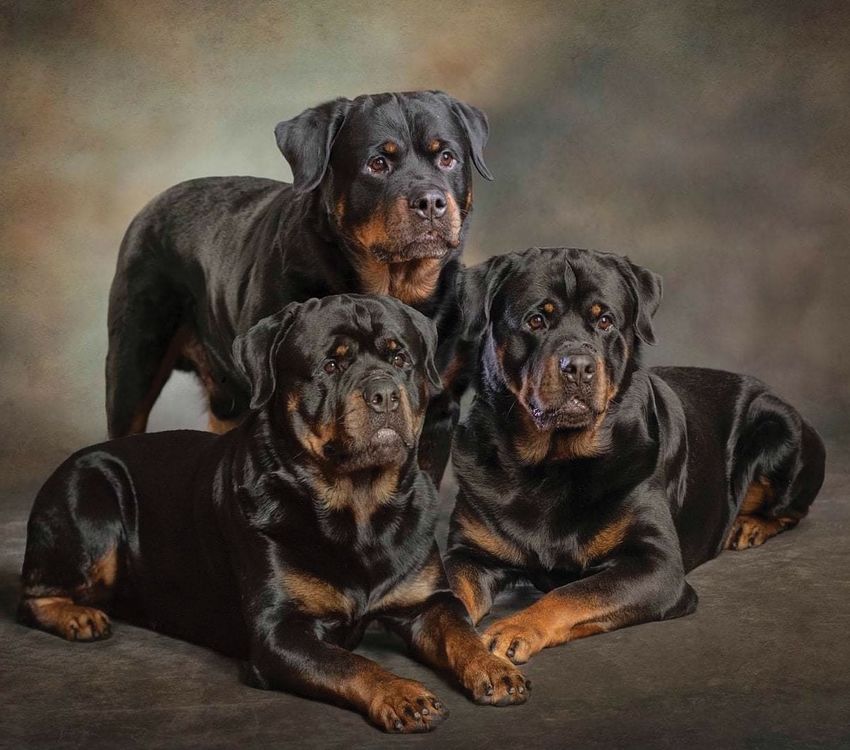
ROTTWEILER Update

                                                                                           “This cancer has high
                                                                                           metastatic propensity and
A victim of hemangiosarcoma who succumbed two months shy of turning 11 years old,
“Vator” (CH Vonkiltzen’s Klear The Way) had a clownish personality and lived life fully.
                                                                                           is extremely drug-resistant,
“Altering lifestyle behaviors, reducing       physical examination followed by             making it one of the most
environmental concerns, or feeding            imaging tests, such as an ultrasound
special diets or supplements have no          or radiography. If a mass is detected,
                                                                                           aggressive cancers seen
impact on the development of this             a biopsy is examined by a pathologist,
                                                                                           in dogs.”
cancer.”                                      and if HSA is confirmed, it is important
   HSA starts in bone marrow cells            to learn whether the tumor has spread
                                                                                           Jaime F. Modiano, VMD, PhD,
that help to form new blood vessels           to other areas. This determines the
                                                                                           the Perlman Endowed Chair
throughout the body, giving tumor             stage of cancer progression. Sensitive
                                                                                           in animal oncology, University
cells access to multiple tissues. Tumors      computed tomography (CT) and
                                                                                           of Minnesota.
primarily occur in the spleen, followed       positron emission tomography (PET-CT)
by the heart, skin and liver. The HSA         are used more commonly today to
cells incite the formation of abnormal        visualize tumor masses.
vessels where blood tends to pool and            The goal of treatment is to slow down
clot. Eventually these clots obstruct         or delay the spread of disease — and
the vessels and prevent fresh blood           importantly, to prevent a life-threaten-
and nutrients from reaching the tumor         ing bleeding episode. The standard of
environment, causing cells to die. This       care is surgery to excise a tumor mass
cell death causes ruptures in the tumor,      followed by chemotherapy. “Generally,
allowing blood to escape into the             the prognosis for tumors that involve
abdomen, heart sac, chest, or sub-            the heart, liver and other internal organs
cutaneous tissue, depending on the            is worse than for tumors of the spleen,”
tumor location.                               Dr. Modiano says. “Tumors localized
   Substantial blood loss can lead to         to the skin fare better than tumors of
anemia. Clinical signs, including pale        the spleen.”
gums, weakness and lethargy, may be
subtle and resolve as dogs reabsorb           PROMISING ADVANCES
the blood components and make new               The combination SOS blood test and
blood cells. This accounts for why            eBAT treatment developed at the
HSA is seldom detected until the later        University of Minnesota are HSA game-
stages of the disease.                        changers. More than 40 features of rare
   If a tumor mass is suspected, a defini-    cells in the blood of dogs diagnosed
tive diagnosis is based on a thorough         with HSA were used to develop the SOS

                                                                                                                                 5
SPRING 2021

                            HEMANGIOSARCOMA RESEARCH INITIATIVE

                            In 2018, the AKC Canine Health Foundation
                            launched the Hemangiosarcoma Initiative to
                            learn more about this aggressive common canine
Purina and the AKC          cancer. Altogether since 1995, the Canine Health
                            Foundation has provided $4.1 million to support
Canine Health Foundation    28 grants focused on hemangiosarcoma. The Shine On studies featured here
                            are examples of research that is part of this portfolio and that offer the potential
have worked together        of making a difference in the lives of dogs and their owners who are affected
                            by the fatal cancer.
since 1997 to support
canine health research     blood test. Artificial intelligence is used       eBAT, short for EGF-bispecific
                           to analyze a dog’s susceptibility to devel-   angiotoxin, delivers a lethal bacterial
to benefit all dogs.       oping HSA based on these parameters.          toxin payload to tumor cells by attacking
                              The ability to recognize dogs at risk      two proteins, epidermal growth factor
                           for developing hemangiosarcoma, via           receptor (EGFR) and urokinase-type
                           the SOS blood test, before tumors form        plasminogen activator receptor (uPAR),
                           is half the battle. An effective treatment    found on the cell surfaces of HSA tumors.
                           — ideally, a preventive treatment —           The discovery that the proteins are
                           that targets tumor cells and prolongs         expressed at the same time triggered
                           life, possibly even saves lives, would        the hypothesis that the tumors would
                           constitute a battle victory won.              be sensitive to a targeted therapy that
                                                                         attacks both simultaneously.
                                                                            The prevention properties of eBAT
                                                                         include the ability to:
                                                                         • Kill cells that initiate and maintain
                                                                             the tumor
                                                                         • Eliminate blood vessel cells and
                                                                             possibly other cells that form the
                                                                             niche environment the tumor needs
                                                                             to survive
                                                                         • Eliminate the immunosuppressive
                                                                             myeloid cells from the tumor envi-
                                                                             ronment, which allows the immune
                                                                             system to recognize and react
                                                                             against the tumor
                                                                            “After eBAT is injected into a vein, it
                                                                         enters tumors where it specifically kills
                                                                         malignant cancer cells that display EGFR
                                                                         and uPAR on their surface,” Dr. Modiano
                                                                         says. “Another unique property of eBAT
                                                                         is that it kills inflammatory cells and
                                                                         blood vessels in and near tumors, making
                                                                         the environment inhospitable for the
                                                                         cancer cells. Importantly, eBAT does
                                                                         not cause any severe side effects.”
                                                                            As the Shine On continuation study
                                                                         begins, it adds the lifetime surveillance
                                                                         feature for the 209 dogs enrolled. The
                                                                         SOS blood test backed by AI analysis
                                                                         will enlighten the research team as to
                                                                         which dogs show early-stage HSA and
                                                                         thus are at high risk for the cancer.
                                                                         These dogs will be treated with eBAT

6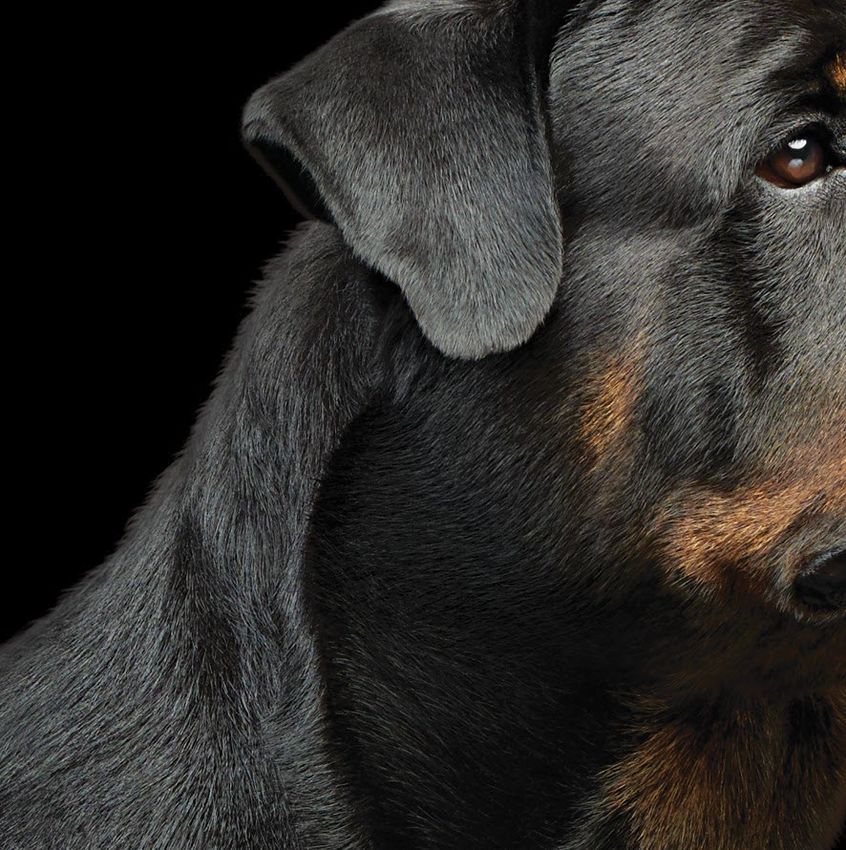
ROTTWEILER Update

                                                                                            LOOKING TO REPRINT?

                                                                                            Rottweiler Update articles may be
                                                                                            reprinted provided the article is used
                                                                                            in its entirety and in a positive manner.
                                                                                            To request permission to reprint this
Vator, center, is pictured with his sons, “Glock” (U-CH GCH VonBremen’s Can’T Buy Me        article, please contact the editor at:
Love), left, and “Preacher” (U-CH CH VonBremen’s Clearly From Serenity).
                                                                                            Barbara.Fawver@purina.nestle.com.
                                                                                            Reprints should include the following
to strategically prevent tumors before          Dr. Modiano recognizes those concerns
                                                                                            attribution: Used with permission
they form, and their performance will         but mitigates them based on the lack
                                                                                            from the Rottweiler Update, Nestlé
be compared to high-risk dogs that            of evidence supporting familial trans-
                                                                                            Purina PetCare.
do not receive eBAT.                          mission or major heritable components
   The study will generate knowledge          to the risk of HSA. “Heritable factors may
related to the accuracy of the SOS test       contribute to risk, but they appear to have
to predict whether dogs will develop          low penetrance and only weakly influ-
HSA, how long before tumors develop           ence a dog’s risk for disease,” he says.
in dogs designated as high risk, whether        While the SOS blood test and eBAT
low- and medium-risk dogs eventually          await approval for veterinary clinical
develop tumors, and whether high-risk         use, the best advice for the owner of a
dogs treated with eBAT change status          dog suspected of having cancer is to see
to low or medium risk.                        a specialist. “We recommend consulting
   “The concept is that the properties        and following the advice of a specialist,”
of the SOS blood test and eBAT set            Dr. Modiano says. “It is important to
this combination apart. They not only         conform to best medical practices and
predict if a dog is at high risk or perhaps   not give in to practices that give false
has an incipient HSA, but also provide        hope. Talk to your dog’s health care
a way to reverse that and prevent             team to understand the results of tests
the tumor from ever forming,” says            and options available.” n
Dr. Modiano.
   Arcari whose beloved Vator collapsed
and died two months shy of his 11th            Purina thanks Roberta Kelley-Martin,
birthday is proud to share her life today      president of the Rottweiler Health
with his 4-year-old sons, “Preacher”           Foundation, for helping us to identify
and “Glock.” Nagging doubts make her           topics for the Rottweiler Update.
worry if they, too, are at risk for HSA.

                                                                                                                                    7
O NLY ON E
BR AN D FUELS

                                   OF TH E TOP

S H OW D OGS

          SEE WHY CHAMPIONS
          CHOOSE PURINA® PRO PLAN®.

          SUPPORTS                              HELPS KEEP                            HELPS OPTIMIZE
       IMMUNE SYSTEM                            SKIN & COAT                         OXYGEN METABOLISM
       DURING TRAVEL                           IN EXCELLENT                           FOR INCREASED
        & COMPETITION                            CONDITION                               STAMINA

proplansport.com
EXCLUSIVELY AT P ET SP ECI A LT Y A N D ON L I N E R ETA I L E R S

*Dog News Magazine Top 100 Dogs based on AKC All-Breed Competition and RBIS through 12/31/20.
 The handler or owner of these champions may have received Pro Plan dog food as Purina ambassadors.   Purina trademarks are owned by Société des Produits Nestlé S.A.

You can also read


