Development Plan 2015-2020 - Regional Studies Association - Regional Studies ...
←
→
Page content transcription
If your browser does not render page correctly, please read the page content below
Regional Studies
Association
Development
Plan
2015-2020

Regional Studies Association
Development
Plan
2015-2020
Index
Preface......................................................................................................................................... Page 2

Introduction.................................................................................................................................. Page 3

Overview...................................................................................................................................... Page 3

Values........................................................................................................................................... Page 3

Excellence.................................................................................................................................... Page 3

Independence.............................................................................................................................. Page 4

Impact ......................................................................................................................................... Page 4

Leadership and Collaboration...................................................................................................... Page 4

Our Strategy ................................................................................................................................ Page 4

Areas of Challenge ...................................................................................................................... Page 5

Areas of Engagement ................................................................................................................. Page 5

The Strategic Priorities ................................................................................................................ Page 6

Research ...................................................................................................................................... Page 6

The RSA Inquiry ........................................................................................................................... Page 7

RSA 50th Anniversary ................................................................................................................... Page 9

Publications ................................................................................................................................. Page 9

Conferences and Events ............................................................................................................ Page 12

Membership and Community Building ..................................................................................... Page 14

RSA Travel Grants ...................................................................................................................... Page 14

RSA Event Support Scheme ...................................................................................................... Page 15

Territorial Networks ................................................................................................................... Page 18

Policy and Knowledge Exchange .............................................................................................. Page 20

Technology and Communications ............................................................................................. Page 22

RSA Management ..................................................................................................................... Page 23

Finances ..................................................................................................................................... Page 24

Your Feedback ........................................................................................................................... Page 24
2 | Regional Studies Association Development Plan 2015-2020

                Preface

                  This Development Plan is the most recent version of a sequence of similar
                  documents that have been used by the Regional Studies Association for more
                  than two decades to plan its work. It is the culmination of a large number of
                  meetings and consultations within the Association’s Board and Committees
                  with its staff team, its members and with important external stakeholders. We
                  have taken care to be even handed in our consultations across disciplines and
                  territories and generally to reflect the diversity of our membership. We would
                  like to acknowledge our gratitude to all those who reflected upon, commented
                  and in other ways supported the writing of this plan.

                The fields of regional studies and regional science are responding to global challenges and as an
                Association we continue to set high standards for ourselves. The critical needs to address issues of
                growth and rebalancing weigh heavily, as do issues of sustainable development, the management
                of geopolitical change and increasing urbanisation. These challenges arise alongside important
                questions of equity and equality. In this plan we seek to push ourselves and our community to face
                these global questions and to add to our knowledge and understanding of how the world works and
                responds to shocks at different scales and in different places.

                There is a continued need for the Association to support its members and the wider community and
                we seek to fulfil that mission through our research programme, our conferences and events, our
                publishing portfolio - which continues to expand and importantly through our knowledge exchange
                activities.

                This document must acknowledge the passing, in Summer 2014, of the Association’s pioneering and
                charismatic President – Professor Sir Peter Hall. Peter was a founder member of the Association in
                1964 and has remained a member throughout the intervening period. He was an active member and
                a probing, ambitious President. He pushed us to push ourselves while being supportive, engaged,
                willing to help and quietly, we think, was pleased to see his fledgling creation survive its growing pains
                through to relative maturity.

                In 2015, the Association celebrates its 50th anniversary. The world has changed much in the past half
                century but many of the challenges that so taxed Sir Peter Hall and his contemporaries remain today.
                Our work is not done. We thank you for reading this document and hope that you, the reader, will see
                the value of this prospectus in mapping the future priorities for the Association, its Board and staff
                team. We also hope that you will give us feedback on what you read. We would welcome your views
                as an Association can only be as good as its community is active and engaged.

                Andrew Beer		                                          Sally Hardy
                Chair			                                               Chief Executive
                Regional Studies Association                           Regional Studies Association
Regional Studies Association Development Plan 2015-2020 | 3

Introduction

  Regions are a key spatial scale for examining the nature and impacts of
  political, economic, social and environmental change.

  The Regional Studies Association works with its international membership to
  facilitate the highest standards of theoretical development, empirical analysis
  and policy debate of issues at this sub-national scale. It incorporates both urban
  and rural economies, as well as varied conceptions of space, such as city-regions
  and interstitial spaces. We are, for example, interested in issues of economic
  development and growth, environmental planning, conceptions of territory and
  its governance and the thorny problems of equity and injustice.

  This document serves two purposes – it defines those issues that the RSA Board
  considers to be the Association’s primary achievements in the last planning
  period (2008 – 2013) and it sets out the priorities for development in the
  coming five years. Experience shows that some flexibility may be needed in the
  interpretation and implementation of policy as circumstances change, but the
  Board is committed to the continuation of development planning. The views
  of major stakeholders and the membership of the Association (both of which
  contributed to this document in breadth and depth) have been incorporated
  into this final project.

Overview                                                 • Deliver high quality regional research
                                                         • Influence policy debate and practice
The Regional Studies Association was established
                                                         • Innovate in publishing
in 1964 to:
                                                         • Acknowledge excellence in our field
   1.	Promote education in the field of regional
       studies by the exchange of ideas and
       information                                    Values
   2.
      Stimulate and aid studies and research
      into regional planning, development and         In achieving its aims, the Association will aim to
      policy and to disseminate the results of        adhere to its values and a community which is
      such research                                   also leading and impactful.

The Association’s vision is to be the authoritative
voice of, and global network for, academics,
                                                      Excellence
students, practitioners and policy makers in the      As an Association, we seek excellence in all our
study and understanding of cities, regions and        activities and in this plan will seek to build upon
regionalism.                                          and strengthen our already robust reputation.

The aims of the Association are to:                   We operate in a complex and multifaceted
   • L ead the research, policy and practice         environment encompassing researchers in many
      communities working on regional issues          disciplines but particularly geography, economics,
   • D
      evelop our members and support our             political science and planning and across several
     community                                        sectors – higher education, policy and practice.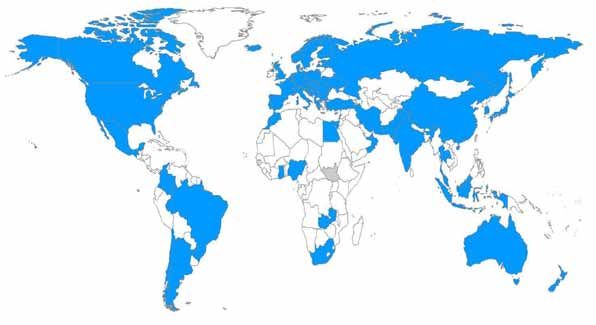
4 | Regional Studies Association Development Plan 2015-2020

                We are interested not only in empirical work but       but has no political affiliations or loyalties. The
                also in the development of theory and practice         independence of the Association is strongly
                and the exchange of this knowledge with others         valued by its members enabling the Association
                working at the regional level.                         to speak across the career stages of members,
                                                                       across disciplines, sectors and across institutions.
                The Association publishes a range of
                journals, a book series and a members’
                magazine. These outlets hold excellence as             Impact
                their key criteria. This is sought through the
                                                                       Part of the Association’s charitable responsibility
                professional management of the publications,
                                                                       is to seek public benefit from its work. This
                the choice of publishing partner (Taylor and
                                                                       is taken seriously and knowledge exchange
                Francis since 1992), adherence to best practice
                                                                       activity is a valued benefit of membership. Not
                in publishing practices such as appropriate
                                                                       all activities can have immediate impact but the
                peer review and use of COPE guidelines on
                                                                       Association seeks to disseminate knowledge, to
                publishing ethics. The Association seeks the
                                                                       promulgate debate and to engage with relevant
                best qualified editorial teams and provides
                                                                       partners globally using all appropriate methods.
                resources to enable them to fulfil their role. It
                offers a range of publishing outlets recognising
                the need for choice and variability for example,       Leadership
                Regional Studies, Regional Science offers
                an open access and online only route to publication    and Collaboration
                accepting unconventional articles, regional            The Regional Studies Association leads in its
                graphics and offering early career mentoring.          field. It works to support regional research and
                The Association adheres to excellence as the key       to promote education and understanding of
                criteria for all grants but bursaries also recognise   regional issues. In achieving this, the Association
                career stage and the challenges individuals may        collaborates with many interested bodies and
                face in securing funding.                              individuals. Work at the international level is
                                                                       particularly important with partners such as DG
                Excellence is a cornerstone of the services            Regio (European Commission), Committee of
                provided by the office team to the membership          the Regions, OECD, World Bank, UN Habitat
                and wider community. The Association is run            and UN but we also work with national bodies
                by its members for its members, this mission is        such as the Smith Institute and the UK Academy
                supported by an enthusiastic and expert team of        of Social Science. There is a strong interest in and
                individuals with varied backgrounds and interests.     commitment to comparative work recognising
                                                                       that mixed models and learning from other
                Independence                                           situations can intelligently inform decision
                                                                       making. The Association seeks to identify areas
                The Association is independent. It is established      of research need and to encourage and facilitate
                as a charitable company limited by guarantee in        engagement in those areas through building
                England and Wales. It is run by a Board of up          communities of knowledge and practice and in
                to 12 trustees/directors who are elected by the        some cases through direct funding support.
                membership and they are assisted by a variable
                number of appointed trustee/directors. The
                Board is supported by a number of Committees
                                                                       Our Strategy
                and by a staff team led by the CEO based at            The Association is driven by its ambition to
                our main office in Seaford, UK. The Association        grow and support its academic field and also to
                also currently has a presence in Beijing through       thrive in its role as a learned society. A healthy
                a funded project office.                               and active Association will better advance the
                                                                       interests of its membership and the field in
                The Association has a number of memberships            general.
                with umbrella bodies such as the Academy
                of Social Sciences and, the Association of             As a result the Association is seeking to address
                Learned and Professional Society Publishers            activity in five areas – leading and serving its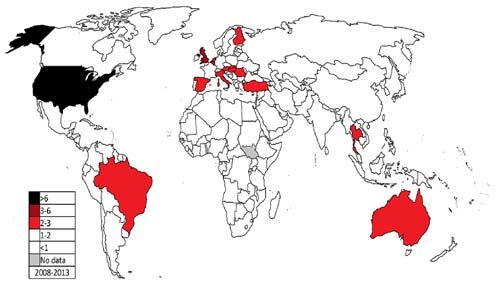
Regional Studies Association Development Plan 2015-2020 | 5

increasingly diverse and global community;             3. Territory, Politics and Governance
growing and supporting RSA membership;                    –
                                                            territorial politics, governance, institutions,
responding to new publishing paradigms;                     regionalism and regionalisation, city region
                                                            building and metropolitan politics, devolution
building (and financing) its knowledge exchange             and localism
activities, and finally, keeping pace with changes
                                                       4. Regional and Urban Economies
and transitions in the international higher
                                                          –
                                                            innovation, evolution, economic resilience,
education community. As a consequence of this               clusters, creativity, competitiveness, labour
latter change, the role of learned societies is             markets, work and welfare, migration, firms,
changing and new values and modes of practice               sectors, global production networks and value
need to be established across the sector.                   chains
                                                       5. Spatial Planning
The global economy is slowly recovering from the          –	cities and city regions, strategic spatial planning,
2008 crisis and this process has triggered new               housing, transport, infrastructure and the built
questions and lines of inquiry by researchers. The           environment, place making approaches
Association is committed to providing leadership       6. Regional and Urban Policy
on a number of dimensions of these responses.             –
                                                            cohesion, leadership, governance, public
                                                            management, policy formulation and evaluation,
                                                            place based approaches, smart cities and
Areas of Challenge                                          regions, urbanization and regional development
                                                       7. Sub-national identities and well being
The notion of “region” is evolving and the
                                                          –
                                                            citizenship, culture, identity, lived differences,
Association must work to embrace new                        social capital, ageing, demography, community
conceptions of territory and spatiality and                 and wellbeing
embed them into how it thinks and works.
                                                       In supporting research and enquiry into these
The Board has identified seven themes which            seven areas the Association seeks to engage
it believes are critical for the future of regions     with researchers and practitioners in differing
and these themes inform its decisions as the           parts of the world to ensure that lessons can be
Association seeks to engage with and reshape           learnt from and between territories.
policy and public debate. These themes, for
example, will inform future conference themes
and the Regional Inquiry. The Association will,        Areas of Engagement
however, remain responsive to the emerging
ideas put forward by researchers in its grant          Sectors
schemes and research networks.                         The Association seeks a global footprint. It will
                                                       concentrate on growth in China, North and Latin
The Association is heterodox in its approach           America and Eastern Europe in the next five year
to research and this is reflected in the range         planning period – it values what can be learnt
of approaches taken in published articles. We          from comparative work. It recognises that work
welcome work from different traditions including       conventionally labelled either regional science
qualitative and quantitative contributions.            or regional studies are at root just variations
The introduction of our new journal, Area              on a common interest in regional knowledge
Development and Policy in 2016 will help               inquiry. Regional Studies, Regional Science
articles following non-Western traditions to find      – its new open access journal reflects this new
a home within the Association.                         commitment to spanning disciplinary boundaries
                                                       and we will continue to engage closely with
Our seven key themes are:
                                                       workers in a number of fields.
1. Sustainable Cities and Regions
   –
     urban and regional sustainability, risk           The Association will also seek to build
     management, low carbon and climate mitigation
                                                       relationships into related fields including urban
     strategies, food, water, energy and environment
     and environmental resilience
                                                       studies, political science and planning. As
                                                       part of this commitment we will reach out to
2. Spatial Theory and Methods
                                                       societies working in these areas. The Association
   –
     urban and regional theories, methodology,
     value change (including big and open data),       aspires to be multi and inter-disciplinary in its
     visualization, spatial economic analysis          approach.
6 | Regional Studies Association Development Plan 2015-2020

                The Association continues to strive to have an            • A
                                                                             funded research programme responding
                impact on policy in order to generate for public            to the needs of all categories of
                benefit. In particular it seeks to work at a number         membership with appropriate funding,
                of levels as a partner with organisations such              clear and transparent criteria for support
                as Directorate-General for Regional and Urban               and a strong commitment to dissemination
                Policy (DG Regio) as well as other relevant DGs             of the findings
                such as Research and Innovation and Education             • The reward of excellence in our fields
                and Culture (European Commission); Committee
                of the Regions; OECD; World Bank; United                  • T
                                                                             he development of our territorial
                Nations; and UN-Habitat. The Association                    networks to better serve members
                recognises that managing a diverse community              • F
                                                                             urther support for students and early
                of interests is complex and will require innovation         career researchers
                and compromise.

                Within our Membership
                The Association will continue to work to support
                                                                       The Strategic Priorities
                and encourage the work of its members and to           To address its strategic challenges the Association
                recognise their varying career stages, different       will make choices and planned investments to
                geographical locations and the advantages and          build on existing strengths and to work in new
                challenges that this can bring. It will seek as far    areas through its core activities.
                as possible to be inclusive in its organisation of
                activities taking into account varying abilities to
                pay.
                                                                       Research
                The Association will offer a trans-disciplinary
                platform of engagement for academics                   The Association’s choice of seven priority
                regardless of seniority, policy makers and             research areas recognise the effects of the 2008
                practitioners. The Association has a specific goal     economic crisis, voices on climate change, the
                of encouraging early career researchers and post       geo-political shifts that have generated global
                graduate students. It undertakes to consult and        uncertainty, as well as other concerns including
                inform its members using all reasonable means          demography, migration, health and well
                in order to build a community of knowledge and         being, unequal development, education and
                practice and to better enable the Association to       skills training and the nurturing of sustainable
                act as a voice for the sector.                         development.

                                                                       The Association will work in two ways to support
                What will we deliver?                                  its research ambitions. We will assist our members
                   • L eadership on the key questions for the         to network, to access the best research, to
                      field, including projects addressing these       publish and to disseminate their research. We
                      challenges                                       will also directly commission research through a
                   • A
                      better understanding of what regional           number of schemes.
                     studies and science means in different
                     territories to facilitate better comparative      The Association has recognised the following
                     and cooperative working and efforts to            challenges in the area of research
                     link across disciplines to involve all relevant      • O
                                                                             ne effect of the financial crisis from 2008
                     thinkers on regional issues                            was to reduce the volume of research
                   • P
                      olicy engagement that generates public               funding available, especially for early
                     benefit from the work of our members and               career researchers
                     community                                            • T
                                                                             ightened funding in higher education
                   • E xciting and innovative networking                   combined with a tendency to concentrate
                      opportunities including global conferences            on large grants by grant awarding bodies
                     and events                                             meant that micro and small grants to kick
                   • A high quality and flexible publishing                start larger projects are hard to find, even
                     programme                                              for established researchers
Regional Studies Association Development Plan 2015-2020 | 7

  • T
     here remains the need for funding that
    is geographically untethered to support         Research Network Survey Results
    international networking on narrow themes          • 94% of respondents said their involvement with an RSA
    to build communities of interest, and                 research network led to new networks
    develop thinking and understanding
                                                       • 69% said it led to a publication for them
  • T
     he tightening of funding available               • 50% said it led to working directly with colleagues met
    for researchers at all levels to attend               during the event
    conferences and events
                                                       • 32% said it led to the publication of a book
  • T
     he changing publishing paradigm because
    of global policy interest in open access

Achievements                                        RSA Research Network on Leadership and Urban
  • T
     he Association works with leading             and Regional Development
    thinkers and researchers across its             The purpose of this research network was to build on existing
    disciplinary breadth. It engages with them      contacts between earlier RSA Research Networks (Place
    in a number of ways – through invitations       leadership, Sotarauta et al; Citizen driven and collective
    to speak, positions on committees,              leadership, Liddle et al; Leadership in Euro peripheries, Sirak
    through project work such as event              et al and Networked leadership and innovation, Sotarauta
    organisation, editorships and editorial         et al) to create greater understanding, develop further
    boards                                          joint publications, and build future research potential and
                                                    through this to develop common theoretical, conceptual and
  • F
     unding was given to 33 research networks
                                                    methodological frameworks.
    from 2008 to 2014 when 12 were active.
    This represented a financial commitment of      This Research Network organised events with international
    £99,000. Most of the 104 network leaders        audiences in the UK, Finland, the Netherlands as well as the
    were based in Europe with some presence         Czech Republic, Belgium and Australia and will run further
    in the USA and Australia. Over 70 meetings      events in the future. For this rolling RSA funding has been
    were held in more than 25 countries, with       critical to the health of this vibrant network.
    well over 1,500 participants
  • T
     he RSA is committed to increasing           Priorities for 2015 - 2020
    research engagement - of the money
                                                     • T
                                                        he Association will launch two new
    committed to research networks c.50% was
                                                       research grant schemes – one for mid-
    spent on bursaries to assist attendance at
                                                       career researchers (RSA Membership
    their conferences and events
                                                       Research Grant - £5,000) and one for
  • S
     ince 2011 the RSA has invested £260,000          established researchers (RSA Fellowship
    in 26 Early Career Research Grants of              Research Grant - £7,500). These small grant
    up to £10,000 each. Grant holders have             schemes are designed to offer support for
    been internationally located – Germany,            a discrete piece of research. Funding will
    Ireland, Sweden, USA and China. This               be provided in a flexible way, permitting
    research is spread throughout the social           teaching buy out, research assistance,
    sciences including Geography, Economics,           data purchase, travel and subsistence.
    Management and Business Studies,                   It can also include an Article Processing
    Planning, Political Science and Sociology          Charge when any resultant publications
  • T
     he Association is committed to stronger          go to Regional Studies, Regional
    dissemination of research – our own                Science
    and other research. To this end a fully          • T
                                                        he Early Career Grant scheme will
    searchable content management system is            continue to be promoted and we
    now in place on the website and the landing        will continue to attract high quality
    pages alone for RSA research networks and          applicants from emerging areas particularly
    research grants have attracted over 7,000          those where the RSA is establishing a
    hits in the last 12 months to January 2015         presence
8 | Regional Studies Association Development Plan 2015-2020

                     • A
                        s the first Early Career grants are fulfilled,      • T
                                                                                he Research Committee will be
                       we will disseminate the research results                innovative while continuing to ensure
                       and assist the researchers in promoting                 the effective expenditure of the research
                       the potential impacts of their work                     budget. For example it will fund a second
                     • T
                        he Research Network format has been                   collaborative PhD addressing questions
                       reviewed and revised. It has allocated                  around knowledge, publishing and
                       a greater sum of money (up to £10,000                   regional studies and regional science
                       per Research Network) to funding rounds
                       in 2015 and 2016 and seeks a balance
                       between policy and theoretical foci. The           The RSA Inquiry
                       networks will carefully be selected, seeking
                                                                          The Association will lead and shape the research,
                       those with international leadership.
                                                                          policy and practice environment in the future
                        e will set a resource envelope for the
                     • W                                                  while also responding to changing economic,
                       planning period and agree how funding is           social and environmental conditions. This
                       divided between schemes. Consideration             multi-disciplinary activity will form part of the
                       will be given to ring-fenced funding for           celebration of our 50th anniversary by making
                       target geographical areas to encourage             a clear contribution to the fields of regional
                       the    development      of  comparative            studies and regional science, as well as social
                       research                                           science globally. It is intended that this Inquiry
                                                                          be independent and addresses key questions of
  RSA Early Career Grant: ‘It’s hard everywhere,                          growth and rebalancing. It will be funded from
  but this place is different’: regional differences in                   the reserves of the Association.
  non-standard work in the UK – Dr Kendra Strauss,                        The topic of the Inquiry will be announced at
  Simon Fraser University, Canada                                         the Association’s Annual Conference “Global
                                                                          Growth Agendas: Regions, Institutions and
  This project was supported as a pilot using a mixed-                    Sustainability” in Piacenza, Italy in May 2015.
  methods approach to investigate non-standard work and
  labour intermediaries, from the perspective of workers in               Led by a small steering group, the Inquiry
  different regions of the UK. It used existing data sources, in          will draw on key international figures for
  particular the Labour Force Survey (LFS), in conjunction with           assistance in addressing the core questions.
  a commissioned nationally representative survey of workers in           A key focus will be tapping into the
  UK regions, as well interviews with policy makers, third sector         knowledge and understanding across all those
  groups and unions. The project has shed light on patterns of            active in regional research, policy and practice
  labour market change since the 2008. In particular, it sought           across the developed and developing world. It
  to explore the robustness of Britain’s employment relative to           will use a range of methods including member
  the levels of joblessness experienced by other EU member                and non-member surveys and questionnaires,
  states and how that can be understood in the context of                 focus groups at international events, online
  uneven geographies of crisis and recovery.                              discussion forums and commissioning of
                                                                          research across the RSA grant schemes and via
  “The Regional Studies Association Early Career grant scheme             Research Networks.
  provides opportunities both to gain experience of being a
                                                                          Particular effort will be given to the
  principal investigator, and to explore emerging themes — in
                                                                          effective dissemination of the findings and
  my case regional differences in non-standard work in the UK —
                                                                          recommendations of the Inquiry throughout its
  as part of the establishment of a longer term research agenda.
                                                                          operation to inform and influence policy decision
  Both are invaluable for developing a career in research.” Dr
                                                                          making.
  Kendra Strauss

  The project allowed the principal investigator to publish
  articles and e-articles and she moved from University of                RSA 50th Anniversary
  Cambridge, UK to the Simon Fraser University, Canada to
                                                                          The Association celebrates its fiftieth anniversary
  further her career.
                                                                          in 2015. The celebration will take many forms
Regional Studies Association Development Plan 2015-2020 | 9

including, as noted above the establishment of        Achievements 2008-2013
an inquiry contributing to the development and
understanding of regional studies and regional        Portfolio of RSA Publications
science. The Association will publish a history       In the period 2008-2013, the Association added
of the impact of the Association authored by Dr       three new publications to its portfolio:
James Hopkins whose PhD was co-funded by the             1
                                                           Regional Studies, Regional Science,
RSA and by the Economic and Social Research                is an online only, gold Open Access
Council, the UK Government’s Social Science                journal launched in late 2013. The journal
funding council. We will also publish a pamphlet           publishes on regional issues in economics,
for the members and wider community on the                 geography, planning, political science
history of the RSA. In addition, the Association’s         and related fields. With streamlined peer-
website will include a timeline of our development         review, the journal accommodates research
noting important dates and events.                         articles, shorter policy briefings and a new
                                                           ‘regional graphics’ section, reflecting the
Two new grant schemes have been announced                  growing importance of data visualisation.
– for mid-career members (MeRSA) and for                   The journal adheres to expected standards
established career members (FeRSA). The                    of excellence and research rigour. It
Association will celebrate at each of its major            responds to the paradigm shift towards
events during the year but in particular at its            Open Access publishing
President’s Event in
                                                         2	The journal Territory, Politics, Governance
November in London
                                                            began in 2013 and has moved to a
2015.
                                                            quarterly format from 2015. It is a new
                                                            interdisciplinary journal from the Regional
Finally, the Research
                                                            Studies Association. It is committed to
Network Scheme will
                                                            the development of theory and research
be re-launched with
                                                            in territorial politics and the governance
additional funding.
                                                            of space. This journal creates a platform
                                                            on which to explore the interface between
Publications                                                territory, politics, economy, identity and
                                                            the organisation of political space. It
The Association seeks to achieve excellence in all          confronts topical and emergent issues of
its publications and to support its journals, books         world economic and political concern
series and magazine as they evolve, responding
to the changing demands of the regional               Other achievements include:
studies and regional science communities. The
                                                            change in editorial model for Regional
                                                         • A
Association recognises the challenge that shifts
                                                           Studies from a geographically unified
in the publishing paradigm towards Open Access
                                                           team to a more internationally dispersed
publishing present generates both challenges
                                                           set of colleagues working on individual
and opportunities. In response we will seek
                                                           contracts, thus avoiding whole team
to both educate and inform the academic
                                                           changeover in the future. We have retained
community about the choices, in addition we
                                                           a collective decision making model. An
will realign our own publishing portfolio (e.g. the
                                                           increase in publishing frequency from 9
Association’s journals are now all hybrid with the
                                                           issues per annual volume in 2007 to 12 in
exception of Regional Studies, Regional Science
                                                           2014
which is fully gold) and will address the potential
tightening of future publishing income streams              he inclusion of Spatial Economic
                                                         • T
by building resilience into budgetary planning.            Analysis within the Web of Science to
The Association commissions special academic               gain an impact factor and the shift from 2
pieces to highlight areas of importance in the             issues per year to quarterly publication
field, especially where identified as research           • T
                                                            he introduction of early career editors
priorities in this document. Commissioned                  to its journals. These mentored roles have
pieces will be subject to the normal standards of          proved hugely popular both within the
excellence and subject peer review.                        community and within the editorial teams
10 | Regional Studies Association Development Plan 2015-2020
• R
egional Insights was a magazine aimed Priorities for 2015 - 2020
at early career researchers launched in • A
new journal will be launched in 2016
2010 and which in 2014 became a section called Area Development and Policy. This
within the new journal Regional Studies, will focus on area development and policy
Regional Science. Regional Insights at different scales, in particular in Brazil,
in both incarnations was designed Russia, India and China. This new journal
to make research findings from early will recognise (as Li Keqiang, Chinese
career researchers more accessible to Premier, did in his speech at Davos, 2015)
a wider audience. Complementing the that “cultural diversity is a treasure”. It
Association’s existing publications, it will be multidisciplinary with economic
continues to offer a mentoring service geography and applied economics
to early career authors helping them to prominent. It will publish authors from
shape their research into a paper which different writing traditions including non-
will engage and inform readers drawn Western interpretations of development
from across academia, policy-makers and will be sensitive to geographical and
and practitioners in the field of regional contextual differences
studies and regional science
• R
egional Studies will continue to
• A
marked strengthening of the brand and publish core, high quality articles and
reputation of the Regions and Cities Book special issues, commissioned articles and
Series which now publishes 14 books a editorials. Commissioned editorials may
year as compared with 4 books in 2007. link to Association events including the
The series has published 106 books since RSA Inquiry
2008
erritory, Politics, Governance at the
• T
• W
hen comparing the number of books time of writing is under consideration for
sold between the periods 2003-2007 and inclusion in the Web of Science leading to
2008-2013, there has been growth of an impact factor. It will continue to grow
more than 200% its reputation through strong editorship,
• In 2008 the member benefits were the careful choice of special issues and
enhanced by the addition of e-access to 8 high profile speakers for its series of
journals and in 2014 this list was expanded annual lectures
to 16 including Regional & Federal • S
patial Economic Analysis will continue
Studies; Space and Polity; Policy Studies; to publish high quality papers and seek
City and Urban Policy and Research. special issues on key topics
• A
n expansion of the philanthropic schemes • R
egional Studies, Regional Science will
to which the Association’s publications establish its reputation as the leading
belong – Research4Life incorporating gold Open Access journal in the field
HINARI, AGORA, OARE and aRDI; INASP and will publish submitted papers
and the Programme for the Enhancement while also commissioning articles and
of Research Information (PERii); The commentaries. The journal will offer a
Essential Electronic Agricultural rapid route to publication across regional
Library (TEEAL); The Association of studies and science. It will continue to
Commonwealth Universities Low Cost embrace change and will be responsive to
Journals Scheme; Journal Donation best practice developments in gold Open
Project (JDP); Special Terms for Authors Access publishing
& Researchers (STAR) which assists
• R
egions, the members’ magazine, will
individual authors from emerging regions;
continue to be the voice of the Association
AuthorAID which provides mentoring for
membership and will remain a flexible
authors in emerging regions
publication responding to needs
• R
egions and Cities Book Series will
continue to be nurtured as a key series
for the Association. The series willRegional Studies Association Development Plan 2015-2020 | 11
continue to respond both to offered manuscripts and
commissioned works
Regional Studies
• T
he Association will continue to work with and support Impact Factors
its large team of editors (43), associate editors (46) and ■ 2010 ■ 2013
editorial advisory board members (107) both through
the provision of appropriate administrative support,
institutional support through the RSA Publications
Committee, Board and office team and through the
provision of advice and technical assistance
• T
he role of referees in the publishing portfolio will
continue to be recognised and celebrated (well over 1,756
5,000 referees contributed between 2008 -2014
based on annual counts) 1,259
• T
he relationship with the Association’s publisher
(Taylor and Francis) will continue to be developed
particularly in relation to publishing innovation
• T
he Association will continue to consider where new
publications might contribute to the development
both of the Association and the field
• E
fforts will be made to provide additional resources Spatial Economic Analysis
to allow for some commissioning of papers or Impact Factors
organisation of publication events ■ 2010 ■ 2013
• T
he Association will continue to contribute to
the debates on the changing world of academic
publishing – both in journals and monographs
• C
ontinue to appreciate and concentrate on the
importance of communicating with both the
Association’s members and the wider community
• B
e aware of the need to plan for timely and smooth 1,282
succession of editors, editorial teams and staff 0,944
members
• S
eek to fulfil the desire of some members to receive
on online copies of journal publications only
2014 Regions
2015
regio
Regions,
R e g io
Regions, Spatial Strategies and Sustainable Development
Regional
ns an Studies
d C it
Spatial Strategies
a key con ie s
nal w
cern in Association
Regions
concep the deb
and Sustainable regio
tualizatio ate and THE INTERNATIONAL FORUM
practic ns and empirica
al develo practic l resear FOR REGIONAL DEVELOPMENT
al uses ch on the
nal w
forms pment of the POLICY AND RESEARCH
of age of region idea of geogra
regionalis ncy/advocacy
Development
al studie ‘region’. phy of The Association welcomes as
involved s. this this regions
m is the evo
in the pro book drives the idea prioritize
members all individuals and
relational as well as the
orld
luti
o
organisations who are interested
divide import duction discussio s both on of thein the study and understanding
that has ance of the inte
geohistor and reproduct n furthe llectual
s
of regions and regionalism
charac r. it str
rlds
terized ion of and the
the con
tributo GRAHAM deb
HAUGHTON
ates on
y and con
text. th regional esses the
comple adva
motiva rs answe regions e book spa ces and x ncing
te reader r key que DAVID COUNSELL
s to refl AND stions
and reg
ional bor
moves
beyond space of
the g The Voice of The MeMbership
and Public Policy
Regional Development
various
actors
to mainta
ect on
the per
from diff
erent con
ders sin
ce the
the ter
1990s.
ritorial
/ eog raphy No 272 Winter 2008
in or tra petual ceptua
this boo nsform signific
ance of l and con
crete-con of reg
interna
k is bas
ed
the con
tested regional
concep textual io ns
tional sch on a special spatialitie
s of soc
ts and
how the
angles
and
olars. issue of ietal pow y are mo
Regional er relatio bilized
Marti Studies, by
n Jones with an ns.
add itional
edited
Science is profes panel dis Issn: 1367–3882
DTC at sor of cussion
geogra the Un urban involving
phies of iversity and
and sub state and of Sheffie regional politic leading
national
political
govern ld,
ment inte UK. Martin is
rve an
al econom
y and dir STUDYING REGIONS:
By ma
econom ntion thr interdi ector of
Anssi
Paasi
is a pro
ies the
rein. ough eco
nomic
sciplina
ry resear the wh
cher, inte ite rose social
WHAT DIFFERENCE DID IT MAKE?
fields are and soc rested
social con fessor at the ial policy
in cities in the
the link struction departm
rt
s betwe of region ent of and reg
geopol en geograph ions,
itical ima territories, bou s and ter
in Jone
ritorial y at the
ginatio nda rie ide un ive rsity of
n; the Eur s and ind ntities;
ope of ividual/so theories oulu. an
regions/re cial con of region ssi’s res
gional sciousn , place earch
planning ess; the and reg
geog and dev rhe ion alism;
elopment toric of global
s
raphy/e
and an
cono . ization
mics/Bu and
siness
GRAHAM HAUGHTON AND DAVID COUNSELL
ssi pa
www.rou
tledge.co
Routledge m
titles are cover
asi
available as image: © thin
eBook
editions
in a rang
e of digita
.
kstock
l formats ISBN
978-1-1
38-852
60-0
R e g io
9 7811
38 ns an
852600
d C it ie
edited s
By ma
and a rtin
nssi pa Jones
asi
• Regional Studies: 43 years and still going strong
• Networking, networking, networking: RSA in its intellectual family
2005 • Members reflect on the impact of lives spent studying regions
Regions 201012 | Regional Studies Association Development Plan 2015-2020
In a change to the previous strategy, the
Regional Studies, Regional Science Association will concentrate on a single “Annual”
Launched in late 2013 this new journal is gold Open Access. conference each year supported by a number of
It is therefore an innovative addition to the existing suite other events of different kinds and scales such
of hybrid RSA journals. With article processing charges as publishing events, early career, policy and
subsidised by the Association it offers an inexpensive route to territorial conferences.
Open Access publishing alongside a number of innovations.
Achievements 2008-2013
These include the use of a refereeing panel providing
rapid referee responses (only 14 weeks from submission to • In the planning period the Association
publication in November 2014); a regional graphics’ section has run 10 global events in 10 countries
taking papers demonstrating data visualisation; publishing including the USA, China, Brazil, Turkey,
both unconventionally short and long articles and articles with Finland and the UK. The total number of
associated commentaries. Importantly it offers a mentored events held is 116, with 104 being held in
paper section for early career researchers. In its first 12 months Europe
it has published 27 articles including 11 early career mentored • T
he Association has innovated. In 2013 a
route papers and 2 regional graphics. It has attracted in excess publications conference was run at UCLA,
of 17,000 full text downloads. Los Angeles with capped attendance
numbers with all Association publishing
outlets represented. This event was one of
Downloads on Territory, Politics, Governance the most favourably reviewed conferences
in our history
When Territory Deborders Territoriality, Saskia Sassen,
Article Views: 6306 • T
he policy conference programme has
been strengthened partly through the
How Should We Do the History of Territory? Stuart Eldon,
use of collaborative arrangements with
Article Views: 4581
organisations such as the Smith Institute.
Explaining (with) Neoliberalism, Jamie Peck, These events often employ a dual strategy
Article Views: 3716 of pamphlet and conference, which works
Territory, Politics, Governance, John A. Agnew, well with the policy community
Article Views 2670 • E
arly Career conferences have been
introduced and attendee numbers are
growing
Conferences and Events • N
ew format web pages have supported
The Association runs a globally respected series the conference programme well with
of conferences and events. These benefit the more hits and fewer calls to the RSA office
different sectors of our membership – students, for conference related information
early career researchers, academics and policy
makers and practitioners. Some events cater RSA Membership
for all, while others are targeted by geography
or theme to predetermined categories of our
and Conference Portals
membership. Events are run at scales from the • D
uring the planning period the Association
regional to international. The Association seeks has invested in two conference and
to increase the impact of its events by running membership portals – the technology
more events and by attracting more people moved very quickly during this period.
to attend them. Events will continue to be These investments have been popular
thematically structured and market oriented. The with members as they are easy to use and
challenges in this area are leadership in terms they are also popular with the office team
of topic selection, retention of participants, as they facilitate the back room functions
talent monitoring and community building. for events and membership. These are
The Association seeks to use its conferences to big investments both financially and in
promote research and debate on the key issues terms of planning, specification, delivery,
it identifies in our field through the selection of training and implementation
plenary speakers and the organisation of special
panels and paper sessions.Regional Studies Association Development Plan 2015-2020 | 13
Conference Pricing • S
eek to increase the level of sponsorship
• In 2009, to assist with equality of access, attracted in order both to allow a better
the Association introduced a territorial level of provision for the events and / or
pricing for its major conferences which lower entrance fees and to raise the profile
uses GDP per capita on a pp basis. This has of our events
proved popular with the membership in all • U
se our conference and events
territorial bands and increasing numbers programme as a spring board to building
of participants are attending from bands new relationships
B, C and D • P
lan a range of different types of events
leading with an annual conference but
Priorities for 2015 - 2020 supplemented by one day, two-day and
• R
un events which are innovative and specialist events such as policy seminars
excellent. We will seek to innovate and publications meetings
through thematic session planning,
organisation of plenary programming and Case Studies
the arrangement of fringe meetings and
social engagements (including sporting International Conference 2013, Global Urbanisation:
opportunities) allowing for effective
Challenges and Prospects – UCLA, Los Angeles,
networking
USA, 16th – 18th December 2013
• W
e will seek to make our events inclusive
and accessible to all through the use of This event was an innovation for the RSA in that attendance
careful pricing strategies supported by a was tightly controlled with a maximum number of 120 and
transparent conference bursary scheme tightly prescribed themes. Sixty per cent of attendees were
and the use of new communication by invitation with the remainder being selected from the
technologies such as web-streaming and response to the call for papers.
social media
e will seek to increase both the number
• W Editors were present from all the Association’s publications
and variety of events that are organised and presentation slots in all sessions were deliberately long
(whether physically or virtually) and the to allow speakers time to develop their arguments. The sun
number of individuals that participate in shone on the Covel Commons Centre and the conference
them feedback was the most glowing in the Association’s history.
• P
ay attention to the geography of our Plenary speakers included Richard Florida (Toronto, Canada);
programme to ensure that new markets John Agnew (UCLA, USA); Michael Storper (LSE, UK), Ananya
are properly represented and included in Roy (UC Berkeley, USA); Danny Dorling (Oxford, UK) and
the work of the Association Andrew Beer (Adelaide, Australia).
a4
Ukraine 1
3
lic
2
Australi
2
USA 2
ub
tria
Ch gium
ep
Cz a 1
Aus
European Conference – Regional Responses
hR
in
Bel
6
ec
k
ar
nm
and Global Shifts: Actors, Institutions and
De
d4
lan
Fin
ce 2
Organisations: Pécs, Hungary, 24th -26th May 2010
Fran
UK 42 This event was attended by 540 people from 44 countries
Germany 11
including Egypt, Mexico, Taiwan, South Korea and Japan and
Hung
ary 2
saw 423 papers presented over 3 days in 147 sessions. Plenary
Ice
It lyland 1
Laa 1 speakers included Dirk Ahner, Director-General, EU Regional
t v
Lux ia 1
Po
em
bo Policy, European Commission and Gerhard Stahl, Secretary-
lan urg
2
General, Committee of the Regions. The event brought
y
d8 1
rke
ds 7
Po
Slo
Tu
Slov
nd 2
rtu
Sweden 3
Spain 3
together established policy makers, practitioners from many
lan
vak
ga
enia
erla
her
l1
ia 2
European regions and all career stages of academics in a
Net
Switz
1
The
vibrant mix of sessions including plenaries, round tables,
Global reach and number of RSA Research Networks
workshops, meet the editors and discussion groups.
and other events 2008-201314 | Regional Studies Association Development Plan 2015-2020
Membership and • Increase in membership services
especially for the early career and
Community Building student communities whose numbers
were decreasing in 2007 e.g. Facebook
The Association’s core strength lies in the community for early career, Regional
commitment of its members. The Association Insights, Early Career Researcher Grants
acknowledges that its activities can only be as Scheme
strong as its membership, and we are determined • Introduction of two new membership
to continue to offer high quality and differentiated and events platforms during the planning
membership benefits. The Association continues period. This has allowed the introduction
its commitment to recognising membership of rolling rather than calendar year
by career stage and geography as does its memberships and the possibility of online
acknowledgement of the need for inclusivity renewals and a standard 10% early bird
through appropriate pricing strategies. discount
Achievements 2008-2013 Priorities for 2015 - 2020
• G
rowth in membership numbers – • T
o continue a growth trajectory for
membership grew by more than 50% membership in absolute numbers and in
between 2007 and the year-end 2014 terms of geographical diversity
• G
rowth in the geography of our • T
o build the strength of the individual
membership - members in February 2015 category of membership
are drawn from 61 countries
• T
o create a network of regional studies
• C
hange in membership demographic and science centres
profile – student membership has doubled
between 2008 and 2013 and early career The Association wishes to establish a network
membership is now higher than student of centres for the study and practice of regional
membership studies and science. These centres will be
• Introduction of membership territorial corporate RSA members but will form a network
pricing in 2009 based on GDP per capita within membership and will have some call on
on a price parity basis the resource within the office to service their
• Introduction of the early career activities. The goal is to provide a forum where
membership category in 2008 comparable entities can meet, network and
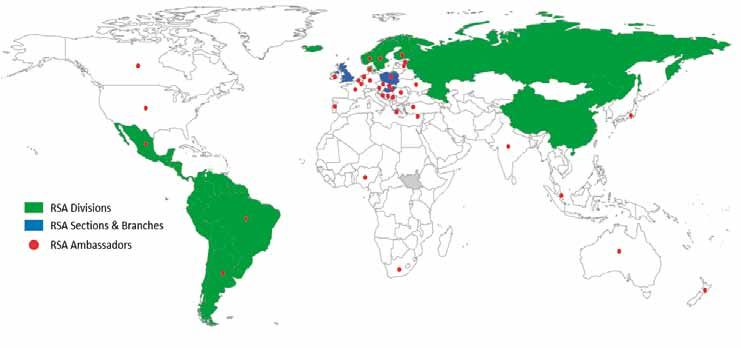
Geographical
Spread of the
RSA members
2007-2013Regional Studies Association Development Plan 2015-2020 | 15
share experiences. This initiative acknowledges Taught Master Award – the Nathaniel
that much regional research is undertaken by Lichfield Award
teams of researchers working in collaboration RSA Best Book Award – voted for by
across nations. the Association’s membership
Best Paper Regional Studies
Association’s Fellowship Scheme Best Referee Regional Studies
The post nominals MeRSA and FeRSA were Best Paper Spatial Economic Analysis
respectively introduced in 2010 and 2011 to Best Referee Spatial Economic
provide members with immediate recognition of Analysis
their professional commitment to the field. Best Paper Territory, Politics,
Governance
The Association’s Fellowship Scheme rewards Best Referee Territory, Politics,
excellence in the field. The status of this award will Governance
be raised. New appointees will be welcomed into Best Paper Regional Studies, Regional
Fellowship not only through acknowledgement Science
in Regions (the members’ magazine) but through Best Referee Regional Studies,
announcement and recognition at conferences Regional Science
and events, and through invitation to contribute
their profile to the Association’s website and Two new Awards were subsequently created to
social media. Alongside this activity, members further represent the field of regional studies:
will be encouraged to use the post-nominals • T
he Regional Policy and Practice Award
MeRSA and FeRSA. As part of this process the – this award is to recognise institutional
conditions for fellowship will be reviewed. contribution
• The Social Media/Journalism Award
Regions
We will continue to reflect on the ways Regions The Association also awards the Best Paper and
can best serve the membership. We will innovate Best Paper in the Early Career Category in its
in forms of delivery, focus, content and frequency major international conferences.
of publication
Community Building RSA Travel Grants
The Association builds its community in many
ways but one of these is through the recognition Since the launch of the RSA Travel Grant in
of excellence and to this end a number of awards 2009, 24 members have been awarded with the Map of
are made each year. recipients spread across the globe: Travel Grants
awarded
Achievements 2008 – 2013
• T
he Association introduced
the Awards scheme in 2009
to celebrate excellence
in the field of regional
studies and recognised
across both individuals and
organisations:
Contribution to the
field – the Sir Peter Hall
Award
RSA Institutional Award
for Excellence
Early Career Award –
the RSA/Routledge Early
Career Awards16 | Regional Studies Association Development Plan 2015-2020
Case Studies of Grant Holders
Chung-shing Chan (2012), Chinese University of Hong Kong, China
2012 Conference on Sustainable Business in Asia, Bangkok, Thailand, 1-3 Nov 2012
Attending this conference enriched my knowledge of sustainable business development and
management, particularly with some case studies focused in Asian countries and cities. Through
presentations by various scholars and experts in the field, I saw different ways of viewing my
research - not only from a perspective of geography or resource management, but also from a
business or marketing approach.
Lidia K.C.
Manzo
(2015),
Politechnico
di Milano
Australia 1
University,
1ia
1
Itlay
Austr
m
giu
From February 26th to March 1st 2015,
Bel
il 1
the Eastern Sociological Society held a
az
four day annual conference under the
Br
d1
main theme “Crossing Borders” at the
USA 7 lan
Millennium Hotel Convention Centre of Fin
New York, USA. The special focus of the 1
gary
2015 meeting invited discussion on the Hun
social construction and social impacts
of borders dividing individuals, groups,
and nations. Attending this conference Italy 1
in New York strengthened the academic
connection related to my Ph.D. field Luxem
research performed in Brooklyn (NYC) in bourg
1
2011-2012. It gave me the opportunity Rom
to discuss some preliminary findings U K3 ani
Slo
a1
of my work relating to gentrification,
va
class and diversity in global cities. k ia
1
nds 1
Sp
1
1
Around 30 participants in the audience
ey
Thailand
ain
Turk
attended the presentation, providing a
1
rla
stimulating debate. This helped me to
The Nethe
reframe my conceptualization of spatial
inequality before sending my paper for
journal publication, and promoted my
competences for job opportunities.
Most importantly, all of the participant With this financial assistance Travel Grant winners have attended events in the
feedback gave me crucial insights not following places –
only on my research questions but also
on American cities that are similar but
fundamentally different to those in
Europe.You can also read


