SA Taxi Business Overview - Half Year 2018 - Transaction Capital
←
→
Page content transcription
If your browser does not render page correctly, please read the page content below
SA Taxi
Business
Overview
Half Year 2018
Contents

      I                     Overview of SA Taxi……………………………………………………… 03

      II                    Market context ……………………………………………………………. 11

      III                   Offering & business model………………………………………………. 22

      IV                    SA Taxi’s competitive landscape ……………………………………….. 41

      V                     SA Taxi’s impact …..……………………………………………………... 43

      VI                    Financial performance…………………………………………………… 53

      VII                   Funding……………………………………………………………………. 60

Confidentiality Disclaimer

This document, including all information regarding SA Taxi Finance Holdings Proprietary Limited and its subsidiaries and associated companies, collectively referred to as “SA Taxi”, is confidential and is not for
discussion, circulation or publication to any third party without the prior written consent of Transaction Capital Limited. The information and financial arrangements outlined herein are for the benefit and information of the
original recipient of this document, who by acceptance of this document is deemed to have accepted responsibility for ensuring that such confidentiality will be maintained at all times.

                                                                                                                                                                                                                                    2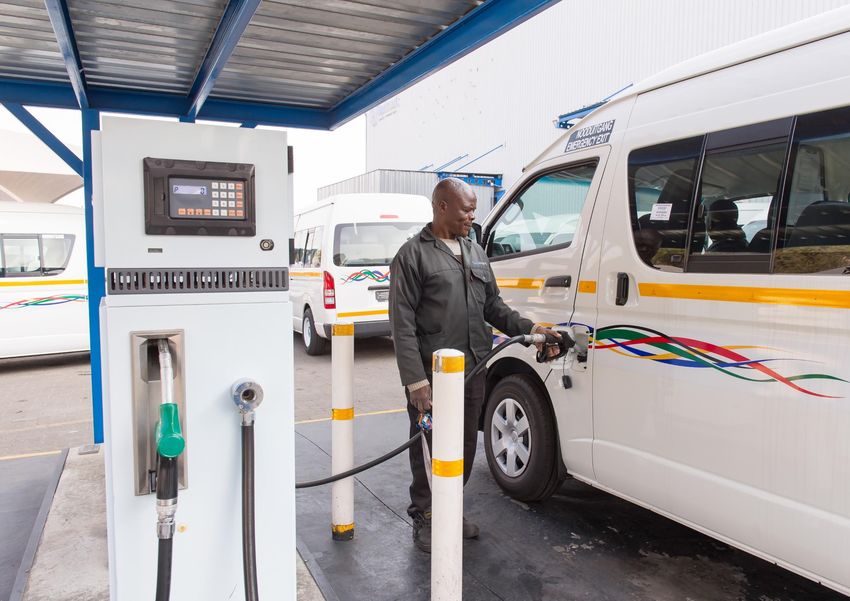
Overview
of SA Taxi   I
Who is SA Taxi?
                                            To provide finance and other services to entrepreneurs
    Mission
                                          that enable the sustainability of the minibus taxi community.
                                                                                         5   Providing complementary business
1
    An innovative & pioneering
    business model with operations
                                                     SA Taxi is a vertically                 services that assist SMEs to
    expanding throughout the financial                                                       maximise cash flow & protect their
    services & asset value chain,                   integrated taxi platform                 income-generating asset, thus
    building a scalable platform that     l                                                  improving their ability to succeed
    can be leveraged in adjacent
                                          8            utilising specialist                  as well as offering value-added
    markets                                                                                  services to the wider industry
                                                     capabilities, enriched                  stakeholders
    A unique blend of vehicle
2                                                                                            Empowering under served &
    procurement, retail,                               proprietary data &                6
                                                                                             emerging SMEs to build their
    repossession & refurbishment
    capabilities, with financing                                                             businesses, which in turn creates
    & comprehensive insurance
                                                     technology to provide                   further direct & indirect
    competencies for focused vehicle                                                         employment opportunities
    types                                          developmental finance &
                                                                                         7
3   Innovative technology, valuable               other services to empower                  Creating shared value
                                                                                             opportunities by providing services
    client & market insights developed
                                                                                             to the wider industry facilitating
    from overlaying granular                                SMEs &                           collaboration & investment
    telematics, credit, vehicle & other
    data to enable precise & informed
    origination, collection decisioning
                                                      create shared value
    & proactive risk management                                                          8   Contributing to the recapitalisation
                                                       opportunities thus                    & sustainability of the taxi industry
4   Enabling financial inclusion by                                                          – a critical pillar of the public
    proficiently securing funding from    l       ensuring the sustainability                transport sector servicing the
                                                                                             majority of South Africa’s working
    both local & international debt       8
    investors to judiciously extend                    of the minibus taxi                   population
    developmental credit to SMEs that
    may otherwise not have access to
    credit from traditional financiers
                                                            industry
                                                                                                                                     4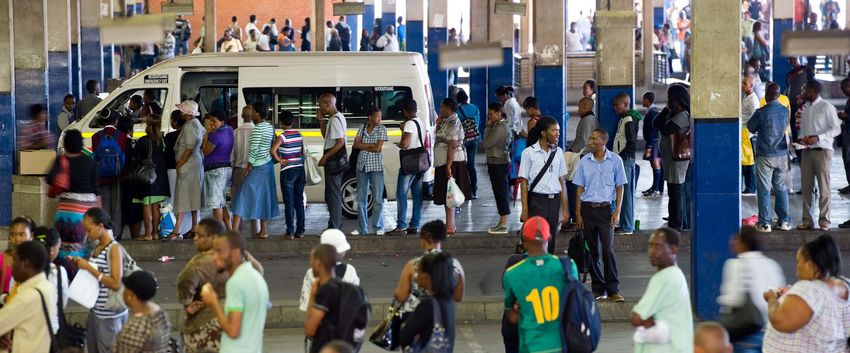
Projected growth for SA Taxi
                                                           Consistent growth over the next 5 years
Looking forward, SA Taxi will strive to organically grow its book profitability through:

                          Measured                Increase in            Maximising          Greater         Utilising
                        growth in loans            loan value          margin through      returns per    technology to
                          originated               originated             increased           vehicle      continue to
                                                   aligned to               vertical         through        enable taxi
                                                      vehicle          integration with    operational     owners and
                                                     inflation          more vehicles      efficiencies      service
                                                                       sold & serviced                     commuters
                                                                         through our
                                                                           facilities

                                                                                                                          5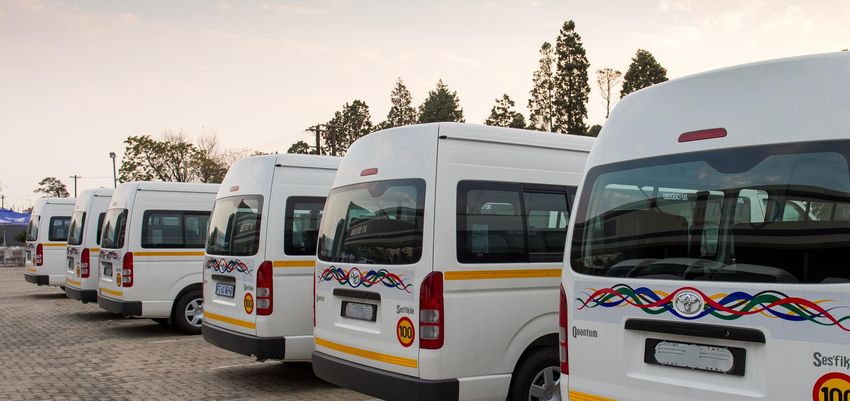
Creating value at new frontiers
                             To provide finance, insurance & other services that enable the sustainability of the minibus taxi community
    Formative years                                             2018                                                                          Our vision
   A finance offering to             Offering    expanded      &     operations                      To extend products & services to additional verticals, unlocking value in the
   taxi operators                    extended into key verticals of the                              industry & provide bespoke services to a wider customer base
                                     finance, insurance & retail value chains

                                                                                                                                                                 Data &
                                                                                                                                                   c           Telematics

                                      Current as at 31 March 2018                                   Total addressable market
                                                                                                                                                               Providing vehicles, finance,
                                       ~30 000 Financed & insured clients                          ~250 000    Minibus taxis      ~1 200   Taxi associations   insurance, other services,
                                                                                                                                                               repairs & parts                   Creating

                                          R8.9bn Gross loans & advances                            >150 000 Operators             ~R50bn   Annual estimated
                                                                                                                                           revenue¹
                                                                                                                                                                                              opportunities
                                                                                                                                                                                              for operators
                                                                                                                                                                                               to share in
                                         R258m        Non-interest revenue
                                                                                                   ~250 000    Taxi drivers         ~3bn   Litres of fuel      Providing services &                the
                                                                                                                                           purchased p.a³      products to meet drivers’       opportunity
                                                                                                                                                               needs & reward good driving    of accessing
                                                                                                               Commuter                                                                         the driver
                                                                                                         15m   trips daily¹                Average time                                       & commuter
                                                                                                                                   50min                       Providing value added
                                                                                                                                           spent travelling
                                                                                                                                                               services whilst commuting
                                                                                                               Households using            to work²
                                                                                                        9.9m   minibus taxis²
SOURCE | 1. Reuters 2017 | 2. National Household Transport Survey 2013 | 3. Industry information
                                                                                                                                                                                                              6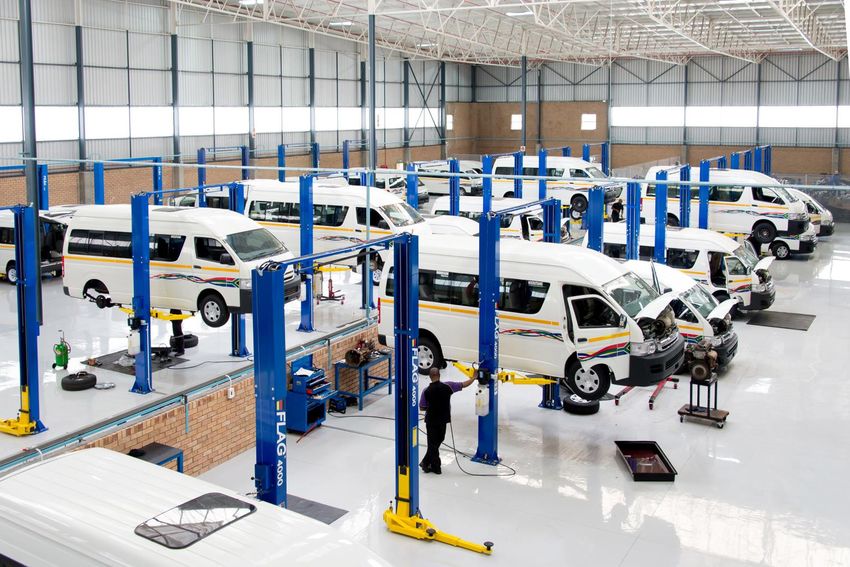
SA Taxi’s journey so far
2006 2007 2008 2009 2010 2011 2012 2013 2014 2015 2016 2017 HY18
R8 907m
FOUNDED IN 1996
R8 301m
First rated securitisation
programme (SATS) is R7 151m
established First DFI investment R6 238m
received
Transaction Capital is R6 240m
formed R5 529m Parts & salvage pilot
project commenced
Moody’s affirm SATS R4 800m
senior mezzanine ratings
Insurance > R2bn
Premium vehicles
R3 807m comprise 99.7% of loans
& advances (82% in 2012)
R4 045m
R3 027m
Transaction Capital Opened the largest taxi panel
lists repair workshop in Africa
on the JSE Dealership is launched
Over 800 employees
Insurance cell captive established
Initiated insurance cover to open-market
R2 276m clients
Finance of Chinese vehicles discontinued
Early adoption of IFRS 9
Taximart refurbishment Over 600 employees
facility is established Nissan NV350 launched
R875m Telematics now applied in credit vetting,
R322m Terry Kier appointed as CEO
insurance, collections, repossession
Over 500 employees
GROSS LOANS Unrated debt programme (SATFS)
established
& Portfolio reaches 20 000 accounts
ADVANCES
Financial highlights for half-year ended 31 March 2018
Headline Net interest Gross loans & Number of loans Return on Return on Non-performing Credit loss
earnings margin advances on book assets equity loans ratio
R176m 11.3% R8.9bn 29 921 3.4% 25.7% 17.2% 3.7%
R309m FY17
SOURCE | Transaction Capital Half Year Results March 2018
7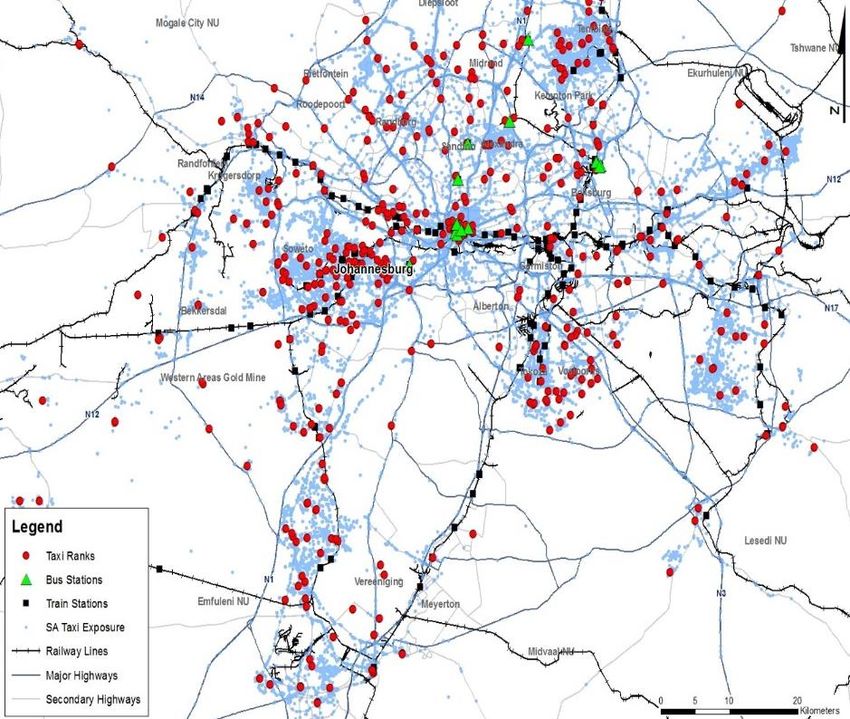
Led by an experienced management team
Transaction Capital and SA Taxi’s executive management team holds extensive experience in the disciplines that make the company uniquely successful as
a developmental credit provider.

             Terry Kier                                               Lorenzo Cardoso                             Sibo Dladla
             Group tenure – 11 years                                  Group tenure – 10 years                     Group tenure – 7 years
             Chief Executive Officer                                  Chief Finance Officer                       Chief Technology Officer
             BA (Hons); postgraduate diploma in                       BCom (Hons) in Accountancy; Chartered       Diploma in IT networking
             Management Studies                                       Accountant CA(SA)

  •   Held executive positions at Softline including      •   Served Articles in Industrials and Automotive at
      part of the team involved in its JSE listing,           KPMG where he remained as a manager                 Teneale Holley
      board member and CEO of Pastel Software             •   Joined SA Taxi in 2008 as a special projects        Group tenure – 2 years
  •   In 2007 started and sold a medical software             manager
                                                                                                                  Chief Information Officer
      company to Bytes Technology Group Ltd               •   Appointed as SA Taxi CFO in 2013                    BCom (Accounting), Post Graduate Diploma
  •   Joined Transaction Capital in 2007 as the CEO                                                               in Accounting, Chartered Accountant CA (SA)
      of Mortgage Capital
  •   Appointed as SA Taxi CEO in 2010
  •   Currently a shareholder of 2% in SA Taxi                                                                    Johan van der Merwe
                                                                                                                  Group tenure – 1 years
                                                                                                                  Chief Risk Officer
                                                                                                                  B.com Hons, MBA
             Mark Herskovits                                          Riek Olivier
             Group tenure – 11 years                                  Group tenure – 6 years
             Capital Markets Executive                                Insurance Director
             BBusSci (Finance) Post Graduate Diploma in               BCom (Hons) in Accountancy & Finance;       Matsidikanye Moswane
             Accounting, Chartered Accountant CA(SA),                 Chartered Accountant CA (SA)                Group tenure – 10 years
             CFA
                                                                                                                  Taxi Industry Executive
                                                          •    Holds over 6 years experience in the financial     BCom Economics & Bus Management; Dip
  •   Served articles at Deloitte & Touche where he            sector                                             Project Management
      remained as a manager                               •    Previously worked in the finance division for
  •   Joined Rand Merchant Bank as a corporate                 the Absa Group
      bonds analyst                                       •    Worked for the Consulting Division at Deloitte     Maroba Maduma
  •   Joined Transaction Capital in 2007                  •    Joined Transaction Capital in 2012 as group        Group tenure – 3 years
  •   Currently leads the capital markets team                 accounting and projects manager
                                                                                                                  Communications Executive
  •   Previously Transaction Capital CFO                  •    Joined SA Taxi in 2013 as finance executive        Gordon Institute of Business Science
                                                               and was promoted to FD in 2016                     Fundamental Management Program

                                                                                                                                                                8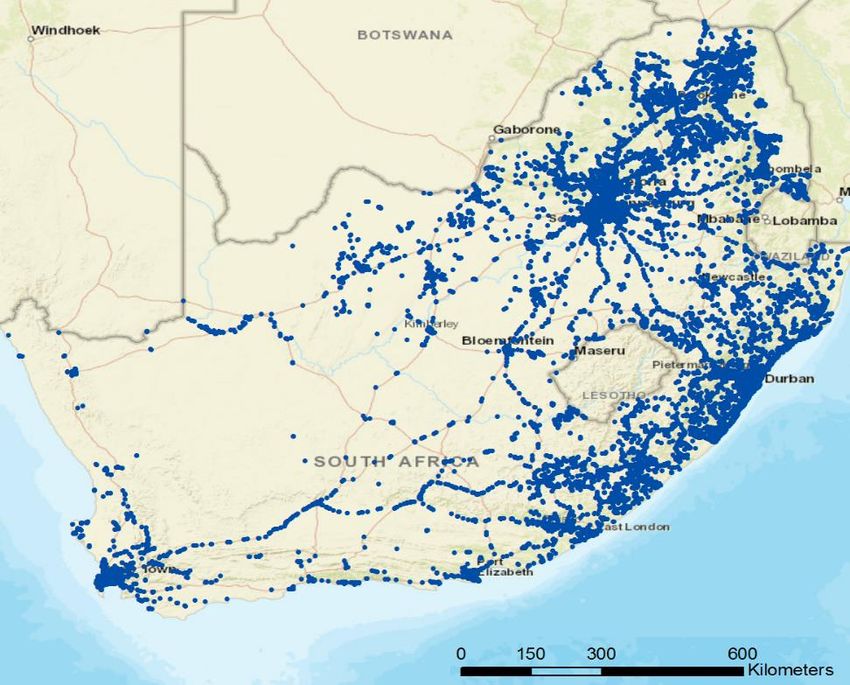
SA Taxi’s Human Capital organogram
                                       Riek Olivier
                                       Insurance Director
                                                 Neil Dove
                                                 Salvage & Parts Executive   Salvage & Parts         23

                                                 Elad Smadja
                                                 Insurance Executive                                                                  These executives are head of SA Taxi
                                                                             Insurance               123                              Protect, which is a separate legal entity to SA
                                                 Yoav Dogan                                                                           Taxi Developmental Finance
                                                 Insurance Executive

                                       Mark Herskovits                                                     Cash Management &
                                                                             Capital Markets         12    Financial Modelling
                                                                                                                                 6
                                       Capital Markets Director
                                       Teneale Holley                        Performance & Insight    3    Optimisation          2      Data & MI                11
                                       Chief Information Officer
                                       Rassie Erasmus                        Taximart                331 Recoveries              36
                                       Taximart Executive
                                       Johan van der Merwe                   Risk                     8    Credit Risk           24
Terry Kier                             Chief Risk Officer
Chief Executive                        Maroba Maduma                         Sales                   37
Officer                                Communications Executive
                                       Sibo Dladla
                      1033             Chief Technology Officer
                                                                             IT Operations           16 Change Management        9
                     Employees
                                       Matsidikhanya Moswane                 Corporate Affairs        6    Branch network        5
                                       Industry Executive
                                       Dean Harrison                         Marketing                9    Office Management     38
                                       Marketing Executive
                                       Riette Sutherland                     Human Capital           24 Foundation               2
                                       Human Capital Executive
             Laura Acres               Grant Manicom                                                       Fuel, Wi-Fi &
                                                                             Point-to-point           1    Telematics
                                                                                                                                 14     Media                     4
             Executive Coach           New Business Executive
                                       Mmabatho Tlale                        Customer Service        47
             Lorenzo Cardoso           CSC Executive
             Chief Financial Officer
                                       Tshepo Mashashane                     Stock                    3
                                       Stock Executive
                                       Valerie Bremer                        Compliance               3    Legal                 21
                                       Legal Executive
                                       Steven Henderson                      Finance                 33 Internal Audit           5
                                       Finance Executive
                                       Reneka Dayaljee
                                       Loan Origination Executive
                                                                             Loan Originations       40 Dealer Relations         26     Long Distance             6

                                                                             Collections             83
NOTE   = number of staff members                                                                                                                                                        9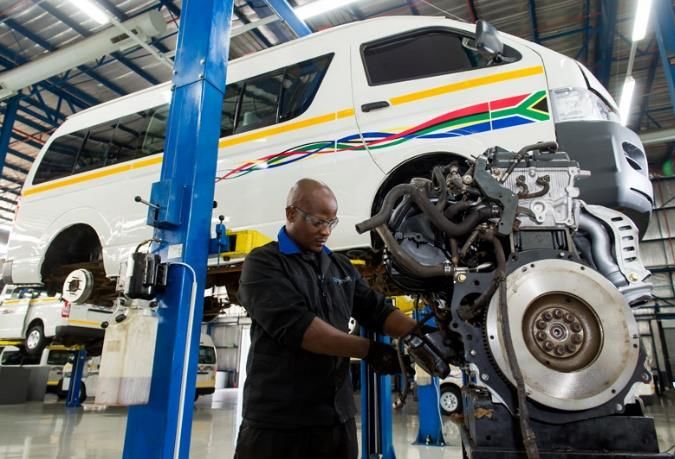
SA Taxi is part of the Transaction Capital group

             CEO: Terry Kier, 11-year group tenure                                                                                                                         CEO: Dave McAlpin, 10-year group tenure
                                                                                          CEO: David Hurwitz, 13-year group tenure

     R173 Million R8.9 Billion                                                       R310 Million 50.8 CPS                                                              R119 Million R1.0 Billion
     Headline earnings¹                 Gross loans & advances                                                                                                          Headline earnings¹      Purchased
                                                                                                                                                                                                                 ▲11%
                         ▲20%                                 ▲15%                   Headline earnings¹
                                                                                                          ▲22%
                                                                                                                        Headline earnings                                               ▲28% book debts
                                                                                                                        per share       ▲17%

     R258 Million 17.2%                                                              21 CPS                              15%                                            75.6%                   R222 Million
     Non-interest revenue               Non-performing loan ratio                                                                                                       Cost-to-income ratio3   NPL portfolios acquired
                                                                                     Interim dividend per share          FOREIGN INVESTOR
                          ▲32%                        HY17 17.2%                                                                                                                 HY17 78.8% this period
                                                                                                          ▲40%           BASE             HY17 5%                                                                  ▲6%

     25.7%                               3.7%                                        16.5%                            R10.4 Billion                                     854 Million             R2.0 Billion
     Return on equity                    Credit-loss ratio                                                                                                              Non-interest revenue    Estimated remaining
                                                                                     Return on equity                 Market capitalisation²                                            ▲33% collections
                 HY17 24.1%                             HY17 3.3%                                                                                                                                                ▲34%
                                                                                                 HY17 16.1%

  A vertically integrated taxi platform incorporating a                                                                                                               A technology-led, data-driven provider of customer
  unique blend of vehicle procurement, retail,                                                                                                                        management services in South Africa (SA) &
  repossession & refurbishment capabilities, with                                                                                                                     Australia. TCRS’ scalable & bespoke fintech platform
  finance & insurance competencies for focused                                                                                                                        improves its clients’ ability to originate, manage &
  vehicle types. These competencies combined with its                                                                                                                 collect from their customers. The division leverages
  proprietary data & analytics skills enables SA Taxi to                                                                                                              its technology & data to mitigate risk & maximise
  provide asset-backed developmental credit &                                                                                                                         value for clients throughout the customer
  bespoke taxi insurance, & sell suitable vehicle                                                                                                                     engagement lifecycle.
  models & allied services to taxi operators, delivering
  commercial benefits to taxi operators & ensuring the
  viability & sustainability of their businesses.

Financial ratios & results exclude once-off acquisition costs of R22 million incurred during the year. Adopted IFRS 9 in 2015.
1. Headline earnings attributable to the group, excluding minority interest | 2. Market capitalisation as at 31 March 2018 | 3. Excludes the effect of acquisitions
                                                                                                                                                                                                                             10
Market context II
Minibus Taxis
  The typical minibus taxi is a 16-seater minibus, white in colour. The
  most common model is the Toyota Quantum Ses’fikile.

  Taxis operate an unscheduled service on fixed routes. These routes
  are managed by taxi associations.

  Taxis will typically depart from fixed terminals but stop anywhere
  along their route to pick up and drop off passengers. Passengers
  hail taxis using hand signals to indicate where they are travelling.

  Taxi ranks are hives of activity and market places establish
  themselves around the ranks to service the commuters.

  Fares for each route are determined by regional taxi councils. The
  fares are affordable as the industry services the lower income
  population of the country.

  Fares are paid in cash. In some areas of the country the taxi owner
  employs a conductor to manage fares while in other parts of the
  country passengers themselves manage the cash from all
  passengers in the vehicle and pass the cash on to the driver.

                       Estimated new minibus vehicle sales

                                    5%
                                                       Toyota
                             12%
                                                       Nissan
                       13%
                                                       Other

                                                       Mercedes
                                         70%

SOURCE | Internal data March 2018
Minibus Taxis are the dominant mode of public transport in SA
Public transport in South Africa Key statistics
The public transport system is the primary mode of transport in South Africa Minibus Taxi
67%
and plays an essential part in the daily life of the general South-African Other
population. It is critical in providing the majority of the population access to 1%
jobs, education, health and social activities. 40% of South Africans make Walk Bus
21% 20%
use of public transport to commute, compared to 38% who use a private
vehicle, 21% who walk and 1% who use other forms of transport. Public Public
Share of
The majority of these public transport commuters are low income earning transport transport
transport 40% Train
individuals. Walking and minibus taxis are the preferred modes of transport choices choices
13%
for over 50% of the South-African population who earn under R3 000 a
month and are unable to afford private transport.
Car
Overall, 67% of those who utilise public transport choose to use minibus 38%
taxis. 70% of learners and 68% of workers use minibus taxis to commute.
In the face of limited funding over the past three decades and the challenges 68% of all public transport trips to work
caused by the legacy of spatial dislocation of the poor, the public transport
industry has experienced continued growth. However, South Africa’s public 70% of individuals who attend educational institutions are
transport is now faced with increasing network inefficiencies due to a rapidly estimated to use minibus taxis
growing urban population and aging infrastructure.
As a core enabler to the country’s economy, an efficient public transport
network is a critical catalyst for development and economic growth. Hence
investment is required for initiatives that aim to increase and improve
efficiencies in the transport network, create sustainable jobs, improve
regulations in the industry and further support the growth of black-owned
SMEs.
With over 50% of the South-African population earning under R3 000
monthly, walking and minibus taxis are their preferred modes of transport
SOURCE | National Land Transport Strategic Framework 2015|National Household Travel Survey 2013 | Census data 2011
13Minibus Taxis are the dominant mode of public transport in SA
The reach of minibus taxis is pervasive and the industry provides a critical service to commuters by integrating with key public transport nodes. The image
below illustrates the footprint covered by SA Taxi’s financed vehicles on 28 October 2017, which represents less than 12% of the national taxi fleet.
MINIBUS TAXI IS THE DOMINANT MODE OF PUBLIC TRANSPORT IN AN INTEGRATED PUBLIC TRANSPORT NETWORK
Taxi rank
Bus station
Train station
SA Taxi exposure
Railway lines
Major highways
Secondary highways
Minibus taxi serves as a trunk service in parallel with train and bus and is also the feeder into these modes
SOURCE | SA Taxi fleet movement on 28 October 2017
14Minibus Taxis are integral to daily commuters
While rail and bus networks serve as a trunk service in parallel with minibus taxis, minibus taxis are a key feeder into these services – transporting
passengers their first and last mile. This service is critical given the context of South Africa’s low population densities, long travel distances as well as modal
and structural inefficiencies. This first and last mile service provides commuters with greater access and convenience. Furthermore, the Department of
Transport’s National Land Transport Strategic Framework includes a move to a corridor and node approach which will continue to create demand for
integrated feeder services.
The majority of commuters who utilise public
transport are heavily reliant on minibus taxis.
Usage of minibus taxis has been consistently high
throughout the industry’s existence, and shows no
Train Minibus taxi sign of declining. Minibus taxi transport is a non-
2 600 Taxi ranks
non-discretionary
~15 billion Km travelled (per year)
Bus Bus Rapid Transport (BRT)
< 1 million ~120 000
Commuter trips daily Commuter trips daily
Receives 56% of government subsidy
>19 000 Registered buses 3 Metropolitans
>100 Bus stationsBrief history of the Minibus Taxi industry
This industry emerged in the early The taxi industry was legalised and This period saw the introduction of the SA Taxi is working
1960’s with the introduction of pass recognised by government although Taxi industry transformation: closely with the
laws under the Apartheid regime. the number of permits were • National Taxi Task Team industry.
restricted. • Democratisation process Discussions are
This brought about the need for an The South African Black Taxi • Legalisation process. being held on the
unscheduled transport service for the Association (SABTA), the first The introduction of the National Land following:
disadvantaged black community that national organisation of taxi owners and Transport Act brought about • Subsidy for the
had been forcibly moved to the was established and brought national operating licenses which industry
outskirts of every commercial hub due together hundreds of local taxi would replace the previous taxi • Recapitalisation
to spatial dislocation laws. This associations. permits. The Taxi Recapitalisation program review
industry was considered illegal as it 7 seater vehicles became the Programme (TRP) was launched with • Funding from
was not recognised or regulated by the dominant vehicle type within the the view of formalising the industry by: local DFI’s and
Department of Transport. industry, increasing the number of • Introducing safer vehicles onto the road
Government
The 1954 Chevrolet sedan was the passengers a taxi operator could • Registering all taxi operators and their
transport daily. employees
vehicle of choice amongst taxi
• Improving the data collected within the
operators industry
1960’s 1970’s 1980’s 1990’s 2000’s 2010’s Today
In the 1970s, prospective minibus This industry played an important The 2010 Soccer World Cup brought
taxi operators found a loophole in role in the country’s first democratic about substantial investments into the
the Road Transportation Act which elections by transporting a large country’s transport infrastructure. This
allowed them to apply for a road portion of the population to the initiated an investigation into
carrier permit and operate legally if voting polls at no cost. government subsidy grants for the
they left one seat of a ten-seater The 16 seater vehicle became the Minibus Taxi industry.
empty. This was because any preferred and legislated vehicle
vehicle carrying ten passengers or type. This resulted in the following
more for reward was defined in vehicles becoming the market
legislation as a bus and was leaders within the industry:
therefore subjected to particular • Toyota Hi-Ace Super 16
controls. However the department of • Nissan E20
transport issued very few permits. • Isuzu Relay..
SOURCE: SA Taxi Corporate Affairs | Organizing in the Informal Economy: A Case Study of the Minibus Taxi Industry in South Africa
16Dynamics of the Minibus Taxi industry
Association Route Operating licence
Taxi operators must first be a part of Associations are awarded the right to Operating licences, issued by the
an association in order to gain operate a route by the provincial Operating License Administration
access to a route and operating regulating entity (PRE) through a System (OLAS), authorise an
licence. registration process. operator and vehicle to provide a
specified transport service.
Taxi operators pay a fee to join an Route allocations are managed by
association which enables the the Registrar’s Administration To apply, prospective operators must
operator to apply for an operating System (RAS). The RAS system provide the following:
licence. registers taxi operators, taxi • Association motivation
associations and details of their • Route description details
Taxi associations self regulate the • Drivers license
operations, including routes.
servicing of routes to ensure routes • Vehicle registration certificate
are not over supplied and that The PRE determines the number of • Roadworthy
minibus taxis can operate profitably. operating licences to be issued per • Tax registration number.
There are currently ~1 200 taxi route based on an integrated
Taxi owner Licences are tied to an operator,
associations in South Africa. transport plan which considers the
vehicle and route and expire after 7
spread of scheduled and
years, but can be renewed based on
unscheduled services required
roadworthiness, compliance, and a
across various transport modes.
review of the route.
Operating licences can be
transferred between operators and
are hence tradable. However, the
licences do not hold significant value
and are not commonly traded.
SOURCE | National Land Transport Act (2009) | SANTACO website | City of Cape Town Operating Licence Strategy 2013
17Recapitalisation drives higher demand for vehicles
The Minibus Taxi fleet requires significant investment in recapitalisation
The minibus taxi fleet is characterised by old and poorly maintained Dynamics of recapitalising the minibus taxi fleet
vehicles. In 2006, the government initiated the Taxi Recapitalisation Project
(TRP) in a drive to regulate and improve the industry. The initiative was With only 15 000 to 20 000 new minibus vehicles estimated to
aimed at addressing the ageing fleet within the transportation system. have been sold in 2016, it will take more than 15 years to
It is estimated that only ~10 000 vehicles were recapitalised in the last 3 recapitalise the minibus taxi fleet of 250 000 vehicles. However,
years. Due to the slow rate of vehicles being scrapped through the TRP and the safe working life of a vehicle is expected to be shorter than
continual aging the bulk of the minibus taxi fleet still requires replacement in 15 years.
order to meet safety standards. This indicates that new vehicle sales need to increase
Although the TRP is currently being reviewed to improve it effectiveness substantially in order to adequately recapitalise the fleet to meet
going forward, SA Taxi still believes that the best mechanism to drive National Land Transport Act (NLTA) requirements. Additionally,
recapitalisation of the minibus taxi fleet is through economic opportunity and market sentiment is that the fleet is characterised by already
empowerment, rather than through a forced recapitalisation programme. aged and un-roadworthy vehicles, further driving the
Assisted finance is a critical catalyst in upgrading the minibus taxi requirement for new vehicles.
infrastructure.
Demand for vehicles exceeds the current supply
The challenge of recapitalising the minibus taxi fleet is exacerbated by a New Minibus Taxi sales in South Africa
structural shortage in the supply of new vehicles to address this demand.
The shortage in supply developed as a result of underinvestment by vehicle Toyota is the most prevalent vehicle type in the minibus taxi
manufacturers and a shortage of end user finance. However, in recent years industry, followed by Nissan.
manufacturers have increased investment in the industry, as evidenced by
Nissan re-entering the market in 2014.
Toyota Ses'fikile
~1000 per month
With demand outstripping supply, financiers are well positioned to impact
the industry by applying conservative credit selection and relying upon a Nissan NV350
liquid second hand market.
~200 per month
Mercedes Sprinter
~70 per month
SOURCE | Arrive Alive | National Land Transport Strategic Framework 2015 | Department of Transport Minister Dipuo Peters address at National Council of Provinces | Transport budget vote NCOP 2015/16| Engineering News
18‘‘
The minibus taxi industry is today the most
critical pillar of our public transport sector
Arrive AliveSA Taxi is a driving force in the minibus taxi industry
SA TAXI’S PORTFOLIO
AS AT 31 MARCH 2018
SOUTH AFRICA’S
MINIBUS INDUSTRY 24 210
taxi owners
owning 29vehicles
921
~250 000 Resulting in gross loans
and advances of R8.9 billion
Estimated minibus taxis
~900
comprising of
in the industry pre-owned vehicles
of which
>85%
are insured with
~4 000
loans originate d
~3 000
new vehicles
SATP
SOURCE | StatsSA National household travel survey 2013 | The market size is SA Taxi’s best estimate through engagement with the industry and extrapolation of internal data | Transaction Capital Results March 2018.
20SA Taxi is positioned in an attractive market
Summarising the defining minibus taxi market attributes
As a provider of asset-backed
developmental credit,
Minibus taxis are the dominant mode of Ageing fleet and recapitalisation has SA Taxi is thus positioned in a
public transport given convenience, led to growth in new and quality
accessibility and integration with other refurbished minibus taxis and financing market that is growing
modes of transport namely rail and bus. consequently a need for vehicle finance. in a
stable defensive industry
where it is able to be
The minibus industry is a defensive
Demand for vehicles is exceeding
selective on credit risk
market as public transport is a non-
manufacturers and pre-owned supply and the financed
discretionary expense for the majority
which results in superior credit selection
of the nation’s commuters as they are
and a liquid second hand market.
asset retains its value.
unable to afford private transport.
21Offering & Business model III
SA Taxi’s offering for small business entrepreneurs
 SA Taxi is a specialist in SME financing in the minibus taxi industry, providing capital to taxi owners to build their own small business. SA Taxi provides
 asset-backed financing for the taxi vehicle, an income generating asset, as well as allied services that support these small business entrepreneurs in
 building sustainable and profitable businesses.
 SA Taxi enables and empowers these entrepreneurs as many of them are unable to access capital through traditional finance providers. Through a
 comprehensive service offering and innovative risk mitigation approach SA Taxi is able to provide asset-backed finance to these small business owners by
 understanding their actual risk profile and underpinning the asset throughout its economic life.

                              SA Taxi has established a direct dealership for new
                              and pre-owned taxis.
                                                                                                                                     Value Proposition
                                           Motor and credit life insurance is specifically tailored             SA Taxi’s value proposition to taxi owners includes:
                                           for minibus taxi owners offering comprehensive
                                           cover.
                                                                                                                                   Access to credit
                                                                                                                                   SA Taxi offers credit to under served taxi
                                                                                                                                   owners who are often unable to obtain
                                                                                                                                   traditional finance.
Finance
                                         Telematics

SA Taxi provides asset-
backed developmental                                  Each vehicle financed is fitted with a tracking system
credit lending for an                                                                                                             Full business offering
                                                      that tracks location, mileage of the vehicle and driver
income generating                                                                                                 When engaging with SA Taxi, taxi owners
vehicle, predominantly                                behaviour.                                                     are able to acquire the vehicle, finance,
minibus taxis                                                                                                      insurance, car tracking, vehicle servicing
                                                                                                                    and other services required to establish
                                                                                                                             and sustain their taxi business.

                                                  Taximart not only refurbishes repossessed vehicles
                                                                                                                                  Customer service
                                                                                                                                  SA Taxi treats each taxi owner as a
                                                  but also provides repairs and maintenance on pre-                               business owner and offers a personalised,
                                                  owned vehicle warranties and insurance claims.                                  professional and friendly experience.

                          TAP provides quality OEM & after market parts for
                          use in Taximart and the minibus industry.
                                                                                                                                                                                23
Vertically integrated business model
SA Taxi was initially established as a finance provider but has subsequently vertically integrated across the financial services and vehicle value chain.
Each business element complements the other and has been key to SA Taxi’s success and the empowerment of taxi owners and their businesses. The
integrated business model can be illustrated as follows:
Enabling SMEs Servicing SMEs Managing returns from SMEs
Equity
Logistics &
Allocation & Insurance Collections
FINANCIAL Recoveries
Debt Raising
SERVICES
Conservatively geared with Bespoke taxi insurance for Call centre collecting Management of fleet and
diversified funders financed and non financed >R250m per month performance
Credit customers
Underwriting
& Loan
Origination
Repairs &
Vehicle Supply Niche credit philosophy
Maintenance Refurbishment Parts & Salvage
& Retail
VEHICLES Services
Dedicated taxi dealership & Establishing a liquid ~20 000m² refurbishment Estimated to be the
relationships with affiliated & market for quality pre- facility for panel and biggest buyer of
non-affiliated dealers for new & owned vehicles mechanical refurbishments Toyota spare parts in
pre-owned vehicles Africa
PROPRIETARY DATA
Used throughout the value chain providing critical insight for business decisions
CLIENT SERVICE
24Vertically integrated business model
FINANCE INSURANCE RETAIL DEALERSHIP
REFURBISHMENT TAXI AUTO PARTS PROPRIETARY TELEMATICS DATA
25Finance is core to SA Taxi’s offering
SA Taxi enters into a credit agreement with each of the taxi owners. These credit agreements are governed by the National Credit Act (NCA). SA Taxi is a
registered developmental credit provider in terms of the NCA. Under the NCA, SA Taxi is able to charge interest rates of up to the repo rate plus 27%
(currently equating to 33.5%). SA Taxi remains well within the maximum.
The standardised agreement is an end-to-end offering which also includes insurance, telematics as well as a rewards programme. The underwriting
process utilises SA Taxi’s bespoke scorecard that has been developed through historic credit experience which enables SA Taxi to correctly underwrite an
underserved taxi owner. As of the 31st March 2018 SA Taxi held a book of ~24 000 unique clients operating ~30 000 vehicles which results in approximately
1.2 minibus taxis per client.
Typical credit agreement Average monthly instalment Approval rates
Exposure value Finance instalment R10 511
(Toyota diesel including R 403 000
New application Pre-owned application
delivery) Insurance premium R2 600
approval rates approval rates
Telematics fee R 294
Interest charged 23.6%
Administration fee (incl VAT) R69
Term in months 72 35% - 45% 30% - 40%
Credit Life R650
Origination fee (incl VAT) R2 990 Total monthly instalment R14 124
Financial highlights for Half Year March 2018
Vehicle loans Net interest Non-performing Credit loss
originated margin loans ratio ratio
3 917
7 480 in FY2017
11.3% 17.2% 3.7%
SOURCE | Transaction Capital Result March 2018 | The credit agreement terms and the resulting monthly instalment is based on the average of the existing book
26SA Taxi’s credit philosophy
SA Taxi’s identity SA Taxi’s core business is to extend asset-backed developmental credit to the underserved and emerging SME
market. To ensure safe lending practises and maintain manageable risk exposure, SA Taxi has developed its own
SA Taxi is a vertically innovative niche specific credit philosophy and strategy. This approach is built on the proprietary data and industry
integrated taxi platform knowledge amassed over the years, enabling SA Taxi to differentiate between the perceived and actual risk within the
utilising specialist minibus taxi industry. This niche specific risk assessment evaluates each taxi owner as a small business and not
capabilities and enriched solely the individual’s credit score.
proprietary data to SA Taxi has established an innovative and efficient credit origination and management platform that is able to assess,
judiciously deploy originate and manage risks. This platform is continuously improved by incorporating identified trends and insights
developmental credit and resulting in enhanced origination and management.
allied business services to Furthermore SA Taxi’s credit philosophy foundation is appropriate governance that ensures the risk appetite is
empower SMEs thus followed and that all credit decisions are informed. SA Taxi carefully considers the long term impact as well as the
ensuring the sustainability of short term when modifications are made to originations – this thinking is embedded in the credit team and systems
a fundamental mode through a thorough understanding of the book and continuous stress testing of possible scenarios.
of transport
SA Taxi’s credit philosophy
Niche specific risk assessment of loans originated
SA Taxi seeks to provide
lending within a defensive
niche industry
A Niche Industry A credible In a suitable On a profitable Managed by a credible
Operator Vehicle Route Association
Adherence to set risk appetite and risk strategy through appropriate governance
Assurance through independent audit, monitoring specific risk metrics and effective corporate governance frameworks
Informed decisions through consistent analysis of the book and originations
Regular stress testing and evaluation of the book and origination in both the short and long term, embedding scenario based thinking
Managed by a sustainable credit origination and management platform
Managing the team and systems that deliver repetitive excellence at high volumes by mastering their required competencies
27Understanding operators’ affordability
COMPARATIVE MODES OF TRANSPORT
Short distance route | SOWETO TO JOHANNESBURG: 23KM Long distance route | JOHANNESBURG TO DURBAN: 595KM
Bus -
Taxi Train Bus BRT Taxi Train Bus - Eldo Greyhound
Station & Scheduled Scheduled Station & Scheduled Scheduled
Accessibility On route Accessibility On route
scheduled stops stops scheduled stops stops
R13.00 R290.00
▲8.3% ▲7.4%
Affordability R9.50 R12.20 R13.50 Affordability R360.00 R240.00 R390.00
(from R12 (from R270
in 2016) in 2015)
Every Volume of
4 2
10 to 20 Only 2 buses <
associations associations 3x 5 departures each per day
Reliability minutes operating peak Reliability
with ~900 with ~100 per week (fewer on a Saturday)
Stops at on the route capacity
operators operators
7pm required
Efficiency Preference
Average operator Average operator
profitability profitability
~R15 000 ~R50 000
per month per month
(based on SA Taxi’s (based on SA Taxi’s
Affordability Calculator Affordability Calculator
at origination) at origination)
SOURCE | Industry information | Websites: Metrorail; Bus Rapid Transport; Various bus companies
28Premium vehicles financed given their retention of value
SA Taxi’s current financed vehicles per brand as at 31 March 2018 Recommended retail prices for popular models
Toyota Nissan Toyota Ses’fikile
R433 300
This price reflects the retail price for a new diesel unit incl VAT
87% 4% Nissan NV350 Impendulo
R396 400
Mercedes Benz Other
Mercedes Sprinter 515 Panel
This is predominantly R737 000
6% 3% made up of entry level
brands financed pre-2013
This price reflects the retail price for a Mercedes Sprinter 515 Panel van
that has been converted into a taxi.
Premium vehicles retain value
2010 Toyota Ses’Fikile
Key to SA Taxi’s business model and risk mitigation is the retention of
R 400,000.00 value of the asset while it is financed. This graph illustrates Toyota’s
ability to retain and even appreciate in value due to higher buy prices.
R 300,000.00
The graph shows the prices for which new 2010 model Toyota Ses’fikile
R 200,000.00 were bought by SA Taxi customers in 2010 and the price 2010 models
were subsequently sold in the second hand market by SA Taxi.
R 100,000.00
R 0.00
2010 2011 2012 2013 2014 2015 2016 2017 HY18
New Pre-Owned
SOURCE | SA Taxi internal and market data as of the 31 March 2018 | Brands on book is based on value
29Profile of SA Taxi’s customer
Demographics Vehicles on book
100% 20% 1.2 87%
Black owned Women owned Vehicles per Toyota vehicles
SMEs SMEs customer
16% 47years 3.8years >85%
Under the age Average age of Average age of Insured with
of 35 years owner vehicle SA Taxi
Credit profile of loans on book
68months Average loan term >R6 000 Minimum monthly profit
10% Average deposit 1
Weighted average interest
23.6% rate at origination ~40% Average approval rate
Weighted average
47months remaining term ~600 Average empirica score
Managed by a sustainable credit origination and management platform
1. Average deposit on new vehicle originations
30SA Taxi Direct
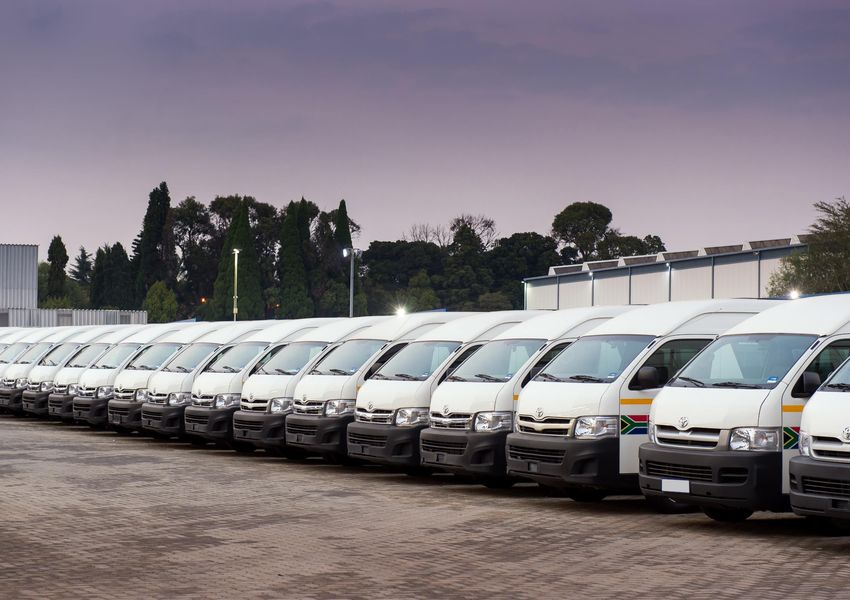
SA Taxi established their own direct dealership in 2015, SA Taxi
Direct, which sells both new and pre-owned premium minibus taxis.
Due to strong relationships with Toyota, SA Taxi is allocated
approximately 50 new Toyota Ses’fikiles per month to sell alongside
the pre-owned vehicles. This channel offers SA Taxi greater returns
on the entire vehicle deal and provides a profitable and reliable
marketplace for sale of refurbished vehicles due to the following
factors:
• Margin off sale: SA Taxi is able to realise a margin on the sale as the
transaction occurs on their own dealership and the pre-owned vehicles
have been through Taximart
• Better credit risk screening: Since SA Taxi has greater control and line of
sight of the interaction that occurs at the point of sale, it is able to ask the
required questions to achieve a better credit risk screening
• Insurance take up is higher: SA Taxi’s credited sales agent can provide
customers with key insights on the value of insuring their vehicle resulting
in a higher insurance take up
Vehicles sold per month Toyota new vehicle
through the dealership allocation
120 - 150 50
Pre-owned vehicles Margin on
sold per month Vehicles sold
40 - 50 6 - 9%
SOURCE | Internal data March 2018Distribution channels
SA Taxi’s head office, located in Midrand Johannesburg, acts as the centralised administration centre for all distribution channels. A secondary office has
been established in Durban in order to sufficiently service the large minibus taxi market within that metropolitan area. Origination processes and decisions
such as credit evaluations are all undertaken at the head office and then fed down to each respective distribution channel, this centralised network allows for
greater efficiencies and enables scale as SA Taxi continues to expand its footprint. Three key distribution channels are utilised which are SA Taxi's own
direct channel, badged affiliated dealers and non-affiliated dealers.
Direct Affiliated dealers Non-affiliated dealers
SA Taxi’s direct sales channel targets The affiliate channel consists of Toyota, Nissan The non-affiliated market channel is dominated
customers through two approaches. The first is and Mercedes franchised dealerships. The by a few independent dealers that stock the full
telephonically - a team of FAIS-accredited majority of these dealerships belong to well- range of taxi vehicles, including entry level
telesales agents use SA Taxi’s existing known dealer groups such as McCarthy, vehicles.
customer base as a growth engine. This Imperial and Halfway, and each of the
The relationships established by SA Taxi with
approach targets performing customers to dealerships focus on one specific vehicle
these dealers are a barrier to entry for
whom SA Taxi would like to extend additional manufacturer. These dealerships receive
competitors. Given that of 27% of originations
vehicles, thus growing the SME. vehicles directly from the relevant vehicle
are from this channel, SA Taxi continues to
manufacturer with their allocation of vehicles
The second approach is through SA Taxi foster these relationships and enjoys the
being based on their historical sales. This
Direct, SA Taxi’s own dealership based in support of the non-affiliated channel.
channel is only for new vehicles. Over the
Midrand in which potential customers can
years SA Taxi has strengthened relationships
come view and apply for new or pre-owned
with the dealer groups and dealerships and the
minibus taxis. This channel is the most
affiliate channel is now the most prevalent.
profitable and as at 31 March 2018, this
channel constituted more than 20% of SA This particular distribution channel contributes
Taxi’s new vehicle sales. to 52% of SA Taxi’s total originations.
HY 2018
Sales
Sales through Sales through Sales through
~800 direct sales ~2 000 affiliated dealers ~1 000 non-affiliated dealers
SOURCE | SA Taxi internal and market data as of the 31 March 2018
32SA Taxi Protect
SA Taxi Protect was established in partnership with Guardrisk to
provide the insurance that SA Taxi requires for each vehicle it
finances. Each taxi financed by SA Taxi is fully insured, with >85%
of taxi owners choosing to insure with SA Taxi Protect and the
remainder with other reputable insurers. Additionally, ~5 000
policies are underwritten on ~6 000 ‘open-market’* minibus taxis.
SA Taxi Protect is responsible for designing and distributing the
insurance product, collecting premiums as well as managing claims
including parts procurement and refurbishment.
SA Taxi Protect has designed bespoke policies to meet taxi owners’
specific needs and includes comprehensive vehicle cover including
passenger liability as well as business interruption cover.
Additionally SA Taxi offers business relevant insurance such as
Credit Life.
Furthermore, the credit agreement enables SA Taxi to pay the
premiums on behalf of each client to mitigate the risk of non-cover.
Vehicles % of book insured
covered with SA Taxi
~30 000 >85%
Annualised new Claims ratio
written premium
R161mSA Taxi Protect’s insurance offering
SA Taxi Protect, a subsidiary of the SA Taxi group, is an insurance entity that offers bespoke products tailored for the minibus taxi industry. This entity
insures >85% (as at March 2018) of SA Taxi’s client base making this a core offering for the SA Taxi group. These insurance products are also offered to
open-market taxi operators.
Additional benefits
Khusela Taxi Business Insurance Deposit Protect
This insurance policy is offered to taxi operators with a This policy pays the taxi operator the deposit they put
financing agreement with SA Taxi. This policy includes: down on their stolen or written off vehicle.
• Comprehensive motor vehicle cover
Zero Excess
o Accident damage
o Windscreen damage This policy is taken up by taxi operators looking to
o Theft manage their cash flow in the evident of a claim, as
o Hi-jacking they are not required to pay any excess
o Write-offs
o Fire
• Instalment protection
If the insured taxi is damaged in an accident and is not Complimentary benefits
ready for collection within 7 days of the claim being
authorised, Khusela Taxi Business Insurance pays up to • 24 Hour Accident Assist Towing
2 months worth of instalment to the credit provider. • Tracking Device for financed clients
• Third party, passenger and riot and strike cover • New Taxi Substitution for financed clients
• Credit Top Up
This is insurance against any outstanding debt accrued in
a previous credit agreement. This product includes
absconsion & violation which effectively covers the credit Khusela Taxi Insurance
provider if the insured violates the terms & conditions. This insurance policy is offered to taxi operators not financed
with SA Taxi. This policy includes:
• Comprehensive motor vehicle cover
Khusela Credit Life • Third party, passenger and riot and strike cover
This insurance policy is required by all taxi operators with a financing • The option to take-up, Business Protect*, Deposit Protect,
agreement with SA Taxi. It is an optional product for open-market Zero Excess and Credit Top up.
clients. This policy includes:
• Death pay-out *Business Protect
• Permanent disability pay-out This policy covers business interruptions that may be caused due
• Temporary disability pay-out to repairs. This policy pays out R400 a day for up to 20 days while
the taxi is being repaired
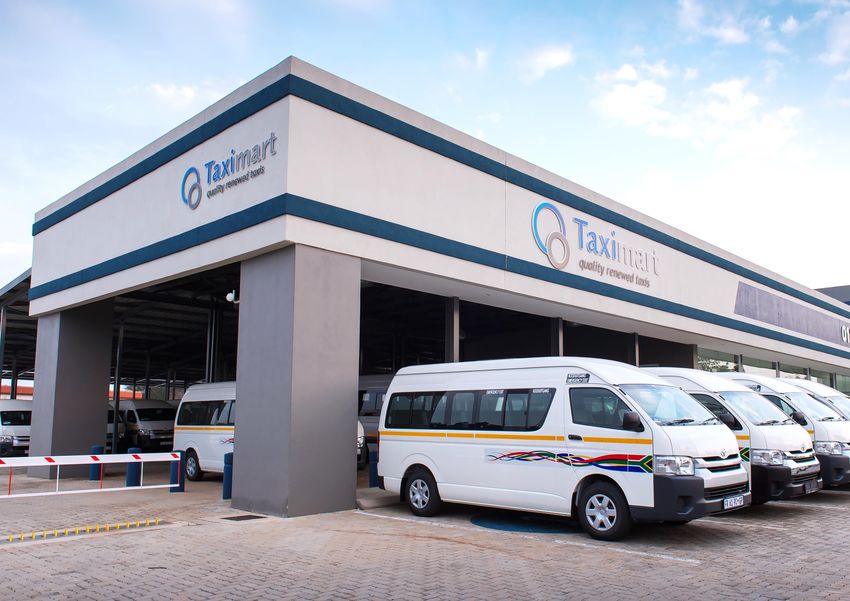
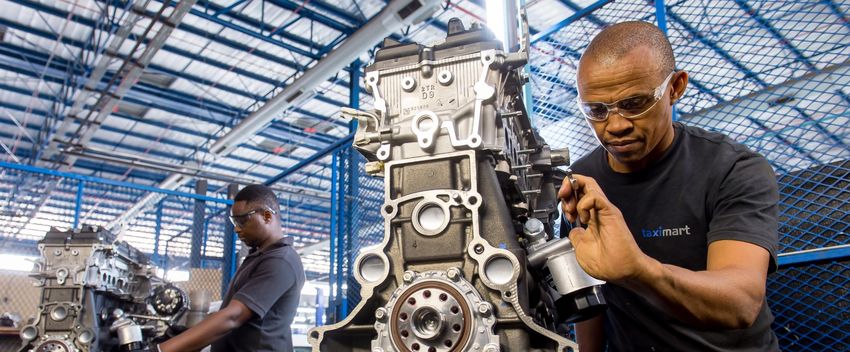
34Taximart
Taximart is a subsidiary of SA Taxi, which was created in 2009 for
insurance claim repairs and the refurbishment of repossessed
minibus taxis in the secondary market to improve SA Taxi’s
recoveries. Taximart services include a range of panel, mechanical
and maintenance services that ensure that the taxi owners’ vehicles
are repaired timeously and are back on the road as soon as
possible.
Taximart’s ability to refurbish and resell has enabled SA Taxi to
reduce their loss ratios through enhanced recoveries. This is
achieved through cost reduction, improved turnaround times,
improved product quality all providing higher returns than a
traditional model. Taximart has also led to reduced insurance cost
of claims.
The efficiencies created through Taximart arise from the following:
• Economies of scale;
• Focus on a narrow product line (including only white vehicles) allows for
specialisation;
• Bulk procurement power; and
• Time saved by controlling the entire process in-house.
Internal refurbishment Recovery rate on
capacity per month refurbishment & resale
~220 >73%
Taximart Workshop
staff facilities
~360 20 000m2
SOURCE | Internal data March 2018Taxi Auto Parts
Taxi Auto Parts, the parts and salvage operation, allows SA Taxi to
participate in the minibus taxi parts supply chain and to play a
significant leadership role within the industry.
Given the size of SA Taxi’s insurance book as well as the
refurbishments, the business is a substantial consumer of minibus
taxi parts in South Africa. It is therefore critical to the optimisation
strategy to procure and distribute parts as efficiently as possible to
SA Taxi’s own repair centre as well as its network of preferred panel
beaters. To enable this, SA Taxi has established its own parts
procurement operation. The savings will be a direct result of:
• The importing of quality aftermarket parts (fixed right first time)
• Sourcing parts at scale (economies of scale)
• Distribution of parts to external panel beaters (managing cost
of repair)
In addition, SA Taxi has extended its business model into salvage.
By entering into this market, the business is able to optimise the
salvage value of a vehicle. SA Taxi realises a higher recovery
value, which benefits both SA Taxi and the operator by managing
the cost of claims. This has a positive effect on insurance
premiums. This will be achieved by:
• Selling salvage parts to the taxi industry retail, thereby
enabling greater value realisation from insurance write-offs
and repossessed vehicles (that are deemed unviable for
refurbishment).
• Consistent supply of quality 2nd hand OEM parts for Taximart
at a reduced price
SA Taxi spend on Workshop
parts facilities
~R200m 7 500m2
SOURCE | Internal data March 2018Proprietary data provides critical insight for decisions
Telematics data used throughout the value chain Examples of data
Through its strong competency in telematics and its longstanding Approved route vs. route actually travelled
experience in the industry SA Taxi has accumulated rich proprietary data.
This enables the company to accurately assess the actual risk of potential
customers. Due to the informal nature of the industry there is a high degree
of perceived risk and data analytics are therefore a competitive advantage in
truly understanding the risk.
Each vehicle is fitted with a tracking device which not only provides
information on mileage and location but also provides insights on the
following aspects in the value chain:
Legend
• Origination Approved Route
Data collected is fed into the credit vetting process allowing SA Taxi to better Travelled Route
understand credit risk and route profitability
• Collections
Data is used to obtain an understanding of the how the minibus taxi is operating
before collection action is take. This background informs how collection agents Distance travelled on an daily basis
interact with the taxi owner.
• Insurance
Historical data is used to bolster the accuracy in pricing a taxi owner’s insurance
risk as well as to identify when there is a lack of movement which could indicate
an insurance claim
• Repossessions
Live location data along with a driver’s historical data are utilised in aiding the
repossession process
• Service offering to the client
Data is provided to the taxi owner, enabling them to gain a greater understanding
of their business operations and further empowering them as business owners
SOURCE | SA Taxi Telematics data
37Proprietary data enables key functions across SA Taxi’s value chain
Vehicle supply & sales Insurance
Proprietary data informs SA Taxi Direct sales by Extensive data on the current client base,
taking into account the following insights: insights from past insurance incidents, the risks
associated with vehicle type, area of operation
• Existing customers buying patterns and preferences and
the market demand seen from affiliates and non and other insights about the allocated route are
affiliates sales used by SA Taxi Protect to bolster the accuracy
• Performance and profitability of the different types of in pricing a taxi operator’s insurance risk and
vehicles financed by SA Taxi predict when there is activity that could indicate
• Repairs costs per vehicle type an insurance claim.
• Geographic distribution of activity across the industry
The image on the right highlights an area in which there is suspect
operation which disassembles stolen automobiles for the purpose of
selling them as parts. An SA Taxi vehicle entering this area would
raise an insurance alert.
Originations Media
Proprietary data is used to further understand an Through telematics, SA Taxi is
applicant’s credit risk. The following data points are capable of running highly focused
examples of insights taken into consideration when marketing campaigns at mass
assessing a new applicant: volume by providing companies
space to advertise on taxi’s while
• Profitability of the route allocated as SA Taxi has gained
knowledge on the actual route travelled vs the approved tracking the advert’s reach.
route
• Risks and credit performance of operators on that route
from previous customers
• Payment performance of repeat customers
This image is an example of the reach a
previous customer achieved through adverts
on minibus taxis
38Proprietary data enables key functions across SA Taxi’s value chain
Collections
SA Taxi is able to predict potential imminent non performance of a loan based on Increased risk of default
14 Corrective action
telematics data linked to credit performance data. This enables the collections team to
initiate proactive and preventative action to support the taxi owner and hence improve 12
Distance travelled per
Low km in
performance of the loan. 10
month (1000km)
a peak
8 period
A few predictive identifiers of non performance are:
• A decrease in kilometres travelled in comparison to usual operations 6
• Stationary vehicle during normal operating hours 4
• Vehicle entering an identified high risk area 2
This operating data provides the collection agent with relevant background on the -
201306
201308
201310
201312
201402
201404
201406
201408
201410
201412
201502
201504
201506
201508
201510
201512
201602
state of the taxi owner and informs the best corrective action. In addition it allows the
collections agent to distinguish between a client’s inability to pay versus their
unwillingness to pay.
Repossessions Offering to taxi owners Finance
Aside from being able to track SA Taxi’s mobile self help application Proprietary data aids the
the live location of the vehicle, allows the taxi owner to easily access all finance team to accurately
recovery teams are able to of his information. provision for expected loss by
access the full details of the Data is provided to the taxi owner, providing key trend analysis that
taxi owner and the vehicle. enabling key insights into their business aids in predicting factors
This helps the team to identify and increase productivity. including:
the best time and location to • Probability of default based on client
Metrics available to the taxi owners are: activity and performance
recover the vehicle. The data
• Trip profitability analysis • Associated repair costs based on the
gives an indication of the • Mileage travelled against benchmark condition of the vehicle
current condition of the • Driver behavior against benchmark • Predicted cost recovery
vehicle, enabling the recovery • Fuel efficiency indicator
agents to expediently predict • Activity of vehicle against benchmark
the repair costs of the vehicle. • Service alerts
• License renewal alert
39SA Taxi focuses on customer experience
Philosophy
SA Taxi prides itself on valuing each taxi operator as a business owner and offers a personalised, professional and friendly experience. SA Taxi have a
dedicated trained and experienced call and service centre equipped to service taxi owners. Customer service is a key pillar of SA Taxi and the focus is on
nurturing relationships – loyal customers who will keep buying and referring others.
Customer service and satisfaction metrics Complaints
SA Taxi’s complaints management process involves the
20 2:45 20% 80% 17 088 practice of investigating queries and grievances received
Seconds Minutes Consultant Customer Leads dialled by team from customers on the following platforms:
Average Call waiting Average call length Abandoned calls
• Face to Face
• Social Media
• Telephonic
• Email
• Fax
52 671 2 839 3 569
8 Calls answered
resolved 88%
Average
clients
attended
89%
average
• Hello Peter
productivity productivity Once a full root cause is established, recommendations
6 583
Calls per consultant are made to the relevant team. It is the responsibility of
Consultants 396 414
Not resolved Not attended the Compliance Department to deal with client protection
principles. For these grievances, the complainant has a
Service fulfilment: cases Welcome Centre: client walk ins
assigned and resolved number of channels through which he/she is able to lodge
their case namely:
Campaigns
• National Credit Regulator
•
63% 25% 12% •
Welcome Calls
First Instalment Calls
• Credit ombudsman
Customer Service Centre Telephonic Other • FSB
• Media Sales
walk in queries • Short term insurance ombudsman
• Dealership leads warming
• Cartrack Campaign
• Adhoc surveys upon Business requests SA Taxi receives on average 28 grievances per month of
which the majority are timeously resolved (98%).
Grievances often relate to communication and
unprofessionalism. These cases are however resolved
internally through the Customer Services department or
closed once supporting evidence is given to the
complainant’s representative.
40You can also read


