SAIA-KZN Journal sponsored by Corobri
←
→
Page content transcription
If your browser does not render page correctly, please read the page content below
SAIA-KZN Journal sponsored by Corobrik
SAIA-KZN
Journal of the KwaZulu-Natal Region of the South African Institute of Architects
2021 SAIA-K ZN Awards for Architecture

2/2021       Vol 46 · 2 / 2021 · ISSN 0379-9301
2/2021
SAIA
-KZN
EDITO’S NOTES
T
raditionally this issue, which features the
outcome of the biennial SAIA-KZN Awards
programme, has been difficult to contain
within the limited pages of the SAIA-KZN Journal.
2 6 10
Given the long economic downturn and the
impact of the pandemic, Covid-19, since March last
year, the challenge this time is indeed unusual. But
this presents the opportunity for featuring in some
depth the winning buildings, and, perhaps, even
celebrating achievements usually denied from
12 14 16
publication, which I trust readers will appreciate.
I also trust that the issue will make for a ‘good
read’ with student work including the national
Corobrik Students of 2019 and 2020; tactical
urbanism; sadly obituaries of two unusually talented
yet humble colleagues; but also travel, another rarity
BELOW: The bio-efficient cook stove received an Award (see also where he became a partner,
of this peculiar time we’re in. won a 2019 SAIA-KZN Special
p6-9 herein), while two before setting up his own
Mention in the category ‘Work of
Walter Peters, Editor projects by Richard Dobson practice in 1983.
social importance’ for Richard
Dobson Architects (Asiye eTafuleni). Architects with Asiye
eTafuleni received Shirish Sukhlal (1964 – 2021)
SAIA-KZN NEWS commendations, namely the graduated from Natal (UKZN)
Pop-up micro childrens’ in 2004, joined eThekwini
Afrisam-SAIA 2019-20
facility in Warwick Junction Architecture Department
Sustainable Design Awards
and the Bio-efficient before venturing on his own
At a virtual event, which took
cookstove (see also Journal of as S4 Architects in 2008.
place in June, the following
projects located in the SAIA-KZN 2/2019).
Po-Chi (Andy) Chen (1976 –
province of KwaZulu-Natal 2021) graduated from UKZN
met with success. In Memoriam with B.Arch degree in 2002,
Thanda Early Childhood Cassim Abdool Hack Kadwa worked briefly with CNN
Development Centre at (1947 – 2021) graduated from Architects before joining EPA,
COVER: Dukkah restaurant and bar, Florida Rd, Durban, by Koop Design, the Qwabe in rural South Coast the AA in London in 1977, 2004-2013, and embarking on
only building to garner a 2021 SAIA-KZN Award for Architecture. by Architects of Justice worked with MAB Architects independent practice.
Photograph: Roger Jardine
SAIA-KZN Journal designed & produced by Graphicos · Printing: Fishwicks Printers (Pty) Ltd
Editorial Board: Angela Wilson (Chair), Kevin Lloyd,
Lauren Haiden, Chantal Pieterse, Karuni Naidoo,
Louis du Plessis, Silvia Bodei, Deborah Whelan,
Garryn Stephens (student member).
Editor: Walter Peters Assistant: Janet Whelan
Published by: SAIA-KZN, KwaZulu-Natal Region
of the South African Institute of Architects,
160 Bulwer Road, Durban 4001.
Tel: 031 201-7590 Fax: 031 201-7586
E-mail: admin@kznia.org.za
Website: https://www.kznia-
journal.org.za/find-journals
Copying of any material from this Journal is
encouraged, provided the author and SAIA-
KZN are acknowledged.
2021 SAIA-KZN Awards for Architecture ˙ saia-kzn journal vol 46 ˙ 2 ⁄ 2021 ˙ issn 0379-9301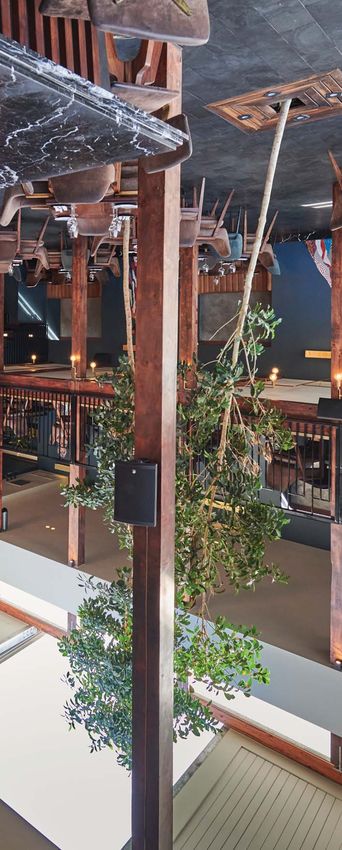
2021 SAIA-KZN
Awards for Architecture
              VIRTUAL INSPECTIONS VIRTUAL ADJUDICATION
                                                                                         N THIS OCCASION, entries                Thus, although decisions were reached after the

                                                         O
                                                                                         for Award consideration                 adjudication process, due to an announced ‘load
                                                                                         were invited for buildings              shedding’ it was necessary to reconvene to finalise
                                                                                         erected during 2019 - 2020,             decision-making.
                                                                                         and eight submissions were                   The recommendation to SAIA-KZN Regional
                                                                                         received, as well as one for            Committee was a single SAIA-KZN Award for
                                                                                         the Research category, which Architecture and a single SAIA-KZN Special Mention, or
                                                         is the subject of another jury.                                         what in other SAIA regions is known as a
                                                            The buildings’ jury, approved by the SAIA-KZN                        Commendation.
                                                         Regional Committee, followed the guidelines of SAIA.                         No doubt, this will result in unhappy entrants, for
                                                         It consisted of Ms Sonja Petrus Spamer of Cape Town,                    which reason the historic record was taken to hand.
                                                         the architect from another region; Ms Thilo                             When the current biennial SAIA Awards programmes
                                                         Sidambaram, the layperson, in this case Manager:                        began in 1976, of the 21entries KZN received, only
                                                         Corobrik Marketing Support, now based at the new                        three awards were made in 1977, none from the 16
                                                         Corobrik factory at Driefontein, West Rand, Gauteng;                    entries in 1979; one of 7 entries in 1981; one of 10
                                                         the academic architect, Antonio Blanco of UKZN who                      entries in 1983; 5 from 25 entries in 1985; 3 from 25
                                                         is attached primarily to the School of Civil Engineering; entries in 1987; 5 from 18 entries in 1989 etc.
                                                         and three SAIA-KZN members, Ms Trish Emmett,                            However, the regions then had delegated authority
                ,

                                                         partner in the multiple award-winning Durban                            and conferred SAIA Awards of Merit.
                                                         practice, Emmett : Emmett Architects, and a former                           When in 1989 that changed to Regional or KZN
                                                         SAIA-KZN and SAIA President; Jeremy Steere,                             Awards for Architecture, eligible for national Awards
                                                         practising architect at Mtunzini and Eshowe and                         of Merit or Excellence in the subsequent year, KZN
                                                         regular award-winner; and Mongezi Ncube, Corobrik,                      introduced Special Mentions, primarily as
                                                         KZN region, Student of 2013, who since graduation is                    encouragement to the respective architects.
                                                         in the employ of Design Workshop, Durban.                                    The point of this engagement with history? The
                                                            Due to Covid-19, adjudication had to be virtual. For outcome of the 2021 Awards programme is in
                                                         this reason, a video to simulate the actual inspection                  principle, no different from any other period with few
                                                         was a requirement of submission, and instead of                         submissions.
                                                         meeting the project architect on site, this person/s                         To the successful entrants, congratulations, to the
                                                         was in attendance as the project was explained by                       others, may you triumph next time. But let us hope
                                                         PowerPoint and the video screened.                                      that the virtual inspections revert to our tradition of
                                                            But, besides Covid-19 our time was marked with                       actual inspections, for which despite all technical
                                                         ‘load-shedding’, whereby electricity was cut in                         substitutes there is no second prize!              o
                                                         different parts of the country and at different times.                  Walter Peters, 2021 SAIA-KZN Awards jury convenor

                                                           Creating places: Student work at UKZN Architecture Learning Site
                                                           DURING THE FIRST semester
                                                           of 2021, Third Year students
                                                           of the course Architectural
                                                           Design & Technology 3A,
                                                           were involved with a design
                                                           in two parts. The first was a
                                                           group project in which a
                                                           given street in Durban was
                                                           critically examined and an
                                                           urban design prepared with
                                                           a view to promoting
                                                           revitalisation, mixed-use
                                                           activities, pedestrianisation,
                                                           safety and security. In the
                                                           second part, individual
                                                           students were to design a
                                                           ‘parasitic pod’ attached to an
                                                           existing building identified
                                                           by the group of the
                                                           respective street, which was
                                                           to embody the principles of
                                                           the urban design, and a small
                                                           selection thereof is here
                                                           featured. The studio was co-
                                                           ordinated by Mr Juan Solis-
                                                                                              CLOCKWISE FROM BOTTOM LEFT: Pod design in Wills Road by Sanele Tshonga; Design for a parasitic
                                                           Arias, Lecturer in
                                                                                              pod for Brook Street by Shaquel Tontpal; and Pod design in Campbell Road by Kirika Naidoo.
                                                           Architecture.

2021 SAIA-KZN AWARDS FOR ARCHITECTURE                                                                                                                                   2 ⁄ 2021 saia-kzn journal | 1
2021 SAIA-KZN AWARD   FOR   ARCHITECTURE

2 | saia-kzn journal
                       Dukkah Restaurant & Bar

2 ⁄ 2022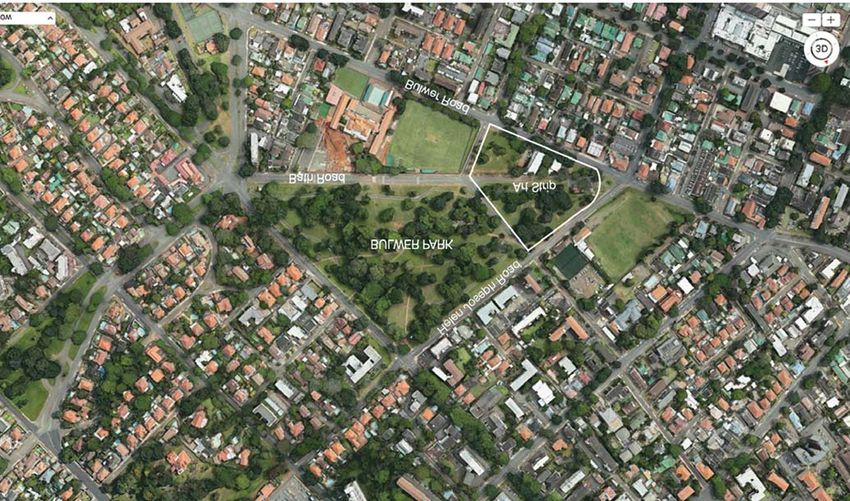
Dukkah Restaurant & Bar
                                        59 Florida d, cnr Fifth Avenue
                                        Windermere, Durban
                                        Architects: Koop Design
                                        Project architect: ichard Stretton

                                        Converting an old house to a restaurant with
                                        garden is not uncommon. To repurpose a house
                                        for serving a new restaurant and thereby
                                        meeting the urban obligation of the whole
                                        development, is a design challenge, made no
                                        easier by a constrained budget.
                                           Thus, the structure is aesthetic, street and
                                        building enjoy a symbiotic relationship, internal
                                        volumes provide variety with al fresco dining
                                        possible under the opening roof, and the
                                        location is given a landmark, distinctive,
                                        functional and appropriate.

                                                           HE UPPER PORTION of Florida Rd,

                                        T
                                                           northward of the intersection with
                                                           Sandile Thusi (Argyle) Rd, has long
                                                           been rediscovered as a Bohemian
                                                           quarter of Durban.
                                                                 The challenge of Dukkah arose
                                                           from its location, southward of that
                                        intersection, on which an old house of low heritage
                                        significance had been recycled for office use. This
                                        house was now to be repurposed as a restaurant, and
                                        in that process activate the potential of the southern
                                        portion of Florida Rd.
                                           Different from its neighbours with substantially
                                        altered façades closer to the road, this old house of
                                        double storey was set back some 12m. The
                                        municipality had identified the site as suitable for a
                                        restaurant, which meant that the recess, occupied by
                                        a garden with pool, could become a space both for
                                        patrons and visual impact.
                                           The challenge was to design a building suitable for
                                        the scale and nature of this environment, one that
                                        engaged positively with the architectural heritage of
                                        Florida Rd and Greyville Village*, opposite and south-
                                        eastward, as well as having a positive impact on the
                                        southern portion of Florida Rd.
                                           The brief was to maximise an additional
                                        developable area by providing a custom-designed
                                        restaurant and bar, each with dedicated service areas;
                                        and to design the bar as a primary feature of the
                                        space for visual impact both internally and to the
                                        street.
                                        *Greyville Village is bounded by First Ave, Mathews Meyiwa
                                        (Stamford Hill), Lennox and Lilian Ngoyi (Windermere) Rds.

2021 SAIA-KZN AWARDS FOR ARCHITECTURE                                  2 ⁄ 2021 saia-kzn journal | 3
nue
                                                                                                                      Fifth Ave

                                                                                                                                                      d
                                                                                                                                                    a Roa
                                                                                           It was agreed that the served or dining space          Florid

 FACING NORTH. The client is an experienced restaurateur and had a clear vision of      should have a strong connection with the street, to
 the experience of the patron. As architects our natural instincts were to open the     the extent that the street would be seen as part of
 building to Florida Rd on the front (east) and 5th Ave on the north. The client        the restaurant and vice versa, as well as having strong
 challenged opening to Fifth Ave based on three reasons.                                internal visual connections to give edge and oversight.
     Firstly, he felt that the current urban management of the area is weak and that    Diners like a view, and in some cases will be the view.
 undesirable elements in Fifth Ave could impact negatively on the experience of            The entire customer experience was to be
 patrons. Besides, this would extend his realm of ‘area management’ beyond that         considered in the spatial design, including the
 which he feels capable of at this time. Secondly, his concept of the ‘theatre of
                                                                                        preparation and service of food and drink, to achieve a
 dining’ was paramount. Apart from the direct, open spatial link to Florida Rd, the
                                                                                        seamless presentation as well as supporting the
 theatre was to be an introverted experience. Thirdly, in order to control access and
                                                                                        dignity and professionalism of staff.
 egress of the patrons a single entrance was required.
     In order to ‘future proof’ the structure within the cement blocks of the north        The project had a tight budget thus the solution
 wall, concrete reinforced columns were cast in the walls, corresponding with the       had to be simple and use minimal resources for
 internal timber structure. Should conditions change in the area, the panels between    maximum effect. The building itself had to deliver the
 the columns and beams of the wall could easily be removed to open the space to         space and aesthetics, so that interior design and
 Fifth Ave. Flexibility is designed subtly into the structure.                          finishes would enhance an already powerful
     Sometimes we agreed to disagree, but I always understood that (a) the client       environment. Space, materiality, and tectonics were to
 knows his game better than me, and (b) it is the client who is left with the baby      be the primary drivers of the concept which should
 (building), not me the architect. Richard Stretton
                                                                                        not have to rely on decoration for impact.

4 | saia-kzn journal 2 ⁄ 2021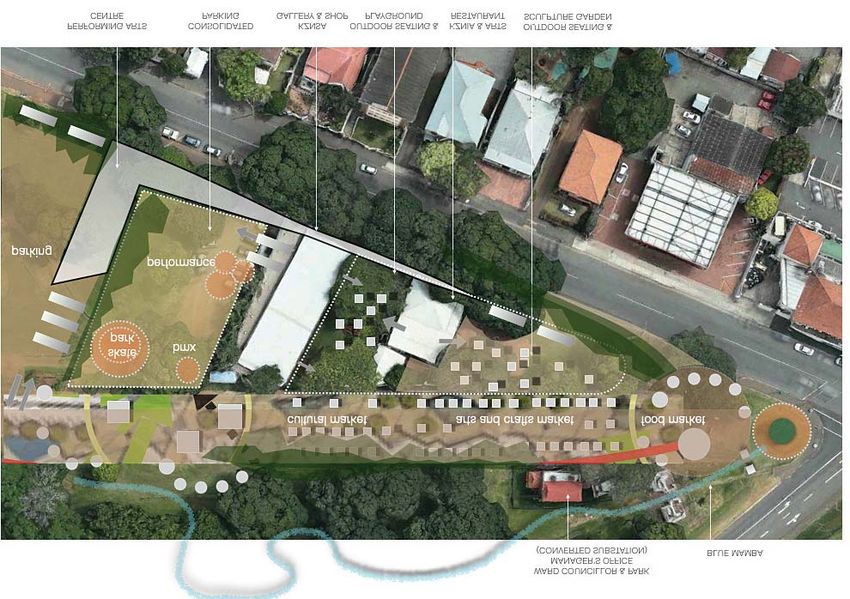
The design
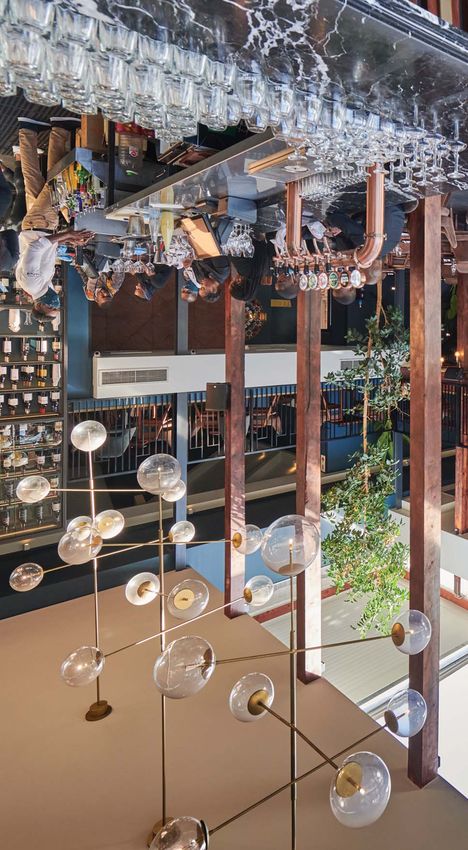
It was decided to take the available additional
coverage and floor area and arrange it as a large
singular, double volume space directly off the street.
    If this cubical space was considered an atrium, a
central court could be created and landscaped, given
there was an opening roof to allow natural light and
sun into the space. The orthogonal approach of this
design was at variance with the property boundary on
Florida Rd, which pointed to the use of the left-over
triangulated space as the veranda, and the possibility
of pavement seating.
    For maximum visibility, the bar was placed along
the southern boundary, while the northern defined
dining spaces on two levels.
    The ablutions and kitchen, accommodated on the
ground floor of the old house, was set back, private,
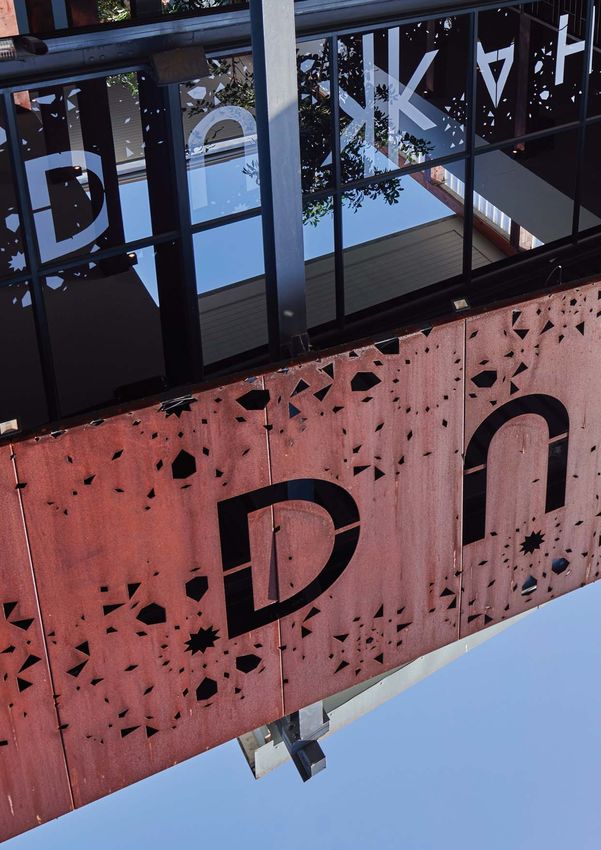
and discreet, keeping noise from dining. A staircase to   needed shading. Early concept sketches identified a        CLOCKWISE, FROM TOP:
                                                                                                                     View from gallery to Florida Rd; the
the upper level was accommodated in the seam              screen for providing both solar control and signage,       retractable roof of the atrium; detail
between the two buildings. The upper floor of the old which dual approach helped transform what might                of staircase placed in the seam
                                                                                                                     between old and new; and the ‘set
house was given over as a ‘set back’ lounge area, with    have been termed a ‘tacked-on’ element to become a
                                                                                                                     back’ lounge area arranged on the
dining along the edges, which allowed for enjoyment       primary component of the building.                         upper floor of the former house.

of the ‘theatre’ below.                                                                                              PAGE 2-3 CENTRE-SPREAD:
                                                                                                                     View westward from the bar. The
    The existing outbuildings at the back of the site     Conclusions
                                                                                                                     atrium with retractable roof; the
were recycled as staff facilities with parking for        This is a project driven and built by a brave client. A    former house integrated at left; and
patrons located between outbuilding and house             person with ’skin in the game’. An economical build        a few recesses in the wall to Fifth
                                                                                                                     Ave used internally as seating
accessible off the side street, Fifth Ave.                was critical. The project required that a few,             booths
                                                          purposeful, economical gestures be made to achieve
Construction                                              the desired result. Each gesture needed to do as much Structural engineers:
The additional space is built simply, with a few basic    as possible.                                          John Russell Consulting (Pty) Ltd
elements.                                                    Therefore, structure is aesthetic and adornment         (Nick Bass)

    The timber posts, which support the roof and          functional. The design needed to challenge town            Interiors:
                                                                                                                     Sphere Design & Architecture
the dining mezzanine are both structural and              planning codes so that building lines could be relaxed,
                                                                                                                     Contractor:
aesthetic. The roof of corrugated metal sheeting is       and that street and building could have a mutually         Owner
retractable over the atrium by way of a 2-part sliding    beneficial relationship.                                   Photographer:
opening.                                                     The result is a catalytic project that through its      Roger Jardine
    The side walls are of cement block construction,      openness and generosity delivers a
whereby the northern is articulated in a checkerboard     positive impact on its environment, and
fashion with recesses, externally as planter boxes and    provides the owner with a large, flexible
internally as seating booths, and high-level windows      space for business, and patrons with a
to provide indirect, filtered natural lighting.           desirable urban space for dining, wining
    The large double volume facing east on Florida Rd     and entertainment.   o

2021 SAIA-KZN AWARDS FOR ARCHITECTURE                                                                                 2 ⁄ 2021 saia-kzn journal | 5
W
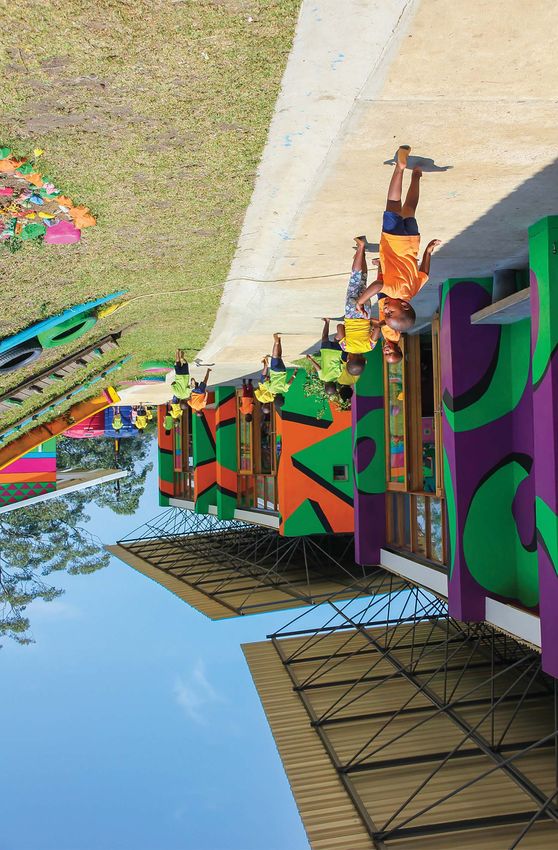
                                                                                 HEN THE COMMUNITY-              The existing after-school care facility with a library
                                                                                 BASED after-school care      and an arts centre across a quadrangle was located on
                                                                                 organisation, Thanda,        a hilltop, which left only the steeply sloping sides for
                                                                                 learnt of children of pre-   expansion, a difficult challenge for creating child-
                                                                                                              friendly spaces at low budget. But, a ramp emanating
                                    Thanda Early Childhood                       school age who, due to
                                                        socio-economic circumstances, were attending
                                                        local primary schools, and not getting the care
                                                                                                              from the quadrangle could spiral down the hilside to a
                                                                                                              lower contour, if need be with hairpin bends, and
                                                        and attention appropriate to their age, it took up provide the setting for a repetition of buildings, which
                                                        the challenge by accommodating as many of          would, quite naturally, be placed circumferentially to
                                                        them as it could at the existing after-school care    the original facility.
                                                        facility. However, numbers grew and the need
    ARCHITECTURE: SPECIAL MENTION

                                                        for a dedicated Early Childhood Development
                                                        (ECD) resource dawned.
                                                             At the same time, Beiersdorf, owners of
                                                        various household brands including NIVEA, put
                                                        out a call for funding organisations with ECD or
                                    Development Centre
                                                        youth development programmes, and identified
                                                        Thanda. Their consulting social development
                                                        specialists, Social Capital Consulting, advised on
                                                        Architects of Justice (AoJ), who had the requisite
                                                        experience.

                                                        Site and design                                                   Classroom Section
                                                        The landscape in the rural South Coast is covered
                                                        with fields of sugar cane in which unsurfaced
                                                        roads define farm boundaries and clearings
                                                        contain groups of rondavels where, due to the
                                                        temperate climate, life is spent mainly outdoors.
         FOR

                                                                                                                          Classroom Plan

                                                                                                                 This principle allowed for three buildings, each
                                                                                                              with two classrooms astride a utility room with sick
2021 SAIA-KZN AWARD

                                                                                                              bay, and an ablutions buildng. The classroom buildings
                                                                                 Site plan before             consist of four fin walls in the short direction and fully-
                                                                                                              opening doors on the long direction, and in this way a
                                                                                                              transparent envelope offering framed views of the
                                                                                                              surrounding hillsides was created. The open doors
                                                                                                              serve to facilitate airflow and passively cool the
                                                                                                              spaces, promoted by openable fanlights in inclement
                                                                                                              weather.

                                                                                 Site plan after

    6 | saia-kzn journal 2 ⁄ 2021
Thanda Early Childhood
Development Centre
Sipofu d, Qwabe, Nyangwini, some
40km West of Mtwalume, South Coast
Architects: Architects of Justice (AOJ )
Project architects: Alessio Lacovig,
Michael assmann

                                        Given the importance of
                                        early childhood
                                         development to a fulfilled
                                           life, the designs of spaces
                                            for such tuition are at
                                              least of equal
                                               importance, as is in this
                                                rural location a design capable of
                                                 realisation by the employment of
                                                   local labour. The jury
                                                    acknowledges the efforts in
                                                    shaping spaces, passively
                                                     comfortable and invigorating,
                                                      and enhancing to the existing
                                                        after-school care facility.

2021 SAIA-KZN AWARDS FOR ARCHITECTURE                                                 2 ⁄ 2021 saia-kzn journal | 7
generated power, before being filtered and
used for drinking, washing of dishes, fruit and
hands.
The ablutions consist of screen walls under a
tilted planar roof on gum pole construction. The
toilets and urinals use a waterless tank system
to dispose of solid and liquid waste. The
operational carbon footprint is zero.
The site was prepared predominantly by
manual labour, no earth was imported and
banks were set at angles of repose without
retaining structures. The ramp is wheelchair
friendly but also designed to control
stormwater runoff. While a main contractor was
engaged, the buildings were largely built by
members of the local community with materials
locally sourced, and finished with the
distinctively colourful wall art.
The ramp has facilitated social intersections
between childen of different ages as well as
staff of the two centres, and assisted in making
a unified whole. o
This project received a 2019/2020 Afrisam-SAIA
Sustainable Design Award. Editor.
The roofs and floors of the classroom buildings
were insulated, while the parasol planes, which owe a Land Surveyors: Stott, Milton & Conway
debt to Francis Kéré’s structures in Burkina Faso, Structural engineers: The Structural Workshop (Craig Tyndall)
overhang by 2m on all sides, and like umbrellas Civil engineers: The Structural Workshop (Taona Shumba)
provide shade while reducing solar gain, and Fire consultants: Fire Management & Design Services
catchment surfaces for water harvesting. The water (John D. Colborne)
so collected is pumped to the upper reservoir by solar Main Contractor: Trengilly Design & Construction
8 | saia-kzn journal 2 ⁄ 2021View of Thanda Early Childhood
Classrooms for Thanda Early Childhood Development Development Centre from north.
The new buildings lie along the
Mags Shapiro
lower contours; the buildings of the
NIVEA’s CORPORATE SOCIAL RESPONSIBILITY (CSR) The parameters for the brief included design of a after-school care facility with library
and arts centre on the hilltop.
Strategy 2015–2020 ‘NIVEA Cares for Family’ was set child-centred space, synergy with existing buildings on
at headquarters in Hamburg, with fields of activity: site, potentially including a (childproof) water element,
children’s competencies, mothers’ empowerment, and a building suited for construction deep in a rural area,
family time. taking into consideration local availability of building
I was invited by Beiersdorf South Africa to facili- material, repurposing/reusing material where possible,
tate a process with the NIVEA team to localise the use of a local building company, incorporating the
strategy, to give it meaning and ensure impact within magnificent view, use of natural light and the ability to
our context. After research and reviewing key areas of collect and harvest rainwater.
opportunity for support in South Africa and unpacking There were many challenges along the way, as
what ‘family’ means to us, it was agreed that family there are with building. The stormwater drainage
means ‘as far as your arms can reach’ – inspired by our system was put to the test with unprecedented storms
rather special philosophy of Ubuntu. With a broader along the south coast. Improvements resulted in
community approach and children’s competencies cho- Thanda being able to provide water to the community,
sen as the field of activity, the focus naturally led to instead of run-off washing down the road. This is the
the priorities of Early Childhood Development (ECD) magic of working with an organisation such as Thanda.
and youth development. We put out a call for propos- The culture of the organisation is steeped in inclusivity
als and began a countrywide search for an existing non- and innovation. Time and again they showed the ability
profit organisation, already supporting these areas. to turn a challenge into an opportunity – as with the
The search and shortlisting process took almost as current extension
long as the build but was worth the investment in time of the ECD
to find a gem of an organisation such as Thanda. programme into
Co-founders Angela Larkan and Tyler Howard the community in
established Thanda in rural KwaZulu-Natal in 2008 to response to Covid
provide support for children through after-school lockdown
programming. The model was based on working with restrictions.
community members and using existing resources. One of the
Unemployed youth were hired and trained to become greatest challenges
after-school facilitators, and empty classrooms at local was the complexity
schools were used to host after-school sessions where of municipal vs tra-
children also enjoyed a hot, nutritious meal. Over time, ditional leaders’
the hub from where community-based programmes jurisdiction to get
were developed, grew to become the home to the only plans approved and
science lab, library, skate park and art centre in the the occupancy cer-
municipality. tificate. I called on many town planners and academics Mags Shapiro is the Director
Children are fed mainly with food grown to help navigate the maze. of Social Capital Consulting,
organically by local community members in Thanda’s Managing multiple parties’ expectations is always specialists in Corporate
agriculture programme. The Centre treads very gently central to facilitating a relationship with a funder and Social Responsibility
on the earth, with food cooked using biogas and power non-profit organisation. What worked here was (www.socialcapitalsa.com)
supplied by solar energy. NIVEA’s trust in Thanda, and Thanda’s professional, Editor
Thanda’s priority, at the time, was to build a space well-considered, stakeholder-inclusive and often
for the ever-growing ECD programme. Ultimately genius response. It is rare to find this in a funding *For the SEED library build-
NIVEA funding has supported expansion of the kitchen, relationship. ing at MC Weller primary
skatepark and programmes on an ongoing basis as It was another funder though who pointed out an school, Alexandra,
well. With a relatively small budget allocated to angle I had not considered. She commented on how Architects of Justice recy-
building ECD classrooms and a plethora of architectural refreshing it was to see infrastructure in a deep rural cled disused shipping con-
talent in South Africa, it was SEED* library by area that didn’t provide the bare minimum for a tainers, a repeatable con-
Architects of Justice (AoJ) that stood out for the community, but rather the best – a world class example cept, which garnered a SAIA
NIVEA team and they were appointed architects. of what an ECD Centre can be. Award of Merit in 2014.
Editor
2021 SAIA-KZN AWARDS FOR ARCHITECTUREE 2 ⁄ 2021 saia-kzn journal | 9Corobrik Student of the
Year 2019 & year 2020
ABOVE: Corobrik Chairman, Mr Peter du Trevou, welcomed all who LEFT: Chief Executive Officer of
participated in the ceremony, both physically and virtually. He mentioned Corobrik, Mr Nick Booth, reminded
that he had been involved with the Corobrik Awards for 34 years, and how participants that the company’s
gratifying it had been to see these premier Awards for students of “vision for the competition was to
Architecture evolve over that time. give up-and-coming Architecture
students a platform to showcase
UE TO THE COVID-19 pandemic,
D
their architectural talent and
creativity”.
adjudication of this prestigious
award for 2019 had to be
postponed until June 2021, Senzo Mamba of University of Johannesburg. His
when together with the 2020 dissertation ‘Bricolage: the architecture of waste’,
entries, the sponsors, Corobrik, proposed to turn vacant buildings into recycling
hosted a hybrid ceremony in factories, as an alternative way of dealing with issues
Johannesburg. of waste within our cities, and thereby reducing
Preceding the announcements, the eight regional energy consumption, transportation and carbon
winners of each cohort had presented their design footprint.
dissertations virtually over two days to the respective The 2020 Corobrik Student of the Year, was Blake
panel of judges. Smit, also of Nelson Mandela University, who too
Announced 2019 Corobrik Student of the Year was landed a R70 000 prize. Smit sought to create a
Gideon Greyvenstein (known as ‘GP’) of Nelson dignified place wherein waste pickers could recycle
Mandela University, who landed a prize of R70 000 scrap within the harsh landscape of the Arlington
prize. His dissertation entitled ‘The Design of a Merino landfill site in Gqeberha (Port Elizabeth). o
Wool Processing Facility in Barkly East, Eastern Cape’, A NEW RECORD. This was the third time in succession that
was sparked by concern for the state of the region Andrew Palframan, studio master of the Final Year and Head
of the Department of Architecture, Nelson Mandela
and town from which ‘GP’ hails, and the need
University, delivered the Corobrik Student of the Year.
therefore to boost agrarian reform toward reviving
Preceding the above two winners was Riaan Huiskens in
small towns. 2018, and one should not forget that Andrew was himself
Further to a motivation by the jury, a Special the winner in 1999.
Merit Award with a R25 000 prize was awarded to Many congrats, Editor.
GP Greyvenstein, 2019 Corobrik Student of Senzo Mamba, recipient of a 2019 Corobrik Blake Smit, 2020 Corobrik Student of the Year.
the Year. Student of the Year Special Merit Award.
10 | saia-kzn journal 2 ⁄ 2021Year 2019 GP Greyvenstein, 2019 Corobrik Student of the Year
The design of a Merino wool processing facility in Barkly East, Eastern Cape.
Year2020 Blake Smit, 2020 Corobrik Student of the Year
Recycling centre for waste pickers at Arlington landfill site, Gqeberha (Port Elizabeth).
2021 SAIA-KZN AWARDS FOR ARCHITECTURE 2 ⁄ 2021 saia-kzn journal | 11View of Bulwer Park looking west from the corner of Helen Joseph be included in the approvals process as a prerequisite
(Davenport) and Bulwer Roads, illustrating responses to the Heart of the
for municipal funding allocations.
Park Community Brief, including a small urban farm, outdoor restaurant,
stage and improved lighting, paving, pathways and parking The Durban Economic Development Cluster is
crafting and publishing viable development strategies
ACH CITY HAS ITS OWN UNIQUE which recognise the importance of integrated
E
‘ecology’, which includes environment, development projects based on social partnerships.
culture, history, mythology and well- Emerging strategies place proper focus on the need
being. Each city will have a chance to for developmental policies which avoid the
advance successfully and sustainably if gentrification trap and allow people to settle close to
this local ecology is respected, and the greatest work opportunities, whilst maximising
citizens, in all their forms and historical public and private infrastructure investment
complexities, are placed at the centre of decision- in the core inner city.
LOCAL TACTICAL
making early in the planning cycle.
South African cities share a history of exclusionary A role for architects
planning and a heritage of social engineering, which Within the built-environment professions, the training
has resulted in unequal and unsustainable social of architects best enables leadership and creativity in
conditions. people-centred regenerative projects. Salaried
Public funding is often distributed in a way which architects in the public sector have an opportunity to
perpetuates individual financial benefits rather than play a leading role within the regenerative process,
social inclusion. Gentrification of inner cities and and to establish an environment within which private
suburbs threatens, whilst social segregation tends to sector architects can contribute. The eThekwini
be reinforced through exclusive enclave Catalytic Projects Unit has recently included architects
st developments. in senior positions and has established a panel of
d private architects to supplement internal resources.
Interventions The eThekwini, or City Architecture Department, has
Focused regenerative interventions which include had similar panels and strategic project resources in
URBANISM
social benefit as a driver can change the city culture place for many years. Properly managed and
from the bottom up. Experiences in Tactical capacitated, this should lead to architects being in a
Urbanism* can be used to deploy finances towards position to advance inclusive briefs and strategic
projects with multiple social and local economic plans, and guide implementation of socially beneficial
benefits. projects.
Public projects should deliberately aim to release
creativity and innovation, and focus investment to Participation
maximise social benefit. Briefs can be structured to Architects in eThekwini have traditionally been
prioritise social inclusion and opportunity for people proactively involved in local development
existing in degraded city precincts. It doesn’t take a opportunities, either directly, as initiators, or as
massive shift - simply a re-organisation of priorities. informed commentators, and sometimes as agents
Interventions need to be inclusive, with careful provocateurs.
consideration of risks and consequences. Early Interventions are particularly prevalent in times of
establishment of joint community visions, and actions challenge, such as threats to the Central Station,
which focus on core social and societal needs, should proposals for infilling Durban Bay, planning for the
Olympics, saving Warwick Junction or addressing the
*Tactical Urbanism includes low-cost, temporary changes to
housing crisis by suggesting an alternative use of golf
the built environment, usually in cities, intended to improve
local neighbourhoods and city gathering places. Tactical courses for affordable inner-city living. Publications
Urbanism is also commonly referred to as pop-up urbanism, include images of a different vision for Durban,
city repair, or D.I.Y. urbanism (Wikipedia). created by architects.
12 | saia-kzn journal 2 ⁄ 2021Concept plans illustrating the
activation of degraded public
spaces south, west and east of
the KZNSA Gallery and SAIA-KZN
Institute offices. The proposal
introduces a performing arts
centre, skate-park and mixed
market strip with opportunities
for pop-up exhibitions, a
sculpture garden, and new safe
playgrounds. The ‘Blue Mamba’
snakes through the tree canopy,
incorporating pods on stilts for
small craft workshops and micro-
businesses. The disused
electrical sub-station is restored
and converted to Park
management offices, and
existing buildings are opened
into shared spaces, forming a
vibrant, integrated ArtStrip.
Architects have also responded well to calls for
voluntary participation in preparation for events such
as the FIFA World Cup, 2010, and the UIA World
Congress, Durban, 2014. This energy needs to be
harnessed to proactively facilitate positive responses
to social change, contributing within development
strategies and processes, ensuring integration of
social benefit as a driver within every public and
private project undertaken. A prominent member of
the SAIA-KZN regional committee said recently that it
is time for architects to become politicians. We can be
activists, at least, and come to grips with Tactical
Urbanism.
The proposed ArtStrip
The precinct surrounding the SAIA-KZN Institute
offices forms an opportunity. New energy needs to be
focused on the social condition of users of Bulwer
Park and surrounds, and opportunities must be
created for social support and intervention. Urban
farming, safe recreation areas, a local market, small
business incubators and expansion of the area into an
active ‘ArtStrip’ are at conceptual stage. Processes are
being explored to enable broad community
participation, within a framework which will include
raising finance from public and private sources. A
public creative workshop in conjunction with City
professionals will integrate formal and informal skills
and identify methodologies for initiation and
facilitation of impactful public projects.
The ArtStrip is one of several similar opportunities
for joint community, public-private interventions. As a
pilot, it is intended to spark further action, and will
identify appropriate methodologies for further
cooperation, and other suitable targets for Tactical
Urbanism.o
Jon Edkins
Though retired since 2015, former City Architect, Jon
Edkins, continues his calling as Vusa Collaborative.
Editor.
2021 SAIA-KZN AWARDS FOR ARCHITECTURE 2 ⁄ 2021 saia-kzn journal | 13KEITH ALCOCK (1936 ‒2021)
fter losing his wife, Jan, last November, Keith ‘ad-hoc committee meetings' at the old Caister Hotel.
A passed away quietly on 13th June 2021, aged His art also records family journeys to Egypt, Zanzibar
85, leaving behind three children and eight
grandchildren.
and Mauritius.
In sport, Keith was a serious competitor. His
Educated at Merchiston and Maritzburg College, preference for soccer (University and Natal provinciai
Keith Harold Alcock graduated in 1957 from the player) which, coming from a renowned rugby playing
University of Natal, aged a mere 21, and went on to high school, underlined his self-determination in
join firms in Bulawayo, London and Mbabane. adversity.
1964 saw Keith working under Professor Leslie From small beginnings at Stella Sports Club, Keith
T. Croft, teaming up with his cousin Brian McLaren and became a long-distance runner and 'gruelled’ his way
Tommy Bedford. After a brief partnership as Leslie T. to the finish of both the Two Oceans and finally the
Croft and Partners, McLaren Alcock & Bedford opened Comrades Marathon.
its doors at 88 Overport Drive on 1 March 1969. When he was not playing squash, there were years
In 1970 Bruce Peter and Paul Batho joined Nick of competitive hockey for ‘old sweats' of Durban
Beattie at MAB, and so began years of Keith quietly Collegians. Keith attended yoga sessions with John
mentoring us and many others, notably Duncan Ross- Ferguson three times a week at St Cyprian's for almost
Watt, Dave Atlas, Cassim Kadwa, Tony Keyte, Graeme ten years.
Smith, Mike Jacobi, Gerry Holmes, Manqoba Khobani, Keith enjoyed camping and hiking, and he also
to name just a few. ventured into the upper ranges of the Drakensberg.
A genuinely gifted, all-round architect known for Keith was indeed a man of many parts.
his 40 years of dedicated work for the Anglican 1981 saw a growing practice settle into new offices
Church all over KZN. From University residences to at 76 Valley View Road (see NPIA Journal 1-1985).
Durban's Kingsmead Cricket Stadium (see NPIA Journal After 1983 designs and imagery by CAD soon became
3/1985), every project no matter how big or small, the architectural norm – a world that Keith reluctantly
received his full attention. accepted, but within which his unique skill set was
Keith was also an extraordinarily gifted never comfortable. He watched hours of labour over
watercolour and perspective artist who shared his an A0 drawing board being clinically superseded by
OBITUARIES
skills with another generation of architects via the the hum of a digital printer.
Visual Communication classes. Those of us in his office Brian McLaren eventually retired early in 1989.
were fortunate to have shared many Friday sessions, Then, in 1990, Tom headed for London. And so, after a
when an old, dented, well- successful career of 32 years in private
pinned drawing board and practice, where he had his hand firmly on
T-square emerged after MAB's financial, ethical and design tiller,
lunch. Keith was in his Keith retired in 1998 to concentrate on art
element magically creating and his growing family.
another perspective In his retirement Keith and Jan travelled
watercolour rendering extensively, visiting Tom in London and
before a ‘cold one’ during St Augustine’s, Queensburgh, 1983. later in Crete, his daughter Karen in Sydney,
and Nick Beattie and Graeme Smith whilst in Australia,
and old colleagues along the way.
Keith will be missed by his children – Karen, Nick
and architect, Lisa, and his many colleagues and
friends. Fortunately his sketches are an unforgettable
reminder of an exceptionally talented yet humble
family man who loved his dogs, spending time tending
his garden and verge.
Warm and welcoming, Keith had a wry sense of
humour, and a kindness and respect for all those he
encountered during his long architectural career. o
Own house, 66 Marists Rd, Glenwood. Paul Batho, partner, MAB Architects
14 | SAIA-KZN JOURNAL 2 ⁄2021MTHEMBENI MKHIZE (1955 ‒ 2021)
On 24th July, Mthembeni Lawrence Mkhize, appointed SAIA CEO in August 2020*, succumbed to the
Covid-19 pandemic. What follows are extracts of tributes by his KZN friends and colleagues. –Editor.
*See Journal 2/2020
ith an increasing awareness and We lost contact for some time after re-met Mthembeni as the newly
W something like a sense of awe, I
have come to recognize there
are a number of quiet giants moving
university, but we would occasionally meet
up. I was quite unaware of his impressive
achievements as he never ever brought up
I appointed SAIA CEO in 2020, co-incident
with the strict lock-down regulations
due to Covid-19 for which reason the
amongst us, and it is with deep sadness and this subject, such was his humility! national office staff was working remotely.
a real sense of bereavement that we have Rest in peace bhuti [brother] Mthembeni. I knew from those status meetings and
lost one such gentle giant, colleague and Mthulisi Msimang: classmate, 1992-3 email requests that he was a man on a
classmate Mthembeni Lawrence Mkhize. mission. He was here to shape up SAIA. And
Such was his quiet humility that although sure enough, during his short term, SAIA
first met Mthembeni as a student at
having known Mthembeni almost 30 years,
since he joined our class at UKZN in 1992, it
came as some surprise to fully appreciate his
range, dedication and accomplishments
I UKZN and would continue to engage
with him regularly in my capacity as a
Student Council leader. Regardless of the
underwent change.
Mthembeni had a high work ethic and he
had mastered the art of getting one to work
just as hard with a smile. Often, whenever he
nature of our meetings, I was always
achieved over these many years, including was about to give me more work, he would
welcomed by his earnest, embracing smile
Head of the UKZN School of Built create soft dialogue, for example, he would
and mutual respect. Little did I acknowledge
Environment and Development Studies. ask about my family or tell me one of his
then that while we were challenging our
My memories of Mthembeni are ones of many humourous childhood stories, then
lecturers for our rights as students to be
warmth, always a smile, a twinkle in the eye - next minute, more work would be added to
seen, heard, and embraced, there was
just on the verge of a laugh - and his my plate. He had quite a sense of humour
Mthembeni challenging the very system.
welcome, friendliness, and enthusiasm for all which at times came with a pinch of sarcasm.
Fast forward a few years to my role as
around him. He has been a calm and Adheema Davis: SAIA-KZN Vice President
Vice-President of SAIA-KZN, this time with
determined force and his sudden passing a
some experience and lessons learned, and
great loss for us all. Why is it that we only
once more needing to meet with people in hen I met Mthembeni in 2013 he
truly appreciate those good and busy souls
amongst us once they have departed? Why
not celebrate each other more and now…?
So, Mthembeni – teaching us even through
high places whilst championing for our rights
as a new generation of intersectional profes-
sionals, young, female, and black. I was met
W was Head of the UKZN School of
the Built Environment and
Development Studies. He set out to make a
with a familiar warm smile and infectious change at our School, in our University and in
your passing. Go well. I will always smile
laugh, Mthembeni was there once more tak- the region of KZN, and he was the right fit
when I think of you. We have been blessed.
ing on the system, once more opening up and steady hand to guide us.
Angela Wilson (Baker): classmate, 1992-3
the space for others, and once more offering He was very calm. He was gentle. He had
whatever he could to ensure that we were excellent leadership skills. He knew how to
ur paths first crossed at UKZN back seen, heard, and embraced in this space. bring people together. It was always amazing
O in 1992 when Mthembeni returned
to resume and complete his
architectural studies. I believe I speak for
Mthembeni defined servant leadership,
he defined dignified leadership, and he
defined equitable leadership. Recalling our
how he would be able to solve really heated
situations and scenarios with a smile and a
gentle hand. He was a big brother, an uncle,
most of our class when I say that within a last discussion, we dwelt on the thought that a mentor to us in the Discipline. He always
few weeks of his joining, it was as if if we hold onto the politics of fear and anger, had the best of intentions for us colleagues,
Mthembeni had been with us since the we can never be great. Mthembeni was self- and also for the students, especially students
beginning! Such was his warmth, lessly the exemplar here doing the work and of colour.
friendliness, especially his hearty and never demanding the honour. I am so grate- There was genuine respect for everyone he
infectious laughter! ful for his support, for his wisdom in doing worked with even though he was much older
His company was even more special to the tireless work of transformation, and for than us. He would not admonish you in public
me because for the first time at university, I imparting it with such humility, reminding us or disregard you - he would prefer to call you
now had a classmate I could converse and to be our authentic selves in the face of poli- quietly and talk to you, encourage you and
joke with, in Zulu. I remember Mthembeni’s tics of exclusion towards equity. make things right and I will forever remember
hard work. He was driven even back then! It For serving so generously, enabling and that about him. So, it is with really heartfelt
would be a few days before a major hand-in encouraging us all to do just the same and and deep pain that he had to go so soon. We
and some of us would still be designing more, ngiyabonga kakhulu [thank you very all miss him, and we say rest in peace.
whilst Mthembeni was polishing off his final much], Mthembeni, hamba kahle [farewell]. Lawrence Ogunsanya: Academic Leader,
presentation! Ruben Reddy: SAIA President elect Discipline of Architecture, UKZN
2021 SAIA-KZN AWARDS FOR ARCHITECTURE 2 ⁄ 2021 saia-kzn journal | 15Sardinia, crossroads of populations
& dominations in the centre of the
Mediterranean Sea
A Travel Diary
TOP: Cagliari is built on a hill N THE HEART OF THE MEDITERRANEAN SEA,
I
overlooking the bay. View from the
Castello district.
with a territorial extension of 24 090km2 and
RIGHT: Cathedral of Cagliari in the only about 1 658 000 inhabitants, the island of
transitional Romanesque-Gothic (or Sardinia is like a small continent, and very dear
Pisan-Romanesque) style.
to me because it is my land, the place of my childhood
BELOW: The great Roman
amphitheatre of the 1st and 2nd and adolescence, where I often return to meet family
century AD built and excavated on and friends, see my spaces. This Travel Diary is
the slope of a hill in the centre of
the city, Cagliari .
therefore the story of a particular stay, in which the
description of some important sites, I believe, can
bring closer the history and cultural landscape of the
island. The architecture of a nuraghe is divided into two
This extensive territory, impervious and dominated types: the ‘protonuraghi ’, or corridor nuraghi, and the
by woods and mountains in the central area, for more numerous ‘tholos nuraghi’, with a truncated
thousands of years attracted, especially on its coasts cone shape, often reinforced by lateral towers, with
and flat areas, different populations whose traces are circular chambers and niches inside. These are wall
still visible today. structures, made of blocks with no cement mortar
Among the oldest civilisations we find the Nuragic
lining, which are as thick as 4 meters with a diameter
one, which developed between 1800 and 500 BC, when of 11-15m and a height of 12-22m, dominating the
a population, which probably came from the sea, rural landscape outside the urban centres, making
began to build powerful fortresses called ‘nuraghi’ in Sardinia a large open-air museum in the
the centre of the villages. Mediterranean Sea.
The nuraghi were also Among the best known and preserved areas, in the
inserted as autonomous centre-south of the island, lies Su Nuraxi at Barumini
constructions to control the (11-8c BC ), rated a UNESCO World Heritage Site in
borders of the tribal 1997. Built in basalt stone, with a central tower (about
territories. Still today one 18.5m high) and four lateral ones, the fortress is
can find about 7 000 located in the centre of a Nuragic village (23300m2 of
‘nuraghi’ scattered floor area) of over fifty huts, interspersed with wells
throughout the island; a and cisterns, where the daily life of the inhabitants
significant and unique took place.
heritage worthy of the The Nuragic civilization believed in the worship of
request to be classified as a water and a symbolic location was a well temple, an
UNESCO World Heritage underground structure that in some cases was a
Site. complex architecture, as in the Well of Santa Cristina
16 | saia-kzn journal 2 ⁄ 2021BELOW: Nuraghe, truncated cone
structures or fortress houses of dry-
wall construction date from the
earliest times and dot the island.
BOTTOM: Su Nuraxi at Barumini, a
nuraghe complex declared a
UNESCO World Heritage Site.
MAP: Sardinia is an Italian island in
the Mediterranean Sea; its northern
neighbour, Corsica, is French.
(12c BC ) in Paulilatino. The well was traced into the These and other aspects of Cagliari and Sardinia,
ground with a trapezoidal shape defined by 7m high linked to the history, the landscape of the coast and
stems from the Neolithic period, around 6 000 bc it can be said that in Sardinia there
retaining walls, which lead through a flight of steps to the countryside, the mountain spaces and those of its
the vaulted underground space; an extraordinary ancient mines, make the island a popular travel
“Sardinia is one of the oldest lands in Europe, permanently inhabited by man, and
place that reveals a refined precision in its destination.
construction. In 1921 the English writer D.H. Lawrence, on the
After the Nuragic civilization, different peoples and occasion of his nine-day stay on the inland areas of the
colonisations followed one another over time island, fascinated by its rural and landscape
(Phoenicians, Carthaginians, Romans, then the aspect and by the particular combination of
Aragonese and the Spanish, etc). They dominated the modernity and archaism, described Sardinia
island until the nineteenth century and left a rich as “another thing: much wider, much more
cultural heritage, which can be seen in the usual, by no means irregular, but which
architectural remains in the territory. vanishes in the distance. [...] It is like
This coexistence of cultures is particularly visible in freedom itself ” (D.H. Lawrence, Sea and
Cagliari, the capital of the island, its first settlements Sardinia, 1921). o
date back to the Neolithic period, but it developed as Silvia Bodei
a city with the Phoenician-Punic domination in the first Dr Bodei, Senior Lecturer in Architecture,
millennium BC, due to its strategic position in the UKZN, is a proud Sardinian. Editor
was never a single population, but many populations.”
Mediterranean. When walking in the city it is possible
to find the remnants of the different civilizations and
cultures that have inhabited it: the Punic necropolis of
Tuvixeddu (4-3c BC), the largest in the Mediterranean,
dug in limestone and now converted into an urban
park; the great Roman amphitheatre (1-2c AD), built
and excavated on the slope of a hill in the centre of
F. C. Casula, La Storia di Sardegna, 1988
the city; the Byzantine Basilica of San Saturnino (5-12c
AD ), the oldest church in the city, originally built on a
Greek cross plan with a hemispherical dome; the
upper district of Castello with the towers and
fortifications built by the Pisans (13c AD), the Cathedral
of Santa Maria di Castello in Pisan-Romanesque style
(13c, completed 17-18c and restored 20c), the Palazzo
Regio (14-18c) residence of the king's representative
during the Aragonese, Spanish and Piedmontese
dominations, now the headquarters of the province.
These are just a few examples as there are
historical aspects everywhere; in the four historic
districts of the city and also in the suburbs,
continuously intersecting with public spaces, squares
and pedestrian streets, dotted with exotic palm trees,
jacarandas and Mediterranean vegetation. Indeed,
Cagliari can be defined a ‘city-landscape’ because, built
on seven hills and overlooking the sea, it has a
particular orography, rich in panoramic points on the
city itself or towards the port, the beach and the
surrounding mountains.
2021 SAIA-KZN AWARDS FOR ARCHITECTURE 2 ⁄ 2021 saia-kzn journal | 17You can also read


