SAISD BlueprInt for excellence: tArget 2020 - Pedro Martinez, Superintendent - San Antonio Independent School District
←
→
Page content transcription
If your browser does not render page correctly, please read the page content below
SAISD Blueprint
for Excellence:
  Target 2020
Pedro Martinez, Superintendent

  San Antonio Independent School District
SAISD’S Blueprint for Excellence
B io
ng
tec
ar eri
hn
2-y
e ne
olo
ngi
So velo
s
gy
E
ge
ftw pe
de
4-
ity
are r
olle
ye
cur
ar
C se
nity ber
mm
u
-tie
r n Success
Cy
ee rs
Co Top
Graduatio
C a r
Magne
Law ts
IB
Hig
Ac h Sc Dual
hie ho credit
vem ol Up to 45
Engin
eerin
en AP IB college credits
g
t Media
/Film
Healt
h
IB Algebra Pre-AP
8th-Grade
Achievement
G radent
- Advanced
5theveme Math
i
SAISD is redefining
excellence to ensure that Reading
Ach
students graduate well- at Grade
prepared for success in Level
college and career. Integral
to our plan are critical
achievement points that
hoist students to each
successive level
of learning.
3rd-Grade
2n
Achievement
d
1s
t
KIN
DE
PR
RG
E-
AR
K
TE
N
Supported by Pillars of Success: Academic Excellence. Talent Management. Culture Shift.
Stakeholder Engagement. Fiscal Management.
INTRODUCTION
When Superintendent Pedro Martinez joined the San Antonio Independent School District on
June 1, 2015, he was tasked with transforming SAISD into a national model for other urban
school districts. Under his leadership, the District is in the process of redefining excellence for all
students, so that many more of our approximately 53,000 students achieve at higher levels and
graduate well-prepared for success in college and career.

Our sights are set much higher than minimum performance on the state assessment – The
SAISD Blueprint for Excellence: Target 2020 is about developing lifelong learners who graduate
feeling empowered and equipped to pursue their dreams. We believe each student is on an
individual path. Our job as a District is to ensure each is held to the highest of standards along
the way, as we nurture and support them.

This blueprint serves as a cohesive educational plan designed to prepare students for success
from the moment they enter our schools in pre-kindergarten all the way through to high school
graduation. In fall 2015, we established 10 measurable academic goals to be achieved by 2020
(see 5-Year Goals on page 10). This document outlines the strategies that we will launch beginning
in 2016-17, and will phase in through the 2019-2020 school year, to achieve those goals.

We are drawing upon best practices to raise academic
expectations for all students and elevate teaching in all
classrooms. Built into the plan are critical achievement               “Among the changes is
points designed to hoist students to the next phase of their           significantly enhancing
learning, and in the long run, prepare them for a seamless           Gifted & Talented services;
transition from public education to higher education.                  expanding the college-
The achievement points include: strong literacy in pre-               preparatory International
kindergarten through 3rd grades, with students reading at             Baccalaureate program;
grade level by the end of the 3rd grade; advanced math in                building more pre-
5th grade; algebra in 8th grade and advanced and college                Advanced Placement
credit-bearing courses in the 11th and 12th grades.                   courses into the middle
                                                                      school years and raising
Five pillars together will provide the support and resources         the bar at the high school
needed to ensure our students meet each of the                      level so students take more
achievement points. They are: Talent Management,                        advanced courses....”
Culture Shift, Academic Excellence, Stakeholder
Engagement and Fiscal Management.

Academic Excellence likely will be the most visible strategy as students and parents take note
of increased opportunities for advanced learning. Among the changes is significantly enhancing
Gifted & Talented services; expanding the college-preparatory International Baccalaureate
program; building more pre-Advanced Placement courses into the middle school years and

                                                                                                    3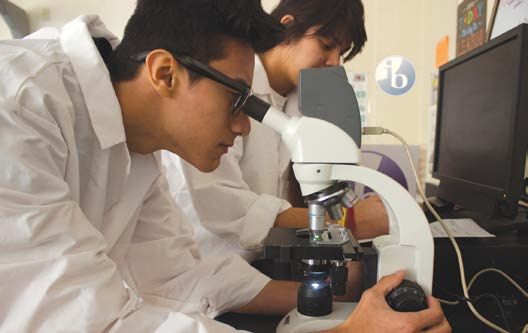
raising the bar at the high school level so students take more advanced courses, including more
dual-credit courses, for which they can earn both high school and college credit. No matter a
student’s path, he or she will have the opportunity to graduate high school with up to 45 hours
of college credit, starting with the class of 2020 – that’s 1 ½ years of college – making for a
smooth transition to higher education.

This blueprint is the result of six months of intense focus and represents the feedback and
contributions of District staff, teachers, students, parents, community members, business
leaders and elected officials. Over the next several years, we will continue to meet with and
engage our stakeholders to provide updates and solicit feedback about what’s working and
what needs to be modified.

MANAGING OUR TALENT
Before we can hope to achieve our goals as a district, we must ensure that employees’
collective skills and talents – our human capital – align with our emerging, multiplex needs. In the
area of recruitment, we are ratcheting
up efforts to hire teachers earlier so                       Recruitment Strategy
we have a larger pool of candidates
from which to choose, increasing our        New teacher
                                                 hiring               Hiring 2014-15 Hiring 2015-16
chances of securing top talent. Our
goal is to hire, by end of April 2016,      Thru April                         58*                       240 **
half of the teachers we anticipate we
will need for the 2016-17 school year       June-Aug.                         321                        160
and to have all teaching positions
staffed with highly qualified candidates *Represents cumulative hiring, October 2014 - April 2015.
                                          **Represents goal by April 2016. (116 hires made as of January 2016.)
by the first day of school in August.

We also are implementing and exploring a number of strategies to grow our existing talent.
We envision an SAISD where employees continually are challenged and motivated to advance
and are provided multiple avenues and on-going support for professional growth. Facilitating
employee advancement will allow us to build leadership capacity, a critical factor in our success,
throughout the District.

Broadly, we are implementing a three-year professional development plan that involves
identifying areas of need for all of our educators and providing targeted training, some of which
already has begun. We are emphasizing existing and creating new leadership pathways
for employees, so that each feels motivated and empowered to grow through professional
development. Some may strengthen their leadership skills by serving as lead teachers or
department chairs at their schools, while others may choose to progress by pursuing an
advanced degree in their content area or moving into an administrative role.

 4
Some of our more targeted efforts include
a teaching residency program, still in
the exploratory stage, to grow our own
educators, in addition to recruiting new
teacher talent. The residency program
would be for SAISD educators, such
as paraprofessionals, who have earned
degrees but are not certified to teach.

These candidates would participate in an
extended internship at one of our schools,
learning from a high-performing mentor
teacher and receiving the support needed
to make the successful transition into teaching.

A similar residency program is planned for aspiring principals who meet rigorous entry
requirements. Starting in 2016-17, the principals program will tap a small cohort our most
talented assistant principals for an intense yearlong paid residency, which would be in
partnership with an external training group.

Separately, we envision a laboratory school, in partnership with a local university, where strong
and motivated SAISD teachers work and learn side-by-side master’s-level university students
at a campus dedicated to Gifted & Talented education. These highly trained teacher specialists
would go into SAISD classrooms upon completing the program, making room for another cohort
of teachers.

Our efforts will be helped along by implementation of the state’s new employee performance
evaluation system, T-TESS. This tool includes critical measures of teacher effectiveness
– observations, goal-setting and professional development and student growth – and
promotes continued growth through on-going self-assessment, goal-setting and professional
development.

Our ambitious plans for talent management, and all other components of this blueprint, hinge
on our ability to build a systemic culture of high expectations and consistent accountability, for
students and for staff. Shifting culture is an on-going process that will take years to achieve,
but we are all in. Our rigorous 5-year goals for academic excellence throughout SAISD are a
testament to our commitment.

ACADEMIC EXCELLENCE
Our strategy around academic excellence touches on all grade levels, starting with the moment
students join the SAISD family in Pre-kindergarten.

                                                                                                 5
ELEMENTARY SCHOOL
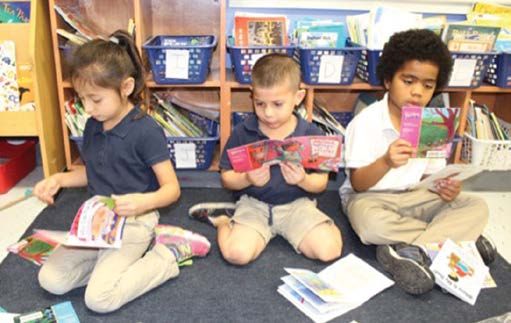
Literacy is the building block for future success in all ADVANCED
other subjects, across all other grades. That’s why we are
focusing our literacy efforts in Pre-kindergarten through ACADEMICS
3rd grades, which is one of four critical achievement points We are committed to enhancing
and expanding Gifted & Talented
spanning students’ educational years in SAISD.
services to ensure that even
students performing at the highest
levels experience continual
progress and are in an environment
where they can thrive. The gifted
population is a diverse one with
varying levels of need. Our efforts
will focus on amplifying service
offerings in Pre-kindergarten
through 12th grades to meet those
needs, building capacity through
professional development and
increasing the number of students
receiving services.
Our goal is for students to read at grade level by the end Changes will be introduced over
of the 3rd grade because research indicates students who the next several years. Starting in
do not are less likely to graduate from high school on time. 2016-17, we will hire credentialed
Attention and resources are being dedicated to ensure Gifted & Talented specialists to
that teachers receive the professional development and deliver instruction at elementary
materials needed to deliver quality literacy instruction and schools, allowing designated
that the curriculum is being taught consistently from school librarians, counselors and teachers
to school. to return to their primary areas of
focus. Each specialist will cover
At the elementary level, another critical achievement point multiple elementary schools,
is in the 5th grade; we are ensuring that students are being providing services through a
exposed to advanced math concepts in this grade in mix of out-of-class, small-group
sessions and in-class instruction,
preparation for algebra in the 8th grade.
in collaboration with the classroom
teacher.
A number of strategies are being employed to ensure
that students reach these critical achievement points,
Also in 2016-17, we will launch
including adopting a new framework for teaching, to be
our first Gifted & Talented
implemented across all grades. Our teachers will receive
Academies at the middle and
quality professional development in this new teaching
high school levels. In addition to
model, as well as in other targeted areas. the academy for middle school
students, we will move toward
the clustering of gifted students
at traditional middle schools,
6And just as we support our teachers with the training
meaning the students will take their
they need to instruct students at higher levels, we also
core subject courses together. The
courses would be taught by highly are providing support for our learners. Our plan calls for
qualified Gifted & Talented teachers. ensuring that students in Special Education have the
critical tools and resources they need to thrive. We are
To help increase the number of more closely monitoring our English Language Learners to
teachers qualified to deliver gifted identify those who are prepared to exit this program earlier
instruction, the academies will than the 4th grade, which is the mandatory grade of exit.
double as laboratory schools, Some students are prepared to transition to the traditional
launched in partnership with a educational program as early as the 2nd grade, and we
local university, where strong and should ensure their prompt exit so as to encourage a
motivated SAISD teachers work and continuous progression.
learn side-by-side master’s-level
university students at a campus For our most gifted students, we are overhauling services
dedicated to Gifted & Talented to ensure that we do a better job of identifying and
education. These highly trained nurturing their talents. Our goal is to increase the number
teachers would go into SAISD of students receiving Gifted & Talented services by
classrooms upon completing the launching a universal screening program in the 1st
program, making room for another and 5th grades, in addition to taking teacher referrals.
cohort of teachers. (See Advanced Academics sidebar)
Simultaneously, we will work to MIDDLE SCHOOL
increase the number of students Benefiting from changes at the elementary level, students
who receive services. In December will reach middle school with strong reading and math skills
2015, the Board of Trustees needed to take on greater rigor than has been expected
approved a universal screening in the past. We expect students to take Pre-Advanced
program in the 1st and 5th grades Placement or International Baccalaureate-prep (at
to determine whether students are middle schools that feed into IB high schools) courses and
eligible for the program. We will to engage in classroom activities focused on problem-
continue to take teacher referrals for solving, academic discourse and critical analysis. Through
all grades, but this screening system
these courses, students also will improve writing skills, time
will allow us to reach more students.
management skills and study habits.
In addition, we plan to expand the
We believe that our middle school students will rise to meet
college-preparatory International
a higher level of rigor and will be prepared to take algebra
Baccalaureate program, currently
by the 8th grade, positioning them well for advanced math
in place at Burbank High School
in high school. We plan to offer more sections of algebra in
and also at Woodlawn Academy,
which is in Year 2 of candidacy. In the 8th grade, as well as offering high school English in the
spring 2016, we will seek candidacy 8th grade. And we will look to more project-based learning
for Jefferson High School for the that helps students develop critical-thinking skills.
2016-17 school year, with plans to
introduce the program at Jefferson
and Burbank feeder schools in the
coming years. 7The goal at this level is to ensure our students are prepared for advanced courses by the 11th
grade, such as Advanced Placement and dual-credit courses that result in both high school and
college credit.
In addition, all 8th-graders will take the Texas Success Initiative exam in reading, and students
taking algebra also will take the TSI in math. TSI is an exam that assesses how ready students
are to take freshmen-level academic coursework work and is required by the state for all
students entering college.
To support middle school students capable of excelling at the highest of levels, we will be
launching a Gifted & Talented Academy for students in grades 6-8 in fall 2016. (See Advanced
Academic sidebar)
HIGH SCHOOL
The escalation of rigor continues in high school, where students reach the last critical
achievement point: juniors and seniors will be expected to take advanced and college credit-
bearing courses in the 11th and 12th grades. It’s in this last stage that we are intensifying
efforts to create a seamless transition to higher education – and to ensure that students are
well-prepared to handle college-level work without having to take remedial courses. (Remedial
courses don’t count toward a student’s major and increase the likelihood that a student will drop
out of college.)
Whether a student’s path leads to a 4-year university, a community college or an industry-
training program, we know that it must lead to a post-secondary credential, if the student is to
earn a living wage in today’s economy.
Our changes are targeted
to the class of 2020, which High School: High-Quality Options
is the freshman class of Early College
2016-17. Students enter High Schools Magnets Career Pathways
high school on a selected Earn up to 60 hrs Earn up to 45 hrs Earn minimum of
career path and will follow college credit college credit 30 hrs college credit
a prescribed course • Travis • IB Pathways include:
sequence that can lead to • Agriculture
• St. Philip’s • Engineering
as many as 45 hours of • Computer Science
college credit resulting • Brackenridge • Health • Culinary
from a mix of dual-credit • Law • Fire Safety
and Advanced Placement • Media & Film • IT
courses. • Marketing/Business
8The dual-credit courses, for which
students simultaneously earn both
high school and college credit,
are tightly aligned to the Alamo
Colleges’ degree programs. Many
of the career paths represent
in-demand fields, such as
computer science, engineering
and health professions, and can be
pursued through a “pathway” at a
neighborhood school or by applying
to and attending one of our magnet
programs.
Each path will have advanced courses built into it: Advanced Placement, International
Baccalaureate program (at select high schools) or dual-credit courses that prepare students
for the rigors of college work. To prepare students for these higher-level courses their last
two years, we are adding more pre-Advanced Placement and IB-prep courses in the 9th and
10th grades.
Separately, our three early college high schools, where students can earn up to 60 hours of
college credit and/or an associate degree by graduation, will continue to be an option.
There is no question that we would be unable to achieve our goals without the support of all
SAISD stakeholders. It is only through partnership with our employees, parents, community
members and business and education leaders that we will reach the academic goals we have
set – and, thus, provide a better education to the students of SAISD.
Our commitment is that we will continue to engage our parents and encourage them to take
an active part in their child’s education, both at school and at home. We will continue to work
with institutes of higher education to come up with creative and innovative ways to ensure
that SAISD students are well-prepared for college. We will continue to listen and engage with
business leaders who have a stake in SAISD’s success as they look to a qualified workforce
to operate their businesses. We will continue to work with the non-profit partners who provide
invaluable resources that align with our goals.
We also will commit to continued good financial stewardship and sound fiscal management to
ensure we are able to fund the programs, services and professional development that are critical
to the plan outlined here.
9San Antonio Independent School District
San Antonio Independent School District
5-YEARGOALS
5-YEAR GOALS
CURRENT STATE NATIONAL 5-YEAR
GOAL CURRENT STATE NATIONAL
AVERAGE 5-YEAR
GOAL RESULTS
RESULTS
AVERAGE
AVERAGE AVERAGE
GOALS
GOALS
1. Increase the percent of
1. campuses
Increase the percent
rated highofperforming
campuses rated highstate
performing 70%
(B or higher) under 70%
(B or higher) under
accountability state
standards
accountability standards
ENSURE PROFICIENCY, GROWTH AND A PERSONALIZED GRADUATION PLAN
ENSURE PROFICIENCY, GROWTH AND A PERSONALIZED GRADUATION PLAN
90% / 55%
2.2. Increase performance/growth r=63% / 56%
r=63% / 56%
r=76% / 61%
r=76% / 61% 90% / 55% or
inIncrease
readingperformance/growth
(r) and math (m) m=62% / 55% m=78% / 60% or
in reading (r) and math (m) m=62% / 55% m=78% / 60% state avg. / 80%
state avg. / 80%
3.3. Increase the passing rate of prior
Increase the passing rate of prior
r=33%
r=33%
r=45%
r=45%
year failers 60%
year failers m=32% m=46% 60%
m=32% m=46%
4.4. Increase the percent of HS
Increase the percent of HS
students who complete an
students who complete an 80% 77% 67% 90%
AP/IB/Dual Credit or CTE 80% 77% 67% 90%
AP/IB/Dual Credit or CTE
coherent sequence of courses*
coherent sequence of courses*
5.5. Increase
Increase on-time 4-year
on-time 4-year gr=81%
gr=81% gr=88%
gr=88% gr=80%
gr=80% gr=90%
gr=90%
graduation
graduation rates (gr)and
rates (gr) and
decrease dr=14% dr=7% dr=7% drSan Antonio independent school district
Board of Trustees
Patti Radle, President
Arthur V. Valdez, Vice President
Debra Guerrero, Secretary
Ed Garza, Trustee
Olga M. Hernandez, Trustee
James Howard, Trustee
Steve Lecholop, Trustee
Pedro Martinez, Superintendent
11The San Antonio Independent School District does not discriminate on the basis of race, color, gender,
religion, national origin, age, disability, or any other basis prohibited by law.
El Distrito Escolar Independiente de San Antonio no discrimina por motivos de raza, religión, color, origen
nacional, género o impedimento, o por cualquier otro motivo prohibido por la ley.You can also read


