SARS-COV-2 ANTIGEN-DETECTING RAPID DIAGNOSTIC TESTS - AN IMPLEMENTATION GUIDE - WHO | WORLD HEALTH ...
←
→
Page content transcription
If your browser does not render page correctly, please read the page content below
SARS-CoV-2
antigen-detecting
rapid diagnostic tests
AN IMPLEMENTATION GUIDE
SARS-CoV-2
antigen-detecting
rapid diagnostic tests
AN IMPLEMENTATION GUIDE
SARS-CoV-2 antigen-detecting rapid diagnostic tests: an implementation guide
     ISBN 978-92-4-001774-0 (electronic version)
     ISBN 978-92-4-001775-7 (print version)

     © World Health Organization 2020
     Some rights reserved. This work is available under the Creative Commons Attribution-
     NonCommercial-ShareAlike 3.0 IGO licence (CC BY-NC-SA 3.0 IGO; https://creativecommons.
     org/licenses/by-nc-sa/3.0/igo).
     Under the terms of this licence, you may copy, redistribute and adapt the work for non-
     commercial purposes, provided the work is appropriately cited, as indicated below. In any use
     of this work, there should be no suggestion that WHO endorses any specific organization,
     products or services. The use of the WHO logo is not permitted. If you adapt the work, then you
     must license your work under the same or equivalent Creative Commons licence. If you create
     a translation of this work, you should add the following disclaimer along with the suggested
     citation: “This translation was not created by the World Health Organization (WHO). WHO is
     not responsible for the content or accuracy of this translation. The original English edition
     shall be the binding and authentic edition”.
     Any mediation relating to disputes arising under the licence shall be conducted in accordance
     with the mediation rules of the World Intellectual Property Organization (http://www.wipo.
     int/amc/en/mediation/rules/).
     Suggested citation. SARS-CoV-2 antigen-detecting rapid diagnostic tests: an implementation
     guide. Geneva: World Health Organization; 2020. Licence: CC BY-NC-SA 3.0 IGO.
     Cataloguing-in-Publication (CIP) data. CIP data are available at http://apps.who.int/iris.
     Sales, rights and licensing. To purchase WHO publications, see http://apps.who.int/
     bookorders. To submit requests for commercial use and queries on rights and licensing, see
     http://www.who.int/about/licensing.
     Third-party materials. If you wish to reuse material from this work that is attributed to a
     third party, such as tables, figures or images, it is your responsibility to determine whether
     permission is needed for that reuse and to obtain permission from the copyright holder. The
     risk of claims resulting from infringement of any third-party-owned component in the work
     rests solely with the user.
     General disclaimers. The designations employed and the presentation of the material
     in this publication do not imply the expression of any opinion whatsoever on the part of
     WHO concerning the legal status of any country, territory, city or area or of its authorities,
     or concerning the delimitation of its frontiers or boundaries. Dotted and dashed lines on
     maps represent approximate border lines for which there may not yet be full agreement.

     The mention of specific companies or of certain manufacturers’ products does not imply that
     they are endorsed or recommended by WHO in preference to others of a similar nature that
     are not mentioned. Errors and omissions excepted, the names of proprietary products are
     distinguished by initial capital letters.
     All reasonable precautions have been taken by WHO to verify the information contained in this
     publication. However, the published material is being distributed without warranty of any kind,
     either expressed or implied. The responsibility for the interpretation and use of the material
     lies with the reader. In no event shall WHO be liable for damages arising from its use.

ii                    SARS-CoV-2 antigen-detecting rapid diagnostic tests: an implementation guide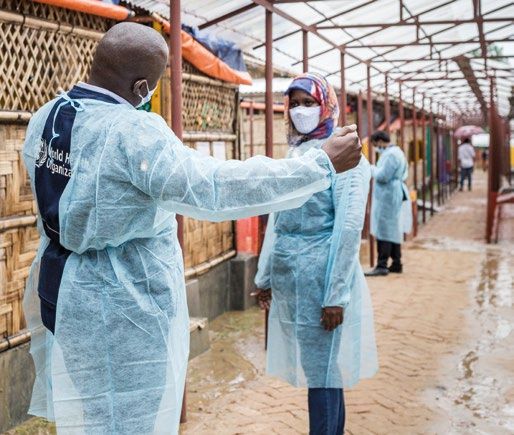
Contents
ACKNOWLEDGMENTS ............................................................................................. iv
ABBREVIATIONS .......................................................................................................... v
1. OVERVIEW OF IMPLEMENTATION GUIDE ......................................... 8
2. CONTEXT OF THE CORONAVIRUS DISEASE
   (COVID-19) PANDEMIC ...................................................................................... 10
    Brief history of the pandemic ......................................................................................... 11
    Central role of testing in the response ........................................................................ 11
    Urgent needs in the pandemic response ...................................................................... 11

3. HOW COVID-19 IS DIAGNOSED .................................................................. 12
    Molecular testing .............................................................................................................. 13
    Rapid diagnostic testing .................................................................................................. 13

4. ROLE OF AG-RDTs AS PART OF A COVID-19
   DIAGNOSTIC TESTING STRATEGY ........................................................... 16
    Recommendations for the use of SARS-CoV-2 Ag-RDTs ........................................... 17

5. HOW SARS-CoV-2 AG-RDTs WORK .......................................................... 21
    Structure of Ag-RDTs ........................................................................................................ 22
    Interpreting Ag-RDT performance ................................................................................ 22
    Ag-RDT performance expectations and characteristics ............................................ 24

6. KEY IMPLEMENTATION CONSIDERATIONS ..................................... 25
    Integrating a SARS-CoV-2 Ag-RDT testing strategy into
    the national response plan ..............................................................................................                    27
    RDT procurement: selecting the right product ..........................................................                                      29
    RDT supply chain management and logistics ..............................................................                                     31
    Training ................................................................................................................................    33
    QA processes ......................................................................................................................          34
    Data management and connectivity .............................................................................                               36
    M&E ......................................................................................................................................   38
    Communication and community engagement ............................................................                                          41

REFERENCES ................................................................................................................... 42
ANNEX: COUNTRY READINESS CHECKLIST
FOR SARS-CoV-2 AG-RDT IMPLEMENTATION ..................................... 43
    Download the file here

                          SARS-CoV-2 antigen-detecting rapid diagnostic tests: an implementation guide                                                iii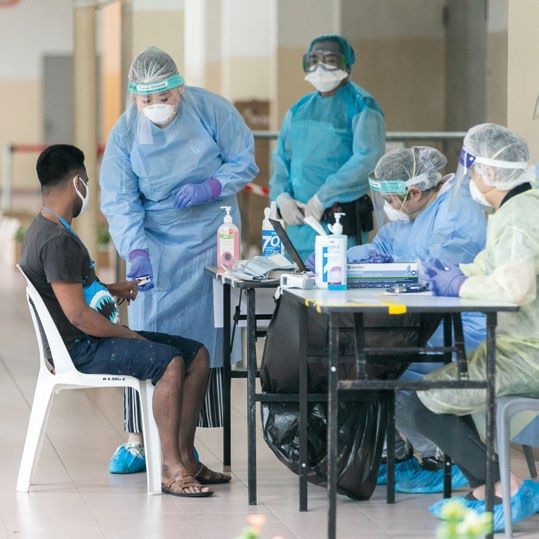
Acknowledgments
     This SARS-CoV-2 antigen-detecting rapid diagnostic test implementation guide
     is a product of collaboration between the World Health Organization (WHO) and
     the Foundation for Innovative New Diagnostics (FIND), with support from the
     Access to COVID-19 Tools (ACT) Accelerator Country Preparedness Working Group;
     African Society for Laboratory Medicine (ASLM); Centers for Disease Control and
     Prevention (CDC); Clinton Health Access Initiative (CHAI); The Global Fund to Fight
     AIDS, Tuberculosis and Malaria (Global Fund); Médecins Sans Frontières; and PATH.

     We acknowledge the assistance of many people in the development of this guide,
     including (in alphabetical order):

        •   Core contributors: Heidi Albert (FIND); Julianne Birungi (UNICEF); Alexandre
            Costa (UNICEF); Jane Cunningham (WHO); Owen Demke (CHAI); Arika Garg
            (CHAI); Emma Hannay (FIND); Hellen Kassa (FIND); Paolo Maggiore (CHAI);
            Naureen Naqvi (UNICEF); Christopher Oxenford (WHO); Chase Perfect
            (Coalition Plus); Fifa Rahman (Unitaid); André Trollip (FIND).

        •   Reviewers: Michael Aidoo (CDC); Priyanka Bajaj (PATH); Céline Barnadas
            (WHO); Eileen Burke (Global Fund); Fatim Cham-Jallow (Global Fund); Sébastien
            Cognat (WHO); Kara Durski (WHO); Laurence Flevaud (Médecins Sans
            Frontières); Nancy Gerloff (CDC); Lionel Gresh (PAHO/WHO); Martine Guillerm
            (Global Fund); Shilpi Jain (CDC); Rigveda Kadam (FIND); Praveen Kandasamy
            Sugendran (PATH); Laura Kerr (UNICEF); Shaukat Khan (CHAI); Lesley McGee
            (CDC); Deepak More (PATH); Pascale Ondoa (ASLM); Mark Perkins (WHO);
            Vincent Petit (UNICEF); Analia Porras (PAHO); Purnima Ranawat (CHAI); Maria
            Rioja (CHAI); Jilian Sacks (FIND); Katrina Sleeman (CDC); Shibu Vijayan (PATH).

        •   Lead writers and editors: Talya Underwood (writer, Anthos Communications);
            Fiona Stewart (editor).

iv                   SARS-CoV-2 antigen-detecting rapid diagnostic tests: an implementation guide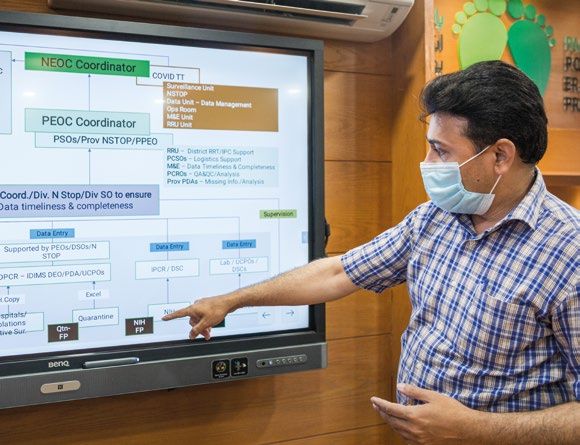
Abbreviations
Ab          antibody

Ab-RDT      antibody-detecting rapid diagnostic test

Ag          antigen

Ag-RDT      antigen-detecting rapid diagnostic test

COVID-19    coronavirus disease 19

EUL         emergency use listing

HIS         health information system

LIMS/LIS    laboratory information management system

LMIC        low- and middle-income country

M&E         monitoring and evaluation

NAAT        nucleic acid amplification test

NPV         negative predictive value

PPE         personal protective equipment

PPV         positive predictive value

PT          proficiency testing

QA          quality assurance

QC          quality control

rRT-PCR     real-time reverse transcription polymerase chain reaction

RDT         rapid diagnostic test

SARS-CoV-2 severe acute respiratory syndrome coronavirus 2

              SARS-CoV-2 antigen-detecting rapid diagnostic tests: an implementation guide   v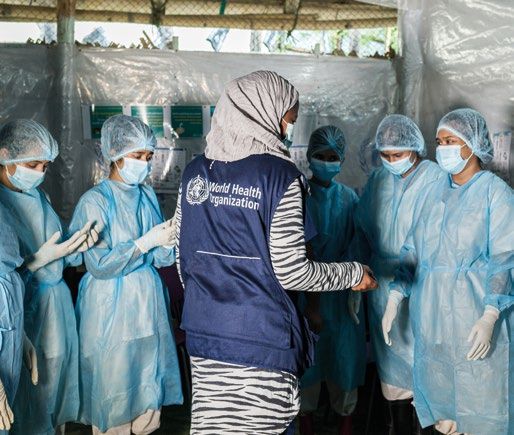
1
      OVERVIEW OF
    IMPLEMENTATION
         GUIDE

                                                                                    © WHO / Blink Media - Nana Kofi Acquah

8    SARS-CoV-2 antigen-detecting rapid diagnostic tests: an implementation guide
     1            OVERVIEW OF
                  IMPLEMENTATION GUIDE
This guide provides an overview of the major elements that must be considered before, during
and after the implementation of antigen-detecting rapid diagnostic tests (Ag-RDTs) for
SARS-CoV-2, the virus that causes COVID-19. This guide is complementary to policy guidance
issued by the World Health Organization (WHO). Details on the global policy for COVID-19
testing can be found in the WHO publication Diagnostic testing for SARS-CoV-2 (1)1.
This guide borrows heavily from the experience and lessons learned from other disease
control programmes, such as HIV and malaria, that have implemented rapid diagnostic tests
(RDTs) as part of their diagnostic algorithms over the past two decades (2). It also emphasizes
the importance of using existing content that has been developed to support implementation
of other components of COVID-19 testing, such as sample collection and the use of personal
protective equipment (PPE). The guide will be updated once Ag-RDTs are rolled out and use is
scaled up, generating further evidence on how to optimize their implementation in different
settings.
This guide may appeal to a range of audiences including:
     •   ministries of health (national, provincial, regional and district COVID-19 assigned
         personnel and Ag-RDT end-users) with an emphasis on resource-limited settings;
     •   donors considering supporting diagnostic testing services with Ag-RDTs for
         COVID-19;
     •   public and private sector organizations with an interest in implementing SARS-CoV-2
         Ag-RDT services;
     •   health care providers involved in the diagnosis and management of COVID-19 cases; and
     •   community-based and civil society organizations with experience working on health,
         especially organizations familiar with similar testing campaigns for other disease
         programmes like HIV and malaria.
Malaria and HIV programmes scaled up the use of RDTs over a number of years, armed with
extensive knowledge of test performance, operational quality assurance (QA) systems, and
awareness campaigns targeting patients and providers. By contrast, to combat the COVID-19
pandemic, SARS-CoV-2 Ag-RDTs need to be rolled out urgently over weeks and months,
potentially across the full spectrum of health care and community settings and health worker
cadres. Their use could be multipronged, as Ag-RDTs can support individual case management,
contact tracing, surveillance and outbreak investigations. To achieve this safely and efficiently,
a basic understanding of how Ag-RDTs work and their advantages and disadvantages must be
combined with strict protocols for their use, QA and clear communication. When using SARS-
CoV-2 Ag-RDTs, specific personal and environmental precautions are needed to protect against
transmission of respiratory pathogens. Additionally, the impact of these collective efforts
should be monitored to determine the effects on patients and public health.
To this end, this guide is designed around the key requirements for the effective
implementation of Ag-RDT diagnostic testing services.

 Other technical guidance for COVID-19 can be found at: https://www.who.int/emergencies/diseases/novel-coronavirus-2019/
1

 technical-guidance-publications.

                      SARS-CoV-2 antigen-detecting rapid diagnostic tests: an implementation guide                         9
CONTEXT OF THE
     CORONAVIRUS DISEASE
      (COVID-19) PANDEMIC

                                                                                       © WHO / Blink Media - Nana Kofi Acquah, Ploy Phutpheng, Lisette Poole

10      SARS-CoV-2 antigen-detecting rapid diagnostic tests: an implementation guide
              CONTEXT OF THE
   2          CORONAVIRUS DISEASE
              (COVID-19) PANDEMIC
Brief history of the pandemic
On 31 December 2019, WHO became aware of a cluster of pneumonia of unknown etiology
reported in Wuhan, People’s Republic of China. On 30 January, WHO declared a Public Health
Emergency of International Concern. The virus was initially named 2019 novel coronavirus
(2019-nCoV) (1). However, on 11 February 2020, the new coronavirus was given the official
name severe acute respiratory syndrome coronavirus 2 (SARS-CoV-2), and the disease caused
by the virus was named coronavirus disease 2019 (COVID-19). SARS-CoV-2 spread rapidly around
the world and WHO made the assessment it could be characterized as a pandemic on 11 March
2020 (3). The clinical presentation of SARS-CoV-2 infection can range from asymptomatic
infection to severe disease. Mortality rates have differed by country to date (1).

Central role of testing in the response
Testing is part of the first line of defence against COVID-19, enabling early identification
and isolation of cases to slow transmission, provision of targeted care to those affected, and
protection of health system operations. Laboratory tests for COVID-19 based on nucleic acid
amplification techniques (NAAT) were rapidly developed in the early days and weeks of the
pandemic, but such tests typically require sophisticated laboratory infrastructure and skilled
staff. To date, hundreds of millions of COVID-19 tests have been performed globally, but the
demand for timely, accurate testing continues to outstrip supply.
WHO recommends that persons meeting the suspected COVID-19 case definition (4) be tested
immediately in order to confirm or rule out infection with SARS-CoV-2. In contexts where
testing is not possible, a probable case of COVID-19 may instead be reported based on certain
epidemiological criteria and clinical symptoms or signs (4). It is expected that Ag-RDTs will
greatly expand access to testing, enabling the most accurate estimates of disease burden and
targeting of control measures and treatments.

Urgent needs in the pandemic response
Controlling COVID-19 requires testing services to be scaled up and access to testing improved
in decentralized settings. The limited coverage of laboratory services and long turnaround
times has meant that NAAT (such as real-time reverse transcription polymerase chain reaction
[rRT-PCR]) capacity has been insufficient to meet demand in many countries, particularly in
low- and middle-income countries (LMICs). In LMICs, these limitations have resulted in testing
rates that are around 10 times lower than in high-income countries (5).
Timely, detailed COVID-19 testing and surveillance data are vital to the COVID-19 public health
response. As noted by WHO, “It is essential to have real-time, accurate data on the testing of
suspected cases, the nature and isolation status of all confirmed cases, the number of contacts
per case and completeness of tracing, and the dynamic capacity of health systems to deal with
COVID-19 cases” (6). Countries therefore need to prioritize making real-time data available.

                  SARS-CoV-2 antigen-detecting rapid diagnostic tests: an implementation guide    11
HOW COVID-19
IS DIAGNOSED
© WHO / Blink Media - Nana Kofi Acquah, Fabeha Monir, Martyn Aim
12 SARS-CoV-2 antigen-detecting rapid diagnostic tests: an implementation guide
   3          HOW COVID-19
              IS DIAGNOSED
Molecular testing
WHO recommends that, wherever possible, suspected cases with active SARS-CoV-2 infection
be tested using molecular NAAT methods, such as rRT-PCR (1), which detect the presence of
viral RNA in patient samples from the respiratory tract but also in oral fluid, saliva and stool.
The optimal specimen for NAAT methods depends on the clinical presentation and time since
symptom onset. Further information on specimen types for molecular testing can be found in
the document Diagnostic testing for SARS-CoV-2 (1).
Given the risk of potential exposure to virus during sample collection and when handling
respiratory samples, technicians must follow recommended biosafety guidance and adhere
strictly to infection prevention and control procedures (for further information see WHO’s
Laboratory biosafety guidance related to COVID-19 (7)).
During the COVID-19 pandemic, countries have had to rapidly launch and scale up laboratory
testing capacity, which has presented a number of challenges. While an essential part of the
testing response to COVID-19, NAATs typically require well-resourced laboratory facilities,
multiple reagents, sample referral systems and skilled personnel. Many settings lack the
sophisticated infrastructure required to provide widespread molecular testing for COVID-19,
particularly in LMICs. Long transport distances for referral and slow turnaround times can limit
the clinical and public health impact of molecular testing for COVID-19, where timely detection
is critical. Supply shortages of essential and compatible reagents are further complicating the
scale-up of molecular testing for COVID-19 in certain settings. The high cost of molecular
testing also limits the testing coverage that can be achieved within countries’ diagnostic
funding envelopes. Similarly, access and price remain substantial barriers to point-of-care
molecular testing in many settings.

Rapid diagnostic testing
RDTs are easy-to-use, rapid tests that can be used at or near the point of care, without the
need for laboratory infrastructure or expensive equipment. There are two types of SARS-CoV-2
RDTs: antigen (Ag) tests that directly detect the SARS-CoV-2 virus antigen(s), and antibody
(Ab) tests that detect one or more types of antibodies produced by the host immune response
against the virus.

Antigen-detecting RDTs
Ag-RDTs directly detect SARS-CoV-2 antigens, most often nucleocapsid, produced by the
replicating virus in respiratory secretions. Therefore, like molecular testing, Ag-RDTs
are useful for detecting active COVID-19 infection. Most SARS-CoV-2 Ag-RDTs require
nasopharyngeal samples, but may be suitable for use with other sample types once more data
are available. The accuracy of Ag-RDTs depends on several factors, including the time from
onset of infection, the concentration of virus in the specimen, the quality and processing of the
specimen collected from a person, and the precise formulation of the reagents in the test kits.

                  SARS-CoV-2 antigen-detecting rapid diagnostic tests: an implementation guide      13
Ag-RDTs for COVID-19 will most often be positive when viral loads are highest and patients
are most infectious – typically 1−3 days prior to the onset of symptoms and during the first
5−7 days after the onset of symptoms – and will become negative as the patient clears the
infection and recovers (8). When viral loads fall below the test’s limit of detection (typically
around PCR cycle threshold values2 ofTable 1. Advantages and disadvantages of testing methods for SARS-CoV-2
TEST TYPE ADVANTAGES DISADVANTAGES
Nucleic acid • Detects active SARS-CoV-2 • Turnaround time of hours to days
amplification infection • Labour intensive
testing • High sensitivity and specificity
(NAAT)
• Requires laboratory infrastructure
and skilled personnel
• More expensive than RDTs
Rapid • Detects active SARS-CoV-2 • Variable sensitivity and specificity,
diagnostic infection generally lower than NAAT
tests: • Can be used at the point of care • Lower sensitivity means negative
Antigen- (outside laboratories) predictive value is lower than for
detecting NAAT, especially in settings with
tests
• Easy to perform
high prevalence of SARS-CoV-2
• Quick results (typically under
30 minutes) enabling rapid • Confirmatory NAAT testing of
implementation of infection RDT positives is advised in all
control measures, including low-prevalence settings and for
contact tracing RDT negatives in high-prevalence
settings.
• Less expensive than NAAT, e.g.,
RT-PCR tests • Negative Ag-RDT results cannot
be used to remove a contact from
quarantine
Rapid • Ab-RDTs can be used to detect • Clinical significance of a positive
diagnostic previous infection with SARS-CoV-2 Ab-RDT result is still under
tests: • Can be used at the point of care investigation
Antibody- (outside laboratories) or in higher • Positive Ab-RDT results do not
detecting throughput formats in laboratories guarantee presence of neutralizing
tests antibodies or protective immunity
• Easy to perform
• Quick results (typically under 30 • Ab-RDTs should not be used for
minutes for point-of-care testing) determining active infections in
clinical care or for contact-tracing
• Less expensive than NAAT, e.g.,
purposes
RT-PCR tests
• Interpretation of Ab-RDT results
depends on the timing of the
disease, clinical morbidity, the
epidemiology and prevalence
within the setting, the type of test
used, the validation method, and
the reliability of the results
SARS-CoV-2 antigen-detecting rapid diagnostic tests: an implementation guide 15ROLE OF AG-RDTs AS
PART OF A COVID-19
DIAGNOSTIC TESTING
STRATEGY
© WHO / Blink Media - Juliana Tan, Martyn Aim, Lisette Poole
16 SARS-CoV-2 antigen-detecting rapid diagnostic tests: an implementation guide
                 ROLE OF AG-RDTs AS PART
     4           OF A COVID-19 DIAGNOSTIC
                 TESTING STRATEGY
A combination of different test types will be needed to expand testing capacity to meet
demand for COVID-19 in all settings. SARS-CoV-2 Ag-RDTs can be incorporated into testing
strategies where NAAT methods are not available or turnaround time is too long to inform
clinical decision-making and public health measures such as contact tracing. Prolonged
turnaround times may be secondary to multiple factors, including limited human or financial
resources, sample transport requirements, and reagent shortages. Ag-RDTs can both fill gaps
in access to testing and alleviate pressure on laboratories performing NAAT, thereby reducing
delays in diagnosis and optimizing use of available tools.
There is currently little programmatic experience using Ag-RDTs for SARS-CoV-2; therefore,
guidance will be updated as new information becomes available from early-adopter countries.
Additional and/or modified use cases may emerge as more data on Ag-RDT performance
becomes available through roll-out and as next-generation RDTs become available.

Recommendations for the use of SARS-CoV-2 Ag-RDTs
WHO has issued interim guidance on the use of SARS-CoV-2 Ag-RDTs in the diagnosis of
COVID-19, summarized below. The full guidance can be found in WHO’s Antigen-detection in
the diagnosis of SARS-CoV-2 infection using rapid immunoassays (8).

General recommendations for the use of SARS-CoV-2 Ag-RDTs (8):
     1. O
         nly Ag-RDTs that meet recommended performance criteria3 should be considered
        for use only in areas where NAAT is unavailable or where the health system may be
        overburdened, leading to prolonged NAAT turnaround times (>48−72 hours).
     2. T
         esting with Ag-RDTs should be conducted by trained operators in strict accordance with
        the manufacturers’ instructions. For best results, tests should be performed within the
        first 5−7 days following the onset of symptoms.
Table 2 outlines the use cases currently recommended for SARS-CoV-2 Ag-RDTs based on
current evidence.

 ≥80% sensitivity and ≥97% specificity compared to an approved NAAT.
3

                     SARS-CoV-2 antigen-detecting rapid diagnostic tests: an implementation guide   17
Table 2. Use cases for SARS-CoV-2 Ag-RDTs
INDICATION FOR
POPULATION RECOMMENDED FOR SCREENING
TESTING
Outbreak investigation/ To respond to suspected outbreaks of COVID-19 in remote settings,
contact tracing institutions and semi-closed communities where NAAT is not
immediately available.
To support outbreak investigations (e.g., in closed or semi-closed
groups like schools, care homes, workplaces etc.). Where COVID-19
outbreaks have been confirmed, Ag-RDTs could be used to screen
at-risk individuals and rapidly isolate positive cases.
Monitoring trends To monitor trends in COVID-19 rates in communities, and particularly
in disease incidence among essential workers and health workers during outbreaks or in
regions of widespread community transmission where the positive
predictive value (PPV) and negative predictive value (NPV) of an
Ag-RDT result is sufficient to enable effective infection control.
Widespread community RDTs may be used for early detection and isolation of positive cases
transmission in health facilities, COVID-19 testing centres/sites, care homes,
prisons, schools, front-line and health care workers, and for contact
tracing.
Testing of Despite the second general recommendation, testing of
asymptomatic asymptomatic contacts of cases may be considered even if the
contacts of cases Ag-RDT is not specifically authorized for this use, as asymptomatic
cases have viral loads similar to those of symptomatic cases.
However, in this situation, a negative Ag-RDT result should be
considered presumptive and is not sufficient to remove a contact
from quarantine requirements. Positive Ag-RDT results, however,
can be useful for targeting isolation procedures and broadening
contact-tracing efforts.
For initial introduction of Ag-RDTs, implementers should consider selecting some settings
where confirmatory testing by NAAT (e.g., rRT-PCR) is available. This will enable operators
to gain confidence in the tests, confirm performance of the selected RDT, and troubleshoot
any implementation issues encountered.
In situations where confirmatory NAAT is not feasible, implementers should be
careful to monitor for any indication that results may be incorrect. This should include
routine monitoring of quality indicators and matching of test results to clinical history and
epidemiological context.
Fig. 1 shows the proposed process for using Ag-RDTs for COVID-19 case management where
there is widespread community transmission and NAAT is not available or limited in capacity.
18 SARS-CoV-2 antigen-detecting rapid diagnostic tests: an implementation guideFig. 1. Flowchart demonstrating the potential use of Ag-RDTs (that meet minimum
performance criteria) in settings of widespread community transmission and
where there is a) no NAAT capacity or b) limited NAAT capacity
Who: Trained operator Patient meets WHO
a) Where: Health facility or other case definition for suspected
or probable COVID-19a
designated site
Respiratory sample is
collected as per instructions for use
and biosafety requirements
Sample management
Ag-RDT performed using sample
Patient management Results are interpreted
manually or via instrument
SARS-CoV-2 NOT DETECTED SARS-CoV-2 DETECTED
NPV high NPV low PPV moderate/high
Advise patients with respiratory Admit patient with moderate/
Refer patient with moderate/ symptoms to exercise infection severe symptoms to high likelihood
severe symptoms to low control practices and consider repeat ward and home or cohorted isolation
likelihood ward (NPV moderate Ag-RDT if symptoms persist or for mild cases for 10 days after onset
to high) and work-up all cases for progress. Target lower respiratory of symptoms plus 3 days without
other causes of illness tract specimen if clinical presentation fever or respiratory symptoms
consistent with pneumonia
Who: Trained operator Patient meets WHO
b) Where: Health facility or other case definition for suspected
or probable COVID-19a
designated site
Respiratory sample is
collected as per instructions for use
and biosafety requirements
Sample management
Ag-RDT performed using sample
Patient management Results are interpreted
manually or via instrument
SARS-CoV-2 NOT DETECTED SARS-CoV-2 DETECTED
NPV high NPV low PPV moderate/high
Refer patient with moderate/ Collect specimen for NAAT Admit patient with moderate/
severe symptoms to low confirmation and isolate until results severe symptoms to high likelihood
likelihood ward (NPV moderate are available. Prioritize close contacts ward and home or cohorted isolation
to high) and work-up all cases for of confirmed cases and those with for mild cases (and their close
other causes of illness risk factors for severe disease contacts) 10 days after onset of
symptoms plus 3 days without fever
or respiratory symptoms
For the latest WHO case definition please refer to the technical guidance document on https://www.who.int/emergencies/
a
diseases/novel-coronavirus-2019/technical-guidance-publications?publicationtypes=df113943-c6f4-42a5-914f-0a0736769008
SARS-CoV-2 antigen-detecting rapid diagnostic tests: an implementation guide 19Ag-RDTs for COVID-19 should not be used in the following settings, based on
currently available information:
The use of Ag-RDTs is not recommended in settings or populations with low expected
prevalence of disease (e.g., screening at points of entry, prior to travel, elective surgery),
where confirmatory testing by NAAT is not readily available. In such settings, the rate of false
positives compared to true positive results will be high. RDT testing in low-prevalence settings
without NAAT confirmation will not be advisable until there are significantly more data from
high-quality studies confirming very high specificity (>99%) of one or more commercialized
Ag-RDT test kits.
Specific examples of settings where Ag-RDTs should not be used include:
• in individuals without symptoms, unless the person is a contact of a confirmed case;
• where there are zero or only sporadic cases;
• where appropriate biosafety and infection prevention and control measures are limited
or lacking;
• where management of the patient and/or use of COVID-19 countermeasures do not
change based on the result of the test;
• for airport or border screening at points of entry or prior to travel (unless all Ag-RDT
positive results can be confirmed by NAAT); and
• in screening prior to elective surgery or blood donation.
The WHO guidance in this section is based on existing information on the performance of
SARS-CoV-2 Ag-RDTs. Many settings may be using local validation to support other use of
Ag-RDTs, for example, using non-standard specimens. Ongoing studies will provide more
rigorous data to inform further guidance on the use of SARS-CoV-2 Ag-RDTs.
20 SARS-CoV-2 antigen-detecting rapid diagnostic tests: an implementation guideHOW SARS-CoV-2 AG-RDTs WORK SARS-CoV-2 antigen-detecting rapid diagnostic tests: an implementation guide 21
        5           HOW SARS-CoV-2
                    AG-RDTs WORK
     Structure of Ag-RDTs
     Ag-RDTs detect antigens from clinical specimens using a simple-to-use immunochromatographic
     (lateral flow) test format, as commonly used for HIV and malaria rapid testing (8).
     RDTs are typically a nitrocellulose strip enclosed in a plastic cassette with a sample well. When
     the infected patient’s sample is combined with the test buffer and added to the sample well of
     the test strip, target antigens in the mixture bind to labelled antibodies and migrate together;
     they are subsequently captured by an antibody bound to the test line, triggering a detectable
     colour change.
     Depending on the test (and the antibody labels used), the colour change can be read by the
     operator with or without the aid of a reader instrument (8). RDTs for COVID-19 can produce
     results in around 10−30 minutes versus the many hours required for most NAATs (8).

     Interpreting Ag-RDT performance
     Ag-RDT performance is determined by the sensitivity and specificity of the test to detect a
     SARS-CoV-2 infection compared to a NAAT reference standard (generally rRT-PCR).
     Sensitivity is the percentage of cases positive by a NAAT reference standard that are detected
     as positive by the Ag-RDT under evaluation.
                                                (true positives)
     Sensitivity is calculated as:                                             x 100
                                     (true positives + false negatives)

     Specificity is the percentage of cases negative by a NAAT reference standard that are detected
     as negative by the Ag-RDT under evaluation.
                                                (true negatives)
     Specificity is calculated as:                                             x 100
                                     (true negatives + false positives)

     The prevalence of disease in the community being tested strongly affects the test’s predictive
     value in terms of positive predictive value (PPV) and negative predictive value (NPV). PPV is the
     probability that a person with a positive test result truly has the disease. NPV is the probability
     that a person with a negative test result truly does not have the disease. The prevalence of
     disease should be estimated based on surveillance to determine the positive and negative
     predictive values for Ag-RDTs in order to enable optimal interpretation of the results. The
     following formulae show how PPV and NPV can be calculated.
                                        (true positives)
     PPV is calculated as:                                             x 100
                             (true positives + false positives)

                                        (true negatives)
     NPV is calculated as:                                               x 100
                             (true negatives + false negatives)

22                      SARS-CoV-2 antigen-detecting rapid diagnostic tests: an implementation guide
Consequently, the clinical value of a positive or negative Ag-RDT result will depend on what
action is taken on the basis of the test result when interpreted in the context of local prevalence
and the PPV and NPV. This is particularly important given the dynamic and heterogeneous
epidemiology of SARS-CoV-2. An important point is that as prevalence decreases, so does
PPV, meaning that the probability that a positive result is a true positive is reduced in low-
prevalence settings; therefore, confirmatory testing is strongly recommended. Conversely, in
low-prevalence settings, the NPV is high and thus there is a very high probability that patients
who test negative do not have COVID-19.
The real-world examples in Fig. 2 show how the predictive value of an Ag-RDT with the minimum
recommended 80% sensitivity and 97% specificity can vary based on the prevalence of COVID-19.
Fig. 2. Predictive value of Ag-RDT with 80% sensitivity and 97% specificity in
a) a fever clinic with a 27% prevalence of COVID-19 and b) at border screening
with a 1% prevalence of COVID-19, in a population of 10 000 people
a) Country #1: Testing at a fever clinic with a 27% prevalence of COVID-19
True positive False positive
+ 2200 200 92%
Test Probability of
positive Appropriately told Told to self-isolate when they having COVID-19
to self-isolate would be safe to go out if test is positive
False negative True negative
- 500 7100 93%
Test Probability of
Told they do not need Told they do not need not having COVID-19
negative to self-isolate so they to self-isolate and are if test is negative
infect more people safe to go out
Have COVID-19 Do not have COVID-19
b) Country #2: Border screening in a setting with 1% prevalence of COVID-19
True positive False positive
+ 80 297 21%
Test Probability of
positive Appropriately told Told to self-isolate when they having COVID-19
to self-isolate would be safe to go out if test is positive
False negative True negative
- 20 9603 99.8%
Test Probability of
Told they do not need not having COVID-19
negative to self-isolate so they
Told they do not need
to self-isolate and are if test is negative
infect more people safe to go out
Have COVID-19 Do not have COVID-19
SARS-CoV-2 antigen-detecting rapid diagnostic tests: an implementation guide 23Further information of how positive and negative predictive values can affect the interpretation
of Ag-RDT test results can be found in the Annex of Antigen-detection in the diagnosis of SARS-
CoV-2 infection using rapid immunoassays (8).
Ag-RDT performance expectations and characteristics
A number of SARS-CoV-2 Ag-RDTs are in development or have recently been commercialized.
The FIND SARS-CoV-2 diagnostic pipeline tracker lists SARS-CoV-2 Ag-RDTs that have been
commercialized or are in development: https://www.finddx.org/covid-19/pipeline.
WHO also assesses and lists products through a SARS-CoV-2 in vitro diagnostic Emergency Use
Listing (EUL) procedure: https://extranet.who.int/pqweb/sites/default/files/documents/201002_
eul_sars_cov2_product_list.pdf.
Evidence on the performance of these RDTs is limited but growing. Available independent
data demonstrate heterogeneous performance compared to NAAT in samples from the upper
respiratory tract (sensitivity ranging from 0% to 94% for Ag-RDTs). However, almost all of these
Ag-RDTs have shown high specificity (>97%), and the performance of some products exceeds
minimum performance requirements in patient samples with higher viral loads (≥106 genomic
virus copies/mL or cycle threshold values ≤25−30).
24 SARS-CoV-2 antigen-detecting rapid diagnostic tests: an implementation guideKEY IMPLEMENTATION
CONSIDERATIONS
© WHO / Blink Media - Natalie Naccache, Nana Kofi Acquah, Juliana Tan
SARS-CoV-2 antigen-detecting rapid diagnostic tests: an implementation guide 25
        6         KEY IMPLEMENTATION
                  CONSIDERATIONS
     Safe and effective implementation of SARS-CoV-2 Ag-RDT testing services involves several
     critical elements being in place (Fig. 3). The following section outlines core areas of work
     and highlights specific activities that represent minimum critical steps. A national-level
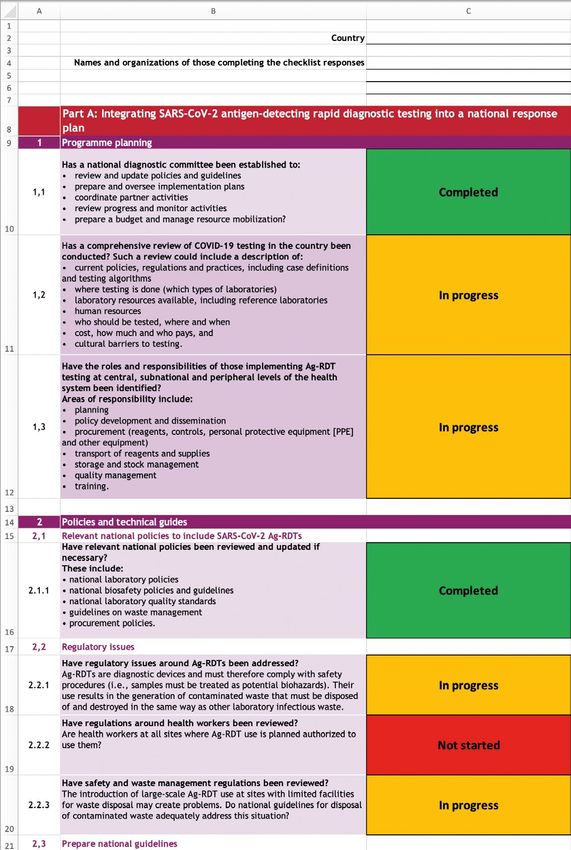
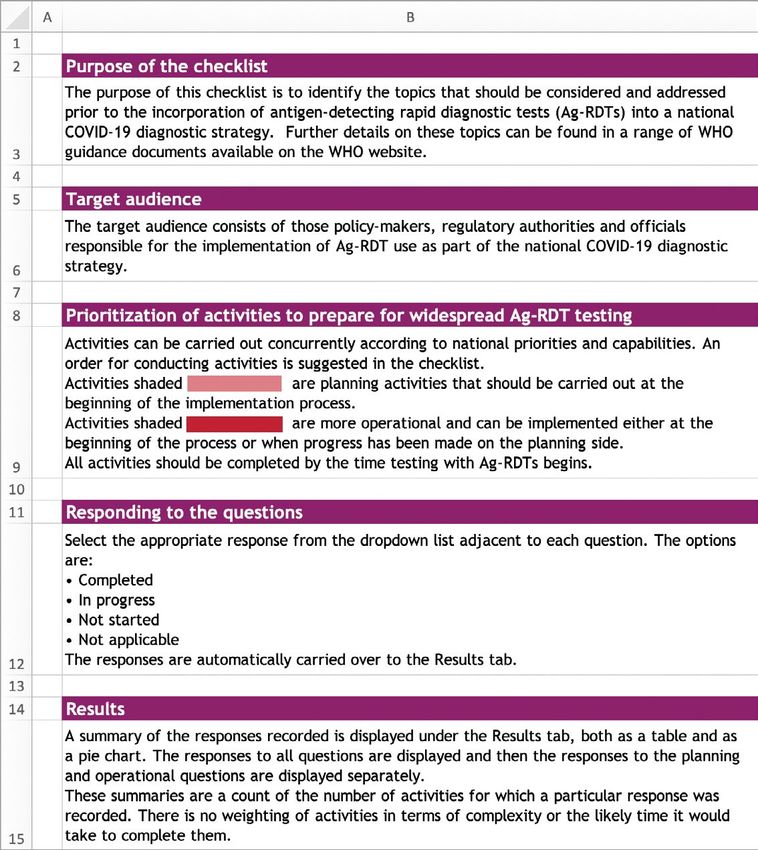
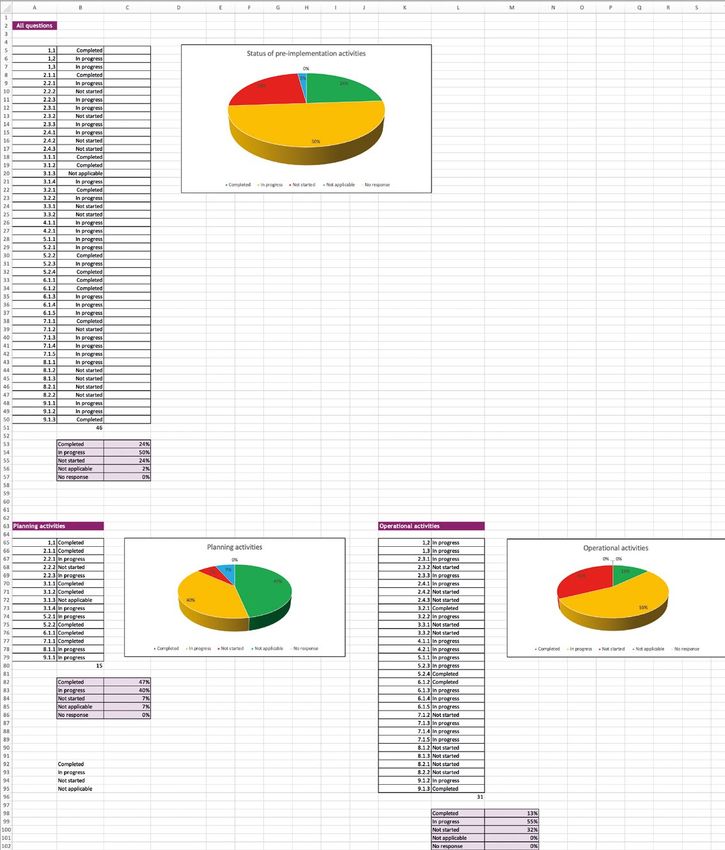
     SARS-CoV-2 Ag-RDT implementation checklist is included in Annex 1 and serves as a practical
     ‘aide-mémoire’ for implementers.

     Fig. 3. Critical elements required for the safe and effective implementation
     of SARS-CoV-2 Ag-RDTs

                                                     National
                                                    COVID-19
                                                  strategic plan

                                                                                   Procurement
                 Communication
                                                                                    of RDTs and
                 and community
                                                                                     associated
                  engagement
                                                                                   requirements

                                                 Safe and
                                                 effective
                 Monitoring                                                             Supply
                    and
                                             implementation                              chain
                 evaluation                   of SARS-CoV-2                           management
                                                  Ag-RDT
                                                  testing

                     Data
                                                                                      Training
                  management

                                                     Quality
                                                    assurance

26                    SARS-CoV-2 antigen-detecting rapid diagnostic tests: an implementation guide
Integrating a SARS-CoV-2 Ag-RDT testing strategy into
the national response plan
WHO recommendations should be used to guide development of a national SARS-CoV-2
testing strategy that includes Ag-RDTs, considering the local context. Early engagement with
regulatory authorities or establishment of some form of authorization for use is essential to
expedite product registration and ensure that Ag-RDT policies can be legally implemented.
Additionally, the following key components should be addressed when developing a national
testing strategy that includes Ag-RDTs.
Health facility and laboratory capacity mapping
The incorporation of SARS-CoV-2 Ag-RDTs into the national testing strategy should be based
on health facility and laboratory capacity mapping to identify the locations most likely to
benefit from a high-performing Ag-RDT, including:
• areas not served by NAAT and where turnaround times are particularly prolonged due
to the infeasibility of shipping samples or overloading of available infrastructure and
personnel;
• areas with a known or estimated high burden of disease, especially in closed or semi-
closed communities;
• areas with limited infrastructure, for example, locations without electricity; in these
situations, Ag-RDTs that are stable at ambient temperatures and can be read visually
would be the only viable option;
• areas where non-facility-based testing is considered essential to improve access to
testing, e.g., contact tracing, testing in the community and in other settings;
• areas where turnaround times fall outside the 48-hour window ideally needed for clinical
utility of test results.
Epidemiological and environmental setting
Clear use cases and roles should be defined for
testing using Ag-RDTs and NAAT. Resources in
many settings may be limited, and target use
© WHO / Blink Media - Nana Kofi Acquah
cases and patient populations may be prioritized
to achieve the greatest impact on epidemic
control. Planners should consider which of the
Ag-RDT use cases are of the highest priority
based on the current epidemiological setting.
Additional parameters that could influence the
impact of testing on epidemic control in each
setting include:
• current mitigation strategies and public adherence to policies;
• range of potential policy responses (e.g., public health and social measures, school
openings, etc.);
• operational feasibility of certain testing options (e.g., contact tracing); and
• enabling environment for testing (e.g., public trust).
SARS-CoV-2 antigen-detecting rapid diagnostic tests: an implementation guide 27Development of an algorithm for assessment, diagnosis and management of
suspected COVID-19 cases
A simple algorithm to guide the assessment, diagnosis and management of suspected COVID-19
cases with either a positive or negative test result should be developed. Overall planning
at the central level should be integrated with the available national strategic plans for the
COVID-19 response and specifically NAAT testing for COVID-19, which is discussed in the WHO
guides, Diagnostic testing for SARS-CoV-2 (1) and Laboratory testing strategy recommendations
for COVID-19 (10).
Site-readiness
Once districts and health facilities have been
selected based on service mapping and disease
prevalence, the next step should be to conduct a
site-level readiness survey to verify information
such as:
© WHO / Blink Media - Saiyna Bashir
• availability of health care workers;
• vailability of power supply for charging
a
(if using Ag-RDTs that require a device for
reading the result) and storage for tests (if
they need to be refrigerated);
• stock monitoring capacity; and
• safety and waste management measures.
Some groups have developed ‘readiness’ checklists for facilities to support implementation at
health facilities (see WHO/FIND SARS-CoV-2 Ag-RDT Training Materials).
Approaches to incorporate SARS-CoV-2 Ag-RDTs into a national testing strategy may require
adaptation as the pandemic unfolds and further information becomes available.
28 SARS-CoV-2 antigen-detecting rapid diagnostic tests: an implementation guideRDT procurement: selecting the right product
Following the development of a national testing strategy for Ag-RDTs, the next step is to
select a good-quality product based on specifications such as performance, thermal stability,
cost, intended use and suitability. These factors need to be considered carefully, even when
Ag-RDTs are donated from manufacturers, philanthropic organizations or national governments.
The WHO-led Diagnostics Consortium for COVID-194 has developed a SARS-CoV-2 Ag-RDT
product selection tool that can be used to guide product selection. This section describes the
key factors to consider when developing a shortlist of Ag-RDT candidates.
Test performance and quality of available data
Data on the performance of Ag-RDTs should be carefully reviewed before procurement is
initiated. Given the relatively low prevalence of active SARS-CoV-2 infections even in settings
with community transmission, WHO recommends high specificity (minimum ≥97% and ideally
>99%) to avoid many false positive results. Ag-RDT tests should have a minimum sensitivity of
80%. Sensitivity varies based on patient-specific factors, such as the degree of illness and days
since symptom onset, as well as product quality.
The source of data should be considered. Data from independent studies without corporate
sponsorship have particular value if the studies are of high quality, as determined by quality
assessment tools such as QUADAS-2. Features of the study design can be used to assess study
quality, for example, the reference standard used, the type of specimen collected, specimen
blinding, the time between sample collection and test, the number of days since symptom
onset, and the number and selection of participants. Systematic reviews of diagnostic test
accuracy are a good resource for comparing the reported test performance and quality of
various studies.
Manufacturing quality and regulatory status
Tests should be procured from manufacturers who work under a validated quality management
system and with at least local regulatory approval or right of free sale granted by the country
of manufacture. As with all in vitro diagnostics intended for clinical use, Ag-RDTs require
rigorous and transparent regulatory review. At the time of procurement, the Ag-RDT should be
approved or authorized by the national regulatory body and ideally included in the Emergency
Use List by WHO or another assessment authority.5
Manufacturing capacity and further evidence of quality
Procurers need to consider the manufacturing capacity and record of the companies offering
SARS-CoV-2 Ag-RDTs. Procurers should consider the range of other products offered by
the company, particularly whether the company has any other lateral flow tests, what
regulatory approvals it has for non-emergency diagnostic products, and its manufacturing and
post-marketing surveillance capacity.
The Diagnostics Consortium for COVID-19 is composed of: Bill & Melinda Gates Foundation, Clinton Health Access
4
Initiative, Civil Society representation, FIND, Global Fund, Global Drug Facility/Stop TB Partnership, Médecins Sans
Frontières, PAHO, UNDOS, UNDP, UNICEF, Unitaid, UNHCR, World Bank, and WHO.
For example, original International Medical Device Regulators Forum members: Australia, Brazil, Canada, China, European
5
Union, Japan and the United States.
SARS-CoV-2 antigen-detecting rapid diagnostic tests: an implementation guide 29Cost of the test
Ag-RDTs should generally be less expensive than NAATs, but costs will vary according to the
specific test and the volume to be purchased, as well as whether or not additional supplies/
equipment are required to perform the test, e.g., readers, controls. Testing using Ag-RDTs
will also likely require a decentralized, trained workforce, which will increase the overall cost
of testing.
Operational considerations
It is important that Ag-RDTs have the capacity
to withstand temperature stress and have an
extended shelf-life. Target shelf-life should be
at least 12−18 months at 30°C and ideally 40°C.
Staggered deliveries will be critical to offset
© WHO / Blink Media – Fabeha Monir
challenges related to short shelf-lives. Careful
planning is needed to avoid exposure of RDTs to
high temperatures, with concerted preparation
for handling at receipt, storage and distribution.
All Ag-RDTs currently on the WHO EUL have
maximum storage temperatures of 30°C, so
cool storage may be required in some locations.
Considering the test procedure itself, the ideal
workflow for Ag-RDTs would involve no sample preparation steps and no additional processing
steps between placing the swab/sample in the buffer, squeezing and/or breaking off the swab,
and applying the sample to the cartridge/strip. Other key operational considerations are
whether the tests require the use of an instrument to interpret results, whether the tests can
be run in batches and whether the tests have strict restrictions on the timing from collecting
the sample to performing the test procedure. All Ag-RDTs currently on the WHO EUL are
visual-read tests, which do not require any instrumentation; however, instrument-dependent
Ag-RDTs are in the WHO EUL pipeline. Instrument-dependent Ag-RDTs may offer advantages
(e.g., better performance, automated read-out and remote connectivity) and disadvantages
(e.g., need for electrical supply, increased training needs, increased cost). These factors will
need to be carefully considered during the product selection phase.
To encourage appropriate testing procedures, the manufacturers’ instructions for use (IFU)
should comply with good practice and should be available in the local language. Quick reference
guides are available from some manufacturers and offer a nice complement to the IFU.
Specimen collection requirements
SARS-CoV-2 Ag-RDTs can have differing requirements for specimen types, number of processing
steps, timings, instrumentation and interpretation of results. These factors will influence the
amount of training and supervision required for implementation. An ease-of-use assessment
should be considered to inform final product selection. Ag-RDTs are currently validated for
limited specimen types, although studies are ongoing to expand validation. Countries should
consider the range of validated specimen types when choosing tests.
The relative importance of these factors may vary depending on the country and setting,
and countries should consider them in the context of the local setting in order to generate
a shortlist of candidates. Countries may need to prioritize different product features based
on different deployment settings. The final selection may be partly determined by budget
envelopes, availability and supply chain considerations, which are discussed in the next section.
30 SARS-CoV-2 antigen-detecting rapid diagnostic tests: an implementation guideRDT supply chain management and logistics
The supply chain management and logistics of mobilizing Ag-RDTs involve several key
components. Countries should consider the following key elements when developing supply
chain and logistical plans.
Quantify and forecast demand for Ag-RDTs and PPE
Once an Ag-RDT has been selected or a shortlist has been developed, a three-step exercise
is recommended to quantify and forecast country-specific demand for Ag-RDTs and PPE.
This exercise consists of:
1. identifying appropriate epidemiological projections:
• Using an existing model from the country’s epidemiological division, or a modelling tool
from Imperial College London or the WHO COVID-19 Essential Supplies Forecasting Tool;
2. building on the testing strategy to assign different use cases to NAATs or Ag-RDTs, or a
combination of both; and
3. q
uantifying demand for testing (Ag-RDT and NAAT) and PPE (11) using a tool such as
the COVID-19 Essential Supplies Forecasting Tool:
• If using the Essential Supplies Forecasting Tool, total testing outputs should be
differentiated by prioritized use case and by Ag-RDT or NAAT to determine the specific
Ag-RDT need.
Secure funding for Ag-RDT testing services
Once the demand for Ag-RDTs has been quantified, the next priority step should be to mobilize
sufficient diagnostic resources to cover the quantified Ag-RDT demand.
Countries should consider all budget requirements for obtaining quality-assured Ag-RDTs,
including operating expenses (e.g., transport from manufacturer to port of entry, distribution,
supply management, information and communication, training, supervision, QA, quality control
[QC], monitoring and reporting) and not merely the cost of procuring and processing the RDTs.
Both existing and new funding streams should be leveraged. Identified resources could be
specific to COVID-19 diagnostics, or part of general COVID-19 or health emergencies funding.
New funding lines may also be considered or developed. Comprehensive resource mapping
should be updated regularly to proactively identify and address funding gaps.
Initiate procurement processes
Once funding has been secured, the next step is to identify the preferred procurement
channel(s) for Ag-RDTs. During the COVID-19 pandemic, countries may choose to procure
Ag-RDTs through existing procurement channels, where the tendering process has already
taken place. Some relevant procurement channels include:
• WHO Supply Portal: Please contact WHO country representatives for guidance on
leveraging this procurement channel.
• UNICEF Supply Division Supply Portal: Please contact UNICEF representatives to initiate
procurement.
• Wambo.org (Global Fund ordering platform): Wambo.org can be used for procurement
using Global Fund resources for Global Fund-supported governments, using domestic
resources, or using other sources of secured funding.
• The African Medical Supplies Platform portal for African Union Member States.
• Direct engagement with supplier representatives.
SARS-CoV-2 antigen-detecting rapid diagnostic tests: an implementation guide 31Prepare for and facilitate customs clearance
A streamlined customs clearance pathway should be established and communicated to
relevant authorities in order to ensure that commodities are cleared immediately upon arrival
in the country. In particular, it is important to coordinate with ministry of health-designated
local authorities in order to identify how tax waivers can be obtained to expedite clearance
processes and to map out timelines for obtaining duty waivers to inform COVID-19 testing
implementation timelines.
Develop in-country distribution plans
In-country distribution plans should be
prepared in advance to enable commodities to
become immediately available at designated
laboratories and health facilities. Plans should
outline responsibilities for the ministry of
© WHO / Blink Media - Natalie Naccache
health, national medical stores, implementing
partners, reference laboratories and individual
testing facilities. Once commodities are cleared
by customs, the quality of the received goods
should be verified prior to distribution. In the
case of SARS-CoV-2 Ag-RDTs, this should include
inspection of the integrity of the packaging
and labelling. If available, an assessment of
quality against well-characterized QC samples at reference laboratories is desirable. The tests
should then be stored/transported according to the manufacturers’ guidelines. A distribution
plan should be developed to allocate and deliver assigned commodity volumes to laboratories,
health facilities and other testing sites.
Monitor stock, track consumption and update procurement forecasts
As the demand for testing and availability of diagnostic and PPE supplies will continuously
change as the pandemic evolves, procurement and supply management plans must remain
flexible. Laboratories and health facilities should establish a process to periodically track
and report commodity consumption (including that of Ag-RDTs) and develop a rapid ordering
mechanism based on consumption reports. Supply management plans must include plans to
maintain adequate supplies of the PPE required for Ag-RDT testing.
32 SARS-CoV-2 antigen-detecting rapid diagnostic tests: an implementation guideTraining
Training and supervision are critical components of Ag-RDT QA. Ag-RDTs may be considered
‘easy to use’; however, that does not negate the need for training and supervision, particularly
as these tests are pushed out to remote settings and harsh conditions. Training processes for
Ag-RDTs should include guidance on donning and doffing PPE, collecting samples, performing
the test, interpreting the results and taking appropriate actions, biosafety and waste disposal,
reporting/use of data, troubleshooting, QA and supply/stock management. A mixture of
training media is preferred, including didactic and practical/wet-lab sessions as well as videos.
Materials will need to be adapted to suit onsite versus remote learning settings. The quality
of the trainers will be critical to successful training. Trainers should be carefully selected, as
they will be the bedrock of a good training programme. Choose people with the following
characteristics to be trainers:
1. Experience in training, especially in adult learning principles and conducting interactive
presentations; training experience related to other RDTs is relevant.
2. Competency in the subject matter, particularly regarding QA and QC issues.
3. Excellent communication and presentation skills: able to use voice and body language
well, set the tone of the training, convey the training content, show enthusiasm,
encourage participation and provide positive reinforcement.
4. Available time to prepare and conduct the training.
5. Ability to manage the training: able to manage time, participants, locations and
unexpected situations.
A training curriculum for SARS-CoV-2 Ag-
RDTs has been developed by FIND and WHO,
composed of 11 easily adaptable modules that
cover topics spanning from sample collection
to results reporting, with a special emphasis
© WHO / Blink Media – Fabeha Monir
on biosafety. Examples of adaptable elements
include the criteria for testing and management
of test positive and negative cases. Modules are
hosted on the WHO Health Security Learning
Platform and are accompanied by useful
tools such as checklists for setting up training
workshops, site-readiness and supervisory
checklists, competency assessments, sample
log books and results reporting sheets. For successful completion, participants are required
to complete theoretical and practical assessments. The training can be completed in a half to
a full day, depending on the number of facilitators available and the number of modules that
need to be covered based on the trainees’ prior experience.
Given the limited implementation experience for SARS-CoV-2 Ag-RDTs, the first version of
the training workshop materials will be updated as user feedback and more evidence become
available.
SARS-CoV-2 antigen-detecting rapid diagnostic tests: an implementation guide 33You can also read


